Honorable Theft

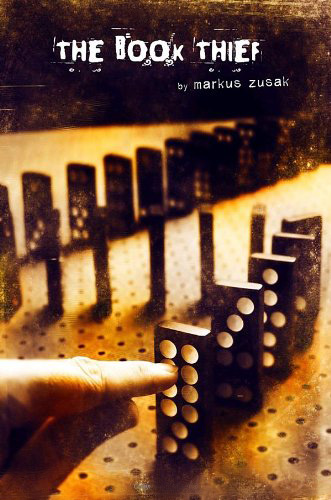
The_Book_ThiefYoung adult literature can be amazingly profound. My curiosity about Markus Zusak’s The Book Thief bubbled to the surface after the movie was released last weekend. I didn’t see it, along with thousands of others, because of its very limited theatrical release. I’m sure you know that distressing feeling when you type your zip code into Fandango and come up with zero results. Short of going all the way into New York City just to see a movie, I was pretty much out of luck. The silver lining is that it made me read the book. I’m not sure what I was expecting (I can also be the victim of hype), but what I found was deeply engrossing while also being deeply disturbing. Spoiler alert!

The Book Thief is set in Nazi Germany. It is narrated by Death. The protagonist, Liesel Meminger, represents the plight of all people; we have no control over when, where, or to whom we’re born. With parents considered enemies of the state, the Book Thief is raised by foster parents who are German, but who are also poor. They are good people, and much of the tension in the book revolves around their hiding a Jewish friend in their small house. The convention of Death as a narrator predates George Pendle’s Death: A Life, by three years. Although in the end Death is the only survivor, he is remarkably sympathetic to the human condition. Death also supplies the main religious observations in a book otherwise devoid of God. When Death attempts to pray during the horrors of war, a devastating conclusion is drawn: “God never says anything.” Is that why Veteran’s Day celebrations tend to be so silent? There may not be any atheists in foxholes, but there’s no God there either.

As Death stalks all those who are dear to her, Liesel finds her comfort in books. Although she begins the story illiterate, and although books are difficult to find in a poor family in a nation at war, Liesel discovers that words have a power that even dictators can’t steal. Her love of reading saves her life as her street is obliterated in an air raid. Even Death has to question the futility of war. In my most idealistic of moments, I hold the conviction that many of the world’s evils would be eliminated if people just read more. We would discover, for example, that even the devastation of war can be overcome by words. The only book Death is portrayed as reading is the Book Thief’s life story. And this gives Death pause, because even young adult literature can be amazingly profound.
Atomic Girls

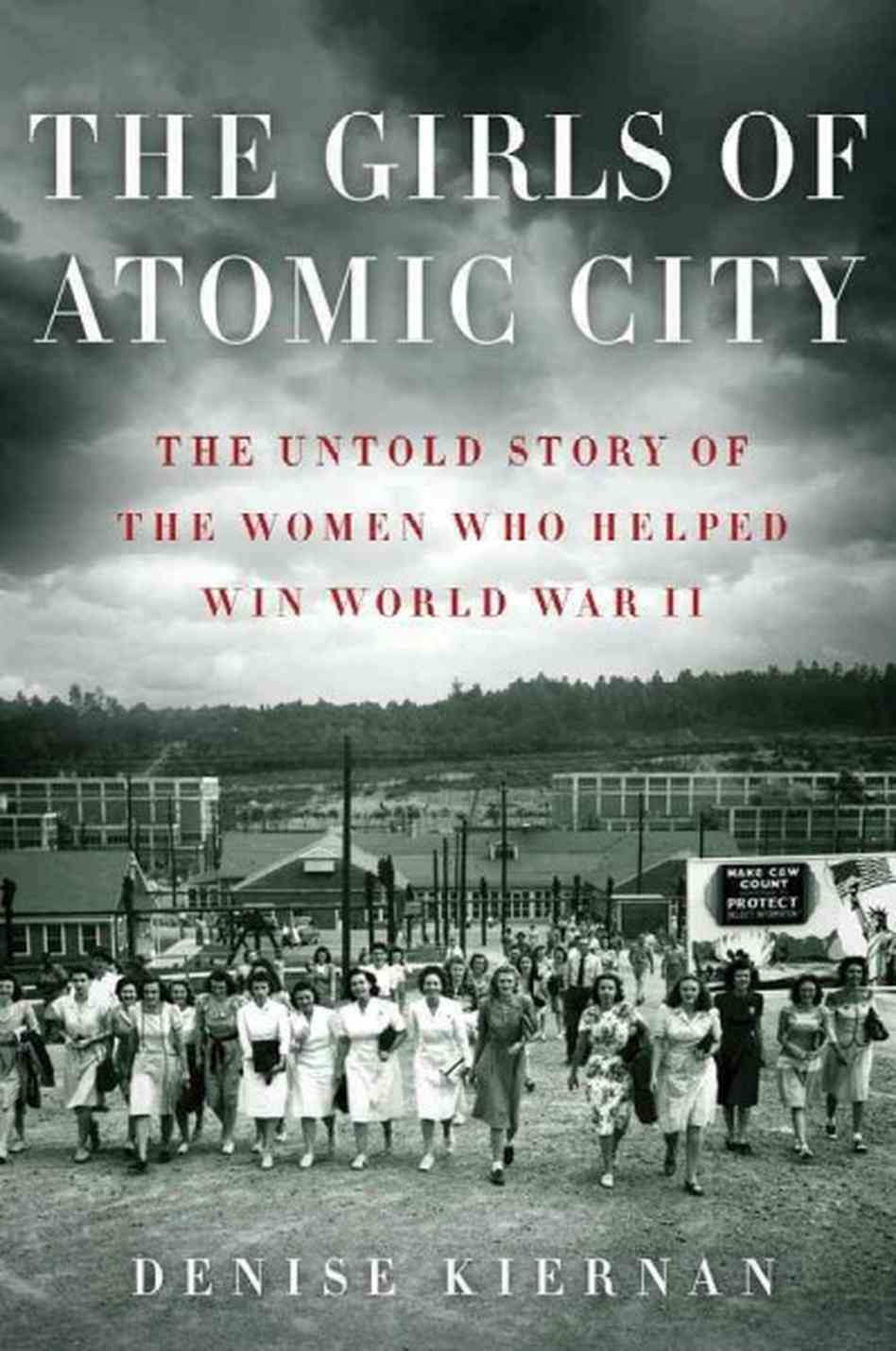
GirlsofAtomicCityRay Bradbury. Ray Harryhausen. Radioactive dinosaur loose in Manhattan. What’s not to like? I was inspired to watch The Beast from 20,000 Fathoms again for a single line, where Dr. Nesbitt informs the marksman his grenade has “the only isotope of its kind this side of Oak Ridge.” You see, I had just finished reading Denise Kiernan’s The Girls of Atomic City: The Untold Story of the Women Who Helped Win World War II. Atomic City, in this context, is Oak Ridge, Tennessee, a city built almost overnight with one objective: to produce uranium for the atomic bomb, then under development. The employees, many of them women, were not told the nature of their work and were not allowed to speak about the little they knew, putting many strains on marriages and human relationships. It is a captivating story, especially since Kiernan doesn’t pull any punches—the facility was in a segregated south, women scientists were belittled to their faces, and the end result was thousands of people incinerated in Japan. It is like the end of Eden, the loss of humanity’s innocence.

Growing up in the 1960s, I had heard of Oak Ridge. I knew it had something to do with nuclear stuff, but my understanding only went as far as the planetary model of the nucleus of an atom. I feared nuclear war. The height of that fear in the 1950s may have passed, but I was born just a month before the Cuban Missile Crisis began and all through the Reagan era that veiled threat of total, mutual annihilation hung heavily in the air. The religious had claimed God had created all this, but human hubris threatened to erase it all. On the eve of a friend’s wedding I sat across the Susquehanna River, eyeing Three Mile Island for the first time. Just six years earlier even those of us hundreds of miles to the northwest wondered if we would succumb to its radioactive glow. The power of the atom, as Kiernan demonstrates, was considered to be the basic power of the universe. And it was not divine.

When the war was over, a symbol of peace was erected at Oak Ridge. The International Friendship Bell was challenged as recently as 1998 by a local claiming that ringing the bell endorsed Buddhism, and it was therefore a religious symbol that had no business in a public place. For those who believe, ringing the bell is a form of Buddhist prayer. For others, it is a sign of goodwill between nations that have put their differences to rest. It is easy, sixty years after the release of The Beast from 20,000 Fathoms, to laugh smugly at Harryhausen’s famed stop-motion animation and the incessant worry about atomic fallout. But near the beginning of the movie, George Ritchie says of the atomic blast they’ve been monitoring, “You know, every time one of those things goes off, I feel as if I was helping to write the first chapter of a new Genesis.” Indeed, at least as far as chapter three. With the dawn of the atomic age, we had outgrown our need for the final chapters of Revelation as well.


Ancient History

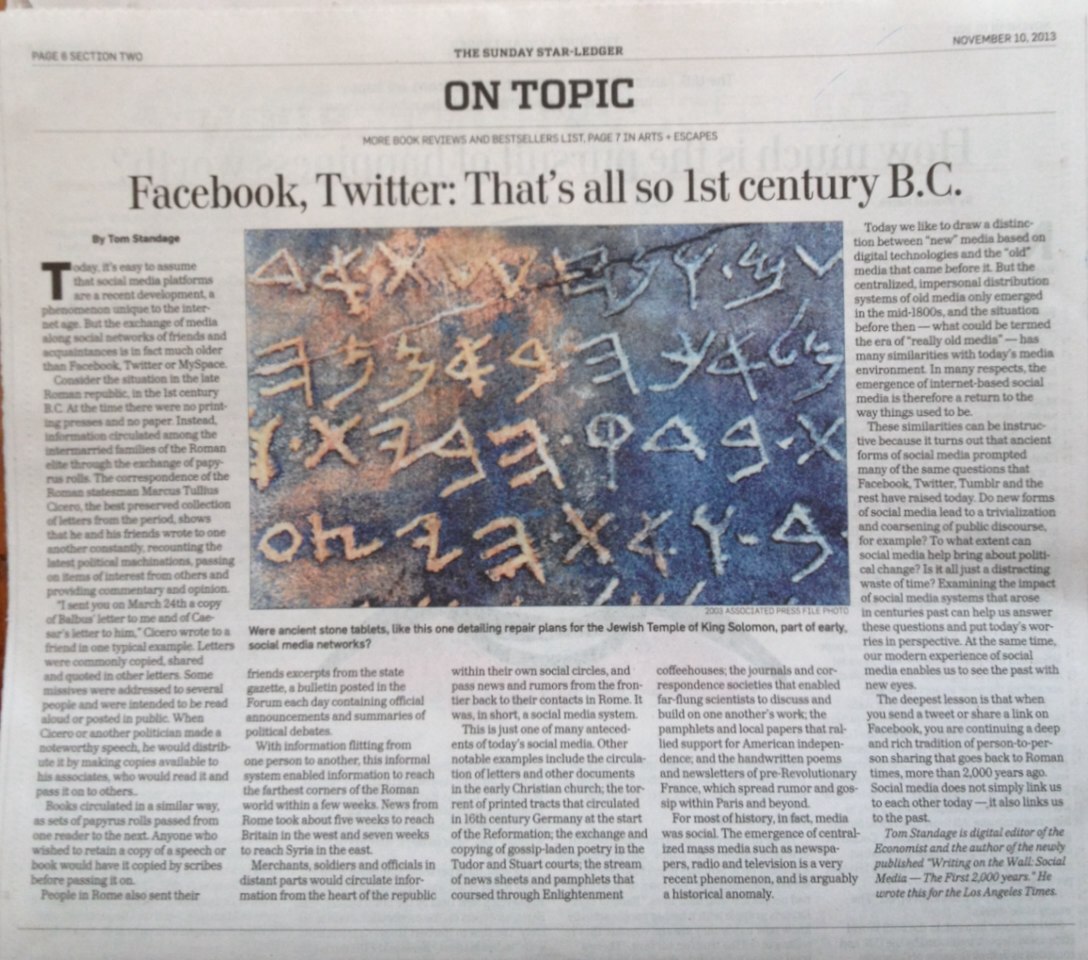
Every great once in a while somebody in the popular media seems to remember suddenly that the ancient world existed. I suppose that it is the fate of forward-looking species to forget the past, at least until it looks trendy. An editor for Sunday’s paper, for example, ran an article by Tom Standage, “Facebook, Twitter: That’s all so 1st century B.C.,” written originally for the Los Angeles Times. Tom Standage has written popular histories that go back to the Sumerians; I really enjoyed his A History of the World in Six Glasses. He’s got a great grasp of antiquity. In this short article, Standage points out similarities between modern, electronic social media and the distribution of gossip in ancient times. Indeed, he is basically right about writing: as soon as people learned to do it, it proliferated. Communication at a distance is such a wonder that we seldom pause to consider just how revolutionary it is. Social media has just made it that much easier. Instant thoughts, at the speed of light. Anywhere in the wired world. And yet…

SolomonFakeNot having been trained properly in journalism, I don’t know how newspaper articles are designed. People, I know, don’t like huge blocks of text without some visual candy. To illustrate Standage’s article is a close-up photo of some funky paleo-Hebrew letters with this caption: “Were ancient stone tablets, like this one detailing repair plans for the Jewish Temple of King Solomon, part of early social media networks?” I may be obsolete in the scholarly world, but I instantly recognized this inscription. It was “discovered” and rapidly disseminated in 2003. Almost immediately it was clearly demonstrated to have been a forgery. Scholars nowhere accept this as an authentic artifact. Even those of us who last saw this a decade ago know that it’s fake. Social media, indeed? Somebody in the design department needs to read their ancient history.

What is so striking about this faux pas is that most well-meaning readers have no way of assessing or ascertaining the validity of such an image. Oh, the script is cool, no doubt about that—but the artifact is fake. To answer the question posed by the caption: no, this is not ancient social media. It is a modern hoax. People are susceptible to hoaxes because of two factors: TMI and P. T. Barnum. Too Much Information exists for anyone to stay on top of it all. For progress to occur we need to rely on experts on the past to clear the way for us. Phineas Taylor Barnum knew how to turn any cheap scam into instant cash. It is no surprise that Solomon’s inscription first appeared on the antiquities market, certainly with an eye for cashing in on the success of the recently promoted James Ossuary, the one where someone much later added the phrase, “the brother of Jesus.” I’m sure that Tom Standage was in no way involved in the choice of image for the reprint of his article in our local paper. It does, however, suggest an old message that will even fit on your Twitter character limit: “There’s a sucker born every minute.”


Vampires Versus Science

Blade_movie

In keeping with my current explorations of vampire religiosity, I watched Blade for the first time. I’m aware that the figure of Blade is based on a comic book hero, but it is a series with which I’m unfamiliar. The movie is the basis of my knowledge here. The first interesting connection, or more properly, disconnect, between religion and vampires is the fact that in Blade’s universe crosses and holy water do not work. Vampires do respond to garlic and silver, and even to chemicals developed in medical labs. The faith-based origins, however, have disappeared. At one point Karen tells the vampire Frost that he’s just infected, like with a virus. Vampirism was, historically, based on diabolic influence and the signs of the “one true faith” had the ability to destroy them. In the modern worldview, however, organic chemistry holds greater promise. These seem to be secular vampires.

Still, not so fast—religion is not completely absent from this world. Frost conspicuously bears the cognomen Deacon, and he plans a revolution that will bring about the incarnation of “the blood god.” This is because of a prophecy in the book of Erebus, “the vampire Bible,” shown hanging in strips like so many Undead Sea Scrolls. Erebus, of course, is borrowed from one of the many Greek terms for sections of the Underworld. Hades is a general term, but an entire geography of the realm of the dead was speculated. Erebus may be translated as “deep darkness,” and thus is appropriate for vampiric faith. Religion is not absent, it is just that Christianity is irrelevant for vampires. They do, however, borrow the concepts of sacred scripture, sacrifice, incarnation, and even twelve disciples.

When Blade has his final showdown with Frost—now the blood god incarnate—it is the EDTA, the scientifically developed anticoagulant, that destroys him. A fascinating subtext lurks here. Although clearly intended as an action movie, the plot undermines the vampire religion with science. Frost believes that the ancient ritual, decoded from a forgotten language, will turn him into a god. When you need to bring down a god, science seems to be the best weapon. Vampires—Frost anyway—are believers. Karen is confronted with the existence of vampires by accident, yet she discovers the most effective means of killing them scientifically. In the bloody battle between science and religion, it is clear which side is most powerful in the vampire universe of Blade.


Heilige Geist

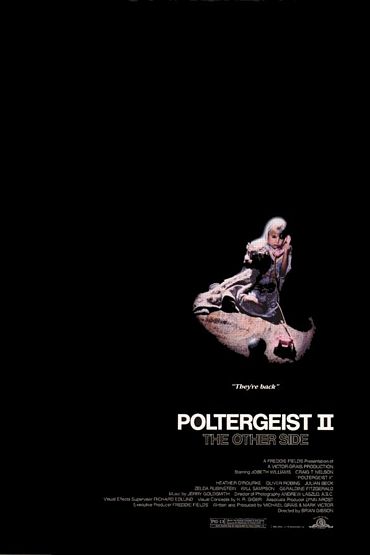
Poltergeist is one of those movies that evokes mixed emotions. Sure, it was one of the really scary ones when it just came out, and the rumors of a curse after the tragic early death of Heather O’Rourke probably added to the mystique. I actually didn’t see the movie until over a decade had passed since its release. It came out when I was in college, and I didn’t often splurge to see a movie in those days. VCRs were still expensive and your only real option was to rent a movie. In any case, a few years back I bought a cheap DVD and, after having seen many horror movies, it felt a little tame. And the ending was over-the-top. I have a theory that being unemployed makes you vulnerable to suggestion. Over the weekend I was looking for a movie I could watch for free on Amazon Prime, when Poltergeist II showed up. I hadn’t even realized that there had been a sequel, and after watching it, I think I understand why the movie was buried.

Poltergeist-2-the-other-side

Poltergeist II: The Other Side picks up where the original left off. An added character, Taylor, a Native American shaman, brings good spirits to the Freeling family as the original poltergeists start to haunt Diane’s mother’s house, where they are staying. Interestingly, the ghosts are revealed to be those of a traveling, apocalyptic preacher and his followers. The preacher, Henry Kane, led his group to the desert where they awaited the end of the world and then died after it did not come. They were apparently the ghosts haunting the original Freeling house, and not those of the “Indian burial ground” that the first movie touted. Taylor brings the healing, Native American spirits into the conflict and they win out over the Christian sect ghosts. All of this was becoming more unbelievably campy until Carol Anne was rescued by her now deceased grandmother, in the form of an angel. This mythological cocktail left me feeling a bit dizzy.

Some interesting subtexts floated through this film. Native Americans were now good, rather than the haunting spirits of the first movie. Kane’s sect, which had to be a veiled reference to the Latter Day Saints, showed Christian millennialists as the truly dangerous otherworldly residents. Kane is a preacher (and Mezcal worm) that doesn’t really want to pass over into the light. Why he travels all the way to Phoenix to try to pick up a nine-year-old girl isn’t really clearly explained. Horror movies, of course, frequently make use of religion as a vehicle for what truly frightens. Often it is religion misunderstood. Kane was not a believable character, in this case, without the abject cynicism of an unholy ghost who traveled to the desert southwest to set up a new religion. Once Mormonism breaks into the mainstream, perhaps I’ll have the stomach to watch Poltergeist III and see where the evil shifts the next time.


Voting Vicissitudes

“Remember, remember, the fifth of November, the Gunpowder Treason and plot. I know of no reason, why the Gunpowder Treason, should ever be forgot.” Election day fell on November fifth, and as I watched V for Vendetta again, I was reminded how true it rings. Religious leadership takes over government, the common person becomes an enemy of the state, and criticism is treason. Tea, anyone? I’ve always had a soft spot for dystopias, but the world of V is entirely too plausible at times. I have watched rational people transformed by fear and the certainty of religious dogma into those who will do what they are told without question. The movie always gives me a profound hope that the human spirit is larger than the powers that be. V can also stand for Vote.

I cast my ballot knowing that a vote against a governor who enjoys the bully image was indeed close to a lost cause. People are enamored of power. In my deepest Jedi dreams, however, I know that the most powerful moment in Star Wars is when Obi Wan turns off his light saber to allow himself to be struck down. There is a power, one upon which entire religions are premised, in the self-sacrificial act. It’s not that I have anything against Parliament; I saw it just this past year and enjoyed the experience in a way that Guy Fawkes could perhaps not have appreciated. As Evey says, “this country needs more than a building right now. It needs hope.” I guess we can hold on another four years. V can also stand for five.

“He’s a deeply religious man and a member of the conservative party. He has completely single-minded convictions and has no regard for the political process. Eventually, his party launches a special project in the name of ‘national security’.” So V tells Finch concerning a dictator who could be wearing any number of political masks in our world. We hand power over to those who encourage our fears rather than those who inspire our imagination. Camelot died in 1963. It is not so difficult to imagine a world so much better than the one we’ve constructed, but plutocracy does prevail when people do not take the implications of their religion seriously. When we only glance at the surface, the deeper message gets lost in the mythology of it all. November fifth is a myth that still has the potential to change the world. If we would allow it.

VoteV


Just Ducky

An innocent trip to Kohl’s. I was really just along for the ride since buying clothes is not really my thing, but I’d been spending quite a bit of time at home alone, pondering my fate. We’d just changed the clocks, so we had an extra hour and my wife needed a few things. Once there popular religion gave me the old Joab-and-Abner treatment, if you know what I mean. I’m not completely naive about movie tie-ins—they are big money for all kinds of products, especially food (both fast and slow). As if eating that burger will somehow make you more like Captain America than will a few brisk minutes on the treadmill might. In any case, I’ve known Kohl’s to support charitable causes in the past: buying a children’s book or plush animal for a donation to a wildlife conservancy or some such socially conscious promotion. I was a bit perplexed to find a tremendous amount of Duck Dynasty gear in the store on my recent trip. Being outside New York City, we are hardly rural. I mean, Kohl’s sells clothes, right? But there were Duck Dynasty bauble-heads, Duck Dynasty fanny packs, and even a whole stand of Duck Dynasty books. From conserving animals to shooting them.

IMG_1105

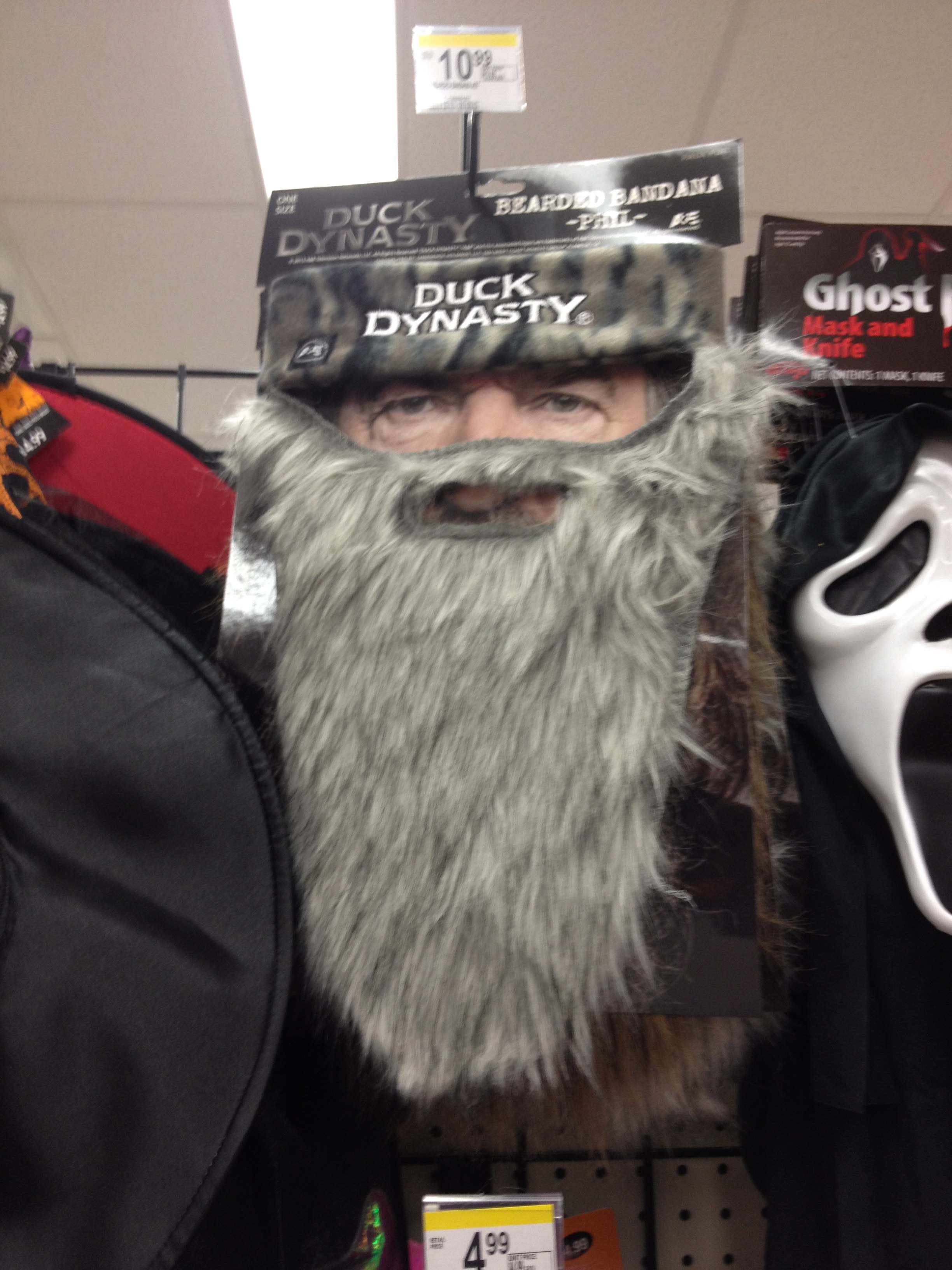
I realize Duck Dynasty items are big money. At a local store just before Halloween I spied a Duck Dynasty costume—fairly simple; a ZZ Top beard and you’re good to go. While getting a haircut the other day the girl, young enough to be my daughter (literally), said “You gonna keep the beard?” I told her I hadn’t shaved since 1988. Her response? “Well, at least you don’t look like those Duck Dynasty guys.” Like Rip Van Winkle (whom I understand also sported an impressive beard), I feel like I’ve been asleep for quite a long time. When did facial hair come to equate home-grown evangelism and love of shotguns?

IMG_1083

To calm my nerves, I signed onto Amazon.com. Prior to becoming dramatically unemployed, I used to treat myself every once in a while to some reasonably priced reading material from our Seattle savior. Naturally, they want you to buy more, so they suggest other books, based on viewing patterns, and, more importantly, purchasing records. That’s where I saw the Duck Commander Devotional, complete with a duck-themed camouflage cover. Now I think I finally understand. Reading the Bible for yourself (like Phil Robertson does) is too much trouble. It is easier to have the hirsute heroes of Louisiana tell you what the good book says. Maybe it’s just me, but it seems like religion might be going to the birds.


Vampire Science

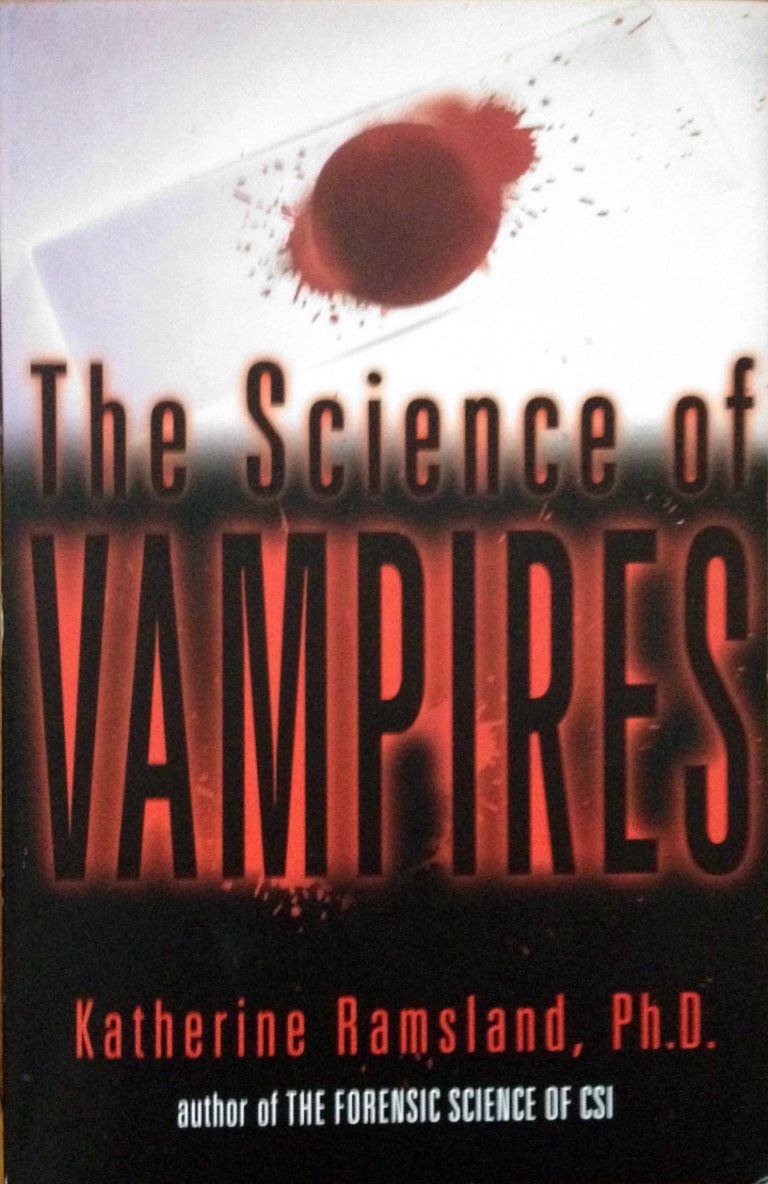
ScienceOfVampiresHow is one to take a book that combines science and vampires? That was the thought going through my head as I stood in Borders during the sad process of their going out of business sales, Katherine Ramstand’s The Science of Vampires in my hand. I knew already that I would buy the book—how could I not?—but I wasn’t sure whether it had been placed in non-fiction by accident or not. Ironically, I began reading the book on the day I was ultimately informed that my position had been made redundant. Vampires have been much on my mind since then. For several days I couldn’t concentrate enough to read, which is a kind of vampiristic encounter in its own right, in my case. Now that I’ve finished Ramstand’s study, I’m still not sure what to make of it.

Holding a Ph.D. in Philosophy from Rutgers University, Ramstand knows the fields of forensics and the supernatural surprisingly well. The Science of Vampires does indeed address the mythic creatures from a forensic perspective. The lore of the vampire is thoroughly examined and subjected to scientific scrutiny. Surprising results sometime arise. The book also contains its share of very disturbing material, more along the forensics than the fictional vampire side. I put it down woozily more than once. Yet, I found considerable insight here. Ramstand, although not focusing on the religious element, readily acknowledges the deeply religious nature of the vampire concept. She tends to focus on the scientific, rather than the spiritual, but she does have a telling interview with a professional counselor with a theological background. She quotes him as stating that he vampire is the disenfranchised among us—the pariahs of society: the homeless, people of color, those of differing sexual orientations, the working poor, the unemployed. Okay, I’ll admit that I added that last one to the list. I do, however, understand the point.

While supernatural powers may not create vampires, our society does. There are those who drain others of their resources, and there are those who are cast out. Both, in this post-modern world, might be considered vampires. At times Ramstand almost had me believing that Dracula might be more than fiction. As I read accounts of the horrors some people remorselessly perpetrate against other human beings, it seems that a vampire might be the lesser of two evils sometimes. As a symbol, both religious and secular, the vampire has proven to be irreplaceable. Hopefully some day we may outlive our use for those who prey on others.


Final Frontier?

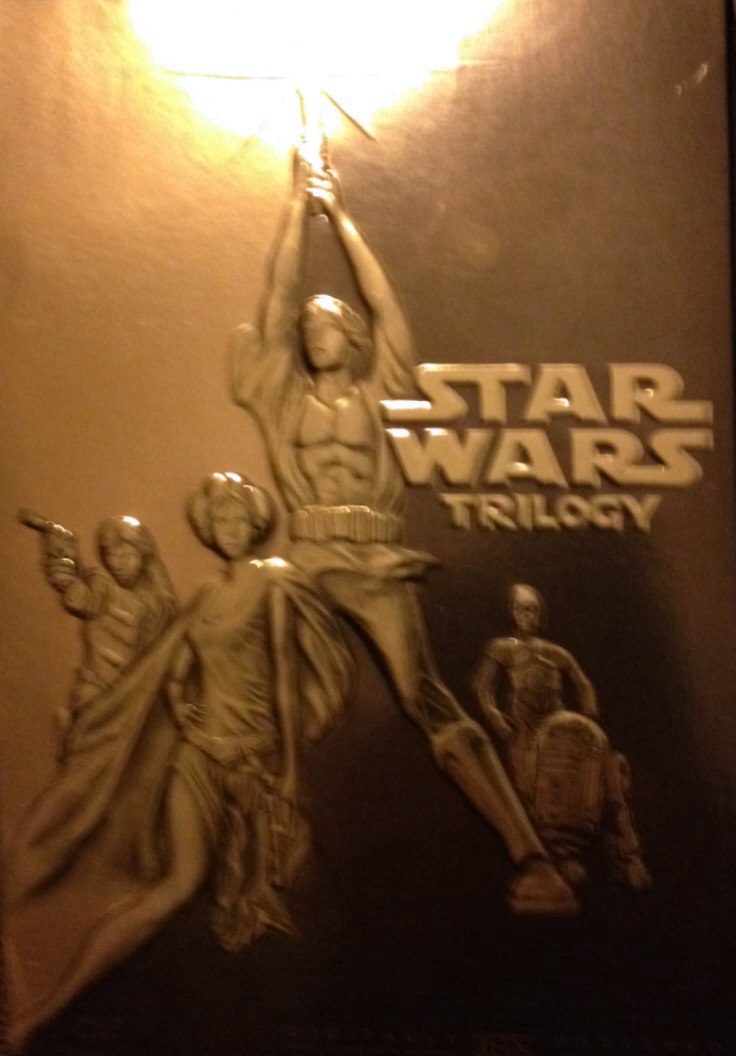
Stay away from the dark side. That’s generally good advice. Ironically, new religious movements (NRMs, in the biz) have come up in my conversations quite a bit lately. Some of my friends have suggested that I start a new religion—job security would no longer be an issue. I’ve been studying religions my whole life, and at times I’m sorely, sorely tempted. Meanwhile a friend pointed me to a story on Details.com about Jediism. Yes, there is a religion based on Star Wars—actually, I shouldn’t be too hasty here. There is at least one religion based on Star Wars; likely there are many. The question that is indubitably raised is okay, so do these people actually believe this stuff? Don’t they know Star Wars was written by George Lucas? How can it be a religion? I can only respond with: Have you ever heard of Scientology? Religions do not have to be believable to be believed in. History has shown that time and again.

StarWars

Jediism is based on the teachings of saints like Yoda and Obi Wan Kenobi. What they are teaching is straight Joseph Campbell. Served neat. Good versus evil. A sense that a cosmic force surrounds us. The hero’s journey. The same thing can be found in the Bible. Wrap it up in a Jedi cloak or in a Galilean robe and the end result isn’t much different. I’ve seen bumper stickers suggesting that Obi Wan died for my sins. Just as long as good wins out in the end, who’s to complain? Does it really matter if it happened a long time ago in a galaxy far, far away or just away in a manger?

The problem with religion is that we lack a proper definition. Christianity clearly uses the word to describe itself. When looking at those who thought differently (adherents of Judaism, Roman paganism, the great goddess of Syria) early Christians had to call them something. If Christianity is a religion, so must they all be. Some religions, however, are not based on belief, but practice. To be is to do. Some religions are based on historical people, some on fictional people. Some are very serious while others are difficult to tell. Some religions are ancient, but looking at the state of the world it’s hard to say that they’ve been terribly successful. So when a bunch of sci-fi fans think they’ve discovered the truth in the mind of George Lucas, who’s to argue? And I really do mean that about keeping away from the dark side.


Sacred Fear

Last week’s Time magazine ran a story about fear. I’m no stranger to this emotion, so long ago I decided to engage it creatively rather than run away. The article, “Monsters Inc., Inside the weird word of professional haunting,” by Lily Rothman, contains the laments of those who operate seasonal haunted houses. People are just getting too hard to scare. Some blame violence in the media and computer games, a large-scale desensitization to the suffering people might cause to others. CGI has made the most hellish nightmare realistic in the theater or on the small screen. If you can imagine it, it can be brought to life. Yesterday was Halloween, the day we’re allowed to be afraid. Of course, those who fear the influence of negative emotions on children have cute-ified the frights: bulbous air-filled creatures lit up from within billow harmlessly in front lawns, monsters of various sorts sport silly grins, and humor is liberally sprinkled in with the horror. One haunted house owner wanted patrons to walk through naked, so they could feel vulnerable. Today most people will wake up to just another day of work, while others will roll out of bed ready for All Saints’ Day and a rousing chorus of Vaughn Williams. Some of us will still be scared.

DSCN0216

Thrice I’ve had to face the highly secretive severance agreement offered by employers who know that people over forty have a difficult time rebuilding a career. I know that in this I’m not alone. If it hasn’t happened to you, here’s how it goes: you show up to work one day and begin doing whatever it is someone pays you to do. Depending on the size of the organization, either Human Resources or some level of supervisor will innocently invite you to the office. They will have solemn smiles on their faces. The door will be closed. You will be told that, for whatever reason they wish to give, your services are no longer required. In return for your silence you’ll be offered some kind of adult care package. You’ll leave shattered and stunned and willing to sign anything slipped under your nose.

The secrecy’s the thing. I’ve never revealed to anyone, under pain of prosecution, what any of those agreements said. What I have noticed, however, is the fear. The lawyer-instilled fear of bad press. Organizations want to be thought of as caring and concerned. They do not want any clandestine information released. Truth seems to be the greatest engine of fear in the corporate world. A few years back, before the Bush-whacking of the economy, I read about optimistic companies practicing “naked business.” Revealing vulnerability. I immediately admired the idea. Like walking through a haunted house in the nude, businesses could demonstrate that they have nothing to hide. But there’s real fear here. Like a ghost, truth can pass through walls. Like Godzilla, truth is indestructible. Like the invisible man, naked truth just can’t be seen.


Conscientious Ghosts

It’s finally Halloween. In keeping with the spirit of the season, NPR recently ran a story on ghosts. I’ve posted on the topic of ghosts several times since they are inherently a religious phenomenon, whether they actually exist or not. Empirical method only takes us as far as that terminal border, but not beyond. Since we all face death, the question of ghosts is intriguing to many people. In some parts of the world, according to the NPR story, up to about 90 percent of the population believes in ghosts. They have been part of the religious thought of humanity since writing began. Ghosts have haunted us from earliest memory.

What makes the NPR story so interesting is that there is a kind of moral consciousness that runs through the story. An interview with Tok Thompson, an anthropologist at the University of Southern California, makes up part of the story. Thompson notes that ghost stories often concern unresolved justice issues. He cites the overused “Indian burial ground” motif as an example—where there is a collective guilt, ghosts tend to gather. Slavery is another such social injustice, and again, ghosts and slaves are no strangers. Christianity tended to push justice off into the afterlife. The fact is many people do not receive fair treatment in their lives. Some of them are very good folk who just never get a fair chance. That troubled early Christian thinkers into making Heaven into a place where the reward came. It also, unsuccessfully, tried to suppress the idea of ghosts. Ghosts problematize such easy theology. What are they still doing here when Heaven, Hell, or Purgatory should suffice?

Hammersmith_Ghost

The NPR story even addresses the idea of possessed dolls. Tok Thompson notes that the word “doll” derives from the word “idol.” This sheds a whole new light on Barbie, I suppose. An idol is an image representing a deity. In the Judeo-Christian tradition religious statuary was problematic at first. Again, Christianity bucked the trend by allowing images because people naturally want to see what it is they believe. Stories of haunted dolls and statues and other inanimate devices are difficult to accept. They are, however, deeply religious. That’s because ghosts represent what we really believe. Death is the most parsimonious of thresholds. We can’t look over at the other side, but, if ghosts exist, they may give us a glimpse beyond human sight. And that seems like an awful decent thing to do.


World War 1.2

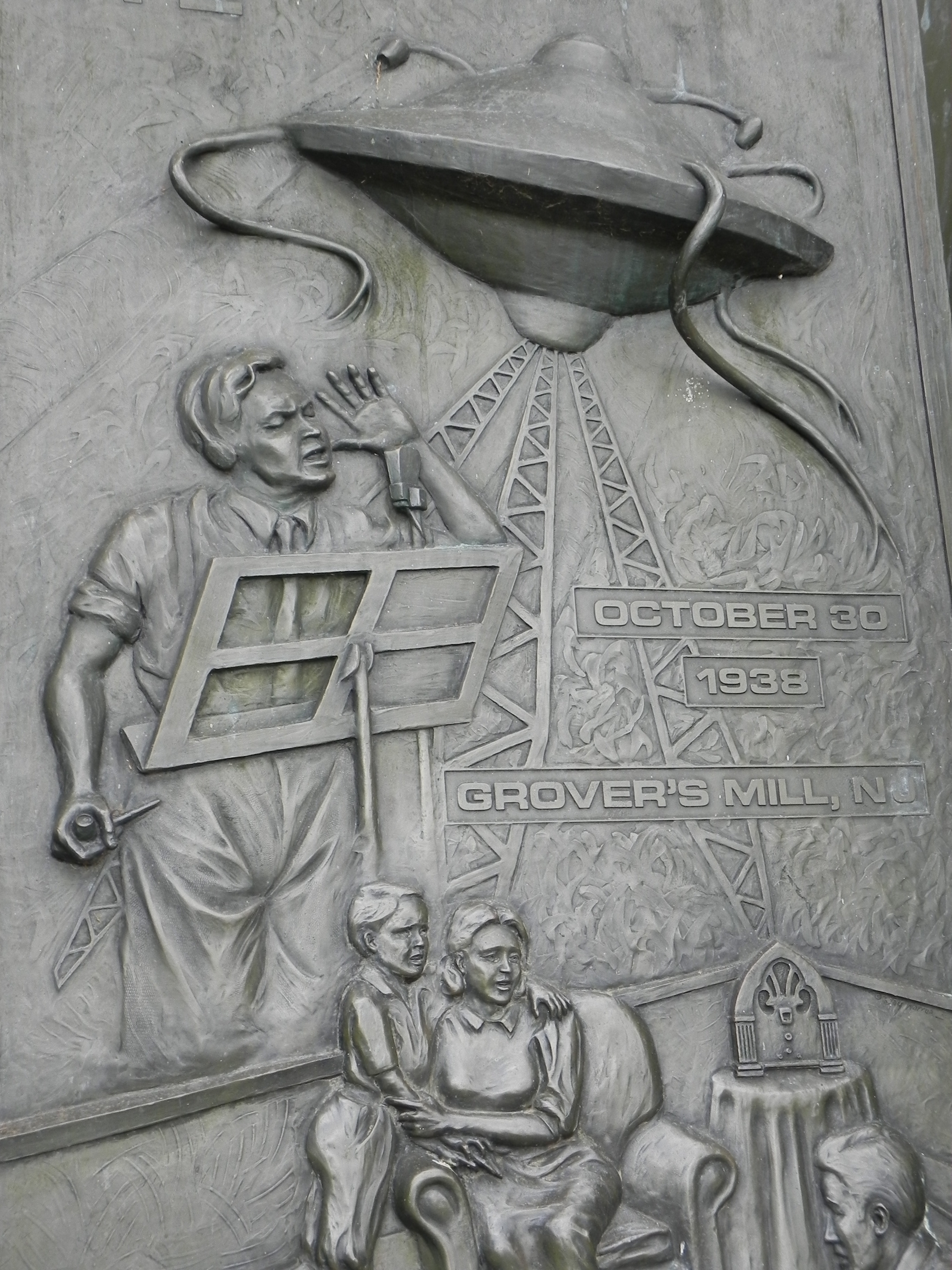
75 years ago today Orson Welles presented a radio drama version of The War of the Worlds. Perhaps it was the looming fear of the Second World War in a society that hadn’t yet overcome the trauma of the First, or perhaps too few people had read H. G. Wells’ novel, but the result was surprisingly catastrophic. Panic arose as listeners supposed that the invasion was real—the broadcast, although announced as a radio drama, followed a news bulletin format that overrode the rational faculties of many. This episode would influence government decisions about what to reveal to the public for years. And, naturally, it all began in New Jersey. Unlike the novel, the radio broadcast set the invasion, initially, in Grover’s Mill, New Jersey. This tiny town is difficult to locate even today, falling as it does between the busy north-south roadways that run through the central part of the state.

DSCN4241

The Hindenburg disaster had taken place the previous year in Lakehurst, New Jersey. Welles, impressed by the radio coverage of that celestial fear, used those broadcasts as models for his play. A few weeks ago I ventured to Grover’s Mill to let my imagination roam free for a while. A great deal of history may have been determined by that broadcast and the public reaction. We are ready to believe that danger lurks above. The First World War began to make early use of the airplane as a weapon. The sky, previously, had been obtainable only with the slowly moving balloon. Only eleven years earlier Charles Lindbergh had crossed the Atlantic by plane for the first time. The Second World War would see air combat as a major component of victory, also for the first time. My mother grew up in New Jersey, watching planes searching for German U-boats off the shore. The skies were not so friendly then.

DSCN4239

As I stood in Grover’s Mill, I recollected an unpublished book I once wrote about the weather in the book of Psalms. The thesis, somewhat loosely, suggested that for the average person the sky reflects the mood of the divine. Dramatic clouds still look angry, even when God is removed from the equation. The Reagan era gave us all new things to fear raining down on us from the skies. September 11, 2001, brought the skies crashing to the earth again. Invasion from above is an apt way to add a chill to Halloween, for it takes the prerogative of the deity and makes it either human or alien. At least most people who believe in God think he’s on their side. When the Wright brothers took their heavier-than-air craft briefly to the skies in 1903, The War of the Worlds had only been on the market for five years. The coming decades would drive God from the skies and we would come to learn that what falls from above would no longer have our best interests at heart.


Hungry Again

The_Hunger_film_poster
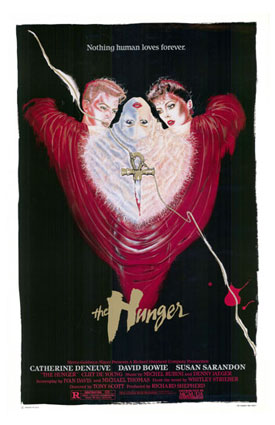
Vampires are on my mind. The funny thing is this often is the case when I’m unemployed. Feeling lost and alone, I settled down to watch the most depressing vampire movie I know, The Hunger. Miriam Blaylock, an unaging vampire, has made her way through history by taking lovers with the promise of eternal life. As she makes her lovers vampires, they survive centuries as young people, but then suddenly age and die within days. Terribly artistic (how could it not be with David Bowie as the male lead?), the film has a very heavy atmosphere and a calculating coldness as Miriam promises her lovers that they will live forever, knowing that once the aging begins, their decaying corpses will continue to live, weak, hungry, and wanting to die. I did say that it was depressing, right? The vampire, besides feeding off the essence of others, is concerned with eternal life. Religious symbols do not affect Blaylock and her ilk—in fact, they wear knives hidden within ankhs to stab their victims. The ankh, the Egyptian sign of eternal life, is the means of death. The only way to live forever is to feed off others.

Like many of those who pay attention to society, I have been fascinated by the enduring power of the vampire. When I was a child watching Dark Shadows on TV after school, I supposed vampires were things kids were interested in—the adults I knew had other things on their minds. As my generation grew, however, the vampire grew along with us. We had Interview with a Vampire, Lost Boys, Buffy the Vampire Slayer, Blade, Underworld, the Twilight series, I am Legend, Van Helsing, Priest, the Vampire Diaries, and on and on and on. Why are we so fascinated with a mythological creature? The vampire is profoundly religious and deeply symbolic. Evolution endows us all with a will to survive, the desire, if you will, of eternal life. The vampire is the symbol of that hope with no constraints. We are taught, and some of us even believe, that other people have the same rights as we do. The vampire’s urges, however, overwhelm even personal conviction and we are all potential victims.

Vampirism may be the ultimate symbol of our society. When future historians look back on the late twentieth and then the twenty-first century, won’t they see a world of profoundly deep inequality? Won’t they see multiple millions being sucked dry by the reassuring words that they are “middle class”? In The Hunger, daylight, crosses and mirrors do not dissuade the undead. Miriam needs her lovers, even though it will mean an agonizing unending end for them. Promises are made, and, when broken, the lovers are too weak to fight back. And her wealth increases with every generation. I lost my job at a very profitable company. Those who remain, on top, do not suffer fear of want. I look at Miriam Blaylock and wonder what it must be like to think that way.


Omega Alpha

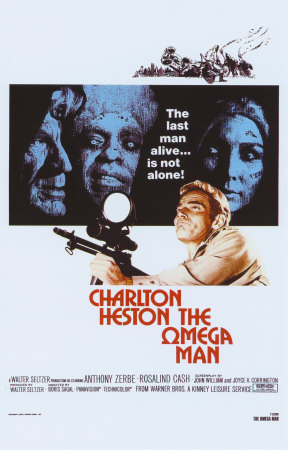
The-Omega-Man-Poster Perhaps out of a warped—perverse even—sense of self-punishment, I watched The Omega Man. Being unemployed will make you react that way. I have a pretty high tolerance for theatrical assault, as my regular readers will know. For those of you with less self-destructive penchants, The Omega Man was the second cinematic adaptation of Richard Matheson’s novel, I Am Legend. The first movie version, The Last Man on Earth, was released in 1964, starring Vincent Price. The most recent version, borrowing the novel’s name and starring Will Smith, is the third and best attempt so far. In any case, The Omega Man opens with Charlton Heston thinking he’s the last man alive, and even that doesn’t stop him from taking his shirt off at every opportunity. That I could tolerate, however, had the movie not strayed from what I thought was its central premise—that Robert Neville was alone with a city full of vampires. Although Vincent Price did not, uncharacteristically, make a convincing last man alive, the earliest version at least retained the vampires. The Omega Man, perhaps in the spirit of 1971, substituted them for religious fanatics.

The substitution didn’t bother me so much, but the religious fanatics were pathetically acted. Leibowitzian, anti-progress monks, hating the science that led to the nuclear holocaust that made them photophobic night dwellers, they snack on sardines and graham crackers, but only come out at night to kill scientists. Well, only one, since Neville seems to be, uh, the last man on earth. They accuse him of making the wheel and using technology as they run around in off-the-rack children’s Halloween costumes acting otherwise infantile while Heston strikes dramatic poses, grimacing with a variety of machine guns in hand, as he simply shoots them. That’s not the way the world’s supposed to end. The vampires have become a religious society doing everything short of handing out tracts on the corner. Well, maybe it is the end of the world after all.

It is difficult to portray loneliness effectively. Those of us who’ve been there know it intimately, and somehow Charlton Heston has too much fun with it. Even Vincent Price had trouble making it look convincing (I mean, who still uses a saucer when having their coffee and wears a tie after the apocalypse?). Will Smith at least showed a man occasionally breaking down in tears. Charlton Heston doesn’t cry. And he doesn’t shy away from god-like delusions. When he finds the other survivors (or they find him), we learn that Neville has been attempting to cure the religion virus. Dutch says, “Christ, you could save the world.” Neville doesn’t deny the obvious messianization of his mission. In fact, pseudo-crucified on a piece of modern art, Neville receives a spear-thrust to the chest, and dies in cruciform posture in a pool of his own blood. His blood that has the antibodies to save the world. Sound familiar? For all the blood, the vampires are gone. And when I feel that the world is against me, I want to see vampires.


Human Resources

I’m thinking about how we blithely accept cruelty and christen it “just business.” It’s legal, and even encouraged. Was a time when you wouldn’t dare trade with a stranger because he might cheat you. To make a deal implied a relationship. To get away with something unseemly you had to be able to look someone in the eye and take advantage of her or him anyway. Oh, we’ve sanitized it alright. Most workers never meet the CEO. His hand doesn’t even deign to sign the paycheck. The workers are forced to trust nevertheless. Don’t worry, it’s just business. Or is it?

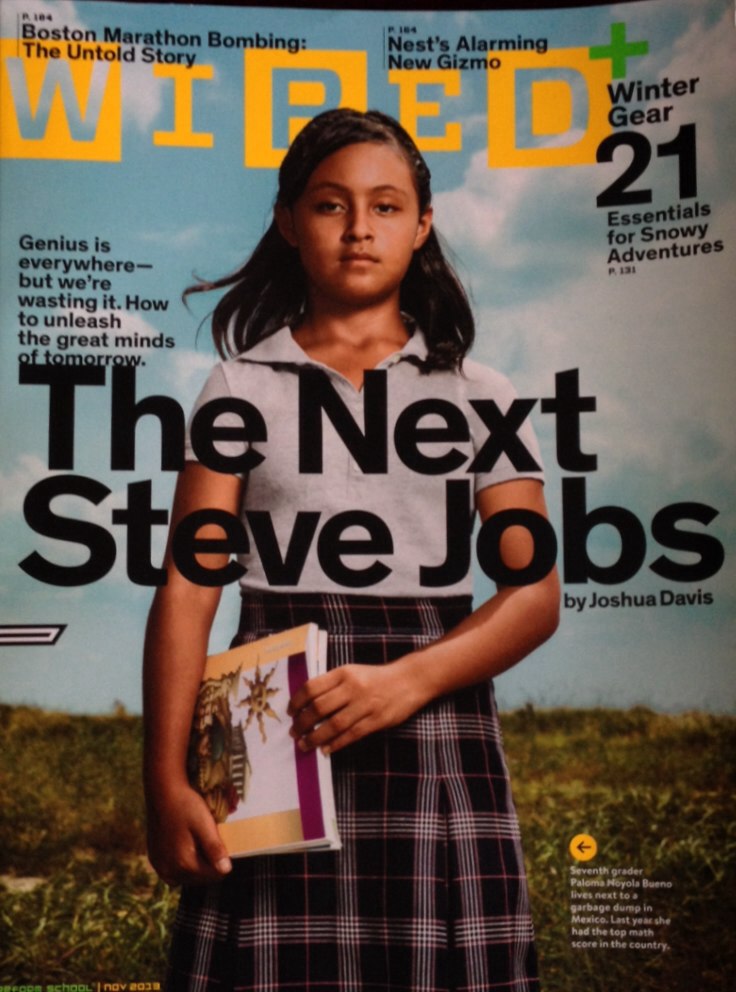
Wired GeniusThe system, of course, favors those with the loudest voices, and those voices speak the language of Mammon. We don’t dare upset the order, believing we will get ours some day. Delusion is so sweet. On the cover of Wired magazine is a little girl. The caption reads, “Genius is everywhere—but we’re wasting it… Seventh grader Paloma Noyola Bueno lives next to a garbage dump in Mexico. Last year she had the top math score in the country.” Careful, Wired, you’re beginning to sound socialist. Bueno was on the cover of a major magazine because she was discovered. Those who remain hidden far outnumber those who claim far more than their share of capital. You don’t make it to the top unless you crawl over the other caterpillars. When you reach the top, as Trina Paulus sagely warned, you find there’s nothing there. Just human detritus beneath your feet.

Business has come to mean “cold and impersonal.” Keep the human element out of it. In fact, the term “just business” is a very effective shield against all kinds of unethical behavior. And it is the model on which we shape our society. Is it any wonder that the economy takes such precipitous tumbles? Funnily enough, those who support “business ethics” such as these most vehemently also claim the title “conservative Christian.” Unless Christianity has thrown its moral compass into the sea, there’s no legitimate way to claim the latter half of that moniker. We praise and wonder at our Einsteins. How many of them died in the gas chambers and ovens of the Nazi regime? How many of them have starved in Africa? How many never rose above the crippling poverty of Mexico? Perhaps it is time we as a society demanded a stop to the wastage. “Waste not, want not,” should be our mantra. And if those at the top can’t show what they’ve done to help their fellow human resources, perhaps they should live next to the garbage dump. Don’t take it personally, one percenters, it’s just good business.