Animal Spirituality

I had little scientific basis for my claims.  It wasn’t that I didn’t have evidence, but it was more one of those “if you see something say something” kinds of scenarios.  I have been claiming for many years that animals experience some kind of spirituality.  My evidence was drawn from disparate scientific materials I’d read, along with ancient religions.  Egyptians believed baboons worshiped the sun.  Chimpanzees make threatening gestures toward the sky during thunderstorms.  Penguins grieve.  Human spirituality, it seems to me, is part of our kinship with other living creatures.  Then I found an article by none other than Marc Bekoff titled “We’re Not the Only Animals Who Feel Grief and Spirituality,” in no less a prestigious place than Psychology Today.  Bekoff, some of whose books I’ve reported on here, has studied animal emotions professionally.

Our ideas of human exceptionality, it seems to me, often get us into trouble.  Arrogance is perhaps the most dangerous of psychological states.  When we see ourselves as part of a continuum, and realize that it can go on beyond us—yes, there are likely greater intelligences—humility should be an expected response.  Those who are arrogant frequently experience their comeuppance, even if they have to get elected to high office for it to happen.  We share emotions with our fellow creatures, and, now according to at least one expert, we share spirituality.  What is spirituality?  It seems to be an awareness that the body isn’t everything.  In my lexicon it’s listed there right with consciousness, mind, and soul.  We know it because we feel it.

The interconnectedness of the world, and beyond, is something many want to take exception from.  Looking around, such folks say, “Hey, we’re different than all of this.”  Yes and no.  We’re different, but that makes us no less a part of it.  Nature is our matrix.  We build fancy houses, but so do bower birds, and they do it without benefit of opposable thumbs, or even hands.  Of late we seem reluctant to admit that even human beings have spirituality.  That doesn’t stop us from feeling it, however.  I’m glad that others see it in the animal realm also.  Anyone who’s “owned” a dog knows what it’s like to receive worship.  We’ve selectively bred these wolves to adore us.  Is it so much of a stretch, then, to suppose that other animals also feel a sense of admiration for what’s beyond themselves?  Only the most arrogant wouldn’t pause to consider it.


Book Birthing

Books, like humans and other animals, undergo a process of conception, development, and birth.  It may seem, when holding a book in hand, that it is the singular work of one person, but in fact most books are a community effort.  I’ve read many books where the author was a specialist in one area and decided to write a book in a different field.  This used to be more acceptable, as various polymaths showed that specialization wasn’t the only way to understand the bigger picture.  Such efforts these days, however, take some convincing of skeptical editors.  And with good reason.  Factual books, especially, are subject to close scrutiny.  Does the author indeed know what s/he is talking about?  Is s/he qualified to write this book?

Recently I was reading such a book.  It was published by a university press, and the author was a specialist in one field, but writing in an unrelated one.  In my mind (so fictionally) I went through how this may have developed.  A writer goes to an editor and says “I have an idea for a book.”  From my own experience as an editor, this second party then asks her or himself a few questions.  Is this topic a viable book?  If so, who will buy it?  Is this author the right person to write it?  (It is possible that a person has an idea for a book better written by someone else.)  Depending on the author’s stature, the editor may cave and say, “Okay, but you need to let me help you.”  Editors (present company excepted) are some of the smartest people I’ve met.  They may not be specialists like professors, but they know an awful lot.  Many authors constantly question their editorial decisions nevertheless.

No matter how rational an author is, emotion plays into the process of writing.  I frequently tell my authors “the book has to be what you want it to be.”  Still, that may mean it should be published by someone else.  An author who publishes books s/he doesn’t like is not a happy person.  For nonfiction books other readers, such as peer reviewers and colleagues, also shape the final tome.  Seldom does the book in your hands represent something straight from the mind of the writer.  There are places for such things, of course, this blog being one of them.  (And there are many more.)  What makes the book authoritative, however, is that it has been fact-checked by many readers other than the author before it ever goes to press.  Gestation is important.  No book can be fully formed without it.


How Clean Is Your Brain?

First it was in.  Then it was out.  Now nobody seems to be sure.  “Brainwashing” isn’t really a scientific term, but human suggestibility is very well in evidence.  Advertisers count on it.  Did I really need that phone case when I never go out?  And so on.  The real question is can people be compelled to do what they normally wouldn’t want to.  Think Jonestown.  Heaven’s Gate.  Waco.  Do people really want to die en masse?  Are we but higher lemmings?  I’ve seen hypnotists do their shows.  The human mind is manipulable.  We can be shut off from reason.  A recent article from The Middletown Press my wife shared with me raises the question whether conspiracy theories, such as those sported by QAnon, are something like brainwashing.  Clearly they are.  As are many Fundamentalist forms of religion.

You can recognize this when a conversation becomes such that the true believer simply won’t listen to evidence.  They’ll say they want to discuss an issue when all they really want to do is have someone state their side so they can tell them they’re wrong.  Reason has nothing to do with it.  When that part of their gray matter that handles things rationally feels backed against a wall they resort to ad hominem attacks.  I’ve been observing this since I was a child raised in such a paranoid religious tradition.  It works for politics, too.  For many QAnon sorts, Trump’s word was God’s word.  Once uttered it could not be refuted, not with all the evidence in the world.  It’s very much like Fundamentalist views of the Bible which can’t take context, translation, and reason into account.  When contradictions are blatantly pointed out they respond with “there are no contradictions.”  Is there brainwashing?

Conspiracy theories can seem real because there are actually some conspiracies.  There are government secrets.  Only the naive deny that.  Still, once you start throwing in the ridiculous—that a devil-worshipping cabal of pedophiles is running a secret government—you’re in water over your head.  Not only that, this sounds incredibly like the satanic panic that spread through much of the world in the late 1980s into the 1990s.  When the evidence was examined, it was found lacking.  Some of the key bestselling accounts were admitted to have been forgeries.  The believing mind, however, has trouble letting go.  We used to call fringe groups cults.  We used to suggest that people could be held against their will.  People leaving QAnon are reporting similar experiences, according to the article.  Brainwashing by any other name would be so real.


Gothic Dreams

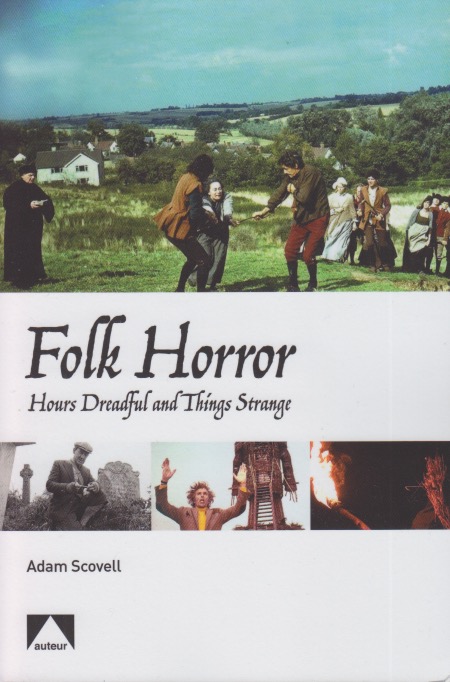
There’s something that compels a large number of people to consume material in the horror genre.  Whether it takes the form of movies, books, or music, it is a genre widely spread.  The gateway to adult likes seems to be in childhood.  As a young person I read about how many adults wanted to “re-live their childhood” and at the time I wondered why.  Now, as an adult of long standing, I think I can begin to see the answer.  In any case, my gateway into appreciating horror was the Gothic.  But what is gothic?  Like many abstract concepts I know it when I see it, but what exactly is it?  I’m not sure Nick Groom has fully answered that in The Gothic: A Very Short Introduction, but then the reason may well be in the “very short” part.  Nevertheless, this is a remarkably broad treatment of the subject in not so many pages.  It also helped me to understand my own fascination a bit better.

Groom begins with the historical Goths.  Like the Celts, they are a people without a prodigious written record, so the imagination takes over.  They valued freedom above all else, and that, it seems to me, is the beating heart of the Gothic.  Recognized through its architecture, especially in notable cathedrals, the incipient Romanticism in the style made its way into works of fiction.  In that realm it is remarkably widespread.  Shakespeare participates in it.  It becomes more fixed in later generations, but it still returns in popular format even today.  At several points in this brief treatment I found myself wondering at the connections.  Gothic is so huge and sprawling that it informs quite a lot of literature that isn’t even categorized with that title.

The story Groom sketches takes the Goths from their Germanic roots to their Anglo-Saxon influence in England.  For English readers, the genre really takes shape in Britain before spreading out into the many forms in which it exists today, including several species of American Gothic.  While the modern mind tends to turn toward the dark and melancholy aspects—and they are clearly there—the underlying theme of freedom comes through.  Thus the separation of ways between “Classical” culture with its rules and strictures and symmetry and the Gothic with its mystery, wonder, and romance.  By the end we’ve passed through Poe and on to modern horror.  And through it all I catch glimpses of what drew me to all this in a childhood of longing for freedom.


Christian Nationalisms

Ongoing analysis of the Capitol Riots continues as footage of the event is scrutinized.  Although the press is puzzled, those who study religion—underfunded and ignored in the academy—aren’t really surprised.  A recent story from the Associated Press explores how Christian Nationalism, one of the most dangerous forces in the United States, played a large role in the event.  Christian Nationalism is one example of what I call weaponized religion.  As someone who’s spent over four decades studying religion minutely, it’s pretty clear when religion begins to slip its moorings and is becoming radicalized.  Generally it begins when adherents refuse to hear any views but their own.  They believe their version of their religion is the only “one, true faith” and this gives them the mandate to attack any who believe differently.  In the case of Christianity it’s very difficult to see what any of this has to do with a carpenter from Nazareth.

Indeed, evangelical Christians themselves are exploring what is now being called “Republican Jesus.”  This Jesus isn’t the one from the Good Book.  Far from it.  No humble shepherd saying “turn the other cheek” fits this image.  Long ago I read Stephen Prothero’s American Jesus.  In it he analyzed how the American appropriation of the Jewish rabbi became a muscular, masculine fighter.  Not the kind of guy who’d let Roman authorities nail him to a cross.  And certainly not a softie who would favor outcasts, women, and children over the rich and powerful.  This image of Jesus, who draws a hard line on certain trigger issues, is as patently false as any reconstruction can be.  And yet it drives unruly mobs into the halls of power.  Universities, meanwhile, cut religion departments.

Photo credit: David Shankbone, via Wikimedia Commons

I don’t pretend to be a prophet, but this issue isn’t going away.  Our culture has long harbored the myth of America as the “new Israel.”  The leaders of Christian Nationalism are organized and they have a clear agenda to take over the country.  Like other serious issues that don’t have to do with making money, it’s simply overlooked as irrelevant.  When the mainstream media gets a glimpse at what’s been going on in such groups, it always seems surprised.  The kind of elitism that divorces itself from the everyday simply can’t be informed of what’s actually happening.  Religion is a very powerful driving force.  It motivates many far more than money does.  We see it plainly when it becomes weaponized.  By then, however, it could be too late.


Gothic Celts?

Two separate projects lately set me on the trail of preliterate Europe.  While this isn’t the best time to celebrate white cultures (timing has never been an especial strength of mine), I have been researching the Celts as part of a longterm project.  Not only are these people part of my ancestral mix, they are also mysterious.  Having arisen in central Europe, they were pushed to the margins of the continent by invading Huns from the east.  It’s from those fringes that I came to identify my heritage.  Not only do I have Irish ancestors, but Wiggins, it seems, is a Breton name.  The Bretons were a Celtic people on the northwest coast of France.  Since the ancient Celts didn’t leave a huge written archive, we rely on what others (such as the Romans) wrote, or what archaeology reveals.  Mysterious.  At the same time another project had me reading about the Goths.

The Goths are tricky to define, and again, didn’t leave literary archives.  Also politically incorrect, they were a Germanic people—another significant piece of my ancestry—and they must’ve lived quite close by the early Celts.  Although my parents wouldn’t be born for many centuries yet, their ancestral “tribes” may have known one another.  It’s fun to think about.  There’s quite a lot of interest in the movements of peoples in ancient times.  One thing that influenced both the Celts and the Goths were large, organized forces.  The Roman Empire, with what would come to be understood as Classical style, was one source of pressure.  Another was the aforementioned Huns.  The Romans considered all of them barbarians.  One of the results of these large pressures was the eventual establishment of nations in Europe, often with contested borders.

All of this splitting eventually led to nationalism, a dangerous force.  We’ve seen some of the end results in recent years.  A single nation thinking it is the best.  I’ve always felt that travel—difficult during a pandemic—is a great form of education.  Encountering the “other” on their own territory makes it hard to stereotype and boast.  Nationalism tends to lead to excessive pride, especially when a country is as isolated as the United States is.  And then it even tries to build a wall between one of only two neighboring nations because they speak a different language.  How different this is from the situation when Celts and Goths were moving somewhat freely across the European continent where, at the time, borders were fluid.  I realize I’m idealizing what was certainly not a perfect situation, but I also think Rome may not have been the best model to emulate either.


Ode to Snow Days

Once upon a time there were special gifts called “snow days.”  On these special days no one was required to report to school or work.  It was a caesura to late capitalism, albeit a brief one, in which the forces of nature triumphed over making everyone “go out” to work or school.  The pandemic has, of course, eliminated snow days.  Never again will there be the excuse of “I left my laptop at the office,” or “the roads are unsafe.”  The evil monster that enslaved all mortals of a certain class had won.  No brave knight, wearing mittens or not, dared face this great beast, and so nobody lived happily ever after.

There is a moral to this story.  Well, not so much a moral as an addendum.  During snow days we had time for our civic duty of clearing sidewalks of snow.  I begin work before the sun comes up, and consequently I don’t stay awake very late.  Over the past few days we’ve had several inches of snow.  It began falling Sunday morning, and it fell through Tuesday morning.  I had to take time out of my usual work schedule to shovel in the morning.  By that point it was already six inches at least of the kind of snow that’s so heavy that it starts to turn blue beneath the surface.  I hurried back to work since I had a couple morning meetings.  The snow continued to fall.  I normally don’t take a lunch break, but I had to on Monday, just to stay ahead of the snow.  After work, just before dark, I was out in it again.

The snow day, in other words, isn’t just about time off from work.  It’s also about taking care of things that need to be done in a weather emergency.  The idea of remote work being work without ceasing has really caught on during the pandemic.  Without office walls to constrain it, capitalism is free to take over our private spaces—and our civic duties—as well.  The dearly departed snow day was more than just a lark.  For younger couples it meant being home to take care of the kids when school was cancelled.  In other words, it was a day to acknowledge that weather is still in control.  We do need that reminder once in a while.  The snow out there is pretty.  It’s also deep.  More than that, it is even a symbol.


February Festivities

One of the more commonly overlooked holiday complexes comes around Groundhog Day.  It may seem strange to be thinking about spring right now, but it’s on everyone’s mind.  (In this hemisphere anyway.)  When seasons actually begin is a matter of perspective, and that’s not just a north-south hemisphere divide.  With our scientific outlook, we take the path of equinoxes and solstices.  If you look closely, however, there is a set of seasonal holidays that falls midway between them, dividing the year into eight spokes.  These cross-quarter days were recognized in some cultures as the early inklings of a new season beginning.  If Halloween (Samhain) marks the start of winter, this holiday, Imbolc, is the beginning of spring.  The day had many associations, one of which was watching a groundhog (or other animal) to see if the weather would begin changing sooner or later.  Spring itself is inevitable.

The popularity of Groundhog Day owes quite a bit to the movie of that name.  The film is more complex than its classification as a comedy might suggest.  Although the day itself does deal with the cyclical nature of, well, nature, repetition isn’t an inherent theme in the holiday.  Neither is it part of the related Christian celebration of Candlemas.  Indeed, I tend to think Groundhog Day has the makings of a horror story.  Being stuck in time could represent a terrible fate for many.  Interestingly, Phil Conners (Bill Murray), after having been stuck in this same day for a considerable amount of time, suggests to Rita Hanson (Andie MacDowell) that he might be a god.  He is immortal and he knows everything that is to be known in Punxsutawney.  He can predict things before they happen (of course, he has become Punxsutawney Phil, in a manner of speaking).

A philosophically rich movie, the story has appealed to adherents of several religions.  That, in itself, is amazing.  The endless repetition could represent samsara to those of south and east Asian religious inclination.  The learning to be kind, and even forgiveness aspects, appeal to those who want to find a Christian message in it.  Not bad for a holiday nobody gets off of work, and which frequently falls in the middle of the week.  The holiday complex of Imbolc, Candlemas, and Groundhog Day represents what had once been a more prominent season than we currently recognize.  Revivals of the more ancient celebrations have begun to appear, but the endless repetition so valued by capitalistic systems has nearly captured us all.


Growing in Intent

Balance has become a desideratum.  Ours is an age of extremism.  Black and white instead of shades of gray.  One of the unnecessary polarizations is that between science and religion.  Part of the problem, it seems to me, is the labels we insist on using.  Science is shorthand for evidence-based research—it is a way of understanding the physical world.  It doesn’t necessarily discount a spiritual world but its methods can’t engage that world, if it exists.  Religion is a poorly defined word, often one of those “you know it when you see it” kinds of phenomena.  Often it is characterized by blind adherence, but that isn’t necessarily what religion is either.  To me, balance between the two is an authentic way to engage the world and other human beings.

Take plants, for instance.  And take consciousness.  While consciousness isn’t always associated with religion, it is one of those things that falls out of the ability of science to measure or quantify.  We don’t really know what it is, but we know we have it.  We know some animals have it, but rather arrogantly assert it is only the “higher” animals, as if we comprehend the hierarchy of nature in its entirety.  We dismiss the idea of plant consciousness.  For many years I’ve been pondering intent.  Without it no life would be possible from sperm germinating egg to heliotropes following the sun.  There’s some kind of intent there.  Will.  Recently The Guardian ran an article about scientifically measured intent in bean plants.  Although many have been left scratching their heads, or pods,  over it, to me it makes perfect sense.

I planted an apple seed a few months back.  It finally sprouted in late December.  I carefully watered it, and put it by a south window to get sunlight.  It grew quickly for a few days and then began to wilt.  I watched helplessly as it gave up the will to live.  I’m no botanist, but I suspected it was the coldness of being set on a windowsill.  (Ours isn’t the best insulated house.)  December had been mild, and it sprouted.  January took a sudden shift to chill, and I realized that new plants outdoors wouldn’t sprout in winter.  The seed had germinated, but the plant had no will to survive in temperatures chillier than its genes told it that might be safe.  I’m not a scientist, but I observed this scenario carefully.  Is it possible that french bean plants show intent?  I think it would be more difficult to explain if they did not.


Contains Cookies

In the early days of this blog I used to get regular reactions from other bloggers.  This was back before I started the long commute to New York City and when I actually had a little spare time on my hands.  I always enjoyed the interactions, but followers eventually dropped away and I now often get no responses to my posts at all.  That’s why I was thrilled when two recent posts came together with a response one of my faithful readers sent.  I’d written about keeping books neat, along with a piece related to ancient food, when a friend pointed me to the story of a cookie found in a 1529 Cambridge copy of Augustine.  According to the piece on Delish, the cookie was left in the book about half a century ago and had only now just been discovered.

Photo by Mae Mu on Unsplash

Now, like most readers of religious studies, I have opinions about Augustine that aren’t pristine.  Still, I respect books.  I suspect all the bakery jokes necessary have been made about this particular bookmark, but what strikes me as odd is that nobody discovered a cookie placed in a book when I was less than ten years old, until now.  Let that say what you will—Augustine still sells wildly in translation, of course.  Not too many individuals go back to the source, however, at least not reading as far as the cookie.  I don’t know about Cambridge, but Edinburgh used to have books from the seventeenth century on the open stacks in the New College library.  I’m sure the older volumes weren’t frequently consulted.  And I’m not the one to point a finger; I have no catalogue of my own books so I have to remember what I already have.

Books aren’t a great investment, financially.  I remember back when Antiques Roadshow was all the rage.  Every episode I saw where someone brought a really old book led to certain disappointment.  No matter how rare, the value was measured in hundreds of dollars rather than thousands.  Those of us who invest in books do so for different reasons.  Our money is being exchanged for knowledge, learning, and thinking.  Back when Amazon used to give out bookmarks with each purchase one had a quote from Erasmus, “When I have a little money, I buy books; and if I have any left, I buy food and clothes.”  We are kindred spirits it seems.  Buy books and you’ll grow in wisdom, but you may go hungry.  That’s the way the cookie crumbles.


Mittens and Circuses

Bernie Sanders, since we’re now making up our own facts, clearly won this election.  Or at least the inauguration.  An inescapable meme of Sanders, bundled up with his notable mittens, has made major media as well as pedantic punters on the web.  Thanks in part to an app created to allow users to place Bernie anywhere, I’ve seen him at all kinds of places from Oxford University Press to Dirty Dancing to the exhibit halls at the AAR/SBL annual meeting.  As someone who suffers from the cold I was initially concerned that he must feel laughed at by it all, but Bernie seems to be taking it in good humor.  The only reason I bring it up here is a meme (I think) that my wife pointed out to me of Bernie among the Fond du Lac Circus.  I can’t find any credit for the creator, but it appeared on the Episcopalians on Facebook group.  (I don’t know how Facebook works, checking above the fold once a day only.)

I’ve actually posted on the Fond du Lac Circus before.  The photo was extremely popular at Nashotah House when I taught there.  The diocese of Fond du Lac (in which I once preached) is just north a bit in Wisconsin.  The photo was a celebration of the installation of a bishop with ecclesiastical haberdashery at its finest on display.  In my mind, Nashotah House stands for all that’s conservative.  I’m certain a great deal of the population supported Trump.  A former dean had a shrine to George W. Bush in the deanery.  I kid you not.  So seeing the most progressive senator amid that crowd of backward-looking clergy, apart from being unspeakably funny, made me reflective.

Many years of my life were spent among the Episcopalians.  Too many of those years consisted of feeling oppressed by the interpretation of “orthodoxy” held at Nashotah House.  The hubris of “the only right teaching” has haunted me ever since.  Faith can be a good thing, but it can also be extremely dangerous.  The greatest danger is when it ceases to be reflective.  Faith must involve constant thought and assessment to be honest.  Unthinking compliance was something Jesus, for one, simply didn’t accept.  Challenging the way it’s always been done is a venerable part of the agenda for those who start new religions, Jesus included.  When that religion becomes ossified (or too obsessed with appearances) isn’t it time to start looking toward the future?  Bernie Sanders is popular with the young.  They have little patience for the selfishness that’s been on display in American culture for far too many decades.  Would that he really attended the Fond du Lac Circus!  Perhaps a grassroots movement to improve conditions for all might’ve actually emerged long ago.


Bookstore Odyssey

Work isn’t the best place to express yourself.  Once a marketer asked for input from everyone concerning their favorite independent bookshop.  Well, I might’ve gone a bit overboard, admittedly.  I listed several, each with their attributes.  I was living in New Jersey at the time so The Bookworm in Bernardsville and The Labyrinth in Princeton featured large.  But so did Farley’s in New Hope.  And the Clinton Book Shop in, well,  Clinton.  Then my mind roved to the unfortunately deceased River Front Books in Binghamton.  Then back to Wisconsin where we lived within walking distance from Books and Company.  Then to Illinois before that, where Pages for All Ages was a hangout.  We’re spoiled here in the Lehigh Valley with the Moravian Book Shop in Bethlehem,  Book and Puppet in Easton, Let’s Play books in Emmaus, and plenty of used bookstores about.  And the Montclair Bookshop back in New Jersey—okay, I told you I went a bit overboard.

Ithaca, New York, is the very definition of a college town.  Home to Cornell University and Ithaca College, it has a sizable student population.  It once boasted seventeen bookstores.  By the time we’d started visiting they were down to one indie new book store (Buffalo Street Books) and two used bookstores.  Since then one of the used stores has closed.  Like a phoenix, however, a new indie has opened: Odyssey.  On a recent trip to Ithaca we stopped in.  During a pandemic I feel compelled to make trips short, but there was a lot to see there.  Like most indies, it’s small.  As Andrew Laties notes in Rebel Bookseller, such shops thrive by becoming part of the community, and stocking books the community will buy.

Our visit, I suspect, proves his point.  If you set up shop in a university town you can stock intelligent books and make a living at it.  Despite the weather and the virus we weren’t the only customers in the store.  And we didn’t leave empty-handed.  The independent bookstore is a symbol of hope.  Books are not clutter.  Literacy is not dead!  As much as our beloved internet tries to tell us the future is digital, I like to open the door and step outside once in a while.  And leave my phone behind.  During this pandemic I’ve gone to four kinds of stores only: grocery, drug/necessity, hardware, and book stores.  The pandemic has been a shot in the arm for trade books—bored with staring at screens all day, people are starting to read actual books again.  I’m not naive enough to think it will last beyond Covid-19, but I just remembered Watchung Booksellers in Montclair and the Town Book Store in Westfield…


Mothers’ Instinct

Maternity leave (not for me, but still) demonstrates just how sexist capitalism is.  This becomes very clear in publishing where schedules are reinforced by incentives (instead of paying properly) for meeting agreed-upon deadlines.  If an author gets pregnant while writing a book—not an unusual situation—it can throw shockwaves all through a book’s schedule from production all the way back up to editorial.  Why?  Because incentives are on the line.  It’s possible to counter with what if an author falls sick?  Or dies?  Yes, these happen too, but pregnancy isn’t an illness and isn’t infrequently a biologically constrained event—there is an age at which it ceases to become an issue.  So incentives, which are based on schedules drawn up before an author conceives, put the capitalist machine into a tizzy.

If employers didn’t rely on incentives, but paid better wages, this could make the issue less acute.  The entire system is devised from a male perspective.  Sickness and death do occur from time to time, but the invariability of a schedule (which ironically takes about nine months) is based on a view that doesn’t account for the somewhat likely event of a pregnancy.  I often think about this.  The corporate structure was made by men, for men.  We now give lip-service to equality while refusing to change the masculinist structure that underlies it.  By doing so the valuable contributions and improvements that women might make are kept under the standard business model.  No wonder it feels like we’re stuck in a rut.

Societal change is generally slow, and that conservative tendency preserves our property and our means of making a living.  If we gave women more prominence in leadership I would hope that this would start to change.  The male-oriented viewpoints of the capitalist entrepreneur, the stolid religious leader, and the halls of government, and even education, are reluctant to let people think differently.  We want to move forward, but we’re afraid of losing what we have.  This is why the conversation needs to widen.  Maternity leave reminds us that some things are more important than work.  Care for a helpless human being is something nearly all people would support.  It’s when they grow up that society feels it can safely ignore their needs.  We need a mother’s wisdom here.  Every time a pregnancy sets publication schedules in a frenzy I ask myself why we have to rely on incentives beyond just being the most human that we can be.


Learning Lingo

Languages are more than ways of communicating.  They are ways of thinking.  I figured that out with German, the first foreign language I studied.  It became even more evident with Greek and undeniable with Hebrew.  Beyond that, Ugaritic and other Semitic languages confirmed my suspicion.  To unlock a language is to open up a new way of thinking about things.  (This is one reason Trump’s isolationism was so dangerous.)  Babel: Around the World in Twenty Languages, by Gaston Dorren, is an overview of twenty different ways of thinking.  The book picks a prominent feature of the twenty most-spoken languages in the world.  Apart from the list of what they are (in order of appearance: Vietnamese, Korean, Tamil, Turkish, Javanese, Persian, Punjabi, Japanese, Swahili, German, French, Malay, Russian, Portuguese, Bengali, Arabic, Hindi-Urdu, Spanish, Mandarin, and English) there are many other surprises.

Many of these languages—perhaps all—are reflections of history.  The histories often include intentional divisions between people.  “They are not like us” thinking.  Usually on the part of elites and rulers.  The common person is quick to pick up the language of neighbors but those, like Trump, who hate differences, tend to rise to the top.  Quite apart from that, the features of these various languages show us the many ways people have learned to convey their thoughts.  Some tongues are super, even hyper-polite.  Some are reserved for women.  Some represent an entire continent, but notice the sheer number of Asian languages on this list.  Dorren notes at one point that having a unifying Scripture, such as the Bible, often codifies a language.  Religion is part of the human way of thinking.

Nowhere is this more obvious in the case of those languages that are considered divine.  Arabic, as many people know, is considered the only appropriate language in which to read the Qur’an.  Since languages are ways of thinking, that makes perfect sense.  What really struck me the most, however, was the case of Tamil.  A language of south India (many of these languages are spoken in India), Tamil is considered not only a divine language, but some adherents make it into an actual deity.  In a polytheistic culture there’s no problem with adding another god.  The idea that a language can be an actual divinity, however, shows once again how important it is that we try to understand one another rather than asserting one people is superior to another.  The book is appropriately titled Babel, and to properly understand that it is probably necessary to learn Hebrew.


Taste of Gilgamesh

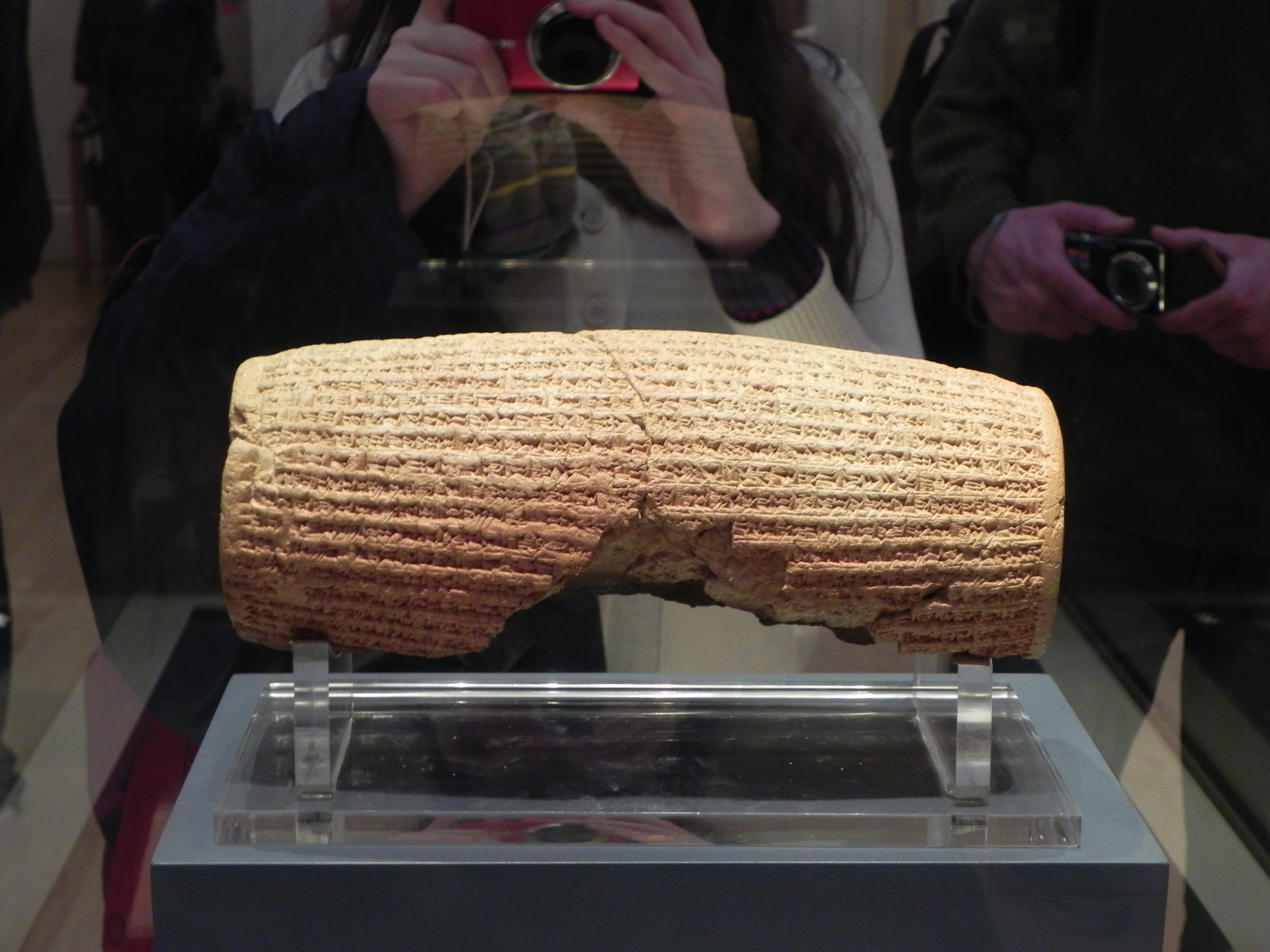
The Epic of Gilgamesh is considered a world classic.  Some would designate it the first novel written and others an example of how basic human concerns haven’t changed for thousands of years.  The ancient scribes and story-tellers, I suspect, anticipated none of this for their tale.  It was a religious story, perhaps taken as literally as some now take the Bible.  However you understand it, the Epic is part of the foundation of civilization itself.  I have to admit my Akkadian is rusty—I never had the opportunity to teach anywhere that I could regularly exercise it.  Still, I’m pretty certain that no one involved in one of the many versions of the tale that have survived would’ve expected it might end up on a rolling pin.

Back in December I wrote about Farrell Monaco’s Gilgamesh Epic column 5 rolling pin.  Her blog, Tavola Mediterranea features culinary archaeology—a good fit for these foodie times.  Having somehow found my blog, she kindly sent me a Gilgamesh rolling pin.  It was, in fact, one of the packages I wrote about a few days ago that was tracked as delivered but never arrived.  There’s no telling how long it will take to sort the Post Office out after Trump tried to destroy it so he could start the steal.  I was told it had been delivered in early January—not in time for Christmas itself, but still in the gingerbread season.  I called our local PO with the tracking number and was told it had been delivered.  If sent to the wrong house I’d have to rely on the kindness of strangers.

Last week, after I’d completely given up hope, it arrived.  Since, like many overfed Americans, I’m trying to wean myself off holiday excess back to my usual austere diet, it may be the next Christmas season before I get a chance to use it.  Still, the thoughtfulness of the gesture is deeply appreciated.  Anything that connects us so palpably to our ancient forebears is truly a gift.  If my career (if that’s what you call it) had gone a slightly different way, I might’ve ended up spending it with Gilgamesh.  As it is, I still turn to the Epic for inspiration now and again.  I wrote a couple of articles in the last couple of years where Gilgamesh makes part of the argument.  Now I’ve got something tangible to prove it!  Take a trip over to Tavola Mediterranea and see what wonders edible history holds.