Politically Incorrect

We’ve been dwelling so long in the materialist worldview that we’ve come to doubt evil.  Oh, we still use the word, but we don’t really believe it manifests itself in any real way.  I wonder, however, about it’s association with power.  Lord Acton’s adage is appropriately apt, but when the word “corrupt” enters in one has to wonder about whether evil is lurking.  I’m thinking about these things because some friends were recently telling me about “political” machinations of the Republican Party right here in Pennsylvania.  Initiatives that rank and file Republicans object to as being unfair, but are trying to be ramrodded through because they will keep one party in power forever.  Trump, a man with a staggering number of lawsuits against him before he even received the “grand old” party’s nomination, made it acceptable to bring blatant cheating into the political arena.

Credit: Elkanah Tisdale (1771-1835), via Wikimedia Commons

A recent story in the New York Times discussed how the Republican Party has been focusing on winning despite what the people want.  Its own people.  In other words, a planned destruction of democracy.  A hostile takeover bid for the nation.  Here in Pennsylvania, those who understand the legislation say, a variety of bills and propositions are being put forward—particularly gerrymandering—to ensure that the losers of the popular vote will nevertheless win.  We’ve seen this on the national level when the electoral college has elected a couple of Republican presidents who’ve clearly lost the popular vote.  It never elects Democrats that way—they win both popular and electoral votes when they win.  The fact that Republicans are actively trying to make it harder to vote so they can maintain minority(!) rule would be ironic if it weren’t so, well, evil.

I remember my first civics course (which most Republicans, it seems, never took) in middle school.  I remember my teacher—who was a smart man—saying that voters never elect someone who will hurt their financial interests.  This was before Reagan was elected and every Republican president since has favored the rich over their own poor and working class supporters.  I’m not a political scientist.  I find politics boring and I resent having to try to have to learn an entire new discipline just to keep living in the country where I was born.  We would find, I expect, widespread agreement that taking a country by force of arms is evil.  Taking it by shady lawmaking that is the very definition of corruption, apparently, is not.  The Trump administration took corruption to new heights, right in the eye of the public.  Could a Democrat make such a showing in an election after stating outright on television that Republicans can only win by cheating?   And when he lost fairly and squarely to try to overturn that result and still be the favored candidate for a party that’s lost its moral bearings?  We put the word “evil” to bed a little too soon, I fear.


What Have Faces To Do with Books?

I don’t write much about it because I don’t understand it.  Facebook, that is.  I’ve had an account there for many years now and with the rapid changes they make it seems you might want to major in it if you want to pursue it even as an avocation.  One of the bits of wisdom I’ve picked up from various marketers and publicists in the publishing biz is that you need to be visible on social media.  (I’ve encountered agents who actually won’t consider your project unless you already have thousands of followers, preferably on Twitter.)  The aforementioned marketers and publicists insist that you shouldn’t do all social media—who possibly can?  Just stick with the big ones, especially Twitter.  Especially Facebook.  If you’re a working stiff, like yours truly, you’re not allowed on these sites during the day, which means building a following is difficult.

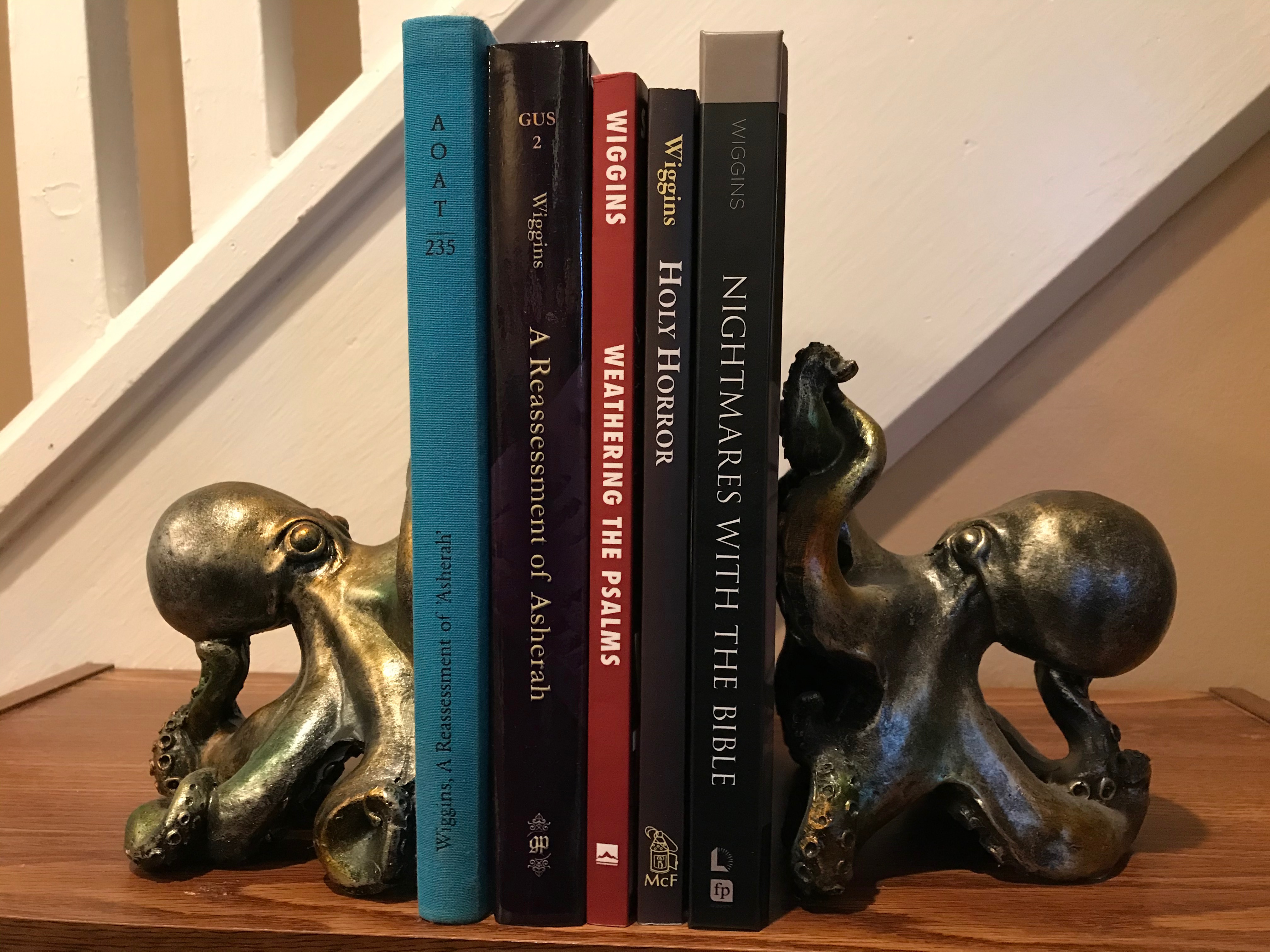
The publisher of my third book, Holy Horror, hasn’t done much promotion for it.  (They also priced it higher than most of their books, forever dooming it to the dreaded library market.)  One thing I found in my few pre-dawn minutes on Facebook is a group of other authors who’ve published with this particular press.  We share ideas and ask questions.  We try to promote our work in ways that most publishers wish authors would.  In any case, we are hosting and event on Saturday, March 6, where we’ll be on Zoom talking about our books.  The event will be free and lots of interesting things will be on offer.  If you’d like to attend, you’ll need to see the link in my Facebook feed.  It’s free.  There will be a limited-time sale price on Holy Horror.

Working in the academic publishing world but not being in the academy I’ve learned that you “fall between two stools.”  Nobody quite knows what to make of you.  Editors aren’t supposed to write books, are they?  The funny thing about that way of thinking is that many editors (yours truly excepted) are among the smartest people I know.  Those who don’t have doctorates read more than most of the people who do.  It would seem that if you wanted to get some really interesting books you’d ask editors to write.  Of course, they may not be permitted to use social media during the day.  Falling between stools is a place familiar to me.  Facebook, however, seems more like an impenetrable forest.  It’s a good thing I write about horror movies, I guess.  If you’re interested in hearing more take a look at Facebook and join us on March 6.


Knowing Everything

Of all the jobs I’ve held, being an editor is the only one where strangers send random emails trying to convince me of God’s reality.  Granted, part of that may be because email is now so common as to be passé among the younger crowd.  When I myself was younger it was still just catching on.  Still, part of these strange emails is likely based on the evangelical compulsion to make others see things their way.  Someone who edits biblical studies books might seem like a good target.  I got another such email just last week, and as always, I wondered over it.  What kinds of assumptions must random strangers make about biblical studies specialists?  One of these assumptions, it’s clear, is that they suppose we are atheists.  They know this without even asking.

Technology has made such blindsiding communication easier.  It didn’t invent it, though.  It took a lot more effort to write up a letter, address it, buy a stamp, and mail it than it does to sit down at a keyboard, click, and they start proselytizing away.  In my earlier days, in other incarnations of a career, I received unexpected missives from time-to-time.  And certainly as a seminary professor you had students who had already figured everything out by the time they’d gotten to matriculation.  Many of them were coming to seminary to teach rather than to learn.  Such can be the arrogance of faith.  I fear that many of them graduated with their biases intact.  Education, perhaps, doesn’t work for everyone.

Photo credit: NASA

Having it all figured out is something many of us strive for.  We want things to make sense.  We want our spirituality to fit into this increasingly materialistic world.  Some of us go to seminary and/or graduate school to help us make sense of things.  We encounter minds further along the journey than our own, and, if we’re open, we learn from them.  For me, it’s difficult to understand how education isn’t always a humbling experience.  Oh, I get emails from academics who think they’ve figured it all out as well.  Such communications always make me sad.  The human enterprise, such as it is, has spanned millennia and true progress has only been made when people were humble enough to admit that they didn’t know everything.  They would eventually invent the internet and email.  Then those who already knew all the answers could send them to strangers to convince them of their own great learning.


Critical Snow

No two snowflakes, I’ve always been told, are the same.  Far be it from me to question the collective wisdom of our species, but I wonder how this fact is ever confirmed.  I suppose I’ve personally swallowed a good deal of the evidence over time.  Snowflakes melt and we can’t get them all under the microscope, can we?  This year has been a winter of more than usual snow around here.  During our most recent storm I stared out the window and tried to count.  Billions of snowflakes collected in my yard alone, and no microscope-bearing statistician was anywhere to be seen.  I like the idea of each flake being unique, but I know it’s a theory impossible to falsify, and I wonder if it’s accurate.

I’ve been thinking a lot about critical thinking.  At its base, critical thinking is about asking questions and learning reputable places to find answers.  Not “fake news” or “alternative facts”—these are tools in the Devil’s workbox—but evidence-based information.  Primary education, it seems, is about learning to read, and write, and handle numbers.  It is about learning who we are  and who we’ve been.  About the way that science helps us understand this old world.  Higher education, as it’s generally conceived, used to be about learning critical thinking.  That was before colleges became mere trade schools, catering mainly to careers with high earning potential so that alumni would give more money back to the college.  Where will we learn critical thinking?  No two are the same, right?

Instead, knowledge and hearsay become very similar things.  I used to tell my students not to take my word for it.  Just because I can legitimately put the word “doctor” in front of my name doesn’t mean I know everything.  Yes, I am an expert but even experts aren’t exempt from the test.  So, as more snow starts to fall, I think about all the many, many places I’ve heard that no two flakes are the same.  I think of the astronomical number of snowflakes that have fallen this year alone.  The number of years before we ever evolved on this planet.  In ice ages and even during human-initiated global warming.  And I realize nobody’s done the actual work of comparing every single snowflake to every other one.  Tradition is like that accumulating snow, building on past layers until great glaciers form.  And who, I wonder, would argue with a glacier?


Plants Will Lead

The world just keeps getting weirder.  Although I very much appreciate—“believe in,” if you will—science, sometimes the technology aspect of STEM leaves me scratching my primate cranium.  What’s got the fingers going this morning is spinach.  Not just any spinach.  According to a story on Euronews, “Scientists Have Taught Spinach to Send Emails.”  There are not a few Homo sapiens, it seems, who might learn something from our leafy greens.  The tech comes, not surprisingly, from MIT.   When spinach roots detect certain compounds left by landmines in the soil, it triggers sensors that send an email alert to a human being who’s probably eaten some of their (the spinach’s) very family members.  I’m not denying that this is very impressive, but it raises once again that troubling question of consciousness and our botanical cousins.

Some people live to eat.  I’m one of those who falls into the other category—those who eat to live.  In my life I’ve gone from being a picky omnivore to being a somewhat adventurous omnivore to vegetarian to vegan.  I’m not sure how much more restricted I can make my diet if I leave out plants.  I’ve watched those time-lapse videos of trees moving.  They move even more slowly than I do when my back’s acting up, but they really do move.  If they had legs and speeded up a bit we’d call it walking.  Studies into plant consciousness are finding new evidence that our brainless greens are remarkably intelligent.  Perhaps some could have made a better president than 45.  I wonder if spinach can tweet?

People can be endlessly inventive.  Our thirst for information is never quenched.  Universities are among those rare places where ideas can be pursued and it can be considered work.  While I don’t think everyone necessarily needs to go on to higher education, I can see the benefits it would have for a culture.  Indeed, would we have armed mobs trying to take over because of a fact-based election loss?  I wonder if the spinach would take place in “stopping the steal.”  Hopefully it would fact-check more than those who simply follow the leader.  Consciousness and education can work together for a powerful good.  I’m not sure why Popeye’s favorite was chosen for this experiment, but it does seem to show that we can all get along if we really want to.  Maybe then we could meet in the salad aisle rather than out in the field looking for explosives.


The Land

It’s always a pleasure to find an author from whom you want to read more.  It was my wife who told me about Ernestine Hayes’ The Tao of Raven.  We were both so taken by the book that we turned to Hayes’ prior Blonde Indian: An Alaska Native Memoir.  Learning how badly the United States has treated the indigenous population of this continent is one thing.  Learning how badly we still treat them is quite another.  For all of that Hayes writes a memoir that is reflective and perhaps sad, but seldom angry.  The stories told in Tao of Raven start here—we meet the characters who will be further developed in the next installment and become even more curious about them.  The reader wants to reach out and help.  To tell the government, “enough!”

The indigenous peoples of North America (and likely South too, for that is a realm requiring further learning) feel, and have always felt, a close connection to the land.  Europeans see land as a resource for exploitation, not for living in harmony with.  We came, we took, we destroyed.  As if that weren’t bad enough, we left the original inhabitant trapped in grinding poverty, shoving them into places we wouldn’t see.  Until we discovered something we wanted on that land, and then we shoved them again.  The impetus to do this was, unfortunately, Christianity.  I doubt it’s the religion Jesus had in mind, but then he lost control of it millennia ago.  Believing in one’s divine mandate is a sure way of making unwarranted claims on what belongs to someone else.  Remember “thou shalt not steal”?

Hayes’ reflective style is an honor to read.  Feeling a part of a place is a rare privilege.  Born into a mobile society enamored of technology, the modern American has difficulty feeling too attached to any one place.  Of course, many people stay close to where they were born, but to become a “professional” you have to leave.  Blonde Indian is about returning home.  The land knows us.  Many of us don’t know it back.  It’s just a place to set our feet temporarily until a better opportunity comes along elsewhere.  Being tied to no land we lose something of our souls.  Our connection with nature.  With the planet itself.  Hayes is a gifted writer with a story that must be heard.  Wisdom comes through on every page.  We would do well to pay attention.


Keep at It

Photo credit: ESA & MPS for OSIRIS Team MPS/UPD/LAM/IAA/RSSD/INTA/UPM/DASP/IDA, CC BY-SA 3.0 IGO, via Wikimedia Commons

Perhaps it’s an indication of just how sick the United States has been for four years—waking up each day wondering what new crisis Trump would have put us into—that I heard nothing about our next Mars visit.  I’m normally quite interested in space exploration.  I seriously considered astronomy for a career, until I found out it’s mostly math.  In any case, I’ve watched our planetary explorations quite closely.  Yesterday, until just about five minutes before the landing of Perseverance on the surface of the Red Planet (earth is supposedly the Blue Planet), I knew nothing of the mission.  When my family alerted me to NASA’s live feed of the event I tuned in for those five minutes to watch as we safely landed our fifth such probe on our neighboring world.

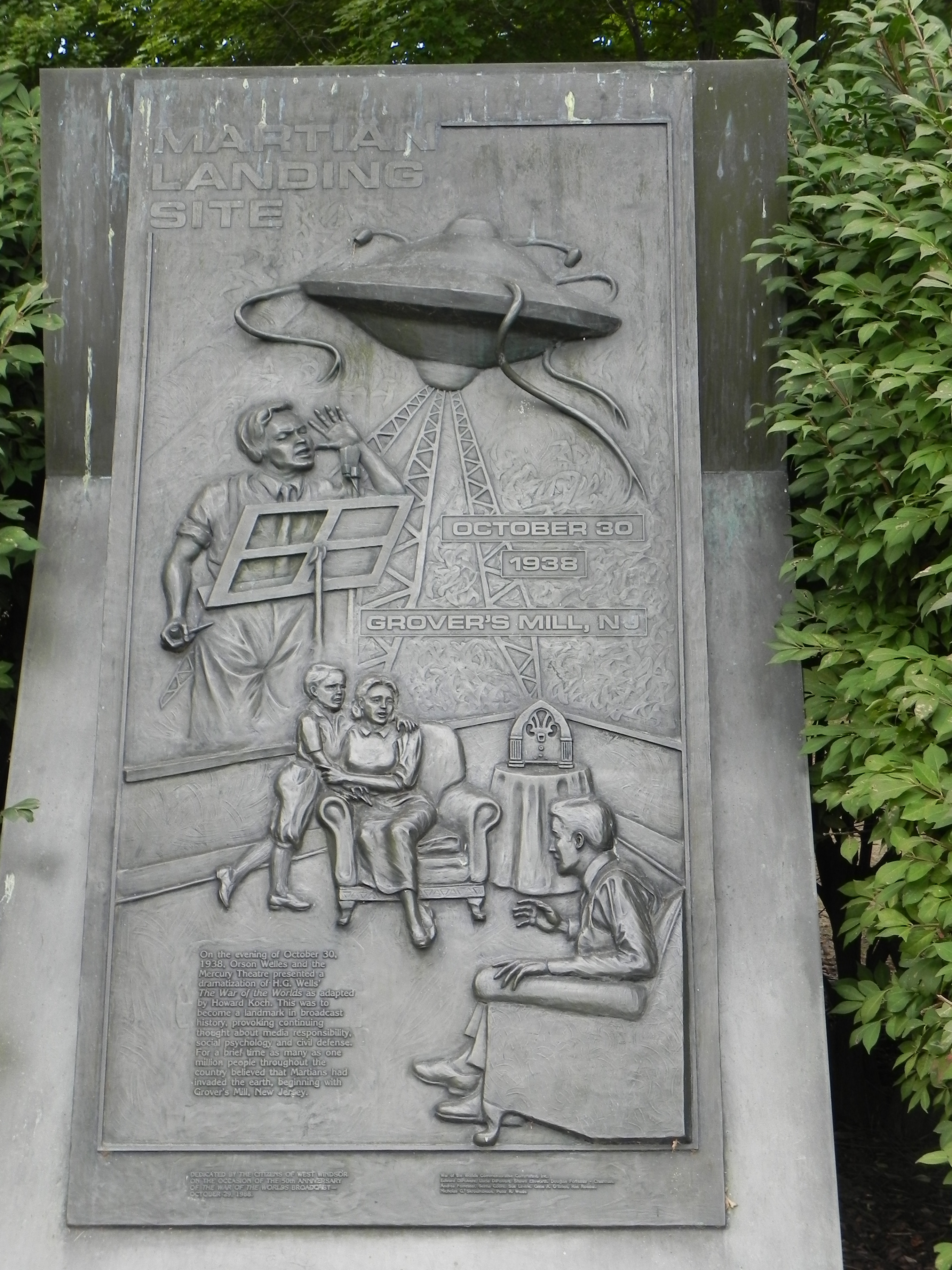
It’s funny how a self-absorbed person can take a whole nation down with himself.  It was a relief to look outside for a while, and to wonder.  I remember when the rovers Curiosity and Spirit landed.  The advance of technology was evident in yesterday’s deployment.  No more bubble-wrap was necessary.  The landing system was incredibly elegant, and if there are any Martians I’m sure there were several UFO reports yesterday afternoon.  As the NASA interpretive explainer told what was going on, I wondered just how life might be on the Blue Planet if we were able to put all our tech to work for peace and the betterment of all.  Instead I find a Congress only too willing to acquit a traitor so we can continue the hate.

Emotion is a funny and unpredictable thing.  Although I knew nothing of Perseverance until five minutes before touchdown, I was immediately drawn into the feeling of the moment.  My eyes weren’t exactly dry as I watched the cheers of jubilation from those masked engineers in the control room.  This had been the culmination of years of hard work, and yes, math.  They were able to calculate fall rates and counter-forces, landing spots and trajectories.  And all of this from about 140 million miles away.  Perseverance was launched back in June—you can’t get there overnight—when we were still reeling down here from the overt evil of white supremacists.  Stoked by a man who would be king.  Leader of the Red States.  Would-be ruler of the Red Planet.  How I wish our technology could help us on our own planet.  Any probes landed here from elsewhere must, I suspect, not believe their mechanical eyes.


One Day or Another

Although normally a time for celebration, Mardi Gras, I’m told, was subdued this year.  Today is Ash Wednesday but many of us feel like we’ve been living a year of Lent already.  I once told a fellow office worker on Ash Wednesday, “I think about death every day, I don’t need a yearly reminder.”  Looking out at the old snow, melting, freezing, refreshed with occasional flurries, I’m reminded of the cycles of nature.  I’ve been watching the turn of the year’s wheel.  Over the solstice I looked into Yule, and just a few days ago considered Imbolc.  The wheel of the year is a symbol for modern earth-based religions seeking to be kept in sync with nature.  It is a cycle, slowly turning.  Death, in this way of thinking, is part of a larger system.  It seems appropriate to consider it this Ash Wednesday.

I say it’s Ash Wednesday but it would be more correct to say “for many Christians it’s Ash Wednesday.”  Cultural imperialism is difficult to shake.  With the pandemic still embracing us tight we haven’t had much reprieve from thoughts of death these many months.  Thinking of the wheel of the year, however, may bring hope.  A wheel in motion spins around to a new beginning that, in the nature of circles, is equally at every point.  New beginnings are offered every day.  While we’ve never been in a year of isolation before, there is nothing that hasn’t been before.  Self-aggrandizing dictators, world-wide pandemics, calls for social justice and fairness, have all come around before this.  They may come around again.  The main thing is to keep it moving.

It moves, in fact, without us.  One of our human foibles is being species-centric.  When we discuss, in a pique of teenage angst, of “destroying life on earth” we really mean destroying humankind and perhaps many other species as well.  Not all.  With a kind of collective insanity we go about warring against our own kind, exploiting all other species we deem valuable, and talk as if that’s all that matters.  Today, for some, it is Ash Wednesday.  For others it is World Human Spirit Day.  For many of us it’s just another workday among many very similar, cut from the fabric of a year that has no even spokes to keep it rolling.  Beneath our feet this orb spins on, regardless.  The cycles continue, with or without us.  How wonderful it would be if we could actively contribute to their progress.

Photo by Ameen Fahmy on Unsplash


Call It Therapy

For many years, about all I ever pursued, research-wise, was ancient Near Eastern studies.  It’s still the reason people visit my Academia.edu page.   From the stats it’s clear that not many people are interested in the horror aspect of my work.  Still, I know what motivates me (most of the time).  I recently read a piece that features a brief interview with Peter Counter, discussing the therapeutic value of horror.  Since my interest in the genre has been rekindled (starting, not coincidentally, around 2005), I think I’ve known all along that horror is therapeutic.  The people I know who watch horror aren’t the kind many people picture—creepy troglodytes who don’t come out of their houses where the shades are always drawn.  No, they are normal folks, at least for academics.  They find the genre profound, for the most part.

The interview with Counter (in the Nova Scotia Advocate) makes clear that Counter uses horror therapeutically.  The first reason that he gives is that it’s honest.  I agree.  You see, I grew up with more than my fair share of phobias.  I could go into the reasons here, but I don’t know you well enough to trust you with them just yet.  In any case, I worried a lot about things that could go wrong, often involving everyday circumstances.  I didn’t think watching monster movies was a coping technique—I didn’t even know what a coping technique was.  I just knew that somehow those kinds of movies made me feel better.  I began reading gothic novels in my teens, even as I was becoming very religious.  I never saw a conflict between the two.

Now, as an adult, I feel that I have to explain this “unusual” interest to people who know me.  Now I can more clearly see the therapeutic value in such movies.  I can even see elements of it in movies that are classified otherwise.  I recently watched Groundhog Day (back around, well, Groundhog Day).  It had been many years since I’d viewed it, and the elements of horror in the film struck me.  Being trapped in the endless return, Phil Connors contemplates, and indeed commits suicide many different ways only to reawaken in the same scenario the next morning.  The look on Bill Murray’s face when he snaps the pencil before getting a couple hours sleep when he begins to realize what is happening says it all.  A similar realization same came clear on a recent rewatching of Willy Wonka and the Chocolate Factory.  Watch it with an open mind.  The interview with Counter makes the point that a pandemic like this is an opportunity.  Isolated, we can watch horror and we can learn to cope.


Leadership

After four years it finally feels safe again.  We can celebrate Presidents’ Day, although now and forever with some trepidation.  Even as Republicans still protect the insurrectionist Trump, democracy has survived his tenure of horror.  Many Americans don’t realize just how close to Nazi Germany we came.  There are many who hold party above the good of the nation, something our founders, one of whom we celebrate today, feared.  The outdated safeguards of democracy, such as the electoral college, have been used more than once to “elect” presidents the American people did not want.  One guess as to which party this has only favored.  Democracy, we’re now being told, is fragile.  It shouldn’t be.  Only the designs of a party scheming for personal enrichment makes it so.

Today we can at least take a breather and be glad that we no longer have a bigoted, sexist, classist, racist incumbent.  We have a female Vice President of color.  We are on the long, slow road to recovery.  The senate, clearly recognizing Trump’s danger to the nation, voted to acquit him because Republicans fear not being reelected if they stand up to him.  Our democracy’s not out of the woods, even this Presidents’ Day.  Until the GOP learns to grow a backbone we’ll be in constant danger of collapsing.  Anyone with back trouble knows how it can stop you in your tracks.  Of course, once you’ve made a deal with the Devil, there’s no getting out of it.  Most Republicans could benefit from just a touch of folk wisdom.

When one party sides with armed thugs who’d have happily killed them if they’d been found just a little over a month ago, our grounds for celebrating today remain on thin ice.  The GOP, which has no moral compass left, has decided that bullies and armed bandits are the way of the future they’d like to see.  Although Trump lost both popular elections they’d still vote for him a third time and support him again if he incited another insurrection.  It’s Presidents’ Day but we’re still on the edge of a precipice.  When a political party refuses to learn from its mistakes, and indeed, tries to build upon them, our celebration of democracy must, by definition, be subdued.  We do have grounds for hope.  Efforts to get the coronavirus under control are starting to take effect.  We have a sane human being in the Oval Office.  Until the GOP disavows evil, however, we’ll continue to live in fear.


Love or Saints?

One of the many oddities of life at Nashotah House was that we never celebrated St. Valentine.  I wouldn’t expect a mostly male and neurotically homophobic community to mark Valentine’s Day as for lovers (most of the faculty and many students were married, however), but the saint’s name wasn’t uttered in my years there.  Of course, commercialization of holidays does taint them somewhat.  It’s difficult to take a day seriously when you’re being told that how much you spend will be the sign of how special it will be.  With St. Valentine’s Day, however, I believe the topic was much too close to something the church had long feared—sexuality.  I’ve often pondered how this strange obsession evolved.  Judaism, from which Christianity sprung, isn’t the origin of this antipathy to being fully human.

The trouble likely starts in the Bible.  The New Testament, in particular.  No mention is made of Jesus having been married.  Paul, in his usual way, made it an issue but fell short of outright condemning it.  His words would help convince the Roman Catholic Church that mandated celibacy was a good idea.  Clearly, however, Augustine of Hippo, who lived after Valentine (depending on which one you elect to follow) saw the whole enterprise as flawed.  Making up the concept of original sin and tying it in with sexuality was a certain means of creating a problem.  Not that Christianity is the only religion that promotes celibacy, of course.  But when it came to Nashotah House there was really no concern about what other religions taught.  Even on February 14 no collects were recited mentioning the saint who must not be named.

The history of saints’ days is a fascinating one.  A few of them made it into pop culture—after Presidents’ Day there’s no national holiday until Memorial Day in May, so who can blame people for looking for reasons to celebrate while still waiting for spring?  Saint Patrick wasn’t similarly given the cold shoulder at Nashotah in my years there.  And although it moved around quite a bit, you could usually count on April for delivering Easter.  We didn’t celebrate Presidents’ Day.  Nor Martin Luther King Day—not being Catholic his canonization process was a non-starter.  The long, cold stretch between Epiphany (now Insurrection Day) and Lent was one devoid of popular holidays.  I suspect that despite the number of saints (and there are lots of them) the singling out of Valentine was considered to be asking for trouble.  That was many years ago.  Oddities, however, have a way of remaining in long-term memory.


Many Moons

Scientists, often with their base matrix bound up with the local religion, are frequently interested in  myth.  And sometimes religion too.  This is no surprise.  Many of us go into religious studies because of its influence on our lives and scientists, who measure and analyze material realities, must be curious when their results challenge some religious or mythic assumptions.  So it is that Ernest Naylor addresses mythic beliefs about the moon’s influence on animals and what scientific findings on the same show.  Although this book wasn’t exactly what I thought it would be, Moonstruck: How Lunar Cycles Affect Life does address the subtitle assertion quite directly.  Naylor, a marine zoologist, knows about tides—caused by the moon—and their effects on marine organisms.  That connection is the main focus of the book, with occasional forays onto dry land.

What caught my attention right away was that when discussing myth and religious ideas, Naylor describes two stories as biblical: the woodcutter banished for gathering on the Sabbath and Judas’ banishment.  Both of these, he seems to believe, have the Bible banishing the criminals to the moon.  That was news to me.  There may well be folklore with such associations, but a simple opening of the covers of the Good Book would dispel this particular “myth.”  Neither the sabbath wood-gatherer nor Judas were banished to the moon after their deaths.  The former presumably went to Sheol and the latter presumably to Hell.  For me this illustrates yet again how many ideas professional people outside the guild suppose to be “biblical.”  The Bible says very little about the moon.  One New Testament demoniac is described as “moonstruck,” but beyond that the occasional references are mainly just to the moon qua moon.

The Bible’s a big book.  Everyone in western society knows it’s an important book but few read it.  Even fewer deeply engage with it to understand its original context and message.  We hear stuff and we’re told it’s in there, and we believe it.  I first noticed this in high school.  Classmates would tell me “the Bible says…” (you can fill in the blank with just about anything, this isn’t a quiz).  Almost always they were wrong.  By that point I’d read the Good Book many times cover-to-cover.  I owned concordances and knew when foreign matter was introduced.  The thing about the Bible is that it’s fairly simple to look it up.  Moonstruck focuses on marine animals and tells interesting connections to the moon.  It has a chapter on humans and the moon, finding little direct biological influence.  It’s an informative book, just don’t use it to verify what’s in the Bible.


Meanness

There’s often a meanness to literalist religions.  A sense that if they can keep their particular interpretation of God’s will, then anybody can.  No compassion.  No forgiveness.  Considering the base messages of nearly all those religions that harbor fundamentalists, that attitude is quite surprising.  Indeed, it ceases to be religion at all and becomes merely a facade of one.  The recovery of the body of Khaled al-Asaad is what brought this to mind.  Back in 2015 al-Asaad, an 82-year old archaeologist, was beheaded by the extremist Islamic State group in Syria.  Al-Asaad had spent his life excavating and attempting to understand the site of Palmyra.  The Islamic State was determined to destroy what they considered “idols” or offensive images.  When the octogenarian refused to tell them where they could find further antiquities to destroy, they beheaded him.

This isn’t finger-pointing at Islam.  Islam is a highly moral religion that values peace.  What it has in common with Christianity, apart from some shared history and theology, is that it fosters extremists.  Extremism may be fueled by religion but it’s not religious.  The adherents are often mean, hard-line individuals who have trouble distinguishing the shades of gray that make up so much of life.  As a result of the Islamic State movement, many antiquities that had survived for thousands of years were destroyed forever.  There were heroes like Khaled al-Asaad (we might even call them saints) who tried to protect these irreplaceable artifacts.  Religion has no feud with the past.  In fact, religions consciously build on their pasts.  Continuity is important to them.

Extremism of this kind is a fairly new blending of religion and politics.  As recently as the sixties it was felt that religion and politics should be compartmentalized.  Kept separate.  When the Republican Party realized in the seventies that evangelicals could be made into a voting bloc, religion became politicized.  This happened elsewhere around the world.  “True believers”—the very term suggests the rest of us believers aren’t true—tasting political power, realized they could use their meanness to make the rest of the world in their own unforgiving image.  We’ve been living with the consequences ever since.  Even now Republican lawmakers fear reprisals of Trump supporters if they dare accept the truth.  In other words, extremist religion has pitched its battle against the truth itself.  That would be ironic if it weren’t so terrifying.  No religion that I know has meanness among its central tenets.  It takes literalism to make it one.


Religions and Horrors

My latest piece on The Golem has just appeared on Horror Homeroom.  It’s free—check it out.  In it I briefly discuss Jewish horror.  I mainly write about Christian horror because that’s my immediate context.  That’s not to say other religions don’t participate in the genre too.  While I worked for Routledge I acquired the book Buddhism Goes to the Movies, by Ronald Green.  Like the title suggests, it’s about movies focused on, or made by, Buddhists.  What sold me on the project was the chapter on horror films.  Much of what’s being called “J-Horror,” or Japanese Horror these days, occurs in a Buddhist or Shinto contexts.  I’m not expert enough in these traditions, however, to spot them with the detail that I do in my own native religion. 

All religious traditions have certain commonalities.  As I’ve frequently discussed on this blog, sex and death are two of them.  Given the powerful ideas that religion trades in, it seems natural that it would appear frequently in the horror genre.  It’s just that modern viewers tend to be somewhat divorced from religion and can’t see it.  Religion is that way—it fills the cracks.  How often do we pay attention to the caulking or grout?  We tend to focus on the tile or woodwork instead.  Religion holds thought systems together, including those of the horror genre.  I just discussed no-go subjects yesterday, but even science shows religion in some of the cracks.  Learning to see it involves learning to shift your focus.

I blogged about The Golem just after I watched it, back in December.  The golem is an original Jewish monster, and Judaism is both a culture and a religion.  It’s difficult to tease them apart sometimes.  The same can be said of many traditions outside Christianity.  In fact, many cultures had no word for religion—the idea of a separate realm of life where you try to please the gods because what you do otherwise is inherently sinful.  (There’s probably a reason that capitalism grew in a Christian context.)  That means that horror particularly welcomes Christianity.  Many of the bases of fear are premised on a religion that, as culturally bound as it is, has always claimed that joining it is a choice.  If you can choose you can choose wrongly.  This is fertile ground for horror, especially when the consequences are eternal.   My Horror Homeroom piece takes a different approach than this, but religion and horror nevertheless find themselves together, often in the same room.


No Go Subjects

The problem with being eclectic is that you never catch up with everything.  Although I was once a professor of Hebrew Bible—not technically the field in which I’d studied—I read (both past and present tenses) widely.  Anyone who’s brave enough to follow this blog for any length of time must know that.  I tend to think the element that ties them all together is religion, or a curiosity about religion.  I have read material on science, art, psychology, history, geology, astronomy, literary theory, mythology, the paranormal, religious traditions, monster theory, to name just a few.  Because of my interests across standard disciplinary lines, I often wonder about “no go” subjects.  No go subjects are interests that will likely ruin your prospects of getting either a job or basic human respect.  Although the government is taking serious interest in the topic, one of those subjects is UFOs.

For historians of religion such as myself, the study of UFO religions is sometimes acceptable.  Indeed, there is a correlation between some evangelical sects and the UFO phenomenon.  I experienced that firsthand as a child when my mother drove us to a church meeting where a guest preacher was discussing UFOs and God.  I have only the vaguest recollections of that event in my then young mind, but it did leave me with the question of why respectable people aren’t allowed to look at certain subjects.  Why does taboo even exist in an academic setting?  I recently ran across David Halperin’s website.  I’d known of him because his recent book, Intimate Alien, had gotten a lot of press.  What I didn’t know was that he was formerly a professor of religious studies.

It seems to me that many of the interesting, outré topics fall into the baskets of religion scholars.  We touch the taboo objects that nobody else will.  Why?  Because there should be no “no go” categories.  Sex?  Religion scholars study it.  Politics?  We’ve got it covered.  Paranormal?  We go there too.  Perhaps it’s because religion scholars have so little to lose.  We’re not high on the prestige list.  I tend to think, however, it is because people who go into religious studies are innately curious.  (Not all, of course, but many.)  We’re drawn to that which doesn’t fit into the everyday, the ordinary.  Transcendence, seeking that outside of which we daily operate, haunts us.  Why do people scoff at what they don’t understand?  Doesn’t it make more sense to look at it and try to increase our comprehension?  To me it seems to be basic human nature, even if the interest is literally out of this world.