Fueling Fires

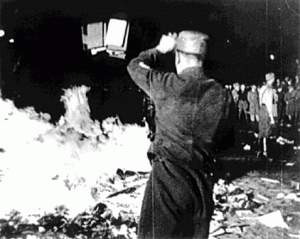
Paying attention to world affairs can take all your time.  In fact, for those who study foreign affairs, it practically does.  I’ve been struggling with the fact that you can’t be lazy in a democracy.  I know that’s true—we must constantly be vigilant of governments turning evil (with a wink)—and yet we each have our own lives to look after.  Trying to balance this teeter-totter, I noticed a Washington Post story lately about library officials in China burning books.  Said books challenge government ideology and are being destroyed.  We’ve seen this before.  Nazis burned books, and Republicans would certainly like to.  Even further back in history Medieval thinking led to the destruction of what would now likely be invaluable tomes.  There is biblical precedent, of course.  Read Acts 19 if you need a refresher.

Book burners now do their deed for its symbolic value.  We live in an age of Kindles and Nooks and books online.  Not as many are printed as there used to be, but the smell of burning plastic doesn’t convey the same pathos.  Besides, you can just whip out your synced phone and continue  reading.  Those of us who’ve committed our lives to reading find this symbolic gesture heinous.  Yes, there are books that offend us.  I’ve read more than one that I wish I hadn’t.  I have, however, no inkling to burn them.  Books represent our attempts to increase knowledge.  Fiction or non matters not.  Those who write have something to say, and surveys reveal that many adults really would like to write a book.  As a symbol, there’s nothing like it.  I suspect that’s why burning them makes such an impact.

The western world is struggling to understand China.  One of the largest investors in both Africa and South America, China is building foreign relations just as the Trump administration is jettisoning them.  Many well-informed Americans don’t realize just how long and how well China has been making connections through financial investment.  Sounds like a very capitalist thing to do.  That librarians should burn books seems an odd form of theater in such a scenario.  Governments that can’t take criticism are autocracies.  I know few donkeys that would state any one of their party is really a saint.  That’s GOP territory.  At least we haven’t started book burnings on the White House lawn.  As we turn our gaze to the east, or, depending on your perspective, to the west, we do have to wonder just how long it will be before we do.
Quiet Night

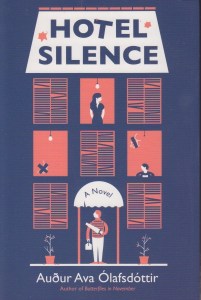
Reading challenges are a good way to expose yourself to books you might not otherwise find.  This is my fifth time through the Modern Mrs. Darcy’s annual challenge and she tends to favor books in translation.  That’s fine by me, because we could all use a bit more cross-cultural understanding.  My latest book in this challenge was my third novel by Auður Ava Ólafsdóttir, Hotel Silence.  Ólafsdóttir, although a professor of art history, is quite a gifted novelist and her stories probe what it is to be human, and also reflect life on a somewhat small island.  Icelanders are known for their love of reading as well as for their geothermal power.  This novel deals with darker subjects that some of Ólafsdóttir’s previous work, but one thing becomes clear—the Bible is an influence.

With a writing style that is poetic and descriptive, she acknowledges that the Good Book plays a role in forming her story here.  I don’t want to give too much away, but it swirls around the difficult topics of suicide and war, and, ultimately, a kind of redemption.  As I’ve come to expect from her writing, the characters are quirky and have foibles.  There’s a matter-of-factness to them.  They go about following singular ideas and all of her work that I’ve read is based on the concept of a journey.  Maybe that’s something of a given for those who live on an island.  Taking her characters to far lands is a way of reaching understanding, not xenophobia.  That’s one of the reasons for reading the literature of other people.

In academia I was taught that exoticizing other cultures was a kind of evil.  I can see the point in that, although, like most academic things it takes the fun out of imagining far-away places.  Human beings need sources of wonder, and I don’t know if I’ll ever be able to afford a trip to Iceland, so reading stories written by a native feels, well, exotic.  Academics have a point, though.  For people of an exotic locale, their life is pretty much a daily struggle just like our lives are.  The backdrop is different and the specific circumstances are unfamiliar, but at the end, people are people.  That’s why I like Ólafsdóttir’s novels.  At the end we find them facing the same kinds of problems the rest of us face.  And we come to realize that our world is an isolated place in space.  And if there are aliens out there watching us, they must think we’re fairly exotic.  Let’s hope they’ll read us in translation.  We can all use a good challenge.


Space Farce

Okay, so “Space Force” sounds like a gimmick that you’d see in a 1950’s ad geared to dungaree-wearing boys.  These boys, who’d be named “Dick” would show the girls, named “Jane,” just how it was done.  So as I read about the furor of dedicating a King James Bible from the Bible Museum as the official Bible for military branches aimed at the stars, I had to think how very small we actually are.  So 45 thinks, like Reagan thought, that we need outer-space defenses.  These guys need to read more science fiction.  Actually, some plain old science would help.  If there are most advanced civilizations out there—and such seems increasingly likely, given that our understanding of science is subject to change—we are nothing more than cosmic mosquitoes buzzing close to our own planet where we can wail on each other in the name of lucre.  And we call it “Space Force.”

An article on NPR points out the hypocrisy of swearing in the military on a Bible.  One guy in there, I’ve heard tell, was called “the prince of peace.”  He’s somewhere near the back.  The public loves a good warmonger, though.  We can send our tentative rockets into orbit where bug-eyed aliens laugh with bemusement, and say “Just you try something.”  Or we can make business deals with Russia with one hand while pointing our missiles in their direction with the other.  Is that a missile or am I misreading something, Dick?  I can’t ask Jane, because she just follows along.  Maybe we’re inheriting the consequences of those who grew up reading Dick and Jane.  Boys with their rockets, girls with their dolls.

Bringing religion into the military is nothing new.  German soldiers marched out into a couple of World Wars with “Gott mit uns” inscribed on their waists.  Millions died.  No lessons were learned.  So now we want to take conflict so far over our heads that we can’t even see.  Ancient people knew the gods were fighting far above.  That’s how they made sense of the world.  Some, like Erich von Däniken took those stories literally and thought our alien observers were the reason.  Now that we’ve got drones we have no need of UFOs anymore.  All that sci-fi I watched as a kid wasn’t wasted after all.  Only I grew up reading that Bible instead of swearing on it.  I was pretty sure that war wasn’t a good thing, as he rode on a red horse with his sword pointing upward.  Time to dust off William S. Gray and get back to watching Space Force. 

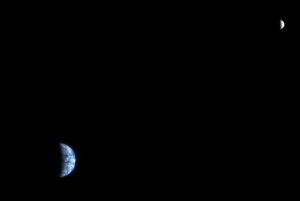
From NASA’s photo library


Bodies and the Fall

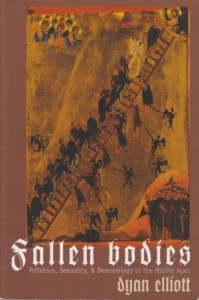
Less common than it once was, the term “Dark Ages” was formerly used to denote what in Europe was known as the Medieval Period.  We now know that the pervasive darkness ascribed to the time was only partial: science, legal thinking, and rationalism were well underway.  Nevertheless, the sway of the church was enormous, and even until and beyond the days of Isaac Newton, the supernatural was assumed to exist.  Dyan Elliott’s Fallen Bodies: Pollution, Sexuality and Demonology in the Middle Ages is a fascinating journey through this contradictory time.  Elliott explores how the mysteries of sex (nocturnal emissions and menstruation loom large among them) played important roles in the development of Catholic theology that ultimately led to the close association of demons and witches.  Concerns with priestly purity, largely due to concerns about transubstantiation, led to enforced celibacy and the (further) denigration of women.

It would be difficult to summarize this insightful book.  Although relatively brief, it packs a wallop.  Concerns about purity go back to the Bible and before.  Ancient cultures had recognized aspects of contagion and knew that some diseases spread by contact.  Their perception of biology was “scientific” according to their current understanding, but it lacked microscopes and knew no shortage of supernatural entities.  Demons had great explanatory value in such a world.  As Elliott shows, they often appear in disquisitions about sex.  How can spiritual beings engage in physical relations with human bodies?  What were they made of?  Were they all bad?  Although demons had explanatory value they also raised many questions.

Fallen Bodies draws correlations between the dismissal of priests’ wives and the evolution of witches.  As the Eucharist became more and more holy, stricter controls had to be placed on consecrating hands.  Sex was the great source of pollution, and the Virgin Mary became rather less human through her own miraculously sterile conception.  The implied misogyny may not have been so much intentional as a reflection of the struggle to understand what modern medical science generally explains materially.  We still grapple with the mystery of life.  Conception can be viewed clinically, and biological responses can be “explained” scientifically (anyone who’s been in love will admit to the mystery of it, though).  Denizens of the Middle Ages worked with the tools they had to make sense of a world often bewildering.  Even physics still has to deal with quantum realities.  History teaches by its unfortunate missteps.  Someday those who “govern” the world may learn to read it and exorcise demons now otherwise readily explained.


Integrity

I’m not lying when I say untruth has been on my mind a lot.  A few days ago I posted on freedom of speech and how it’s an ideal rather than an actuality.  What with lies being lobbed at us daily, I got to thinking about the ethical implications for honesty.  Integrity.  The freedom to state what we actually think is something a little different.  How often in daily life do we act authentically?  And when we’re with others we act differently than when we’re alone.  Which is truly us?  Someone pointed out to me recently that if you walk with someone your body language is different than if you walk alone.  Even walking alone your body language shows your interior frame of mind.  A sad walk isn’t the same as a happy walk.

As social creatures, the ideal of being forthright all of the time would lead to chaos.  All of us lie, one way or another, at times.  That’s where integrity comes in.  Integrity, it seems to me, indicates someone who is honest, all things being equal.  I once noticed a politician who blinked every time he said the word “God.”  That blink, I believe, was a form of “scare quote.”  I don’t know, but I suspect said politician didn’t have any strong belief in a deity.  Some circumstances require that you pay lip service anyway.  Ethics dictates that we try to be honest, but even keeping secrets is a kind of lie of omission.  Our own personal wants—which are honest—often have to be suppressed for the sake of fairness.  Again, we live in a situation where the most powerful pursue their own desires while neglecting the needs of others.  Is this then integrity?

Often I ponder what it means to be social creatures.  Some of us are naturally introverts.  We nevertheless rely on others because society is too complex.  What any one person could build an iPhone single-handedly, and then set up the 3G, 4G, or 5G network on which to use it?  Could that same person grow their own food, manufacture their own automobile, and construct their own house?  The self-made rugged individualist is a myth we cherish, but it too is an untruth.  We rely heavily on others and we count on those closest to us to be honest.  When lying becomes a lifestyle integrity lies in tatters on the floor.  Just three years ago I wouldn’t have been having such thoughts, if I’m honest with myself.


Now You Don’t

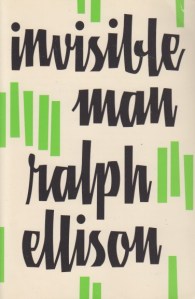
Quite some time ago I realized I should read Ralph Ellison’s Invisible Man.  What put me off, as usual, was length.  Long books take a real time commitment, but since Black History month is coming up, and we’ve just celebrated Martin Luther King, I planned ahead and read.  A profound book, at several points I felt like a voyeur reading it.  The African-American experience of life is something I always feel uncomfortable approaching.  I’m afraid of appropriation, and I’m afraid of not paying attention.  I grew up not having a sense of racism, but nevertheless am implicated in the whole.  Maybe that was intentional.  As a story Invisible Man is often described as a picaresque, but having an unreliable narrator who was a victim of my own culture was difficult to countenance.  It was hard to know what to think.

We never understand another person’s experience of life.  We sympathize, we empathize, but we can’t really get inside the head of even our best friends.  I can’t help but think we’d all be better off we recognized that race is a social construct, and a potentially evil one at that.  We are all human beings and we should act that way.  But this novel left me wondering if it’s really possible.  Good novels will do that to you.  So I’m sitting here scratching my head and a little bit flummoxed by what I’ve just experienced.  Was it authentic or can I not help but project my own experience as an non-minority upon someone else’s writing?  Even questions like this are socially conditioned.  I too am trapped in my own mind.

You might think that by this time we would have evolved beyond our distrust of those long separated from us by natural barriers.  Homo sapiens are distrustful of strangers, and even the internet hasn’t brought us the understanding we require.  Not yet, anyway.  The background to “race relations” in the United States can’t be separated from slavery and the attitudes it engendered.  On almost every page of Invisible Man its traces can be seen.  That kind of cultural memory, and other cultural memories such as Jews being routinely castigated by Christians, or monotheists being raised to combat polytheism, are deep dividers.  Our cure for these evils is understanding.  I had to keep reminding myself that this was a work of literary fiction.  It rings true, however, and although it represents a world I do not know the fact of its publication invites  those of us outside the tradition to read.  Indeed, doing so is one way of attempting to reach understanding.


Truth, Justice, and

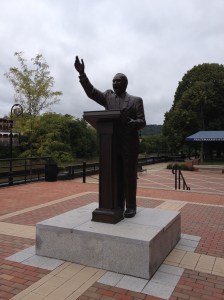
Martin Luther King, Jr. attended Boston University School of Theology long before I did.  We remember him today as a great leader, a man willing to die for what he believed in.  And all these years later we’re still struggling to find some semblance of racial equality.  We can’t seem to admit that race is a social construct and not a scientific category.  Indeed, the only race is the human race.  King saw that, and staked his life on it.  Today we’re ruled by politicians who, when faced with the truth immediately shout “fake news!”  “Liberal!”  They may stop short of using some words not because they don’t want to, but because they could cost them at the polls come November.  America is watching.  I’m sitting here thinking how Martin Luther King died when I was just five.  He’d started something righteous and just.  And millions were out marching in the cold on Saturday to say we still believe in justice. 

I didn’t pick Boston University School of Theology just because King was its most famous alum.  The other day a guy noticed my BU stocking cap and asked if it was “Boston University.”  This wasn’t an educated person, but I’m guessing that most school paraphernalia has to do with sports and the game was on in the background, so the question was logical.  I told him it was Binghamton University, a school with which I also have an intimate connection, one step removed.  He said, “Binghamton!  I saw your cap and thought Baylor?  No.  Must be Boston.”  But ironically he ended up with the right school for me, but the wrong school for what I was wearing.  I did pick BU because I realized that strong academics are nothing without social justice.  Of course, academia wanted nothing to do with that.

Recently I read how Republican resentment towards liberals has very solid roots in racism.  Oh, they will deny it—their “fake news” trigger-finger is very itchy—but the whole package is tied up with anger that an African-American was elected president.  Follow that up with an old, white racist.  How will history look back on this insane era?  I think we already know.  While the privileged are trying to build their own legacies, I ponder an African-American preacher with clear vision as the one we remember today.  I went to Boston University naive and full of hope.  I heard a lot about King when I was there.  I knew something of dreams and how costly they could be.  Today I sit here and cuddle the epithet “liberal” and think how it’s become a swear word for some, while its real meaning of “justice” continues to go unheeded.


Poe’s Demons

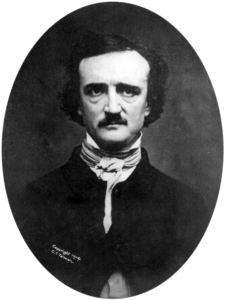
In Nightmares with the Bible I use an idea penned by Edgar Allan Poe as one of the threads holding the book together.  One early reader complained that Poe didn’t write about demons, so the use of the great man was inappropriate.  That reader misunderstood me.  Today is Poe’s birthday.  As I think about the influence a writer can have on a young mind, I come back to this reader’s comments.  I can’t think of my book without Poe.  No, Poe did not write about demons, but he set the stage for what I’m trying to do in my book.  I’ve read analysts who claim Poe wasn’t a horror writer.  Certainly in the modern sense that’s probably true.  Still, he, like many others, was brave enough to suggest the tenebrous side of life was worth exploring, even if you only had a candle.  

Poe’s monsters were often interior.  They were psychologically probing, and although Sigmund Freud had not yet been born, it’s not inappropriate to say that Poe explored psychology.  Writers, I suspect, often deal with things they can’t name.  This is the way knowledge moves forward, even with fiction.  Especially with fiction.  As I’m reading books by academics who’ve done well for themselves, I often reflect how their legacy will remain within their field only.  It’s the rare nonfiction writer who manages to reach a cultural status that will find readers from other disciplines.  Most of us, however, will admit to reading a novel or two now and again.  Fiction writers, such as Poe, can claim things without backing them up with footnotes and citations.  That doesn’t mean they were any less astute at observing the world than academic writers are.  Often they’re more so.

I didn’t put Poe into Nightmares to show off.  His work has long been in the public domain.  I don’t cite him to claim that he would have agreed with my use of his insights.  No, I cite him because even if he wasn’t a horror writer my early encounter with him started me on a path of exploration.  Poe had trouble getting along in a literary world where rejection was endemic (it still is, I know from personal experience) and making a living as a literary person was unheard of.  He nevertheless knew that fiction was more honest than the alternatives, at least for some of us.  If we wish to face the world with integrity, we should admit that our heroes may have been made so in our own minds.  That doesn’t make them any less authentic, just because we’ve appropriated them for our own purposes.  We borrow what we find meaningful.


Protest Day

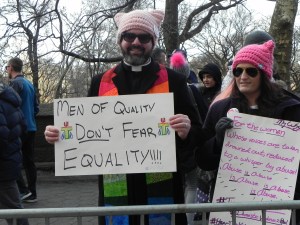
Today should be known as Protest Day.  Three years ago with over a million others I marched in Washington.  The media still routinely underreports the numbers there, despite the metrics used on the ground.  “They’re only women,” it seems to say.  I marched the last two years in New York City.  The protest can never stop.  Once a democracy has opened the door to evil, it can never rest again.  It’s cold outside.  There’s a winter storm in the forecast.  Women everywhere are out marching.  This mansplained world must come to an end.  We must hear all voices.  Despite having control of all branches of government, the Trump message isn’t being heard.  Perhaps there is justice in nature.  I like to believe it, even when it’s hard.

Patriarchalism wears many disguises, such as biblicism.  If all you take from the Good Book is the idea that men are more important, then you’ve missed the point.  The Bible is a book with a context and those who can quote it without knowing what it originally meant are left wondering why so many other Christians disagree.  The message must be heard.  Liberation theologians long ago realized that Jesus’ gospel had been drowned in the voices of legalism.  They did what we all should be doing today; they protested.

Signs of national and international weariness are everywhere evident.  Trump-supporting senators strike out with ad hominem attacks for all reason has failed them.  Used to be if you aided and abetted a criminal you’d get in trouble.  Now you just get bumped to a more influential committee.  So we protest.  History hasn’t forgotten Watergate.  It will never forget the disaster of 2016 when a political party sold its soul.  

A restaurant not far from here is owned and operated by a young woman.  A sign on the register says “The Future Is Female.”  I hope it’s so.  Our hunter-gatherer sensibilities have been suborned by the possibilities of agricultural surplus.  Where there’s surplus there’s mammon to be made.  In the Middle Ages mammon became the name of a demon.  Today it’s inscribed on the hearts of those who follow cash, no matter where it may lead.  Once upon a time a man from Galilee said the wealthy wouldn’t inherit the kingdom.  Like Caesar they dedicate the temple to themselves.  We may not all be able to get out to march today, but we can make our consciences heard.  Women deserve every right men have.  It’s time to learn to share.  Until that happens, we must protest. 


Morality, by Contract

So, maybe it’s the crazy wind that was blowing around here all day yesterday, but I’m beginning to wonder about corporate sanity (if there is such a thing).  Specifically, I’ve been hearing about more and more contracts with ethics clauses written into them.  This is downright weird.  Does the signing of a contract make one ethical?  It’s like that silly page that comes up on some workplace servers saying you’re very naughty if you’re not the person you’ve logged in as.  We all know that.  That’s why hackers hack and the rest of us comply.  But legislative morality?  Via contract?  The notion is strange because ethics relies on an agreed-upon set of standards.  If Trump has taught us anything it’s that there’s no agreed-upon set of standards.  Some of us can honestly say that we weigh our own ethics every time we do anything.  Send me a contract and see!

The first time I saw an ethical behavior clause it was in a contract from a Christian company.  They wanted no business dealings with the corrupt, misbehaving, and one might guess, pagan sort.  When such a contract is sent to a business, it means that said business will monitor the morality of all its employees.  That’s something I certainly wouldn’t want to be in charge of.  Rationalization is too easy and far too human.  Let the one without sin cast the first whereas.  Well, one would think that a Christian company might take that point of view.  The way some Christians have treated me over the years makes me shudder at the advantages taken.

This idea seems to be spreading out to secular companies as well.  You read about contracts with ethical clauses in them—anyone who’s not ethical will have no qualms about signing a contract stating s/he is!  Why offer a contract at all if someone’s morals are in doubt?  One of the things you learn from taking ethics courses (of which I had several) is that, beyond widely agreed-upon standards (it’s wrong to kill, for example, or take something that belongs to someone else) the details quickly fade to gray.  People find ways of living with themselves while trying to survive in society.  An ethics clause in a contract suggests I should live by the standards set by the issuer.  It attempts to vouch for my future behavior without knowing my future circumstances.  I’m all for ethical behavior, and I try to abide by my own moral code daily.  It’s just that putting morality into contracts implies thinking poorly of the party of the second part.  Better to add a sanity clause.

Photo credit: Jörg Bittner Unna, Wikimedia Commons


Amendments

Funny thing about freedom of speech.  It doesn’t really exist in a capitalist system.  Words, I suspect the powers that be know, are extremely potent.  Any system that brooks no rivals will insist on silencing dissidents.  And not just on a national scale.  Several years ago I was interviewed by a Catholic magazine for an editorial position.  I was between jobs and this looked like a good fit; in fact, the woman who arranged the interview told me that if this position didn’t work out they’d likely be able to find a different one for someone with my particular skill set.  When the power that was interviewed me, however, he noted that I had a blog.  “If we hire you, you’ll need to take it down,” he said.  It would confuse readers who might think I was speaking for the Catholic Church.  My candidacy did not proceed.

In a job I would eventually get, in academic publishing, a similar concern was expressed.  Although I hold an earned doctorate from a world-class research university, my opinions might be mistaken for those of some true authority.  Problematic.  This issue keeps coming up.  I write fiction and publish it under a pseudonym.  Sometimes I think about coming out of my literary closet, but the issues pour in hard and fast when the door’s opened.  What would those who read my nonfiction (both of them!) think?  Would I discredit myself because I have too much imagination?  What would an academic employer say?  If I ever went back on the ordination track, would a congregation of any sort understand a clergy person who thinks such things?  I get enough flak from writing about horror films.

The fact is, freedom of expression is very, very limited.  Capitalism measures all things by the bottom line and anything that might cause that trend to waver is forbidden.  Lack of team spirit.  If you want to publish, don’t work in publishing.  It’s like saying (if I might be so bold) that you shouldn’t teach if you earn a doctorate, because you might actually contribute to what we hopefully call knowledge.  This dilemma has become an entrenched part of my psyche.  I grew up innocently writing fiction.  I completed my first stories about the age of 12 or 13.  I was eventually groomed for the ministry and so the fiction had to be set aside as one of those “childish things.”  Was it?  Perhaps.  More likely though, it was simply a lesson that I would find repeated throughout my adult life.  Give lip service to freedom of speech, but don’t ever use it.


Qohelet’s Advice

Academic hypersensitivity.  I fear it’s on the rise.  I know I’ve experienced it myself—that flushing rage and disbelief that someone has written a book on the very topic on which you also published a book, and didn’t cite you.  How could they have overlooked your contribution?  I’ve seen scholars angered to the point of wanting to ruin someone’s career for not citing them.  Now academics can be a sensitive lot.  Remember, some of them specialize to a point of general social incompetence.  Anyone publishing in their specialization is like making a claim to have slept with their spouse.  This subject is theirs!  They’ve spent years reading and researching it.  How dare some new-comer not know this!

One thing many academics don’t realize is just how much material is published.  The flip side of this is just how obscure their work is.  Trade publishing and academic publishing aren’t the same thing, and the former are the books that really get noticed.  When I wrote my dissertation, back in the early 1990s, I had read everthing I possibly could on the goddess Asherah.  When I proposed the dissertation topic there had been a total of about three books written on Asherah that I knew of.  Enough to have a research base, but not enough to suggest it was a crowded field.  While I was whiling away my time in Edinburgh, another American ex-pat was writing on the same topic in Oxford.  The day of my doctoral defense, the outside examiner came in with a book just out on Asherah—in German, no less—and asked how my dissertation related to it.  Even today when I see a book on Israelite religion I flip to the back to see if my book’s listed.  Generally it’s not.  Today it’s impossible to read everything published on Asherah.

In my own case, however, I’m slowly coming to perceive the reality of the situation.  Books continue to be produced.  Articles are published at a blinding rate.  Even Google has to take a little time to find them all.  An overly inflated sense of self-importance can be a painful thing when it meets with the sharp pin of reality.  Your academic book may well go unnoticed.  Even if it’s good.  It may be priced at over a hundred dollars—I still pause and fret and kick the dirt a few times before buying any book that costs more than twenty.  Silently and slowly, I suspect, the frustration builds.  You see a book, then two, then three, that seem to be oblivious to your contribution.  A new book for review lands on your desk and Vesuvius erupts—why am I not cited?!  Has my work been forgotten?  Calm down.  Breathe deeply.  The book of that neophyte before you will also become obscure in due course.


Dancing

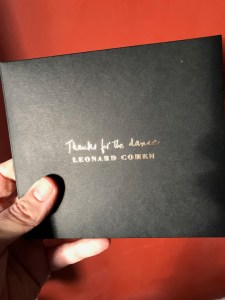
An artist is never really gone.  I have been listening to Leonard Cohen’s posthumous Thanks for the Dance.  Haunting in the way of Bowie’s Blackstar, there’s a poignancy to listening hard to the dead.  Especially when they saw it coming.  Artists are never really gone, and we can forgive them because they’re oh so very human.  Cohen was an exceptional poet and this album captures a man who knows the end is near.  Still he sings of girls and sins and God.  There’s an eternal soul there, and Cohen captures longing better than just about anyone.  The artist knows longing and understands not knowing for what.  The album struggles with religion and depression, a remarkably common combination.  Memories of glories that linger even as the body ages.

Listening to someone else’s music is taking a stroll through her or his head.  Someone once gave me a disc of songs built around a theme.  Although the theme came through I feared a little of what I heard here.  Some who know me primarily from my overly pious upbringing would be shocked to find Cohen on my favorites list.  For me he has no pretense.  Instead of ignoring religion, sexuality, or politics, he tried to make sense of them through song.  For me—and listening to music is a very personal thing—I think I understand when I’m drawn into his lyrics.  His experience of life was vastly different from what mine has been, yet he’d accurately mapped the direction my mind might wander, if given free rein.  Religion will hold your imagination captive, if left to its own devices.

Those who reduce Leonard Cohen to his over-used “Hallelujah” catch only glimpses of this complex man.  I once read an article about Bruce Springsteen in which a friend of his said that if he hadn’t succeeded in music he might’ve become a priest.  There’s an authenticity to these artists who write probing songs that have deep spirituality yet allow themselves to be human.  Cohen’s songs revealed he could see death with some ambivalence from afar.  Even in albums recorded thirty years ago the hints were there.  Instead of running and attempting to hide, Cohen’s lyrics, at least, indicated that he’d continue to try to live.  Maybe these are just the reflections of a middle-aged man who’s only glimpsed a fleeting connection between an artist in perpetual motion and a one-time scholar sitting up alone at 3:00 a.m., seemingly stuck in one place.  Whatever else they may be, such quiet moments will ones be haunted by Thanks for the Dance.


Atlas

The other day I had a hankering for Religion Index One.  I don’t think it exists anymore, at least not in the format I once knew it.  RI1 was a print volume produced by the American Theological Libraries Association, or ATLA.  This tome was an indexed list of journal articles that had come out on any given topic in the past year or so, and it stretched back to the 1940s.  The idea was that it was as close to “one stop shopping” as a scholar could get for finding publications while doing research.  I suspect it’s all done online now.  One of the tricks of the trade I’ve learned from not being part of the academy is that if you maintain membership in one of the larger bodies—the American Academy of Religion, or the Society of Biblical Literature—you can find out who’s working on what by searching the programs of their annual meetings.

This may sound like a terribly geeky thing to do; admittedly it is.  Nevertheless, I’ve uncovered lots of information by doing just this.  If you want to know who’s been researching a topic, look for who’s presented a paper on it over the past few years.  It’s not failsafe, of course.  Some of us aren’t really encouraged to give papers on company time anyway (and what time isn’t company time?) but we nevertheless research anyway.  All the journal articles and book chapters that I’ve contributed over the past six years or so have been invited submissions, with one exception.  Ironically, I taught and published full-time for nearly 15 years with no outside invitations made.  Once I was no longer in a position to access RI1 people started to invite me to submit papers.  It’s pretty difficult to do in current circumstances.

With the continuing factories churning out doctorates in religious studies—itself a stagnant job pool—there’s plenty being published.  Online sources mean even more venues to get things “in print.”  There really is no clearinghouse to find it all, beyond Google.  ATLA still exists, and they now produce a searchable database.  Like JSTOR, however, it’s only available to the traditional academic and the occasional wealthy bystander.  Since the AAR and SBL programs are open to the public for searching, even sorts like me can gain access to a small wealth of knowledge.  Or at least a wealth of papers and publications, which may not be the same thing.  Still, in quiet moments I reflect on walking to a physical library and thumbing through a book made of authentic paper, and feeling, at the end of the day, as if I’d accomplished something.


Smelling Winter

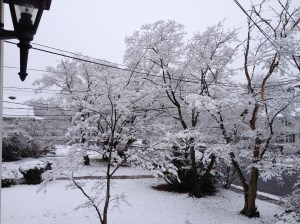
We’re experiencing the January thaw around here.  This isn’t a scientific thing, of course, and it doesn’t happen every year.  We had snow before Christmas, but it didn’t linger too long.  We’ve had cold days since, but none so bad that I couldn’t jog a couple miles over lunch.  The ground has started to freeze but much of the grass is still green.  The changing seasons are largely olfactory to me.  You can smell fall and spring coming.  I’m not talking about burning leaves in autumn or the first hint of magnolia in spring.  No, I mean the aroma of the earth.  Stuck indoors as we often are, we’ve been conditioned to think our sense of smell is under-developed and therefore unimportant.  Overall, however, humans don’t rate too shabbily in the nasal range.  We don’t experience the aromatic realm as much as dogs, vultures, bears, or mice, but our sense of smell is vitally important.

Not only does smell tether us to memory, it also influences moods.  Studies done on those deprived of scent by disease or accident indicate higher levels of depression.  All of us know how vital scent is to taste.  We don’t appreciate, I suspect, how the aroma of our earth can inspire us.  Yesterday as temperatures crept into the 60s, I stood outside breathing deeply. It was only in my back yard, and the clouds were low and gray.  Spring clearly came in the gusty air.  I know that the bulk of winter lies ahead.  January’s only just tuning up, and February has us in its sights.  The aroma of spring will once again be frozen to await release in more timely fashion.  I’ve been feeling chilly since October, layering up and reluctantly bidding goodbye to the scents of autumn.  Winter’s sterility has begun, but we’re being teased just now by a nature that likes to remind us who’s really in charge.

As I grow older, I’m hoping I’ll learn to smell winter.  My nose spends too much of it feeling cold, and when I wrap my face in a scarf, I have only my own breath to breathe.  What is the odor of winter?  The faint hint of smoke from a neighbor’s chimney?  The briny tang of a freshly salted roadway?  The pine of a newly cut Christmas tree?  Outdoors there’s life throbbing, pulsing slowly beneath the chill.  Even after the great ice ages, it was ready and eager to reemerge.  Today I smell spring in the air.  It’s not yet here, and won’t be for some time.  Scent is ever only temporary but today there’s yearning in the air.