Clean Sweep

The other day I was reading about cleaner wrasses. These are the fish, usually in coral reef community, that establish a place of business, and other fishes who want to be rid of parasites come onto location to be cleaned. They allow the wrasses to nip them all over to get the pests taken care of, even allowing the smaller fish to swim into their mouths to work their specialization there. Kind of a mix between a visit to the dentist and the car wash. Documentary makers have filmed the process multiple times, and, being humans, we project onto the piscine scene a kind of business template—an exchange of goods for services. Then we turn back to our own lives and forget the underwater world.

Image credit: Robbie N. Cada, courtesy FishBase, courtesy Wikimedia Commons

Still, I have to wonder about what’s going on here in the realm of consciousness. We do not yet know what consciousness is, but we all recognize it in ourselves. We know we’re alive and conscious—except when we’re dreaming when we don’t seem to realize what’s going on in our brains isn’t really happening. Most of the time, however, we set our goals, have our intentions, and go about our business accordingly. What is the motive force that drives a fish to the cleaner wrasse’s studio? Isn’t there a level of consciousness involved to know that this fish’s house is where you need to be for this kind of treatment? Don’t the larger, predator fish know that if they eat the wrasse in their mouth they’ll have to find a new service provider? Are they aware of this or are they, as some scientists like to tell us, simply biological machines following their programming?

I’m not a scientist, but I see consciousness all around me. I watch the interactions of land animals—I generally don’t take trips under the sea, no matter what Sebastian says—and they are anything but simple. The birds on the wire and in the chokecherry trees have complex interactions. All you have to do is watch a single individual for a few minutes. They make decisions—the sky is a vast, open template with no obstacles, surely they have to decide why they want to go this direction and not that! And bowerbirds build nests as elaborate as Victorian mansions. Not that there are bowerbirds at my bus stop, or even in New Jersey. There are limits to how far even nature will go. As I stand here, waiting for my bus, I can’t help but think how like a cleaner wrasse I am. And I’m sure they must be conscious of what they’re doing since life’s all about the exchanges of goods and services.


Any Means Necessary

As one of his first acts as governor of New Jersey, Chris Christie cut the Access to the Region’s Core tunnel project. This was before he closed the state-run beaches so that he and his family to have one for themselves without Independence Day crowds bothering him. Liberty means something new these days, I guess. The ARC tunnel project was meant to ease some of the burden on those hapless zombies known as commuters. As a member of this undead class myself, I often think of the relief that never was as we sit, unmoving, just meters away from the Lincoln Tunnel, looking nervously at our watches wondering just how late we’ll be to work this time. Our elected “representative” leaders have no idea about the life of the average person. Having lived sequestered away among the rich and axle-greasers for so long they have forgotten that real wheels need to roll. Their bottom line is at risk.

Trump, apparently aware that torture and public transit go together, has nominated Steven Bradbury, the Bush-era policy architect, as his general counsel of the Department of Transportation. Known for his “torture memos” Bradbury has none of the charm of the sometimes macabre other Bradbury who had the courtesy of keeping his frights restricted to fiction. The most disturbing part of all of this is just how little our elected officials care about the people who keep this country going. Populism, still poorly understood, is what happens when people get fed up with business as usual. Easily duped, the average citizen can’t tell an “entertainer” from a genuine leader. The era of “I’m not a doctor but I play one on TV” has grown up and become truth. Doogie Howser where are you when we need you? It might be helpful to have Rex Morgan on hand after a session in the torture chamber.

Government has become a joke. Comic strip presidents gather the assorted nuts and dolts required build up a representative democracy, it seems. I used to tell my wife, back in January when things were bleaker than Poe’s December, that we could expect no less than outrage after outrage from a man whose sole motivation is to get people to look at him. We all knew jerks motivated by that in high school. The difference is that now they’re easily voted into office. Selfish men who will close down public parks so they can take the whole thing for themselves. They have no idea what governing is because they can’t understand that other people have wants and needs as well. Other people are for torturing when you’re bored. Sounds like a visit to October Country may be in order yet.


Literary License

Whenever I orient myself to a new place, I tend to do so by the writers who’ve lived there. As a family we used to take “literary trips” to visit locations associated with famous writers. While in the Midwest it was often Laura Ingalls Wilder, and once, Mark Twain. Here in the east there has been considerable diversity. Several locations associated with Edgar Allan Poe have informed our travel plans. H. P. Lovecraft (although, to be honest, we always had other reasons to be in Providence) naturally followed on from Poe. We visited the property of Edna St Vincent Millay in Austerlitz, New York, and later in the same trip Sleepy Hollow, to find the haunts of Washington Irving. Famous writers can be found in just about any major city and many small towns. Now that Ithaca is in our regular orbit, I’ve begun to consider the implications.

Carl Sagan is probably the most well-known of the city’s past celebrities. His premature death added an almost Gothic element to his fame. Certainly among the sphere of his fellow academics known for fiction is Vladimir Nabokov. An entomologist by trade, Nabokov turned to writing and teaching. His lasting renown in this field was for the novel he tried to burn before it was published, Lolita. Before I knew Ithaca would be in my future, and indeed, before I knew that Nabokov was either a former resident or an entomologist, I read the novel. It’s a challenging book. Humbert Humbert is as flawed a protagonist as one might find, and any character guilty of child molestation is difficult to read even in the protection of fiction. Perhaps that’s why the novel won such acclaim. The experience of men and women who read it, I suspect, is very different. It’s a novel of moral urgency.

In perhaps a more innocent time, E. B. White attended Cornell. Apart from The Elements of Style, his book-length oeuvre was mostly in the realm of literature for children. This brings the the focus back to youth. Our childhoods—whether we acquiesce to what fate seems to demand or challenge our lot hoping to improve it—make us who we are. As the years increase in number the memories become more fiction and less fact, they nevertheless remain the touchstone for anchoring our understanding of self. Some of us constantly measure ourselves against the future we clawed for as a child, like those pencil marks on the doorpost showing our physical progress. Having been unable to afford the luxuries of travel when I was young, I add a notch to my literary belt every time I travel to Ithaca, knowing full well that only the slimmest of minorities could find my very obscure hometown on a map. If I remember correctly.


The Consequences of Being Smart

A few years ago my wife bought me a smart phone. Being lifelong Mac users, the iPhone was the model of choice. I don’t have the intense connectivity issues of the young, I guess, so I don’t use it for texting or surfing the net. It’s great for holding bus tickets, though, and navigating in unfamiliar places. I’ve grown quite used to the convenience of having the internet in my pocket. Such a smart device. Naturally, one smart device in a family will breed others. We all have iPhones now. Like most Apple products they’re hermetically sealed and have few moving parts. The user need not know what goes on inside. It’s the very definition of a black box.

Then my wife’s phone went rogue. Suddenly it stopped picking up 3G signals (these are older models, after all). Now, you can’t just open up a black box and look inside. Even if you could I’d have no idea what I would be looking at. So I called tech support. My wife keeps music and photos on her phone, so we didn’t want to lose anything. Little did I realize that I’d just committed two-and-a-half hours of my life to phone repair. Before I was done, I would come to know six discrete people at differing levels of intimacy as we worked together to figure out what might make a black box tick. I spoke to Apple support and our service carrier. They put us back through to Apple support, and they had to call us back because the process was a lengthy one. In the end, it worked. The phone was restored to its former glory, but I had lost one of the very brief evenings I have.

One of the typical sci-fi, or apocalyptic, scenarios is the person or civilization that builds something s/he it can’t control. Like a biblical plague, we’ve unleashed a technology that makes our lives oh so much easier but ever so much more complicated. In addition to our professional expertise, we all need to understand, to some degree, technology. Technology and deity have begun to share blurred lines. It’s as if many believe it will save us. At the end of the day, however, we have to assert that it is here to serve us. We are the gods and technology represents the lowly beings we’ve created to do our bidding. Then again, those who read ancient stories know what happens when the gods create a servant race. I’m lucky that all it cost me was two-and-a-half hours, and not some even greater sacrifice.


The Ezra Puzzle

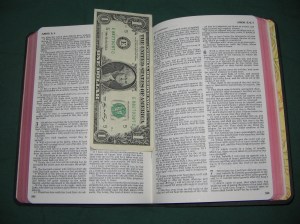
America loves the Bible. Thing is, most Americans have no idea how complex the Bible actually is. Jewish, Protestant, Roman Catholic, and Christian Orthodox Bibles all have different contents. I was reminded of this the other day while trying to look up 4 Esdras. If you’re scratching your head saying, “4 Esdras? Is that even in the Bible?” it only makes my point. The books we call “the Apocrypha” are also known as “the Deuterocanon” by Catholics. The reasons are complicated, but the Apocrypha consists of books that were never in the Jewish Bible. Jerome, the 4th-5th-century biblical scholar translated the Bible into Latin (it was originally written in Hebrew and Greek, mostly). When he came to the Apocrypha, he translated those books too, but with a special heading saying they weren’t in the Jewish Bible. During the Middle Ages the headings were often left out and the Apocrypha was included with the “Old Testament.” During the Reformation, Protestants rejected all kinds of excess, including excess scripture. The Apocrypha was out. The Counter-Reformation, living up to the title, led to the definitive inclusion of the Apocrypha in Catholic Bibles. Meanwhile, different Orthodox groups kept some, rejected others, and added still others. When Americans say “the Bible,” they generally mean the Protestant Bible.

There are some implications to be thought through here, given that we’re talking about holy writ. Not all Christians agree on the same Bible. What’s more, the disagreements about what to include started pretty early. Does it count if you swear on an incomplete Bible? Would a New Testament do in a pinch? What if you’re Jewish? Having a national holy book is somewhat problematic when we can’t all agree on the contents. Many people would have some trouble opening right to some of the less popular books, say Ezra. Unless you’ve got a New Testament only, you’ll have Ezra. Go ahead, take a look. (It’s somewhere in the middle.)

Everybody’s complete Bible has the book of Ezra. So far, so good. 1 Esdras (“Esdras” is Latinized “Ezra”) is not in the Deutorcanon of the Catholic Church. It is, however, included in an appendix. It is part of the Orthodox canon, and it also goes by the names of 2 Esdras and 3 Esdras. Just to make it interesting, the Vulgate, or Latin translation of the Bible associated with Jerome, calls Ezra and Nehemiah 1 Esdras and 2 Esdras. Need a score card yet? It gets more confusing later! So 1 Esdras is either Ezra, 2 Esdras, 3 Esdras, or 1 Esdras, depending on whose Bible you’re borrowing. But where’s 4 Esdras? Well, there is a 2 Esdras (not the same as 1 Esdras or Nehemiah) in Slavonic, but not Greek, Orthodox Bibles. 2 Esdras is known as 3 Esdras and 4 Esdras, the latter when it is in the Vulgate appendix. The fun’s not over yet! 2 Esdras is broken into 3 parts and they are called 5 Ezra, 4 Ezra, and 6 Ezra. There is, however, no 1, 2, or 3 Ezra (unless the Latin name is Anglicized). If you’ve got a headache, take two Esdras and call me in the morning.


Epics of Humanity

The Epic of Gilgamesh survived only by being buried. Its survival is perhaps less surprising than its discovery after having been lost for many centuries. Reading Andrew George’s translation of the tale reminded me of reading Beowulf. Not only are the two of them hero tales, they are both “sole survivors” in the sense that they define the literature of their respective eras in a way no other text does. Yes, there are other Mesopotamian epics, but Gilgamesh, it was immediately recognized, deals with existential issues in a way that’s thoroughly modern. It is set apart from other ancient literature for that singular achievement. Fear of death leads Gilgamesh to amazing feats even if it only ends in a yad wa-shem. We can feel for Gilgamesh. Although he’s a king, he has to face the demise common to all people, and the language used to express his emotions is touching even today.

Beowulf, while singular in a way Gilgamesh isn’t, also leaves the reader wondering what is left of life if not some kind of fame. Beowulf may defeat Grendel, but the dragon mortally wounds him. If his tale had not survived in the back of an old book we wouldn’t be discussing him still today. How narrow that gap between fame and obscurity turns out to be. For the vast majority of us obscurity awaits since few can be recognized by the many. Like Gilgamesh or Beowulf, we know the consciousness inside this head and we feel that somehow we have a purpose. It takes daily life to drive that out of a normal person. The hero, however, refuses to let the odds win. There’s a profound hope here, in these narratives of denying the final fear the final say. In George’s edition the inclusion of other Gilgamesh tales outside the epic texts reinforces that point repeatedly.

Humans are meaning seekers by nature. Some simply accept the illusion of apparent reality and ask for little besides. Others cannot rest knowing that there is more to be understood, or, in the parlance of outmoded means of expression, to be conquered. When life says “Enough,” Gilgamesh refuses to acquiesce until his options run out. For many centuries his story was set to be lost forever. Latter-day restless minds, however, dug in the dirt until something truly extraordinary was discovered there, free for the interpreting. So it is that heroes come from nothingness. Many return to obscurity. Those that are found and venerated experience a resurrection the envy of many a god. Speaking to strangers across millennia is indeed immortality, even for those whose lives must end like all others.


Fundamental Law

Last year I posted a piece on Fundamentalist Church of Jesus Christ of Latter-Day Saints fugitive Lyle Jeffs. The occasion for my venturing into this sect was that Jeffs’ lawyer, after Jeffs had escaped house arrest claimed the Rapture was responsible for his disappearance. Now that an unraptured Jeffs has been recaptured, I begin to wonder about the special immunity of lawyers. Surely Jeffs’ attorney knew that his client hadn’t been spirited to heaven in the fictional escapade we all know as the Rapture. Indeed, all criminal lawyers—or at least most—know the facts behind a case before they step into the courtroom. While their witnesses are guilty of perjury if they lie under oath, lawyers, through careful wording, are permitted to insinuate the opposite of the truth with no hint of wrong-doing. It’s just their job.

Legalism and religion go hand-in-hand. After an interesting preamble, the Bible begins by laying down the Torah. Among its stipulations is not bearing false witness. But then, that was before the modern legal system. Religions tend to serve as moral compasses—and that’s the phrase that’s frequently used. A compass helps to find direction, ensures that we go the right way. What exactly the right way is can be a matter of debate, however. It all depends on where it is we want to go. When religious law, such as polygamy among Fundamentalist Latter-Day Saints, and civil law (generally recognizing one spouse at a time) clash, lawyers debate with the comfort of knowing they need not be accountable for the truth.

I’m no legal expert—in fact, I wouldn’t even have known about this had not a friend sent me the piece by Ruth Graham on Slate—but the question does trouble me. Religion is often all about laws. Specialists in Islam are called jurists, and in Judaism rabbis know the Torah inside out. Religious laws sometimes—often, actually—conflicts with the laws of the land. Believers either accommodate the differences or get into trouble in the secular courts. It’s headline news when religious law becomes civil law in this modern day and age. Isn’t there something cynical, however, when a lawyer pleads the Rapture as probable cause for a disappearance? Knowing the law, they need not reveal the truth they know. And yet, if you personally implicate any wrongdoing in another you can be sued for liable or slander. Lyle Jeffs wasn’t in heaven. He was living out of his car, keeping off the grid. Of course, following religious law can be like that some times.


Liberty and Justice

I confess to being a bit vexed. How are we supposed to celebrate Independence Day under the Trump administration? Since January our government has demonstrated over and over and over again that it’s dearest desire is to pick democracy apart, to its own advantage. Making voting more difficult for those who oppose the Republican Party, gerrymandering to ensure local election victories, cutting their healthcare so that they might, well, just die off. Repeated and loud public protests do not impact them at all. When their own party moderates protest, they claim they’re collaborating with the enemy. The American people have become the enemy of the wealthy and privileged who want this country to resemble a country club, not a nation of liberty and justice for all.

How do we celebrate a country like that? Back in high school, my senior year, I won a state-wide essay contest. I got my picture in the paper and everything. I don’t have a copy of the essay, but I do remember that the topic was Americanism. Yes, the “ism” was part of it. Although I didn’t know Shostakovich at the time, it was my attempt at what he did in his fifth symphony. Looking back, it seems strange that a Pennsylvania statewide committee would select an essay so full of irony from a working class boy who was only too well aware of his own inferiority. Yes, there was irony in that essay, and anger. Carefully hidden. It sounded patriotic. The hundred dollar prize didn’t make a dent in my fall tuition bill.

Nearly four decades have come and gone since then. I’ve watch my nation teeter-totter between humane treatment of those left out by the system and offering kick-backs to those who by no definition need or deserve them. Until November of last year I’d never seen a nation stoop to the absolute abyss of cynicism in the election of Trump. Although President Obama had the grace to say that many people were obviously happy with the results, it was as if my essay—now lost and forgotten by all but one—had come true. Make no mistake about it—I’m a poor boy who grew up among the working class. As a teenager I could see, hear, and taste the hypocrisy. I hoped and dreamed that as I grew up so would my nation. It’s the fourth of July. Normally I would be celebrating Independence Day. This year, however, I’m only wondering what went wrong along the road to liberty and justice for all.


Heresy Collection

Geology isn’t a great avocation for those of us with an unsettled existence. Having grown up with a fondness for fossils—maybe because they were so transgressive—my initial collection was tossed out because of a family move. Rocks are too heavy to take with you. I made the mistake of thinking, back in my Nashotah House days, that I was settled enough to let my rock-hounding sensibilities loose. Not that fossils were common, but Wisconsin has some great geological formations and I joined the Wisconsin Geological Society and even dragged my family along on some field trips. By the time Nashotah informed me my talents were no longer required, I’d amassed a few boxes that I was embarrassed to admit to the movers that, yes, contained rocks. New Jersey also has some great locations for rock-hounding, but my sense of being subjected to sudden, geologic career shifts has kept me from picking up nearly as many stones as I’d like to bring home.

The Museum of the Earth, here in Ithaca, is a dangerous place for someone like me to visit. I thought I had my fossil-collecting habit under control. The gorges in this region are famous for their fossils. Wandering through the museum, reflecting, as it does, the immense stretch of prehistoric time, it was obvious how arrogant humans are for assuming “control” of the planet. We’re so terribly late as to be classified as invaders on this planet. The world got by just fine billions of years without us. Perhaps that’s why I experienced transgressive fossils so captivating as a child. Ironically I found them in the creek bed right behind the Fundamentalist church we attended and where we were taught that evolution never occurred. I was fascinated by what I’d now call the juxtaposition of evidence and faith. We never questioned the reality of fossils. It was their interpretation that was the problem.

You can hold in your hand the most solid evidence that life evolved and call it heresy. Those delicate impressions of creatures dead for millions of years argue eloquently against Genesis and its mere 600 decades of world history. For me the fossils always won. On trips home from the seminary I would gather more fossils to add to the growing museum of time I’d been amassing in my basement. Then a Fundamentalist administration took the same approach as my exasperated mother trying to pack to move. Jettison the fossils. They’re heavy and they kind of make us uncomfortable anyway. Maybe the idea of too much time is something the biblically constrained simply can’t face. And when I see a fossil right there on the surface in one of Ithaca’s many gorges, perhaps I need to learn simply to let it lie.


Classical Education

Andrew Dickson White famously wanted Cornell University, unlike what would become known as the other Ivy League schools, to be non-sectarian. Most Ivy League universities were founded as seminaries or with the strong influence of churches. On farmland gifted by Ezra Cornell, in Ithaca, New York, the school became one of the first truly secular world-class universities. As I approached Ithaca over the weekend, my wife told me that the town had once been briefly known by the name of Sodom because the remote location’s reputed notoriety for sabbath breaking, horse racing, and profanity. It is now considered one of the most enlightened towns in the country. Famous for its waterfalls and gorges, one of the cascades is still rejects the biblical slur with the sobriquet “Lucifer Falls.”

Many place names—indeed, much of American culture in general—reflect(s) the Bible. Ours is a culture in denial of just how formative religion has been for who we are. Because of our willful blindness on this point we sometimes run the risk of being entrapped by our heritage. Despite how much we’ve educated ourselves we still see what we want to see. Our religious heritage is often considered an embarrassing family secret rather than the path by which we came to be a civil society. Religion is so frequently portrayed as an evil force that it’s easy to forget just how much we owe it for our evolution. Even education itself had a religious motivation since teaching students to read was often done with the intent that they should read the Bible.

Like nearby Binghamton, Ithaca has a statue dedicated to Martin Luther King, Jr. It bears a biblical quotation from Amos without embarrassment. Ithaca today is a livable, socially conscious community. Recycling is strongly encouraged while cars are not. Hardly a hotbed of immorality, it is one of the great examples of an American college town. Ideas are welcome here. Befitting its classical heritage of education, the city is named after the island ruled by Odysseus, according to Homer. Indeed, Ulysses lies just down the road. Homer (and yet another town in the area bears that name) presented Odysseus as among the smartest of the Greek kings. Like most classical Greeks, Odysseus was only too conscious of how the gods could interfere with one’s life. Instead of denying the obvious, however, religion was recognized as a necessary source of culture. Not that it always has to be taken too seriously. Maybe it shouldn’t be completely ignored either.


1985

My edition of 1984 contains an afterword by Erich Fromm. I’m afraid I’ve been in publishing long enough to be somewhat cynical about “value-added content” that’s used to sell subsequent printings. Those who buy a book off the shelf want the text of George Orwell’s classic, not the comments of some academic, right? The intended market, however, is for classroom use—the sweet spot for academic publishers. A few adoptions at major university and what is otherwise any old tome from the used book market becomes a profitable venture. My edition of 1984 is a 62nd impression with a copyright of 1961. The class I took where it had to be read was two decades later than that. In any case, Erich Fromm. I first learned about him in college, and given the underlining in his essay I know I read it back when I took the class. In rereading it decades later, an un-remembered point came clearly to me—Fromm’s brief essay is on prophecy.

In the popular mindset, prophecy is predicting the future. While there’s some element of that in the Bible, by far the majority of prophetic texts serve as a warning to change how things are done before it’s too late. There’s a contingency about it. “Or else.” If there’s no possibility of change, why castigate people you’re only going to destroy anyway? Prophecy, despite its often dire outlook, is ultimately hopeful. Wrote Fromm “it was quite obviously [Orwell’s] intention to sound a warning by showing where we are headed.” But more important are the next words: “for unless we succeed in a renaissance of the spirit of humanism and dignity” all will be lost. The spirit of humanism.

Fromm was writing during the nuclear fear that I recall very well from childhood. As soon as I was old enough to comprehend what we had created, I feared we would eventually loose it upon ourselves. I was hardly a humanist at the time, but I was, even in my young days, an unwitting advocate of its spirit. I believed all people had a chance, or should have a chance. Foreign evil, as it was being presented by Ronald Reagan, seemed more fictional than Orwell. The average person didn’t want war. It was the Party that needed our fear. I graduated from college, seminary, and my doctoral program, eventually forgetting Fromm’s words. The Whitehouse had finally found its way out of the Bushes and into moderate humanism. Then Fromm came back.


Editing Sheep

Many academics I know dismiss editors as just another species of laity put on earth to serve the guild. There’s perhaps some truth to that. Without people to write books—and few beyond the professorate are granted the time and leisure to do so—we’d be without a job. One of the more hidden aspects of being an editor is, however, its prophylactic role. One thing that those of us who’ve written books know is that we get pretty close to our subject. We have to. Writing a book while viewing your topic from a distance is possible, but not desirable. Being too close to your subject, however, often leads to extreme myopia. Many are those who are quick to dismiss editorial suggestions wonder later why their books didn’t do better. Think about it. Editors, by definition, read all the latest stuff.

We’re kind of like shepherds, my fellow editors and me. We try to keep the ideas in order. We’re not the owners—the authors are—but without an able shepherd you soon find yourself lacking the sheep that make you wealthy. The benefit of an editor is having dispassionate eyes—often knowing eyes—viewing a nascent book without the love of a parent. Don’t get me wrong—we often have great fondness for those books we didn’t write. We can tell the author something s/he is too attached to the text to notice. We can help the writer avoid mistakes. Not that we’re perfect, but we are critical because we’re rooting for you. Facilitators.

It used to be common for editors to be authors. With the growing atomization of specialization, however, this is fairly rare these days. As a colleague of mine once put it, editors are more like deans than faculty. We look at book budgets and statistics. We face the harsh realities. And some of us were once faculty. I receive dismissive notes now and again, supposing that I’m an English major who made it good. Unlike many editors, however, I write. I’ve sat on both sides of this desk and when I offer advice it’s for your own good. Academics and publishers need each other. For one, without books there’s no promotion. Without books, for the other, there’s no paycheck. Like any shepherd, however, we know that the sheep are the important assets. We shepherd ideas into books. But you have to trust the shepherd to do the job.


Sky Blue

How do you capture a true and abiding fascination in words? That’s a thought that comes to me once in a while when I think about the sky. It’s so hard to define, yet it’s always there. To quote myself: “To understand the weather is somehow to glimpse the divine” (used with permission). I waited for The Imagined Sky: Cultural Perspectives, edited by Darrelyn Gunzburg, for years. I think I first saw an ad for the book two years in advance of publication (yes, scholarly presses can do stuff like that). I kept stopping by the Equinox booth at AAR/SBL to see if it was available. It was the same kind of drive that led me to write Weathering the Psalms. That hope of grasping the intangible. To hold the sky itself. One of my early creative writing club stories was about a boy who wanted the sky. I wanted this book.

Like all books of essays from different authors, it’s a mix of fruits and nuts. There’s some very interesting pieces in here while others seem to have been made to fit only with some difficulty. Still, the sky. I admit to being somewhat disappointed as I read along. This wasn’t for research—my book on the topic is already done—it was for pure intellectual curiosity, what passes for pleasure among academics. Many of the pieces were mired down in detail. Written bout the sky, they refused to soar. Then I came to Tim Ingold’s essay. Here’s what I’d been looking for. Someone who knew the sky could only be approached in terms that contradict themselves at every turn. There is something to say about the daytime sky. It has to do with the nature of light. And of the sky seeing us.

The sky, by definition, is larger than this rocky substrate we call home. It encompasses everything above us. I work in a cubicle with no access to outside windows. I wilt daily like a plant deprived of sun. (Although the wonderful article on light pollution by Tyler Nordgren gave me pause over even that.) I need to see the sky. When clouds block my view, my outlook begins to suffer. It’s that ethereal cerulean I crave. Without it I am but a troglodyte eking out a minimal survival on toadstools and lichen. The sky is our orientation. It is our timepiece. It is eternal. Of the things we do that are evil, polluting the sky is one of the most unforgivable. The key may be in the word “imagined,” but if we could only understand the sky we will have found true religion. They’re called “the heavens” for a reason.


Serpent Number One

I haven’t read The Essex Serpent by Sarah Perry. Yet. My reading list is frighteningly enormous and constantly growing. I just can’t seem to get on top of it. In any case, my wife sent me an NPR interview with Perry that set me to thinking about monsters. (It really doesn’t take much.) One of Perry’s answers in the piece by Ari Shapiro stopped me in my tracks. Perry admits that recent political events have made her question her belief in benevolent humanism. I’d never thought of our current crisis in that way before. This is one example of what happens when it’s—pardon the expression—every man for himself. We’ve stepped away from religion as any kind of public conscience. The religious right doesn’t fit any classification of religion that I know of, so I’m discounting it as a legitimate form of belief. When we look out for number one, a self-appointed number one takes over.

With an insidiousness that can only be called evil, our elected “representatives” tried to sequester away the facts of their healthcare bill that they wanted to ram through in order to give the wealthy serpents tax breaks. The thing about looking out for number one is that you’re only number one to yourself. There can only be one one. Lining one’s pockets with the tax money of others is a trick as old as civilization itself. In ancient times, however, they at least called themselves kings and emperors and made no excuses for what they were doing. We said we were advanced enough to do without the religion that supported these outdated views. We’re back to the days of kings and emperors. Anyone who believes differently is fooling him or herself. There have been snakes in the garden from the beginning. Getting rid of religion won’t clear them from the grounds.

There are many benevolent humanists. There are many more who are suffering under the weight of current political systems. Unhappy people elect dictators. It has happened before—in the current lifetime of many, no less. The warning signs are all there to be ignored. The fruit sure looks nice, hisses our constant companion. Looking out for number two is the first step. Then number three, and twenty, and eight-billion. That’s benevolent humanism. Anything less is, well, a walk down the garden path. We’ve been down that path before. Those who trust serpents must learn to count. To do anything less is less than human.


Fishers of Cars

The car was drunkenly weaving across lanes in substantial traffic along Interstate 80. Erratic driving that, although not breathalyzer confirmed, suggested impaired operating. It’s something you never like to see. We stayed behind the vehicle, knowing that it was safer to keep such a car in view rather than attempting to overtake it when the driver veered into the left lane. Since the same muted colors recur on vehicles these days, we needed a quick way to identify this driver at a glance. The Jesus fish on the rear served the purpose well. This situation struck me as a kind of parable, although it really did happen. One of my brothers is a driver by profession. He often tells me that if someone cuts him off in heavy New Jersey traffic, more often than not the car bears a Jesus fish. WWFD?

The ostensible purpose of the Jesus fish is to witness to the world “here is what a true Christian does.” While the New Testament, if I recall, indicates that the true believer puts others before him or herself, the rule of the road is somewhat less spiritual than that. None of us are saints when we get behind the wheel. We’ve got places to go and the drive isn’t really much fun with thousands of other cars bunging things up constantly. Still, if you take the extra effort to put that Jesus fish on your car, aren’t you signaling that this driver holds her or himself to a higher standard? Or maybe the fish is a talisman, like “Baby on Board,” that will somehow protect from the careless, aggressive driver thinking only of self.

The irony here is not that the driver is making poor, or aggressive decisions behind the wheel—let the one without sin cast the first stone—but rather that s/he implicates Jesus in the act. There’s a ready, steady market in evangelical paraphernalia. The WWJD bracelet keeps the question within sight much of the time—but keep your eyes on the road! One of the main problems with the Ichthys symbol is that it is generally on the rump of your car. Out of sight, out of mind. As you finish that last drink before climbing in behind the wheel, the fact that your personal Lord and Savior is being announced to the world may just slip your sodden mind momentarily. The real question is whether a car is the best place to announce your religious commitments. It was the the man in front of the fish, after all, who said “do unto others as you would have others do unto you.” Except in heavy traffic, of course.