Christian Cookie

During my childhood and adolescence, we didn’t eat out. Of course, food didn’t cost nearly as much then, and it was cheaper to cook raw ingredients at home than it was to buy something exotic that someone else had made. I clearly remember our first trip to McDonalds—it seemed so strange to buy food already prepared. It was so unusual that we went with our neighbors in a kind of exploratory posse, discovering this strange world of pre-cooked food. College, eventually, introduced me to the idea that, if done reasonably, eating out could be a reasonable choice. Particularly if you were wanting to impress a girl. Still, most of my meals were in the dining hall, and trips to restaurants were generally reserved for special occasions. Although Chinese food was known to me, it wasn’t readily available in rural western Pennsylvania. I did encounter my first fortune cookie in college.
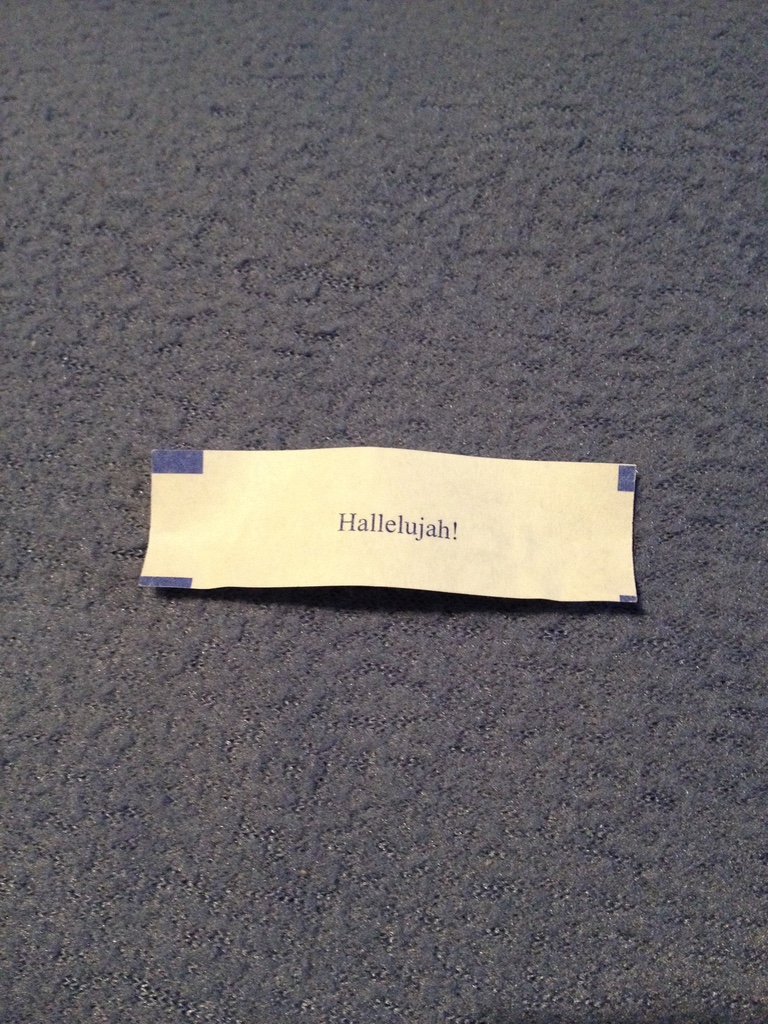
thumb_IMG_2185_1024There was something vaguely unsettling about a cookie that could tell your future. Prophetic comestibles were relatively unknown to me. Of course, the whimsical aphorisms seldom indicated any misfortune. They were more like horoscopes, harmless and often amusing. Recently we had carry-out Chinese. I’d noticed that over time fortune cookies had become more and more banal and less and less predictive. They claimed to know something about the world and I was supposed to believe because, well, would a cookie ever try to steer you wrong? My wife cracked open her cookie to find the “fortune” a single word: “Hallelujah!” An evangelical dessert? Was she destined to win the lottery? Perhaps we should play the lucky numbers on the next Powerball?

This really shouldn’t be bothering me, but what exactly was that cookie trying to tell us? It can’t be easy, I realize, to come up with millions of bits of advice so that those who often eat out don’t get the same prediction twice, but what if a Buddhist had ended up with this sweet? Or a Confucian? “Hallelujah” is, by its nature, a Judeo-Christian expression. Even so, it only occurs in two books of the Bible: Psalms and Revelation. My sneaking suspicion is that my culture is being pandered to. A bit of internet research revealed that Chinese fortune cookies are actually a Japanese recipe and were likely invented in the United States. They date back to the 1890s, at the earliest. I guess I shouldn’t be surprised then, at my wife being evangelized by her dessert. She does work for the Girl Scouts, after all, and they know a thing or two about the amazing abilities of the humble cookie.

O My Stars

I know many conservative religious believers. I also know a lot of nones and atheists. One thing they all have in common is that they want to believe the truth. They want to do what is right. Enter the media. A day of peace and prosperity for all is a slow news day. To keep the pot boiling, differences need to be emphasized and people’s fears and frustrations must be highlighted. Nowhere is this better on display than in party politics. Do people really not get along at all? Are we really so polarized? A friend recently sent me an internet story about the Republican elephant. Honestly, I’ve never paid much attention to the posturing of the GOP since so much of it is obviously show. The coalition, cynical at best, between the evangelical camp and the fiscal conservatives has created a kind of Frankenstein’s monster of the party which began out of an anti-slavery movement and was represented in the politics of Abraham Lincoln. I have trouble seeing him approve of Reaganomics or some of evils that have flowed from it. We are more deeply divided now than we ever were during the Civil War. And better armed too.

Republicanlogo

So, what about the Republican elephant? The stars on the blue top half are upside-down. I’m not sure if this represents a change or not. The problem, of course, is that the upside-down star is a “pentagram” associated with Satanism (which is not what most people think it is). The insinuation is that the symbol was subtly changed to reflect the true values of the party. I don’t know if the stars on the elephant were ever right-side up. As long as I’ve been politically aware, the Republican party has been the one that supports the wealthy while trying to cut the poor and working class from the budget in any way possible in order to build an ever stronger military to protect the plutocracy for which it stands. One nation, under Mammon, with surveillance and distrust for all. Principles, in my opinion, far worse than Satanism.

Ironically, in this media fueled division of the nation, conservatives know and hate Satanism. In fact, seeing a pentagram pattern in school bus taillights can send the internet into a tizzy. We’re afraid, but of what we don’t properly know. Must be those liberals with their radical ideas of liberty and justice for all. On the street things haven’t felt like they’re getting better for a very long time. Each year since the overspending Bush decade the economy has found inventive ways to get worse and worse. One thing remains constant—the ultra-wealthy flock to the political party that once stood for freeing of slaves and uniting a deeply divided nation. The best way to keep us together is to keep us afraid. That’s easily done when economists tell us you can’t hope to retire with the medical benefits and living standards of the middle class without at least a million dollars in the bank. Something’s upside-down alright, and it doesn’t take a genius to figure out what.


Scientific Voices

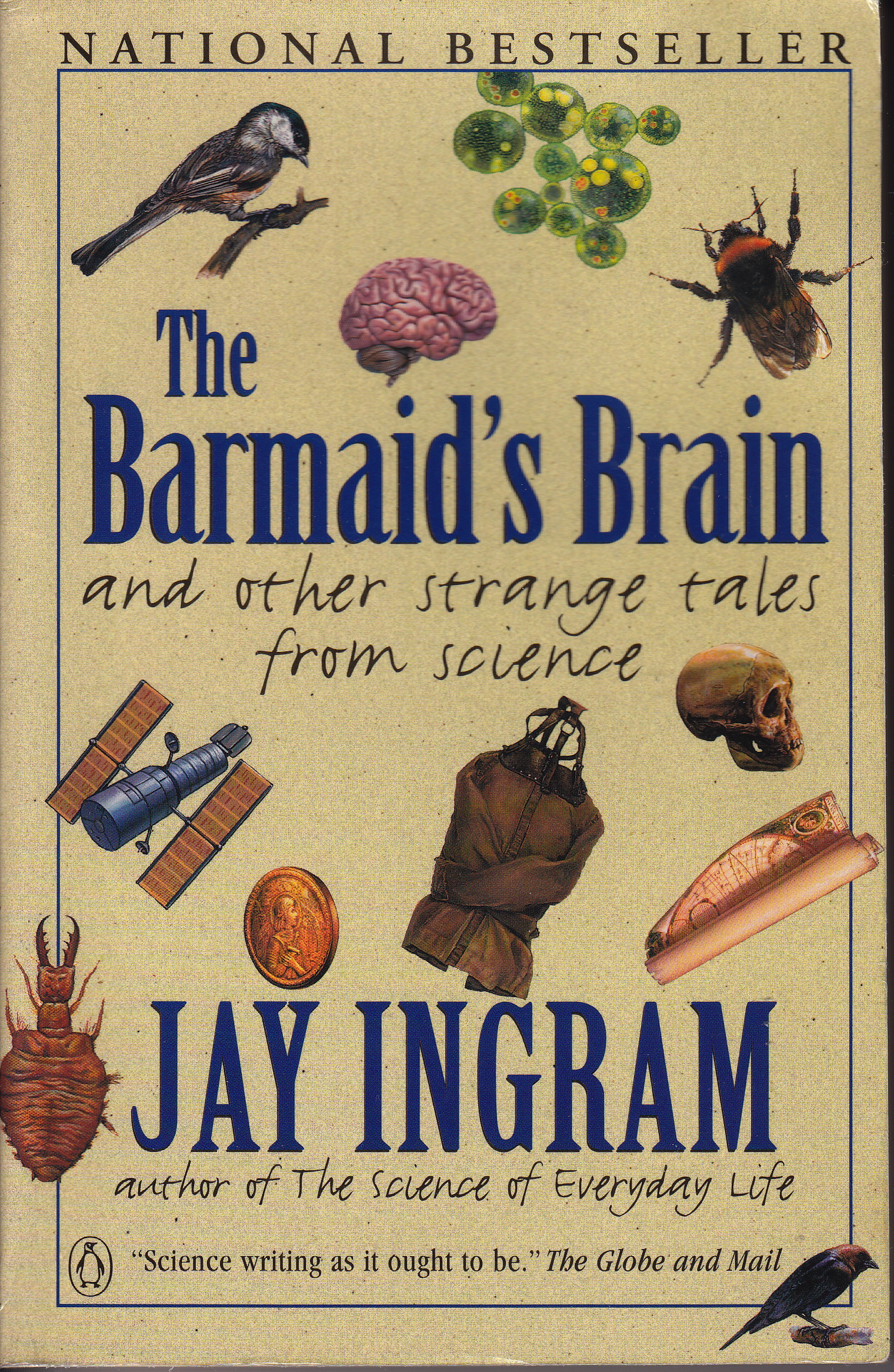
BarmaidsBrainScience requires translation. Even very intelligent people in other fields of study have trouble understanding what scientists have been saying. That’s why science writers are so important. They can distill the heady knowledge that empirical method produces into a palatable tipple for the laity. Jay Ingram’s The Barmaid’s Brain is one such digestible report. As the subtitle (And Other Strange Tales from Science) indicates, this book is about the weird world of science’s often hidden charms. We all pretty much know that quantum mechanics has turned conventional wisdom on its head. We also know (courtesy of the media) that science and religion fight like cats and dogs. What we don’t see is that scientists often disagree on how to interpret data, particularly on the weird end of things. Ingram tells many such interesting tales from nature, psychology, and technology.

The essays in the book are loosely grouped into areas with some common theme. The psychology story that struck me as being particularly appropriate for this blog was the one about Joan of Arc. Joan, as most of us learned from history, was a prodigy. Illiterate, female, and poor, she nevertheless displayed a military genius that led her to the head of a French army trying to hold off the advances of the English. When turned over to the enemy she was treated as a witch, tried for heresy, and burned at the stake. Later she became a saint. The reason that she’s in a book of science essays is that Ingram wonders what exactly was going on when she heard voices and saw visions. Neuroscientists have devised ways of peering into the brain during religious experiences, and psychologists have constructed theories of why otherwise sane people hear voices. Joan doesn’t fit into the category that used to be called schizophrenia, nor does she appear to have been in any way insane. She was religious and her religion spoke to her.

When I was growing up, it wasn’t unusual for scientists to be believers. Nothing was wrong with believing in a god and studying the physical world. Indeed, the idea went back to Isaac Newton and other scientists of the first generation of the Enlightenment. Implications eventually led to the utter absence of deity from the world. People such as Joan were understood as sadly misled by a religion that could not be distinguished from magic. Yet Joan, as Ingram well knows, would hardly be a household name without her visions and her faith. At the end of the analysis, Joan rises from the couch still a mystery. An enigma to science, and suspect to many religious. She was, it seems to me, quintessentially human. We are all, it seems, whether saints or scientists, subject to what empirical evidence will allow us to believe. Most of the time, anyway.


The Land of Who?

“Parochial” is a name we small-town types dread. Growing up with television, which gave us a magical view into New York and California, as well as other cosmopolitan locales, we could easily feel the accusations of being small-minded and unsophisticated. Although I never wanted to move to the New York City area, I did decide to get away to Boston, then Europe, to be educated. I didn’t want anyone accusing me of being an intellectually challenged rustic, just because of where I happen to have been born. People around my home town, however, aren’t as closed minded as portrayed. Well, not always. You see, apart from conferences where some institution or corporation foots the bills for hotels, I tend to stay in more reasonably priced places when I travel. Even on the road I can’t sleep in, so I find myself chomping at the bit for the breakfast area to open in the morning. Sometimes I’m the first one there.

On a visit to my hometown in the not too distant past, I happened into a breakfast conversation in media res. A local back in town for a holiday weekend was vociferating his views in stentorian tones that could be heard down the hall. The television in the breakfast room, as always, was on. Apparently a story had been shown that teed this old-timer off. His daddy had been a local policeman and he just couldn’t understand why blacks were rioting about unfair treatment at the hands of the police. I cringed as I filled my coffee cup. “They ought to be gassing them and reading their rights later,” he lamented. An older couple, also returning to the area from their home in Baltimore, seemed to agree. I tried to find a corner out of earshot. Unsuccessfully. I could barely hold in my indignation. We were all Caucasian here—what did any of us know of racial profiling, deep-seated prejudice, or being prisoner in our own country? “Why don’t they just stay home?” he said. Home, ironically, of the free.

DSCN4676

I could see that he was elderly and afraid. The media—likely Fox news—had instilled a kind of terror in him that could only be assuaged by reliance on force. The world his daddy knew. I was also reared here. It was pretty much a white town, but some of my best friends growing up were the few African-American kids in my school. My small-town mother taught me not to judge anyone by the color of their skin. The hotel I’m staying in is run by an Indian family. The local stores now reveal a healthier mix than that in which I grew up. I wanted to tell this fellow parochial patron that we need not be afraid if we only seek justice. The region in which I grew up has become more homogenized, and I believe we’re all healthier for it. Until, however, civil rights are truly rights for all, we need to stand with those who’ve been clearly wronged, even if at personal cost. That’s something I learned growing up in this small town.


Peak Oil

Having no control over where we’re born, people nevertheless often feel a connection with their native region. My family had no roots in western Pennsylvania, and the consensus on why we ended up here focuses around jobs. My grandparents settled here because of a job. While working here on a job my father, from the south, met my mother. My brothers and I all consider ourselves Pennsylvanians. One of the places we liked to visit as children was Drake Well. We knew that the oil industry began in western Pennsylvania, and we knew that famous people like George Washington had traveled through the region during the various wars of the nation’s early years. The towns where I grew up are not exactly affluent, and one of them seems in danger of becoming a ghost town. Drake Well, however, the birthplace of commercial oil, still draws visitors from the region and from around the country. On a recent visit to the site, I was interested to see how religion interplayed with petroleum in Victorian Era western Pennsylvania.

thumb_DSCN5064_1024

Among the displays was one showing the various means used to find oil. In the days before geological surveys, finding something hidden underground required more than just technical knowledge. More precisely, it often utilized different forms of technology—some scientific, some not. Dowsing was popular, and spirits were consulted. Access to the supernatural world was not uncommon. The oil industry really took off during the same era that spiritualism began to become popular. Religion and science co-existed in a way that is difficult to imagine today. Indeed, Drake Well was established in 1859, the same year Darwin’s Origin of Species was published. The means used to reach the oil were, however, unabashedly scientific and technical. Nitroglycerin fatalities were just another fact of life.

Looking over the triumphal displays about fracking, it became clear that in the realm of petroleum production the spirit has made way for a technology with unknown consequences. The museum at Drake Well is pretty straightforward that other energy forms pose a threat to an industry that was, and currently remains, massive. We have technologies that can utilize cleaner forms of energy, but powerful oil interests have maintained the focus on more and more invasive ways to keep things going the way they are, pulling in more profits while the limited supply lasts. We know petroleum will run out. We’ve deeply integrated it into our way of life and instead of looking ahead to the next step, we’ve been reaching back to pad our fat pockets. Gone are the dowsers and spiritualists and in have charged the corporate executives. And in western Pennsylvania, the towns where the industry began struggle to stay alive as thinking that allowed for spirits has acquiesced to that which has loyalty to Mammon alone.


Finding a Vein

Travel broadens the mind. I always find that it’s a form of education. Sometimes what I learn is disturbing. While driving across Pennsylvania on I-80 recently, I had a chance to study some contrasts. I’ve made this trip many times, but this particular journey revealed two Amish farmers out plowing their fields behind teams of horses. It’s easy to romanticize this view—there is a majesty about it. Once, while driving back to Wisconsin from an interview at Luther College, I saw an Amish farmer and his team in the rain, the horses’ breath could be seen billowing out, but the farmer, implacable in his conviction of what had to be done, stood rigidly behind them, keeping the animals at their task. When you don’t eat if the crops don’t grow, a new kind of urgency is added to this picture. All around us on the highway hi-tech vehicles whizzed, and, gathering from the behavior of the drivers, I couldn’t help but wonder if any of them were very happy.

Then we sped past a billboard. It was facing the opposite direction from our travel, but the words went something like this: “The wind dies, the sun sets, but coal lasts forever.” In much of Pennsylvania, with its spine of Appalachian Mountains, coal is abundant. Growing up some of the highways we drove had exposed coal seams in the road cuts. It’s pretty much everywhere. Coal, however, is a dirty, non-renewable, polluting source of energy that exacts a severe cost on the planet through mining. No doubt it is abundant, but the amount is certainly finite and it makes the world less inhabitable when we use it. The wind blows where it wills. The sun rises on the righteous and wicked alike. Coal is decay left from the life forms that helped ensure that we’d show up here. One of those circle of death kinds of things.

IMG_2176

Then a car went by with a communique in paint on its back window. “Pray to end hatred” it read. This is a sentiment with which I could surely live. I recalled driving this same interstate many years ago when I was old enough to read but not enough to comprehend. The pylons of the overpasses on 80 frequently have spray-painted messages reading “Trust Jesus.” Some of them are still visible at highway speeds, faded though they are. The elements seem to have left a negative of the original work of what is technically vandalism. I think back to the Amish farmer. He’s watching, I’m sure, the never-ending flow of sinful vehicles on a highway as he plows. He’s been raised to trust Jesus and to believe in the old way of doing things. I’m behind the wheel praying that the hatred I see played out in these metal coffins will stay far from me until I can exit to some quieter backroads where the pace of life is more to my liking. And I wonder if that sunset I see is influenced by the coal that we’re burning and hoping the wind will simply blow it away.


Chain Gang

When I first joined LinkedIn, the notes about adding connections you didn’t actually know were pretty dire.  People could trash you behind your back, ruining career opportunities.  It turns out that I don’t really need any help ruining career opportunities, so after a couple of years on the social network I started adding people if they had a legitimate reason for wanting to know me: they were academics, they were religion specialists, they were in the book business.  I still wonder why investment bankers and others who must have better things to do with their time bother to ask me to connect.  It’s not like I have anything to offer beyond adding a number to their 500+ connections.  It stokes my perpetually low self-esteem to think that maybe 500 people would like to be connected to me, at least electronically. Low risk friendship—I’m not going to bad-mouth anyone.
 
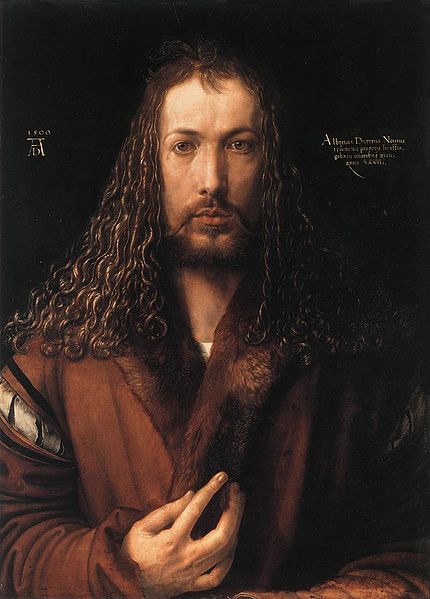
LinkedIn, like most social networks in this highly visual age, offers the opportunity to post a picture.  I don’t have many pictures of myself, and even fewer that I like.  Still, I picked a selfie I snapped in Herald Square after an overnight flight from Phoenix to New York.  I was meeting someone in town and I look a little worse for wear, I suppose, since I can’t sleep on planes.  Nevertheless, there’s enough of my character there to give people the idea of who they’re linking up with.  The other day I was scrolling through suggested people with whom I might want to link.  A surprising number of people blur their pictures, so they look like just about everything did after that flight from Phoenix.  Then there are those who select an image that is meant to be funny, or whimsical.  I was surprised when I saw Jesus’ face above the name of a priest.

430px-Durer_selfporitrait
 
Don’t get me wrong; I’ve got enough theological sophistication to know that many clergy wish people to “see Jesus” when they look at them.  To set Jesus as your personal image, however, seems a bit presumptuous.  Of course, I may be missing something.  Perhaps Jesus sent a connection request to this priest, with the offer to use his likeness.  Still, I find it ironic to suppose that anyone would consider themselves worthy to use the image of their deity as their own.  Growing up, I was taught that people shouldn’t name their kids “Jesus” (we knew no Hispanics in our small town), but then I learned that “Jesus” is just the Greek form of “Joshua” and I realized there were an awful lot of Angelos in trouble too.  Don’t mind my rambling.  It’s probably just sour grapes.  I haven’t received any invites from any deities on LinkedIn, so I’m feeling rather like any guy who has only 500+ connections.


Too Much Stuff

The informal name for economics, rightly, is “the dismal science.” When I recently learned about The Story of Stuff (storyofstuff.org), I found myself again shaking my head in dismay. I have no problem admitting that I’m a liberal pretty much through and through. I believe what I believe is right. Statistics show that the older we grow the more conservative we become, but in my case the opposite trend seems to be in effect. I grew up in a conservative backwater and I saw first-hand what it did to those who adhere to it most religiously. Rouseville, the town where I spent my teens, was an industrial armpit, dominated by a large Pennzoil refinery, now derelict. The town smelled bad despite the pristine woods that surrounded it, and pollution was everywhere evident. People didn’t move away because they couldn’t. Drugs were a rampant problem and I never felt safe going out at night, even though it was a town of less than a thousand souls.

Growing up I often wondered about this. When you live close to the edge, you hang on. The existence of the working class is precarious. Living in a cancer factory like that, you needed your job more than you needed food. If you were to survive, you had to work. Pennzoil was the only game in town. Local pride at being near the fountain head of the oil industry helped only a little. I turned to spirituality to cope. I’m now told that’s naive. I’m told that meaning is found in consuming. The most disheartening part of The Story of Stuff was learning that this was all intentional. Victor Lebow’s 1955 assessment of where our dismal science must go chills me:

“Our enormously productive economy demands that we make consumption our way of life, that we convert the buying and use of goods into rituals, that we seek our spiritual satisfactions, our ego satisfactions, in consumption. The measure of social status, of social acceptance, of prestige, is now to be found in our consumptive patterns. The very meaning and significance of our lives today expressed in consumptive terms.”

Our spiritual satisfaction in buying? And what is more, this advice has been heeded as gospel by the government. Is it any wonder that one percent tell the rest of us what to do? It is time for civilization to grow up. Our infantile need for more stuff has poisoned the very well from which we drink. It may cost you some sleep, but take a look at the Story of Stuff. What you lose in sleep you may gain in peace of mind. And soul.

thumb_IMG_2169_1024


The Reveal

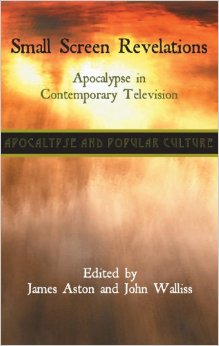
SmallScreenRevelationsThe end of the world as we know it is far more common than reason might suggest. As I’ve been researching the way the apocalypse is represented in popular culture, I’ve been impressed at just how prevalent it is. James Aston and John Walliss have brought together some intriguing essays on the topic in Small Screen Revelations: Apocalypse in Contemporary Television. As one contributor notes, it is far more common to find the apocalypse in science fiction, horror, and fantasy programs, but it clearly visible in other genres as well. It is primarily an American phenomenon, although it may also be found elsewhere. It’s pretty hard to pin down the end of the world. On television it comes in both fiction and non-fiction varieties. The constant here is that we know it’s out there.

What I found most revelatory about the subject was a persistent question: why? Why are we so fascinated by the end of the world? I’m no sociologist, so I can’t give any kind of statistical answer. As the owner of a gut, however, I can offer a feeling. It seems to me that a culture of privilege ought to have a measure of guilt. While apocalyptic belief is most common among the poor (sorry, no statistics to back me up here) it also commonly occurs among the affluent as well. At the same time, we know that, as a society, we have far more than our share of the world’s goods. We have a massive military to make sure nobody else shares those goods. We must know, at some level, this is wrong.

At the same time, how can we give up what we’re so used to? An apocalypse wipes the slate clean. The essays in Small Screen Revelations offer more sophisticated theory than my simple observation, but academics have an obligation to muddy the waters. Considering the sheer number of shows cited: Buffy the Vampire Slayer, Battlestar Galactica, Lost, The Simpsons, Supernatural, Angel, The Walking Dead, Jericho, Doctor Who, Terminator: the Sarah Connor Chronicles, in addition to television news anchors and televangelists, the apocalypse is very easily found. So easily found, in fact, that one can become inured to what is supposed to be the ultimate end of everything. It’s related to what I’ve called elsewhere the crisis of superlatives. The fact that it’s television, however, provides a ready answer for what happens next. After the apocalypse we simply wait until the next season. After all, there’s a market for post-apocalyptic entertainment as well.


Truly Educated

Binghamton University looms large in my consciousness, for rather obvious reasons. Although it sits in a small corner of upstate New York not particularly near anything famous, it has its own culture. Having taught at several schools, and having studied at many along the way, I’ve always been particularly struck by the genuine nature of Binghamton. For example, it is the only school—apart from a hazily recalled “Bible Study” led by the then president of Grove City College—at which the president has made himself available to be met and chatted with by hoi polloi. I’ve met and talked with him twice, and although I taught a phenomenal number of courses at Rutgers, and conveniently solved a crisis in the religion department for a year at the University of Wisconsin Oshkosh, I never found a time or place when the president was available to the likes of mere mortals. Not only that, but at a time when other universities are cutting whatever faculty they can to make more administrative posts, Binghamton is actually hiring faculty and expanding. I feel renewed when I visit the campus. You can tell they care about people.

A story in the Washington Post underscores this. One of the graduation speakers at the Watson School of Engineering is an Orthodox Jew. His commencement ceremony fell on Saturday—the sabbath. According to the dictates of his faith, speaking through a microphone system that passes through a soundboard is considered work, and could not be done on the sabbath. In today’s climate, I would expect most universities to say, “too bad.” Religion is not to be taken seriously, right? So just get over it. Here’s where Binghamton, however, shines. They taped the address beforehand, allowing the speaker to take the stage and have someone else broadcast his speech. This isn’t about picking apart the logicality of anyone’s personal Torah, it’s about recognizing the human.

DSCN4915

Our very religious society has a way of compartmentalizing religion so that we can still get away with what we want to do. We can be religious when our clergy so dictate, but otherwise we’re pretty much free to look out for number one. This story is one that makes me proud to have once been a part of a system that includes a school that can truly lay claim to the designation “higher education.” We learn about the world to become, ideally, better citizens of it. Any university that is able to take what might seem to be a petty problem and recognize its human dimension deserves to have our admiration. It restores my faith in the future. At least in a small corner of upstate New York.


Watchers and the Holy One

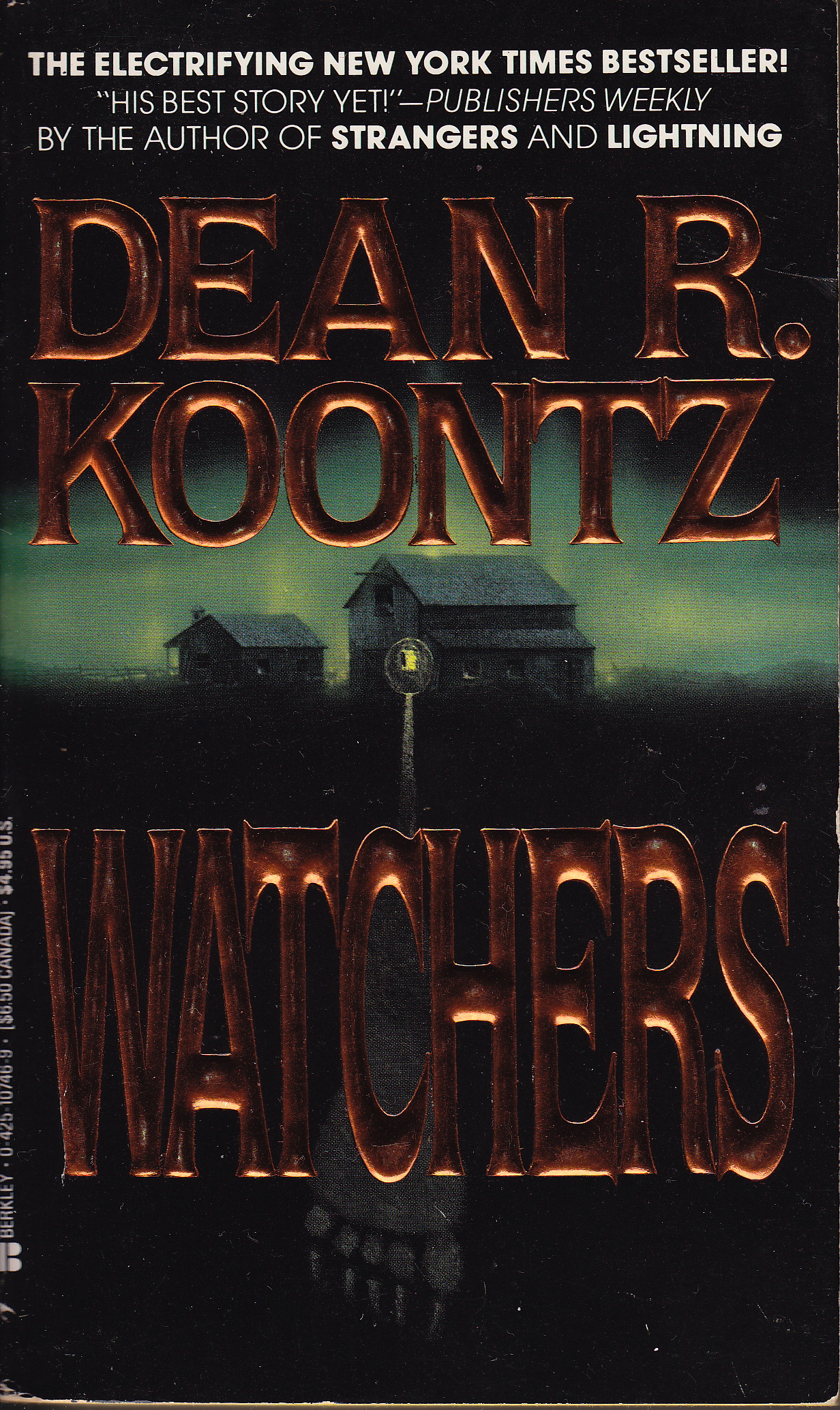
WatchersI’m not really a fan of Dean R. Koontz’s thrillers, but I do find myself turning to them from time to time. Like Stephen King’s, Koontz’s books are easily found at book sales, but you don’t always have your choice of which titles. I picked up Watchers because it had a vaguely biblical sound to it. The title seems to fit the story only loosely, but there are a number of points where God is invoked in the tale. Watchers is a book about genetic engineering, both the good and the bad aspects of it. Scientists have produced a dog as intelligent as a human being, and a monster that kills indiscriminately; a Cain and Abel. As this is being explained to one of the characters, he says “If we can do this, we have the power and, potentially, the wisdom of God.” Here, in a nutshell, is the debate about intentional genetic modification. We don’t have the ability to see ahead very far, and although we like to think ourselves god-like, we could very well be creating catastrophes. At least, in this story, God is deemed wise.

Some time later another character in the story opines that when humanity can create an intelligent species, it is our responsibility to act, in a sense, as its deity. “If we’ve come so far that we can create as God creates, then we have to learn to act with the justice and mercy of God.” Interestingly, there is no question of theodicy here. The justice and mercy of God are assumed, despite the many wakeful nights and unsettled days of the theologians. Casting God as the “good guy” is not as easy as it used to be, and our own “engineering” isn’t always assumed to be for the good of our own planet.

Finally, as some of the characters are discussing who has the right to own this super-intelligent dog, God is invoked once again. The qualities of the dog (a golden retriever, since, one presumes, a Rotweiler, for instance, might have different qualities), its courage, ability to distinguish right from wrong, ability to love, and selflessness, make it more in the image of God than human beings. Again, God here is unquestioningly assumed to be the great good, the advocate of humankind. I realize novelists are under no obligation to be theologians, yet it is difficult to tell a tale of genetic tampering without invoking the Almighty. What I find so interesting here in Koontz is that despite the evil of some of the characters, the goodness of God is never called into question. It is assumed that the evil we create is our own while the good in the world belongs to God. It’s a view of the world that could be called almost biblical. Those who professionally reflect on these things, however, often come to a different conclusion.


Cheesy History

It has been a few years since I’ve taken any courses on ancient history, but I took quite a number of them while preparing for my doctorate. Staring at my Dominos pizza box, I wonder if I must have missed class they day we covered ancient pizza. Actually, Dominos has been emphasizing cheese of late. Perhaps the least healthy ingredient in your typical pie, when you order you can “cheese it up,” and if you want breadsticks on the side, you can add cheese to those too. The box is whimsically decorated to sing the praises of cheese. Don’t get me wrong; I spent nearly a decade and a half in Wisconsin and I do like cheese. But perhaps this is just a little, well, too cheesy?

Dominos

The side panel suggests (to an increasingly gullible population) that “Ancient Egyptians might have been the original cheese experts.” The iconography depicts a man milking a cow, a man churning butter, and a man holding aloft a piece of what seems to be Swiss cheese. Maybe it’s Emmental. There are no women involved in this scene of making holy cheese. The man milking the cow has a distinctly European look. The man churning or stirring the cheese looks to my eye like a native American—are those feathers on his head? A Wisconsin Egyptian? The Egyptian holding the cheese aloft looks to be a priest or perhaps the Pharaoh. His uraeus is clearly visible. Rays emanate from the cheese like the life-giving solar disc of Egyptian myth.

I’m probably a fool for looking for footnotes on a pizza box, but I wonder whence this information comes. The mind of some ill-informed marketer? An opiate, or cheese-induced, dream of historic proportions? Perhaps those of us with training in these areas have not done due diligence in our teaching of the facts. Or perhaps I’m making a mound of cheese out of a mere crumb. It’s all in good fun, but I know that eventually it will make its way into term papers and other fast-food inspired versions of reality. We all know what to expect from the owners of the leaning tower of pizza.


Driving the Point

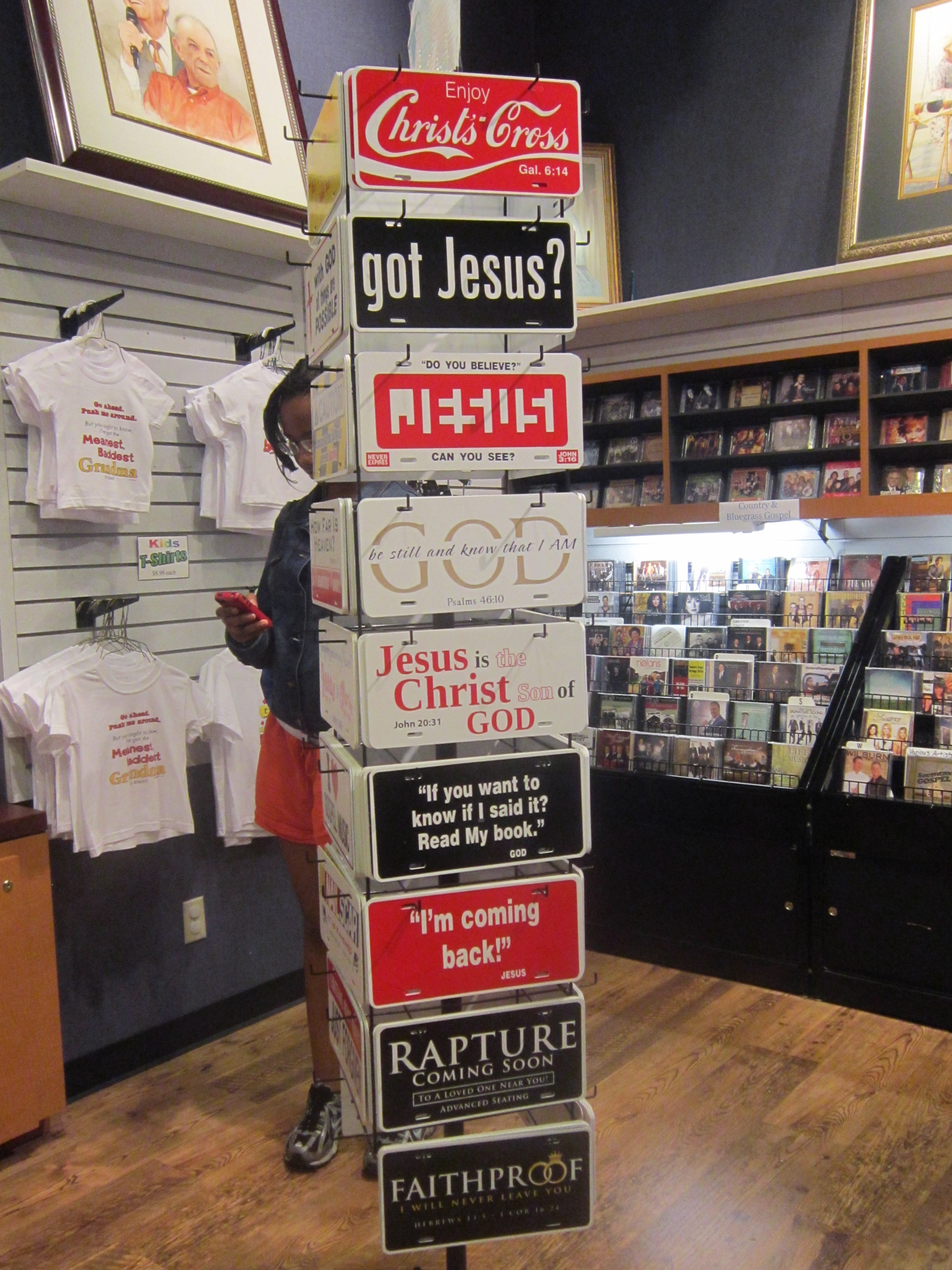
“I drive my car, it is a witness. My license plate, it states my business.” The words are from a song by one of the most creative Christian Rock groups ever, Daniel Amos. While I don’t listen to Christian Rock much anymore, I’ve always appreciated the fresh outlook of this particular band, which was, at least in the ‘80s, ahead of the curve. The lyrics came back to me when reading about a legal suit in New Jersey concerning vanity plates. Like many states, New Jersey has rules against offensive words being spelled out on license plates. When a woman applied for a license reading “8THEIST” it was rejected as “offensive to good taste and decency,” according to a story in NJ.com by Thomas Zambito. Trying the application with “BAPTIST” led to no objections. Others have tried other variations on the word “atheist” and have come up with rejections as well. In a country that prides itself on religious freedom, this is ironic, to say the least.

I’m a bit too pragmatic for vanity plates, or even bumper stickers. Having had to commute long distances after being dismissed from my post at Nashotah House, I often thought that I didn’t want people to know too much about me by the decoration of my car. The culture wars, played out a few years ago by Jesus fish, Darwin fish, Jesus sharks eating Darwin fish, and so on, seemed an opportunity for aggression to me. Already when I’m driving and someone cuts me off or does some dangerous maneuver in traffic, they frequently bear some paraphernalia advertising Jesus on their bumper. Maybe it’s a prayer for protection that allows for stupid driving. It certainly isn’t a witness to the “others first” theology that characterized Jesus’ teaching.

IMG_1216

Is it an affront to decency to be an atheist, or only to advertise being one? The culture wars that plague the United States are based on instant prejudices that make decisions about a person without bothering to witness their behavior. Behavior, after all, is the true measure of goodness. Even higher education is not immune to this system, especially in religion departments. We only want to be surrounded by those who believe like us. Somewhere in this unholy mix is the neglected idea of doing the right thing. Ours is a culture in love with appearances. We object when Muslims want to build a mosque. We object when Roman Catholics run for President. Weren’t not even sure that we really trust the Presbyterian next door. Our differences, one of the historic strengths of this country, have become a liability. Especially when behind the wheel. How different driving would be if we’d just assume that no what the vehicle says, it is piloted by a human being just like us, no matter who they believe the co-pilot might be.


Different Bites

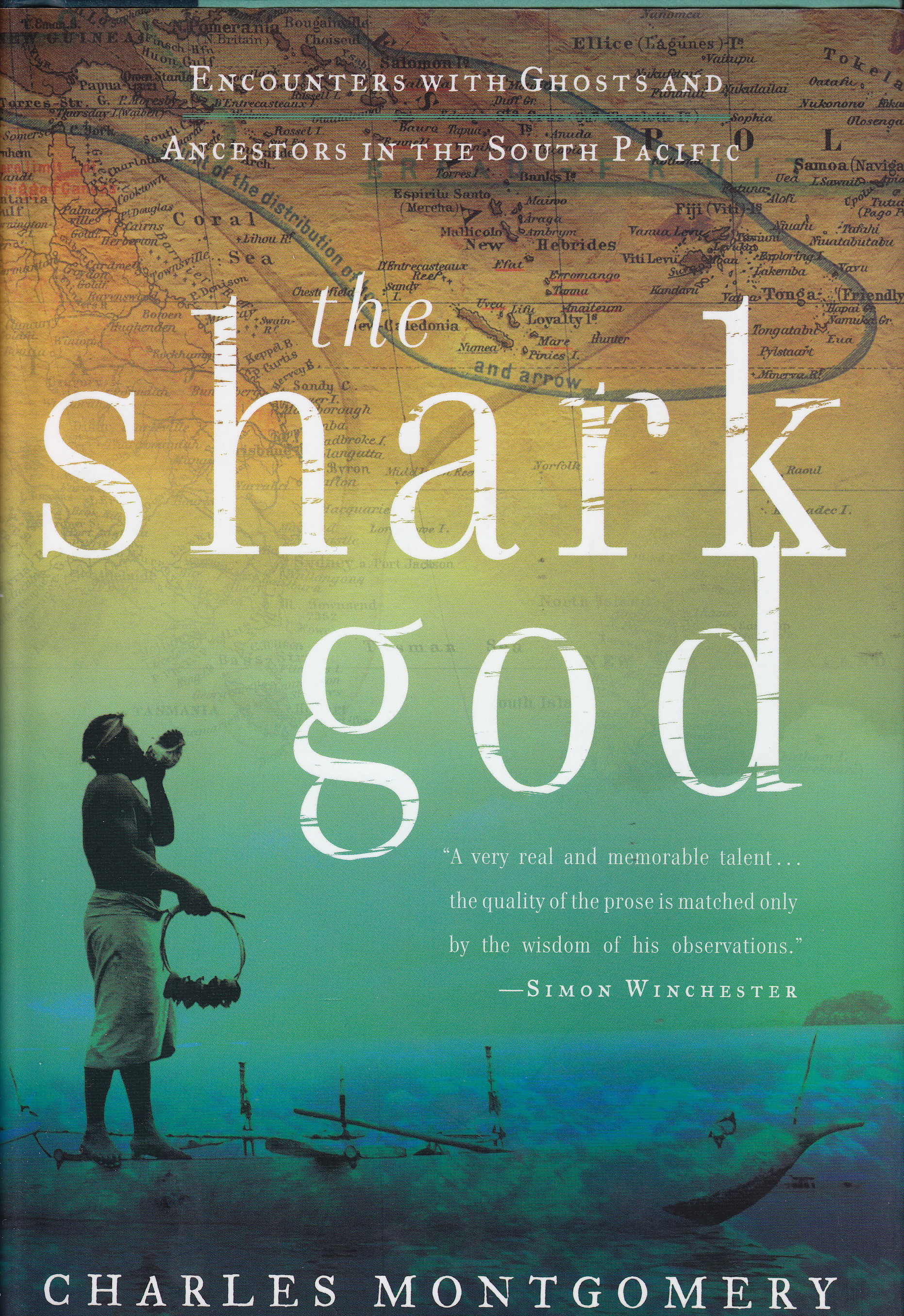
SharkGodThe South Pacific brings to mind light-hearted musicals, uncomplicated lifestyles, and Gilligan’s Island. For those of us born in the eastern parts of North America it can seem pretty exotic. Especially since we can seldom afford to go there. Since my income has wavered around the subsistence level of a reluctant urbanite, I instead travel there in my mind. I came across Charles Montgomery’s The Shark God at a recent book sale. I generally scour the anthropology tables since I find the belief systems of others so fascinating. Montgomery, a journalist, traveled to Melanesia to trace the route his great-grandfather took as a missionary. A non-believer himself, Montgomery wanted to see the magic that a former generation believed in firsthand. Noting that missionaries often despoil the cultures they are trying to “convert,” his tale is full of insights and observations and disappointments. My kind of book.

Montgomery is remarkably open minded. Like many of our generation, he outgrew the religious fervor that seemed so strong just a few decades ago. Still, he is open to the possibilities in the lesser understood cultures of the South Pacific. He notes that E. E. Evans-Pritchard, the famous anthropologist, opined that non-believers made poor anthropologists. Even missionaries might make better, he suggested, since at least they know what it is to believe. And here is the driving tension of Montgomery’s narrative. Sometimes you simply have to be open in order to see. Not all evidence is empirical. He recounts little “miracles” that he later reflects may have been mere diversions. Nevertheless, the world opens up when it is seen through native eyes.

Missionaries, although they may be better equipped to understand foreign (or native) believers, nevertheless try to change them. What I found most fascinating is how even those who fully identify as Christians in the south seas have combined that belief with their indigenous religions. Christianity, even among the clergy, is an overlay for culture. In ways that shock and frustrate missionaries, those converted maintain elements of their culture that fit uncomfortably with doctrine. How do you convert the converted? Or maybe the word is more properly “pervert.” Belief systems grow in cultures and tend to introduce high moral standards, no matter the deities (or non-deities) known. The Shark God is a wonderful window open on the South Pacific, a place to which some of us will only ever be able to travel in our limited minds. We are, after all, products of our culture.


Recycle This

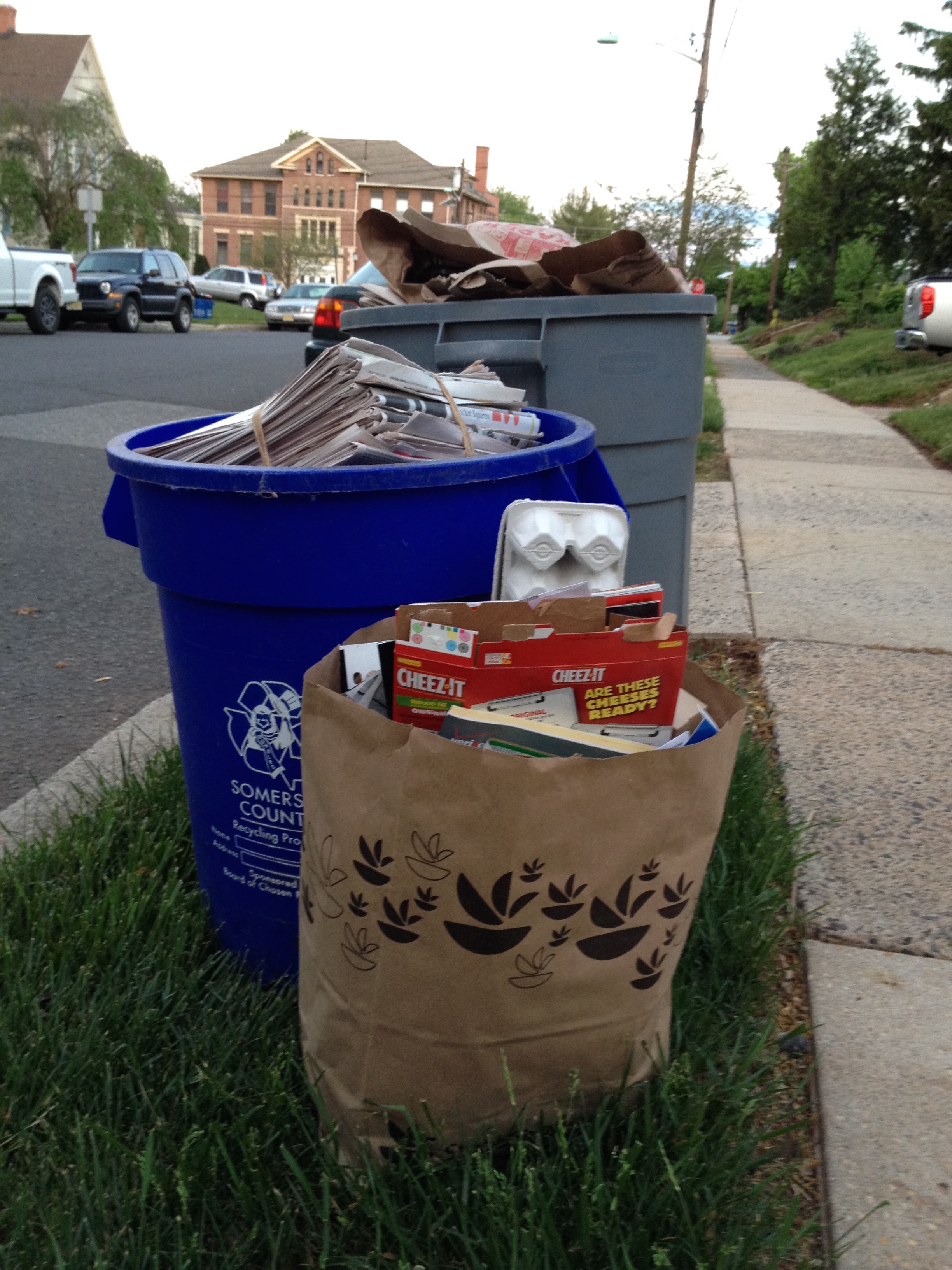
Like nearly all unfortunate white collar workers, the computer provided for me at my job is a PC. I don’t know the brand—that’s not important. When I want to delete a document, I’m asked if I want to move it to the “recycle bin.” Okay, I’ve been an environmentalist since I was a teenager. Growing up in a small town, recycling was a foreign concept, vaguely communistic even, but I could understand that limited resources would run out. Living paycheck to paycheck, that was perfectly clear. The town where I grew up still doesn’t offer recycling, but having a recycling bin on a computer screen? Are the electrons from my documents indeed being recycled, or is this just a way to make me feel good about throwing away something somebody spent hours putting together? It seems such a tautology to me.

This recycled world can be a scary place. I was a victim of identity theft once. Thankfully I hardly have enough to steal that the thief got away with very little before the credit card company found him. It meant having to go a few weeks without purchasing power, and a possible stain on my ratings. One merchant didn’t want to refund the charges, although it was clear that they were illegally made. So we recycle our sensitive material with the greatest care. It has to be shredded first. We had one of those home shredders that took hours of time to feed in “up to six sheets” at a time (two was the actual limit), and before you knew it the weekend was over and you had bags full of bird nesting and you still had to take them to the recycling place. So our local community, we learned, participates in a shredding drive. My wife and I went a few weekends ago and it was so popular that we were turned away at the gate. The line was too long and the trucks were almost full.

This past weekend I tried again. I had to drive to a new location where, I kid you not, the traffic pattern had to be changed to accommodate all the shredders. I was kind of glad in an impatient sort of way. I’d brought a book to read, anticipating such a wait. I was a bit anxious, however, with a police officer watching. I mean I had a book to my face in traffic, after all. At least it wasn’t a cell phone. The line crept along until I was finally admitted. I had six bags of confidential stuff in the trunk, and I was glad to have the chance to have my personal life obliterated by the huge, roaring trucks. As I inched to the front of the line, the check-in lady asked me what town I was from, and in response gave me a handful of papers that I would only have to recycle. I thought of my recycle bin on my desktop at work. There seems to be no end to disposing of the information that defines our lives. Some would call it a tautology.

C58E576D-BA75-4991-AA88-B095BBED4E1C copy