Whence Evil?

I’m at a stage where horror-comedy, or comedy-horror is becoming appealing.  This sub-genre is really perfect for those horror fans who like to laugh and still get something of substance.  Tucker and Dale Vs. Evil is a great example of the dangers of stereotyping.  Like Scream, it is very aware of horror tropes, but it makes fun of them in creative ways.  At points it’s laugh-out-loud funny, but it is pretty gory.  It begins with the usual folk gothic scenario of a group of college kids going camping deep in rustic country.  At the last gas station, they encounter Tucker and Dale, whom we’ve been primed to think of as potentially murderous hicks.  In reality, they’re a couple of hapless but nice guys on their way to fix up a cabin they bought as a vacation house.

The college kids end up camping nearby and interpret everything Tucker and Dale do through the lens of assuming hillbillies are inbred evildoers.  It’s kind of a reverse Deliverance.  So it sets up a love story between one of the coeds, Alison, and Dale, who rescues her from drowning.  Meanwhile Alison’s friends assume Tucker and Dale have kidnapped Alison and plan to attack to set her free.  Of course, mayhem ensues.  Dale, who is big and shy, and who suffers from an inferiority complex, keeps on making missteps in trying to convince the other kids that his intensions are good.  That’s the most brilliant part of the movie—it cautions against reading people in the light of our biases.  Often when I find myself in areas where we see lots of Trump signs, the locals, in non-political contexts, are very nice.  I feel sad that one man has decided hatred is the only way to power.  Making people distrust and hate each other so that he can win.

People, overall, are pretty descent.  There are some bad ones out there, for sure, but the number of times I’ve encountered helpful strangers—in both rural and urban settings—reinforces my underlying belief that if we don’t try to set people against one another their natural goodness will come through.  It’s hard to do when all the campaigning, and even the rhetoric from 2016 to 2020 was of distrust of others and personal superiority.  The real hero of Tucker and Dale Vs. Evil is Dale, the one with an inferiority complex.  Those who humbly assume that others are better than they are seldom try to hurt other people.  And yet, those who don’t know “salt of the earth” types, who may live in less-than-ideal circumstances, frequently approach them with fear.  It’s a horror-comedy in the making.


Ichabod’s Body

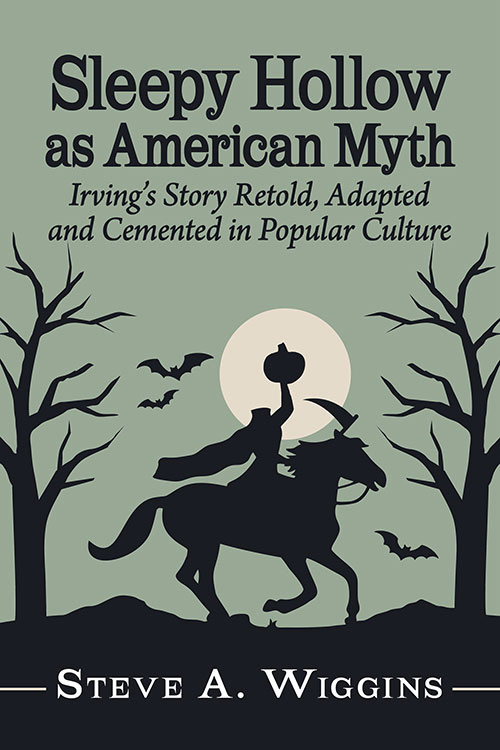
Maybe you’ve noticed this.  When Halloween comes around, the Headless Horseman and the Legend of Sleepy Hollow reemerge.  There’s a reason for that, and I discuss it quite a bit in Sleepy Hollow as American Myth.  Right now there seems to be quite an interest, or maybe I’m just noticing it more.  For example, a local theater where we saw a Poe performance last year is offering a Headless Horseman show this year.  Articles have recently been appearing on Tim Burton’s Sleepy Hollow movie, given that it was released 25 years ago—online discussion, however, is often eclipsed by the Fox television show by the same name.  And before it switched over to Christmas decorations, Michaels had its share of Sleepy Hollow merchandise.  Halloween and the Headless Horseman go together.  (Read the book to find out why!)

One of the tchotchkes I picked up at Michaels was Ichabod Crane’s tombstone.  In the many renditions of Washington Irving’s legend, Ichabod is treated as the protagonist of the story.  Although Tim Burton’s movie wasn’t the first to have Crane survive, besting the Horseman, the old wives’ tales, according to Irving, had him spirited away by the Horseman.  That’s why I found his gravestone so interesting.  The dates on it (1787–1857) indicate, at least according to this recension, that he died at seventy, surely not the victim of the attack that took place around the turn of the century.  If you’re not familiar with the original story, Irving set it “some thirty years since” the 1820 in which the tale was published, putting the events around 1790.  Burton shifted this to 1799, partially, I suspect, because that was two centuries before the release of his movie.

I do wonder where the maker of the Michaels tombstone got their information.  According to their reckoning, Crane would’ve been but three years old in 1790.  Of course, the story never tells us his age.  Since it is intimated that he relocated and became a judge after dabbling in politics, all of which would seem to indicate that he was a somewhat young man at the time of the tale.  To make Sleepy Hollow scary, though, having Crane cut off in his youth would seem to be more in keeping with the spirit of the season.  Of course, Sleepy Hollow is a legend that has become mythic through its many retellings.  Enough of them that someone could write a book about it all (ahem).  And this is the time of year to ponder it.  


Why, Cathy?

Learning to appreciate bad movies is a skill like any other.  It takes practice.  “Why?” I hear you ask?  Why climb a mountain?  Actually, there is a motive for seeing bad movies, apart from the good feeling they can leave you with.  (I might’ve actually done it better!)  That’s because they’re often free streaming.  If I had an endless budget I might well be able to avoid bad movies, but what’s the fun in that?  I found out about Cathy’s Curse because I was looking for a movie about a cursed doll.  (Don’t ask.)  I’ve seen many, of course.  Child’s Play and the whole Annabelle series.  But I felt I was missing something.  Wikipedia actually has a page on haunted doll movies, and Cathy’s Curse stood out to me.  Yes, I was forewarned, but I was also curious.

A Canadian horror film from 1977, Cathy’s Curse has become a cult classic.  The story line decidedly makes no sense.  Cathy, a young girl, moves into her grandparents’ house with her father and mother.  Her father’s father had died in a car crash with his daughter Laura, about Cathy’s age, some 30 years earlier.  Cathy’s parents are troubled, her mother having recently had a nervous breakdown.  Laura’s vengeful spirit possesses Cathy through a doll the latter finds in the attic.  For some reason, Cathy kills the housekeepers and attacks other children.  She tries to drown herself.  She kills the handyman’s dog.  The dog, which is clearly male, is explicitly said to be female in the movie, perhaps because one of the favorite words of the writer is “bitch.”  After about an hour and a half of running around screaming, the opening of the cursed doll’s eyes suddenly brings normalcy to the house.

There are some genuinely good things about the movie.  The late fall-early winter mood is nicely framed.  Why people hang out outdoors without coats in freezing weather is never really explained, though.  Neither the writing nor the acting are stellar.  And have I pointed out that the story makes no sense?  But still, there’s something there.  The idea of possession, a young girl under threat, the scary old mansion—these are classic tropes.  It’s unclear why, when Cathy’s father is fixing breakfast, he immediately sends her to bed and it’s suddenly night.  Or why the detective calls him by the wrong name.  Or why nobody can take a doll away from a little girl.  Ah, but that’s it, you see.  The haunted doll.  You have to learn how to appreciate these things, you know.


Prophetic Cookie?

I have no idea if they really exist in China, but the Chinese fortune cookie is ubiquitous in the United States.  I’m assuming that China isn’t tracking them to know where Americans eat, but I do often wonder about what’s inside.  Many years ago I noticed that the “fortune” aspect had dropped out.  Predictions weren’t made any more and your typical cookie had an anodyne, but sometimes witty reflection in it.  They might’ve been called “aphorism cookies.”  Well, that all changed for me after a meal that included said cookies.  I was surprised to see an actual prediction, and, not only that, but one that was strangely apt.  It reads, “You will make important academic connections in March.”  Considering that academics make up a minuscule part of the population, that seems oddly specific, doesn’t it?  And with a date—March.  This differs qualitatively from “Leadership is action, not position.”

There are other future-oriented prophecies in cookies, of course.  “You will become known for your generosity.”  (Gee, that’s nice.)  Or “A short vacation is in order for you.”  But I’ve decided to hang onto this academic fortune to see if it might come true.  I do have many, many academic connections, of course.  That’s part of my job.  And I was an academic myself in my palmier days.  But what seems strange to me is that many people reading “academic” in a fortune would automatically dismiss it, I suspect.  An important academic connection, no less.  Knowing a professor, from my experience, often doesn’t help in getting you anywhere.  I value their friendships, of course, but it hasn’t sold more books.  Or got me that teaching job I still covet.

Will the cookie prevail where other measures have fallen short?  I have to wait a few months to find out.  And more importantly, I have to remember this fortune.  I can, I suppose, put it on my bulletin board amid the Sleepy Hollow and other mementos and hope that half a year from now that I’ll recollect this little post, and that little cookie.  Of course, if someone offers me a job at a local college in March I’ll consider the deal sealed—the cookie was wise.  If nothing apparently happens, however, I’ll still have to wait beyond that to see if something emerges from my many daily interactions with academics.  Maybe one of them will truly be listening.  That’s the thing about predictions—they’re as much interpretation as they are prognostication.


May I?

The thing about horror is that it’s an intensely personal preference.  Some people really like a movie while others find it, well, meh.  When the nights begin to lengthen you get lots of curated lists (I’ve never been asked to do any, but I’m working on one anyway) suggesting October viewing.  One such list that a friend sent me appealed to me because it was for movies on Netflix.  Since that’s one of the few streaming services to which I have access, it makes the movies seem free.  This particular list recommended May the Devil Take You, a 2018 movie from Indonesia.  The almost polite title suggests it wasn’t named in English.  In any case, I didn’t really find this one particularly scary and in part that was because of the apparent incongruity of the culture and the monster.  I knew that Indonesia was a highly Muslim majority country, and I know Islam also recognizes the Devil.  Still, Satanism feels kind of out of place here.

The story isn’t terribly deep: a man makes a deal with the Devil, through one of his dark concubines, to become rich, in exchange for the souls of his family.  His wife is the first to go, but he remarries a retired actress who has three children, two young adult.  His only biological child, from his first marriage, Alfie, feels herself estranged.  (It’s unclear to me whether the youngest daughter of the second wife was also biologically his, but it seems so.)  When the father falls into a serious, undiagnosed illness, the children, and actress, all converge on the house where the pact was made.  Of course they open the basement door—locked and with warnings posted—where the Devil’s concubine waits.  The actress becomes possessed and the two older daughters, Alfie and her stepsister, try to fight it off, only to have the stepsister become possessed.  She kills her brother and intends to kill Alfie and her own young sister as well, but the latter two manage to overcome her.

The plot is a bit convoluted but the basic story is maybe too familiar—make a deal with the Devil and all Hell will break loose.  I also wonder if some of the lack of real impact here comes from the subscript translation.  I don’t know how this is done, but I suspect it’s not dissimilar from Google translate.  That may be fine for academic purposes, but it does seem to lead to stilted dialogue among a group of twenty-somethings trying to fight the Devil in Indonesia.  My personal October list is more moody.  Seasonal.  And by no means complete.  The only way to find the movies, it seems, is trial and error via curated lists.


Nightly Entertainment

A list of most gothic recent books, I believe it was, that suggested The Night Circus by Erin Morgenstern.  It’s a big book—over 500 pages—so I decided I’d wait until autumn to get underway.  It ended up taking most of September and half of October to finish it.  Since I prefer to start fresh, I had no idea what it was about.  A night circus, of course, as the title indicates.  It is set in the late Victorian period, although I’m not sure all the turns of phrase in the book were current at that time.  There may be a few spoilers in the description, should you want to go out and read this yourself first.  I mention that because something that only becomes clear near the end is a pretty good starting place for giving an idea of what the story’s about.

A very old man (who doesn’t look or act old) is a very accomplished magician (not the stage variety).  One of his students becomes very proficient and the two begin a rivalry that involves each setting a protege against that of the other.  It is a contest, we eventually learn, to the death.  The younger magician selects a daughter he didn’t even know he had, while the original teacher selects a young man without prospects.  The battleground on which these two duel is the eponymous night circus.  Each tries to outdo the other in creativity and wonder.  The circus is open only at night (hence the name) and is fueled by actual magic.  A cast of characters gets introduced, and they’re very well drawn.  In my experience of reading the book, they drew me back in because you pretty much liked most of them and with magic involved, well, you never know.

The novel was gothic in the Victorian setting and in the sense that there is an ancient contest underway here that interrupts into the then present.  There aren’t spooky castles, however, or really even damsels in distress.  The women characters are all strong and resilient.  The writing is lively and the resolution is satisfying.  The real draw for this book is the writing and the complex story that doesn’t overwhelm or leave you feeling too lost.  It’s a magical realism with boundaries and offers a good message that magic is all around, if we only open our eyes to it.  It’s a good book to get lost in for a few weeks.  I appreciated the fact that the villains weren’t the focus and the violence was mostly implied.  It kept me turning pages, gothic or not.


How Many Zombies?

The first thing to note about Zombi 2 is that there’s no Zombi 1.  Except that in Italy George Romero’s Dawn of the Dead was released under the title Zombi.  And Zombi 2 is also called Zombie.  It’s kind of a 1970s classic, but instead of a spaghetti western, it’s an Italian movie filmed in America.  This is one of those movies that has grown in reputation over the years and when revisited by critics is considered better than it was initially assessed.  All that discussion of the title clued you in that it’s about zombies, but what, specifically?  Well, it does take the concept back to its Caribbean roots.  A woman accompanied by a reporter, is trying to learn what happened to her father on the mysterious island of Matul.  Another couple who own a yacht reluctantly agree to take them to the island.

Meanwhile Matul is increasingly facing reanimated dead (one of whom escaped to New York City).  The local doctor can’t accept that voodoo is actually involved and has stubbornly remained to try to find the “actual” cause.  The two couples from the yacht learn from the doctor that the woman’s father had become a zombie.  The doctor knows to shoot zombies in the head, but the new-comers haven’t quite figured that out yet.  The zombie infection is passed on by a bite, but anyone who has died can come back.  And return they do.  They storm the hospital where doctor is trying to hold out.  In the end, everyone but the original couple has been bitten or killed, and the zombies have taken over the streets in New York City.

This isn’t bad for a zombie movie, but it’s not up to Romero standards.  Of course, few are.  I had only recently learned about it from a friend, and it was old enough to be free on a commercial streaming platform.  Zombies have some inherent contradictions, of course, and unless they’re handled well they can look a little silly.  That’s my overall assessment, not bad but a little silly.  Part of the draw of zombie movies is that they deal with inherent contradictions.  Bodies that lack the intricate biological structures required for walking, digesting, indeed, for doing what living people do, simply can’t walk around eating people.  And yet here we are.  George Romero gave the cinematic world the modern zombie, and his superior efforts have led to many attempts at bringing believable undead back to life.  If, like me, you overlooked this one, it’s worth catching, especially for free.


Them Apples

Although I’ve had this book as long as I can remember, I’d never read it.  Not the whole way through, until now.  As I kid I read Ray Bradbury when I could.  I’m sure I read a story or two in Golden Apples of the Sun, but I didn’t approach the entire collection.  I was drawn in at this late age by “The Fog Horn.”  This is the story that lay behind The Beast from 20,000 Fathoms, that classic of Harryhausen, the other Ray.  It’s been years since I’ve seen the movie, but the story was on my mind and I kept going.  Some of Bradbury ages well, while other stories, not so much.  The designation of his tales also changes over time.  As Stephen King says in Danse Macabre, Bradbury didn’t so much write science fiction (as the cover of this edition declares), even if the people occasionally get into rockets.

I realized as I read just how much my early writing style was influenced by Bradbury.  My stories were vignettes like these, not as accomplished, of course, but without lots of violence.  And with horror elements.  But it kept coming back to me how Bradbury’s characters, even the time-traveling ones, are stuck in the button-down forties and fifties.  I naturally overlooked this as a child but all these decades later and the strict binaries of, for example, men’s and women’s worlds, comes through on every page.  When women are the main characters, they’re usually not very flatteringly drawn.  The same goes for caricatures of races, although Bradbury is sympathetic he also uses stereotypes.  And many of the stories in this collection are just about everyday events, not a speculative element in sight.  Maybe I did try to read it through as a kid, but lost interest.

Writers struggle against irrelevance.  Those who look to the future sometimes get it right but often don’t.  And some reflect a present that we’d rather not acknowledge.  Of course, when I’m writing fiction I tend not to think in these terms.  The story simply takes you over and you can’t help being a refugee from the year in which you were born.  This is especially evident when Bradbury casts a rosy lens back toward childhood years.  As a child myself I had no idea that Bradbury was a time traveler from the twenties and thirties.  His childhood was nearly over by the time my mother was born.  It was a different world.  Some of his stories managed to transcend time and its for those that I keep reading him.


The Publishing Self

One of the things I noticed while researching Sleepy Hollow as American Myth was that many resources on the legend were buried in self-published editions of the “book” itself.  And other material about the legend was from self-published sources.  This lack of serious attention was behind my writing of the book.  Clearly the story is an integral part of American Halloween and Halloween is a big business.  Why aren’t mainstream publishers interested?  (I tried several agents but nobody seemed terribly drawn to the project.)  In any case, my thoughts today are about self-publishing.  Some of these self-published books aren’t even listed on Amazon, which is pretty amazing.  I even found one that apparently lacks an ISBN!  The author’s website (the only place it can be purchased) lists it as out of stock.  Self-publishing must require vigilance in order to be a way to make a living.

The profits from self-publishing are likely better than publishing with an academic press.  (Unless, of course, you’re given the rare trade treatment.)  If you’ve ever tried to find a publisher, the urge to self-publish is understandable.  The publishing world tends to be cliquish.  The same names keep coming up time and again.  If you’re friends with one of them, well, you can get in the door.  And mainstream publishing, surprisingly, doesn’t really like new ideas.  Most publishers prefer to keep on acquiring titles in the vein of one of their successes.  “More like this,” you can imagine them saying in their sleep.  New ideas are untested and may flop.  Bestselling authors seldom flop and those who imitate them often get a seat at the table.  The rest are left to self-publishing, or perhaps academic publishing.

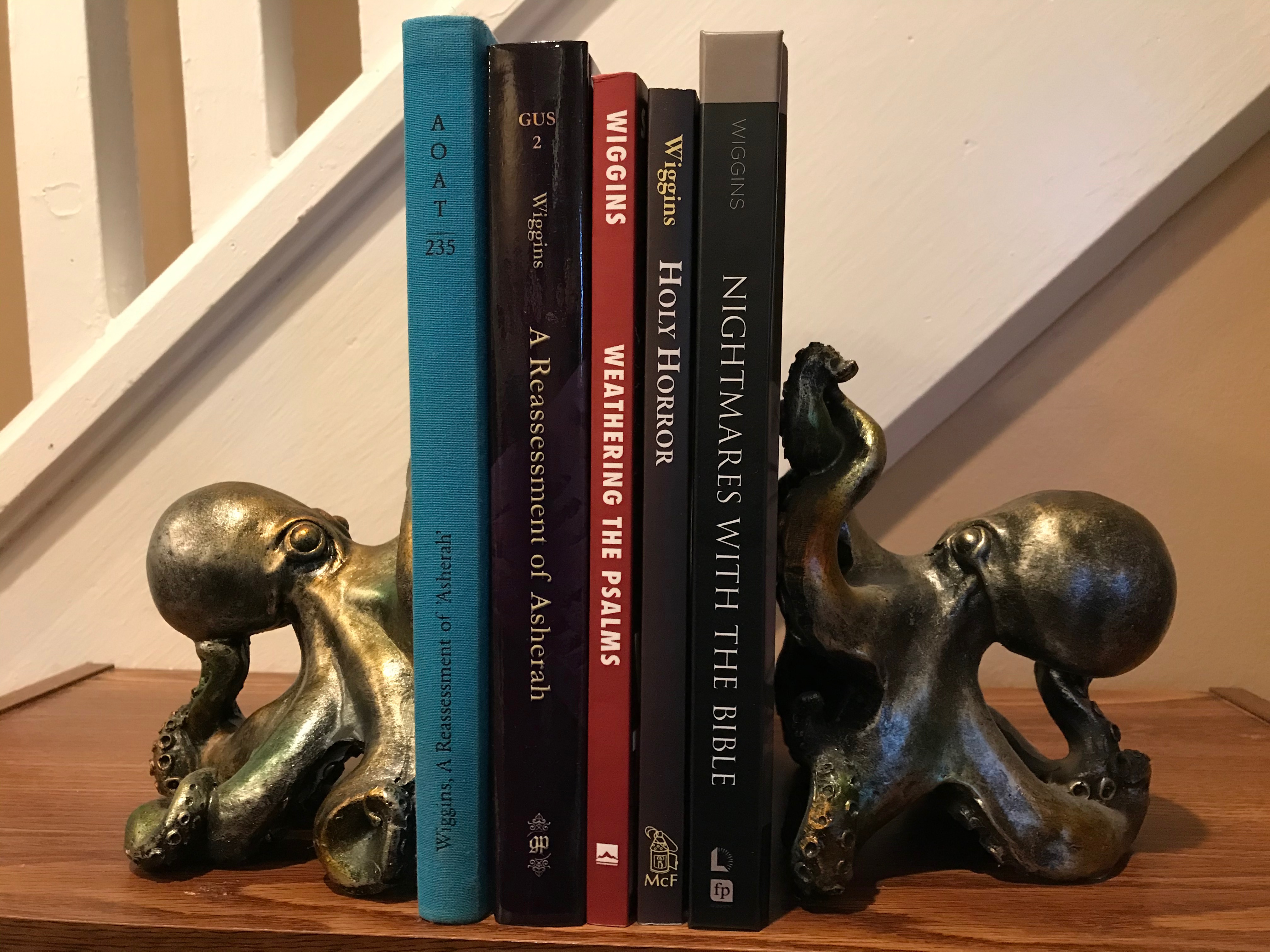
I’ve read many self-published books and most of them have led to disappointment.  You see, a book is better if someone reacts against it.  The problem in mainstream publishing is the reaction against is generally a rejection and that means even if you improve you still have to publish yourself.  I was sorely tempted to self-publish a book before Holy Horror.  Having found a publisher for that book somewhat painlessly (the agents weren’t impressed with it either), led me to keep on going.  Nightmares with the Bible and The Wicker Man were both series books, so again, fairly straightforward.  Sleepy Hollow as American Myth followed the track of Holy Horror.  Written not for a series, I tried to find an agent, failed, and again turned to McFarland.  At least they’ll publish it in paperback.  I’m still discovering self-published books on Sleepy Hollow that I missed in the writing of my book.  For all its faults, academic publishing at least generally offers a good bibliography.


Another Ghost Story

Quiet horror films are sometimes thoughtful little gems.  I’d completely missed Lake Mungo when it came out.  An Australian indie, it’s a mostly gentle ghost story that leaves you with an eerie feeling, and perhaps a little sad.  Ghosts can be so resonant.  Yet the Poe-esque death of a beautiful woman—a teen, in this case—makes it kind of poetic.  The Palmer family is having a Christmas picnic (remember, southern hemisphere) at Ararat, where there’s a dam that allows for swimming.  The two teens, Mathew and Alice, go into the water but only Mathew comes out.  It takes some time for search and rescue divers to locate the body.  Filmed as a mockumentary, the movie slowly adds details that make it all seem much more complex than an accidental drowning.

Alice, it turns out, has a life that her family knew nothing about.  As various family members see her ghost, and even try to document it with cameras, their own motivations emerge.  Mathew, wanting to help his parents cope, fakes a couple of photos and films suggesting his sister is still at the house.  Everyone in the family experiences ghostly noises and a presence and they even consult a psychic, but nothing definitive comes to light.  They do learn that Alice was more troubled than she ever let on.  It was while at camp at the eponymous Lake Mungo that her own ghost came to her in a premonition of her death.  Finally, the Palmers decide to move but in their final photograph of the house, a shadowy Alice can be seen remaining inside.

Ghosts are, by their very nature, religious.  The deal with that universal that all religions address—what happens after death.  The Palmer family is traumatized, but as the closing credit scenes make clear, Alice has really been there.  The one church scene has some of their religious friends say that they don’t know how to comfort a family that doesn’t attend church.  There’s a lot going on here.  Even the name Ararat and the dam have meaning.  This quiet, haunting film is not dissimilar from A Ghost Story, in some respects.  Both reflect on the loss that a death has on loved ones, making them quite poignant because this is so very true of being human.  Horror films can be a source of wonder rather than the slashers they’re generally assumed to be.  I learned about Lake Mungo by word of mouth and I’m glad to have learned of it since, although fiction, it has something true to say.


Embracing October

I try not to dwell on family here on this blog, but mothers are special.  Today marks the one year anniversary of my mother’s passing.  October brings this to mind naturally.  Her mother, who lived an unhappy life, was born in October.  Although she (grandma) only lived to 75, my mother made it to 88.  That’s a good long life.  The pandemic, and actual mileage and financial constraints, kept me from visiting Mom as often as I would’ve liked.  We talked on the phone nearly every other day, and we had done so for years.  One topic that had come up in conversation the last three or so years of her life was that Mom had been seeing her mother.  Or feeling her presence.  This wasn’t a ghost scenario, at least according to Mom.  It was simply seeing her mother there.

Although my grandmother lived with us from the time her husband (my grandfather) had died, she and my mother didn’t really get along.  Family dynamics fascinate me, and since I was two when grandpa died, pretty much from my earliest memories grandma was living with us.  She didn’t approve of my father, and wasn’t shy about saying so.  It probably didn’t help the relationship with my mother much, especially when we had to move to a new place and nobody told Dad we were going.  He wasn’t invited along.  Grandma wasn’t in good health.  I still remember when the dining room in our small apartment was converted to her sick room as she was slowly dying and couldn’t manage the stairs anymore.  Until her final decline, grandma could be quite querulous, but Mom took care of her, because that’s what family does.  Grandma died shortly after Mom remarried.

I never said so to Mom, but I think she’d come to this conclusion herself, that seeing her mother was a sign of approaching death.  Mom often felt that her mother was wanting to reconcile with her.  I didn’t write these things down at the time, because life was, and is, too busy.  Thinking back on Mom, I wish I had.  She knew of my interest in the inexplicable aspects of life.  In fact, she sometimes got frustrated by my persistent questions about such things as a child.  I remember one day she snapped at me for following her around all day because we’d been talking about ghosts.  (That apartment was haunted, I’m almost certain.)  Mom wasn’t a particularly mystical woman.  Someone in the family must’ve been, because I inherited those genes.  She was, however, aware of mortality and all it entails.  I’m sure she knows her family is thinking of her today.


Waking Poe

It’s personal and it’s deep.  My appreciation for Edgar Allan Poe, that is.  I’ve read a few biographies of him over the years, but my engagement with him feels more like that of a boon companion.  Still, I learn a lot from looking at him from different angles.  (And yes, he will be in my forthcoming book.)  Jonathan Elmer’s In Poe’s Wake: Travels in the Graphic and Atmospheric caught my attention but I can’t remember exactly how I heard about it.  This was a case where the back-cover copy won me over, noting as it does, that Poe’s image is everywhere.  Still, I approach things as an historian.  How did this lead to that?  And I must confess that I’m not a great fan of heavily theoretical work (I see plenty of it).  As soon as I see Deleuze, my eyes begin to glaze over.  Do we have to go there again?

All of which is to say Elmer’s book is erudite and, at times, quite academic.  I learned a lot from it, particularly the first two chapters.  Much of the rest of it was a bit too theoretical for my plebeian tastes, but I was still learning as I went.  I hope.  I guess I was thinking it would be more of a history of how Poe ended up, for example, on the cover of Sgt. Pepper’s Lonely Hearts Club Band.  Or how the Baltimore Ravens got their name.  Or even how the Ultima Thule daguerreotype became so ubiquitous.  These may well be impossible questions to answer, even as some of us are fool enough to rush in and try.  In academia, the theoretical is a much safer approach.  It impresses Deans and others in the department.

I occasionally listen to famous people talking about fame.  How it destroys some people and obliterates aspects of others’ lives.  Poe was reasonably well known during his lifetime, but not famous on the level that, say, the internet can instantly make you.  Or even TikTok.  Even back within my lifetime (which, I gather, is about the same as Elmer’s) Poe’s influence has grown dramatically.  His was a household name in my childhood, at least among a certain type of reader.  It wasn’t unusual to find people who’d never heard of him.  I suspect that is also true today, but Poe looms large over October and even the New York Times nods in his direction when the days grow shorter.  Like most writers, Poe isn’t who we think he is.  Elmer’s book does indeed explore his wake, and it is one that continues to cause waves over the centuries.


Like Twilight

The weird thing about watching The Similars is that I’d convinced myself that the movie was from the late sixties.  It’s set in 1968, and the use of desaturated colors gave it an antique feel.  The movie is actually from 2015, a fact that jarred me when it was over.  As I watched it my first thought was, “this is like The Twilight Zone.”  It is, very much so.  It begins with a voiceover and it follows a group of eight people in a bus station during a preternatural hurricane.  By the way, there will be spoilers here.  It’s pretty difficult to discuss the movie without them.  Please be warned.  Also, the film is in Spanish, so you may need subtitles.

Ulises, a youngish man, is trying to get to Mexico City where his pregnant wife is giving birth in the hospital.  A native woman, a shaman, avoids Ulises, while Martin, the ticket seller, doesn’t trust him.  The bus isn’t coming because of the hurricane which, the radio announces, covers the entire world.  Another pregnant woman, Irene, is fleeing her abusive boyfriend, but odd things have begun to happen.  A bathroom attendant and the shaman have seizures.  A mother and her ill son arrive.  Martin insists Ulises is a witch, and Martin has covered his face with bandages.  What soon becomes clear is that everyone is taking on Ulises’ face.  They assume he’s either a government agent and they are being experimented upon, or he’s somehow a supernatural being.  Then the Twilight Zone twist comes: it’s the ill boy who’s the one with special powers.  He is following the plot of a horror comic book he read, where everyone is transformed to look alike and they lose their identities.  That part was borrowed directly from the Zone.  The shaman reveals that aliens gave the boy his powers and this is an extraterrestrial plot.

There’s a lot going on in this movie.  Isaac Ezban, the director, apparently wanted it to be a character-driven drama, like Twilight Zone.  Indeed, the film nods to more than one episode of Rod Serling’s series.  Although it’s derivative, it’s artfully done.  The retro feel to it adds to the effect.  And when Irene’s baby is born it’s pretty clear that we’re firmly in the world of horror.  There’s a certain amount of humor here, but the parts are played straight.  The idea of a child with unlimited power is terrifying, as even ancient stories of Jesus as a boy show.  It does seem to be, however, an alien plot while the camera stays firmly focused down here.


Mere Eagles

One of our summertime jaunts was to the small town of Eagles Mere in the Endless Mountains region, north of the Poconos.  Growing up in western Pennsylvania, I often heard of the mysterious Poconos out east, and now that we live just south of them in the Lehigh Valley, they are weekend-getawayable.  As are points north.  Eagles Mere was an early resort town built on the second highest natural lake (“mere”) in Pennsylvania.  In the early days it was accessible mainly by a slow moving train that took visitors up the mountain.  Today, of course, everyone drives.  It’s a town of about 150 people but the population increases to 3,000 in the summer.  It’s also known for its winter sporting opportunities.  It’s fully dependent on tourism.  I got the sense from walking around that it’s the kind of place you need to stay in to appreciate fully.  Once there were four major historic hotels, all of them gone now, so visitors stay in more modest accommodations, or like us, far enough away to be affordable.

I often wonder what it must be like to live full-time in such a place.  I mean, the rest of us slog away at daily jobs until we can get away for a few days, perhaps to Eagles Mere.  I can’t imagine having to draw in your entire income during a summer with lesser business in the winter, and a smattering of visitors in the fall.  What must life be like in the off-season?  Is it better than the 9-2-5 sitting in front of a computer screen?  At least they have a beautiful, clear lake.  And peace and quiet.  One of the things that struck me—we were there on a drizzly, somewhat chilly August day—is just how silent things can be when we get away from the sounds of civilization.  Perhaps this is the pay-off to not getting year-long pay.

Such places exist because the rest of us need to escape what is it we normally do.  Work, at times, seems mainly to be dealing with other people’s frustrations.  These build up over time until we need to forget about it for a while.  In other words, getaways are interludes of fantasy.  Imagining how it must be to live with so much money that you could afford not to work, but just to paddle out on the lake, watching for eagles, and listening to silence.  Every time I visit a resort town I wonder what it must be like to live in one.  The docent at the museum said many of the 150 are descendants of those who ran the grand hotels.  Even in, perhaps especially in, the off-season this is home to dreamers.


Who’s Pretty?

Movies come at you from all angles these days.  People love stories and streaming companies make enough money to create their own content.  I Am the Pretty Thing That Lives in the House is a notable effort for a Gothic film, financed by Netflix.  The pace is fairly slow and there’s little in the way of jump startles or bloodshed.  The story isn’t fully explained, but then it revolves around a horror writer, so that’s not unexpected, I suppose.  Lily is called in as a hospice nurse for Iris, although what Iris is dying from isn’t specified.  The estate manager supposes the stay won’t be long, but Lily remains in the house for eleven months, not leaving at all.  A few creepy things happen, but nothing terribly threatening.  Meanwhile, Lily, who admits to being too scared to read horror, decides to investigate Iris’ best-known book because Iris keeps calling her by the name of one of the characters (Polly).

After several months of this, Lily comes to believe that Polly was a real person and that she was murdered in the house.  Up front the movie announces itself as a ghost story and lets us know that Lily won’t survive the year.  That’s technically not a spoiler, since it says so at the very beginning.  The question becomes, what has happened to Lily?  Iris remains pretty firmly in the background, but she is the one who initiated the story.  The movie strongly implies, without outright stating it, that Polly was a real person who somehow channeled her story to Iris.  Iris, however, when she talks about Polly, seems to take the point of view of her murdering husband.  I won’t say how Lily fails to survive the year because that might actually be a spoiler.

This is one of those movies that relies on mood more than plot.  In that it manages to approach Gothic sensibilities with the very premise being, from the start, that ghosts own a house.  I live in an old house.  Apart from the previous owners, who both left alive, I have no idea who might’ve lived here since about 1890.  I haven’t seen any ghosts but I often do wonder what has happened in this place.  There are those who prefer modern houses with shiny surfaces (and generally no books),  but some of us prefer to take our chances with history.  We may never unpack that history but living among it makes us feel connected.  That’s kind of like the experience of watching I Am the Pretty Thing That Lives in the House.  Only we hope that are good guests in what may be somebody else’s dwelling.