Not Handel’s Messiah

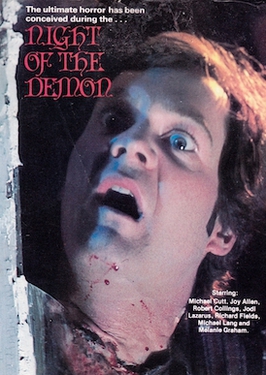
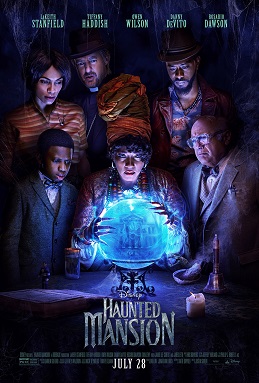
It’s polarizing.  Even now, nearing fifty, Messiah of Evil is either adored or excoriated.  So it was at its release.  I was pointed to the movie by an adorer—a somewhat unexpected New York Times seasonal article.  Suggesting that there’s nothing else like it, the article recommended it for autumnal viewing.  So, what’s it all about?  I’m not really sure, but that won’t stop me from trying.  Arletty is a young woman who wants to find her father (with you so far).  He’s moved to New Bethlehem, California, now known as Port Dome.  She finds his house abandoned, and the locals decidedly unfriendly.  Her father’s diary explains that he’s transforming into something inhuman.  The locals are cannibals, it turns out, awaiting the return of, well, the messiah of evil.  (The title is never used in the movie.)

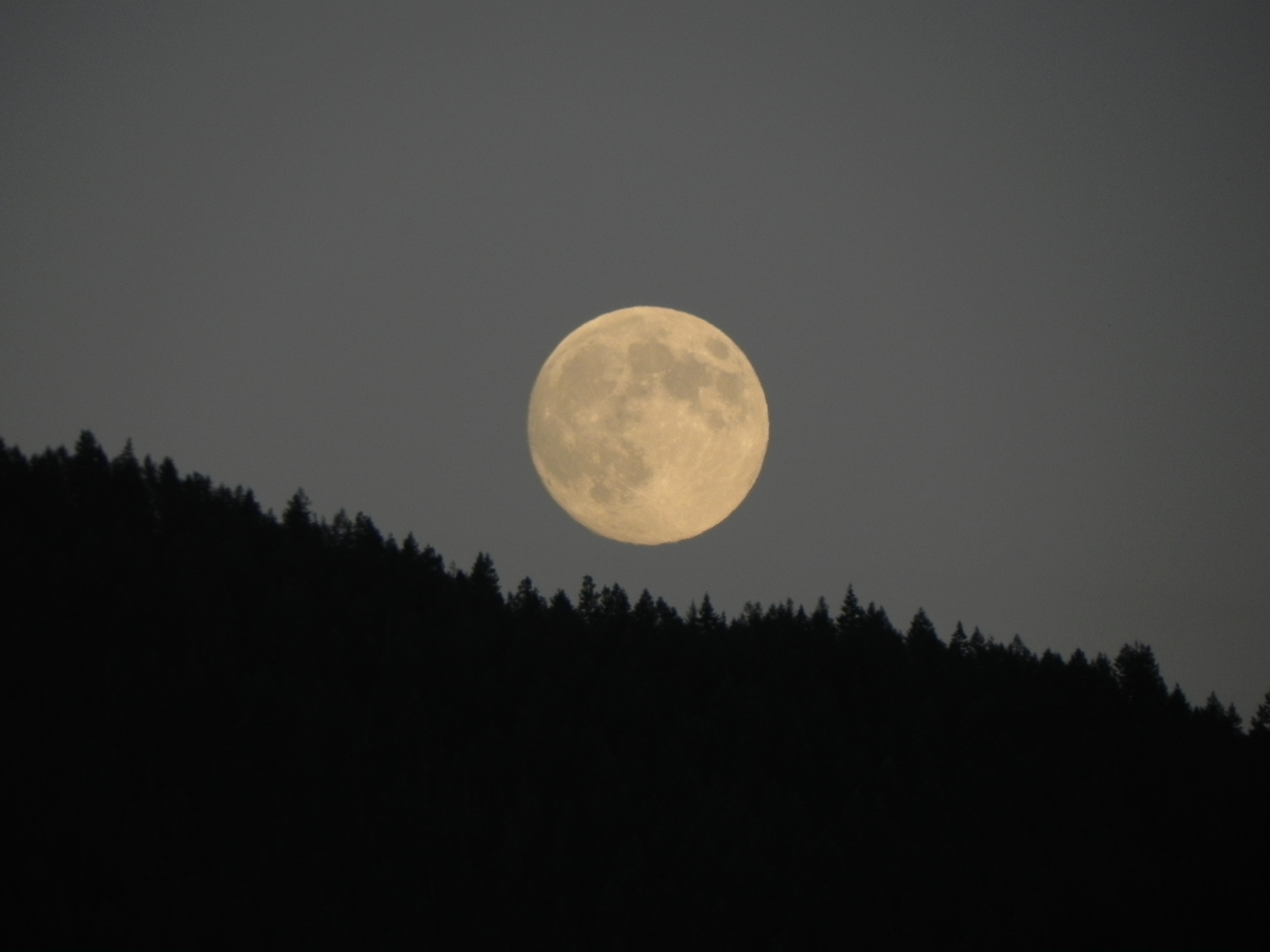
Although I learn more towards the excoriating opinion of things, this is a great horror and religion film.  The original messiah of evil was a preacher stranded with the Donner party.  He started a new religion and, wanting to spread it, went to California.  Now, whenever a blood moon comes, he arises from the sea and his followers become aggressive.  The movie is set a century following this first appearance, and the dark master is due to return.  His followers await him on the beach, and Arletty is their intended sacrifice.  Elements of Lovecraft are clearly evident—people transforming, old gods, evil emerging from the ocean.  Yet, there are many things unexplained.  Or maybe I’m just naive.

The male lead, Thom, travels with a mini-harem.  He’s in Port Dume because he likes to gather folktales—like the blood moon—and he likes Arletty’s father’s art and came to buy some locally.  The movie features a blind art dealer, cops who apparently know nothing about the infestation of ghouls in their town, and a guy who could drive away from the attacking hordes who decides to run instead.  The directors (Willard Huyck and Gloria Katz) were a talented couple, but this wasn’t their best collaboration.  Still, many recommend this as an overlooked horror gem from decades ago.  Others not so much.  I’m glad to have seen it, although I fall into the latter camp.  Mainly because it continues a theme that I’ve tried to pick up at several points on this blog—that horror and religion have a great deal in common.  Even if one (or both) shows its age and fails to impress.


Evolving Holidays

Holidays evolve.  I noticed this Thanksgiving that protests against the origins of the holiday have grown.  The same is true concerning the “Christmas Wars” every single year.  Some holidays (of which we have relatively few in this country) are disappearing altogether.  What seems to have been overlooked, or forgotten here, is that holidays change over time.  Public analysts and early holiday promoters encouraged government recognition of holidays as a means of bringing the nation together.  It’s easier to do this if we recognize that holidays evolve and the general trajectory is toward becoming more and more inclusive.  There will always be those who protest the “secularization” of holidays, but they share a large part of the Venn diagram with those that believe the Bible is a science book.  Things change.  Evolution is real.

I’m not just writing this because Thanksgiving and Christmas represent holidays from my tradition.  It’s true that they represent what was the majority religion (Christianity) at the time they were established here, but I would be glad for holidays from other traditions to be added as well.  Americans need more time to rest and recharge.  Anyone who’s studied the history of Christmas, say, realizes that its origins aren’t really Christian.  It’s a combination of a Christian alternative to Saturnalia, the recognition of St. Nicholas (December 6), Germanic Yule, and the festival of Roman Calends to start the new year.  Among other things.  Early Christians didn’t celebrate Jesus’ birthday.  Nobody had any idea when it was, but a tradition grew and as it grew from diverse roots it became more and more inclusive.  Why should we protest a day when we can acknowledge its troubled past and look for ways to make it better?  Something for everyone.

Holidays bring people together.  I’ve been researching them for years and I’m amazed to see how those that survive eventually catch on and bring people together for a common purpose.  Think of Halloween.  Masking disguises who we are.  It’s a day when everyone is welcome.  There are those who protest it, of course.  But holidays need not be seen as triumphal celebrations of some past misdeed.  (Here’s a hint from history: almost no historical event is seen as positive from everyone’s point of view.)  Instead, why not embrace those few red letter days that we have and use them to seek a common purpose?  Why not encourage those in positions to make decisions to consider the good of a few more holidays?  Trouble can always be found, but holidays, if done right, may help heal.  It’s the way of evolution.


Reflecting Thanksgiving

Thanksgiving, the newest holiday horror movie, was released last Friday.  No, I haven’t seen it—I barely have time to do whatever it is that I do normally.  I suspect, however, that many will object because Thanksgiving is still a quasi-religious holiday.  If we’re giving thanks we must be giving it to someone, or something, that may or may not govern our lives.  Ironically, in many business calendars it is the only annual four-day weekend.  Christmas could come on a Wednesday, so we can’t go giving time away!  Ironically, Thanksgiving was fixed as the fourth Thursday of November (moved from the last Thursday) to ensure about four weeks of shopping time before Christmas.  Me?  I’m just glad to have a couple days off.  2023 has been a challenging year on a personal level and having a couple days out of the office is just what the doctor prescribed.

Photo by Priscilla Du Preez on Unsplash

It may seem strange to be thankful for horror movies, but I know I’m not the only person whom they help.  I also believe that the genre has been misnamed.  When you think of all the different kinds of films that get lumped under the moniker it really is odd that we have any idea at all what we’re talking about.  What are horror movies, then?  The common equation with slashers is patently wrong.  There’s nothing slash-like in the old Universal monster movies that started the whole thing.  Time and again critics point out that “horror” is generally intelligent, and often funny.  And not infrequently therapeutic.  Yet it has a bad name.  Some even consider it satanic although it produces good.  Being satanic is a matter of how you look at things.

Thanksgiving is a time for reflection.  Reflection without the distraction of work constantly trying to poke holes through our concentration.  The holiday season properly starts at Halloween and sadly ends at New Year.  It’s our reward for having made it through another one.  The holidays that fall into this season all have a great deal in common.  Early Americans celebrated Independence Day, Thanksgiving, and sometimes Christmas and New Years.  We’ve reached the point now where we have a distinctive string of holidays like stones across a rushing river.  We can just make it from one to the next.  From Halloween we can see to Thanksgiving.  From today Christmas is on the near horizon.  New Years follows only a week after.  And it’s a time for reflection and thankfulness.  Even if what we appreciate isn’t the same as everyone else.


Thinking Teaching

I am a teacher.  Although no longer employed as one, my entire mindset is geared toward the profession.  Those hiring in higher education have no clue about this sort of thing.  Apparently nobody else does either.  I’ve worked in business now for over a decade and a half.  During that time only one employer has shown any inkling of understanding the importance of clear teaching.  Instead, most promote busy people trying to explain things in sound bites that lead to confusion, compounded daily (sometimes hourly).  The immense waste of resources this entails is staggering.  It is the most inefficient system I can imagine: in the rush to convey sometimes important information, necessary pieces are left scattered on the floor like seeds under a bird feeder in migration season.  In our rush to do our jobs, we settle for half-baked rather than paying a baker to make proper bread.

This is a constant frustration for someone who has the soul (and mind) of a teacher.  Our society undervalues educators of all stripes.  And, yes, many people go into teaching without the requisite gifts or motivation.  I’m certain I’m not alone in having had a high school or college course where the teacher was completely disengaged or perhaps in out of their depth.  Students shut down, hate school, and then spend their lives making uninformed decisions on everything from politics to profession.  Teachers—good teachers—are the future of any nation.  I know our young are our future, but if they’re inadequately taught, take a look at the headlines and see what happens.  Why is it so difficult to see that if children aren’t taught well, institutions will perpetuate that model until everything is a barely contained pandemonium?

We see this happening in history.  A people or culture gets to a point where they just begin to implode.  Too many things that just don’t make sense have been built on top of other things that just don’t make sense.  The whole thing begins to collapse.  I see this happening all the time—the hurried email that simply doesn’t explain anything, sent in haste before moving on to the next sophomoric task just to get the job done.  When businesses take a look at budgets and feel a little scared, some of the first positions to go are those of trainers.  “People will figure it out,” they seem to say.  And we see the results.  Evolution has made teachers of some of us.  Many of us, of necessity, are doing something else for a living.  If only all jobs came with a blackboard.


Not Quite Christmas

Holidays have always fascinated me.  Although we grew up poor, I always have cozy memories of childhood Christmases.  It was a combination of things—being out of school for a couple of weeks.  Presents.  Christmas trees.  Time outside ordinary time.  I’d read Penne L. Restad’s Christmas in America: A History years ago.  So many years, in fact, that I forgot that I wrote a blog post on it before.  That was back in 2012, in my early days of commuting to New York City, and early days of blogging.  Sometimes I have to come back to a book, however, and rereading this one reminded me of why.  There’s a lot of good stuff in here.  It mostly focuses on the nineteenth century, but it does go back before that and steps into the twentieth century (when it was written) toward the end.  I’d forgotten a lot of what I’d learned before.

This time through, having worked as an editor for a decade and a half now, I could tell that it was originally a dissertation.  It’s pretty hard to remove that completely from any book project.  Nevertheless, it’s engagingly written and full of facts.  I’d forgotten that Santa’s red clothes were not, in fact, Coca-Cola’s invention.  And that Washington Irving played quite a role in introducing Americans to the holiday.  And just how interconnected Christmas is with Thanksgiving, New Years, and yes, even Halloween.  Of course, no book can be adequately summarized in a brief blog post.  My previous one highlights some of what I found here, but this reading brought out other interesting features.  I spend quite a bit of my energy anticipating holidays.  Some years they’ve been minimized due to circumstances, but they are definitely the fixed points around which my life revolves.

One of the interesting things I noticed this time, introduced literally on the second-to-last page, was that the book mentions holiday horror.  Restad’s focus is on America so she doesn’t really delve into the British tradition of telling scary stories at Christmas.  (I do discuss this in The Wicker Man, I would note.  Although set on May Day, it was released in December, fifty years ago.)  These kinds of interconnections fascinate me.  Our culture reflects who we are and American culture includes Christmas for any who want to take part in it.  In fact, the book makes the point that becoming secular helped Christmas spread goodwill to people of all religious persuasions, or none at all.  It’s not really even a Christian invention.  It’s a blending of traditions that bring light to the darkest time of year.  And here I am like a kid, eagerly awaiting it again.


Nesting Urge

Okay, I’m going to try really hard to do this without spoilers.  There’s a twist ending here that, in my humble opinion, works.  All I’ll say is that the monster may not be what you think it is.  The only problem is that there are at least eight movies titled The Nest, and you’ll need to find one  from 2019 if you want to see what I’m talking about here.  Don’t read any summaries beforehand because you want to let this wash over you and draw you in.  Although distributed by Universal, this Italian Euro-horror remains relatively unknown.  That’s really a shame since this movie delivers.  A woman, an heiress, has a paraplegic son that she never allows to leave the estate.  She’d training him to run things when she can’t and she strictly limits the people he can see.

Teaching him classical culture, she won’t expose him to anything modern.  Then a teenage girl his age comes to live on the estate.  She was being raised by the same man who raised the heiress, but she knows things.  She knows about rock music, and she understand the way the world works.  The heiress, however, wants her son to experience none of this.  Afraid of what might happen, she sends the girl away.  In the meantime, we learn that the heiress kills those who are sick among her staff.  She employs a very creepy doctor who does whatever she orders, noting that she has saved them all.  The question is, is it best to live in such a bubble?  Is life so isolated worth living?  The heiress brings the girl back, but begins, with her doctor, to alter her behavior using electroshock treatment.

The Nest is one of those movies where you spend nearly the entire thing being misdirected.  When it’s over you think back on what you’ve seen and it does make sense.  Along the way, you know something’s not right.  It’s creepy in a way more than old, castle-like houses can account for.  I like gothic films like this.  There are disturbing moments that punctuate what seems like an idyllic lifestyle.  The heiress knows that survival equates to a cultured existence, but she never tells her son why.  This film shares some territory with M. Night Shyamalan’s The Village, in fact, they could be next door neighbors at points.  They both have a similar message, at least in part.  Efforts to build a paradise are beyond human capacity.  We need the outside world even if we fear it.


Not What It Seems

Now for the local news.  The ironic thing is I know very few people locally and even though folks are friendly around here nobody really wants to get to know you, it seems.  But that’s not unique to this area and it’s off point.  No, locally some months ago The Satanic Temple (which I’ve written about before) tried to start an after school club in an eastern Pennsylvania school in response to an explicitly Christian after-school club receiving sponsorship.  Of course it caused local furor.  That’s what the Satanic Temple intends to do.  The members do not believe in, let alone worship, Satan.  They exist to try to counter Christian hegemony, often in the form of courthouse lawn Christian imagery, or, as in this case, biased treatment to Christian groups wanting to use public property, such as school facilities, to promote their religion.

The reason I’m bringing this up is to show how the Christian agenda raises your taxes.  According to the ACLU, this school district, after challenged in court, has agreed to pay $200,000 and it must allow the Satanic Temple to meet if it allows Christian groups to meet.  That hefty chunk of change (enough to buy a house in this area) has to come from taxpayers because the school board (until a recent election) was controlled by a right-wing group that played the Christian narrative and apparently supposed the Satanic Temple was really a Satan-worshipping group.  It’s not.  The Satanic Temple is a national organization whose goal is to maintain freedom from religion in government and publicly funded spheres.  “Satanic” causes shock and panic and the sheep scatter.  And local citizens foot the bill.

Although I understand what they’re doing, I really don’t like to see my taxpayer dollars having to be spent to coddle the egos of groups who spread the narrative that Christianity is the only religion allowed in America.  In fact, one of the truly fascinating things about this country is the wide varieties of religions that exist in it.  Although the melting pot metaphor has fallen on hard times lately, I’ve always felt this was one of America’s biggest charms.  We’re a Frankenstein’s monster of a nation that’s just like the creature—not really a monster, but not like anything else you’ve seen.  Cookie-cutter populations seem to lead to wars and hatred.  Celebrating difference, indeed, encouraging it, leads to peace and shared prosperity, if we’ll let it.  It’s only when we want to keep all the good stuff for ourselves that things begin to break down.  And your local taxes go up because a faulty narrative is on the agenda.


Cute Monster

Those who make horror films often rely on the cheap and easy tricks to make viewers jump and  scream.  Some of us are more connoisseurs, preferring films that make you think and that don’t show too much, and maybe even too little.  Lamb once again underscores what has impressed me about Euro-horror over the last few years.  Slow, building dread, it’s the kind of story that you know can’t end happily because it’s, well horror.  There are spoilers here but I hope they won’t stop you from seeing this film if you haven’t.  First of all, the film is in Icelandic, and much of the cinematography focuses on the brutally beautiful cold landscape.  Its sense of isolation and the land make this a fine example of folk horror as well.

A couple, sheep farmers, make a reasonable living from the harsh land.  We come to realize that they live in regret for the death of their daughter.  Then, after the unseen visit of an unseen creature during the dark of an Icelandic Christmas, a lamb is born with a human body.  She quickly becomes their ersatz daughter.  This odd situation, we know, cannot last.  They’ve set their happiness on a gentle monster (of the classic description) and such things never end well.  The movie takes its time spelling out the story, knowing full well that viewers know something is about to happen, but are unsure of what.  Since the husband’s brother stops in (after being forcefully ejected from a car), the film only really involves four characters—six if you count the brief appearances of the lamb’s parents.  And that isolated landscape.

Part-human and part-animal generally counts as a monster.  This one is well behaved.  Cute, even.  Dad, it turns out, isn’t so cute or well behaved.  He has his reasons, though.  The film is scary by implication: What happens when the cute little monster grows up?  The movie invites us to consider that question.  Monsters are often cast as evil and dangerous, but maybe they have to grow to become like that.  With loving foster parents, such as the farmer and his wife, who knows?  This is one of those films that makes you ask questions and offers little by way of explanation.  You just have to accept it.  Something led to a monster in the hills, somewhere back along the line.  But even he may have been even-tempered had is kind been treated with civility.  Monsters have something to teach us.  Even, or maybe especially, cute ones.


Buy Books

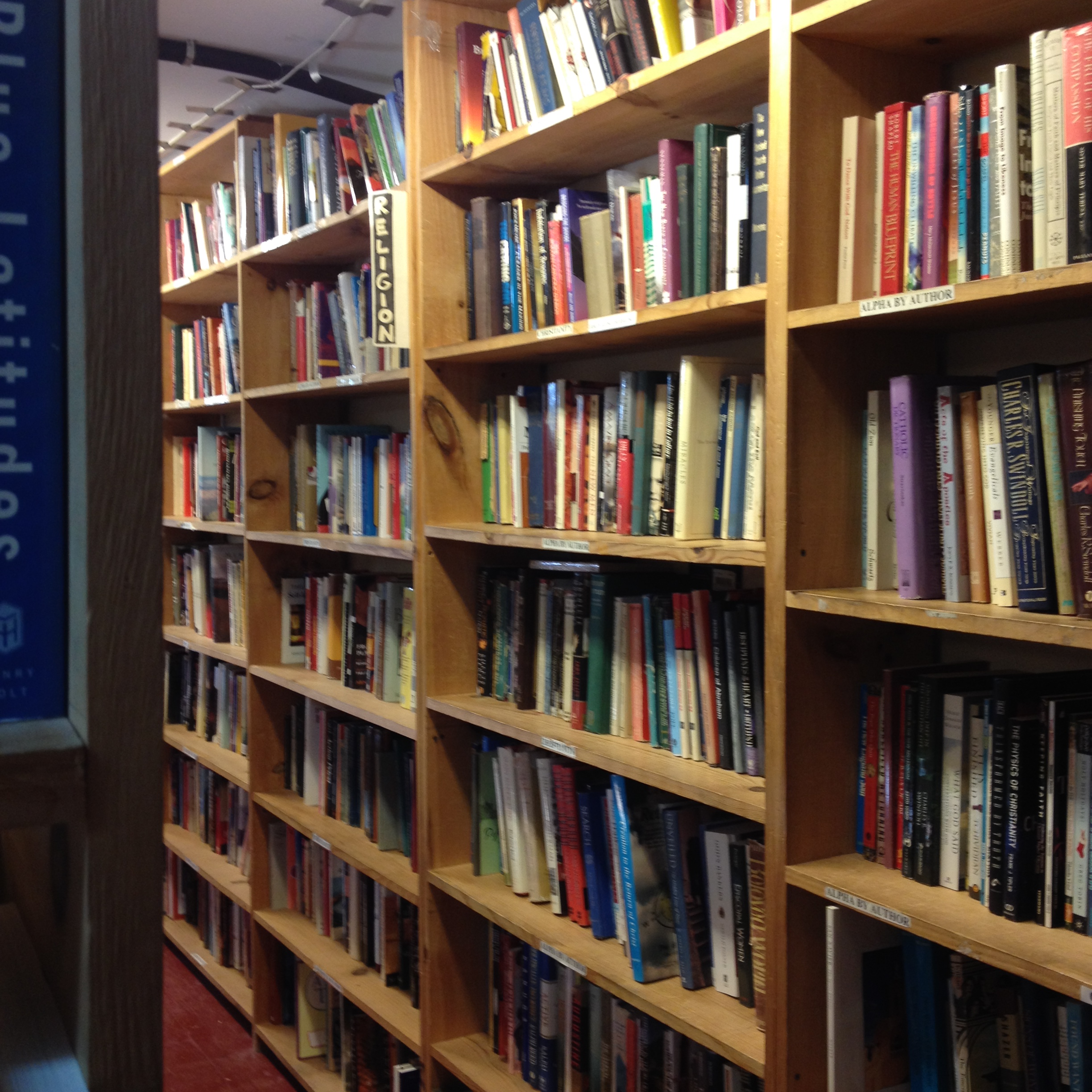
It’s funny how the bad guy can become the good guy in new circumstances.  I’m thinking in the bookstore context.  Now, I love independent bookstores.  I shop in them whenever I can.  Still, I had a genuine fondness for Borders.  My wife introduced me to Borders when I moved to Ann Arbor to be with her.  Borders was headquartered in Ann Arbor and it was our go-to for browsing.  (This was before Amazon, of course.)  Compared to Barnes & Noble it was intellectual and inviting.  B&N had gone for the corporate stodgy aesthetic that drives me frantic.  We literally mourned when Borders closed, spending hours in the New Jersey stores as they were selling off stock.  There was a long time when Amazon seemed the only game in town.  Our part of New Jersey had no indies, but the B&N sat on the hill.

Then B&N started having trouble.  By now I worked in publishing and seeing the only brick-and-mortar outlet crumbling was scary.  We need to fight the ebook invasion.  To do this we need bookstores!  (Fortunately we have a few good indies where we live in Pennsylvania, but even so, at least two of them have closed in the last five years.)  Then something happened.  James Daunt bought Barnes & Noble.  Daunt was known as an innovative British bookseller.  His stores (I’ve only seen pictures) are the thing of dreams.  Could he steer this corporate stodgy ship into open waters?  It seems to be working.

A piece in a recent New York Times praises the new B&N effort.  Instead of stamping “one size fits all” all over his business, Daunt wants his stores to take on local flavor.  Not look like every other B&N.  And it seems to be working.  I still prefer my indies, but the last time I was in the local B&N I noticed subtle changes that can come when a corporate overlord hands a local manager a bit of autonomy.  The stores are looking better.  And folks, let me be frank here.  Christmas is coming and books, real books, need your help.  Silicone Valley is trying to force us onto our screens for even more hours of the day.  I get off work and pick up a paper book to read.  To look at something real.  To connect with the actual world.  Support your indies, but don’t feel guilty about ducking into B&N.  It may not be the place you remember.


High Places

Among the many phobias I experience is acrophobia—the fear of heights.  I’ve had episodes of vertigo and they never really leave me in the mood to reflect upon them.  And yet, Alfred Hitchcock’s Vertigo is a classic I’d never seen and about which I knew nothing.  Well, very little.  I knew that Jimmy Stewart’s character suffered from vertigo and that Mel Brooks had done a spoof called High Anxiety.  Hitchcock wasn’t a horror auteur, although he gave the world The Birds and Psycho.  He’s often cast in the “thriller” or “mystery” category, but these things all blend into one another and someone of Hitchcock’s interests might be placed in different genres, depending on who’s doing the placing.  So my wife and I watched Vertigo, not knowing what to expect.

The first thing is it was longer than expected, especially given the deliberately slow pacing.  The story, in case you’re behind too, involves a guy looking for a way to murder his wife to get her money.  It involves a convoluted plot of finding a near double of his wife—whom he seems to love (but not as much as money), to trick Scotty (Stewart) into thinking that she committed suicide while he was helpless with vertigo.  Even when the reveal finally came, I scratched my head a bit trying to figure out why all the elaborate trickery was necessary.  It was, of course, based on a novel that might explain things a bit more thoroughly.  But movies are about visuals and Vertigo is full of those.  Lots of green.  A dolly zoom (a film first).  Even some animation.

Although there’s murder and fear—and even an accidental death because of a nun (not the Nun)—it seldom nudges north of drama.  It’s one of those movies that has gained in reputation since its initial appraisals.  Much of this has to do, it seems to me, with its visuals and subtlety.  (Film critics seem to love those.)  Of course, Psycho was still two years away, and The Birds five.  I’m no Hitchcock connoisseur by any stretch.  Indeed, my life has tended to be bits and pieces of this and that.  (It takes a far larger following than I have to be able to opine on any subject and have people take you seriously.)  Vertigo is, however, one of Hitchcock’s better-known films.  Well enough known to have had a spoof made of it.  And to have drawn me in to a movie themed on something I legitimately fear.


Biggest Book

As a bibliophile it’s kind of embarrassing to admit that I’ve only just learned about the world’s largest book.  If you’re like me you’re probably imagining an enormous tome that required acres of trees and fifty-five-gallon drums of ink to print.  But that’s not it at all.  This particular book is located in Mandalay in Myanmar.  If I say it’s a religious text you might be clued in that it represents the Tripitaka, or Pali Canon.  These are Buddhist scriptures.  They are extensive, as scriptures tend to be.  I’m certainly no expert on religions in that part of the world, but it’s clear that the world’s largest book, as a monument, required a massive amount of effort to put together.  Housed at the Kuthodaw Pagoda, the texts were inscribed on stone housed in 729 stupas that are stunningly beautiful.  (Take a look for other photos online—it’s impressive!)

Photo credit: Wagaung at English Wikipedia, published under GNU Free Documentation License

The monument was completed in 1868.  When the British invaded southern Asia, however, there was much looting and damage was inflicted on the shrine.  It was eventually repaired and still stands as the largest book in the world.  It’s no real surprise that this honor would be relegated to a religious text.  Bibles of all sorts become symbols and their symbolic nature often supersedes what’s written inside.  The idea of the sacred book has an unyielding grip on the human psyche, whether we think the book comes from God or an enlightened human being.  Indeed, the sacred itself is an integral part of being human.  When one group wants to dominate another, it often goes for its sacred artifacts.  Cathedrals as bombing targets in the Second World War demonstrate that well enough.  Ironically, we’ve ceased paying much attention to the sacred but we still revere it.

Books represent the best of our civilizing nature.  They’re ways of coming to see the point of view of others.  It really is a privilege to read.  Banning books is, in its own form, a crime against humanity.  Those who ban almost inevitably end up promoting yet more sales of the offending book.  I often see books that make me angry or upset.  My knee-jerk reaction is to want to deface them—this is a human enough response.  But taking time to reflect, I realize that these writers are entitled to their opinions, benighted though they may be.  A civil exchange of ideas is essential to getting along in a world with billions of different opinions.  Every nation should have a monument that shows its love for books.


Sleep Well

It’s scary, actually.  How you think depends on how you sleep.  I suspect that the degree of this differs individual by individual, but I recently had a couple of consecutive nights where the differences were striking.  To put this in context, it was after ending Daylight Saving Time (it should be kept all year but with Republicans in the House unable to pick a speaker, what chance do we have of them ever passing a simple, but necessary measure?).  Mondays, for some of us, we naturally awake earlier since, well, work.  I happened to wake excessively early that morning and couldn’t get back to sleep, no how.  I functioned alright during the day, but those who work 9-2-5 aren’t allowed naps and some of us aren’t young anymore.  I thought it was a fairly normal day.  That night I slept well.

Photo by Kate Stone Matheson on Unsplash

The next morning it was like my thoughts were supercharged.  I was thinking things I’d failed to pick up on the previous morning.  I was efficient and energized.  What a difference a good night’s sleep makes!  But the herd mentality—work must be eight hours and those hours must be from nine to five (if you work more, that’s great!)—doesn’t allow for bad nights.  It’s ageist, really.  Once you reach a certain age, you don’t sleep as well at night.  Work times are non-negotiable, so you’re forced to keep going through the yawns that a good nap would take care of.  So much depends on a good night’s sleep.

In reading about the history of holidays (I’ve been doing this for years, as The Wicker Man demonstrates), it’s clear that the United States stands out in the dearth of its holidays.  It’s been that way from the beginning.  Most employers don’t give Veteran’s Day off.  None note May Day, which is Labor Day in many parts of the world.  No time to sleep in in this country!  Work while you’re tired, work while you’re wakeful, just as long as you work those sacred eight hours and more.  Of course, all of this may come from that grouchy feeling a poor night’s sleep bestows.  I don’t keep a sleep diary, but I do wonder how many social ills are brought about by a bad night’s slumber.  It’s the darkening time of the year.  Nature’s telling us that reasonable animals hibernate.  The rest of us set alarm clocks to wake us before it’s light, no matter how we fared the night before.


Not Making Decisions

After anesthesia they tell you, “Don’t make any important decisions.”  That’s the excuse I’m using for having watched Llamageddon recently.  That, and it’s free on one of the streaming services to which I have access.  I only found out about it because of such services and I wasn’t in any shape to decide important things like how to spend the rest of the groggy day.  I’m of mixed minds regarding comedy horror.  Or is it horror comedy?  Decisions.  The fact is, quite a few horror movies do involve some amount of fun.  My favorite ones tend to be more serious, but once in a while you find yourself watching movies you know are (or you know are going to be) bad.  I knew this one was.  It’s so bad that it’s got a cult following.  It was, I’m pretty sure, made to be bad.

So a killer llama from another planet is forced to land on earth.  It kills an older couple in Ohio and after the funeral two of their teenage grandchildren, Mel and Floyd, are left to stay in the house.  Mel, who is older and more experienced, contacts all her friends so they can party that night.  Of course, the llama’s still on the loose.  It has laser-beam eyes and it bites and punches people to death and the partiers are picked off, not exactly one-by-one since many of them are electrocuted in the hot tub.  Generally they’re so drunk and/or high that they don’t believe any of this is happening.  Eventually Mel and Floyd’s father arrives and tries to save his kids.  Before dying of llama bite, he kills the quadruped by running it through a combine.

It’s worse than it sounds, but it’s played strictly for laughs.  And, I suspect, it’s one of those movies that’s meant to be watched under the influence.  Since anesthesia is about as close as I’ll ever get to that, I suppose this counts.  Some of the early horror movies have become funny with the passage of time as early special effects age and we become used to better, more convincing fare.     As it is, it’s difficult to find much about Llamageddon apart from IMDb, and the director’s name, Howie Dewin, is a red herring.  I’m fascinated by such films being able to gather a following.  Of course, I confess to enjoying Attack of the Killer Tomatoes when the mood is right.  And a day when decisions are contraindicated, anything can happen.


A Century of Horror

I’m not a magazine reader.  When I go to a waiting room (which is quite a bit lately), I tend to take a book.  The October issue of The Christian Century, however, caught my eye.  As a more mainstream/progressive Christian periodical, CC used to circulate in the office of one of my employers since it features books, the way progressives generally will.  This October, however, it featured five articles on “faith and horror.”  I had to take a look.  I know three of the five authors, one of them without realizing he was a horror fan.  An article by Brandon R. Grafius, “The monsters we fear,” discusses the commonalities between fear and religion, ground that he treats in Lurking under the Surface.  “The wisdom of folk horror” was written by Philip Jenkins—I didn’t know his horror interest—and it engages, briefly, The Wicker Man.  He’s making the point that folk horror is often about somebody else’s religion.

It was “Horror movie mom” by Jessica Mesman that really hit me.  Mesman was traumatized in her youth, and like many of us who were, has turned to horror for therapy.  This is a moving piece and is worth the cover price of the magazine.  Gil Stafford’s “A theology of ghosts” also gave me pause.  Stafford is an Episcopal priest who considers ghosts to be more than just woo.  In this very personal piece he thinks about what that means.  The last feature, “God’s first worst enemy,” is by Esther J. Hamori, one of the colleagues who talks monsters with me.  The piece is adapted from her recent book, God’s Monsters.  Taken together these pieces are quite a mouthful to chew on.  While numbers in mainstream Christianity are declining, Christian Century is still a pretty widespread indication of normalcy.

When I wrote Holy Horror I only knew about the work of Timothy Beal and Douglas Cowan as religion professors writing on monsters and horror.  That book admitted me to a club I didn’t know existed—the religion and monster crowd.  Since I’m not welcome in the academy, I’m particularly drawn to pieces like Mesman’s since she’s writing from the heart (as is Stafford here).  I’m just glad to see this topic getting some mainstream coverage.  I know I’m a guppy in this coy pond, but I do hope they’ll consider, over at the Century, turning this into the theme for their October issues in coming years.  If they do, they can count on at least one extra counter sale.


Old Oak Tree

Trees have much to teach us, if only we’ll pay attention.  They are fascinating plants in their own right, living longer than just about anything else.  During our years in New Jersey we made pilgrimages to two ancient trees in that state: the Basking Ridge White Oak (unfortunately cut down in 2017), and the Great Swamp Oak in Lord Stirling Park, also in Basking Ridge.  Naturally enough, then, when in Charleston last month we had to visit Angel Oak.  Our Charleston visit was not a solo venture, therefore our timing was somewhat off.  Our flight to South Carolina was delayed by about three hours, cancelling our plans for that Saturday afternoon, one of which was to see Angel Oak.  When we arrived at the oak on Sunday we discovered the venerable tree had visiting hours that started after we had an engagement on Sullivan’s Island.  We had to see it through a fence.  (In our defense, several others arrived at around that time, equally surprised to learn they couldn’t get in.)

Regardless, there’s something awe-inspiring about being next to a being four-or-five-hundred years old.  Unlike its departed cousin, the Basking Ridge White Oak, Angel Oak is of the live oak variety.  (Live oak is the rather awkward name for a type of oak tree, not necessarily a designation that the tree is alive.  People sometimes have strange ideas about naming things.)  Like many ancient things, folklore has accumulated around this tree.  Although the name derives from former estate owners, lore has it that ghosts of slaves appear at the tree in the form of angels.  Folklore has a way of saying something important in this materialistic era.  There can be something spiritual about trees.

Although we had only a few minutes outside the fence to appreciate what we were seeing on John’s Island, the experience is one that sticks.  One of the most hopeful things a person can do is plant a tree.  Back at Nashotah House I planted an apple tree that I’d grown from a seed.  I planted it the year my father died (2003) and I often wonder if it’s still there.  After buying our first house we planted a scarlet oak.  A local nursery indicated that oaks help the environment by providing the habitat for the highest number of species here in Pennsylvania.  We used A Tree to Remember after my mother’s passing to plant a memorial.  (Other trees I’ve planted have been snipped off by squirrels before they can live on their own.)  Although outside the fence, I reached up and touched some of the outer leaves of Angel Oak and connected, if only for a moment, with something great.