Double the Trouble

A down-on-his-luck writer (I’m with you so far) vacations on his wealthy wife’s money in a resort in La Tolqa.  La Tolqa is a brutal, very religious, but poor country.  They need tourists.  As the writer, James, discovers, their laws are very strict for a reason.  If a tourist commits a crime they are executed.  However, if they have enough money they can buy a “double,” essentially a clone of themselves, that can be executed for them.  Needless to say, this happens to James.  The name David Cronenberg evokes body horror.  Infinity Pool is the work of his son Brandon Cronenberg and although body horror’s part of it, there’s an even deeper existential fear at work.  Once James’ double dies, his wife insists they leave this horrid place immediately.  James isn’t so sure.

The trouble is that he’s befriended another couple, and the wife, Gabi, has been making no-so-subtle advances on James and he’s intrigued.  This couple sets him up so that he’s likely to break a law, which leads to the killing.  But they’re not finished.  Along with another group of Americans, they travel to La Tolqa every year to commit crimes so they can watch their doubles being killed.  “Murder tourism,” as one reviewer calls it.  They want James to become one of them.  They start putting him into positions where he has to kill his own double.  You can see the existential horror pretty clearly from this vantage point.  Finally realizing that they’ve been mocking him, James tries to escape, but can’t.  As long as the penalty for a crime can be payed by buying a double, they can commit outrageous crimes with impunity.

I have to admit that I envy those who have a family business.  (Mine was alcoholism, so I chose a different career path, such as it is.)  If your father is a well-known, even if often castigated, horror director, you have some guidance on how to get started in the business.  My sense of Infinity Pool is that it’s quite effective, almost at art film at some points.  Like some of his father’s films, it involves both sci-fi elements and horror.  Budapest and Croatia are evocative shooting locations.  The story, while not entirely satisfying, intrigues.  It raises too early the question of whether the double, which has all the memories and thoughts of the original, is really watching the death of the person who actually committed the crime.  Are these copies their own death sentence?  This isn’t resolved, but it’s strongly implied that they’re not.  Still, I’m not inclined to vacation in La Tolqa, which is no place for struggling writers.


The Jonah Treatment

A kayak on the ocean might’ve seemed to be a safe place during a pandemic.  In November of 2020, however, two women ended up getting the Jonah treatment.  While it happened some time ago, the story appeared in Slate just in August, so the world is learning about it after a few years.  At least those of us who hadn’t seen the viral videos before.  Julie McSorley tells how she and a friend were paddling out to see some humpback whales along the California coast.  Then, like a scene from Finding Nemo, bubbles started to well up around them and they found themselves briefly in the whale’s mouth.  They escaped unharmed since humpbacks don’t eat mammals, being baleen whales.  Apart from the natural fascination of the story, what caught my attention was the reference to Jonah in the log line.  As Heather Schwedel notes, few people “outside of storybooks and the Bible” have actually been inside a whale.

Image credit: Gustave Doré, Illustrations of Baron von Münchhausen, public domain via Wikimedia Commons

The typical biblical scholar response is generally somewhere along the lines of, “the Bible says ‘great fish,’ not whale.”  This may be true but we don’t possess a biblical glossary for the animals, real and imaginary, in the Good Book.  Ancient Israelites were neither great seafarers nor precise describers of nature.  There are many strange references to animals in the Bible with no certain referents in the world we know.  Not being oceanographically inclined, biblical authors wrote “great fish,” a term that was still used to describe whales up to Melville’s time.  But we now know there are other big fish as well.  Whale sharks, for example, and if you’ve ever watched River Monsters you’ve likely seen catfish large enough to send shivers down your spine. 

The funny thing about the book of Jonah is that the point of the story is often overlooked for the splashy action.  There’s a moral to the story.  It’s all about not judging others because they don’t belong to your group.  Jonah has already condemned the Ninevites as godless idolaters.  The book teaches that such judgment isn’t a human prerogative.  But we simply can’t get past that image of a whale, or great fish, swallowing a guy and digesting him for three days.  Like Jonah, Julie was spit back out by the whale.  It took only a matter of seconds since, despite what Pinocchio shows, the interior anatomy of most whales won’t allow living space for a long weekend away from home.  Julie McSorley and her friend emerged relatively unharmed.  McSorley even says it was a transformative experience.  One might even suggest it could be a spiritual one.


Unexpected Gifts

Sometimes horror movie therapy doesn’t go the way expected.  (No surprises there, so no snarky comments, please.  No therapy is “one size fits all.”)  This was brought home to me when watching The Gift.  I was attracted to the speculative aspect of the premise and although it came out over twenty years ago I hadn’t heard of it before.  Although there are speculative elements—at least two ghosts—it is largely a human drama and one that hit me unexpectedly.  As a public service for those who also practice horror movie therapy, I thought I’d consider it here.  (Then call my regular therapist.)  Annie Wilson is a psychic in rural Georgia.  She gives readings for donations to help supplement Social Security since she’s a widow and she has three young sons.  I don’t know why this didn’t start the warning bells a-jangling, but when it was over I realized her situation was like mine, growing up.  (My father was alive, but nobody knew where he was, otherwise I’m on board.)

A violent neighbor, scarily played by Keanu Reeves (forever Neo in my mind), keeps threatening the family since he’s a wife-beater and Annie recommends his wife leave him.  Then a woman is murdered and her body is in his pond (or better, bayou).  Annie realizes that this threatening bully, who’s convicted of the crime, is actually innocent.  Her lawyer, however, doesn’t see the problem—the guy was a menace to society and he’s locked up.  Annie, however, insists on finding the truth.  I have to say that this movie genuinely scared me.  I almost stopped watching.  It wasn’t the speculative part, though.  It was the human part.

Religious locals accuse Annie of being a witch and a Satan-worshipper.  She is, however, simply trying to get by in a society that has failed her.  Having an unstable neighbor threatening her kids doesn’t help.  What’s so scary is that this isn’t far from real life.  For those of us who grew up poor, safety nets are few and the weave is very, very loose.  And you’re made, even as a kid, to feel the social stigma of the crime of being poor.  Annie has a good heart.  She tries to get a man wrongly accused released from jail, knowing that he’ll probably begin threatening her again, if not actually harming her.  Society, however, doesn’t really care.  Raising three small children on welfare on your own isn’t easy.  And, in fact, those kids may well grow up needing therapy.  Even if it’s watching horror to try to make sense of life.


Obscure Subjects

The world is so full of things that require further explanation that I can’t believe there aren’t more universities.  No, seriously.  If you look closely, or even casually, there are so many things under-documented that it’s a wonder we get along.  Instead we focus on criminals who want to be president and deny science is real.  Alas.  What brings this on is that I’ve been working on a book that involves researching pop culture.  Naturally, there are books and articles to read, and even videos to view.  Still, some information just doesn’t seem to be out there.  I’ve run across movies that appear with no explanation.  They’re simply there.  Sure, you can find the name of the writer, director, stars, and such, but how did that movie come to be?  Unless someone (normally a journalist) has followed up the story of its origins, there’s really nowhere to go.  Unless there are extras.

I’m remembering how CDs came with liner notes.  (Does anyone remember CDs?)  Good notes gave you further information on the music.  It was documented.  There was an explanation.  DVDs often lack that.  If there aren’t “extras” on the disc, the liner notes don’t help you much if they don’t exist.  Now that we stream everything a search on IMDb is about the best you can do.  Sometimes Wikipedia helps, but only if the article cites its sources.  We need more information.  I read a lot about movies and I’m always glad when an author has found a source that explains a bit more about why this particular film exists.  Are we that non-curious?

Believe me, I know the world is too full of things already.  On some subjects too much information is already available.  Things like movies, and music—things that really move us—however, are left hanging in the air.  I’m curious about them.  I suppose I could subscribe to trade magazines, but I wonder why those who’re already paid to be professors—professional researchers rather than erstwhile academic hacks like yours truly—aren’t all over this.  Academic respectability can be a real problem sometimes.  I know I didn’t feel like I could explore these things until I’d been ousted from the academy.  You see, I think we need more universities.  Places where the curious can go to learn about even more obscure subjects, but subjects that are really important to people.  It seems a far better use for our ill-gotten gain than spending it on lawsuits just to bring down those that education could take care of as a natural benefit.


Mystery of Poe

I’ve read my fair share of books on Edgar Allan Poe, but I have to say that Mark Dawidziak’s A Mystery of Mystery: The Death and Life of Edgar Allan Poe is perhaps the best.  Like Dawidziak, I realize that writers, as well as other historical figures, come to be who we need them to be.  This book, which pinwheels around the unsolved cause of Poe’s death, is probing of his life as well.  His younger years and his likely psychological profile as a child who never felt he received the love and affirmation that he required, really spoke loudly.  This explains much of his behavior, which was often contradictory and didn’t serve his own best interests.  Today Poe is an icon of horror, but as this wonderful book explains, Poe was so much more.

People are often typecast.  We have limited time and our own lives are so crowded with stuff we have to do that, as a matter of survival, we need to “profile” others.  I’m constantly reminded of this when I spend time with people (which is not often), particularly those I know well.  I leave realizing that I don’t know them as well as I think I do.  I’ve only seen the surface, or just below, if I managed to engage with any depth.  My own involvement with Poe goes beyond memory.  As in a dream, I don’t know when I was first exposed to him or his writing.  Still, I know that I’ve had a lifelong “parasocial relationship” with him.  I suspect that many of us who appreciate his writing do.  Well, back to the book.

A Mystery of Mysteries begins near Poe’s death, setting the stage.  The chapters then alternate, going back to a chronological treatment of his early life, and then picking up the narrative of his death.  Along the way, a compelling portrait is painted.  Like the majority of us who write, Poe didn’t find much recognition in his own lifetime.  Of course, he died young, but his lifestyle might well have created that situation, regardless.  Jealous of others who received more attention, Poe knew he had a special intelligence that was unappreciated.  It still is.  Yes, Poe has many, many fans, but many, I suspect, don’t have a good idea of who he was as a human being.  For as much as he wrote, Poe didn’t really give us reliable details of his own life.  Dawidziak ends with some well-reasoned speculation of Poe’s cause of death.  But I won’t tell you what he suggests because I want you to read this excellent book.


Asking Questions

Strangely appropriate pareidolia is one of those oddly specific things that generates a lot of internet interest.  I was late to find out about the “question mark” in space photographed by the James Webb Space Telescope.  Okay, a couple of things: photographs, like the one below, taken by U.S. Government agencies are in the public domain (thanks, NASA!).  This one can be easily enlarged on the James Webb Space Telescope webpage.  To see the “question mark” you need to start from the center red star and look down to the two bright blue stars just to the left of center.  The image I’m using has been enlarged so that it’s obvious.  Serious news outlets have discussed this, but it’s clearly a case of pareidolia, or the human ability to attribute specific meaning, or design, to something that’s random.  We see faces everywhere, but question marks are somewhat less common.

Photo credit NASA: public domain

Given the state of the world—people like Trump able to continue scamming millions of willing believers for his own benefit, hurricanes hitting California, Putin going to war against the rest of the world, capitalism, war in the Holy Land—it’s no wonder that people like to think a big question mark is hanging over everything.  Looking into the sky we expect to see God.  Isn’t it a little disconcerting to see a huge query instead?  I, for one, think it might be best if we learn to recognize false signals rather than seeing some giant message tucked away in some small corner of the universe in the hopes that we’ll turn our seeing-eye telescope that way.  What font is it anyway?  Does it violate some cosmic copyright?

Some signs are, I’m convinced, for real.  I think they tend to be on a much smaller scale.  Way down here where  we can see them.  What appears to be, from our viewpoint, a question mark may be seen as an exclamation point from a different angle.  It’s all a matter of how we look at things.  One of the most important lessons of life is that people see the same thing from different points of view.  If we can accept that, others don’t seem so threatening and strange.  In a small planet plagued with xenophobia, it’s important to discover strangely appropriate pareidolia every now and again to get us thinking about the deeper issues.  We may not find the answers, but often asking the question is the more important thing to do.


Enabling Vampires

I was skeptical at first.  Nicolas Cage as Dracula?  How could this possibly work?  Nevertheless, Renfield works.  A box office flop, I suspect that audiences may not be ready for a comedic treatment of Dracula, but this is a smart, savvy take on a classic, combining superhero films with vampire lore.  Let me take a step back here.  Renfield is a bit of a slippery character, shifting places with Jonathan Harker in Bram Stoker’s original.  He is Dracula’s servant, but here he’s presented as becoming aware that he’s a codependent enabler.  In his seeking victims from the narcissists who cause pain in the lives of a church support group, Renfield comes to realize that he’s also a victim.  He teams up with the one honest New Orleans cop who’s not on the payroll of the local mob, and together they rid the Big Easy of both vampires and organized crime.

Overly ambitious?  Yes.  But the comedy actually works here.  This is a funny movie with several laugh out loud moments.  Maybe it’s CGI, but in several shots Cage actually looks like Bela Lugosi.  Nicholas Hoult does a wonderful interpretation of Renfield, the madman of the original movie, as well as factotum to the dark prince.  Those who know and appreciate vampire lore will find many subtle insider jokes here.  And Cage undertakes a campy, yet compelling version of Dracula.  Endlessly self-referential, the movie is a skillful blend of vampires, self-help wisdom, and even social commentary.  I’d heard that my expectations shouldn’t be too high here, so I was pleased when they were exceeded on almost very point.  

Horror comedy is difficult to pull off so that viewers feel satisfied that they haven’t wasted their time.  Renfield manages to do this with style, action, and even a bit of drama.  I have an inkling that over time this will become one of those movies that appreciates with age.  The story is convoluted, but this is in service of the comedy.  Everything is so wildly improbable—from eating bugs to gain super powers to Dracula’s blood bringing the dead back to life—and hilariously overblown that it overcomes the difficulties attending such a mashup.  It’s as if Cage knows viewers don’t always take him seriously, and yet he rises to the occasion.  With nods to The Matrix and Pirates of the Caribbean, as well as the vast library of Dracula films, Renfield is the result of homework done and boundaries crossed.


The Good Lurid

It takes a lifetime to make a reputation.  In high school my teachers and classmates knew mine well: religious and full of integrity.  Going on to do three degrees in religious studies confirmed all that (at least the former).  Something that nobody seemed to pick up on was that I liked watching monster movies.  I did less of it in college, but still watched some heavy-duty fare (including David Cronenberg) when I was in seminary.  Once I married life looked more optimistic and I really didn’t feel the need to watch what is called “horror” any more.  Sure, we occasionally saw films everyone was talking about, but in general I moved away from the genre.  It took Nashotah House and its aftermath to bring me back.  In any case, my reputation seems to be such that now when people who know me see religion and horror together they think of me.  I’m touched.

A regular reader of my blog sent me an article from The Guardian titled, “Schlock horror! Meet the family who made lurid movies for the Lord.”  It should be pretty clear, if my integrity is intact, that what I’m trying to do is figure out how these things fit together, religion and horror.  That they do is obvious, but how?  In any case, this article plugs a book by journalist Jimmy McDonough, The Exotic Ones.  The book explores the Ormond family and their odd filmmaking.  The father, mother, and son triad, made a living producing cheap, questionable films.  After a plane crash, which they survived, they became religious only to find their minister wanted them to keep making their bad movies for evangelistic purposes.  The films they produced for the church had religious themes, but used well recognized horror tropes, anticipating, if you will, Left Behind and its ilk.  Like a Thief in the Night scarred many of my generation.

I’m probably not alone in not recognizing any of the movies the article discusses.  If I’m reading correctly, Tim Ormond, the son and sole surviving family member, stopped making these films after the death of his parents.  In any case, I have been developing a fascination with bad movies.  The fact that they’re even made and released is incredible to me (mostly the released part).  Many of us end up reacting to life rather than following the plans we had for it.  Fate—call it what you will—has a way to stepping in.  For one family, however, fate led them to a church that paid them for what they wanted to do.  Many of the rest of us find just the opposite and we end up watching horror to try to understand.


All of Us

All Souls is a democratic holiday.   Since Halloween is really the start of the holiday season, we really should keep it, together with All Saints and All Souls, as a time off work.  (If I had the vacation days to do it, I would.)  I realize these are holidays of Christian origin, and some object to even getting Christmas off because of that—hey, some of us think holidays are a great and necessary part of life!  Of course, I’d be happy having Jewish or Wiccan holidays off too.  Halloween and Christmas are generally secular holidays these days, but that makes them no less meaningful.  In any case, All Souls is the day we commemorate the dead who may not have been recognized as saints.  Like the Day of the Dead, it’s a time to reflect on those we’ve loved and lost.  I always find the naming of our departed especially moving.

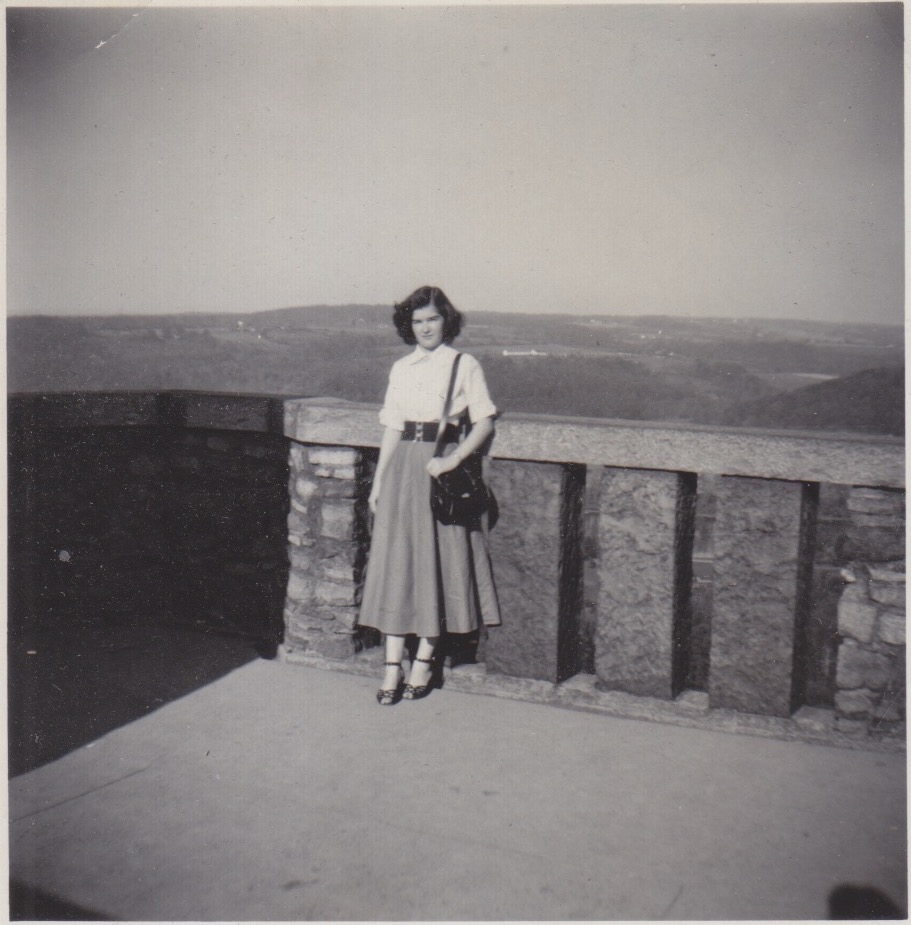
Doris Ruth Miller

Among northern Europeans (they aren’t all bad guys) the steps into November were a liminal time.  The restless dead might attempt to return and the living should pay their respects.  The church tried to address this through All Saints Day with its exalted music and ceremony.  Like an afterthought, it seems, All Souls was a time to remember those who are the majority.  The unrecognized, the non-famous, but often very good folk without whom sainthood would be impossible.  You see, I truly believe that most people try to live the best way they know how.  They struggle, yes, and they may have made bad decisions based on what they knew at the moment.  They were, after all, human.  The church set aside November 2 to pause and consider that death comes to all of us.  Winter is on the way.

Winter, in many ways, defines life.  It’s a time in which disaster comes to those who fail to plan ahead.  Food must be stored in advance since it will be scarce.  Nights will be long.  Even keeping warm will be a challenge.  And it can come at any time now.  Some years snowstorms come on Halloween.  And even if no snow falls we enter that fallow time when we’re forced to sit and wait.  It is nature’s way of saying, “Stop.  Reflect.”  Those already departed on All Souls are missed by those of us who remain.  We put on another layer, or perhaps turn up the thermostat, trying to distance ourselves from the chill.  We look to Thanksgiving, and Christmas soon to follow.  And those who perceive subtleties know that hope of spring begins early in February.  The souls who’ve already gone on know more than we, and the least we can do is remember them once a year on the holiday meant for all.


November Nightmares

Music videos weren’t really a thing then.  And “Welcome to my Nightmare” was theater as well as rock.  I knew a movie of it existed, but I only made an effort to see it as October was slipping through my grip.  I have a strange, one-sided history with Alice Cooper.  We listened to the radio back when we were kids and we all knew Cooper from “School’s Out,” an unofficial anthem of the seventies.  We didn’t have much money when I was growing up (some things never change), but I had a copy of the album Welcome to my Nightmare.  I couldn’t recollect how I’d got it until my brother clued me in.  We were at Jamesway just outside Franklin one Friday night.  My mother, frugal to the day of her death, saw that Alice Cooper’s new album had a song called “Steven” on it and she bought it for me.

Now Mom knew full well that my official name is “Steve” (she named me).  There’s no “n” in there anywhere.  Yet still, even as I knew this, I found that song spoke to me.  Like the Steven on the album, I was prone to nightmares.  And the sequence of “Years Ago” and “Steven” on that concept album never left me.  Mom would not have approved of the movie version—I found the misogynist parts difficult to watch myself—but it did answer a question I always had: how did he perform these songs in concert?  They seemed too big for that.  They weren’t the snippets I always assumed rock stars did.  (I never attended concerts, so what did I know?)  Alice Cooper is still the only rockstar I’ve ever seen in concert, but the theatrics were brought way down and his back probably ached like mine did after that event.

I’d been looking for a horror movie to finish out the month, you see.  I keep a list of movies that, apparently, are never free on Amazon Prime or Hulu.  It ended up taking nearly all the little time I allot myself for such indulgences to try to find something.  Then I remembered Alice.  It was raining outside and I had caught up on my emails for the moment.  This step into a yesteryear I never knew made me realize just how creative people can be.  We have to get someone to pay us for doing something, and if you can sing and strut, well, you might consider sharing your nightmares.  Something many of us have in abundance, even in November.


Halloween Spirituality

October, well September and October—actually June through October, took many unexpected twists this year.  I’ve had to lean heavily on Halloween spirituality to make it through.  That’s good because we haven’t had time to decorate for the holiday.  We haven’t had time to get out just to appreciate the leaves, to go to a farm for pumpkins, let alone carve any.  Or come up with a costume.  I couldn’t even get to the theater to see The Nun II, despite having written an article on the universe to which it belongs.  Halloween spirituality works in times of less-than-optimal circumstances.  Anyone who reads this blog more than once or twice knows that struggle is a fairly constant theme.  Halloween spirituality comes to those who need it, and it helps us to get through.  

With the death of my mother this month, I’ve been thinking a lot about family.  My family is where my spirituality began.  I’ve been haunted by the truth since I was a child.  I need to know what’s true.  It’s one of the few non-negotiables in my life.  Halloween is true because it’s honest.  We wear masks, but we do so all the time.  On Halloween we have the courage to admit it.  Some of us are scared little boys or girls inside, trying to find meaning in a world that makes no sense.  A world that is run by the ambitious and greedy—those who are powerful because others fear them (Halloween is honest, my friend)—and who make rules by which the rest of us must live.  Halloween says it’s all right to be scared.  Yes, the monsters are real.  And most of them would treat you far better than you might expect.  Trick or treat.

Halloween spirituality is about hope.  It’s a pivot point around which the year revolves.  I look forward to it each year once it has too swiftly passed.  In the slow change of progress, I hope that it will eventually be recognized as a national holiday.  I find the holidays a season of hope.  For me that season begins with Halloween.  From here it’s almost possible to see Thanksgiving and from there Christmas isn’t far off.  I save vacation days to be able to take a mini semester break—something in every teacher’s blood—that allows me to reboot.  Halloween spirituality is one that anticipates rest and quietness, celebration and reflection.  It’s a time when busyness must wait its turn.  When the dark is allowed to utter its peaceful sighs into a world where too much is happening all the time.  By the way, I decided on my Halloween costume: AI, disguised as a human being.


October’s Child

The thing about films is that there are so many of them, and they come into existence in so many ways.  Back when I was a kid, you learned about movies through the newspaper, or television or maybe radio ads.  Sometimes word of mouth, or, if you were lucky enough to see a film in a theater, through previews.  These days the internet has billions of pages and many streaming services and movies are produced faster than we can watch them.  All of which is to say Pyewacket, in my opinion, should be better known.  It’s an effective, thoughtful, and seasonal movie that caught me off guard.  It’s a Canadian independent film, not the product of a major studio, so it didn’t get the notice that massive advertising budgets provide.  I found it by scrolling on Amazon Prime.

Pyewacket is a teen angst movie (I wasn’t an angsty teenager—it came a little later for me).  Leah Reyes and her friends are into the occult.  Leah’s father has died and her mother’s having a difficult time coping.  She has decided to sell the house and move away.  Leah, who has a small circle of close friends, doesn’t want to move.  After mother and daughter are in the new house they fight, with her mother insulting Leah’s friends.  Leah goes into the woods and summons Pyewacket to kill her mother.  After this, mother and daughter make up and the tension builds.  Leah doesn’t want her to die but she’s set something in motion that she can’t control.  There are some really scary scenes in this movie, often without showing anything explicit.  In fact, views of Pyewacket are brief and indistinct, which really works.

This is an October movie.  Moody and evocative, it raises some very real questions.  Not all of them are resolved.  The occultist Leah consults informs her that Pyewacket is very deceptive and she can’t believe what she sees.  This leads to a tense resolution and somewhat abrupt ending.  It is very well done.  The point about deceptive spirits raises one of the truly potentially demonic facets of human society.  Deception throws truth off balance.  (Some of the more cynical politicians know and use this for their own ends, as we sadly know.)  Deception is dangerous and that seems to be almost the moral of this movie.  There are no villains here, but extreme actions can’t be taken back.  If you’re in the right mood, and the dark is just right, this is the kind of movie that delivers.  And I only found it by chance.


With Spiders

It gets October right, but Cobweb leaves quite a few unanswered questions.  One of the queries I always bring to movies is “where did it happen?”.  This isn’t, of course, the same thing as where it’s filmed.  Cobweb was filmed in Bulgaria—that certainly gives it an atmospheric feel.  It’s set, however, somewhere in the United States.  License plates aren’t shown long enough to really help, but a refrigerator magnet in the shape of Pennsylvania may be a hint.  In any case, the story’s a bit of a stretch, and it has some continuity issues, but I may come back to it in a future October.  The acting is pretty good, but the direction could be tighter.  So what’s it all about?  (There will be spoilers.)

A young boy, Peter, is bullied at school.  His parents are odd and they never believe Peter when he hears noises at night.  Or so they say.  As with much horror, things are not what they seem.  Peter’s parents had a somewhat Poesque solution to what turns out to be Peter’s older sister.  Born deformed, they made a pit in the basement to house her.  She gets out into the walls of the house, and talks to Peter at night.  We all know you should never listen to creepy voices in the dark, but she tells her brother he should defend himself from bullies.  And when he gets expelled from school for doing so, she suggests he give his parents the “We Have Always Lived in the Castle” treatment.  In support of this, she points out where he can find the body his parents buried in the back yard.  Now, there are many pumpkin-sized holes in the plot, but for a movie embodying October, I’m willing to let it pass.  Spooky rather than outright scary, the film does have some fairly tense moments.

Rescue comes at the hands of a teacher—and this is always a heartening development.  The name, “Miss Devine,” awoke hopes that maybe some traditional religious elements might appear, but no.  It seems to have been from the lineage of Miss Honey from Matilda.  She does read Poe’s “The Raven” to her class, though.  Overall she’s a teacher who has her students’ best interests at heart, particularly those who are sad.  The message is a little more difficult to discern.  Other than Peter and Miss Devine, pretty much everybody else is unlikeable.  Parents are murderers, sister a manipulative monster (even if made so by said parents), and all the other kids pick on Peter.  A good October effort, Cobweb is a story that needs some direction.


Halloween Tale

Halloween movies are hit or miss. Anthology movies are the same. My interest in holiday horror keeps me coming back for more nevertheless. Tales of Halloween has been fairly well reviewed over the years. As intimated, it’s an anthology film. There are ten separate stories squeezed in, leading to an average of nine minutes per episode. To make matters more interesting, each story has a different director. The end result is kind of like a pillowcase after trick-or-treating, you get some good stuff and some you’d rather not have received. The movie’s also a comedy horror so you’re meant to laugh throughout. Kind of like Halloween itself, I suppose. At least for some people. The movie didn’t do anything for me. There were no takeaways, and nothing really memorable.

Halloween is an unusual holiday.  For one thing, the way it’s celebrated is fairly recent.  Childhood memories of costumes and trick-or-treating and ghosts and goblins are all pretty new.  Well, maybe not the ghosts.  For some of us it’s a spiritual time.  A reflective season.  I’m not sure how anybody can not try to figure out what life’s all about.  Some of us have steered our lives (in as far as we actually steer them) in the direction of trying to figure these things out.  For me, Halloween is a time of spiritual growth.  Not exactly fun, but enjoyable nevertheless.  I know it’s different for different people.  Some people live for the fun and the partying.  It’s like that pillowcase all over again.  There is, at least in my experience, no perfect Halloween movie.  I won’t stop trying to find it, however.

John Carpenter’s Halloween is the movie that really kickstarted films based on this particular holiday.  Although I’m no fan of slashers, I do enjoy this one from time to time.  It’s a well-made movie, moody like autumn.  In Tales of Halloween, the background movie in two segments is Night of the Living Dead, a classic by any standards.  Carnival of Souls is shown in another episode.  Horror is a notoriously self-referential genre.  Last year I watched Trick ‘r Treat, another such anthology film.  It likewise made little impact.  On me, anyway.  Perhaps Halloween isn’t about horror after all.  It’s a time for reflection.  And pretending.  Since we all pretend most of the time it is perhaps the most natural of holidays.  Pretense on other holidays, although it happens, is considered in bad taste.  At least on Halloween we can be honest about it.  Some day someone may actually capture that in a movie.


Witching Season

I can’t be sure I understood White Is for Witching, but Helen Oyeyemi’s novel grew on me once I started to piece together what was happening.  A long sit in a waiting room finally got me hooked.  This is an odd story that’s quite a bit about atmosphere.  Miranda Silver and her twin brother Eliot, live in the Silver family house (through her deceased mother’s side) with their father.  They run it as a bed and breakfast, but Miranda’s ill.  She suffers from pica—a disorder where a person eats indigestible items rather than food.  Her mother, who died young, and her mother, and grandmother, continue on in the house, but not as ghosts proper.  They are more a controlling presence guiding the way for the lost daughter who, it seems, is destined to join them.

Miranda’s not an unreliable narrator because she’s never the narrator.  Sometimes it’s her brother, other times it’s her girlfriend, and other times it’s the house itself.  Oyeyemi’s writing is compelling, and she’s great when she takes the narrative thread and runs with it.  The fault is entirely mine, of course, but I prefer a straightforward story where I’m not confused from the start.  I recently put a book down because I was confounded about the issues raised.  I’m flummoxed enough by life itself so that when I want to sit down and read I prefer something that makes sense.  Or that I can follow.  The novel has a wonderful gothic atmosphere and the tragic young woman definitely has shades of Poe.

My compulsion to read appropriate books in October led me to White Is for Witching.  It’s set in England, however, and having lived in the United Kingdom for three years I know autumn there is not the same as fall in North America.  That’s not the fault of the story, of course.  The tale is textured and complex, exploring avenues of madness and isolation (it’s set in Dover and Cambridge).  The part where Miranda falls in love with Ore, at college, becomes quite gripping.  There’s some confusion as to why her twin brother acts as he does, with one of the narrators suggesting that he’s unreliable.  There are speculative elements but no ghosts seen clearly.  And race is obviously an issue.  It’s not the central issue (beyond the author perhaps suggesting something by the title).  There’s a lot going on here.  Normally I don’t read synopses before reading fiction, but this is a case where that might be helpful before indulging in this moody, thoughtful tale.