Not Grant

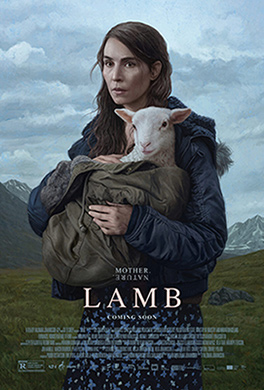
Grant Wood’s painting, “American Gothic,” is undoubtedly his most famous work.  The image is so evocative and suggestive that countless interpretations have been offered for it.  The idea of debilitating isolation suggests itself.  An unhappy self-reliance that has taken its toll on an aging couple (some say the woman is his daughter) often comes to mind.  For some it suggests a movie.  Normally I like horror films from the seventies and eighties.  There’s almost an innocence to them that gets lost in the new millennium.  On a rainy weekend afternoon when I couldn’t be mowing the lawn I found American Gothic on Amazon Prime and it had received four stars and even IMDb showed it as better than average.  The longer I watched the more I was inching toward “bad movie” territory, but I had to see how it ended.

Six young people, four of whom are distinctly unlikeable, have plane trouble and get stranded on a lonely island in the Pacific northwest.  They discover a house furnished from the twenties and it turns out there’s an older couple there who don’t really cotton onto strangers.  As the plot unfolds it turns out they have three adult children who think they’re still adolescents.  And—this is the good part—they are a very religious family (in part.  Again, as often happens in such films, the writers really don’t understand religion).  In any case, the predictable killing off of the kids starts to happen when they continue to be rude and insult the family.  Since we’re in slasher territory here, there’s a final girl—one of the two sympathetic women—who ultimately takes over the house.

Part of the problem with the film is the utter paranoia with which it treats mental illness.  The family clearly has problems and, in a way typical for the genre, they turn toward killing.  Ironically, Pa, when he finds his family has been killed by the one mentally ill visitor (everyone with psychological problems in this movie turns to murder), renounces God and sells himself to Satan.  Interestingly, he doesn’t survive long enough to do anything about it.  Reading about this movie after watching it I came across a new word: hixploitation.  Exploitation movies are familiar to anyone who watches much in this genre, but I’d never considered that Deliverance and company exploit “hicks.”  It’s all about how others look at you.  And, as a movie made in Canada and the UK, it shows us what others see when they look at us.  There’s some ground to explore here in a sequel to Holy Horror. 


An EAP

It may be superstitious, but one of the best ways to assure something else going wrong is to say, “I need something to go right just now.”  This year, since June, has been that way.  In the midst of dealing with everything, small moments of joy slip away—moments we want to hold onto during trying times.  One of the touristy things we did in Charleston—or Sullivan’s Island, more precisely—was to visit Poe’s Tavern.  We knew we had to grab a bite to eat there since Charleston is one of the many places to lay claim to America’s iconic writer.  Poe was stationed at Fort Moultrie, perhaps a mile from the modern tavern, in his short-lived military days.  His story “The Gold Bug” is set on the island, and it’s rumored “Annabel Lee” was about a girl he met in Charleston.  We’d wandered around the fort and were shortly to meet family for the gathering that drew us here.  But first we went to see Poe.

Poe himself never ate here—the establishment only dates back to 2003 (opened April 24)—but it participates in the mythology of Edgar Allan Poe.  We have followed Poe—who lived and died as a writer—along the east coast.  My family has visited his birthplace in Boston, his home in Philadelphia, his college dorm room in Charlottesville, his grave in Baltimore, and his Sullivan’s Island home at Fort Moultrie.  There are many more places to visit, and although much of this is mythology, that makes it no less real.

Poe is a controversial figure.  Both the anonymous peer reviewer and a named reviewer objected to my use of Poe in Nightmares with the Bible.  What they perhaps misunderstand is that books are deeply personal effects.  Something few understood about even my academic books is that they were intended as somewhat artistic pieces.  Holy Horror and Nightmares with the Bible are bookends, carefully crafted to go together (and both priced beyond the reach of regular readers, and not marketed at all).  Poe may well be the most recognizable American writer, largely because of an image that has taken hold.  The Poe Tavern has Poe-themed artwork throughout and it participates in that image.  It was crowded already around 4 p.m. when we stopped in for a nosh on a Sunday afternoon in October.  Such drawing power speaks to the mystique of Poe all these many years after his short life and strange death.  And of the fascination he holds for those of us who wish to write, driven by the same bug.


What Message?

The search for autumnal horror movies is a never-ending one.  Can it really be that auteurs just don’t—drenched in the California sun—get that October feeling?  There’s something in the turning of the leaves and the appearance of pumpkins that changes everything.  And it works every year.  So it was that I thought of The Messengers.  I’d watched this years ago but found it somewhat unremarkable.  I seemed to recollect that, being based on a farm, it was autumnal in character, so I decided to try it again.  I remembered once more why I hadn’t watched it for years.  It’s a serviceable movie, but it is really set in summer (short sleeves the whole way through) and although August farm visits put me in the fall mood, this one is incoherent enough to prevent that feeling from catching on.

Jess is a girl with a past.  Driving under the influence, in Chicago, she was in a crash that rendered her baby brother mute.  In response her parents decide to move to a sunflower farm in North Dakota.  There the crows (actually ravens) attack them.  A stranger arrives and offers to help out.  Of course the house is haunted because of some past murders, but when the crows attack the hired help, it spurs him into a relapse—he’d lived here before and had killed his family, and so he decides to kill this new one too.  Being PG-13, they survive and the house swallows up the murderer from the past.  It’s never quite clear what the crows (the presumed messengers) really want to convey.  Are they trying to warn the family?  Are they trying to awake a killer’s memory?  What do they want?

This is an early Kristen Stewart movie—she’ll go on to more sophisticated horror films.  William B. Davis, with only cameo appearances, offers echoes of The X-Files.  Casting the generally congenial John Corbett as a killer is a bit of a stretch, however.  More intriguing, in this more global world, are the directors—the Pang brothers.  Known for their east Asian movies, including award-winning horror, they took on this American-themed, shot in Canada, project.  It had the backing of a few production companies and a reasonable budget.  Still, it struggles to be memorable.  I seem to recall that the prequel might’ve been a bit better.  But was it autumn-based?  I can’t recall and it’s that time of year when seeing falling leaves and a pumpkin or two make for essential viewing.


Don’t Stare

Having people just outside your window all day is a bit unnerving.  We don’t have central air and I keep my windows open when possible in the summer.  My office overlooks the porch roof but the porch was converted into two interior rooms over the years.  (The house was build about 1890.)  With the extreme weather we’ve been getting (rain storms that routinely dump three or four inches of rain in a short period, especially), leaks have developed.  As of this summer, after five years of ownership, we finally have a completely new roof—we had to have it done in parts because it’s not like we have professors’ salaries.  That meant that roofers were outside my office window all day back in August.  Now this is weird.  I was literally six feet away from some of them some of the time, sitting at my laptop, trying not to watch them instead of working.  The roofers, meanwhile, completely ignored me.  Never once when I glanced up did I see any of them looking in the window.

By the end of the day I was freaked out.  You see, as much as I like performing (as any good teacher does), I don’t like being looked at while I’m working at a desk.  I deeply dislike desk jobs and my posture throughout the day becomes, well, idiosyncratic.  Being forced to act as if I were in a sea of cubicles again was difficult.  Of course, I work longer hours now than I did as a commuter (one of the reasons, I expect, many employers don’t insist on people coming back to the office).  Knowing that someone could be watching you, even if they’re not, makes me uncomfortable.  

I considered how it must be for a zoo animal.  Yes, they’re given some privacy, but it’s often limited.  Animals don’t like to be stared at.  (Despite what materialist tell us, we all know what that  feels like and it makes us fidgety.)  When I’m out jogging I find that if I don’t look directly at them, I can get pretty close to many animals.  If you make eye contact, however, they more quickly scurry away.  Those in zoos must eventually become inured to the staring over time, or at least come to realize that nobody’s going to hurt them.  Still, given their druthers, I expect most of them would rather be in the wild where they can do what they do, no matter how boring, without being watched.  And no roofs over their heads at all.


Something Wicked

There comes a morning each year, pre-dawn, that it happens.  I crawl out of bed and things feel slightly chilly.  The furnace hasn’t been turned on yet, and ever sensitive to cold, I put on long sleeves and slippers to do my morning writing before the sun.  I start getting a powerful hankering to watch my autumn movies.  This year when that happened, in September, I finally watched Something Wicked this Way Comes.  Now, Disney isn’t a studio known for its horror films.  Over the years, however, they’ve produced some family-friendly efforts toward the scary end of the spectrum.  I tried to make the case in Holy Horror (and a list on IMDb agrees with me) that Pirates of the Caribbean falls into that gentle horror category.  I’ve read established writers on horror claim that The Watcher in the Woods was the movie that frightened them most.  I don’t think Something Wicked falls into that category, but I can say I liked it better than the novel.

And that’s saying something, because it was written by Ray Bradbury.  Bradbury’s stories were an integral part of my childhood.  In fact, much of my fiction writing is modeled on his work.  I didn’t really care for the novel Something Wicked this Way Comes, which I read last year.  The film is an improvement.  And it had a tortured way to the silver screen.  It began as a short story.  Bradbury himself adapted it into a screenplay anticipating a role for Gene Kelley.  This was in 1958.  When that didn’t pan out, he wrote it as a novel.  Filmmakers began to show an interest in the early seventies, but the movie didn’t come out until 1983, after Disney bought the rights and took over production.  The screenplay is mostly Bradbury and the soundtrack rips off Star Wars more than once.

Bradbury could get a little too nostalgic about boyhood.  His yesteryears seem far too innocent to me.  Although, having a few scenes where Jim shows curiosity about sex was a bit racy for Disney, I should think.  Jonathan Pryce does a fine job as Dark, and the mood isn’t bad for family-friendly fare.  I was never much of one for carnivals.  I can’t do rides and it’s easy to see through the games you can’t win and even if you do your prize is cheap.  Other entertainments always appealed to me more.  Still, the film sets a mood, and that’s generally what I’m after when the mornings begin to feel chilly and I’m looking off into another winter.


Frightening Legacy

Like The Wicker Man, The Exorcist also turns fifty this December.  I was caught up in this half-century mania and so I got ahold of Nat Segaloff’s The Exorcist Legacy: 50 Years of Fear right away.  The reading was disrupted by life events, but I’d been enjoying it, as time permitted.  Written by a movie insider (as opposed to an ex-academic wannabe), this is a fairly full treatment of the film.  It’s actually not unlike what I tried to do with Nightmares with the Bible, but it is yet another testimony of the importance of The Exorcist to our understanding of demons.  Although one book can’t really be one-stop shopping for any worthwhile movie (there are plenty of books out there on the subject), this one is well worth reading.  For those who enjoy learning about cultural phenomena with a bit of horror tossed in, this is a very good introduction.

One of the things I’ve learned as I’ve tried to break into film reading is that a lot more goes on in making a film than most of us imagine.  And when we see a movie we miss an awful lot.  I’m no shill for Hollywood, but watching a movie multiple times brings out things that writers, directors, and producers didn’t even notice.  Think of the Bible, for comparison.  Readers two thousand years later are still finding new things to say about it.  The Exorcist has influenced religious outlooks in extremely important ways.  Our modern ideas of demons and possession largely go back to this film.  Details may change over time, but even the church has had to respond to it, and actual exorcists reference it.  The Bible says little about demons (again, Nightmares), so we have to pick such knowledge up from elsewhere.

The one part I found somewhat thin was, not surprisingly, parts of the final chapter, “The Mystery of Faith.”  It tends to show when a writer really knows religion.  William Peter Blatty, who wrote the novel and screenplay (the latter at least partially), knew Catholicism cold.  One of the things I’ve been yammering on about for years is that understanding religion enhances our understanding of horror movies.  I’m certain that the connection goes even deeper than that, but books written on horror mention religion often in amateur ways.  If we want to get at what’s really going on here, it’s going to be important to listen to those who understand religion as well.  None of that detracts from this fascinating book that will throw new light into shadowed corners.


Small Bits

A doctorate in the humanities involves learning as much as possible about a limited subject and being able to demonstrate that you know it intimately.  Interestingly, unless you continue the rest of your life in that vein, you’ll realize that you know things only in bits.  Let me use some personal examples, since they’re the kind I know best.  One of my favorite musical artists is Alice Cooper.  To this day he’s the only secular rock act I’ve seen in concert.  I thought I knew Alice, but Spotify taught me that I knew only a very small bit of his oeuvre.  My sense of him as favorite was based on a fragment of what he’s done.  The same applies to fictional characters.  I was a young fan of Barnabas Collins without having watched nearly all Dark Shadows episodes (and neither of the two series related movies), and having read only a handful of the novelizations.  Still, I felt I knew Barnabas.  I suspect I could go the rest of the way through the alphabet with no difficulty.

As facetious as it may be, the “million hour rule” has a grain of truth in it.  That axiom states that to be a true expert in something you have to spend a million hours doing it.  Simple mathematics reveals that means well over a century doing nothing but one thing would be required to fulfill the time.  In other words, no-one is a true master of anything.  We’re all practitioners.  I feel a little better about my recognition that my knowledge, such as it is, is based on small pieces.  What I write in my books are simply entries into conversations started by others.  This is true even if they remain unread.

I’m always encouraged by the neophyte that sets the experts back on their heels.  It’s beautiful to watch knowledge progress that way.  Our institutions are important, but they all become prisons when we suppose they represent the only way to do it.  Life has so many fascinating elements that the truly curious can’t possibly be an expert in them all.  The big picture benefits from stepping back once in a while and considering the small bits that make up the whole.  I can’t claim to be an expert on this, and my knowledge—such as it is—only comes in small bits.  But small bits, when there are enough of them, add up.  The whole picture, however, will never be completed by those of us with only small bits of it.

Photo by Hans-Peter Gauster on Unsplash

An October Movie

October means different things to different people.  I know what it feels like to me and I suspect, and hope, that there are others who experience it like I do.  When I search for October movies I’m looking for a kind of happy melancholy unique to the season, but others seem to think movies about witches capture the feel.  So it was that I came to watch Practical Magic, which was recommended on more than one October movie list.  It’s not a horror film, in fact it’s a rom-com and it doesn’t try to frighten anyone, although there is one tense scene.  Like many movies about modern-day witches, it has a good message of female empowerment.  I’m glad I watched it for that reason, and the story isn’t bad.  Set on an island community, presumably in Massachusetts, but shot in California, it’s not exactly falling leaves and pumpkins, though.

Witches seem to be the preferred monsters for feminine endorsement.  Most people, I suspect, wish they had magical powers.  We all want things to go our way and would like to manipulate them in that direction.  But there’s something more to it.  It’s tapping into an ultimate power—something that can’t be challenged.  Practical Magic, although not always in a serious mood, does portray the struggles witches have against occult powers.  The story is of the Owens family, which have been witches since the pilgrims landed.  They suffer under a curse dooming the men with whom they fall in love.  Not all the women are cut out for such a life.  So it is that Gillian and Sally set out to break the curse, each in their own way.

Other occult powers are at work, however.  One is clearly the curse itself and another seems to be an undead boyfriend who eventually possesses Gillian.  The women of the community have to come together to exorcise this entity, and that finally leads to communal acceptance of witches.  A major studio production with a reasonable budget and star power, it really didn’t do well at the box office.  Barbie seems to have struck a feminist chord that Practical Magic was reaching for, but the late nineties were a time when women’s power seemed to be starting to secure itself.  I noticed that, when looking for the movie on streaming services, it’s now having a limited theatrical run—it’s October, after all.  This may not be my October movie, but it has a good message that still needs to be learned.


Final Thoughts

You feel kind of special running stop signs and red lights.  I’ve never driven in a funeral cortege before but this one is somehow taking place on an obligingly rainy October afternoon.  Although I was in that kind of emotional shock that you feel at the death of a close family member (it isn’t my first), I couldn’t help but consider all those behind the scenes who work in the death industry.  From the mortician at the Gardinier-Warren Funeral Home—where my grandmother’s funeral was also held—to the undertaker getting soaked in the chilly rain, everyone was friendly and kind.  I also reflected that watching horror movies is homework in a world where death is inevitable.  As a child I already knew about death, and although I’m not afraid to die, I’m not eager to have that particular experience just yet.

Horror movies are all about learning to cope.  Not so different from the book of Job, they’re reflections on why “the good life” doesn’t continue as it sometimes does for various stretches of a human life.  And as we age, death more and more naturally comes to mind.  I’ve written before about the therapeutic aspect of my odd avocation.  One of the realities of growing up religious is that my mother—may she rest in peace—taught me early on that this would be my bodily fate.  I found it disturbing seeing my grandmother in her casket.  I remember distinctly Mom telling me, “this is just her shell,” that her soul had moved on.  That didn’t prevent nightmares of that shell rising and walking again.  Is it any wonder I grew up watching horror films?

Reflecting afterwards with my brothers on our physical ailments—we aren’t young any more—my thoughts wandered back from time to time to horror movies that had made this just a little easier for me.  Life is full of opportunities to do our homework.  As I grew up reading the Bible and watching horror, I didn’t think of it as studying, but it was.  Many kids with whom I went to high school have died over the years.  I tend to look at the alumni magazine necrologies even as medical science improves our chances of surviving some of nature’s more dreaded diseases.  Life comes with no guarantees and horror films reinforce that it’s not a bad idea to think of some of these things ahead of time.  Afterwards, at one of my mother’s favorite local overlooks, I reflected on how I have a lot yet to process.  Homework never ends.


Hotelling

Perhaps I’m just sleep-deprived, but staying in a hotel is a collective experience.  It’s a place where communal consciousness should run high.  You’re stacked (in many cases) on top of and/or beside strangers.  And strangers have different habits.  Back in my hometown of Franklin for my mother’s funeral, there aren’t many options for accommodation.  Her last years in this region were spent in the small “suburb” of Oil City called Seneca.  An ambitious Holiday Inn Express visionary put a not-exactly-cheap establishment in this economically depressed area.  It’s generally a pretty comfortable place to stay.  I am, however, an early riser.  (I know this can’t be easy on my family since I go to bed early and that means televisions have to be kept low after 8 p.m. I’m part of the problem.)  As I say, it’s a collective experience.  I’m constitutionally incapable of sleeping in, so late nights lead to sleep-deprived days.

Around 1:30 new upstairs neighbors checked in.  Walker, Texas stranger types.  Heavy-footed with a penchant for running.  Their arrival awoke me at a dangerous hour since any time after midnight my body says, “You’ve had a few hours’ sleep, and dawn’s not that far off.”  As I groggily tried to remember relaxation techniques, my mind kept getting sucked back to our New Jersey apartment.  We rented the first floor of a house and one set of upstairs neighbors had a son who would run back and forth the length of the apartment, shaking all the light fixtures, knocking down plaster, and breaking concentration.  And sleep.  One particularly memorable work night, said urchin was leaping off a bed and running at about the same time as our late visitor last night.  The husband had a police record but we had to call the landlord for an intervention (I had to get up at 3:00 to be ready for my early bus).

When staying in a hotel, we’re living a model of life in community.  I think of this as a parable.  Societies thrive only when everyone considers the effects of their actions on others.  Arriving at a hotel after a long drive, kids are full of energy (I was, believe it or not, once one myself).  Still, if children aren’t taught that strangers are sleeping below, as adults will they ever internalize the message?  Or maybe it’s simply the trauma of those disturbed and frustrating years of constantly pounding feet above my head that have come back to me at an inopportune 2 a.m.  I have a funeral later today, but perhaps I’m just sleep deprived.

Who might be staying upstairs?

Horror Therapy

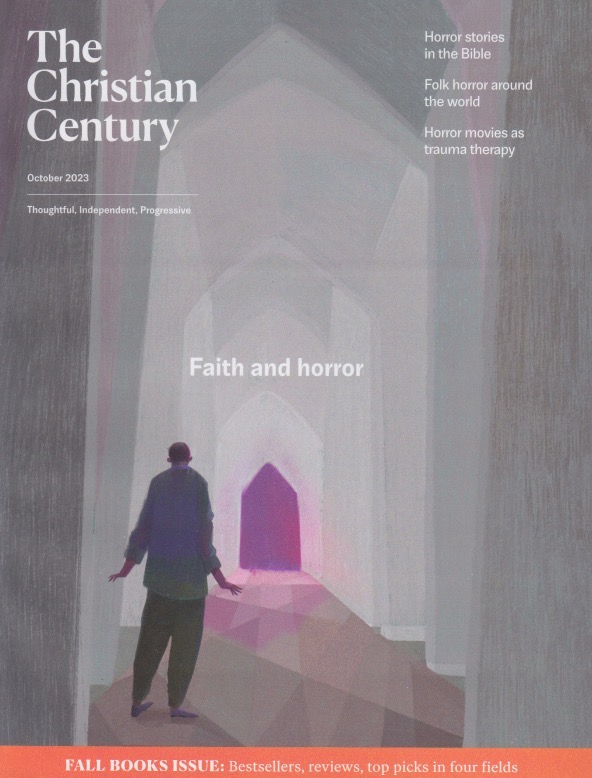
It’s Friday the 13th.  Like Barbra and Johnny I’m driving to rural western Pennsylvania to visit a cemetery.  It must be October.  I’m not a magazine reader (this has probably hampered my development as a writer [I prefer books]), but the October issue of The Christian Century is devoted to religion and horror.  This morning I watched an interview with Jessica Mesman on her article on horror as therapy.  In it she discusses her mother’s death.  Since we have this in common, I was intrigued.  Mesman states that studies substantiate that watching horror functions as therapy for people with PTSD.  It has been suggested to me more than once that my career malfunction at Nashotah House led to PTSD.  It may be no coincidence, then, that I started watching horror after that happened.  When The Incarcerated Christian podcast was still going, I was interviewed three times and the topic was, broadly, how horror acts as therapy.

Until today I’ve had to work daily and then make arrangements for an unplanned trip to celebrate my mother’s life as I could.  I’ve never met Jessica Mesman, but I sense that she would understand what I’m going through.  As I grapple with grief, loss, and relief (my mother was ready to die, but I had been unable to see her for a few years because of the pandemic and other circumstances) what I feel I really need is to watch a horror movie or two.  I have found—and 2023 has been a traumatic year for me—that when I’m feeling overwrought, taking ninety minutes to watch a horror film can get me back on track.  It helps me cope.

None of this is intended as any disrespect for my mother, whom I love deeply.  Although she didn’t read my books, she knew I watched monster movies as a kid.  She occasionally grew annoyed with me when such things made me too clingy—she had two other sons and her own dying mother in our home and she was trying to keep it together with my father gone.  Looking at photos of my young self, I wonder if that early loss of a parent translated to a kind of childhood PTSD.  Once I’d successfully (?) made it to adulthood, Mom told me—“you were the one I worried about; you seemed to have difficulty adjusting.”  I sought therapy in religion.  I’ve dedicated my life to it.  Until it too became a source of grief, horror, and pain.  As I prepare to drive to her funeral, I’m pretty sure that Mom understands.


Personal Psalms

I haven’t heard it yet, but a New York Times article encourages me to.  Paul Simon has joined the ranks of those aging music stars to record albums presaging their deaths.  The article was about Simon’s latest album, Seven Psalms.  And, yes, the religious reference is pretty hard to miss.  Like most kids from the sixties, I grew up hearing Simon and Garfunkel on the radio.  We didn’t have money for albums, but I always liked their songs when I heard them.  After their breakup I really didn’t pay much attention to Simon until Graceland, and since then I’ve listened with half an ear.  You see, I’m wired in such a way that I can’t listen to music while I write.  Or read.  My mind grips one thing at a time.  That means I don’t listen to background music much.

That doesn’t mean I don’t appreciate music.  I do.  Almost religiously so.  On occasion I come back to Simon, with or without Garfunkel.  I posted about his song “Werewolf” some years back.  I eventually listened to that album, and I’m not sure I got it.  Artists are that way.  Some pieces you like, others are just okay.  I am curious about Seven Psalms, though.  I’ve posted about David Bowie’s Blackstar, Leonard Cohen’s You Want It Darker (both discussed in the Times article), and Bruce Springsteen’s Letter to You.  No longer young myself—these guys were young when I was a kid—hearing them reflect on death is powerful, and, if the mood is right, peaceful.  We fear death because it’s unknown.  And also, we all know, deep down, that we’re flawed.

Psalms aren’t necessarily biblical, of course.  Sinead O’Connor’s “Take Me to Church” is a psalm.  So is “Sounds of Silence.”  Artists have been writing psalms for as long as they’ve been writing songs.  The biblical psalms are among the most quoted bits of literature in the western world.  They were likely originally sung as well, but we can only guess what they may have sounded like.  We know that across the world people turn to song to express strong emotion.  I’m not sure what Paul Simon’s Seven Psalms might be, but it seems that thoughts of mortality go naturally enough with emotion.  I don’t write much about music because it’s so deeply personal.  I try to be intellectually honest on this blog, but if you want to talk music you really have to get to know me first.  Then I’ll reveal my psalms.


Mom

Mom

I just became an orphan.  I tend not to write about other people without their permission, but I have a few words to say about Doris Ruth Miller.  First of all, she was a saint.  I’m often accused of putting the needs of others before my own, and this is something I learned from Mom.  She set me on my lifelong course of reading the Bible, determining, in some inexplicable way, what I call a career.  Mom was born April 7, 1935 in New Jersey.  She was the youngest, and last surviving, of five siblings, and the only girl.  When I reached that age when children (as adults) get curious about their parents, I asked what town she was born in.  By that stage she couldn’t recall, but at one point she told me Cherry Hill, and at another, Asbury Park.  She never finished high school and never had any job training.  But she always believed.  She was faith personified.

She married to get away from a difficult relationship with her own mother.  My father, who died twenty years ago, was an alcoholic.  They had three sons together.  Mom, very aware of Dad’s condition, didn’t believe in divorce and stayed with him until she no longer felt safe doing so.  Not for herself, but for her sons.  Her life revolved around her children.  She eventually remarried and her final son was born.  This marriage involved a move to Rouseville, Pennsylvania—I’ve written about it before—my last childhood home.  Neither of her marriages were happy ones, but she was determined about two things: maintaining her faith, and caring for her children.  She believed unquestioningly and the only book I ever saw her read for herself was the Bible.

I only found out over the weekend that she was in rapid decline.  Circumstances (medical and financial) had kept us away for far longer than I would’ve liked or hoped.  I talked to her on the phone nearly every other day and told her with joy just about a month ago that we had finally got a car that would enable a visit.  We were planning on spending Thanksgiving with her.  The universe, which operates on its own timetable, had different plans.  Mom was a remarkable woman.  She was not afraid of death and she embodied these famous words from Paul of Tarsus: “O death, where is thy sting? O grave, where is thy victory?”  Mom lived eighty-eight difficult years.  She dedicated her life to others and lived the Gospel by example.  I miss her terribly, but I have no doubts about her being among the saints.  Thanks for life, Mom, and for showing how to love unconditionally.


Loco Locusts

It really used to bother me.  Other kids in kindergarten or first grade called them “crabs.”  The picture, however, clearly showed a lobster.  Quiet and introverted, at least I knew how to tell apart basic body plans.  It’s a weakness I’ve always had—the need to correctly identify.  This didn’t come from my family, who really seem not to be bothered about such things.  It came from somewhere deep inside.  A lobster is not a crab.  The same applied to toads and frogs, or any number of other fine distinctions.  Now I confess that I try to stay away from Nextdoor.com.  It seems that no matter what anyone writes the comments immediately turn political and belligerent.  Such is our world.  But when someone can’t identify an animal, that’s clickbait to me.  I just have to take a peek.

A couple of months back a woman posted a photo of a cicada.  I didn’t chime in because at least thirty other people already had.  The thing was, several locals said it was a locust.  Even after previous commenters had sent helpful links showing the difference between a cicada and a locust.  Probably it comes from many years of teaching biblical studies, but I couldn’t believe anyone would misidentify a locust.  Mind you, when I taught the book of Joel we talked quite a bit about locusts—they are amazing creatures.  In a pre-market economy, they were also deadly.  They don’t attack people like they do in horror films, but they will eat every green leaf for as far as the eye can see.  They travel in huge swarms, capable of blocking out the sun when they fly overhead.  Cicadas are harmless.  Noisy but harmless.

Cicada. Image credit: R. E. Snodgrass, public domain, vía Wikimedia Commons

How someone can live in the world and not care to know the other things that surround them I cannot fathom.  I can understand mistaking similar creatures—some animal mimics can be incredibly effective.  A locust, however, looks nothing like a cicada.  They’re both insects, yes, and they both have wings.  The similarity stops there.  Life is complicated, I know.  There’s a lot to learn.  As a writer one of the things constantly using up my time is trying to find the right name for a thing I know by sight but have never heard called by its noun.  With the internet, identification of critters has become somewhat easier.  But only somewhat.  You have to know where to start.  I still have the well-thumbed animal identification books from my childhood.  Outdated, yes.  Coming apart at the spine?  Definitely.  Full of childhood memories of learning what things are?  Of course.


Creeping Again

The morality of Creepshow 2 is pretty straightforward.  Of course, this is early Stephen King.  Sometimes it’s good to keep things simple.  Horror anthologies sometimes work and sometimes they don’t.  This one falls somewhere in the middle.  Of course, George Romario didn’t direct, although he wrote the screenplay.  And King didn’t write the screenplay, as in the first installment, but he shows up for a bit part.  Campy and funny, as the first film established, there are a few scary moments, but you get the sense that the bad guys deserve what they get.  There are only three regular segments, apart from the cartoon framing, each with a “do something bad, get punished” theme.  “Old Chief Wood’nhead” seems to start out insensitively to First Nations people, but it features an avenging statue “cigar store Indian” whole doles out justice.  It’s the most disturbing of the three segments since the robbers show no human compassion at all.  Of course, the chief gets them.

“The Raft” features less obviously bad protagonists.  Four teens drive out to an isolated lake with a swimming platform (the eponymous raft) in the center.  They all get high on their way there, and it’s clear the guys want to get their girls to the raft to have sex with them.  A mysterious floating blob surrounds the raft and eats them one by one.  You start to think Randy might survive for being good but when left alone with Laverne (his best friend’s girl) he begins to seduce her while she’s asleep.  None of them survive.  The last segment, “The Hitch-hiker,” follows a woman who’s having an affair.  Late getting home, she hits a, well, hitch-hiker and ends up as his victim.

The Creepshow franchise is, of course, comedy horror.  This film does end with a moralizing message that comic books don’t lead to juvenile delinquency, but rather other factors do.  This feels like an important message in days of increasing efforts to ban books.  Easy solutions by unthinking adults never solve the “problems” they hope to address.  Often what it comes down to is an aesthetic difference rather than true morality.  Morals don’t fit across the board, especially if you don’t think through your own motivations.  Of course, it’s nice to have a movie where such deep thinking isn’t really required.  Kids being eaten alive for being kids may be a bit harsh, but the others in this pleasant little diversion really just get what’s coming to them, and right soon.