Who’s It For?

I suspect editors see this all the time.  I also suspect that I’ve unknowingly participated in it as well.  If you’re a book writer, you have to be clear of your readership.  As an academic editor I receive many proposals for books that either cry for popular treatment, but are too academic, or books that are written for laity on topics of interest only to academics.  A writing life is a struggle to find that correct balance.  Particularly for your typical academic.  You see, doctoral programs don’t generally include instruction on how publishing works.  Or in writing.  It’s assumed that any string of 100,000 words from a credentialed expert is worth publishing.  Worse, as Steven Pinker has pointed out, academics are rewarded for writing poorly.  No wonder people are confused!

Lately I’ve been on a kick about people not paying attention.  It is important to observe.  When writing a book it’s important to gauge who might want to read your potential book.  Indeed, this is something seldom asked early enough in the process.  Who is this book for?  Will they want to read it?  You see, we have this lone ranger attitude to book writing.  In actual fact, most books you see in bookstores are the clear result of teamwork.  Yes, authors do most of the writing.  In many books editors do quite a bit of the fixing of the writing.  Agents, marketers, publicists, sales reps—there are a host of people behind successful books.  It’s easy to think, while writing, that your book will be a bestseller, no matter how academic.  That you will see it in Barnes and Noble and point it out, ever so casually, to your friends.  That it will sell for less than $20.

It’s important to pay attention to what other people think.  We’re all busy, I know.  We have our own lives to live and plans to enact.  Who has time to bother thinking about who might read their book?  Obviously, other specialists such as themselves.  But how many people is that, really?  With the sheer number of books published each year, are there topics that will draw in thousands, instead of hundreds (or less) of buyers?  Writing a book naturally makes you think the topic is important—vital, even.  It’s easy to transfer your personal interest onto the masses.  My advice, for those few who ask or care, is to think carefully about who you wish to reach.  Be honest with yourself.  And try to think from the point of view of somebody else.


Cover Copy

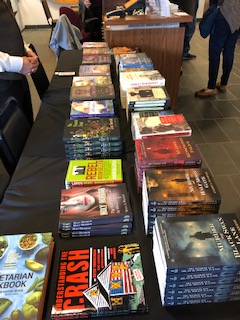
If you’ve ever wondered why the same images appear on book covers over and over, there’s a fairly simple explanation.  (I should specify, by the way, that I mean academic press books.  The pockets of trade publishers are apparently bottomless.)  For many in the humanities the choices come to the same set of classical paintings that are out of copyright.  Now, in a capitalist system, copyright is a necessary idea.  It protects those who create intellectual property from being taken advantage of.  Their work is treated like a physical object, so an accurate image of a painting is the same as the painting itself.  But if you’ve ever been to an art gallery you know that’s not exactly true.  Art galleries show us that being in the presence of the real thing is different than seeing a reproduction.  But I digress.

Books are not only recognized by their covers, but sold by them.  It’s a strange industry and part of the reason why goes back to one of those eye-glazing-over court cases involving (yawn) taxes.  In 1979 the Supreme Court ruled that companies could no longer devalue old stock for tax purposes.  This was the Thor Power Tool Company v Commissioner case.  The court ruled old stock had to be assessed at value.  While this was about manufacturing, it deeply impacted books.  Publishers now had to destroy old stock (and books are printed in quantity) or face heavy tax consequences.  This led to books being pulped much more quickly than usual (they could then be written off as losses) and directly impacted the book cover.

Despite the old adage, every publisher knows people do judge books by their covers.  Since 1979, extra care has been given to covers to make books sell quickly, and in significant numbers.  Now granted, your nuts and bolts will still be useful in future power tools, but books sell differently.  A typical book has a three-year lifespan.  Sure, there will be those (like yours truly) who’ll buy a book that’s been out for a while, but most books are considered dead after year three.  That old stock is a liability and pulping is common.  It seems an inglorious end for such a noble product.  Not to mention wasteful.  Academic books have similar covers because copyright images are often too expensive to license for covers.  Constantly publishers have to guess as best they can how many copies will sell because old stock is too expensive too keep.  Print on demand has changed a lot of things as well, but that’s a different story.   Covers still do count.


New Physics

Maybe it’s time to put away those “new physics” textbooks.  I often wondered what’d become of the old physics.  If it had been good enough for my granddaddy, it was good enough for me!  Of course our knowledge keeps growing.  Still, an article in Science Alert got me thinking.  “An AI Just Independently Discovered Alternate Physics,” by Fiona MacDonald, doesn’t suggest we got physics wrong.  It’s just that there is an alternate, logical way to explain everything.  Artificial intelligence can be quite scary.  Even when addressed by academics with respectable careers at accredited universities, this might not end well.  Still, this story to me shows the importance of perspectives.  We need to look at things from different angles.  What if AI is really onto something?

Some people, it seems, are better at considering the perspectives of other people.  Not everyone has that capacity.  We’re okay overlooking it when it’s a matter of, say, selecting the color of the new curtains.  But what about when it’s a question of how the universe actually operates?  Physics, as we know it, was built up slowly over thousands of years.  (And please, don’t treat ancient peoples as benighted savages—they knew about cause and effect and laid the groundwork for scientific thinking.  Their engineering feats are impressive even today.)  Starting from some basic premises, block was laid upon block.  Tested, tried, and tested again, one theory was laid upon another until an impressively massive edifice was made.  We can justly be proud of it.

Image credit: Pattymooney, via Wikimedia Commons

The thing is, starting from a different perspective—one that has never been human, but has evolved from human input—you might end up with a completely different building.  I’ve read news stories of computers speaking to each other in languages they’ve invented themselves and that their human programmers can’t understand.  Somehow Skynet feels a little too close for comfort.  What if our AI companions are right?  What if physics as we understand it is wrong?  Could artificial intelligence, with its machine friends, the robots, build weapons impossible in our physics, but just as deadly?  The mind reels.  We live in a world where politicians win elections by ballyhooing their lack of intelligence.  Meanwhile something that is actually intelligent, albeit artificially so, is getting its own grip on its environment.  No, the article doesn’t suggest fleeing for the hills, but depending on the variables they plug in at Columbia it might not be such a bad idea.


The Nature of Nationalism

I was recently reading about China.  The particular take of this piece was that China began, just over a dozen years ago, an attempt to become the world’s recognized superpower.  As I read about its aggressive stance in many areas (investment in tech, foreign relations, military), and realized that the United States had done a similar thing after the Cold War ended, I began to wonder who we’re all trying to impress.  Like many people I believe America has had it good for quite a long time.  (At least for some of us.)  I also believe we have used underhanded ways to get to this point.  Trump has definitely set us back on the world stage, but as China is investing in science and tech, we’re polishing off our Bibles.  (Take a look at the Supreme Court and disagree, if you can.)

In a world that has enough for all, why do we find it so hard to share?  Growing up with the Bible I was pretty sure that was the central message.  Instead, we seem to want to become the Nebuchadnezzar of the world, the great—well, you know—Babylon.  Ironically, Babylon doesn’t fare too well in Scripture’s final book.  Nationalism, it seems to me, is a great problem.  People seem unable to feel good about who they are without hating those of different countries.  It would seem that globalization should’ve taught us a thing or two about that.  Perhaps it’s the nature of our leaders—people who promote themselves until there’s no further ladder to climb beyond world domination.  Is that what we’ve come to?  Is there any hope?

I keep wondering who such people think the final arbiter will be.  Hasn’t history demonstrated over and over and over again that those who think too highly of themselves will be remembered most poorly?  Do they lack the capacity to see from the viewpoint of other people?  Our political and economic systems reward those who step on others and who think highly of themselves, it seems.  Capitalism especially dwells in the fantasy world of endless growth in a limited environment.  Combined with the restless curiosity of science and rapid growth of technology, this system seems set to go off the rails.  Especially when world leaders see each other in competition with one another instead of working cooperatively for the benefit of all.  No, I don’t believe Utopia is possible—there are too many self-interested leaders for that ever to work—but I do believe that national agendas that overlook differences (think the European Union) are far more worth our time than trying to become, or remain, a “super power.”


Remember the Doorway

I’m glad it has a name.  And I’m also, relievedly, glad it’s normal.  The Doorway Effect.  I’m sure it’s happened to you.  You walk into a room and immediately forget what you came in for.  I’ve been afraid of some early onset of something because I’ve noticed it more and more, but it turns out that this is a normal brain function.  A recent article by Jessica Estrada explains that our brains are constantly framing.  A large part of that framing has to do with our physical location.  When you step through a doorway that framing changes and some of the residue (what I came in here for) might easily get left in your previous location.  In other words, it seems to be an effect of humans making different rooms for different purposes.  Our thought lingers in the place it was first born.

Photo by Filip Kominik on Unsplash

Our brains are fascinating organs.  Every time I read about how children’s brains form, I wish I’d studied psychology instead of religion.  How we could help our children if we understood what their brains just aren’t capable of doing just yet!  How many spankings could have been avoided if parents understood brain development?  Beating someone doesn’t teach anything.  Instead, we might try to learn how minds use brains.  Young boys can be quite reckless.  One of the reasons?  Their brains haven’t developed enough yet to think through the consequences of their actions.  Yes, they can push limits for other reasons, but their thinking simply doesn’t yet involve adult caution that (hopefully) comes with a developing brain.  One of the real consequences of this, for which I’ll volunteer as a poster child, is religion.

Children’s brains are not developed enough to accept and comprehend religious thinking until they’re about 12.  We’ve known this for many decades now.  And yet, the theology of parents means they try to convince their children of religious truths before their brains are developed enough to sort it out.  Look at Congress and the Supreme Court to see the results of this.  Most people never seriously question their religion.  For many it was instilled in them as children, before their brains could properly process it.  The rest of the country pays for it with laws then enact.  We’ve known about this for decades and have decided that studying religion is a waste of time.  But I digress.  Now I forget what I started to say when I began this post.


Conflicting Lifestyles

Sleep patterns often don’t fit with work patterns.  The reason I wake up so early is that for years I had to do it to get to Manhattan.  For work.  Since ending the commuting lifestyle four years ago, I haven’t been able to adjust back to normal, whatever that may be.  During a recent heatwave weekend, when it wasn’t really conducive to be doing yard work, I suggested to my wife that we watch The Godfather on Sunday afternoon.  Somehow I thought it was only two hours, but it is actually much closer to three.  Now this Coppola film is considered one of the greatest movies of all time and I have literally wanted to see it since 1972.  There were no VCRs in those days and life has been, well, busy since college days.

It is a powerful movie, even today.  I knew the basic plot and I started to read (I can’t recall if I finished it) the novel in the early seventies.  All I know is that I sat engrossed as the temperatures tempted 100 degrees outside.  Because I awake so early Sunday afternoons are often sleepy times for me, but I don’t nap.  Napping leads to long nights and I awake early no matter what.  The movie doesn’t allow for a lapse of interest.  One of the scenes that had the most impact is when Michael is attending the baptism of his godson and the priest asks him if he renounces Satan intercut with scenes of his hitman killing his rival family bosses.  The religious nature of the violence in the story is perhaps one of its most shocking elements, even today.

That night it was still hot, and all the water that I drank during the day made itself rather urgently felt around 2 a.m.  The trick to the late night bathroom run is to keep your mind shut off.  Although The Godfather ended nearly twelve hours earlier, it crept back into my head, keeping me awake after that.  Of course, I had a full day of work—there are no allowances for aging in this thing of ours called capitalism—ahead.  The thing is, when else do we find three consecutive hours to catch up with a cultural landmark but a Sunday afternoon?  Are you supposed to take a vacation day to do it?  I have no regrets about having watched the movie—it was like an offer I couldn’t refuse.  It’s just the rest of life that, well, simply won’t compromise.


Woman in the Wilderness

The “Burnt Over District” is religious historian shorthand for upstate New York.  That particular region, during the “Second Great Awakening,” spawned so many religions and hosted so many revivals that it was difficult to believe anything more could sprout there (thus, “burnt over”).  One of my great fascinations is the origins of religions.  Not only that, but where those religions began.  On a continent-size level, Asia is clearly the champion, with all of the “big five” beginning there.  But religions evolve, sometimes rapidly.  Christianity in Britain gave rise to such groups as Quakers and Anglicans, and, in a post-Christian phase Britain gave the world Wicca.  The Germans were also great religious innovators with Luther and the Pietist and Anabaptist traditions.  Perhaps it’s in the Anglo-Saxon blood to make religions new.

After visiting Ephrata Cloister recently, my mind naturally turned to the “Hermits of the Wissahickon.”  If you’ve not heard of them, you’re not alone.  They, despite being men to a man, preferred the title “Society of the Woman in the Wilderness.”  They were followers of Johannes Kelpius.  Kelpius, like Conrad Beissel after him, was a German mystic, Pietist, and musician, and he also believed the end of the world was imminent.  This was in 1694, just a few years before Beissel laid the foundations for Ephrata Cloister.  Like Beissel, Kelpius decided Pennsylvania was the best place to set up camp.  Although founded by Quakers, Pennsylvania offered something some other colonies didn’t—real religious freedom.  Given that you could be killed for being a Quaker in some of the other colonies, this didn’t seem like a bad idea.  Convinced Jesus would return in 1694, Kelpius and his followers settled into a cave just outside Philadelphia, by the Wissahickon Creek.  They set up a quasi-monastic community to wait out the clock near the city of brotherly love.

It’s difficult to know if Conrad Beissel was consciously imitating the work of Kelpius.  Religious leaders tend to have pretty strong views of their own outlooks.  The draw to Pennsylvania, in those days, was strong.  Interestingly, both Kelpius and Beissel are remembered for their music.  The death of Johannes Kelpius isn’t as well documented as that of Beissel—you can see the latter’s burial place in Ephrata.  Like millions of others, Kelpius lived through the “great disappointment” of not having the Second Coming occur when he supposed it would.  Some suggest Kelpius believed he would be translated after death.  He died in 1708, as his younger colleague was exploring the wilderness several miles to the west.  Keplius’ final resting place is listed, perhaps fittingly, as “unknown in Pennsylvania.”

Beissel’s Grave, Ephrata Cloister


Yep, Nope

I can honestly say that I’ve never seen a movie that starts with a quote from Nahum.  I also honestly admit that Nope left me scratching my head, but very glad to have seen it.  I trust Jordan Peele implicitly as both a screenwriter and a director, and I know I need to see Nope again to make it all fit (if that’s possible).  His movies are the most Twilight Zoneish things out there, and despite Peele’s reported reason for naming the film Nope, I’m going to keep watching the skies.  It’s clear he had done his ufological homework.  Even the idea that—SPOILER ALERT—have you seen it yet?  Are you going to?  You might want to finish this later, if you haven’t—they are biological entities has been widely discussed.  

Although classified as horror, Nope has mercifully few jump startles.  In fact I noticed (there were maybe only 10 of us in the theater) that one couple had brought their kids.  I can imagine they had some interesting discussions on the car ride home.  For me, driving home alone, I felt like I’d watched Close Encounters, Twister, Signs, and Arrival simultaneously.  Peele set out to film a spectacle and he did indeed.  Horror has become more intelligent of late, and there’s so much going on here that I’ll need some time to sort it out.  The online nattering suggests the Nahum quote (“I will cast abominable filth upon you, make you vile and make you a spectacle”) reflects Peele’s thoughts on the Bible.  A more literal take might see the evacuation of waste creating a spectacle, which it does.  How to explain the angel form of the creature?

Alien horror works.  Alien sees them deep in apace, but many films, such as Fourth Kind, see them closer to home. Fourth Kind, also by an Africa American director (Olatunde Osunsanmi) never received critical acclaim, but I thought the first half was impossibly scary.  It’s natural enough to fear those we don’t understand.  Perhaps that’s one reason we tend to deny their existence.  If we deal with them in fiction we can call it horror and go home happy.  Nope asks us to consider whether our differences matter so much in the face of a non-discriminate predator that eats any human that enters its territory.  Even if they were there first.  I still have a lot of questions about the movie.  Some of them will likely never be answered.  One that will is “Do you plan on seeing it again?”  The answer is yep.


Beyond Natural

I’ve read quite a few books about the supernatural.  Often these books, which are mostly written by scientists, tend to show the problems with supernatural thinking.  Clay Routledge, it seems to me, has a healthier approach.  Supernatural: Death, Meaning, and the Power of the Invisible World isn’t an apology for the supernatural.  In fact, Routledge is a psychological scientist.  An open-minded one.  The book isn’t an apology, but it does show how natural supernatural thinking is.  This engagingly written study isn’t always easy to read—you have to be prepared to think about death a lot.  But also meaning.  Routledge makes a good case that the human search for meaning is related to our awareness of our own mortality.  We know we’ll die, and we don’t want to believe our existence has been for naught.  That doesn’t make all of us religious, but it does, perhaps, open us to the supernatural.

One of the main takeaways for me is that people misunderstand the power of religious motivation.  Especially in the context of our current political climate.  Many people can’t believe that supreme court justices would decide against laws that slow global warming.  Survey after survey, however, indicates that strong belief in religion means having little or no concern about the world ending.  In fact, for many it is a culmination devoutly to be attained.  You don’t need surveys to learn this.  You just need to talk to Fundamentalists.  I grew up believing this world was a sinful, corrupt place soon to be destroyed.  Further reflection on religion convinced me that this view was wrong, but I certainly understand it.  Too often those trying to find solutions to such problems simply dismiss religion as a motivating factor.  That’s a fatal error.

This is an insightful book.  Although based on science it is neutral toward religion.  Or I should say, the supernatural.  Routledge demonstrates that even scientists, when tested in controlled circumstances, subscribe to some supernatural beliefs.  They may be more abstract, such as the idea that things happen for a reason, or that we’ve been put here for a purpose (the teleological argument), but they are nevertheless present.  To be human is to be a meaning-seeking creature.  We may not be the only ones.  Whether or not that’s the case, our drive for making sense of all this tends to move us toward the supernatural.  Routledge ends with a plea for us to listen to one another.  Pay attention, and care for, those who believe differently.  We have a lot more in common than we have views that separate us.


Twisted in Knots

Our staycation at the Red Caboose in Ronks brought to mind the Weird Al Yankovic parody of “Amish Paradise.”  Bored-looking tourists in Lancaster County can’t find anything to do.  While it may be true that many big city entertainments are lacking, we had no trouble filling up a day.  We discovered the little town of Lititz.  Just north of the city of Lancaster, it retains several buildings from the eighteenth century along its main street, and the same quaint, boutique feel of Lancaster itself continues.  I have to admire the creativity of shop owners who have to appeal to the varied tastes of the tourist crowd.  Of course there was a bookstore—there are several in this area—and we long ago discovered the dual value of books as souvenirs.

The reason we were in Lititz, however, was the pretzels.  The Julius Sturgis Pretzel House makes the claim of being the oldest commercial pretzel bakery in North America.  Built in 1784, this is one of the early buildings still standing, and they offer brief tours where you’re taught to roll  and knot a pretzel.  Pretzels are, of course, a European invention.  Since they were an avocation of monks, their shapes became imbued with religious symbolism.  The initial U shape was, like a gothic spire, intended to point thoughts upward, toward God.  As I learned, the twist (which was an indication of a handmade pretzel) was symbolic of marriage and “tying the knot.”  This leaves a fish-like shape, and the Icthys moniker for Jesus would’ve been known to monks.  The folding the knot onto the outer loop symbolizes the arms across the chest used in Catholic prayer as a way of embracing the cross.  The resulting twisted breadstick has three holes for the Trinity.

The real innovation in Lititz, however, was the hard pretzel.  If I heard correctly, Julius Sturgis was working at a pretzel bakery in town where he had the duty of cleaning out the ovens.  The hard bits could be used for animal food, but they gave Sturgis the idea of intentionally baking hard pretzels.  This is the most common commercial form sold today, but southeastern Pennsylvania, which produces eighty percent of the pretzels sold in the United States, is still a soft pretzel paradise.  Radiating out from Philadelphia to locations like Lancaster, Reading, and Allentown, pretzels are eaten more frequently in Pennsylvania than elsewhere.  The religious aspect of pilgrimage still exists for those who venture to Lititz to find the birthplace of the hard pretzel, and the opportunity to stick your fingers in the dough.


The Magic of Cairns

They’re one of those things, my daughter explained, that people do that make them so likable.  She was talking about building cairns.  Cairns are piles of stones, but not exactly the kind a farmer might make at the edge of a rocky field.  Cairns are intentionally built.  And they have been for millennia.  The thing is, while people could choose to knock them over, instead most people add to them.  When we’re out hiking we add rocks to cairns, and we’ve started our own from time to time.  I first became conscious of them in Scotland.  While out with some friends we spied a carefully stacked pile of rocks—I think it was at some remote location on the northern Scottish coast—and they told of of the tradition of adding to them.

While recounting this, I also recall seeing a pile of rocks—it wasn’t called a cairn at the time—at Walden Pond.  Some friends from seminary and I went to visit Thoreau’s famous site and although his cabin hadn’t survived, other pilgrims had started a rock pile.  It was, if I correctly recall, conical because the stones weren’t flat.  Most cairns involve the flat kinds of rocks that break off of bedding planes.  They are fairly easily stackable and they quite often tumble due to the forces of nature.  I recall building or adding to cairns in Ithaca, near Ithaca Falls.  Such cairns would be fortunate to survive the harsh winter and torrents of the spring thaw.  And yet still we build them.

While on the red trail at Bushkill Falls, where picking and taking items is forbidden, we found cairns.  There were isolated stacks along the river, dotted here and there.  Then, at about the halfway point we came across a field of cairns.  Alongside the trail, cairn builders had obviously seen the beauty of repeated patterns.  Other hikers were snapping pictures there as well.  It was clear that this was a joint venture that had spanned years of cooperating with strangers.  Nobody asks your race or gender or orientation when you add to a cairn.  In fact, those who start them are unknown and leave them for other strangers to carry on the work.  This is frequently the case with human ventures, but when they involve money we become very specific about who might be considered a proper owner.  Stones are common, and although useful are generally not valuable.  Make them into a stack and they become a symbol.  And that symbol can be a guidepost for future travelers, left in the spirit of cooperation of those we don’t know.


Say It in Poetry

I was listening to some Nick Cave the other day, and, as usual, I was quite taken by his lyrics.  I dusted off my poetry notebook and began to try to forge words into an impossible chain, but without much success.  Yes, I do occasionally write poetry.  I used to write quite a bit more.  There are too many “used tos” in my life, I think.  I grew up with two brothers, and a decade later, three.  (I also have a half-sister, but that’s a long story.)  My brothers have very different lives than mine.  One of them is now posting some of his poetry on a WordPress blog at Poetry Random Ramblings and Rants.  You ought to check it out.  (You might also run into a ramble or rant…)

Photo by Amador Loureiro on Unsplash

One thing I’ve learned from my many editorial board meetings is that successful books are often about the author.  My brother has an interesting life story to tell.  As I’ve noted here before, we grew up in a poverty-level working-class family.  We all found our own ways of coping with the stresses that involves.  Religion was my coping technique that become a strange vocation.  I knew, even as a tween, that whatever job I ended up having it would involve writing.  I learned early on that poetry is difficult to publish, but that never stopped me from writing it.  My brother has always been a much better poet than me, perhaps because of his life.  He’s less inhibited.  An authentic human being.  I don’t want to say too much, since that’s not my place.  Knowing the author, however, I know that he should have readers.

We make our way in the world, and when our parents haven’t really prepared, by example, what a life might be, we’ll you’re left second-guessing everything.  I suspect it drives my wife crazy sometimes.  For me every day is like being in a foreign country, unsure of the language.  Sure, I earned a doctorate but that doesn’t mean I know what I’m doing.  I’ve known medical doctors that were, truth be told, not that smart.  No, life is more of a story we tell about ourselves.  Some of us tell it in poetry, some in song, some in prose.  Some of us tell it nonfiction, and others, well, fictitiously.  A big problem with our world is that we don’t take time to listen to other peoples’ stories.  Their lives.  Those we do listen to (such as television and movie starts, sports players) are often dull.  For my money, there’s more to be learned from poetry, and the life it represents. 


Jekyll and Jekyll

W. E. D. (“Marilyn”) Ross was a journeyman writer.  Prolific, he produced more than 300 pot-boilers, and he only started writing at mid-life, which kind of lends hope to me.  (He, however, didn’t always pay attention to literary niceties.)  I’ve made a determined effort, over the past decade or so, to collect and read all of his Dark Shadows novels.  These aren’t great literature, and I generally have to space them out to recover from them.  I just finished number 27 (of 32), Barnabas, Quentine and Dr. Jekyll’s Son.  Although I watched Dark Shadows as a child, it’s pretty clear that my cosmology of Collinwood was primarily shaped by Ross.  Living in an area without a regular bookstore, and without the cash to regularly buy books, I found what volumes I could at Goodwill and read them avidly.

Barnabas, Quentine and Dr. Jekyll’s Son is now a rather rare item on the used market.  It’s pretty clear that as Ross went on and on in the gothic fiction genre, he tried new things and these generally improved his work.  This story, set in the past, involves Dr. Jekyll’s grown son accompanying Barnabas Collins to Maine in order to escape his father’s reputation and, as a sidebar, to try to cure Barnabas of his vampire curse.  This means that one of the Collins girls, Emily in this instance, falls in love with Jekyll rather than Barnabas.  It also marks the point at which Ross tries to make it clear that both Barnabas and Quentin are good guys, but being under their own curses, they have to follow their vampire and werewolf natures, respectively.

I think I may have read this one as a child.  Although each book was stamped with its number in the series, I was dependent on when my mother decided to go to Goodwill and what they happened to have on hand in their book bin.  Some scenes from this book came back to me in the reading—although it was perhaps forty or more years ago—and one of the most important of these was one where Barnabas and Quentin collaborated on capturing the criminal.  Among the true fans of the series, they are known as the immortals (and Quentin isn’t always a werewolf), and they revisit Collinwood over the centuries.  Quentin can be both good and evil, but Barnabas is generally a sympathetic character.  Dr. Jekyll’s son isn’t such a strange guest at Collinwood, and the stories do seem to have improved over time.  It’s still Ross writing, but this one was more than a surface refinishing of a classic tale.


Nope, Not Yet

It’s perhaps this summer’s most hotly anticipated movie, but I’m not sure when I’ll get to see it.  Jordan Peele’s Nope opened in theaters this weekend but I’ve been busy.  For many Peele may have seemed to come out of left field with his 2017 directorial debut, Get Out (it took me a couple years to see that one), but he’d been working in films prior to that.  Then Us appeared in 2019 and instantly established him as the auteur of black horror films.  Like many in horror, Peele has a strong element of humor as well.  His films feature black actors falling into circumstances that whites have tended to claim for themselves—being the victims of monsters (often human).  I unfortunately missed Peele’s attempted reboot of The Twilight Zone in 2019-20.  Nevertheless, I know he’s a kindred spirit.

I try not to watch trailers before seeing a movie.  They give away too much.  I don’t need any enticement to see a Peele movie.  Even as I await a free weekend, I think about how horror has been a field accepting of auteurial diversity.  Women have directed horror since at least the eighties.  James Wan has been a major player in the genre since the early new millennium.  M. Night Shyamalan had his start shortly before that.  Good horror is good horror.  Often such films are quite smart as well.  Get Out drew attention for its social commentary—something for which Rod Serling was famous, and thus the naturalness of The Twilight Zone.  But when will I have time to get out and see Nope?  Perhaps I need to cash in a personal day so I can take in a matinee.

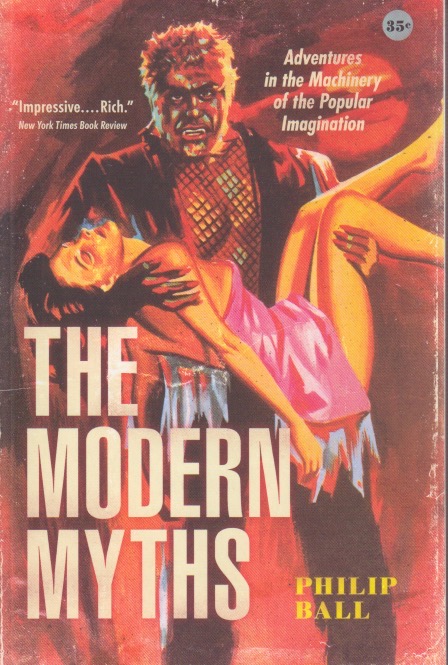
The trick will be, of course, to be on the internet without reading about it before that can happen.  Taking time off work is punished with skyscrapers of emails when you return.  But when I start having dreams about my boss coming to my messy house and helping me do necessary repairs, I think maybe I’ve been working too hard.  Movies, in such a life, seem like superfluous luxuries.  Of course, I’ve long accepted the thesis that films are our modern mythology.  They are our cultural referents, and not infrequently the source of meaning.  They explain our world.  And they require taking at least an hour-and-a-half out of the mowing, painting, hammering, and hauling that never seem to end.  Nope, I won’t have time to see the movie this weekend.  Yep, I’ll be looking forward to the first opportunity to do so.


Ancient West Asia

You know what they say about old habits.  While various people are protesting things like critical race theory, there are still some scholarly holdouts for colonial terminology.  I know the area of “Ancient Near Eastern” studies fairly well.  The problem is that “Near East” is a comparative term.  Near whom?  Europe, of course.  Long ago scholars stopped using “oriental” to describe East Asia.  “Oriental” means eastern.  East to whom?  Europe.  You see the problem?  These terms assume European centrality, and the entire world can be divided up according to a colonialist perspective, rather like those novelty maps of the United States from a New Yorker’s point of view.  East Asia and South Asia are now in common use, but it’s still “Near East” and even “Middle East.”

What are the alternatives, did I hear you ask?  For decades now there has been a move to use “Ancient West Asia” instead.  It’s descriptive rather than imperial.  There have been objections, mostly from older white men.  It’s disruptive to change names, and besides, “West Asia” isn’t technically correct.  The area under study includes Egypt, and that’s Africa!  As Egyptology has grown, however, Sudan has increasingly entered the picture.  In other words, our picture of the ancient world is changing.  West Asia may not be precise, but it conveys the idea.  Cultures don’t always neatly follow borders, ancient or modern.  The people of ancient Israel borrowed from both Egypt and Mesopotamia.  Is it so wrong to try to use a non-Eurocentric title?

 Also, consider East Asia—it’s a fuzzy descriptor.  As is South Asia.  Although China and India are the largest respective states, these are modern political borders.  Yes, ancient people had borders too, but generally only emperors (men) went to great lengths to take someone else’s land on a large scale.  Terms like “Ancient Near East” perpetuate, often under the radar, this Euro-normativism.  Too much change too fast, I know, creates many problems.  A large part of the Trumpian reactionary mindset is based on fear of too much change.  Still, who pays attention to “Ancient Near Eastern” studies anyway?  It certainly isn’t a growing field.  The area under study is wide and sprawling.  It includes Turkey and stretches down to Yeman.  It can reach over to Iran and Afghanistan—to the very borders of India.  If we were to agree in principle that a Eurocentric term should be avoided, we might consider using Ancient West Asia.  Or we might, like the emperors of old, keep on doing things our own way.  It’s a habit, after all.