Update on Nightmares

Progress continues on Nightmares with the Bible.  Despite pandemic conditions, I received a happy email last week telling me that the manuscript had been transmitted to production.  If you don’t work in publishing that probably sounds like a pretty simple step, but in reality it’s immensely complicated.  The job of many editorial assistants is often just making sure books get through the transition from author to publishing engines safely.  Since Lexington/Fortress Academic is short-staffed at the moment (publishing is a “non-essential” business), they ask authors to take on additional responsibilities.  One that they passed on to me was to find people to endorse my book.  Fortunately I’ve got star series editors who agreed to take on the task, sparing me from going to someone and saying, “Um, hi.  Would you like to say nice things about my book?”  I’m shy that way.

That doesn’t mean that I’m not excited about the book.  It came about in an odd way, but like any parent an author loves her or his books, even if they aren’t quite what you expected.  Getting a fourth book published is kind of a hallmark for me, especially since I spend a lot of time on the websites of successful academic colleagues older than me that haven’t reached that benchmark.  Publishing books, for me, is a kind of validation.  The original ideas of editors aren’t much valued, either in publishing or in society at large.  Who cares what an editor thinks?  Put that same person in a college and s/he’s a superstar, eh, Qohelet?  So I sit here like an expectant parent, wondering what the book will look like although I already know what I’ve put into it.
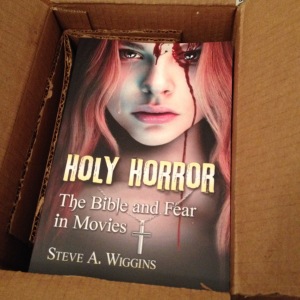
Nightmares was never meant to be a research book.  Indeed, Holy Horror was written with an eye toward trade publication.  I’ve been working on my next book project (which I’m keeping under wraps at the moment for fear that someone with more time might get to it first, since there’s no getting the genie back in the bottle).  Before too many weeks have passed I’ll need to brush off my indexing skills (in as far as I have any), and get proofs submitted.  I’m afraid I’ll miss the coveted Halloween launch yet again with this book.  “Scary topic” books always sell best in September/October, but if you miss it, the next year you’re old news.  Like an anxious parent I sit here and wait because at this point things are literally out of my hands.

Graphic Graphomania

You can spot them fairly easily.  Graphomaniacs.  Perhaps it’s a bit closer to the surface when you work in publishing, but the person who writes too much can run risks.  Some authors turn out a book every few months.  While this may be okay for potboilers, for academics it is seldom possible to do this well.  Research and reflection take a long time.  Those who churn out book after book sometimes wonder why their works don’t sell.  Graphomania has to be reined in.  Horses have to be held.  I’m sympathetic, actually.  If you write every single day you’ll soon end up with a surplus.  So much so that your computer will tell you to empty some stuff out or it’ll go on strike.  I had to order a new terabyte drive this week exactly for that reason.

To free up some additional space on my laptop I went through the many, many folders that have essays, book drafts (both nonfiction and novels), stories, blog posts, etc.  While I didn’t throw them away, I had to clear them off my working disc.  As I did so I realized that the great majority of these writings will never see the light of day.  There are really a lot of them.  Part of the problem is you never know what you’ll feel like writing when you get up in the morning.  Sometimes the best ideas come after a wretched night’s tossing and turning.  Well-rested you can get up to a brain so content that it doesn’t have much to say.  Or that story you started yesterday may seem dumb today.  That nonfiction book that burned with passion just last week may now seem lame.  My fear is that by moving them off my hard disc they’ll become forgotten.

The terabyte drive is a thing of wonder.  It can hold so much information.  I have to go back and hook it up to my laptop to find it, however.  Out of sight, out of mind.  I’ll move on to other things.  I honestly can’t count the number of projects I have going.  Graphomania can be a problem.  This blog is a daily outlet, and you, my faithful few readers, are saints for coming back.  In my attic, next to the brick wall of external hard drives, are folders full of handwritten material.  Many of them are stories that are complete, but that haven’t been transcribed.  Some writers suggest flooding the market with your stuff.  Others of us know that graphomaniacs are feared in some quarters, and so we keep our own counsel.

Photo credit: NASA


LinkedOut

There are different philosophies behind LinkedIn.  (What a world we live in where such a statement is even possible!)  When I first signed up, it was a professional social network.  Warnings boldly declared that you should accept invitations only from people you actually knew—others might hurt your career.  Friends pointed out (I was unemployed at the time) that if you wanted to use the potential of connecting, you had to take risks and accept invitations from strangers.  Now LinkedIn seems to be a social network just like any other, although many of the individuals on it are perhaps a bit more educated and many of them have good jobs.  That doesn’t stop them from posting snarky comments and using the site as if it were Facebook.

Although I’ve met some good people through it, I’m beginning to grow wary.  Or weary.  Perhaps both.  Now I hover with a bit of angst over that “Accept” button.  Many people, mistaking me for someone with some power in my organization, immediately direct message me after accepting.  I wish they wouldn’t.  Many of them ask me what jobs I might be able to offer.  If they’d search me out a little further on the web, they’d find the dusty path to this blog and learn a bit more about that guy they’d invited to connect.  I don’t work in a hiring capacity.  Bible editing isn’t exactly a growth field.  But connections are connections.  So I click.

Worse yet are the number of people on LinkedIn who immediately direct message you advertising their book, encouraging you to buy.  I work in publishing.  I know that authors have to take the initiative or find their books overlooked (believe me, I know all about that!).  Still, LinkedIn is not the place to advertise your book.  The buzz among publishing types (if they’d only check out to whom they’ve sent that invitation to connect) know that the social media of choice for advertising books is Twitter.  Facebook is okay but if you read the kinds of comments you find on posts there you’ll see many aren’t the book-buying type.  And the advice, to which this particular URL stands in silent testimony, is that starting a blog is an ideal way to build a following.  Social media, it seems, isn’t really peopled too much by those who do a lot of book reading.  If it were it would be a world in which you wouldn’t have to worry about LinkedIn philosophies before clicking that accept button.


No Smoking

I have never smoked anything in my life.  As a kid with chronic bronchitis few things scared me as much as being unable to breathe.  I have not assassinated anyone or consorted with aliens—at least not that I know of.  Otherwise I think I understand the Smoking Man.  As far as my X-Files rewatching saga goes, I recently reached “The Musings of a Cigarette Smoking Man.”  I remember the first time I saw it I found it improbable that the assassinations of the 1960s were the work of a single man.  What hit me this time around, however, was the Smoking Man’s real frustration in life.  He wants to be a writer.  Having completed several novels myself, none published, I have received pin-head letters very much like those he does in this episode, only in greater quantities.  When he finally finds a publisher, he writes his resignation letter to whomever hires assassins and those who change the course of history.  I know just how he feels.

You’d think that by the logic of any reasonable system that those who work in an industry might have some inside tracks.  Some, no doubt, do.  Others of us in publishing are just like the average, uninformed person on the street.  Publishing is a cliquish place.  A friend with some success getting novels published advised me to look at the names of editors and editorial boards on the literary journals that get noticed.  “You’ll see the same ones coming up over and over,” he said.  It is, as the Smoking Man discovered, a kind of cabal, which is, I suspect, the point of making him out as a frustrated novelist.  He can set the course of history, but he can’t get a legitimate novel published.  Cue the X-Files theme. 

I know many academics who write fiction.  My second novel (depending how you count these things—this one was never finished) was a pet project while I worked at Nashotah House.  I knew I wouldn’t be able to publish it when I worked there.  In fact, my first fiction publication only came three years after being shoved out of the nest of academe.  I’ve completed seven novels now and I’ve managed to get some short stories published.  Then again, I don’t have clandestine knowledge from a lifetime of access to the truth about alien-human interaction.  I don’t shoot people for a living.  I’m not even a professor any more.  Still, I think I can begin to understand why someone might turn toward a more interesting career, given the situation when it comes to getting published.


Gratefully

I confess.  I read acknowledgements.  Part of it is the vanity of finding someone’s name I know.  Or the worse vanity of finding my own name.  Acknowledgements, however, reveal quite a lot about the book you’re about to read, or have just read.  Not all books have them, of course.  Most academic books do.  A recurring theme occurs in the acknowledgements I read: privilege.  Many academics are feted and pampered and their institutions pour money on their desks.  Often they show a nonchalance about it all.  ‘Tweren’t nothin’.  What seems to be missing to me is the struggle.  Anything worth having, in the experience of many, is something for which sacrifice was required.  Hard work, long hours, and nobody pouring money on your desk.

Privilege breeds a strange kind of entitlement.  Many academics complain of how difficult they’ve got it.  (The stories I could tell!)  Now, I haven’t walked in their loafers so I can’t say if the personal circumstances of others are trying or not.  My own experience at Nashotah House—how good I had it!—wasn’t exactly pristine.  Conflicts between dean and faculty.  Required chapel twice a day whether you needed it or not.  Your every move watched for any indication of heresy or disloyalty (that’s not limited to the Oval Office).  And yet, those days were much better than I realized at the time.  Once in a while you have to crawl up next to Job on his ash heap to get an idea of what you simply couldn’t see before.

Acknowledgements are often like mini biographies.  You try to make sure you don’t leave out anyone that helped you along the way.  Books, particularly academic books, are the product of many people, not just the author.  Sure, the author’s the star of the show, but if the support staff wasn’t there, you wouldn’t be reading this right now.  Book making is incredibly complex, which is why self-publishing, while sometimes necessary, often shows in the end results.  Editors come in many flavors: acquisitions editors, copyeditors, line editors, production editors, and more.  Sometimes there’s overlap between positions, but even books that barely get read have plenty of sets of eyes upon them before they come to the public.  Acknowledgments don’t always name everyone.  In fact, they simply can’t.  It takes a village to publish a book.  Instead of feeling entitled,   I find acknowledgements always instill a sense of humility.  It’s an honor to be part of bringing a book to birth, even if your contribution is hidden away in unread pages.


Nightmares with Nightmares

Although some staff members are furloughed, Nightmares with the Bible is still going to press.  Unlike many authors, I realize that Covid-19 has had a stifling effect on publishing, starting with bottlenecking books at printing houses.  Printers (along with publishers) were non-essential businesses and since you have to be physically present to run a printing press, the virus literally, well, stopped the presses.  Many publishers could work remotely, so the projects began piling up before printing houses reopened.  All of this is preamble to saying I am gratified that work with Nightmares is continuing.  Yesterday, however, it led to a nightmare of its own.

One of the reasons I don’t fight awaking early is that it is uninterrupted writing time.  Most of the rest of your time zone is asleep at three a.m., so I can write in peace.  Yesterday, however, I had to divide my manuscript into chapter files and resend it to the publisher.  No problem, right?  Technology, however, has made this once simple task a burden.  I use a Mac, and so my word processor is Pages.  Not only that, but the constant systems upgrades require me to empty space on my hard drive—really, the only stuff I keep on here are my writings and those pictures I snap with my phone.  Still, I had to load my external drive to access the final file sent to the publisher two months back.  With Pages you can’t select material from page-to-page in the thumbnails.  No, you must “physically” go to the start of the chapter, click, scroll to the end of the chapter, and shift-click to highlight and then copy it.  Then you have to open a new file, select a template, and paste.  Save and export as a Word document.  The process took about two hours.


Now, I get up this early to write and do a little reading.  Yesterday I could do neither.  Instead I was cutting and pasting like a manic kindergartener, trying to get my manuscript printed before the second wave comes and shuts everything down again.  Talk about your nightmares!  Technology has made the industry much swifter, no doubt.  When I first began publishing articles you had to send physical printouts through the postal services and await either a rejection, or acceptance, through the mail.  Book manuscripts required large print jobs and keeping duplicates (at least we didn’t have to use carbon paper!).  All I lost was a morning of writing before the work bell rang.  Still, nightmares come in all sizes, some of them quite small.


Trading Ideas

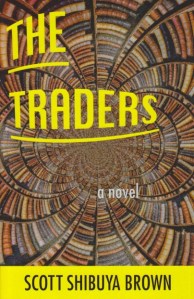
Sometimes you read a book where the author seems to have your same experiences.  I suspect that’s why many of us keep reading, looking for connection.  I just finished Scott Shibuya Brown’s The Traders and immediately began wanting more.  Anyone who’s faced teetering stacks of rejection letters from agents will appreciate the story of Cecil Po, a bookseller in Tandomon.  Like many of us who wind up in book-related industries, Po is at heart a writer.  Like most writers, he’s down on his luck.  When he discovers a deceased, truly third or fourth-rate writer who’s acquired some level of fame, a wild plot begins to hatch.  The story is so compelling that I spent much of this past week wishing for just a few more minutes to read.

One of the things the story does exceptionally well is to point out the foibles of scholars.  Self-important and self-focused, they often fail to see the obvious right in front of them.  There are some laugh out loud moments here for anyone who’s spent time in academia.  Po’s laconic commentary is no-nonsense and witty.  It also seems to contain a rebuke for the big publishing houses that effectively limit what gets read.  Anyone who’s tried to navigate publishing knows the truth of this tale.  There are those who decide which writers will get noticed and then build them up to continuing successes.  It even happens in academic publishing.  Po, talented but uneducated, and—more importantly—unconnected, has resigned himself to a life of peddling books while knowing he has written better than some of what he has read.  Brown takes the gloves off, but gently and politely.

There are tonnes of great, but undiscovered writing out there.  Even those of us in publishing (perhaps especially so) find it difficult to spend the time we wish to on reading.  There is reading and then there is reading.  If people did more of it there might well be less pandemic to go around.  And if more people read for pleasure there would be more demand for books.  It might also lead to more people writing.  The Traders is a fascinating little parable that draws you in with possibilities.  Cecil Po is like so many of us who dream big but live small.  I won’t put any spoilers here since the novel deserves to be widely read.  And it’s just possible that the reader will discover a bit of him or herself between the covers along with Po.


Insubstantial Reading

Because of the shortness of time, I recently bought an ebook so that I could get it done under deadline.  Although the coronavirus still has book delivery slowed down, things are much improved.  There was a book, however, I absolutely needed to read for my current research that is available only in ebook form.  Sighing, but emboldened by my recent experience, I began reading it electronically.  Shortly after I started my critical faculties kicked in and I began wondering whether the book was fact or fiction.  The author has an internet presence but is seldom addressed by scholars.  I found myself thinking, “if this was a real book, I’d stop right about now and examine my physical copy for clues.”  I’ve done that more than once when it comes to questionable material.  Books, you see, come with built-in indicators of their trustworthiness.

The ebook, however, gives you scant information.  For example, this one has no copyright page.  I may be a publishing geek, but a copyright page is essential for determining what kind of book you’re reading.  Then I would, if this were an actual book, close it and look at the back cover.  There in the upper left I would look for the BISAC (Book Industry Standards and Communications) code.  These are the words that classify the genre and subject of the book for you.  It is often a publishing professional, such as the book’s editor, who assigns the BISAC code, so depending on who the publisher is, you have an accurate description.  This ebook on my Kindle software has no BISAC code.  The publisher itself often tells you something about a volume, but this is a small press without much online information available.

I’m walking you through this because of our current crisis of critical thinking.  With a president unwilling to stick to facts and crying out “fake news” when empirically proven realities don’t match his liking, being able to assess our sources is essential.  Ebooks have eroded the possibilities.  I read esoteric stuff, I admit.  The authors had to have convinced a publisher (and don’t get me started on self-published books!) that their project was viable.  The book in my hands has a number of ways to assess whether it is accurate or not.  The ebook on my lap does not.  I’m working on a longer article on this topic.  Our ability to think critically includes the necessity of assessing the clues as to the nature of our reading material.  Right now I’m reading an ebook stripped of the helpful clues of the print book and fact-checking is limited to Google.  The truth may be out there, but if this were a printed book chances are it would be right in my hands.


Indexing Life

I’m thinking about indexing my life.  It might help to keep things organized, don’t you think?  One of those odd disconnects that a biblical studies editor faces is the discipline’s love of indexes.  I have volumes on the shelf behind me right now that have five or more indexes.  You can look up subject, author, biblical citation, non-biblical citation, and even for some, places mentioned.  The thing is such books were produced before the internet.  If you’ve read a few of my posts you know that I’m no fan of ebooks.  I like a book in my hands, and a book, in my definition, is made of paper.  Still, I do occasionally look things up in an index.  If at all possible, however, I try to find an electronic copy so I can type what I’m looking for in the search box and come up with the exact reference.  In this I’m not alone.

A great deal of my editorial time is spent trying to explain this to other biblical scholars.  In the post-Covid world academic libraries are going to be closed for quite a while.  They’ll likely increase their electronic holdings while cutting back on paper books.  When someone wants to look something up, they’re not going to scroll to the index and scroll back through countless pages to find it.  They’ll use the search function.  That’s what it’s for.  So it goes.  When I index my life, the early part will be all about looking things up manually.  The latter years will be searchable.  To be fair, I would’ve never come to know this if it hadn’t been for working in publishing.

Indexing points to milestones.  Earning a Ph.D. from Edinburgh was one, I suppose.  For a guy who grew up with ambitions to be a janitor, that’s something a little different.  Some things I’m not sure how to index.  The abrupt transition from professor to not-professor, for instance.  What are the keywords you’d put down to search for that?  Or the part about being treated like a lackey by former colleagues?  I guess that’s not really a milestone anyway.  Besides, it’s in the internet half of life, the searchable bit.  The earlier years, many biography readers note, are the most interesting.  They set us on a trajectory that we type up in our curricula vitae.  When I write my fiction the characters are often janitors.  Unless I put my pen-name in the index nobody will ever know.  Of course, I haven’t got to the last chapter yet.


Eternal Returns

Nightmares with the Bible has been submitted.  Those of you who read this blog regularly know that it is my fourth book and that it is a kind of sequel to Holy Horror.  Nightmares looks specifically at demons.  I was inspired—if that’s the right word to use for it—to write the book because the chapter on possession movies in Holy Horror was clearly overflowing.  Not only that, but at the time I started writing the book not many resources were out there on demons.  Almost nothing, certainly, that asked the big question of what they are.  To answer that we need to go to the movies.  People get their information from popular culture, especially when it comes to trying to understand the arcane and even esoteric field of theology.

Movies, studies have shown, often participate in the reality our brains conjure.  Back when Reagan was president—is it even possible to believe those seem like halcyon days compared to these?—he was caught occasionally citing events from movies as historical realities.  We all do it from time to time, but then, most of us, if pressed, can tease movies apart from facts.  Church attendance has been going down for some time (and on Zoom you can tune in and tune out without having to “stay in the room”), and so people have to get their information on demons somewhere else.  Reality television and the internet also play into this as well, of course, but Nightmares sticks with movies because I’ve only got so much time.  The message is pretty straightforward though, we must consider where people get their information.

After you submit a large project, if you’re anything like me, you’re mentally exhausted for a while.  I’ve been working on this book for nearly five years—I started it before Holy Horror was submitted to McFarland.  I had already begun work on my next book, but I yet have to decide which one it will be.  I have several going at any one time.  Hopefully this next one won’t be coming out with an academic publisher.  I’d like it to be priced in the realm where individual buyers might consider it worth the investment.  I know from experience that even books just over twenty dollars are a stretch for most people, especially if they’re on academic topics.  Nightmares will come back, I know.  There will be proofs and indexing and all kinds of further work to be done.  I’m hoping that by that point I will have the next book nearly done.  If only I could decide which one it will be.


Honey and Wine

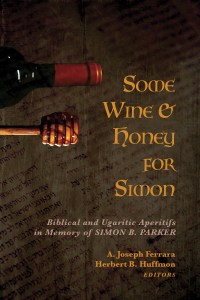
Academic writing tends to be limiting.  Don’t get me wrong, I still enjoy reading a well-crafted academic work, but when facing a new one I always experience that sinking feeling that this will be difficult work.  That doesn’t stop me from getting a little thrill when something academic I’ve written appears.  Pickwick, an imprint of Wipf & Stock, recently released the cover of Some Wine and Honey for Simon, the Festschrift for Simon Parker to which I’ve contributed.  As I’ve written elsewhere, this was an orphaned article that required some polishing up to be able to submit.  Thinking back on it, I reflect on how much has changed since then.  How I’ve left the land of Festschriften.  How my own research has changed.

Research, traditionally wrought, requires an academic library and lots of time.  You need to be able to spend your hours requesting books and articles that you can’t afford—really publishers?  $40 to purchase twenty pages that I won’t even enjoy reading?  Access to JSTOR will cost you if you don’t have a university post.  Now I trawl Academia.edu hoping to catch what I need in my net.  Sometimes it works.  Other times you bring up a coelacanth.  That’s the way of research outside the academy.  Also, I find myself reading books that appeal to me rather than strictly books on topic.  Many of them aren’t academic, but they are informative.  Part of research, it seems to me, is learning to access sources you wouldn’t normally find.  There’s the element of discovery.

Monsters appealed to me as a research area since there hadn’t been much written on them academically and I’d read most of what had.  The field is starting to take off now, which means  high-priced monographs and inaccessible research.  Working in publishing I think I understand the mindset—employees are expensive, especially in the United States.  They require salaries so they can live, and medical coverage so they can continue to live.  And most books sell so few copies that they really aren’t profitable.  But I like to think people would read about monsters, if they were priced down around the level of the demographic that appreciates them.  So one of my academic articles is about to be released to the world along with some wine and honey.  I’m still trying to sort out how to contribute from the margins.  And I hope Simon, who was always kind to me, appreciates the effort to honor a scholar and a gentleman.


Is It Real?

I’ve been reading an ebook and I feel lost.  I resorted to the ebook because I was invited to join an informal virtual bookclub.  Book discussion group may be a more accurate description.  Since I don’t see many people this seemed like a good idea.  Although I often take recommendations, reading a book someone else chose is kind of an infringement on my already crowded “to read” list, but connection is connection.  The problem was I couldn’t get a physical copy of the book delivered before the first meeting.  I struggled with whether or not to buy the ebook for hours.  I just can’t get over the feeling that I’m paying for something that can disappear at the next upgrade and all my effort in reading it will have been lost.  I’m a book keeper.  (Not a bookkeeper.)

After a morning of angst, I finally clicked on “buy.”  I’ve been reading the book but I’m finding it disorienting.  When I read an actual book, I quite often take a look at the physical object and assess it as I’m reading.  Appraise it.  Who is the author again?  Who published it?  When?  In the ebook world that information is obviously available, but it’s not where I expect to find it.  And there’s the matter of pages.  I measure my progress of book reading by the location of my physical bookmarks.  I can tell at a glance to the top of the book how my progress is.  A slider bar just doesn’t do it.  I click out of it and check on Amazon.  How many pages does this book actually have?  Why does my e-version have a different number?  Won’t that confuse the discussion?

I don’t feel so guilty about marking up an ebook, I’m finding.  Highlighting in a print book always annoys me—I don’t want some previous owner telling me what I should remember.  This ebook won’t get passed on to anyone else (that’s the genius of the business model—the ebook isn’t available for resale, which more durable, actual books are).  As I’m doing this I recollect that I’ve only ever read two ebooks before, both fiction.  They didn’t make much of an impact because it was only in writing this post that I remembered them at all.  The world of the coronavirus has taken its toll, I guess.  I’m reading an ebook and I can’t wait to finish so I can get my hands on the real thing again.


Paper or Electronic?

Publishers are scrambling (and who can blame them?) to get ebooks out.  Since bookstores have been closed (I’d classify them as essential businesses, in an ideal world), they need to get “product” to customers.  Still, I’m thinking back to my recent interview with an undergraduate about Holy Horror.  She told me the cover really generated interest as she walked around school with it.  (This was before the pandemic.)  That’s old school book advertising.  Although I do learn about lots of books online, I very, very seldom buy ebooks.  It seems like buying air to me, and I wonder if publishers are missing out on the free advertising of the person carrying an interesting book around.

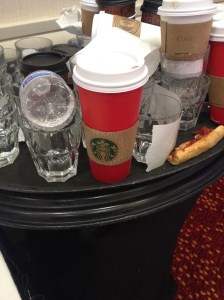
Back before the pandemic I’d noticed how just about everybody was walking around with that awkwardly proud “I’ve got a cup of Starbucks in my hand” look.  It was everywhere.  No matter where I went, for there was free travel in those days, people had only one hand free, showing the world their craft coffee.  If only it were so cool to be seen carrying books!  I stopped commuting about two years ago, for all practical purposes.  When I did get on a bus, however, I always had a book in my hand.  Did publishers see any bumps from curious New Jerseyans who saw the strange cover of the weird book I happened to be reading at the time?  You never got a seat to yourself on New Jersey Transit, and I know I was always curious about other readers (there weren’t many).  I hardly have the profile to define “cool” and “some guy on the bus” probably doesn’t cut it for many people, but still, the thought of someone curious about a book because of the cover is very compelling.

Book covers are artworks.  At least some of them are.  I recall the ennui I felt approaching some academic books with just words on cloth for the cover.  (I later found out the cloth is usually paper made to look like cloth—there are layers in everything.)  It was difficult to muster the energy to open the book because you knew there would likely be hard slogging ahead.  That’s why I decided to stop writing academic books.  The next trick is to find nonacademic publishers so that prices in the range of real readers might be offered.  If people opt for the ebook version, how will others see it?  And viruses only last on paper for about a day.  That’s a quarantine I can live with.


Ancient History, Part 3

It was an old idea.  I had it when I was still teaching at Nashotah House, that’s how ancient it is.  It seemed to me that if brains evolve with the rest of us, our perceptions of gods might change over time.  I’d been working on this for an Ugaritic conference held in Sherbrooke, Quebec.  The conference took place, but I’d been ousted from my position at Nashotah House.  The conference organizer, in what was an amazingly magnanimous move, came up with funding for me to attend.  I delivered the paper and Jean-Marc Michaud, of blessed memory, encouraged me to submit it to the tome with the very academic title Le Royaume d’Ougarit, de la Crète à l’Euphrate. Nouveaux axes de recherche, Actes du Congrès International de Sherbrooke 2005, Faculté de théologie, d’éthique et de philosophie, Université de Sherbrooke, 5-8 juillet 2005 (Coll. POLO–Proche-Orient et Littérature Ougaritique 2).  Unemployed and unable to access libraries, I had to decline the publication.

In one of those great ironies of life, I began to be approached to take on projects after I lost my academic position.  (This continues to happen; I received an invitation to contribute just last week.)  I often have to turn them down because I still have no access to an academic library and academics generally have no idea just how draining a nine-to-five is, with or without the commute.  In any case, a Festschrift for Simon B. Parker was announced.  I knew Simon as a student at Boston University School of Theology, and he wrote many letters of recommendation for me.  His sudden death shocked many of us.  Herb Huffmon, of Drew Theological Seminary, asked me to contribute to the Festschrift.  I still had this article that required some work, so I decided to try to finish it.  I received a note that the volume is about to go to press with Pickwick.  Academic publications won’t let me go.

If I had my druthers, I’d be getting along with my fiction.  I’ve had over twenty short stories published, and I’ve got many more in the works.  Every time I think, “Now I’m in the clear, I can focus on writing that is fun to read,” I get another academic invitation.  Those invitations don’t come with job offers, so I wonder why I have such trouble saying “no.”  Anyone who writes wants to be remembered.  We have ideas that we hope others will find engaging.  In academia you publish to keep your job.  Most of your work will be forgotten unless you’re groomed as an academic superstar (yes, they exist!).  I’ve never been groomed.  I write because I have ideas that beg to be expressed.  One of those ideas, many years old, will soon be available for consumption at Pickwick Press.


Without Peer

Peer review makes the world go round.  Well, at least the academic world.  It’s based on a simple enough premise: if your academic work is passable other scholars will be able to tell.  It’s a process fraught with peril, however.  Scholars, being human, are subject to fits of pique or of hypersensitivity, or just having gotten out of the wrong side of bed that morning.  Perfectly good projects can be shot down with a single, well-placed arrow.  Or even dart.  Problem is, there’s no better system for deciding if academic work is adequate, or even good.  There may be some objective measure out there in the universe, but if there is we don’t have access to it.  We have to rely on peer review.

During my teaching years, which numbered nearly twenty, I was never asked to peer review anything.  My first invitation came while I was working as an editor.  Of course I said “yes.”  A number of scholars, however, don’t share the basic reality that if nobody peer reviewed their work, they’d never get published.  Many scholars decline offers to review their colleagues’ work.  I even had a very senior scholar once blithely tell me that he had his own research to do, so why should he take time to review that of others.  Professional reserve prevented me from pointing out that if his colleagues felt the same way he’d be as unpublished as a fresh doctorate-holder.  Scholarship is a cooperative venture, no matter how many Lone Rangers ride the cuesta.  So why is it so difficult to find peer reviewers?

I’ll read your book if you’ll read mine!

Something I’ve noticed is that many scholars are coddled.  Constantly told that they’re brilliant and gifted, they come to believe it like miniature Trumps.  More to the point, perhaps, is the shrinking number of academic positions.  The few who hold actual jobs are bombarded with other tasks, including committee work, advisory duties, and sometimes even teaching (depending on the adjunct pool).  I know it’s tough.  Been there, done that.  Nevertheless, academia cannot survive without the basic peer reviewer.  Education is a cooperative venture.  We may imagine the academic alone in her or his study, but breakthroughs generally come through when people work together.  Of course, my job is one performed in isolation.  Increasingly, academics can be found not in their offices, but working remotely from home.  Is the sense of “peer” itself breaking down?  My own book, Nightmares with the Bible, was slowed down by peer review.  In a sense I’m glad it was.  Hi ho Silver, away!