The Pace of Progress

Scientists tell us the earth is slowing down. It’s only by a fraction of a fraction of a second, but like a top set spinning these endless revolutions can’t go on forever. Although the evidence all points in this direction, it feels like it’s speeding up. How else can I account for the apparent loss of time I’ve been sensing? Let me contextualize that. I’ve been attending the Society of Biblical Literature and American Academy of Religion annual meeting since 1991. That first meeting in Kansas City’s acid-etched in my friable consciousness with the long hours waiting for interviews that never came and no mentors to show me what to do. Those three-and-a-half days stretched on into an endless Tom Sawyer summer. I was anxious to get back to my wife in Edinburgh to and finish my dissertation. Fast forward a quarter of a century.

My days are now filled with back-to-back meetings. Normally by now I’d have had a leisurely perambulation among the bookstalls (where I spend all day) taking in the volumes the competitors publish, noting what I need to read. Instead, the time has been shortened. I have to keep a constant watch on my watch for the next appointment. Hearing about new books being born rather than tending the infants that surround me. We are a thriving population of readers here. Although it looks like a large crowd, I know that in reality we don’t make much of a dent. Boston’s big enough to absorb us and all our feverish ideas. When wakefulness arrives at my usual New York commuting time, even the nights seem to be shorter. Where has the time gone?

Most of those I meet have no idea I write books of my own. It was a process started long before the conferral of a diploma from a university far away. The earth is spinning in that direction, I’m told, so I should be in the tailwind of Edinburgh all the time. I’ve grown old with some of these colleagues. Those I’ve known since I was a young man, thinking he knew something about life, learning how little he really knew in this very city. I’m pretty sure I know even less now. The world, for example, seems to be speeding up to me. In fact I know it’s slowing down. Days are growing longer, but there is ever more yet to do. And all I want to accomplish right now is to walk around a bit and browse the books that others have written. I’m absolutely sure the earth is indeed speeding up.

Some Bible Lovers

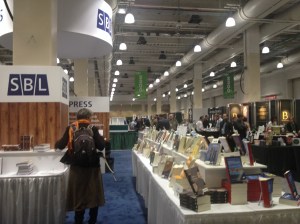
I’m on a train heading to Boston. If you notice a dearth of religion scholars in your neighborhood this weekend, it’s because it’s time for the American Academy of Religion and Society of Biblical Literature annual meeting. If a religious emergency comes up, take two of your favorite scripture and call the office next week. Viewed from the outside, this must be one of the stranger scholarly gatherings. A few thousand people get together in posh hotels and convention centers to exchange ideas about which the larger world cares very little. Ironically, the vast majority of people in the world are religious, but as a society if we know enough about the Bible to get us through the most recent indiscretion, so we’re good. Let the scholars have their fun.

This year there’ll be a session on monsters and monster theory that I helped to organize. That doesn’t mean I’ll get to attend it—the conference is a very different beast for those on the exhibit hall floor—but I’ll have the satisfaction of knowing that it’s happening. Years ago I discovered that many of my colleagues who are teaching shared an interest in monsters. Many of us weren’t aware of the others because this isn’t the kind of thing you talk about in polite company. One thing an editor may be is a vector. We hear what widely separated people are working on. Every great once in a while we’re able to put the pieces together. So it was with monsters. There seemed to be a critical mass, and two or three colleagues took the idea and ran with it. Or ran from it, whichever you do with monsters.

For me Boston will be a series of meetings that will blend into one another until I’ll have to consult my notes to remember anything at all. If I could feel this wanted outside the conference I’d never have to dream of being a rock star. You see, editors are the gatekeepers of academic publication. For those lucky enough to have teaching jobs, it’s publish or perish, so the editor is a vital link. The rest of the year we fall into the background. Emails go ignored. Reminders are forgotten. Requests unanswered. But here, out on that carpeted concrete, we’re the ones they’ve come to see. What we do in the conference matters very little to the world at large. But we do it anyway. We gather together just before Thanksgiving, thankful to be reminded that there are others like us.


Contracting Something

Book contracts make me happy. After slipping from higher education into the limbo of editing, it took a few years before realizing that not all books have to be academic monographs. For the past couple of years I’ve been silently writing a book intended for general readers. The subject will remain hidden for now, but a contract for the book has arrived and I’m happy. As my friend Marvin says, “for a man being published is about the closest you can come to giving birth.” There’s a bit of truth to that. Several months of thoughts growing in your head finally culminate in a full developed form, capable of surviving outside the confines of your protective mind.

The motivation for many academics to write is “publish or perish.” In my career track I both published and perished. The thing is, I write because I read. It seems unfair to read so much and not to share a bit of what I’ve learned. If you read this blog regularly you know that I have a restless intellect—the kind of thing that in the old days would’ve made you a professor. I no longer have access to university libraries with their arcane journals and massive collections, but reading on the bus is its own kind of research. (Anyone who’s tried to write notes on a bus, however, knows that the research is limited strictly to what can be remembered after a wearisome 90-minute-plus ride in stop-and-go traffic.) A few years back I decided to start writing up what I’d been observing. Slowly a book was formed. The process is not a swift one.

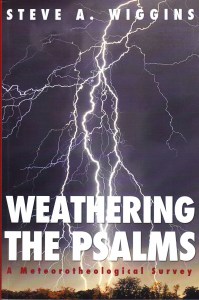
Many people question the ability of editors to write books. No, seriously. Agents are generally only interested in professors, celebrities, and journalists, not those who may have been one of the above once upon a time. That’s why this book contract feels like a small victory. Weathering the Psalms was written for other professors while I was still one myself. A lot has happened since then. I’ve read hundreds of books in the intervening years. Slow study that I am, it took some time before I realized I could begin to analyze all of this and write it in a way the average educated reader could find engaging. Agents declined the project, but now I’ve found a publisher who believes. When you work on your own, like many authors do, finding just one believer is sometimes all that it takes.


Justice for All

One of the perks of working for a publisher is author talks. I’ve worked for three publishers now, and the last two have made great efforts to bring authors to their New York offices to present their work, in a kind of dry run, to those in the industry. When an author (whose book will eventually feature on this blog, so I don’t want to provide any spoilers just yet) was to speak on misogyny this week, I quickly signed up for a seat. Perhaps it’s a lack of imagination, but I could never understand how one human being could ever feel superior to another. As a child with no father around, my experience suggested that women were the strong ones. Yet when out in society I saw men always stepping in to take charge. What was wrong here?

I realize that I view life through male lenses. I’m also aware that gender isn’t nearly as definitive as we tend to think it is. Biology fits us with bits and pieces, and some of those constructed somewhat like me assume this gives them the right to dominate others. And they say we’re better than animals. Better at what, I ask? No, this isn’t about chauvinism—a man stepping in to support weaker women. This is about justice, plain and simple. We’re all born human. Humanity is nothing without those of both genders as well as those somewhere between. What should separate humankind from the vicissitudes of nature is the inherent commitment to fairness. Life is harsh and not all receive fair treatment. Do not listen to the narrative coming out of Washington, DC! The father of lies dwells there. And yes, I mean “father.”

We used to take pride in having climbed above the mere animals. We have constructed something that used to be known as democracy. Lawmakers, while fighting against women’s rights in word, nevertheless tacitly supported them at home. Now our government has declared open war on women. Men who have no idea what it is like to be viewed as and treated like an object every single day of their lives are making laws to punish those who do. I feel as though the sky is about to crack open and that blind principle we call justice is about to shout “Enough!” That’s not, however, the way that nature works. It is only when women are treated equally with men that we’ll ever be able to call ourselves civilized. Or even human. Until that day we’ll hunker down in our caves and await lawmakers who have any inkling at all of what fairness, what justice, even means.


How to Talk to an Editor

There are right ways and wrong ways to get your book published. When approaching an editor, there are a few things to keep in mind. For one thing, we’re human. Yes, I know that I have something you want. The usual career track for an academic is Brown, Harvard, dissertation published by a certain academic press with which I’m familiar. I get that. The internet, however, has made publishing into something different than what it used to be. First of all, you can self-publish. Sorting through all the self-proclaimed experts can be a full-time job when you’re trying to find the latest authoritative treatment of a subject. Also, the internet has made research into publishers much easier than it used to be. My first book, back in the day, was simply sent off to a European publisher that specialized in academic monographs in my subject area and then I moved on. Today authors see flashy first books online and want just that. You can have it all, they’re told.

My LinkedIn profile took a definite boost once I became an editor. Now I often think it would be great if someone asking to connect actually knew me. But I digress. One way not to get your book published is to state right on your LinkedIn profile—or other social media—that you have a great book and you’re letting all publishers know. You then invite them to connect on LinkedIn and your book announcement, like a peacock’s tail, is supposed to attract the hungry editor. In reality what attracts an editor is professionalism. Research publishers, find out what they actually publish. That’s pretty easy these days; there’s more than funny videos on the internet. Even browsing titles similar to your own on Amazon can help. Pay attention to the publishers of the books you’re using for your research. If a publisher has done several books in your area they are more likely to be interested in your proposal than a publisher who’s never ventured into those waters.

It may be easy to think of us editors as sitting bored in our lonely cubicles, awaiting the next great thing. The fact is we receive plenty of submissions and we have to sort through them. Treat the subject professionally. Many of us hold doctorates and are keenly aware of hyperbole when we see it. You don’t need to tell the editor your book is ground-breaking. They will make that decision based on the evidence before them. And trust your editor when it comes to things like how a book should be titled or placed or marketed. Publishers—some of which have been around for centuries—daily face the harsh realities of producing books in an era of YouTube and online television. We know it’s difficult out there. Many of us want to help. Some of us write books and have to go through the same travails as other authors in finding publishers of our own. Do your research on publishers. When an editor offers free advice, take it. A little bit of extra work by an author goes a long way in helping a book proposal succeed.


The Struggle for Relevance

Futility is a specialization of those of us who consider ourselves fans of Ecclesiastes. Thus it is that the blog of an editor gets so little attention among academics. Since you’ve been kind enough to drop in, I’m going to share some secrets with you. Make sure the door is closed. Ready? I want to talk about academic publishing. If you, like me, have written academic monographs, you’ve probably figured out that we aren’t famous yet. What’s going on here? What happened to the day when “I wrote a book” meant something? Like all organisms, academic publishing evolves. Many academics want to write for a wider audience, but sometimes miss the bigger picture. Here are some tips to help out:

If you want to write for non-academics get to know some. A good first step is ditching the jargon. “Prosopography” wasn’t on many people’s SAT vocabulary flash cards. Even if you know how to use a thesaurus to find an archaic synonym to use, don’t assume your reader will do the same. Try reading a novel once in a while. They can teach academics quite a bit about how to communicate. Learning to speak the vernacular is only part of the battle, though. The larger part is learning what is of interest outside the academy. Some things, such as Ecclesiastes, aren’t. Oh, I know, I know! Five years of your life spent on some obscure topic should be worth publication. It probably is. A handful of people will read it (print run numbers would only make you weep). If you want to reach a wider readership, you have to go where people actually live. What’s of interest to them? Hoi polloi. They won’t bite. To write for a wider readership you need to learn what people find interesting and what they simply don’t.

An editor can be your friend here. You see, editors are measured by how well their books sell. We can usually tell at a glance if a topic is in the “less than 200 copy” camp or not. I know that you were taught in your doctoral program to find some abstruse subject never before addressed and research it from every possible angle. Write up your results and publish. A far better way to write for a wider readership is to begin a conversation with your editor. Are you thinking of a book on a specific topic? An editor can tell you if it’s likely to work or not. The idea of writing the book your colleagues said would be hot and then finding a publisher seldom works to everyone’s satisfaction. It’s all about communication. And you, dear readers, now know something most professors don’t.


Citation Anxiety

As a recovering academic, I sometimes am compelled to look when Academia.edu sends me notices. Academia, most of my academic colleagues don’t realize, is a for-profit website that advocates open access. “Open access” (or OA in the biz) is academic trash talk for making the published results of research available for free. It’s a great idea, but it often doesn’t take into account how complex publishing really is. Peer review, printing, and distribution of articles all take money and to make all research free cuts out what those who publish the research can use to fund the venture (with a cut taken out, of course, to make the whole thing worth their while). That’s the way capitalism works. (Look it up under economics.) In any case, not realizing that Academia is also a profit-making venture, lots of us put our published papers on it, making them freely available to anybody who cares.

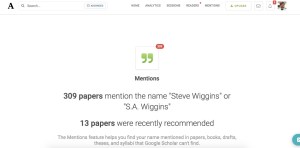
Once in a while Academia will send its users a flattering notice: “X-hundred people have cited your papers.” Be still, my throbbing heart! Desperate for any attention, most academics (let alone us exes) are thrilled that more than 100 people have read their stuff. So I clicked their link. “309 papers mention the name ‘Steve Wiggins’ or ’S.A. Wiggins’” it cheerfully reads. I know something the robot apparently doesn’t. I’m not the only Steve Wiggins on Academia. There is a slightly older agronomist whose name I share. He’s employed in academia and has more papers than me. And “S. A. Wiggins” could be anybody. My 309 paper mentions shrinks to double digits. Not high double-digits either. Names are hardly unique identifiers. With some seven-and-a-half billion people, there’s bound to be some reduplication. I always tell the few curious to search “Steve A. Wiggins”—with the quotation marks—to find the few, true references.

Taking on the internet is a fool’s errand. This blog gets a few piddly hits a day. I often consider closing it down. Readers don’t share it enough to get any attention. It takes a lot of effort on my part since I write books (both fiction and non) in my hours not at work. So when Academia shows up in my inbox my excitement spikes, just for a moment, and I go on with my other work, which never seems to get done. And then, when I’m sure nobody else is looking, I go ahead and click on the link.


1985

My edition of 1984 contains an afterword by Erich Fromm. I’m afraid I’ve been in publishing long enough to be somewhat cynical about “value-added content” that’s used to sell subsequent printings. Those who buy a book off the shelf want the text of George Orwell’s classic, not the comments of some academic, right? The intended market, however, is for classroom use—the sweet spot for academic publishers. A few adoptions at major university and what is otherwise any old tome from the used book market becomes a profitable venture. My edition of 1984 is a 62nd impression with a copyright of 1961. The class I took where it had to be read was two decades later than that. In any case, Erich Fromm. I first learned about him in college, and given the underlining in his essay I know I read it back when I took the class. In rereading it decades later, an un-remembered point came clearly to me—Fromm’s brief essay is on prophecy.

In the popular mindset, prophecy is predicting the future. While there’s some element of that in the Bible, by far the majority of prophetic texts serve as a warning to change how things are done before it’s too late. There’s a contingency about it. “Or else.” If there’s no possibility of change, why castigate people you’re only going to destroy anyway? Prophecy, despite its often dire outlook, is ultimately hopeful. Wrote Fromm “it was quite obviously [Orwell’s] intention to sound a warning by showing where we are headed.” But more important are the next words: “for unless we succeed in a renaissance of the spirit of humanism and dignity” all will be lost. The spirit of humanism.

Fromm was writing during the nuclear fear that I recall very well from childhood. As soon as I was old enough to comprehend what we had created, I feared we would eventually loose it upon ourselves. I was hardly a humanist at the time, but I was, even in my young days, an unwitting advocate of its spirit. I believed all people had a chance, or should have a chance. Foreign evil, as it was being presented by Ronald Reagan, seemed more fictional than Orwell. The average person didn’t want war. It was the Party that needed our fear. I graduated from college, seminary, and my doctoral program, eventually forgetting Fromm’s words. The Whitehouse had finally found its way out of the Bushes and into moderate humanism. Then Fromm came back.


Editing Sheep

Many academics I know dismiss editors as just another species of laity put on earth to serve the guild. There’s perhaps some truth to that. Without people to write books—and few beyond the professorate are granted the time and leisure to do so—we’d be without a job. One of the more hidden aspects of being an editor is, however, its prophylactic role. One thing that those of us who’ve written books know is that we get pretty close to our subject. We have to. Writing a book while viewing your topic from a distance is possible, but not desirable. Being too close to your subject, however, often leads to extreme myopia. Many are those who are quick to dismiss editorial suggestions wonder later why their books didn’t do better. Think about it. Editors, by definition, read all the latest stuff.

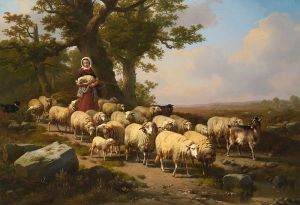
We’re kind of like shepherds, my fellow editors and me. We try to keep the ideas in order. We’re not the owners—the authors are—but without an able shepherd you soon find yourself lacking the sheep that make you wealthy. The benefit of an editor is having dispassionate eyes—often knowing eyes—viewing a nascent book without the love of a parent. Don’t get me wrong—we often have great fondness for those books we didn’t write. We can tell the author something s/he is too attached to the text to notice. We can help the writer avoid mistakes. Not that we’re perfect, but we are critical because we’re rooting for you. Facilitators.

It used to be common for editors to be authors. With the growing atomization of specialization, however, this is fairly rare these days. As a colleague of mine once put it, editors are more like deans than faculty. We look at book budgets and statistics. We face the harsh realities. And some of us were once faculty. I receive dismissive notes now and again, supposing that I’m an English major who made it good. Unlike many editors, however, I write. I’ve sat on both sides of this desk and when I offer advice it’s for your own good. Academics and publishers need each other. For one, without books there’s no promotion. Without books, for the other, there’s no paycheck. Like any shepherd, however, we know that the sheep are the important assets. We shepherd ideas into books. But you have to trust the shepherd to do the job.


Overdone

One of the things you see quite a lot of as an editor is “the next big thing.” Authors with an ego that awes me ensure me that this book will be the sea change we’ve all been waiting for. Things will be different after this is published. I don’t blame them. The trades all say that you’ve got to convince the editor that this project is worth her or his while. Overstating the case is par on this course. All of this got me to thinking. If you’ve read biblical studies seriously you’ll recognize the name Wellhausen. I don’t even have to use his first name—you know who I mean, right? Well, we’ve gone beyond the days when you could be a Wellhausen. When I was a student people spoke of the Wright, Bright, and Albright school. We knew who each of these gentlemen was. Now there are so many spoons in the pot that we’re not even certain what’s cooking.

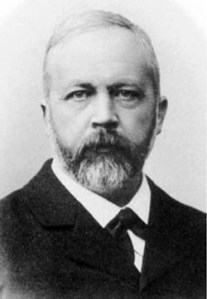
Have you seen this man?

I’m not sure what the attraction to advanced degrees in this area is. If my case is anything to go by (and I don’t claim that it is) you grow up in a Bible reading family and you want to take the next logical steps. When you’re far enough along on the path to realize what’s happened, it’s too late to turn back. Many things in life are that way. There is a tipping point, a moment of crisis, then nothing will be the same. Then you learn you’ll never be the new Wellhausen. There was only one, and that was a couple of centuries ago now. I run into some pretty strange stuff when it comes to ways of reading the Bible. When the dust settles, however, we’ll still be counting J, E, D, and P on our fingers.

This isn’t a field for fame. Don’t believe me? Approach a stranger on the street and ask them if they know who Wellhausen is. Alas and alack, one of our greatest names is nobody outside the academy! In my own days among the privileged professorate, I never suspected I’d be anything but one of many voices trying to be heard. After all, my training was really more in history of religions than Bible in the first place. Dead languages had to be negotiated, but that’s all part of becoming an expert in something nobody really cares about. But then I think of Wellhausen. There was a time when all of this could make a nation such as Germany sit up and take notice. That day was centuries ago, and I’d better check that pot—I think maybe whatever’s in it may be done.


How to Type a Stereo

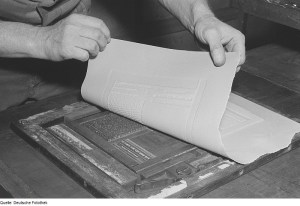
In the early days of publishing, type was set by hand. Individual letters, inserted backward onto plates, were used for printing the positive of a page. Printers could make as many pages as desired, but once the letters were released, it was time-consuming and costly to arrange them all again. If a book (principally) was expected to sell well enough for reprints, a plaster or papier-mâché mold was made of the page. This could be used to cast a solid metal plate of the pages to store for future print runs. This solid plate was known as a stereotype. Every copy from the plate would be exactly the same. When the plate was no longer needed it could be melted down and recast. The origin of stereotyping is a useful reminder of what happens when we preconceive a notion. For example, if I write “computer programmer” there is probably an image that comes to mind. No matter how many stereotypes confirm that mental picture, it isn’t true to the original.

Photo credit: Roger and Renate Rössing, Deutsche Fotothek, via Wikimedia Commons.

A piece by Josh O’Connor on Timeline, “Women pioneered computer programming. Then men took their industry over,” tells the story. Back in the early days of computing, when programming was seen as the menial labor of swapping out cables and plugs, it was “women’s work.” When it became clear how complex this was, and how many men didn’t understand it, the job was upgraded to “men’s work” and women in the industry were replaced. Stereotyping wasn’t just for boilerplate any more. The unequal assumptions here have led to a situation where computer engineering jobs still overwhelmingly go to men while women take on more “gender appropriate” employment. Any task that requires mental calculus benefits from input from both genders. One’s reproductive equipment is hardly a measure of what a mind is capable of doing.

Stereotyping is so easy that only with effort can we force ourselves to stop and reevaluate. The computer industry is only one among many that has been remade in the image of man. Our archaic view of the world in which everything is cast metal should be softening with the warming of intellectual fires. A large part of the electorate in our technically advanced nation admitted it just wasn’t ready for a woman in the role Trump is daily cocking up. It will take more hard lessons, perhaps, before even men can be made to admit that women can do it just as well, if not better. Stereotypes, after all, are eventually melted down to make way for new words. This may be one case where literalism might be a reliable guide.


Write or Wrong

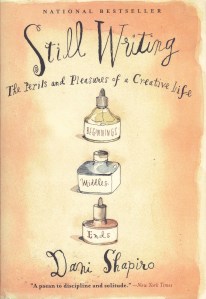
Lots of people write for lots of reasons. Some love it. Some hate it. Some can’t help themselves. For those who know me primarily through this blog, it may not be obvious which of these sorts I am. After having read Dani Shapiro’s Still Writing: The Perils and Pleasures of a Creative Life I finally feel confident putting myself in category three. It’s not that I don’t like writing—I live for it. The kind of person Shapiro describes, however, is the one who defines their entire being through writing. Each day I post between 300 and 500 words on this blog. I’ve been doing it since 2009, which means I’m somewhere over the million-word mark. But those compelled to write will never be satisfied with just that. One does not live by blog alone, after all.

Once in a great while I get asked how many books I’ve written. Well, that’s not a question with a straightforward answer. Two of my books have been published. I’ve written at least ten. Some of them never made it from my desk to a publisher’s wastebasket. A few of them have. Like others who are addicted to writing, I can’t stop. Ironically, with a decade of experience working in publishing I’m not so good at getting my own work placed. Some of it is fiction. Some of it is non. Some of it is even poetry. If you’re a graphomaniac, I don’t need to explain any further. If you’re not, think of chocolate, or sports, or anything else you just can’t get enough of. That’s what it’s like.

Shapiro’s book, although not point-for-point, but more than not, is like wandering through my own gray matter. I had no idea that other writers—including a successful one like Shapiro—felt the same constant, nagging doubts and insecurities. I didn’t know that others considered staring off into the middle distance (there’s not always a window nearby) as work. Or that sometimes you write something and when you’ve finished it seems like it wasn’t you at all. Writers can be a trying lot. We tend to be introverts. We have odd habits (in my case, waking up at 3 a.m. to write on a daily basis). We tend to be able to spot one another in a crowd, but more likely as not we won’t say anything to each other. And strangely, we write even if we don’t get paid. With lifelong royalties somewhere in the low triple digits, economically it makes no sense to do what I do. Generally the world feels creative sorts aren’t terribly productive. It’s because we measure value differently, I expect. I’m glad to have met another traveler on this path although, as is often the case, our meeting will only be through writing.


Kindling

Paula Cocozza, writing for The Guardian, describes “How E-books Lost Their Shine.” Like most inveterate readers, she says she has stacks of books growing like mushrooms after a summer rain, in her bedroom. I was working in the publishing industry (I still am, so please take no alarm at my rhetoric) when e-book sales plateaued. Then declined. “Industry analysts” were baffled. I wasn’t. The reasoning goes like this: e-books are light and cheap and amazingly convenient—why would anyone want something different? Those of us who love books know. If you know what I mean when I write “library smell” I’m preaching to the converted. More beguiling than new car scent, that first deep breath when you step into a library takes you places your physical body may never go. All those bodies of books gathered together let off a bouquet that insists you follow your nose to an earthly paradise. I just tried sniffing my iPhone. Nothing. No synapses fired. I’ve read books on it, but have I really?

Studies tend to show we have trouble remembering books read electronically. It’s just too fast. Wham-bam-thank you whoever you are. Let’s get on to the next thing. But books, as Cocozza writes, are slow. Publishing’s a slow industry. You submit your proposal, and the editor reads it. The editorial board discusses it. The book is written and sent to a copyeditor. Then a compositor or typesetter. Then a proofreader. Then it’s off to the presses. Printed, bound, and shipped. It can take a year or more. And when you curl up in bed with a book, furtively sniffing it, gently rubbing your fingers along its pages, drawn into a world not your own, plastic’s the last thing on your mind.

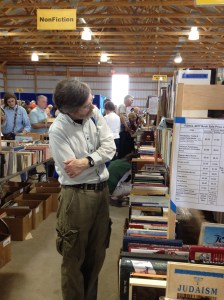
A few Saturdays ago I attended the Hunterdon County Library book sale. I go every year. It’s a big deal. People line up in advance. You step into the barn-like sales floor and it hits you—the smell of all those books. The aroma of knowledge. You can’t repurpose an e-book. You can’t sell it back because nothing was ever really produced. You purchased electrons, you’re stuck with electrons. Hit “delete” when the storage is full. All these books in this room are valuable. All for pocket-change. Many of them were wildly overprinted in the exuberance that naturally comes from being over-stimulated. Like kids about to enter Willy Wonka’s chocolate factory. Industry analysts are puzzled. If they’d get their fingers dirty by thumbing through a used book once in a while they wouldn’t be. Yes, its dusty, grungy, and probably laced with germs, but I wouldn’t trade it in right now for a Kindle, even if it costs me nothing.


Taking Time

Good writing is hard work. One of the mixed blessings of the internet is that it makes publication so easy. Get yourself a blog and nobody has to approve anything! Ideas come tripping across your fingers onto some electronic substrate and, viola! You’re an author! The problem is that being an author’s not the same as being a good author. Writing well (and I make no such claim for myself—after all this is just a blog) is hard work. A piece has to be written, and then read again and again. I’m reminded of the story of a convicted murder whose name I’m forgotten (call it a defense mechanism). This was early last century. The murderer was caught, initially after having been found wandering, disheveled, in public. As a respectable man (he was a doctor, I think) part of his defense was that he’d never have left his house without being presentable. He would have on a collar and hat. People would see him, and he had to convince them of his presentability every single time he walked out that door. (This isn’t an affliction that I share, by the way.) Writing for publication is like that—you need to take care to look respectable every single time.

I can’t speculate about how other writers do their thing, but for me the main requirement for this is time. Any piece that I want anyone else to see, has to be written. Read. Edited. Re-read. And probably edited again. All before the public sees it. This is just for the informal stuff. I’m currently writing a book (which is pretty much a constant state with me). The draft was finished months ago. I started thinking about a publisher. Then I read it again. I couldn’t believe I’d ever thought it was ready for a publisher. Several rewrites followed. I’m in the midst of another one at the moment. I think of it like my ill-used rock tumbler. You want shiny rocks, you’ve got to send them through with finer and finer grit. If you do it right, they’ll come out looking like they’re wet, and they’ll stay looking that way. Polished writing takes time.

Some things can’t be hurried. As a middle-schooler I had a summer job with the school district. One of my assigned tasks was painting bus shanties. Many of these were, as you’d expect, way out in the middle of nowhere. I’d be dropped off with a couple other teens and we’d paint the shelter inside and out. One day I got tired of the constant, boring, and repetitive task of filling a paint pan with white paint, carrying it into the shelter, using it up, and then doing it all over again several times. I decided to pour the paint directly on the plywood floor of the shelter. All I’d have to do would be to roll it out and who’d be the wiser? I only did it once. Little did I consider that the best painting, like the best writing, is a thin layer over the substrate. You need to go over it more than once, leaving time between layers. More importantly, I didn’t realize that you can’t gauge how much paint you need this quick way. The best thing is to run out and refill. Then you can pour the remainder from the pan back into the can. The floor took hours and hours to dry. Not only that, but the top surface dried first, so when I stepped in, I pulled up a thick layer of paint off on the bottom of my shoe. Tom Sawyer I was not. I had to redo it. What I learned that day, though, was a lesson about writing. Take your time. But you don’t have to take my word for it. I just write a blog.


Weather Vain

The other day I was awakened by a severe thunderstorm. It’s been quite a while since that’s happened. Unlike when we lived in the Midwest, thunderstorms in New Jersey tend to be widely scattered and somewhat uncommon. (It’s all a matter of perspective, I know.) My basis of comparison is how often I notice such storms. I’ve never been able to sleep through one. Thankfully this one came at around 4:30 a.m., past when I’m usually awake on a weekend. I’d forgotten the raw power of just how loud and bright such a storm can be. Danger seems all around. The feeling is primal and urgent. As I got out of bed and walked into the dark kitchen, windows filled with electric blue followed by and tremendous blast, I thought once again of Weathering the Psalms and the story behind it.

By the way, when I speak to young scholars about publishing I tell them this isn’t the way to go about finding a topic. That having been said, my book was born in the Midwest. Life at Nashotah House revolves around required chapel twice daily. Weather does not stop it. In fact, holding the daily office by candlelight because a storm had knocked out the power was not uncommon. Morning and evening prayer—indeed, all of the canonical offices—are built around the recitation of the Psalms. Reading the Psalter in slow, stately tones while thunder raged outside, rattling the ill-fitting stained-glass windows, left an indelible impression. It was only natural in such circumstances to notice how often the Psalms mention the weather. Thus a book was born.

I’m currently at work on a new book. I can’t say the topic just yet because someone might be able to beat me to it. (Knowing the way I come up with book ideas, however, I doubt it.) Sitting in my darkened living room, in my writing chair with the fury just outside, I was strangely inspired by the storm. Then it was over. Silence followed by birds singing, just like in Beethoven’s sixth symphony. The thunderstorm is one of nature’s psalms. As at Nashotah House, in the Midwest we had perhaps too many of that particular kind of psalm. Nevertheless, in the silence that followed I was left strongly in touch with my muse. These are the states that lead to poetry and song. Every great once in a while they might even lead to a book idea. As I tell students, just don’t expect that anyone else will get it.