To Whom? For What?

Thanksgiving remains one of the few relatively uncommercialized holidays. Not tied to a specific religion, but with a general sense that gratitude is important, there’s nothing really to sell. Grocery stores may see a bump in profits, but we need to eat every day, so this is only a matter of degree. The icons of Halloween quickly transform to those of Christmas and even Thanksgiving begins to pale next to Black Friday as companies give employees the only four-day weekend of the entire year. Without money changing hands what can there possibly be to celebrate?

The strident question of to whom one is thankful is graciously subsumed under that of for what. History has demonstrated that the relative abundance that we enjoy in matters of gustatory gifts is indeed not to be taken for granted. Droughts are realities. Dustbowls and depressions occur. In many parts of the world starvation is stark reality. Having enough—even too much—to eat is less a sign of blessing for good behavior than it is an obligation to help others. Want is a specter that no one can debunk. The homeless here in a land of plenty remind us that holidays are truly opportunities to be thankful. Thankful simply for being able to get by. Not for what we buy.

IMG_2601

Holidays have their origins in religion. They may wander far from their foundations, but we have religions to thank for every day there’s a break in the routine of trooping into the office for yet another stint of work. Days when staying home is acceptable and spending is purely optional. The stretch from Labor Day to Thanksgiving is long. This goal can only be reached by a frame of mind rather than a state of one’s bank account. Having a day when money falls from focus is cause for thankfulness indeed.
The Religion Industry

The American Academy of Religion and Society of Biblical Literature annual meeting can be a heady place. Religionists tend to be “big picture” people, looking at things from the perspective that this is what life is all about. How much bigger can you get? Religion is, after all, a matter of perspective. As quickly becomes clear from glancing across the crowds—there is a literal myriad here—a great diversity exists. Ironically and irenically violence, beyond an occasional rudeness, is absent. There are believers and non-believers and they actually talk to each other civilly. They want to understand, and in an increasingly polarized world understanding religion seems like a very sensible thing to do.

It feels, however, like an industry to me. Religion evolved out of primal fears. Nobody knows for sure where it started, but someplace (or someplaces) along the course of human development, the idea took hold that humans weren’t the final word in terms of power or direction of their own destiny. There is something beyond us. It may be a tao, or it may be a god, or it may be something we haven’t even conceived yet, but there is something larger than us. The scientific paradigm, on the other hand, starts by assuming human superiority, at least in terms of rationality, over the entire universe. Teasing things apart, looking at the smallest units and building up a big picture from there, it all comes down to equations and concepts understandable in empirical terms. If there is a tao, or gods, and if they don’t leave some physical footprint, they must be left outside the frame. Until the religion industry arrives.

Every field of study has its crackpots, but those thousands milling about me as I stand in a booth with knowledge for sale are mostly sincere. The official study of religion takes place in higher education. Its practice is left elsewhere. The Dalai Lama is not here. The Pope is not passing through adoring crowds. Even Mike Huckabee hasn’t put in a guest appearance. We are not always the friends of those who do religion, for this is a complex industry. Our role is to ask how religion works. Beyond that, we try to fit it into a larger picture—one that expands beyond the universe itself. Out to where a mysterious force may lurk. A force that reminds us that human effort, as strenuous as it may be, must acquiesce in the presence of the unknown.

IMG_2612


All for Naught

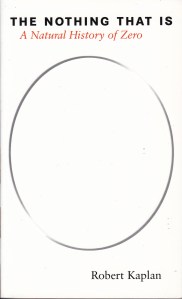
ZeroPhilosophy, it used to be said, was the handmaid to theology. According to some among the scientific establishment the whole lot should be thrown out, baby, bath water, and tub. It has always distressed me to read scientists dissing philosophy (theology I can understand). Empirical outlooks are definitively based on a philosophy, and no matter what we may think of post-modern theorists, we are indebted to philosophers far more than we probably realize. I just finished reading Robert Kaplan’s The Nothing That Is: A Natural History of Zero. I noticed the book when it was first published, but found it recently at a book sale for almost nothing. I’m glad I did.

I can’t pretend to understand all the equations in the book. There aren’t that many, thank goodness, but Kaplan uses them to make his point. He shows, through a combination of history and logic, how zero has made our modern world possible. One of the features that immediately stood out is how often religion entered the discussion. Kaplan isn’t hostile to it, he merely notes that some theologians resisted it along the way while others declared that nothingness was necessary and inevitable. Likewise philosophers. And mathematical proofs lead into some strange neighborhoods when zero’s your traveling companion. Indeed, some chapters of this little book so resembled philosophy that it was easy to forget a mathematician was our actual guide. I took some advanced math in high school that I survived only with the aid of my brother, but this book helped to make some sense of a past largely forgotten.

Science is all about numbers. Quantification. In fact, many scientific theories would simply fall apart without the math to back them up. A scientist learning math, as Kaplan demonstrates, is learning a philosophy. Even in the strange world of quantum mechanics, we’re told, the math holds up. We wouldn’t even know about some worlds if it weren’t for the equations. If math is near kin to philosophy, how can any right-minded scientist reject philosophy as nonsense? Isn’t this, logically, rejecting the basis for your own quantified discipline? And, if I may be so bold, philosophers generally acknowledge that their discipline has a, perhaps estranged, relationship to religion. If we look at it holistically instead of calling each other names, we might come to see that knowledge comes in many forms. Perhaps the most unexpected among them is that of the lowly zero.


Imagining Things

Having a child in college is one way for me to stay attuned to popular culture. You can absorb quite a lot by simply paying attention while on campus. For example, on the last several visits I’ve heard the song “Demons,” by Imagine Dragons, being piped into various venues. Given the biblical language of the song, I wondered about its origins, but, like many a distracted parent, had too much on my mind to pursue it. Well, on a recent visit, the song got stuck in my head. Partially this was because during an a cappella concert the Christian group did a cover of the song. This sent me to the internet—the only place where information on contemporary culture is instantly at your fingertips—to do a bit of poking around. Secular groups, after all, frequently use biblical references unnoticed.

When I learned that two members of Imagine Dragons were from Brigham Young University, I just had to know if they were Mormons. From what I’d seen of concert photos, white shirts and ties were rather conspicuous by their absence. Indeed, it turns out, according to the web, that the group does have some LDS in its bloodstream. I’m not so naive as to think that being of a particular religious background makes rockers religious. The debates raged in college over whether U2 was a Christian group because some of them were Catholics. I don’t recall seeing any crucifixes on the album art. This is all especially intriguing because Christianity and rock-n-roll are considered by many to be natural enemies. The origins of rock in the sexually suggestive blues had many 1950’s parents quite worried.

Religion changes, however, once you get away from the parents. I’ve known Mormons that I couldn’t identify as such until they told me. I’ve known Catholics about which I still harbor doubts. Religious affiliation is sometimes purely cultural. That won’t prevent you from being excluded from consideration for a teaching position at any of their schools, however. Scholars of religion can be the greatest believers of fiction to be found. Still, I have to admit to myself that the song “Demons” does keep me coming back. I wonder if the Christian group performing the song was aware of its Mormon tinge, or if they even cared. Sometimes theology can be had for a song.

ImagineDragons


Myth Making

Beautiful.  Standing outside in the pre-dawn, looking up at the current alignment of Mars, Jupiter, and Venus in the east, I am struck by their presence.  The planets, “wanderers,” were known by the ancients to be gods.  Tales were told of how they came to have their places in the sky.  For those too busy to look up, Venus alone can take your breath away.  After the sun and moon, it is the third brightest natural object in the sky that can be seen on a quotidian basis.  It has been brilliant this month, and the peoples of ancient times were fascinated by how this morning and evening star rose high only to flee before the coming of the sun.  Myths were built around it.  Venus, it is no accident, was associated with the goddess of irresistible beauty.  She still is.

DSCN6017

Trailing behind is Jupiter. The Roman avatar of Zeus, Jupiter is the king of the gods, but not the brightest.  Following Venus, it is the fourth brightest object in the sky, followed by various stars in their unchanging positions.  Jupiter seems to be chasing Venus these days.  Sometimes I see the two of them cavorting in the light of the moon.  The object most desired by the king is no object at all, but a goddess who outshines even the power of the primal deity.  And then there’s Mars.  Mars lags farther behind, never quite the master of war, at least according to Homer, that he hoped to be.  He is nevertheless the consort of Venus, for strong emotions tend to go together.

I glance at my watch and I know I should be headed to the bus stop by now, but I dash inside for the camera.  It is a vain hope that I can capture what even these eyes can plainly see.  It is a drama acting out in the celestial sphere.  Three planets in a neat line, clear as Orion’s belt, within the length of my thumb held at arm’s distance.  I can hear the bus rumbling toward the corner, and I know I’ll have to rush, but even as I power-walk to the stop, I keep glancing over my shoulder to catch a few last glimpses of a myth in the making.  Is it any wonder that we’ve lost the magic in our lives, when we can’t even take the last moments of darkness to pay tribute to the gods?


Pagan Religion

TriumphMoonFraming. Much of what we call “religion” has to do with framing. At one time it was standard practice to assume “pagan” was distasteful, if not downright evil. “Witch” was a pejorative term intended to humiliate and excoriate. Ronald Hutton is one of the few scholars who has taken the time to consider Wicca and related religions seriously. The Triumph of the Moon: a History of Modern Pagan Witchcraft has been on my reading list for quite some time. It is a big book, but this is a complex subject that can’t be dealt with briefly. Taking the time to get to know witches, with a historian’s patience, Hutton has given the world a valuable, balanced resource. Without prejudice, he traces how paganism, Wicca, and witchcraft are religions difficult to define or even categorize. There is little to frame them.

Rumor and hearsay make poor substitutes for understanding a religion. Most of what I grew up learning about witches was, in short, completely wrong. I wonder how much more pleasant the world might be if people assumed religions all to be similar in many ways. They are varied attempts to find ways of being moral in a world that gives little clear instruction on the matter. Witches and pagans are only evil in the uninformed opinions of more powerfully established religions. Religions of empire, whether real or only imagined. Those that had political backing and brute force to anathematize those who were different. Theirs is still a stigma that persists.

The Triumph of the Moon recounts the development, since the early part of the last century, of a somewhat organized experiment of religion as it grows organically. Without a leading figure or spokesperson, radically egalitarian, these groups, while sometimes in conflict, coalesce around the practice of finding something magical in the world. Theirs is an educated, literate world that does not judge other religions. It isn’t perfect, but then what religion is? The belief structure isn’t so different than many established religions except in the matter of degree. It is private and secretive in a way that we could only wish in many religions, if they could be counted on to behave themselves. I’m not likely to do a sky-clad spiral dance any time soon, but I would say that if we took religions at their word for being what they say they are, we might have a lot more resembling that of the noble pagan.


Living Undead

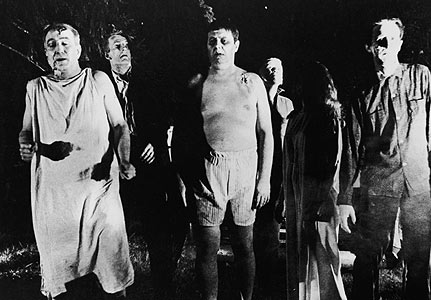
Now that autumn is in the air, my thoughts turn to zombies. I’ve read a few monster books lately, and as I pondered the attraction of zombies to the post-modern psyche, I began to wonder if they weren’t becoming, in their own secular way, a religion. Think about it. Zombies, first and foremost, are about resurrection. In a world ruled by rationality and science, we know that resurrection is impossible. What isn’t possible in science may indeed emerge in the world of monsters. The zombie, often not speaking, proclaims a distorted kind of gospel that the end is not really the end. Resurrection is not all that it seems. Zombies are spattered with gore, reminding us that the visceral existence we know as quotidian experience is temporary. Resurrection comes at the loss of a soul. The zombie is the monster of science: the animating principle is no longer spiritual. It’s just physical.

NightoftheLivingDead

Not only do zombies proclaim resurrection, they are the ultimate proselytizers. Their zealous hunger leads them to bite and their biting infects and creates new zombies. Their brainless goal—as they are unthinking consumers—is to convert the entire human world to their point of view. Once the zombies take over completely, there will be nowhere left to go. The way of the undead flesh may be a dead end, but rationality doesn’t always play a role in zealotry. The zombie is all about making more zombies. They are unbelievable, and unbelieving, but they have the making of a mega-religion nonetheless.

As a student of religion, I wonder how belief systems get started. We hold irrational beliefs on any number of things, including our religions. The difference that zombies make is, in real life, nil. And yet we can’t help tuning into the Walking Dead, or watching World War Z. The zombie is the most recognized symbol of the proletariate among the workers of the world—the brainless, soulless drone in the machine. Mega-churches draw in thousands every week for a religion that doesn’t require much intellectual engagement. Keep doing what you’re doing. Think of others once in a while. God really does want you to be rich. And the minions go out and make disciples of all nations. It is a world full of zombies. We see them in our dreams and in our mirrors. And although we think they’re only entertainment, they are oh so much more.


Apostolic Succession

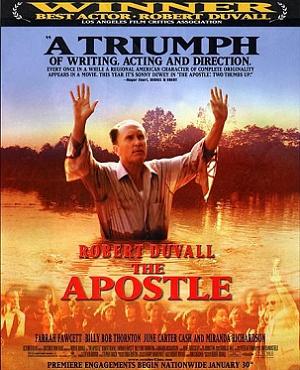
I try, normally, to limit blog posts to one per movie (per viewing), but I’m still thinking about The Apostle, so I thought I’d share a bit more. I can’t get that scene of “tag team” preaching out of my head. The extras on the DVD reveal that the preachers, other than Robert Duvall, were actual ministers. When Duvall comes on the stage, acting, these other men “catch on fire,” preaching to the small congregation gathered under the tent. They’re not acting. This juxtaposition of someone acting as a preacher sharing an actual revival with those who are actually preaching makes me wonder if there was any dissonance felt. Did anyone feel any compunction about really preaching after getting riled up by someone who was only pretending? Where is the line between fiction and fact here? Film and reality blend.

Apostleposter

The same kind of question occurred to me after watching The Witness. I’m not a Hollywood expert, but the rumors that circulated then (and I was in college at the time) were that some of the actors were actually Amish. They too, lived their actual faith while in the presence of actors, cameras, and a director. These films that use non-actors certainly score points for verisimilitude. Rev. Charles Johnson, for example, is really “in the spirit.” The scene of him, “coming down from the spirit,” Duvall reveals in the Making of segment, is real. This man, at least, had a spiritual experience in a fictional piece. The same, Duvall suggests, may apply to Sam in the final altar call. This was, he avers, real emotion, not acting. Does being saved in fiction count in real life?

Movies sometimes leave me wondering what is real. I suppose that’s part of the draw. Religious experience, like sex, is generally faked on film. Things that are sacred are felt to be off limits to the eyes of strangers with only voyeuristic interests. I’ve lived long enough to see photographs go from proof positive to Photoshop fantasy. We can’t believe what we see any more. How are we to comprehend films that portray religious experience? Did Robert Duvall actually save any sinners from Hell? Does it make a difference if an ersatz minister is the one who leads you there? What of a real minister who fails to convert the viewing audience? Films are not simple escapism, I know. And as I continue to wonder about saints and apostles, I’m going to have to try to understand what can be caught on celluloid and what can’t.


Henging Our Bets

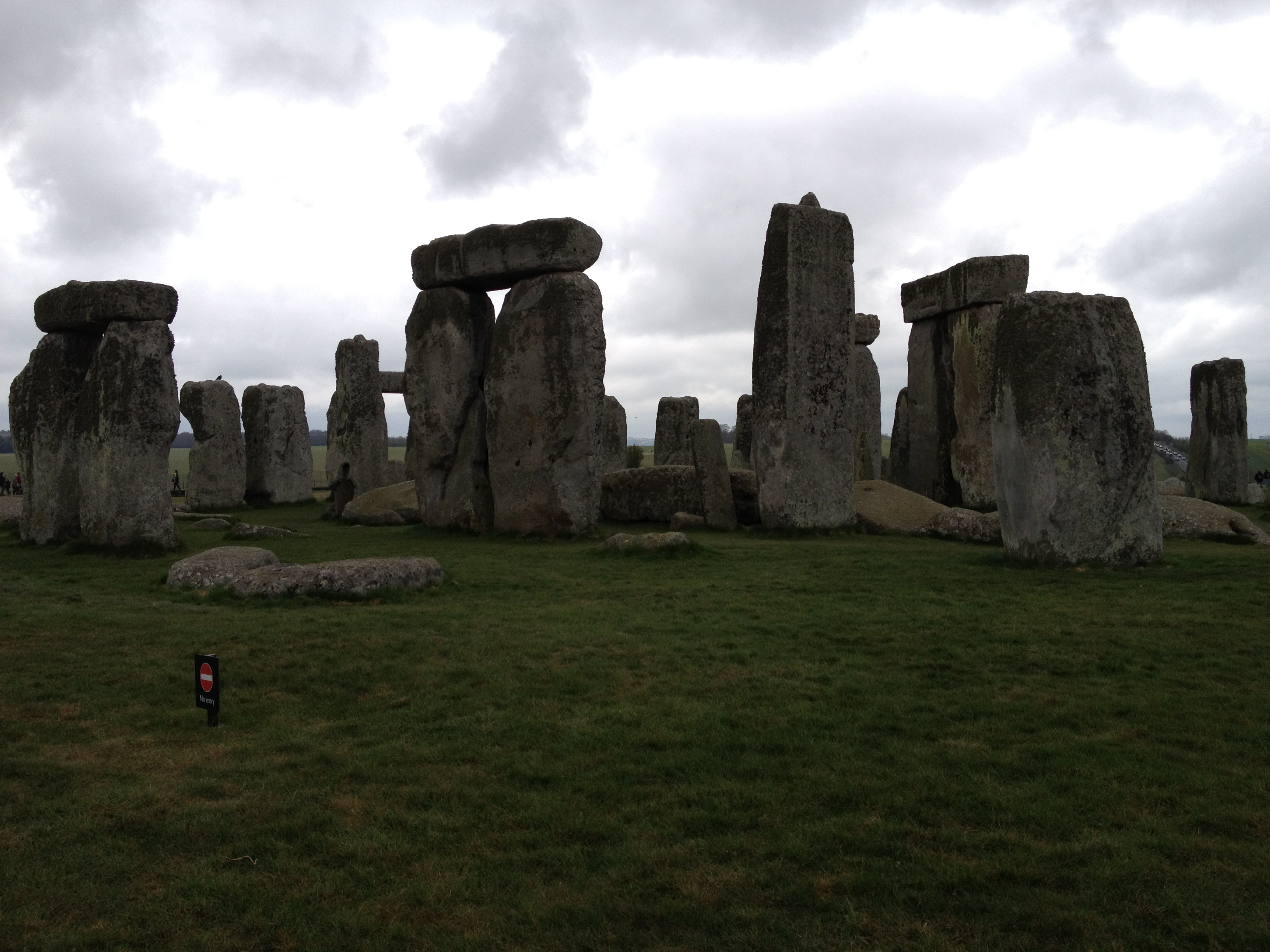
With the discovery of Göbekli Tepe, the history of civilization has received an unexpected prologue. In the view of the archaeologists involved in the excavation, the site can only be religious in nature, indicating that the earliest communal efforts of humans were not for mutual protection or for the benefits of growing crops, but for worship. In an era of angry atheists and nones, this isn’t really welcome news. Many people are ready to flush religion once and for all, claiming that it inspires only terrorists and fanatics to more and more extreme deeds. Well, I suppose Göbekli Tepe can be considered a form of extremism. Massive amounts of energy were required for the building of the site. And it was buried, intentionally, when the builders were finished with it. The news of a new component to the much later Stonehenge complex, the Durrington Walls, has recently been presented. Stonehenge, in England rather than in Turkey, and much closer in time to us than Göbekli Tepe, is a site that has touched the human imagination in a profound way. Still primitive at the time of its construction, Britain was a land already brimming with religious monuments. The new discoveries make it even more intriguing.

IMG_0234

Stonehenge is only a small part of what is now being called the Durrington Walls super-henge. Those who visit Salisbury Plain know that Silbury Hill and West Kennet Long Barrow are both impressive in their own right, and not far from the more famous sarsen stones that appear on everything from coffee mugs to tee-shirts and in movies and television shows of all genres. This part of prehistoric England seems to have been a sacred site many hectares in extent, with various “temples” and monuments dedicated to a religion we simply don’t understand. What is clear is that massive human energies were put into the building, expanding, upkeep, and functioning of this site. People have a deep, and very passionate urge to answer the religious longing that even sophisticated engineering can’t placate.

It could be argued, of course, that we’ve outgrown our childhood need for parents in the sky. Science and rational thought have shown us the way forward and although ancient monuments might be a fun diversion, they really mean nothing. I would disagree. Places like the Durrington Walls super-henge indicate what it is to be human. Clearly, given that even Stonehenge fell into disrepair and lay neglected for centuries, it was not a continuity that stretches, uninterrupted to today. Nevertheless, the effort expended to fill a void we feel should tell us something about what being conscious creatures is all about. Life doesn’t always make sense. The rational cannot explain everything. It would be naive to try to make Stonehenge reveal its secrets, but even standing at a distance (which is the only way you can gain admission any more) you have the sense that you are among those who knew what the human spirit required. Even if pagan and illiterate, they have spoken to us through the ages and we can only continue to wonder at what we’ve lost.


Hunter-Gatherers

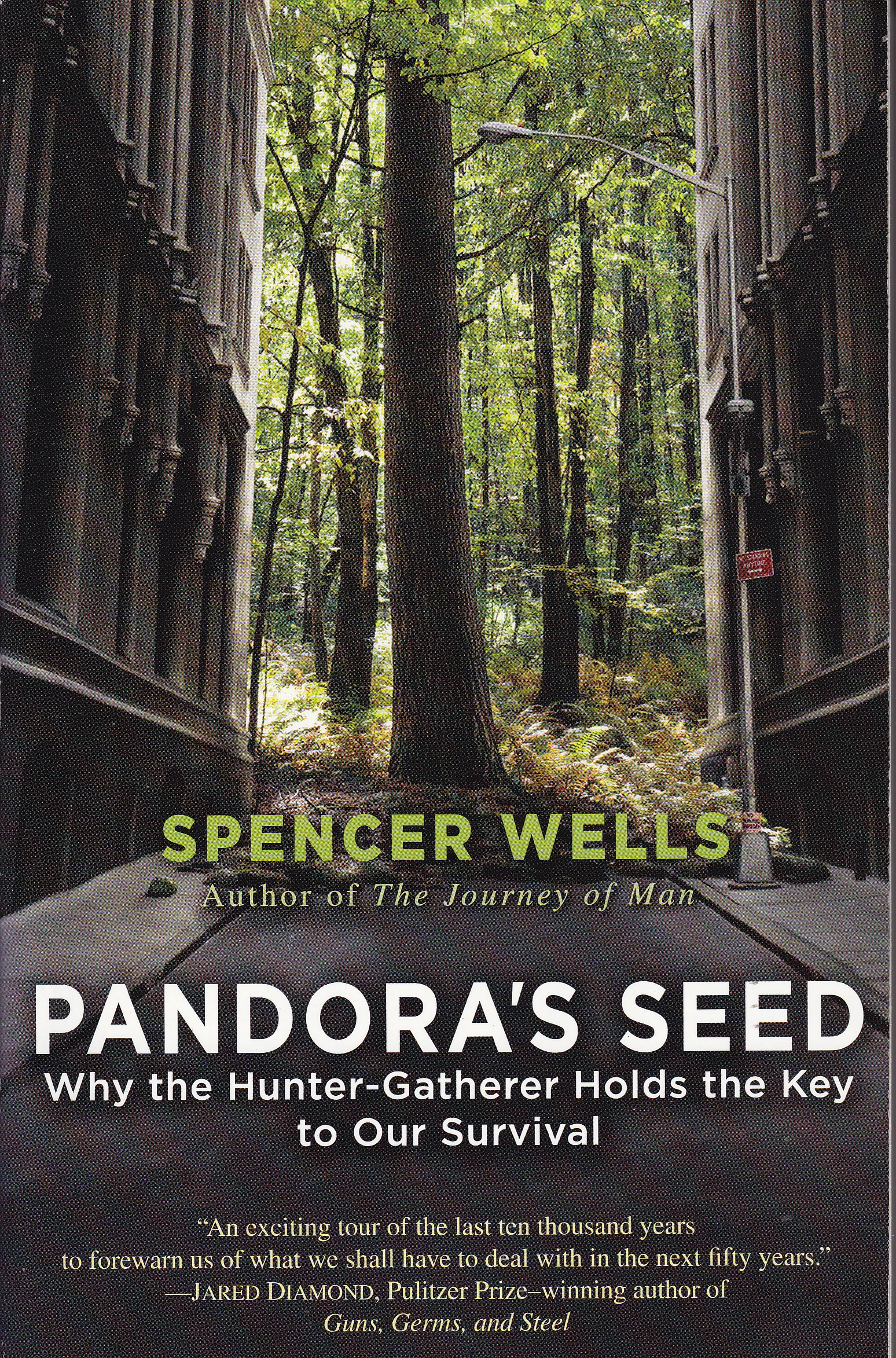
PandorasSeedEvery once in a while I put down my work long enough to look at where we are. It’s often a frightening experience. Not many of us would be equipped to survive the collapse of civilization, despite the many television shows that depict such future anarchy. I suppose that’s why Spencer Wells’ Pandora’s Seed: Why the Hunter-Gatherer Holds the Key to Our Survival was such a compelling book. The more anthropological studies I read, the more clear it becomes that “civilization” has changed us about as much as evolution has. If not more. We have turned into something else, a creature of our own making. Wells demonstrates throughout the pages of this book how, with the first development of agriculture, we began on a track that has made us less healthy, less happy, and more dependent on technology than we have ever been. True, life as hunter-gatherers was never easy. Still, it is telling that they have much more free time than agriculturalists. And, as far as we can tell, they are better-adjusted. They are doing what we evolved to do.

Addressing issues as diverse as from how our diet has changed to genetic engineering, Pandora’s Seed is a wide-ranging and fascinating book. It does show that technology far outraces ethics and our ability to figure out the proper response to complicated questions. We often lack the time to reason things out. And yet, we live in a world where mental illness is set to become the number two natural cause of death within this century. We are profoundly unhappy. We deny climate change although it’s evident all around us. We’ve put into place a global warming that will take a millennium to dissipate even if we stopped using fossil fuels today. We deny that it’s true, we go to dehumanizing jobs, and we eat food that’s not nutritious because it’s the kind we can afford. We lack time and motivation for exercise and disease takes hold. Such a lifestyle even affects our religion.

Tellingly, Wells’ last chapter deals with Fundamentalism. Noting that humans use both logos (logical) and mythos (mystical) thinking for a balanced view of things, fundamentalisms utilize a logos system to try to explain mythos. Violence often ensues. In order to be fully human we have to admit that rationality alone does not solve all our problems, or meet all of our needs. Some of what we require is simply not material. While Wells does not suggest reverting to hunter-gatherer lifestyles, he does suggest that the only solutions to a world of limited material goods (food, fossil fuels, fresh water) that the only way to make civilization sustainable is to learn to want less. Evolution predisposes us to gather more than we need, and certainly, to hear college career counselors talk, we have to want jobs that will bring in more, more, more. The world is becoming smaller, and people are demanding that the greed come to an end. Until that day perhaps the best solution for us all would be to take a walk in the woods and to remind ourselves how we came to be where we are.


Teaching Vampires

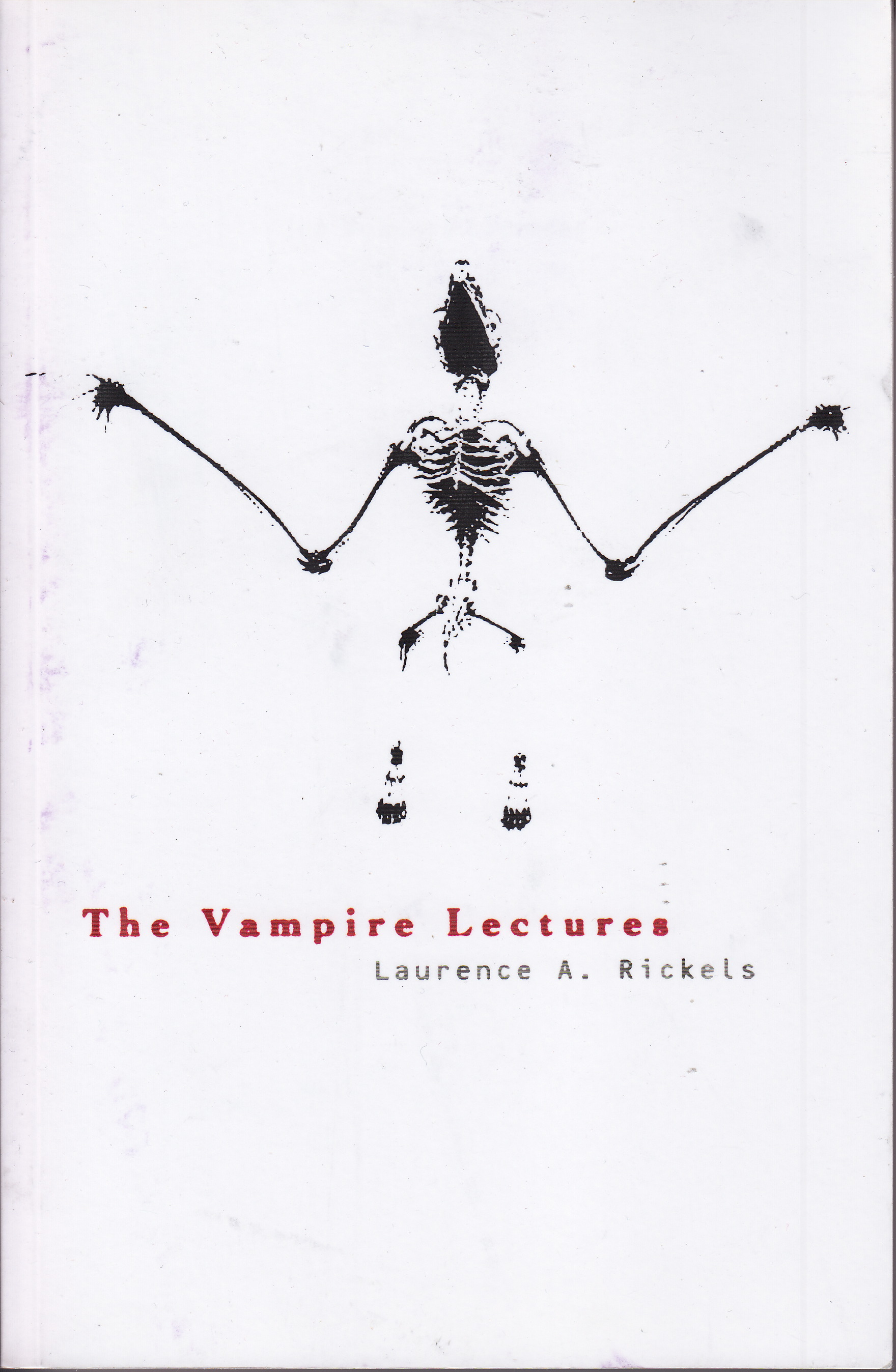
VampireLecturesWhat do you get when you cross German literature, psychology, and the undead? The Vampire Lectures, of course. Laurence A. Rickels, one gets the feeling, must be one interesting guy in the classroom. When I was a student the thought that anyone would take vampires seriously enough to offer college credit to study them was, well, a foreign concept. We all know that there’s no such thing as vampires, or werewolves, or Frankenstein’s monsters, or mummies—wait, mummies are real, but just not animated. In the reigning cultural paradigm, if something’s not real, it’s a waste of time. The human psyche, however, disagrees. The fact is there’s an awful lot of mental baggage that the vampire addresses. So much so that the University of California at Santa Barbara can offer a twenty-six lecture course on the topic. The results are what we have in this unusual book.

Rickels has read widely in the literature of the undead. The vampire’s share of the material goes to Bram Stoker’s Dracula, the novel that defined, in many ways, the modern concept of vampires. The lectures do cover earlier and later literary representations, but when movies began to be made, they started with Stoker. One of the most interesting aspects of the lectures is the utter breadth of movies Rickels addresses. Movies that I’d never heard anyone else mention, let alone analyze, are here, alongside the more famous examples. It becomes clear that vampires have been a favorite of film-makers as well as readers. Culturally they are omnipresent. One gets the impression that Rickels might have an inkling of why we have this fascination, although his analysis is often Freudian, he does come back to the concept of mourning. Vampires (who would’ve guessed?) mask our unresolved sense of loss.

The style of The Vampire Lectures reflects the kind of literary criticism that isn’t always easy to follow. The book has more puns per hour than any other academic title I’ve ever read. Perhaps such serious topics as loss, parental relationships, and sexuality require a good dose of humor to make them less overwhelming. Still, the puns show the shifting nature of the ground beneath your feet when you try to take a topic like this seriously. Not surprisingly, Rickels does spent some time reflecting on the religious nature of vampires. There’s no question that monsters trespass on—or maybe even arise from—sacred precincts. They also occupy similar mental spaces. Perhaps it’s no surprise that as the number of nones grows so do the fans of monsterdom. We need an outlet for our surfeit of fear and loss. Come to think of it, perhaps I need to take a class in this as well.


Time in a Museum

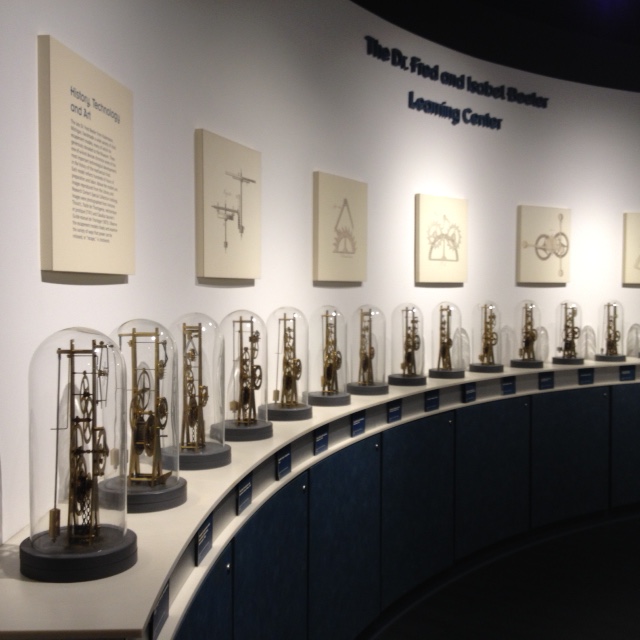
Over the weekend we visited the National Watch and Clock Museum in Columbia, Pennsylvania. I became aware of the museum during one of my steampunk phases, and since we were running out of summer, it seemed the ideal time to go. I didn’t know what to expect, but it certainly wasn’t anything quite so profound as what we actually found. Time, as we now know, is relative. In fact, up until just two centuries ago, nobody really knew what time it was. Well, maybe those people in Greenwich did, but the average person, even if s/he owned a watch, lived on approximate time. Try telling that to any boss today! The need for people to meet trains at various stations led to the standardization of time in the United States. Now the government declares official time, kept by atomic clocks. You could be a billionth of a second late for work and Uncle Sam would know. What happened to the days of looking for when the sun was directly overhead and guessing from there? Greenwich Mean Time indeed.

Time in inherently religious. For human beings, conscious of its passage, it is a limited commodity. Our concerns for our personal A.D. (“After Death” as the misnomer used to go) have led to religions suggesting that God, or gods, take a special interest in the passing of time. That became clear from the first display in the museum. Hardly a placard existed without some reference to the gods—people knew that time was somehow divine. Not only that, but the passage of time was punctuated by religious observances. Even such things as deciding when to harvest your crops could lead to religious revelations. Besides, time was set in motion by those ageless beings known as gods, and they mandated on-time performance. The ability to influence time was far beyond human capacity, thus deities informed us how to handle it. Into the Medieval period clocks maintained a regular array of religious imagery, reminding the user that this is the ultimate non-renewable resource.

IMG_2453

It was almost overwhelming, being surrounded by so many clocks. I remember being a young man—indeed a little boy—when time seemed to be in infinite supply. Religious observance was always a large part of that pool. Here I stood, a middle-aged man, spending my time pondering time. All the while, it was passing. Time is measured by regularity. Uniformitarianism is the geologic principle that informs us of the age of the earth itself. Beyond that, we’re told, the universe—so long ago—had its own beginning and anything that has a beginning will inevitably have an end. Such sobering thoughts amid the beautiful timepieces that so many spent their lives crafting. Now we only need glance in the corner of our computer monitors, or pull out our phones to glance the time. Taking a bit of it is wise, it seems to me, to explore our fascination with time itself. There is an air of eternity about the very enterprise itself. Well worth a summer’s day when forever is in your rear-view mirror on the way home.


When under Rome

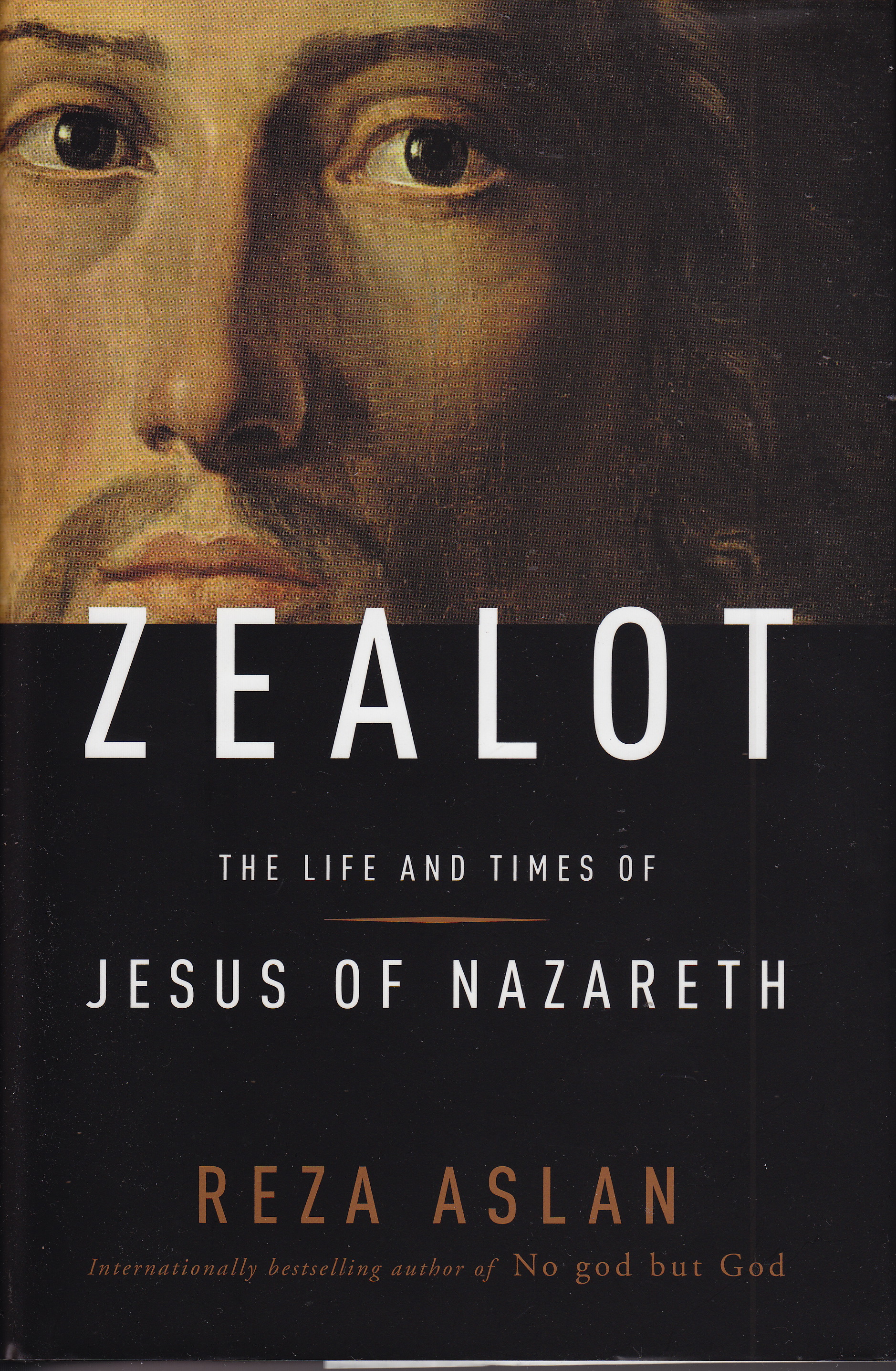
ZealotA question that has no answer: who was Jesus of Nazareth? Well, no single answer, anyway. When Reza Aslan’s Zealot: The Life and Times of Jesus of Nazareth came out, there was uproar. (Something, by the way, that publishers love.) How could someone suggest that not only do the Gospels disagree, but that they’re not even literal when they do? For those of us who’ve studied the Bible academically, there’s nothing too surprising here. Aslan’s perspective is often refreshing, even if he makes some basic errors (those of us who study the Hebrew Bible are pretty forgiving). For me, having the social circumstances of the New Testament spelled out in terms of the intense unrest of the first century explained a lot. It was a period of unremitting violence and frustration on the part of those coming to grips with life under Rome. Jesus was born and came of age when any outré idea could easily get you crucified. When it happened in his case, it was, as the Gospels point out, fully expected.

What might bother many readers is that Aslan doesn’t accept the story at face value. Jesus wasn’t unique as a healer, revolutionary, or messiah in first-century Palestine. In fact, Rome’s appointed rulers grew tired of such sons of gods that thousands of people were nailed up to warn others of the costs. Still, unlike the others, Jesus remained in contention even after his death. The belief in the resurrection didn’t hurt. Since Aslan is writing history, he can’t judge whether the resurrection or the healings actually took place. The traditions, he notes, are strong. He is surely correct that the Gospels aren’t attempting history. Written well after Christianity was already established, the writers had theological templates at their disposal. Not only that, they also had Paul.

Something I’d never considered was the dispute between Paul and the Jerusalem church. Yes, I’d noticed the stark contradictions between the letters of Paul and the one of James, but seeing the underlying conflict of those who knew Jesus personally (James, Peter, John) and Paul just never occurred to me. Paul doesn’t dote over the historical Jesus. His Jesus is divine from the start, and those who try to preserve Jesus’ words get in the way of the theology he’s developing. His letters express anger at those who teach what Jesus said over who he was, spiritually, anyway. Only with the destruction of Jerusalem was the way cleared for Paul’s gentile Christianity that eventually won out over Jesus’ teachings. It’s all very interesting, but I can’t buy it all. There are too many convenient connections here, and history abhors neatness. Nevertheless, Zealot is well worth reading. It tells an old story from a new perspective. And even if your Jesus is different from Aslan’s you’ll find something profound here that will only make your image stronger.


Go Down, Moses

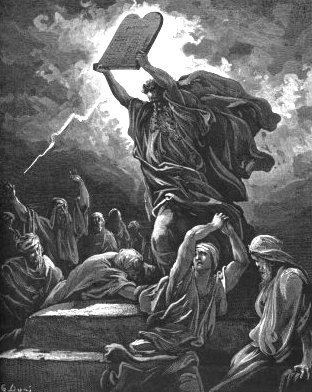
For a time, I tried to write down family tradition. My family was somewhat unusual in that regard. Family saying came generally from my maternal grandparents—my father wasn’t around for my childhood years—and since my grandparents died when I was relatively young, I didn’t hear much of their wisdom firsthand. Still, my mother told me various things her parents used to say and I tried to keep a record. Kind of like I wanted to be an anthropologist for raw folk sayings among the, non-elites. One thing my grandmother used to say, so I was told, was “Where was Moses when the lights went out?” I was always intrigued by this since I supposed it had something to do with Moses the miracle-worker. I guess I imagined Moses waving his rod and the lights coming back on. That single question is all I ever heard of this particular family treasure. I forgot about it until recently, though the miracle of the world-wide web, I learned that the query comes from a song.

Moses gets down

Moses gets down

The song, it turns out, exists in multiple versions. The Library of Congress has a recording dating to 1901 available on the web. According to this version, written by Harry von Tilzer, Moses was not “the” Moses, but a preacher condemning gambling. Also, “lights” is rendered in the singular. So much for the canonicity of family tradition. Duke University library has an undated, but clearly old, version of another song by the same title. This one does reference the biblical Moses, also the name of the song’s narrator. A child afraid in bed at night falls in love with and marries his nurse girl who used to ask him the question “Where was Moses when the light went out?” as he was falling asleep.

Yet another version, dating from 1965, has the question “Where was Moses when the lights (plural) went out?” followed by the answer, “He’s in the dark.” With all of this instant information from the internet, I’m still not certain what was being conveyed by my grandmother with this cryptic question. My mother said she used to say it when someone walked into the room too late to help with something, a kind of sarcastic “Where were you when I needed you?” What is clear is that the song was about as old as my grandmother and she found it somehow appropriate in an unconventional situation. I have to wonder how much of sacred tradition, including the Bible, might have come from misunderstood original instruction. We will, of course, never know. I don’t know what the original lyrics were, but I have learned that even family wisdom has a backstory, like any Scripture, for those who look hard enough.


Witnessing Angels

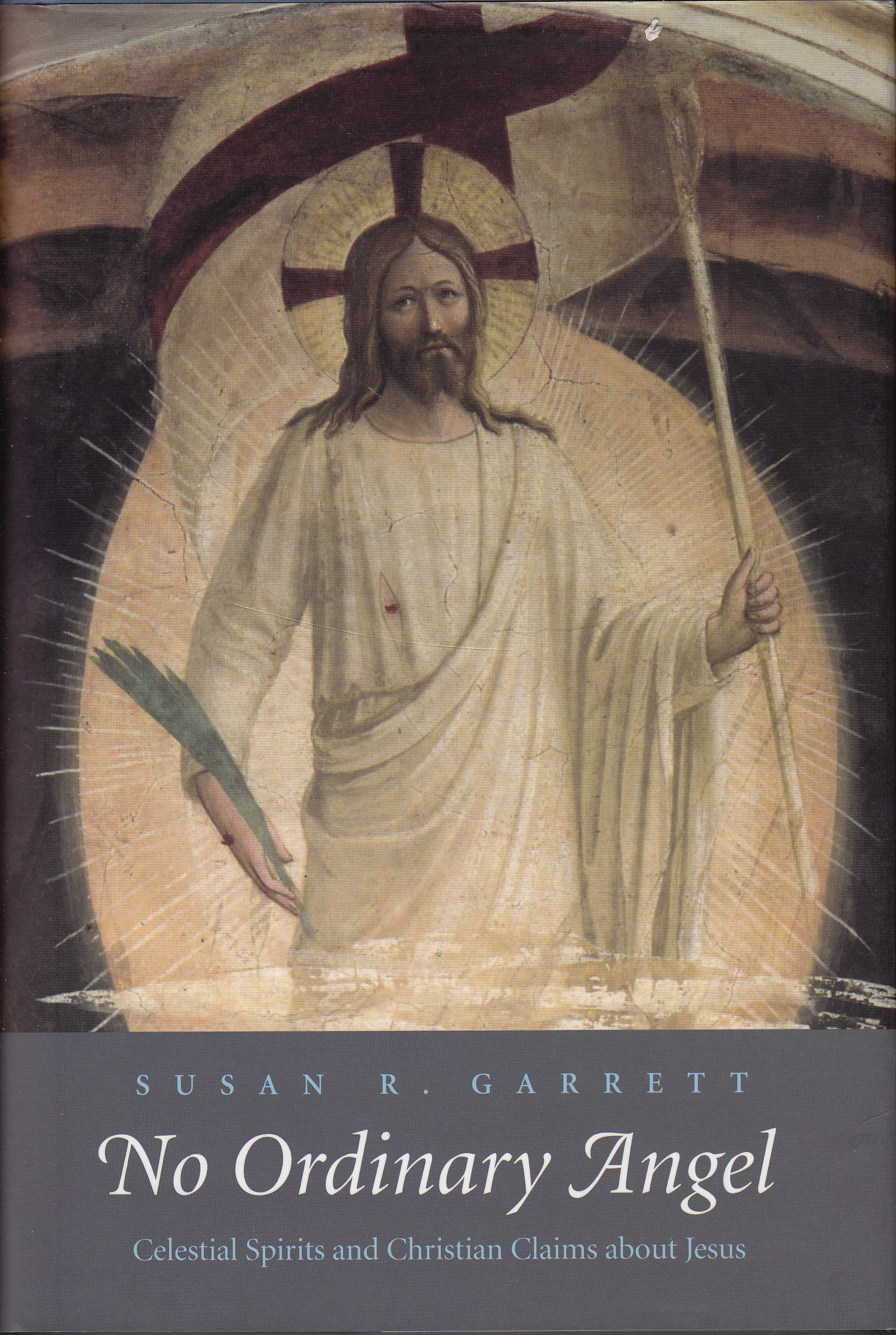
OrdinaryAngelBack in my undergraduate days, I wanted to learn more about angels. Surprisingly, there were no courses offered on the subject, even at evangelical Grove City College. When I finally took an independent study on angels, I found that few serious books had been written on the topic. I was immature as an academic, and I hadn’t learned that the subject of angels was a kind of scholarly embarrassment. Although many biblical scholars still clung to the idea of God, most had jettisoned angels along with other Medieval fabrications such as dragons and virgins. We inhabit a hardened, material world with no room for spiritual beings flitting about. As a student of ancient Near Eastern religions, I discovered angels possessed a hoary pedigree stretching back to Mesopotamia and perhaps beyond. Susan R. Garrett’s No Ordinary Angel opens the question again, and considers the many roles that angels have played and continue to play.

Subtitled Celestial Spirits and Christian Claims about Jesus, the book goes beyond the issue of angels per se, and addresses the distinctly Christian concern of how Jesus differs from them. What becomes clear in the reading of the study is that uniformity isn’t to be had. The earliest Christians already had divergent ideas on many concepts. As Roman Catholicism developed, angels attained a natural role in a world that still allowed mystery and shadows to exist. Protestants, the progenitors of much of science, cleared the closets of supernatural beings, leaving God and a table instead of the hosts of Heaven and an altar. I’m oversimplifying, of course, but there’s a sense in which the more liturgical traditions have more room for angels and demons. You don’t call a Protestant for a proper exorcism. Still, Garrett knows her stuff and shows how angels insinuate themselves into several aspects of sacred experiences of both Protestants and Catholics.

Angels come at births and deaths. They heal the sick, they protect people and they worship God. They rebel and fall, becoming Satan and his minions. Angels are, by their nature, liminal figures. They help to transition people between different states and worlds. As early back as written records, people believed in them. Outside of academia, people still do. God has become wrathful and distant in his old age and, well, you can talk to an angel without having to worry about vaporizing. In antiquity they were messengers. When God didn’t condescend to the earth, angels would come down. Now we get the sense that they’re more like us than we might have originally thought. Or maybe we’re more like them. Angels, even though they may have fallen out of academic fashion, are sure to endure longer than most weighty treatises, no matter how well footnoted they may be.