Rise of Religions

mansdominion Imagine my surprise when, as a boy raised in a fundamentalist family, I arrived at a liberal seminary to find myself accused of sexism. Like most kids I had been taught not to question religious dictates. Majoring in Religious Studies, even in as conservative a college as Grove City in the 1980s, even there I learned that to be educated meant learning to question. I’d thrown off fundamentalism by the time I reached seminary—I supposed I was making great strides. I’d always been in favor of equal rights for all, just because it seemed right. I supported gender and racial equity, but I was obviously still guilty of something. It has taken me decades to realize it, but being male is sufficient grounds to be despised. Perhaps it’s not as bad as all that. Maybe it’s worse.

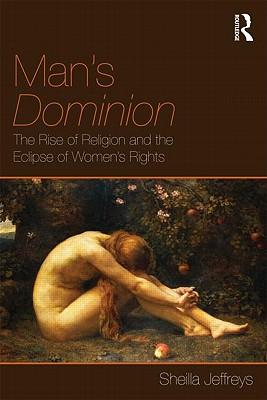
Sheila Jeffreys’ Man’s Dominion: The Rise of Religion and the Eclipse of Women’s Rights was nevertheless a sobering read. I supposed that it might be a historical introduction to the problem, but instead it is a bold declaration of some uncomfortable facts. All ancient religions, at least those that survive, had subordinated (and continue to subordinate) women. That’s not path down which a liberated religionist wants to stroll. I found myself resisting these assertions at first, but as Jeffreys keeps the examples coming, they are difficult to deny. Yes, religions have been founded by men and they favor men. Not that belief necessitates that, but history seems to. Even in religions where women’s leadership is allowed, it is because some men have decided it is okay. There’s no changing the historical trajectory to the past. Religions were invented by men. Given their druthers, they will, at best, treat women as somehow less important than men. The missing element here, however, is sincerity of belief.

I doubt that Jeffreys would claim that religions were devised by males in order to subordinate females. It’s hard to say whether that first inventor of religion really believed all the stories he told, but soon people came to do exactly that. And those stories grew into something more than myths, and became the basis by which lives were lived. They became literal. And women, who played only supporting or villainous roles, soon became the victims. I know that’s too simplistic. I also know there’s some truth in it. I went to seminary to learn more about religion. What I discovered was often an unwelcome reality. Although I never personally tried to oppress women, I participated actively in a club that did—the club of masculinity. It may be that religion itself will always lead to oppression of the other, for religions don’t form in perfect worlds. If you have any doubts about that all you have to do is ask half the human race.
Invoking Imbolc

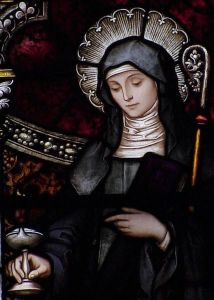
As the year continues her eternal circle, we find ourselves once again at Imbolc, the cross-quarter day between the winter solstice and the vernal equinox. Imbolc is an ancient fire festival, and given how chilly our apartment has been these last few weeks, I think I could be downright pagan about it. Dividing the year into eighths, the pre-Christian calendar emphasizes the seasonal aspect of nature. The festival was originally dedicated to the goddess Brighid who became, in her later years, St. Brighid. Naturally, when the Celtic lands were converted, Imbolc was supplanted, somewhat, by the following day—not yet Groundhog Day—Candlemas, or the feast of Mary of the Candles. Diametrically apposed to Samhain, or Halloween, Imbolc celebrates the rekindling of light in a dark time of year. Some have suggested that the festival has roots as early as the Neolithic Period.

One feature of the old religions that was lost with the more transcendent interests of monotheism is the dedication to the earth. Religion, in its earliest forms, grew out of a profound awareness of human connections to the planet that was their home. Without our planet we do not thrive. Even though we’ve learned to catapult ourselves into space, our bodies don’t work so efficiently in zero gravity. (Read Mary Roach’s Packing for Mars for the gory details.) We evolved on and are part of the earth. Early peoples knew that instinctively. Their religion reflects that implicitly. Kindling a fire in winter is a small way of encouraging the light and warmth to return.

Stbrigid

Brighid, a goddess who represents the return to fertility with the earliest beginnings of spring, may also represent the earth. It will be at least another month or two before many of us will begin to see the hints of crocuses breaking through the wan grass, but Imbolc is all about turning that corner. The earth that seems to have forsaken us in the desolate winter is now about to welcome us back into the growing time. It is no wonder that, despite efforts of the missionaries, elements of the old religion remained. Whether with candles or bonfires, the pagan goddess Brighid, or the Christian Saint Brighid, ushers in February, our last full month of winter. And tomorrow, the groundhog will remind us once again that we are merely part of the earth.


Mercurial Monotheism

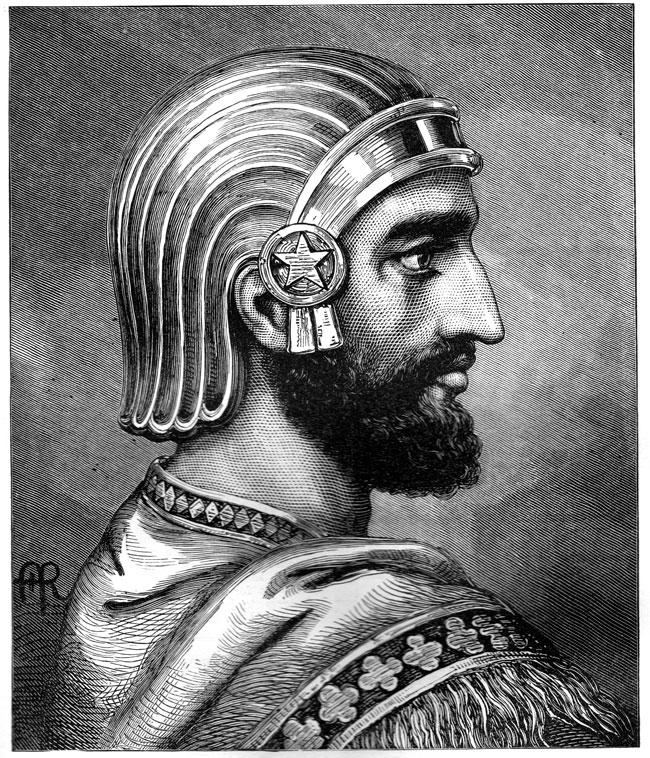
A friend recently asked about Isaiah 45.7, “I form the light, and create darkness: I make peace, and create evil: I the Lord do all these things.” I remember as a college student how professors tended to translate the problem away. Perhaps I was too young to understand the truth of the Italian phrase, “Traduttore, tradittore”—if I may betray myself—“translators are traitors.” I eventually did come to learn that those who’d already decided what the Bible meant could translate troublesome passages according to their biases. In this case the connotations aren’t even necessary to raise hackles, for the denotations do so fine just by themselves. Let’s put Isaiah 45 in context first. This remarkable chapter is an oracle from the beginnings of the Persian period that show Yahweh doing things in unexpected ways. It begins by calling Cyrus the Lord’s anointed—yes, that is the Hebrew word for “messiah”—the people of Judah had been in exile a long while and Cyrus, king of Persia, was their deliverer.

Back then, as even today, some would’ve been scandalized at this turn of phrase. The Judahites were beginning to develop the idea that the messiah would be a mystical deliverer, someone who would free them from the sad lot of being deportees. Some thought the messiah might be a divine figure. Here Yahweh is declaring a non-Jew, a foreign king, as a messiah. You can be sure there was some questioning of the prophet’s words. Second Isaiah, however, throws a well-timed curve in verse 7: God can do this because God creates both good and evil. This is a consequence of emerging monotheism. In a polytheistic world, you could have a plethora of deities. Monotheism, however, quickly runs afoul of the question of evil. If there is one god, where does it come from? Deutero-Isaiah shows Yahweh is capable of surprising things. The verse’s plain sense is blatant. Bald. Obvious. Yahweh creates both good and evil. Otherwise monotheism would be making false claims.

In college professors tried to insist that “evil” here wasn’t that really bad kind of evil, but rather something milder—a filtered cigarette rather than a Cuban cigar. They were prevaricating, however, as I learned when I too took up Greek and Hebrew. Evangelicals like to read monotheism into the Bible from the beginning, but the Bible itself fights against them here. Monotheism, like everything else, evolved. By the time Isaiah 45.7 was being penned, it was necessary to show that Marduk, and Enlil, and Ishtar had nothing to do with Jerusalem’s destruction and the fate of the deportees. No, this was Yahweh’s doing. And there was no apology for it. Monotheism had come, but at the cost of Yahweh’s innocence. According to this part of the Bible, the origin of evil is no mystery—it is the same as the genesis of all good things.

Who's your messiah now?

Who’s your messiah now?


Old-Tyme Religion

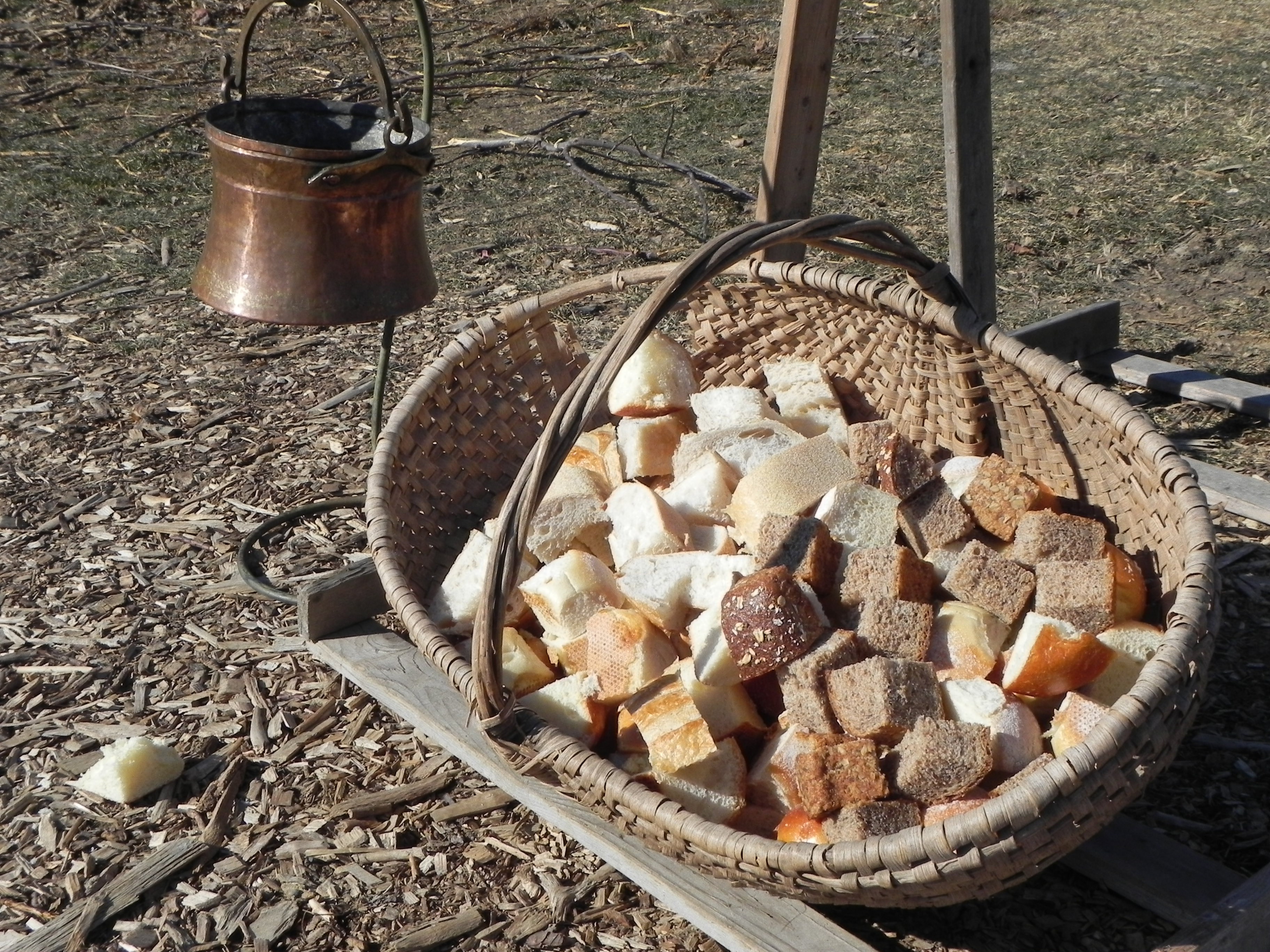
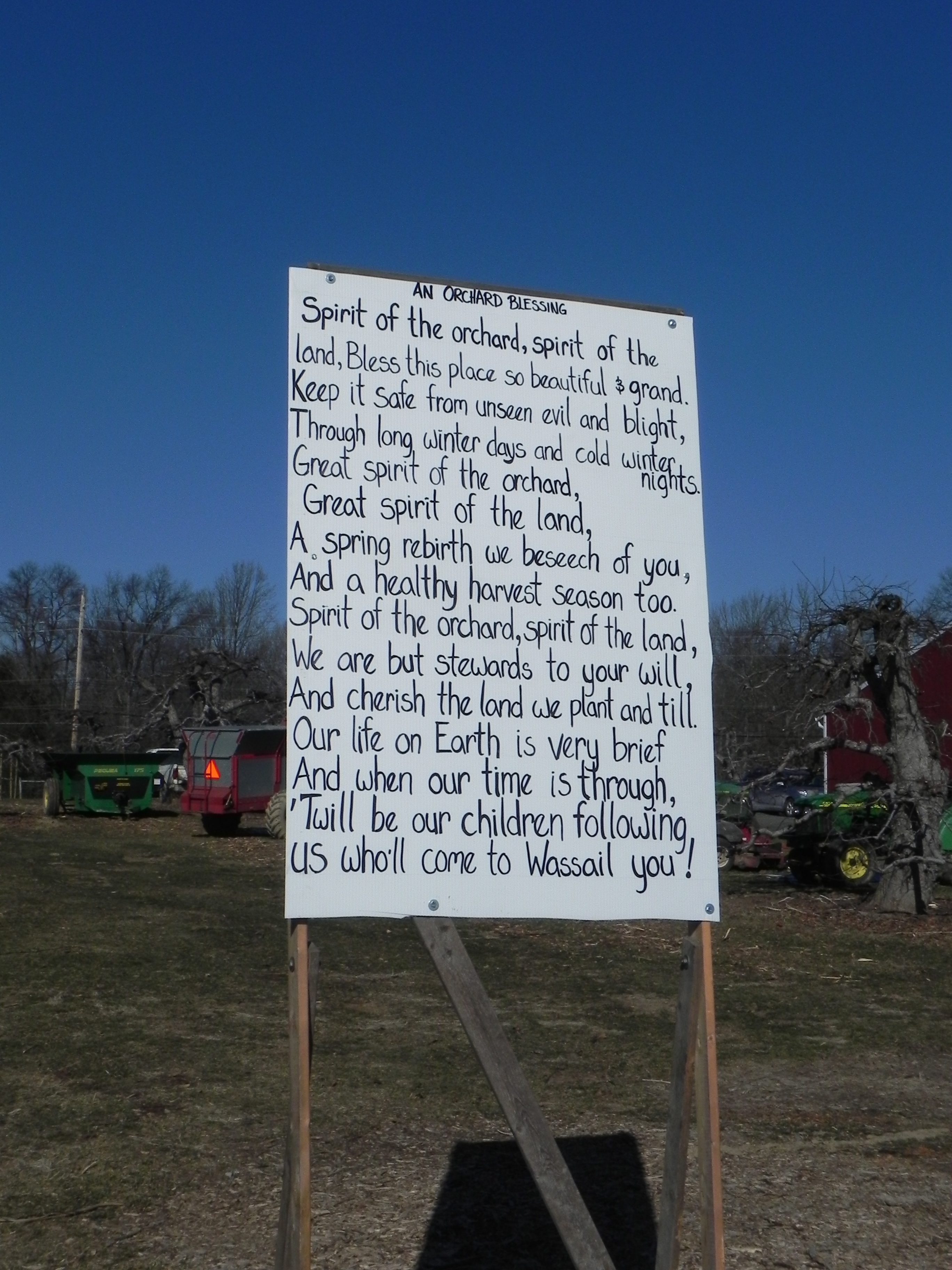
Run, two, three, jump, slap, run, two, three, jump. I can’t believe that I’m Molly dancing on a January afternoon with total strangers and it’s just over freezing out. And my big brother’s on the side watching me mess up every step. It must be wassail season again. In a festival that always reminds me of The Wicker Man (1973, please!), I visited the 16th annual wassailing of the trees at Terhune Orchards on Sunday. Molly dancers and Morris dancers, or Mummers, from Philadelphia help make this occasion festive. The ceremony of wassailing the trees clearly has deep pagan roots and is influenced in some respects by Christianity. We sing a wassailing hymn (one that many would recognize from Christmas time), say a wassailing prayer, make a loud noise to drive the demons from the trees, dunk bread into a pail of cider and hang it from the trees. Another festivity involves writing a wish on a slip of paper and burning it in the fire. My wish from last year came true—I can’t say what it is here—giving it a success rate better than some prayers.

DSCN2639

Watching this year’s wish rise up in the smoke, I have high hopes for the apples and dreams.

Christianity owes much to various pagan traditions. Often we don’t see it because Christianity (and many religions, actually) tends to absorb former beliefs and practices, “baptizing” them when it can’t expunge them. Pagan gods have often become saints, whether they want to or not. When the Christianity is peeled back there is a very human charm underneath. We worry whether the fruits will return, whether the days will get longer, or whether the cold will ever break. There are powers that exist outside our grasp, and call them Christ or call them spirits, we want them to be on our side.

DSCN2638

Throughout Europe and much of the rest of the Christianized world, the pagan traditions are called “the old religion.” Religions like to claim antiquity as part of authenticity. In fact, the earliest religions were surely shamanistic and very earth based. Revealed religions claimed to supplant much of what people did to ensure the continued regularity of nature. Even though we know the earth is spinning around the sun and that the tilt of its axis makes for seasonal change. I know that whether or not I dip bread into cider and jamb it onto the bare branches, even if I don’t shake the noisemakers to frighten the demons, the apples will grow. But we are all human too, and I’m only too happy to join the Molly dancers if only next summer the apples will come.


Deep Things

Religion concerns itself with the big issues. The biggest. As a child, I remember wondering how anyone could be concerned with less than the ultimate. No, I wasn’t a nascent Tillichian, I was just someone who saw things in what I supposed was a practical light. If you’ve got the temporary, the fleeting, the insubstantial over here, and the permanent, immortal, supreme over there—who wouldn’t go for the gusto? I suppose by my reasoning that all people would end up clergy of some sort, we would all be fixated on why we’re here and what our purpose was. You’ll still find pockets of theologians here and there who debate these kinds of issues, but our existence has grown comfortable enough that, for some people at least, if this ends up being all there is then, gosh, it’s been a fun ride thank you very much. But I don’t want to get out of the train just yet. I wonder if there’s more than the ultimate. It is a religious question.

For a while I grew enamored of the trappings of religion. Ceremony, ritual, strong rhetoric in sermons—these things can move you, and become beguiling. Somehow, knowing there’s an infinite universe just outside the church doors gives me pause for consideration. The ultimate must be very big. Walking through a large city helps to provide some perspective. I find myself next to buildings that cause me to tremble when I consider the implications. Next to those tons and tons of stone, steel, and glass, I am the smallest spark. But those buildings are dwarfed by the city that contains them, and that city a mere pinpoint on a map of the country. Even the planet is less than an atom in the universe of infinite size. Who can help but to be concerned about the scope of it all? Ever since I was a child I’ve worried about this.

In the media today, religion is all about hypocrisy and whose pants are at what latitude vis-a-vis whom. While matters of love are ultimate in their own way, we, as people, have a much larger space with which to concern ourselves. Science has stepped up to the dock when it comes to sworn testimony about the universe we inhabit, but even scientists shrug once we get back before the big bang. Time is even more inexorable than space—there’s always got to be a time before time. Like any child we can always ask, and what happened before that? Perhaps time is the true ultimate. Thank you for spending a bit of your ultimate reading this. It’s time for me to catch the bus, but work will never inspire me the way the rest of the universe does.

Hubble's eye view

Hubble’s eye view


Graveyard Culture

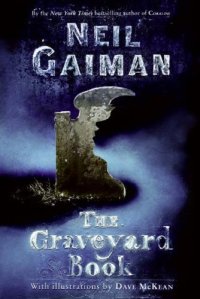
TheGraveyardBook During an Ancient Near Eastern Religions course a few years back, one of my students commented that something was like “in American Gods.” I suppose my quizzical look betrayed that I wasn’t familiar with the book, and, aghast, he said, “you’ve never heard of Neil Gaiman?” The funny thing about being a professional academic is, if you want to be good at it, there is little time to read. Popular culture is vast; I’ve never even heard of “Gangnam Style.” But I did subsequently read American Gods, and from then on I’ve been picking up Neil Gaiman books as a special treat in my literary diet. A couple years back another friend recommended The Graveyard Book, so I read it over my brief holiday break. It is the time of year for treats. Gaiman’s fantasy worlds, although seldom explicitly deity-populated, tangle the real world with the supernatural—just the juncture where religion emerges. Although defining religion is not as straightforward as looking it up in a dictionary, you can nevertheless feel when you’re in its realm.

Nobody Owens was raised in a graveyard among ghosts. Since science tells us there are no such things, religion steps up to the challenge with suggestions of an afterlife. Whether or not there’s a Heaven or Hell, ghosts partake in that uncanny milieu we call religion. And since this is fantasy, there are other mystical creatures as well. In Bod’s world werewolves are called “Hounds of God” and they are on the good side. Ironically, the only clergy mentioned (along with various political figures) are actually ghouls. The world of the dead involves a religion of its own where an altar and chalice lie deep beneath a special grave and a human sacrifice makes up the climax of the story.

Religion, of course, occurs where the supernatural meets regular people. We dismiss it at our own peril. When Bod attends school his teachers guess he must be from a religious family because he doesn’t have a computer or any electronic devices. Religion eschews such progress. And yet it touches on the real world. I recognized Highgate Cemetery almost from page one. It could be that my own visit there just last year was fresh enough in my mind that Gaiman’s descriptions naturally took over. Or it could be that since I walk that imaginary line that we recognize as religion every day I recognize its more familiar features. Neil Gaiman’s popularity is a testimonial to how we still need the hidden world unexplained by science. We may call it fiction but it is just as real in the human mind as anything in the quantum universe.


On Dasher, On Dancer

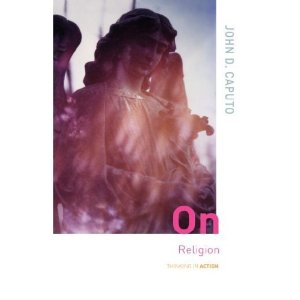
CaputoOnReligion It’s a little embarrassing to admit that after having pondered religion for all of my life, I still have no clear idea what it is. In my case pondering includes three degrees in the study of religion and almost two decades in teaching it. I still read books that introduce religion, hoping to catch some distilled essence that I might label the core of the phenomena that go by the name. Some least common denominator. But that’s not how life works. Even the most basic of things can be complex, so I recently turned to John D. Caputo’s On Religion to find out what a philosopher thinks it might be. From the start this little book is jarring. Caputo, while staunchly refusing to tip his hand, defines the religious as those who love God. Or god. Or not really god, but something that might be as impersonal as the Force. Of course, love is as slippery a term as “God,” so Caputo suggests that it is caring for more than one’s own self. If many of our religious politicians and televangelists could get even that far perhaps we’d be closer to the religious idea of heaven itself. Then when Caputo turned philosophical, he started to lose me a little.

The big problem, and one of which Caputo is well aware, is that loving God is a western religious ideal. There are those who claim that some “Eastern religions,” such as Buddhism, Taoism, and that of Confucius’ followers, are actually philosophies and not religions. But if we’re trying to define religion, excluding a very large portion of the world’s belief structures seems to tilt the balance a bit dangerously westward. Come to think about it, the idea that all people have to have some kind of religion is a western conceit as well. Who are we to define the terms of another’s existence? That, it seems to me, is one of the problems of reductionism. Assuming that all people accept the premise that an empirical system can explain everything will not rid the world of religious martyrs. So what is to be done?

Caputo has thought about this as well. He concludes his short manifesto with a chapter entitled “On Religion—Without Religion.” Here the true root of the problem is exposed—religions that claim they alone can be true. For Caputo’s purposes western religions work best here because the three major monotheistic faiths share so much in common. Put crassly, the real question is where does the line of final revelation end. Is it Moses? Jesus? Mohammad? We could go on—Joseph Smith? Raël? Philosophically, at least, Caputo suggests that all religions could co-exist if they were willing to admit that they are all right. It boggles the reductionist mind. How can they all be right? How can they not be? After all, despite the millennia spent on the topic, we still don’t know what religion is.


Christmas Incorporated

ChristmasinAmericaA number of years ago I wrote a short book on holidays for children. Like most of my books, it was never published. I wrote it when I learned that good books explaining in simple language whence various American holidays came appeared not to exist. The literary agents I contacted quickly showed me why. In any case, I remain curious about holidays and so I read Penne L. Restad’s Christmas in America: A History. There’s a wealth of gifts in this brief book. I’d researched the subject a little bit myself, so I already knew some of the origin stories, but if you’d like to know why we have Yule logs, egg nog, or why Santa prefers red, this is the book for you. As I’ve noted in previous posts, Christmas is a fairly recent star in the constellation of American holidays. In fact, those of us who work for secular companies know just how few holidays Americans officially celebrate. Having lived three years in the Scotland, I know how seriously holidays are taken in at least one corner of Europe.

Christmas didn’t really catch on in America until the nineteenth century. Industrialization was beginning and more and more was expected of the worker who made the robber barons wealthy. It is no accident that the American Christmas had many of its origins in New York City where much of the industry ran non-stop. Restad, however, makes a very good point that Christmas has always been both pro- and anti-commercial. Owners of large retail chains saw the opportunities to sell goods to time-stressed individuals while the giving of presents often promoted a selflessness uncharacteristic of those who stand to profit from consumers. Restad notes the increase in goodwill that Christmas generates in society as a whole. Indeed, I have seen more people giving to the homeless during the past two weeks than I had seen so far this year.

One aspect of Christmas that I hadn’t expected to find in Restad’s treatment was the early emergence of the “prosperity gospel.” Of course, it wasn’t called that in the early twentieth century, but in the millennia since the Christmas story actually originated, some in the church began to take their own righteousness far too seriously. Seeing that clergy who knew how to tug the soul-strings just right could easily gain wealth, they started to suggest that God wants you to be rich. They seem to have overlooked who was born in a stable because there was no room in the inn. Search the Gospels and your search will be in vain if you attempt to find words to console the rich. The “prosperity gospel” is as much a lie today as it was when it began, back in the days when dubious clergy looked for a way to excuse their comfortable lifestyles while many of their flock suffered want. Christmas in America shows itself to have a little bit of the social gospel built in, for it is clear that even the Devil can site Scripture for his own purposes.


Chrismahanukwanzadan

Happy holidays from a pluralistic world! Whenever I see the “Keep Christ in Christmas” signs that crop up this time of year, I think of the wonderful profusion of holidays that people from most faiths can share without being territorial about it. After all, the Pagans got there first—the Christian Christmas predates Jesus by centuries, it turns out. So when my daughter wished me a happy Chrismahanukwanzadan—from a mix of Christmas, Hanukkah, Kwanzaa, and Ramadan—I had to smile. Seems like some in the younger generation are really starting to get it. It doesn’t matter what you call it, but a holiday that celebrates people getting along is worth the effort. Being possessive of our holidays rings of hollow triumphalism—I feel happy because I have something that you don’t. Is this really the spirit of this secular season of giving wrapped in many confessional names? I’m sure shepherds and Magi didn’t exactly share a Weltanschuung.

Those who despair the lack of Christmas have not spent much time with history. As a cultural holiday the celebration of Christmas is younger than the United States, at least in this context. From the beginning Christmas was a pastiche of traditions from different religions celebrating aspects of Odin, Sol Invictus, Jesus, and Zarathustra, at the very least. Bringing these religious figures together into a season that represents the human need for light amid a dark and cold time of year, who would want to exclude others from their own holiday traditions? Having stood in the bleak fields of the Orkney Islands in a massive stone circle aligned to the winter solstice and constructed over a millennium before the birth of Christianity, I have to believe Christmas is one of the earliest expressions of human desire and certainly not limited to Christians.

What makes a holiday holy? Is it exclusive rights like those slapped on every movie you pop into the DVD player? The trademarking of an idea someone else thought of? Religions have a long history of forsaking the spirit of the law for the letter—its most familiar name is dogma. No matter who came up with the idea of doing what we can to bring a little light back into the dreary world around the time when night seems unending, it is a cause that any person of any religion, or none at all, can fully appreciate. Instead of marking territory, should not those who claim Christmas as their own be glad to share it with all? If the one who’s birth the church proclaims at this time of year in no way improves our outlook to others we might wonder if there should be cause to celebrate at all. My answer, such as it is, is Happy Chrismahanukwanzadan!

A holiday in anyone's book

A holiday in anyone’s book


Jolly Saint Nicholas

StNick

Each December the Princeton University Chapel Choir performs a free holiday concert in the impressive university cathedral (actually, it is a chapel, but given its size I’ll stick with cathedral). This year’s concert was Benjamin Britten’s “Saint Nicholas.” The association of Saint Nicholas with Christmas, not really a major holiday until relatively recent times, was an aspect that developed long after his death in the fourth century. The date of his death, December 6, and his association with the giving of gifts, made him an obvious model for Santa Claus (who still bears his name). Most of the gifts I’ve received from bishops involved losing a livelihood and personal dignity, so it is little wonder that Nicholas is venerated. Few bishops of his generosity exist today.

The stories of Nicholas of Myra, however, are full of mythical accounts that bear less resemblance to history than to legends of old. Eric Crozer’s lyric for Britten’s piece invokes several of these miraculous tales. Saint Nick, it seems, stilled a storm at sea, multiplied food and walked on water like Jesus. The lyric also tells the legend of how he raised three pickled boys from the dead, although I have to admit I couldn’t get my mind off zombies after that. This story seems to owe something to the myth of Tantalus, who, like Nicholas, was from Anatolia. In real life we do know that at the Council of Nicaea Nicholas punched Bishop Arius in the ear for his heresy. Theological discussions are like that sometimes. And I wonder if that might not be the origin of another curiosity of which a friend recently reminded me—Saint Nicholas doesn’t travel alone.

Our modern version of Santa Claus takes its roots mostly from germanic traditions. In that culture the saint is accompanied by a more sinister character who doles out punishment to the naughty. He is known by many names: Krampus, Ruprecht, Schmutzli, Zwarte Piet, or simply the Devil. Instead of using their diabolical fists, they generally carry rods to smack the not-so-nice, kind of the Republican side to the liberal Santa. This dark figure does not appear in Britten’s “Saint Nicholas” where a (mostly) kinder, gentler saint appears. A saint who raised briny boys from the beef barrel also belted another theologian upside the head. Life, even for saints, is full of contradictions.


The Last December

December 2012—it is supposedly the last month in the world. Yesterday did dawn with the date being 1212012, but since the local tree farm opened its gates yesterday, my family set out to select a tree anyway. As we wandered amid the pines it was clear that for many the iconic sign of Christmas is the tree. We learned on our first year in New Jersey that you’d better not wait until reasonably close to Christmas to pick out a tree—we visited this very lot then only to discover that precut trees were all that were available (and they were from Pennsylvania) and we had established a tradition of picking our own. Getting to know the tree first. Walking around and looking from all angles, trying to learn if it was healthy or too dry. Were there any gaping gaps that would be an obvious problem? Hard to tell when the tree is wrapped up in fishnet plastic and tucked into a corner like an old umbrella. Here, so close to the Big Apple, you need to claim your tree early. If you don’t want to cut it down right away, you can tag it—claim it as your own and come back later to chop it down. We weren’t the only ones taking great care in selecting.

IMG_0514

Tree farming is a business with a long view. Trees don’t mature overnight. When it’s the last month of the world, one must take these weighty things into consideration. Even before this terminal date, you would need to make an awful lot of money in just one month of the year to keep the business going. Maybe they need a green Christmas. Of course, greenery in winter symbolizes life in the midst of death. The germanic originators of the tradition were keeping a very appropriate pagan idea alive when they dedicated their trees to Christmas. Last year when we couldn’t have a real tree, it felt like we’d lost a friend. Our tree farming friends know that feeling very well.

The “Keep Christ in Christmas” signs and bumper stickers have begun sprouting up in yards and on bumpers in their annual exuberance. Funny thing is, Christmas has its base in ancient pagan customs. To hear the Bible tell it, Jesus’ birth was an understated event. The only people who had an angelic concert were some shepherds (we don’t know how many) on the hills outside of a small town. And, as far was we can tell, it would have probably been in April. As the days grow wearily short, however, we need a little light to keep us going. That was the pagan wisdom behind the Yule Log and various festivals of light to encourage nature to bring some brightness back. These short days can be difficult enough even in the age of artificial light and constantly glowing electronic screens. And knowing this is the last month of the world, we want to festoon our trees with tiny pinpoints of expectation and hope that nature somehow gets the message that we’ve had enough of darkness and wish for a 2013 redolent with light. But we’ll just have to wait and see.


Creature Feature

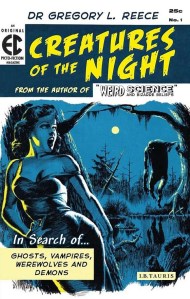
Gregory L. Reece’s Creatures of the Night is a strangely profound book. I picked it up to read on the plane home from Chicago and I wasn’t disappointed. Promising to explore ghosts, vampires, werewolves, demons and devils, Reece suggests that maybe the key to such fascination rests with the late Rudolf Otto. I had over a decade of students read Otto’s famous little book, The Idea of the Holy. Otto, whose palindromatic surname suggests something uncanny, characterized the holy as the fascinating mysterium tremendum, the wholly other. (I will refrain from calling it the wholly holy.) The mystery that makes us tremble. The monsters that haunt our nights and imaginations are aspects of this utterly other.

Along the way Reece proves an able tour guide. He recognizes, as I have repeatedly stated in this blog, that religion and fear are conjoined twins. He also knows how to get your skin crawling. For Reece there is no question that such things are real. Real doesn’t mean that they are physically lurking outside your window at night—for who is to say that only the physical is real?—but they are as real as religion. No doubt strange things have transpired in history and continue to occur. And the reason we go into church may ultimately be the same reason that we watch a horror film.

As Reece comes upon the topic of demons the air in the room (or plane, or bus) thickens. Here we have documented accounts of impossible events. No amount of rational training can remove the shudder from these stories. Explanations of epilepsy only go so far before terror takes over. By herding them together with vampires, werewolves, and ghosts, Reece stakes his claim that they all are real. Rational reductionists may shrink our world down so tightly that no room appears in the inn for our creatures of the night. But those who are honest, even among the reductionists, will admit to a mysterious tremor, even if unintentional, on a dark and stormy night.


Au Fait in the Manger?

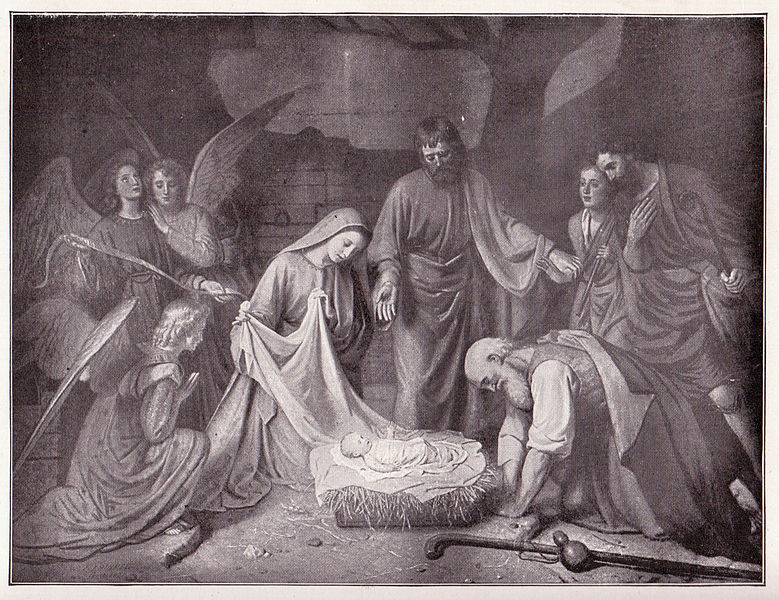
On Friday CNN ran a story about the Pope’s new book “debunking” myths surrounding Christmas. The headline certainly looked intriguing, but it turns out that the “myths” debunked are those of a very dim magnitude. Is anyone surprised—gasp!—that Jesus wasn’t actually born on December 25? And, guess what—those cows you’ve always seen in the manger? The Bible doesn’t actually mention them! Angels aren’t at the manger either! What kind of Christmas will this be? A biblical one, it sounds like. I haven’t read Jesus of Nazareth—The Infancy Narratives, but it really doesn’t sound like I need to. The Bible is very spare on stories about Jesus’ birth; nobody knew he would be a Lloyd Webberian superstar at that point, so we have a few loose traditions that tell of humble origins in an obscure setting. Not very good for commercial interests, however, and besides, the average person doesn’t read the Gospels to find out about Christmas. There are far too many television specials to be bothered with “Lo, there were in the same country…”

Christmas was not a big deal until relatively recent times. Now, don’t get me wrong—I’m not a grinch who believes the holiday shouldn’t be celebrated. I see nothing wrong with people giving things away, even if it is to pretend that they are celebrating an ancient Roman-occupied Judean birthday. This is the essence of what being religious should be all about; holidays should be occasions for thinking about others before one’s self. In my lowly opinion anyway. We’ve built an entire economic cycle on it, however, otherwise Black Friday might just be a free day to spend with family and friends instead of being trampled to death at Wal-Mart. Perhaps if society could find a way to distribute wealth more equitably every Friday would be in the black.

The Pope’s new book is an attempt to make the Catholic tradition appear up-to-date with scholarship. Plans are for the book to be published in an entire Septuagint of languages with a print-run the envy of nearly every academic editor in New York. The problem is there is no real news here. News should be, by definition, new. A book by the Pope declaring the true equality of all people, throwing open full sacerdotal participation to women as well as men, and the distributing of papal wealth to the poor—that would be a Christmas present worth the waiting! Instead, when you pull the shiny paper off this book on December 25, you’ll only discover that you’ve received it on the wrong date and there will be no angels singing. The cattle will be lowing, however, if you can use your imagination.

What’s wrong with this picture?


Hallowed be thy Kane

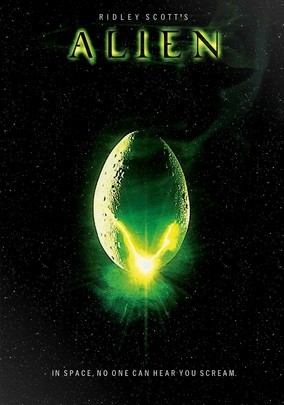
Watching the alien burst from Kane’s distended abdomen as he appeared to have eaten too much seemed somehow appropriate on Thanksgiving. I’m well aware that my taste in movies does not always match expectations and few bother to comment on my idiosyncratic observations. Nevertheless, it had been years since I’d watched Alien and on this particular holiday it felt like synchronicity. I’ve seen the film a few times before, but this is the first time since starting this blog. Not surprisingly, some biblical allusions popped out at me as I watched the crew of the Nostromo struggle with alien life. And I’d just read of NASA’s “exciting discovery” on Mars, a discovery whose official announcement for which, like Christmas, we’ll have to wait until December. Learning that the gut-busting alien was modeled on Three Studies for Figures at the Base of a Crucifixion by Francis Bacon (a contemporary one) only sweetened the analogy.

Character names hide aspects of personality and intention. Sometimes the writers may not even be aware of all the shades of gray. The alien’s first victim is Kane. On paper he seems an ordinary citizen, but on the screen the euphony with the first human child, Cain, is obvious. As Parker is lamenting how large the alien has grown in just a short time, science officer Ash whispers, “Kane’s son.” Or is it Cain’s son? Cain, the infamous ancestor of the sinful Grendel and any number of other villains of literature and cinema. Cain is, significantly, the first child born in Genesis, himself the genesis of sin in the world since his murder of his brother is the first act that the Bible declares a “sin.” The alien, born worlds away, conforms to biblical expectations.

Since Ash is actually an android and has no real feelings, he admits the alien to the ship and protects it until he is destroyed by his shipmates. He represents unfeeling science amid the horror of human bodies being invaded and rent apart. When accused of admiring the alien, the resurrected (!) science officer states, “I admire its purity. A survivor… unclouded by conscience, remorse, or delusions of morality.” Is he not really describing science itself? Religion is running rampant on the Nostromo. As Ripley sets the detonation charges and finds her escape blocked, she races back to the console and cancels the self-destruct order which the HAL-like Mother ignores. In a secular prayer Ripley calls out to Mother who, like any deity, does not answer all human pleas. And even as she escapes the detonating ship, Ripley will find that Cain’s son is still lurking in the corner of the emergency shuttle, for the science can never truly escape from Genesis.


Gitche Gumee

Up on the rugged western shore of Lake Superior the lamp atop Split Rock Lighthouse will be illuminated for the only time this year tonight. Immensities and superlatives fail at some sites, and as the cold waves lap eternally at the shore, this is one of them. Split Rock illumines its beacon in commemoration of the sinking of the Edmund Fitzgerald on the far end of that great lake on this date many years ago. While not as large as the Titanic, the Edmund Fitzgerald outstretched two football fields and carried more than fifty million pounds of cargo, immeasurables we are forced to recalibrate into yardage and tonnage. When the Fitzgerald sank during an unnamed November storm in 1975 only twenty-nine people died, but the tragedy soon became part of American legend. The image of immensities battling for the souls of twenty-nine human lives possesses an eerie, epic quality. When faced with the raw rage of nature, we are helpless indeed.

Shipwrecks may be the ultimate metaphor, for like ships we are consciousness in a protective vessel. Of course some deny that a soul exists, but in November it is difficult to doubt. A century ago the Titanic sank, and we still wonder in fascination. Human life is fragile when confronting the north Atlantic, or Lake Superior, or even the great waves that wash ashore and sweep some away. Great bodies of water, some psychologists say, represent forces larger than ourselves in the human psyche. Some suggest the ocean in dreams represents sex, but others would say it’s God. In the realm of metaphor anything is possible. It is no accident that many Christian sects begin the rite of membership with total immersion in water. When the Fitzgerald was baptized, twenty-nine men died.

Standing on the vast shoreline of a gray Lake Superior has a way of making you feel insignificant. Enormity was easily related to divinity in the primitive mind, but standing next to something truly vast still sends me into a protective crouch as I ponder just how little I really am. In this year of destructive storms, as we’ve taken to naming the winter squalls that whip across the continent with noble names such as Athena and Brutus, we are still at the mercy of something unspeakably large. The weather is the ocean above us, and it bears children named Andrew, Irene, Katrina, and Sandy. Each reminds us that we are constantly at the mercy of something far larger than human comprehension. Every year as the tenth of November rolls around I think of the Edmund Fitzgerald and the overwhelming forces that surround us. There is indeed a metaphor hidden here, for those willing to plunge into the frigid depths to find it.