If You Ash Me

It was a familiar British voice on the BBC that first introduced me to the concept of Dismal Days. As a very frugal couple newly married and living abroad for the first time, my wife and I had little entertainment other than the radio. Doctoral candidates didn’t have time for television, and besides, in Britain you had to pay for a television license in addition to the electricity it would cost to watch it. We didn’t even use our pathetic wall heater in winter. When the BBC 4 announcer mentioned that it was a medieval dismal day, my wife and I exchanged bemused glances. The concept has become part of our mental warehouses. Today is not a medieval dismal day in that sense, but Ash Wednesday brings a dreariness all its own. As a young Fundamentalist I didn’t know about this particular day, but when I attached myself to the local Methodist congregation I learned a history lesson.

Methodists descended directly from Anglicans (Church of England). And as I learned in my ill-fated Nashotah House days, some Anglicans believe they never really separated from Rome. Ash Wednesday has now become a widely recognized day of mourning and repentance (as if all days weren’t such) and for many years I submitted to the ashes. It was always with wonder, however, since Jesus purportedly said not to show any outward signs when you are lamenting. I wondered where the tradition began. The earliest references to Ash Wednesday date from the papacy of Gregory the Great, in the eighth century of the Common Era. It is just like the Middle Ages to add drear to an already dark and cheerless season. Lent was originally intended for reflection, but in the macabre mind of the Dark Ages it became an excuse for utter misery.

Dismal Days are actually far older. In origin we again have the Romans to thank, although they blamed the Egyptians. In Roman society two days each month were deemed infortuitous to begin important ventures. In fact, the word “dismal” derives from the Latin for “evil days.” The idea that certain days are especially gloomy is a hangover from superstition that many rational people have now completely disregarded. Many of those rational people, however, will be spotted today with ashes on their otherwise hygienically cleansed foreheads.

Why not buy in bulk?
Fruits of the Dearth

Religions developed out of universal concerns. While I can’t hope to compete with the masterful insight of Pascal Boyer, I do have a gut feeling that as soon as humans evolved the ability of foresight we began to worry. Where is that next meal coming from? Will we survive another day? Is there any way to hedge our bets? In ancient times mortality’s unblinking stare would have been much closer to our faces. Even as recently as the Middle Ages death was much more on the mind, much more frequently seen.

One way to ensure survival is to propitiate those gods who control the productivity of the soil. Long before Demeter lost Persephone ancient people mourned the death of gods who ensured fertile soil, hoping against hope that they might come back each spring. I recall the seriousness with which Rogation Days were taken in the Midwest. At Nashotah House the earth itself was blessed. I recall a priest from Central Illinois who gleefully recounted that the University of Illinois crop experiments were always a little skewed because each year he blessed them on Rogation Days, giving Ceres a boost. CPR for mother earth; give us our daily bread.

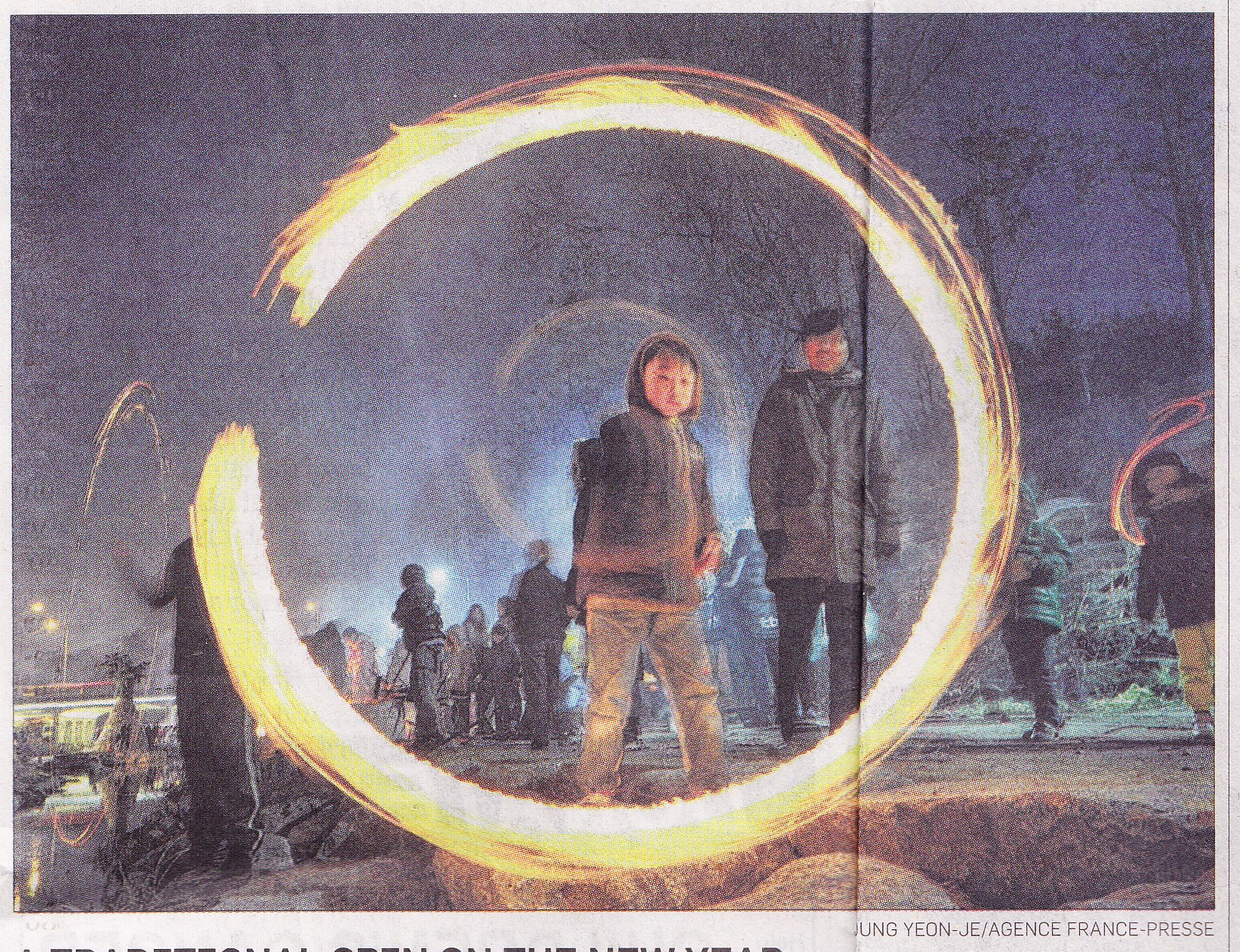
The picture of a South Korean boy spinning a can filled with glowing embers over a field on the first full moon of the Korean New Year reaffirms that concerns are the same everywhere. In our sterilized, indoor, urbanized lives where food is grown, harvested, processed and packaged by others for simple consumption of the vast majority, we have lost one of the most poignant aspects of religion. People pray for survival against the devious plans of terrorists, or the insidious diseases that threaten those who make a living simply moving electrons from place to place. Meanwhile somewhere in a country teetering on the brink of nuclear winter, a young boy swings a bucket full of hope.


Faith Stealing

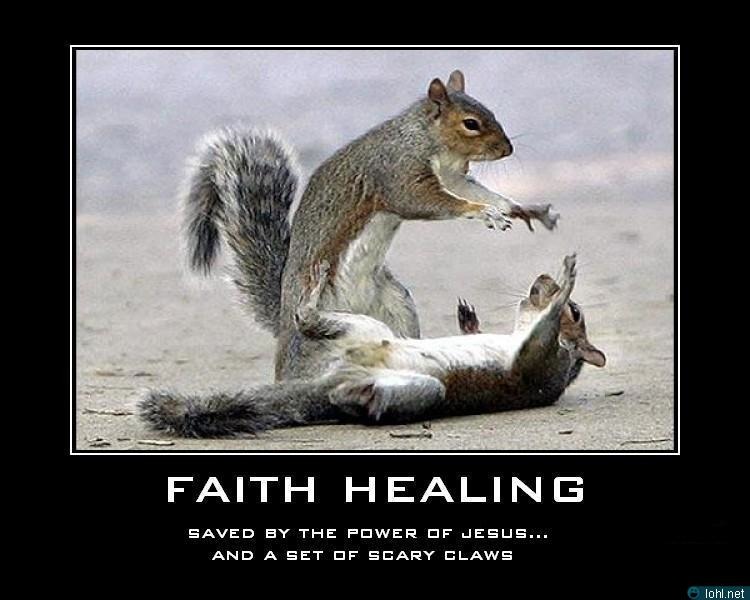
The sad story of the Schaible family of Philadelphia has reached a compromise that demonstrates just how awkwardly religion and politics sit together. Believers in faith healing, the Schaibles watched their two-year old son die for lack of medical attention. No limits exist on what people are capable of believing. Belief is at the root of most religions, so any nation that advocates freedom of religion has to open itself to the bizarre and wonderful possibilities that follow. Belief can’t be legislated. Too many revolutions throughout the world have amply demonstrated that. If a religion decides that the use of turn-signals is sinful (apparently a popular doctrinal stance here in New Jersey), it may bring conflicts with civil authorities and other citizens. When a religion declares professional medical treatment to be wrong, it is simply exercising its right to believe. When civil laws declare that parents must watch over the physical welfare of their children, clashes with such faith systems are inevitable. Believe what you will, physical death will not be cheated.

The shift of religion from praxis to belief gave believers a shove down a very slippery slope. Ancient religions tended to be matters of practice: gods demand sacrifice, so we grudgingly give them that. In actual fact, sacrifices supported the temple staff, often an arm of the government. It was, although probably not disingenuous, taxation in disguise. To be the member of a community, you have to pay the price. The system started to break down when religious individuals began to internalize this external structure. Instead of just offering the sacrifice, you have to do it with the right intentions. Those intentions evolve into beliefs. And beliefs are the ultimate free agents.

When a society defines religion as a belief system to which you may (or may not) subscribe, then myriad religious concepts emerge. Offering religious institutions tax-exempt status only encourages such behavior. If you tax them, on the other hand, the wealthier religions will have more political influence. No matter what pious lips may say, money will always trump pure belief. Meanwhile very real human suffering takes place, hostage to belief systems made up by somebody else. Religion has given us many lofty ideals; maybe one of those ideals is that we should limit its own infinite power.

Borrowed from some place on the Internet


Mummery and Divinity

The human psyche is a fascinating study. As an undergrad I stopped just shy of a psychology minor (partially this was due to the place, but also to a haunting feeling that psychologists are often attempting to resolve their own problems). Even as an armchair psychologist there are plenty of human tendencies to note. One that I occasionally mention in this blog is pareidolia, the attribution of significance to random information. Pareidolia often comes in the form of seeing faces, entire people, or even animals, where they don’t actually exist. This has been proffered as the source of belief in everything from ghosts and aliens to God himself. No doubt pareidolia is a strong tendency in the human mind. When my family recently saw Mummenschanz this was again confirmed.

This Swiss mime troupe – pioneers in experimental theater – makes simple objects come to life. The illusion works because of pareidolia. When we saw the show, even the youngest audience members could be heard exclaiming what obviously non-human tubes, slinky-like characters, and shapeless blobs were trying to do. “It wants the balloon!” “It likes that other one!” “It feels sad.” As the various abstract pieces moved about the stage, a laugh was guaranteed if they flashed a simple round orifice at the audience that clearly perceived it as an eye. We attribute intentionality and purpose to objects unvivified without the soul of Mummenschanz inside them.

Prior to the current tour, the last time my wife and I saw Mummenschanz was about two decades ago in Edinburgh. This was long before I’d been introduced to the concept of pareidolia, and, although I enjoyed the show, the more recent experience was more profound for it. Some of the adults present without children left at intermission, perhaps not finding the abstract personalities engaging. Children, however, seemed to comprehend what was going on. This does lend credence to the power of pareidolia to make sense of a bewildering world. When faced with the unfamiliar, we put a human face on it, ascribe it intention, and call it either a deity or Mummenschanz.


Back to Paranormalcy

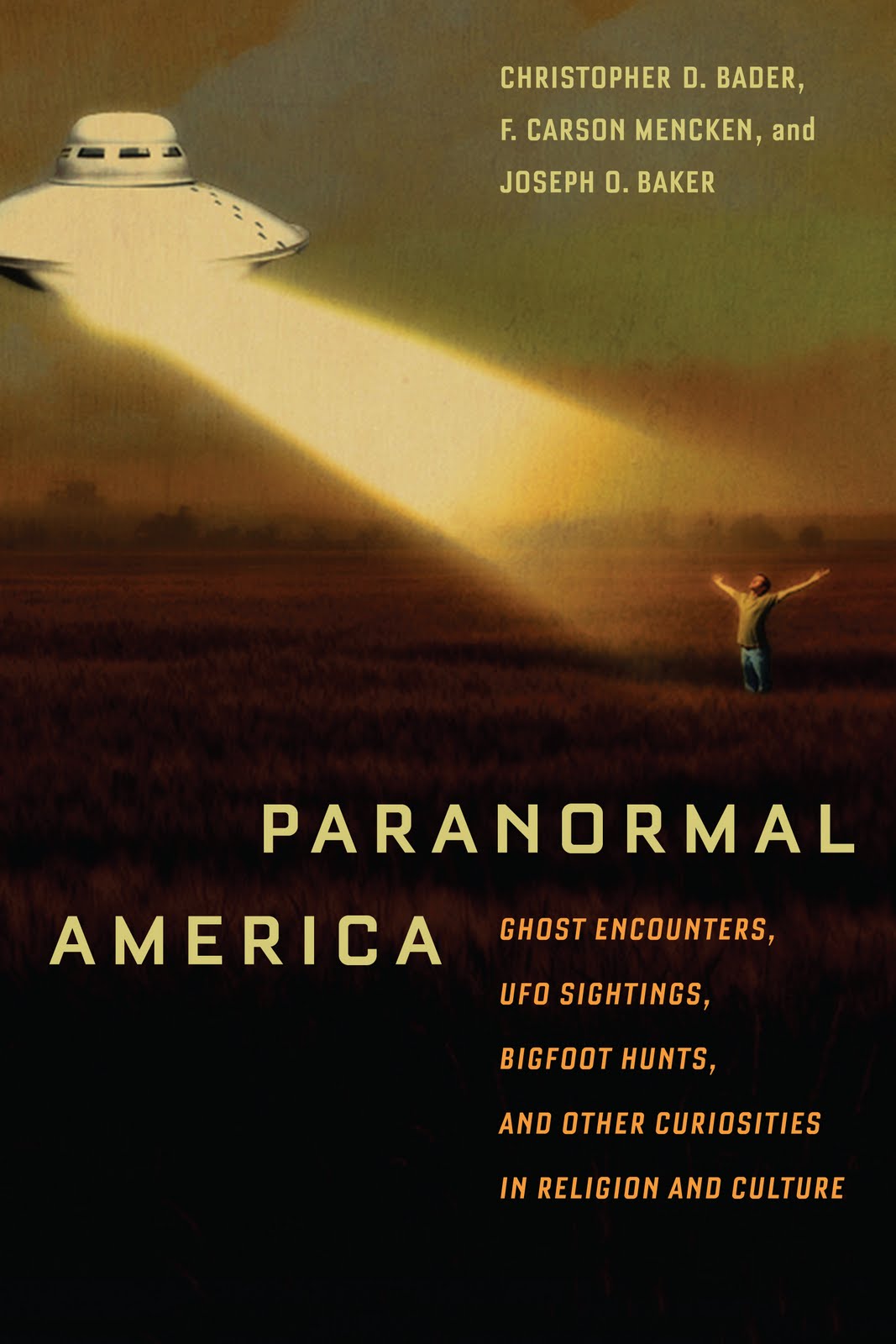
Belief is a paranormal phenomenon. Or so it would seem. Having just finished the fascinating sociological study of Christopher Bader, F. Carson Mencken, and Joseph Baker, Paranormal America: Ghost Encounters, UFO Sightings, Bigfoot Hunts, and Other Curiosities in Religion and Culture, the implications are thought-provoking. I’ve known the work of Christopher Bader, the lead researcher, for some time. Instead of trying to prove or disprove the phenomena under study, he performs a rare feat in actually addressing something most scholars avoid: what people really believe. As becomes clear throughout the book, a substantial majority of Americans believe in some paranormal phenomena at some level. The official story is that nobody believes this stuff, but the numbers beg to differ.

It is appropriate that such a topic should be undertaken by sociologists of religion. One of the difficulties the authors have is differentiating between religion and paranormal. Both religion and paranormal subjects involve going beyond empirical evidence. There is no “proof” that their objects of interest/devotion exist. The authors ultimately decide that what separates belief from God from belief in aliens is a matter of numbers: is it a generally accepted belief or one that is outside the norm (i.e., paranormal)? Since a vast majority of Americans believe in God, that is religion. Since far fewer believe in ghosts, they are paranormal. As I have suggested before, the main problem is one of definition. Religion stands on a continuum with “paranormal” beliefs. One society validates, the other it castigates.

I sensed a hesitation as I read this study. Grouping psychics alongside ghost hunters may seem reasonable, but how do Bigfoot and UFOs fit in? Those who research these latter topics often claim they are physical phenomena, as real as the keyboard I’m using, only undiscovered. Does an unsubstantiated phenomenon qualify as paranormal? Who decides what is really real? Academic institutions often distance themselves from subjects that might be suspect. (They also distance themselves from fair hiring practices as well, but that is perfectly normal.) It seems to me that the problem with “paranormal” comes in the grouping. Some of the individual subjects may indeed have merit: ghosts are perceived, reported, and some would say even photographed and recorded. They make up one of the earliest facets of religious belief. The psychic down the street has a less sure pedigree.

These fringe subjects, regardless of veracity, have a wide following. Even highly educated people generally believe in some form of “paranormal” phenomenon. Religion, widely accepted and practiced, ventures beyond the empirical as well. The difference is only, it seems, a matter of degree. Where is Fox Mulder when we really need him?


Build-A-Bible

Winter Term is underway, and one of the first aspects of the Bible I discuss with students is the fact that the Bible was a book that was compiled instead of written. In our society we are used to the concept of the Bible as a document that is unified by divine authorship, often forgetting (or ignoring) that none of the authors was intending to write a book with the tremendous authority the Bible now enjoys. Students ask how the Bible came to be; it was a process of gathering material widely utilized in Judaism. No one knows the actual composition history of the Torah, but after the Pentateuch got the process rolling, scrolls were gathered in collections and added to the Bible en masse. By the end of the first century of the Common Era, we had a Hebrew Bible.

Sometimes this historical reconstruction is a hard-sell to members of a society where a divinely written book is accepted alongside sub-atomic particles and super novas. Despite the technological sophistication that accompanies growing up in our engineered world, students are often ill-equipped to accept the Bible as a product of human exploration. The writers, whoever they were, traveled this same path of discovery that we continue to tread. They wrote down their hypotheses, based on their experience, just like modern people continue to do. The difference is they did this a very long time ago.

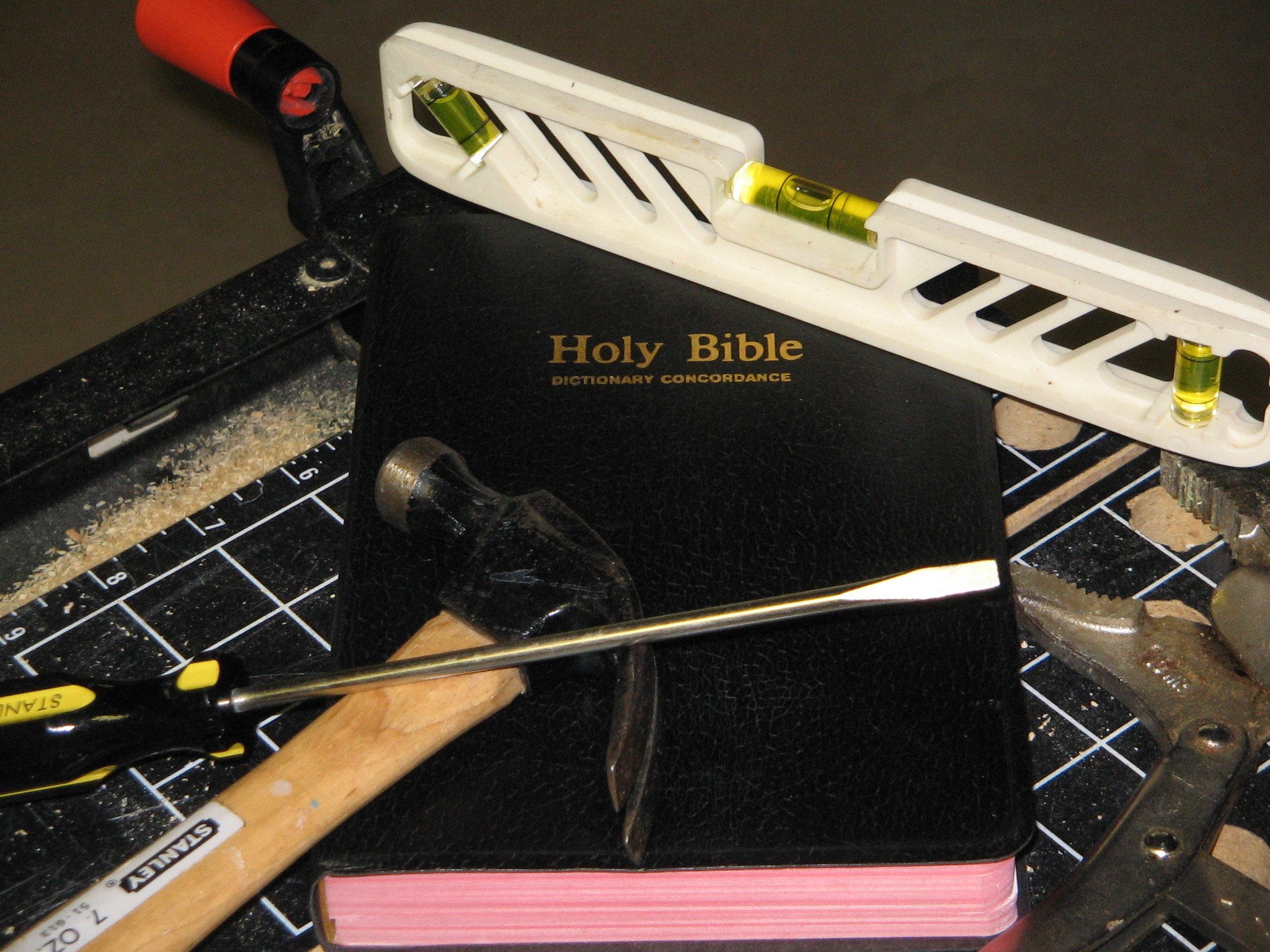
Those books that were selected for inclusion in the Bible became the defining documents of western civilization. Even though there is now an international space station orbiting out of sight above our heads, and even though quarks, leptons, and bosons fly out of cyclotrons large enough to encircle most small towns, God still holds a quill pen. The fixation just after the age of cuneiform is a curious one. If only God had held out for the invention of the Internet, the compilation of the Bible would have taken a very different course, I suspect. Instead of beginning its title with the word “Holy” it would more likely have commenced with “Wiki.”


Ouroboros

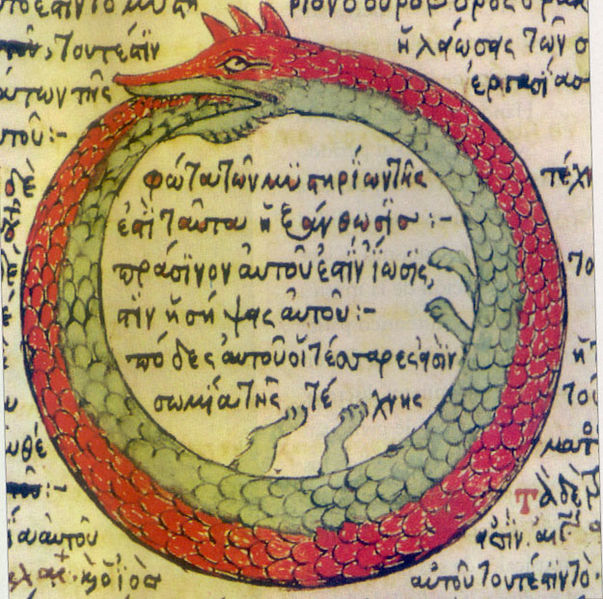
The Science Channel’s program, Through the Wormhole, hosted by Morgan Freeman, has a noble goal: help educate non-scientists with cutting-edge ideas. The series opens with an episode on God: “Is There a Creator?” Interestingly, in our society there are those who turn the question around. Religious folks ask the question: does science really have the answers? It is the classic ouroboros, the snake swallowing its own tail. Perhaps the best way to consider this entrenched issue is to consider its history. Gods emerged as explanatory figures. In the days when the Bible was the oldest known book, it was believable that God had dictated it and therefore the idea of God required no explanation: the ultimate tautology. When extra-biblical material predating the Bible was discovered, a warning bell rang. Most established religions in the western world simply pretended not to hear.

Snake, dragon, whatever.

Neuroscientist Michael Persinger of Laurentian University features in this Wormhole episode, demonstrating his “God helmet.” The principle is that stimulating the specific part of the right hemisphere of the brain that corresponds to the left hemisphere’s region of “selfhood,” a brain will fabricate a presence. While the experiment has promising results, it can’t fully explain God. Other neuroscientists are working on the issue as well. Historically we know that Yahweh was one among a polytheistic entourage of deities. With the stresses and mysteries of exilic existence, monotheism was born. Only one of those many gods survived. By studying the character of Yahweh’s departed compatriots, however, we can learn of the origins of gods as well.

Science entered the picture much later. By the time of truly empirical observation, God was an assumption as certain as ether. When science offered an alternative explanation, religion countered. “I see your Big Bang and raise you one Prime Mover.” And thus it will always go. With no witnesses, alas, no intelligence even yet evolved, our universe began. We can ask the physicist or we can ask the priest. Even if God is discovered and described in the laboratory, with or without a helmet, those standing outside will always believe, with Anselm, that there is an even bigger one somewhere out there.


Whence Moses?

Podcast 21 follows on from podcast 19 concerning Moses. Specifically, the question addressed in this podcast is the origin of Moses. While not historically attested, Moses is nonetheless an important figure in both Judaism and Christianity. How do we explain Moses if he is not historical? This podcast attempts to suggest one plausible origin for Moses while admitting that we simply do not know where he really emerges in the religious imagination of antiquity.


Explaining Religion

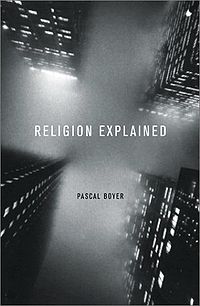
Religion Explained, by Pascal Boyer, is one of those books that I wish had been written earlier and I had read earlier. Like several of my recent reading projects, this book was suggested to me by my cyber-friend Sabio Lantz’s blog. In the course of a very busy semester, it took several months to read, but Religion Explained is an astounding book that raises the ultimate issue: whence religion? Among the many revelations in this monograph – based on solid anthropological and sociological data, as well as neuroscience – is that religion has multiple origins. As Boyer demonstrates repeatedly throughout his book, religion arises from several mental processes symbiotically supporting assumptions that, taken alone, would often fail to survive in the meme pool.

Summarizing Boyer’s work would require a book in itself, but a few of his points struck me as particularly apt to today’s struggle between religion and society. At one point (140) Boyer demonstrates that doctrine is not nearly as important to religions as most specialists assert. In fact, most regular adherents to a religion misunderstand the doctrine to which they give lip service. After having spent too many years in a doctrinally ossified seminary, reading Boyer’s analysis was like liberation at this juncture. As Boyer points out later (282) Christian doctrine emerged in the conflicted environment of revolutionary movements with differing ideas as to what a messiah was. Only after the situation became too complex did one group decide that councils were necessary to decide what they in fact believed. Not really an inspiring story for those who wish to claim absolute certitude about their belief structure! Boyer also draws from other religions around the world to support his case.

Having stated that, Boyer does not attempt to destroy religion, but to explain it. The very premise itself will obviously strike many as blasphemous, but religion, like all human practices, can be studied with a scientific outlook. Accessing anthropological studies and neurological analyses, and the battery of tools provided by decades of psychological and sociological research, Boyer’s portrait is lifelike and believable. Religion developed as an amalgamation of human survival strategies that synchronized into a relatively consistent system that helped to explain a confusing world. If I had read Religion Explained when I was in college, my lifelong religionist enterprise might have turned out rather differently.


Not As We Know It

According to an article from the Associated Press yesterday, scientists are having to rethink life. Some of us do that on a regular basis anyway, but there is actually cause for this scientific reevaluation. Bacteria have been discovered in Mono Lake, California, that utilize arsenic to sustain life. The article also notes the announcement that the number of stars in the universe has recently been increased on a magnitude of three times the old estimate and that potentially life-bearing planets are regularly on the increase. Seems that we may no longer be alone. No one knows what forms life may take “out there.”

The eye of a lesser god?

I wonder what impact new life forms will have on religion. I suppose there’s not a revelation immense enough to shock a true Fundamentalist from his/her confident “God could do that” outlook, but when we find life not as we know it, does it not affect all of our worldview? Even the definition of life is up for grabs. Is the earth itself alive? Did the animists have it right all along? Does arsenic-based life have a soul once it evolves to hominid status? Would they have equal opportunity housing? When such revelations come to light, I would find it comforting to have Mr. Spock at my side, stating in his flat, unemotional voice, “It’s life, but not as we know it.”

Life was complicated enough to begin with, what with trying to hold down two part-time teaching jobs and many secretive efforts to launch new careers. Religion can’t let go of this information, however, as one of the prime definitions of the divine is as the guy who creates life. Religions such as Buddhism and Jainism – religions that believe taking any life is wrong – will certainly have more work cut out for them. When it is boiled down to its prime components, religion is ultimately concerned with life. Monotheism has no room for a Hades or Ereshkigal. One might only wonder who the gods of the arsenic eaters might be.


Solstice Now!

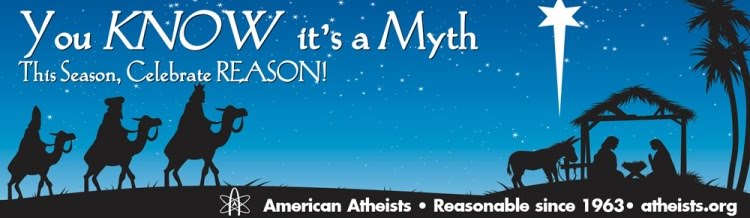
Who owns the solstice? Whoever it is, I wish we could just get it over with. The darkness falls before I step into my 5 p.m. class. It is dark when I drive home. The next morning, leaving for my 8:30 a.m. class, I drive to school in the dark. Back at Nashotah House a colleague once said his wife became “almost pagan” in her yearning to pass the winter solstice and head toward the time of year when light prevails over darkness. My wife pointed out a CNN story concerning a New Jersey billboard sponsored by American Atheists. The billboard, just on the Jersey side of the Lincoln Tunnel into New York, shows the star of Bethlehem, the manger and the wise men. The inscription reads: “You KNOW it’s a myth. This season celebrate REASON.” Naturally, motorists are up in arms. Who owns the solstice?

Before the Thanksgiving leftovers even hit the fridge, Christmas season has begun. Santa always ends the Macy’s Thanksgiving Day Parade, making it official. Since we are capitalists, we do what the red-suited captain of industry says: shop. As long ago as A Charlie Brown Christmas complaints of the commercialization of Christmas have reverberated through the media. Personal properties and billboards enjoin us to “keep Christ in Christmas” and remember “the reason for the season.” Economists tell us to spend more to assist the sluggish economy. Meanwhile the light continues to fade; the days grow darker. Why confuse the issue with religiosity? Why not just spend some money on others, feel the release of endorphins, and be thankful?

Nobody knows when Jesus was born. The church selected December to celebrate the event because the shortest day of the year, for those north of the equator, had long been a time of fervent wishes for the return of light. The first-century Christian rivals, the Gnostics, believed in the continual, literal struggle between light and darkness. When sidelined by Orthodox Christianity, the torch was taken up by those who celebrated Saturnalia, Lupercalia, Hogmanay, Yule, Sol Invictus or any number of other winter festivals. Christmas was a relative late-comer to the celebrations that welcome the resurrection of the sun. So drivers from New Jersey should take it easy. The solstice is everybody’s holiday. I just wish that whoever’s in charge would give us all a little more light.


O Pomona!

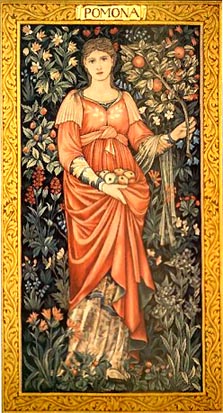
Ancient goddesses have long been a fascination with me. After writing my Edinburgh dissertation on Asherah, and taking employment at an Anglo-Catholic seminary that venerated the BVM – Blessed Virgin Mary, and not some underwear brand, as I had supposed – I realized that male-dominated religions still recognize the need for the sacred feminine. In my recent post on Halloween, I mentioned the Roman goddess Pomona. Roman religion is generally not treated with the finesse of classical Greek mythology, but it represents an important part of our western heritage. Pomona is an etiological goddess. Etiologies are stories of origins, and like other goddesses of the ancient world Pomona was used to explain the mysterious ways of nature.

The story that best describes Pomona is preserved by Ovid in his Metamorphoses. Pomona is one of the virgin goddesses, specifically the goddess of fruit. She has no known Greek antecedents. The myth involves her devoted chastity and her commitment to ripening fruit, particularly apples (and sometimes pears). Shunning all lovers, she was eventually wooed by Vertumnus, the god of changing seasons. Disguising himself as an old woman, Vertumnus visits Pomona and tells her of the wonders of love and of the attributes of Vertumnus especially. Eventually Vertumnus reveals himself, and Pomona, delighted at what she sees, loves him. Of course, apples ripen and seasons change. Winter is soon to come once the apples fall from the tree. The goddess has been subdued by masculine designs.

So it often is with goddesses. Men recognize the need for the divine feminine, but fear it and attempt to tame it. Pomona, however, survives. One of the memorable objets d’art at Nashotah House, where I sat in that chapel for over a dozen long years, was a frieze of the BVM. More technically, a Madonna and Child. The frieze hung over an altar in a side chapel behind the choir, so most people didn’t spend much time looking at it. Mary, holding Jesus, was surrounded by a frame of fruit rendered in plaster. Apples were prominent among them. There are those who suggest that apples show how Mary overcame the heinous sin of Eve. I believe, however, that the fruits surrounding the virgin demonstrate that Pomona, the virgin goddess who eventually succumbs to the advances of the male deity, still has a place in the patriarchal world of Christendom.


Theory of Everything

Over the weekend my wife pointed out an interesting story on MSNBC pointing out that superstitious beliefs are becoming more common. While reason may dictate that as it becomes more obvious that reason explains everything the supernatural will fade from the human explanatory repertoire. Instead, scientists are using reason to explain why this does not appear to be happening. Many neuroscientists suggest that something in the brain predisposes us to believe, while other scientists suggest it may be in the DNA. For whatever reason, we are inclined to believe in outside agency.

The article is an introduction to the book Paranormal America by Christopher Bader and Carson Mencken. I’ve read some of Bader’s work before and it is admirable for its balance. He tends not to judge the phenomena but raises the question why people believe what is, frankly, often unbelievable. What stands out in such discussions is that religion is often classed separately from the “paranormal.” Paranormal is generally anything outside the accepted bounds of science. Supernatural, apparently, is anything that makes blatant claims to be outside the reach of science. With recriminations frequently flying both directions, I suggest maybe a reworking of definitions might be in order. Science, by definition, can explain all phenomena that exist. Supernatural, by definition, cannot be quantified. Too many mutually exclusive truths.

For many decades many scientists have been seeking a grand unified theory, something that explains everything. This they hope to do without recourse to the supernatural. When they arrive at this theory or formula, predictably, those who believe God is bigger than all this will claim that God is simply outside the system. Perhaps the net needs to be widened. We know that we humans do not possess the keenness of senses that our animal friends have. Various creatures see, heard, smell, taste and touch with such exquisite sensitivity that we can only be jealous. Some can sense magnetic fields, while some flowers follow the sun without the benefit of any eyes. We, in our presumption, think we see and measure all that is to be seen and measured. Hamlet would disagree. I can’t wait to read Bader and Mencken’s book, but I’m inclined to think that even when a grand unified theory arises there will still be room for philosophers, and maybe even theologians.


Origin of Halloween

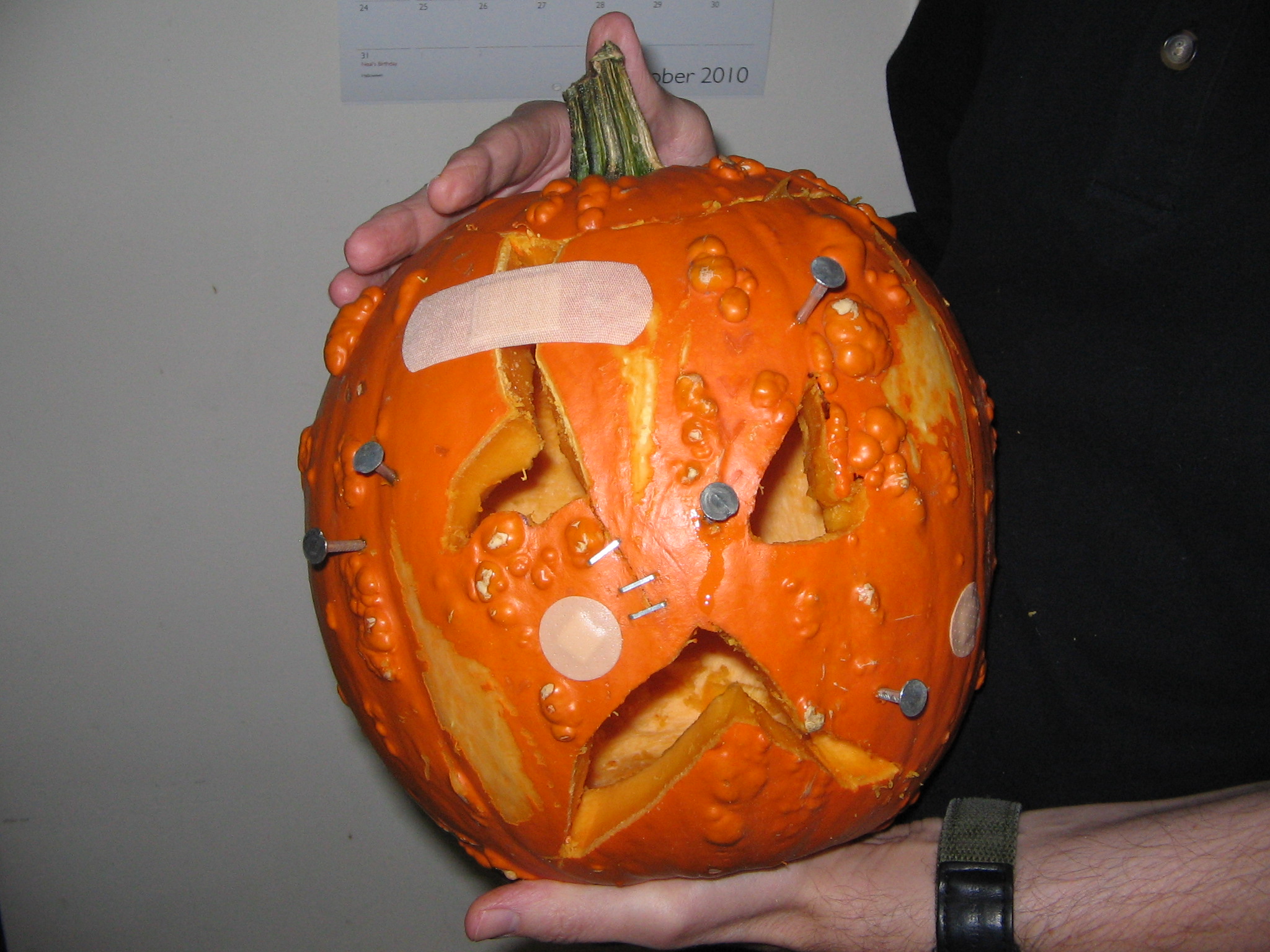
Perhaps the most misunderstood of holidays, Halloween has grown into a major commercial holiday. Outsold only by Christmas in the United States, Halloween now supports its own seasonal stores that cash in on the massive public interest. A few years ago a wrote a book explaining the holidays for teens/tweens. The book was never published, and I’ve been putting excerpts on this blog on appropriate occasions. For the full story of Halloween, please check out the Full Essays page (link above).

Accusations of a demonic origin may fit in with the popular creatures of the holiday, but they are far from the truth of the matter. A cross-quarter day, Halloween comes in the opposite side of the year from May Day (remember Walpurgis Night) when spirits make their way back into the mortal world. It represents the passing of fall into winter and the shades of death that accompany it. How much more religious can you get?

From ancient times people have been aware of how weak our control over our lives really is. We depend on the sun and the weather to cooperate for our crops. We fear the darkness when our eyes can’t compete with those of our predators. As the year descends into longer and longer nights, we secretly fear that eventually night will not end. The dark time of the year belonged to the spirits.

Just as all ancient people celebrated the vernal equinox (if you missed it, check out the Passover-Easter Complex for more), they marked the autumnal equinox with festivals. Although Halloween is six weeks after the equinox, it seems to have inherited some of the ancient associations of that season. One of the ancient feasts of the equinox was for Pomona, the Roman goddess associated with fruits and seeds. There is more of Thanksgiving than Halloween in this festival, however.

Halloween, as we have come to know it, is usually traced to the same people who gave us St. Patrick’s Day – the Celts. The Irish calendar was divided into four quarters, marked between the solstices and equinoxes by the cross-quarter days. The fall cross-quarter day was Samhain (in case you don’t speak Gaelic, this is pronounced “sow-win”). Samhain can be understood as “summer’s end” and it was the traditional marking of the onset of winter; it actually comes just a month before meteorological winter.

The Celts, as well as other ancient peoples, believed that spirits of the dead were active as the trees lost their leaves, the grass began to dry and, and the world itself seemed to be dying. Huge bonfires were lit to ward off evil spirits, and perhaps bloody sacrifices were made to ensure the safety of the living.

No matter what modern Halloween critics may say, the Celts did not worship Satan and the origins of the holiday are not satanic. Pagan, maybe, but who isn’t somebody else’s pagan? The idea was to fend off evil, not worship it. The shamans, or “medicine men” of the Celts were a class of priests called Druids. Samhain would have been one of the festivals overseen by the Druids. These guys were priests of a religion that focused on nature, not the Devil. They did play a little rough though. They seem to have practiced human sacrifice once in a while, but Samhain was more often about killing off livestock before the winter. Either you can keep your animals alive and they will eat the little food you have, or you can butcher them and add to the little food you have. After all, not much grows in winter.

[See Full Essays for the rest]


Everlasting Life

From WikiCommons

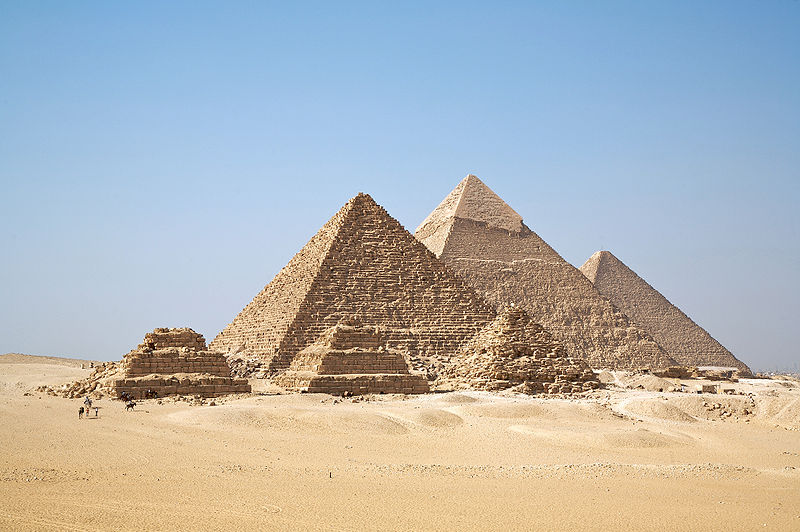
In the 27th century BCE, the Egyptians began building pyramids. These monuments, testaments to the belief in an afterlife for the king, are among the most easily recognizable structures in the world. Shaped to reflect the primordial mound that first emerged from the watery mass that existed before the world, the pyramid was more than a tomb. Pyramids were the key to everlasting life. In the Old Kingdom of Egypt this was limited to the king, but since the king represented Egypt nobody seemed to mind too much. Inside the pyramids were spells and incantations to help the king make it through to the next world. His success in this venture was of national importance.

During later periods of Egyptian religion, notably during the breakdown in centralized authority during the First Intermediate Period, the idea of an afterlife became democratized. Citizens who could never aspire to kingship desired an afterlife as well. The official theology of the day bent to the will of the masses and allowed a “ba” or, very loosely considered “soul,” to be assigned to each person. Those who could afford mummification and a Book of the Dead could make it to the afterlife as well. The preserve of the royalty had been breached, and the afterlife was open to all. Interestingly, the Israelites, many centuries later, did not seem to accept this idea. It is only very late in the Hebrew Bible before we get inklings that an afterlife was being anticipated. Living la vida Torah was reward enough.

It seems almost impossible in today’s world of religion for eternal consequences to realize that the original monotheistic religion was largely unconcerned with the afterlife. Once the idea caught on, however, there was no turning back. What is the motivation for religious belief if an eternal reward is lacking? Metaphorical pyramids continue to be erected. Would monotheistic religion still exist if it returned to its original outlook? Would politicians, television stars, and sports players give God the glory if it all ended at death? It hardly seems likely. Once a pyramid has been constructed, it is almost impossible to take it apart again.