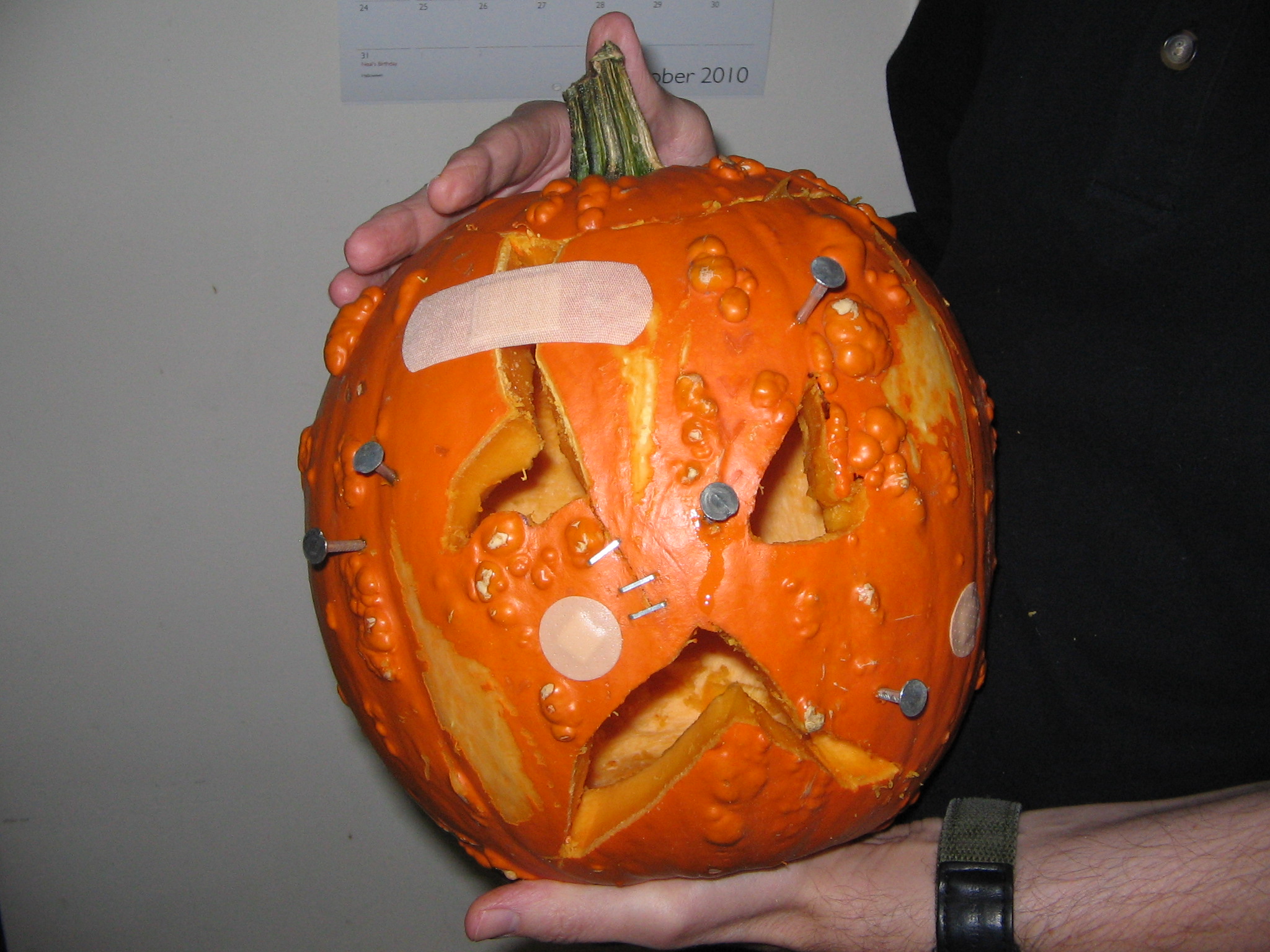
Origin of Halloween

Perhaps the most misunderstood of holidays, Halloween has grown into a major commercial holiday. Outsold only by Christmas in the United States, Halloween now supports its own seasonal stores that cash in on the massive public interest. A few years ago a wrote a book explaining the holidays for teens/tweens. The book was never published, and I’ve been putting excerpts on this blog on appropriate occasions. For the full story of Halloween, please check out the Full Essays page (link above).

Accusations of a demonic origin may fit in with the popular creatures of the holiday, but they are far from the truth of the matter. A cross-quarter day, Halloween comes in the opposite side of the year from May Day (remember Walpurgis Night) when spirits make their way back into the mortal world. It represents the passing of fall into winter and the shades of death that accompany it. How much more religious can you get?

From ancient times people have been aware of how weak our control over our lives really is. We depend on the sun and the weather to cooperate for our crops. We fear the darkness when our eyes can’t compete with those of our predators. As the year descends into longer and longer nights, we secretly fear that eventually night will not end. The dark time of the year belonged to the spirits.

Just as all ancient people celebrated the vernal equinox (if you missed it, check out the Passover-Easter Complex for more), they marked the autumnal equinox with festivals. Although Halloween is six weeks after the equinox, it seems to have inherited some of the ancient associations of that season. One of the ancient feasts of the equinox was for Pomona, the Roman goddess associated with fruits and seeds. There is more of Thanksgiving than Halloween in this festival, however.

Halloween, as we have come to know it, is usually traced to the same people who gave us St. Patrick’s Day – the Celts. The Irish calendar was divided into four quarters, marked between the solstices and equinoxes by the cross-quarter days. The fall cross-quarter day was Samhain (in case you don’t speak Gaelic, this is pronounced “sow-win”). Samhain can be understood as “summer’s end” and it was the traditional marking of the onset of winter; it actually comes just a month before meteorological winter.

The Celts, as well as other ancient peoples, believed that spirits of the dead were active as the trees lost their leaves, the grass began to dry and, and the world itself seemed to be dying. Huge bonfires were lit to ward off evil spirits, and perhaps bloody sacrifices were made to ensure the safety of the living.

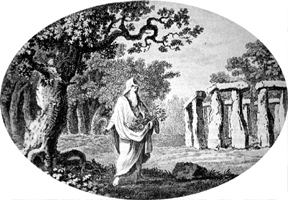
No matter what modern Halloween critics may say, the Celts did not worship Satan and the origins of the holiday are not satanic. Pagan, maybe, but who isn’t somebody else’s pagan? The idea was to fend off evil, not worship it. The shamans, or “medicine men” of the Celts were a class of priests called Druids. Samhain would have been one of the festivals overseen by the Druids. These guys were priests of a religion that focused on nature, not the Devil. They did play a little rough though. They seem to have practiced human sacrifice once in a while, but Samhain was more often about killing off livestock before the winter. Either you can keep your animals alive and they will eat the little food you have, or you can butcher them and add to the little food you have. After all, not much grows in winter.

[See Full Essays for the rest]

Everlasting Life

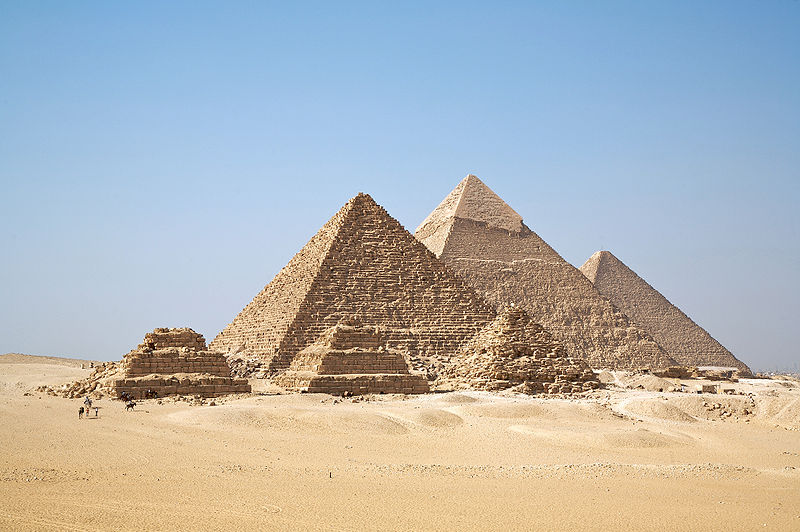
From WikiCommons

In the 27th century BCE, the Egyptians began building pyramids. These monuments, testaments to the belief in an afterlife for the king, are among the most easily recognizable structures in the world. Shaped to reflect the primordial mound that first emerged from the watery mass that existed before the world, the pyramid was more than a tomb. Pyramids were the key to everlasting life. In the Old Kingdom of Egypt this was limited to the king, but since the king represented Egypt nobody seemed to mind too much. Inside the pyramids were spells and incantations to help the king make it through to the next world. His success in this venture was of national importance.

During later periods of Egyptian religion, notably during the breakdown in centralized authority during the First Intermediate Period, the idea of an afterlife became democratized. Citizens who could never aspire to kingship desired an afterlife as well. The official theology of the day bent to the will of the masses and allowed a “ba” or, very loosely considered “soul,” to be assigned to each person. Those who could afford mummification and a Book of the Dead could make it to the afterlife as well. The preserve of the royalty had been breached, and the afterlife was open to all. Interestingly, the Israelites, many centuries later, did not seem to accept this idea. It is only very late in the Hebrew Bible before we get inklings that an afterlife was being anticipated. Living la vida Torah was reward enough.

It seems almost impossible in today’s world of religion for eternal consequences to realize that the original monotheistic religion was largely unconcerned with the afterlife. Once the idea caught on, however, there was no turning back. What is the motivation for religious belief if an eternal reward is lacking? Metaphorical pyramids continue to be erected. Would monotheistic religion still exist if it returned to its original outlook? Would politicians, television stars, and sports players give God the glory if it all ended at death? It hardly seems likely. Once a pyramid has been constructed, it is almost impossible to take it apart again.


The Chosen Peoples

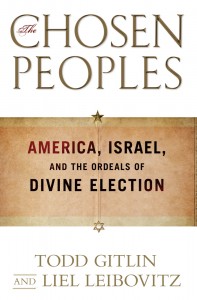
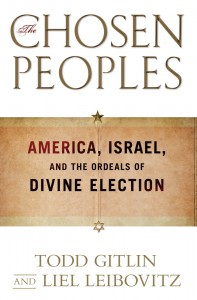
My thanks go to Simon & Schuster for sending me a review copy of Todd Gitlin and Liel Leibovitz’s new book, The Chosen Peoples: America, Israel, and the Ordeals of Divine Election (2010). Briefly, the book traces the origins of the concept of being a chosen people in both Israel and the United States. This concept is then shown in relief with those who are “unchosen.” The authors conclude by highlighting the national sense of mutual goodwill between Israel and the United States. The full text of this review is on the Full Essays page of this blog.

I read this book wearing multiple hats. Since the first chapter traces Israel’s sense of chosenness from Biblical times to the present, I began by wearing my Biblical Scholar hat. Many of the questions asked and raised about the Bible reveal a naivety about traditional claims of biblical authorship. Although certainty cannot be achieved, biblical scholars have applied textual and literary techniques to the text for well over a century now, and many of the claims simply accepted by Gitlin and Leibovitz simply do not stand up. This may seem a minor flaw, but since Abraham is foundational to this outlook, it is essential to at least consider his lack of historical attestation. Gitlin and Leibovitz assume that Genesis, with its stories of Abraham, predates the books that follow. This is not a safe assumption to make, and using this background as a foundation for further analysis might well lead to structural problems with the argument later on.

Wearing the hat of an historian, I noticed how much of the force of the argument of the book is interwoven with the idea that God has actually chosen Israel. I have told my students for many years now that historians do not make claims on God or God’s alleged activities. Texts that narrate God’s actions tend to be classified as myths rather than history. The concept of chosenness, which Gitlin and Leibovitz are reluctant to relinquish, is based on the premise that God has indeed done the choosing. An historian would be extremely reticent to make such a claim. Having noted this concern, the authors do a fine job of providing a brief, readable history of the founding of modern Israel without recourse to what God was doing in the twentieth century. When the authority of the Bible is needed, it is quoted here in King James English, hardly the most accurate translation available.

Gitlin and Leibovitz suggest that chosenness is more a curse, at times, than a blessing. The reasoning seems to be that the concept of chosenness leads inexorably to Zionism. The ideas interact on a much more subtle level than that, although certainly the Zionist movement has owed and continues to owe quite a heavy debt to the concept. The generalizations here are a bit broad – political motivations may not receive their full due. Toward the end of the chapter the ideology of messianism is engaged and brought into the discussion. It is not clear that messianism is the same as chosenness; the two ideas both emerge in Judaism, but do not always overlap. When the authors state that Zionism has always been messianic at heart (p. 57), that may be correct, but it does not necessarily reflect chosenness. Gitlin and Leibovitz are very good at pointing out the inconsistent application of the idea of messianism in the formative stages of the modern state of Israel.

Please see the Full Essays page for the remainder of this review.


Just Druid

Suggestively between the autumnal equinox and fall’s cross-quarter day, yesterday British authorities announced that Druidism is now an official religion. Such an announcement, naturally, does not endorse or censure the belief system but only affects its legal status. That status relates to taxes, the handmaid of the One True God, Money. Tax-exempt, Druids are now free to worship nature free of charge.

In the recent resurgence of interest in paganism, the Druids have attracted a considerable New Age following. There is, however, no doubt that Druidism is an ancient religion predating the Christian conquest of Europe. The origins of the Druids are lost in obscurity, but they are one of any number of ancient nature cults that have become fashionable in a post-Christian society. What does it matter if a society recognizes a belief structure as a religion or not? (Apart for tax liabilities, of course!) One of the issues at stake is the perennial question of who determines what is a religion and what is not. In a society where religion is defined purely by belief, the doors are cast wide, if not blown completely off their hinges, when a group declares itself a religion. Who is the final arbiter? Today the world resoundingly answers “Mammon.” When you pass that collection plate, or basket, or gourd, does the government take its cut or not?

Religions will always struggle to convince the many that they each possess the one, true faith. Some will do it through magic, others through nature, and others through divine revelation. All will be subject to the scrutiny of government fleshpots greedy for a share whenever money changes hands. Druids have lurked in the shadows for thousands of years. By publicly receiving the blessing of tax-exempt status, they are free once more to disappear into the mists and attract the envy of more imperially minded religions.

A Druid attempting tax evasion?


Seeing God

My daughter reminded me that one further aspect that stood out at the Red Mill Museum in Clinton was the persistence of pareidolia. Pareidolia, or matrixing, is the tendency to interpret “random” data as meaningful. More specifically, it is often used to refer to seeing a person (or entity) where it is not. As I wrote in an earlier entry, it has been suggested that pareidolia is the ultimate origin of religion.

For my purposes here, however, I wonder if the sheer amount of false faces we encountered while at the Red Mill might have some connection with the idea that the property is haunted. Somewhat of a skeptic, I am somewhat swayed by ghost accounts since they are so plentiful and since many of those who report them are reputable persons with good observation skills. Ghosts are, however, impossible to separate from some form of religious thought since they are the ultimate examples of the intangible, unmeasurable phenomenon. If there are ghosts in the laboratory, they haven’t been quantified yet.

Old buildings, which abound at sites like the Red Mill, are full of knotholes or other apertures whose original hardware has long since disappeared. Round holes, or spots, as many insects and fish “know” are easily interpreted as eyes. Add a horizontal line beneath your “eyes” and you have a basic face.

Perhaps my favorite example of pareidolia at Red Mill is an old sycamore tree. A large burl on the trunk bears a striking resemblance to a human profile. This is more easily seen in real life where the mind more easily filters out the distracting coloration and focuses on the shape. Since pareidolia is such a fascinating aspect of the human experience of the world, and since it might, conveniently, be tied to religion, this seemed to be as appropriate a venue as any other to share some great examples.


Bibles and Freedom

Visiting the Red Mill in Clinton, New Jersey is always a worthwhile experience. Yesterday, a gloomy, gray September postcard, was perfect for such a visit. In addition to the many buildings on the museum grounds that retain an atmospheric feel year-round, the Mill is supposedly haunted and is frequented by a number of ghost hunting teams. With its long (for America) history and its picturesque beauty, the museum is a popular spot with tourists as well as ghost hunters.

One of the buildings on the grounds is an old one-room schoolhouse. As a family we have visited a number of these, although none of us qualify as having been actual pupils at one. A frequent blandishment at such institutions is the rules by which school teachers had to live in the nineteenth century, usually posted on the wall. Yesterday as we read the obligatory list, one “commandment” stuck out from the 1872 code of conduct: “After ten hours in school, the teachers may spend the remaining time reading the Bible or any other good books.” While many of the rules were condescending in their moralizations, this one carried a perfect example of how a nation, naively short-sighted, was already giving preferential treatment to one religion, Protestant Christianity.

As a nation founded as a haven for religious freedom, the colonists and settlers simply had narrow exposure to religions of the world. Freedom seemed an ideal worth dying for, but usually it meant freedom to be whatever (Protestant) denomination you wished to be. Catholicism was associated with the old powers of Europe, and the religions of the east were barely known. The Protestants were the ones who promoted Bible reading in those days, and while the rules allowed for other good books, there is an unstated superiority given to the Good Book in its pride of place. Once the colonials became nationals, it was still fair to taunt Quakers, Unitarians, and others who didn’t seem to fit the mold. We didn’t see any ghosts at the Red Mill yesterday, but it did seem that a haunting memory of true religious liberty hung about the place.

Clinton's Red Mill sews freedom


Chosen Ones

Religious dominance has been so much in the news lately that when my wife pointed out the review of Todd Gitlin and Liel Leibovitz’s The Chosen Peoples in today’s paper my mind once again fastened on the issue. I have not read the book; today’s review is the first I’ve heard of it. The salient point, however, is the continued evidence that monotheism is a tremendous burden on society. Most rationally considered analyses of western religious traditions recognize that the same “base God” is recognized in Judaism, Christianity, and Islam. These three religions are so deeply intertwined in their influences and theological commitments to the singularity of God that such a convergence is inevitable. Nevertheless, three religions sharing a God is like three children sharing a lollipop. Each wants to claim exclusive ownership.

The issue becomes more complex when ethnic identity is tied to religion. Given the nature of religions, this is, however, another inevitability. Religious thought and practice develop among populations separated, in Darwinian fashion, and those who lived in the original arenas of religious development were probably closely related. This is evident in the easy blending of Judaism as a culture and a religion, as well as ethic Orthodox Christianities that maintain a strong cultural component, and in Middle Eastern descent and Islam. People accept the religion of their own people. Monotheism then takes over with the demands of exclusive rights to chosenness or theological correctness. Religion itself contributes to its own fractionalization.

Those who are excluded protest: who wants to be left out of the chosen ones? If there is one God, who wishes to be the second or third or fourth favorite? If we (whoever “we” may be) are those legitimately chosen, are we not in some measure better than other believers? This logical crux slices through all theological niceties for those who examine the issue honestly. Many religions and one God. Chosen people abound. Perhaps it would be less dangerous if God could be divided among the many: one God, divisible, and available to all.


Natufia to Say

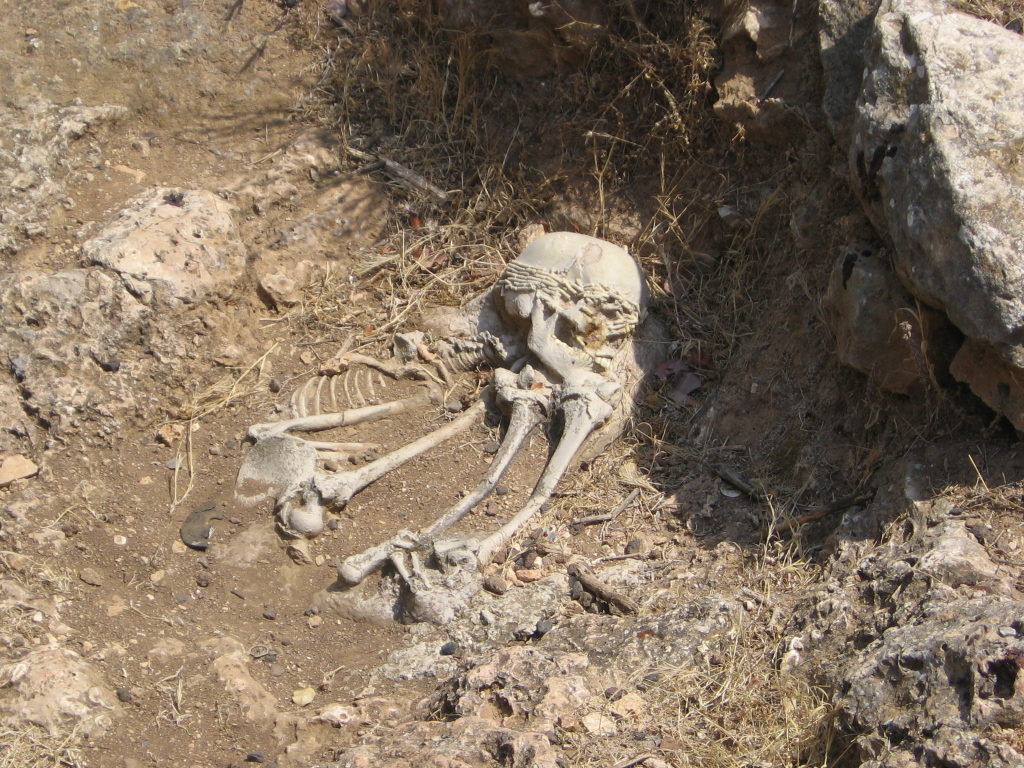
The Natufian culture predated the Israelites by millennia. They were gone by at least 7000 years by the time Israel appeared. The Natufians seem to have been the first permanent residents of a hotly disputed piece of real estate: Israel/Palestine. On Monday MSNBC reported on the archaeological find of a feasting hall among the Natufians. The story reminded my wife of similar stone-age sites that we visited in the Orkney Islands several years ago. What the story reminded me of, however, was the marzeah. The Natufian site features two activities: feasting and burial. The article notes the coincidence of 28 human burials, including one shaman, and the unmistakable signs of feasting. Bring them together and its sounds like marzeah time to me!

Natufian burial, from Wikipedia Commons

The marzeah is an imperfectly understood social institution from the ancient Levant. It is mentioned in the Bible as well as in the Ugaritic texts. Although plausibly reconstructed by modern theorists, we simply do not have a complete record of what the marzeah entailed. Two of the key elements seem to have been feasting and a funerary nature. Monotheistic religions tend to downplay the role of the dead as influential entities since they interfere with a monistic view of the divine. The two Hebrew Bible references (Amos 6.7 and Jeremiah 16.5) do not speak highly of the practice. The Ugaritic material suggests drinking may have been involved as well, further problematizing the ritual.

Now here is where the ambiguity of archaeology is thrown into sharp relief. The fact is we do not know what the Natufians were doing when they buried or feasted at this site. The Hilazon Tachtit Cave does not seem to have been a regular occupation site, and we do not have any reason to connect the burials with the feasting. Beyond a hunch. The hunch is the incredible urge to bring like things together. People excel at pattern-recognition. When I read of funerals and feasting my mind leapt to the marzeah. There seems to be no organic connection between the Natufians and Israelites (or Ugaritians), but the continuity of cultural concepts seems to strong to dismiss. Were ancient people toasting their dead with feasts that were remembered down into the Late Bronze and Iron Ages?


I Think, Therefore I Believe

This week in Time, an article by Jeffrey Kluger explores the intelligence of animals. Quite apart from many examples of how bonobos can string together relatively complex concepts using symbol cards (thus evidencing more intelligence than New Jersey’s current governor), the article demonstrates that many animal species display what we would recognize in other humans as intelligence. The article then develops the corollary that if animals think then perhaps they sense emotion as well. Having raised my daughter on Kratt’s Creatures and Zoboomafoo, none of this was new to me. I may be no scientist, but watching closely how animals behave, it has always been obvious to me that we are more like points on a continuum rather than a “special creation.”

Not to put too fine a point on it, this is what lies behind the human obsession with its non-animal status. As Kluger states, “For many people, the Bible offers the most powerful argument of all. Human being were granted ‘dominion over the beasts of the field,’ and there the discussion can more or less stop.” Unfortunately for our animal companions, the use of the Bible to repress others does not stop at human beings who don’t share your religious views. Many use the Bible as an excuse to do as they please to creatures who demonstrate similar emotional responses to people in similar situations and who, increasingly we realize, also think. Kluger’s article opens with an interview with Kanzi, a bonobo. One of the inevitable conclusions is that this great ape is able to think ahead and make plans. Evolution on this point has apparently skipped many Neo-Cons.

For years I have been telling my students that animals display behaviors that we label as “religious” in humans. The difference is that we are able to ask other humans what they are thinking and thereby gain somewhat direct access to their thought process (if they are telling the truth). Because we fail to share language with animals, we assume we are superior thinkers. To me this does not stand to reason. Animals are as fully members of this planet as humans are. Our desire to exploit them is more a reflection of human dominionist tendencies than a reflection of their lack of intelligence. We may even have animals to thank for the basic tenets of religious thought since religions are better described as evolved than revealed.

Maybe not the best sign of animal intelligence, but consider the Neo-Cons...


My Animal, It’s a God!

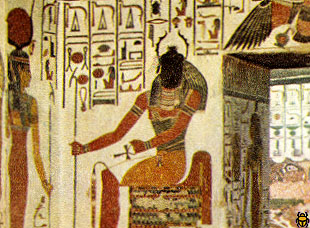
Preparing to enter the Egyptian segment of Ancient Near Eastern Religions, I always have to shift gears to their unique portrayal of the gods. Unlike the Sumerians, who preferred an anthropomorphic divine world, the Egyptians reveled in theriomorphic and Mischwesen deities. Almost earning the title of ancient hippies, the Egyptians felt a deep connection between the world and their gods – as well as living by the mantra “life, health, peace.” Their connection to the earth resulted in gods in animal form or human bodies with animal heads. Having read several attempted explanations, it still comes down to the fact that we don’t know why Egyptians mixed the divine and the animalistic.

Egypt was a culture that bloomed in harsh surroundings. Whether they fully realized it or not, their civilization was survival on the very brink of inhabitable space. Surrounded by desert, much of ancient Egypt was just that thin stretch of land within the fertilizing reach of the Nile’s flood zone. Beyond that, in the “red land,” few survived. Yet the desert is not completely barren. Animals better adapted to heat and aridity survive there. The Egyptians had an appreciation for the divine attributes of animals that are in some way more clever than humans. It is the nature of divinity to be more than human.

The Egyptian ideal of life in harmony with a fragile environment is one that the world could stand to relearn. Instead of proclaiming superiority over mere animals, they recognized that animals know some things that people have not yet learned. How better to display the mysterious power of the gods than to utilize the mystique of the animal world? Sure, a human with a beetle for a head may seem more like a horror-film gone awry than religion, but when the superiority of the scarab is realized, religion will naturally follow.


Birth of Religion

Since “religion” is a relatively modern concept, I always begin my Ancient Near Eastern Religions class with an exploration of what “religion” is. We all have a concept of “religion” (I’ve reached my quotation quota, so I’ll assume it is safe to write “religion” without them from now on). The idea, however, is an offshoot of the development of monotheism. Prior to the recognition of a single deity, in a world where no laws of physics existed, just about everything was the result of the conflicting interests of the gods. Why call it anything special beyond the facts of daily life? Keep the gods happy, live long and prosper.

With monotheism arrives the component of belief. If there are hundreds or thousands of gods, belief in the right one simply doesn’t enter the equation. Ancient gods aren’t overly concerned with humans. People were created to serve them, but salvation, fulfillment, apotheosis, and belief weren’t part of the picture. Look at the world around you: this is proof of the gods and their power. Religion in such a world is more a matter of what you do – placating the gods – than it is a matter of what you believe. It is difficult for modern people to project their minds back to a world without the explanatory value of science, a world where all could be explained by the gods. Such was the world of antiquity.

Once monotheism emerges with its views of belief in the correct god, and the corollary of that god’s personal concern for you, religion experiences a sea change. Yes, that god still may require placation, and yes, that god may still intervene regularly in the world, but this is the only god now. One of the surest ways to anger him (for he is male, like human rulers) is to disbelieve. A jealous deity, he detests belief in other gods, although they do not exist. At this juncture, we have found religion. When the world itself operates at the behest on one god, keeping that one god satisfied becomes a specialized part of life and religion is born. The world will never be the same again.

The usual suspects


Aroma of the Divine

Religion is all about emotion. Those who approach religions rationally soon have to face the fact that believers approach the subject with a less-than-rational motivation. Religion fulfills basic psychological needs – we can explain our world without divine forces, but for many this cold and clinical approach lacks vitality and meaning. Belief in the divine is emotionally satisfying, and as long as humans experience emotion, God’s job is safe.

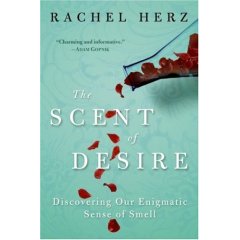
Aware of this emotional component, I was intrigued when I heard about Rachel Herz’s book, The Scent of Desire: Discovering Our Enigmatic Sense of Smell. It is schoolyard wisdom that smells are closely associated with memory; everyone I’ve asked about this has had the experience of a firm memory being mediated by an unexpected aroma. What Herz has discovered, however, is that our sense of smell evokes memory just about as well as other sensory cues. The vital difference is that our sense of smell is vital for emotional development. The fragrance-induced memory is more fraught with emotion, therefore it may seem more intense that memories brought on by old photos or songs. In fact, those who lose their sense of smell often report living with emotional flatness. Laboratory animals with their olfactory organs removed show no motivation in their pathetic lives.

Considering the emotional component of religion and the fact that our olfactory perceptions are closely linked with our limbic systems, I wonder how religious satisfaction smells. Surely emotion is more complex than what our noses detect, but if emotional systems are shut down without a sense of smell, it stands to reason that religion must be related, at least in some form, to smell. The presence of the divine is often described as “inspiration” or inhaling. In Hebrew and other Semitic languages the world for “spirit” is also “breath.” Although Herz doesn’t discuss this aspect of scentology in her book, it would be an avenue to investigate for those with an interest in the origin of religion and the aroma of the divine.


House of Myth

Mythology is everywhere. Although I am prevented by personal experience from declaring with the professionals that it is highly valued by our culture, I nevertheless find it lurking all around. Just yesterday my daughter asked me if anyone still believed in the Greek gods any more. I am sure that with the revival of ancient cults that is all the rage today one wouldn’t have to travel too far to find an ardent devotee of Zeus or Hera. Even on a more pragmatic level, however, mythology maintains its allure. While reading a bit of Apollonius or Euripides recently I was struck at how biblical it sounded. Mythology pervaded ancient life and became woven into the fabric from which our own culture is cut. There is no escaping it.

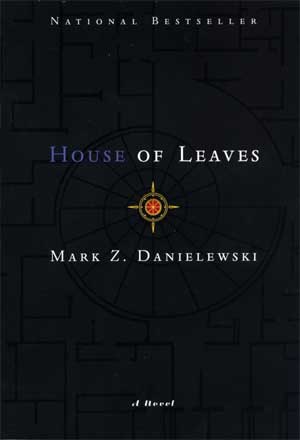
I just finished reading Mark Z. Danielewski’s House of Leaves. While I’m not a real fan of ergodic literature, the story has a way of luring the reader into the labyrinth of the Minotaur, an association that the book itself disavows. As a student of mythology, however, I approached the book as a decidedly non-demigodic Theseus, wondering where the twists and turns might lead. My conclusion at the end was that no one truly escapes mythology. Classed in the horror genre, the book has few frights and more than a few rest stops to ponder. If we would admit it we would see that mythology still has a tremendous gravity.

The use of mythology as the basis for literary work is nothing new. Clever authors for centuries have recast the classics into newer forms, sometimes transforming them beyond recognition. As the world grows more pluralistic, keeping in touch with our mythology will only grow in importance. It is our shared heritage, and even if far distant cultures have their own cadre of myths, it doesn’t take too long to realize that their stories, like ours, spring from a very deep pool indeed.


The New Tetragrammaton

It all started with Genesis. I’ve been reading Genesis since before I was even a teenager. When I began teaching it in a seminary setting, the age-old question of how science and religion fit together had become an insistent preoccupation. I began reading books by scientists who hypothesized that belief itself has a biological basis. Of course, there will never be any convincing those who believe since it is a chicken-and-egg style argument whether the body has “faith structures” because God put them there, or if we believe in God because our bodies grew them. One thing seems fairly certain, humans are “programmed to receive” what has been labeled “divine input” through the very bodies we’ve evolved.


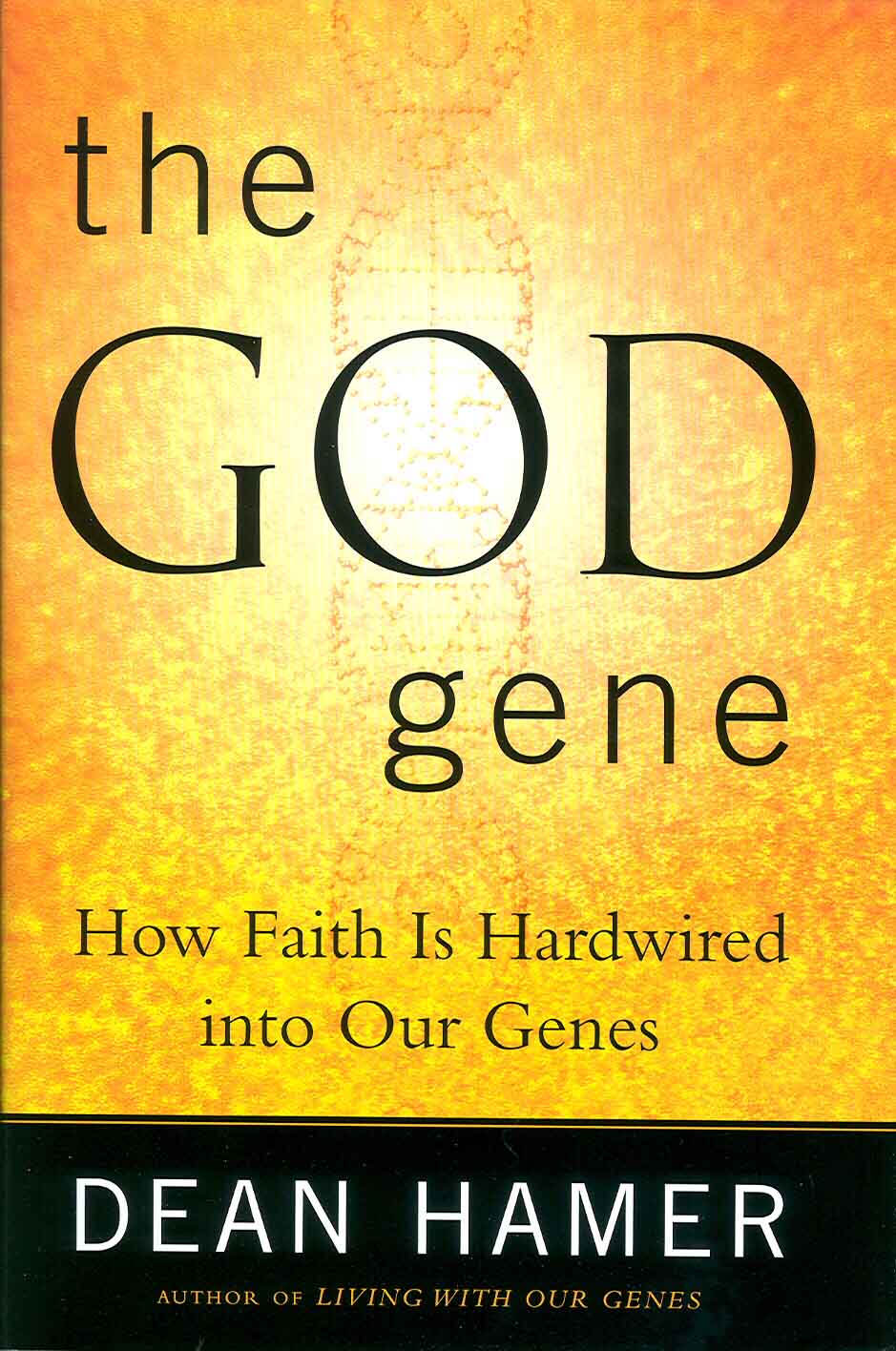
Last night I finished reading Dean Hamer’s The God Gene, the latest in a long series of such books I’ve picked up over the years. While much of the technical and statistical information was beyond the comprehension of a simple humanities scholar such as myself, it became clear that a genetic basis likely does exist for a sense of spirituality among people. Quantifying spirituality, obviously, is a task open to long and serious debate, but the general traits of spirituality are nevertheless instantly recognizable. If those recognized as spiritual share characteristics uncommon among the non-spiritual, that itch should be telling us something. Hamer tracks the culprit to the gene VMAT2, responsible in some way for the monoamines that trigger spiritual experiences. He displays the evidence for how he drew this conclusion in a scientific way, being careful to note that genetic predisposition to spirituality neither proves nor disproves God.

Since the traditional Judeo-Christian name for God consists of four letters known as the “tetragrammaton” and since the “God gene” also has four letters, VMAT, I wonder if we’re onto something here. God can’t be measured in the lab (yet), but the “receptors” for God can. Others scientists have analyzed “God nodules” in human brains that seem to react to spiritual influences. As long as religion does not object to the laboratory probing of its sacred cows, we may eventually find God in a test-tube or petri dish. Chances are he won’t be a bearded white man sitting on a golden throne, and the smart money says most people won’t worship him once he is found.


Life in the Laboratory

Nancy Gibbs’ essay “Creation Myths” appears in this week’s Time. Leaping off from Craig Venter’s “creation of life” in the laboratory, Gibbs asks who the final arbiter might be in this world we’re creating in our own image. The more I ponder the question, the more I realize that no person really decides how far we will go and the implications will only grow more and more unanswerable. We all attempt to construct the world according to our idea of how it should look; it is not a question of if we create the world in our image as much as it is whose image will prevail. As I noted in a recent post, no one person has all the answers. What each of us does impacts all the others just as a wave influences everyone in the sea. We fear science taking the prerogative of creating life because we are fully capable of imagining where it might go, but we just don’t know.

As an individual who has often been on the receiving end of other people’s visions of how this or that institution or company should look, it is my humble assessment that we have already lost control. We never really had control in the first place. At the end of the day, who will really be able to prevent another Gulf oil spill from occurring? Make what laws we will, other creators will find ways around them. And as in Gibbs’ article, the rest of us will simply have to react. No one is really in control.

Perhaps this is the real reason that religion is so appealing. It is terribly, terribly convenient to have an omnipotent divine entity on whose anthropomorphic shoulders we might cast our worries and burdens. Whether we believe in predestination or not, it is comforting to suppose that when it is all over God will somehow sponge up all that oil (preferably squeezing that sponge back out into BP’s great, sturdy tankards of crude), or stop that evil clone we’ve engineered, or stomp out that hyper-aggressive virus we’ve unleashed. We may make laws against creating life or human clones in the laboratory, but it will happen nevertheless. Gibbs wonders if scientists are about to cross some moral Rubicon. My answer is simple: we crossed that Rubicon long before the river itself flowed, when we first put our webbed feet out onto dry ground and began our still uncertain journey to the future.

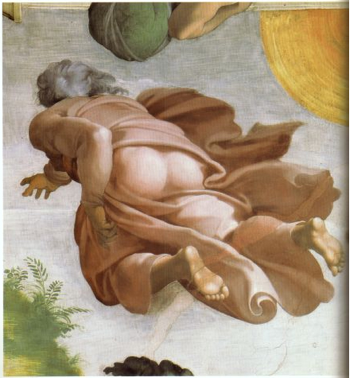
God exits, stage left