On the Origins of Goddesses

In what is fast approaching two decades ago, I was facing the prospect of meeting a thesis approval committee at the University of Edinburgh without a solid proposal. I’d meant to focus on Dagon, but the committee felt there was too little information on that deity to fill the requirements for a doctorate. I’d long been fascinated by the role of goddesses in ancient religion and their rather sudden disappearance – more properly sublimation – in what was becoming a male-controlled official religion. (Private religion could have been quite different, as it still is, from official theologies.) It was then that my attention was drawn to the, at that time, relatively understudied Asherah. Apart from having avoided excessive attention, Asherah was also the chief goddess of Ugarit, and possibly other cities.

Turning the hands even further back, into prehistory, we find that goddesses seem to have been a natural part of human psyches of antiquity. Few things are as fundamental to human experience as the complementarity of the sexes; why would there be gods without goddesses, and vice versa? Prehistory is excessively difficult to read, existing as it does without written records to interpret artifacts. The discovery of Paleolithic female figurines, however, would seem to suggest that the female divine was a powerful force. The “Venuses” of Willendorf, Hohle Fels, Dolni Vestonice, Tan-Tan, Brassempouy, Galgenberg, Lespugue, Laussel and others demonstrate the acknowledgement of feminine mystery, if not divinity. With the advent of monotheism, one sex would have to accept subordinate status. A sexless divinity is simply too difficult to imagine.

Western religions thus began their descent into the omnipotent masculine. Even the Classical Greeks with their gender-mixed pantheon had to acknowledge the superiority of Zeus. In a monotheistic world, worship of the female divinity became heterodox, heresy, and “pagan.” There it has stayed for millennia, only to reappear in the cults of Mary and other chaste saintesses, clearly beneath the authority of Him. The origins of goddesses? They have been with us from the beginning. The real mystery is not where they came from, but whither have they gone.
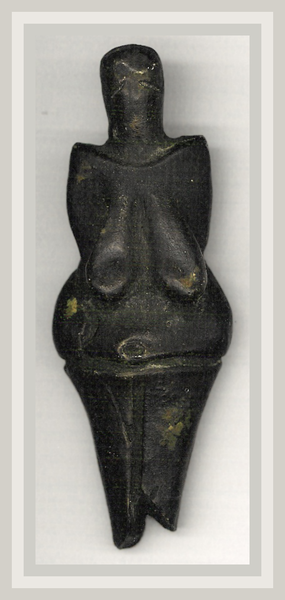
Wiki-commons' Venus of Dolni Vestonice
Super Sensitive?

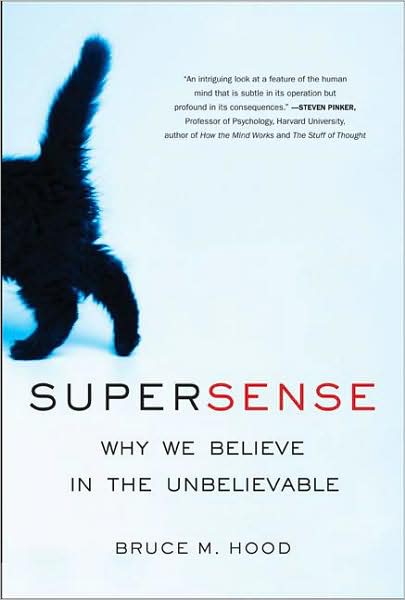
As not infrequently happens, I take my reading cues from others. In general I am reading half a dozen books at any one time, so when I finish one I cast around for something of a similar genre. One book that I just finished I learned about from my cyber-friend Sabio Lantz’ Triangulations blog – Bruce M. Hood’s Supersense: Why We Believe in the Unbelievable. Hood is a respected psychology professor, and his writing style is engaging. The book itself, while fascinating in its ability to offer an overarching theory to explain why people believe in the supernatural, is deeply disturbing. I grew up in a family where the supernatural was taken for granted. Many of Hood’s explanations are cogent and logical, but that was not what I found to be distressing.

The overall premise of the book is that if science cannot measure a phenomenon, it is “super”-natural. If it exists in nature, science can define it. To me this seems far too limiting. It assumes that science has already probed the infinite aspects of an infinite universe. Yes, we understand (to a degree) matter. We have discovered the sub-atomic world with its quarks and other tiny bits. We understand a great deal about energy as well. Could there not be, however, an entirely natural aspect of either matter or (more likely) energy that science has not yet learned to measure? And could not this aspect be a piece of the larger universe that we inhabit? In other words, when all that is not defined by science is “supernatural” then we have already decided on the limits of our world.

From a psychological viewpoint, I find Hood’s analysis quite agreeable. The human psyche does have a need to find the supersense in the world. We do look for irrational causes. Not all unexplained phenomena are supernatural, however. It is a semantic trap. If we define “supernatural” as anything outside of current understanding, then his thesis stands. If, however, we define “supernatural” as that which violates physical laws not as they are currently understood but as they actually are, then who is to say whether there is anything supernatural at all? “Unexplained” and “supernatural” are not the same thing. Such a distinction would not be troubling were it not for the fact that Hood defines “reality” (another problematic concept) only in terms of “scientifically known.” If it has not been measured by science, a phenomenon is not real since our physical brains (measured by science) are the filters through which we experience the world. There is no room for what has not yet been found.

Far more distressing than that is his assertion that freedom is an illusion. One of the most distasteful theological travesties ever is the concept of predestination. The idea that a loving God would create most people to suffer eternal torment simply to fulfill his own arbitrary assignment of justice is something for which Presbyterianism can never be forgiven. It is about the most immoral God that can be imagined. The same goes for the psychological premise that we must react according to our biology. I found myself wondering why Hood wrote the book at all, if life is all predetermined. What if he had chosen not to write it, or to write it differently? You could argue that this too was predetermined, but does this not simply justify the income and fame of those who are “important people”? It runs a true danger of being terribly bourgeois, if not downright supportive of eugenics. Not that Hood would advocate such an action, but any time predetermination is raised, it presents the grandest of excuses for the most heinous of behaviors. Even the psychological observations that support it may have been misunderstood. Of course, if you disagree with me, don’t blame me; it was predestined that I should write this.

That having been said, I found Supersense overall to be a wonderfully fascinating book. At points Hood’s argument seems to consist of the post hoc, ergo propter hoc fallacy he rejects as unscientific, but if this can be irrationally forgiven, there is much useful material to be gleaned from this book.


Go Fish

You are what you eat. That trite truism has been kicking around for a few decades now, and although it has been an aphorism to encourage healthy eating it does convey a deeper truth. Scientists working in Africa have determined that the hominid diet of roughly two million years ago led to rapid brain expansion (rapid on an evolutionary scale, of course), according the New Jersey Star-Ledger. Remains found in Kenya, featuring a Rutgers University archaeologist, have indicated a widely varied diet of fish, turtles, and crocodiles among ancient hominids. Apparently these animals provide valuable nutrients for brain development, a somewhat disturbing piece of information for us vegetarians.

The more I have pondered this information, the more it has become evident that the concept of God has undergone considerable evolution. As I have noted several times in the past, religious behavior emerges at the very least in the Paleolithic Era of human development. What those non-literate ancestors thought or believed about “God” is long lost, but it seems to have persisted into modern conceptions of divinity. Belief in supernatural beings is attested world-wide, and therefore is a true human universal. (There are, of course, non-theistic religions and individuals, but all cultures show some measure of belief in the supernatural.)

In those moments when I am free to ponder what this might mean, I wonder about the earliest conceptions of the divine. It seems likely that this being was like a hominid, able to respond in kind to placating gestures on the part of early humans. An abstraction simply doesn’t fit easily into minds focused on the practical aspects of survival without the guidance of professional theologians. That early God was able to, but not obligated to assist our fearful ancestors with the struggles of daily life. That aspect of the divine being has not changed in many millennia. Even today many religious individuals still consume fish, a food approved even for meat-free days, by God himself.

Early images of God?


Ch-ch-changes

Podcast 20 is here! For those who are wondering, it was a long semester with daily class prep, so I did not have the opportunity to record any podcasts. The topic of this discussion is how religions naturally must change over time. Even though religions are by nature conservative, if they last long enough they will face advances in human culture and experience. This creates a dilemma that is not often addressed. It’s evolution on a religious scale.


Not My Daddy!

They spy each other across a crowded room. He sure is big: barrel-chested and even a bit brutish. She’s cultured and refined, but there’s no denying that spark…

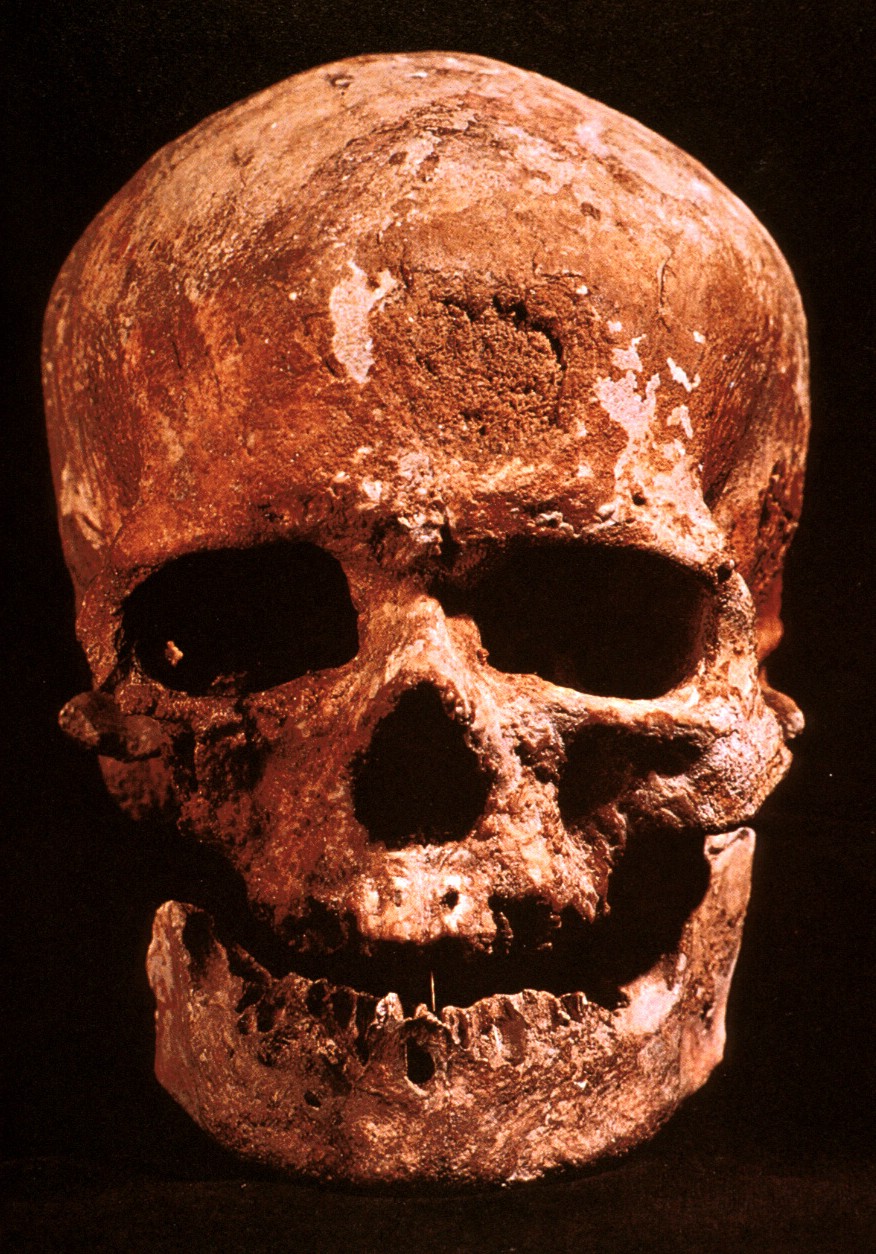
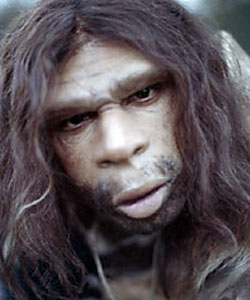
Today’s issue of Science announces the startling news that Neanderthals and Homo sapiens once interbred. The theological implications are enormous. I used to tell my students that the earliest evidence of religion falls not only among the artifacts of the Cro-Magnon branch of the hominid tree, but also among the remains of Neanderthals. If they had religion, and if they weren’t “human,” what happened to their souls when they died? I received a lot of puzzled looks from seminarians and more than one or two angry stares. The Bible, after all, claims that each was made according to its own kind. Seems like Adam and Eve might have been sleeping around with the non-Eden set. Looks like we’re in for another theological conundrum!

Neanderthals and Homo sapiens diverged once the human lineage left Africa, but once they met in a smoky Paleolithic bar, well, nature took over once again. And if these two hominid species interbred, who is to say what went on back in the days of Lucy? What happened in prehistory stays in prehistory, religions must needs proclaim. If we are honest with the evidence, our bonobo cousins share ancestors so do they share souls?

Some of the present human race, according to the DNA evidence, is walking around with Neanderthal blood, while others are not. I suppose gene sequencing might reveal which camp you are in. Will there be a Church of the Neanderthals? And will non-Neanderthals be allowed to share communion? And were the founders of the world’s great religions all Cro-Magnon or not? If they were of a slightly differences species, can I still join? Theologians, it is time to grab your pencils!

Maybe your dad, but not mine!


Thus Spake Zarathustra

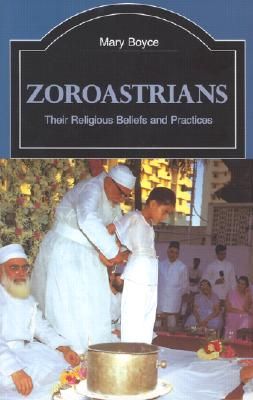
Preparing for another round of my annual course on Ancient Near Eastern Religions, I have been brushing up on Zoroastrianism. For this I generally first turn to Mary Boyce’s standard introduction, Zoroastrians: Their Religious Beliefs and Practices. The book was written in the 1980s and is showing its age a bit, but it remains a seminal introduction to a religion whose humble position among world belief systems belies its overwhelming impact. A strange fact about the religion is that many of its main tenets have been summarily dismissed by the more politically influential religions of antiquity while its secondary features have been dramatically embraced. The classic example is dualism.

Zoroastrianism was founded on a dualistic principle: Ahura Mazda was the entirely beneficent, good creator, while Angra Mainyu was the powerful principle of evil. This cosmic struggle tapped deeply into all aspects of life, leading to the beliefs in two afterlife realms (which evolve into Heaven and Hell), two very powerful entities (that become the God versus Satan paradigm), and two dispensations (present age as opposed to future age, the ultimate source of the apocalypse). Indeed, it would be difficult to recognize Christianity without Heaven and Hell, the Devil, or the final judgment. Boyce carefully traces the earliest evidence for Zoroastrianism back to its formative period and offers detailed explanations for each aspect. Beyond this, however, Zoroastrianism became a forgotten faith, an abandoned parent.

It is a fact that religions evolve. Many believers like to trust that they have the straight information directly from the founder’s mouth and that their brand is the authentic brand of faith. All religions, however, if they survive long enough, change to meet the needs of present-day adherents. Again, Zoroastrianism is instructive. Believing in the sacred nature of fire, during the industrial revolution the use of fire for profane work, such as running a steam engine, was considered inappropriate. How were Zoroastrians then to keep up with society without softening their stance on the secular use of fire? The struggle was real and has never been fully resolved. The same exercise could easily be applied to other religions as well. Until the Zoroastrian-inspired apocalypse arrives, religions will have to adjust to continual societal change and accept that quantity of belief does not affect quality.


Friday’s Wednesday

The ultimate stag party?

Mythology never ends. Many people live by it today under its name “religion,” and many in the ancient world endlessly recycled their gods until they ended up looking rather unrecognizable from their earlier forms. I was, therefore, intrigued when a friend asked me about Herne the Hunter. Herne is a mythological character about whom I had not heard. The earliest reference to the stag-antlered deity comes from William Shakespeare, and he has been co-opted by the Wiccan community, nicely tying together many of this week’s posts. So, whence Herne?

Shakespeare seldom invented ex nihilo, but rather adapted. Herne, already an established character, was a wrongly accused poacher who was hanged from a great oak in King Richard II’s England. He had been magically revived after a near-death experience earlier in life and had been crowned with fantastic antlers at that time. The horned head has reminded some Celtic mythologists of Cernunnos, a horned chthonian god attested in mainland Europe but not found in the British Isles. Yet others, by virtue of his being hanged on a tree and the similarity of his name to the epithet Einherjar, suggest Herne may have evolved from Wotan, or Odin himself. Woden was involved in the “Wild Hunt” episode of northern and central European mythology, and since Herne is a hunter, well, isn’t the connection obvious?

Such tales as this are instructive of the way that religions evolve. We know very little of the true origins of the story, but later versions become canonical. The present-day version is perceived to be “historical” and all others are merely coincidence or happenstance. Today Herne is a typical ghost story of Windsor Forest, and those who report seeing him say he still wears his supernatural horns. Those who want to discover his origins are left with a handful of books by publishers of the occult and hundreds of unanswered questions.


Zoroastrian Odyssey

Clinton's Red Mill

Clinton’s Red Mill is a popular New Jersey attraction, but numerous reports of paranormal activity have thrown an additional lifeline to the museum in the form of much-needed revenue in the form of seasonal ghost tours. Last year about this time my family and I participated in one. Touring the old grounds at night can certainly lead to spooky experiences, even for those of us who sit on the fence about ghosts. We discovered that The Atlantic Paranormal Society, the “TAPS” of Ghost Hunters fame, had investigated the Mill the previous year. We watched several episodes of the popular show, and for a lark, my wife bought me a subscription to TAPS Paramagazine for my birthday. All in good fun. I always thumb through when it arrives, but it is hard to take much of it seriously.

The last issue (volume vi, issue 2), however, contained an article about Demonology. Now, I thought I had graduated from The Exorcist and the Exorcism of Emily Rose to a healthy skepticism, but I could not resist reading this article. The first statement declares, “A demon is a fallen Angel that rebelled against God along with Satan, refusing to be humble before, and serve, God” (Adam Blai). While I never make light of things I don’t understand, I did consider the fact that the concept of demons, which derives from a Judeo-Christian mythology, presupposes a mythic war between the powers of good and evil. At the same time, I have been reading up on the Zoroastrians, one of the oldest continuously practiced religions in the world. There can be no serious doubt that the Judeo-Christian tradition borrowed the concept of the demonic from their Iranian neighbors of the ancient Persian Empire.

A Zoroastrian fravashi

The implications of the Zoroastrian connection are profound. If the ancient sage and Afghani priest Zarathustra was correct about the dualistic conflict of good and evil, was he not also right about Mithra and the Amesha Spentas as well? Zoroastrianism gave the Judeo-Christian tradition its base concept of Heaven and Hell, but the divinity of fire they did not accept. By picking and choosing what fit best into its experience, Judaism developed into a religion that allowed for Christian demons and angels and all the invisible hosts of the ethereal realms. Today many Christians accept demons as literal beings (less so jinns, although Clash of the Titans (2010) allowed for them). What does this say about the remainder of Zoroastrianism? Perhaps Ghost Hunters should begin with the Gathas and move on to the Avesta? As for me, I’ll be over here, sitting on the fence.


Ape Versus Primate


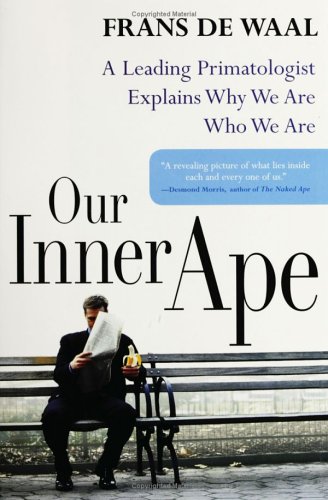
I have just finished reading one of the most important books I’ve found in quite some time: Frans de Waal’s Our Inner Ape. My attention was first drawn to the author when Rutgers University sponsored a talk he gave in the fall that I was unfortunately unable to attend. Simultaneously I saw his book footnoted in a text I was reading and decided to follow up on it. In addition to containing fascinating, documented anecdotes concerning ape behavior (he tells of a bonobo that attempted to help an injured bird fly!) de Waal holds a mirror up to the great apes and sees humanity reflected back. His discussion of the origins of morality makes far more sense to me than any theory I’ve seen a professional ethicist concoct. Our sense of empathy, de Waal notes with considerable evidence, derives from our common ancestor with the apes.

After discussing the understudied trait of kindness in the apes, de Waal writes: “With morality firmly rooted in sentiment it’s easy to agree with Darwin and Westermarck on its evolution and to disagree with those who think culture and religion contain the answer. Modern religions are only a few thousand years old. It’s hard to imagine that human psychology was radically different before religions arose. It’s not that religion and culture don’t have a role to play, but the building blocks of morality clearly predate humanity. We recognize them in our primate relatives, with empathy being most conspicuous in the bonobo and reciprocity in the chimpanzee. Moral rules tell us when and how to apply these tendencies, but the tendencies themselves have been in the works since time immemorial” (225).

These might just be platitudes if ample evidence did not demonstrate their veracity. Apes plan ahead, recognize fairness, and can even see issues from the point of view of others (something Gorgias Press might benefit from learning). They are clearly inheritors of the moral sense that evolution has crafted among all cooperative animals over the eons. Religions like to lay claim to the origins of morality: we behave this way because our god told us to. In a sense that may be true, but only if the “god” is nature itself and the instruction it gives is the way for a species to thrive. Caring for one another, all religions aside, is the formula that evolution presents as the most successful choice of natural selection.


Older than Stonehenge

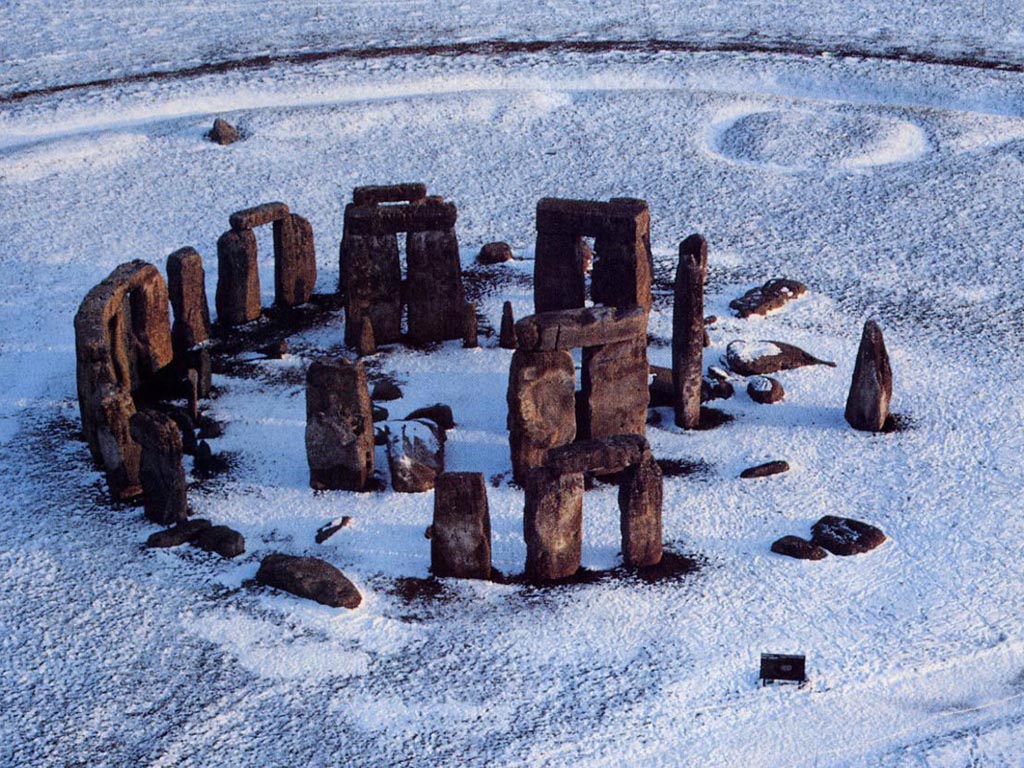
MSNBC ran a story yesterday concerning a little-known henge in Dartmoor, England. Images of these remote Dartmoor megaliths transported me back to my years in the British Isles when my wife and I spent every available tuppence traveling around to see antiquities so old that the Roman fortifications along Hadrian’s Wall seemed like throwbacks to the 1950s. With some English friends we met in Edinburgh we drove through the bleak moors of Dartmoor and Exeter, down into the forgotten curiosities of Cornwall, and back to Salisbury Plain to see Stonehenge. One year for my birthday we flew to the Orkneys (on a plane designed like a shoebox with wings) to explore the islands with the highest concentration of preserved prehistoric sites in Europe. Suffering from a killer head-cold, I accompanied my wife on hands and knees into tombs constructed thousands of years before William turned his conquering eye onto the British mainland. Colossal stone rings larger than Stonehenge, but less bulky and lacking capstones, stood out in the middle of a field where the locals barely threw a glance; such monuments had become part of the daily backdrop.

Archaeologists constantly attempt to discern the function of these silent remains. The MSNBC story suggests, based on the remains of porcine bones, that the Dartmoor site may have been associated with funerary rites. Carbon dated to 3500 BCE, they predate Noah’s putative ark (dated precisely to 1657, thank you Bishop Ussher) by more than a millennium. That they may have been associated with death is no surprise – the great feats and structures of humankind seem to be exactly that, efforts to cheat death. To leave reminders that we were here and we had something to say. What exactly they had to say, however, is muffled by the eons of lost communication.

A phenomenon I have noticed for many decades now is that when an unexplained structure or artifact is recovered, first recourse among many archaeologists is to attribute religious significance to it. Religion is the default fall-back when we can’t explain why people were expending tremendous resources to articulate a primal, deep concern in stone or clay. In many respects, the same is true today. Religious leaders still raise funds like no other class of professionals, simply by suggesting that death itself may be cheated of its due. All that money, however, can’t stop the inevitable. Instead of running away, I side with the archaeologists as I poke my head into some dank, dark space no other person has explored for many a month or year. Sitting quietly in an empty tomb left by an ancient society rendered completely mute by high antiquity, you are nevertheless in touch with what it means to be truly human.


The Passover-Easter Complex

Some years back I completed an unpublished book for young readers on the holidays. This project was undertaken because most holidays have a religious origin and because I could find no comparable source for kids to learn this information from a reliable source. Unfortunately publishers have showed little interest. Rather than waste the effort it took to write the book, I have been installing segments here, on the Full Essays page of my blog. Since it is Easter for many Christians today, I have added the next installment: the Passover-Easter Complex. It begins like this:

No doubt the most complicated set of holidays are those that surround the changing of the seasons – the solstices and equinoxes. Among even those holidays, the Passover (Jewish) and Easter (Christian) complexes are especially complex. Like most major holidays these celebrations have very interesting roots. Problem is, it is hard to know where to begin! We’ve already started with Mardi Gras, but that is kind of a festival on its own. To really get started, we have to turn back to the calendar (again?).

Easter, like Passover, is a “moveable feast.” That doesn’t mean playing musical chairs while you eat! It means that the dates change depending on the moon, so to figure out the date you have to (you guessed it) look at the sky. (Actually, these days you can look on the web or in many books used by churches to figure it out. But work with me here, let’s pretend it is, gasp, before these things were invented!) Two days of the year have an equal amount of day and night all around the world, when the earth stands up straight on its axis. Marking the beginning of spring and fall they are called the vernal and autumnal equinoxes. (“Equinox” means “equal-night,” “vernal” means “green” or spring, and “autumnal,” duh, “in autumn.”) Back when people had no TV, this was a big thing! Not only was it cool to have equal day and night, in the spring it meant days were finally getting longer and warmer. For ancient people it meant that light was winning the struggle with darkness.

Read more…


Smile, You’re Condemned

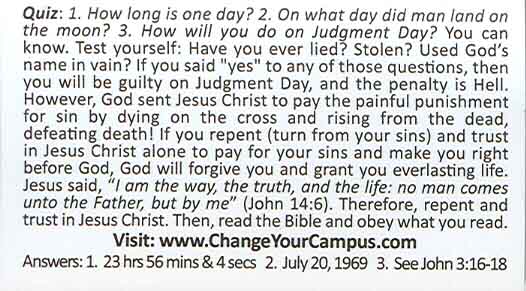
Yesterday at Montclair State University, I was sitting in the hallway (my office) prior to class. (Office hours are required, but space is limited for adjuncts such as myself.) While I was reading my book a student walked up and handed me a business card. “For you, sir,” she said politely. The card had a smiley face on it, and was designed to bring cheer.

Then I flipped the card over and found out I was going to Hell. A bit of a downer when you’re about to start class!

It isn’t the first time people have attempted to convert me without bothering to find out what I believe. It seems that if you already hold the zealot’s view you’ll appreciate the gesture of being condemned just to make sure your soul is saved. It is the thought that counts, after all.

The book I was reading was Joseph Campbell’s The Hero with a Thousand Faces – a book I’ve known since college but from which I have only taken a tipple until this year. Many scholars of mythology fault Campbell on being too much of a generalist and looking too much for connections where they are not obvious. His language can be florid and mystical, verging on “believer,” for those uncomfortable with any kind of faith. I find Campbell to be a welcome guide, although, as for any guide, I do not believe all he says! One nugget in particular stuck out at me: “Wherever the poetry of myth is interpreted as biography, history, or science, it is killed.” As we find ourselves on Good Friday, only those with eyes firmly shut will disregard Campbell’s wisdom.

I still remember my shock when I first learned that gods, centuries before Jesus, had been dying and rising. What had always been presented to me as a unique historical event actually had a long and venerable prehistory. It suddenly seemed as if the ministers I’d known hadn’t done their homework. Or perhaps they lacked the cognitive finesse to understand Orpheus, Adonis, Baal, Osiris, and even Ishtar, as types of either blatant or obscure resurrection. It is the Campbellian, or nearly universal hope: life prevails over death. As the young lady walked away, I sincerely wished her happiness in the quest she’s only beginning.


Civil Rights and Science Fiction

I remember reading L. Ron Hubbard’s science fiction before the Church of Scientology was widely known. Not surprisingly, the religious movement began in New Jersey – a state where anything seems possible (except finding a job or having a stable government). Over the weekend, however, a New Jersey Star-Ledger story noted that some former members of the Church of Scientology are trying to sue their religion for violation of labor laws and unreasonable pay. Lawyers predict such a case cannot win in court, and I personally wonder how such cases of enforced labor differ from other brands of organized religion that require that extra push from their members. Doesn’t the church reserve the right to demand, voluntarily of course, that citizens forfeit their legal rights?

When I was young and naïve (instead of being old and naïve, as I am now), I took my first teaching job at Nashotah House. I was not yet thirty. It was, of course, a conflicted situation: a bunch of men living in the Wisconsin woods trying to maintain a monastic presence nestled between the sinful cities of Madison and Milwaukee. (And a few women, always the minority of the student body collective.) One of only two non-clergy on the faculty, I was surprised when, in response to what was an unreasonable administrative demand I was told, “When you signed your contract, you gave up your civil rights!” I’m not a lawyer, but I learned an important legal lesson – never mess with the saintly sorts that make up the church administration. Religion is big business. And religious bodies can afford big lawyers.

I feel sorry for the plaintiffs in this legal dispute, but they are in a wide and vast company. Organized religions are human constructs, and human constructs will always favor climbers. Climbers who reach the top will always build fortresses to protect their personal interests. In the church they’ll call it ecclesiastical authority and trace it right back to Jesus handing Peter some metaphorical keys. No, the church is not above the felonies and misdemeanors that secular courts just can’t judge. Potential members should read the contract, including the fine print. And don’t be taken in by the bits that sound like science fiction.

Inventor of new worlds


Be Careful Little Hands

“Time is always against us,” Morpheus informs Neo in The Matrix. Of course, this is a paradigm for life spinning out of control, an allegory of having been taken over by forces against which there is no defense. It surprises no one that as time continues its inexorable march there will be generations that see the same phenomenon in very different ways. In last week’s Time, Nancy Gibbs’ essay addresses the differences between the millennial generation and those of us who are, well, not to put too fine a point on it, older. Her observation on their religious sensitivities is worth noting: “millennials” are just as religious but less conventional, with 1 in 4 having no religious affiliation. They nevertheless remain a deeply spiritual bunch.

Neurologists continue to study the “hardwired” aspect of religious belief, finding that human brains possess a genuine need to believe in something. Why not god? It is, after all, our cultural matrix. As I read this I reflected on ancient religion. Often students ask me what ancients believed. We don’t really know. Religion as a belief system only arises when monotheism emerges: if only one religion is correct, then it is possible to believe in the wrong one. There is no empirical way to test religious claims (yet) and so modern people equate religions with belief systems.

Ancient folk were much more practical. Religion was a matter of praxis, not belief. If you did what your local gods demanded, you’d get along for another day. Modern people peer deeply into the divine realm and make long-term plans based on the assurance of correct belief. Neither method, however, ultimately works. The millennial generation may be on the right track back to that old time religion. According to Gibbs what they’ve lost is faith “in the institutions that claim to speak for [God].” The idea of an all-powerful guy out there purposefully keeping us guessing while refusing to demonstrate the truth plainly for all to see is strangely outmoded. Religion becomes a matter of correct practice, as the old children’s song goes, “Be careful little hands, what you do – for the father up above is looking down in love, be careful little hands, what you do.” Millennials may rightfully wonder who this “father” is, but there is no question that there is someone out there watching what they do. Or else our own neurons conspire against us. The more we learn about the nature of religion, the less we know.


Eine Kleine Neanderthal-Musik

I suffer a limited form of amusia. No, it’s not a fear of amusement, but rather lack of musical ability. I appreciate music very deeply, but I simply can’t make it. I’ve tried lessons and teachers end up turning away in exasperation. The embarrassing part about all this is that music is an integral part of religion – almost all forms of religion have their musical repertoire, and musicologists have demonstrated that the early human impulse to make music has a religious basis. I can only sit in the audience.

That's me on the left

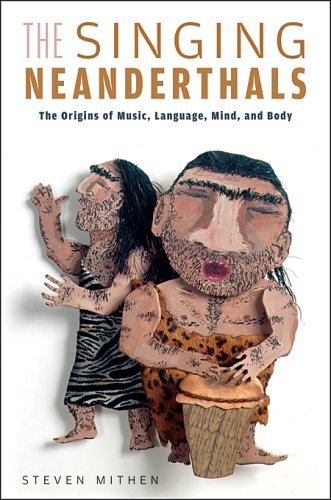
I’m finally getting around to reading Steven Mithen’s The Singing Neanderthals: The Origins of Music, Language, Mind, and Body. A few years back I gave an academic paper suggesting that musical development could be an analog to religious development on a neurological level in the Bronze Age. Since I’m not a neuroscientist I have to rely on others to do the experimental side of the equation. Mithen serves this function nicely. When I read about music and the brain, which I do frequently, I am surprised that more scholars of religion haven’t picked up on this connection. Since music is frequently “background noise” today, many people casually assume that it is insubstantial, a whim. I look at it (listen to it) from a different angle. I seldom listen to background music – if music is playing, I pay attention to it, and something in my unprofessional brain says Mithen is often right on target.

Of course, religion and music is not the main thrust of The Singing Neanderthals, but rather the idea that music was formative for human cognition. Perhaps music even developed before speech. For me this is an important piece of a much larger puzzle: whence did religion arise? Like all inquiries that delve too deeply into the past, the answer is lost among ambiguous artifacts and ancient dust. And yet, those who know more about this than I do seem to be pointing in the direction that both religion and music have their origins in the pre-Homo sapiens stage of our evolution. I’m not surprised. I only wish I could play along.