In the Cult

The word “cult” has fallen out of favor with religionists.  The reason for this is the problematic claim that any one religion makes to being the “only true” religion.  If that religion then sets about to study other religions there is a built-in bias that the study is being done from the perspective of those who know the truth looking somewhat bemusedly toward other religions.  A cult was defined as a relatively new religion with a fairly small number of adherents.  The more correct term is a “New Religious Movement.”  The idea of brainwashing is controversial, but it is clear that people can be made to follow the leader against their better judgment.  We’ve seen this time and time again and not just in places like Jonestown or Waco.  The word “cult” seems to fit.

Branch Davidian compound in Waco; photo credit: FBI, courtesy Wikimedia Commons

A friend recently pointed me to the work of the psychologist Jeremy E. Sherman.  Sherman has been studying the behavior of Trump followers and has illustrated quite well how it is a cult.  This is one place where the use of the term becomes essential.  I’ll lay aside my objections to the word to point out that a cult denotes a group that follows a leader without critical assessment of that leader.  You’ll have noticed that Democrats are quite critical of one another.  They think about and assess what each other say and do.  When someone like Trump, who is well known as a Pez-dispenser of lies, becomes a saintly paragon of his party, capable of no wrong, we’re in the land of cults.  What Sherman does that I can’t, is suggest how to deal with such thinking.

Most of us try to reason with our interlocutors.  If reason is turned off, as in blind following, it simply falls on deaf ears.  The public record of Trump’s doings speaks for itself.  Those who refuse to see it or engage it will never be reasoned out of it.  The parallels with Hitler’s Germany are extremely frightening.  Not even a decade after his death Hitler was understood to have been clearly unstable and driven by evil impulses.  Many of those alive today overlapped with the lifetime of this dictator.  There’s no doubt that Nazism behaved like a classic cult.  Presented with credible evidence of breaking the law while within office, Trump’s followers blithely acquitted him.  Those who study cults would expect no less.  We need to arm ourselves with knowledge of how religious thinking works.  To do otherwise is dangerous, despite what our economically driven bastions of higher education may say.  (See?  I’m critical of those on my side!)  Or we can lay down reason and simply follow.


Stickiness

As a concept, it’s what web designers call “sticky.”  Valentine’s Day, I mean.  And “sticky” has nothing to do with the expected chocolates or anything physical at all.  Stickiness, as I hear it used in these antiseptic clean-room days, refers to text, or an object, that stays in the same place as you change web pages.  Now, I’m no techie, in fact I’m probably a neo-Luddite, but this kind of stickiness is useful in thinking about St. Valentine’s Day.  We hardly need a reminder that humans are sexual beings.  Biology does quite well in that department, thank you.  Every year around this time, however, when the weather has been bleak for weeks on end, Valentine’s Day rolls in to give us hope.  I’ve noticed this as I’ve been out jogging.  The past couple of weeks the birds have been singing.  Me, I’ve mostly been shivering indoors as yet more cold rain falls.

Every year, I suspect (I haven’t stopped to look) I write about St. Valentine’s Day.  Valentine was an obscure saint associated, in the popular mind, with something saints shunned.  Such an embarrassment is this sexy saint that he was never mentioned in the liturgy of February 14th at Nashotah House in the days I was there.  (Given that most of the student body was male, there may have been a wisdom in that, but that’s a story for another time.)  Religions, as I used to tell my students in later settings, all have something to say about sex.  The two ideas, like monsters and religion, are tied closely together.  Scholars tend to blush rather than explore this.

There are so many things going on in the world that I could write about.  There are new scholarly developments every day.  Still, I keep coming back to this minor holiday.  Well, it’s not actually minor in the realm of economics.  Anything to get people to spend money in the middle of February!  Valentine’s Day is the embarrassing child of the celibate church.  Without somebody named Valentine, who may or may not have been martyred,  we wouldn’t have this uneasy reminder of winter’s impending end.  Instead of embracing him, however, many branches of Christianity second him to punch-out cards sold to school kids as teachers remind them that everyone gets a valentine.  What a sticky concept!  I’d been intending to write something about the state of the world.  I guess that can wait for another day.  Right now, as the sun begins to awake, I’ll sit hear and listen for the birds to start their sticky springtime song.


Symmetry Synergy

Symmetry.  It’s pleasing to the eye.  And significant dates are often the basis for holidays.  Today is one of those extremely rare palindrome days.  As my wife pointed out to me 02-02-2020 is a configuration that hasn’t occurred since 01-01-1010, or over a millennium ago.  The next one will be after we’re all long gone, on 03-03-3030.  Not only that, but today is part of a holiday cluster.  It’s Groundhog Day.  Yesterday was Imbolc, the Celtic cross-quarter day initiating spring.  Imbolc is also known as St. Brigid’s Day.  Today is called Candlemas, by liturgical Christian tradition.  We are living through a truly unique day.  Every day, I suppose, is unique, but the spirits are afoot today.

I’ve written about Groundhog Day before.  With its prognosticating rodent, it tells us if spring is on the way or if it’s going to be delayed.  Imbolc falls about halfway between the winter solstice and the vernal equinox.  In Celtic cultures this was a cross-quarter day, a time of uncanniness.  Spirits cross between worlds on days such as this.  In days of yore, it was also the feast of the goddess Brigid.  Christianity has always been an opportunistic religion.  When missionaries to places like Scotland and Ireland couldn’t convince the locals to give up their deities, they made saints of them.  St. Brigid is a fabrication of a Celtic goddess, not an actual saint.  For similar reasons in the quarter-year counterpart to Imbolic, Samhain, the church moved All Saints Day to November 1 and All Souls to November 2.  The Celts continued using the trappings of their cross-quarter day and eventually gave us Halloween.  Imbolc never caught on in quite the same way.

The early Christians didn’t know when Jesus was born.  Christmas was established on December 25 because of all of the solstice celebrations at that time of year.  All that pagan jubilation had to be subsumed under a more solemn occasion.  Building on that mythical date, New Year’s Day was January 1 because that’s when Jesus would have been circumcised, eight days later.  Thirty-three days after a male child’s circumcision, a woman was to make an offering for purification in the temple.  According to Luke, Mary did this, and 33 days after January 1, in keeping with our fictional date-keeping, is February 2.  A tradition grew that Christians would bring their candles to church to be blessed that day (Jesus being the light of the world).  This blessing of candles was named Candlemas.  I first encountered it at Nashotah House, where it was still celebrated even as a sleepy woodchuck in Punxsutawney was rubbing his eyes.  Not exactly a palindrome, but there’s a remarkable symmetry to it, no?


Cave Monsters

A story in Discover back in December discusses cave drawings from Indonesia.  Dating back almost 40,000 years before the creation of the world, these cave paintings represent the oldest yet discovered.  The interesting thing about such cave art is the representation of figures—both human and animal—that are instantly recognizable.  Scientists studying the art are able to identify likely species, but, as John Morehead pointed out on his Theofantastique Facebook post, there are also fantastical beasts.  We might call them monsters.  It’s interesting to see how scientific writers shift from their awe at life-like illustration to a nearly palpable embarrassment when the creatures become mythical.  Indeed, the article itself suggests such figures point to a very early sense of either fiction or spirituality.  The monstrous and religion have long trod parallel paths and we are only now beginning to explore the implications.

Monsters are beings over which we have no control.  They don’t abide by human rules and often the only recourse against them is religious.  When monsters come knocking, it’s often wise to drop to your knees.  Or at least reach for your crucifix.  Many rationalists like to claim that human civilization developed without religion.  The discoveries at sites such as Göbekli Tepe gainsay that assessment, indicating that humans first gathered for religious reasons and agriculture and all the rest followed from that.  Perhaps they came together for fear of monsters?  That’s only a guess, but I recall the defensive tower of Jericho.  The archaeologist lecturing us as we stood by this neolithic structure asked “What were they afraid of?”  He never answered that question.

Bringing monsters into the discussion isn’t an attempt to make light of these significant discoveries.  Rather, we need to learn to appreciate the fact that monsters are serious business.  Religion, whether or not literally true, is important.  Civilization has been running the opposite direction for some time now.  When surveys emerge demonstrating that the vast majority of the world’s population is still religious, analysts frown.  It does make me wonder, however, if nature itself programs us this way.  To other sentient creatures who experience us as predators, humans must look monstrous.  We come in a variety of colors and textures (clothing), we smell of deodorant, shampoo, soap, aftershave, or none of the above.  We emit strange sounds (our music).  Are we not the monsters of the natural world?  And should animals develop religion, would we not be one of the causes?  It’s just a guess, but I need to sit in my cave and think about it for a while.


Falling

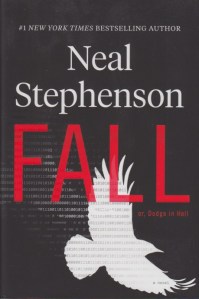
Time.   It’s a resource of which I’ve become acutely aware.  If I probe this I find that among the assorted reasons is the fact that I’ve finished my fourth book and I realized I’m much further behind that I’d hoped to be at this point.  It took me a decade to get Weathering the Psalms published and Holy Horror seems never to have gotten off the ground.  I’ve pretty much decided to try to move on to writing that people might actually read, and academic publishing clearly is not the means of reaching actual readers.  I can’t help compare myself with prolific writers like Neal Stephenson.  (It helps that he’s a relative.)  I just finished Fall, Or Dodge in Hell, and was wowed by the impact of both the Bible and mythology on the story.  I’ve always admired the way that writers like Neal can not only comprehend technology, but also can project directions into which it seems to go. 

Not to put lots of spoilers here, but the story of one generation of gods being conquered by another is the stuff of classic mythology.  Many assume it was the Greeks who came up with the idea, what with their Titans and Olympians and all.  In actual fact, these stories go back to the earliest recorded mythologies in what is now called western Asia.  For whatever reason, people have always thought that there was a generation of older gods that had been overcome by a younger generation.  Even some of the archaic names shine through here.  Like many of Neal’s books, Fall takes some time to read.  It’s long, but it also is the kind of story you like to mull over and not rush through.  Life, it seems, is just too busy.

There’s a lot of theological nuance in Fall, and the title clearly has resonance with what many in the Christian tradition categorize as the “Fall.”  (Yes, there are Adam and Eve characters.)  Those who are inclined to take a less Pauline view of things suggest that said “fall” wasn’t really the introduction of sin into the world.  Anyone who reads Genesis closely will see that the word “sin” doesn’t occur in this account at all.  One might wonder what the point of the story is, then.  I would posit that it is similar to the point of reading books like Fall.  To gain wisdom.  Reading is an opportunity to do just that.  And if readers decide to look into matters they will find a lot of homework awaits them.  And those who do it will be rewarded.


Virtually Religious

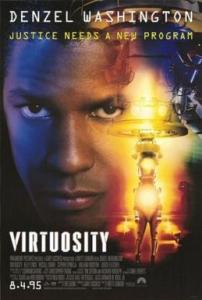
“Which god would that be? The one who created you? Or the one who created me?” So asks SID 6.7, the virtual villain of Virtuosity.  I missed this movie when it came out 24 years ago (as did many others, at least to judge by its online scores).  Although prescient for its time it was eclipsed four years later by The Matrix, still one of my favs after all these years.  I finally got around to seeing Virtuosity over the holidays—I tend to allow myself to stay up a little later (although I don’t sleep in any later) to watch some movies.  I found SID’s question intriguing.  In case you’re one of those who hasn’t seen the film, briefly it goes like this: in the future (where they still drive 1990’s model cars) virtual reality is advanced to the point of giving computer-generated avatars sentience.  A rogue hacker has figured out how to make virtual creatures physical and SID gets himself “outside the box.”  He’s a combination of serial killers programmed to train police in the virtual world.  Parker Barnes, one of said police, has to track him down.

The reason the opening quote is so interesting is that it’s an issue we wouldn’t expect a programmer to, well, program.  Computer-generated characters are aware that they’ve been created.  The one who creates is God.  Ancient peoples allowed for non-creator deities as well, but monotheism hangs considerable weight on that hook.  When evolution first came to be known, the threat religion felt was to God the creator.  Specifically to the recipe book called Genesis.  Theistic evolutionists allowed for divinely-driven evolution, but the creator still had to be behind it.  Can any conscious being avoid the question of its origins?  When we’re children we begin to ask our parents that awkward question of where we came from.  Who doesn’t want to know?

Virtuosity plays on a number of themes, including white supremacy and the dangers of AI.  We still have no clear idea of what consciousness is, but it’s pretty obvious that it doesn’t fit easily with a materialistic paradigm.  SID is aware that he’s been simulated.  Would AI therefore have to comprehend that it had been created?  Wouldn’t it wonder about its own origins?  If it’s anything like human intelligence it would soon design myths to explain its own evolution.  It would, if it’s anything like us, invent its own religions.  And that, no matter what programmers might intend, would be both somewhat embarrassing and utterly fascinating.


Seasonal Reading (Not)

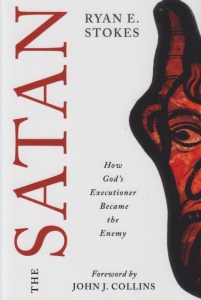
I might excuse writing a post on Satan on Christmas Eve by positing that I misread the title of this book as Santa.  After all, as Ryan Stokes explains, the Greek form of the title is ho satanas, which clearly contains the first of the canonical tripartite “Ho, ho, ho.”  The reality, however, is that work on Nightmares with the Bible continues despite the holidays, and there’s so much reading to do that not all of it can be seasonal.  I’ve known about Stokes’ book for some time, even as I’ve known his name through his various articles about the Satan.  This book, while not exhaustive, is certainly comprehensive for the time period covered and lays considerable groundwork for future discussions of the Devil.  What becomes obvious working through it, however, is that many different ideas about the Satan are represented in the Bible and related literature.

Long ago, as far back as my dissertation, I realized that it’s a problem for modern readers to systematize what ancients viewed disparately.  The Bible has no single idea of the Devil.  We’re quite accustomed to saying that “Satan” (which Stokes shows may not be a name in the Bible) and “the Devil” and Lucifer are all synonyms.  That’s not really the case.  Ancient peoples had many names for beings that caused problems, but not all of these entities were evil.  Belial, Mastema, Melchiresha, Beelzebub (and the list could go on) were designations used by different groups at different times.  These entities are sometimes agents of Yahweh, doing God’s will.  At other times they seem to be enemies of God, adversaries.  “Executioners,” is Stokes’ emphasis in these roles.  In early (and more recent) attempts at systematization, readers have tried to roll these various images into one.  With but limited success.

Ancient peoples didn’t feel the necessity that more modern ones do to make everything fit “scientifically.”  After all William of Ockham hadn’t shown up yet to suggest complicated ways of explaining things should be simplified.  We get the sense from reading ancient texts, including the Bible, that lots of ideas were floating around as to who these nasty beings might’ve been.  And their nastiness was really the result of human perceptions of who they were because often they were in league with the Almighty.  Theirs was not a simple, binary world of black and white.  It was more like a photo that we would still designate by that term but which is really grayscale.  Grayscale shades from white to black with the chiaroscuro preventing simple explanations.  Although it’s not about Santa, this book is very informative and will raise any number of questions at any time of year.


The Place of Temples

Gobeklitepe, or more properly, Göbekli Tepe, stunned the archaeological world a few years back.  This site in what is now Turkey contained what is apparently a sanctuary—purposefully buried—and advanced architecture for its age.  It was that age that was so shocking.  Gobeklitepe dated from around 11,000 years ago.  Now, in case ancient history’s not your thing—this will be painless—agriculture began, according to the standard chronology, about 10,000 years ago.  This led to surplus production that in turn led to the first cities, indeed, what we recognize as civilization itself.  While Gobeklitepe wasn’t permanently occupied, it was an example of a temple before agriculture, and according to the standard thinking, this should not be.  Consequently not too much has been published on the site because nobody likes a smart aleck, even if said aleck is an archaeological site.

Just within the last weeks, Anadolu Agency announced that an even older site was found in Turkey, near the city of Mardin.  Reports coming out of Boncuklu Tarla suggest that it is a millennium yet again older, dating from 12,000 years ago.  The article doesn’t include many photos, but suggests the site is similar to Gobeklitepe.  If this holds up, a new paradigm for human history will need to unfold.  What drew people together at first was not tilling the soil and reaping a surplus, but religion.  Even in the still standard paradigm, kings could only emerge with the backing of gods, so early cities had impressive temples.  What the evidence now suggests is that the temples came first and ancient people came together at sacred sites before they had a surplus to bring.  You can’t pick a sacrificial animal without having a heard or flock from which to take said victim.

We live in a technological era in which intelligent people are scratching their heads with their smart devices because religion just won’t go away.  I have suggested before that the reason it won’t is that it is deeply engrained in our biology.  We can try to reason the gods away, or abstract them to the point that we can call them laws or principles, but we can’t escape the fact that we’re held down by forces beyond our control.  Ancient people in Turkey, hunter-gatherers in our current paradigm, were gathering together and putting massive energy into building what look like temples before they had a secure and steady source of food.  Before, indeed, they had smart phones or even dial-up.  Millennia later we would rediscover them and wonder about things even as religion would be the deciding factor in elections in the most technically advanced cultures on the planet.

Photo credit Zhengan, via Wikimedia Commons.


I Swear

The ongoing political fiasco of our nation (and within several states as well), raises a very basic issue.  We trust our legislators to do what we pay them to do (they’re our employees) because they take an oath to uphold the Constitution.  Problem is, liars don’t keep their word.  When an elected official opts to lie pathologically rather than to tell the truth, how can we expect him (or her) to uphold an oath they took?  Doesn’t lying behavior suggest that they were lying when they took that oath?  A hand on the Bible means nothing if you don’t suppose God is waiting with a lightning bolt in the metaphorical Heaven described, none too clearly, in the Good Book.  This is the greatest crisis a democracy can possibly face—lying leaders.

This isn’t just alarmist talk.  Societies—even capitalistic ones—rely on a great deal of trust.  Those who don’t mean what they say end up on the business end of the Better Business Bureau, or fail to stay solvent.  There are laws that ensure you are protected if someone sells you a false bill of goods.  What then, if the highest office in the land is occupied by someone who can’t be trusted?  Instead of appealing to the rule of law to set such a person on the right path, the Republican (Church) Party has decided that lying is now a commandment.  I may be lying, but how can you tell?  If no one has the backbone to stand up and declare that the whole system has toppled, what can a nation do?  An even more worrisome fact is that there’s no going back once this has happened.  The Republican Church has instilled this behavior for three years and is showing no sign of repentance.

Oaths were taken very seriously in the world of the Bible.  Violating one (lying intentionally) was considered the surest way to arouse God’s anger.  Ironically the Republican Church, which claims to be biblically based, is, according to its own Scripture, angering God.  I often consider myself a cynic, but my cynicism falls far short of this.  Psychological studies have demonstrated that the average person is reluctant to outright lie when the idea of God is introduced into conversation.  God’s Own Party, however, has inured itself to that minor phobia.  The Good Book, after all, says God’s the father of lies, right?  If they’d bother to open that book they’re thumping, I think they’d discover that that is truthfully the worst kind of blasphemy a human can utter.


Gods and Fans

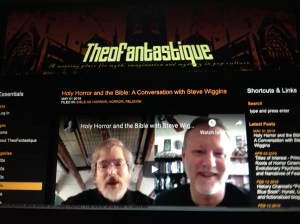
The blog Theofantastique started a couple of years before this one.  I remember that sense of childhood wonder that flooded me when I first saw its posts about books and movies with monsters—the kinds of things l always liked to read and watch.  But it was more than that.  This particular blog presents the very tangible connection between religion and horror.  Not only horror, though.  As the title indicates, this is a place for genre fiction of three closely related kinds: science fiction, fantasy, and horror.  The three are separated by mere degrees of semantics, and all three play very near to the third rail we call religion.  In my way of thinking, horror is probably the closest of the three, but I shift among this secular trinity and often wonder in which genre I am at the moment.

For someone who grew up being taught that religion was all about history—including a history of the future, mapped, plotted, and planned just as carefully as a summer vacation—seeing the connection with genres that are all acknowledged to be fiction was, at first, a little shocking.  I’d been taught in literature classes that genre fiction wasn’t really literature at all.  “Pulps” were printed on cheap paper because, as you might again guess from the name, they weren’t worth much.  Many of those books are now collectors’ items and cost a pulp mill to purchase.  My list of books from my childhood that I’d like to recover has me looking with some worry toward my bank book.  The thing is, these are often insightful statements about religion.

Monsters were always a guilty pleasure for me.  Being small, shy, and insecure, it was easy to understand things from the monster’s point of view.  And very often religion was implicated.  Sitting in my apartment in New Jersey, at times unemployed, I began to explore the connection between religion and horror.  I thought I was the only one.  Eventually I discovered kindred souls, and soon came to understand that monsters are perhaps the purest representations of what religion can do.  Even after writing two books about this subject, Theofantastique is a place unlike any other I know.  It has far more readers than I ever will, but this isn’t Godzilla v. Mothra.  No, we’re all in this together.  And we’re gathered together for one purpose.  In any other circumstances you’d say it was religious.


Powerful Wink

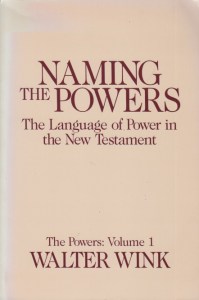
Those of us who became academically aware (in the biblical field) in the 1980s knew the name of Walter Wink.  Now, if you’ve ever become academically aware, you know that we all know some names vaguely, as if seen in a glass darkly, and some more intimately.  Wink fell into the former category for me.  He specialized in “the other testament,” and although I read Greek quite well, my academic track led me through Hebrew to Ugaritic and beyond, in the opposite direction.  I taught New Testament in my academic career, but never found the time to go back to Wink.  I knew he’d written about “the powers,” and the idea was interesting, but I had other research I was doing and I never got around to him.  Now I’ve finally finished the first volume of his famed trilogy on the powers (Naming the Powers).

“Powers” was a circumlocution for many things in antiquity.  It is a high abstraction.  Why do you do what you’re told?  The powers.  They can be human, such as bullies or governments (which are increasingly difficult to distinguish), or they can be supernatural.  Much of Wink’s book is technical—this isn’t easy going, even if it’s theology.  He looks closely at the terminology of power and exegetes it minutely.   The book comes alive, however, in part 3.  There were quite a few worthy insights here, but the one that struck me the hardest is how institutions generate a power that no one individual can control or contain, let alone comprehend.  As Wink points out, a school isn’t a building.  What goes on inside such a building takes on a power that reaches beyond any of the individuals involved in teaching or learning.  Think of Harvard.  What is it?  Who is it?  It bears power simply by the citation of its name.  No scientist can quantify it, but none will dispute it either.

Thinking about “the powers that be” in this way is transformative.  Wink draws this into the ancient perception that what is happening “down here” is merely a reflection of what is taking place on high.  Not unique to Christianity, or even monotheism, the idea that our lives reflect the reality of some higher power is pervasive in human thought.  And institutions.  Harvard, as most prestigious universities, essentially began as a place to train clergy.  Even at this stage it began to exert a power.  Today Harvard (and many other schools) still hosts a seminary and training ground for clergy.  They face a largely unbelieving society when they’re done.  And if they’re at all like me, it might take them decades to realize something may be missing.


Faithful to Monsters

“Since childhood I’ve been faithful to monsters. I’ve been saved and absolved by them because monsters are the patron saints of our blissful imperfections.” Guillermo del Toro’s quote came to me via my colleague John W. Morehead’s wonderful Theofantastique (actually its Facebook page).  I get the sense that those of us in the field of teratology parallel play a lot.  At least I console myself that way because so few monster sites link to my blog.  Nevertheless, I have great respect for del Toro and his drive to bring monsters into the mainstream.  His quote, however, hits upon a central theme of what I try to do here and elsewhere—reflect on what monsters have to do with religion.

Notice the religious language (obviously intentional): faithful, saved, absolved, patron saints.  Monsters are indeed self-reflections, and they play on the same field as religion does.  Often at the same time.  Religion, even in the best of circumstances, entails fear.  If everything were fine all the time, what need would we have of it?  Instead, aspects of life we don’t cherish or anticipate come at us.  Winter comes far sooner than we expected.  Monsters lurk in that brief season between summer and winter, that autumn of the soul.  They know us quite well.  Our weaknesses are evident to them.  But as del Toro notes, they absolve.  And more readily than any Episcopalian.  The religion of monsters is fierce and forgiving.  When we watch them on the screen, we’re watching the drama of, in del Toro’s nomenclature, salvation.  If we didn’t require saving, again, why would we need religion (or monsters)?

Being faithful to monsters again bears comparison with the divine.  Should you become one of the lost while the 99 don’t require any assistance, your monsters will come find you.  In fact, that’s what they most specialize in.  What are dark nights of the soul without a little company?  It’s not sacrilegious to map the divine world with that of monsters, for any language regarding such high stakes beings must be metaphorical.  Our standard version of God is often a large human.  Generally he’s male, and he doesn’t always display compassion, although capable of doing so.  Monsters may be creatures of our own imaginations.  They are cast large on the screen since they too stand in for those to whom we owe some tribute for this is not a safe world in which to raise your kids.  Guillermo del Toro understands; we should listen.


Steel and Snow

I sometimes feels I need to pause before launching back into my usual reflections.  Commercialism tells me the holiday season is here (I noticed while watching Macy’s Thanksgiving Day Parade that the real highlight is Santa and the official start of Christmas).  Please don’t misunderstand—I love the holiday season and look forward to it every year.  It’s not that I want to get things or spend lots of money.  For me the holidays are about rest and respite from the constant stream of work that never really gets done.  I need to retreat once in a while.  Ensconce myself in a quiet room and not have to worry about the next crisis facing me as an editor or the publishing industry as a whole.  I do love the holidays, but I often wonder about how we’ve let their symbols become the main point.

Now that we live near “the Christmas City,” we attend the Christkindlmarkt in Bethlehem while family is home.  One of the more stark symbols of this festival is the juxtaposition of a Christmas tree against the now silent and rusting steel stacks of what used to be Bethlehem Steel.  The evergreen, of course, was a Teutonic symbol of life continuing in the midst of the shutdown of the growth season.  Nature hasn’t really died, although it may appear to have done so, but we feel that difficult times with short days and cold temperatures will now dominate our existence.  Our industrial efforts participate in this slowdown too.  What once identified one of Pennsylvania’s two steel cities has ceased an Bethlehem has had to adapt.  We see the change and wonder.  I grew up just north of Pittsburgh when it was a very large industrial city.  When I was in high school it was the 16th most populous city in the country.  Currently it’s 66th, with Charlotte, North Carolina holding its former place.  We adjust to changing seasons.

Christkindlmarkt is a lively place with four large tents dedicated to symbols of the season.  Christmas merchandise is a large part of it, of course.  Small business vendors, however, take advantage of the fact that crowds throng in.  Food, naturally, comes to hold a place of some significance as your blood sugar drops after spending a few hours on your feet.  Music is in the air and people don’t seem to mind the masses of others who all had the same idea.  I never purchase much at the event, but I enjoy being among those inspired by it.  Some of us are the rusty towers in the background, and others are the lively, decorated tree that stands before them.  The season has begun, and the symbols are open for interpretation.


Thanks for the Giving


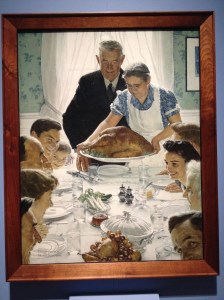
The wonderful thing about Thanksgiving isn’t the food.  I object, on more than one level, to calling it “Turkey Day.”  No, the wonderful thing about Thanksgiving isn’t the food, but rather the universal aspect of the holiday.  From Fundamentalist to atheist, everyone can be thankful and we all have things for which to be thankful.  The holiday may have begun in a Christian milieu, but you need not believe in a God in the sky to give thanks.  We can thank one another, we can thank the universe, we can thank whatever powers that be, or we can simply be thankful, no matter to whom.  As I write this in the early morning hours, I’m thankful for being home after spending several days on the west coast.  Hearing the November wind howling outside, I’m thankful for this warm cup of coffee.  I’m thankful for the ingathering of family.  There’s so much goodwill today.

Thankfulness leads to a kind of optimism.  Thankful people can perhaps see that we need not hate others to feel good about ourselves.  I think of Thanksgiving as a feeling of love and acceptance.  Perhaps more than any other holiday.  I’ve heard people of many religions and backgrounds wishing others a happy Thanksgiving.  Would that all holidays could be so accepting!  Of course, holidays themselves have their origins in religions.  Were it not for beliefs, one day would be the same as any other.  There are religions that refuse to celebrate holidays, but when critics become too harsh on religious beliefs I’m thankful to remind them that they have religion to thank for both holidays and weekends.  We could all use a break.

Thanksgiving comes at different times in different countries.  In some places no equivalent holiday exists.  There are secular holidays, of course.  The very concept, though, of a “holy day” comes from that great generator of calendars—religion.  As chronologically challenged as I am (I can’t figure out time changes or time zones or even what time it is anywhere non-local) I often think of the marking of time and how a religious impulse started our species doing so.  Sure, it may have been the urge to start planting, or the awareness that the herds of prey were moving on, but in those early days such things were infused with religious significance.  And when calendars became canonical, there were religious impulses present to drive it.  So, in a way, it is good to be thankful even for religions—as problematic as they can be—on this Thanksgiving.  


Spiritual Fear

There’s an old adage that if a headline asks a question the implied answer is “No.”  I’ve found that to be true, largely.  I hoped differently when I saw the article titled “Are Horror Films Secretly Spiritual?” by S. Rufus in Psychology Today.  Rufus, admittedly not a fan of horror, ponders whether it might not meet a spiritual need for some.  She would not count herself among that number, should the assertion prove to be the case.  Indeed, her post has more sentences ending in question marks regarding this assertion than it has straightforward declarative ones.  Rufus notes that ancient religions involved a kind of fear-based response appropriate to the lifestyle of those open to constant threat by the natural world.  She seems to believe that civilization has saved us from that.

Now one of the questions with which I constantly struggle is why I watch horror.  I do not like being afraid, and when people find out about my fascination with horror they tend to treat me as if there’s something wrong with me.  I guess maybe I think that civilization has not so much eliminated the sources of threat so much as changed them.  Those who grow up poor know fear.  Fear of want is extremely prevalent in our capitalist society.  I see the “street people” when I go into New York City.  They are not few.  Once you start to get away from affluent suburbs just about anywhere you start to see the run-down houses of those who can’t cope with the demands of a consumerist society.  Even those of us with an education are liable to joblessness and the very real terror that attends it.

Civilization, in other words, comes with its own costs.  Religions originally began—some of them at least—largely from the fear response.  Yes, people were afraid.  The gods, properly propitiated, stay the hand of disaster.  For now.  Some religions, such as those in the monotheistic family tree, tend to suggest higher principles like love can be the motivation.  These religions, however, quickly begin to make threats against those who are heterodox, and reintroduce fear into the formulation.  I suspect, from my own experience of all of this, that the answer to the question may actually be “yes”—horror films do offer something spiritual.  There is a catharsis, if I may borrow a term from psychology, in them.  The spiritual element may, however, run much deeper than that.  Until human society truly takes love and justice as its operating principles, we will have horror films to help us learn to cope.