Movie Demons

There’s an old tradition regarding demons that even discussing them is dangerous.  This was certainly in my mind as I wrote Nightmares with the Bible, as the topic is an uncomfortable one, at best.  A recent story by Paul Seaburn on Mysterious Universe references this danger in the title “Exorcist Claims ‘The Exorcist’ and Other Horror Movies are Sources for Actual Demons.”  Others have made similar suggestions that merely mentioning a demon is a form of summoning.  The post focuses on Fr. Ronnie Ablong, a Catholic priest in the Philippines, and an exorcist to boot.  Fr. Ablong claims that a number of recent cases involve fictitious demons from horror movies that possess those who watch them.  This is scary by implication and indeed is similar to what I learned growing up.

One of the things researching  Nightmares revealed was that demons in the ancient world come in many varieties.  There wasn’t one origin story behind them and ideas that make it seem that way had to evolve over time.  Of course, you can’t write a book like that without watching the movies and reading lots of books about demons.  It is a creepy thing until you start to reach the point where the material starts to break down.  In the case of Fr. Ablong, the demons come from movies, but often movie demons are based on ancient grimoires that name various entities.  The real question, and one which Seaburn raises, is whether such demons are real.  Given that we don’t know what demons are, and that some of the movies mentioned use made-up demons, such as Annabelle, it becomes suspect.
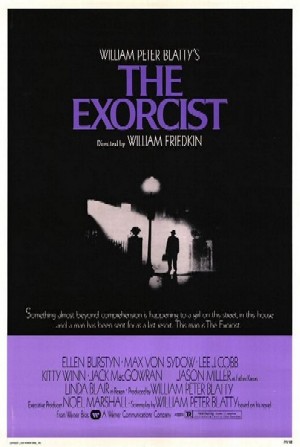
After finishing Nightmares with the Bible I was ready to put the subject aside for a while.  I’ve got other projects going and it’s important to have some balance, even in horror watching.  Still, the article caught my attention because it was one I’ve frequently heard—the danger of “opening doors.”  Often this is done unintentionally.  There’s no doubt that in the biblical world demons were frightening.  They still are.  Part of the reason is that they are so poorly defined.  In many more recent treatments they’ve become somewhat secularized, but they are, by their nature, religious monsters.  There is some truth to the Mysterious Universe story, however; our modern conception of demons goes back to the movie The Exorcist.  This is something I discuss at length in Nightmares and I don’t want to give too many spoilers here.  The topic, it seems, remains relevant even in our technological era.

Clearly Conspiracy

What an odd place to find ourselves in.  Some evangelical Christians, who used to be guardians of decency and moral human behavior, now have to have their clergy explain to them why Trump wasn’t the messiah he’d been touted as for the last four years.  A piece in the Los Angeles Times recently described the struggles of one such minister with his congregation that had fully bought into the conspiracy theories Trump promulgated in order to mask his own lack of care for his country and its citizens.  Conspiracy theories have become big business in academia with faculty from many departments exploring them.  I haven’t seen much in the way of religion departments participating in the discussion, but I think they should.  Why?  Religions are all about getting people to believe and act in prescribed ways.

Image credit: Johann Lund, Wikimedia Commons

Not that religions alone can explain this.  Psychologists and sociologists must have some important insights as well.  I used to tell my students that not all religions are about beliefs.  Some have to do with behaviors—acting in a certain way, regardless of belief, is to be part of it.  Certainly that explains part of the membership in the cult of Trump.  Many who follow it must know in their consciences that a man who defrauds the government he “governs,” who actively womanizes, and who displays overt racism can’t be the ideal evangelical.  Ah, but the conspiracy theories explain it!  Pay no attention to the man behind the curtain, right?  You can sure get away with a lot that way.

Religions have a lot to teach us about both strange behaviors and strange actions.  Many years ago someone pointed out to me as I was enumerating what I considered odd beliefs of a New Religious Movement just how odd Christianity looks from the outside.  When I stopped to think about it, this made sense.  The unconventional aspects of the faith had become naturalized because I’d been taught all my life that they were true—unlike all other religious beliefs.  Not only that, but I had been taught that accepting them without question was the only way to avoid Hell.  Over the years the strangeness became normal.  Trump and his conspiracy theories had their way smoothed by an evangelical narrative of unquestioning belief instead of an examined faith.  Now many ministers, awaking sober, are having to try to convince their flocks that they’d accepted lies for truths.  It’s an uphill battle, unfortunately.  Religions, after all, have been about getting followers to believe without questioning, or, apparently, considering the source.


Horror and Theology

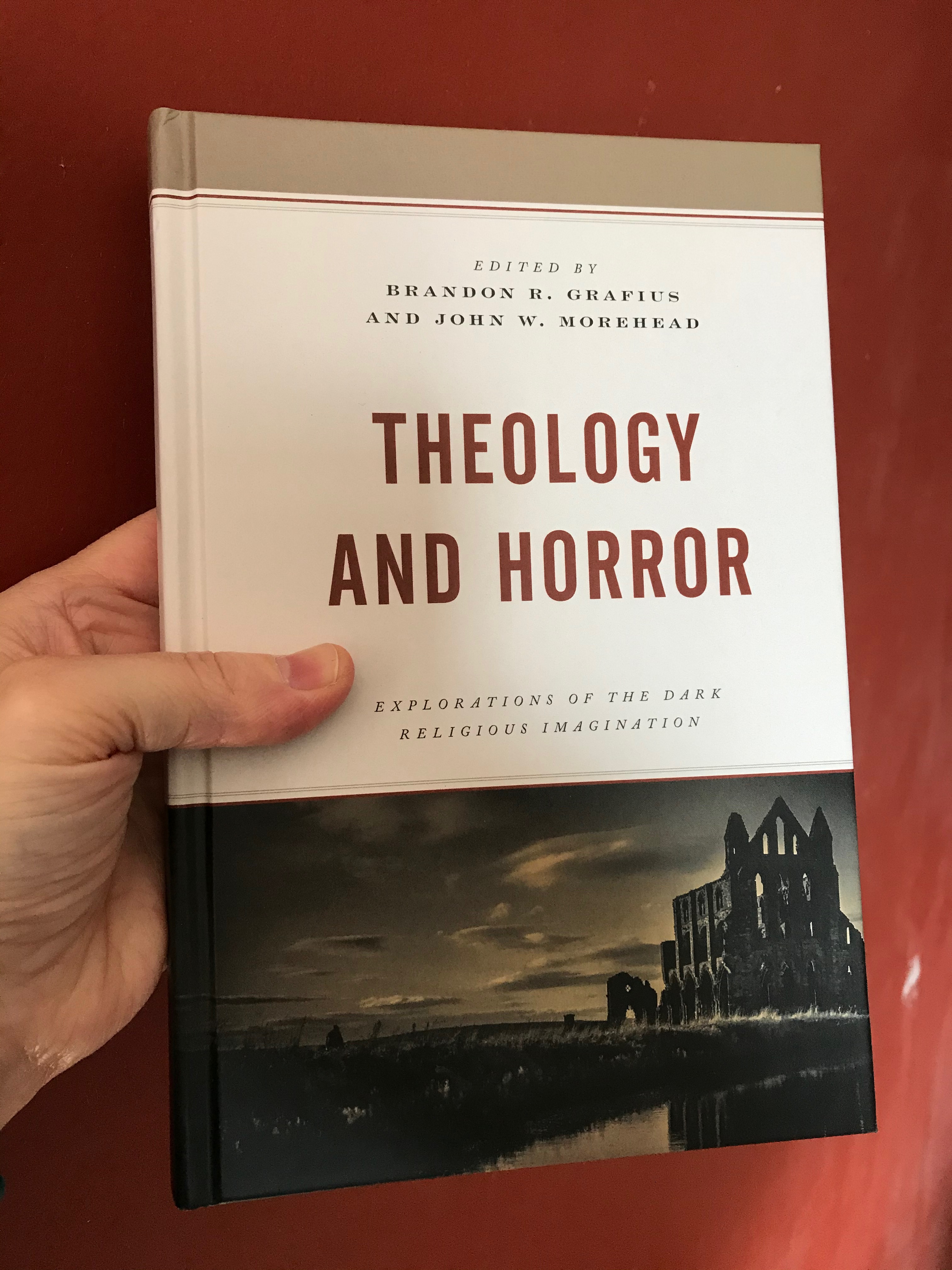
The idea may be catching on. The idea I mean is that horror and religion have something to do with one another. I have to confess that I’ve been one of the (non-academic) explorers of this approach and I was flattered to have been asked to contribute an essay to the just released volume Theology and Horror: Exploration of the Dark Religious Imagination, edited by Brandon R. Grafius and John W. Morehead. My article looks at the origins of horror in biblical (and perhaps pre-biblical) storytelling. In fact it is one of the oldest forms of exploring what it means to be human. Perhaps it began its life as an evolutionary fight or flight response, but it eventually came to represent a way of dealing with the human condition. Horror is generally traced to the gothic novel tradition, but I suggest it goes back much further.

This volume contains twelve essays on a variety of topics, along with an introduction by the volume editors. Since my copy only just arrived in Friday’s mail I haven’t had the opportunity to explore it yet, but I’m looking forward to it. Ironically, it’s an area that I began probing only after the academy no longer required my services. As I reflect on that ubiquitous “why” question I often come back to that fact. Nothing like having your career yanked out from under you makes you consider horror as a kind of therapy. Things could be worse. Besides, horror frequently demonstrates coping skills. And change is constant. Learning to adjust when the monsters of capitalism loom can make you think of religion—trust me.

Individual scholars have examined the connection between religion and monsters before—there’s a pretty obvious connection in that case—but sustained discussion of how horror informs religion is new. The developments are sometimes edgy, but I get the sense that they’re honest. It goes back to that flight or fight response. What happens if you hang around to look? Might not something become clear that was only viewed through a blurred lens before? And the goal isn’t to cause fright. Indeed, it’s just the opposite. Frights will come, and if you’ve anticipated them you might have coping skills at hand. Besides, the frisson can be enticing in its own way. Receiving a new publication can be its own source of thrills. I guess I knew this volume was coming but I’d been busy enough to have shoved the thought aside. I’m delighted it decided to interrupt the mundane, just like monsters often do.


International Women’s Day 2021

Changing one’s way of thinking is difficult.  So difficult that we generally don’t try it unless we’re compelled to do so.  One such compulsion is education.  Cultures that have embraced education are those that have led to great advances.  In this context it’s more than a little surprising that women’s rights are still held to be less important than those of men.  More education is required, it seems.  Today is International Women’s Day.  Of course it’s not a day off work because capitalism is all about men’s need for endless acquisition.  At least we can pause and consider for a few moments that life itself wouldn’t be possible without women, and justice, nearly worldwide, is represented in feminine form.  What can we do to make the world open its eyes to the obvious?

I read a lot about religion.  While I post here about the books I read, they are really only the tip of an iceberg.  My job largely consists of reading.  One of the themes that constantly runs through my own personal continuing education is that religion has indelibly changed our ways of thinking.  Even strident atheists today announce their stridency from a context formed by religion.  I’ve pointed out on this blog numerous times where even scientific thinking is mired in a wider context that has been constructed by religious thought.  One of those larger contexts is the subordinate role of women.  It is likely no coincidence that matriarchal cultures developed where there wasn’t a religion devised by men to impose a patriarchal governance on the world.  It’s so obvious once you learn to see it.  We need to be educated.

Women, it is obvious from an unbiased point of view, are equal to men.  As we educate ourselves further about gender and how religion has informed its perception, we come to realize that even binary assumptions—either male or female—are premature.  Underlying it all is humanity.  Human lives.  Those of men are no more important than those of women, or of those between.  Religions often like to make sharp distinctions.  Those distinctions are more abstract than reality.  The world is made up of real people and roughly half of them are female.  Today is set aside to recognize and celebrate that fact.  To recognize the contributions women have always made to society and civilization.  Let’s take the opportunity to educate ourselves, and  let’s be conscious of the fact that women are just as valuable as men and their foibles.  More than that, let’s put this truth into practice.


Still Standing

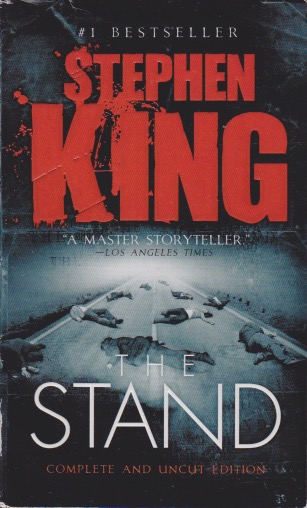
Investment.  Time is an investment, and I recently invested in Stephen King’s The Stand.  You have to realize that I made this decision sight-unseen.  More than one person whose opinions I value told me I should read it.  I had no idea it would be 1,400 pages and would dominate my life for a solid month.  Still, I’m glad I read it.  In case you haven’t, and intend to, there may be some spoilers below.  This is one of the King books I read without knowing the plot or the ending, so if you’re in that boat, skip a paragraph or two.

I hadn’t intended The Stand to be plague reading.  It just turned out that way.  The book is about a variety of flu that kills nearly the entire population of the world.  It’s only at the very end that you learn it’s a parable.  The ending also explains some of the apparently unrelated filler that makes the book so terribly long.  In any case, after wiping out much of the world, the story narrows down to several of the survivors and how they end up dividing into two camps: those who want to cause misery (think Republicans), and those who want to reestablish civilization.  Of course there are several unpleasant instances along the way.  The camp of violent ne’er-do-wells settles in Las Vegas under the demonic leadership of Randall Flagg—his identity only becomes clear at the end—while the good guys, under Mother Abagail, choose Boulder.  A confrontation is inevitable and when the smoke clears we learn that Randall Flagg is, essentially, civilization itself.  Perhaps Christianity.

Of all of the Stephen King novels I’ve read, this one has the most overt Christian imagery.  In fact, in his introduction to the expanded edition he refers to it as a “long tale of dark Christianity.”  There’s quite a lot of theological dialogue along with gruesome deaths.  The pacing often makes the story seem quite long.  Well, it actually is.  I suspect it was this Christian imagery that had friends recommending it to me.  The idea that evil is essentially our culture that comes around and kills us is both profound and paradoxical.  As well as “Christian.”  All along the good guys want to reestablish the cooperation and comforts of civilized life.  It was “civilization” that unleashed the killer virus, however, and herein hangs the tale.  I’m glad to have read it, and I have to confess that I miss the bleak world King created, after living with it for so long.  And it turns out to have been plague reading both literally and symbolically.


The Land

It’s always a pleasure to find an author from whom you want to read more.  It was my wife who told me about Ernestine Hayes’ The Tao of Raven.  We were both so taken by the book that we turned to Hayes’ prior Blonde Indian: An Alaska Native Memoir.  Learning how badly the United States has treated the indigenous population of this continent is one thing.  Learning how badly we still treat them is quite another.  For all of that Hayes writes a memoir that is reflective and perhaps sad, but seldom angry.  The stories told in Tao of Raven start here—we meet the characters who will be further developed in the next installment and become even more curious about them.  The reader wants to reach out and help.  To tell the government, “enough!”

The indigenous peoples of North America (and likely South too, for that is a realm requiring further learning) feel, and have always felt, a close connection to the land.  Europeans see land as a resource for exploitation, not for living in harmony with.  We came, we took, we destroyed.  As if that weren’t bad enough, we left the original inhabitant trapped in grinding poverty, shoving them into places we wouldn’t see.  Until we discovered something we wanted on that land, and then we shoved them again.  The impetus to do this was, unfortunately, Christianity.  I doubt it’s the religion Jesus had in mind, but then he lost control of it millennia ago.  Believing in one’s divine mandate is a sure way of making unwarranted claims on what belongs to someone else.  Remember “thou shalt not steal”?

Hayes’ reflective style is an honor to read.  Feeling a part of a place is a rare privilege.  Born into a mobile society enamored of technology, the modern American has difficulty feeling too attached to any one place.  Of course, many people stay close to where they were born, but to become a “professional” you have to leave.  Blonde Indian is about returning home.  The land knows us.  Many of us don’t know it back.  It’s just a place to set our feet temporarily until a better opportunity comes along elsewhere.  Being tied to no land we lose something of our souls.  Our connection with nature.  With the planet itself.  Hayes is a gifted writer with a story that must be heard.  Wisdom comes through on every page.  We would do well to pay attention.


Love or Saints?

One of the many oddities of life at Nashotah House was that we never celebrated St. Valentine.  I wouldn’t expect a mostly male and neurotically homophobic community to mark Valentine’s Day as for lovers (most of the faculty and many students were married, however), but the saint’s name wasn’t uttered in my years there.  Of course, commercialization of holidays does taint them somewhat.  It’s difficult to take a day seriously when you’re being told that how much you spend will be the sign of how special it will be.  With St. Valentine’s Day, however, I believe the topic was much too close to something the church had long feared—sexuality.  I’ve often pondered how this strange obsession evolved.  Judaism, from which Christianity sprung, isn’t the origin of this antipathy to being fully human.

The trouble likely starts in the Bible.  The New Testament, in particular.  No mention is made of Jesus having been married.  Paul, in his usual way, made it an issue but fell short of outright condemning it.  His words would help convince the Roman Catholic Church that mandated celibacy was a good idea.  Clearly, however, Augustine of Hippo, who lived after Valentine (depending on which one you elect to follow) saw the whole enterprise as flawed.  Making up the concept of original sin and tying it in with sexuality was a certain means of creating a problem.  Not that Christianity is the only religion that promotes celibacy, of course.  But when it came to Nashotah House there was really no concern about what other religions taught.  Even on February 14 no collects were recited mentioning the saint who must not be named.

The history of saints’ days is a fascinating one.  A few of them made it into pop culture—after Presidents’ Day there’s no national holiday until Memorial Day in May, so who can blame people for looking for reasons to celebrate while still waiting for spring?  Saint Patrick wasn’t similarly given the cold shoulder at Nashotah in my years there.  And although it moved around quite a bit, you could usually count on April for delivering Easter.  We didn’t celebrate Presidents’ Day.  Nor Martin Luther King Day—not being Catholic his canonization process was a non-starter.  The long, cold stretch between Epiphany (now Insurrection Day) and Lent was one devoid of popular holidays.  I suspect that despite the number of saints (and there are lots of them) the singling out of Valentine was considered to be asking for trouble.  That was many years ago.  Oddities, however, have a way of remaining in long-term memory.


Meanness

There’s often a meanness to literalist religions.  A sense that if they can keep their particular interpretation of God’s will, then anybody can.  No compassion.  No forgiveness.  Considering the base messages of nearly all those religions that harbor fundamentalists, that attitude is quite surprising.  Indeed, it ceases to be religion at all and becomes merely a facade of one.  The recovery of the body of Khaled al-Asaad is what brought this to mind.  Back in 2015 al-Asaad, an 82-year old archaeologist, was beheaded by the extremist Islamic State group in Syria.  Al-Asaad had spent his life excavating and attempting to understand the site of Palmyra.  The Islamic State was determined to destroy what they considered “idols” or offensive images.  When the octogenarian refused to tell them where they could find further antiquities to destroy, they beheaded him.

This isn’t finger-pointing at Islam.  Islam is a highly moral religion that values peace.  What it has in common with Christianity, apart from some shared history and theology, is that it fosters extremists.  Extremism may be fueled by religion but it’s not religious.  The adherents are often mean, hard-line individuals who have trouble distinguishing the shades of gray that make up so much of life.  As a result of the Islamic State movement, many antiquities that had survived for thousands of years were destroyed forever.  There were heroes like Khaled al-Asaad (we might even call them saints) who tried to protect these irreplaceable artifacts.  Religion has no feud with the past.  In fact, religions consciously build on their pasts.  Continuity is important to them.

Extremism of this kind is a fairly new blending of religion and politics.  As recently as the sixties it was felt that religion and politics should be compartmentalized.  Kept separate.  When the Republican Party realized in the seventies that evangelicals could be made into a voting bloc, religion became politicized.  This happened elsewhere around the world.  “True believers”—the very term suggests the rest of us believers aren’t true—tasting political power, realized they could use their meanness to make the rest of the world in their own unforgiving image.  We’ve been living with the consequences ever since.  Even now Republican lawmakers fear reprisals of Trump supporters if they dare accept the truth.  In other words, extremist religion has pitched its battle against the truth itself.  That would be ironic if it weren’t so terrifying.  No religion that I know has meanness among its central tenets.  It takes literalism to make it one.


Religions and Horrors

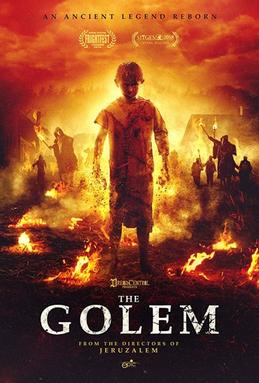
My latest piece on The Golem has just appeared on Horror Homeroom.  It’s free—check it out.  In it I briefly discuss Jewish horror.  I mainly write about Christian horror because that’s my immediate context.  That’s not to say other religions don’t participate in the genre too.  While I worked for Routledge I acquired the book Buddhism Goes to the Movies, by Ronald Green.  Like the title suggests, it’s about movies focused on, or made by, Buddhists.  What sold me on the project was the chapter on horror films.  Much of what’s being called “J-Horror,” or Japanese Horror these days, occurs in a Buddhist or Shinto contexts.  I’m not expert enough in these traditions, however, to spot them with the detail that I do in my own native religion. 

All religious traditions have certain commonalities.  As I’ve frequently discussed on this blog, sex and death are two of them.  Given the powerful ideas that religion trades in, it seems natural that it would appear frequently in the horror genre.  It’s just that modern viewers tend to be somewhat divorced from religion and can’t see it.  Religion is that way—it fills the cracks.  How often do we pay attention to the caulking or grout?  We tend to focus on the tile or woodwork instead.  Religion holds thought systems together, including those of the horror genre.  I just discussed no-go subjects yesterday, but even science shows religion in some of the cracks.  Learning to see it involves learning to shift your focus.

I blogged about The Golem just after I watched it, back in December.  The golem is an original Jewish monster, and Judaism is both a culture and a religion.  It’s difficult to tease them apart sometimes.  The same can be said of many traditions outside Christianity.  In fact, many cultures had no word for religion—the idea of a separate realm of life where you try to please the gods because what you do otherwise is inherently sinful.  (There’s probably a reason that capitalism grew in a Christian context.)  That means that horror particularly welcomes Christianity.  Many of the bases of fear are premised on a religion that, as culturally bound as it is, has always claimed that joining it is a choice.  If you can choose you can choose wrongly.  This is fertile ground for horror, especially when the consequences are eternal.   My Horror Homeroom piece takes a different approach than this, but religion and horror nevertheless find themselves together, often in the same room.


How Clean Is Your Brain?

First it was in.  Then it was out.  Now nobody seems to be sure.  “Brainwashing” isn’t really a scientific term, but human suggestibility is very well in evidence.  Advertisers count on it.  Did I really need that phone case when I never go out?  And so on.  The real question is can people be compelled to do what they normally wouldn’t want to.  Think Jonestown.  Heaven’s Gate.  Waco.  Do people really want to die en masse?  Are we but higher lemmings?  I’ve seen hypnotists do their shows.  The human mind is manipulable.  We can be shut off from reason.  A recent article from The Middletown Press my wife shared with me raises the question whether conspiracy theories, such as those sported by QAnon, are something like brainwashing.  Clearly they are.  As are many Fundamentalist forms of religion.

You can recognize this when a conversation becomes such that the true believer simply won’t listen to evidence.  They’ll say they want to discuss an issue when all they really want to do is have someone state their side so they can tell them they’re wrong.  Reason has nothing to do with it.  When that part of their gray matter that handles things rationally feels backed against a wall they resort to ad hominem attacks.  I’ve been observing this since I was a child raised in such a paranoid religious tradition.  It works for politics, too.  For many QAnon sorts, Trump’s word was God’s word.  Once uttered it could not be refuted, not with all the evidence in the world.  It’s very much like Fundamentalist views of the Bible which can’t take context, translation, and reason into account.  When contradictions are blatantly pointed out they respond with “there are no contradictions.”  Is there brainwashing?

Conspiracy theories can seem real because there are actually some conspiracies.  There are government secrets.  Only the naive deny that.  Still, once you start throwing in the ridiculous—that a devil-worshipping cabal of pedophiles is running a secret government—you’re in water over your head.  Not only that, this sounds incredibly like the satanic panic that spread through much of the world in the late 1980s into the 1990s.  When the evidence was examined, it was found lacking.  Some of the key bestselling accounts were admitted to have been forgeries.  The believing mind, however, has trouble letting go.  We used to call fringe groups cults.  We used to suggest that people could be held against their will.  People leaving QAnon are reporting similar experiences, according to the article.  Brainwashing by any other name would be so real.


Christian Nationalisms

Ongoing analysis of the Capitol Riots continues as footage of the event is scrutinized.  Although the press is puzzled, those who study religion—underfunded and ignored in the academy—aren’t really surprised.  A recent story from the Associated Press explores how Christian Nationalism, one of the most dangerous forces in the United States, played a large role in the event.  Christian Nationalism is one example of what I call weaponized religion.  As someone who’s spent over four decades studying religion minutely, it’s pretty clear when religion begins to slip its moorings and is becoming radicalized.  Generally it begins when adherents refuse to hear any views but their own.  They believe their version of their religion is the only “one, true faith” and this gives them the mandate to attack any who believe differently.  In the case of Christianity it’s very difficult to see what any of this has to do with a carpenter from Nazareth.

Indeed, evangelical Christians themselves are exploring what is now being called “Republican Jesus.”  This Jesus isn’t the one from the Good Book.  Far from it.  No humble shepherd saying “turn the other cheek” fits this image.  Long ago I read Stephen Prothero’s American Jesus.  In it he analyzed how the American appropriation of the Jewish rabbi became a muscular, masculine fighter.  Not the kind of guy who’d let Roman authorities nail him to a cross.  And certainly not a softie who would favor outcasts, women, and children over the rich and powerful.  This image of Jesus, who draws a hard line on certain trigger issues, is as patently false as any reconstruction can be.  And yet it drives unruly mobs into the halls of power.  Universities, meanwhile, cut religion departments.

Photo credit: David Shankbone, via Wikimedia Commons

I don’t pretend to be a prophet, but this issue isn’t going away.  Our culture has long harbored the myth of America as the “new Israel.”  The leaders of Christian Nationalism are organized and they have a clear agenda to take over the country.  Like other serious issues that don’t have to do with making money, it’s simply overlooked as irrelevant.  When the mainstream media gets a glimpse at what’s been going on in such groups, it always seems surprised.  The kind of elitism that divorces itself from the everyday simply can’t be informed of what’s actually happening.  Religion is a very powerful driving force.  It motivates many far more than money does.  We see it plainly when it becomes weaponized.  By then, however, it could be too late.


BLM, MLK, and Justice

Martin Luther King Jr. was a martyr.  The word martyr means “witness.”  Given what we’ve all seen done by the Republican Party over the past two weeks, let’s hope they at least know the meaning of the word repentance.  King died trying to set people free.  Half a century later we’ve had to witness a sitting US president praising an armed mob, some of whom were carrying confederate flags, storm the Capitol.  Then, that very night, we watched Republicans still attempt to repress legitimate votes in order to keep white supremacy in power.  The set-backs of the Trump administration will take years to overcome.  King stood for equality.  He called for fair treatment.  He knew his Bible.  Now those who cynically hold the Good Book up for the camera can’t quote it but can tear down everything it stands for.

We need Martin Luther King Day.  This year especially.  We need to be reminded that all people deserve fair treatment.  Justice isn’t a meaningless word.  The color of one’s skin is no indicator of inherent worth—that belongs to everybody.  Throughout the country there are heartfelt memorials to King.  The various Trump towers—often segregated and reserved for the wealthy—are monuments of a different sort.  There is power in symbols.  Those who praise and crave money above human need will ultimately be remembered for how evil seeped into their bones.  How hatred of others and narcissism defined their rotten moral core.  Today we try to focus on a good example, but present reality keeps getting in the way.

Four years ago I joined about 1.3 million marchers in Washington, DC.  The Women’s March, as estimated by government officials on the ground, was more than twice as large as the media estimates still tout.  I’ve puzzled over this for four years—why when an oppressed group makes a stand officials and pundits feel the need to downplay it.  King made a stand and he had a dream that one day we wouldn’t have to make marches on Washington just so that everyone could have the equal treatment they deserve.  Human rights are the only rights we have.  Even as some haters are planning further acts of violence to object to a humanitarian president, we are given a necessary reminder that all people deserve fair treatment.  Black lives do matter.  Why has half a century not been enough to assimilate that simple message?  We need to sober up from the drunkenness of irresponsible power.  We need to learn the simple fact that nobody should be killed for being black.  That whiteness is toxic.  That we need to call out those who would use privilege to claim otherwise.


Goats, Sheep, and Politics

Reasonable evangelicals need a new name.  As a voting bloc, evangelicals have, according to many of their leaders, fallen from grace.  Ironically it was the “draw”—whatever that could possibly be—of the cult of Donald Trump that caused it.  While encouraging their sheep to vote for him both in 2016 and 2020, some of these leaders had their eyes opened to what many of us saw from the beginning, but it took an insurrection to pry their lids apart.  A story by Rachel Martin on NPR, “’How Did We Get Here?’ A Call for an Evangelical Reckoning on Trump” explores this unfortunate, and avoidable catastrophe.  Such evangelicals don’t excel at fact-checking.  It’s far easier to believe what you’re told by a dynamic individual.  Along the way they’ve jettisoned the morality of that “old time religion” for the lust of power.  Now some of their leaders are wondering what they’ve done.

I’m not one to idolize the 1950s.  Heck, I wasn’t even born yet.  One truth from them, however, has always stayed with me: religion and politics don’t mix.  Try this experiment some time: ask Trump evangelicals what party their church (if it existed then) supported in the 1950s.  Many Christians were Democrats, particularly in the south.  Oh, if they confess this they’ll start using language about the Dems falling from grace (while still defending Trump, who can never fall from anything), shifting the onus back onto a theology not even half-baked.  Now their ministers are trying to remind them that morality actually is part of being an evangelical.  A very small part, but not completely evaporated.

History will teach us, if we’ll let it.  Richard Nixon saw evangelical voters as a bloc.  Himself a Quaker (currently among the most liberal of Protestant denominations, and devoted to peace), he was a political opportunist.  Evangelicals are taught that they are sheep.  Sheep are easily herded.  Imagine what might happen if their leaders tried to get them to think for themselves.  To fact check.  I used to tell my students not to take my word for things just because I could call myself “doctor.”  Check my sources.  See if I might’ve missed something.  This is the way knowledge progresses.  The NPR story gives me a modicum of hope.  Some leaders are realizing that their own mindless support of a known criminal—before he even got the nomination in 2016—was maybe a bad idea.  Of course, others still defend his actions after his attempted insurrection.  Sheep, if fed, will always follow.


Lizard Lords

In the aftermath of last week’s attempted coup by the alt-right crowd, NBC ran a story about conspiracy theories.  Specifically the lizard people (actually aliens) who secretly run the world.  If you hang out in weird places, like I do, you already know the story behind this: fueled by David Icke, some conspiracy theorists believe a race of shape-shifting alien lizard people control the government.  They’re deadly serious.  (You can fairly easily find videos purporting to show lizard people caught transforming at government events.)  The NBC story, by Lynn Stuart Parramore, traces the belief to an old anti-Semitic trope.  I haven’t studied this enough to have any opinions on the idea, but what caught my attention is that this particular conspiracy grew out of objections to Darwin.

While teaching I’d planned to write a book on Darwin and Genesis—I researched it for years.  I would add to Parramore’s story the fact that most of our political troubles today can be traced back to that same unwillingness to accept evolution.  Over the centuries in western culture, the Bible (while not necessarily read) had grown into such an object of veneration that anything which challenged it had to be rejected.  Charles Darwin was well aware that anyone following the dictates of science would be pilloried by a “Bible believing” culture, and this was in the middle of the nineteenth century.  Elitist intellectuals assumed this literalism would just go away but it never has.  When it appears (which it frequently does) they laugh at it and insist that if we ignore it it’ll just go away.  Then an armed mob takes over the U. S. Capitol.

The concern shouldn’t be that people believe in lizard people, but that they can’t let go of a threadbare literalism toward a book.  Biblical scholars are routinely ignored by those who believe their way of reading the Good Book is the only possible way to do so.  All other ways are “interpretations,” and these interpretations don’t reflect what God has told them personally, so they’re clearly wrong.  This view, simply dismissed by most of the educated, is extremely widespread.  It must be addressed in some way, rather than being treated as some passing fad.  There may be no lizard-people taking over, but this view of the Bible has been politically active for going on two centuries.  Instead of studying it and trying to understand it, we cut departments and positions that might help to solve the problem.  Maybe the lizards are controlling us after all.


Slow Jinn

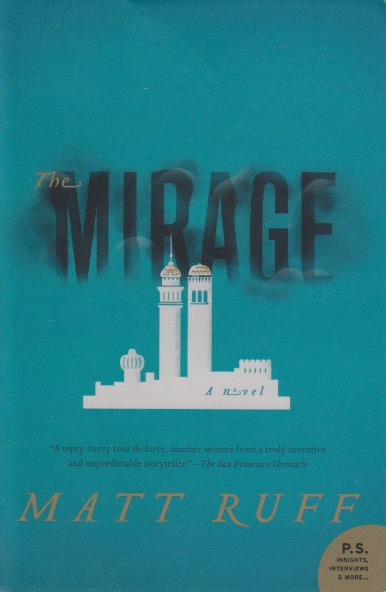
You can sort of tell when an author has a background in religion.  Early on in my blog writing, I made note when novels had religious elements.  It’s so common that I seldom do that anymore.  Matt Ruff’s father was a minister.  His understanding of the religious landscape comes through in The Mirage.  It wasn’t on my reading list, but someone gave me a copy and the story drew me in.  In case, like me, you only know Ruff from Lovecraft Country, this tale’s quite different.  There may be some spoilers here, so if you’re thinking of reading it fresh, you’ve been warned!

Set in an alternate reality in which the superpower in the world is the United Arab States, the story follows three police agents of Homeland Security as they uncover a perhaps unwelcome truth: the world they know is a mirage.  It is, in fact, the work of a jinn.  Before commenting on that, I would say that you don’t learn about the jinn until a good way into the story.  Up to that point I’d call this simply literary fiction.  The jinn adds a speculative element to it, and also explains, mostly, how things ended up the way they did.  Jinns, by the way, are often considered demons in Arabic culture.  They are quite different from Christian demons, and that point makes itself clear as the story unfolds.  Our three protagonists begin to uncover hints that the twin towers didn’t actually stand in Baghdad, and that Christian terrorists didn’t fly planes into them on November 9 (11/9).  They have run-ins with Saddam Hussein and Osama bin Laden as warring factions vie for power in the UAS.

This is a great story for trying to understand the world from the point of view of a different religion (unless you’re Muslim).  This is a world where Christians are terrorists (you get to meet David Koresh as well) and the United States is a backward country divided over religion.  Reading this as events unfolded in Washington, DC last week was a little bit disconcerting.  Alternative realities are often just a heartbeat away.  The plot is a bit complex at points, but it’s a fairly quick, if profound read.  Religion is the heart and soul of this book.  That religion could be either Islam or Christianity.  Perhaps even something different.  The way it plays out is very much like real life, dividing people against each other until reality becomes difficult to bear.  For anyone interested in what a Muslim-run world might have looked like, this is a good starting place.