Meanness

There’s often a meanness to literalist religions.  A sense that if they can keep their particular interpretation of God’s will, then anybody can.  No compassion.  No forgiveness.  Considering the base messages of nearly all those religions that harbor fundamentalists, that attitude is quite surprising.  Indeed, it ceases to be religion at all and becomes merely a facade of one.  The recovery of the body of Khaled al-Asaad is what brought this to mind.  Back in 2015 al-Asaad, an 82-year old archaeologist, was beheaded by the extremist Islamic State group in Syria.  Al-Asaad had spent his life excavating and attempting to understand the site of Palmyra.  The Islamic State was determined to destroy what they considered “idols” or offensive images.  When the octogenarian refused to tell them where they could find further antiquities to destroy, they beheaded him.

This isn’t finger-pointing at Islam.  Islam is a highly moral religion that values peace.  What it has in common with Christianity, apart from some shared history and theology, is that it fosters extremists.  Extremism may be fueled by religion but it’s not religious.  The adherents are often mean, hard-line individuals who have trouble distinguishing the shades of gray that make up so much of life.  As a result of the Islamic State movement, many antiquities that had survived for thousands of years were destroyed forever.  There were heroes like Khaled al-Asaad (we might even call them saints) who tried to protect these irreplaceable artifacts.  Religion has no feud with the past.  In fact, religions consciously build on their pasts.  Continuity is important to them.

Extremism of this kind is a fairly new blending of religion and politics.  As recently as the sixties it was felt that religion and politics should be compartmentalized.  Kept separate.  When the Republican Party realized in the seventies that evangelicals could be made into a voting bloc, religion became politicized.  This happened elsewhere around the world.  “True believers”—the very term suggests the rest of us believers aren’t true—tasting political power, realized they could use their meanness to make the rest of the world in their own unforgiving image.  We’ve been living with the consequences ever since.  Even now Republican lawmakers fear reprisals of Trump supporters if they dare accept the truth.  In other words, extremist religion has pitched its battle against the truth itself.  That would be ironic if it weren’t so terrifying.  No religion that I know has meanness among its central tenets.  It takes literalism to make it one.


Religions and Horrors

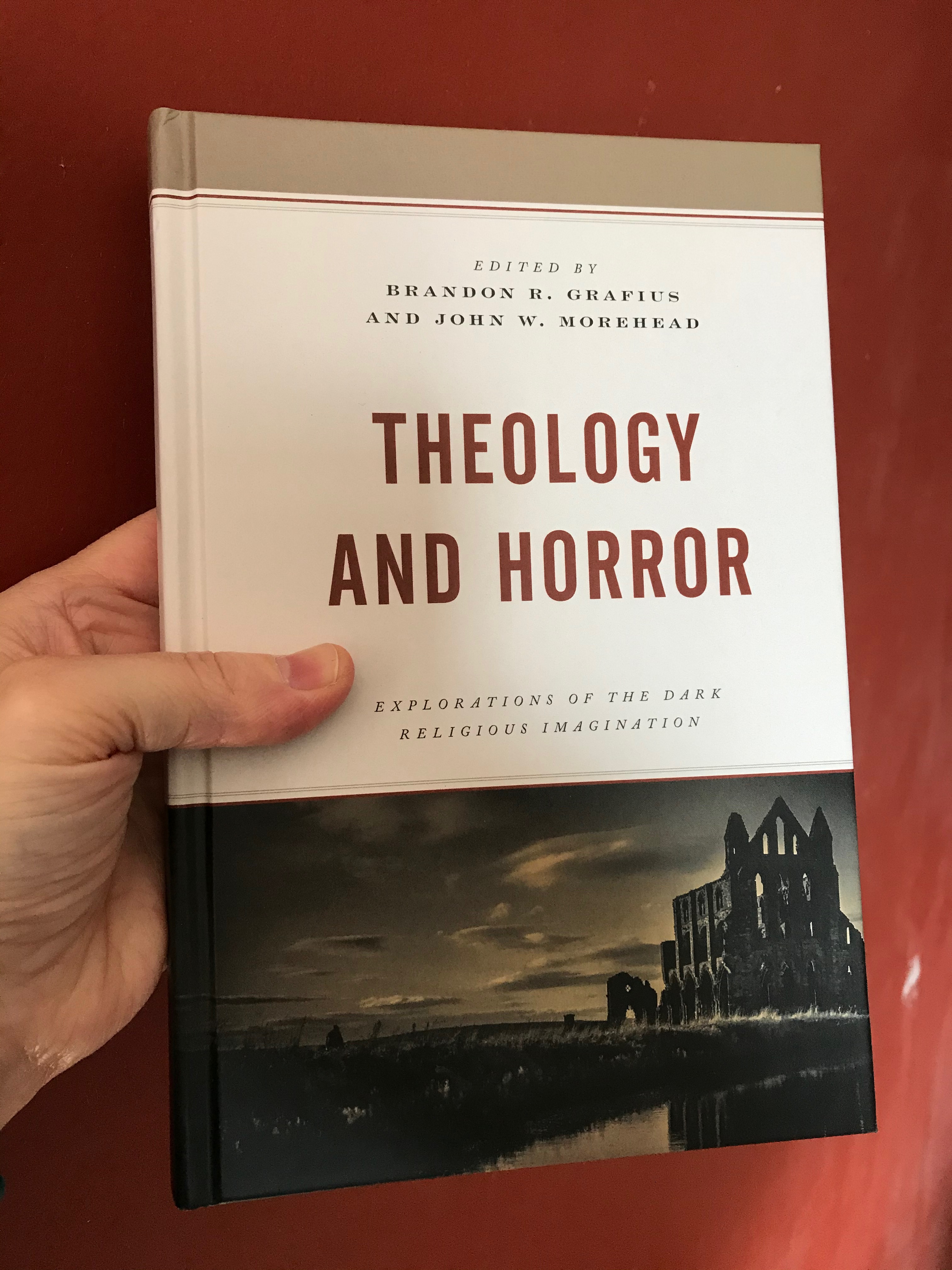
My latest piece on The Golem has just appeared on Horror Homeroom.  It’s free—check it out.  In it I briefly discuss Jewish horror.  I mainly write about Christian horror because that’s my immediate context.  That’s not to say other religions don’t participate in the genre too.  While I worked for Routledge I acquired the book Buddhism Goes to the Movies, by Ronald Green.  Like the title suggests, it’s about movies focused on, or made by, Buddhists.  What sold me on the project was the chapter on horror films.  Much of what’s being called “J-Horror,” or Japanese Horror these days, occurs in a Buddhist or Shinto contexts.  I’m not expert enough in these traditions, however, to spot them with the detail that I do in my own native religion. 

All religious traditions have certain commonalities.  As I’ve frequently discussed on this blog, sex and death are two of them.  Given the powerful ideas that religion trades in, it seems natural that it would appear frequently in the horror genre.  It’s just that modern viewers tend to be somewhat divorced from religion and can’t see it.  Religion is that way—it fills the cracks.  How often do we pay attention to the caulking or grout?  We tend to focus on the tile or woodwork instead.  Religion holds thought systems together, including those of the horror genre.  I just discussed no-go subjects yesterday, but even science shows religion in some of the cracks.  Learning to see it involves learning to shift your focus.

I blogged about The Golem just after I watched it, back in December.  The golem is an original Jewish monster, and Judaism is both a culture and a religion.  It’s difficult to tease them apart sometimes.  The same can be said of many traditions outside Christianity.  In fact, many cultures had no word for religion—the idea of a separate realm of life where you try to please the gods because what you do otherwise is inherently sinful.  (There’s probably a reason that capitalism grew in a Christian context.)  That means that horror particularly welcomes Christianity.  Many of the bases of fear are premised on a religion that, as culturally bound as it is, has always claimed that joining it is a choice.  If you can choose you can choose wrongly.  This is fertile ground for horror, especially when the consequences are eternal.   My Horror Homeroom piece takes a different approach than this, but religion and horror nevertheless find themselves together, often in the same room.


How Clean Is Your Brain?

First it was in.  Then it was out.  Now nobody seems to be sure.  “Brainwashing” isn’t really a scientific term, but human suggestibility is very well in evidence.  Advertisers count on it.  Did I really need that phone case when I never go out?  And so on.  The real question is can people be compelled to do what they normally wouldn’t want to.  Think Jonestown.  Heaven’s Gate.  Waco.  Do people really want to die en masse?  Are we but higher lemmings?  I’ve seen hypnotists do their shows.  The human mind is manipulable.  We can be shut off from reason.  A recent article from The Middletown Press my wife shared with me raises the question whether conspiracy theories, such as those sported by QAnon, are something like brainwashing.  Clearly they are.  As are many Fundamentalist forms of religion.

You can recognize this when a conversation becomes such that the true believer simply won’t listen to evidence.  They’ll say they want to discuss an issue when all they really want to do is have someone state their side so they can tell them they’re wrong.  Reason has nothing to do with it.  When that part of their gray matter that handles things rationally feels backed against a wall they resort to ad hominem attacks.  I’ve been observing this since I was a child raised in such a paranoid religious tradition.  It works for politics, too.  For many QAnon sorts, Trump’s word was God’s word.  Once uttered it could not be refuted, not with all the evidence in the world.  It’s very much like Fundamentalist views of the Bible which can’t take context, translation, and reason into account.  When contradictions are blatantly pointed out they respond with “there are no contradictions.”  Is there brainwashing?

Conspiracy theories can seem real because there are actually some conspiracies.  There are government secrets.  Only the naive deny that.  Still, once you start throwing in the ridiculous—that a devil-worshipping cabal of pedophiles is running a secret government—you’re in water over your head.  Not only that, this sounds incredibly like the satanic panic that spread through much of the world in the late 1980s into the 1990s.  When the evidence was examined, it was found lacking.  Some of the key bestselling accounts were admitted to have been forgeries.  The believing mind, however, has trouble letting go.  We used to call fringe groups cults.  We used to suggest that people could be held against their will.  People leaving QAnon are reporting similar experiences, according to the article.  Brainwashing by any other name would be so real.


Christian Nationalisms

Ongoing analysis of the Capitol Riots continues as footage of the event is scrutinized.  Although the press is puzzled, those who study religion—underfunded and ignored in the academy—aren’t really surprised.  A recent story from the Associated Press explores how Christian Nationalism, one of the most dangerous forces in the United States, played a large role in the event.  Christian Nationalism is one example of what I call weaponized religion.  As someone who’s spent over four decades studying religion minutely, it’s pretty clear when religion begins to slip its moorings and is becoming radicalized.  Generally it begins when adherents refuse to hear any views but their own.  They believe their version of their religion is the only “one, true faith” and this gives them the mandate to attack any who believe differently.  In the case of Christianity it’s very difficult to see what any of this has to do with a carpenter from Nazareth.

Indeed, evangelical Christians themselves are exploring what is now being called “Republican Jesus.”  This Jesus isn’t the one from the Good Book.  Far from it.  No humble shepherd saying “turn the other cheek” fits this image.  Long ago I read Stephen Prothero’s American Jesus.  In it he analyzed how the American appropriation of the Jewish rabbi became a muscular, masculine fighter.  Not the kind of guy who’d let Roman authorities nail him to a cross.  And certainly not a softie who would favor outcasts, women, and children over the rich and powerful.  This image of Jesus, who draws a hard line on certain trigger issues, is as patently false as any reconstruction can be.  And yet it drives unruly mobs into the halls of power.  Universities, meanwhile, cut religion departments.

Photo credit: David Shankbone, via Wikimedia Commons

I don’t pretend to be a prophet, but this issue isn’t going away.  Our culture has long harbored the myth of America as the “new Israel.”  The leaders of Christian Nationalism are organized and they have a clear agenda to take over the country.  Like other serious issues that don’t have to do with making money, it’s simply overlooked as irrelevant.  When the mainstream media gets a glimpse at what’s been going on in such groups, it always seems surprised.  The kind of elitism that divorces itself from the everyday simply can’t be informed of what’s actually happening.  Religion is a very powerful driving force.  It motivates many far more than money does.  We see it plainly when it becomes weaponized.  By then, however, it could be too late.


BLM, MLK, and Justice

Martin Luther King Jr. was a martyr.  The word martyr means “witness.”  Given what we’ve all seen done by the Republican Party over the past two weeks, let’s hope they at least know the meaning of the word repentance.  King died trying to set people free.  Half a century later we’ve had to witness a sitting US president praising an armed mob, some of whom were carrying confederate flags, storm the Capitol.  Then, that very night, we watched Republicans still attempt to repress legitimate votes in order to keep white supremacy in power.  The set-backs of the Trump administration will take years to overcome.  King stood for equality.  He called for fair treatment.  He knew his Bible.  Now those who cynically hold the Good Book up for the camera can’t quote it but can tear down everything it stands for.

We need Martin Luther King Day.  This year especially.  We need to be reminded that all people deserve fair treatment.  Justice isn’t a meaningless word.  The color of one’s skin is no indicator of inherent worth—that belongs to everybody.  Throughout the country there are heartfelt memorials to King.  The various Trump towers—often segregated and reserved for the wealthy—are monuments of a different sort.  There is power in symbols.  Those who praise and crave money above human need will ultimately be remembered for how evil seeped into their bones.  How hatred of others and narcissism defined their rotten moral core.  Today we try to focus on a good example, but present reality keeps getting in the way.

Four years ago I joined about 1.3 million marchers in Washington, DC.  The Women’s March, as estimated by government officials on the ground, was more than twice as large as the media estimates still tout.  I’ve puzzled over this for four years—why when an oppressed group makes a stand officials and pundits feel the need to downplay it.  King made a stand and he had a dream that one day we wouldn’t have to make marches on Washington just so that everyone could have the equal treatment they deserve.  Human rights are the only rights we have.  Even as some haters are planning further acts of violence to object to a humanitarian president, we are given a necessary reminder that all people deserve fair treatment.  Black lives do matter.  Why has half a century not been enough to assimilate that simple message?  We need to sober up from the drunkenness of irresponsible power.  We need to learn the simple fact that nobody should be killed for being black.  That whiteness is toxic.  That we need to call out those who would use privilege to claim otherwise.


Goats, Sheep, and Politics

Reasonable evangelicals need a new name.  As a voting bloc, evangelicals have, according to many of their leaders, fallen from grace.  Ironically it was the “draw”—whatever that could possibly be—of the cult of Donald Trump that caused it.  While encouraging their sheep to vote for him both in 2016 and 2020, some of these leaders had their eyes opened to what many of us saw from the beginning, but it took an insurrection to pry their lids apart.  A story by Rachel Martin on NPR, “’How Did We Get Here?’ A Call for an Evangelical Reckoning on Trump” explores this unfortunate, and avoidable catastrophe.  Such evangelicals don’t excel at fact-checking.  It’s far easier to believe what you’re told by a dynamic individual.  Along the way they’ve jettisoned the morality of that “old time religion” for the lust of power.  Now some of their leaders are wondering what they’ve done.

I’m not one to idolize the 1950s.  Heck, I wasn’t even born yet.  One truth from them, however, has always stayed with me: religion and politics don’t mix.  Try this experiment some time: ask Trump evangelicals what party their church (if it existed then) supported in the 1950s.  Many Christians were Democrats, particularly in the south.  Oh, if they confess this they’ll start using language about the Dems falling from grace (while still defending Trump, who can never fall from anything), shifting the onus back onto a theology not even half-baked.  Now their ministers are trying to remind them that morality actually is part of being an evangelical.  A very small part, but not completely evaporated.

History will teach us, if we’ll let it.  Richard Nixon saw evangelical voters as a bloc.  Himself a Quaker (currently among the most liberal of Protestant denominations, and devoted to peace), he was a political opportunist.  Evangelicals are taught that they are sheep.  Sheep are easily herded.  Imagine what might happen if their leaders tried to get them to think for themselves.  To fact check.  I used to tell my students not to take my word for things just because I could call myself “doctor.”  Check my sources.  See if I might’ve missed something.  This is the way knowledge progresses.  The NPR story gives me a modicum of hope.  Some leaders are realizing that their own mindless support of a known criminal—before he even got the nomination in 2016—was maybe a bad idea.  Of course, others still defend his actions after his attempted insurrection.  Sheep, if fed, will always follow.


Lizard Lords

In the aftermath of last week’s attempted coup by the alt-right crowd, NBC ran a story about conspiracy theories.  Specifically the lizard people (actually aliens) who secretly run the world.  If you hang out in weird places, like I do, you already know the story behind this: fueled by David Icke, some conspiracy theorists believe a race of shape-shifting alien lizard people control the government.  They’re deadly serious.  (You can fairly easily find videos purporting to show lizard people caught transforming at government events.)  The NBC story, by Lynn Stuart Parramore, traces the belief to an old anti-Semitic trope.  I haven’t studied this enough to have any opinions on the idea, but what caught my attention is that this particular conspiracy grew out of objections to Darwin.

While teaching I’d planned to write a book on Darwin and Genesis—I researched it for years.  I would add to Parramore’s story the fact that most of our political troubles today can be traced back to that same unwillingness to accept evolution.  Over the centuries in western culture, the Bible (while not necessarily read) had grown into such an object of veneration that anything which challenged it had to be rejected.  Charles Darwin was well aware that anyone following the dictates of science would be pilloried by a “Bible believing” culture, and this was in the middle of the nineteenth century.  Elitist intellectuals assumed this literalism would just go away but it never has.  When it appears (which it frequently does) they laugh at it and insist that if we ignore it it’ll just go away.  Then an armed mob takes over the U. S. Capitol.

The concern shouldn’t be that people believe in lizard people, but that they can’t let go of a threadbare literalism toward a book.  Biblical scholars are routinely ignored by those who believe their way of reading the Good Book is the only possible way to do so.  All other ways are “interpretations,” and these interpretations don’t reflect what God has told them personally, so they’re clearly wrong.  This view, simply dismissed by most of the educated, is extremely widespread.  It must be addressed in some way, rather than being treated as some passing fad.  There may be no lizard-people taking over, but this view of the Bible has been politically active for going on two centuries.  Instead of studying it and trying to understand it, we cut departments and positions that might help to solve the problem.  Maybe the lizards are controlling us after all.


Slow Jinn

You can sort of tell when an author has a background in religion.  Early on in my blog writing, I made note when novels had religious elements.  It’s so common that I seldom do that anymore.  Matt Ruff’s father was a minister.  His understanding of the religious landscape comes through in The Mirage.  It wasn’t on my reading list, but someone gave me a copy and the story drew me in.  In case, like me, you only know Ruff from Lovecraft Country, this tale’s quite different.  There may be some spoilers here, so if you’re thinking of reading it fresh, you’ve been warned!

Set in an alternate reality in which the superpower in the world is the United Arab States, the story follows three police agents of Homeland Security as they uncover a perhaps unwelcome truth: the world they know is a mirage.  It is, in fact, the work of a jinn.  Before commenting on that, I would say that you don’t learn about the jinn until a good way into the story.  Up to that point I’d call this simply literary fiction.  The jinn adds a speculative element to it, and also explains, mostly, how things ended up the way they did.  Jinns, by the way, are often considered demons in Arabic culture.  They are quite different from Christian demons, and that point makes itself clear as the story unfolds.  Our three protagonists begin to uncover hints that the twin towers didn’t actually stand in Baghdad, and that Christian terrorists didn’t fly planes into them on November 9 (11/9).  They have run-ins with Saddam Hussein and Osama bin Laden as warring factions vie for power in the UAS.

This is a great story for trying to understand the world from the point of view of a different religion (unless you’re Muslim).  This is a world where Christians are terrorists (you get to meet David Koresh as well) and the United States is a backward country divided over religion.  Reading this as events unfolded in Washington, DC last week was a little bit disconcerting.  Alternative realities are often just a heartbeat away.  The plot is a bit complex at points, but it’s a fairly quick, if profound read.  Religion is the heart and soul of this book.  That religion could be either Islam or Christianity.  Perhaps even something different.  The way it plays out is very much like real life, dividing people against each other until reality becomes difficult to bear.  For anyone interested in what a Muslim-run world might have looked like, this is a good starting place.


Prophet Margins

One of the most misunderstood of biblical phenomena is prophecy.  One of the reasons it’s so misunderstood is that other ancient peoples came to associate it with predicting the future.  Now, what prophets said often had implications for the future, but they were more forth-tellers, as they say in the biz, than fore-tellers.  Amos, for instance, was a prophet concerned with social justice.  We know little about his life, but we can discern that ancient prophets could be paid to become “yes men” (“yes persons” just doesn’t sound right, and most were male) for the establishment.  Kings then, as now, surrounded themselves with sycophants who would tell them their policies were approved, or even ordained by God.  Amos was not one of those.

Amos points out in the book attributed to him that he was no paid prophet.  He was an honest worker with a great concern for social justice.  He lived in a prosperous time, but the wealth disparity between the rich and the poor troubled him.  (Amos has never been a favorite among prosperity gospelers, since his message has always been recognized as authentic among both Jews and Christians and he condemns the inequality rampant in society.)  Many in the eighth century BCE believed ceremonial actions—like, say, holding up a Bible in front of a church—pleased God.  Amos boldly declared such things sickened God as long as society favored the rich at the expense of the poor.  There’s a reason Evangelicals and Republicans tend to avoid Amos.  “But let judgment run down as waters, and righteousness as a mighty stream,” is not an easy thing to hear when you’re busy giving tax breaks to those who earn more than enough while refusing basic health care to the poor.

Prophets tend to speak of the future in conditional terms.  If your ways don’t change, then this will happen.  Some Christians, anxious to prove that Jesus was the messiah, came to see prophets as great predictors of the future.  Amos would likely have taken exception to them.  Even in his own day Amos made people uncomfortable.  His favorite image for God was that of a lion ready to attack.  His contemporaries told him to shut up.  Amos then made the famous statement that he was no professional prophet.  He would not adjust his message so that the comfortable could feel good about themselves.  If Amos were in America the last four years would’ve had his throat raw with pointing out to “Christians” how they’d come to misrepresent everything the prophets stood for.  We need more like him today.


Christian Fragility

Having read White Fragility, I was intrigued when a friend asked me if there might be such a thing as Christian fragility.  I think he was onto something.  To see how this might work, it needs to be understood that white fragility is the intense fear of having whiteness problematized.  We have been raised, conditioned, to think of it as the default form of humanity.  All others are “minorities”—aberrations, as it were.  Because of that “Caucasians” are reluctant to discuss race.  What my friend was suggesting, I think, is that there might be such a thing as Christian fragility as well.  Long considering itself the default true religion, Christianity has falsely convinced millions of Americans that this country was founded as an explicitly Christian one.  Many are surprised to learn Islam was here very early, largely because of African slaves.  And what of the indigenous religion of American Indians?

The idea of America as the ideal Christian nation is so deeply rooted that it’s something we bristle at talking about.  Think about it: educational institutions of the secular stripe don’t like to admit that many of them were founded as seminaries.  When I was growing up the two forbidden topics of conversation were politics and religion.  It seems that fragility may be a useful explanation.  Many academics refer to our culture as “post-Christian.”  They haven’t gotten out much.  Our culture is thoroughly suffused in Christianity.  It’s the air we breathe.  It’s the basis for many of our laws.  Much of science training (as I’ve argued before) is based on Christian assumptions.  Because Christianity shares so much background with Judaism clearly the picture is more complex than this, but the point I’m trying to make stands: we feel very uncomfortable when that implicit Christian identity is challenged, no matter how secular we are in reality.

Prior to Trump fear of “godless Russians” or “godless Communists” ran deep.  Ironically, evangelical Trump supporters now look to Putin’s Russia as a kind of model for political leadership.  We’re flailing about in Christian waters, baptizing the worst of human behaviors because we can’t bear to discuss whether something beyond Christianity might be worth considering.  I can’t claim to have absorbed the concept of white fragility fully, but I think the basic idea is sound.  American culture is extremely reticent to open discussions that suggest white, and Christian, aren’t defaults.  That people come in all kinds of shades of pink, tan, brown, red, yellow, and black are just as American.  That Islam, Buddhism, Hinduism, Jainism, and any number of other religions belong in a melting pot.  Christian fragility might well explain why this is so.


It Happened on Epiphany

Photo credit: Martin Falbisoner, via Wikimedia Commons

Can you spell treason?  It does begin with the letters “T-R-.”  The events of yesterday made it difficult to sleep securely in “the land of the free” as thugs took over the capitol building in Washington, and even after that Republicans still contested the electoral votes from Pennsylvania, preferring a treasonous president to a democratically elected Joe Biden.  As all of this was playing out, Georgia gave control of the senate to the Democratic Party.  Like many Americans born in a democracy, I stared at the news aghast yesterday as Republicans, fully in the public eye, tried to dismantle the very system by which they themselves were elected and even went so far as to claim they were patriots for doing so.  They draw the evil courage to do this from their “Christian” faith.

Yesterday was Epiphany, a Christian holiday.  To see Republicans—claiming the name Christian—attempting to overturn democracy on that very day was sickening.  To my mind it will live on like 9/11 as one of the most dangerous days in US history.  When asked to get the crowds that he personally incited to disperse, Trump released a video on Twitter telling his followers that the election was stolen and fraudulent but they should go home.  Pouring gasoline on a fire he himself lit, sending both houses of congress into hiding, his snakes-in-the-grass continued to support the myth that Trump hadn’t been defeated.  When the smoke clears this American thinks it’s time to dust off laws about treason and start applying them again.

Congressional leaders, and the president, swear to uphold the Constitution—hand on the Bible.  In the most closely watched election in history, with no evidence of fraud, when the loser wouldn’t concede his party backed him.  The Republican party has been infected with evil, I fear.  Even after seeing the turmoil that their posturing caused, they tried to discount the votes from my state just to keep a very dangerous man in power.  Our democracy didn’t die yesterday.  It died four years ago.  Claiming the name “Christian” without ever reading the Bible or attending church or caring about their fellow human beings, the Republican party has gone down in infamy on the feast of Epiphany.  The electoral vote count by congress is a mere formality, and I, a native and resident of Pennsylvania, am outraged that anyone claiming the power of a democratically elected office—disputing the very process that gave them any influence at all—questions my right to vote.  Why hasn’t treason been invoked?  Four years under the influence of the Evil One has shown its effects, and it happened on Epiphany.


Yankee Doodle

Some books stay with you in a way that hits very close to the nerve.  Since I read Mark Twain’s A Connecticut Yankee in King Arthur’s Court many years ago, memories of how it left me feeling prevented me from re-reading it.  That’s pretty unusual for Twain, in my experience.  I’ve read some of his other novels and there’s not a similar feeling toward them.  The racist elements are disturbing, but overall the stories manage to overcome some of the darkness with either levity or sarcasm.  The scenes that scared me off from re-reading Connecticut Yankee were the two episodes in which young women were murdered.  I realize Twain was simply being honest here regarding the cheapness of life in medieval times, but I found both these instances so saddening that I had a difficult time coming back to it.

Now, some two or three decades later the book speaks to me in a new way.  Something else I recently read reminded me of it, and I was struck at just how much Twain’s Arthurian peasants resemble the unthinking crowds of Americans who simply accept what people like Trump say.  One of Hank Morgan’s banes is how the uneducated refuse to question what they’re told.  In many ways this is humorously narrated but a dark undercurrent remains behind.  Twain had clearly supposed that nineteenth-century America had overcome this brainless gullibility.  A century and a half after Twain’s Connecticut Yankee we’ve clearly been involved in retrograde motion.  Twain levels much of the blame on the church.  His choice comments in this regard also still apply.

“I was afraid of a united Church; it makes a mighty power, the mightiest conceivable, and then when it by and by gets into selfish hands, as it is always bound to do, it means death to human liberty and paralysis to human thought.”  So Morgan states in chapter 10, and indeed, in the novel it is the church that largely leads to the downfall of the civilization Morgan had built.  Or again, in chapter 17: “I will say this much for the nobility:  that, tyrannical, murderous, rapacious, and morally rotten as they were, they were deeply and enthusiastically religious.  Nothing could divert them from the regular and faithful performance of the pieties enjoined by the Church.”  Twain couldn’t admit in public,  even in his own nineteenth-century life, what he really thought about organized religion.  It’s pretty plain in his fiction, but disguising fact as fantasy is a tried and true method of getting at the truth.  If I weren’t so sensitive to the human plight, I might read it more often.


Winter Rebirth

It seems like 2020 has already had many longest nights.  The Trump administration has hurt so many people so badly (many of them his own supporters) that this feels like four years of night finally beginning to experience dawn.  It is finally the solstice!  This ancient seasonal holiday, coopted by Christianity for its own purposes, retains great symbolic value.  The story of Jesus’ birth is about light coming into the world.  So are the myths behind Saturnalia and Yule and even Hanukkah.  We tend to want to view things literally when the true meaning comes in the form of symbols that strike at the very heart of what it means to be human.  We fear the dark, and we’ve been living in it for so long now that perhaps the light hurts our eyes.

A friend pointed out the Winter Solstice Fest, put on by Shift.  It streamed (I almost wrote “aired”) over the past weekend.  Involving many indigenous, and even some new age practitioners, it was a celebration of light’s return.  Although I couldn’t watch all of it—weekends are so necessary when work becomes the only reality of five days per week—but what I did see inspired me.  The chauvinism of one religion asserting its superiority over other explorations of spirituality can contribute to the darkness.  When we take symbols literally we’re capable of great damage.  Being inclusive forces us to recognize that we are all seeking light while learning to walk in the dark.

One of the reasons I watch horror is because, on the balance, it is dark half the time.  Perhaps because I can’t seem to sleep until sunrise any more, I spend quite a lot of even summertime in the dark.  Since there’s much that can only be done in the light of day, I explore how darkness might contribute to our spiritual growth.  Although horror often receives a naughty reputation, it too is about exploring the dark for meaning.  Today, at this latitude, we’ll have only nine hours and sixteen minutes of light.  It’s easy to believe illumination might never return.  Humans have created rituals to assure ourselves, to encourage the courses of nature to continue as they have for countless eons before we ever evolved.  While we’re in the darkness, perhaps we should consider making friends with it.  It’s quiet.  And shy.  And if we don’t learn to live with it, half of our time may never blossom.


Time for Golem

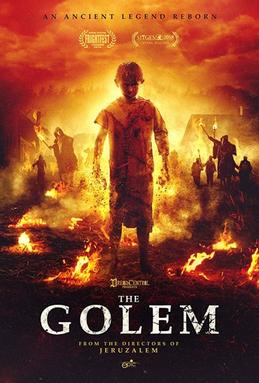
I don’t claim to understand how the film industry works.  My two books on horror and religion deal with interpreting the movies, not their native cinematic environment.  I say this because I limited my treatments in them to films with a theatrical release.  Mainly this was so that readers would have had easy access to them.  Some films, of course, never go to theaters and it seems that happened, in the United States, to the Israeli movie The Golem.  I saw a trailer for it last year and patiently waited for it to arrive.  I recently found it on an online streaming service and finally had a chance to watch it.  Golems, as original Jewish monsters, have shown up in a variety of popular media including The X-Files and Sleepy Hollow.  Film treatments have been rare, and this one makes for a fascinating monster movie.

What makes the golem so compelling is that it is an explicitly religious monster.  To create a golem (according to the film) the maker must use Kabbalah, Jewish mystical texts, to learn how to bring it to life.  Hanna (Hani Furstenberg), the female protagonist, is the only one in her seventeenth-century village willing to try.  The real hook, for me, is that the golem she creates is a little boy.  The role must’ve been fun to play.  Golems cannot speak, so there are no lines to learn.  Kirill Cernyakov nails the part with an ability to portray emotionless menace.  The problem with a golem, you see, is that it goes on rampages, killing even those it’s conjured to protect.  Since the movie is intended to be a retelling of the classic story (involving the golem of Prague), it doesn’t have too many surprises.  It is, however, a thoughtful movie.

Write-ups on it call it “the Jewish Frankenstein,” but scholars who research Frankenstein often go the other way, seeing Frankenstein’s monster as a form of golem.  The basic idea is taking something inert and bringing it to life.  Afterward the creator is unable to control it.  It’s too bad that The Golem didn’t get a wide theatrical release.  I’ve seen far worse horror films that did.  Perhaps the focus on religion was too blatant?  One of the points I make in Holy Horror and Nightmares with the Bible is that religion and horror belong together.  Some Jewish viewers will undoubtedly spot inaccuracies (even this goy did) but the movie isn’t a religious text.  It is an appropriate rebuff to Trumpian “politics” and even features a plague.  It is a movie for our time.


Chick Tracks

Goodreads isn’t the only booklover’s website, but it is one that publishers pay attention to.  Having a following on Goodreads helps for making marketing manageable.  Or so the thinking goes.  In any case, I recently had a message on Goodreads about Holy Horror.  It seems someone has, against all odds, found the book and is reading it.  This particular reader asked me in a comment about Chick tracts.  I’ve written about Jack Chick before.  He was a veritable one-man evangelical force of super-nature.  He is responsible for many of my personal nightmares with the Bible.  His cartoon tracts were designed to scare the Hell out of kids, literally.  I read them religiously.  My Goodreads reader pointed out that I could’ve made use of them in Holy Horror.

This made me ponder the reticence of academics to address religion as a cultural force.  Chick tracts are extremely common, even today.  As I posted last year, we were handed one while walking between venues at the first annual Easton Book Festival (an event forced virtual this year by, well, you know).  Not that Chick’s intellectual ability deserves study, but his influence is undeniable.  How many of us fundamentalist kids were set on our life trajectories by tracts that looked like mini-comic books but which had an unwavering, uninformed viewpoint held as gospel?  Chick tracts broached no dissent.  The Bible alone, and the Bible as interpreted by fundamentalists alone, was the only possible way of avoiding everlasting hellfire.  Nightmares indeed.

Chick died in 2016 after half-a-century of terror (his first tract was published in 1960).  Apparently Chick was a shy evangelical and his prolific cartooning was a way of assuaging his own fears of not evangelizing.  Ironically, in his tracts he offloaded that burden onto others—kids were made to feel inferior if they didn’t talk about Jesus to their friends, no matter how shy they might have been.  There’s not much information easily available on this influential man.  A motivated scholar, I’m sure, could dig up information—nearly any life can be illuminated to some degree—but I’m not sure the will is there.  If it ever happens, I suspect the study will be done by someone like me, raised on Chick and fed steady doses of childhood Bible reading.  My Goodreads interlocutor was perhaps onto something by suggesting my watching horror has something to do with Chick tracts.  Stranger things have, I’m sure, happened.