Are There Not Workhouses?

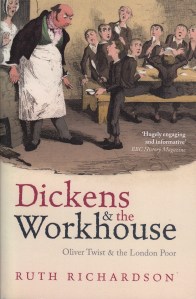
dickensworkhouseAs colder days settle in I add layers and sit in our under-heated apartment and think about the lot of the poor. I don’t think billionaires really understand the plight of those who, no matter how hard they work, just can’t get ahead in a society that values class above individual welfare. I’ve noticed the increasing number of homeless on New York City streets. Many are clearly those who’ve lost jobs and can’t afford to pay the rent of even a modest apartment in the city, let alone Trump Towers. Having lost jobs myself after a lifetime of hard work, my sympathies are with the street dwellers. Ruth Richardson’s Dickens and the Workhouse: Oliver Twist and the London Poor reminded me that this is not just an American phenomenon. The book begins as kind of a detective story to locate the workhouse that Dickens features, if fictionalized, in Oliver Twist. Richardson makes a strong case that this workhouse has been found and that relics of Dickens’ under-acknowledged London residence just a few doors down from it influenced much of his first-hand knowledge of the life of the poor.

In the case of London, poor laws were put in effect to punish those who couldn’t fend for themselves. Inmates at poor houses were kept on a legally mandated starvation diet (literally) with inadequate medical care. Instead of censuring this injustice, the Church of England stood behind it. The perverted thinking was that if anyone knew how bad it was in such places they would try doubly hard not to be poor. The funny thing about living in poverty (I have some experience of this) is that it isn’t a choice. I didn’t particularly get along with my step-father. I can say, however, that he was one of the hardest working men I ever knew. Long hours spent at work, sometimes the whole night through, to support a family of six on just above minimum wage. This was his daily existence. I must’ve looked soft in his eyes.

Richardson’s book, although fascinating, is also distressing. The idea that a society thinks the most humane way to deal with those who are struggling is to punish them further, for me, defines evil. One of the characteristics of our species, according to biologists, is that humans often show extraordinary care for other creatures, often of other species. For our own, however, we feel that if you’ve “earned” something by exploiting others it is your “right” to keep it and let them suffer. This economic system is rotten to the core. We may have come a long way since Dickens’ time. We don’t have such exploitative workhouses in Manhattan. Instead, we have so many people sleeping in the streets that a walk to work has become very Dickensian indeed. Somehow I don’t see the situation improving in the next four years.


Final Frontiers

img_0610

Is there such a thing as an existential illness? Answer that if you want to, but it’s rhetorical. I’ve been voting since 1980 and I’ve taken my fair share of bruises in the process, but this time my soul feels as if God has hung his “gone fishin’” sign on the pearly gates for good. I am ill. Maybe it was the ebullience that came from having eight years of progress where, although things weren’t perfect, they were sort of holding steady. I’ve always considered myself a populist. I don’t know how a billionaire can convince millions of people he’s one. To be populist you’ve got to be one of hoi polloi. Growing up poor, I took my licks then and I’m still taking them now. No, this wound goes deeper than the bone. Deeper than the viscera. It’s an existential illness.

All things considered, I don’t write too much about politics on this blog. All my adult years I’ve been an unapologetic Democrat. I confess to having grown up Republican. But I believe in the fair treatment of others. I know not everyone will or can be happy. I also know that it’s wrong to denigrate anyone because of their gender, race, orientation, or physical ability. Seems to me that our country was sort of the final frontier where you could go if you believed this kind of thing. Where can you go from the final frontier? There are no other land masses to discover. Maybe if I put on enough layers, Antarctica might not be so bad. Beyond that, where can one go to be a liberal in a world that desperately need some heart? Where money isn’t the measure of all things. Where Mom is right just as often, if not more than, Dad.

It’s a strange thing, this existential illness. Politicians are already cooing their pleasantries, as if nothing more than a slight upset occurred. It seems to me that whenever there’s an upset the popular vote disagrees with the electoral college. It also seems to me there should be a place where the wealthy aren’t considered better by virtue of their material status. I have this existential illness, but I can still dream. Is there a way forward from here? Sometimes I think I can see that horizon where all people are treated fairly and equally, and sometimes the sun seems to be rising over that horizon. Today I feel motion-sick from being jolted backwards. I’ve been disappointed before, but I don’t remember it hurting this badly. If anyone knows a good existential doctor, please pass along her name.


United Hates of America

horrorfilmHorror comes in many forms. Some people may wonder why I watch horror movies and read scary stories. The election results tell the story. As we descend into four years of horror, I was reading Peter Hutchings’ The Horror Film. At least I feel somewhat prepared. Or course, I’m still in shock. So I turn to horror shows. One of the things I found in Hutchings’ book was the idea that this kind of movie is a collective nightmare. The thing about nightmares is that sometimes reality is even worse.

It’s difficult to think straight sometimes. When I was a child I was taught that hatred was evil. Hate itself was a bad word, close to, maybe even worse than, swearing. What horror shows us clearly is that hatred leads to results we’ll only regret. Being bullied because you’re a little guy, or because you’re female, or because your sexual orientation is different, is something far too common. It seems it may be institutionalized now. No wonder so many horror movies take place in insane asylums.

Don’t mind me, I barely slept. I woke up in a country I no longer recognize. Or maybe recognize a little too well. The thing is, I feel sorry for Peter Hutchings’ The Horror Film. It is a worthy little book. I learned a lot from reading it. In fact, some of what I learned may come in very handy in the next few years. Zombies, after all, are called the walking dead. And I can’t really see the future at all. Maybe I’m just waiting for the curtain to part. Maybe I’m still asleep. I’ve seen enough horror movies to know how that scenario ends.


The Least of These

Despite criticisms to the contrary, the pre-Reformation church did have concerns about the average person. About the poor. In those days church offices commanded a good deal more esteem than they currently do among the populace, and being a priest was a position of power. The concern for the quotidian human—at least of the Christian variety—was demonstrated in All Souls’ Day. Although the date migrated around the calendar before settling on November 2, it came part of one of the very serious (days of obligation) annual celebrations along with All Saints’ Day, November 1. It was recognized that not everybody could be a saint, and all the faithful departed deserved a special day of commemoration. Through a complicated history this two-day celebration came to be associated with Celtic beliefs about the crossover day between worlds, samhain, giving birth to Halloween. It seems appropriate on All Souls’ Day to think about the poor.

An article in the Washington Post reports on findings that poor children, in their words, “that do everything right don’t do as well as rich kids who do everything wrong.” There are indeed deficits that attend the poor all their lives. Those of us who began in such circumstances can sometimes break through in a system that favors the upper classes, but it is rare. Good paying jobs are reserved for friends of the wealthy or to those who might pay them back in some way. The poor have little to offer beyond their souls. Our system, the so-called “free market” deals in souls. The poor are, make no mistake, chattels. Even in higher education, where we’d like to think thinkers think, positions are granted based on privilege. The loftier music and liturgy is, after all, reserved for All Saints’ Day.

dorothealangemigrantworkerschildren

Like many raised in humble circumstances, I grew up hearing about the American dream. If you work hard you can succeed. But that really depends on who you know and how much they’re willing to help out. Stats are now beginning to back up what those of us who have lived experience in the lower register already knew. Having faced it throughout my career, I know I’m not alone. Just the other day I met someone else who grew up poor who’d hit the bullet-proof ceiling carefully installed by children of privilege. Not ambitious beyond desiring the basic comforts of a job that covers the bills and allows for some reasonable amount of surplus against lean times is, it seems, more than the wealthy are willing to grant. After all, All Saints’ must come before All Souls’, for even Heaven has its hierarchies.


Signed, Sealed, Forgotten

the_seventh_sign

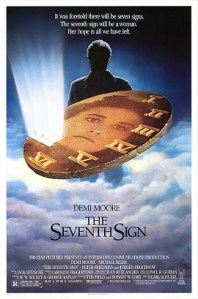
I’m a little ashamed to admit it. With such a long list of moody horror movies out there, I gave in to watching The Seventh Sign again. 1988 was a momentous year. I had graduated from Boston University School of Theology the year before and had been functionally unemployed, as befits a future adjunct professor. I had joined the Episcopal Church, cutting off my chances of ordination in my previous United Methodist sect. I’d been accepted into doctoral programs at Oxford, St Andrews, Aberdeen, and Edinburgh but couldn’t afford any of them. I proposed to my future wife and by the end of the year had married her. In the midst of it all a friend convinced me to go see The Seventh Sign, then in theaters. A typical end of the world movie, The Seventh Sign was a “see once” movie to me, but I guess I’m weaker than I thought.

The movie got me to thinking about the end of the world. Not literally, but rather how we came to have such a strange idea. As creatures conscious of our own deaths, I suppose it’s natural that we think everything comes to an end. The mythical scenario of “the end of days,” however, is cobbled together from various pieces of the Bible, like some distorted, religious picture puzzle. The Book of Revelation doesn’t give a coherent story of the future. In seminary I learned that it was because Revelation is actually about what was happening in the Roman Empire in the first century, not about what would happen in the days when I happened to find myself conscious and eating Kraft macaroni and cheese, mixed with water instead of milk and working for Ritz Camera. I was sleeping on the floor of a friend’s apartment. That was my own kind of personal apocalypse, I guess.

The Seventh Sign is unusual in that a Jewish boy, Avi, and a lapsed Christian woman, Abby (who rents a room to the new incarnation of Jesus who lives, apparently, quite a lot like I did at the time) have to figure this out together. Tying in several other mythological motifs, the number of seals broken is, if I count correctly, only five. The world is saved by self-sacrifice, as is generally expected, and everyone ends up feeling let down. It is a downer of a movie, and not very scary for a horror film. What struck me was how many scenes I remembered so precisely. So I guess it did manage to impress me on some level, back in 1988. I selected Edinburgh University and now once again, find myself outside the institution I covet. I’m still waiting to see what happens with those two last seals.


Silence Fright

the_silence_of_the_lambs_poster

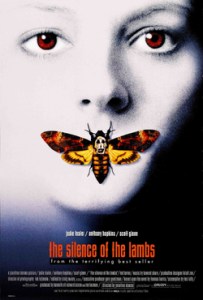
One of my first publications was a letter to the editor. The newspaper was The Scotsman, Edinburgh’s daily. We’d been hearing on the BBC that a new movie, The Silence of the Lambs, had inspired Milwaukee serial killer Jeffrey Dahmer in his gruesome habit of cannibalism. For whatever reason, the Dahmer case had a real fascination for the British. My letter, a rather young attempt to promote an important cause, suggested that such movies could be very dangerous. In the many years since then I’ve read quite a bit about horror films and their effects on people and have come to the conclusion that they don’t cause the crimes. The reasons are much more complex than simply watching a movie since most people who see them don’t “go and do likewise.” When I told friends in Edinburgh that I’d found a teaching job in Wisconsin they said “hopefully not near where that cannibal lived.” Of course Nashotah House is not far from Milwaukee.

My personal embargo of The Silence of the Lambs ran up against my current research project, which involves horror movies. Thinking it over in what I hope is a rational way, I decided that I needed to see my bête noire. Besides, while living in Wisconsin I had learned about Ed Gein, the local serial killer who’d inspired Psycho, a movie I had seen with no ill effects while in college. Movies are as much a part of life as cars and taxes and all kinds of things that impact our ways of thinking. I was surprised at how well done Silence is and the number of references it had spawned that I had missed for the past couple of decades. It won’t be my favorite film, but I’m not afraid of it any more.

The concept of relying on a criminal to catch a criminal is a classic theme, of course. And since the release of this movie some which are much worse have come across the silver screen. We play our anxieties out for all to see. Hannibal Lecter, the cultured killer, is an ambivalent character—a savior criminal. There’s a strange comfort in knowing he has the knowledge to save lives as much as he has the desire to take them. In fact, there’s an element of the divine in that. The capricious nature of a power that has the ability to give and to take is one with which religions constantly deal. Yes, The Silence of the Lambs is a scary movie. The reasons, however, lie more with implications than with imitations.


Love, American Style

If you’re going to thump the Bible, at least try to read it once in a while! Donald Trump, showing his true colors yet again, degrades women in the crudest terms imaginable and the religious right (what used to be called the Moral Majority) quickly falls in line. Videos swiftly emerged with conservative commentator Sean Hannity saying “King David had 500 concubines, for crying out loud.” Did he? David, I mean. Try to count that high and you’ll run out of fingers. But according to the Bible amorous King David stopped well short of 500. In fact, his affair with Bathsheba almost ruined him politically. And this was in the day when polygamy was supported by the law. I think Mr. Hannity was groping for the story of King Solomon, David’s frisky son. Solomon, famed for his 700 wives and 300 concubines, was underestimated by Hannity by half. And maybe if he’d read to the end of the chapter (come on, it’s only 43 verses) he might’ve stopped to think that the comparison did his candidate no favors.

Back in biblical times things were different. Even a monogamous man might have several wives since childbirth claimed a disproportionate number of young women’s lives. The average fella only lived to be about 40 himself. Lust existed, to be sure, but marriage was a practical affair. For the average citizen, you needed children to help out around the farm where you grew your own food. No golden arches in those days. Attitudes towards women back then were just plain wrong, in any case. The marriages of Solomon were political affairs, not prurient in origin. There are those with Trump signs in their yards that would like to see us return to such days, although they have no idea what such days were like. The consensus is that David had about 8 wives, but who’s counting?

Photo credit: Jörg Bittner Unna, Wikimedia Commons

Photo credit: Jörg Bittner Unna, Wikimedia Commons

Women are more than playthings for men. How have we ever reached the point where someone born in the last century doesn’t know that, and can get to less than a month before the election with that ignorant platform? This should make any American shudder. Make America great again? Treat women as equals. Treat people of color as equals. Treat those of differing sexual orientations as equals. Honor the principles upon which this nation was founded. Don’t just grab someone by the polls. And read your Bible, Mr. Hannity. The point behind King Solomon’s 300 concubines is that he died a sinful, disgraced king in the mere shadow of David. The next time you want to quote the Bible, try reading it first.


Majority Report

In your mind’s eye, picture American 500 years ago. What do you see? Even those of us who’ve studied history have trouble envisioning the past with so different a set of parameters. At least if we’re honest with ourselves. 1516. The Salem Witch trials are almost two centuries in the future. The landscape is occupied by Native Americans. There are some European settlements. Protestantism is something new. In fact we’ll need to wait another year for Martin Luther to drag out his hammer and nails, theses in hand. The America we see then, not called “America,” let alone “United States,” is a diverse—some might say “wild”—world of decidedly non-European sensibilities. Global warming wasn’t an issue, and King James hadn’t even been born yet, let alone been commissioning the most famous Bible in English ever. So why am I asking you to look back?

luther_at_erfurt_-_justification_by_faith

This presidential campaign has largely been a waspish one. During the turmoil, books have been published proclaiming the end of “white, Christian America.” In an interview on PBS one of the authors of such a book, Robert Jones, talks about how America has changed. He notes that what he really means is that white Protestants are, statistically speaking, no longer the majority. Just a few centuries ago that was also the case. Think about Protestants a minute. They’re the ones who invented the Bible as we know it. Oh, the book had been around, in some form or other, for a couple of millennia (well, a millennium and a half, back then). Other than scholars in need of more fresh air, few spent much time with it. The church told Europeans what God demanded and the majority of people just got on with their daily lives not worrying about what some book they couldn’t even read might say. How things have changed!

We worry about the end of our majority. I like to look back and see that this world we’ve built is one based largely on a book that was mainly the invention of those who had some discussion points with the church. Not quite a hundred of them, even. They were largely Anglo-Saxons. If they knew about “the New World” their knowledge was hazy and imprecise. From that perspective it doesn’t seem like much is being lost in the changing religious demographics of this country. Back in the old world, if one wished to feel nostalgic for such things, they would’ve taken their complaints and found the nearest church door. Now we nominate candidates who think this country was ours in the first place, without ever even reading the Bible used to support that myth. What a difference a few centuries can make.


Silverbacks

kong33promo

It’s been decades since I’ve seen the original King Kong. A none-too-subtle racist and sexist flick it may be, but it stands as one of the original “horror” films of the early thirties and it has had a profound influence on movies ever since. King Kong wasn’t very nice to Fay Wray, and had to be euthanized by biplane, if I recall correctly. I work one block from the Empire State Building, and sometimes I subtly glance up, looking for the giant ape. There are more fearful sorts in New York these days. I can see Trump Tower, for instance, from the pantry at work where I keep my lunch. But I digress. For its day, King Kong was a violent movie. Like many films, however, it is also a parable.

Recent studies have shown that some 98 percent of mass murderers are male. Men deal out, by far, more than their share of death to others. Some have suggested that when women experience failure they look internally, blaming themselves. Men, on the other hand, go postal. They seek someone else to blame. In our culture—maybe in all “western” cultures—man are acculturated to think of themselves in terms of success. Quite often this means business success—affluence and its discontents. Do you have more money than your neighbors? Good for you! You have succeeded, and, for some warped perspectives, God has blessed you. In reality, the system we’ve constructed has set many people up for failure. This is no excuse, but men who have no other way of measuring self-worth may find comfort in firearms. After all, it’s society that should take the blame. Right?

Gun lobbies claim that collecting firearms is a harmless hobby. Like collecting stamps, only a little louder. A bit of psychology might go a long way here. Might we not stop and think what happens when you give arsonists matches to play with? I suppose if we took away these toys, boys would use baseball bats, or rocks, to take out their aggression. I can’t help but wonder, however, if the problem might not be the system that measures a man by his money. Could there be a better way? There have been those throughout history who’ve made such a claim. They often die violent deaths. Once King Kong has begun his ascent with lust and violence in his eyes, we should all cast a wary eye on the Empire State Building and wonder what it all means.


Buying Faith

Can belief be quantified? Apparently yes. I’ve spent my life trying to avoid the dismal science, yet it seems that everyone else is pretty much agreed that money is the measure of all things. Higher education has certainly been chasing that rabbit for years. My choice of “careers” has always been aimed at those which downplay finance while paying enough to cover the bills. One has to be practical. My wife recently sent me an article in The Guardian by Harriet Sherwood entitled, “Religion in US ‘worth more than Google and Apple combined’.” At first, I have to admit, a kind of triumphalism overcame me. A vindication that I had chosen a valuable aspect of human existence with which to while away my years here on earth. Then came the troubling implications.

img_1264

We tend to hear only the bad news about religion. Religion, we’re told, is only super-sized superstition. It supports prejudice. It capitalizes on fear. And nobody really believes anymore. And so the trite truisms march past like tin soldiers on their way to a real war. You see, if we can’t put a dollar value on religion—or any belief system—then we have no way to assess whether it’s worth wasting our time on or not. Maybe people will begin to pay attention now. There’s gold in them thar hills. Yes, the religious are more likely to open their wallets and keep the economy moving than are the wealthy. Yes, those are antithetical groups, for the most part. When we can start toting up dollars and pence it is time for those with more dismal scientific interest to take notice.

Religions, like all human institutions, have faults. They are prone to takeover by self-interested individuals who look for the angle that will lead to personal power or fame. They do often insist that they alone have the correct interpretation of what life means and how we should go about pleasing a deity that only they truly understand. And they bicker amongst each other. It’s easy to forget that religions are based, without exception, on the belief that human life can be improved. We can do better, people. Takeovers, sometimes hostile, can occur. One sect may take out a contract on another. Love may be recast as hatred. Overall, however, religions are, to borrow a phrase from a sage, “our better angels.” And of course, the fact that you can put a dollar value on that only sweetens the deal. The dismal science has studied the matter and its conclusions are indisputable.


Bad Theology

train_wreck_at_montparnasse_1895

Perhaps the most overused simile for a real mess is that it’s “like a train wreck.” No doubt this is because train wrecks are messy, and deadly. Few things speak to human vulnerability more than airborne hunks of heavy metal flying in indeterminate directions. Trains don’t stop fast. If they do people get hurt. No, I wasn’t on the train that crashed into the Hoboken station yesterday during the morning commute. I’m just one of many thousands of people who make their way into the city every day, but I go by bus, which is more affordable. Still, there’s something in every commuter that mourns a tragedy like this. We’re not in competition for getting into New York. It’s only after we’re off our conveyances that we compete. The stories after the crash, however, emphasized something I’ve always known—people are basically good.

A strain of Christian theology makes the extremely dubious claim that people are “totally depraved.” Assaulted again and again with this misanthropic theology in college, I was bound to fight back. Some guys with minimal psychological training decided, in the early modern period, that God had created the vast majority of people for Hell. Because we share the primates’ evolved taste for fruit, we participated in “original sin.” It wasn’t exactly sex (since God had declared that good) but it was a consequence of it. We were born fallen and had to be redeemed. These theologians declared, however, that very few ever would be. Most of us were Hell-fodder and deserved to be since we’re so naturally evil. A few centuries earlier Jesus had said you’d know the righteous by their fruits. There’s no getting away from the fruit.

Life in the big city is impersonal. Commuters share their conveyances each day with many strangers. After the wreck, however, as my wife pointed out, those in the cars far enough back that the injuries weren’t grievous first turned to everyone else and asked if they were all right. If they need help. If they could walk. Strangers helping one another. Good Samaritans. It doesn’t sound like total depravity to me.

Our economic system thrives on hyped-up competition. When we’re taken out of that context and placed into a human one, we cooperate. We want to help one another. Perhaps it’s not the people who are totally depraved, but the system they’re forced into. No, I wasn’t on that train. My bus had pulled into New York an hour and a half earlier. But even from a distance I could see what I’ve known all along. People are basically good.


Godnapped

“Has anybody seen my god?” So we might imagine an ancient victim of godnapping wailing after a hostile takeover raid. We might smirk to ourselves, knowing that gods only really come in paper or plastic. The only godnapping that goes on these days is when someone hacks our credit card number. These were my thoughts when a friend sent me a link from ASOR’s website, “‘Godnapping’ in the Ancient Near East” by Shana Zaia. Stories of godnapping are known from the Bible, like where the Philistines defeat the Israelites and take the ark of the covenant to the temple of Dagon. It’s easy to congratulate ourselves in this post-theistic age that we’ve developed more spiritualized versions of deities to disbelieve. At least we didn’t believe some hunk of wood was an actual god. We at least had a person nailed to it.

I used to ask my students what the difference between an “idol” (not the American variety) and a “god” was. The usual understanding is that an idol was made out of something like wood or metal. The ancients weren’t so naive, however, as we suppose them to have been. Before any carven or graven image could be considered a “god” it would have to undergo a ritual to make it one. Elaborate ceremonies attended the process in which even ancient sophisticates realized that this piece of rock or wood wasn’t actually the fullness of the deity it represented. It was a symbol. A symbol invested with power, to be sure, but a symbol nevertheless. What was an “idol” then? Merely a modern way of degrading another religion. “Idol” can never be a neutral term.

img_0188

Imagine the ark of the covenant in the temple of Dagon. It was a box overlaid with gold, on top of which sat cherubim. Two of them. Images, but not “idols.” Inside, depending on what passage you read, you might find the original ten commandments, a jar or manna, or Aaron’s rod. Or all three. You might find nothing inside. The point was in the power of the symbol. Godnapping was a real fear in ancient times. A deity captured left its people vulnerable to the whims of others. Today we may rely on the high priests of encryption to keep our divine numbers safe from those who hack at the new idols. Gideon, after all, was the original hacker, and we all know how he ended up. Those who destroy others gods often fall into worshipping them once the hewing is done. The only question left is if one prefers paper or plastic.


Colorful States

red_state_poster

Kevin Smith is one of New Jersey’s own. I’ve always considered it one of life’s great ironies that Loki and Bartleby, the fallen angels in Dogma, move from Wisconsin to New Jersey, the exact same route my career took. (Feel free to read into this.) I was therefore curious when I heard, a few years back now, that Smith had come out with a horror movie. Now I’m not a fan of horror for its own sake as my sensibilities are more towards the ambiguities of gothic, but I finally decided to view Red State. I had no prior idea what the movie was about, but it speaks volumes that the title suggests quite a bit with just a simple adjective and noun. If there’s anyone out there even slower in getting to movies than me, and who is hoping to watch Red State, consider this a spoiler alert. Read further at your own risk.

Red State deals with religious fundamentalists—the Five Points Trinity Church, to be exact. The group is loosely based on the Fred Phelps gang, and the film actually makes reference to Phelps to say that Abin Cooper’s group is even worse. They’re weaponized. You’re probably starting to get the picture already. Cooper’s congregation is his extended family, and they’ve been protesting against homosexuality and other forms of what they consider immorality, but in an extreme way. They lure sinners into one of their sting operations, incapacitate them, and then murder them during church ceremonies. When the Feds discover evidence of a murder, a Waco-like Branch Davidian stand-off occurs with the predictably bloody gun fight that follows. There are moments of humor, but it is a bleak parable—yes, there is a wholesome message here—that speaks loudly about intolerance.

Analysts, well actually just some analysts, have realized that horror movies and religion are very close compatriots indeed. Reading the Bible may be a little easier on the eyes, but even some parts of the Good Book can inspire nightmares. Indeed, as Adin Cooper’s sermon emphasizes, fear of God is very important. As is fear of fear of God. The regression can go back as far as you wish. Religions develop in response to fears. Not only in response to fears, but clearly this is part of the mix. Horror movies show us what we fear the most. Is it any wonder that they cross paths with religion so often? The only unusual aspect for Red State is that it is so explicit about it. It is a traumatizing film in many ways. Maybe because (spoiler alert) the one who concocts the whole religion is alive and well at the end and is the last character that we see. Such are parables.


Behind Left Behind

Now that September’s here, we can begin thinking back over the summer, scratch our heads, and say “huh?” We’ve been so blinded by the Trump that we haven’t had time to reminisce over what’s been happening fundamentally. I mean among the Fundamentalists. This summer Timothy LaHaye went to his reward, followed this week by Phyllis Schlafly. I’m sure they’re basking in an all white, straight, and Protestant Heaven. For those of you unfamiliar with LaHaye’s name, you’ll know his fruits. The Left Behind series was his brainchild and many other aspects of this not-yet-raptured world spun from his squeaky-clean mind. He and Ms. Schlafly spent their lives telling others how to be good. I’m sure their only regret is that they won’t be here to be raptured away so they can see the look on the rest of our faces. No matter, they’ve gone to a better place.

Also this summer Lyle Jeffs, another sort of Fundamentalist, also disappeared. Under arrest for some suspected crime or other, Jeffs escaped from the FBI by worming out of an ankle monitor. His attorney, however, has suggested that Jeffs was raptured instead. Come to think of it, that could explain these other disappearances as well. It’s a regular Bermuda Triangle of Fundamentalists, it seems. The rapture is the ultimate excuse because the Almighty can trump any suit, any hand. Maybe they all just wanted to get off the earth before this fall’s elections. Fundamentalism, it seems, is missing from the political docket this year. Whereas since I’ve been able to vote candidates have been raising issues of concern to the more right-wing contingent, this year the fundies seem to have vanished. Maybe the rapture did occur after all.

teachings_of_jesus_39_of_40-_the_rapture-_one_at_the_mill-_jan_luyken_etching-_bowyer_bible

You see, I’ve read enough of the scenarios to know that those left behind are always confused. They don’t believe in a rapture and the missing people are only part of the problem. Things are going awry (again, look at the politics and differ!). What will life be like in this post-rapture world? How will we survive with our conscience gone? All things considered, it’s going pretty well. Missing the rapture was one of my greatest childhood fears. Like all good Fundamentalists I assumed I wouldn’t be deemed worthy of that first reaping. I’d be left to suffer through tribulation and, hopefully, beyond that salvation might lie. LaHaye and Schlafly got out before the action started. Lyle Jeffs, his lawyer suggests, did too. The FBI found olive oil all over the ankle tag and, perhaps, the signs of a struggle. I’ve watched enough movies to know that when someone is raptured, however, all their clothes are left behind. The only way mortals ever face the Almighty is naked as the day they were born again.


Eye of Survivor

I don’t watch television. This isn’t any kind of moral stance. It’s financial. We can’t afford any “triple play” plans for the little free time we have for television. My wife and I both work long hours. We like to read, so we don’t have time for the tube. We buy the shows we want (it’s more honest than advertisements) and movies are a one-off thing. I sometimes lose track of culture, though. Maybe I’m two-faced. I grew up watching television. Then I grew up. But I still occasionally read about television. When we stay with relatives or in a hotel sometimes we imbibe. What I’ve noticed the past few times we’ve been away from home is reality television. Programs with more and more bizarre “real” situations fascinate those who don’t get out much on their own. One of the venerable ancestors of the genre is “Survivor.” I’ve never seen it but even I know what getting “voted off the island” means.

A recent piece in the New Jersey Star-Ledger celebrates a local young man on the show, now in its thirty-third season. This youth, who fancies himself, well, a survivor, notes that his role models are Jesus Christ and Ronald Reagan. I shudder for the future of our species. This young man says he likes to “screw with people’s heads and lie every chance I get.” Is that Reagan or Jesus? Or is it all just a game? The piece by Amy Kuperinksy goes on to quote the boy as saying his tactic for survival is to manipulate people, getting one over on others. But then he’ll use Christianity to build bonds. Machiavelli might have been a better choice of role model here, but then, who has time to read when “Survivor” is on TV?

Photo credit: Smithsonian Institution

Photo credit: Smithsonian Institution

This isn’t going to devolve into an old person’s jeremiad about the younger generation. Nor is it a castigation of television. (As Homer Simpsons reminds us, many of us were raised by television.) Rather, this is a question posed to our future selves. Perhaps we simply can’t see far enough ahead to get an idea of the consequences of our actions, but my question is what values do we wish to see in our society? Rugged individualism may have worked in the early days, but it led to genocide. Have we gotten over all that? Have we come to the point where we make stars out of those who don’t even pretend to be someone else any more? Maybe I’ve got that wrong—lying and manipulation may well be acting after all. Reagan was among that pantheon. I’m just not sure where Jesus Christ enters the picture.