Long Revision

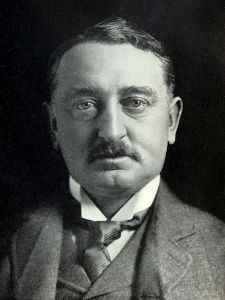
Cecil_Rhodes_wwThose of us who write know all about revising. You go back to a piece you wrote, maybe even just days ago, and you see all the things you want to change. Corrections, improvements, deletions, retractions. Histories are particularly prone to being viewed in new ways with the passing of time. I once thought histories were factually true, but in this postmodern age we’ve learned that while histories contain some facts, they are largely interpretations of those facts. Even the Gospels are interpretations. Recently I’ve been reading about student movements wanting to efface some facts of history because they make current-day people feel bad. A piece in The Guardian, for example, explains how some students want to remove the statue of Cecil Rhodes from Oriel College, Oxford, because Rhodes was an imperialist and a racist. A similar movement is afoot at Princeton University to give Woodrow Wilson the old Akhenaton treatment for similar reasons. Student interest groups, as The Guardian points out, don’t want to be reminded of their once marginal status. Removing Rhodes (or Wilson) from his pedestal, however, won’t change history.

I wonder if those in these special interest groups have enough experience to realize the implications of their complaints. What if, for the sake of argument, one of these student leaders became a national leader? What if her (or his) nation became oppressive during her or his lifetime but s/he didn’t see it because it was the operating milieu of the age? And what if their nation later repented and brought those from their former oppressed colonies to their homeland and those who came turned against that past leader? The point of this scenario is to suggest that none of us—or at least very few of us—have the ability to think beyond our age. Can we be blamed for being children of our time? Will removing our mementos change the facts of history that will have transpired? Will it make us feel better to bury the truth of what happened?

What's behind that self-satisfied smile, Akhenaten?

What’s behind that self-satisfied smile, Akhenaten?

An issue that often weighs upon my mind when I hear of these groups of the marginalized is that there is a very large, and very diverse marginalized class that has no voice, even today. The poor. Sure, some of us raised in poverty can claw our way to a descent living, but succeeding in a world where you need connections and favors owed and special knowledge of how a system works will be forever beyond our grasp. I knew a refugee, once upon a time, who was a student of mine. He used to complain to me of the costs of having his shirts sent out to be laundered. His clothes were tailor made. He refused to use a washing machine. He was also quick to point out that I was the oppressive race. This he did without a nanogram of irony. Cecil Rhodes may have been as evil as some say he was. His money, however, made it possible for some of the heirs to his oppression to study in his shadow. And I write that with a heavy dose of irony. Do they not realize that Akhenaton is now considered by many to be the most interesting Pharaoh of them all because he was erased from history?


Hamilton

Religion and politics. It’s difficult to get over the wisdom instilled in your earliest years, and I was one of those who learned that religion and politics always cause potential friction in polite conversation. They are both, however, very important to people and knowing how to communicate about them irenically is a sign of maturity. While I can’t afford Broadway shows, I have read reports about the brilliance of a couple shows that feature—what else?—religion and politics. “Book of Mormon” has continued to be a success in the theater district, and, starting this summer, “Hamilton” joined the ranks of most popular Broadway shows. A hip-hop-inspired version of the story of Alexander Hamilton, the show offers history to audiences traditionally just out for a good time. I haven’t seen the show, but on a recent long car ride, I listened to the soundtrack and I have to admit that I haven’t stopped thinking about it since. Part of the reason is the sadness of the story—the dual between Aaron Burr and Alexander Hamilton ended up with one of the “forgotten founding fathers” dead, and another cast forever as a criminal.

IMG_2652

Although my interest in history has defined my career (such as it is), I don’t pretend to know much about the revolutionary period. One of the reasons is that I’m more than a bit ashamed by the treatment of American Indians by the colonials. It is hard to celebrate when you feel like a criminal yourself. Another reason has been that ancient history has always captivated me, and events two-to-two-and-a-half centuries ago feel too recent. Nevertheless, I find myself in New Jersey where much of the Revolution played out: Washington crossing the Delaware, the Battle of Princeton, the Battle of Monmouth, and many other famous episodes. The British of that time enjoyed the power of empire—keeping others down so that the privileged might see themselves entitled. In the musical, King George has a role, in my mind, similar to Pontus Pilate in Jesus Christ Superstar.

I can’t help but think that what Lin-Manuel Miranda has offered in “Hamilton” is an extended kind of parable. The show is noted for its multi-ethnic cast in a story that was almost entirely, historically speaking, one of white privilege. Who can hear the songs swirling around the shooting of Hamilton and not think of the equally insane shooting of young African Americans who, like Hamilton, have no intention of causing harm? There are writers and poets and lovers who still try to find their place in a country that bathes the uber-rich with adoration and tax breaks and far too much power. “Hamilton” may, if people actually pay attention, turn out to be revolutionary. Politics and religion share that feature in common.


What You Pay For

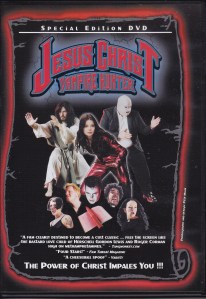
VampireHunterWhen a friend pointed out the easily missed 2001 film, Jesus Christ Vampire Hunter, (well before Seth Grahame-Smith came up with the same role for Abraham Lincoln) I knew I was duty-bound to see it. As regular readers know, although I’m not a fan of gore or violence, I have a soft spot for vampire movies. Vampires, although often evil, are frequently presented as conflicted characters. As former humans they have some level of sympathy for their victims, while at the same time, all people are objectified for the vampire. We are food. This low-budget, independent film didn’t promise to deliver on many levels, but as the end credits show, they did shoot enough film to be able to cut out a few bloopers. The story, in as far as there is one, has Jesus fighting lesbian vampires in modern-day Ottawa (where the film was shot).

Not that the film was serious enough to invite critical dialogue, I did wonder what Jesus had to do with the whole thing apart from the shock value. There were a few cute moments, as when the “atheists” pile, clown-like, out of a car for an extended fight scene, but the lead could have been any character apart from one scene where a miracle does occur. Jesus fights with his fists, not with supernatural power. Tossing in Mary Magnum and “professional wrestler” El Santo, the movie came close to the screwball level of Attack of the Killer Tomatoes. It’s difficult to critique a film where logic isn’t held accountable for the plot—the only thing to keep the film going is the action of a particular scene. And that, as I’ve intimated, can’t be counted on.

Interestingly enough, Jesus is treated throughout the film in a positive way. Although he doesn’t use supernatural powers, he is the “good guy” and is even tolerant of alternative lifestyles as long as love is the basis of relationships. The movie is biblically literate, using the Good Samaritan in a scene that underscores the accepting nature of the new millennium Jesus. The vampires don’t add much to the lore of the monster. They can be out in daylight because it is cheaper to shoot film that way, but the plot does come up with an explanation for it. Vampirism, at the end, can be healed by prayer, and when Mary Magnum, El Santo, and Jesus go their separate ways at the end, we are left wondering what all the fuss was about.


Episcopal Pity

Call me naive. Really, I won’t mind. I’ll readily admit that I was raised in a conservative household that held a fundamentalist view of Christianity. But even though I grew and matured and eventually joined the Episcopal Church, I have always held consistency as one of the basic building blocks of any religious outlook. What’s fair for you ought to be fair for me. When I read that the Episcopal Church has been suspended, like the bad boy of the Anglican Communion, my mind went back to the consistency issue. The Anglican Communion, like many Christian bodies, is marked by strong membership from “conservative” constituencies. This was clearly felt while I was on the faculty of Nashotah House. As a conservative institution, we received many visits from diocesan leaders from more “traditional” cultures. They always expressed concern with America’s sinful, “liberal” culture. We should be more biblical, they opined. They didn’t, however, mind us paying the bill.

Book_of_Common_Prayer_1760

The Episcopal Church is being kept after school because of its approval of homosexual marriage. This is a social justice issue that has the backing of many major Christian denominations. Cultures in the developing world, however, see it as sinful and claim marriage is one man, one woman. Well, most of the time. I’m no anthropologist, but I do pay attention to what people say. While at Nashotah House we had a student from Kenya. He was already a priest, but he was there to get some basic training. Naturally enough, his biblical understanding was quite literal. Once I asked him about his life back home. He had a wife, it turns out, and kids. They couldn’t be with him in Wisconsin, so I asked how they lived when he wasn’t there to support them. He told me his brother took her as wife while he was away. His brother was already married, but in his culture it was traditionally for brothers to act as husbands in the absence of the latter. He gave me to believe that “husband” was used in every conceivable sense of the word. He was, of course, against same-sex marriage.

Levirate marriage (a brother “taking over” a wife) is arguably biblical. The problem is that the Bible states the first brother must be dead for levirate marriage to take effect. My point is not to condemn the “traditional” marriage arrangements of the visiting priest’s culture, but to try to get some consistency here. There are a wide variety of “marriage” practices recognized in traditional cultures. They have two things in common: women are subservient to men and their needs, and males mate with females. Beyond that, variety, as the traditional saying goes, is the spice of life. There used to be another traditional saying about the inappropriateness of peering into other people’s bedrooms. So the naughty Episcopal Church has been sent to a corner with a dunce mitre on its head. Meanwhile the other boys, typical of those in middle school, sit around and talk about the girls they’d like to have. It’s tradition we uphold, after all.


Mother Divine

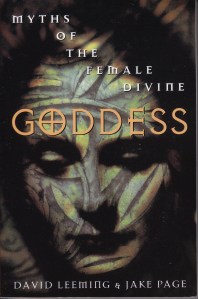
GoddessReligions, by nature, exercise a distribution of power. That power is perceived to be on several axes at once, the “vertical” is intended to represent the power of deities over humanity, and the “horizontal” is that of humans over humans. Historically all we can know is the latter dimension, and during the time of written records, that has been a male-dominated plane. Several years ago a theory developed which would be wonderful, were it true. The goddess hypothesis suggested that before male dominated civilizations took over, culture was run in a more egalitarian way and the goddess was the main deity. Since this theory sets itself before recorded history, artifacts had to be interpreted as evidence, and certainly such bits and pieces of past times have emerged. The goddess interpretation has, however, has faced severe criticism, and not just from male scholars. There are still those who find it tenable, and one such pair is David Leeming and Jake Page. Goddess: Myths of the Female Divine was a book intended to demonstrate the commonality of goddesses, but it didn’t always rise to the challenge.

No doubt, the motivation behind the book was noble. It is important to show that goddesses have been just as important as gods in the history of mythology. The problem emerges when the evidence is forced into a mold it doesn’t fit. “Goddess” is not a singular figure, any more than “woman” implies that all women are the same. Each chapter retells stories of various goddesses, and again this is problematic. Specialists in any one tradition are sure to spot errors and oversimplifications that suggest descriptions of other goddesses may not be completely trusted. There’s an overcompensation here. Men, at least some men, wish to show their support of women by suggesting that women once held esteemed places in the cult as well as in the throne room. What we know of history, however, gainsays this concept since, in one form or another, might has always made right.

Goddess is one of those little reference books whose main value lies in bringing previously disparate characters together to show some commonality. There is utility in placing goddesses side by side to form a phalanx of resistance to a hierarchy that has established itself as normative, backed by a more powerful male deity (or deities) in the sky. Goddesses have been part of religious thinking from the beginning. The early abstractions of natural powers, reason would seem to dictate, would have involved both masculine and feminine powers. We don’t know how such societies were organized, but the divine female was clearly present. By consciously acknowledging what we know, and creatively applying such knowledge, there may be a hope for the future of religions that is far more certain than a reconstructed past.


Social Security

Security. If there’s one thing we can never get enough of, this is it. We look at the future with a mix of perspectives: it’s going to get better, or it’s going to get worse. We want to be prepared for any eventuality. The most recent issue of Wired landed at my door and the cover, apart from Leonardo DiCaprio, features the survival guide. Tongue-in-cheek, along with actual statistics, this feature article gives tips on surviving all kinds of potential disasters. From domestic terrorism to zombies. The zombie advice caught my eye. You can make a pretty effective club, it seems, from rolling up newspaper the right way, with a judicious application of duct tape. It may not help much in instance of domestic terrorism, but who can expect to survive everything?

DecWiredSecurity is fine and good, until it becomes an obsession. Here in the United States, we’ve lived with the belief that two oceans separate us from our most hostile enemies. For sure, we have our fair share of natural disasters: tornadoes, hurricanes, earthquakes, wildfires, floods, even a volcano or two, but these are “acts of God” and we like to think that we can handle those. Our greatest fear, it seems, is our fellow human beings. Isolationism is convenient when we want to direct our own destiny, but when other nations get in the way, we like to extend the borders of democracy a bit. And globalization has opened the doors to all kinds of scenarios where security is at risk. Just try flying as a man with a beard traveling alone. I’m not so sure that facial hair is the greatest threat to the future that it seems to be. (Unless, of course, it is trendy stubble, as the picture of Leonardo DiCaprio shows.)

Security isn’t attainable. The future is always uncertain. There’s a rabbinic saying that a person can’t be satisfied today without knowing that tomorrow’s been taken care of. We don’t know what tomorrow might bring. Or even later today. We fear those who take their faith seriously, and yet the world grows more densely interconnected all the time. Some turn to their holy books to ensure that they are ready for tomorrow. Some even claim that those books tell them in detail what will be coming down the road. Others, I suspect, are gathering newspapers and rolls of duct tape. The future is, after all, what we make it.


Credit Is Due

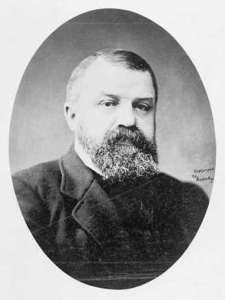
In an article on Nomad by Brandan Robertson, the issue of Larycia Hawkins at Wheaton College is discussed. Hawkins was suspended for stating that Christians and Muslims worship the same God. Robertson’s analysis, in my experience, is right on target. He suggests that when he was a student at Moody Bible Institute he was told that the school was a “discipleship institution” rather than an academic one. This leads Robertson to conclude that the school practices indoctrination rather than education. Although I’ve been saying similar things for years, there is a particular point that stands out here. Institutions like Wheaton and Moody, and others I could easily name, receive the benefits of academic accreditation for non-academic programs. These schools do educate; however, the education is not an academic one. Any faith group that has already declared that it has the final answers has no motivation to promote free inquiry. New information is dangerous, and indeed, is often treated as heretical. Accrediting bodies shrug their shoulders and say, “whatever.”

The purpose of academic accreditation is to ensure that a degree is worth the paper it is (computer) printed on. I could establish myself as an institution of higher education but the reason no one would take me seriously is that I’m not accredited as one. At the same time, schools like Bob Jones and Oral Roberts universities are given the seal of approval while teaching that the standards of higher education as recognized by any non-biased board are wrong. Revelation, not research, has already revealed the truth. And these schools grant degrees that have accreditor’s approval. Some of it is doubtlessly political. Other aspects are more difficult to fathom.

Dwight_Lyman_Moody_c.1900

I’ve known accrediting bodies to visit a campus where faculty and students give intentional and obvious warning signs that the school is not offering what it claims because of some point of doctrine. I have yet to see even a notation to come on a record because of this. And they call it education. Open minds, willing to accept what the evidence indicates, are classified together with those closed to new ideas. Just learn by rote what our favorite spokespersons have said and you’ll get your degree. The nation’s accrediting bodies won’t interfere. If I could only get them to visit my house, I’d start handing out degrees as well. Only to those who pay four year’s tuition, of course.


All Go Down Together

Noah2014PosterWhile the rest of the world was watching Star Wars: The Force Awakens, I was rewatching Noah, trying to find some profundity there. Like many curious people, I went to see the movie in the theater last spring expecting great things. While the story has some interesting elements, it just doesn’t live up to expectations. Noah is a hard character to like. In the biblical versions of the story, based as they are on older Mesopotamian prototypes, Noah (and his analogues) is a sympathetic character, at least in the reader’s mind. When we read we tend to identify with the main character, and since the builder of the ark is trying to preserve humanity from what seems to be an overly wrathful deity, we can sympathize at some level. What believer hasn’t felt put upon by the divine at some point or other? In the movie, Noah’s decision to end humanity after the flood is based on the silence of God. Indeed, that is one of the more profound aspects of the film—God never speaks to anyone so any action seems entirely human led. We’d expect someone who builds a floating zoo to be sympathetic to the human zookeepers at least.

Evolution, or something deriving from it, encourages species to protect their offspring. Some animals, of course, do this through over-compensation—producing more young than the world could bear if all survived to maturity. Mammals, however, care for and nurture their young. Noah’s ad hoc decision to end the human race, apart from being heavy-handed, is unreasonable and cruel. Who could look at their sons and say, “I’m going to let you age and die alone,” and yet feel that they are doing the will of the Almighty? Indeed, if humanity is made is God’s image, which Noah admits, isn’t this a form of deicide? Is Noah striking back at a silent God?

The movie does give the viewer much to ponder, but writing missteps plague the film throughout. Although wicked, Tubal-Cain is a more sympathetic character than the protagonist. He, at least, wants humanity to thrive. Noah, seeing how women are mistreated in Tubal-Cain’s kingdom, declares he will kill Ila’s children only if they are girls. There is a profound misogyny in the movie, it seems. Not that Darren Aronofsky intends for the story to be misogynic, but the implications speak loud and clear. To clear the world of violence, Noah proposes the most violent action of all. Like Noah, while everyone else was crowding into theaters with their fellow human beings to watch the force awaken, I was sequestered in my private ark waiting for a special message that refused to come. I wonder which is the more spiritual movie?


Sorry about That, Chief

What’s worth $20,000? An apology. That figure may require some adjustment for inflation, but back in the days when I was taking conflict management training it was right. Our teachers informed us that court decision costs were lowered by $20,000 when a client apologized. I’m sorry, but I don’t see that money should be necessary for an apology. Nevertheless, in a world motivated by money, this is a factor to keep in mind. With some of the very late apologies that have come out in recent years (the church apologizing to Galileo, and to the “witches” executed in the Middle Ages) comes the realization that too late is, perhaps, better than never. Often in cases such as these, a religious bravado just can’t back down. Doctrine is doctrine and you can’t change it without losing face. This doesn’t just impact large bodies like the Vatican, either. Lots of religious groups have apologies that they could, and should, make.

Grove City College is a small school. It has, from reports I see, become more conservative than it was when I was a student there. One suspects there may have been some apologies due over the years. I was surprised, however, to find GCC mentioned in the Christian Century. A former professor at my alma mater was fired for refusing to register for the draft in World War II, according to the story. Howard Pew, chair of Sun Oil (and the board at Grove City) accused him of being a communist. Now, over half a century later, the former president of the college delivered an apology to his door. That’s a nice gesture. Former faculty are generally, in my experience, shoved far from mind. We don’t like to treat those who educate too well, some times.

Photo by "the Enlightenment"

Photo by “the Enlightenment”

For the unapologetic professor, the greatest sense of satisfaction comes not from humbled administrators, but from grateful students. On very great occasions I still hear from some of mine. It makes up for some of the pitfalls along the way of an academic life. Teaching religion, naturally, puts you in some company that you might not expect. Of all anathema topics, teaching about being decent to other people earns you the most rancor. So it is, unfortunately frequently the case among our educational institutions. Pew, whose shadow still loomed large over campus in my undergraduate days, never personally apologized. Those with plenty of money to spare seldom do. $20,000 is not too much to pay to feel completely justified in taking another person’s livelihood away. We can only hope for a better educated future.


Who’s God?

There shall be wars, and rumors of wars. The Bible says nothing about being able to declare what future people might have to say about God. According to a story on the Washington Post website, Larycia Hawkins, a political science professor, was suspended from Wheaton College for claiming that the God of Islam is the same as the Christian God. Administrators felt this was one of those cases where the famous statement of faith required of Wheaton faculty was violated. Seems to me the administration might want to sit in on a class in history of religions. Everyone knows that Wheaton takes great pride in its Evangelical heritage, bordering on a kind of extreme conservatism. Even so, this seems extreme.

There is much we don’t know about the early history of most religions. Probably one of the resons for this is that, apart from the founder, we’re never sure if a new religion will take off. Many religions have started and then quietly (or not so quietly) died away. At the earliest stages nobody really knows which way it might go. We do know that by about the time of the Exile, the early Jewish faith was fast becoming monotheistic. Christianity, although disputed by some, also followed in that mold, accepting the God of Jesus of Nazareth (himself a Jew) as the one God. Here many Evangelical histories grow a little weak when focus is shifted to Arabia. The cultural context that led to Islam involved a world of pantheistic worship, but Mohammad was well aware of, and appreciative of, Judaism and Christianity. Recognizing that his faith shared the same books as the other two, his understanding of Allah was clearly the same God as the one worshipped by the Jews and that Jesus had called “Father.” The three monotheistic religions of that region, historically, have always shared the same God.

IMG_2472

Disowning a deity, I suspect, comes with some anxiety. As Islam expanded and Christianity itself became an imperial religion, clashes were bound to happen. Invective included calling the enemies “pagan” or “infidel” (technically two separate things), and as so often happens, rhetoric became mistaken for fact. Since Islam and Christianity were different religions, so the thinking went, they must recognize different gods. Triumphalism is seldom subtle. Fact checking wasn’t so easy back in those days. Suspending a professor for stating the truth is, I fear, nothing new. Some schools require statements of faith so that they may ensure academic freedom is a myth. Ironically, they seldom have trouble with accreditation. The ideology of a war between religions offers a doleful prognosis for a world where religions really need to try to understand each other and where obvious historical facts should count for something.


Who the Devil?

OriginSatanThose who’ve studied the history of ancient West Asian religions know that the concept of a devil, as a character, derives from Zoroastrian origins. In Zarathustra’s dualistic worldview, the forces of evil were concentrated in an “anti-God,” who, upon contact with the emerging monotheism of ancient Israel, became the satan. While scholars still argue about exactly what the role of the satan was, it is clear that it was a role, and not a name. The job of the satan was in some way to bring to accounting wicked deeds. By the time of the New Testament, “the Devil” had developed into an embodiment of evil more along classic Zoroastrian lines. What Elaine Pagels explores in The Origin of Satan is encapsulated in her subtitle: How Christians Demonized Jews, Pagans, and Heretics.

This is not a book about the historical development of the figure of Satan, but rather a study of how early Christians (and to an extent, Jews) viewed “the other.” Naturally she does discuss Satan, who developed along the lines suggested above, but more specifically she addresses how the accusation of being “of Satan” was used. Interestingly, it was generally utilized by those of ancient times to describe those of their own religion, but who held different viewpoints. Sects of Christianity and Judaism generally accused other sects in their own religious tradition of being “satanic.” Foreigners and pagans, well, what would you expect of them anyway? Those closest, ironically, are those most despised. Even early converts to Christianity from Roman polytheism tended to view their former religion as satanic. Satan, in other words, is “the other.” But not the far other. The near other.

While the book is full of Pagels’ usual erudition, it is also disappointing. Not as a book, but as a fact. Religions that claim God only wants us to love one another and treat each other well rely too readily on the figure of personified evil to castigate their enemies. As Pagels demonstrates, even as early as Augustine of Hippo there were those who realized Satan was not a “physical” being, but a symbol for evil. Yet on through the Middle Ages Satan would continue to be evoked to murder women and men thought to be witches or heretics. Satan, it seems, is simply a word for our darkest urges to harm those different from ourselves. We know that religions often have noble intentions. Perhaps the most noble could be to rid the world of Satan, and I don’t mean the mythological figure we all recognize without a hint.


Looking Ahead

HistoryFutureA History of the Future is a great title for a book. Classified, I suppose, as a dystopia, James Howard Kunstler’s novel is set in upstate New York, not too far from now. A war in Israel has led to the destruction of major US cities and our electronic, consumptive way of life suddenly comes to an end. Small pockets of people, such as those in Union Grove, try to reconstruct a way of life where executives now have to become farmers and those who were used to having plenty still can’t manage without thinking of others as servants. It is a quiet and disquieting world. Perhaps the most striking thing about Kunstler’s vision is how prevalent religion is within it. An entire swath of the middle of the country has followed a former televangelist back to pre-Civil War ideals and seeks to make white supremacy national policy. Other pockets of governments resist the growing strength of this backlash, but most people are just trying to get by, uninvolved in large-scale politics.

The most sympathetic group in the novel, at least in my reading of it, is the New Faith Covenant Brotherhood Church of Jesus, run by Brother Jobe, himself a former southerner. This church moves, lock, stock, and barrel, into Union Grove and begins to build a commune that, unlike those of the local Presbyterians and secular rulers, manages to thrive. Brother Jobe has mystical abilities and his heart is in the right place. As things continue their decline amidst the everyone for him/herself attempts to restore order, this fellowship manages to pull itself together through common belief and perhaps a bit of divine intervention. In the future these aren’t so easily teased apart.

Not a typical action-packed dystopia with raging violence, Kunstler sketches a more gentle apocalypse. It’s not a final disaster and big government has not yet reemerged to stamp its will on a malleable people. Women and men relearn what it means to work by hand and to live with less. In some ways the vision is comforting. Still, those who will have been patrician in the past manage to become feudal lords, of a sort, in this new world. Not everyone can fit into that pattern. The overall picture in what seems to be a parable is that pre-industrial society did, in fact, work. It wasn’t perfect, of course. Monasteries and lords embodied different values where no one could truly claim to know what this was all about. The future, it turns out, is mostly the past.


Only Hummus

I remember the moment well. I was in Jerusalem on my own. Although in my early twenties, I really didn’t know much. The man at the vending cart didn’t speak English, but I was hungry. My first experience of falafel would certainly not be my last. After I married a few years later, I introduced my wife to the various Middle Eastern foods I’d tried. Hummus became a personal favorite, especially after I became a vegetarian. There are plenty of things for vegetarians to enjoy, and many cuisines of the world have less meat-heavy options than many restaurants I’ve experienced in the States. Hummus, to get to my point, can be rather bland. It is generally inoffensive, and people of many dietary and religious restrictions can eat it. The Christian Century ran a blurb recently about a hummus restaurant in Netanya, Israel. This eatery offers a fifty percent discount to Jewish and Arabic customers who sit together. Here is a workable idea for peace.

We all have to eat. Half the trick to world peace is getting people who dislike each other to sit down and do it together. Those of imperialist bent may not realize, or even be able to see, that we have more in common than most agitators think. Human needs are the same, and often, very easily provided. You like hummus? I like hummus! We must not be so different, after all. If instead of weaponizing themselves, radical believers armed themselves with food to share, not nearly so many warplanes would have to take to the air. I admit I’m an idealist. I don’t think peace is impossible. We can choose to focus on what divides us, or on what we have in common.

IMG_2641

Perhaps if I’d never traveled to Jerusalem I would never have tried hummus. I didn’t travel for the food, but travel led me to a kind of serenity. Both falafel and hummus are made primarily of chickpeas, a versatile vegetable that has a verisimilitude of peace. If we could learn to eat together we would find it harder to hate each other after that. Sharing our mutual needs sometimes, as the restaurant owner in Netanya understands, requires a financial incentive. Although it may be lucre that lures those who are different to the same table, it is the peace itself that, I believe, will keep them coming back.


Things Being Equal

Gun violence is out of control. While experts dither and bicker about whether this or that act was done by “terrorists” they choose to ignore that gun violence is terror, no matter who’s pulling the trigger. The world in which bearing arms was declared an amended constitutional right was a world of muzzle-loaders. Like in those movies where someone took their shot, missed, and has to reload, feverishly pouring gunpowder down the barrel while the enemy closes in. Firearms were obviously deadly, but limited in their capabilities. All things being equal, it is easy to understand why such a right would be granted. Almost nothing is equal any more, however.

Consider this: weapons are now sold that can rapidly and repeatedly fire rounds that, in the wrong hands, can kill many people before anyone even has the time to react. These guns are useless for hunting, and their only purpose is to kill other human beings. We have been manufacturing them and selling them for many years and laws are such that most people could, if they choose to participate in the insanity, stockpile such weapons against a day when they will actually be used for their intended purposes. Consider also that the government, strapped for money to funnel to military causes, has shifted and narrowed the definition of mental illness so as to “normalize” people who would have, under other circumstances, been in institutional care. Add to this the increasing globalization that has effects that psychologists and sociologists are only now coming to see build stresses and strains in brains that evolved to be among their own “kind” and to distrust the “stranger.” And these stressed minds have easy access to powerful firearms. Who has the right?

I grew up in a different world. Yes, the Vietnam War was going on, but those who returned were exhausted by and despised the violence to which they’d been subjected. The pointless killing of others was culturally and personally just that: pointless. Fast forward half a century. Now we live in a world where seeing violent death represented is a daily occurrence. Even in simulation it is realistic. Mass murderers make videos presenting themselves as so heroic as to inspire followers. We no longer trust religion. We no longer trust the government. We no longer trust the American Dream. Wealth is bottled up where it can’t be reached and guns are distributed like candy. Are all things equal? Hardly. And yet those running for the highest office in the land worm for ways to keep the gun lobbies pleased. If we could only go back to muzzle-loaders and the time it took to reload—time in which even an unbalanced person had to think about what he, or now she, was about to do. Equality has, unfortunately, become as much a fairy tale as the right to bear arms.

400px-Manual_of_the_Musketeer,_17th_Century


Star Lords

Things are done differently in the UK. I suppose that’s obvious, but I have always noticed on my trips between our respective countries that some things that go without saying here or there receive the opposite treatment overseas. We are, however, united by a common religious heritage that sometimes goes unrecognized. A recent opinion piece by Giles Fraser in the Guardian discusses the banning of a commercial featuring the Lord’s Prayer in cinemas. The first difference that came to mind is that advertisements for something like the Lord’s Prayer seem unlikely in the United States. We are a biblically-based, biblically illiterate society, and if someone is willing to put up the money, advertisements are a no-brainer. A second difference is, as Fraser points out, there is fear that the Lord’s Prayer might offend people. Surely there are those who will take offense, but Fraser points out that there is nothing offensive in this prayer. It isn’t an attempt to convert. It is reflective, irenic, peaceful.

The point of this opinion piece, apt when Christmas wars are in the air, is that freedom of religion requires a dose of common sense. Yes, many atheists are offended by religious practices, but the question is whether we can ever completely avoid offending one another over belief. Beliefs differ. Not even everyone agrees with “live and let live.” The problem is that some offensive ideas lead to violence. We’ve forgotten how to talk with one another. In this world of uber-security, we find difference terrifying. Religious difference especially. So the angry atheists suggest religion should be driven indoors and rendered mute. Which violates what some religions are all about.

The British ad was to take place before the airing of the new Star Wars movie. One need not be a detective to discern the deep and inherent religious message in the original series of the franchise. Indeed, people were disappointed with the prequels because they had lost that sense of mythic grandeur that Joseph Campbell had been so helpful in instilling in the original trilogy. The films were made with religion in mind. Hidden behind a mask, perhaps, but clearly there. If Yoda had uttered something like the Lord’s Prayer, it would have been accepted as merely part of a movie. And as the reboot trilogy shows without doubt, movies have the power to offend.

Star_Wars_The_Force_Awakens_Theatrical_Poster