Rainbow Disconnection

The scene can be quite dramatic. A zoom out from a dead or dying Christian martyr as the moving music swells. There’s a sense of poignant heaven in the air as a human being breathes his or her last, lapsing into the hands of an unseen, waiting father. That’s a kind of typical ending to the particular genre of a martyr movie. We’re left feeling sad but somewhat inspired that someone cared so much that they would give up their very life for their belief. I can see the scenes already building as Kim Davis goes to jail for contempt of court. Davis is the Rowan County clerk in Kentucky who refuses to issue marriage licenses to homosexual couples. Although her action violates federal law, she has her conscience for a pillow at night. All she has to do is spend a day in jail before she will become a martyr/cause célèbre for the religious right. I’m sure it’s already started.

Jean-Léon_Gérôme_-_The_Christian_Martyrs'_Last_Prayer_-_Walters_37113

I don’t believe anyone should be made to go against their conscience. I also believe that if you’re an elected official being paid a tax-payer’s salary of $80,000 a year, that you should do your job. I’m sure the case isn’t so simple as all that, but as someone who’s never made anywhere near that much money, I could see myself easily stepping down if asked to do something that I just could not, in good faith, do. Most of us spend our lives compromising a bit here and there when our employment pushes us in directions we feel uncomfortable going. Nobody would consider us spineless for trying to hold onto tenuous jobs in an economy that seems to be endlessly faltering as the wealthy suck up more and more of the free cash. We do what we have to do. Go to confession at the end of the day and live to die another day. The evangelical, however, has a soft spot for martyrs.

Historians tell us that early Christians were probably not killed off as radically as the early records suggest. It seems the numbers might have been exaggerated to make a point. No doubt, many did die, and some in very gruesome ways, but they faced an unspeakable compromise—to deny the creator of the universe and burn in Hell forever. Issuing a license to a couple whose right to marry you question doesn’t seem to fall into the same category. Standing before the great golden throne your defense would easily be, “it was my job. I couldn’t quit because I needed all that money.” If there’s another viable source of income, the argument becomes spurious. I’m sure there are those in Rowan County who feel they’ve got a hero in their jail. The rest of us just get dressed and go to do the job we’re paid to do.


Something Lost

LosingMyReligion“Losing my religion,” I learned some time ago, means “going crazy” in some regions. It was that REM song that made me look it up. Losing My Religion, by William Lobdell, is much more literal. Having a hunger for spiritual memoirs, even if they end up with non-belief, has become an avocation for me. Growing up religious and having paid a pretty steep price for it throughout my career, I feel a bit like I’ve just risen from the analyst’s couch after a particularly helpful session. Here are people baring their innermost selves, trying to make sense out of a world that doesn’t add up. So it was for Lobdell. Since he was a religion reporter for the Los Angeles Times, his is the compelling story of a specialist who’s seen through the veil. His honesty is disarming. When I read such memoirs the question in the back of my mind is always, “what did it?” What pushed a believer over the edge?

By far the majority of these confessions I’ve read are those of women. Since religions have historically treated women poorly, it stands to reason that they might have second thoughts about what they’re being saved from. Lobdell, on the other hand, narrates what brought him to Christianity in the first place, and what forced him to conclude that it was wrong. Going the well-worn path from evangelical to mainstream Protestant to Catholic, he was seeking greater depth at each stage. Then theodicy. Theodicy is a god-killer. No matter how we frame it, there is no acceptable reason for good people to suffer needlessly. Out primate brains simply reject it. That’s not to say that for some faith can’t overcome such persistent doubts. It’s always a struggle, however, and, as Lobdell points out, not everyone is capable of believing what their mind tells them makes no sense.

One thing that stands out from all the spiritual memoirs I’ve read is how religion has such a difficult time explaining suffering. I suppose here’s where eastern religions generally have a stronger starting point. By acknowledging that life is suffering, they ask what we can do about it. Western religions, which often extol the good life, run into problems when theodicy hits. It’s almost as if the concepts can’t keep up with the realities of day-to-day life. Religions are often part of the culture you inherit, being born where and when you are. They also reflect belief structures from the age in which they emerged and those structures evolve over time. Today’s Christianity shares ancient concepts with the first century, but also modern sensibilities about psychology, culture, and philosophy. It can be a difficult mix, not least because it’s artificial and synthetic. As Lobdell notes, he isn’t alone in all this. It is, I might suggest, one of the reasons that studying religion is so important, even for those who do not believe.


More Blessed to Give

Religions, we are told, are in violent opposition. There’s no denying that sometimes it’s true. It is a sad commentary on belief structures when one way of looking at the world only finds validation in the destruction of other perspectives. Despite all that, religions can, and do, reach beyond their parochial interest to assist others. Recently I mentioned a story in The Christian Century of an Islamic effort to raise funds to rebuild vandalized black churches in the US south. The idea of Muslims helping Christians reestablish their, by nature, heterodox teaching is, I believe, newsworthy. The most recent issue of The Christian Century has a story of a Jewish group in Israel raising funds to help repair a damaged church in the Holy Land. These two stories have made me wonder why we so seldom hear of Christian groups raising funds to help rebuild mosques or synagogues. Surely it must happen, but we, who rely on the mainstream media, so rarely read of Christians helping others that it becomes a surprise when they do. Is this reality or just what we’re taught to see?

Please don’t misunderstand—I’m not suggesting that Christians don’t help others. Indeed, one of the founding principles of the Christian movement was the care of others, be they pagan or orthodox. Still, in my own life I’ve experienced the heartless, cold treatment doled out by “conservative” groups who believe that maintaining their idiosyncratic view is the highest possible mark of faith. Well beyond reaching out a hand to those in need. Far and above the care of fellow human beings. This distortion of any kind of historical Christianity has become what the mainstream media presents as normal. Meanwhile, millions still attend church every week, trying, in some measure, to make the world a better place.

Carnegie-1903

This isn’t the same, all politics aside, as supporting Israel as a nation. Many Fundamentalist groups do. In fact, they insist that our national budget include aid for Israel. Not because they particularly care about the Jews. In some viewpoints, the end of the world cannot come without Israel regaining a status that some read into obscure Gospel passages and the book of Revelation. This is not the same as donating to rebuild a torched synagogue. It is worlds away from restoring a vandalized mosque. It is naive to suppose that there is one normative Christianity. Historians inform us that such a monolithic entity never has existed. Temples, synagogues, churches, mosques—these are all expressions of the deepest of human longings to find and be in communion with that which is beyond the everyday. Any religion can become radicalized. All, however, also have the potential to look beyond themselves. When they do it is newsworthy indeed.


When under Rome

ZealotA question that has no answer: who was Jesus of Nazareth? Well, no single answer, anyway. When Reza Aslan’s Zealot: The Life and Times of Jesus of Nazareth came out, there was uproar. (Something, by the way, that publishers love.) How could someone suggest that not only do the Gospels disagree, but that they’re not even literal when they do? For those of us who’ve studied the Bible academically, there’s nothing too surprising here. Aslan’s perspective is often refreshing, even if he makes some basic errors (those of us who study the Hebrew Bible are pretty forgiving). For me, having the social circumstances of the New Testament spelled out in terms of the intense unrest of the first century explained a lot. It was a period of unremitting violence and frustration on the part of those coming to grips with life under Rome. Jesus was born and came of age when any outré idea could easily get you crucified. When it happened in his case, it was, as the Gospels point out, fully expected.

What might bother many readers is that Aslan doesn’t accept the story at face value. Jesus wasn’t unique as a healer, revolutionary, or messiah in first-century Palestine. In fact, Rome’s appointed rulers grew tired of such sons of gods that thousands of people were nailed up to warn others of the costs. Still, unlike the others, Jesus remained in contention even after his death. The belief in the resurrection didn’t hurt. Since Aslan is writing history, he can’t judge whether the resurrection or the healings actually took place. The traditions, he notes, are strong. He is surely correct that the Gospels aren’t attempting history. Written well after Christianity was already established, the writers had theological templates at their disposal. Not only that, they also had Paul.

Something I’d never considered was the dispute between Paul and the Jerusalem church. Yes, I’d noticed the stark contradictions between the letters of Paul and the one of James, but seeing the underlying conflict of those who knew Jesus personally (James, Peter, John) and Paul just never occurred to me. Paul doesn’t dote over the historical Jesus. His Jesus is divine from the start, and those who try to preserve Jesus’ words get in the way of the theology he’s developing. His letters express anger at those who teach what Jesus said over who he was, spiritually, anyway. Only with the destruction of Jerusalem was the way cleared for Paul’s gentile Christianity that eventually won out over Jesus’ teachings. It’s all very interesting, but I can’t buy it all. There are too many convenient connections here, and history abhors neatness. Nevertheless, Zealot is well worth reading. It tells an old story from a new perspective. And even if your Jesus is different from Aslan’s you’ll find something profound here that will only make your image stronger.


Charity

On occasion someone will comment, either here or on my other popular writings, that I lack the objectivity of a journalist. This should be no surprise, really, since I’m in fact not a journalist and what I’m writing here is opinion—an extended op ed—if you will—from someone that society has decided should have no official voice. Who listens to an editor? They don’t make content, they improve others’ work. News, however, often leads to good commentary. A recent blurb in The Christian Century caught my eye. A group of Muslims, led by a student in Chicago, raised almost $50,000 to help rebuild black churches that had been destroyed in the south. A journalist, I’m guessing, might not find much of a story here. To me this show of goodwill speaks volumes.

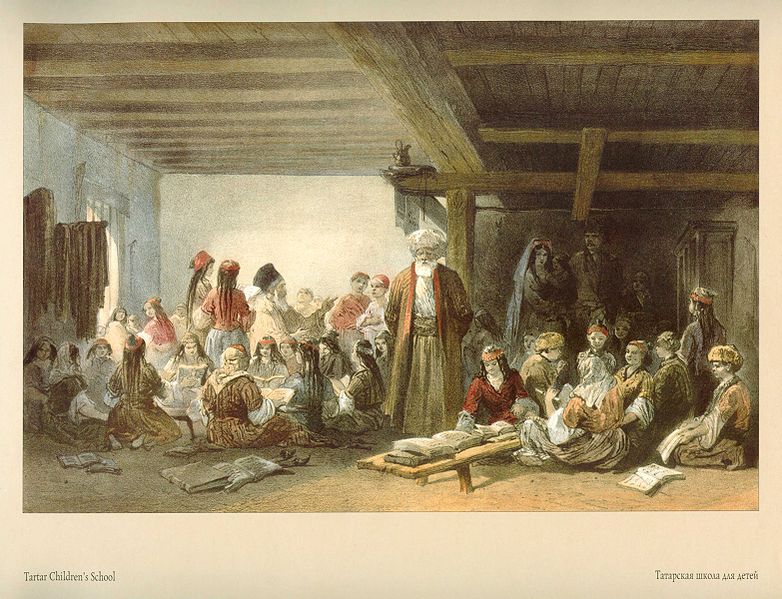
In the news were hear about Muslims as terrorists and fanatics. How often do we hear that charitable giving is one of the five pillars of Islam? Many Muslims are charitable to those outside their faith community. In this case, they donated money to rebuilt houses of worship for a rival religion. There’s little to hate or despise here, so it really isn’t news. People are disposed, in general, to help one another. Indeed, biologists have long noted that we are a cooperative species. A friend recently pointed out that we are dissuaded from helping others more out of a fear of being sued. Money, as most religions realize, is antithetical to true belief. Most religions begin as an effort to make life better for people. When they become corporate, as with all things corporate, they turn inwardly and focus on how to improve things for themselves. There are still many, however, who understand the point behind religious traditions. It’s not really all about God. The ones who need our help are our fellow humans.

782px-Карло_Боссоли._Татарская_школа_для_детей

Faatima Knight, according to the story, spearheaded the effort to raise money. She is a student at Chicago Theological Seminary. A Muslim studying in a Christian school, helping oppressed Christian people. The media, it seems to me, could do with a few courses in ethics. Is it ethically responsible to caricature religions as ignorant and spiteful? For all we know Christians fall into only one of two types: those who follow Pope Francis and those who want to teach your children that we didn’t evolve from monkeys. The good deeds done by those motivated by the teachings of their founders are quietly passed by. Yet they are among the loudest deeds people do. I have to wonder if most Christians would rally around an effort to rebuild a mosque destroyed by hate. I think I know the answer, but then, I’m only a guy whose opinion doesn’t really matter.


Credo

One of my seminary professors, who shall remain nameless, averred in class that Christianity in the first centuries was popular because it was exclusive. Like a country club. If just anybody can get in, why would you want to join? I’ve come to disagree with said professor’s analysis, but I have to admit there are cases where the idea does apply. Country clubs, for example. Organizations that intend to improve society, however, have it in their best interest to have doors as wide open as possible. Otherwise it’s a kind of hypocrisy. If Christianity wanted to make a better world, it soon realized, all takers should be welcome. That paradigm broke down fairly quickly, but at the beginning, I have the sense that all were welcome. So I was pleased to hear that the Boy Scouts have dropped their ban on gay troop leaders. Making a group that sets out to do a good deed a day exclusive heterosexual seems awfully backward. After all, gay leaders are nothing new. Why try to be exclusive?

Of course, the Scouts continue to disallow atheists. This is a fairly common, if medieval, marker of personal integrity. The Elks, last I heard, had few entrance requirements. One of the few stipulations, however, is that you have to believe in God. I don’t know how that plays out for Hindu Elks. Perhaps the more the merrier. Somehow, I doubt it. Exclusive belief entry requirements are a way of weeding out questions before they’re raised. Sheltering those inside from baleful influence among hoi polloi. We are better because we are different. Granted, these organizations go back to a time when theism, of sorts, was virtually a given in American society. Times have changed. Boy Scouts, it seems, are dragged into the future kicking and screaming.

I’ve always been impressed, by contrast, with the Girl Scouts’ openness. No creedal requirements are in place. Atheist girls, Buddhist girls, girls who climb on rocks, any girls are allowed to join. The last three presidents (including Obama) have been Boy Scouts. Two prior presidents have been as well. You might think the organization could meet its pedigree requirements with ease. In my view, they might look to the girls to take a cue on how to make the world a better place. When I was growing up, I knew no atheists. I remember attending a funeral of a family friend who hadn’t been a church goer, and that was pretty traumatic. As an adult I know many atheists and I trust them as much, if not more than, some of the religious I know. Would they be able to lead Boy Scout troops well? I have a suggestion—why not ask the Girl Scouts and find out?

IMG_2405


Excavating Religion

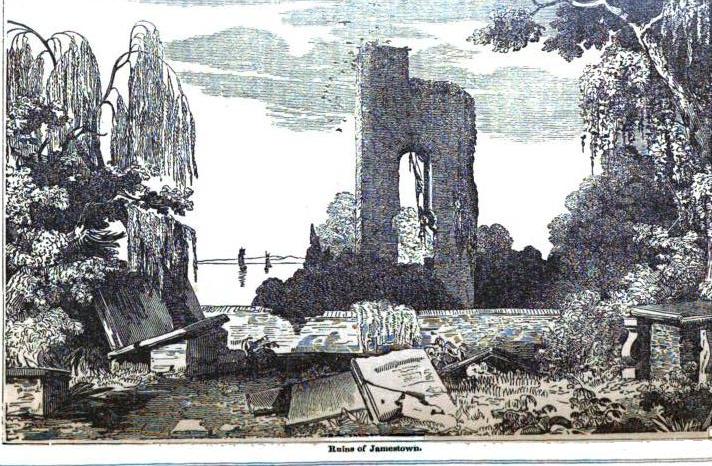
Jamestown, Virginia has the distinction of being the first British American colony to have survived. I’ve only been to Jamestown once, and that was about two or three years before the site was scheduled to celebrate its four-hundredth anniversary. William Shakespeare was still alive back in the home country. The King James Bible was not yet available. It was a gray day when we drove to the site and there were no other people around. Without a guide there was not much really to see—just a sense of being in touch with history by standing where the first English would eventually remake the land in their own image. Even the pilgrims tried to reach Virginia, but missed and landed in Massachusetts instead. Jamestown, however, lays a claim no other site can make.

A recent BBC article describes four graves lately found at the site. Located in the church, those buried were men of status. One of them was Reverend Robert Hunt, a clergyman of the Church of England and the first Anglican minister in North America. Interestingly, the BBC story points out, the Church of England was only half a century old at the time. Having spent many years among the Episcopalians at Nashotah House, I learned a great deal of the church’s history. The fact that the Episcopalians made it to America so shortly after their establishment is something I never heard emphasized. Concerned that the Catholic Church, under Spain, was collecting so much territory, the C of E wanted to stake a claim in the New World early on. Partially because of their persistence, we speak English even today. Church and empire were hand-in-glove in those days, and both the church in Spain and in England were state sponsored. Having God on your side can be pretty handy when you want to claim something that really doesn’t belong to you.

The reverend was buried west, facing the people he served, and, according to the article, this helped initially identify him as clergy. The church, in the service of the government, supported the conquest of new lands. The implicit belief that God was on the side of the strong has never really gone away. Mega-churches measure their spiritual assets in terms of fiscal influence. There are those today who believe that the Almighty wants the righteous to be rich, of course, at the cost of the wicked. Jamestown may have, at least partially, set the tone for a new nation that wanted to take more land than it needed. Land that others had occupied, and indeed, still lived upon. Only with the backing of a deity could such claims be made. The biggest god, after all, wins the day. Jamestown tells us more than we might suppose about what we’ve become as a nation. The early years are often the most formative of all.

Jamestown_Virginia_ruin


For the Sake of Fighting

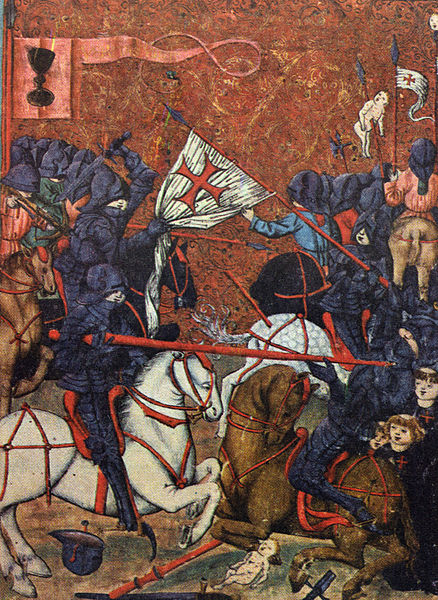
Different opinions can be used for discussion or destruction. In the formal context of government, the declaration of war is—or should be—an option of last resort. Increasingly language of belligerence is status quo ante when religion is the topic. “Culture Wars” is a thinly veiled reference to the profound disagreement between social conservatism, associated with Evangelical Christianity, and progressive policies, often affiliated with nones and mainline Christian traditions that don’t wish to be left behind. For years, decades, no one side can declare victory, for example, in the debate over whether America was founded as a Christian nation. Two news stories I saw this past week addressed just that question. Fox News ran a story about a Baptist Church in Shelby, North Carolina, that has decided to fly the Christian flag over the stars and bars until, well, I guess the Second Coming. Protesting the legalization of gay marriage, the congregation wants the message, aided by Fox News, to spread that in at least this corner of the country, God comes first.

The other story, on CNN, asks the question directly: “Was American Founded as a Christian Nation?” With five professors answering the question there’s bound to be differing opinions but all agree that this isn’t a simple yes or no answer. The even larger question, it seems, is how can the founders’ religious orientations help us to avoid cultural wars? Isn’t the fact that we’re still searching historical documentation over two centuries later an answer in itself? Maybe they didn’t tell us directly because it was none of our business. Washington, Franklin, and Jefferson are quoted on both sides of the debate. Their cultural context was Christian, but as all the five scholars agree, the question didn’t become a live one until the nineteenth century. Seems that we got along a century without knowing.

The “Culture Wars” may have been there, of course, but the need for a term only arose in the late 1980’s and early ’90’s. The divide had been simmering since the end of the ’50’s, however. Leave it to Beaver versus Star Trek: the Next Generation. The media has never been shy about telling us what to think. Difference of opinion is as natural as a pre-frontal cortex. Peaceful coexistence, however, doesn’t sell newspaper or commercial airtime or space. We want the thrill of danger, the chance to declare that, unlike the adversary, we are clearly in the right. Maybe if we changed the metaphor the rhetoric might catch up. In the meanwhile, battle comes to mind. Ironically, the Bible is a place that suggests peaceful solutions to many disagreements, but neither side thinks to look there for guidance.

438px-Husité_-_Jenský_kodex


Only Takes a Spark

Fireworks have been the main event for Independence Day celebrations ever since I was a child. The fourth of July is a day for playing with fire. As a child I remember spending the meager allowance I had on sparklers and snakes. I haven’t seen one of those ash snakes for decades now, but the impression they made remains strong. A plug of some kind of carbonish material—you’d light the top with a match and it would flame and hiss and start to grow into a long, twisting exoskeleton of ash. They left a blackened circle on the sidewalk, and when they were cool enough you could try to lift the fragile snake in your hand, but it almost always broke apart before blowing away in the breeze. We also wasted our money on smoke bombs with their multi-colored smoke, but we never had actual firecrackers. Given the trouble we could make with an ordinary roll of caps, that was probably a wise decision on our mother’s part. All of this, however, was just a prelude to the fireworks.

As I sat under a cloudy sky last night wondering why every July fourth seems to rain, it occurred to me that fireworks are a violent form of celebration. Indeed, they are designed to imitate the sounds of battle—before the nuclear age—and we all know the thrill of when the loud, bright burst of pure light sends a shock wave through you. It is like a canon rocking your soul. Like many stirring experiences, fireworks had religious overtones from the beginning. Invented in China, fireworks were used for religious festivals. They were believed to be effective at driving away evil spirits and bring good fortune. Pyrotechnics, however, clearly have military applications as well. It is this strange nexus between religion and violence that makes, I suspect, fireworks displays so compelling.

IMG_2287

The local display here in Somerset County, New Jersey, was impressive for a region without large cities. I couldn’t help pondering the strange aesthetics of contained violence as the colorful explosions took place over my head. Illusions, I know. We always talk afterward about whether some of them are meant to represent anything. Did you see a smiley face, the United States, or even New Jersey? It depends on your angle of view. Is this a religious display or a celebration of violence? Looking around at the amazing diversity of peoples gathered here in this park with me, I feel strangely satisfied. I hear languages I don’t understand, and see people from all over the world here for a good show. Although thousands of us try to get to our cars at the same time, spirits are positive, for the most part, and all go home in a celebratory mood. Maybe the ancient Chinese were right and these pyrotechnics do drive away evil spirits after all.


Ethics for Rent

Ironically, the Bible is the basis for the western preoccupation with land ownership. What with commandments against stealing and coveting, the Israelites had a sense of being promised a land by God. It was their land and no human motivation—including imperial conquest—could trump the divine will. In the western world, so heavily influenced by the Bible, the concept of private property is itself considered sacred. If enough land to sustain yourself is good, even more land than you need must be better. That’s logic. Land-grabs by the powerful are nothing new. In America (land stolen from the original owners) no better symbol of affluence exists than property ownership. Like many things biblical, this is often a myth. Although I’m a white, Anglo-Saxon, straight, Protestant, I grew up among renters. My family couldn’t afford a house. When my mother remarried, my step-father owned his house and it was in such bad shape that as soon as he moved out to a rental property, it was immediately razed. On my own, I’ve always been a renter because I couldn’t ever afford to be anything else.

After Nashotah House, my wife and I considered buying. Wisconsin, apart from having no jobs, seemed like a nice place to settle. We researched. Your mortgage payments should be no more than 30 percent of your income, we learned. Living in suspended animation since those days, we’ve rented in a variety of places and the 30 percent figure has also turned out to be a myth. Affordable housing, in the United States, is set at that benchmark. A recent news byte in the Christian Century notes that in not one of the fifty united States is it possible to rent a one-bedroom apartment on 30 percent of minimum wage. 49 hours of work a week would be necessary to meet that benchmark in South Dakota, the state with most affordable housing. I know professors of Bible who own summer houses. That’s in addition to their regular houses. Meanwhile, many who would like to own something much more modest can’t afford even that.

The biblical worldview is an idealistic one. Recognizing that greed is inseparable from human will (even among a chosen people) the hope was that the poor would be taken care of by those who had more than their share. As the statistically inclined like to say, the numbers don’t lie. Housing, one of the most basic of all human needs, is exploitatively expensive. Many renters can never break out of the cycle of paying too much in rent so as not to be able to save up enough to make a down-payment on a place of their own. Yet prices go up while raises don’t keep pace with inflation. It’s all about ownership. Laws are in place to protect those who take (“legally”) for themselves. The rest pay into the system at three times a tithe. And even this, the numbers say, isn’t nearly enough.

Rent


Burning Times

One of the most disturbing images from my childhood years is the self-immolation of Thích Quảng Đức in Saigon. Of course, I didn’t see this image as a child. It was high school before I was deemed mature enough (and the internet didn’t exist) to see such a troubling image. Now we are being told in a kind of gleeful grotesque tongue-in-cheek that those who seemed to claim similar conviction over gay marriage now have a chance to show their faith. Pastor Rick Scarborough, according to The Advocate, made such a statement. As of last Friday, he’s had to find a way to explain his remarks. I’m not sure what he said, but I find the implications distressing. Those who’ve supported gay rights all along haven’t been wishing evil on anyone. Schadenfreude can be quite troubling.

Maybe it’s just that we get so tired of self-righteousness. Those who claim to be the torchbearers of the truth seem to delight in pointing out the weaknesses that we all have. Who has never misspoke? Let he who is without sin cast the first syllable. Rhetoric can be our master at times. Beneath the unfortunate speeches, however, lies a terrible fear. Some who believe the Bible literally true can’t see this any other way. Poking fun at them, however, isn’t likely to make the situation any better. Quiet victory celebrations aren’t in fashion. We live in an “in your face” world where we like to see the stains appear on the immaculate suit. Banana cream pie in the face all made up for the television crowd. I’d rather see a world with no more need for self-immolations. Religions sometimes make this difficult.

Although I have reflected on religion deeply for many years and have come to take a very broad view of things, I still have very conservative friends. If I poke fun at their views from time to time I hope it is good-natured fun. I respect their rights to their views. I grew out of that culture myself and I’d be a hypocrite if I looked at it any other way. I am extremely pleased about the supreme court decision recognizing gay marriage. This, however, is a political issue. Religion has always informed political views, and has not infrequently stood in the way of fair treatment. These walls must come down. Before we begin the demolition work we need to make sure the way is cleared of any potential victims. One thing religions frequently do right is offer consolation to those who are suffering. It is the humane thing to do. Victory without humiliation is far better than the flames of Waco.

800px-Mountcarmelfire04-19-93-n


Theological Cemeteries

There is a plague upon this nation.  When in one week, let alone one day, I hear about two colleagues being let go from their academic posts for not meeting conservative theological standards, I believe it is time for higher education to take a good solid look at what it claims to do.  Thomas Jay Oord, one of whose books I supported and saw through publication at Routledge, was dismissed from Northwest Nazarene University after, according to early reports, being considered for a heresy trial.  Almost simultaneously Daniel Kirk, whom I don’t know, was let go from Fuller Seminary, apparently following questions of his belief in traditional marriage.  Having been dismissed myself into an academic morass that has never passed for a satisfying career, I feel a sense of moral outrage here.  No doubt, I am more liberal than either Oord or Kirk, but this is not the way educated adults treat one another.  In fact, it is heinous.
 
While still teaching at Nashotah House, before I crossed some invisible line in the doctrinal sand, I often wondered about this.  Conservative schools want the credibility of professors with bona fide doctorates, and then wonder why they can’t get educated people just to nod their heads at all the right places.  Education should make people think.  It should make us all question our assumptions.  Any faith that can’t examine itself seriously and come back to thrive is no faith at all.  I know all too well how difficult it is to get along with a doctorate in a socially unacceptable field where the higher education economy is far worse than that of our own national economy that keeps limping along.  It is a crime to fire our brightest and best.
 
The unholy roll call could go on and on.  A few years ago it was my colleague Christopher Rollston who fell under the axe.  Although I’ve not met him, I understand the same thing happened to Peter Enns.  These two recovered, at least as far as finding a position goes.  Those of us who were successfully cast into the outer darkness—and I know I’m not the only one—have watched ourselves disappear from relevance as the academic world chugs blithely along.  We are a nation that elects public officials on the basis of their supposed religious outlook while at the same time hamstringing efforts to educate ourselves about religion. I have a question for the administrators who feel they are defending the faith by taking someone’s livelihood: when is the last time you thought about your faith? Really thought? If your God can’t think then it’s not just those of us who are liberal that are destined for Hell.

ScottishSemetery


More Rainbows

There’s been a lot of rain this June. In between there have been some glimpses of sunshine. When the rain and sun combine, I always look for rainbows. Yesterday there were rainbows. You see, I didn’t realize until physics class that the sun has to be behind you to see a rainbow. It stands to reason, of course, because the light has to be refracted before it can break into its beautiful constituent colors. If any of the colors were missing, true light wouldn’t exist. Even with many of the religious grumbling, the United States took a fumbling step toward justice yesterday. Justice is something that always comes as a bit of a surprise these days. I’m not sure that we can always trust those that money puts into power. Nevertheless, gay marriage is so in the spirit of America that I wonder it has taken so long to become legal.

I’m heterosexual and I’ve been married for over a quarter century. I know the benefits of married life, so why should they be denied any couple that love each other? Raised on conservative Christian literature that taught me homosexuality was evil, it took some intensive education to unlearn what I’d been told. The Bible has very little to say about homosexuality, and in each instance where it does there are extenuating circumstances that must be considered. The Bible, which hasn’t become authoritative for stoning adulterers (heterosexuals all) had somehow been the final word to oppress those whom nature has oriented to the same gender. I had been told “no animals are homosexual.” That is wrong. Documented cases time and again show that homosexuality is as natural as rain. Just ask the bonobos. For literalists that’s a problem because we’re not even, from their point of view, evolutionarily related.

So although it is a cloudy, rainy Saturday morning, I’m strangely optimistic. There may be rainbows today. Now if only we could spread the message wider, raise our voices louder, and maybe join in singing “Amazing Grace.” Maybe we could dare to dream that races and genders should be treated equally. Will our Supreme Court ever make true equality the law of the land? Yesterday brought us over a major hurdle. I don’t want to rain on this parade. Still, justice demands that more work be done. I rejoice with all loving humans that marriage is open to all. Charleston is still on my mind. And if some rain does fall today I can always keep what sun there is to my back and hope that there will be more rainbows.

IMG_1087


Shepherds and Sheep

Photo credit: Spencer Means, Wikimedia Commons

Photo credit: Spencer Means, Wikimedia Commons

The murders in Charleston this week are part of an epidemic. The members of Emanuel African Methodist Episcopal Church join, unfortunately, a growing list of victims of hate. Not only hate, but that subspecies of hatred that calls the unstable to attack in a church, or synagogue, or mosque, as if to defy the very gods with their misanthropy. Growing up we used to be taught that any place of worship is sacred. Then we believed it was because God had made it so, but now it is clear that sacred space is made so by the intent of those who worship. We find places where we believe we’re safe from the trials of the everyday world. A place where God will look over us. A place, dare we call it, of sanctuary. Sanctuary is a concept that has gone extinct. As children we all knew of the concept of “home” in chasing games—the place where you were free and need not worry about someone coming after you. Amnesty was granted at the cry of “olly olly oxen free.”

In the biblical world, we’re told, those in danger could flee to the temple and grasp the horns of the altar and be safe. It wasn’t that someone couldn’t be pulled off, but it was that an inherent respect attended sacred places. No place is sacred any more. Hatred has a way of overriding what we all recognize as civilization. Well-armed youth and a culture of hatred have never led to peace. Xenophobia may be natural, but it can be disarmed through education. Unfortunately, in this country at least, education is not valued. In fact, in the culture wars, those who have the most sympathy for those who commit hate crimes will be among the first to cut education spending. It’s a luxury we can’t live without. We need to teach the meaning of sanctuary again. We need to teach the meaning of love.

Human beings shouldn’t have to rely on sanctuary to be safe. No matter what our racial heritage or gender or orientation, we are all simply people trying to make our way in the world. As a child I knew “olly olly oxen free” meant that nobody would try to tag me if I came out from hiding. I was also taught that the word “hate” was as bad as any swear and that it should not be said. While my mother was teaching me the virtue of love, we were sending young men to kill foreigners in Vietnam. I grew up with no doubts as to which was the superior way. One way leads to life and peace, the other to constant fear and death. The people of Emanuel African Methodist Episcopal Church have told Dylann Roof that they have forgiven him. They are offering sanctuary to one who has done nothing to earn or claim it. They, like children, lead us.


Pope of Deliverance

As I was out jogging just now, a large gasoline truck pulled across the road, stalling my attempt at healthy living. As I waited for the driver to move, I thought of Laudato Si’. In Laudato Si’, Pope Francis’s encyclical letter, the future seems, for the first time in a long time, an optimistic place. I’m not Roman Catholic, but knowing that the head of the largest Christian body in the world has made an ecclesiastical pronouncement about our responsibilities as citizens of the planet is nevertheless authoritative. A world run by blind greed cannot see the signs in plain sight. We have taken what does not belong to us and have left a wasteland behind. I look back over a lifetime of advocating, in the small way my small voice can reach, for responsible tenancy on the Earth, and feel comforted by such a powerful ally. Perhaps it’s because I’ve never been a property “owner,” buying into the myth that the planet may be purchased, but it has never made sense to me that one species has the right to claim it all for itself, leaving it in a state our mothers would’ve never allowed our bedrooms to have been left, and supposing it is somebody else’s problem. If not ours, whose? We’re the ones paying the rent.

Those responsible for industrial level pollution baulk at the idea of economic fairness. Capitalism rewards the greedy and the only thing to trickle down is tears. Those with money can always count on lackeys to follow, thus when the man in white says this is important, those in red, and purple, and black have no choice but to follow. There’s no escaping the planet. We shouldn’t have to feel we need to escape. We need to take—dare I say it—corporate action. Those of us on an individual level sometimes think we can’t make a difference. Habits can be powerful things. A visit to a landfill can be a mystical experience. The visions you have there won’t be beatific, however. You might begin to understand the Inferno, in any case. We consume, and pollute, as if it is our right to do so. As if our brains have misfired into suicidal sociopaths.

Son, behold thy mother.

Son, behold thy mother.

Where, I have often wondered, is the voice of the church in all this? By far the vast majority of the world’s inhabitants are religious. Religious leaders, embroiled in politics that lead to solvency and power, have frequently neglected to turn out the lights when they’ve left the board room. While it may seem to be an abuse that the Catholic Church is extremely wealthy and highly influential, it may be that the humble leader of such an organization is the only person truly capable of getting attention. The Pope’s voice carries farther than that of any other single individual in the Christian tradition. And the media are already buzzing about the long anticipated Laudato Si’. The Pope begins on a positive note, and if those who make any claim to be faithful pay attention to the truly important message—far more important than fighting condoms or ensuring that half the human race is kept out of the club house—there may be a slight glimmer of hope yet. Maybe religion really can deal with ultimate concerns after all.