The Friar’s Tale

Being a fan of Gothic fiction, I recently read an anonymous story from 1792 entitled, “The Friar’s Tale.” Those who linger among Gothic conventions know that the monastery is a common trope in the genre, often with debased clerics who use their authority to make their charges miserable. (Hmm. I wonder why I keep coming back to this kind of fiction?) Literary scholars tend to point to the late eighteenth century as the origin point of Gothic sensibilities which coincide with the Romantic movement. This then, is an early example of what people feared as industrialism and modernity encroached on a world once natural and full of mystery. The tale contains nothing to frighten a modern reader, but it does offer compelling commentary on the one organization that would seem most to benefit from retaining a pre-scientific worldview—the church.

IMG_2009_1024

The story involves lovers separated by a cad who is after the lass’s money and who connives with the mother superior of a convent to lock the girl away from both her money and her lover. She comes to the realization that religion has ruined her prospects. The friar narrating the tale refers to religion as “that constant comfort of the good, and powerful weapon of the wicked.” Of course we had already experienced Reformation vitriol by this point in history, and rage against the use of religion as a means for personal gain had been thrown out for any who would care to utilize it. Clearly the author of “The Friar’s Tale” found it essential to the plot.

The truly interesting aspect of all this is how, in the intervening centuries, religion has continued to present this opportunity to the greedy and corrupt. Not all religion succumbs, of course, but when it becomes a hierarchy of any description there will follow those who find it a means of personal gain. The Prosperity Gospel movement comes immediately to mind. Those who putatively follow a man who is recorded as having said to give away all that you have in order to be his disciple have somehow missed the message and keep their treasure where moth and rust pose constant dangers. We think ourselves advanced since then, but the words of a fictional friar from centuries ago may still hold some wisdom for Gothic readers in the present.


Honest to Good

IMG_2029_2

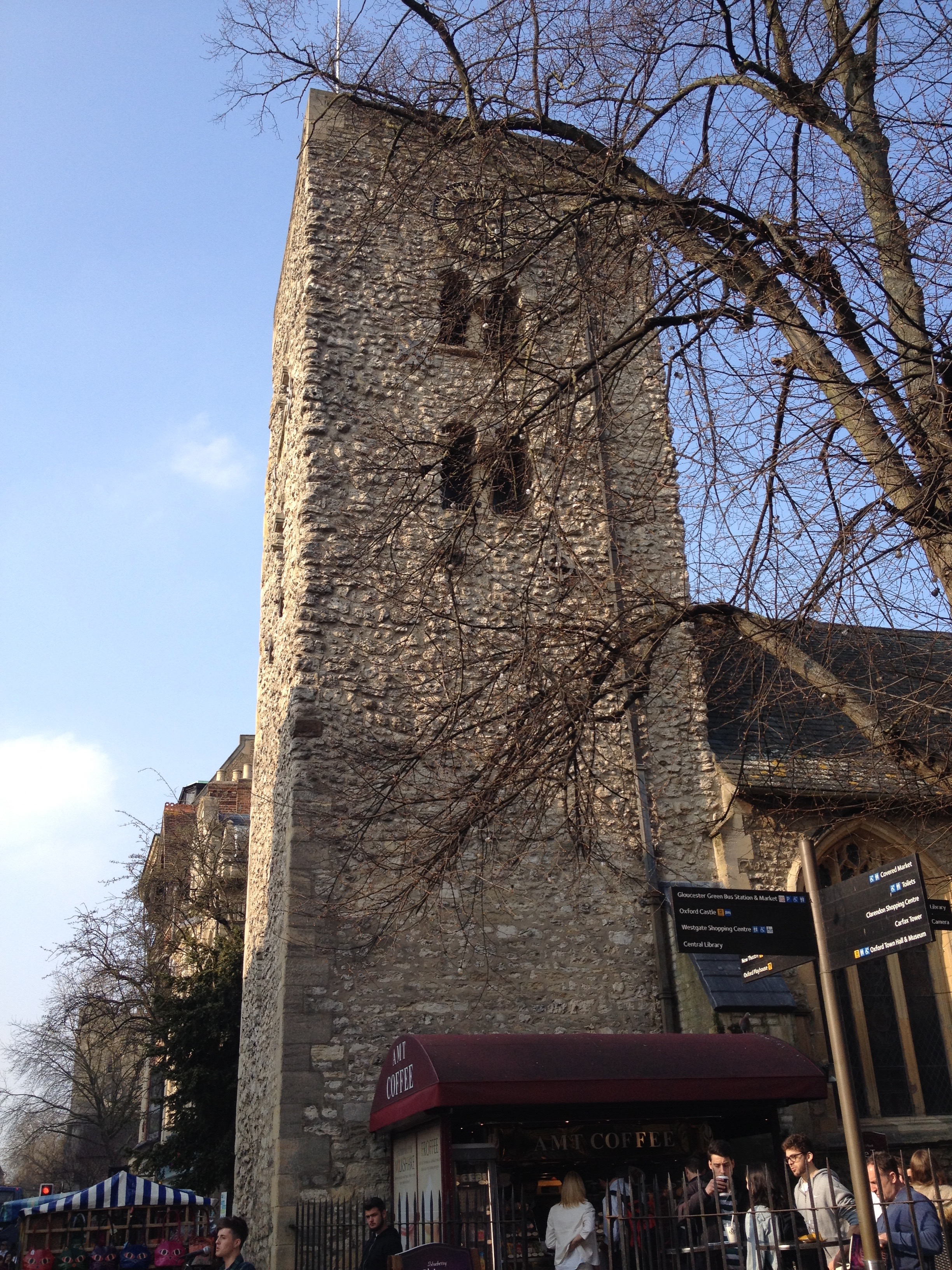
The oldest standing building in Oxford is the Saxon era church tower of St. Michael at the North Gate. Dating from around 1040, it still stands, providing shade to the various buskers who are hoping to earn a bit of cash from their musical talents below. Although there are some modern buildings that harsh the historical sense of the city, you get the impression that the British revere their tradition. A recent article in The Guardian notes that the United Kingdom, seat of the Anglican Church worldwide, is among the least religious countries in the world. Depending on one’s perspective, that is either very good or very bad news. Several analyses exist as to why it is so. The country has gone from an empire on which the sun never set to a strong, yet diminished country. The two World Wars took an enormous toll on the island nation. The population tends to be well educated. They adore their royals, although the monarchy is largely for show. There is a disconnect between the fiction and the fact of life in such a place.

Britain may be leading the direction toward which secular societies will inevitably follow. Still, the survey cited in the article indicates that two-thirds of the world population sees itself as very religious. Surprising and flummoxing atheist advocacy groups everywhere, the young tend to be more religious than the old. Religious belief shows no sign of dying out. It was predicted decades ago that it would be dead by now. We were supposed to have a moon base in 1999, of course, and I’m still waiting to see if we manage the Sea Lab in the next five years. History has a way of disappointing us. Perhaps the silent skies through it all make it difficult to think there’s any direction coming from above. Left to our own devices, what do we see?

The UK hardly qualifies as a hedonistic state. There are social problems, to be sure, but it maintains a fairly safe, cultured atmosphere throughout. Tradition can be fiction and can still be meaningful. We don’t see angry atheists trying to bulldoze an ancient, if phallic, church tower. We don’t see angry crowds taking sledge hammers to the British Museum. The people on public transit are unfailingly polite, and I’ve not been treated like an object as I commonly am on my daily commute to Manhattan. Religion, it seems, is not the motive for civilized behavior. Nor does religion appear to detract from it. Has the holy grail been discovered after all?


Rorrim

It was an object of wonder. Handed to me as a child, the Bible inspired a kind of awe reserved for the big events of a young life. Here were the very words of God, in King James English, for me to read, mark, and inwardly digest. Well, at least read. And read I did, as only the fear of Hell is able to motivate an impressionable psyche. When a parish minister saw the trajectory of my life, he suggested exploring the ministry. More Bible reading ensued. With only Halley’s Bible Handbook as a guide, interpretation was largely a matter of what the minister said, and the kind of primitive reason that resides in a teenager’s head. I made it through college as a religion major without ever hearing about Mesopotamia’s influence on the Bible. Once I did hear, in seminary, it was clear to me that to get to the truth, you had to go back beyond the first page. Mesopotamia was only part of the story. The Bible was a book compiled in a region where other religions shared concepts, deities, and stories with the Israelites. While unique in some respects, it turns out the Bible wasn’t as unique as I’d been led to believe.

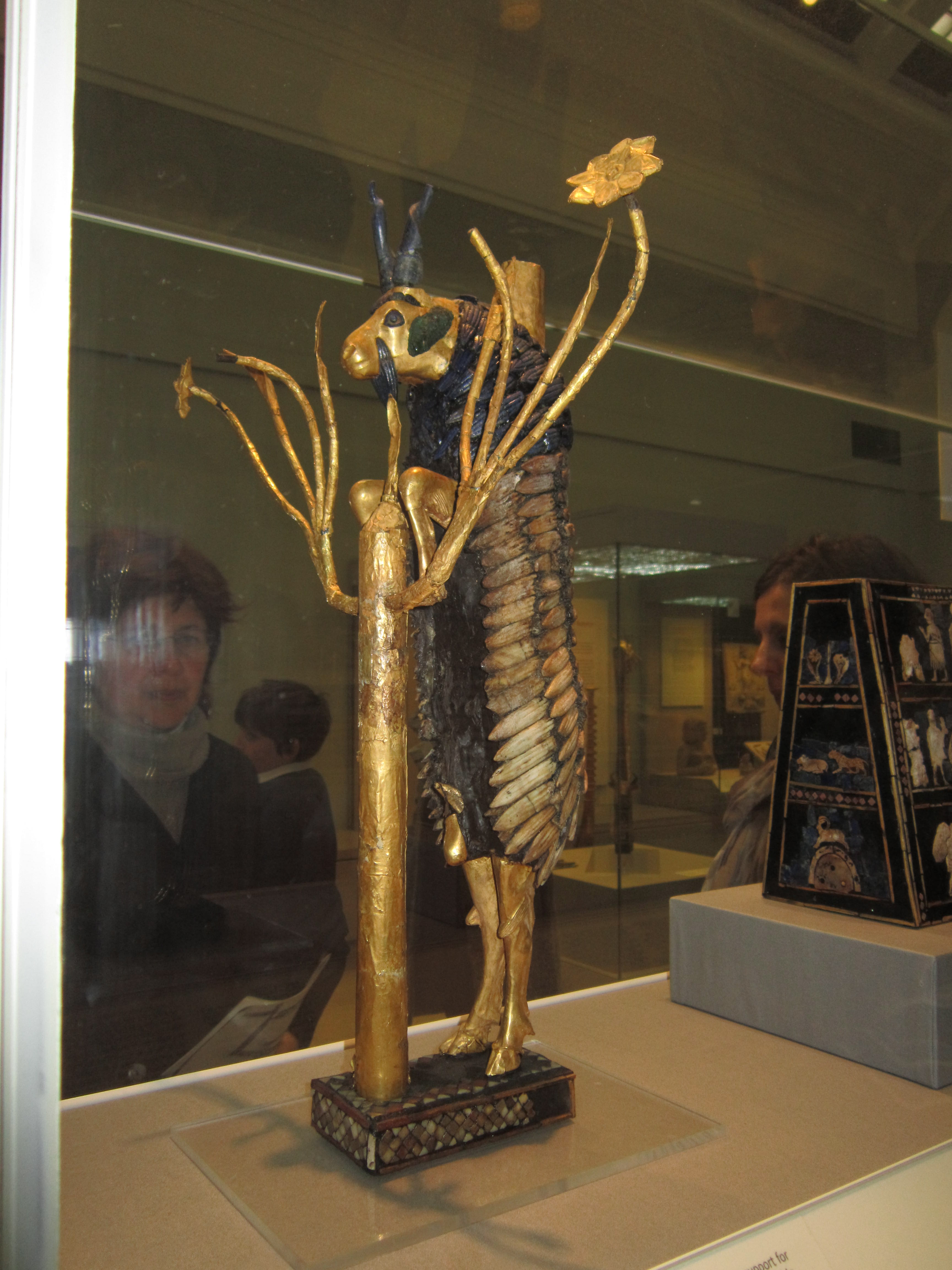
Mesopotamia, vying with Egypt, was the true cradle of the civilization that gave rise to who we are in the western world. Perhaps in the eastern hemisphere as well. The great cities of Sumer, and later Babylonia and Assyria, yielded cuneiform tablets and other artifacts that insisted we widen our view of antiquity. The heirs of this tradition developed Judaism, Christianity, and Islam. All three monotheistic religions have bred sects that despise this ancient past with its uncomfortable truths, and thus we hear of IS destroying the evidence with abandon. The years of my life spent studying these cultures disappears so quickly under the bulldozer’s blade. For all this, it is IS that is the passing fancy. You can’t destroy the truth. You can damage it, however, to the detriment of everyone.

IMG_0188

Political regimes, and not just in the Middle East, operate with an unbecoming arrogance when they believe in their own self-righteousness. Were it not for those who wondered what these wedges on clay meant, we might still have to reckon (more seriously than we already have to do) with those who insist that it’s the Bible way or the highway. Unfortunately, it often takes disasters such as this wanton destruction of the past to wake the media from its lethargy concerning the cultures that gave our religions birth. There’s so much more to distract. The world can’t make up its mind about the color of a dress, and meanwhile those backed with a justification of true belief destroy that which can never be replaced. Given the rhetoric of political leaders even here, I suspect that our past is no longer safe, no matter where we house the artifacts bearing witness to the truth.


Overboard

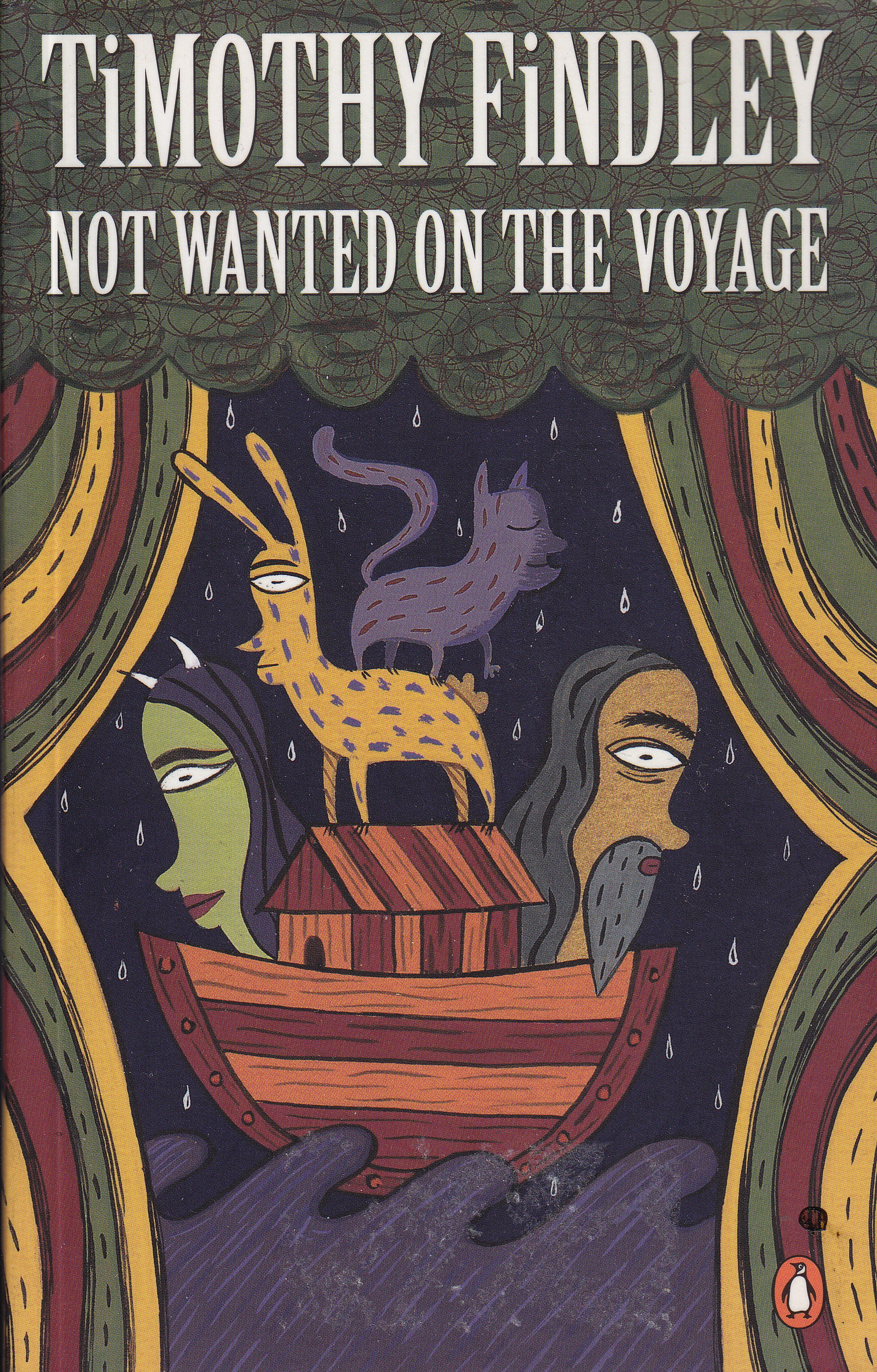
NotWantedOnTheVoyageThe story of Noah has long fascinated me. The world of early Genesis is so mysterious and compelling—a mythical time when all the action seemed to be taking place in just one bit of the world, and events were always momentous. Noah, the new Adam ten generations on, stood out as the prototypical good guy. The sort of fellow you’d like living next door. An everyday hero. The movie Noah, however, introduced a dark and brooding ark captain whose unyielding devotion to his own concept of righteousness led to a tormented journey over the flood. I wonder if Darren Aronofsky read Timothy Findley’s Not Wanted on the Voyage. Recommended to me by one of my students, this novel was difficult for me to categorize. At first I thought it might be a funny story—despite the tragic overtones, there is much in the flood story that suggests humor—but no, it was more serious than that. Noah was cast in a primeval, post-Christian world where elements of the twentieth century were freely available, while others were not. And more troubling, Noah was not at all a nice guy. Indeed, he is one of the best written antagonists I’ve encountered. You shudder when he enters the room.

Apart from Noah, however, the novel explores the premise that Yaweh [sic] sent the flood as a final, dying act. Old, feeble, yet the creator of everything, the deity is ready to give it all up as the absentee landlord who has no idea what’s happening on earth. The reader feels little sympathy for the divine. Like humanity, he set something in motion he has no hope of controlling, yet which he can destroy. As he is about to die, unbeknownst to all humans, he sends the flood. Noah, six-hundred years old and senile, oversees his ark with an iron hand. His religion has made him cruel, and I was frequently left wondering whether those who survived were more fortunate than those who did not. As a fantasy the story works, with well drawn characters and a devious plot. The problem comes in trying to reconcile it with a Bible story all too well known. In the end we’re left wondering if the flood does really ever end, and, if so, does anything turn out okay.

Known for his dark, conflicted characters, Findley adds a macabre dash of the improbable to an already unbelievable story. Mrs. Noyes, aka Mrs. Noah, is perhaps the most sympathetic character in the novel. Her son Ham, cursed in the biblical version, is clearly the best son, but one his father dislikes by reason of his love for science. Part morality play, part farce, Not Wanted on the Voyage can be a disturbing novel, rather like the movie Noah. That’s not to suggest there’s no message here. I see it as a cautionary tale of a misplaced faith taken too far. Instead of pleading to save humanity, Noah seems only to glad to let all but his own be wiped out. His sons disappoint him, and the one daughter-in-law he appreciates disappoints him in the end. Perhaps this is what destructions are all about. Does any flood really have a happy ending?


In Praise of Eve

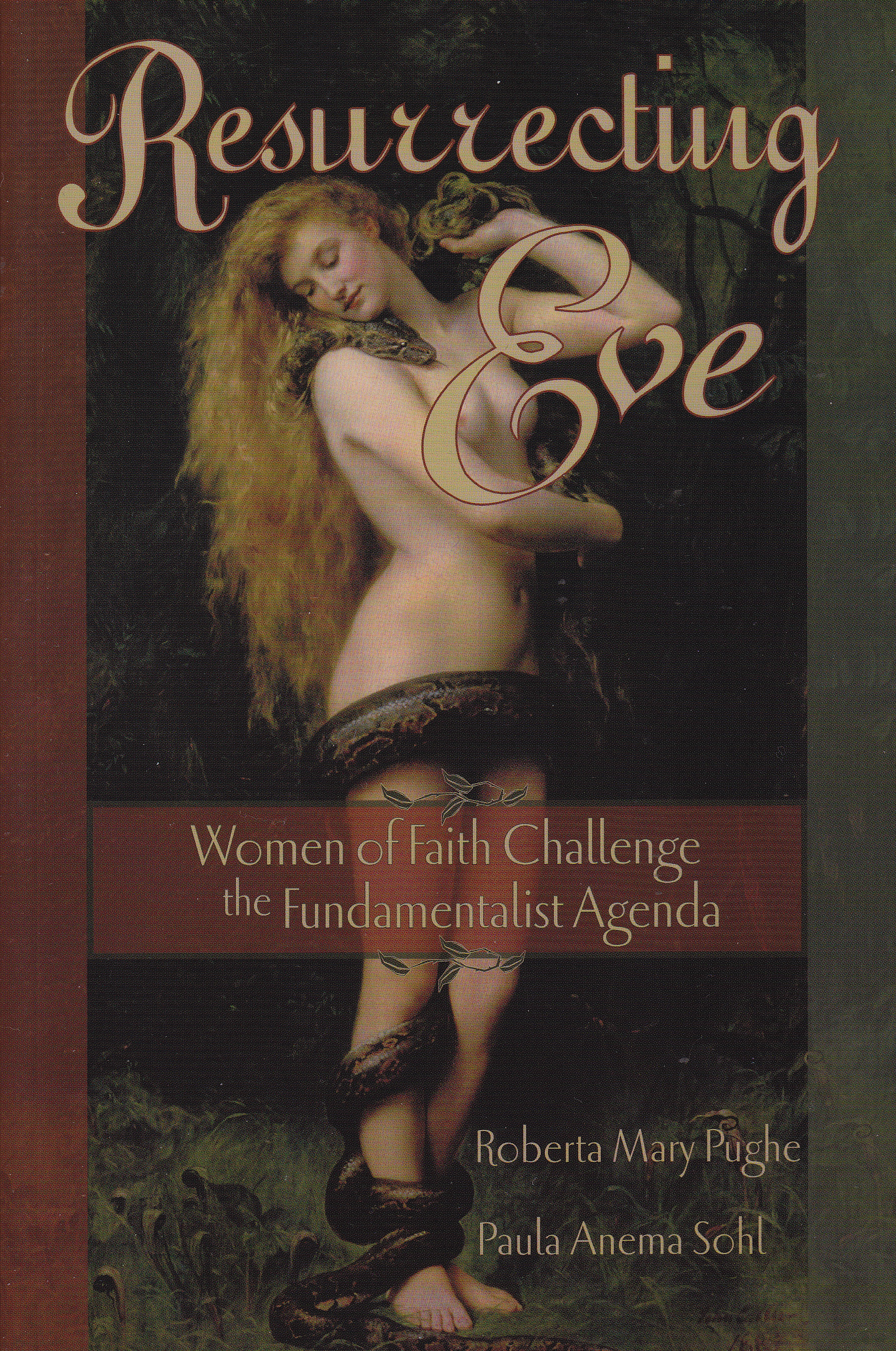
Resurrecting EveI once told some colleagues that reading even basic children’s books as Dick and Jane or The Cat in the Hat was a different experience for girls than it was for boys. Although Dr. Seuss was far more enlightened than much of the standard children’s literature from the era, there’s no doubt that the Cat is an active male, as are Things 1 and 2. The human girl (and her brother) are somewhat more passive, and thus the raring, rollicking action is mostly male. I try to stop frequently and notice how the message is still broadcast too widely that gender stereotypes contain the truth. Back when the American Academy of Religion and the Society of Biblical Literature met in San Francisco, a west-coast publisher, White Cloud Press, showed up. One of their books, Resurrecting Eve: Women of Faith Challenge the Fundamentalist Agenda, seemed appropriate for someone who’d been at Nashotah House as long as I had. Written by a psychologist and a pastor, Roberta Mary Pughe and Paula Anema Sohl, it raises many points that, while not new, again reminded me that men have to take responsibility to learn how women experience the culture that masculinity continues to dominate.

Reading stories of women who’ve suffered at the hands of a hyper-masculine fundamentalist Christianity, it is difficult not to cringe. Young girls molested by ministers in a culture where no one’s voice trumps that of the preacher, have no chance of justice. The mere thought of the few who’ve managed to build the courage to speak out suggests that far more choose to suffer in silence. The abuse isn’t always sexual. Damage to the esteem is rather a specialization of literalist groups, but males get off comparatively easy. Women and girls are provided with a unfair framework from the beginning and they often spend their entire lives conforming to it. These stories, even with the new age-ish kind of framing the book gives, must be told. More importantly, they must be heard.

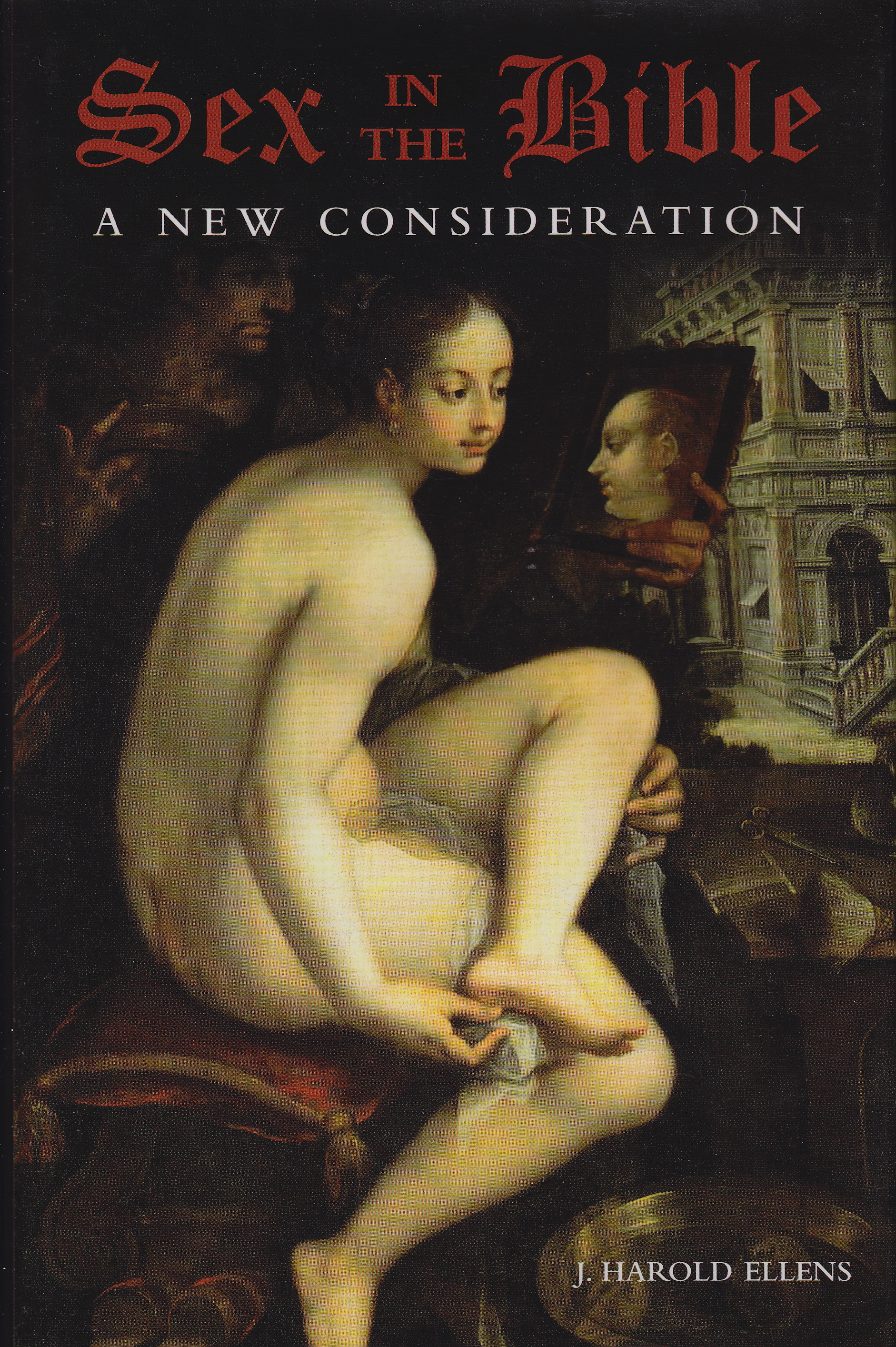
In a world where our technology is so advanced as to make a Wright brother’s head spin, we still refuse to admit the equality of women. The United States comes nowhere near the top of democracies that have a significant portion of women in government positions of power. We like to think we’re advanced, but we still keep half of our people back from their true potential. We sent a satellite out of our own solar system before a woman president was ever elected. We call ourselves civilized. Of course, Pughe and Sohl are mainly concerned with fundamentalist Christianity. When we look at the demographics of government officials, however, the picture in this regard is not encouraging. Fundamentalism won’t be changed by scholars, for they are easily ignored. It will be changed by everyday men who pick up a book, perhaps because of the seductive painting of a woman on the cover, and realize that there’s far more at stake than cheap thrills and Sports Illustrated swimsuit issues. Treating women equally is merely the first step in becoming truly human.


Alas, Babylon!

Religions tend to be backward looking. That’s not intended to be a universal, nor a condemnation. Few would want to admit that their religion is new, especially in this scientific era. We tend to believe the truth is old. But not too old. In the monotheistic traditions, real religion started with Abraham, or more properly, Abram. Beyond that we were all pagans. One of the sad stories brought to my attention this past week involves the IS (you know it’s bad when we have to use acronyms) decided to destroy Nimrud, one of the ancient Mesopotamian cities that has helped us understand whence we’ve come. In an era of political and social correctness, we’ve decided that the right to keep artifacts rests with those who’s heritage it reflects. The future, however, is just as unstable as the past. As someone who has spent many years trying to understand the material remains of our pre-Judeo-Christian heritage, it is a tragedy of the first degree to have unthinking guardians destroy what can’t be replaced because they represent “idols.”

In my Ancient Near Eastern Religions class, I used to begin by asking students what the difference was between an idol and a god. At first it seems that idols are images, and, by definition, offensive to the religion that names them “idols.” Then, as we probed deeper, it would become clear that all religions use images of some description, and that likenesses of deities were considered to be gods in sophisticated ways. Those who built the pyramids and the great walls of Babylon were not simpletons. Their images, many of them powerful still today, were psychological expressions, often backed with theological finesse. Even Protestants accuse Catholics of idolatry, and they worship the same deity.

It would be a mistake, however, to blame religion for such wanton destruction. All religions breed extremists. Extremists, like those who believe science can explain everything, are simply drawing their reasoning out to its ultimate conclusion. That’s not to condone their actions, but to try to comprehend them. All religious groups have those who slip past the bounds of conventionality into the realm where an all-consuming zeal requires excessive action to be noticed. Human beings are complex that way. A pagan philosophy of ancient Greece held that all things in moderation was the ideal. Religions with a concept of Hell, however, breed excessive ideologies. As a child I would have done anything to avoid Hell. In fact, with the little power that children are accorded, I conscientiously did what I could. When I wasn’t distracted by the other attractions life seemed to offer. If, perhaps, we considered that socio-economic justice would go a long way toward engendering a kind of contentment, we might find less extremists in the world. No matter what we do, however, we will not find ourselves in a world without religion.

DSCN1835


Almost Heaven?

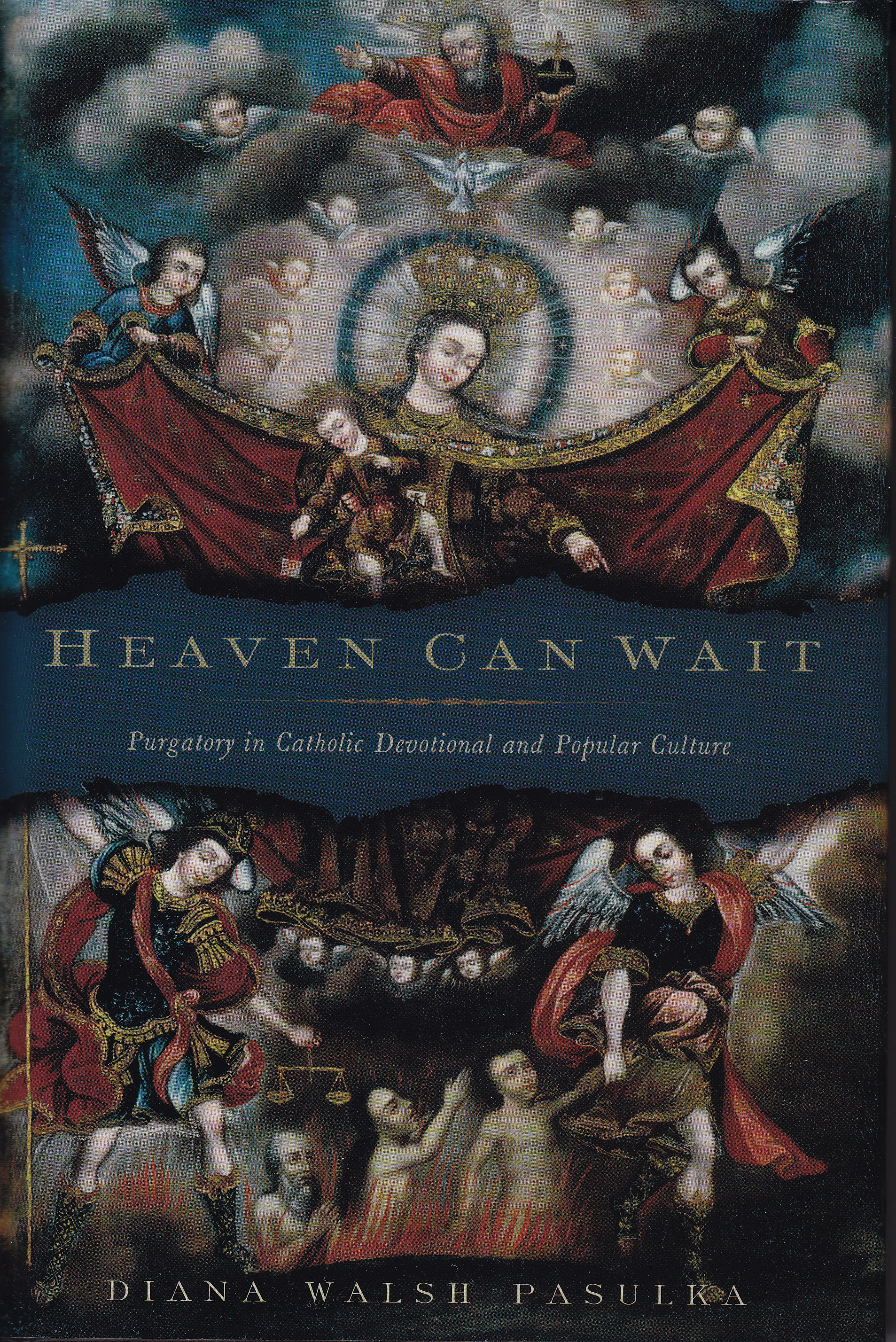
HeavenCanWaitLike most kids raised Protestant, I had little idea about the Catholic worldview.  Despite family wishes, I had Catholic friends, and topics such a Purgatory inevitably came up.  (Well, they did if you were me, with my insatiable interest in religion and its trappings.)  Purgatory was a concept both just and unjust at the same time. It seemed only fair to give people who’d made mistakes a chance at Heaven, yet, at the same time, to make them suffer when they already realized that they’d made mistakes seemed like, to put it bluntly, bad parenting.  The key was in the name: Purgatory.  A place to purge the evil.  Melvillian try pots. Given this background, I couldn’t wait to read Diana Walsh Pasulka’s Heaven Can Wait: Purgatory in Catholic Devotional and Popular Culture. The afterlife is the ultimate 64-dollar question. It pays to be informed.

This fascinating study demonstrates that the idea of purgatory has long roots into Christian history. The Bible does mention Heaven and Hell, concepts borrowed from Zoroastrianism, but it doesn’t directly mention Purgatory. For this reason most Protestants reject it out of hand as Popish and superstitious.  Heaven Can Wait, however, explores how the idea grew into an almost inevitable aspect of Catholic theology. Most intriguing to me was the concept that, like Belinda Carlisle’s Heaven, Purgatory is a place on earth. Specifically, in many Medieval minds, in Ireland. There a cave of torments, guarded by monks, on an island in Lough Derg provided those brave enough to enter the chance to purge their sins before death.  In short, those who braved this cave could bypass Hell by suffering in advance.  Heaven on an installment plan, crudely put.  As Walsh Pasulka describes the accounts of Lough Derg, archetypes begin to fly thick and fast, like proverbial bats out of Hell. This single location, sometimes venerated by, sometimes destroyed by the church, was a vortex of torment.

Over time, as the rationalism of the Enlightenment settled in, the idea of a state of being having a physical locality led to changes in the concept of Purgatory.  The kids I knew took it for granted that it existed, and, with tween angst, accepted that that’s probably where they’d end up.  At least for a while.  Protestant that I was, my choices were a bit more stark. If I messed up, as I well knew I did, my torment would be neverending. Heaven Can Wait is a rewarding exploration of how an idea, logical in its original context, survived long after the worldview of the church had begun to change. Indeed, it survives to this very day.  And like most doctrines of the church, it has a way of scaring even the most inoffensive souls straight.


Geneva Conventions

As an alumnus of Grove City College, I generally don’t have the chance to consider other colleges as unreasonably conservative. College taught me, after all, that education involves thinking things through, and that, of all things, doctrine is one of the many human constructs that wilts under close examination. Both religious and political doctrine fall under this rubric. So when an article in the Chronicle of Higher Education fingered Grove City’s near neighbor, Geneva College, I was both relieved and not really surprised. Grove City was strict, but Geneva, located down the road in Beaver Falls, was even more Reformed. Tales at the Grove said that even off-campus dancing was an infringement of the student code there, and that even a legal sip of beer with dinner, off campus, could get you expelled. You know how students talk. In any case, both cut from Presbyterian fabric, Grove City and Geneva Colleges hold out against the world and its multiple evils. So why did humble Geneva merit notice in the exalted Chronicle?

Geneva College recently sued for exemption of the contraception-coverage mandate of the Affordable Care Act. You see, in many conservative religious traditions pre-marital sex is not only from the Devil, it practically never happens among true Christians. If it doesn’t happen, why should you be forced to pay for its treatment? Denial runs profoundly through these conservative colleges. While at Grove City, in a first-floor dorm room, my roomie and I were awakened one night by a group of pretty obviously drunken frat boys from the third floor. Cursing loudly, one of them rammed his fist through our window, showering the floor with glass before stomping loudly up the stairs. When I went to the housing office the next morning, they wondered about my story. Students at Grove City, drunk? It simply did not happen. In all likelihood, I’d broken the window and made up the story so I wouldn’t have to pay. I pointed out that campus security had noted the glass was inside the room and my roommate and I were both there at the time. Reluctantly, while still withholding judgment about the drunken part, I was believed.

Conservative Christian colleges often face the specter of reality. College kids were killed driving drunk. Girls, gasp!, did get pregnant and did not always decide to keep the baby. Real world issues declared anathema by a magisterium with its hands firmly over its eyes. No matter one’s view of morality, singling women out for punishment of sexual sins is just plain unfair. The issue here is health care, not the consequences of a decision made in the heat of passion. How often the anonymous male gets to scamper off, his health fully covered. The co-ed, however, is treated like Eve holding a newly bitten apple. Students attend Christian colleges for a wide variety of reasons, and the education, apart from the theology, can actually be excellent. It is the ethical obligation of the schools to cover all the human needs of emerging adults, not just those based on a morality still mired in the Middle Ages.

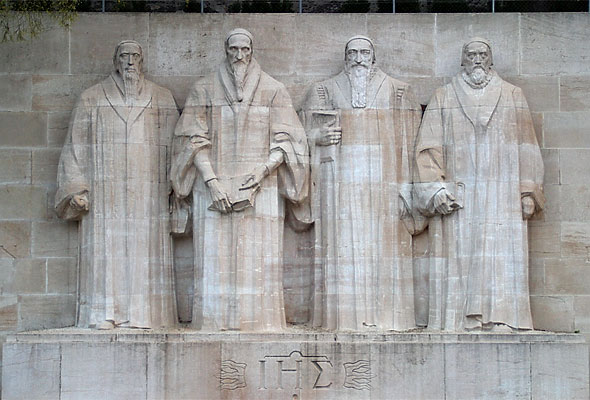
Time for a Reformation?  Photo credit: Roland Zumbühl, Wikimedia Commons

Time for a Reformation? Photo credit: Roland Zumbühl, Wikimedia Commons


Wag the Tail

Among the most respected of intellectual endeavors is political science. Analysts who read and reason beyond national borders, finding implications in countries many of us have never heard of, they can be an intimidating lot. Experts in economy and psychology, they tell us what the big picture looks like—why we do what we do. And almost universally they disdain religion. We’re talking politics here, why don’t you go sit at the kid’s table? Religion is the stuff and nonsense of make-believe. What politics is about is who has the biggest bombs and bank accounts. Those who impact the world in real ways. And yet.

I would never claim to be up-to-date on current events. I don’t have time to read newspapers and if my friends didn’t send me pertinent articles now and again I might still believe that social justice is more important than the color of an anonymous dress. When no less than an authority than the New York Times speaks, however, I do have to pause a minute or two to consider the implications. Frank Bruni has recently been writing on the Opinion Pages about those ultimate strange bedfellows, religion and politics. I may have got the order wrong, but that’s for political scientists to determine.

Many people don’t consider that religion can be, in some respects, scientifically analyzed. As a deeply divided nation, one factor that even political scientists should note is that yes, religion does count. No matter how naively conceived, people vote with their faith behind that polling curtain. The Republican Party realized this in the 1980s. If you take just one or two religious issues and make them the platform on which you stand, you can garner a disproportionate amount of the conservative evangelical vote. A new study from the Public Religion Research Institute, according to Bruni, demonstrates just how disproportionate the outcome can be. Surveys may not be precise, but less than 20 percent of Americans are white evangelical Protestants. Yet their issues are the ones that make or break elections.

Life has a way of making one cynical. I grew up a white evangelical Protestant. Although my viewpoint has evolved with my education, I can’t shake two of those qualifiers even if I want to. I read political scientists dismissing religion as a bogus topic, mere twaddle to fill the daub of inert minds walled in by primitive thinking. And I read the occasional news story that demonstrates that the facts don’t fit the premise. Do we need to understand religion? Absolutely not, I’m told. But in the end, even the analysts of the political beast will have to realize that tails wag dogs just as surely as raising hackles will make any mammal appear larger than it really is.

Not a tail to be seen...

Not a tail to be seen…


Incitatus Redux

What more is there to say about God and politics? Far too much, I fear. In a Sunday Review in the New York Times, Frank Bruni lays out a catalogue of what, in a rational universe, would be considered violations of the United States constitution by politicians who insist their (conservative) Christianity is the faith of the nation. This is, however, one of the philosophical conundrums of religious freedom. Religious believers are free to use their faith to try to change the system from within. And the fact that the media is telling us that religion has become irrelevant doesn’t help. Who should be afraid of what’s irrelevant? Can irrelevant substances harm you? Can irrelevant bullets kill you? Why, yes, they can! And so being told repeatedly by the media that religion is something we can safely lock into a box marked “Medievalisms Outdated” we step out the door to see politicians using a religion poorly understood to gain power. A recipe for an apocalypse, it sounds like to me.

Academics too readily fall prey to the media hype. University presidents and deans suppose that religion really is dead and shouldn’t be studied. Who’s going to help us through the morass of the upcoming election if people who understand religion are made indigent and put out on the streets? Good luck to the rest of society! We must, if we are to survive, understand religion. Its death, following shortly on that of God, was proclaimed early last century. And yet it’s showing no signs of dying. In fact, it’s just waking up. Who are we going to ask? Scientists? Accountants? Economists? What will you really learn about our laws being God’s laws in the minds of the wealthy and powerful? Don’t ask me—I’ve only spent some thirty-five years studying religion. What do I know?

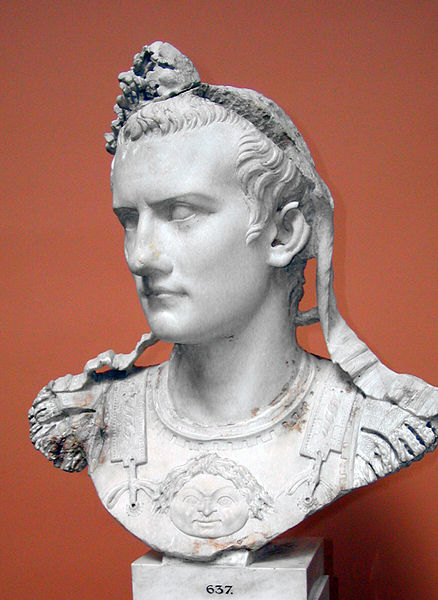
I sometimes wonder what it must’ve been like to live in Rome as Alaric was whetting his sword among his Visigothic horde. Insane—literally insane—emperors wielded unchallenged power and lived lives of opulence amid the slaves and poor. Religion was front and center on the agenda, of course, because emperors were gods. You don’t have to listen too deeply to hear the same message even today. Those who proclaim God as the justification for their political ambitions know that God is the ultimate malleable deity. In fact, God can even be in the Oval Office. Lead can line your aqueducts and your horse can be made a senator. Lord knows an ass can be. And all the while let’s shut down the voices of those who’ve looked at religion, beginning in the Stone Age and up to now. If we want to grab power it’s vital that we keep it from public view that self-deification is as old as kingship and in a post-religious world, we have only to pretend.

Photo credit: Louis le Grand, Wikimedia Commons

Photo credit: Louis le Grand, Wikimedia Commons


Addam’s Evve

MaddAddamDystopias can be optimistic. I just finished reading Margaret Atwood’s MaddAddam, and came away from it strangely at peace. The third of its eponymous trilogy, the story takes place in a future that is simply a continuation of where we are at the moment. Things have gotten pretty bad—most of humanity has been wiped out, genetic engineering has taken dreadful liberties with creatures human and non, and corporations have fulfilled their dreams and have taken over at last. The few good people left are tormented by those society has made into sociopaths. Global warming has proven the naysayers false, and yet, despite all this, there is room for hope. Tying together the various strands from the previous two books, Oryx and Crake, and The Year of the Flood, MaddAddam is probably the most eco-conscious trilogy on the planet.

Apart from the many obvious biblical allusions (I often wonder what it must be like to miss so much, for want of familiarity with holy writ), the book also introduces a fully functional faux church. Atwood can be at her best when taking on the charlatans of piety. Cynical and calculating, “the Rev,” father of two of the ensemble cast, is everything a televangelist is, and more. Indulging in all that he denies his flock, even Elmer Gantry would have trouble keeping up. The Church of PetrOleum represents the most damaging of industries in a world already suffering the consequences of the greenhouse effect. Corporations make it rich while the Rev takes out his personal issues on his wives and children. Instead of being on the side of paradise, the church introduces chaos.

Through the gloomy scenario she’s foreseen, Atwood is able to see glimmers of a future that has possibilities. The protagonists are the members of a commune of a green religion, earth-centered and bearing a resemblance to both Wicca and monastic Christianity. That spiritual tradition, an offshoot of more established churches, is seen as dangerous by the corporations. And with good reason. Despite what televangelists tell us, spiritual truth is not on the side of big business. Jesus was no trickle-down economist. Reagan was no messiah. Corporate greed leads to blocking laws to clean up our world. We do not have control over what geneticists are doing, and, in fact, most of us have no idea what we’re eating or wearing any longer. Or what it is they’re packaging our food in. We are the consumers. Taught always to consume more. And the more that we are told to consume is the very planet that gave us life. My hat is off to Atwood, who still seems some possible cause for hope.


Under Who?

Who is God anyway? The question occurred to me as I read about the current Superior Court decision in New Jersey that “under God” in the Pledge of Allegiance remains constitutional. The American Humanist Association had sued to have the offending prepositional phrase removed, based on first amendment rights to religious freedom. I’ve always found the whole indoctrination of swearing to a flag somewhat provincial and perhaps even damaging to the unity of humankind. Nations, after all, are about keeping things for ourselves, something that the God of the Bible seems to find naughty. During the Cold War, waged against the “godless Communists,” the questionable phrase was added in 1954, only after we’d secured nuclear weapons. Does any nation that has the bomb have the right to declare divine sanction? I guess so, on second thought.

IMG_0962In his decision Judge David Bauman said that God, in this context, is not about religion, but about the state’s history. Granted, one of the New Jersey delegates to sign the constitution was a clergyman, and president of Princeton College. The same Princeton that became the home of the man who would open physics enough to let us begin a nuclear reaction. But I’m getting ahead of my story. This concept of God being an arcane aspect of history as opposed to a present and active force motivating people’s lives is a curious one. In order to keep the deity, he (and the historical God is male) must be demoted to an historical relic. If that is true of divinity, what does it say about the concept of nationhood itself? Have we come to admit that it is all a fiction to keep status quo ante?

Humanist and atheist groups have argued for years that public school (which no government takes that seriously) should not be a forum for religious indoctrination. Some religious groups (such as Creationists) clearly see such schools as a mission field ripe for proselytizing young minds. Such was clearly the case in 1954. Today we see the Russian Orthodox Church becoming a supporter of the government in Russia, where godlessness might be more a factor on the ground than on paper. In the United States we have a culture that provides lip-service to the almighty while the true god is secreted away in the shrines of bank vaults and expense accounts. It is really about a way of life, after all. Should we keep or remove “under God” from a pledge to personal gain? It is all a matter of how you define “God.”


Sporting Chance

IMG_0997

I didn’t watch the SuperBowl last weekend. In fact, I haven’t had television service for over two decades now. I don’t really miss it too much since I don’t have time to watch TV (the commuting life leaves time only for sleeping and working, except on weekends). Still, for special events, I think, it might be nice to see things live. (My wife raises this point every time the Olympics roll around. I seem to recall them being every four years, but now it seems they’re seasonal, and about twice as frequent. Could it be that advertising revenues are really that important? Maybe I missed that, not having television…) Even when I have managed, over the last couple of decades, to pull the SuperBowl onto a fuzzy, snowy screen, it was for one major reason—the commercials. I wonder what that says about a society? I now spend precious weekend time watching commercials on YouTube, sometimes having to watch a commercial for the privilege of watching a commercial. The substance without the fluff of the actual entertainment.

So it was that I saw the Mophie commercial about the apocalypse (here’s the link, in case you’re as entertainment-challenged as I am). So as the world comes to an end, the weather goes even more wonky than we’ve already made it go, Fortean fish fall from the sky, dogs walk their owners and priests steal plasma television sets. Then the punchline, God’s cell phone dies and the end of the world ends. It isn’t the shock of seeing an African-American God—Morgan Freeman led the way there with Bruce Almighty—but rather the technique, the divine delivery, if you will, that is the shock. Not even God is anything without his cell. (I wonder when we’ll see a Latino woman as God? Dogma came close, but not quite.) Is the smartphone really not the deity here?

God, it seems, has become a null concept. I don’t mean because of different racial or gender presentations, but I do mean that the concept itself is completely up for grabs. God, according to Anselm of Canterbury, is that being greater than which nothing can be conceived. In fact, God seems to be that which people worship, more of a Tillichian ultimate concern. A wired world should, in theory, be a world headed toward peace and equality. If we know what’s going on everywhere, shouldn’t we be doing our best to ensure that it is fair and just? The truth of the matter gives the lie to such optimistic musings. I would hate to confess just how much my phone bill is every month. Even without the “triple play” (no television) it is the biggest expense after college tuition and rent. And it goes on, in saecula saeculorum. When I pull out my smartphone, I gaze upon the face of the Almighty. And perhaps that’s a good thing, because how else would I entertain myself without television?


They Might Be

Last week I mentioned that a letter-writing friend had sent me two articles from the 1868 Prescott Journal newspaper. Some time ago I did some research into the history of newspapers since many of the stories from the early days of the medium seem difficult to accept. Perhaps it was a more credulous time, or perhaps newspapers were a form of entertainment as well as information, but the occasional hoax made its way into the pages of even reputable papers. I’m always surprised how many tales involve a kind of biblical literalism, whether stated or not. The second story from the aforementioned Wisconsin newspaper has to do with a giant skeleton unearthed at the Sauk Rapids. At ten-foot-nine, this veritable Goliath was estimated to have weighed some 900 pounds when alive. This prodigy sparked some piety in the writer, who concludes by stating, “We hope ‘642’ [the article doesn’t hint at the referent here] may learn humility from this dispensation of Providence, and that a view of the ‘femur’ and ‘fibula’ of this deceased stranger, may teach him the futility of all attempts at fleshy greatness in these degenerate days.”

Quite apart from the pious closing, the idea that giants once inhabited the earth is indeed biblical. Studies have been undertaken that speculate on why people of antiquity believed in giants, and one of the more plausible explanations has to do with the discovery of megafauna bones. Not having a conceptual world wherein dinosaurs or mammoths might fit, giant leg-bones and ribs, for example, look pretty much like those of people. Only much larger. Whatever the reason, people all over the ancient Mediterranean believed in an era of giants, and that belief made its way into the Bible as well as into Greek mythology. Only, if the Bible says it, it must be true, no? And so, finding giants in the earth is not to be unexpected.

Goliath_Bible

Interestingly enough, this craze of finding giants has not ceased. The internet keeps bogus photos of unearthed giant skeletons alive and the explanations we’re given amount to proof of the flood. After all, the Bible says giants came before the flood, and if Noah wasn’t a giant, well, they had to have been wiped out, right? But then they show up again later in the form of the Anakim or Goliath and his kin. The question of whence the giants 2.0 came is not answered, but if it’s literally true then there should be no surprise if one should turn up in Wisconsin. After all, other oddities have turned up in that same state, some of which still defy explanation in the rational world of the twenty-first century.


Psalms of Lament

Fate can be decidedly cruel sometimes.  Accidental discoveries can be the most painful of all.  As my regular readers know, I wrote a book on the Psalms (Weathering the Psalms, Wipf & Stock—on sale now!) while teaching at Nashotah House seminary.  I sent the manuscript to Oxford University Press, and it was declined on the basis of one review.  Subsequently, I met the reviewer at a conference reception and he is now working on a book proposal for me.  Such are the ironies of life.  I can let that go with a chuckle of existentialist bonhomie.  The twist of fate comes in through helping a colleague with a question about the Psalms.  I grabbed the nearest book at work that would help, the newly published Oxford Handbook of the Psalms.  I’d glanced through it before, but this time it fell open to the contributor’s page and the words “Nashotah House” fell upon my eye.

IMG_1898
 
During my years at the seminary, I published at least one academic article a year, as well as a book, and I attended and delivered papers at the major professional conference every year.  No one ever approached me about contributing to a Handbook, apart from my advisor and friend Nick Wyatt.  I labored at building an academic career for 14 years in obscurity.  Now, the newly hired replacement (not the faculty member hired to replace me) gets invited to contribute to a major reference work.  I do not know the man.  He may be a perfectly personable chap.  Some of us, however, can work our hardest and never get noticed.  It seems as if the world of scholarship is really just a house of cards. 
 
Perhaps in times of schlock and flaw, such as these, I should turn to Ecclesiastes for comfort, rather than Psalms.  Yes, the Psalms say some pretty challenging things to God—not as challenging as Job or Jeremiah, but still.  Ecclesiastes, however, is the one to calm the intellectual’s soul.  There are those who claim that the Bible no longer has any utility in a post-Christian society.  Wise Qohelet, I’m sure, might just agree, even as he disagrees.  I tried, without benefit of sabbatical, and with additional administrative duties, to make an academic life for myself.  I was, in reality, just shuffling the deck with old Solomon.  We took turns building layer upon layer, he and I, both knowing that our house, like any built on sand, could never stand.  It must be some of that sand in my eyes; otherwise I can’t explain why they are watering so.