Good, Evil, and Normal

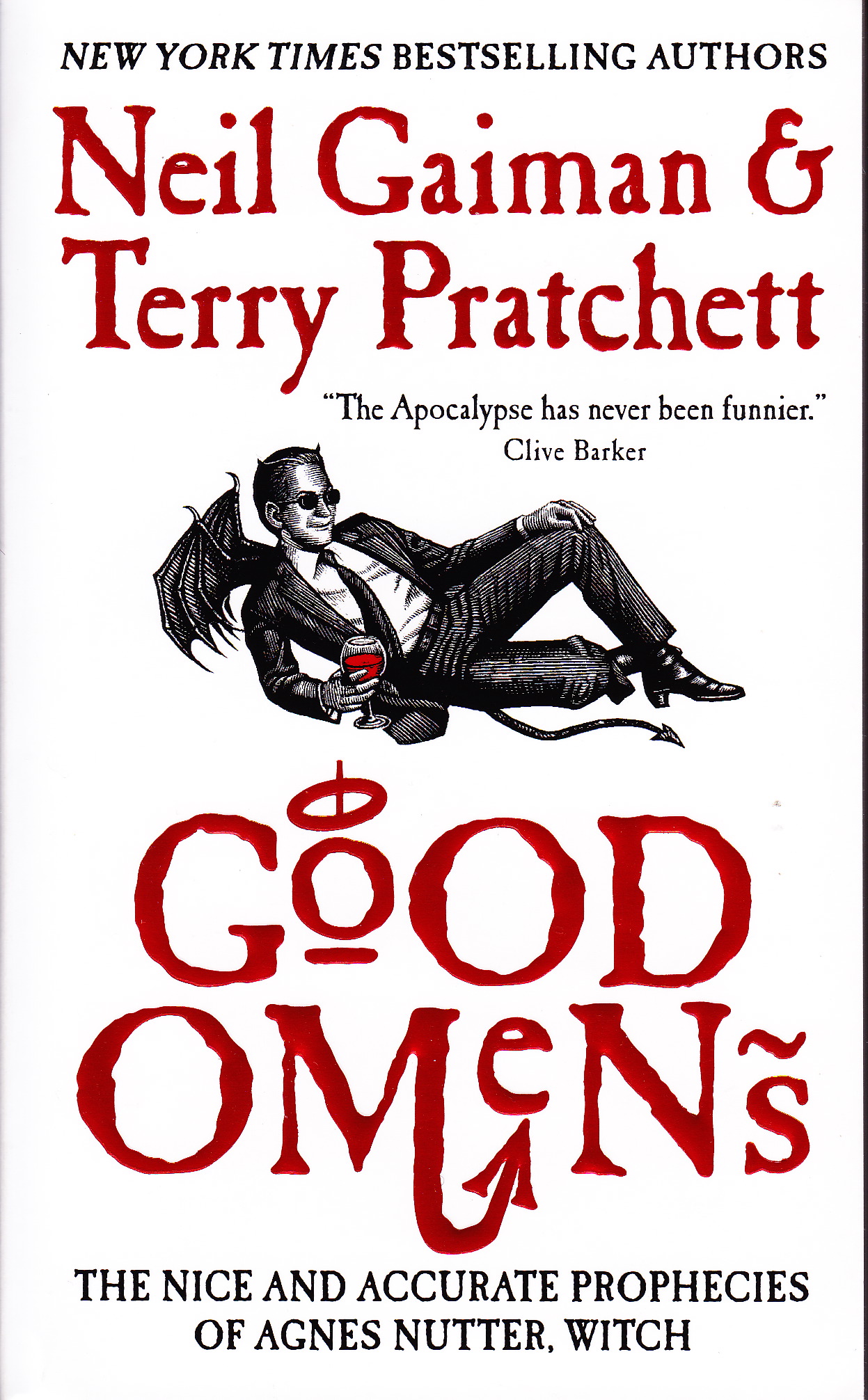
GoodOmensTo date I’ve read a fair number of Neil Gaiman novels. One of my students started me out on American Gods and I pursued his others on my own after that. I was a little unsure about Good Omens, however. I guess I’ve always been dubious about the quality of co-written books. Terry Pratchett, an accomplished novelist in his own right, paired up with Gaiman on this one, and it took the wisdom of another student, albeit recently graduated, to assure me that it was worth the effort. Given that it’s about the apocalypse, or perhaps an apocalypse that doesn’t quite take off, there seemed to be no reason not to give it a try. It is, at the end of the day, a charming book with colorful characters and an Antichrist who gets switched at birth and grows up in a normal household and herein lies the tale.

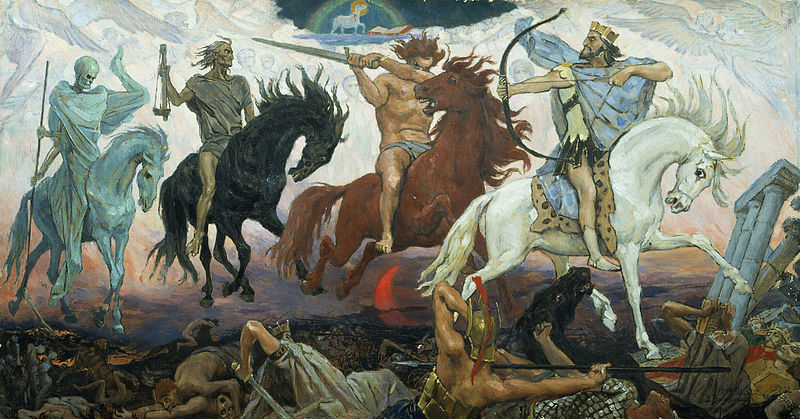
One of the most common religious themes in novels is the end of the world. The four horsemen of the apocalypse are one of the most striking literary tropes of the first century, if not of all time. The real question about the end of the world, it turns out, is—why can’t it be funny? For those who’ve pondered that, Good Omens is the book for you. It actually does help, however, if you’ve read the Bible. It adds to the cumulative effect. Subtitled The Nice and Accurate Prophecies of Agnes Nutter Witch, the book revolves around the certainty of the written word. Prophecy, however, just as in the book, only achieves verisimilitude in retrospect. The prophets didn’t always get it right, even in the Bible. Human choice often causes a breakdown in divine plans. In Good Omens, you’re pretty sure from the beginning that the world won’t end, but you’re not quite sure how it won’t end. The unfolding of the story eventually addresses how a prophecy can fail.

Free will, those who specialize in theology and philosophy will say, is among the more difficult of phenomena to pin down. Some predestinarians would say it’s all an illusion. We are programmed to do what we do. Ironically, some reductionistic materialists would say the same thing. Each of us, however, trudging through out days of toil and play, feels like we’re making our own decisions. True enough, sometimes circumstances decide for us, but if we were given the choice of good or evil, wouldn’t we approach it the way we approach just about everything else? Along the way, the demon Crowley asks a pointed, poignant question: why would God make people inquisitive and then forbid them some obvious, desirable fruit? Isn’t the conclusion foregone? Any writer today would know the outcome before the first sentence was finished. And so, free will is off and running. I hope that the fact that the world doesn’t end won’t be a spoiler for anyone, because I also hope that others will read Good Omens and learn a great deal about how demons can be good, angels can be naughty, and people will always just be people.


PTSD

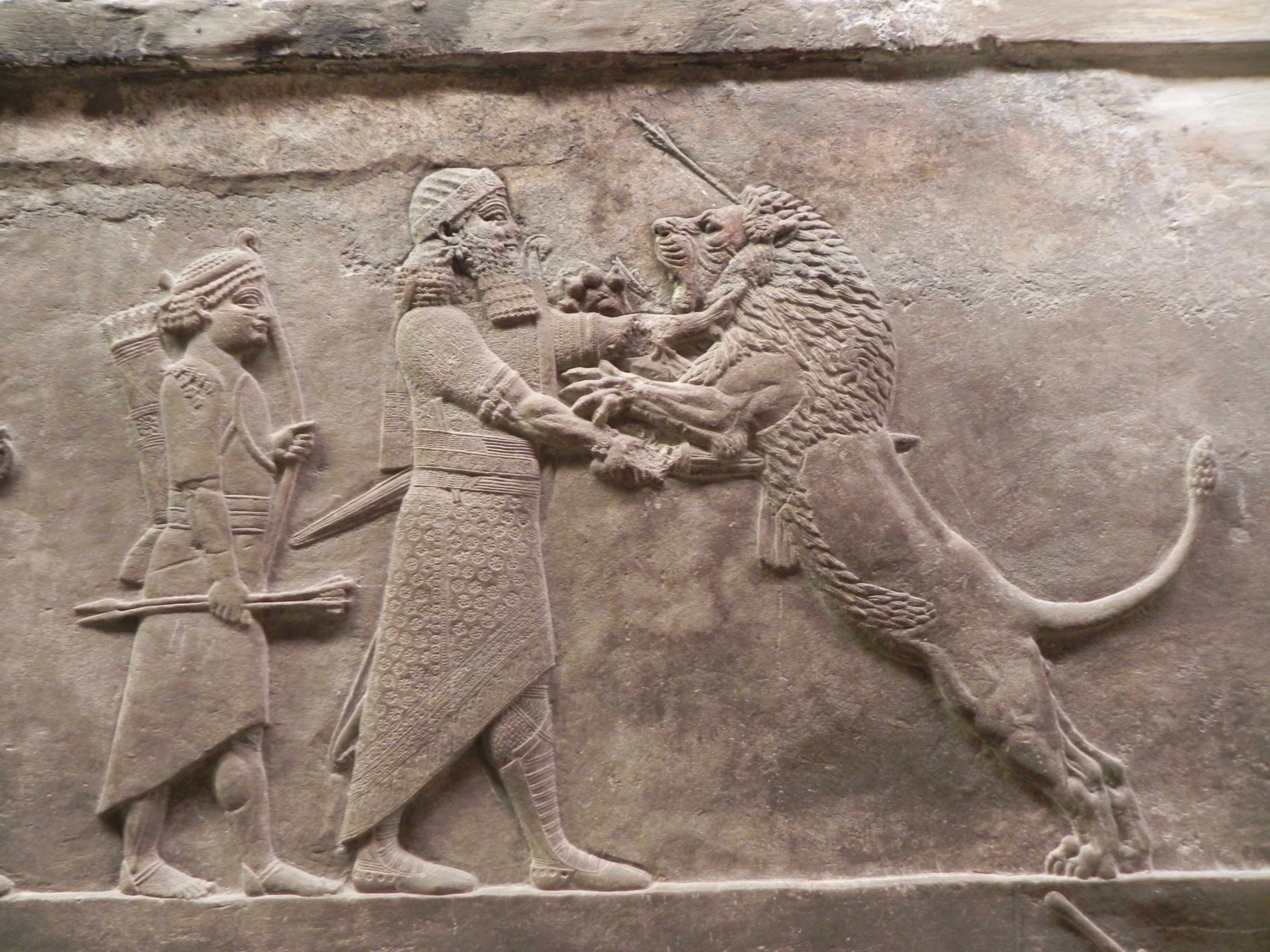
In a recent post on BBC Health, James Gallagher discusses ancient Assyria. What can ancient Assyria have to say about modern health, beyond the occasional liver model used in haruspicy? Post-Traumatic Stress Disorder, of course. As Gallagher notes in his article, PTSD was diagnosed after the Vietnam War. That doesn’t mean it wasn’t in existence long before then. In fact, it stands to reason that if people experience it now, they likely experienced it during traumatic events then. War is among the most horrific and tragic activities in which humanity engages. Men, in the days of Assyria, sent to kill other men in the hundreds, and thousands, could not have walked away from the battlefield unchanged. There are those who seem not to suffer, but the majority of us know that, no matter how just the cause, it is simply wrong to kill others. On a massive scale it can only be worse.

Trauma

Trauma

Multiple stresses, I would contend, go undiagnosed. I have known those who’ve experienced significant loss—a job, for example, in an economy that makes future prospects dim—who begin showing the same kinds of symptoms. They are, of course, not diagnosed with PTSD, but are simply told to either buck up or go see a shrink. “Pull up your socks,” as they say in the UK. I wonder, though, if it is that simple. People throughout history have been capable of inflicting great stress on one another. Sometimes it becomes so normal that we don’t even recognize it. The forcing of loss and resultant terror of future deprivation is a daily affair. The civilization we’ve been is so complex almost to demand this kind of horror. We may not be sent to the battlefield to kill others, but we are daily faced with situations that cause us great pain, often for prolonged periods. And we wonder why people aren’t satisfied.

Please don’t misunderstand me. I have no doubt that the level of stress faced by those who survive war is severe. I don’t make light of it. Being a pacifist, I do believe there is a solution to war that involves education instead of fighting, but I don’t in any way suggest that those who suffer aren’t suffering in reality. They are. Sometimes they can no longer function in society. We institutionalize, cut funds, then send them out on the streets. This is nothing new. As Gallagher points out, soldiers in antiquity weren’t professionals. All healthy men, apart from the one-percenters of the day, served in armies on a rotating basis. One thing, however, has not changed over the millennia. War today remains as unnecessary as it was then. If we could turn our attention to improving the lot of the 99 lost sheep, the one already found might, to its surprise, be much better off if all were accorded ample care.


The Last Word

The end of the world, it seems, never goes out of fashion. My wife shared a story on the BBC about CNN (such self-referential media hype may be a sign that society is collapsing already) having a video ready to release for the apocalypse. In a bit of end-of-time sangfroid, it is rumored, CNN’s Ted Turner ordered a last-second video to be made so that loyal CNN viewers would be ushered out with his version of the last word. The media, of course, is a powerful segment of society. Occasionally schools and businesses are shut down due to their meteorological predictions. The media tells us who the experts are, and why we should listen to them. The media provides us with some of the only fact-checked material from far-flung ends of the globe—or even outer space—to which we, the people, would not normally have access. The media, in other words, determines reality.

800px-Apocalypse_vasnetsov

Meanwhile I wonder, as I often do, what gives those who own media corporations the right to determine reality for the rest of us. For example, if the rumor of Turner’s video is true, what would give the rich and powerful the right to determine what flashes before our eyes as the world winks out of existence? The apocalypse, after all, is a religious concept. Although largely developed from biblical scripts, other religions do occasionally have their end-of-the-world myths, just like most religions have beginning-of-the-world myths. If you have billions of dollars, does that mean you have the right to determine end-times viewing? When money determines the truth, the world has already ended.

Nevertheless, the idea lives on. We are constantly reminded that one or another religious sect has declared that the end is nigh. We’ve heard it so often that we’ve ceased to pay attention. In a world where the media has largely dismissed the rest of the Bible (except when blockbuster movies come out featuring a biblical story) why does Revelation still hold such currency? After all, the apocalypse takes its very name from the final book of the Christian Bible, and without Revelation we might be none-the-wiser about the looming end of all things. Revelation was very much a product of its time. Despite the progress of science and technology that gave us the media corporations we blandly recognize today, we still harbor doubts deep down about the longevity of it all. Even those who write the news look to other media giants to get some hints of the truth. Ironically, they don’t seem to want to ask scholars about it. After all, sensationalism is news. At the end of the world, we really don’t care what scholars have to say, as long as we’re entertained.


Charlie Hebdo

With the tragic news coming out of Paris, a predictable set of recriminations are about to begin. Because of the actions of some extremists, “religion” will be labeled a danger to civilization and the sad loss of life at Charlie Hebdo will be chalked up to secular martyrs in the cause of reason. The reality, however, is not so simple. Fundamentalism, as one of my influential teachers used to say, is not a theological position—it is a psychological problem. Indeed, religion does not cause Fundamentalists to become violent, it is rather that religion is used as an excuse by Fundamentalists to act out their aberrations. The religious impulse, no matter how rational we become, will never go away. Those who fear that civilization will collapse might do well to reflect on the fact that religion is one of the earliest defining characteristics of civilization. It is a formalized expression of a deeply felt need, widely shared.

At times it feels as if we’re caught on a possessed merry-go-round. We weaponize our world without stabilizing economies or opportunities. (I know I’m oversimplifying here.) People turn to religion for consolation. Religions give some people the strength to deal with their difficulties. Others will use their religion to justify their hatred and fear. Weapons are nearly as easily found as sacred scriptures. One, however, is much easier to use than the other. Twelve people lie dead for trying to make the world laugh. Three others are surely feeling justified by the extremity of their faith. There is truth in the concept of weeping clowns.

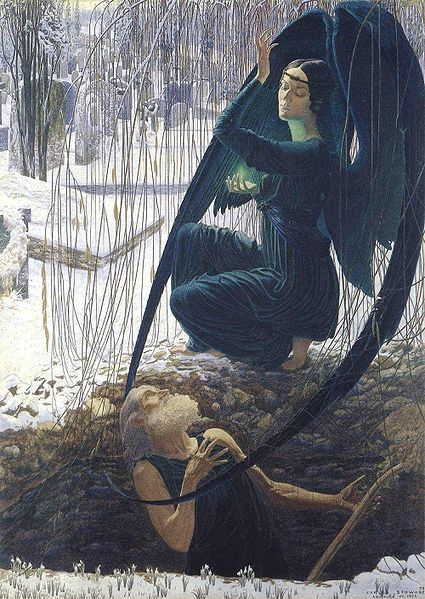
Carlos Schwabe, Death of the Undertaker

Carlos Schwabe, Death of the Undertaker

Ironically, in a world where pundits and experts refuse to give any credence to religious beliefs, and do not support the study of religion and its offshoots, multiple times each year we find the press asking why this happens. I’m not suggesting that those of us who study religion have an answer, but I am suggesting that we might have some insight. Instead of the knee-jerk reaction of claiming that “religion” has claimed more victims, we need to realize that criminals have claimed victims, both human and abstract. The shooting at Charlie Hebdo is a sad reminder that simple answers are seldom correct ones. My plea has, however, never been complex: supply education, not assault rifles. That’s something in which we can believe.


Not Your Grandma’s Moses

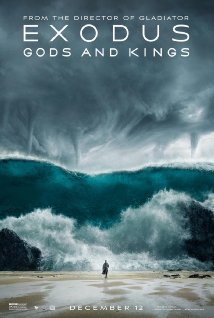
Exodus Gods and Kings

Exodus: Gods and Kings is, in many ways, a startling movie. It didn’t leave me with a strong impression of profundity, but it did make me a bit reflective. The media hype about God as an eleven-year-old boy proved to be merely hype. In fact, the boy deity was one of the most intriguing characters in the film. The role was played respectfully, and God, like a good Englishman, favored his tea. There was nothing comedic about it, however. More troubling was the agnostic Moses, à la Clash of the Titans with its unbelieving Perseus. Moses, even after meeting God, comes across as having little interior life. He hides in a cave and builds an army of terrorists making him seem like Moses bin Laden. He conceals himself while innocent Hebrews are hanged for his crimes (and did they even hang people in ancient Egypt?). When a great storm brews over Memphis, however, it is with a sense of wonder that we ponder at an eleven-year-old doing all this.

The movie plays lightly with the scholarly “explanations” that used to be doled out in seminaries about how one plague led to another. In fact, the character called “the Expert” in the credits is shown lecturing the Pharaoh on the causation scheme of clay churning up in the Nile turning it red, and killing the fish which in turn drove the frogs from the toxic water, but when they died flies came along and the flies spread disease. Then the Expert is hanged. Not so subtle a warning to biblical scholars. In fact, there seems to be a science behind much of the movie that makes miracles less acts of God than acts of nature. Even the drying of the Red Sea is understated. Its return is reminiscent of the Christmas Tsunami of 2004. God is sometimes not there when you’d expect a deity to care.

On the matter of caring, for an age of nones who have concerns for equality, the film was thin on women’s roles, making even the Bible appear to foreground them more. Sigourney Weaver—great in any context—seems only to be there to wish Moses dead. Even Miriam is given scant lines in the movie and no role in the Exodus itself. In Prince of Egypt she at least led her famous song. Zipporah is lovely but shows no sign of being as handy with a flint knife as Exodus makes her out to be. A woman of action. Miriam’s quick thinking saved the infant Moses. Overall, however, the Bible is a guy’s book, and Exodus is a guy’s flick. Opening with the battle of Qadesh on the Orontes is a way to draw men to a Bible movie. Lots of slashing, gashing, and charging horses. And the splendor of Egypt, filmed in Spain and the Canary Islands. Some miracles, it seems, are even impossible for CGI.


Behind the Exodus

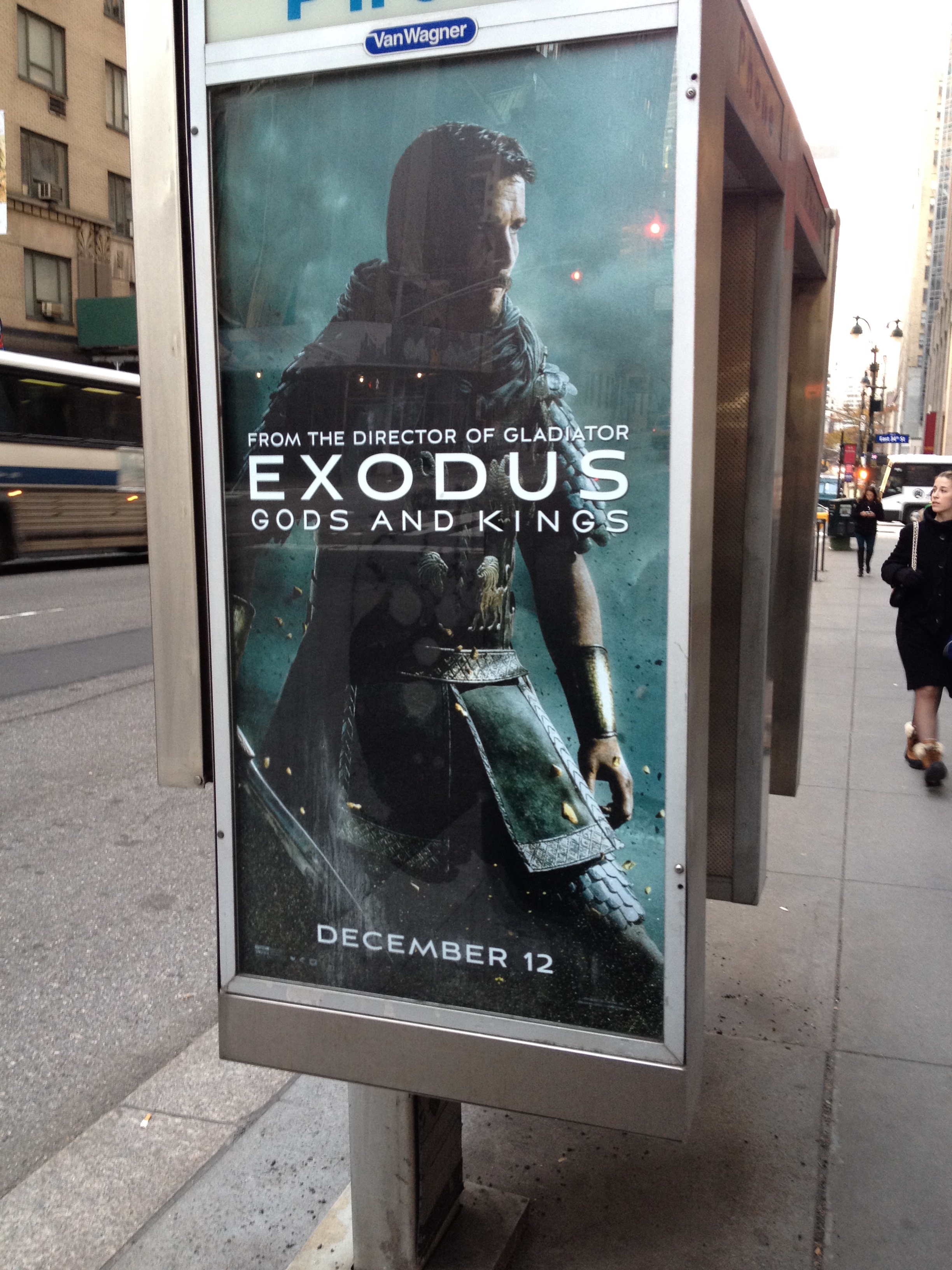
Over this past week two of my friends/colleagues were quoted in major media outlets about Exodus: Gods and Kings. Being merely a blogger with nearly two decades of teaching Hebrew Bible means, naturally, that I have nothing valuable to say. Nevertheless, I would meekly venture to make my own observations and cast them out there into the world-wide web and see what happens. I haven’t seen the movie since it only opens tomorrow. I already know it is only loosely based on the Bible. Still, I wonder at the talking heads who constantly declare the Bible to be irrelevant to a throughly modern world. Okay, so I realize that this is about money, but Manhattan is often seen to be one of the more sophisticated cultural landmarks in the country. This summer I couldn’t walk more than a book or two without being inundated with Noah posters. Now I am finding the same with Exodus paraphernalia. If we try to put the Bible away, it seems, it will come to find us.

IMG_1843

The Bible, relevant or not, is full of great baseline stories. Even in a secular society we can see the appeal of Noah and his menagerie to young children who are so fascinated with animals. We decorate youngsters’ sleepwear and toys with elephants and lions and giraffes (interestingly not mentioning that these are primarily African animals) aboard an ark with an unfailingly cheerful Noah. Now we have another classic—the great liberation story (also set in Africa) of a people held in bondage being released by divine command. We are a post-Christian society, according to the pundits, so who this divine one is remains an open question. The idea that one people is kept oppressed by another people, however, is presented as unequivocally wrong. Moses rides out on a horse, weapons in hand. Are we not focusing on the larger point yet?

IMG_1848

This latest love affair with the Bible as a source of great cinematography will not last forever. It will surely ebb away until only a few old blog posts might remain to remind us there was a time when Holy Writ inspired screen writers and directors. Nevertheless, the Bible bides its time. Back in the days when I used to teach Hebrew Bible Hollywood didn’t do too much to help out. Students had to slog through pages of picture-less Bibles to get the gist of the what God had in mind. The results may not be the same from those comfy seats in movie theaters, but a future generation will come to see Charlton Heston as a white man who loved guns being overcome by a newer generation of producers and directors who know there is a larger story here. Of course, I’m only a blogger with no credentials. Still I know what I see on the streets of the city.


Entitlement

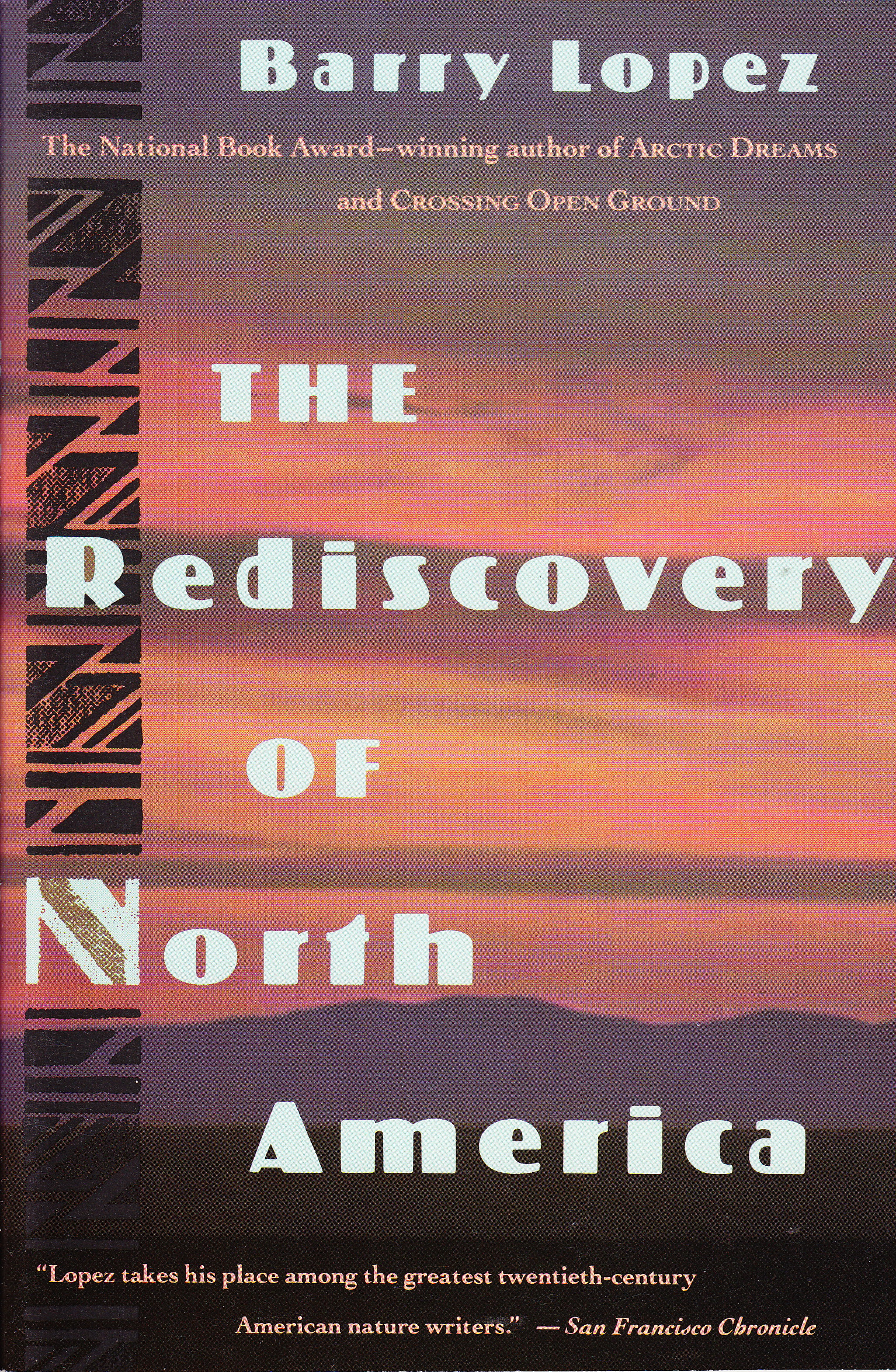
LopezNorthAmericaAs winter begins to settle in, I recall reading Barry Lopez’s masterful Arctic Dreams many years ago. That book left such an impression that when I saw his The Rediscovery of North America—a very small book—I thought it was worth the asking price. Lopez is one of those nature writers who can transport the reader into the world he observes. This brief volume, however, takes the reader to a very different kind of world—the world of European interaction with North America. As children we (and I speak for myself, or perhaps my generation) were still taught that Columbus was a kind of hero. He ventured into the unknown and discovered an entire new world. That world became the everyday place we inhabit with our comforts and our toys. Things only got better from there. Of course, I learned to distrust this view by the time I was an undergraduate, and my perspective has turned a bit more serious since then. These events, viewed from the perspective of the Native Americans, have a completely opposed outlook. Lopez tries to capture a sense of how to rectify these wrongs in his Thomas D. Clark lectures that make the basis for this book.

Greed, no doubt, drove the early explorers of the new world. And a sense of entitlement that has not diminished with the passing centuries. While it is not as simple as tracing this sense of ownership back to Genesis, clearly the Bible plays some role in it. Religions that teach their adherents that they have the sole truth will inevitably lead to entitlement. Monotheism, as I’ve noted before, possesses the tendency to make absolute claims. One God, one Church, one Truth. And non-believers become expendable. To the Catholic Spaniards setting out for the new world (or actually, old world, but tripping up on the new along the way), as Lopez points out, were driven by lust for gold. And spices. And fornication. Things that, if one took it seriously, would be decried by the church as vices. Still, taking advantage of the gullible and helpless is a time-honored practice among many religious bodies, and we know that genocide ensues.

Somehow history has taught us that some genocides are worse than others. Those inflicted on native populations, perhaps because they weren’t always intentional (in the case of diseases) are sometimes still given a silent assent. Yet, as Lopez makes clear, the intention to murder was there already. The conquistadors had already decided that the natives did not deserve the same rights as the God-blessed new arrivals. What saddens me—and I think Lopez too—is that this same sense of entitlement, instead of tempering with time, has continued to increase. Tea Parties and American Values often include removing those who disagree. Inconvenient indigenous populations that aren’t mentioned in the Bible except as Canaanite stand-ins. And should we care to make right what was perpetrated, perhaps we ought to consider rediscovering North America.


Texodus

I’m not sure what Patheos is, but it has been on my web-radar (or is it “ping”?) for some time now. They host bloggers with a more substantial platform than mine, and often have a number of comments that must require a full-time coterie of first responders. As a working class blogger, however, I siphon off their success to spin my own ideas a little further. All of this is preface to the fact that a recent article by Michael Stone on Patheos comments on Texas’s approval of textbooks where Moses inspired “the American system of democracy.” We are all used to Texas shenanigans by now, but making laws with the ultimate lawmaker just as a movie is being released that portrays Moses as a warrior is apt in a way that Rick Perry’s stomping grounds may not truly appreciate. The need to validate outdated laws with a largely mythical biblical figure is telling. Revisionist history depends on the version of history that is more compelling at the moment, and I find Moses charging the Egyptian army on horseback eerily appropriate.

Textbooks are insidious. They are society’s first crack at young, and naturally open, minds. As we socialize the rising generations to support that with which we’ve always felt comfortable—not wanting to jeopardize our ease in our advancing age—it becomes important to provide the appropriate propaganda. As I speak with fellow scholars (if I may be so bold) I frequently hear them decrying textbooks. By their nature they are a leveling off of what naturally comes in mounds—heaps, even. They are a tool used to keep everything even in a world of rough knowledge. They are insidious in that they are hard to override. Those of us who’ve taught in college know how difficult credibility is when “the book says” is the standard line of recourse. If it was published by Pearson corporation, it must be true.

Revisionist history.

Revisionist history.

Of course, we venerate the published word. Today the Bible, I suspect, were it newly composed, would have difficulty finding a publisher. Since it was written a couple thousand years ago, however, it retains all the trappings of hoary wisdom that is required to make the elders comfortable. Even scholars of the Bible have, as a matter of course, questioned Moses’ role in the story for centuries. As early as the Middle Ages some sages were asking how Moses knew to write his own death scene. Even so, the vast majority took the word literally, and now that we’ve defined ourselves as a “Christian nation,” or at least the southern half of a Christian nation, we can use the Bible as a textbook. What could be more natural? On the big screen I anticipate Christian Bale charging the Egyptians on horseback. In the Pentateuch I read of Moses hiding behind Aaron’s eloquence. One is biblical, but is it believable? If it comes to a contest of force between the two, I’ll go with Ridley Scott every time.


Get Out of Town

If the Bible were to be written today, it would be more graphic. Those who’ve read it know that it is a graphic book already, but with no literal illustrations. Somewhat surprisingly for a post-Christian society where the Bible generally gets bad press, this year has seen the release of at least two major movies based, loosely, on scripture. Noah came with a flood of hype this summer, and even then we were told to keep an eye out for a movie on the exodus later in the year. The New York Times heralds the imminent arrival of Exodus: Gods and Kings with a movie preview. Like Noah the new movie will take liberties with the biblical accounts of the exodus. (The Bible itself is not consistent on the story in any case. The “Song of the Sea” in Exodus 15 differs considerably from the prior prose account.) Ridley Scott, who gave us Alien, has cast the iconic Batman, Christian Bale, as Moses. When I first read about this during the summer, I wondered how Bale would take the meek role of the humblest man on earth. With considerable chutzpah seems to be the answer.

The review by Michael Cieply and Brooks Barnes, however, make the most not of Moses but of his mentor, Yahweh. Using an eleven-year old, Isaac Andrews, as the deity, the movie “preserves the awful severity of the Old Testament God.” In this it touches on one of the sore-spots among biblical scholars and theologians both—the characterization of a bifurcated deity. God in the New Testament is frequently said to be loving and kind (except for the iron-clad rule that makes him (as he is male) sacrifice his own child), while the deity of the Hebrew Bible is said to be angry, mean, and vindictive. Others say he’s simply just just. We like to see a divinity who is swayed by mercy and is deeply aware of the human condition. The Bible presents, it seems, a conflicted God who is sometimes just as confused as we are.

800px-Lamentations_over_the_Death_of_the_First-Born_of_Egypt_by_Charles_Sprague_Pearce

Casting a deity who is forever young, however, may be a stroke of genius. In the Bible, in as far as there is a coherent storyline, God does seem to evolve. Sure, there are those who claim God always remains the same, but any deity whose first recorded words to Adam and Eve, after laying down the rules, take the form of an interrogative certainly must be able to learn and grow. Of course, it is very much like a human to suppose that the world could not have existed before we got here to see it. We who are so fascinated by the idea that the world could have carried on without us for the generations before we were born. What was God doing in those eons, besides playing with dinosaurs, like a child? I don’t suppose Exodus will delve into those questions, busy as it will be with battle scenes and other adult situations. At least if it’s true to the Bible, which, despite popular opinion is so graphic that would have a hard time retaining an R rating, if taken literally.


Welcoming the Stranger

Profiling is alive and well. In our post-9/11 state, we are even more suspicious than those who are different than we were before. After the Ferguson decision, profiling once again led to unrest. If we didn’t do it so much, cases like this wouldn’t be necessary. If we didn’t shoot first and ask questions later, how much more would we understand? It happens, unfortunately, at all levels. I have no desire to trivialize the tragedy that continues to unfold over race relations, but divisions of those perceived potentially to cause trouble occur at even smaller, less significant levels. We tell ourselves that it is possible to gauge a person’s potential for violence based on a number of factors which happen to fall along lines of gender and race. Your typical airport screening is an example.

As my readers know, I object to the millimeter wave scanners in use in many airports. In general, I object to being treated as a criminal when I have been a pacifist since high school. (And likely before.) I am treated like a law-abiding citizen everywhere except the airport. Flying home from San Diego, I noticed that at check-in men traveling alone were separated out and sent through the scanner. The side on which I had to pull off my shoes and belt and coat, empty my laptop from my bag, and stand on the chilly floor awaiting an opt-out, was very masculine indeed. The woman in front of me, who looked far more frazzled than I did, was sent to the metal detector, along with her stroller. No threat there. Being male, however, is always a threat. Two priests stood before me in line. They didn’t go for the pat-down.

Potential terrorists, all.

Potential terrorists, all.

On the plane, many passengers began to talk about the American Academy of Religion and Society of Biblical Literature meeting. After all, about half the passengers had just come from the conference. For me, I was ready for some quiet. Some time to center myself after playing the extrovert and talking to people I don’t know for four long days. As debates about religion broke out on the Boeing 737, I began to understand why religious folk are often profiled as potential threats. Their convictions, public and firmly held, are more likely to remain constant in the face of contrary evidence than are most opinions. I wonder if airport security couldn’t save us all some time, money, and embarrassment. Couldn’t they just ask passengers to declare their faith? Of course, we’d need to find some other employment for government officials whose duties involving feeling strangers with latex gloves before wishing them a pleasant trip. While high above the planet riots are breaking out down below because we distrust those who are different.


Thank You

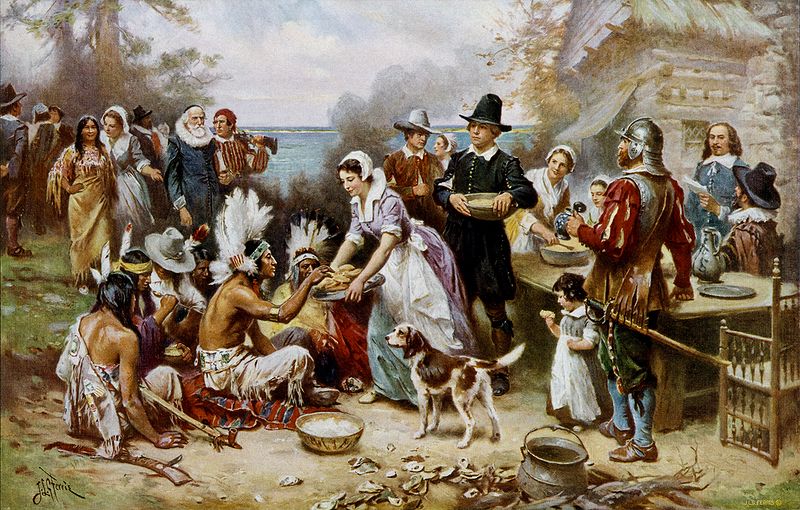
Comments being rare on this blog, I do read them when they come along. Recently I had a reader comment, in the form of a question (as sometimes happens): “Do Native American Indians do ‘Thanksgiving’?” Although I’m fairly certain this was intended as a rhetorical question, I was raised a literalist and couldn’t help trying to formulate an answer. Although I can make no claims to know Native American culture well (I wish I did) it led me to ponder the concept of Thanksgiving. No doubt the idea had at least informal religious beginnings. Even with the early European settlers, a religious diversity was already appearing. Still, although the Native Americans lost pretty much everything, they were still involved, at least according to the early accounts. The great spirit they thanked was not likely conceived of in the way that the god of the pilgrims was, and yet, thankfulness is a natural human response. Writers, often fully aware that their work deserves publication, frequently thank an editor for accepting it. It’s a deeply rooted biological response.

800px-The_First_Thanksgiving_cph.3g04961

For some of us, Thanksgiving is more about having time to recuperate after non-stop work for about ten months. The standard business calendar gives the occasional long weekend, but after New Year’s the only built-in four-day weekend is Thanksgiving. It is that oasis we see in the distance as we crawl through the desert sand. Time to be together with those we love rather than those we’re paid to spend time with. To rest and be thankful.

Among the highlands of Argyll, in western Scotland, is the picturesque Glen Croe. Years ago, driving with friends through the rugged scenery of boulders and heather, the little car struggled with its burden of four passengers. We stopped at a viewpoint known as “Rest and Be Thankful.” The name derives from an inscription left by soldiers building the Drover’s road in 1753, at the highest point in the climb. The Jacobite movement and the Killing Time had instilled considerable religious angst to the Scotland of the previous century and led to the calamity of Culloden less than a decade before the road was laid. These religious differences led to excessive bloodshed throughout a realm supposedly unified by the monarchy. Even though no natives protested displacement, religion led to hatred and mistrust, as it often does. Is not Rest and Be Thankful, however, for everyone, no matter their faith or ethnicity? And in case anyone is wondering, yes, this rhetorical question contains a metaphor to contemplate. Rest and be thankful.


Only Midway

Unlike some employers, my current one sees the wisdom in arriving early for a major conference. The American Academy of Religion and Society of Biblical Literature is meeting in San Diego this year, and for those of us in the New York area, it’s about as long a flight as you can have in the lower 48. Having arrived in good time, and not knowing much to do in San Diego (I don’t know of any famous writers from this area whose childhood homes I might haunt), I ended up walking to the USS Midway. I’ve never been on an aircraft carrier before, and, on the eve of a religion conference, it was a strangely moving experience. Maybe it was the recognition that I was standing on a floating city on which many people had died in various wars. Perhaps it was the fact that this was a massive piece of machinery designed for its destructive potential. Or it might have been the sheer determination that appeared in every placard: this was a cause we had to win.

No doubt, the Second World War was a just cause. The force of destruction had to stop and the aircraft carriers that enabled the war effort were a huge feature in the “Pacific theater.” Staring at these massive jets, the finest technology of their day, I knew that our greatest efforts had been poured into violence. These were not mere deterrents. Yes, people had died here, but those launched from these decks also killed. War makes claims that way. As I pondered these sobering thoughts, I came to the chapel. Obviously I had to see. An eerie recording of “Eternal Father, Strong to Save” came over the speakers as I walked in. Yes, those on a warship are in peril on the sea. If they are successful, others will have died.

IMG_1797

A little further along the corridor (or is it “hatchway”?), I came upon the chaplain’s room, along with my first Bibles of the trip. (I knew they would be here.) A mannequin of the chaplain, cookie in one hand, Bible in the other, sat, apparently, preparing a sermon. What does one say to those going to war? God is on our side, obviously. But what more? The Bible does not forbid warfare. It was a way of life in the centuries during which it was composed. We like to think we may have advanced since then. But as I prepared to exit back onto deck in the warm California air, I passed a display of aircraft carriers past and present. More sophisticated, more deadly weapons continue to be built. And in this day of nones, I wonder who their chaplain might be.


The Past of Education

Meanwhile on earth, I have been checking up on my colleagues at General Seminary. While I’m limited in what I’m allowed to say, an article last week on Inside Higher Ed indicated that a provisional readmission of seven of eight of General’s faculty is now in place. There will be mediation. People are especially good at recognizing patterns. Some years ago, a naive and overly trusting individual, I also participated in mediation. The faculty at a certain seminary had been turned over to Conflict Management Incorporated to learn that you need to make the pie larger before slicing it up. Everyone can get enough to be satisfied. Of course, that doesn’t mean you’ll still have a job after the dessert course. Power structures being what they are, no one willingly lets go. And we’ll do just about anything to get the media off our backs.

Seminaries are probably more important to higher education than anyone would like to admit or acknowledge. The impetus to gather and educate individuals began as a religious enterprise. The earliest universities were often founded for that very purpose, and even the great intellectual powerhouses of Harvard, Yale, and Princeton were originally established to train clergy. Religion and education have been inextricably tied together since the Middle Ages and even before. Ironically, these days clergy are often cast as backward and superstitious. When’s the last time a seminary faculty landed a robot on a comet? If you ever venture to a church door, however, often the denizen of the pulpit is seminary bred. And there is power here. The collective collections can support such splendor as the Vatican. The faithful, we know, are willing to give. With a little pressure.

The Protestant traditions, despite their power structures, never officially developed a doctrine of ex cathedra truth. It is actually a difficult concept to pull off when there are over 40,000 different denominations of Christianity, and many other religions besides. But we can insist that our clergy attend special schooling. We can pay close attention to those we hire to teach them. Not everyone can read a dead language. Anyone, however, can quote scripture (or at least look it up on the internet). Seminary professors must have advanced degrees and faithful hearts. A combination that may be rarer than a comet. And we will put those individuals into a power structure that dates from the Middle Ages and wonder why it no longer works. Somewhere out past Jupiter a human device sits on a comet. Meanwhile in New York City we’re just not sure we can trust these people with our future priests. People are, however, especially good at recognizing patterns.

IMG_1275


Revisiting Jericho

I don’t get out from the office much. As those who commute to New York City will readily tell you, there is a constant anxiety about getting to and from the city that keeps you in the office (cubicle) as long as possible. Just yesterday my bus broke down on halfway there. I seldom take lunch away from my desk, and even more rarely get out to see what’s actually in Manhattan. Besides work. Earlier this week I wrote a post about the Berlin Wall. Wanting a picture that wasn’t somebody else’s work, I decided to visit the famous slab of the wall in Paley Park. Like many parks in Midtown, this is a mere pocket in the shadow of a high-rise, but a large slab of the Berlin Wall had been there for years, drawing tour guides and history buffs alike. It is only 19 blocks from my office. I’m a fast walker, and I made it all the way catching only three red lights. Since the anniversary of the wall’s Jericho moment had been twenty-five years and a day before, I expected crowds. Instead, no Berlin Wall was to be found. Businessmen smoking away their lives and lunch hours, but no oppressive wall. I double-checked my location. Triple-checked, with GPS. Then I walked 19 blocks back.

Photo credit: Gaurav1146, WikiMedia Commons

Photo credit: Gaurav1146, WikiMedia Commons

Visiting the comments on one of the wall’s websites, I saw that it had been, perhaps unintentionally symbolically, removed. After standing in this pocket park for nearly a quarter of a century, the slab had been absconded mere weeks before the anniversary when I, and given the number of cameras I saw, not I alone, had gone to see and to reflect. Where does one put the Berlin Wall? There was another piece, I read, at the United Nations gardens. You only had to pay 18 dollars to get in. Although it is close to my old office at Routledge, it is a lengthy walk from where I now find myself. Once I arrived home I searched for answers. The wall had been removed for restoration. A wall that had been sufficient to divide a city, scrawled with graffiti, apparently, required restoration. On the long walk back, I considered my similarly ill-fated trip a couple years back to find the closed Gotham Book Mart. Like the wall, have I become useless history?

My Germanic ancestors came to America nearly two centuries ago, and although I never knew that side of the family well, I suspect it was for economic, not religious reasons. It is sometimes easy to think, given all the rhetoric, that Europeans came here to be part of a Christian free-for-all. No doubt, some did. Many others, however, had more mundane motivation. A strong Protestant work ethic that somehow seems genetic, and a belief that somewhere else is better, will help you get along. So I’m told. So the tale goes in the book of Joshua. Israelites, wanting to cross the water to a new home, blowing their trumpets and raising a shout. Yes, the Berlin Wall did come down. Like the fallen wall of Jericho, it’s nowhere to be seen.


Biblically Literate Ichabod Crane

I’m trying to pace my viewing of Sleepy Hollow, but autumn is never long enough for me. In many ways the FOX series exemplifies the current love-hate relationship popular culture has with the Bible. While its dictates and commandments seem tedious and petty, its prophetic view is so very full of possibilities. The millennium has passed but we’re not weary of the apocalypse yet. Even from the pilot episode with its cringing reference to “Revelations” three or four episodes into season one tidied that book title down to the proper singular and have begun to introduce other biblical characters along the way. Since the conceit of the series involves the four horsemen, the Bible is never far from view. Forensics can’t figure out what’s climbing out of the woods of the Hudson valley, but we already know that the demon is Moloch. Many fingers, I trust, have been scampering across keyboards to investigate this biblical figure.

Moloch_the_godMoloch is a “Canaanite” deity. He is also one of the least understood of biblical archenemies. Scant references to making children “pass through the fire” for Moloch have led to widespread assertions of human sacrifice. Others have argued that the passing was just that—kind of like racing your finger through the flame of a candle—to appease the angry god. We don’t know that Moloch was angry. No extended myths about him have survived from antiquity. His name means “king,” an epithet fit for most gods. The vacuum left by the historical records allows imagination to fill in the gaps. Sleepy Hollow does that nicely, and although I haven’t reached the end of season one yet, I have my suspicions that he’ll be showing up for some time to come.

The Bible, viewed so disparagingly because of the ministrations of the likes of Jerry Falwell and Pat Robertson and their intolerant ilk, remains a mystery to many. Let’s face it—it’s a daunting book. Even with onionskin paper, it is a massive undertaking to read it all. Many a spiritual soldier lays slain on the beach-head of Leviticus, and that’s only three books in of the Protestant 66. What Leviticus doesn’t finish, Chronicles will polish off. And yet we have such colorful characters as Asherah, Resheph, Leviathan, and Moloch scattered throughout. Sleepy Hollow has brought back the dead. I regret that I no longer have classes of students to ask about such things, because I too, through the magic of television, am beginning to believe in resurrection again.