Disco Duck

From the Roman Empire, Holy or otherwise, to the British Empire upon which the sun once never set, human endeavors are inevitably temporary. We like to think we’re making lasting contributions. Not so long ago Phil Robertson could make claims on vast amounts of media attention for his homiletical, gun-toting brand of family values. Despite not being a television watcher, even I was drawn into the drama as Happy! Happy! Happy! became a bestseller. Perhaps because my pursuit of religion has never earned me three such exclamation points, I read the book to find the secret of success. It is a combination of unquestioning belief and a willingness to blow the heads off of ducks in flight. Not that I would know about such things. The Dynasty made its way into Time magazine and other media outlets as the most interesting thing reality television, which is anything but, could throw at us.

Then Phil made a statement that set many viewers off. Mistaking intolerance for true religion—rather a constant in the algebra of faith—Robertson expressed his views on homosexuality and the ratings began to slip. Last year as I walked into a department store, I found Duck Dynasty bobble-head dolls and even fake Dynasty beards for those with no gumption to grow their own. Golf balls and beer glasses and all sorts of merchandise. Yes, you could partake of the good life without even cocking or pumping your shotgun. Other members of the family wrote books. (I have friends who produce quality literature who can’t find publishers.) We love the self-made genius of a simple guy and his make-believe world. Happy. Happy. Happy.

IMG_1503

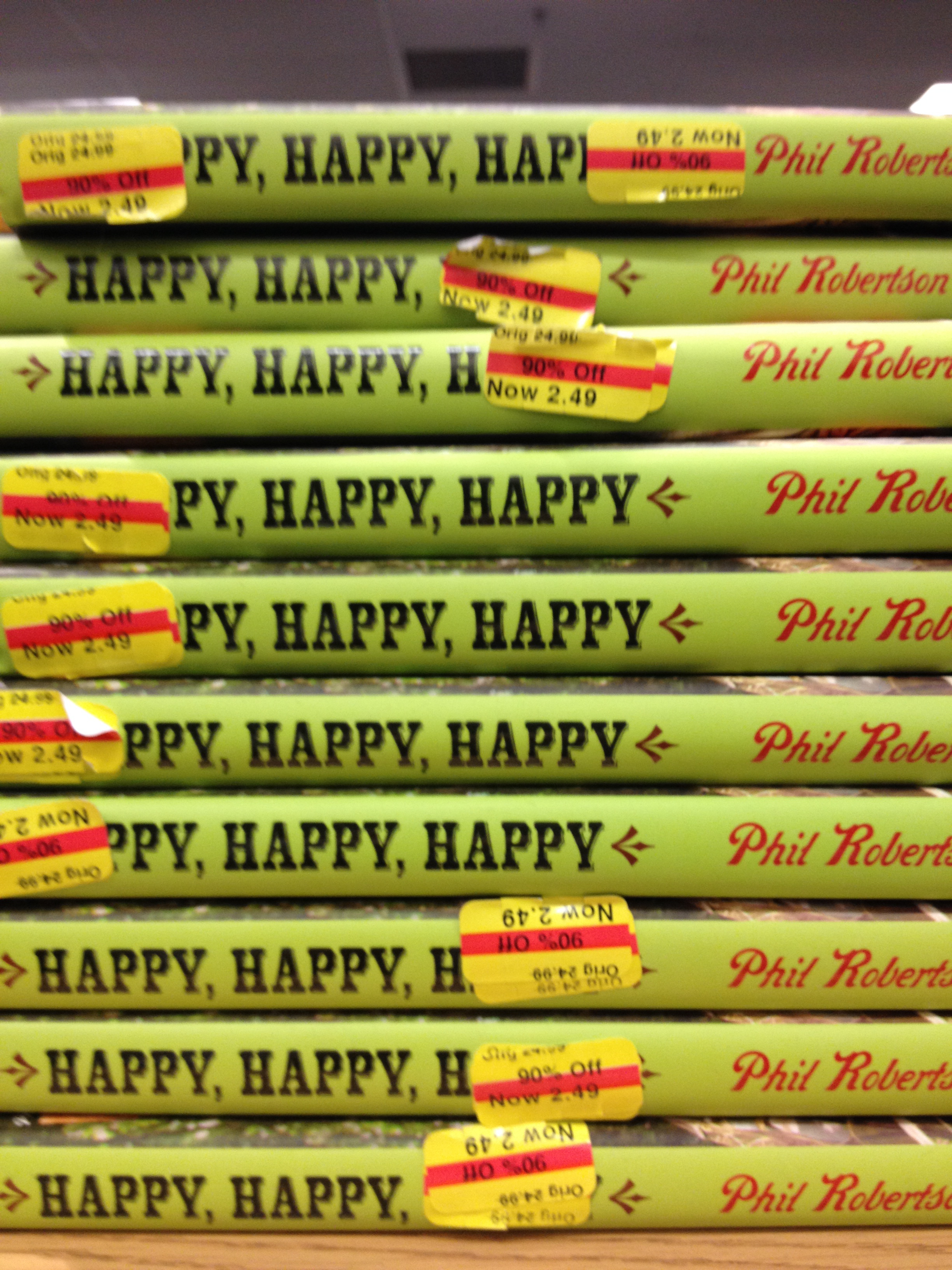
It has been some time since I’ve seen Duck Dynasty mentioned in the media. I wandered into the same department store this year to find stacks of Dynasty merchandise drastically reduced. You could buy Phil Robertson’s memoirs for even less than Amazon prices. In bulk, if you desired. My historically inclined mind turned to the great empires of antiquity. Did Alexander, I wonder, really know what he wanted? What about when you finally reach the ocean? What is off on the other side? Once you’re out of sight of land, you’ve lost your control back home. Next thing you know, Diadochi have fractured everything. The gods of empire, it seems, don’t have it all together after all. Happy? Happy? Happy?


Exceptionalism

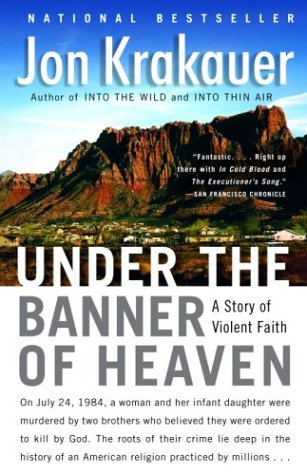
UnderTheBannerOfHeavenSome years ago I was invited to a famous person’s house along with some intellectuals—we’re all mature here, so names aren’t necessary. It’s no surprise that I ended up at the children’s table, being soft-spoken as I tend to be. The discussion had turned to international affairs, and since I can barely manage my own affairs I didn’t have much to say. Eventually it was suggested that if rule of law could take hold in the Middle East, strife would end. I finally spoke up, loudly injecting a “no” into the conversation. The problem with religious-based conflict is that the rule of law has been subordinated to the divine will. That is very well illustrated in Jon Krakauer’s Under the Banner of Heaven: A Story of Violent Faith. As Krakauer explains in his conclusions, he had set out to write a book that explored the history and background of his polite, abstemious, and law-abiding Mormon neighbors and friends. The story, however, takes a darker turn.

What Krakauer delivers is not a slam on Mormonism, but rather something far more difficult—an attempted even-handed history. As even Mormons at the various trials depose in the book, the faith has some strange beliefs. All religions do. For a religion less than 200 years old, the Latter-Day Saints also have an impressive violence in their history; parts of this book are like a fantasy novel, they seem so unlikely. Again, nothing unusual here. All religions have violent episodes. In general, religions aren’t violent—people are. The problems arise when the true believer (and there always will be) insists that religion trumps the rule of law every time. As Krakauer shows, those who violate society’s laws are not insane. They are, however, not judging the world by the same standards of the wider society. It’s just that, occurring as it does in the light of an historical period, the strangeness of how a religion starts is clearly illuminated in Mormonism. No number of apocalyptic horsemen will be able to stop the religious imagination once it is fired up. The problem with lines in the sand is that they easily move.

Perhaps the most disturbing tenet of Joseph Smith’s latter-day revelations is that of polygamy. Like a young Augustine, Smith had an eye for the ladies. Personal indulgence at the hand of a religious founder is not at all unusual. The problem is, the women in this book have been abused and traumatized in a religion, not unlike Judaism, Christianity, or Islam, that asserts (or has asserted) male superiority. Girls as young as thirteen or fourteen being married off to men three times their age to join what is essentially a harem doesn’t offer these young ladies a chance to become their own person. The majority of Krakauer’s study focuses on Fundamentalist Mormon sects, and not the mainstream Mormons who have great political power and occasionally run for president. Still, this is a very important book. It is not primarily about the Mormons. It is about those who can’t see beyond a blind faith in what would otherwise be a perfectly good piece of fantasy literature.


Esau and Jacob

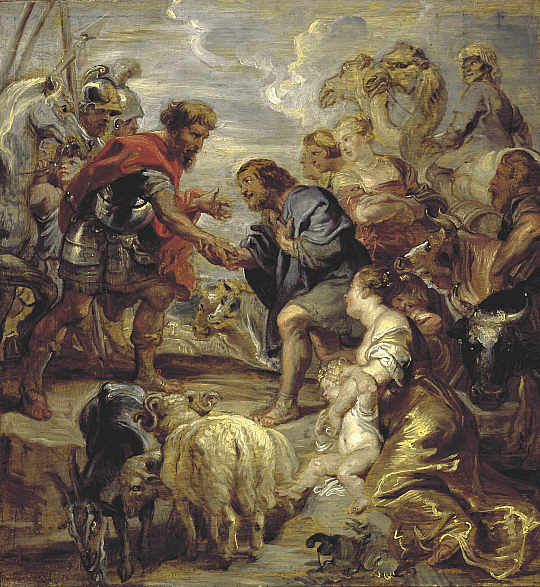
“Jacob have I loved, but Esau have I hated,” at least according to the recollection of Paul in Romans. One of the most poignant scenes in the Hebrew Bible is the story of Esau. Born as the elder brother, in ancient times one could expect certain privileges. Yes, Esau sold his birthright to his brother over a rumbling stomach, but he still knew that the blessing—the true gift—was still his. That, however, Jacob took from him by deception. Isaac, their aged father, was blind but wanted to bless his firstborn before he died. While Esau was out hunting, Jacob slipped in, in disguise, and stole the blessing before fleeing to Iraq. In Genesis 27, Esau came in as instructed only to find the blessing gone. His weeping has never ceased through the ages as his father blessed him with a sword. Years later, Jacob returned to find his brother a wealthy and powerful man. A man who forgave and forgot. But Paul remembered.

Rubens, The Reconciliation of Jacob and Esau

Rubens, The Reconciliation of Jacob and Esau

Hate is a strong word. As a child the worst punishment I can recall came from saying that I hated someone. That word was worse than a swear. Hatred was not worthy of a loving god. Like Esau, however, we don’t stay young forever. By our sword we make our living. For some of us that sword was the written word that we were told was sacred. The image of big, hairy Esau weeping before his blind father disturbed me. He’d done nothing wrong. In fact, he was simply doing what his father asked him to do when his brother snuck in and took something that my young mind couldn’t even parse out from the birthright earlier bargained. Clearly, however, it was important.

Upon returning home six chapters later, Jacob fears Esau’s righteous wrath. He knows his brother has legitimate cause to hate him. Esau, however, aware that he has enough, welcomes the prodigal home with open arms. There is enough to go around. Even today, with the will to do so, the hatred could be removed. This is a metaphor, not literalism. Genesis is, after all, not history. Stories, however, can convey what facts cannot. Millennia have passed and myths have come and gone. In the simple, if primitive justice of my childhood, you dare not say you hate your brother. Having grown up with brothers I learned that despite conflicts that inevitably arise, hatred is never the answer. Esau forgave, according to Genesis 33. And the land was wide enough for all.


Founding Principles

That feeling is in the air. Autumn began to stretch its melancholy fingers into August this year. Even before the month was half over the mornings had that chill in them that sparked the trees to begin their slow process of shutting down for the winter. Not wanting to admit that it was time to send my daughter back to college, I resisted what is one of the most compelling senses of self-abnegation that can be known—fall, in all its glory. When I saw a blog post on the Salem Witch Trials, I knew I wasn’t alone. The nights are already longer, and that sunset over summer’s beach comes earlier each day. Salem has a way of bringing that home to me. Innocent people murdered for fictitious crimes. Much of the fear that led to this miscarriage of justice was, of course, inspired by religion. The colonials had a great fear of new religious movements. Although it is difficult to believe, Baptists were such a new religion at the time. Considering how Baptist sensibilities now drive much of the Religious Right, it is difficult to imagine that once upon a time, being a Baptist could lead to accusations of being a witch.

As much as the Religious Right likes to make claims to a primitivism that is completely fiction (Christianity has always been this way), we have lost touch with what it meant to be a Christian in early America. States (still colonies) had their religious preferences, some even established. If you were a Baptist you’d be most comfortable in Rhode Island. If you leaned Quaker, Pennsylvania was for you. When these disparate colonies banded together into a country, it was quickly realized that religious freedom was the only way for them to work together. The government, the state, could not determine matters of individual conscience. Until, that is, that we could declare that the views of particular individuals on birth control—as informed by their religious authorities—could legally deny their employees full health benefits. Oyer and Terminer, anyone?

Freedom is a beautiful idea. It is a concept that only works, however, if it is shared equally. When one faction claims liberty for itself while limiting it for others, we’ve fallen back into times when the Baptist at your door was more dangerous than the Devil in his Hell. And so we revise our history and make claims that America was founded as a Christian nation. Evidence can be ignored, or, failing that, revised. Nothing is written in stone. When you visit Salem, there is a quiet little park, off the beaten path. Under some weary old trees are a set of stone benches against a stone wall. On each of the benches are engraved the names of those executed for being imaginary monsters. The leaves on those trees are, I’m sure, beginning to turn. Soon they will silently fall, and only those who are made of stone will deny that autumn is upon us again.

DSCN0562


Nazis with Bibles

Some years back, when the Internet was young, I had just learned about email. Even today it seems incredible that only twenty years ago we still sent physical letters to communicate, and that we used paper maps and telephone books to get information. The main problem with email then was that not everyone was on it. I signed up for an Ancient Near East/Biblical studies discussion group. My barren inbox (being a scholar at a non-prestige school) was suddenly full every day. New discoveries, research ideas, online debates. It was all very exciting. Then someone voiced the fraught question: should we ignore the research of scholars who were later revealed to have been Nazis? The rancor raised forced the moderator of the discussion group eventually to make this a forbidden topic. Because I could not keep up with the inundation of emails and because of the vitriol (do people use the world vitriol anymore?) on the Internet universe, I eventually unsubscribed. Nothing raises hackles like Nazis. Especially in the field of biblical studies, which, naturally enough, revolves around issues of Jewish interest. I saw a blog post recently which brought this whole episode back to mind.

Photo from German Federal Archives, Wikimedia Commons

Photo from German Federal Archives, Wikimedia Commons

The issue of political conviction and professional neutrality is a vexed one. Critical study of the Bible began, to a large extent, in German universities. Biblical studies in higher education was mainly a Christian enterprise, and many of the questions were, well, only academic. If someone was a Nazi, did he (and they were pretty much all he’s) have a hidden agenda? Today the question of agenda is often raised with conservative biblical scholars. Can someone who believes in the Virgin Birth and in Moses parting the Red Sea really interact critically with the biblical text? Just throw that question out there and watch the fun. (It helps if it is tossed out on a blog that actually has readers, rather than my insignificant efforts here.) Who can make the claims for true objectivity? Can a Nazi correctly parse that verb? Do one’s political views gainsay one’s credibility?

We are all children of our environment. Even the most empirical of scientists will admit that true objectivity is not what it seems. We are not, after all, gods. And even the gods seem to have distinct tastes. Evil done in the name of politics seems slightly less heinous than evil done in the name of religion, but people are people and we have convictions sprouting out all over the place. Nobody intentionally believes falsehoods. Motivations are notoriously difficult to untangle. Can’t we all be professional about this? Emotions, however, do play favorites. If there’s any doubt, consider the question of using a person as an experimental subject with no regard for what they feel. We know it’s wrong. We won’t allow it. Of course, that’s in an ideal world. Right now there are more pressing matters at hand, such as how to hire more adjuncts without destroying our credibility. It’s not a matter of wanting to hurt others, it’s just good business. Everything else is merely academic.


Men Without Hats

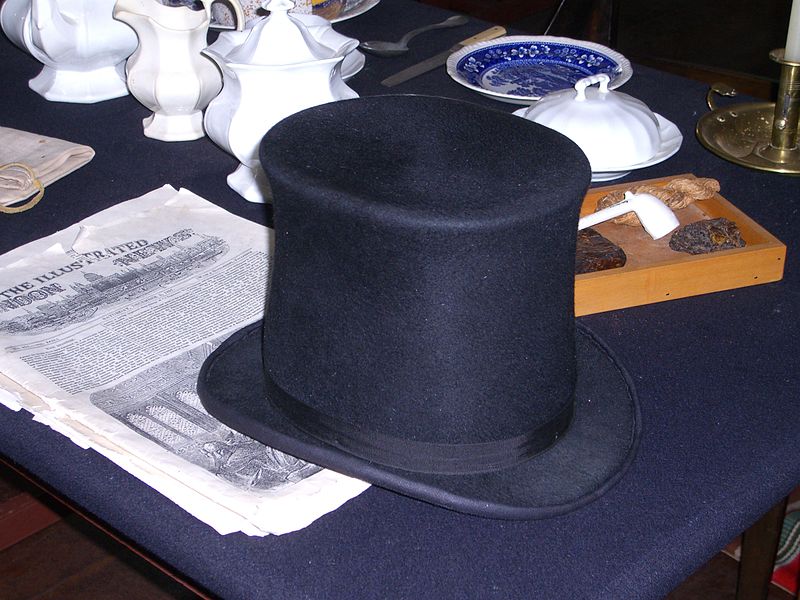
Do you want to start an argument? Mention hijab in a Christian environment. Some tempers will likely flair. The idea that a patriarchal religion would tell women to cover themselves suggests something sinister, doesn’t it? The other day I came across headcoveringmovement.com. There are, as I have come to know, many Christian groups that consider Paul’s directive for women’s headwear as, well, gospel. Commentators still spar about why Paul insisted that women cover their heads in worship. Adding “for the sake of angels” only evokes more convoluted imaginations. As any stroll through Manhattan will reveal, many Jewish men also observe head covering. What is it with bare heads, gods, and angels?

No doubt, in cultures where men are expected to restrain themselves less than women, hair can sometimes be seen as sexually provocative. (I’m not excusing, just observing.) Most men will eventually experience nature’s tonsure in some form or another, and perhaps this knowledge makes feminine hair more alluring. None of this, however, answers the question. What is so hubristic about uncovered heads? I’m not authorized to speak about fashion, but I feel confident in asserting that in many periods of human history, hats were the norm. Look at old portraits. What did Martin Luther or John Calvin look like without their ubiquitous hats? Did they serve to cover bad theological hair days? Or was it just the climate? Distinctive hats have been used to identify social classes and professions. We still use the expression “putting on my [chose a noun] hat.” So what’s all this with head covering for women?

“The wearing of fabric head coverings in worship was universally the practice of Christian women until the twentieth century. What happened? Did we suddenly find some biblical truth to which the saints for thousands of years were blind? Or were our biblical views of women gradually eroded by the modern feminist movement that has infiltrated the Church…? – R.C. Sproul.” So states Headcovering Movement’s homepage at the date of this writing. There can be little doubt about what’s behind this scheme. I recall a phase when my mother wore headscarves to church. Many years later, even in high church Episcopalian settings I’ve seen women walk in with what looked like lace doilies on their heads. Is there an agenda here? I can’t speak for Muslims, but it seems that Sproul believes the rightful place for a woman is beneath a man. Theology in the service of chauvinism. Just try to read 1 Corinthians 11 and come out without a headache. The saint’s logic here is so confused that I want to pull my hat over my eyes. Or I would, if I wore a hat.

Photo credit: Themightyquill, Wikimedia Commons

Photo credit: Themightyquill, Wikimedia Commons


Infernal Religions

infernalDevicesThe first steampunk novel I read, although some would dispute the classification, was Neal Stephenson’s The Diamond Age. To be sure, I’d noticed other Victorian-style science fiction, but the idea of prescient technology settled into my head to nest for a while. I read a few other exemplars of the genre, finding each interesting in its own right. Having just finished K. W. Jeter’s Infernal Devices, however, I get a sense that I’ve neared the fount. Jeter is generally credited with coming up with the neologism “steampunk,” and this novel, while not his first, is fascinating for the heavy religious symbolism that is used throughout. In our secular, post-Christian age, we tend to forget that in the nineteenth century (actual, if not alternate reality) religion still played a tremendous role in people’s lives and outlooks. Infernal Devices uses that outlook quite effectively. The remnants of Cromwell’s puritan cause appear as the Godly Army, set against science and technology in a society still imbued with religious belief. When a flying machine appears overhead, the Scots suppose it is the beast of Revelation harbinger of the world’s end.

Like most steampunk offerings, Jeter offers us plenty of mechanical wonders. The hapless Mr. Dower, our protagonist and narrator, is the son of a mechanical genius, now deceased. The story involves Dower trying to unravel the many strands his father wove in a lifetime of invention and innovation. The one device that stood out to me, however, was the automaton priest and choir of Saint Mary Alderhythe, Bankside. Dower’s father had invented a robotic priest to go through the mechanical motions of an Anglican mass. Having sat through hundreds of such masses, I could see the point he was making. There are variables, but the overall draw of ritual is, well, its ritualism. The sameness that assures an assuaged deity and a safe congregation. The Godly Army, however, is more revisionist in intention.

Jeter, I’m sure, did not intend for the novel to be read for religious truths. It is rollicking and fun, with characters that you can’t believe but you want to. The driving force, however, behind much of the story is the religious bias of elements of London society. Dower, blamed for vices he doesn’t really have, is chased from his home by the Lady’s Union for the Suppression of Carnal Vice. The Godly Army, however, steals the show. Perhaps the most profound observation comes from Scape, who quips “That’s what you get.. when you give people Bibles and guns,” about the Godly Army. “It just messes up their brains.” At this point I began to wonder whether the story were really fiction after all. In this case the truth indeed perhaps lies in steampunk’s alternate history.


Sign of Jonas

A century ago today, the world erupted in war. Those who engaged in World War One are pretty much all gone now, but the war to end all wars has left its scars across the globe. We showed ourselves we could do it. We could drag, through our accumulated frustrations, just about every nation into open conflict. The costs were astronomical, but we didn’t learn a thing. Just a couple decades later we were back at it. Nations taking provocative stabs at other people. Keep on poking and people, being what they are, will eventually hit back. So on this anniversary of the start of the First World War (awaiting a sequel, perhaps from the start), I’m reading about the extremists in Iraq destroying Jonah’s tomb. Poke. Poke. Well, it is more a loss to fellow Muslims than it is to those who take the Bible seriously. Jonah is a nice story of a prophet (rather blithely retold in the Washington Post) who probably never existed. If there was a Jonah he wasn’t fish food, that we know for sure. The tomb of Jonah is like that of an unknown prophet. The symbol’s the thing.

In the story in the Washington Post, Justin Moyer laments that “anything in the Bible” might be destroyed in these circumstances. I wonder how you can destroy something that never happened. Doing so, in any case, is liable to start a war. It really doesn’t take that much. The last century has taught us little. Don’t get me wrong—I’m not in favor of destroying ancient landmarks or parts of a region’s history. But if we misattribute its importance to something sacred, or biblical, it will be far too simple to start a row. You see, Jonah converted Nineveh, according to the Bible. The Assyrians became good Yahwists, despite the historical record. Those who destroyed his tomb likely had conversion on their minds as well.

As these thoughts were taking form in my head, I happened upon the page of GETS Theological Seminary, which, as far as I can tell, is in China. On the banner across its homepage was a picture of its mission field. Is that the United States? Of course, if you read the description you’ll see that the world, in toto, is the mission field they intend. Still, it is a little bit of a shock to see yourself counted among the heathen. I’m sure, had Jonah really existed, that the Assyrians would have been just as shocked. They were as moral as any other militaristic society. And today my thoughts are on militaristic societies. The First World War definitively changed everything from that fatal moment it began, a century ago today. It was the first, but not the last, loss of humanity’s innocence. We would invent newer and crueler ways to kill each other in greater numbers. Blood would become the true currency of the last hundred years. Maybe we should keep a weather-eye out for a fish-swallowed prophet after all. The world could perhaps stand a bit of conversion.

f11w


Candle, Book, and Bell

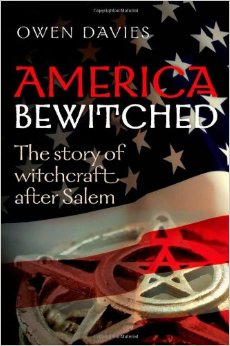
AmericaBewitchedHaving married into a family descended from the surviving relatives of women executed as witches at Salem, I have long been saddened and fascinated by the story. Not just the story, but also by the cultural milieu. We all know about the witch trials and the tragic massacre of innocents (mostly women) that took place in late Medieval and early modern Europe; the Salem miscarriage of justice came at the very end of that, after the start of the Enlightenment. Owen Davies is also fascinated by witchcraft, and his America Bewitched: The story of witchcraft after Salem is an exploration—mostly via newspapers and court trial records—of witchcraft accusations in America that continued up until about the 1950s. The coincidence of the 1950s with the “witch hunts” of McCarthyism will not escape some readers, and indeed, from the time of Arthur Miller’s nemesis on, those who vociferate against witches have kept rather quiet. Unless, of course, you count those who subsequently feared “terrorists” or any other group that might be profiled. We could learn from history, if we’d let ourselves.

Davies’s book brings together largely overlooked, nearly forgotten instances of how many cultures, including that cultural mix of Europeans who were to become “whites,” feared and sometimes killed witches. The difference from Salem was that almost all of these cases took place at the hands of self-appointed accusers (vigilantes) who hounded, punished, or killed someone suspected of being a witch. Surveys still show that a large percentage of people in the United States, although not a majority, believe in witches. It is an idea that has a primal hold on human psyches, and, as Davies points out, it is often used to explain misfortune. As I read this book I reflected how Americans come across as pretty gullible and not exactly sensible in this matter. The germanic strains of immigrants, it seems, were particularly susceptible to such beliefs. We also find witches, however, among Native Americans and African Americans as well. Misfortunate plays no favorites.

There are those who claim technology will save our culture. The other day a friend reminded me of the third of Arthur C. Clarke’s laws: “Any sufficiently advanced technology is indistinguishable from magic.” Even the most scientific of us knows, whether or not s/he will admit it, that “spooky action at a distance” does occur. It is perhaps only a matter of time before we find the hidden laws that operate the mechanism, but I can’t help but feel a little bit uncanny when I see more and more lifelike robots operating with what seem like human intentions. Of course, those intentions are programmed by humans. And it is often otherwise rational adults who with gun in hand, up until fairly recent times, accused flesh-and-blood neighbors as witches. America Bewitched can be a scary book, especially since unlike vampires, witches do cast their reflections in a mirror.


Equal Measure

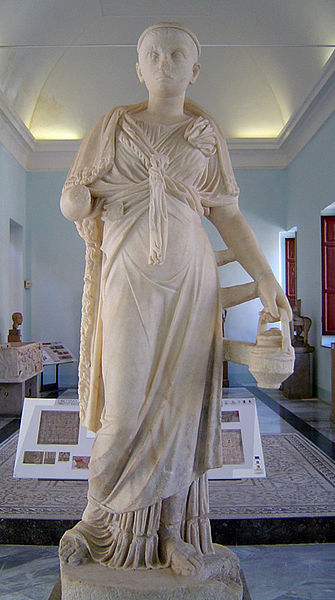
Far off in the woods of Wisconsin sits a seminary. In these woods, I’m told, wolves eat little girls. That seminary has for decades distinguished itself by its stance against women priests. I knew of, and respectfully disagreed with this policy when I was hired to teach there in 1992. I didn’t make waves, but rollers have a way of finding you nevertheless. It doesn’t take much to capsize an unstable boat. Within my first year a student challenged me, “Did your life change forever on July 29, 1974?” I was unfamiliar with the code and asked what happened on that date, vaguely thinking perhaps it had something to do with the run-up to the Bicentennial. On that date, it turns out, Barbara Harris was ordained among the first female priests (the Philadelphia Eleven) in the Episcopal Church in the United States. I suppose my life should’ve changed—for the better—but I was a Methodist at the time. Perhaps my life changed then, for I was 12, but that change had little to do with what the student intended. Or maybe everything. I wouldn’t have had a problem with a woman priest in any case. In 1989, Harris was elected bishop, the first woman to hold that title in the Anglican communion. Just three years later I found myself in the lion’s den.

When I asked male students what their problem was with women priests the answer invariably pointed to three factors: Jesus had no women disciples (wrong, according to a certain sacred book they claim to have revered), the Roman Catholic church did not ordain women, and the Church of England did not ordain women. The problem with backing and filling is that filling always overtakes backing. By 1994 the Church of England was ordaining women. Yesterday, at long last, the General Synod approved of female bishops. Welcome to the twentieth century. Now only Rome stands in the way. I am confident, despite the certitude in the eyes of my Nashotah interlocutor, that Rome will eventually come around. I may not live to see it, but justice will be served.

Photo credit: ChrisO, Wiki Commons

Photo credit: ChrisO, Wiki Commons

There is good evidence that most religions, prior to the monotheistic triad, had women priests. Something about the singularity of deity seems to have contraindicated a protective mother in the psyche of male clergy. Ironically, the same day that the C of E decided to do what was right, Oxford University Press’s blog ran a post on Mormon women bloggers. Among the newest monotheistic faiths, like the traditions before it, the Church of Jesus Christ of Latter Day Saints has not recognized the sacerdotal role of women, leading some to be excommunicated for speaking out. We are told that God is a jealous god. This is, after all, the wilderness. After yesterday’s long-awaited decision the woods seem a little less dense, and the threat of the wolves may have been exaggerated all along. If religions would only see people as people all our lives might just change forever.


It’s My Body

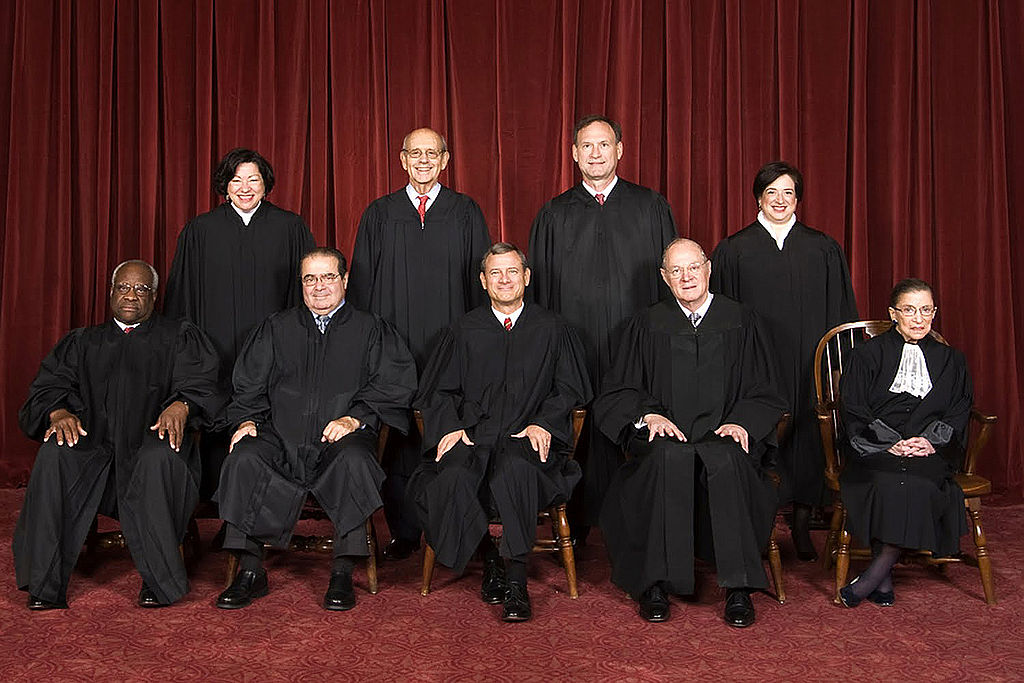
Those who believe mythology is dead have to look no further than the Supreme Court. Amid pictures of women protesting religious freedom to be told what to do with their bodies, the Court decided that employers may withhold rights to birth control under the rubric of religious belief. The ones who raise the issue, however, biologically never carried a baby to term. One gender making decisions for the other. We all know that the official stance of Roman Catholicism, closely followed by radical Evangelicalism, is that God intended sex only for procreation. Those women who find themselves on the receiving end of unwanted conception are helpless in the eyes of the law, depending on who their employer is. Blind justice indeed. Obamacare is intended to help level the playing field. Too few people have any real control over what medical treatment they can afford. I know more than one fixed-income person who suffers chronic pains due to lack of adequate treatment. I also know people who have used the system for plastic surgery before a trip to the beach. It seems that your employer now has the right to decide—but only if you’re a woman, and only if it involves what might be euphemistically called your “private parts”—what care you deserve.

Legislating morality, we religion majors debated even when I was back in college, cannot be effectively executed. If you presume there is a God, then enforced obedience is no obedience at all. Even conservative undergraduates could see that. Now our “Supreme” Court, with its male majority, has followed the lead of closely held corporations (doublespeak for certain patriarchal, Evangelically based companies) and declared that half the humans in America don’t deserve the same health care as the other half. The reason? Closely held companies don’t want women to have access to birth control. Our courts strike a blow against freedom and justice for private religious interests.

Within days of one Christian denomination declaring that gay marriage will be—should be— sanctioned, our own judiciary sides with the right of upper management in private corporations to discriminate based on gender. At least the owners of Hobby Lobby and Conestoga can sleep better at night knowing that they’ve prevented women from having their basic rights upheld. And metaphorically crawling into bed with closely held corporations are a male majority of supreme court justices who believe one man’s religion (yes, man’s) has the right to overturn the freedom of his employees. With the blessings of a male God. A situation like this prevailed, it seems to me, until 1863, also with the backing of scripture. Only in those days the argument was, I believe, that God is clearly Caucasian.

Looks balanced...

Looks balanced…


Elmer Gantry

ElmerGantryIn recent years a renewed interest has arisen concerning how powerful entities are perceived by others. Academics are asking how the United States is seen by other nations. Corporations are trying to improve their public images because, well, let’s face it, it effects the bottom line. The same thing applies, but with a difficult kind of finessing, to churches. Part of the difficulty is that churches declare that they have the truth. Backing down from this in the face of public opinion more or less scuttles any claims being made. Thus I’d been curious about Elmer Gantry for some time. Sinclair Lewis’s novel of the self-absorbed, arrogant clergyman who believes in no god other than his own desires, is considered a modern classic. Written during the height of the follies of the Scopes Monkey Trial and Prohibition, as the Fundamentalist movement was just getting started, Lewis used dark satire to try to put the self-righteous in their place. I’d known the name Elmer Gantry from many other media references, so I figured it was time to see who he was.

Going into the novel I had few preconceived notions. Gantry, I knew, would be a hypocrite from the start, but beyond that, cultural references don’t give many hints. Although Lewis’s well-known wit shines through from time to time, on a whole the novel is a distressing read. I suppose it’s the mark of a great writer that you can despise a character so, but really, Elmer is led on his path, indeed, encouraged, by those who know him and whose only zeal is conversion for conversion’s sake. A womanizing, athletic, hard-drinking student, Gantry is where many young men want to be. The campus ministries, however, keep after him until he realizes what all clergy know at some level—there is power in being able to manipulate people by religion. As portrayed by Lewis, Gantry does try, once or twice, really to believe. His cynical and selfish nature, however, are too difficult for him to overcome and he therefore employs them in all his relationships as he climbs the corporate, ecclesiastical ladder.

There is really no triumphalism here, with the society discovering and ousting the charlatan. Indeed, as the book ends, the Reverend Doctor Elmer Gantry dodges a serious threat to his career only to be appointed to one of the most influential churches in New York, poised to go on to even greater things. Trying to find the blame in the novel, however, is not a simple task. Gantry is all too easily led. He follows his base desires deftly and confidently. He knows a mark when he sees one. Throughout his ministerial life, however, he is encouraged and prodded onward to success. Most ministers, in my experience, are burdened with conscience. I’m sure a few slip through with their own agendas, but the working clergy are nothing like the protagonist to this tale. Lewis focuses on the worst offenders. Those who are in it for the power, should they read Elmer Gantry, would find a model who is, like many in the era of early psychology and sociology, too easily excused because of circumstance. More than that, however, they might learn how they look to a larger society for which the church has become a mere historical curiosity. Elmer Gantry is by no means the worst type of figure we can imagine in a secular society.


Missing Apocalypses

Sharknados aside, we seem to be in a lull of apocalypses at the moment. In the run-up to the change of the millennium and 2012, we perhaps had our fill of dire predictions of the end of all things. Funny how the fears seem to run so high when the Grand Old Party is telling us what to believe. When we settle down and try to wrestle with real-world issues with real-world ideals, the need for watching it all burn seems to settle down in the back seat and let the adults drive for a while.

IMG_1309

I recently came across The End Times Bible (now out of print). Published in 1999, this Bible had a not-so-subtle message that the end of all things was nigh. As it had been before, and, knowing human nature, will be many more times again. I imagine myself, in a Left Behind fantasy, watching a neophyte trying to make it in the post-apocalyptic world with a Bible. References to the end times are rare in Holy Writ, and dreadfully obscure. Reading Tim LaHaye or Hal Lindsey you might think the Bible has step-by-step directions for negotiating the wrath that is to come. As if the Bible were a recipe book and you wanted chocolate-chip cookies. Ironically the world is full—over-full in point of fact—of people with advanced degrees in Bible who’ve spent years and years of their lives learning to uncover the minutest hints that the Bible gives. Most of these folks are unemployed and wouldn’t mind sharing a bit of that simplistic apocalyptic pie baked up by the premillennialists. And yet, the world goes on.

Even as I was researching The End Times Bible, however, I began seeing references to the next apocalypse. Some are hopefully suggesting 2019, since, apparently, God likes round numbers. The reprieve we’ve been feeling, I have no doubts, is only temporary. In the course of human events we will have alarmists elected to high offices and once again panic will begin to build. The Maya let us down, and Howard Camping up and died. No worries—there are other arcane civilizations and the world knows no shortage of prophets in button-down shirts. Still, I’ve kind of enjoyed this little vacation without having to hush the irrational fears that God’s non-biological clock is inexorably ticking.

The biblical world is a simple one, in its own way. Created in six days just a few thousand years ago, it topples off its pillars and ends in a fiery demise in some millennial scenario, if only it can keep its own story straight. And like any good story, children will come back to it time and again.


Real Reading Rainbow

Libraries rule. According to recent studies libraries rate higher than religious institutions, according to public surveys, in their usefulness to society. From the lost library of Alexandria of yore to the local Carnegie, libraries have been the repositories of information almost from the beginning of civilization itself. Last week the American Library Association, according to an article forwarded to me by my wife, and the Banned Books Week planning committee, announced a theme for this year’s recognition of the books various groups (many of them religious) tell us we shouldn’t read. Banned Book Week, of course, falls in September. It might seem strange that planning has to go into this, but the banning of books has never ceased and the list grows year by year. I recently mentioned John Green, one of the authors who frequently appears on banned lists for children. In an age when encouragement to read should be running high, we hide behind platitudes to keep our eyes toward a predetermined prize. Among the reasons frequently given for banning a book: its religious outlook. I.e., the “wrong” one.

IMG_0324

I often wonder why we think sheltering children who are old enough to read from the collective knowledge of the human race does them any favors. Our culture so successfully removes us from nature that we don’t experience the “facts of life” that our ancestors no doubt noticed early and often. Violence, sex, drugs, and death, however, haven’t become any less common. They are only hidden until their knowledge hits with often catastrophic force, leading to neuroses about how unsafe our world really is. A function of story, if neurologists are to be believed, is to help us navigate the many trials we’ll encounter by seeing how others have done it before. I don’t doubt that there is age-appropriate material for children, but they understand a lot more than adults like to think they do. In my teaching days I was always amazed at how much undergraduates knew that I was only beginning to discover as a professor. Books seem a good way to introduce knowledge appropriately.

The internet, of course, gives access to unvetted knowledge to anyone with access to a computer or phone. Published books, it used to be, had the added value of passing through editorial hands on their way to public presentation. A funny thing happened on the way to the library. We’ve democratized the writing of books through self-publishing, but we’ve not yet ceased to ban them. Perhaps the real way to protect our children is to listen to them. We seem to think telling is better than hearing, although the flow of knowledge can go both ways. Instead of banning books for our young we might all benefit from opening of our own minds.


Jonahado

SharknadoSome movies are so bad that they become classics. Some are just plain bad. The jury in my head is still out on Sharknado. The story, obviously tongue-in-cheek, is so far-fetched as to be pretentious, and anyone who knows something about either sharks or tornadoes, or both, will likely find credibility waning from the first scene. For those sensible among my readers, who’ve not seen the movie, the title gives it all away. A global-warming-induced hurricane hurries toward Santa Monica with its forever young sun-worshippers. The hurricane floods the California coast, bringing sharks to the city streets. As our protagonists drive around somewhat pointlessly, the sharks attack their car, eventually eating everyone who’s not family. At one point the family tries to buy rations at a liquor store, only to have the news announce that this is the apocalypse. The store owner scowls that it’s the government, not God, that’s bringing this upon them. Then the waterspouts appear, morphing into tornadoes carrying sharks, still hungrily chomping at everything as they fly through the air.

Ironically a biblical theme comes about with the swallowing of Nova. As she falls from a helicopter (don’t ask), a great white shark snaps her up in mid-air, and since she’s about the only character you can care about, the movie seems to have reached its nadir. As the tornadoes dissipate and the sharks coming raining down, the eponymously named Fin is swallowed whole by a huge great white, while still holding his chainsaw. We already know that this latter-day Jonah will make his way back out, and we are supposed to be surprised that this is the very same shark that holds the reborn Nova, who admits her real name is Jenny Lynn. Like Neo in The Matrix, she is the convert to a new faith, this time in the family of Fin, whose only fault, it seems, is that he cares too much for others.

While a made-for-television B movie (although C or D might be more appropriate), Sharknado demonstrates the popular conception of the apocalypse. Not that it will involve flying sharks and destructive wind-storms, but that the end of the world is somehow inevitable. We have convinced ourselves that its a matter of when, not if, the world will meet its demise. Global warming, clearly our fault, is blamed by the movie (as is the government), but the story is that the flimsy culture we’ve constructed is subject to utter ruin by a hurricane and maritime predators. Or I could be reading far too much into this. Religious tropes may be picked and chosen at will. And when things really go wrong, like accidentally switching on Sharknado, we have a ready arsenal of religious ideas at hand to blame. And the apocalypse may be the least of our worries.