Com-Passion

I suppose it is always premature to hope that ancient institutions are likely to improve. Like many other followers of developments in religion, I was pleasantly amazed to read reports of Pope Francis declaring that, in my vernacular, that the church should not be so stuck in the rut of doctrinal abstemiousness that it forget mercy and charity. How sad to see that hours later he was forced, Galileo-like, to recant somewhat. The forces at work are far more powerful than the vicar of Christ. In some minds religion is doctrine. I know whereof I speak. For several years of my professional life I worked for a doctrinaire institution where any hint of mercy was considered a kind of Protestant mewling before a God who would’ve made even Jonathan Edwards tremble. Although officially released “without cause,” I can’t help but think that my own pastoral sensitivities were at fault. I don’t believe that religions thriving on condemnation deserve the title.

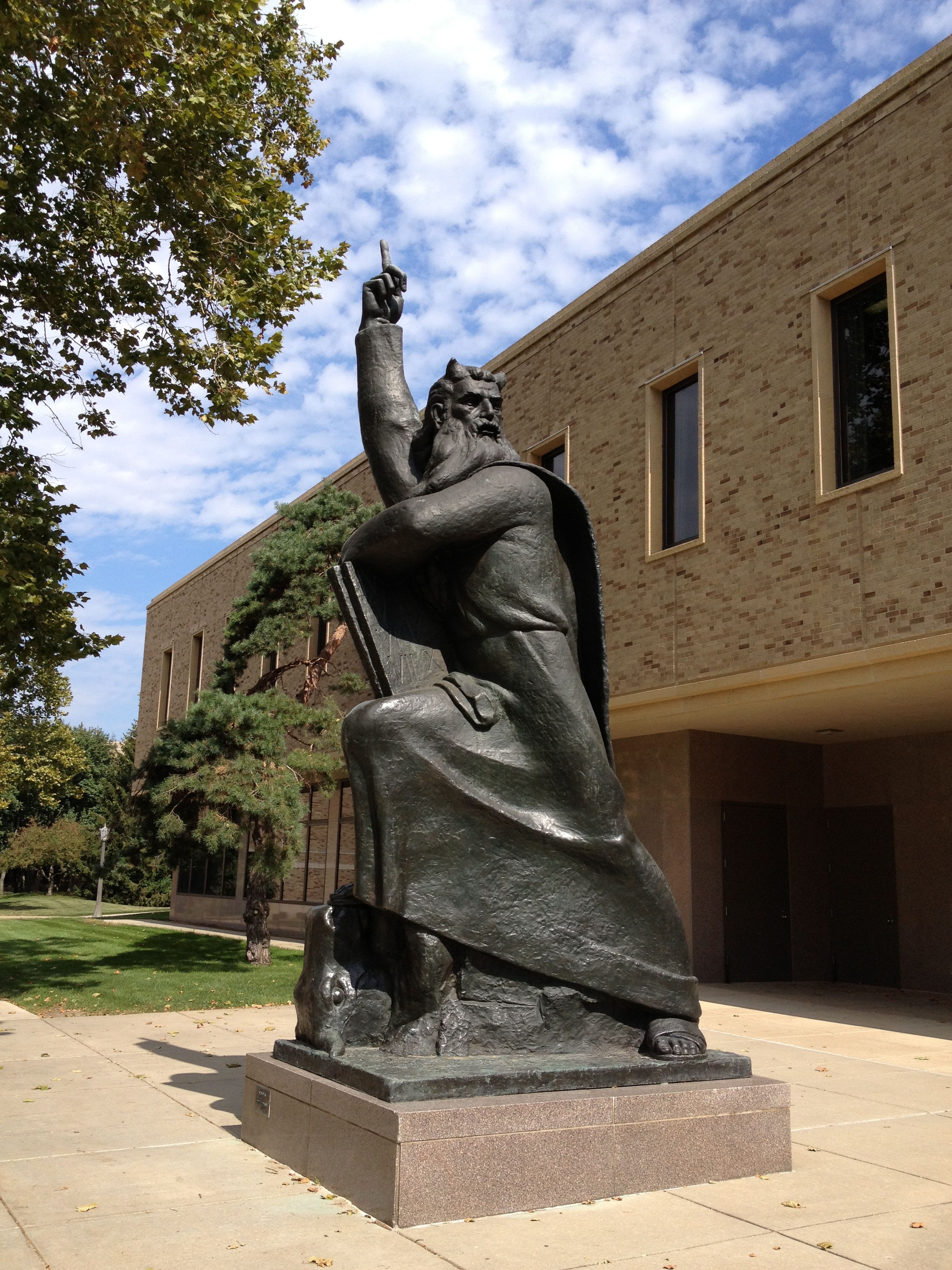
Ironically, I was at Notre Dame University when headlines about the Pope’s declaration that the church should not obsess about homosexuality and abortion appeared in the papers. It was with a kind of wonder that I heard an academic say, “the Pope is sounding more Lutheran all the time.” I’m not naive enough to suppose that the pontiff is suggesting a change in doctrine—there are rocks so heavy that the Almighty himself can’t lift them—but that the leader of the world’s largest church was suggesting mercy and compassion outweigh legality felt as if Amos or Micah had just walked into the Vatican. The next day the Pope had to come out and strongly condemn abortion. Politics, it seems, will always trump human understanding.

IMG_0996

We live in an era of iron-willed religions. The human element often vanishes beneath a frowning providence that wishes for clocks to be turned back decades, if not centuries. These religions have no place for improving the human lot in this sinful world—it is much easier to condemn than to contemplate compassion. Religion is hard, for people find forgiveness a difficult doctrine to accept. Jonathan Edwards dangled his spider over the eternal fires of hell, but ecclesiastics today suggest that swift shears taken to that silken web would solve all the problems. Time for change? Not in this century. Religions, too, evolve. But evolution doesn’t equal improvement. Many an agnostic has become so because of the reality of “nature red in tooth and claw.”


Grace, Virtually

Although Yom Kippur is now over, I have a confession to make. My wife just showed me eScapegoat, the website where you can confess your sins over the virtual priest laying electronic hands on a disturbingly cute animated goat. Even before I owned a computer (or one owned me), and even before I knew of the internet, I used to joke with friends what the technological revolution would mean for religions. Would we eventually go to an ATM for virtual communion? Would the screen glow with the words of the eucharistic liturgy, Rite 1, or would it be more contemporary (Jesus raised the glass and said, “This blood’s for you!”)? Would a physical wafer come through the slot? If so, would it have to have been pre-consecrated? So our bemused musings ran. But our idle thoughts held a touch of prophetic insight, it seems. Can the force of religion come through the keys upon which your fingers rest? The monitor that glows like heaven itself? Whence electronic salvation?

There can be no doubt that religion is a huge topic on the internet. I generally don’t go looking for it, because it will come to me. Religions, by their very nature, spread. They are aggressive memes, wanting desperately to replicate themselves. Our frail human minds want so much to believe that we have found the truth, and once we have, we want to share it with others. Bibles were among the first books off the first printing press. Television soon evolved televangelists. The internet became the home of virtual religion. For some it is reality, nothing virtual about it. Concepts such as grace, however, defy any kind of clear exposé, there’s always shadows in this room. Can it make its way, preveniently, through the wires and waves of the internet?

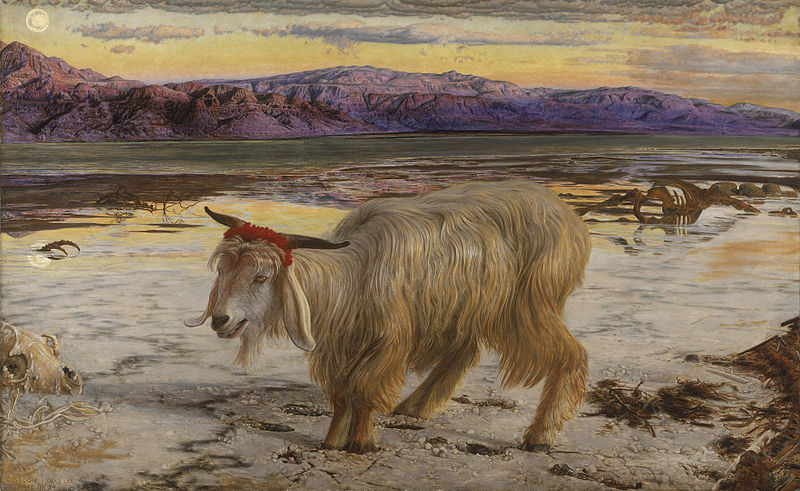
eScapegoat is lighthearted, but I can’t help but wonder if there isn’t a more serious side to it. Confession on the internet can be cheap. Anonymity (excepting, of course, the NSA) is easily maintained. Your confession, visible to the faith community, is really between you and the Almighty, right? The book of James tells us confession is good for the soul, or something similar. We all know that admitting a mistake has its own cathartic release, but I found confession, in my Anglo-Catholic days, terribly invasive. Surely I knew that I’d made errors, and I knew that I felt badly about them. Did I really have to tell someone else so that I would feel bad about them all over again, reopening wounds that had already begun to heal? Isn’t this the beauty of eScapegoat? You can make a serious confession that others will see anonymously as a joke. Our poor, blinking goat will pay the ultimate price.

800px-William_Holman_Hunt_-_The_Scapegoat


Dystopian Dreams

Hunger_gamesOne of the most terrible stories in the Bible is the slaying of the firstborn of Egypt. Of course, depending on your point of view, this was either a necessary evil or an act of wanton cruelty by a deity with anger issues. Still, it ends with a bunch of dead children. Then, as if that weren’t enough, a horrible reprisal comes at the birth of the child of the main character, with Herod slaughtering the innocents in Israel. And let’s not forget the very source of Kierkegaardian angst, the knife poised above a bound Isaac by his completely believing father. More recent, less literary examples could add poignancy and reduce the distance: Columbine, Newtown, Virginia Tech—the murder of children is beyond the farthest reaches of perversion into a realm that no longer classifies as human. I think the Bible might agree with me there. So it was with some trepidation that I read Suzanne Collins’ The Hunger Games, at the urging of my daughter.

Although written for a young adult readership, The Hunger Games is a classic dystopia with a dark future and repressive government mandating the killing of twenty-three children every year, just to make a point. Deftly combining teenage angst with the bleakness that just about any future-based novel seems to hold, Collins spins a sad but engrossing tail. Dystopias have grown in popularity since some of the earlier, Cold War exemplars such as 1984 and Fahrenheit 451. The number of dystopian novels grows every year. I suppose if I were an elected official I might cast a worried eye towards the increasing number of exposés of a society where consumers read so many books of the future gone awry. I know many intelligent, sober people who seriously wonder if we’ve already shifted onto that track. Tomorrow is only an extension of today.

Dystopias are among the most biblical of literary genres. The Bible itself is a bit of a dystopia. Consider the framing of a perfect world ending up with the original apocalyptic tale, the Apocalypse, or Revelation. It only ends well for 144,000. In-between there are pages and pages, chapters and chapters of oppression, violence, and suffering. Paradise gone bad. That’s the essence of the dystopia. Although Collins doesn’t make any overt biblical or religious references in The Hunger Games, the very genre she chose can’t escape the biblical bounds laid out for it. And besides, long before the year both Collins and I were born, the Bible had already set its vision for our society. And that vision, to our everlasting trembling, includes the massacre of innocents.


Ivory Doghouse

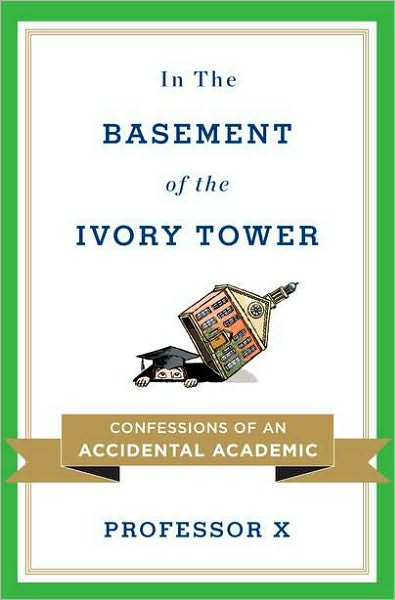
inthebasementoftheivorytowerSome months ago I wrote a post about a book I had not yet read. In the Basement of the Ivory Tower: The Truth about College, by Professor X both entertains and informs. And depresses. Written by an anonymous adjunct English instructor, the book presents much of adjunct life in gritty realism. No one sane can possibly dispute that there are problems with higher education, however, X’s experience and mine of the same phenomenon, while eerily similar, are strikingly different. X became a Professor because of the need for extra income to help pay a mortgage. Good for him—I am glad for him. Having been an adjunct myself, however, in much more trying circumstances (fear of being turned out of a rented apartment for insolvency) makes me wonder if X delved deeply enough. X was not a Ph.D. turned away from full-time teaching after having proven himself to have “the right stuff” in the collegiate classroom. He could afford, albeit barely, house payments. He had a full-time day job.

It could be the differences in our specializations that paints the contrast so starkly. I studied religion from my undergraduate days and demonstrated competence at each step of the way. Even now colleagues encourage me that a full-time teaching job might come up. Some even lament the loss of my contribution to scholarship (not many, mind you! Far more have forgotten they ever knew me). Unlike Professor X I was fired for religiously motivated reasons. Once thrown off that lifeboat, there’s no getting back on. The religious are persnickety in that way. Being fired from a seminary is a sure sign of faulty merchandise. I spent six years, in some fashion, as an adjunct instructor with the constant specter of very real loss of everything a daily threat. Everything, of course, in my case meant mostly books. That made the threatened loss even worse.

Although my experience differed considerably, Professor X is absolutely right in his portrayal of how tenured, regular faculty often treat adjuncts dismissively. At times with disdain. As if we somehow didn’t graduate from world class universities. As if we didn’t have nearly two decades of stellar teaching evaluations. As if we’d stepped in something on the way to class. If I ran the world (and heave a sigh of relief that I never will) full-time faculty would be required to recite a prayer of thanksgiving every day that they were favored with a genuine taste of the promise that crumbles into sawdust in the mouths of the adjuncts. I was a full-time associate professor with a future. Since then I’ve become, no matter how full-time my workaday job, an adjunct with an uncertain future. And if you are lucky enough to have a full-time professorship, close your eyes, bow your head, and thank whatever it is you believe in. Ivory towers, it seems, come in many colors.


Personal Dogma

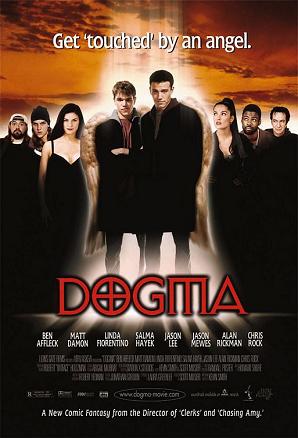
Dogma is a movie that many seminarians discover at some point in their theological education. Smart, funny, and irreverently reverent, the film follows the exploits of a couple of misled angels trying to get back into Heaven and thereby negating all of existence. It is no surprise, given Kevin Smith’s origin myth, that the film opens and closes in New Jersey, but I often ponder the strange coincidence of places in the movie to places I’ve lived since my own seminary career began (and ended, rather like the massacre scene in Red Bank before God cleaned it all up). Nashotah House, where I discovered Dogma, is in Wisconsin. Wisconsin is the state to which Bartleby and Loki, the two angels, have been banished. The means of their escape from this upper-Midwest purgatory is a church in New Jersey. Along their way the angels pass through Illinois and Pittsburgh, before crossing into the very state where God is located throughout the movie (the Garden State, of course!). After having been summarily dismissed from my seminary post in Wisconsin (not for watching Dogma, I’m assured), I too headed for New Jersey. Before that I had lived for a while in Illinois (home of Bethany) and Pittsburgh (home of Moobie). Watching Dogma is in many ways a reflection of a journey that I’ve accidentally undertaken.

YEE.tif

Another kind of dogma seems to be at work in the Eagle Mountain International Church in Newark, Texas. The Associated Press announced that 21 cases of childhood measles had broken out in the church, particularly among the homeschooled and unvaccinated. Fears of inoculating against a pre-medieval faith have led many of those who trust their own knowledge above that of the collective specializations of educators, to put their children at risk for the sake of belief. The belief, perhaps unsurprisingly, is poorly informed. One of the pastors of EMIC (!) has been encouraging vaccination as biblically sanctioned. If not for the sake of your children, for the sake of the scriptures…

Vaccination, in various forms, was developed in both Christian and pagan contexts. The earliest examples come from Asia where the plagues sent by the devil were resisted with human ingenuity. It takes a paranoid twenty-first century, first-world faith to suppose saving our children is some kind of conspiracy. “Let the one without germs,” we can almost hear them say, “throw their tissues away first.” In my Pittsburgh days, I was very much a literalist. How surprised I was to see Lady Aberlin from Mister Roger’s Neighborhood playing an angst-ridden nun, derailed by an exegesis of “The Walrus and the Carpenter” in Dogma. Although the Neighborhood is “anytown” those of us locals knew that Fred Rogers was from Pittsburgh. Lady Betty Aberlin was the niece of King Friday XIII, and only those with no conspiratorial imagination would suggest it is merely coincidence that her cousin is named Kevin. With or without dogma.


Amish Paradise

Once upon a time, intelligence could be found on cable networks such as Discovery Channel, and Animal Planet. Like higher education, however, these ventures soon learned that people do not want to be educated, but entertained. So it was that I found myself watching, with increasing bewilderment, Amish Mafia. The very discord of the title is intentional as the show “dramatizes” disagreements among the Anabaptist communities of central Pennsylvania. The result is coarse and seedy, and not a little salacious. And addictive.

Photo by it:Utente:TheCadExpert (Wikicommons)

Photo by it:Utente:TheCadExpert (Wikicommons)

I grew up not too far from several Amish communities, and I’ve visited Lancaster a time or two. Living a lifestyle that the vast majority of Americans would classify as boring, the Amish keep to themselves, constructing an existence based on strict religious principles and a rejection of modernity. Recently, however, the Amish have become a sexy topic for romances and fictional clashes between their traditional way of life and the high-tech world that surrounds them. For those of us who felt a kind of authenticity to The Witness, watching Mennonites lock and load their assault rifles to intimidate their rival construction workers, and, in the words of Weird Al Yankovic, “get[ting] medieval on your heinie,” Amish Mafia presents the viewer with a world of kidnapping, extortion, and shunning, all within one episode. Trashing-talking pietists climb into luxury cars and put drunken buggy drivers in straight-jackets where they’re hauled off to extreme Bible-reading therapy. This seemed nothing like the Amish I had learned about in classes on primitivist societies.

We like to watch the self-righteous crumble. Who doesn’t want to believe that they are about as good as their neighbor? Those of us in Pennsylvania, Ohio, Indiana, Illinois, and Iowa (from my experience) see the Amish occasionally, quietly living their lives without the amenities that define us. We resent that, yes, you can get along without cars, telephones, televisions, internet, and weapons. Who really needs well-made furniture and quilts to keep warm at night when you’ve got Ikea and a furnace like a locomotive in your basement? And they know their Bible. Goodie-two-shoes showing us something that many of us have suspected all along—authenticity comes from inside, not an electronic world we can’t touch. I don’t idealize the Amish. Their lifestyle takes discipline and a level of belief in a worldview that doesn’t match what I’ve been taught. But then, Amish Mafia also requires a gratuitous suspension of disbelief.


Hemlock and Crucifixion

Rhetoric is dying a slow, painful death. In this world where literalism reigns, the use of words to elicit an illicit truth deeper than the factual is no longer recognized. We see it both in the humorless antics of the New Atheists and in the ravings of the Fundamentalists. Writers have always known—serious writers at least—that truth is so much more than an objective ticking off of what really happened. The post-modernists may seem insufferable at times, but they have taught us that true objectivity is false, a mythic holdover from imperialistic thought processes that believed here, in this single mind, bias does not exist. We all have biases. Except me, of course. Rhetoric again.

I do not get many comments on this blog. Usually it takes someone to disagree with my ramblings to gussy up the energy to dispute what I write. I try not to distort facts, but facts are rare commodities these days. George Orwell is not really dead, I mused as I stood by his gravestone in Sutton Courtenay. Should someone deny that I was there how should I prove it in this day of Photoshop and pixelated truth? And that wasn’t even his real name.

When I regularly taught, students would ask me what I believed. What I believe, I would respond, is not important. I am teaching a subject, a field of study. When is the last time you asked your chemistry professor what she believed? Would it matter? Of course, thoughts, I’m told, are only chemical reactions that lead to electrical charges. Miniature storms inside our skulls. Literally. Rhetoric folds its hands across its metaphorical chest and lays quietly, awaiting the pall.

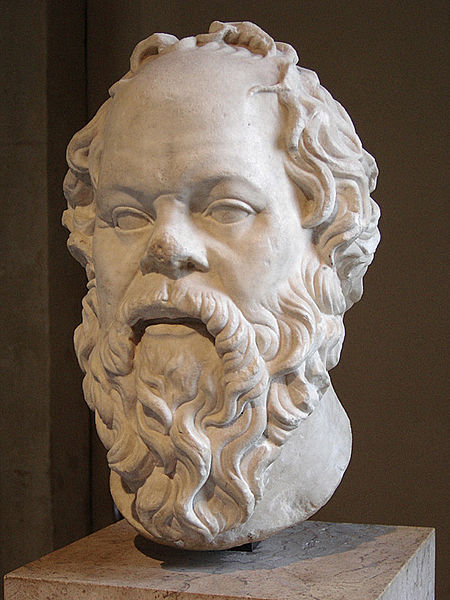
Socrates had his method. He ended up an enemy of the state. Jesus told parables. He also ended up an enemy of the state. Rhetoric, make no mistake, is a dangerous game to play. The hearer, or the reader, hears or reads what s/he wants to hear or read. And in a literal world, people would rather not have to read too deeply, for truth, it is believed, lies plainly upon the surface. There used to be a word for such a surface reading, but should I write it here I would be guilty of using rhetoric. And rhetoric awaits the delivery of the flowers but few are the black-garbed mourners. It is best not to disturb the dead.

Photo credit: Eric Gaba, Wikicommons

Photo credit: Eric Gaba, Wikicommons


Corn is King

For those who no longer believe in Hell, the DMV can serve a very useful function. Actually, the Department of Motor Vehicles is truly the great leveler of society—just about everyone has to cross its threshold, it is just that they all try to do it at the same time. Waiting in lines has always been a problem for me. It’s not that I think my time is more important than anybody else’s, it’s just that I have so much to do without standing in endless lines. Especially since work keeps me away from useful pursuits for over eleven hours out of every twenty-four, weekends seem somehow too sacred to be spent at the DMV. But the Devil must be paid his due. When paying the Devil, I take along Stephen King to pass the time. So it was over the weekend that I found myself reading “Children of the Corn.”

Of course, like most horror movie fans, I have seen the movie a time or two. I’d never read the story before. This is one of the King tales based most directly on religion gone wrong; the children, as any reader/watcher knows, have distorted Christianity into a midwestern corn-god religion. It may seem unlikely to urban folk, but I have stood next to corn stalks that have towered high above my head, ominously silent like triffids on a sunny Wisconsin afternoon. It can be unnerving. Almost a religious experience. But turning back to King, the story differs from the movie, of course, and what the written version makes clear is that the children distort the New Testament, but leave the Old Testament intact. King, like many horror writers, is biblically literate. Yet, this picture of Old Testament god versus New Testament god is stereotypical and a little misguided. The god of Christianity is a deity of many moods. The wrath in Revelation, or even some of Jesus’ sermons, however, stems directly from Yahweh’s darker moments.

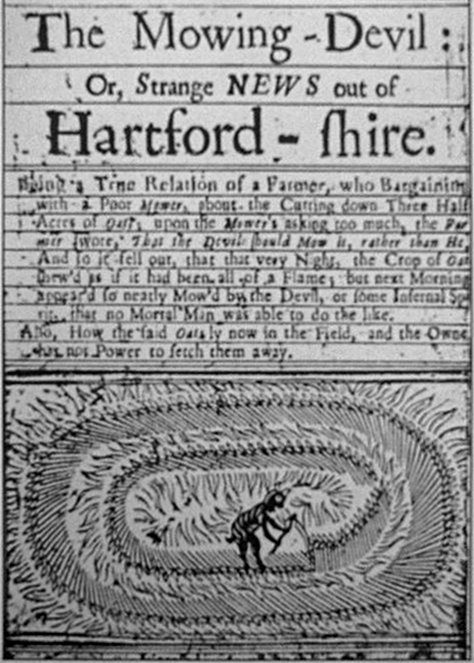
Diablefaucheur

How do we know what is demanded by this mercurial deity? The theological ethicists argue over this daily, but nowhere in the Bible does God have a problem with people treating each other as they would want to be treated. Some of the punishments for minor infractions seem a bit severe—or very severe—but the basic principle, given the Weltanschuung in which it operates, need not cause undue fear. Women, homosexuals, gentiles, Jews, anybody reading parts of the Bible will no doubt be offended by the details. As the saying goes, the Devil is in the details. And that’s why I’m spending my entire Saturday morning at the DMV.


Firelands

BayardFirelandsPiper Bayard has been a long-time blogging buddy of mine. She’s kind enough to comment on many of my posts and even kinder to like even more. Piper recently published her novel Firelands, and she sent me a copy that I began reading right away. My schedule this entire month has been unfriendly to literacy, but I was always glad to have a few minutes to read a few more chapters of an intriguing post-apocalyptic future. What’s more, Piper is keenly aware that religion is behind much of politics—a point she boldly makes by constructing a dictatorship based around a miracle-claiming prophet-king who oppresses those who don’t believe—the Seculars, or “Secs.” Interestingly, Piper decided on the name Josephites for the religious rulers, and there are dark undertones here for those who know their religious history. As an unabashed fan of allegorical writing, I saw quite a lot here that was, well, apocalyptic, in the literal sense of the word.

In a misogynic future, the Josephites, who dwell in cities, burn many women for various heretical crimes in autos-da-fé entitled Atonements. These human sacrifices ensure fertility and also help to explain the trials of life in a post-cataclysmic world. The protagonist, Archer, has to not only survive, but to try to save her cousin, a grandchild of the eponymous Joseph, from the flames. The Josephites live in a society of thinly rooted but strongly mandated religion. There is an underground of true Christians, and Archer, although a Sec, acts with more compassion than any of the Josephites, except perhaps her cousin. In a world that has lost its bearings, religion both undergirds and undermines a dystopian society where differences of faith have come to define everyone’s role in a harsh world. (Those who have ears to hear, let them hear.)

In this world where heaven is a fiery hell, I realized that Archer was more familiar than she first seemed. A female warrior, she opens the book by tracking a large stag to feed her starving people. Nevertheless, it took me many chapters to realize that she was a hypostatic Artemis, the goddess of the hunt. No wonder she couldn’t convert to the standard religion! Her example leads the way toward a renewable and sustainable future, in touch with nature, while the “religious” in their urban environment are dying on the vine as they appear to thrive. This is a world where old gods are more authentic than an enforced religion that few believe and that only rules through fear. There is much more I could say about Piper’s fascinating book, but I want you to read it for yourself. Visit Piper’s website for more information, and support the work of an author who really has something to say!


Human, All Too

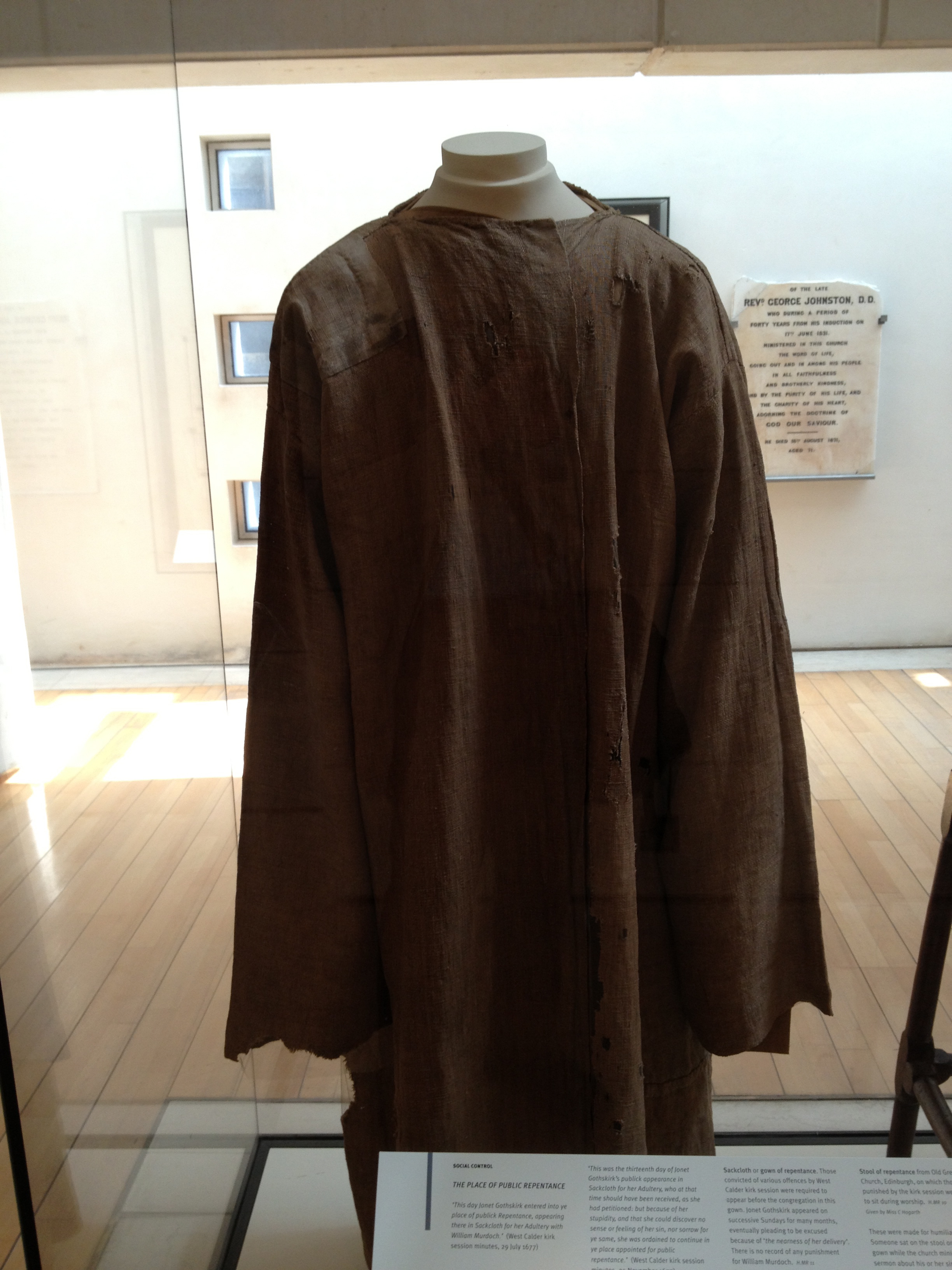
Back in the days of The Scarlet Letter, and before, an even more egregious double standard afflicted the sexual practices of women and men. Our primate nature promotes two conflicting principles: disgust at cheating and the desire to get away with what we can. Unfortunately, biology has often showcased female infidelity with the “illegitimate” child, and religions have stood in line to condemn the behavior that led to such circumstances. I was reminded of this while looking at a “gown of repentance” at the National Museum of Scotland. The Scottish Reformation led to an unusually severe kind of Schadenfreude when it came to pointing out the faults of others. Janet Gothskirk, spiritual kin to Hester Prynne, was convicted of adultery and had to wear a “gown of repentance,” literal sackcloth, to humiliate herpublicly. Her partner in crime, William Murdoch, is not recorded as having received any punishment for the affair, according to the placard.

IMG_0845

Thus it has always been: boys will be boys, but girls will be good. And when it comes time to dole out the blame, well, boys sometimes just can’t help themselves. This double standard is still in widespread practice throughout the religious world today. It shares roots with the same thinking that leads to many major religions denying sacerdotal leadership to women, and to the unfair punishment doled upon women in cultures where their behavior “dishonors” that of the men-folk. And we have all seen where male leadership has steered this ship.

What struck me hardest, staring at the dirty, ratty garment of shame, was that forgiveness seems so far removed from the religion of the Reformation. Christianity has always claimed a basis in the concepts of love and forgiveness, but when it comes to the very real circumstances of human failings, the animal tendency to attack the weak is often the driving force. We deflect because deep down we know that we all have failings. Clergy and braggarts may sometimes claim otherwise, but we share this very common liability of humanness. We should try to help each other through it. We should remember the golden rule. We should remember that sackcloth was meant to be self-inflicted and that the role of the church was to absolve the guilt, not to showcase it. Janet Gothskirk is forgotten to history, save for the garment she once wore to display her weakness for all to see.


Monument to Madness

Reflections on the implications of my recent trip to the United Kingdom will likely continue to filter into conscious expression over the next few days. Jet lag will inevitably fade, and some concepts will shake down and settle into place as the reality known as work once again demands its pound of flesh per day. One of the realities that struck me during my time in St Andrews was how violent the Reformation was when it came to Scotland. Truth holds the world hostage, since everyone wants to believe they own it. And it’s my word against yours unless one of us can pull in a larger authority—and who is larger than God? There was a lot of credibility riding on the Reformers’ certitudes. And resistance was strong. Fatal even.

Reform is nearly never gentle, especially religious reform. After the Society of Biblical Literature’s meeting disbanded last week, I wandered around the old, medieval section of St Andrews, trying to get a sense of what such conviction must have been. One of the participants narrated to me more of the stories of those who’d died in the course of conversion. Patrick Hamilton, it turns out, may have been the first victim of the Reformation, but he was not the last. Walking along on a sunny afternoon in a country where several religions consciously coexist (I was, as an American, surprised to see so many large mosques in the UK), it seemed difficult to believe that humane individuals would torture someone to a horrendous death by burning just because of religious differences. The killing times seemed so long ago. Or perhaps our killing has just become more subtle.

IMG_0814

Following the directions I’d been given, I came upon the Monument to the Martyrs. Not wishing to belittle the atrocity of undeserved deaths, I could not help thinking of the pillar as a Monument to Madness. Is the need to feel right so great that others must be made to die for it? After all, among those generally considered to be sane, we all believe that we are right. Who consciously accepts untruth as reality? In such circumstances the best, the only reasonable response is to agree to disagree. I can let you accept your truth, if you’ll let me accept mine. And perhaps such tolerance would serve our planet well. Even the number of trees spared had autos-da-fé been forbidden provides a silence to the wisdom of allowing difference to thrive.


Reflections on a Ruined Cathedral

On my final day in St Andrews, the symbol of its ruined cathedral weighs upon my mind. In a world both increasingly secular and religious, it is the latter that led to the fall of this house. I’ve toured many impressive cathedrals in my time, from Chartres in its gothic splendor to the plain majesty of Durham. These engineering feats of medieval “superstition” still draw theists and atheists alike, in wonder. In crass terms, they represent a large economic investment. It terms of spirit, they are sublime. Under the duress of ecclesiastical prestige, those who couldn’t really afford the resources nonetheless stretched their stonework toward God. In secular Europe, some of the best known sites are sacred.

St Andrews Cathedral fell victim to the Reformation. Religions are notoriously selfish in this way. When a new divine regime takes over, the wonders of the previous god become spoils. Hagia Sophia (which I’ve never seen) went from basilica to mosque, and Roman Catholic St Andrews became an eviscerated shell at the hands of Protestant thinkers. Even in ancient Israel the temple of Jerusalem was build atop a site of even more ancient heathen shrines. We conquer to stoop.

St Andrews, named for the patron saint of Scotland, is better known for its golf than its god. The divine may have built this city, but the divot has captured its heart. Priorities change with time—we call this progress. Not far from the crumbling cathedral lies a ruined castle. Not the haunt of royalty, the castle was build to house powerful bishops and archbishops. Some of these were the warrior bishops who were knights as well as prelates. Some, like Alexander Stewart, led troops to war. And yet the cathedral could not survive the change of religious climate. If we can’t have it, then it must be destroyed. The great cathedral, once the largest church in Scotland, and among the largest in Europe, perhaps represents the fate of all acts of faith, when something more insistent comes along. Or maybe I just don’t want to leave.

DSCN3593


Burning Faith

1528. February 29. St Andrews, Scotland. 24 year old Patrick Hamilton was burned to death for espousing the teachings of Martin Luther. St Andrews University is the oldest of Scotland’s four ancient centers of higher education. Heterodox religious teaching was considered a very dangerous thing in those days, especially in the halls of academe. Once infected with Lutheranism, like a zombie, you had to be burned so that the rest of the world could be safe, the virus contained. Only the problem in this case was an all too human one—difference of opinion regarding religion. The Thundering Scot, John Knox, would’ve been all of about 14 at the time, and reformation for the Catholic Scotland was still years in the future. Now, one of the largest European cathedrals, in St Andrews, lies in ruins because of that very reformation.

Religious bickering has a tendency to move beyond the ridiculous to the insane. Burning young men, after decades of burning hundreds of young and old women alike throughout Europe, was one of the most heinous symptoms of a horrid madness that had grown from religious fervor and fear. Religion itself is not to blame as much as the human tendency to use it as a weapon against those who are perceived as different. Some five centuries later and the physical stakes are gone but the fervor and fear are as strong as ever. As we hear politicians and televangelists lash out against those of whom God disapproves, the smoke still rises from the spot where Patrick Hamilton, late of the University of St Andrews, was sacrificed for his faith.

IMG_0729

Ironically, as I sat on the quiet morning train from Edinburgh to Leuchars, from the headphones on the young man behind me wafted AC/DC’s “Highway to Hell.” Was Patrick Hamilton aware that he was on a literal highway to hell as he returned home to Scotland? Did he have an inkling that his own people would torture him to death because he taught such dangerous ideas as salvation by faith alone and Scripture as the instruction for that salvation? Could anyone have guessed that the then teenaged John Knox would introduce what was to become an even less forgiving form of Christianity to Scotland by the time young Hamilton should’ve reached his dotage? Religion is funny that way. Even those who give their all to defend it easily become its victims. And a few yards down the road the Society of Biblical Literature meets in a university building dedicated to the sciences. History’s ironies never end.


Dirty Laundry

Wirathu may not be a household name, although Time magazine devoted an article to his teachings last week. The media has become fascinated with religiously motivated violence of late, although such violence is nothing new. Capitalizing on the fact that many of us in the western hemisphere see Buddhism as a religion of peace, Hannah Beech’s article, “The Face of Buddhist Terror,” reveals the growing conflict between some Buddhists and Muslims in Myanmar. The article took me back to my seminary days where, in a class in systematic theology, our professor was extolling the virtues of Buddhism as a religion of peace as opposed to Christianity with its history of warfare. Not denying that history, I raised my hand and asked how Christians then had come to know Jesus as the Prince of Peace. And Muslims, as any student of religion learns, also value peace. The ideals of most religions promote peace. The problem is that the practitioners of religions are humans.

Gandhara_Buddha_(tnm)

Like our chimpanzee cousins, we humans distrust those of other tribes. In one of the more disturbing aspects of chimpanzee research, encounters between especially a male isolated from his troop and another family group often end badly. Biology has programmed us to keep valued resources for ourselves. It’s as if nature knows there are limits to her bounty, and in order to survive and thrive, some will need to starve. Or be killed. Critics of religion—and there are many who are quite vocal—often overlook the aspect of religions that call for the reversal of our natural tendencies. Yes, I’m selfish. As a biological creature, I’m concerned that I get enough to eat, and have sufficient space. I want to stockpile money so that I may retire (unlikely to happen in reality), and spend my final years in peace and relative comfort. Yet, my religious upbringing has left the door open for others. What about those with even less than me? My empathy reaches out for them. Don’t they deserve what I deserve?

The problem is always at the friction point where belief systems rub passed each other like immense tectonic plates. The Buddhists of Myanmar say they just want to be left alone. The Muslims of Myanmar say they just want to survive. Their religions are pressure points building along fault lines. Still, I suspect that there are other sources of tension and violence in Myanmar, besides religion. I know there are in American society. In fact, most everyday violence, I suspect, has nothing to do with religion. Violence is part of human nature. Religion, at its best, urges us to fight this compelling biological message of self-preservation at any cost. Religious violence is a very real cause for concern, but to get to the root of the problem we must look past religion to biology. And sometimes—just sometimes—religion turns off the flame beneath the simmering pot.


Liberty and Justice for

Looks like America will be divorcing the self-proclaimed “Defense” of Marriage Act. It’s a small step, but a small step in the right direction. Religious dogma has too long held sway over politics in this land of religious freedom. It must seem astonishing to rational people the world over how a country founded for the very purposes of religious liberty has homed in on a very narrow sect of one religious tradition and used that as the basis for discriminatory laws. After all, even the Bible says very little about marriage—something about taking your main squeeze into the tent with you and voila, you’re married. The Bible never asks what they’re doing in the privacy of their own tabernacle. Now we have a political system that legislates what can legitimately turn you on. Finally we see some light beginning to dawn in the judiciary system.

I don’t take marriage lightly; those of us who are married seldom do. I also don’t take my status as being the only possible way of finding love in a world that sorely needs more of it. Every day I witness acts of uncaring and sometimes outright cruelty, often in the name of the progress of business. And until yesterday I had to live with the knowledge that it was perfectly legal to discriminate against committed couples just because their gender’s don’t fit a preconceived mold. The land of the free? Maybe, just a little bit yes, now.

Our legal system, which pours out its love on corporate culture, protecting business owners more readily than employees, shielding the wealthy whose lifestyles are beyond scrutiny, ends up telling citizens whom they may love and whom they may not. And we complain against countries with arranged marriages. Freedom for some is not freedom for all. Until we as a nation recommit ourselves to life, liberty, and the pursuit of happiness, we’ll have to take the small steps towards freedom when they come. Yesterday, for at least a little while, I was glad to see that the system can work for the good of all, when it puts its mind to it. America, you can be proud. Say it loud!

800px-Joseph_Anton_Koch_006