Battle the Angels

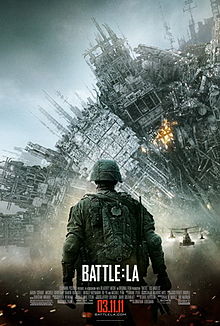
Over the weekend I finally got around to watching Battle Los Angeles. Now, I’ve never been a fan of war movies, but I do have a soft spot for aliens, so I decided to tough it out and see who won. I knew the historic event upon which the premise of the film was based took place in 1942, before flying saucers captured the American imagination. The official Air Force story suggests that old nemesis to our control of the air: weather balloons. Considering that Los Angeles was blacked out and ground forces lobbed 1,400 artillery rounds at the things, I wonder why the balloons at my daughter’s birthday parties never managed to last the night. In any case, the movie runs with the premise that aliens have taken over the city of angels and the U. S. Marines are the ones to get the job done when it comes to taking out aliens. (The Air Force, one expects, is too busy chasing weather balloons.)

Gratuitous aliens and science fiction action may be merit enough to get into this blog, but there is actually a more compelling reason. Back in my teaching days, I tried to demonstrate to students how deeply the Bible pervades our culture. When I taught those long summer and winter term courses, sometimes lingering four hours into the night, I would break up the inevitability of my lectures with a few movie clips to show them just how often the Bible shows up in films. Sometimes the cameo appearance is a matter of fleeting seconds, but when directors pay attention to every detail of a scene, we can be sure that Bibles don’t just show up by accident. Battle Los Angeles is no different. As our platoon is being air-lifted into the alien hot zone, one of the soldiers (I couldn’t figure out which one, since most of them get dispatched in fairly short order) is shown reading the Bible. The camera hovers there a second before pulling back to show the pre-battle chatter.

The viewer is probably supposed to be reminded that there are no atheists in foxholes, as the saying goes. Or it is a sign of how serious this is: before the big guns come out, bring on the Bible? In our culture the Bible has that kind of role. I recently read of a Catholic astronomer who was seeking alien civilizations in order to convert them to Christianity. The premise is as intriguing as it is arrogant. Human beings can be tenacious when it comes to matters of belief. In Battle Los Angeles, however, we speak with our guns and our missiles. But first we read our Bibles. Without wishing to ascribe to much intentional subtlety to the movie, this might be the underlying paradigm. Once the battle begins in earnest, the Bible never comes back into play. It is human ingenuity that wins the day, and perhaps the aliens are being taught to pray.


The Afterthought

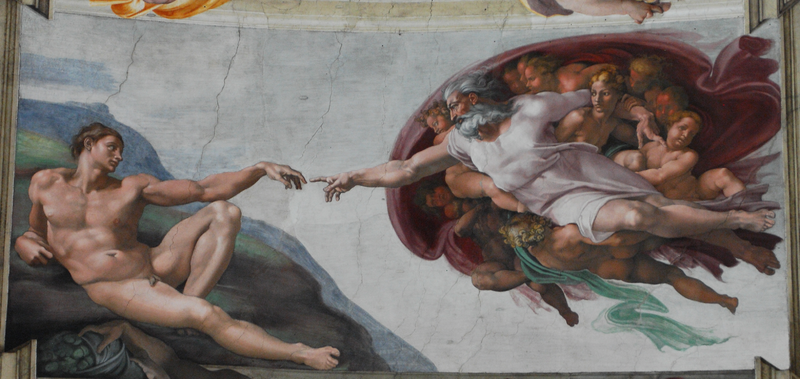
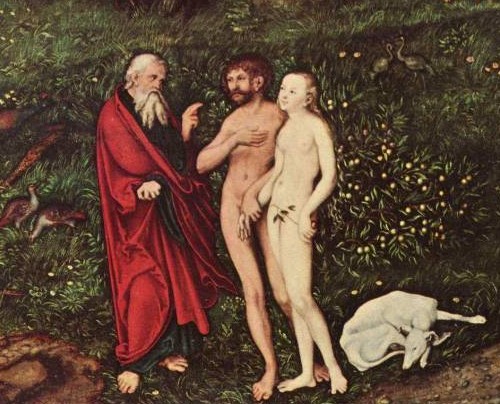
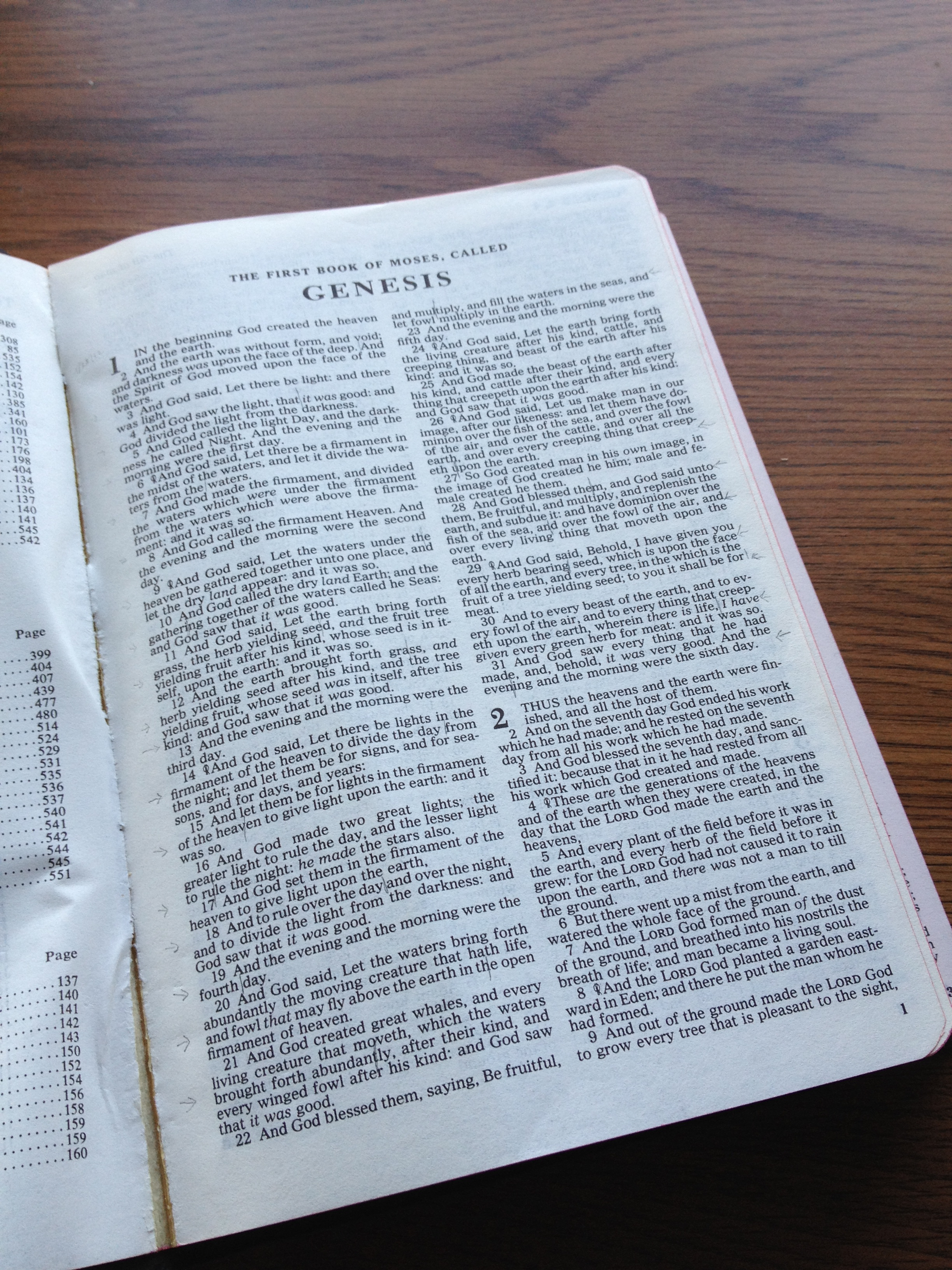
This week I finished Genesis 2 on my venture to tweet the Bible, and even before reaching the famous snake scene in Genesis 3, I blushed. Not in a good way. Reading each word of the text in King James English (ironically, technically Elizabethan English), it becomes clear just how androcentric the text is. As a reader with sensitivity to historical eras, it is important not to judge the past by present standards. Nevertheless, it is difficult not to be offended at the assumed male primacy that had begun to be dismantled, only to be propped up again by sacred writ. As soon as people began to realize that sexual dimorphism did not equate to sexual dominance, the Bible came into the hands of the laity and there, beginning in Genesis 2, became the prooftext that women were made for men. Note: “for Adam there was not found an help meet for him. And the Lord God caused a deep sleep to fall upon Adam, and he slept: and he took one of his ribs, and closed up the flesh instead thereof; And the rib, which the Lord God had taken from man, made he a woman, and brought her unto the man. And Adam said, This is now bone of my bones, and flesh of my flesh: she shall be called Woman, because she was taken out of Man.”

One of these things is not like the others...

This passage is, of course, very familiar. Too familiar. Accompanying the ready availability of the Bible was the concept of divine writing. To a society of chamber pots and horse manure in the streets, the idea that God could write a book was sensible enough. The problem is, as our sophistication grew, our biblical sense couldn’t keep pace. Centuries later with probes soaring beyond our solar system, rovers on the moon, and space stations circling the planet, we still believe God wrote a book. And since God is male, the man’s point of view is normative. Of course, no one knows the reason for the story of Adam’s rib, but there is no doubt that ancient society, at least in this instance, was hopelessly patriarchal. It is society that determined which words would be considered sacred. The tale they chose matched their worldview.

The problem is that worldview gave an excuse to a patriarchal tour de force that has lasted for dozens of generations leaving women in their biblically predetermined place. There may be no sin as insidious as literalism. Those who cling to the King James do so only with special pleading, for anyone who has studied Hebrew (or any foreign language) knows that translation is an inexact science. Even Genesis 1 with man and woman created the same day, both in the image of God, still lists man first. Ironically the literalists miss the humor of a God who thinks man will be satisfied with the animals. Presumably all the animals were guys at this point, although the Bible literally doesn’t say. No religion that claims victims has the right to declare itself universally true.


Saints and Snakes

I am not now, nor have I ever been, Catholic. So why am I wearing green today? It could be that a drop or two of Irish blood courses through my veins from a stow-away great-great-grandmother, or the assurance that, as an American mutt some Irish must have gotten in somehow. Or maybe it is more than that. From my youngest days, even before I knew of my family history (and nobody had bothered to inquire), I still wore green on Saint Patrick’s Day. Getting off the bus at school and seeing so many people with otherwise so little in common coming together to wear shades of green on the same day was somehow inspiring and made me feel like part of something larger than myself. It was a day of fun, and decidely not one of doctrine or repressive decrees about women or homosexuals or even Protestants. It was a day of unity.

Can a day based on church mythology ever long remain a day of peaceful inclusion of others? In college I met militant Protestants who insisted that orange be worn on Saint Patrick’s Day to stand in solidarity with the Protestant minority. I heard news reports of gays being excluded from otherwise festive Saint Patrick’s Day parades in major cities. Maybe the snakes driven out of Ireland have lodged themselves in the souls of those who plant divisiveness—but it occurs to me that I’m being unfair to the snakes.

In a tiny time capsule of twenty-four hours, Saint Patrick’s Day is a miniature paradigm of the ambivalence that we call religion. At its best it draws people of all backgrounds together for a celebration as large as life itself. At the same time, it is the ultimate in exclusion—the statement that we are special in a way you are not. Green, the color of Ireland, is an apt symbol for the day. In the planet world, the large swaths of earth seen from high above, green is the color of life. Each spring the shooting forth of green is eagerly awaited as the plant kingdom reveals to us that a refreshing change is in the air. Among many animal species, however, green stands for illness, and perhaps impending death. So here I am wearing green—not Catholic, not plant, not wishing to make unequal divisions. It is just like a religious holiday to celebrate ambiguity.

What's love got to do with it?


California State of Mind

California, it is sometimes said, is a state of mind. I leave today after a few days in Santa Barbara with a bag of mixed impressions of one of our nations great schools. My first impression on the University of California Santa Barbara campus was almost a physical one. Literally. I had no idea of the bicycle culture and nearly stepped into a bike lane with the flow of a New Jersey storm drain during a Nor’easter. California is a culture of wheels. I’d never been to a campus before that has four traffic lanes for non-motorized travel: two bike lanes going opposite directions, a skateboard lane, and the humble pedestrian walkway. There are so many skateboards here that the counter-culture has become conformist. Sorry, Bart, it’s true. And concern for the environment is palpable. Reclaimed rainwater feeds the lush plant life, every possible recycled item is sorted and sent to the correct facility, students bicycle instead of drive, smart cars are very evident for the two-wheel impaired, and almost nobody smokes. And as I ate my supper alone in the student union two separate groups of Christian students were having very vocal conversations about their faith. Free spirits not realizing that they’re trapped.

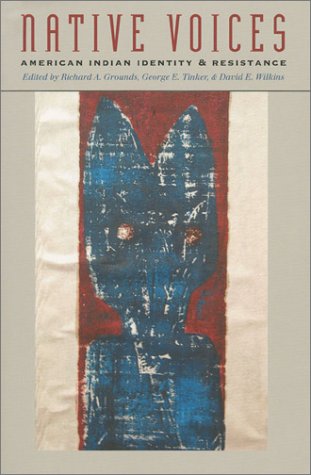
One conversation with a Native American specialist stayed with me. She spoke of how missionary work has damaged indigenous cultures irreparably. I listened in fascination as she told me about the local history. How an historic Spanish mission was publicly adorned with the skull of a murdered Native American and how it took years of persuading to get them to take it down, even in the late twentieth century. Across campus students are praying to Jesus for the courage to continue witnessing. In Newark, I suspect, a couple of guys are still laughing.

On a brief respite from my busy day of meetings, I walked the Lagoon (sorry, I can never see or say that word without thinking of Gilligan’s Island) Trail. Emphasizing the environmental features of this wetland habitat, the trail leads down to the ocean where flocks of pelicans and egrets fly overhead, unperturbed on the shores of the vast Pacific. In 1969 what had been to date the worst US waters oil spill took place from Platform A, still visible in the distance from the beach. My thoughts turn from Gilligan’s Island to Deepwater Horizon. My laughter to tears. The Lagoon Trail winds through the headland to a labyrinth. In today’s resurgence of interest in the labyrinth, it is viewed as a spiritual journey. Labyrinths appear in churches as early as the Roman Empire, but nobody knows what they mean. I silently stand beside the maze. What does it mean? Platform A leers from the ocean. Christian undergrads look to convert the world. And under the cross is not the skull of Adam, but that of an anonymous Native American. What does it mean?


Tortured Gospel

Tornadoes? I don't see any tornadoes.

It is a little difficult to force yourself to think of tornadoes when you’re in sunny California. On my flight into Santa Barbara I could see the tail end of the gray whale migration from a few thousand feet in the air. Outside the tiny municipal airport (with its full-body scanner) I see palm trees swaying in the wind. The air smells like flowers. Life is too easy in California for me ever to live here. I need more angst in my diet. I can’t come to the sunny coast, however, without the Eagle’s “Hotel California” replaying endlessly in my head. It was the running joke at Nashotah House that the real Hotel California was located in the woods just outside Delafield, Wisconsin. The haunting lyrics by Don Felder, Don Henley, and Glenn Frey managed to capture the witch’s brew of mind control, humiliation, and desire that laced that little, gothic seminary in the woods. Yet even sitting in California with its full greenery in March, I see that Pat Robertson is blaming the devastation of the recent tornadoes on lack of prayer.

Blaming the victim is a classic fascist technique, and it is very easy to proclaim one’s own righteousness when not in harm’s way. Herein lies the darkest sin of the self-justified; they think themselves specially blessed and therefore not responsible to help the victims. While flying over the Santa Ynez Mountains, seeing the smoke from California wildfires climbing like the terminal flames of Babylon, I could hear a voice like a choir of fascists singing, “Alleluia And her smoke rose up for ever and ever.” Schadenfreude fuels too much of the evangelical worldview. According the Gospel writers, when Jesus foresaw the destruction of Jerusalem, he wept. WWJD, Rev. Robertson?

Tornadoes look so much like divine judgment that it is almost understandable how a naïve believer might see them as coming from God. We, however, are the gods destroying our own planet with the accompanying degradation of the weather. Neo-cons deny the fact of global warming. It is not a myth or a theory, there is inconvertible proof that it is happening. Still, it is more convenient to blame God. After all, chances of him showing up to deny false charges, as history repeatedly shows, are very slim. Ask any innocent woman tied to a stake in Medieval Europe accused of being a witch. Apparently the divine calendar is too full to worry about the troubles of hundreds of thousands, or even a few millions who are falsely accused. Why not send some terror from the sky? It is hard to think of such things in sunny California. Yet as the “good news” of the televangelists spreads to the ends of the earth, even those forever in the sun will need to stand in judgment before a very capricious deity.


Religion Undisclosed

I’m getting to be a pat-down connoisseur. In Raleigh-Durham it was a more intimate affair with Mr. TSA—I don’t even have his name or number—narrating the intimate details. “I will move my hands up your thigh until I encounter ‘resistance,’” he said. At Newark the pat-down was quicker, more business-like, almost as if Mr. TSA were embarrassed. In Raleigh-Durham, nobody batted a lash when I said full-body scanners were against my religion. At Newark, they laughed. The gate attendants began asking me what my religion is. Private. My religion is as private as my “resistance.” And I was being ridiculed for it. This is the Patriot Act vision of America. Regular readers of this blog know that I have never revealed my religious convictions. They are a very private matter with me, and I had supposed that I’d been born in a nation where that was respected. Instead, I am laughed at.

We extend religious liberty to those who wish to handle rattlesnakes. To men who wear black dresses and have an historic penchant for young boys. To people who believe the world was created in six days. To people who believe golden tablets only seen by one man through rose-colored glasses are the basis for sacred scriptures. To the traveler who believes in the integrity of the human body and cannot divorce it from the respect and dignity of human modesty, this does not apply. Religions arm military forces. Religions rape women. Religions murder children as well as adults. Who’s laughing at them?

I wonder if I might have a legal case here. When has the free practice of my religion—which decrees that full-body scanners are immoral—been opened to public scorn? And don’t tell me it’s the price of security. I walked through “security” with my eyes open; first class passengers do not get scanned like hoi polloi. It’s not a matter of security—it’s about control and money. When will the people take back control of their own country from officials inebriated with power? I feel no safer with a stranger’s latex-gloved hand on my resistance. I feel no safer when people who couldn’t cut college get jobs in the US government and look at their fellow citizens naked. You’ll blank out my face? That makes it even worse. If someone’s going to violate my dignity I want him to look me in the eye and realize that it’s a human being he’s humiliating, not just a hunk of meat. Or in the language of the TSA, mere resistance.

First, show me yours


Hope for the Flowers

Resurrection can become a tired trope, but it is the stuff of both religion and science. Last week it was reported that Russian scientists revivified a plant frozen on the tundra 30,000 years ago. Quite apart from proving that Siberia was already in place 24,000 years before God got around to creating the planet, this amazing feat teaches us lessons about life and its resilience, and also of the possibilities beyond the great pale. The scientists regrew the plant without the benefit of using seeds, making this a kind of virgin birth of the florid kind. Using plant versions of stem cells (the kind of science forbidden in the USA: “won’t somebody think of the seedlings!”), the dead plant was rejuvenated and is alive and healthy in a world vastly different than the mammoth-infested, frosty plains of northern Russia where it first saw daylight. Still, that environment was less hostile to science than the Religious Right. This resurrection shows that we don’t need miracles to bring inert matter back from the dead. No doubt there are covert Creationists trying to sneak into Russia with travel-sized bottles of Roundup in their carry-on bags.

Science has brought us to incredible places by its continued, self-critical process. Religion, preferring no critique, has given us characters like Rush Limbaugh, Glenn Beck, and Rick Santorum. And a really big book. Looking at the religious scene today it is difficult to believe that religions began as exercises in optimism—the world could be better if only we’d progress. Regress now characterizes the religion in the public eye—men (occasionally women) claiming that things were better when we were tilting with mammoths than they are now with people advocating equality for people of other genders, races, and sexual orientations. Science represents our progress, and the vocal theocrats claim we should be going backward. Back to when men were measured by the size of their spears.

Back when I was a teenager I discovered the book Hope for the Flowers, by Trina Paulus. Not really a graphic novel, and not really a children’s book, it tells the story of two caterpillars with the courage to reject the constant, heartless climbing so often required by the world. In the end, of course, they become butterflies. The story has a religious subtext, naturally, but it was for a religion that believed butterflies should be valued rather than smashed between the pages of a heavy Bible. Butterflies bring the pollen that allows flowers to thrive. We live in a world where butterflies have become soft and defenseless while religion is aggressive and offensive. Science has shown us the way to bring flowers back from the grave, but old-time religion is waiting in the shadows with its rusty scythe.


Theomockracy

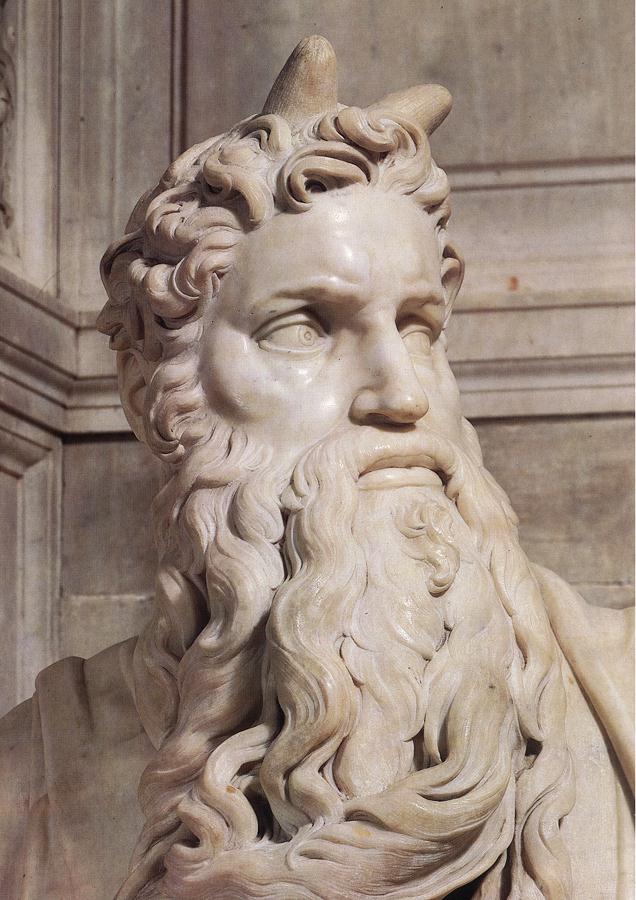
“From Santorum to Graham, the ferociously religious are doing religion no favors at the moment, and it’s beginning to feel as though we may need to save faith from the extreme pronouncements of the faithful,” so writes Jon Meacham in this week’s issue of Time. Theocracy is a scary word. It didn’t work in ancient Israel, and it is difficult to believe that our society is morally more advanced than things were back then. I mean, they had Moses looking over their shoulders, and Amos, Isaiah, Micah, and Jeremiah to point out each misstep. We have Santorum, Bachmann, Palin, and Gingrich. This playing field would be an abattoir, and I have no doubts that the true prophets would be the only ones left standing should it come to blows. The odd thing is, the ancient Israelites, evolving into the Jewish faith, came to recognize that maybe they misunderstood some of what their stellar, if mythic, founders were saying. Rule by God is great in theory, but in practice it leaves a nation hungry.

It is difficult to assess the sincerity of modern day theocrats. We know that politicians are seldom literate or coherent enough to write their own speeches, and we know that they tell their would-be constituents what they want to hear. It shouldn’t surprise us that they belch forth juvenile pietism and call it God’s will, for we have taught them that elections are won that way. My real fear is that one of them might mean what they say. Could our nation actually survive even half a term with a true theocrat at the helm? W may have played that role, but there was a Cheney pulling the strings behind the curtain. Some guys like the God-talk, others prefer to shoot their friends in the faces. Either way it’s politics.

I take Meacham’s point. In all this posturing and pretending, the would-be theocrats are making a mockery of what the honestly religious take very seriously. If they want to get right with God there are conventional channels to do so. The White House is not one of them. They swear to uphold the ideals of the Constitution that, with considerable foresight, protects us from theocracy. The history they prefer, however, is revisionist and their constitution begins with “In the beginning God created the heavens and the earth.” Their use of the Bible offends those who take the document seriously. Theocracies have never worked in the entire history of the world. Those who ascribe to mythology as the basis for sound government should add Thor, Quetalcoatl, and Baal to their cabinet and pray for a miracle.

The implacable face of politics


Hidden in Plain Sight

I have been tweeting the Bible for nearly a month now, and tomorrow—the thirtieth tweet—will see the end of Genesis 1 and the first words of Genesis 2. One of the occupational hazards of having been a biblical scholar for many years is the constant rereading of the same text over and over. I couldn’t even guess how many times I’ve read Genesis 1, in numerous languages, trying to find a key to unlock what is going on there. It is definitely not science—for that it would have had to have been written after science had been invented. Religion and science share that feature: they are human endeavors to understand the matrix in which we find ourselves. Anyone who is truly honest will admit to not being able to trust her- or himself all the time. We have all been betrayed by our convictions now and again. In this day of arrogant religious leaders and arrogant scientists we have little hope of coming to an armistice. Those who claim a special position for the Bible really couldn’t handle the truth in any case.

My twitter verse for today reads, “I have given every green herb for meat: and it was so. And God saw every thing that he had made, and, behold, it was very good. And the even”. Sense units in any text are where we, the readers, draw the limits. Taking this bit as a cue (indeed, the whole of Genesis 1 supports this), God intends humans to be vegetarians. The predatory gleam in the eyes of our religious politicians and televangelists belie their convictions given in public forums. The first rule God instates, after informing our primordial couple to have lots and lots of sex, is not to harm other creatures. At least the sex part seems to have gotten through, although many branches of Christianity repudiate it. The harm part we have received with ambivalence.

In a related development, an op-ed piece in yesterday’s newspaper gives instructions for properly disposing a worn-out Quran. While Christianity has no uniform opinion about where an old Bible goes to die, I find in this question a snapshot of the contradictions inherent in holy writ. We treat certain texts as sacred, and yet, is not the human expression in written form itself some kind of sacred act? Book-burning, no matter the book, strikes deeply at a visceral level those who’ve ever tried to reduce their ideas to what might be replicated on a page. It is our highest human achievement. All texts are sacred. Some may be misguided, and others are blatantly wrong—perhaps even evil—but they are the essence of a human endeavor. Perhaps this is the key I have been seeking all along.

Let there be light


Ashes to Ashes

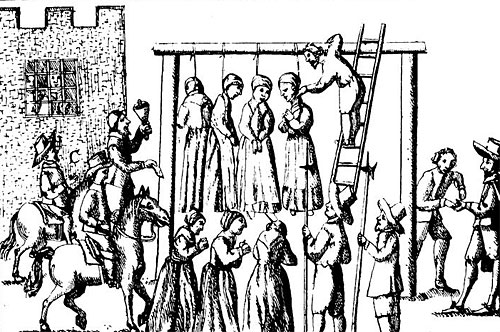
It was just a small blurb in the paper. Down at the bottom of page 17, it could have been easily overlooked. “Alleged witch killed by being set on fire” the small headline stated. And the date was 18 February 2012. This sad incident took place in Nepal. The story notes that “Each year hundreds of women in rural Nepal are abused after being accused of being witches.” Just last week, to the scorn of many, Cologne, Germany reopened the case of Katarina Henot, a woman burned as a witch 385 years ago. Katarina Henot was declared innocent because of the efforts of a priest to raise awareness of the persecution of women around the world. Five days after the story hit the news, Theganidevi Mahato was burned to death in Nepal. Although some called the action in Cologne a publicity stunt, it was anything but. We need to put names on those we continue to allow society to brutalize. Katarina Henot and Theganidevi Mahato, separated by 385 years and many, many miles, both died for the insanity that equates tragedy with women.

How blithely the word “witch-hunt” spills off the tongue. Each time we invoke it, the very phrase trails the ghosts of many thousands of women made to pay the price for society’s paranoia. The answers to why such tragedies occur may never be fully understood, but the events are preventable. The key is education. Even in the most advanced culture in the world, as we like to style ourselves, we heap contempt upon education, claiming that teachers barely work and that professors get paid for doing nothing. We have fallen into the fallacy that one size fits all—not all jobs can be measured by the wicked, black dip-stick of the oil industry, or the quick-cash-and-crash of the stock exchange. Education is a lifelong process, and as the political ridiculousness we constantly hear reminds us, lessons must be endlessly repeated until they sink in. Too many people think it is just easier to burn witches.

Witch-hunts arise when societies are stressed. Scapegoating is one of the most unfortunate legacies religion has left us. Evidence points to the scapegoat as being earlier than the Bible, although it takes its characteristic form there. We hear how the sins of the people were transferred to the goat on a day not so different from Ash Wednesday, to be symbolically born away where the animal would die instead of us. Somehow we’ve come to believe that burning the representative of our neuroses will somehow cure our society. Does it? Has it ever? This day as millions of Christians contemplate their sins and wear ashes on their heads, I suggest that we think of the women whom religion has allowed to become its victims. Whether due to the superstition of a remote village in Nepal or the irrational fear of “civilized” Europe with the blessing of the church, we’ve let scapegoating go too far. And those who’ve been killed are not the nameless females of forgotten times, but are the Katarinas, Theganidevis, Marys, and Rebeccas who were just as human as their neighbors.

What are their names?


Nevermore

Once in a while an uncanny clarity penetrates this fog of an asphyxiating miasma that passes for a life in higher education. It was a rainy, gray day in February when I stood outside 13 West Range at the University of Virginia, looking into Edgar Allan Poe’s restored room. Poe, who is right up there with Melville and Moses among the greatest writers of all time, lived a life that was short, sad, and silenced. Or so it seemed. Dead by 40, with a career that never really got a foothold, Poe would seem to be the ideal model of a failure. His currency, however, has preserved the voice of unrest that pulses like the very life-blood through American culture. Even as a teenager, I identified with Poe. Knowing that I could never attain his level of polish and perfection, even listening to the cadences of “The Raven” can still reduce me to tears. So, standing outside his room in the gloomy rain was a private epiphany.

13 West Range

Undefined was the sense of loose ends and hopelessly tangled threads of a life I tried to weave without the blessing of Athena. I ended up at a small seminary where my influence was limited to the few students with open minds. It was truly a gothic experience, living at Nashotah House with its medieval mindset and matching physical setting. Daily watching my learning being shredded by the staunch dictates of undying dogma, I never forgot Poe. When my own career was jettisoned by a bloated theology that had no room for questions, I spent many months in a depression so deep that life had almost lost that spark of hope that makes it worth continuing. Again and again the waves crashed over me—this was the doing of the church. Those who putatively followed the teaching of a man who said, “Do unto others—” Fill in the blank.

Poe was forced out of school by an unloving foster parent who valued money more than his adoptive son. Traveling up and down the east coast looking for a place to fit his writings into a slot for a little money, he died from causes that will never be identified. Today we know he was a meteor—a brief, brilliant light in a darkened sky. He is the patron saint of all those whose voices have been silenced by an unfeeling establishment. Even in my wildest dreams, I never hope to approach the depth and grandeur of his pen, but I can stand here in the rain and commune with him. The emblem of the Raven Society stands perched in that room, and its single word is the dying word of hope in the face of an uncaring world. And that one word will be the epitaph of society that refuses, even now, to listen.


Denying Truth, For Profit

Sometimes I’m questioned about why I bother with creationism. Everyone who’s intelligent knows it is religious ideology masquerading as science and people will eventually figure it out. But will there be time? An editorial in yesterday’s New Jersey Star-Ledger pulls the curtain back on creationism’s incestuous cousin, climate-change denial. As the editorial notes, key documents of the Heartland Institute—one of the major propagators of climate change as “just a theory”—have been leaked and show that they have learned their lesson from creationist tactics. They want “debate the question” instilled in science classes in lieu of facts. And much of their money comes from big oil. It is the hope of such institutes that an American public already woefully pathetic at understanding science will be led to believe “just a theory” equals “likely not true.” The data are stacked completely against them and the entire rest of the developed world knows that.

While the issue may seem less religious than creationism—which is based on getting Genesis 1 in the classroom as science, no matter what you call it—it has deep roots in that same insidious cocktail of politics, religion, and dirty money. Biblical literalists tend to believe the world is about to end. The belief has been around for at least two millennia. It is a damning and damaging belief that declares the world was made for raping because it is about to end. This deranged thinking is fueled, literally, by unrestrained economic interests. Sometimes the groups can’t see beyond the Bible to realize that they too are being screwed. Science is objective, and it is science that has been challenged by various religious and political groups since the 1920s. Today, when there is far too much information for anyone to stay on top of it all, and in an American society deeply distrustful of higher education, I smell an explosive amount of methane in the air.

Climate change is real. The “theory” is so well supported by evidence as to be fact. Is anyone really surprised that supporters of the Heartland Institute have also backed Newt Gingrich’s campaign? We have placed ourselves in a very dangerous position as the last remaining “superpower.” I tried to read a book on environmental issues that Routledge published, but was so scared after the first three pages that I had to put it down. What is the lesson here, class? Is it not that money is the root of evil? And that, my dear literalists, is biblical.

The future of human economic evolution


Love, Factually

Whet has Jerusalem to do with Trenton? As marriage equality is debated in New Jersey—with a governor as compassionate and reasoning as Captain Ahab determined to stop it—three local religious leaders have the courage to lay their cards on the table. When Bishop Beckwith (Episcopal, Newark), Bishop Riley (ELCA, New Jersey), and Rabbi Gewirtz (Millburn) penned a piece entitled “Religion shouldn’t sway Trenton in this debate” in the New Jersey Star-Ledger, it almost restored my faith in religion being capable of some good. The three leaders, from different theological perspectives, agree that the Bible can’t be used for a one-to-one correspondence to modern society on this issue. They correctly point out that theologians disagree and that the remit of the government is not to uphold the view of any one of those traditions. When church leaders start making sense, I begin to tremble.

Politicians are never among the most astute of theological thinkers—and I would include those clergy elected to public office in that number. The rare public official who is qualified to think about such things intelligently frequently has trouble swaying his (almost always his) colleagues who have visions of pork barrels dancing in their heads. Marriage is about commitment, not sexuality. Studies have indicated many sexless marriages exist, yet we applaud them for their consistency. For those with a different orientation, we outlaw formal recognition and call them sinners. In the name of a government sworn not to uphold any one religion. It is time our legislators awake from their snoozes and realize that many mainstream religions have gotten over homophobia, and their religion is discriminated against by such petty power plays.

I applaud the efforts of religious leaders to point this out to a governor who has gone on record saying he’s not one “who changes positions with the grace of a ballerina” (propriety forbids me from finishing that thought). If that chunky ballerina, however, has ended his twirl facing the wrong direction, doesn’t the audience expect him to hike up his tutu and correct his error? I note that our Roman Catholic compatriots did not sign the letter. If ever a church showed the signs of centuries of sexual neuroses, would we trust it to make informed decisions on who might sleep with whom? Is that what marriage has been reduced to in the minds of the celibate clergy? It’s all about sex? Maybe if politicians and unenlightened theologians could pry their minds out of other people’s bedrooms and learn to treat them as complex, descent human beings we might actually see New Jersey leading the world in the right direction for once.

What's love got to do with it?


Divorced from Doctrine

Spirituality and religion have never been so far apart while being so close together. While many people describe themselves as non-spiritual in any sense, whether it be for materialist, humanist, or atheist sensibilities—a great number of people still feel the compulsion to believe in something more than the everyday world we all know. In Sunday’s New Jersey Star-Ledger columnist John Farmer laments the disparity that continues to persist between women’s opportunities to benefit from religious dictates while religious leadership continues to remain a male preserve. As Farmer notes, it is a thinly disguised case of men determining what options are open to women. He notes the recent government about-face exempting religious organizations from the new health plan as a case in point. Does the mewling. special pleading of Catholics oh so concerned about the rights of unborn males outweigh the right of women to unfettered healthcare? You betcha!

Election-year politics are among the most ripe for those who wish to keep women “in their place.” Appear too progressive and you’ll lose the Catholic vote for sure. Of course, despite officially teaching that evangelicals are not real Christians, Catholics will be glad to glom onto their votes, taking advantage of their Hell-bound compatriots in order to keep women from ever truly enjoying freedom. The theology behind their reasoning is late and based on such convoluted logic that a layman can’t hope to follow it. Isn’t it just easier to accept that Rome declares it so? One gets the sense that longing for the old Roman Empire isn’t as rare as good-old human compassion.

Does it not seem ironic that anytime a bill comes forward to promote true equality among humankind the first to stand it line to bring it down are the religious? Christianity likes to trace itself back to Jesus who never intimated that women were inferior and who never spoke a word about homosexuality. He did, however, advocate free health care. Church leaders long since discovered that the first stone is easy to throw, and after that the others come with even more celerity. The cost to spirituality, however, has never been calculated. The same church that consistently declares sexuality is only for reproduction has never made a public outcry against Viagra. After all, we must leave some room for miracles.

These keys were made for lockin'


Witch Crazy

The self-destructive tendencies of human societies should be of major interest to those who study the mind. Why a highly evolved species would forego reason—or create an entire false logic—to give itself an excuse to mass-murder its own is among the greatest trials of theodicy. Can God be justified in such circumstances? With or without divine approval, God is nevertheless implicated. One of those homicidal events, the European witch craze of early modern history is a prime example. Anne Llewellyn Barstow’s Witchcraze: A New History of the European Witch Hunts is a disturbing book on many levels. For a human being with any level of empathy, reading about the torturous destruction of at least 100,000 people—generally women—is hard going. We don’t want to be reminded that we were ever so naïve as to believe that women slept with the devil, flew through the air to meet with other witches, and were trying to bring down society. The “upright,” as Barstow makes very clear, feared for the church. Concern for the ways of God excused—demanded even—the death of the innocent. Many of the victims confessed, under torture, that the godly men had got it right.

Barstow contends that economic stresses and fear for the sanctity of the church, along with a generous dose of native misogyny, fueled this holocaust. She notes that it happened in the same society that would initiate another holocaust a mere three centuries later. But why women? Coming out of the medieval period, societies were strengthening centralized governments. Roles of power that belonged to women were highly individualized, and therefore considered threats. The healer, in absence of a medical profession, was often female, frequently a midwife. In days of high infant mortality, they were sometimes blamed for performing abortions, something men in power simply couldn’t accept. Barstow points out that population increases were stressing the economic production of the period. The newly minted Reformation advocated a very active devil in the world. Since the devil, like God, was a guy, well, women satisfied his lust.

The most disturbing aspect of reading this book for me, however, is the fact that our society has come to resemble that one once again. Strong centralized governments control what citizens do through fear—what else would compel us to allow Patriot Acts to pass? They target women as scapegoats—otherwise the issue of abortion would not command such male attention. Fear for the sanctity of God is repeatedly invoked. Sometimes these modern witches are persecuted on the basis of ethnic background as well as gender. And in both the witch hunter society and that of today an elite class has collected the wealth and sits back to let the remainder incinerate itself in the name of God. Witches don’t fly through the night to meet a fictional devil. The real threat to society is right here among us, but its not who the powerful want us to think it is. And it is very human.