Vampire Jesus

It was a dark and stormy night. Well, so far that could describe most any night in April or May of this year. Anyway, I had just read about vampire-bots for the first time. Robots, like all machines, require a power source. Those I’ve witnessed up close require rechargeable battery-packs that are surprisingly heavy. I’d read that some robots were being designed to consume their own energy sources—mechanical and chemical eating, if you will. One dreamer figured that blood could work as a source of energy. A robot could be designed to take energy from blood, and thus arises the concept of the vampire-bot. I don’t think such an insidious machine was ever really built, but it is theoretically possible. It is also a reflection of a biblical idea—the life is in the blood. Ancient people tended to associate life with breathing. With no CPR, an unbreathing body was a dead body. Blood obviously played into the picture too, but precisely how was uncertain. Clearly a person or an animal couldn’t live without it. To say nothing of robots.

One of those dark and stormy nights I watched The Shadow of the Vampire. Surprisingly for a monster movie, Shadow had been nominated for two academy awards. Not really your standard horror flick, it is a movie about making a movie—specifically Murnau’s Nosferatu, the classic, silent vampire movie that really initiated the genre. The actor cast as Count Orlock, however, is really a vampire. The premise might sound chintzy, but the acting is very good with Willem Dafoe making a believable Max Schreck (vampirized). Stylistic rather than gory, the story plays out to the fore-ordained conclusion and the vampire disappears in the cold light of dawn.

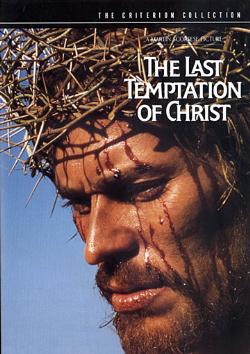
When I was an impressionable child I was told what is likely an apocryphal story about Leonardo da Vinci. The story goes that the man who posed for Jesus in the Last Supper was also the model for Judas, after living a life of dissolution. Willem Dafoe, of course, famously played Jesus in Martin Scorsese’s Last Temptation of Christ. From Jesus to vampire. Both characters are bound by the element of blood. Christianity still celebrates the shedding of divine blood symbolically while the vampire takes blood (also symbolically). Although the vampire cannot endure the sight of the cross, the same man effectively played both sides of the mythic line, almost as if the apocryphal story came true. There are implications to consider here, and not all of them insinuate Hollywood. On these dark and stormy nights, we have something to ponder.


Battle Bibles

“There are no atheists in foxholes,” so the old saying goes. No doubt, war is among the most stressful circumstances in which humans insinuate others (who goes to war happily and without reservation?). As a corollary, to keep soldiers comforted in hellish surroundings, it has at times been common to supply them with Bibles. In an exhibit I’ve not yet seen, the Museum of Biblical Arts in New York currently has a display of soldier’s Bibles. A poignant dissonance accompanies such a concept. In the newspaper story announcing it, the phrase that leapt out at me was “Bibles clothed in camouflage.” To be sure, the Bible contains many narratives of war, even demanding genocide in certain circumstances, but as a whole the most valued commodity appears to be peace. Too often, however, it is peace on our terms.

According to the article, Bible distribution began in the United States in the Civil War. Bibles were offered to belligerents on both sides. Naturally, taken into the viewpoint of the chosen ones, God is on the side of the reader. God is the ultimate conflicted deity. This is cold comfort to a soldier dying on the battlefield of all-too-human contention. In keeping with religious differences, over time Protestant, Catholic, and Jewish versions have been offered. Notes in these government-issued religious documents urge the soldier to find succor here. One need not read too deeply between the lines to find the message is the willingness to lay down one’s life.

In a world acutely aware of religious differences, the idea of supplying fighting forces with religious backing may seem questionable. Can there be sincerity in the message that Scripture of any description ought to comfort a person who has been placed in this unenviable position by human greed, powerlust, or self-aggrandizement? What reason have we for war any longer? If religion be true, why have we not matured by even a millisecond since Joshua invaded Canaan? Giving a soldier a camouflaged Bible is to place a Band-Aid on a gaping wound requiring many stitches. Far better to take the message of peace to heart and look for reasonable ways to solve our differences. Idealistic? Without doubt. But it might help to save the cost of distributing Bibles to those whose lives are seemingly less valued than those who begin armed conflicts in the first place.

There is no “holy” in war.


Biblically Married

The Bible says—. Fill in the blank. Go ahead, someone will believe you. The problem with biblical literalism is that it is often held by people who don’t read the Bible. Well, it is a gosh-darn big book—well over a thousand pages—do you know how much quality television watching time that represents? So many fundamentalists are surprised to find out how little the Bible has to say about marriage. In fact, it says almost nothing. There are no marriage rites given, and marriages are mentioned but not described in detail. So when modern-day readers want to find guidance about political policy they have to—to be frank—make a lot of stuff up.

Take North Carolina, for example. Next week they are scheduled to vote on an issue of defining marriage. The intent, apparently, is to bring the state in line with the Good Book. In comes Matthew Vines, an evangelical Christian who’s also gay. Being a Harvard student, he has immediately impressive credentials. He has an on-line biblical exegetical exploration of what the Bible says, and more importantly, doesn’t say, about homosexuality. The other solution, to actually read the Bible, is a little too much to ask. Another part of the problem is that the Bible was written in a very different context, and to understand the Bible’s view on anything, you need to fit it into its context. All this Bible reading—and context too? Better leave it to someone on the television to explain it all.

Leonard Pitts Jr. is a columnist that I’ve come to trust. His good sense comes through in all his work. In Wednesday’s column, he highlights Matthew Vines’ hour-long talk as an example of what happens when common sense meets the Bible. For those who bother to read it, it will become clear that the Bible nowhere defines marriage. It says nothing about sexual orientation. The few passages on homosexual acts have a narrow context (that word!) that must be considered. Nowhere in the Hebrew Bible nor the New Testament is marriage considered a religious matter. It’s simply what people do. So as North Carolina heads to the polls, Bibles clutched in hands, but not in their heads, it might do to watch Matthew Vines as homework. I haven’t seen the video myself. An hour is just too long to take from my busy television-watching schedule.


Bleak Visions

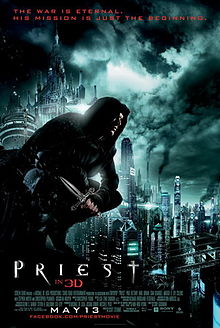
The day was leaden and rainy. Hopes for seeing the sun over the next several days dim. I had been warned about this, but once my mind has settled on vampires, they’re hard to resist. The reviews said Priest, as a movie, was full of cliched dialogue and predictable outcomes. This is true. But still, it is perhaps the most religious vampire movie ever made. While some have doubted my analyses of Underworld and other vampire films, Priest is set in a Pullmanesque world dominated by a church that has lost its belief in vampires. In fact, the civilized world, in scenes reminiscent of Blade Runner, owes ultimate allegiance to the church. Based on the graphic novels by Hyung Min-woo, the post-apocalyptic world of Priest presents an over-industrialized society where humans live in walled cities (ironically, Jericho has no walls). Vampires, more fierce than any Count, even by fifteenth-century standards, rip humans to shreds, but have been forced into reservations by the warrior priests. Their weapons are cross-shaped, but there is otherwise no reference to Jesus in the movie—only an amorphous “God.”

Despite the endless tropes, “a vampire killed my brother,” “the Priest is her father,” and endless chatter about the nobility of sacrifice, the movie is strangely compelling. Visually it maintains the appeal of a place somewhere between Planet of the Apes and the Book of Eli. And something appeals about priests who are willing to fight evil rather than sit around arguing about whether women should be allowed to join the movement or not. Keeping with modern proportions, we see only one female priest and none among the Monseigneurs, but she is the one who actually stops the vampires. And these are vampires that have evolved into the blind, naked denizens of the night who kill, apparently, for the sheer joy of it. The only article of faith the church can muster is, “if you go against the church, you go against God.”

I wonder if anyone in the world of religions is tracking how society perceives them. Religions once stood for our noblest aspirations, and our humblest weaknesses. Like bad caricatures from the movies, religious organizations don’t shy away from the desire for ultimate power. In His Dark Materials and in Priest, the church is content with nothing less than total domination. This is not missionary zeal, but good, honest power-lust. Not all religions are like that, of course. Still, there are those who perceive them that way. Maybe it is my own insecurity, or maybe it is the fact that I’m seldom convinced I have the answers, but I can’t help but feel the thrill of justification at the rebel who maintains conviction to the ideals s/he holds deeply. It takes no backbone to enforce obedience when might is on your side. But only those who have faced the vampires personally know who the real enemy is.


The Price of Religion

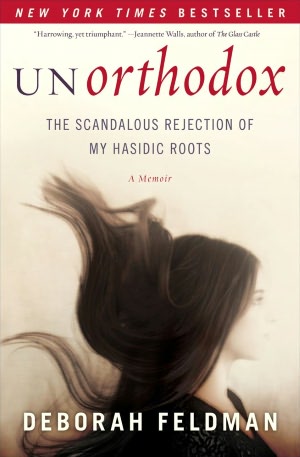
Gender is a religious construct as much as a biological one. The study of religion has brought me face-to-face with the reality that religion appeals to many women and to those who would manipulate them. Lately I’ve taken to reading the memoirs of women who’ve discovered the abuse their faith has doled out to them and who’ve taken moves to reclaim their lives. This past week I read Deborah Feldman’s Unorthodox: The Scandalous Rejection of My Hasidic Roots. As someone who has spent much of his life reading and re-reading the Hebrew Bible that gave fuel to the Mishnah that gave fuel to the Talmud that gave fuel to the Hasidic movement, I found Feldman’s narrative gripping. Some branches of Judaism, like some branches of Christianity, try hard to separate themselves from society. Their cloistered lives become secretive, and often by the standards of secular culture, incomprehensible. While reading this wrenching account of sexual domination, I kept wondering why Feldman didn’t try to escape. At the same time I already knew the answer.

I was raised by a religious mother who found her faith both a source of rules and a source of comfort. Unaware that religion can be a trap, women are frequently its victims. In a society that still refuses to give females equal opportunity for earning a living, is it any wonder that religions offer alternative routes that equally entrap? How do you appeal to a higher power when that higher power is, by biblical definition, male? Who will help you out when the largest religious structures in the world are male constructs? Yes, lately some religions have opened themselves to female leadership, but almost always at the cost of splitting off of factions that claim seniority and sanction from the beginning, when, they claim, only men ran this show. Deborah Feldman was trapped in a religion where her life, down to her hair and clothes and reading, was programmed by male expectations. In this continuum between religions we find the same progression in a series of degrees where men make the rules.

Many who read Unorthodox, I suspect, will see it as a condemnation of Hasidic Judaism. It is not. As Feldman makes clear, she has retained her Jewish identity, but she has let it evolve into a place where she is finally free to express herself. Gazing over the religious landscape, I see this as a place that many women find themselves. The very religions that had formerly held them down, however, continue to be male preserves. Even if women may join the club of bishops, clergy, or rabbinate, they do so with the constant reminder that they are only invited guests in what was once a masculine world. The world of men never voluntarily relinquishes its grip. As long as people are considered in the image of God they will always be by default male and female only as an afterthought. To conceive it any other way would be very unorthodox indeed.


Honor Thy Mother

Earth Day should be an international holiday. Perhaps the most disturbing attribute of some varieties of Evangelicalism is their tendency to read the “Be fruitful, and multiply, and replenish the earth, and subdue it” of Genesis 1 to be a mandate not tempered by a literal reading of Genesis 4. As I noticed when tweeting the text yesterday, Genesis 4.11 has God say to Cain, literally, “And now art thou cursed from the earth, which hath opened her mouth to receive thy brother’s blood from thy hand.” Her mouth? What is this if not a biblical affirmation of Gaia? The earth, according to Genesis 2, is literally the mother of Adam. Yahweh is the male element, the fingers molding the dirt (those who have ears, let them hear), while the womb of this bizarre conception is the earth itself. She has a mouth to receive the blood of Abel. The planet beneath our feet, according to the Bible, has not only a mouth, but also hands (Psalm 89, for those who doubt). It is our duty to grasp these hands and save our mother from ourselves.

In the spirit of the day, I decided to fix that pesky leak in the bathroom sink yesterday. We rent, of course, and our landlord—the nicest I’ve ever known—can be a bit slow when it comes to non-emergencies. I fixed the kitchen sink a year or two back, so I stuck my head under the cast-iron monster, baptized by the drips that continued to appear above my head from pipes far older than Methuselah, to see what I could do. After trips to every hardware store in the area, watching bemused DIY experts scratch their heads at photos on my phone of the Byzantine arrangement under my sink, I finally had to admit defeat and reassemble the old faucets again. The drips that fall are Gaia’s tears.

When I was in college I learned of Pascal’s wager. A philosopher who liked to hedge his bets, Pascal deduced that if God exists then our eternal fate relies on our obeying him (always him). If God does not exist, we have lost nothing by behaving ourselves, Pascal concluded. While many Evangelicals find that reasoning attractive, they do not apply it to their mother planet. If God is not coming back any day now, we’d better take care of the planet that sustains us. If God does show up, against all odds, what have we lost? Watching the plants burst back into life after a gray and dank winter, who can help but wonder at it all? Literal or not, the earth is so maternal that we should all pay her the reverence she is owed. Even if it means being a literalist for a day.

NASA's picture of our mother.


Fighting Jesus

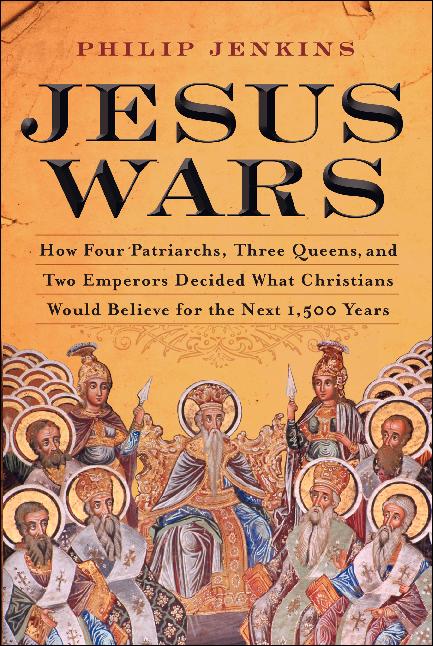
Jesus Wars, by Philip Jenkins, accomplished something no other book has ever done for me—it actually made the doctrinal debates of Late Antiquity interesting. An historian of religion with wide interests, Jenkins produces fascinating books on what might appear to be esoteric aspects of religious life. I remember yawning through theology classes where we learned of crusty, if utterly convicted, monks and bishops arguing over single prepositions in their efforts to define exactly who Jesus might have been. When Jenkins turns his attention to this dusty, unwashed phase of Christianity’s gamy early years, new avenues on regulated belief structures open the way to understanding just how little most believers know of their own traditions. On its way to feel-good evangelicalism, Christianity frequently paused along the way to brutally murder some of its own for disagreeing about whether Jesus shared the same essence as his dad.

Today many Christians are taught by their clergy that their faith differs little from that of the earliest Christians. All who are taught this should be compelled to read Jesus Wars in order to get a grip on what really happened. From the very beginning Christianity was deeply divided about who was truly a follower of Christ and who was not. Even within a generation of the death of Jesus his various groups of followers could find little that they all agreed upon. As Jenkins demonstrates, over the next few centuries that sad history was worked out with extreme cruelty and cudgels and swords. The side with strongest force of arms got to decide on doctrine. Nor did matters improve with the Protestant Reformation. Many Reformers lapsed into what would have found them tied to a stake for heresy, had they been fortunate enough to have been born in the early centuries of “the Christian Era.”

The one figure that seems to have been lost during the Jesus Wars was Jesus of Nazareth. Instead, human constructions of who Jesus might have been became the source of great suffering. Bishops beating bishops to death, saints having women murdered, monks forming an unwashed militia—it’s all here along with the debate over how many angels might dance on the head of a pin. Jenkins does an excellent job of demonstrating that what is now known as “orthodox” Christianity was often a matter of political accident. In the case of Theodosius II, the future of Christianity literally rode on the horse that stumbled, tossing the emperor to his death. No doubt, there will be those of one or another brand of Christianity who will see the divine will behind the ultimate outcome. That outcome, however, will always insist that all others are wrong. For those seeking a bit of balance, Jenkins will make enlightening reading. For others it may give the lie to doctrines made what they are by mere mortals. In any case, the words attributed to Jesus about loving your neighbors and enemies will nowhere be found amid the debates of who he might have really been.


Cain’s Dilemma

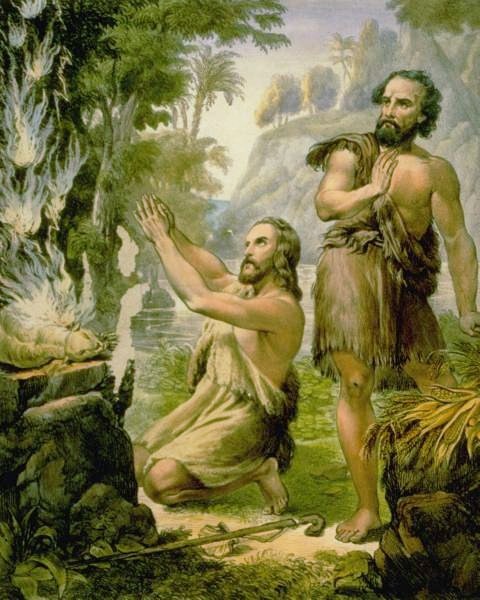
As I tweet the Bible into cyberspace, Cain strikes me as a most misunderstood character. Mercilessly portrayed as an ungrateful boor, the first vegetable farmer in folklore is demonized as the father of all sinners. Genesis, however, is impossibly vague on Cain’s crime. A close reading of Genesis 4 indicates that Cain was the first human being to offer a sacrifice to a higher power. Being a tiller of the soil, that sacrifice was of the fibrous kind, bereft of any fat or blood. The divine nose (metaphorically) is turned up at this attempt at pacification. In steps Abel with his bloody slaughter of animals and God is well pleased. Traditionally, Christian readers have attributed Cain’s evil intent toward Abel as jealousy. Genesis doesn’t seem to bear this out. “But unto Cain and to his offering he [the Lord] had not respect.” Cain was not jealous, but “wroth.”

Much later in time Paul of Tarsus will tell fledgling Christians that God is “no respecter of persons.” Still, in that first moment of divine favoritism, prior to any explicit instruction being given, we catch a glimpse of the future of this nascent religious movement. Even today, the literalists tell us, God expects something from us. What, exactly, differs from interpreter to interpreter. Cain’s crime was simply being human. Even more poignant in this case is the fact that the divine allowance for consuming meat has not yet been made. Abel raises animals for God’s appetite while Cain raises vegetables for human consumption. No sentient being is harmed in Cain’s offering. Abel, one might say, is the first killer in human history.

We all know the story. Cain will rise up against his brother and slay him. He will then receive a prototype of the mark of the beast and scamper off to rustle up a wife somehow. All this before the third natural born human being, Seth, is even conceived. Beowulf will reflect Cain’s dilemma centuries later, as Grendel is the spawn of the first murderer. The descendents of Cain are routinely demonized while the children of Seth repeat the cycle of divine favoritism over again. Here is Cain’s problem: God will like whom God will like. The rest cannot earn divine favor. The bloody consequences of this reading of history continue to play themselves out even today. Those who need divine approbation will go to any lengths to feel special, while all of us, the true heirs of Cain, have to work it out as best we can under silent skies.


As on Earth

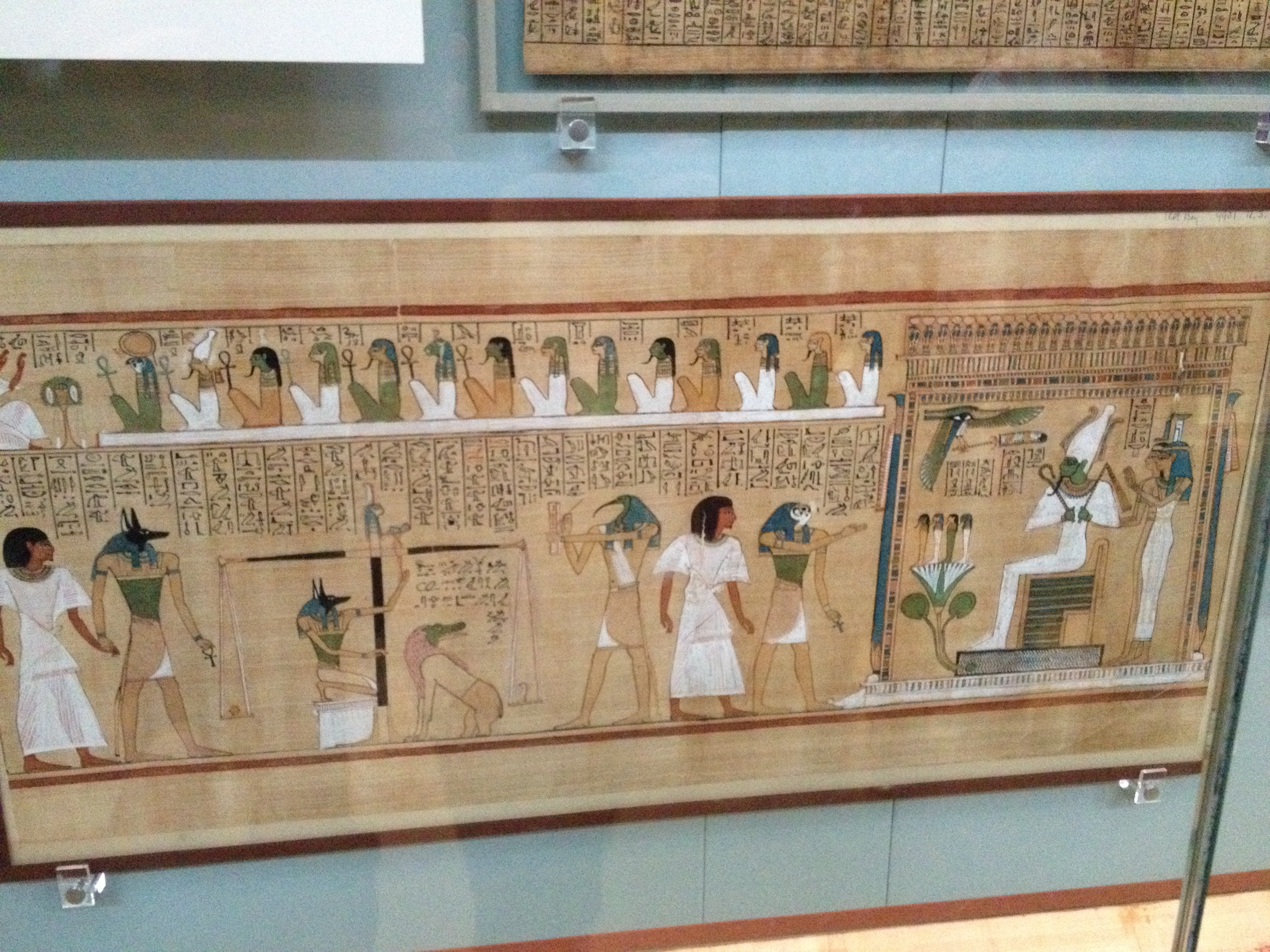
Today’s version of the afterlife requires simple assent to a belief system, at least according to prominent interpretations of some religions. Belief alone is enough to ensure an eternal reward. The ancient Egyptians, however, considered the path longer and more torturous. Anticipating modern GOP ideals, they believed that only the wealthiest deserved a place in the beautiful west, while the poor and struggling should just fade away with the sunset. At an even earlier period the afterlife was reserved for the king alone. Even he didn’t have an easy time of it, however. To get to the afterlife you had to face many perils and trials. To help him along, as a royal crib-sheet, many kings had the requisite spells inscribed on the inside walls of their pyramids. After time these “pyramid texts” were copied by the wealthy and inscribed inside their coffins. These “coffin texts” allowed the rich potentially to buy their way into eternity.

Eventually the afterlife became democratized. The spells were inscribed on scrolls and sold to those who could afford them. This final development gives us our “Book of the Dead.” Egyptians had an organic view of death as a continuation of life itself into the inevitable future. That future offered a continuation of the prejudices of the present. Kings continued to reign, peasants worked the fields of Osiris. It may have been work, but it was better than the alternative. Christianity’s version of the afterlife was strikingly fair. At first.

At first simply being resurrected was gift enough. After all, otherwise standing in line for martyrdom at an obscenely young age utter madness. Before long, however, like the Egyptians Christians began to create Heaven in their own image. Mary inherited the heathen title Queen of Heaven. When Heaven grew too crowded with questionable types, Purgatory was invented. Social stratification became a hallmark even among the clouds. Perhaps it is our primate biology, but we humans just can’t seem to accept and promote true equality. In that respect the Bible has become a kind of Christian book of the dead. Even eternal life seems to have its drawbacks.


Disputed Territory

Revisiting a childhood home can be a bittersweet experience. As my wife reflects on the first house she remembers going up for sale, we are glad that we spent the holidays there one last time a few months back. In my case sentiment is a little harder to find. The three residences I recall from a fractured childhood all bear the same distinction: they were torn down after we left. All that remains of my youth is three parking lots. Things are a lot more level now than they were back then. Whenever I visit the area, however, I still slow down the car and remember. Memory, whether singular or collective, makes a geographic location a sacred space. We rented when I was growing up, so those spaces that I think of as mine were occupied by others before and after us. (The razing did not take place immediately after we closed the door for the last time.) Whether those others—strangers to me—consider the place special I have no way of knowing.

Holy, holy, holy?

In other cases the sacral nature of a place is hallowed by tradition. Say “the Holy Land” and most people will know that you’re referring to what is now Israel/Palestine. I only traveled there once, but was privileged to stay for about six weeks. Working on an archaeological dig is a rite of passage for young biblical scholars (for such I was at the time), and weekends were spent visiting the places I’d read about since I could first remember. One of the most jarring aspects of the holiness was the evidence of violence. Cars burning by the roadside. Bombs going off in a post office in Jerusalem. Sounds of heavy artillery lobbing explosives through a blue sky during the sunny afternoon. A place so sacred as to be continually baptized in blood. Humans, human memory, are what make a place sacred.

All of this comes to mind with the political posturing of New Jersey governor Chris Christie visiting Israel. God knows New Jersey has enough problems of its own, but it is a relief not to have him hanging around for a while. Nevertheless, what has Trenton to do with Jerusalem? One thing the Middle East doesn’t need is one more bully. Pushing, shoving, crusading, shooting, and bombing haven’t worked for that elusive peace. What value can our dauntless leader add to this unholy mess? Maybe I’m just old fashioned, but I thought governors were supposed to take care of their own problems at home and leave international schmoozing until they got to the big offices. Maybe the race for a GOP nomination isn’t over yet. The most sacred space in this country is a white house that gets sold to the highest bidder every four years. At times there is more wisdom to be found in a parking lot.


Strixology

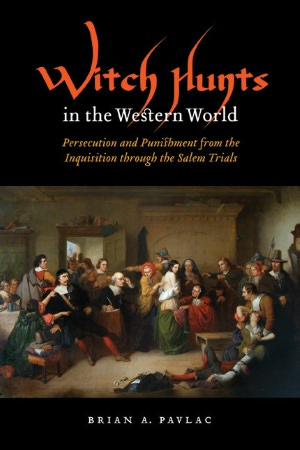
One of the fascinations of parenthood is learning to see things through the eyes of a young person again. When my daughter was fascinated with dinosaurs, I found myself learning such tongue-twisters as micropachycephalosaurus (I spelled that without looking it up just now) and struthiomimus just to remain conversant with her. (That, and I never really grew up.) When she took a childhood interest in insects, I found myself picking up bugs that would have sent me running just a few short years before, in my bare hands, to take them home to show her. All of this is by way of introducing my current continuing interest in witch trials. My wife (and consequently our daughter) is a direct descendent of the Towne family that included three innocent women accused as witches in the 1690s—Rebecca Nurse, Mary Easty, and Sarah Cloyce. When my daughter found out, the next long weekend from school we drove to Salem. I’ve been reading about witches ever since. I recently finished Brian A. Pavlac’s excellent Witch Hunts in the Western World. Well, as excellent as any book about such a gruesome topic can be. In the course of reading it, an unexpected connection dawned on me.

Many of those accused of witchcraft in the early modern period in Europe were accused of killing babies. The vast majority of them were women, often midwives. Those so accused had their bodies stripped and examined in public venues, generally only to have confessions tortured out of them later, under the eyes of male magistrates. The church had given credence to the superstition that witches actually existed and were in league with the Devil. Suddenly as I read, I heard the echo of a familiar refrain that comes from modern witch hunters. Those who, like the magistrates of old, are men; men telling women what they may or may not do with their bodies. Who draw their self-righteousness from their religion and who claim that birth control is of the Devil. Who accuse women of killing babies. Texas begins to sound like the rebirth of the Holy Roman Empire. In all of Europe that was where the most women were slaughtered, in thousands, by men who burned with the zealotry of a religion that had lost touch with reality.

Time spent on history is never wasted. At times we seem to have come so far, but then I look back over my shoulder and see the suchomimus of unbridled male fantasy closing fast. We have worked hard to bring equality to all people, but at the start of yet another millennium, we are still measuring the worth of humans by the gonads they carry. Based on outdated views from a book that was once meant to be inspirational. Sadly, the legacy often left by religion is only a residue of superstition. The reasoning behind the witch hunts of yesteryear and those of today is the same—the desire to control the behavior of others. It is the cocktail of religion and politics that inebriates those who crave power. What was true then remains true today. In the words of Pavlac, “A history of the Middle Ages shows the intensifying entanglement of magical thinking with political power, which produced the European witch hunts.” Substitute “Modern Day” for “Middle Ages” and “Planned Parenthood” for “European” and see if you can’t find a pattern.


Paradise by Half

Some times the Bible is best taken in small doses. I’m no technical guru, but I do know that Twitter doesn’t always display the Bible bits I type in daily. Perhaps in some far distant future civilization that has learned how to recover “data” from fried pieces of digital storage devices, the Bible will be woefully incomplete. Maybe not woefully, depending on whose point of view sees it. Reading over passages worn smooth by timeless repetition, it is sometimes difficult to notice the harsh undertones. My twittering is up to Genesis 3 now, the infamous Garden of Eden episode. Over the last few days I’ve tweeted, “And the Lord God called unto Adam and said unto him, Where art thou? And he said, I heard thy voice in the garden, and I was afraid, because I was naked; and I hid myself. And he said, Who told thee that thou wast naked? Hast thou eaten of the tree, whereof I commanded thee that thou shouldest not eat? And the man said, The woman whom thou gavest to be with me, she gave me of the tree, and I did eat. And the Lord God said unto the woman, What is this that thou hast done?”

The weary “blame it on the woman” trope aside, several things stand out. God seems to be interested only in Adam. Perhaps the divine Dad wants to take his boy aside for a man-to-man chat, but it seems more likely in the context that Eve is simply irrelevant. Even Adam’s response is completely void of Eve, “I heard,” “I was afraid,” “I hid.” For a man about to shove the blame off onto his significant other (sorry, Tea Partiers, nowhere does Genesis say Adam and Eve were ever married), he is strangely circumspect about his recondite female. Even God sounds surprised, “Who told thee that thou wast naked?” Hmmm, who else is there in the Garden? Adam suddenly abandons the first person singular and begins his response with, “The woman whom thou gavest…” Blame anyone but Adam. The tragic disappearance of Eve until blame is to be attributed should warn us that the remainder of the Bible will not be a happy book.

The first chapters of Genesis have a lot of uncovering going on. God, like a detective in a CSI drama, tries to uncover the mystery of the naked man. When man is found naked he blames the woman, not even bothering with her name. Much is revealed here. Coming as it does as the first biblical story of human interaction, this tale sets the stage for all subsequent developments. From this point onward, with rare exceptions, the story will be a male narrative. Women will be assigned to, literally, support roles. Is it any wonder that women gather to protest against women’s rights, when under the thumb of such teaching? I suggest that what is required is even more uncovering. If we examine the bare facts of the Bible, we might be able finally to get to the root of this problem. That root lies deep in the literal interpretation of mythology.

Who's missing?


Where’s Waldo?

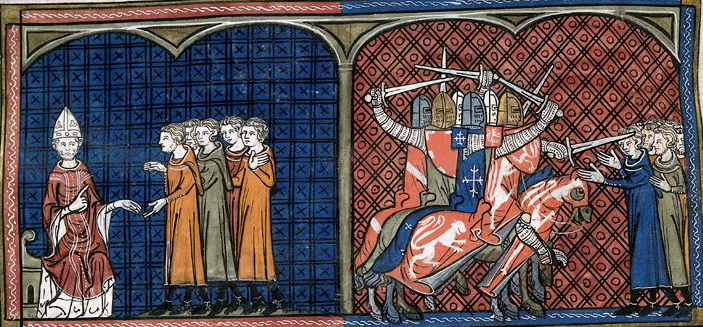
I first learned about Waldensians in a class on the Middle Ages. In the centuries before the Reformation took place, some Christians in Europe resented the wealth and ostentation of the Catholic Church—the only show in town. In response the Waldensians preached a radical simplicity, including poverty. The established church, enamored of plutocracy and power, didn’t appreciate this challenge. To the average peasant, I suspect, the sincerity of the Waldensians was a bit more obvious than those who represented an institution enamored of its stature. When Catholicism learned about Waldensians and their imitation of Jesus’ lifestyle they did what came naturally. They killed them. Accusing those who insisted on helping the poor and needy of heresy gave the justification to the church’s decision to eliminate them.

What occasioned the most surprise, as I was recently reading about them again, was the discovery that the Waldensians still exist. The church has often been thorough in its elimination of those who cross it (note the antics of Rick Santorum), but somehow some Waldensians managed to live on through the persecutions of the trials of heresy. Yet the church still likes to bluster and condemn many to Hell, even if just metaphorically. I must admit that such posturing worries me. It is not in vain that the church has frequently insinuated itself into politics. Anyone who has been awake in America since the 1980’s can’t have helped but to have noticed.

Ironically, the three major monotheistic traditions began as counter-cultural movements. Once the religions gained political power the oppression of others began, thus starting the cycle all over again. The Waldensians are an excellent paradigm of what occurs when a religious body attains too much power. Heresy is so dangerous because it highlights hypocrisy. Claiming divine sanction for human weakness is a charade easily understood by those who take the time to watch closely. The revisionist history of America that we hear presidential hopefuls espousing are warning signs. The church may not have reached all the Waldensians in the Dark Ages, but it still keeps on trying. Fortunately the followers of Peter Waldo are sometimes hard to find.


Professor Little

There I was, some 3000 miles from home, in the office of a professor I’d never met before. On her desk a Gorgias Press catalogue. In that catalogue a miniscule picture with my diminutive face. Such are the little ironies of life. My ric rac career began when others started making suggestions about how being a janitor might not be living up to my full potential. Sometimes, often, I wonder if they were correct. Cleaning up after other people’s messes in the halls of our educational system seems like an incredibly honest career to me. Instead I have steered a course between the halls of academia and the halls of commerce. It is easy to suppose that I’m not really in control since even if I choose the general direction, I haven’t selected the specific circumstances. Recently I attended a conference where Gorgias Press had a booth. I looked over the tables, spying names of authors whom I had given their first start in publishing. With books struggling for elbow room in my own head, it is a bittersweet experience.

Watching the glacial ballet of higher education unfold, it often occurs to me that universities are not smart. Many brilliant minds work in them, and much light shines from them, but on an institutional level decisions are often made that jeopardize the entire enterprise. Over-emphasis on sports, over-utilization of adjuncts, over-payment of administrators—these are not signs of soaring intelligence. They are signs of institutions in a muddle as to their true identity. Are they businesses or centers of creativity and education? The basic business model is not “one size fits all,” and universities managed to maintain an enviable idealism until they began to emulate the corporate world. The tattered results lie all around us.

All through my educational journey, there was no guiding light. In my experience, higher education was a wondrous journey that suddenly terminated when I didn’t measure up to someone else’s standard of Christianity. By that point, I was ill-prepared for the savage politics of higher education. The transition from author to editor may sound simple enough, but things are seldom what they seem. Education may not make one smart, but it sure puts ideas in one’s head. Sometimes I reflect on those books that will never be written. I’ve never been any publisher’s darling, but here I am staring at a little picture of a little man. I’m sure there must be a lesson here somewhere, but I’m not smart enough to figure out what it might be.


Alternate Reality

Recall a time when you did something bad. We have all done it now and again. Even the memory possesses the power to churn the stomach and lower the brow. I just finished reading Native Voices: American Indian Identity and Resistance, edited by Richard A. Grounds, George E. Tinker, and David E. Wilkins. The essays in this volume are about Native Americans by Native Americans. Many of us are taught to believe that the United States government had found some way to deal peacefully, after some bloody battles, with those hostile to the arrival of Europeans, but the truth is much sadder and more sordid. While some may say the essays in this book dismiss academic standards, I have been on the receiving end of academic standards enough to know that even highly educated people can sometimes only cower and the reality is how you feel. That is what comes through every page of this book: what it feels like to be misrepresented, demonized, caricatured, forgotten. European colonizers stole what they could in the name of Christianity and left a legacy of tears.

I nevertheless learned a great deal from this book. Here, I came to understand, not everyone agrees with the standards that Euro-Americans use to measure the world. Nowhere is this clearer than in the Native American critique of science. Those of us trained in this method feel a knee-jerk reaction when it is questioned, but those willing to consider, to ponder, will realize that a scientific worldview is a culturally conditioned form of interpretation. Other forms exist, although they have frequently been silenced. There is more than one way of knowing. In many Native American religious traditions the land itself is sacred. Being removed from tribal lands was tantamount to being separated from tribal divinity. We might be better able to dismiss it all as ancient history were it not for the fact that the oppression continues to this day.

Comparison with another oppressed religion came to mind. Ancient Israel is understood only imperfectly, but we know that the land was crucial to Israel’s sense of identity. We should, as heirs of the Judeo-Christian tradition, be sympathetic to Indigenous American sensitivity to the bond between land and religion. In the former case, the United States supported the re-formation of Israel in the 1940s. We still keep our own indigenous people out of sight and use their land with impunity. Reading Native Voices raises some very troubling specters indeed. The colonizing religion here was Christianity, a religion that says it is more blessed to give, but is more than willing to take. And to invent a tortured theological justification for the action; it’s manifest destiny—whatcha gonna do? It is time we confront what was done to the people who were here first. I have no solution, but reading Native Voices is an appropriate way to start the discussion.