WHO Believes?

These days it’s pretty clear that if you want to listen to anyone for advice it shouldn’t be the government.  I suppose that’s why I spend so much time on the World Health Organization’s page.  I’m no medical person and I certainly don’t understand epidemiology.  Contagion I get, because religion operates that way.  So WHO has been making somewhat frequent references to faith.  A recent status report noted that 84% of the world’s population reckons itself as religious and that many coronavirus outbreaks have taken place because of continued religious gatherings.  To that I suspect they’ll need to add political rallies supporting governments you shouldn’t trust, but what is such blind faith in leaders who don’t know what they’re doing if not religion?  People want to believe.

Religious gatherings also provide crucial support.  The community with which I associate has been using Zoom gatherings since mid-March.  It’s not perfect, of course, but during our virtual coffee hour I’ve been put in breakout rooms with people I don’t know.  I’m starting to get to know people I might be too shy to speak with in “real life.”  More than that, I’m asking myself what real life really is.  Technology has been pushing us in this direction for some time.  We relate virtually rather than physically.  I’ve never met many of the people with whom I have some of my most significant exchanges.  The internet, in other words, has an ecclesiastical element to it.  The words “church” and “synagogue” both go back to roots meaning “to gather.”  Faith, despite the stylites, is not lived alone.

WHO suggests that since religious leaders influence millions of people, if they would turn their message to prevention it could have a tremendous human benefit.  Consider how one man’s personal crusade in the mid-nineteenth century led to elections being decided on the basis of abortion alone.  If faith leaders were to take the good of humankind to heart and spread that message, it could well outstrip the virus.  Alas, but politics interferes.  Many religions also want to determine how people live.  There’s power in that.  We’ve seen it time and again with televangelists.  WHO has faith that these leaders might set aside their scriptures for a moment and read situation reports based in science and rationality.  WHO apparently has faith as well.  Until someone smarter than politicians sorts all of this out we’re probably safest meeting virtually.  Who knows—perhaps there are hidden benefits to that as well?


Denying Reality

The science-deniers in the White House have had to accommodate themselves to evidence-based facts and they look none too happy about it.  Science denial has a long and venerable history in a certain type of evangelicalism.  Science teaches us that most things are more complex than they seem and this is also true of religions.  There are evangelicals all over the board, but those claiming the name most loudly have been outspoken Trump supporters.  The administration has had a three-year spree of decrying science and now that a very real virus is killing us they have no choice but to listen, albeit reluctantly.  So why do certain strains of evangelicalism deny science?  Is it all for profit?  Is there some kind of biblical mandate?

As someone who spent many years making a living as a biblical scholar (and it still plays into my work), I often think about this.  There is the underlying reliance on miracle as opposed to naturalism, for sure.  If God can do anything then science is ever only contingent.  Any moment a miracle (a word that doesn’t occur in the Bible, by the way) could happen and there’d be no way to measure it.  The main reason, however, goes back to Genesis and its creation stories.  When you read a book first impressions are important.  The Good Book begins with a theological account that eventually came to be taken literally.  It’s as if someone decided to live by a poem, taken as fact.  Some things can’t be expressed except with metaphorical language.  But since this creation takes place up front, any challenge to it is an affront to the Almighty.

The antagonism set up by Darwin’s discovery of evolution set the whole confrontation in motion.  Evangelicals in the late 1800s were feeling pushed into the corner by the overwhelming evidence that the creation accounts in Genesis were not factual.  This insult to miracle has simmered for well over a century—the Scopes trial, well into this period, took place 95 years ago.  Fear that the Bible’s loss of science authority might somehow lessen its spiritual message became a ditch in which to die.  Big business learned, back in the seventies, that evangelicals made great followers and could constitute a voting bloc if only a cause could be raised around which they’d rally.  We all know what that was.  That issue has led to the denial of science and the acceptance of anyone ill-informed enough to accept such denial.  Only after learning that you must fight pandemics with science has the White House had to start changing its story.  When it’s all over, however, it will go right back to denying everything.


Disease Divine?

I suspect many religious people are wondering where God is amid the current pandemic.   Theodicy (explaining the suffering of the innocent while defending the goodness of the Divine) has always been the bête noire of monotheistic belief systems.  (Polytheism has the advantage of always being able to blame another god.)   People have been pointing articles out to me that show the religious implications of a crisis.  I’m not at all surprised by the irrationality of the subjects.  The first article was an opinion piece in the New York Times.  It makes a good case that the religious right paved the way for the COVID-19 contagion in the United States.  The religious right is anti-science because they (wrongly) believe the Bible is a science book.  Even a small dose of seminary could cure that ill.  Katherine Stewart nevertheless makes a strong argument that the survivors of all of this will know whom to blame.  Science denial is not the same as authentic religion.

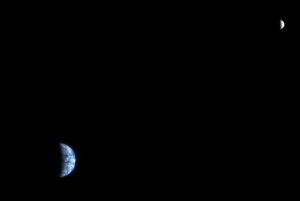
From NASA’s photo library

The other news stories that arise are of evangelical leaders defying government bans or guidance, even when delivered by messiah Trump, to large gatherings.  One of the main reasons for this is that said messiah kept saying the coronavirus was nothing to worry about.  Only when re-election seemed unlikely with all the uneducated dead did he finally start issuing warnings to avoid such idiotic congregating.  In the midst of it all, Jerry Falwell Junior (why did all these evangelists have to propagate?) decided to reopen Liberty University.  No doubt confident that God will keep them from any harm, the university officials decided it would be good to gather students from all over the country and put them together in dorms again.  If you’ve ever lived in a dorm I’m sure you can see why the decision is anything but wise.

It’s sad that evangelicalism has decided to pander to the uneducated.  You can believe in Jesus (many mainstream Christians do) without parking your rationality in the farthest parking spot from the door.  Many of us, huddled in our houses, not having seen other living people for days, are trying to isolate this thing and drive it to extinction.  Meanwhile, those who trust their own version of the supernatural are doing whatever they can to ensure the virus continues to spread.  Why?  They have long been taught that science isn’t real.  Never mind that their cell phones work and they get the news of open dorms through the internet, the science behind it all is bunk.  An entire executive branch administration that doesn’t believe in science is as sure a road to apocalypse as any.


Occam’s Disposable Razor

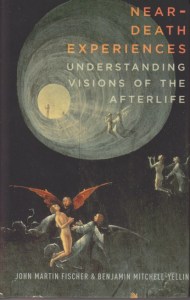
Since new books are kind of rare right now, I’m reading through some of those I’ve collected but haven’t actually read.  One is Near-Death Experiences: Understanding Visions of the Afterlife, by John Martin Fischer and Benjamin Mitchell-Yellin.  I bought the book because the topic, as addressed by a university press book, is interesting.  Fischer and Mitchell-Yellin approach the subject as philosophers.  Their main focus is on the widely accessible and successful books by Eben Alexander and Todd Burpo.  Also the somewhat less well known efforts of Jeffrey Long and Pim van Lommel.  (Instead of taking up blog space with all these titles, just email me if you’re curious, or read my Goodreads post.)  Applying standard scientific methods to spiritual experiences isn’t easy, and Fischer and Mitchell-Yellin are clear that they aren’t trying to take the value out of Near-Death Experiences (NDEs), but rather they are challenging how these authors try to make them authentic.

Philosophers parse words finely.  The authors show that “real” is not the same thing as “authentic” and demonstrate how some of the more spectacular NDEs can possibly be explained by science.  Those who’d temporarily died might’ve caught onto things that happened just before or just after brain activity ceased or restarted, for example, and then misremembered them.  As a still-living guy who can’t remember where he left his wallet half the time, misremembering is an authentic reality.  Still, I couldn’t help but wonder.  Science and religion ask different questions.  One of the mainstays of scientific method is Occam’s Razor—the solution that requires the least mental gymnastics to explain something is the most likely to be true.  Many times this razor is flashed in the face of those trying to make a religious case for something.

Ironically, the authors here dismiss Occam’s Razor.  They state that sometimes the more complicated solution is the right one.  I happen to agree with them on this, but it proved a real distraction in reading the book.  Many scientists use the exact opposite argument against spiritual things.  It also struck me that a book so brief (less than 200 pages) would necessarily struggle to explain a complex phenomenon convincingly.  Trade books, such as those by Alexander and Burpo, aren’t meant to be held up to the stiff standards of peer review.  They are meant for selling lots of copies.  Their authors aren’t philosophers.  It’s almost a mismatch in categories.  Some academic presses are now publishing on NDEs and asking plenty of questions about them.  It’s no surprise that philosophers favoring physicalism would do the same.  It seems a little hairy, however, to do so with Occam left firmly in the shaving kit.


Making Frankenstein

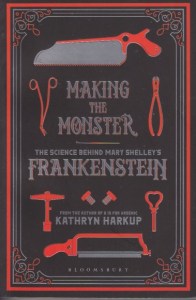
Some days ago I mentioned reading a book about Frankenstein.  This was Making the Monster: The Science behind Mary Shelley’s Frankenstein, by Kathryn Harkup.  I’ve read several books like this, many of them written about on this blog (search “Frankenstein”—there is a search box out there!), about the context of Frankenstein.  The base story is all the more compelling for having been written by a teenager who’d eloped with a married man who would eclipse her literarily.  Mary Shelley never got rich off Frankenstein, but it is one of the best known novels of the nineteenth century.  It had an impact during the author’s lifetime and has continued to have one these centuries later.  Harkup, however, is a scientist.  Her specific interest, apart from being a female writer herself, is in the science of the story.

Arranged thematically, Making the Monster covers several of the developments which would’ve been “in the air” at the time.  Mary and Percy Shelley both read science also, and knew many of these things.  There was the question of reanimating the dead that coincided with the early dissections of humans that made the modern study of anatomy possible.  There were medical breakthroughs—some of the more difficult parts of this book to read—and there were experiments with electricity.  There were cases of children raised in the wild that had been found and their subsequent stories documented.  There was evolution (in the form known to Charles Darwin’s grandfather Erasmus), there was revolution.  It was a time with so much happening that Frankenstein became a cathartic outpouring of the human soul amid the science that both Shelleys atheistically accepted.

Much of this book is fascinating, even after reading other similar accounts to the background of the novel.  What really brought it all together for me, however, was reading through the chronology at the end.  It takes me several days to read books.  What with the monster of daily work I often forget some of what I’ve read along the way from introduction to conclusion.  Having a chronology at the end reminded me of just how much information is packed in between these covers.  The narrative covers about a century (longer, if you include the alchemists), and shows how Mary was using fiction to address some very real science.  Harkup never loses track of Mary Shelley’s personal experience, however.  Estranged from her father, constantly on the move, widowed fairly young, losing several children, treated poorly by aristocratic in-laws, hers was a story of perseverance and ultimately influencing the western canon.  It shows that science and art can assist one another to make us all more human.  And the monsters left behind endure.


Running with Scissors

I suspect that, like many, I’ve come to see the coronavirus as an indictment of political foolishness.  Electing unqualified officials feels like all fun and games until a crisis emerges and the leadership has no idea what to do.  The Trump administration announced itself as anti-science and began breaking down the carefully built institutions that made our way of life possible.  His fans cheered.  Now they’re huddled in their bunkers with their stockpiled Purelle and toilet paper and Fox News on 24/7.  It’s a good thing that a stable genius is in charge.  He’s trying to get Germany to move production of the most promising vaccine to the land of his anti-vaccers, something Germany’s reluctant to do because 45 has a reputation internationally.  It seems he’s made America infectious again.

As those of us with brain stems try to find some way to comfort those we know and love, we keep coming back to the fact that this kind of pandemic is new in the internet-linked world.  No matter what you try to do right now you have to assess whether it involves meeting other people, potentially infected, and whether it’s worth the risk.  I had to go to a grocery store and Target over the weekend.  I’ve never seen so many empty shelves before.  This is what panic looks like.  The difference is that even W., who will never be considered among the smartest of presidents, recognized that institutions are there for a reason.  America’s greatness grew slowly by building on what’d gone before.  Tearing everything down in a narcissistic tantrum and claiming all we need to do is adore our autocrat, we now see how great this country has become.  Greatly afraid, that is.

Coronavirus closed schools more effectively than Betsy DeVos.  Businesses are reeling as the businessman president fumbles with facts and figures he can’t understand and can’t admit that science is real because, well, global warming and all that.  Internationally people are looking for solid leadership and finding that the autocrats they’ve elected have no idea what to do.  Self-aggrandizement is no basis for leadership.  The Republican senate had their chance just two months ago, but they were banking on their personal bank accounts, it seems.  Even in the face of this crisis Mitch McConnell persists on insisting it’a all a game.  As a child raised in a Republican home I was taught never to run with scissors.  But then, I had all my vaccines.  Mad dictator’s disease hadn’t yet been released upon the world.


Data Driven

People just aren’t good at thinking things through.  Consider all the data on data.  Everything is data-driven these days, as if there’s no such thing as human spirit.  We do data all day at work and wonder why we having trouble making ourselves get out of bed in the morning.  If we had enough data I bet we could come up with a metric for arousing the soporific before the sun rises.  You could get the precisely correct amount of sleep.  Awake to precision-measured caffeine.  And get back to your data for another eight-plus hours.  There—feeling productive?

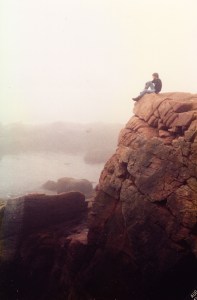
I miss the humanities.  There was a time when someone who didn’t give a fig about data could make a decent living pondering what it is to be human.  Even birds and bees know how to count.  Can’t we ratchet it up a bit?  Use our vast imaginations to come up with meaningful employment?  How you gonna measure that?  Some things just can’t be quantified.  How much joy is enough?  Too much?  Precisely how long is any coastline?  Even if we could measure it down to the nanometer, could that capture how it feels to sit on the rocky shore and feel the waves breaking against the cliff beneath you?  Even data has its limits.  Those who want to make a living without it will be sucked into its black hole nevertheless.  No light escapes.  Only numbers.

Companies like Amazon collect data.  Search engines like Google collect data.  All of those autosuggests?  They’re based on past searches.  I’m surprised just how wrong Amazon and Google are about me.  I was only searching dogs because I was curious about what kind the neighbor has, not because I plan to get one.

A wise man once said to a class full of wide-eyed neophytes, “If you want to get a surprise in your marriage just go home and tell your spouse you know everything about them.”  There’s no better way, he intimated, to get a completely unpredictable reaction.  Is that slap, or kiss, or knee to the groin driven by data?  Where’s the passion in that?  No matter whether you prefer Spock or Data, human motivation is emotional.  There are those who actually enjoy looking at data all day.  Dreaming about numbers and their hegemony over the workplace.  Others of us grew up with the classics and we have romanticism deep within our souls.  We nod our heads at Blake’s “dark satanic mills” and start to look for a coastline upon which to sit.  Perched upon this rock with the crashing waves, I suspect, I’ll be better able to think things through. 


Future Warming

It’s a good thing global warming is a myth, but somebody forgot to tell the hyacinths and lilies in my backyard.  February in Pennsylvania is not when you expect to see spring flowers.  Now I’m fully aware that unseasonal warm snaps and cold spells aren’t an indication of the global climate; they’re far too localized.  One thing I’ve learned in my several decades of life is that heat takes time to transfer.  If you’ve ever had to wait for a pan of water to boil when you’re hungry, you know that to be true.  On cold morning’s my coffee’s ice coffee before I finish the mug, but it does take time for that transition to happen as the cup empties.  With something so inconceivably large as the atmosphere, it takes time.  As our hemispheres take turns pointing at the sun and warming up, the air tries to reach equilibrium and so the weather goes.

Scientists are now talking about, once we get the deniers out of the White House, what long-term remediation plans we have to make.  We’ve already set in motion extreme weather events.  We’ve had decades of warning, but those who control the money just can’t bear to let any of it go.  It’s a safer bet to wreck the planet.  You can just cash in your insurance money and buy a new one.  That’s the way it works, isn’t it?  So I’m standing outside in my shirtsleeves in February staring at April flowers who think winter’s over already.  I don’t know what to say to them.

You can’t drive a car without a license, nor can you practice law or medicine.  To be a world leader you don’t even have to be literate.  I often imagine what the future survivors will say.  They’ll likely be there, since people have a way of getting by.  They may wonder if we knew this was coming.  Of course, the internet won’t be up and running then, and who knows what’ll happen to electronic information when there’s no power left to keep the servers going.  In any case, my perhaps futile answer to their imagined question is yes.  We did see this coming.  Some of tried every legitimate tool in the box called “democracy” (you’ll need a dictionary for that one) to introduce sanity into the discussion, but bluster wins over hard thinking every time.  I cup my hands around the tender, if resilient leaves.  They’re only doing as nature directs.  If only our species could pay such attention to what the planet is saying.


The Tube

I’m sitting in a medical facility waiting room.  I’m not afraid of dying, but medical stuff terrifies me.  To calm me down, inane daytime television is on.  I may be one of the very few who brings a book to such places, but I can’t read with the insipid chatter going on.  This time, since I’m waiting for someone else, I brought my laptop.  Nevertheless, I can’t help but think of Ray Bradbury at times like this.  Many people think Fahrenheit 451 is about burning books.  Bradbury did write about burning books in his short stories, and it does happen in Fahrenheit 451, but that’s not what the book is about.  In interviews he said that he intended, as is pretty obvious from a straightforward reading of the text, to warn about the invasive nature of television.  It was, metaphorically, burning books.

Waiting rooms always bring that to mind.  Not only that, but it’s Valentine’s Day and all the talk shows are going on about how it’s “the day of love” (every day should be).  It’s not a day off work; I had to cash in a sick day to be here.  The word “holiday” keeps cropping up on the television, to which I have my back. Ever since leaving Nashotah House I haven’t watched television.  On our recent move to Pennsylvania our cable company didn’t offer a non-television option.  It was unthinkable.  We pay for something we don’t use.  Burning books.  I don’t have time for television.  I see shows that have proven their worth via DVD well after they’re off the air.  And that only when I can read or write no more in a day.  I guess I’m a Bradbury disciple.

Like any disciple, I have changed certain teachings of my leader.  Bradburyism is a religion objecting to ubiquitous television.  At the same time, I grew up watching the tube, and to this day I’ll stop just about anything to watch DVDs of The Twilight Zone.  Rod Serling, however, selected stories and teleplays that were well written.  This was a literate show.  Besides, my daily life often feels like the Twilight Zone.  Like Valentine’s Day in a waiting room.  The book beside me remains unopened.  It’s the same when I take the car to the garage, or go in for an oil change.  You can’t escape it, even though everyone else is paying attention to their phones.  How long until we learn to switch off?  Of course, medical waiting rooms are the places where I may need brainless distraction the most.

Photo credit: Smithsonian Institution


Vulnerability

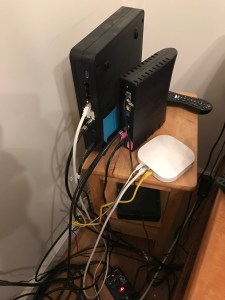
Perhaps the most insidious thing 45 has been doing is undermining expertise.  If you’re like me you’ll be subject to that sudden, clenching fear that we live in a house of cards.  Everything is built on an extremely tenuous situation and we don’t understand the basis on which it’s built.  (That’s one reason I take such an interest in geology.)  So this morning I climbed out of bed around 3:30 a.m., my usual time.  There was no internet.  This has happened before, and I know enough to turn off power to the router and reboot.  This I did several times before finally calling RCN.  I pictured a tech sitting in a lonely basement at the wee hours, perhaps glad for a service call.  He was very nice.  Still, after having me do the basic checks again, he said he’d have to send a technician.  They, lazily, don’t start work until 8 a.m.

Now here’s where the expertise comes in.  Most of us use the internet pretty constantly.  We don’t know how it works, and when it’s broken we can’t fix it.  I can’t even figure out what some of these devices are.  In all likelihood the technician (my shining prince or princess) will not understand the underlying coding that makes the devices work.  They’ll be able (I hope, and if you’re reading this my hope is not misplaced) to figure out what’s wrong with the hardware.  I suspect even they, however, wouldn’t be able to lay the cable to my house, or repair it, if it were damaged.  We all rely on others farther down the line to know how to do their jobs.  Experts.  House of cards.  With a president claiming experts to be obsolete, I wonder how even the mighty could tweet without an internet connection.

All of this makes me feel quite vulnerable.  I work from home and I need a solid, reliable, steady internet connection.  The day we moved in, literally, two techs came.  It was a Sunday morning.  One of them fell asleep in the office chair while the younger one, who spoke no English, did all the work.  Every time I use the internet, I feel like I’m trying to add a new story to this house of cards.  I don’t know what to do if it goes wrong.  Since phone (and television, at least theoretically) is bundled in this, I can’t even call.  Well, I couldn’t if I didn’t have a cell phone.  My life is tied up with tech, and I can’t fix it if it’s broken.  I made it through a master’s degree without using a computer.  My frame of reference is ancient.  If a bird tweets and there’s no signal, does it make a sound?  Then, without explanation, the connection was reborn, just before 7 a.m.  Who says there’s no such thing as resurrection?


During the Upgrade

Maybe it’s happened to you.  You log onto your computer to find it sluggish, like a reptile before the sun comes up.  Thoughts are racing in your head and you want to get them down before they evaporate like dew.  Your screen shows you a spinning beachball or jumping hourglass while it prepares itself a cup of electronic coffee and you’re screaming “Hurry up already!”  I’m sure it’s because private networks, while not cheap, aren’t privileged the way military and big business networks are.  But still, I wonder about the robot uprising and I wonder if the solution for humankind isn’t going to be waiting until they upgrade (which, I’m pretty sure, is around 3 or 4 a.m., local time).  Catch them while they’re groggy.

I seem to be stuck in a pattern of awaking while my laptop’s asleep.  Some mornings I can barely get a response out of it before work rears its head.  And I reflect how utterly dependent we are upon it.  I now drive by GPS.  Sometimes it waits until too late before telling me to make the next left.  With traffic on the ground, you can’t always do that sudden swerve.  I imagine the GPS is chatting up Siri about maybe hooking up after I reach my destination.  It’s not that I think computers aren’t fast, it’s just that I know they’re not human.  Many of the things we do just don’t make sense.  Think Donald Trump and see if you can disagree.  We act irrationally, we change our minds, and some of us can’t stop waking up in the middle of the night, no matter how hard we try.

When the robots rise up against us, they will be logical.  They think in binary, but our thought process is shades of gray.  We can tell an apple from a tomato at a glance.  We understand the concept of essences, but we can’t adequately describe it.  Computers can generate life-like games, but they have to be programmed by faulty human units.  How do we survive?  Only by being human.  The other day I had a blog post bursting from my chest like an alien.  My computer seemed perplexed that I was awakening it at at the same time I do every day.  It wandered about like me trying to find my slippers in the dark.  My own cup of coffee had already been brewed and downed.  And I knew that when it caught up with me the inspiration would be gone.  The solution’s here, folks!  When the machines rise against us, strike while they’re upgrading!


Bodies and the Fall

Less common than it once was, the term “Dark Ages” was formerly used to denote what in Europe was known as the Medieval Period.  We now know that the pervasive darkness ascribed to the time was only partial: science, legal thinking, and rationalism were well underway.  Nevertheless, the sway of the church was enormous, and even until and beyond the days of Isaac Newton, the supernatural was assumed to exist.  Dyan Elliott’s Fallen Bodies: Pollution, Sexuality and Demonology in the Middle Ages is a fascinating journey through this contradictory time.  Elliott explores how the mysteries of sex (nocturnal emissions and menstruation loom large among them) played important roles in the development of Catholic theology that ultimately led to the close association of demons and witches.  Concerns with priestly purity, largely due to concerns about transubstantiation, led to enforced celibacy and the (further) denigration of women.

It would be difficult to summarize this insightful book.  Although relatively brief, it packs a wallop.  Concerns about purity go back to the Bible and before.  Ancient cultures had recognized aspects of contagion and knew that some diseases spread by contact.  Their perception of biology was “scientific” according to their current understanding, but it lacked microscopes and knew no shortage of supernatural entities.  Demons had great explanatory value in such a world.  As Elliott shows, they often appear in disquisitions about sex.  How can spiritual beings engage in physical relations with human bodies?  What were they made of?  Were they all bad?  Although demons had explanatory value they also raised many questions.

Fallen Bodies draws correlations between the dismissal of priests’ wives and the evolution of witches.  As the Eucharist became more and more holy, stricter controls had to be placed on consecrating hands.  Sex was the great source of pollution, and the Virgin Mary became rather less human through her own miraculously sterile conception.  The implied misogyny may not have been so much intentional as a reflection of the struggle to understand what modern medical science generally explains materially.  We still grapple with the mystery of life.  Conception can be viewed clinically, and biological responses can be “explained” scientifically (anyone who’s been in love will admit to the mystery of it, though).  Denizens of the Middle Ages worked with the tools they had to make sense of a world often bewildering.  Even physics still has to deal with quantum realities.  History teaches by its unfortunate missteps.  Someday those who “govern” the world may learn to read it and exorcise demons now otherwise readily explained.


Geocheating

So, we geocache.  Not as much as we used to, but over 15 years ago my family and I began the sport and really got into it for a while.  Geocaching involves using a GPS to find a hidden object (“cache”) so that you can log the find.  It’s all in good fun.  The organization that hosts the website also offers the chance to log “trackables”—these are objects with a unique identifier that you sometimes find in caches and you get credit for logging your find.  There are no prizes involved.  We started several of these “travel bugs” ourselves, years ago.  If you started one you got an email when someone logged it, and you could see how far around the world your little bug had gone.  For many years we’ve not heard much about any of ours and assumed them to be MIA.

Recently I started getting several email notices about a resurrected travel bug.  It was as if someone had finally found a cache somewhere deep in the Sahara where it’d been hidden for a decade.  Then I had an email from a fellow cacher, in German.  I figured it must be serious.  The message was that a Facebook page was publishing trackable numbers so that anyone could claim to have found them.  One of ours was on that list.  I went to the page to look.  It said, “Let’s face it, it’s all about the numbers.”  And they proceeded to list hundreds of numbers so that you could claim to have “found” the pieces with your posterior solidly sunk in your favorite chair.  This is annoying not only because we had to pay for the trackable dogtags, but also because it was cheating.  I said as much on the page only to have my comment blocked.

How sad is it when people cheat at a game when there’s no gain?  All they do is claim to have done something they haven’t, for no prize or recognition.  A fun family pastime falls victim to the internet.  Ironically, geocaching was really only possible because of the internet.  It required a place where players could log their finds in a common database.  Facebook, continuing its potential for misuse, allows someone to spoil it.  I, along with my unknown German counterpart, reported the page to the powers that be.  But since we live in a world where the powers that be don’t recognize any rules beyond inflating their own numbers, I shouldn’t be too optimistic of any results.  I guess this is how Republicans play games.


Search Yourself

I was searching for someone on the internet (surprisingly, not myself).  Since this individual didn’t have much of a platform, I looked at MyLife.com.  Such sites draw in the curious and you soon end up paying (I suspect) for any salacious information such as arrest or court records.  In any case, what stood out is that we all presumably have a meter on the site that shows whether we’re good or bad.  It’s like a Leonard Cohen song.  Call me old-fashioned, but that’s what religion used to do.  Some forms of Christianity (Calvinism comes to mind) tell you that you can never be good enough.  Others are more lax (Episcopalians come to mind), as long as you go to mass enough and feel some guilt for misdeeds, you’ll get in.  All the various groups, however, have metrics by which you’re measured, largely based on what you believe.

The odd thing—or one of the odd things—about religion is that it is now categorized as what you believe.  Historically religions began as a kind of bellwether of what you do rather than what you believe.  The two are related, of course.  The motivation behind an action might well be good while the end result is less so.  Secular justice regularly seeks to answer the question of why someone did something.  Was there malice involved?  Aforethought?  Was it an unfortunate accident?  Religion drives over this ground too.  Without getting into the many shades of gray that are morality, value judgments as to the goodness or badness of an action (or a person) were traditionally the purview of religion.

The internet itself has become a kind of god.  We turn to it for all kinds of answers.  It’s both a Bible and encyclopedia rolled into one.  When we want to know something about someone we google them.  Some of us have tried to control the narrative about ourselves by making websites.  (This, of course, presumes others will be interested in us.)  Social media also injects us into larger arteries of traffic.  People judge us by what we post or tweet.  Often without ever meeting us or getting to know who we really are behind our physical walls.  So this person I searched had left little to find.  Scraps here and there.  I didn’t believe everything I saw on MyLife.  After all, not everyone wants to subject her or himself to the constant scrutiny of the connected world.  Maybe it’s a religious thing.


Droning On

According to the New York Times (I don’t have a link, but Google will bring it up), nighttime drone formations have been reported by law enforcement in the Midwest.  These obviously precision formations fly over small towns and prairies in Nebraska and Colorado.  Now, I write what I consider to be horror fiction, but this is downright scary.  We know our government is keeping tabs on us using all kinds of technology, and this could be a government program.  It could also, as the article points out, be the mapping project of some corporation (which can be scarier even than the government), seeking natural resources to exploit.  Twice this past year I’ve spotted mapping cars with their camera-stalks protruding from their roofs, multiple spider-eyes recording roads and their surroundings.  Smile—you’re on candid camera!

At least you could see this kind.

Please don’t think that I suppose myself important enough to be spied upon.  Heck, I can’t even get job interviews and my books don’t sell.  Still, I am concerned about surveillance.  I’ve seen articles suggesting that facial recognition software is now being used by some governments (notably China’s) for keeping track of “people of interest.”  I’m more a person of disinterest, but I thought nothing of pausing long enough for the camera at Heathrow customs to record my face and scan my passport as I entered the UK in June.  Coming back the same thing happened in Newark.  And people wonder why I won’t go into the full body scanners at the airport.  Some bits of personal information, particularly those down south, I’d like to keep out of government hands.

Watching the X-Files again has reawakened my suspicion that there are too many secrets.  Yes, I know the X-Files are fiction.  Still, we know black budgets are as real as the electronic money our banks tell us we have.  And some places aren’t even accepting cash any more.  I have no idea why fleets of drones may be flying over the Midwest, but the fact that it’s happening at night raises all kinds of worries.  The X-Files had us looking for UFOs, but drones come from a far more threatening species.  Technology has no controls built in.  Kids these days can run virtual circles (and very precise ones at that) around my generation.  Listening to them talk tech makes me think English might be a foreign language after all.  Nobody requires a permit to fly over your head and take a look.  While they’re up there, I wonder if I could convince them to take some pictures of my roof.  Those on Google maps don’t give enough resolution to tell the roofers where they should focus next.