Beam Me Where?

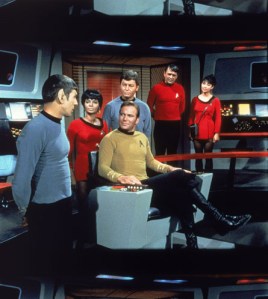
It’s kind of like the transporter dilemma on Star Trek. Where is the person/Vulcan/Klingon when their atoms are being disassociated in one location and reassembled in another? In the classic series, McCoy was never happy with the technology, and even today our doubts linger about what constitutes a person. The other day in a routine medical procedure, I underwent anesthesia. Lying there in the corridor, staring at the calmly themed over-head light colors (no, they actually were themed covers; the drip hadn’t started yet), I wondered where I was about to go. I’ve only had anesthesia once before that I can remember, and I recalled awaking suddenly from the most profound, dreamless sleep ever. It was very different from ordinary sleep. So where was my consciousness at the time?

We have no satisfactory answer to the question of what consciousness is, let alone where it is. Materialists would say, literally, it’s all in your head. Consciousness is a happy mixture of electro-chemical signals in a dull gray organ that’s busing churning out this illusion that Steve A. Wiggins is something more than, well, a mixture of electro-chemical signals. Those of us who’ve experienced enough to question such simple answers wonder a bit more deeply about it. What is consciousness? We’ve all had that feeling, I suppose, of awaking from a dream and being disoriented, even throughout the day at points, as to whether it was real or not. Or, alternatively, remembering something but not being sure if it “really happened” or might’ve been a dream. Ordinarily we recognize the difference between waking and dreaming consciousness, but sometimes the line is blurred.

My experience this time around was the same as last. One moment you’re talking to an anesthesiologist and the next you’re awaking from a completely blank state of mind, a little confused about where you are. You haven’t been in dreamland since there was nothing there. The exact mix of chemicals isn’t the same as when you fall asleep. For all intents and purposes, you are completely gone for that span of time. When I woke up I remembered the anesthesiologist and the watch he was wearing. His accent. His assuring me that the bubbles in the tube were okay. Between that moment and this, nothing. A complete blank. I went in hoping that I might explore alternate states of consciousness in those few disassociated moments, but that’s not how it happened. I think I’m ready to beam back aboard now, though. I trust my consciousness will follow my gray matter, even as I’m being beamed through the ether.
Trees, Please

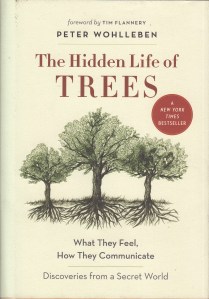
One thing we know about nature is that we don’t know much about nature. We can be a pretty self-absorbed species. Peter Wohllenben’s The Hidden Life of Trees is a good corrective for that. When we’re young we’re taught the difference between plants and animals. What Wohllenben shows is that such differences are more a matter of degree than we realize. Trees move, but slowly. Their timescale can be vast, compared to our brief, get-rich-quick outlook on life. It has been demonstrated pretty clearly that trees communicate with one another. They help one another, and they can, in their dendritic way, think. They cooperate with fungi to maintain connections between their root systems. Trees might even have what we would call personalities, were they fortunate enough to have been born human.

In a little like a medieval fantasy world, Wohllenben is a German forest keeper. He knows trees and their ways intimately. The trick, of course, is that we have a difficult time seeing things in timeframes that exceed our own. There are living trees that are 9,000 years old. That’s before the Sumerians ever showed up to invent writing. In human eyes, a lot has happened since then. And although we don’t know how to define consciousness, we’re sure that it’s limited to our species alone. Grudgingly we may admit some “higher” animals to the club, but our predilection for conquest of our world would be sorely diminished had we not other creatures to dominate. Looking at the world through a sympathetic lens, however, the fact that we’ve evolved these traits from the common ancestor we have with the animals should tell us something. As Wohllenben points out, animals diverged from plants at some stage, but we do ultimately come from the same stock.

Even on a practical level, we can’t live without plants. No matter how gourmet our foodies may be, our nutrition cycle begins with plants photosynthesizing food from pure light. There is perhaps a danger in recognizing our kinship with trees too closely. We depend upon them for food, shelter, warmth, and the oxygen we breathe. We might be inclined, as Wohllenben notes, not to use them at all. The key word here, however, is exploitation. We evolved along with plants and other animals and we all rely on each other. We are all connected. We should care for those with whom we share the planet. Trees have a much longer view than we do. When the desires of one species set the terms for all the others, we soon feel the pain of the trees.


Warnings Ahead

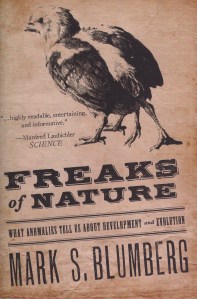
As a noun, “freak” is akin to a swear word. To refer to another person in such terms is often considered derogatory and degrading. Still, we all know what it means—an individual who doesn’t conform to expected models. I was a little worried about Mark S. Blumberg’s Freaks of Nature: What Anomalies Tell Us about Development and Evolution, then. It had the word “evolution” in the subtitle, and that sounded scientific enough. Besides, those of us interested in monsters know, deep down, that they are essentially freaky things. Indeed, Blumberg starts his book with teratology, the study of monsters. And monsters come from religious backgrounds. Their name is related to the root “to warn.” I’m a squeamish sort, though, and reading about freaks of nature requires a constitution I sometimes lack. Especially when it comes to science.

Yet I couldn’t put the book down. To begin with, the concept of developmental evolution (devo evo, for those in the know) is utterly fascinating. If you grew up, like I did, being taught that genes govern evolution solely, this book will surprise you. Evolution can happen at the level of the phenotype, based on environmental pressures. This is well documented and hardly a matter of dispute. Bodies can change according to what they need. Blumberg offers case after case where this dynamic may be seen. The idea that we are “programmed” falls, ironically, at the feet of biology itself. We, and all animals, are adaptive creatures. Humans may not be able to regenerate lost limbs, but many amphibians can. Sometimes it’s a matter of age, and sometimes it’s a matter of matter. I found such a quantity of astonishing stuff here that I overcame my queasiness to see what the next page might reveal. When I hit the chapter on reproduction I realized once again that nature does not agree that “man plus woman equals marriage.”

This must be one of the most threatening areas of science to Fundamentalists. The sheer variety of ways that “genders” interact in nature, and appear in human bodies, will have purists calling out for heavenly clarification. Reproduction, in other words, isn’t in the service of conservatism. Fish, for example, that change “genders” instantaneously after mating, taking turns being female and male with a mating partner, must surely call for theological justification of some sort. And female lizards that don’t require males to reproduce, but are helped along by being mounted by another female so as to jog some ancient reptilian memory, require us to rethink our rather simplistic terms of endearment. Not for the the faint-hearted, but amazing for those who dare, this book takes our appreciation for “life finding a way” to a whole new level. Even if it’s a little freaky.


Eating Earth

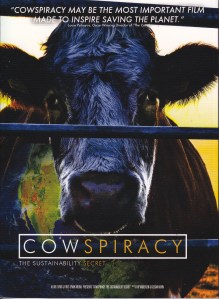
Some things are hidden in plain sight. That doesn’t make them any the less insidious. One such hidden truth is that the earth is of a finite size. Another is that, consequently, its resources are limited. Our species is easily led, as are most herd animals. Standing out can be embarrassing. Painful even. This is the recipe, along with a generous dash of greed, that has put us on the brink of worldwide catastrophe. We live in an unsustainable system, and some of the largest culprits are our appetites. As a fan of horror movies, I can honestly say Cowspiracy is the scariest movie I’ve seen in a long time. It’s a documentary, not genre fiction. Scientists had generally already thrown up their hands because we’ve passed the tipping point for global warming, and then we elected ourselves the stunning leadership of Donald Trump.

No one can predict exactly what form the collapse will take, but we’ve set the key factors in place. We’ve been warned for years. Cowspiracy demonstrates something we don’t want to admit—the agricultural lobby is extremely powerful and the least sustainable aspect of life on this planet is animal husbandry. In early civilization, where technology did not exist to support large-scale farming, meat was not a staple of the human diet. Families that could afford animals gained more value from their beasts alive than on the plate. And they had only a few. As mechanization increased in the last century, we made livestock valuable commodities. When I was a kid word on the street was you were even poorer than we were if you couldn’t eat meat every day. Humans were the absolute, if blind, masters of their own domain. Now agriculture is the single largest force of degradation of the environment on the planet. And nobody wants to listen.

Cowspiracy is not an easy movie to watch, even for a vegetarian of many years’ standing. So why watch it? Because our reliance on animal-based food is destroying our planet. Not slowly either. If this is true, why haven’t we heard of it? Kip Andersen and Keegan Kuhn spend an hour-and-a-half exploring that in this important film. While it can’t be fully summarized here, in a word it can be said: money. There’s huge money to be made in a business rightly called animal husbandry. Wedded to profits at the expense of the very soil that gives us life, we eat our way to the grave. And we do it even when technology has already offered viable alternatives. They are also hidden in plain sight.


Self-Conscious

Cassini is no more. The Saturn-bound satellite was launched in 1997 when the earth was a very different place. As it’s four-year sell-by date passed, the little robot who could kept on snapping photos around the ringed giant and its moons. Remote controlled from three planets and an asteroid belt away, it was decided that the explorer had to be destroyed in Saturn’s thick atmosphere rather than contaminate one of the moons where life might someday be found. Yesterday the probe burned up on its way through Saturn’s perpetual cloud bank. This has led to many emotional tributes, even among scientists who believe Cassini was just a machine. It also shows us how little we really know about consciousness.

During the two decades that Cassini was in space, we’ve learned quite a bit about animal consciousness here on our own planet. Many are now finally becoming convinced that we share this strange quality we can’t even define with other biological entities. Well, at least the “higher” kind. And we can’t help but think that maybe our more intelligent machines possess it too. We treat them as if they’re alive and willful. That could be a case of our own consciousness projecting itself onto inanimate matter—that’s something consciousness is pretty good at too—but since we lack the ability to measure consciousness, we can’t know if it’s there or not. To hear the astronomers talk, we’re going to miss Cassini, a machine that outperformed expectations. Ironically, once we get machines off the earth they tend to do that, even without oil changes every 5000 miles.

Down here on earth we complicate consciousness with cash. Devising an elaborate economic system to demonstrate who can buy power in the White House and who can’t, we want to know who is more important than whom. It’s a simple metric. Bank accounts tell the truth, no matter what the level of consciousness—or even of sentience—that the account holder may have. And then we wonder why a nation that can send a satellite three planets away can’t even figure out that all races should be treated equally and fairly. Cassini was a collaborative effort. Different races, genders, and economic classes contributed to its remarkable voyage. Eyes around the country were moistened when its last image was projected to earth. We wisely decided to immolate our satellite before we could contaminate another world. Meanwhile on our own planet we’re barely conscious of what we continue to do.


Reason to Believe

Gods, the experts say, are on the way out. Have been for some time. The loudest voices in this arena are the New Atheists who suggest science alone explains everything. Problem is, the gods won’t let go. My wife recently sent me an article from BookRiot. (That’s a dangerous thing to do, in my case.) Nikki Vanry wrote a piece titled “Dallying with the Gods: 16 Books about Gods and Mythology.” Most of what she points out here is fiction, and that makes sense because gods and fiction go together like chocolate and peanut butter. The first book she lists is Neil Gaiman’s American Gods—a book I read years ago and which has subsequently become an American phenomenon. There’s even a television series based on it now. Like Angels in America, only more pagan.

What surprised me most about this list is the books I hadn’t read. Or even heard of. After American Gods, I got down to number 10—Christopher Moore’s Lamb—before reaching another I’d read. Then down to 16, Till We Have Faces, by C. S. Lewis. There are, as Vanry notes, many more. Our experience of the world, as human beings, suggests there’s more to it than what we see. Not everyone would call these things gods, nevertheless there certainly does seem to be intentionality to many coincidences. Things pile up. Then they topple down on you all at once. Seeing such things as the works of the gods makes for a good story. At least it helps explain the world.

Many materialists do not like to admit that humans believe. Call it the curse of consciousness, but the fact is we all believe in things. Even if that belief is as strange as thinking fiction only comes from electro-chemical reactions in a single organ in our heads. Gods often appear in fiction. Frequently they’re in the background. Sometimes they’re called heroes instead of deities. At other times they’re right there on the surface. Such books carry profound messages about believing. It doesn’t matter what the authors believe. Believe they do. And such books sell. As a culture, we may be in denial. What we sublimate comes out in our fiction. There are gods everywhere. Singular or plural. Female, male, or genderless. Almighty or just potent. Reading about them can be informative as well as entertaining. We’ve got to believe in something, so why not gods?


Hurricane Warming

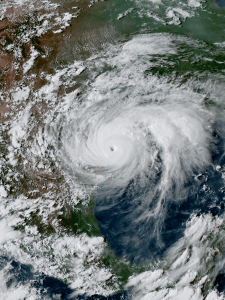
Image credit: NOAA, public domain via Wikimedia Commons

My heart goes out to those suffering from Hurricane Harvey in Texas and Louisiana. Natural disasters like this are often tied to the “wrath of God” model, and outdated though it is, it still captures how it feels. The sheer amount of rain dumped by this one storm is literally inconceivable. Trillions of gallons. Coupled with a completely ineffectual president, the disaster is even greater. Like many others, I’ve been watching since the weekend as the numbers and statistics of woe rise. Lives lost. Property washed away. Once more it reminds us just how small we are in the face of the weather. Some of this same awe was in my mind as I wrote Weathering the Psalms. Ancient Israel did not experience hurricanes—the bodies of water nearby aren’t large enough to generate them. A single thunderstorm, however, is enough to put the fear of God into a person. In ancient times, with an under-developed meteorology, all of this was the provenance of providence. How else could you begin to explain such tragedy?

One of the books that got me started on my meteorotheological quest was Erik Larson’s Isaac’s Storm, about the Galveston hurricane of 1900. Thousands died in that storm, and it remains the most deadly natural disaster in US history. Although Hurricane Harvey developed quickly, there was warning. The death toll is remarkably small (at least at the moment) compared to the fury of the storm. The natural tendency of human psychology is to look to supernatural explanations for such devastation. What have I done to deserve this? How could God do this? Are we being punished? Questions such as these come to mind, although we know that hurricanes are entirely normal features of this planet. Somewhere in the back of our minds, though, we probably are aware that global warming causes more radical weather.

Even as Trump continues to surround himself with climate change deniers, we see what global warming looks like. The weather is an intricate mechanism. Small things effect it. Large-scale changes throw it into chaos. Those who see climate change as a pain in the pocketbook will do anything they can to deny its reality. More powerful than a freight train or battleship, the weather can’t slam on the brakes and suddenly resume a more milder form. No, we’ve already started the process, no matter how many billionaires disagree. My heart goes out to those who continue to suffer from the hurricane. We need strong leadership and clear thinking at such times as this. We will need more of that in years to come. But we must also keep in mind this isn’t the anger of God. Unfortunately the wrath of human greed can be just as devastating as the wrath of the Almighty.


Eclipse 2017

It’s the day after the eclipse. Perhaps it’s because of the internet, but the excitement about this somewhat common event reached a fever pitch. Maybe it was because we all wanted something other than Donald Trump to talk about. Maybe it was because we hoped that the eclipse might have brought about some profound change. In the days before science was a thing, eclipses were divine events. The sky doesn’t darken at noon. It is an uncanny, an eerie thing. The last eclipse—alas, only partial—that I experienced was at Nashotah House. My wife was still a student in Illinois at the time, and without her to remind me, I went about my classes as usual. When I stepped outside the eclipse was already in progress. Nashotah’s quite rural, but the birds and insects were silent. The light was weird. The shadows of the leaves were scooped crescents on the ground. I could understand why pre-scientific people trembled.

These days we know there’s nothing more to life than scientific formulas and a bit of sloppy chemistry. So why do we bother getting bothered about eclipses? The fact is they remain religious in our minds. This is nature acting in a way not normal. Apocalypses generally include the sky growing dark. One of the plagues of Egypt was darkness. In the ancient mind the sun did not so much cause light (the moon could give light too) but it lived in the realm of light. If something blocked the sun that was one thing. If something invaded the realm of light, that was another. An eclipse was such an invasion. Even as monotheism began to take hold, people thought of the sun as a deity. It, after all, directs our lives.

In New York City I wasn’t sure what to expect. I went to street level with a couple of colleagues about 10 minutes before maximum coverage (about 71%) began. Knots of people stood on the corners on the eastern side of Madison Avenue—those who build skyscrapers don’t think of eclipse viewing on the streets below. What struck me most, however, was a kind of peace and awe. Strangers sharing various viewing devices with each other and looking up expectantly. Clouds had begun to move in, and I found myself talking to complete strangers, sharing out the eclipse-viewing glasses my wife had given me. We were participating in a moment of transcendence. Such moments are rare today. No, an eclipse is more than simply the moon moving in front of the sun. It is a human event as well. And one which, in the absence of the sun, brings out the best in us.


On the Rocks

This universe is indeed a mysterious place. You don’t have to believe in the paranormal anymore to see it. A look at the headlines makes my point. There are those, however, who do look at the genuinely strange, and once in a while this realm crosses paths with that of religion. A friend pointed me to a story on Mysterious Universe about floating rocks. Apparently this story is going to be on the mainstream Travel Channel, so it’s not completely bonkers. It caught my attention because it’s about rocks. While of decidedly poor qualification to be a rock-hound, I have more than a passing interest in geology. Itinerates shouldn’t collect rocks, but I can’t help myself. Anyway, I’ve been known to go to publicly open mines and tap away with my rock hammer hoping to find some not-so-hidden treasure.

According to the story, there is such a publicly open mine in Arkansas. Crystals (I expect quartz) are available for surface excavation, for a fee. Then the owners, the Murphys, noticed the anomalous rocks. Since they are conservative Christians (this is Arkansas after all) they feared what powers might be behind rocks that don’t obey the laws of gravity. The mine didn’t get closed and hushed up because of an unusual source of inspiration. An article by Billy Graham on divine mysteries led them to keep the mine open and to allow for investigation. Once the Travel Channel comes out with its program Crystal Mine is sure to experience an influx of business. Mainstream scientists, one expects, will not be among them.

The universe is vast. We haven’t explored all of our own planet yet (we’re kind of busy destroying it at the moment, so if you don’t mind…) and yet we gleefully claim what’s impossible. I don’t know if there are levitating rocks in Arkansas, but I do think we’ve been a bit hasty about some of our conclusions. We may yet find things that will force the concepts—the laws—to change. Consider gravity, which seems particularly relevant in the case of floating rocks. Sir Isaac Newton (devout theist that he was) ending up having to relinquish the “correct” explanation to Albert Einstein. Some have been so bold as to suggest that maybe even Einstein might not have gotten the whole skinny on gravity. We continue to learn. Levitating rocks are indeed strange. Not so strange, however, as Billy Graham being the one to rescue an anomaly for the world to see.


Water Bears

Since we should all be busy planning on alternatives to planet earth, my mind has turned to tardigrades. Known as “water bears” these very simple animals are amazingly complex. Don’t go looking for them in your drinking water, however. They’re microscopic. So why am I thinking about tardigrades at a time like this? Because they’re one of the few organisms that scientists believe could actually survive the destruction of the planet. Who knows? They might even be able to survive in Washington, DC. Maybe that’s why they’re in The Washington Post.

You have to look closely to see one.

Able to cling to life at the cusp of absolute zero, in conditions with no oxygen, and at doses of radiation that would leave the human race—among most other species—fried, these micro-organisms are truly remarkable. No wonder scientists are playing with thought-experiments as to how to wipe them out. Hey, scientists are only human after all. Don’t worry—nobody’s really trying to kill these little guys off. The question behind Ben Guarino’s story seems to be what makes these tiny creatures so amazingly resilient. It raises an issue that I often ponder. The will to survive. Evolution is, according to standard theory, without purpose. Natural selection works in a “logical” way: the most successful organism survives long enough to breed and its traits become standard options in the next generation. Nobody needs to want anything (except to mate) and chance takes care of the rest. But that doesn’t explain the will to survive. The “eye of the tiger,” if you will. I’m sure this wasn’t what the Washington Post was intending to trigger, but doesn’t it seem strange that even “non-conscious” micro-organisms “want” to survive?

The desire to exist is dangerous territory. It has a whiff of the divine about it. One of the characteristics of life, if my high school biology isn’t completely outdated, is the ability to reproduce. What it didn’t address, for fear of teenage snickers, I’m sure, is the desire to reproduce. Why does life insist on its own continuation? Is it truly just an eons’ long succession of one-night stands that results in creatures capable of even asking that question? Or is there something more to it? Tardigrades have segmented bodies, legs, and claws. All at less than 40,000 cells per individual. They lack a neocortex (which doesn’t necessarily disqualify an individual from being president). They can’t answer the questions we put to them. As individuals they are remarkably easy to kill. As a species, however, their resilience carries the answers to some very deep questions. If only we had the will to ask them.


On Jordan’s Stormy Bank

All you have to do is spit in the cup. Well, you have to do it quite a few times, but that’s the basic idea. Then you send the contents to a religiously motivated lab and your genetic ancestry will be emailed back to you. (There will be a fee involved, of course.) Genetics, a science of which Darwin didn’t have the benefit, is capable of mapping out where various “races” originated and ended up. Enter the Bible. One of the most disputed groups among scholars of the ancient Near East is the Canaanites. There was, as far as we can tell, no “nation” called “Canaan.” No people called themselves “Canaanites” but the term was used by others to designate them. Yahweh had a vendetta against them and ordered them wiped out. And, according to parts of the Bible, the Israelites acquiesced. So where are the Canaanites?

Image credit: http://maps.bpl.org, via Wikipedia Commons

According to a Washington Post article by Ben Guarino, DNA sequencing has revealed that they’re still there. This should come as no surprise to most anthropologists. Racial purity is always partially a myth, since “race” is no barrier to love. Or at least lust. And genetic traits don’t lie. Tracing ancient DNA from “Canaanite” (I’m getting myself scared using all these scare quotes) burials, scientists have discovered the biblical nemesis still survives in abundance, especially in Lebanon. Interestingly, on a cultural level, there is no distinction between Israelite and Canaanite. They are virtually identical. This creates one of the many embarrassments for biblical scholars, since the differences should be more than just skin deep. As with so many cases of racial distinction, the reality is mostly imagination.

Literalists, of course, have been in a rear-guard position for well over a century now, so the news should cause minimal shock. The problem will be keeping them from finding new excuses to carry out an extinct mandate. Biblical scholars, that heathenish race, long ago capitulated with the enemy. You’d expect no less from those who would dare use reason when approaching Holy Writ. It’s the real-world application that’s a problem. What do you do when the biblical enemy is found, hiding in plain sight like a purloined Lebanon? The solution might be as old as the story itself. Darwin didn’t have genetics, but he did have the Bible. The issue in the nineteenth century was what to reject when worldviews clashed. The answer was to jettison the godless science. We can only hope that this time-honored technique will prevent future crusades fomented by scientific discovery.


Fishy Business

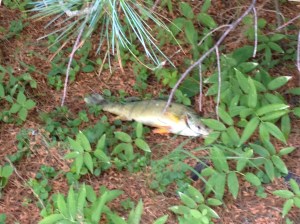
There’s bound to be a logical explanation for how it got there. After all, this is private property and people have been here all day long. Somebody would have noticed if fishermen had stomped up this boardwalk, dropping their catch along the way. There’s no place to dock a boat. And yet here it is in all its Fortean glory. A fish out of water. Literally. It’s a perch, I think. About eight inches long. Forty yards from the nearest water. Other than the flies all over it, it looks in good shape. As if it were out for a swim in the dry air and lost its way back to the nearby lake. I’m sure there’s a logical explanation, but I can’t help but think of Charles Fort and his witty takedown of conventional reasoning.

In addition to fish, this lake also hosts ospreys and bald eagles. Just yesterday morning I saw one flapping above the water looking for breakfast. And one of my relatives saw an eagle struggling with a fish the other day—an issue of maintaining air-speed velocity when fully laden, I think—only to have to catch and release. Could that have happened twice? Raptor drops the slippery, heavy fish and can’t fit under the pine trees with that wingspan to pick the thing up. Possibly. It’s not the most fun explanation, but it will do when logic’s non-negotiable.

Charles Fort, the great anomalist, is perhaps most famous for his irrepressible insistence that rains of fish had a more exotic explanation than a tornado sucking them up only to drop them far from water. In his puckish way, he wrote how such “damned facts” were explained away by convention. Fort liked to hold the door open for the wider possibilities. Meanwhile we’re stuck here with the unarguable reality that there’s a dead fish by the boardwalk, far from water and a logic that makes me ask, if it fell from a bird’s talons why does it look so perfect? No twigs or pine needles picked up from its heavenly plummet. No obvious injuries to its piscine flesh. Even had some disgruntled fisherman rowed up unobserved and flung a perch as far as he could, the thing would’ve had to’ve had quite a spiral on it to’ve made it this far from the lakeshore. Science works by sweeping the facts outside the norm off the table. I’m not saying there’s anything paranormal about this fish, I’m just wondering what Fort would’ve made of it, beyond a free lunch.


Devonian Dreams

Toothbrush and dental pick in hand, I go at it. Not that I’m a professional, mind you, but curiosity drives me to this. You see, this crinoid before me is at least 358 million years old and anything that can make me feel young deserves all the attention I can give it. Crinoids are also know as “sea lilies,” but they aren’t plants. They’re actually echinoderms, and the fossils I’ve found in the past have only been cross-sections of their “stems,” a stone circle, as it were. This one has tendrils visible, and I can’t believe that it was a chance find on one of my recent walks through Ithaca’s gorges. I’m dreaming Devonian dreams, and I want to brush away the plaque of the eons and see what I’ve actually found.

Fossils are a kind of eternal life. The creature that died to leave this impression lives on as a monument in stone. It reminds me of my unfortunately brief stint as an archaeological volunteer. Scraping away dirt to reveal a piece of pottery that hadn’t been touched by human hands for 3,000 years. Of course, that’s merely a second ago when you’re talking about something pre-Carboniferous. The dinosaurs won’t even show up for another 100-million years. And I think I have to wait too long for the bus. Time, as they say, is relative. Did this medusaized creature before me realize just how terribly long it would take for enlightenment to arrive? And how so very swiftly it could fall one foolish November night? Careful, this fossil’s fragile.

I grew up among the Devonian substrate in western Pennsylvania. The Bible on my shelf told me to disregard the evidence before my eyes. Some clever true believer had declared Noah’s flood the culprit, never bothering to explain how freshwater fish showed up after the deluge. Those we tried to keep in our aquarium never seemed to handle the slightest disturbance of their salinity. The ages of the literalist are by definition short-sighted. 6,000 years seems hardly enough time to account for any sedimentary stone, let alone that riddled with fossils. I’m hunched over my bit of slate, dental pick hovering nervously over what will never come again. The Bible behind me says it’s an illusion. You may be right, Mr. Scofield. You may never have evolved. But as my fingers glance a creature dead before even the crocodile’s grin I have to declare that I have.


Average Reality

One of the stranger dynamics of higher education is its unquestioning acceptance of a one-size-fits-all methodology. Don’t get me wrong—the empirical method works. The only real problem with it is that not all phenomena in the universe cooperate with human observation. It’s something I call the problem of occasional phenomena. Perhaps because of the rancid taste left in scientific mouths by lingering creationism, anything that isn’t slow and regular enough to be directly or theoretically observed simply can’t fit in this old world. The weird, the anomalous, the strange—these open the door to possible spirits and spirits have no way of being measured. At least not yet. The most convenient way to deal with them is to call them superstition and end the discussion right there.

The larger problem is that people see things. Unless said people are scientists, they are considered amateur observers, liable to mistake what they see. The classic example of this is ghosts. From the beginning of recorded history people have claimed to see them, or hear things go bump in the night. Some of the first modern people to make a profession out of exploring such things were Ed and Lorraine Warren. Unfortunately, they didn’t write books about their experiences. Largely because of movies made about some of their high profile cases, there has been a resurgence of interest in the couple and the books originally published by other presses, such as Prentice Hall and St. Martin’s, have been reissued by Graymalkin Media. These are co-written tomes of uneven quality. They’re also like candy—once you start on them it’s hard to stop. Gerald Brittle’s The Demonologist is one such book. More than others in the collection that I’ve read, it concentrates on a single phenomenon that overlaps with the world of religion—demons. Unlike trained religion scholars, however, the Warrens aren’t shy about declaring what demons are (fallen angels) and how they differ from devils (it’s all about rank).

What makes these books so interesting is the dispassionate description of the cases the Warrens investigated. Unless they are pathological in their connection to telling untruths, there’s some very odd stuff that goes on out there. Although they declare once in a while that other religions and their practitioners can also deal with demons, there’s a simple kind of black-and-white view of morality that fits what you might have learned in Sunday School. One of the reasons for this, I suspect, is that most academics don’t take an academic interest in demons. Once they’re filed in the mythology folder there’s no reason to try to figure out what they might “really be.” The Warrens’ outlook, therefore, has become canonical among ghost hunters. They certainly have more credibility in that crowd than most Harvard Ph.D.s. It’s funny what can happen when you refuse to explore what the average person considers to be just as real as the physical world we all think we know so well.


Heresy Collection

Geology isn’t a great avocation for those of us with an unsettled existence. Having grown up with a fondness for fossils—maybe because they were so transgressive—my initial collection was tossed out because of a family move. Rocks are too heavy to take with you. I made the mistake of thinking, back in my Nashotah House days, that I was settled enough to let my rock-hounding sensibilities loose. Not that fossils were common, but Wisconsin has some great geological formations and I joined the Wisconsin Geological Society and even dragged my family along on some field trips. By the time Nashotah informed me my talents were no longer required, I’d amassed a few boxes that I was embarrassed to admit to the movers that, yes, contained rocks. New Jersey also has some great locations for rock-hounding, but my sense of being subjected to sudden, geologic career shifts has kept me from picking up nearly as many stones as I’d like to bring home.

The Museum of the Earth, here in Ithaca, is a dangerous place for someone like me to visit. I thought I had my fossil-collecting habit under control. The gorges in this region are famous for their fossils. Wandering through the museum, reflecting, as it does, the immense stretch of prehistoric time, it was obvious how arrogant humans are for assuming “control” of the planet. We’re so terribly late as to be classified as invaders on this planet. The world got by just fine billions of years without us. Perhaps that’s why I experienced transgressive fossils so captivating as a child. Ironically I found them in the creek bed right behind the Fundamentalist church we attended and where we were taught that evolution never occurred. I was fascinated by what I’d now call the juxtaposition of evidence and faith. We never questioned the reality of fossils. It was their interpretation that was the problem.

You can hold in your hand the most solid evidence that life evolved and call it heresy. Those delicate impressions of creatures dead for millions of years argue eloquently against Genesis and its mere 600 decades of world history. For me the fossils always won. On trips home from the seminary I would gather more fossils to add to the growing museum of time I’d been amassing in my basement. Then a Fundamentalist administration took the same approach as my exasperated mother trying to pack to move. Jettison the fossils. They’re heavy and they kind of make us uncomfortable anyway. Maybe the idea of too much time is something the biblically constrained simply can’t face. And when I see a fossil right there on the surface in one of Ithaca’s many gorges, perhaps I need to learn simply to let it lie.