Check Mace

In the medical sciences building of the University of St Andrews stands a glass display case cradling a mace. The mace, a symbol of smiting authority that goes all the way back to Old Kingdom pharaohs, has a long tradition in academia as well. In all the pomp and glitter of an academic processional, a dean, provost, or chancellor carries a symbolic mace, as if to keep an unruly faculty in order. (I am sure that most of them have wanted to use that mace a time or two in reality, but have been constrained by both convention and the rule of law.) Medical science is among the fields of research quickly moving away from the spiritual mumbo-jumbo of medieval superstition. We are, after all, simply soft machines, doing as nature has programmed us. What more could there be to it?

IMG_0778

Looking more closely at the mace, I see on its ornate base, a flanking ring of winged oxen. Perhaps obscure to medical students, the winged ox is the symbol of the putative Gospel writer, Luke. Each of the Gospels emphasizes different aspects of Jesus, and the symbol assigned to Luke has been the ox. If the wings didn’t give it away, the explanatory placard on the wall nearby confirms my analysis. Eyes traveling up the silver shaft, the crown of the mace houses yet another saint, this one an apostle. St Andrew (of course) tops the mace, holding his X-winged cross. Underneath is an amorphous structure for which I need to turn to the placard to have explained. The fountain of healing waters, it tells me.

IMG_0779

From tip to tale, then, the mace of medical science is inherently religious. My reading of late has been from scientists claiming that, in the words of the old commercial, “parts is parts.” There is no underlying life-force or animating principle. Life is biological robotics, so I’m told. So as I stood in St Andrews last week, considering this metallic mace, I was poised on the edge of science and symbol. There is no biological need for such symbols—indeed, the mace was originally a weapon to inflict grievous bodily harm. Now, chased with silver, intricately ornate, it begins and ends with religious implications. I can’t help wonder what the robots make of that.

Whose Reality?

It was a groggy, foggy morning when I stepped off the bus in St Andrews. I’d been here before, but it had been over two decades ago, and with my wife, who is my navigator. I knew the International Society of Biblical Literature meeting was here, but I didn’t know where. Instinctively, I headed toward the medieval part of town. A religion conference, I reasoned, would best fit there. Seeing no signs of the inimitable professorate that I associate with the Society, I finally stopped into a university office where a dubious-looking receptionist peered at the conference letter and shook her head. The she spied a familiar address on the letterhead. “Ach, that’ll be doon this way, past the second roond-aboot.” Having lived in Scotland for over three years, I understood. I suppose if I’d just read the materials sent ahead more closely, I would’ve known that we were meeting in the newest part of Scotland’s oldest university.

A religion and science reunion came in the form of the physics and maths building where the meetings were being held. Science grad students, somewhat bewildered by so many biblical scholars, pushed open their lab doors with a sense of wonder—and perhaps disbelief. Could so many educated people seriously spend their time on the Bible? Science, after all, now has cornered the market on truth, hasn’t it? What hath Jerusalem to do with St Andrews? Ancient universities were generally founded to study theology. In 1413, when St Andrews opened its academic doors, God was the undisputed arbiter of truth. Now high-tech fighter jets scream overhead in nearby Leuchars, and we are secure in the ability of science to save us. And still biblical scholars, like the horseshoe crabs, come together in huge numbers on the beachhead of the human psyche every year.

To the student trained in the sciences, I have no doubt that we appear superfluous. Nevertheless, without religious belief, or the Bible, our society would not be where it is today. Although now it seems that science and religion bear deep hostility to one another, they actually grew from the same root and have a similar goal—to discover the truth. Science finds no evidence beyond the material, but religion declares the material as the perennial under-achiever. Scholars of the Bible from around the world, many of them not religious believers, expend their limited resources to come to one of the more inaccessible tourist destinations of Scotland and meet in a clean, modern, comfortable sciences building. Across town, in the heart of the old, medieval district, stand the remains of a once grand cathedral. Still majestic in its glorious decay, the church towers over a town once ruled by religion where now science and golf define the new reality.

DSCN3582


Miracle of the Sun

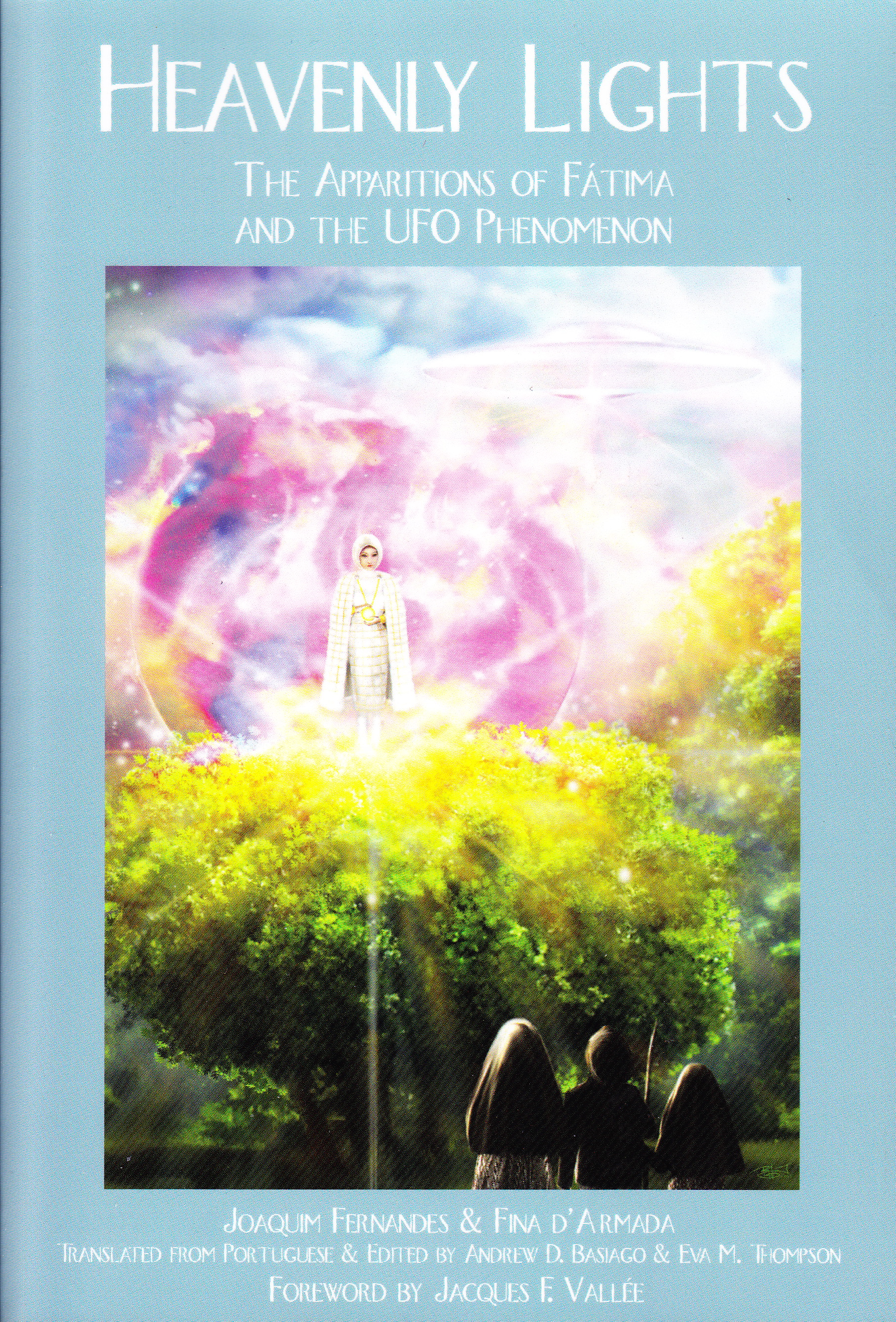
HeavenlyLights The events at Fatima in 1917 have occupied me on this blog before. Perhaps it is because of the haunting quality of the whole thing. Children, two of whom died young, saw a vision and the apparition made a prediction that was held in secret for decades. I’m not sure about you, but these days remembering most things for more than a few nanoseconds is a challenge. What was I saying? Oh yes, the Fatima incident. I recently read a book on Fatima, an unconventional book, but one which makes an intriguing case and raises a valid point. Heavenly Lights: The Apparitions of Fatima and the UFO Phenomenon by Joaquim Fernandes and Fina d’Armada draws compelling parallels between the many UFO reports that are in the public record and the strange events at Fatima, Portugal in the latter days of World War I. Immediately some people will be put off, since we have all been conditioned to ridicule the idea that, although there is almost certainly life in space, it would take the trouble to visit our neck of the universe. In the mantra of conventional thinking: it can’t be done. (Sounds rather like my career. What was I writing about, again?)

The valid point raised by the book is that many people are skeptical of the supernatural. That rules out a miracle for Fatima, since in a materialistic universe, miracles aren’t sanctioned. That leaves us with a crowd of at least 50,000 people, perhaps as many as 70,000, hallucinating at the same time. I mentioned this to a very bright college-aged student recently who responded, “Really? Who would believe that so many people saw the same hallucination at the same time?” That’s the official story, however, in the materialist camp. Just outside the tent are those who believe UFOs are material objects. They are in no way supernatural, just impossible (because nobody can fly fast enough to get here, what with light being so sluggish and all—and even if they could, why would they come here where we’re still pretty much all stuck to the surface of the globe?) I’m afraid I suffer from a surfeit of imagination. I like to wonder what might be possible.

The point Fernandes and d’Armada are making is that rural folk in 1917 had no language to describe what they saw apart from religious language. Interestingly enough, the children were always a bit cagey when saying the woman they saw was the Virgin Mary. They recognized that others said she was, but then, the others didn’t see her. The book does not explore the fact that UFOs and religion have a somewhat long association. That doesn’t make interstellar travelers supernatural, though, just out for cheap thrills. Buzz earth a few times and a century later people will still be talking about it. Some will call it a miracle. Others will say it was a mass delusion. And the rest of us will scratch our heads.


Something to Believe

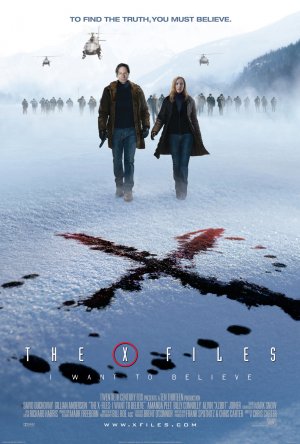
Xfilesiwanttobelieve After a rough week at work, nothing helps so much as simple escapism. Thinking back to my glory days in the classroom, I remembered the movies I used to get students thinking about how the Bible is represented in popular culture. One of those movies was The X-Files, I Want to Believe. Not that the movie was my favorite, but escapism isn’t picky—there’s one reality I want to escape, and just about any other will do. As I watched the film again last night I was struck how very much the whole movie is premised on religion. I suppose the title should’ve given that away, but since it is the slogan of Mulder’s famous poster, I’d not really given it serious thought. Scully is now a practicing doctor in a Catholic hospital, and the number of lingering scenes with stained-glass icons in the background simply can’t be ignored. She has given up chasing monsters in the dark, and come to live in a very Gnostic kind of light. Through a pedophile priest (Father Joe), the darkness finds her again. How could I have missed the centrality of a priest to the plot?

The scene I always pointed out to my students was where Father Joe goes into a seizure while quoting Proverbs 25.2, again citing Gnostic hidden ways. The Bible slips from his trembling hands and falls, closed, to the floor. Later, as Mulder is literally about to be axed to death, Scully finds him by noticing the mailbox number 25-2. A proverb was a prophecy and the Bible retains its ability to guide the believer toward salvation. Through paranormal means, of course. After all, this is the X-Files.

Faith versus science, religion versus reason; these are the underlying motifs of the entire film. Scully the skeptic is the one who believes. Mulder, the high priest of the preternatural is just waiting for her to come home. It isn’t the greatest of movies, but it is based on some classic themes. Wanting to believe, but not being able to believe—isn’t this one of the most religious tensions possible? For years now the internet has been buzzing with rumors of a third, and probably final, X-Files movie. And yes, many people are wanting to believe. And if work continues with weeks like this past one, I’ll be needing a lot more escapism as well. Yes, I want to believe.


Holy Hostage

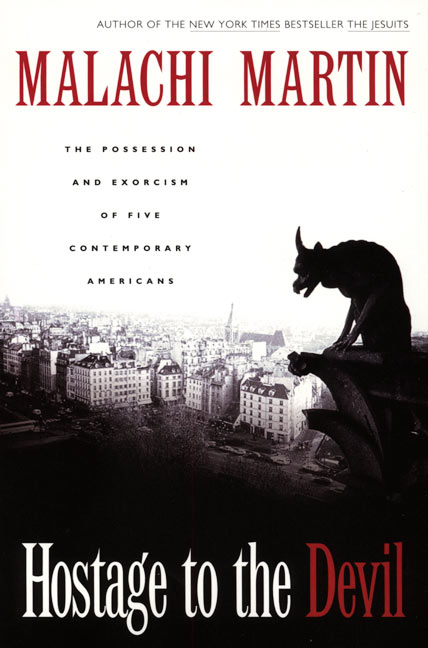
HostagetotheDevilA chance glimpse at a textbook shelf in a university bookstore made me aware of Malachi Martin’s Hostage to the Devil, although it is several years old. I was intrigued that a major, secular, state university would offer a course requiring a book about demonic possession. I’m not completely naive about college students, but this seemed just a tad extreme. Nothing is more dangerous than a book dangling in such a context, like the Necronomicon of Abdul Alhazred. The world of the demonic is freighted with arcane rules and a decided Catholic superiority. Even to the rational it can be insanely frightening. As I read Martin’s account, I frequently found myself puzzling over the unseen world he so meticulously describes—after all even the Bible has little to say about it. And Martin is a great lover of verbosity, detailing more than the reader needs to know about the five exorcisms he elaborates. If you want to know what a dying priest looks like, in great detail, you’ve come to the right place.

Perhaps the most jarring aspect of reading such a book is how such obviously intelligent people can come to such diametrically opposed worldviews while looking at the same evidence. Here was Malachi Martin, convinced that demons lurk about the world in great numbers. There is Richard Dawkins, convinced that we are nothing but particles and proteins walking around. Manhattan—the haunt of countless demons, or the febrile accident of firing synapses that means ultimately nothing? Although much of what Martin describes could probably be mental illness, one has the distinct impression Dawkins has never attended an exorcism. Both write with great authority and even greater conviction.

Hostage to the Devil is not an easy book to read. Martin’s style is smooth, like a novelist, but the length of his book keeps demons on your mind for a protracted period. Rationality can be worn down by attrition, and even the non-believer can be made to wonder. Would priests and their chosen attendants lie? Do the possessed really levitate, and contort, and cause objects to fly around the room in defiance of the physics so highly valued by atheists? For over 450 pages Martin will keep you wondering. You’ll also find out what an exorcist ate for his boyhood breakfast back in Ireland decades before facing the Prince of Darkness. Hostage to the Devil is a deeply disturbing book where the monsters we’ve all learned to shove deeply into the closet come springing back out. And the only effective help in the known world is the Catholic priest who happens to be an exorcist. And who can argue with that?


The Weather in Kansas

In a move that threatens intellectual whiplash, the Kansas State Board of Education has backed the Next Generation Science Standards. For a state historically at war with evolution, adopting a curriculum that (rightly) presents evolution and global warming as facts, there is cause for hope. As an average citizen sometimes just struggling to get by, I watch in stunned horror as our elected officials try to repeal Obamacare without touching their own health plans paid for by yours truly (and mine truly). I see them vote themselves pay raises while pension plans and salaries of ordinary citizens are frozen. I know where the buck actually does stop. So it is strangely encouraging to see a state that has declared war on science beginning to realize that yes, the truth does have consequences.

Science does not necessarily have all the answers, but it is the best that we know. The empirical method works, and our healthcare, transportation, and communication have all benefited enormously by it. Our way of life has grown easier because of our application of evolution and its ways to our understanding of microbes and the ways to hold off their attacks. Science has been warning us since I was a high schooler, over three decades ago, that our industrialization has been causing grave changes to our ecosystem. Unfortunately, those with money to make from it can simply afford to move to higher ground. Kansas is among the Great Plains states. It is wise to recognize that global warming threatens those who live close to the earth most of all.

The intolerance to science is not simply a religious reaction, as some would characterize it. Religion may be used in the interest of business. And any savvy entrepreneur knows, and exploits that fact. It matters not a jot or tittle if you evolved from a common ancestor with the apes, as long as you can climb, like King Kong, to the highest towers and look down on all the rest of humanity. The water from melting ice caps may be rising below, but the Great Ape need not worry. Until it becomes clear that without the little guys down below, even the top monkey is nobody.

NotInKansas


Sacred Gaze

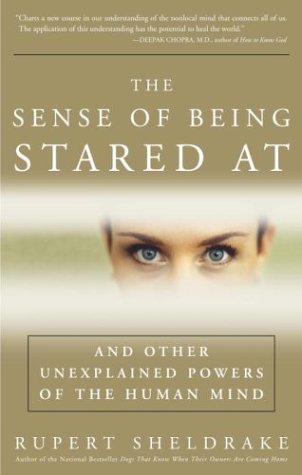
SenseofBeingStaredAt Rupert Sheldrake raises the ire of some of his fellow scientists. Science has increasingly allied itself with a strict kind of materialism, although, as Sheldrake repeatedly points out, evidence for such absolute materialism is lacking. This is not to challenge science, but simply to note that we may not yet have all of the data. The Sense of Being Stared At considers possible scientific explanations for unconventional situations we all experience from time to time. Who hasn’t felt eyes on them and turned around to find somebody looking? A number of other “impossible” scenarios also find their way into this intriguing book. Sheldrake suggests that such phenomena can start to be explained scientifically if we allow that the mind is not the same thing as the brain. Sure beats a Christmas party with B. F. Skinner, where every present is inevitable.

Materialism feels threatened when spooky action at a distance occurs. As Sheldrake points out, however, we are willing enough to accept it if an invisible “field,” one that we can’t even feel, is posited. Take magnetism, for example. Few people doubt that magnetism is a real force. We’ve never actually seen it, but its effects are clearly visible. Taking this as a starting point, Sheldrake suggests that various psi phenomena involve such fields. The scientific studies that have been undertaken on many of these “spooky” scenarios show statistically that chance may be safely ruled out. And, if the experience of many ordinary people counts for anything, even our pets and other animals may possess minds.

Ironically, the mind (with its taint of being associated with religious concepts such as the soul) is one of the most contentious phenomena in science. Many materialists deny its existence, suggesting it is merely some epiphenomenon of our brains’ electro-chemical processes. Yet these scientists still, one presumes, insist on being treated with respect and being paid for their work, although these mere trifles are just odds and sods clinging to the edges of a materialistic abyss. To me, work like that of Rupert Sheldrake is crucial for an honest assessment of the evidence. Maybe not everyone accepts that dogs know when their “owners” are coming home, and maybe Sheldrake’s morphic fields have yet to be confirmed, be it is clear, when all the evidence is considered, these phenomena do actually happen on occasion. Instead of simply dismissing something because it shouldn’t be, or can’t be, according to materialism, why do we find accepting the evidence so frightening? Is it perhaps the fear of being watched?


First World Religion

H. P. Lovecraft’s contemporary, and sometimes inspiration, Algernon Blackwood has recently come to my attention. Like Lovecraft, Blackwood was an early twentieth-century writer of supernatural tales. Raised with a father of “appallingly narrow religious ideas” Blackwood came to write stories involving strange religious characters and occult themes. I recently read his famous story, “The Willows,” for the first time. The entire premise is built around a sacrifice required by strange gods on an isolated island in the Danube River. Much of Lovecraft’s literature, as is readily apparent, builds on the Old Gods. Lovecraft was an unflinching atheist, but he knew that the divine had the ability to frighten in a way that the purely material often does not.

The early twentieth century exerted an enormous influence on the religious landscape of the modern world. Although my historical specialization is much earlier, it is clear that the events of the First World War forever changed the way that religion was viewed. Historically, those not involved in the fighting of wars had often been insulated from them. With the advent of technology that allowed military devastations to be photographed and swiftly disseminated, people around the world realized what an atrocity war actually is. Not glorious. Not triumphant. And despite the abundance of piety in foxholes, no deities evident anywhere. It is well known that horror of war at least partly led William Jennings Bryan to advocate a more fundamental brand of Christianity to counterbalance the “evils” of evolution that led to such nasty ideas as eugenics and social Darwinism. It is no accident that the Fundamentalist movement began to take hold with the revelations of the First World War.

GermanInfantry1914

Ironically, today many use creationism as the excuse to challenge all religion as a misguided set of antiquated principles that have no place in an enlightened world. The sad truth is that those who immediately dismiss religion out of hand don’t realize that the creationist concern arose precisely for the same reason: the horrors that science was unleashing upon regular, simple religious believers. The two viewpoints, however, can live together. Although many of the writers of the early twentieth century had no room for faith in their accounting of reality, they did believe in its effectiveness in creating fiction that had to be taken seriously. Atheists, perhaps, but not angry ones. Perhaps the angry ought to spend some time amid the willows to evaluate more fairly the ambiguous role that religion play has played and continues to play in an uncertain world.


Continental Religion

In the course of my duties as an editor of religious studies, I was pondering the origins of the world’s major religions. Now, agreeing on what the major religions are is an exercise fraught with political incorrectness. What does “major” mean, after all? In any case, when we count in terms of numbers, there are more Christians, at the moment, than any other single religion. They are followed by Muslims and Hindus. So far there is little upon which to disagree, at least according to self-professed affiliations. Buddhists are usually counted as the next largest group, followed by Sikhs. When religionists mention “the big five,” however, they usually mean Judaism, Christianity, Islam, Hinduism and Buddhism. There are likely far more followers of traditional Chinese folk religion, perhaps mixed with Confucianism and Taoism, than most accountings record—such beliefs aren’t neatly categorized. Jains make up a sizable population, and Shinto is often classed in with all those religions of the far east. Many of the more modern religions, such as Mormonism and Jehovah’s Witnesses, sprang from Christianity, and so can safely be classed as a form of that faith.

What occurred to me that day was that all the major religions of the present world began in Asia. Judaism and Christianity, with all their numerous progeny, started in Israel or Palestine. Islam, as we all know, began in Arabia. Hinduism, Buddhism, Sikhism, and Jainism all have their origins in India, the big winner for the seed-bed of religions. Traditional Chinese religions and Shinto trace themselves to the far east. Yes, there are indigenous religions throughout the world. Native American and African religions are not to be discounted, yet they never quite attain the level of public awareness to be qualified as “major” religions. In this spiritual accounting, “major” has nothing to do with importance. For the religions with the largest followings we must turn our eyes to the one-stop continent, Asia.

Where major religions begin

Where major religions begin

Considering this, the obvious question is why. Why Asia? Civilization itself began in Asia, and one of the marks of a civilized society, at least until the day of the New Atheists, has been religion. Religion may be abused, as might any human innovation, but it has also been a harbinger of a more civil world. Not only fear of the divine, but also a sense of gratitude toward whatever forces might be greater than humanity, allowing us to survive for another season, or through another storm. Even in the world of science, religion has been a motivator. Gregor Mendel, the scientist who gave us genetics, was a monk experimenting in a monastery. Sir Isaac Newton was an occultist. Francis Collins is an evangelical Christian. Religion is at least as old as civilization. Its forms may be morphing, but, I suspect something our Asian forebears knew: religion will never truly go away.


Curing Fundamentally

Despite the many problems with Richard Dawkins’ religious reasoning, he correctly notes that children are religious because they are taught to be. (That’s actually further than Dawkins is willing to go, since in The God Delusion he states that children are not religious at all, but are only claimed to be so by parents.) Belief is something that we are only beginning to understand, but it is clear that children are taught their religion, generally, by those who raise them. By the time most of us finish high school or college, however, we have learned that religion is limited to a relatively brief segment of our otherwise busy, secular lives. Over the years I have met many people whose religion I have studied in more depth than they, mainly because it was of little interest to them. God made no sudden appearances in their lives, the miraculous never occurred, and so life is business as usual. Religion was for Sunday morning (or whenever).

481px-PhrenologyPix

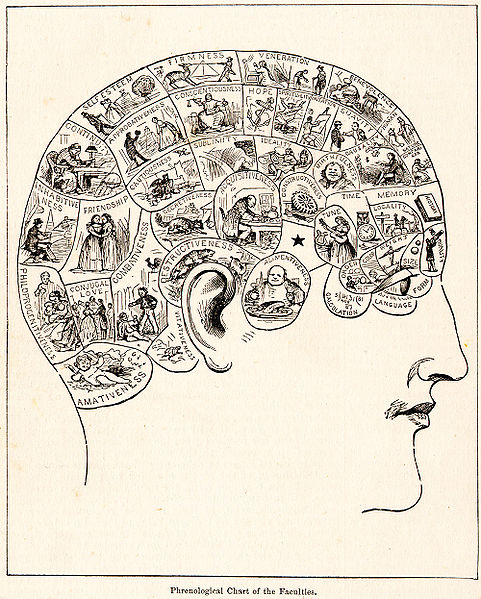
I was raised as a Fundamentalist. Although my readers may clearly see that I am no longer one, I do know that this bundle of neurons in my head has been made what it is, at least in part, because of that early training. Now a neuroscientist is suggesting that such thinking might be a curable mental illness. In an article in the Huffington Post, Kathleen Taylor, a neuroscientist at Oxford University, suggests fundamentalism may be a treatable disease. Looking over the secular headlines, there is no doubt that much of the misery in the world is caused by religious literalists acting out their fantasies in deadly ways. The suggestion that they might be treated for mental illness, however, raises profound—exceptionally profound—questions. Since I work in a city of millionaires and billionaires, I ponder how it is that extreme selfishness is not counted a mental illness. The desire of an individual to acquire far more wealth than one person can ever use seems to be an illness. Aesop might call it being a dog in the manger. No one is suggesting their brains be reprogrammed.

The even larger issue is who has the right to decide “the new normal.” Richard Dawkins may be correct that children reflect the religion of their parents, but as soon as adults declare what religion is acceptable we find other adults colonizing new continents, with the attendant misery that such migration entails. Where do we draw the line? If Fundamentalism programmed out, will Baptist neurons be allowed to remain? Methodist? Presbyterian? Mormon? The issue raised by Dawkins must be placed in context; if parents decide on a child’s beliefs do other adults have the right to decide on what is the correct belief? (Orthodoxy means precisely that.) Is a strict rationalist mentality what we want? A life without Hayden, Picasso, or Charlotte Brontë? What would Mr. Spock do? Will the real Randle Patrick McMurphy please stand up? Our rich fantasy lives are what make us human. If we are going to program out religious freedom perhaps the brave, new world is already here.


Super Stition

SuperstitionElijah is a folkloric character. Despite the common misperception, most of us who study religion know the difference between myth and reality. There are, nevertheless, lots of engaging traditions about Elijah. Even in our secular culture we joke about leaving a door open or an empty chair available for the disappearing prophet.

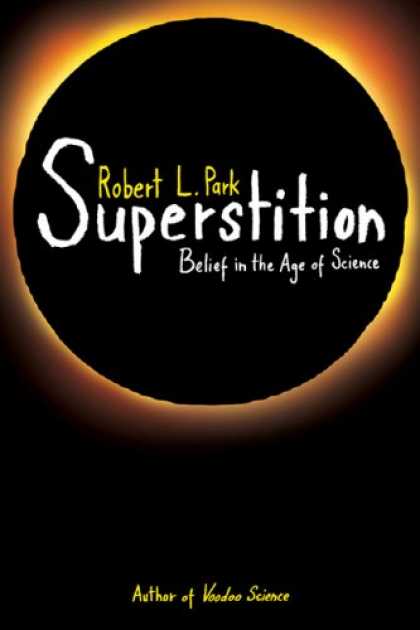
It is difficult not to like Robert L. Park. Reading his Superstition: Belief in the Age of Science was often a pleasure. I read Park’s Voodoo Science a few months back, and I enjoyed his supreme rationality very much. Many of the weird beliefs he decries clearly deserve his denunciatory treatment. Like many among the New Atheist movement, he believes that rationality, scientific thinking, will eventually displace religion completely. The final line of his book, “Science is the only way of knowing—everything else is just superstition,” however, maybe overlooking some vital information. In the first instance, scientists are humans too.

There’s no question that much of what Park writes makes perfectly good sense. The God of the gaps is gasping, indeed, dying. Double-blind prayer experiments just can’t work. Evolution does work. Quantum mechanics are abused by many New Agers. This all makes sense. There are, however, some gaps that rationality misses as well.

It has always bothered me that reality is much more than human senses reveal. Rationality is based on the premise that we have, or can discover, all the facts. There is an unseemly arrogance to it. We know, rationally, that “lower” animals experience sensory input unavailable to us. In many ways, Spot is more intelligent than his human “owner.” We use bloodhounds to find people for precisely that reason. We know that “bird brains” navigate in ways impossible for humans to emulate. Even a bee drunk with nectar can buzz its way home. And these are only the life forms that evolved on earth. Our rational knowledge is only a tiny fraction of all possible knowledge. And I’m not convinced that science is really the only way of knowing it. I just feel it in my gut. It’s a big universe out there, full of possibilities we haven’t yet encountered. Is the evolved human brain, limited as it is, the sole arbiter of reality? Is there some form of thought we have not yet reached? I will continue to enjoy reading books like Superstition. I will also, however, continue to leave the door open just a crack, in case Elijah does show up after all.


The Science of G-d

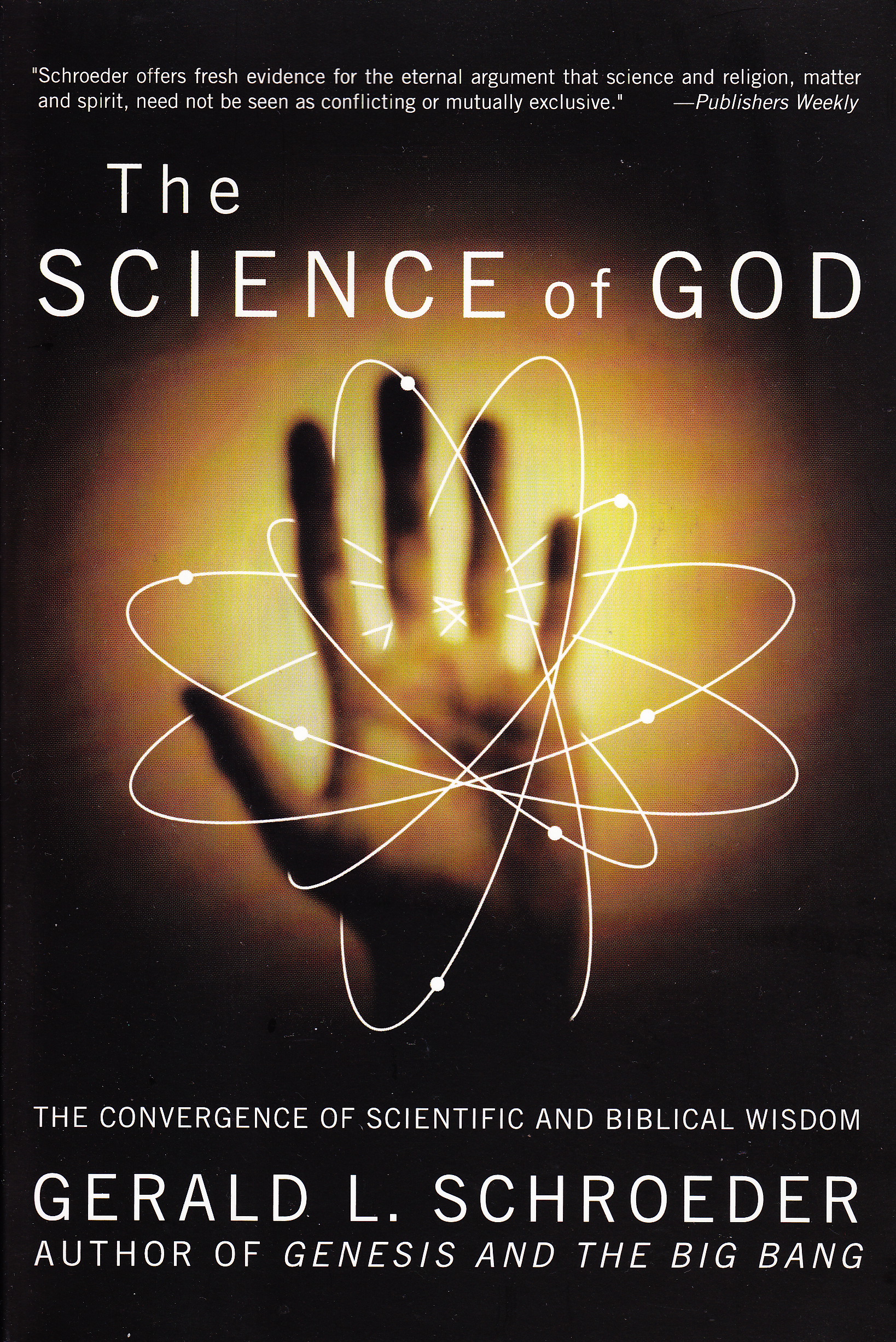
ScienceGodWhere, exactly, do science and religion come together? Since both are human mental enterprises, they must at some point at least glance off one another. Both religion and science attempt to make sense of human experience in the world, and, given the limitations of human time, being a true expert in both may be impossible. The John Templeton Foundation, as any religion scholar knows, supports research and awards handsomely those perceived to have succeeded, at least somewhat, in bringing the two together. A single lifetime, however, is not long enough for either, let alone both. Gerald L. Schroeder’s The Science of God illustrates this point. Subtitled The Convergence of Scientific and Biblical Wisdom, and produced by a major publishing house, the pitfalls of applying the Bible to a scientific worldview become apparent almost from page one.

Somewhat unusual in the field, Schroeder is an Orthodox Jew addressing the questions that the Bible raises for science. He is also a credentialed physicist. Most attempts to force religion and science into bed together come from Christian researchers—secular scientists usually have a headache—and a hidden agenda is often not too difficult to discern. I read The Science of God knowing nothing of Schroeder’s religious sensibilities. By narrowing the focus from science and religion to science and Bible, however, I knew the enterprise was doomed without even opening the cover. The Bible is one of the least scientific of all human writings. That’s not to say it has no value, but it is an honest observation by a lifelong reader of the Bible who believes science has a proven track record for making some sense of the world. Schroeder begins with that most specious of arguments, the anthropic principle. Few ideas raise such ire in my limited scientific understanding. The suggestion that the universe is fine-tuned for life is a moot point in principio. Who are we to say that life wouldn’t have emerged if the Big Bang were one degree cooler or hotter? It might have been life with different parameters, but the anthropic principle seems to point to nothing more than the tenacity of life.

While Schroeder does raise some valid points, it is clear from his challenging of the fossil record that the Bible will only ever sleep uneasily with science. For a physicist, Schroeder spends an awfully long time using God-of-the-gaps reasoning to fill in biology. In a disguised day-age “hypothesis” he gives us the creation order of Genesis 1, while skirting around Genesis 2 where humans are created before animals. And, I’m sorry, but the Bible does not mention dinosaurs anywhere. It’s a pity really. Schroeder’s book addresses some important issues, but using the Bible as a measure of scientific credibility fails every time. The science of God, it seems, is more a concluding unscientific postscript, but without the philosophical sublimity.


Inhumane Society

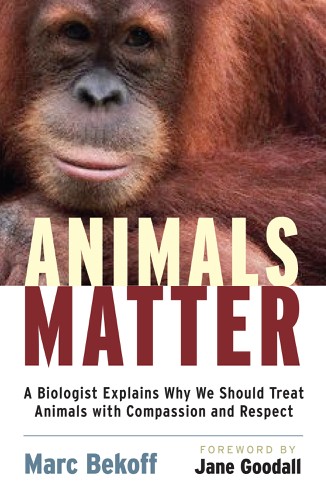
AnimalsMatter“I’m a member of PETA,” I’ve had more than one wag say, quoting bumper sticker wisdom as if it were profound, upon learning I’m a vegetarian. “People Eating Tasty Animals,” they then spell out with a smirk. I stopped eating animals at about the turn of the millennium, and since then I’ve discovered more and more reasons that it was the correct decision. I’ve just read Marc Bekoff’s Animals Matter: A Biologist Explains Why We Should Treat Animals with Compassion and Respect. It saddens me that in our world where nothing escapes being posted on Facebook, people still tend not to notice the suffering we impose upon animals as a matter of course. I’ve always been inclined to look closely at things, including animals. Watching them, it is clear that humans are indeed animals only differently evolved. Our mannerisms, our emotions, even our expressions, can be found among our animated kin. We share a planet on which we all evolved together, so why do we find it so easy to exploit other creatures?

One of the reasons Bekoff notes, without being judgmental, is that some religions inform us that people alone are special because we bear the image of God. Although God is supposed to be altruistic, we don’t wish to share that exalted status with any other species, apparently. Even in the twenty-first century many otherwise intelligent people still claim that animals feel no pain. Can’t reason. Are mere machines. We’ve been taught to distrust common sense that informs us that if an animal in distress acts like a human in distress that it experiences the same anxiety. The more we study animals the more human they become. The theology of Genesis has much for which it will be called to answer.

It seems, however, that the Bible is used as a mere excuse here. We exploit other animals because we can. We have taught bovines and ovines to trust us so that we may more easily slaughter them. Perhaps this is an exercise in divine image bearing, but somehow I doubt it. Reading Animals Matter in many ways felt like listening to a scientist who has taken the message of the Lorax to heart. We treat animals the way we do because we don’t understand their language, but we are morally obligated to speak for those who have no tongues. Although accessible to younger readers, Animals Matter is nevertheless a profoundly disturbing book. What does it say about the highly evolved when they exploit their relatives who’ve not learned the language of humans? Or, more accurately, who’ve not learned to vocalize like humans. Other animals speak, just like people sometimes, if we would only translate their actions into words.


Evolving Morals

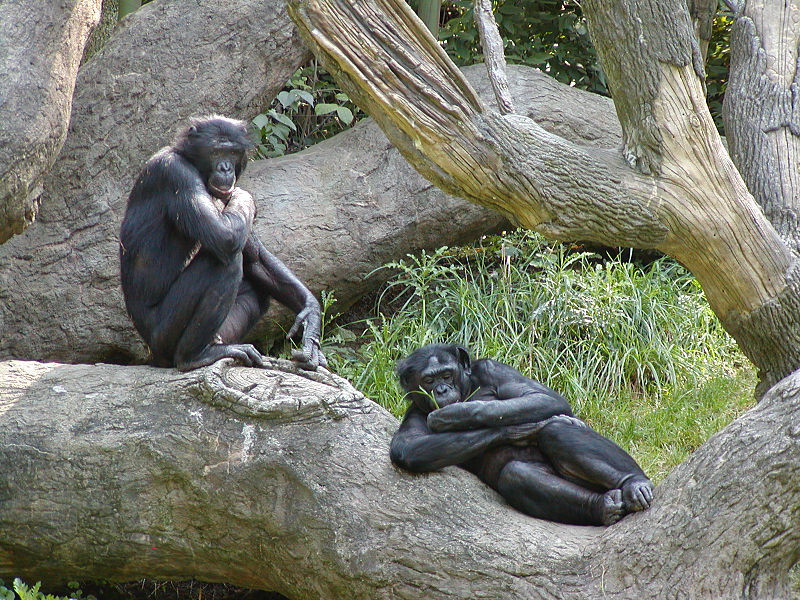
CNN recently interviewed Frans de Waal about his new book, The Bonobo and the Atheist: In Search of Humanism among the Primates. Of course the book immediately went on my “to read” list. I’ve followed de Waal’s non-technical work for years and I have come to trust his judgment. As director of part of Yerkes Primate Research Center, de Waal knows apes better than most of us know our neighbors. He has been exploring the origins of altruism and empathy in the great apes and has come to some amazing conclusions. His past work has shown that much of what we have attributed to special revelation has actually arisen in people through regular evolution. The apes, particularly the bonobos, but also chimpanzees, show startlingly human reactions to moral situations. In the interview, de Waal notes the implications for religion. In his opinion, morality predates religion since the former is seen in other primates while the latter is not.

As much as I trust de Waal’s judgment, the unanswered question remains: what exactly is religion? Animals display rudimentary religious behaviors, but in human-speak religion is often intertwined with belief. In watching a recent episode of Morgan Freeman’s Through the Wormhole—“Is There Life After Death?”—it was clear that while scientists tend to stand on the “no” side of this divide, in the end it comes down to a matter of belief. Not all religions, however, are tied to belief. Some religions assert that what you believe is not important, but rather, what you do. In such religions morality is much more like our primate kin’s version of religion. As Freeman points out, you really can’t know what another person believes. You can ask, but if you believe their response is always an open question. Here is the dilemma of religion as a matter of belief. Even Jesus putatively said, “by their fruits you will know them.” Morality here sounds like religion.

Frans de Waal suggests in his interview that morality differs from religion by being earlier in the evolutionary scale. If, however, religion evolved—which it surely did, as we can continue to observe its evolution today—it may be of a piece with morality. We object to suggesting animals have religion; this suggestion would knock humanity off its pedestal as the only species to which an incredibly human-like god revealed (as it is said) himself. What de Waal has gone beyond proving in his previous books is that much of what qualifies as religion is found among the great apes. De Waal doesn’t put it in those words, but as a lifelong student of religion I have observed the connections first-hand. A scientist may not feel qualified to define religion, just as a religionist is not qualified to correct a scientist. I eagerly await the chance to read The Bonobo and the Atheist, but I already know that I will find much of what de Waal writes to be beyond question, and we may all be much closer to the origins of religion than we realize. Even our great ape kin.

Michelangelo's muse? (Photo by Greg Hume)

Michelangelo’s muse? (Photo by Greg Hume)


More Witches

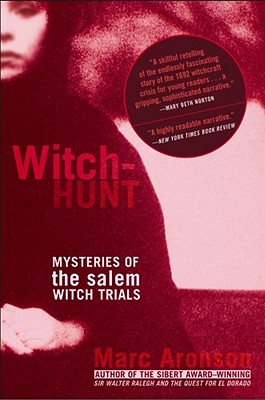
WitchHuntAronson It’s been some time since I’ve been to Salem. It’s been even longer since I’ve read Arthur Miller’s The Crucible. The events of 1692, however, continue to haunt me. I recently read Marc Aronson’s Witch-Hunt: Mysteries of the Salem Witch Trials. Intended for a young adult readership, Aronson’s book really isn’t proposing any new theories about why religious violence was perpetrated against the vulnerable, mostly female, pool of those living in a very superstitious society. It does, however, show some of the issues in sharp relief—more academic books sometimes cloud the issues with erudition. Historians will continue to debate what happened in Massachusetts at the end of the seventeenth century when the Enlightenment was getting underway and the explanatory value of science was overcoming the world of miracle and magic. Even with science on our side, however, adequate explanations of the sad social madness of Salem are still lacking.

As Aronson points out, there seems to have been a certain amount of greed involved as laws allowed the property of “witches” to be confiscated. Equally culpable are the learned clergy of the day, some of whom overrode their disinclination towards belief in witchcraft to hang a few women (and fewer men) for an imaginary crime. Lack of full historical documentation and the unrecorded lives of women often combine to raise many questions about Salem. It remains clear, however, that the outlook of the clergy influenced perceptions on the ground. Aronson suggests that Cotton Mather’s earlier accounts of Goodwife Glover of Boston—a woman executed as a witch without even her first name having been recorded—may have “inspired” similar violence among the population of Salem. When devils are suspected, the clergy are never far.

When the mania died down after a lethal year, the clergy, both Increase and Cotton Mather among them, recanted the easy execution of a few expendable women, and fewer, less expendable men, in Salem. Since we lack documentation, we will never know fully what was behind the witch-hunts, apart from misogyny and misperception.

Aronson ends his little book by asking us to consider modern terrorist hunts and the eerie similarities to the mindset of Salem. Listening to some media interviews, particularly on Fox, after the Boston Marathon bombings, we haven’t traveled so very far from Salem. In a world of high technology, where Satan is said to once again stroll the streets of Massachusetts, we have to wonder if the witch-hunts will ever truly end.