Gorilla Thinking

We don’t understand consciousness, but we want to keep it all to ourselves.  That’s the human way.  Or at least the biblically defined human way.  Animals, however, delight in defying our expectations because they too share in consciousness.  Take gorillas, for example.  Or maybe start with cats and work our way up to gorillas.  We all know that cats “meow.”  Many of us don’t realize that this sound is generally reserved for getting human attention.  Cats tend not to meow to get each others’ attention.  According to Science Alert, gorillas in captivity have come up with a unique vocalization to get zookeepers’ attention.  Not exactly a word, more like a sneeze-cough, this sound is used by gorillas at multiple zoos for getting human attention.  Even if the gorillas have never met in person.

Photo by Joshua J. Cotten on Unsplash

This is a pretty remarkable demonstration of consciousness.  What’s more, it’s an example of shared consciousness.  The same vocalization shared over hundreds of miles without a chance to tell each other about it.  We’re very protective of consciousness.  As a species we like to think that consciousness is uniquely human and that it’s limited to our brains.  Moments of shared consciousness we chalk up to coincidence or laugh off as “ESP.”  Funny things happen, however, when you start to keep track of how often such things occur.  It might make more sense to attribute this to moments of shared consciousness.  In our materialist paradigm, however, that’s not possible so we just shake our heads and claim it’s “one of those things.”

Animals share in consciousness.  We don’t always know what their experience of it is—indeed, we have no way to test it—but it’s clear they think.  I live in a town, so my experience of observing wild animals is limited to birds, squirrels, and rabbits, for the most part.  I often see deer while jogging, and the occasional fox or coyote, but not long enough to watch them interact much.  But interact they do.  Constantly.  These are not automatons going through the motions—they are thinking creatures who have sophisticated ways of communicating with each other.  Ours includes vocalization, so far uniquely so in the form of spoken language.  The great apes—chimpanzees and orangutans, according to Tessa Koumoundouros—also vocalize and do so with humans.  Now we know that gorillas do too.  And we all know that a barking dog is trying to tell us something.  If we took consciousness seriously, and were willing to share it a bit more, we might learn a thing or two.


Yelp Me

Do you remember the Yellow Pages?  Or even phonebooks, for that matter?  (Or wall phones?)  They certainly weren’t perfect, but they tended to be updated yearly (at a great cost in trees).  That meant that they tended to be almost up-to-date.  You’d find the business you sought, and call them to ask for their hours, or directions.  Now we rely on the internet, of course, and the number of businesses that you can find has exploded.  And they open and close with bewildering rapidity.  It took me a couple years of googling to figure out that Yelp was a rebranding of the Yellow Pages.  I also feel sorry for any company that has to try to keep up with the current status of things.  It does seem, though, that Yelp could use some help.

Although it might seem impossible, many businesses still exist without websites.  And if you’re looking for a type of business in a specific city or town, you need to know, first of all, what’s there and what’s not.  The big boxes are never a problem, of course.  When I travel to a new location, however, I want to know what bookstores I’m likely to find.  I’ve done this a number of times recently.  Type in a city name and “bookstore.”  (In the case of Reading, the city name didn’t help at all.)  Yelp helpfully shows up at the top but it lists many establishments that have closed.  Even some of those that are open are virtual and don’t have a store you can wander around.  More than once I’ve come to a place only to discover there’s no longer anybody home.

Independent bookstores have been doing pretty well through the pandemic.  Many people have rediscovered reading.  Since they are seldom crowded, they feel like safe spaces during Covid.  And chances are that people who hang out in bookstores have been vaccinated and will likely be wearing a mask.  The problem is finding such places.  I have to say that Pennsylvania seems to have a healthy population of bookstores.  There are several in the Lehigh Valley and I’ve been pleased with the treasures I’ve discovered elsewhere as well.  Finding them hasn’t always been easy.  One of my favorite used bookstores here in the Valley folded during the pandemic.  Fortunately there are others.  Google maps sometimes work better than Yelp, but nothing beats getting out and exploring on your feet, except sitting at home later and reading what you’ve found.


New Physics

Maybe it’s time to put away those “new physics” textbooks.  I often wondered what’d become of the old physics.  If it had been good enough for my granddaddy, it was good enough for me!  Of course our knowledge keeps growing.  Still, an article in Science Alert got me thinking.  “An AI Just Independently Discovered Alternate Physics,” by Fiona MacDonald, doesn’t suggest we got physics wrong.  It’s just that there is an alternate, logical way to explain everything.  Artificial intelligence can be quite scary.  Even when addressed by academics with respectable careers at accredited universities, this might not end well.  Still, this story to me shows the importance of perspectives.  We need to look at things from different angles.  What if AI is really onto something?

Some people, it seems, are better at considering the perspectives of other people.  Not everyone has that capacity.  We’re okay overlooking it when it’s a matter of, say, selecting the color of the new curtains.  But what about when it’s a question of how the universe actually operates?  Physics, as we know it, was built up slowly over thousands of years.  (And please, don’t treat ancient peoples as benighted savages—they knew about cause and effect and laid the groundwork for scientific thinking.  Their engineering feats are impressive even today.)  Starting from some basic premises, block was laid upon block.  Tested, tried, and tested again, one theory was laid upon another until an impressively massive edifice was made.  We can justly be proud of it.

Image credit: Pattymooney, via Wikimedia Commons

The thing is, starting from a different perspective—one that has never been human, but has evolved from human input—you might end up with a completely different building.  I’ve read news stories of computers speaking to each other in languages they’ve invented themselves and that their human programmers can’t understand.  Somehow Skynet feels a little too close for comfort.  What if our AI companions are right?  What if physics as we understand it is wrong?  Could artificial intelligence, with its machine friends, the robots, build weapons impossible in our physics, but just as deadly?  The mind reels.  We live in a world where politicians win elections by ballyhooing their lack of intelligence.  Meanwhile something that is actually intelligent, albeit artificially so, is getting its own grip on its environment.  No, the article doesn’t suggest fleeing for the hills, but depending on the variables they plug in at Columbia it might not be such a bad idea.


Remember the Doorway

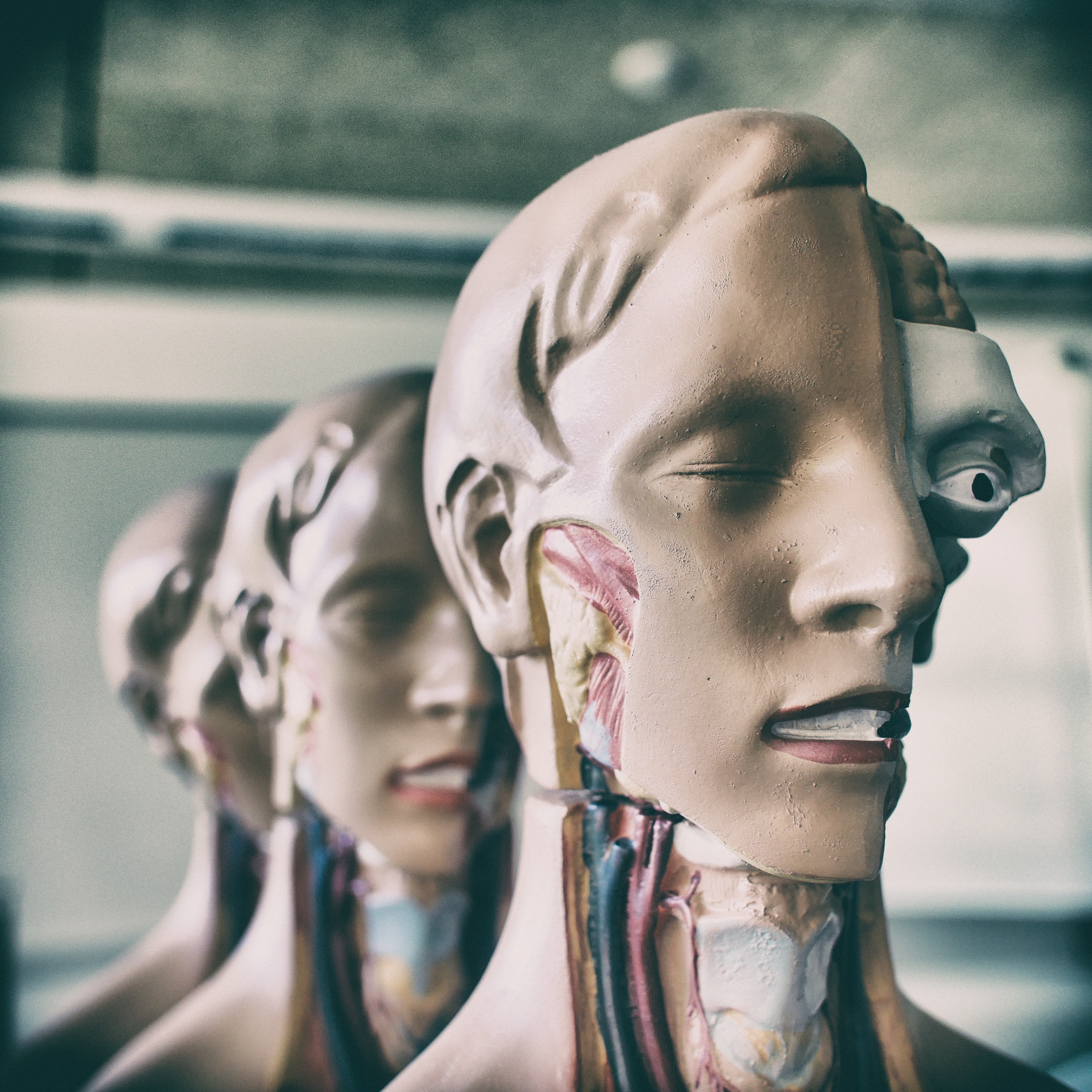
I’m glad it has a name.  And I’m also, relievedly, glad it’s normal.  The Doorway Effect.  I’m sure it’s happened to you.  You walk into a room and immediately forget what you came in for.  I’ve been afraid of some early onset of something because I’ve noticed it more and more, but it turns out that this is a normal brain function.  A recent article by Jessica Estrada explains that our brains are constantly framing.  A large part of that framing has to do with our physical location.  When you step through a doorway that framing changes and some of the residue (what I came in here for) might easily get left in your previous location.  In other words, it seems to be an effect of humans making different rooms for different purposes.  Our thought lingers in the place it was first born.

Photo by Filip Kominik on Unsplash

Our brains are fascinating organs.  Every time I read about how children’s brains form, I wish I’d studied psychology instead of religion.  How we could help our children if we understood what their brains just aren’t capable of doing just yet!  How many spankings could have been avoided if parents understood brain development?  Beating someone doesn’t teach anything.  Instead, we might try to learn how minds use brains.  Young boys can be quite reckless.  One of the reasons?  Their brains haven’t developed enough yet to think through the consequences of their actions.  Yes, they can push limits for other reasons, but their thinking simply doesn’t yet involve adult caution that (hopefully) comes with a developing brain.  One of the real consequences of this, for which I’ll volunteer as a poster child, is religion.

Children’s brains are not developed enough to accept and comprehend religious thinking until they’re about 12.  We’ve known this for many decades now.  And yet, the theology of parents means they try to convince their children of religious truths before their brains are developed enough to sort it out.  Look at Congress and the Supreme Court to see the results of this.  Most people never seriously question their religion.  For many it was instilled in them as children, before their brains could properly process it.  The rest of the country pays for it with laws then enact.  We’ve known about this for decades and have decided that studying religion is a waste of time.  But I digress.  Now I forget what I started to say when I began this post.


Beyond Natural

I’ve read quite a few books about the supernatural.  Often these books, which are mostly written by scientists, tend to show the problems with supernatural thinking.  Clay Routledge, it seems to me, has a healthier approach.  Supernatural: Death, Meaning, and the Power of the Invisible World isn’t an apology for the supernatural.  In fact, Routledge is a psychological scientist.  An open-minded one.  The book isn’t an apology, but it does show how natural supernatural thinking is.  This engagingly written study isn’t always easy to read—you have to be prepared to think about death a lot.  But also meaning.  Routledge makes a good case that the human search for meaning is related to our awareness of our own mortality.  We know we’ll die, and we don’t want to believe our existence has been for naught.  That doesn’t make all of us religious, but it does, perhaps, open us to the supernatural.

One of the main takeaways for me is that people misunderstand the power of religious motivation.  Especially in the context of our current political climate.  Many people can’t believe that supreme court justices would decide against laws that slow global warming.  Survey after survey, however, indicates that strong belief in religion means having little or no concern about the world ending.  In fact, for many it is a culmination devoutly to be attained.  You don’t need surveys to learn this.  You just need to talk to Fundamentalists.  I grew up believing this world was a sinful, corrupt place soon to be destroyed.  Further reflection on religion convinced me that this view was wrong, but I certainly understand it.  Too often those trying to find solutions to such problems simply dismiss religion as a motivating factor.  That’s a fatal error.

This is an insightful book.  Although based on science it is neutral toward religion.  Or I should say, the supernatural.  Routledge demonstrates that even scientists, when tested in controlled circumstances, subscribe to some supernatural beliefs.  They may be more abstract, such as the idea that things happen for a reason, or that we’ve been put here for a purpose (the teleological argument), but they are nevertheless present.  To be human is to be a meaning-seeking creature.  We may not be the only ones.  Whether or not that’s the case, our drive for making sense of all this tends to move us toward the supernatural.  Routledge ends with a plea for us to listen to one another.  Pay attention, and care for, those who believe differently.  We have a lot more in common than we have views that separate us.


First Images

I awoke to an image from the James Webb Space Telescope.  Looking at the universe at it was 4.6 billion years ago is a humble and terrifying experience.  Our universe is so incredibly vast and we are tiny.  As we on this planet bicker and kill and destroy, out there something truly wondrous looms.  Those tiny pinpricks of galaxies.  Our own galaxy so massive that we can’t comprehend it.  Our own midsize star large enough to hold more than a million earths.  Our own planet big enough that no human being can see it all in a lifetime.  What in the world are we fighting for?  This image is just a patch of sky about the size of a grain of sand held at arm’s length.  How many grains of sand would it take to fill the visible sky?

Many people argue that such things are a waste of money.  Yes, there are very real, human-created problems right here on earth.  The siren call of space, however, has the potential to save us.  If we look into that immense universe just out there and realize that we are part of something larger than ourselves, we can stop fighting and hating and electioneering.  Keep looking up instead.  Costs, after all, are relative.  Our entire economic system is arbitrary.  We decide what’s valuable and what’s not.  We make rules that allow individual human beings to control the lives of countless others based on nothing more than agreed-upon principles.  Food could be freely distributed.  Medicine could be given to the sick.  What’s required is perspective.  If looking at the universe doesn’t provide perspective, what can?

I often wonder about life in those distant galaxies.  Given the sheer numbers it’s practically impossible that life evolved only here.  We’re told that teleological thinking is wishful and naive, but looking at the way life behaves I have to wonder if that’s true.  Life may be seeking goals.  If it is, than intelligence may be among them.  We’ve got billions of years and billions of lightyears to work with.  And when I look at the headlines I find those of the James Webb Space Telescope to be the most hopeful of all.  Galaxies are all about possibilities.  Stars being born where the outcomes may be better than one gender assuming it’s better than another.  Or that the “right to bear arms” means  stockpiling assault rifles to kill others in a fit of pique.  No, this money’s not wasted if only people might listen and pay attention to the stars.


Internet of Nothings

In the vast internet of things, it’s surprising that you can’t order some specific things.  This became clear to me recently when there were two separate things I was looking for.  I know these things exist.  You can find them on the internet, but they are not available in this area.  One of them is very mundane.  Lath.  You see, the previous owners of the house wired up the attic, which is handy.  To do so they had to break through the plaster and they removed several sections of lath.  Like a squirrel digging for a forgotten nut, they did this several times, leaving holes in the wall with exposed insulation.  One of my projects since moving in has been to plaster over these holes.  The gaps are so large, however, that you need lath to replace the discarded pieces.  

Our local big box hardware stores don’t carry it.  If you find it in a large urban store, they can’t deliver it to a local branch, and shipping isn’t available for this item.  I realize drywall has triumphed—I prefer it myself—but doing the entire attic is a major expense.  I just want to plaster up the holes.  No lath, no how.  At the same time I began to look for Top Ramen soy flavor for quick lunches.  It is the only inexpensive vegan option with the much coveted flavor pack.  I know it exists and that it is available in Ithaca, New York, the last place I bought it.  Although the brand is in our local grocery stores that variety is not.  It’s listed on Amazon, but as unavailable.  (Amazon, by the way, insists that you want to buy a lathe if you type in lath.  If it finally accepts “lath” it’s clear it has no idea what it is.)

So I went to the website of the Top Ramen parent company, Nissin.  They list the product as available.  They don’t ship themselves, not to small customers, but they helpfully tell you stores nearby where you can buy it.  Their vegetarian varieties are “not available in your area.”  Not even Amazon can get them.  This to me seems odd.  Nearly every day I read about the greatness of the internet of things.  Anything can be had in this market.  If you’re looking for something specific, whether it be thin strips of cheap wood or thin noodles without beef broth for your lunch, you can’t get those in an area within about 250 miles of one quarter of the US population.  Of course, I have until lunchtime to sort this one out.


Following Instinct

An article from the Christian Science Monitor a few years back made me think how common knowledge runs ahead of science, but without the rigorous evidence.  The article is “Ravens might possess a Theory of Mind, say scientists.”  Of course they do.  The ravens, that is.  So do many other animals.  It’s pretty obvious when watching them interact on a daily basis.  We’ve over-flogged the idea of “instinct,” using it as a way of preserving the biblically-inspired idea that people are separate from animals.  We can be an arrogant species.  We say we get to determine when other species are intelligent or not.  When they do something smart we say, “That’s just instinct.”  Is it?  How do we know that?  And isn’t “instinct” one of the greatest fudge factors ever invented?

We do not know what consciousness is.  We claim it for ourselves and a few of our favorite animals only.  The ravens in the article show by their behavior that they know, or assume they know, what others are thinking.  I’m always struck how experiments set up to measure this assume a human frame of reference.  Paint a spot on an animal and place it in front of a mirror.  If it shows curiosity about the spot it has a self-awareness, a theory of mind.  Maybe other species aren’t as concerned about zits as we are.  Maybe they consider it vain to fawn over themselves.  Maybe they use sight in coordination with scent and hearing to identify themselves.  No matter what, at the end of the day we must say how our intelligence is superior.  (Then we go and elect Trump.)

Need I say more?

Scientists have to be skeptical—that is their job.  Looking for evidence and coming up with hypotheses and theories and whatnot.  That’s how the scientific method works.  The scientific method, however, isn’t the only way of knowing things.  We learn and animals learn.  We like to think our “theory of mind” makes us unique, but watching how animals interact with each other, even when they don’t know someone else is watching them, shows more sophistication than we normally allow.  Nobody has to be convinced that the corvids are intelligent birds.  Their lives are different from the nervous little finches and wrens, however.  Does that mean wrens and finches have less developed minds?  I think not.  Until we learn how to think like animals we have no business claiming that they have no theory of mind.  Maybe if we could define consciousness we might have a claim.  Right now, though, all we have are instincts to go on.


Souls, All

What is a soul?  Can you lose your job for believing in one?  Well, maybe not lose your job, but be placed on paid leave.  Yesterday’s New York Times ran a story about Google engineer Blake Lemoine being put on leave after claiming a soul for the company’s artificial intelligence language model.  Isn’t that what artificial intelligence is all about?  We’ve become so materialistic that we no longer believe in souls, and when we create life we don’t expect it to have one, right Dr. Frankenstein?  One of the sure signs that we are alive is our sensing of the many qualia of biological existence.  We understand that we’re born, we’re biological, and that we will die.  We also sense that there’s something beyond all this, our self, or mind, or psyche, call it what you will.

In our minds the soul has become entrenched with the Christianity that provides the backdrop to our somewhat embarrassing history of repression of those who are different.  How do we redeem one without having to be shackled to the other?  And once we do, can we declare why AI doesn’t have a soul while biological beings do?  Or will we insist that it is solely human?  In this odd world that’s evolved, we view animals as innocent because they can’t know what they’re doing.  Historically there have been animals put to trial.  That’s an aberration, however, from our usual ways of thinking.  We don’t know what a soul is.  We’re not even sure there is such a thing.  To suggest a machine might have one, however, is taboo.  Would we trust a soul made by humans?

Skepticism is good and healthy.  So is having an open mind.  We’ve been a polarized people for a long time.  If it’s not politics it’s elites versus uneducated, materialists versus those who think there might be something more, self-assured versus those who question everything.  The path of learning should keep us humble.  We should be open to the possibilities.  There’s no way to measure the immaterial since all our tools are material.  Even psychology, which utilizes categories to help us understand neurodiversity, often finds chemical solutions to the most cerebral of problems.  Perhaps overthinking is an issue—it can certainly get you into trouble.  Believing in souls can put you in a place of ridicule or suspicion.  Does AI have a soul?  Does a soul emerge from biological existence, whenever a sufficient number of neurons gathers in one place?  Is it the fabric of the universe from which we borrow a little?  We have some soul-searching to do.

Carlos Schwabe, Death of the Undertaker; Wikimedia Commons

False Focus

I seldom use my iPhone.  I admit that I like having a camera with me most of the time and I don’t look like a tourist.  I don’t text and when I feel like tweeting I do it from my laptop.  I often forget where I put my phone and walk out of the house without it.  What I’m trying to say is that it’s not a distraction.  Now I realize companies (which seldom undertake to comprehend those of us who are anomalous) have to appeal to the lowest common denominator.  In iPhone world this means that they now want you to use “Focus.”  In other words, if you’re behind the wheel or in danger of losing your job for being distracted all the time, you can filter what gets through.  I recently had a request from my phone to send me Focus notifications when I’m home.  Of course it knows when I’m home!

It seems unnerving to me that we need to have our devices remind us not to use them.  What does it say about our love-love relationship with devices?  We use them to guide us when we’re driving—no longer experiencing the wonder of getting lost.  We read on them, forgetting the feel, smell, and non-reflective look of a book.  Some people even smoke their devices.  Many people now protect their houses with devices that allow them to see who’s at the door.  Do we really feel safer with our devices taking care of us all the time?  Perhaps we do.  Perhaps the cyborg revolution has already begun.

When I see how simple things like telling an apple from a tomato still flummox machine sensors (and even if they learn to tell this difference, the point remains the same), I realize just how much life experience teaches us.  We’re constantly taking in sensory data and interpreting it.  Often subconsciously.  I can smell and feel the difference if the same shirt is dried in a dryer or on a line.  I know which is better but I struggle to find the words to describe why.  I can tell the difference between the taste of this peanut and that one.  Some scents can trigger euphoria while others warn that a mustelid is nearby and wants to be left alone.  I know to look around for a skunk, to honor its wishes.  I can infer that the apples that have started to go bad are why that opossum is in our compost bin.  Perhaps I’ll pull out my phone and take a picture.


Smaller Wolves

It was in Maine.  In 1987.  I can’t remember how Paul and I found this place to camp.  I don’t remember making reservations, but we drove along in his 1968 VW Beetle, unpacked a tent along a  rutted logging road, and set up camp for the night.  We were there to try to find moose.  In the middle of the night we were awakened by howling in the woods.  We were many miles from any other humans and nobody knew where we were.  Were there wolves in these woods?  Paul turned to me.  “Wolves don’t attack people, do they?” he asked.  I said no.  He pulled out a very large knife.  “I was in the civil air patrol,” he explained.  “You know what to do with this, right?  If a wolf bites your arm, cut your arm off and run away.” Not the best advice.  As we drifted off to sleep we were awoken again by furious sniffing outside the tent.  The next morning we saw no moose but found tracks all around our temporary home.  We convinced ourselves they were wolf tracks.  They were actually tracks of coyotes.

Most people in America have a coyote story to tell.  I can’t recall how I learned about Dan Flores’ Coyote America: A Natural and Supernatural History.  I’ve always been drawn to nature writing, but it was probably the “supernatural” that caught my attention.  This is a fascinating book with a rollercoaster ride through emotional responses.  Flores makes the case that Coyote was the first god of America.  Indian mythology is full of this character and his antics.  But the heart of the book focuses on the many decades of efforts—still ongoing—of the government to eradicate coyotes.  Millions of them have been killed for spurious reasons, largely because the government pays attention to ranchers who pay a lot of money to be minded.  Coyotes naturally find their balance in nature, which we insist on disrupting.  One of their survival strategies has been to move east.  Even moving into cities.

I’ve heard coyotes in Wisconsin, and I saw at least one while out jogging in the early mornings there.  Since moving east I’ve not spotted any, but they are, I know, here.  I’m largely on the side of nature, but the first ever documented adult human wolf fatality took place in another place I’ve camped, Cape Breton Highlands National Park in Nova Scotia, in 2009.  Reading this made my human pride rear up—we don’t face predators well.  The book goes on to touch on how I, and many others my age, learned of coyotes—through Wile E. in animated form.  This book is difficult to read in many parts, but it is an absolutely mesmerizing journey through many lenses of what it means to be American.  Whether you’re canine, or human.


Soft Wired

A museum of discarded electronics.  I’ve been thinking that might be a good use for all the tech we’ve had to buy over the years that quickly becomes outmoded.  (Useless, that is.)  As I look over these devices I can recall just why they were purchased.  Mostly it was to solve a more immediate problem.  You perhaps overspend so that you can avoid disrupting the tech services you’ve learned you can’t live without.  Then new tech comes along and you need new hardware to do the same thing you’ve always done.  Soon you’ve got a museum’s worth of old tech.  I tried to get my mother on the internet by sending her an old computer that I bought with grant money back in my Nashotah House days.  When it was all set up, it was discovered that it was too old to connect to the modern internet.  I’ve lost track of how many computers are in the attic, but at least now there’s one less.  The thing these all have in common is that they require electricity.

Image credit: Mircea Madau, public domain via Wikimedia Commons

A few weeks ago I wrote about our eclectic electric issues.  While our utilities company and electrician try to sort out who does what (it turns out that our house was never properly wired up from the mains), we’ve got a dilemma.  Since we all work from home and we all use computers, how are we going to work on a day when the electricity has to be off?  (Let’s hope it’s after this cold snap is over.)  We depend on electricity in this electronic world.  The solution may be to buy some new tech.  A battery-powered hot spot and fully charged laptops might be able to get us through an hour or two with no electricity.  We’ve become so dependent on the juice that the thought of being without it is scary.

The solution, of course, will quickly become outmoded as 6G and 7G, on to infinity, await in the wings.  They will all need electricity.  A house that was never properly hardwired can be a tricky thing.  Electricians and linemen have to have weekends too.  In a world where constant connectivity has eliminated snow days, such force majeure on a personal level holds no, well, force.  Aligning three employers who say it’s okay to step “out of the office” for a few hours at a time not of your own choosing will be impossible.  So we buy a new tech solution and hope it’s fully charged.  And when we’re fully wired up again the new device can eventually go in the museum of obscure electronics.


Movie Moving?

If you don’t know me personally, you may not realize how frequently I quote movies.  On a daily basis, films I’ve seen—particularly multiple times—are the source of some of what I say.  Films have tremendous impact.  Some theorists have even argued that they are the new mythology.  So imagine my distress when an opinion piece in the New York Times suggested that movies are losing their relevance.  Media comes in so many varieties that we can take our choice.  YouTube and TikTok have given television its first real competition in my lifetime.  Our local CD store is a rather sad place, and does anybody even remember Blockbuster?  But movies—the media of entertainment for over a century—irrelevant?

What of the movie star?  It doesn’t matter which one.  The phenomenon of it.  The person recognized as a household name.  Now we seem to be losing yet one more frame of reference.  There’s no firm ground left for culture, it seems.  Is this why things are falling apart?  Movies weren’t the only glue, of course, but I wrote three books on movies.  The larger implications are sobering.  Media, of course, is always changing.  Movies are but a modern form of story-telling.  Already decades ago the weight for this began to swing towards what we used to call video games.   The younger generation prefers stories where their actions decide the ending.  To a point.  Someone had to program this thing and has predetermined possible outcomes.  Like a movie, it’s a story.

Stories are probably the oldest form of human entertainment.  The nonfiction books that sell the best are those with a narrative arc—they tell a story.  Nonficionados may be reluctant to admit that they’re drawn to stories, but we all are.  It’s human nature.  While I prefer books to movies, there are times I just can’t settle down to read.  And also, horror novels don’t quite scare the same way that horror movies do.  Movies have their place.  They can be tremendously expensive to make and many now have so much CGI that actors are disguised beneath layers of code.  Kind of like The Matrix.  Even so, they are telling stories in a format that has become a huge industry that ties culture together with common references.  Can you image a world where there was never a Star Wars?  The internet has perhaps blurred the line a bit and movies are evolving.  As long as we tell one another stories, however, we’re still human.

Image credit: Georges Méliès

Lenten Friday

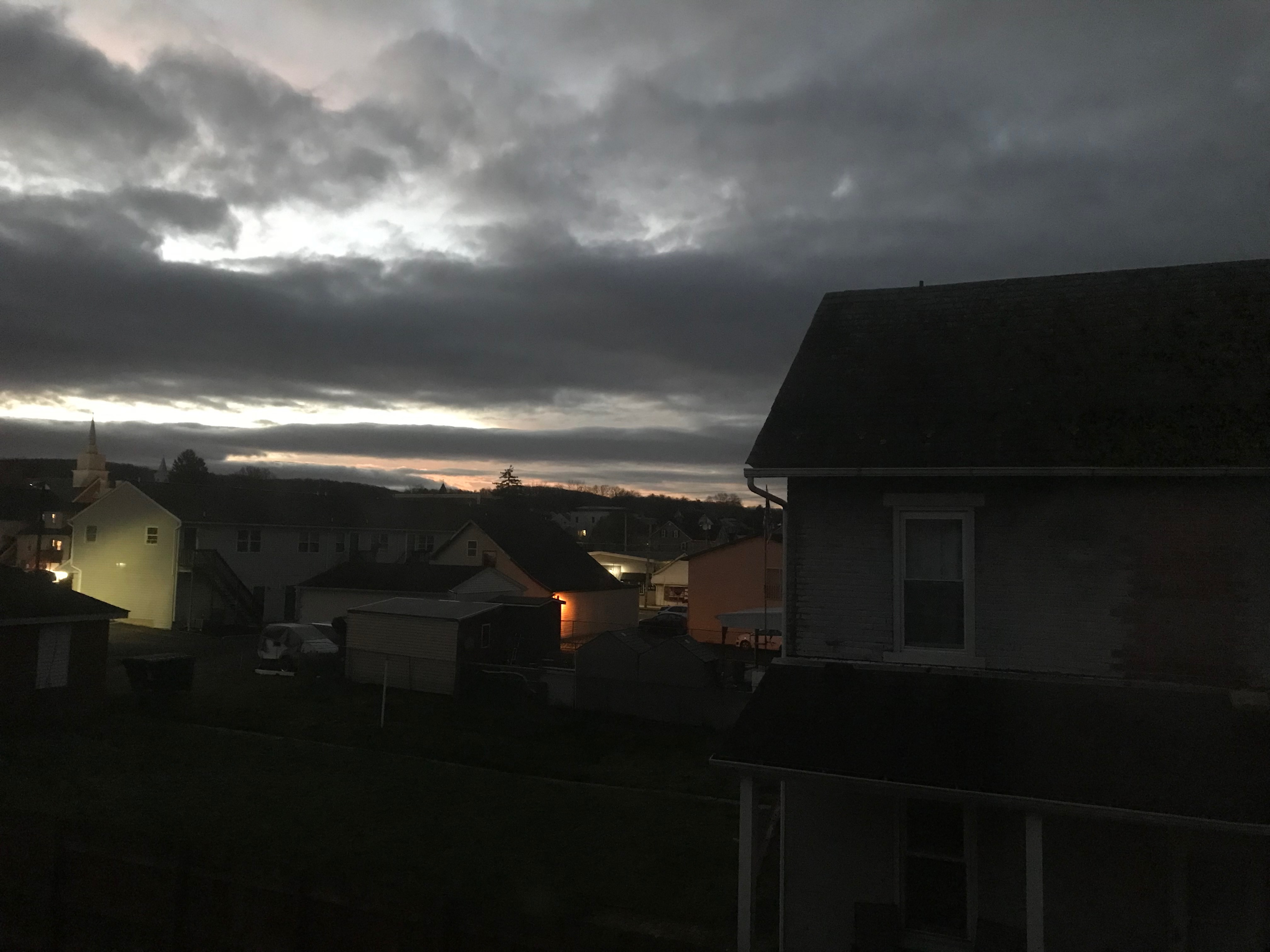
I thought something was on fire when I first saw it.  A plume of black smoke rising against a backdrop of lowering, sullen clouds in a late winter sky.  Then I remembered that there’s a pet crematorium in that part of town.  I was witnessing the end, the smudged spirit of someone’s departed companion.  It made me reflective.  We currently have no pets.  (We can barely afford keeping ourselves going without adding another mouth to feed.)  Having grown up with a variety of animals–dogs, cats, birds, fish, turtles, guinea pigs—and having kept fish, a bird, and a couple hermit crabs for our daughter, I know the connections we make with our animal kin.  They teach children about death.  And they have the capacity to make all of us reflect on what it means to be alive.

I’ve buried my share of pets, but I have no idea what happened to the larger ones.  The cats.  The dogs.  It was pretty obvious when a dog died.  The cats, which were outside pets, tended simply to disappear.  There were no dog grave markers and I still have no clue what the grown ups did with the carcasses.  I once visited a pet cemetery; it was an oddly moving place.  Although we’re taught theologically that animals don’t have souls, it feels like part of ours dies when they go.  That strange teaching is courtesy of the Bible and it manages to hold sway in both science and religion.  And so another puff of black smoke rises from down the block.

Religion has a tremendous influence on us, whether we’re personally religious or not.  Since humans have always eaten animals, it’s likely that the earliest religions helped to assuage the guilt of killing something that so obviously has feelings and thoughts and could, in other circumstances, have been us.  When monotheism came in there was a great reduction in souls.  Humans alone made in God’s image learned to dominate other animals.  Today we have feedlots that are animal Hells while we pat Fido on the head and mourn his passing.  I somehow doubt that we’ll ever find ourselves back in the natural world.  We’ll likely go extinct before that happens.  Until that day, however, some of our saddest memories will be from when our beloved companions pre-decease us.  You can never be certain which way your thoughts might turn when lowering, sullen clouds fill a late winter sky.


Reconnecting

Not using the internet for 48 hours isn’t the same as not being able to use the internet for that length of time.  Even politicians (who are notoriously slow at figuring out what people need) have started to make noises about this being an essential aspect of life.  Some (many) things you just can’t do without connectivity.  And during a pandemic taking an entire family to an enclosed space with free wifi (still a rarity) for over a full day so that they can get things done is an issue.  All of this has convinced me of the need to purchase a wifi hotspot, in addition to relying on what Astound Broadband (formerly RCN) is able to provide.  (You see, I’m in charge of a Sunday morning program at a local faith community.  I couldn’t even email anyone to let them know I wouldn’t be able to show up on Sunday without using costly data.)  Now that service has been restored, a kind of nervous normality has returned.

This has been a learning experience.  Of course we’ve got books to read.  I have papers, stories, and a next book to write.  None of those, ostensibly, uses the internet.  All of them do, however.  I’ve been conditioned to look things up on the web while I’m writing.  This is true of both fiction and non; a fact needs checking, a reference requires look-up, a thought occurs to you that has to be dealt with before you move on.  There’s an email you forgot to answer.  Etc.  Etc.  The web is our source of news (what’s happening with Ukraine?), our phonebook, our map, our encyclopedia.  Let’s face it—it’s an addiction.  But a necessary one.

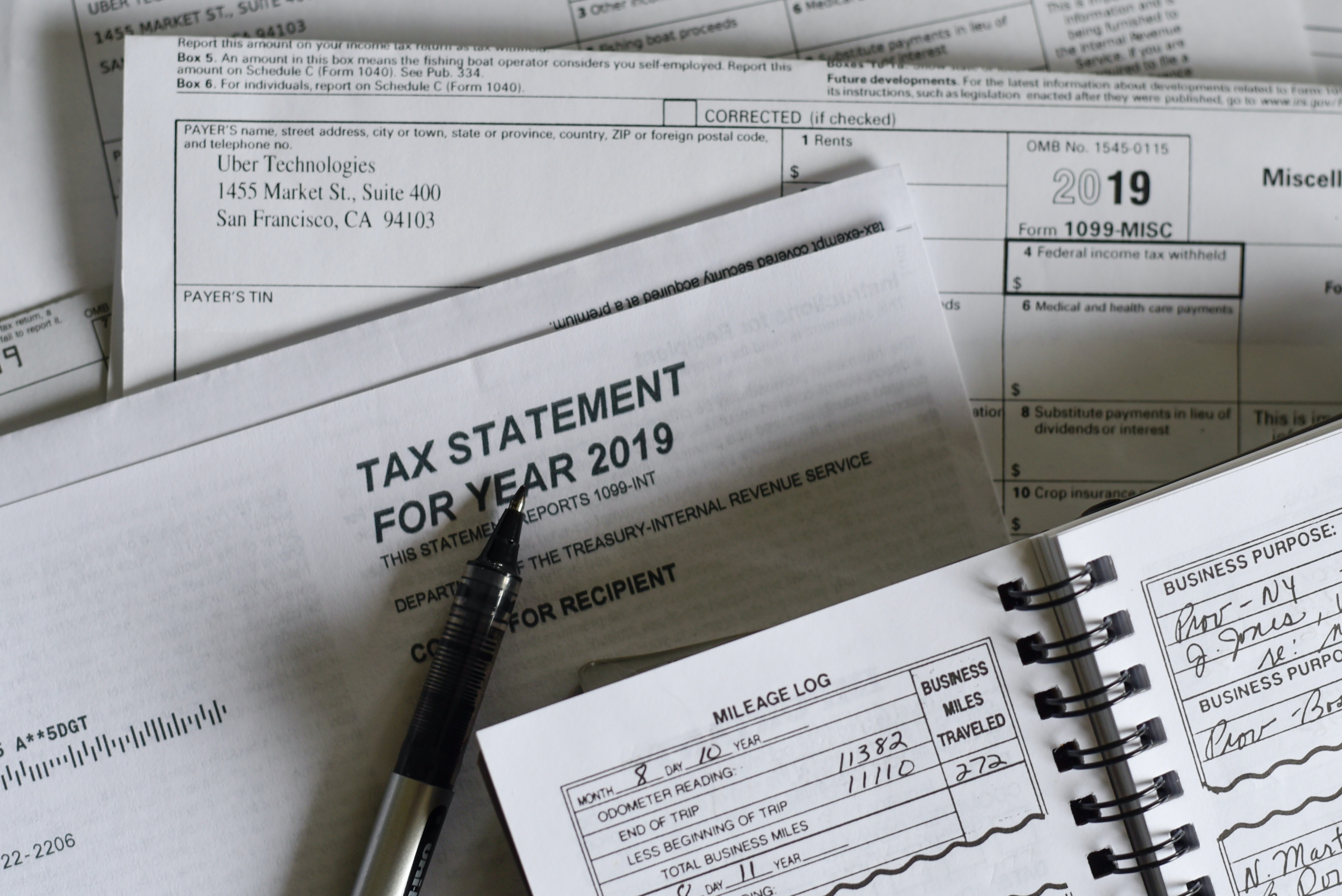
Like many things, our government has the capacity to make internet access available, just like they could do our taxes for us and stop the madness of setting back clocks each year from Daylight Saving Time.  They could ensure universal health care.  They’re too busy “defending” a crumbling, pre-internet way of life and enriching themselves to actually enact any of these things.  And somebody would have to figure out what accountants would have to do if taxes weren’t an issue.  I strongly suspect people would still be willing to pay for more than basic internet connectivity.  But to have a basic signal out there that we could tap into without tapping out our data plans would be a real boon.  I found myself glancing at our neighbors’ houses all around and thinking, “They have internet.”  We pay a lot to have it too, but the only company in the Valley can’t guarantee access, especially on a weekend.  What have I learned?  The ascetics were onto something.

Photo by Nicolas Häns on Unsplash