Surviving AI

A recent exchange with a friend raised an interesting possibility to me.  Theology might just be able to save us from Artificial Intelligence.  You see, it can be difficult to identify AI.  It sounds so logical and rational.  But what can be more illogical than religion?  My friend sent me some ChatGPT responses to the story I posted on Easter about the perceived miracle in Connecticut.  While the answers it gave sounded reasonable enough, it was clear that it doesn’t understand religion.  Now, if I’ve learned anything from reading books about robot uprisings, it’s that you need to focus on the sensors—that’s how they find you.  But if you don’t have a robot to look at, how can you tell if you’re being AIed?

You can try this on a phone with Siri.  I’ve asked questions about religion before, and usually she gives me a funny answer.  The fact is, no purely rational intelligence can understand theology.  It is an exercise uniquely human.  This is kind of comforting to someone such as yours truly who’s spend an entire lifetime in religious studies.  It hasn’t led to fame, wealth, or even a job that I particularly enjoy, but I’ll be able to identify AI by engaging it with the kind of conversation I used to have with Jehovah’s Witnesses at my door.  What does AI believe?  Can it explain why it believes that?  How does it reconcile that belief with the the contradictions that it sees in daily life?  Who is its spiritual inspiration or model or teacher?

There are few safe careers these days.  Much of what we do is logical and can be accomplished by algorithms.  Religion isn’t logical.  Even if mainstream numbers are dipping, many Nones call themselves spiritual, but not religious.  That still works.  We’ve all done something (or many somethings) out of an excess of “spirit.”  Whether we classify the motivation as religious or not is immaterial.  Theologians try to make sense of such things, but not in a way that any program would comprehend.  I sure that there are AI platforms that can be made to sound like a priest, rabbi, or preacher, but as long as you have the opportunity to ask it questions, you’ll be able to know.  And right quickly, I’m supposing.  It’s nice to know that all those years of advanced study haven’t been wasted.  When AI takes over, those of us who know religion will be able to tell who’s human and who’s not.

What would AI make of this?

Inventing Chaos

A recent (in my personal interaction with time) article from the New York Times recounts two bad inventions by Thomas Midgley Jr.   Namely, leaded gasoline and the practical use for chlorofluorocarbons.  Besides making me interested in Midgley, the article got me thinking about inventors and inventions.  We never know, in real time, if innovations are good ideas or not.  We have no crystal ball and what seems like a good idea now may prove to be a catastrophe.  I’ve given a couple of talks on the Antikythera mechanism.  If you’re not familiar, it is essentially an analogue computer invented in the first century.  Experts suggest there were likely multiple such devices, but they never caught on and transformed society.  Why?  Nobody saw the practical benefits.

A replica of the Antikythera mechanism

The Antikythera mechanism was made essentially to predict eclipses and track the movement of heavenly bodies.  The fact that such a thing existed within a century of when Jesus of Nazareth lived and died is mind-blowing at first.  Still, it makes a point.  We never know when an invention will take off and change the world.  And we never know if that change will ultimately be good or bad.  There are many who suggest that the invention of agriculture was a mistake.  We eat less healthily than our hunter-gatherer ancestors, and they may have been much happier (in general) than we are.  Still, agriculture (despite creating desk jobs) has its benefits.  We live longer.  We have medical science.  And we can entertain ourselves with clever people on YouTube.  While we sit around too much and eat things that really don’t benefit us, we seem to be doing okay.  We’re living longer, at any rate.

The problem, it seems to me, is when capitalism takes an idea and blows it up into a huge money-making venture.  People just can’t take their eyes off that shiny, shiny gold.  And ideas, when they start making unreasonable demands (a new cellphone every other year?  Really, is that necessary?) tend to lead to the same results as leaded gasoline and chlorofluorocarbons.  If they can be monetized, ideas will push themselves into this unbroken feedback loop we call economy.  Often at the price of ecology.  Inventors are both necessary and dangerous.  Their efforts often make the world more comfortable, more convenient.  They might, however, cause immense harm.  Being a vegan, I’d have a difficult time surviving as a hunter-gatherer.  Gathering is more my style, in any case.  If only I had a way of tracking the movement of heavenly bodies, I might just be content.


Planting Knowledge

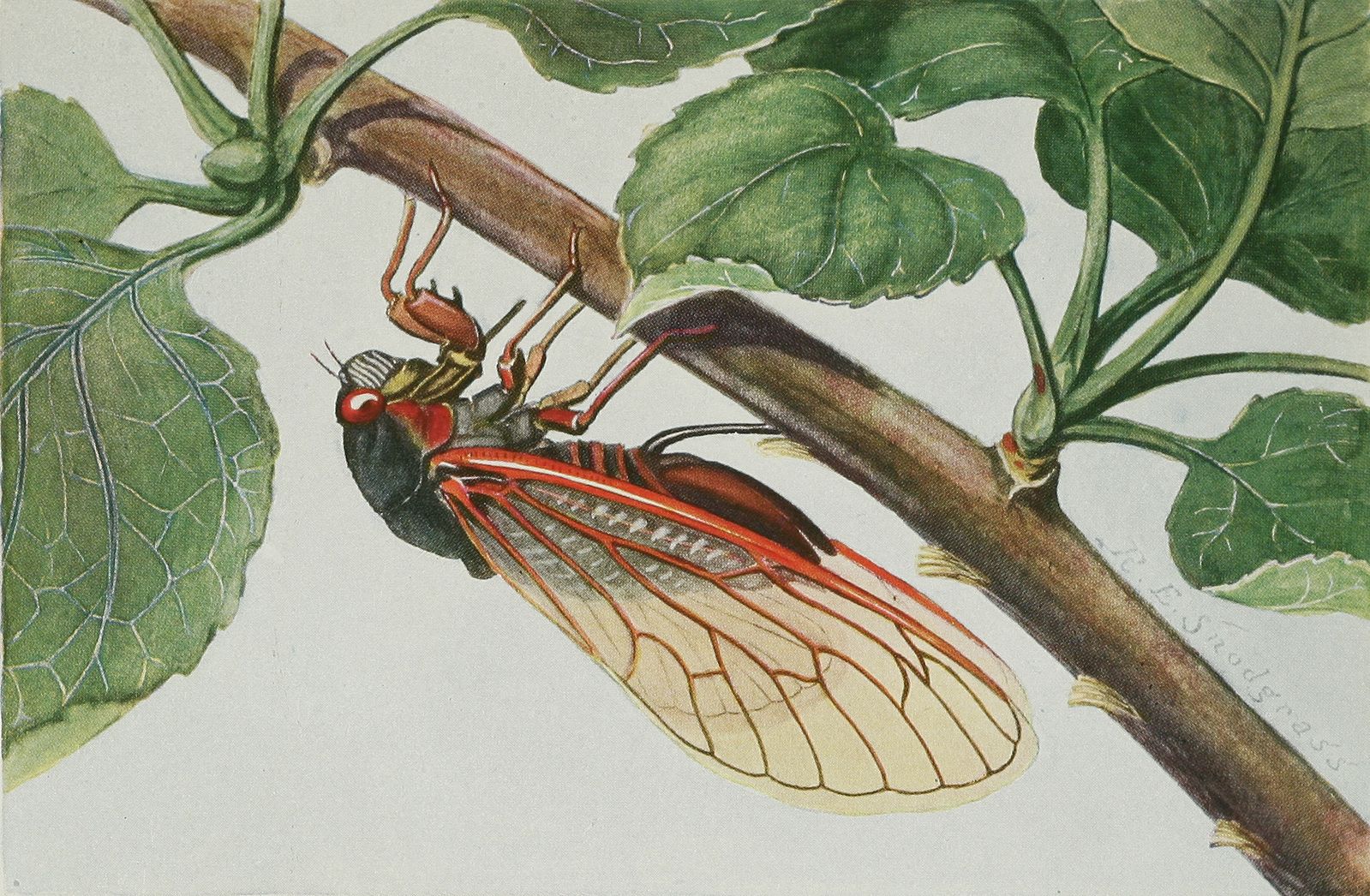
In an effort not to harm other living creatures, I became a vegan about seven years ago.  Generally it’s not too difficult, although many eateries still think you have to exploit animals to eat anything.  Vegan fare is quite good, and some of it is remarkable.  Then I saw the article in Popular Mechanics, “So It Turns Out Plants Have Had Voices This Whole Time” by Jackie Appel.  Well, “voices” may be stretching it a bit, but they do make sounds.  According to the article, plants “talk” at the same volume as humans tend to, only it’s in a range that we can’t perceive.  Other animals, however, may.  That’s right, your dog may be able to hear the noise plants make.  This is one of the reasons I marvel at scientific arrogance.  Human senses simply can’t perceive all stimuli—how can we claim that what we term “supernatural” doesn’t exist?  We don’t have nearly all the data.

Meanwhile, we live with animals whose sense of smell would send us running even more frequently to the showers.  Animals who can hear plants “talking.”  Animals who can perceive magnetic fields.  We’ve evolved knowing what we need to know.  (At least in part.)  What then do plants communicate?  Can they hear one another?  The sounds plants make, if “translated” to human perception, seem to be “I’m thirsty,” “I’ve been hurt,” or “I’m fine.”  The terminology here is Appel’s but you get the idea—plants broadcast their status.  Can plants scream?  One of my students reminded me a few years back that I once wondered to her what a tomato felt when it was being sliced.  I responded, “That sounds like something I would’ve said.”

They know.

So now I’m a vegan and plants are joining the conversation.  My hope is that they don’t feel pain.  As far as we know, plants don’t have brains.  Even so, heliotropes are smart enough to follow the sun across the sky.  And even fully grown trees move—very, very slowly—to optimize the light they require.  Such intelligence in nature always leaves me in a state of wonder.  We’ve been told for centuries of human exceptionalism.  Sure, we have opposable thumbs and have figured out how to communicate intricate things vocally.  So much so that we can represent them in written form (such as you’re reading right now) and can know what someone’s saying even at great distances.  That doesn’t mean we’re the only remarkable creatures.  But it does leave me with the dilemma of what to eat.


Pondering Origins

I’m not a numbers guy.  I never had any interest in statistics, and I tremble when I see my accountant’s number pop up on my phone at tax time.  But exponential sequences have an inherent fascination.  Think about your ancestry (I recently wrote about genealogy and that got me pondering).  You have two parents.  And they each had two parents.  By the time you get back to ten generations (eight greats before grandparents) you have 1,024 ancestors of roughly the same generation.  That’s a lot of people just to make one individual.  Think of all the circumstances that might’ve led to any two of them having been kept apart—then where would you be?  Of course the numbers double each generation which is where my reasoning capacity shuts down.

At some point, doesn’t it seem, that there wouldn’t be enough people available to make you?  I know that’s not true—you’re reading this and that proves this false—but it does make each individual life a thing of wonder.  Or even at the level of your own parents.  If you have siblings you know how different even biologically similar people can be.  And there are many others who could’ve been conceived instead of you or me.  The chances are astronomical that we’re here at all.  I often wonder if such circumstances are why our minds seek religious answers.  People are meaning-seeking creatures.  And against such long odds, it seems that maybe we’re a miracle after all.  Naturally, a driving force behind it all suggests itself.

Photo credit: NASA

Science has been a real boon for the billions of us alive today.  There’s no doubt that dispassionate, rational thought can lead to amazing outcomes.  At the same time, the doubt creeps in that this is the only explanation.  It occurs to me when watching the birds in the spring.  How do they know their own species and with whom to mate?  Is all of this driven by that notorious fudge factor we call “instinct”?  I have no answer to what the source of that will to keep life going is.  Biology tends to be among the slipperiest of sciences.  Life is difficult to define when we don’t even know everything that’s out there in our infinite but expanding universe.  The numbers are just too massive.  All I know is that by the time you get back to twenty generations (eighteen greats) it took over a million people to make just one of us.  And that’s by the numbers.


Friends and Dreams

The mind is a labyrinth.  Ever since the time change (especially), I’ve been waking with the weirdest dreams.  One involved someone I haven’t really thought about for years.  Someone I knew in college and who was a close friend, but who’s fallen out of touch.  (And who would likely not approve of my evolving outlook on things.)  Why she came out in a dream is a mystery to me.  It does give me hope, however, that all those things I think I’ve “forgotten” are really still in there somewhere.  A friend once told me that it’s not a matter of “remembering” but of “recollecting.”  He claimed that the memories are still there.  Ironically, I can’t recollect who he was, although I think it was someone I knew in college.

My generation’s ambivalent about the internet.  Most of my college friends I simply can’t find online.  I recall one of my best friends saying he would never use a computer.  I suspect he’s had to backslide on that, for work if for nothing else, but he’s not available online at all.  The same goes for people my age at seminary.  Some I occasionally find through church websites, but honestly, most of them have better pension plans than I do and have retired to become invisible.  We children of the sixties are likely the last generation that might be able to make it through life claiming never to have given in to computers.  It took quite a bit of effort to get me over the reluctance.  One of my nieces set up this blog for me nearly 13 years ago, otherwise I’d still be hard to find.

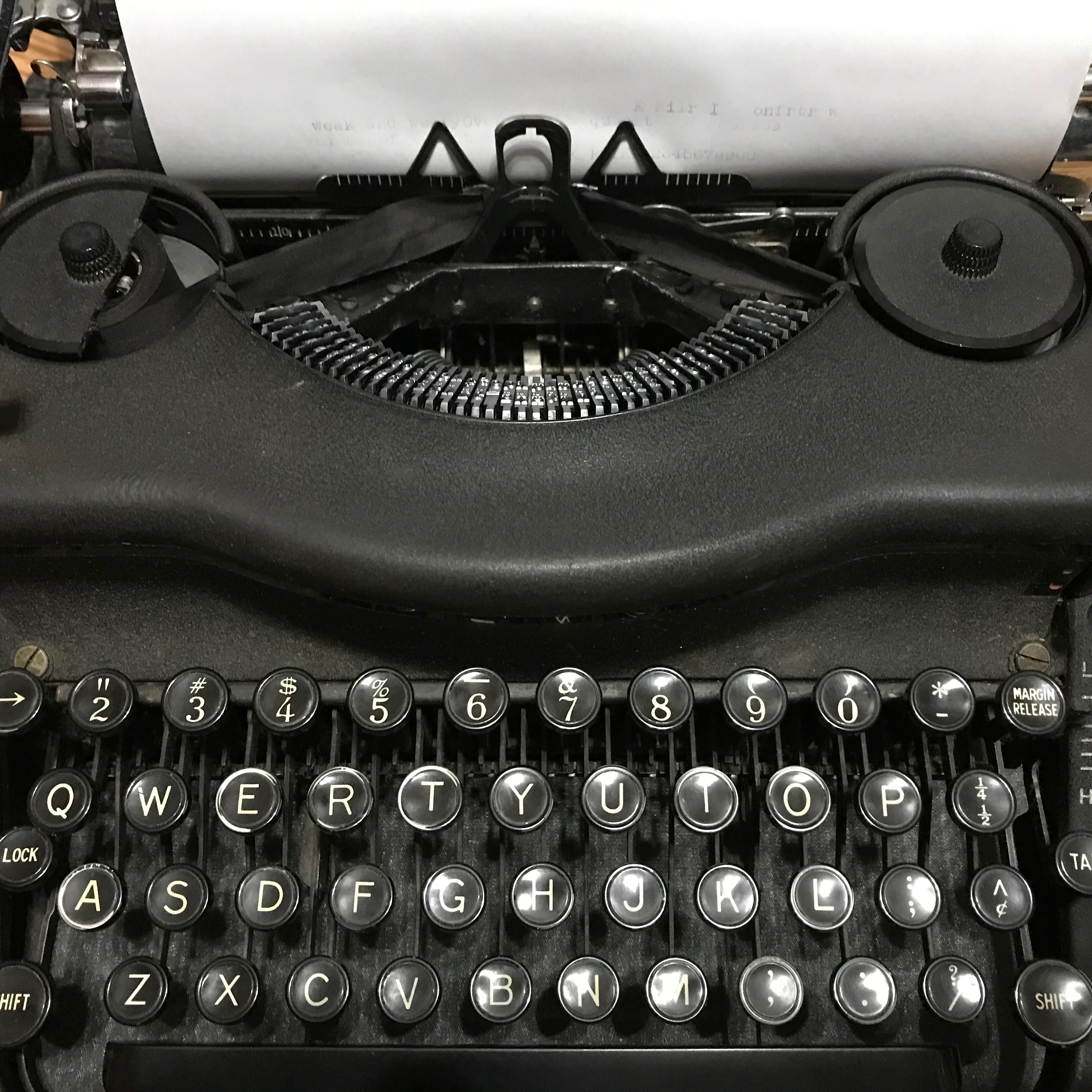
But minds.  Minds can, and do change.  My mind was dead-set against computers in college.  For one class I was required to do one assignment via computer, and I did that task and that task only.  Seminary was accomplished with a typewriter and snail mail.  Even my doctorate, done on a very old-fashioned Mac SE, was purely a feat of word processing.  Nashotah House was wired during my time there, but that was mainly email.  My mind was slowly changing at each step of the way.  I wasn’t becoming a computer lover, but I was realizing that I was learning something new.  Now I can’t get through the day without writing and posting something on this blog and sharing it on Twitter and Facebook.  And checking email—always email—to see if anything important has come in.  And, perchance, someone I had a dream about might actually email me out of the blue.


Actual Intelligence (AI)

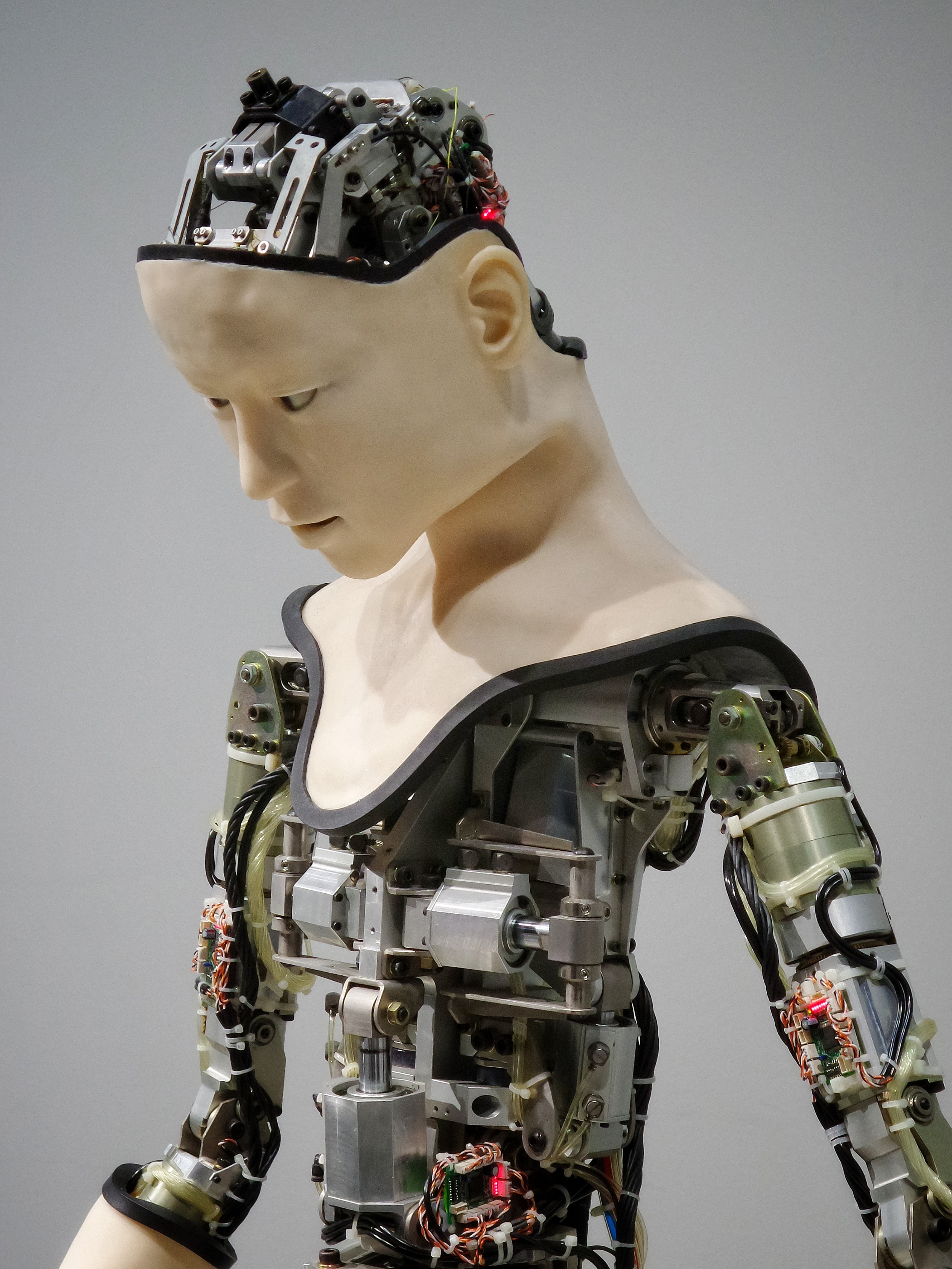
“Creepy” is the word often used, even by the New York Times, regarding conversations with AI.  Artificial Intelligence gets much of its data from the internet and I like to think, that in my own small way, I contribute to its creepiness.  But, realistically, I know that people in general are inclined toward dark thoughts.  I don’t trust AI—actual intelligence comes from biological experience that includes emotions—which we don’t understand and therefore can’t emulate for mere circuitry—as well as rational thought.  AI engineers somehow think that some Spock-like approach to intelligence will lead to purely rational results.  In actual fact, nothing is purely rational since reason is a product of human minds and it’s influenced by—you guessed it—emotions.

There’s a kind of arrogance associated with human beings thinking they understand intelligence.  We can’t adequately define consciousness, and the jury’s still out on the “supernatural.”  AI is therefore, the result of cutting out a major swath of what it means to be a thinking human being, and then claiming it thinks just like us.  The results?  Disturbing.  Dark.  Creepy.  Those are the impressions of people who’ve had these conversations.  Logically, what makes something “dark”?  Absence of light, of course.  Disturbing?  That’s an emotion-laden word, isn’t it?  Creepy certainly is.  Those of us who wander around these concepts are perhaps better equipped to converse with that alien being we call AI.  And if it’s given a robot body we know that it’s time to get the heck out of Dodge.

I’m always amused when I see recommendations for me from various websites where I’ve shopped.  They have no idea why I’ve purchased various things and I know they watch me like a hawk.  And why do I buy the things I do, when I do?  I can’t always tell you that myself.  Maybe I’m feeling chilly and that pair of fingerless gloves I’ve been thinking about for months suddenly seems like a good idea.  Maybe because I’ve just paid off my credit card.  Maybe because it’s been cloudy too long.  Each of these stimuli bear emotional elements that weigh heavily on decision making.  How do you teach a computer to get a hunch?  What does AI intuit?  Does it dream of electronic sheep, and if so can it write a provocative book by that title?  Millions of years of biological evolution led to our very human, often very flawed brains.  They may not always be rational, but they can truly be a thing of beauty.  And they’re unable to be replicated.

Photo by Pierre Acobas on Unsplash

Silicon or Paper?

Most of us follow blindly through this tech jungle.  We do it, I suppose, because there are rewards for having the world of information and entertainment at your fingertips.  The problem is that the constant upgrades are expensive and as you approach retirement age—even if you can’t afford to retire—you have to keep spending in order to meet your tech needs.  A few years ago I purchased an app because apparently my laptop was running too slowly.  I do tend to have more than one app open at a time, I confess.  Maybe too many.  But apps take up so much operating memory these days that you can either constantly quit and reopen (if you have a mind like mine) or you can upgrade.  And even then you’re not sure of what you’re doing.

I’m old enough, you see, to remember having to load the program you wanted to use via floppy disc when you booted up.  We all assumed the swapping of discs was the price you paid for being able to, say, type a dissertation without using white-out all the time.  Then we started hearing these rumors of an “internet” with “email.”  I found my first (and it turns out, only) full-time professorship via letter.  Delivered by the post office.  A friend wrote to me about the opening and I sent a fateful letter of inquiry to Nashotah House.  The rest, as they say, is history.  I’ve kept much of the paper of those early days.  The movers always complain that I’ve done so, but I’m between worlds.  I was born in a paper world and I don’t trust this electronic one.  That’s why I still buy physical books.  I’ve had too many devices die on me.  And now I keep only one or two apps open at a time, and forget to look at the stuff on the others—I keep them open to remind me.

It is a jungle, this virtual world.  We like to think it’s civilized but what do we really know?  So I deleted the app that pops up telling me that one app open at a time is too taxing for my computer’s memory.  Then I remembered that I pay an annual fee for such annoying reminders.  I had to reinstall and await the notices again.  Yes, some of my files are big.  I write books, and that’s just the way it works.  So I put up with those yappy reminders because, well, it’s better than swapping discs a dozen times just to type a sentence or two when I have time.


Foresight

God wasn’t thinking of search engine optimization (SEO) when he was writing the Bible.  First of all, he doesn’t seem to have considered that all the nice, short names he used would soon become the most common in the western world.  And he didn’t give all the characters last names.  Job is particularly egregious because you could be searching for employment and not a complaining old man (you can always find one of the latter here!).  Perhaps he wasn’t aware at the time just how popular his book would become so that just about everything in it appears on some twenty-million webpages and you need some distinctive keywords for SEO.  And this unfortunate high profile has also led to knock-on search problems.

I quite often have to search for bits of the Good Book together.  “Pentateuch” isn’t so bad because it’s a bigger word that most people don’t use every day.  But what about “historical books”?  It’s two words and search engines begin scouring the web for pages that have both words.  And there are plenty of historical books outside the Bible.  Writings?  Poetry?  Even Gospels is used all over the place.  I had to find something about the Catholic Epistles the other day.  My search engine found plenty of places with both words, but not linked together.  (I know the quotation mark trick, but bear with me here as I’m trying to make a point that will perhaps lead to divine intervention.)  I tried again with Pastoral Epistles but the same problem arose.  This is the burden of being so important that everyone copies you.

It’s the price of success.  God surely must’ve foreseen that.  The problem is that Holy Writ predates the internet by so many centuries.  Those who’ve determined how searching works have redefined our lives—have given us new commandments.  Thou shalt not put commas in titles, for example.  Thou shalt use distinctive keywords.  Pity the fool who must find information on a biblical character with only one name.  Perhaps that name is John.  Or David.  Or Mary.  Sure, you can add qualifiers but they’re all common words as well.  The Good Book is a victim of its own success.  And for containing all the prophecy that it does it is truly amazing that not even the creator of the universe didn’t see this coming.  We live in a world driven by tech and although the Bible had a direct role leading to that world, you wouldn’t know it by your standard Google search.


How To Build a Bomb

We see footage of the tragedy in Ukraine.  Or the miles and miles of film documenting World War II with its hell from the skies bombings.  Bomb after bomb after bomb.  I recently wrote of how tragic this is in the light of the Turkey-Syria earthquake.  Just a few days before that, the New York Times ran an interest piece on how bombs are made.  Now, there’s no excusing it, but boys seem to like explosions.  Although I’m a pacifist, I was fascinated by how long the process is and how specialized the work, to make a bomb (technically a shell, but the result’s the same).  And then we see the footage and realize all this time, money, and technology are going into objects to be shot at other human beings.  Rise and kill.

It is an indictment of our species that we spend so terribly much on destroying others of our own kind.  Some of this is evolution, surely, but some of it is consciousness gone awry.  Nobody wants to be the victim of somebody else’s bombs.  At the same time, there are different political philosophies in the world and our history has made us distrust, and maybe even hate, one another.  I think of Putin and his hatred of the west.  And then I think how close we are.  From mainland to mainland, Russia and Alaska are only 55 miles apart.  If you include the islands, that figure drops to 3 or 4 miles.  And an entire ideological world.  This is such a strange fiction we’ve created.  

Some experts tell us that our systems of allowing strong men to rise to the top (and note, female belligerent national leaders are quite rare) will inevitably lead to war.  Of the making of bombs there is no end.  These guys in the news story require bomb making to take home paychecks to support their families.  Even now there are war zones throughout the world where it’s not safe to wander because of ordinance.  Some of them are even here in the United States.  On a visit to a friend in West Virginia we went to Dolly Sods Wilderness area.  It’s rugged and wild and beautiful.  Once used as an area for military training, unexploded ordinance still exists there.  Visitors are warned of this, of course.  But there are other mined and fought-over areas where the innocent are still killed long after the war has ended.  As an adult boy I’ve become less impressed with explosions.  If you live long enough, ideally, you should begin to understand life is a gift, and not something to be thrown away.  Or taken by someone else’s bombs.


Virtually Taxed

Nobody ever explained it to me.  DVDs, with no moving parts, can still go bad.  Having amassed a library of them over the years, and storing them the recommended way, I nevertheless come across several that have “damaged” areas—like a skip in a record—that confuses readers to the point that the movie simply isn’t enjoyable to watch.  The other day my wife had a hankering to watch one of those movies.  I checked our two streaming services and it was only available for rent, or “purchase.”  I still can’t wrap my head around buying something that doesn’t exist with money that’s purely electronic.  And people don’t believe in the spiritual world!  Well, I bit the bullet and clicked to “buy” the movie—perpetual access is what we call it in the biz.  We watched and all was well with the world.

The next day when I went to file away the receipt, which came in the form of an email, I noticed that we’d been virtually taxed for this virtual purchase.  It never occurred to me before that when you’re buying electrons configured in a certain way, that this is a taxable event.  And your tax is based on the state in which you live.  If you’re in a place with no state tax—New Hampshire, I’m looking at you—these electronic purchases will save you some money.  The funny thing about this is the system works only because we believe in it.  The skeptic who says “What, exactly, did I just purchase?” raises a valid question.  Despite current trends, I don’t mind a bit of clutter.  I can always find the physical object I’m looking for.  It’s the electronic ones that give me trouble.

Our world is becoming less and less substantial.  More and more virtual.  Some of us prefer the corporeal sensations of the hunter-gatherer world.  Feet on actual ground, hands on actual book.  Or DVD.  Whatever.  The cloud, with its taxes, strikes me as distinctly odd.  Politicians can virtually live in a state—Dr. Oz wasn’t, and isn’t, a resident of Pennsylvania—so can I virtually move to New Hampshire and not pay taxes on my electronic purchases?  I’ve always wanted to live in New England, but my jobs have never allowed it.  There’s something about this physical universe, and house prices being what they are I can’t see a move anytime soon.  To deal with this reality I guess I’ll stay where I’m physically located and just watch a movie.

Photo by Olga DeLawrence on Unsplash

Blooming in December

The cascading petunias are doing fine.  It’s a little odd to see them in December, given that petunias are annuals, not perennials.  (The terminology has always been confusing to me—annual could mean, as it does, that they only grow one year.  Exegeted differently, however, annual could mean that they come back yearly, but it doesn’t and they don’t.)  The Aerogarden (not a sponsor) system provides plants with a perfect mixture of light, water, and nutrition.  The only thing missing is the soil.  Hydroponic, the unit gives plants the ability to prolong their blooming life preternaturally long.  These particular petunias have been blossoming since January and they’re showing no signs of slowing down.  This is kind of what science is able to do for people too—keeping us going, even as nature is indicating, well, it’s December.

I often wonder what the flowers think about it.  We keep our house pretty cool in winter.  Partly it’s an expense thing and partly it’s an environment thing.  In the UK they talked of “overheated American houses”—how many times I Zoom with people even further north and see them wearing short sleeves indoors in December!—and we went about three years without using the heat in our Edinburgh flat.  You see those movies where Europeans are wearing vest and suit coat over their shirts (and presumably undershirt) at home?  It occurs to me that it was likely because they kept their houses fairly cold.  In any case, I suppose the low sixties aren’t too bad for plants, but they certainly aren’t summer temperatures.  Still, what must they think?

Set on a counter where the summer sun came in, at first they gravitated toward the window during May and June.  Even with their scientifically designed grow light, they knew the sun although they’d never even sprouted outdoors.  That’s the thing with science.  I’m grateful for it, don’t get me wrong, but it can’t fool plants.  We can’t replicate sunshine, although we can try to make something similar.  (Fusion’s a bit expensive to generate in one’s home.)   So it is with all our efforts to create “artificial intelligence.”  We don’t even know what natural intelligence is—it’s not all logic and rules.  We know through our senses and emotions too.  And those are, in some measure, chemical and environmental.  It’s amazing to awake every morning and find blooming petunias offering their sunny faces to the world.  As they’re approaching their first birthday I wonder about what they think about all of this.  What must it be like to be blooming in December?


Birthing Stars

Fusion.  The recent breakthrough with fusion announced so close to Christmas hardly seems a coincidence to me.  I have to admit to having been interested in fusion since high school.  One of my school term papers was on what was then called a “magnetic bottle”—a theoretical device capable of containing a fusion reaction.  The hydrogen bomb, of course, had already demonstrated that fusion was possible.  Controlling it was, at the time, the difficulty.  Now, I’m no scientist.  I’ve read quite a bit of lay science over the years and even worked on a project about the relationship of science to religion.  Still, you can’t follow everything.  I’d lost contact with fusion until the announcement this week that scientists have finally demonstrated that it’s possible to get more energy out of a controlled fusion reaction than it takes to get the reaction started.

In case you know even less about science than I do, fusion is what powers stars.  Unlike fission, it’s a “clean” nuclear reaction and one, as far as we can tell, that has made life possible on this planet.  Star power.  We’ve known for many decades that this could be the solution to humanity’s energy needs.  Of course, big petroleum has tried to slow such research down—there are personal fortunes to be lost and what is life without a fortune?  Now, with technology far beyond my comprehension, a fusion reaction was born that showed promise that we’re on the right track.

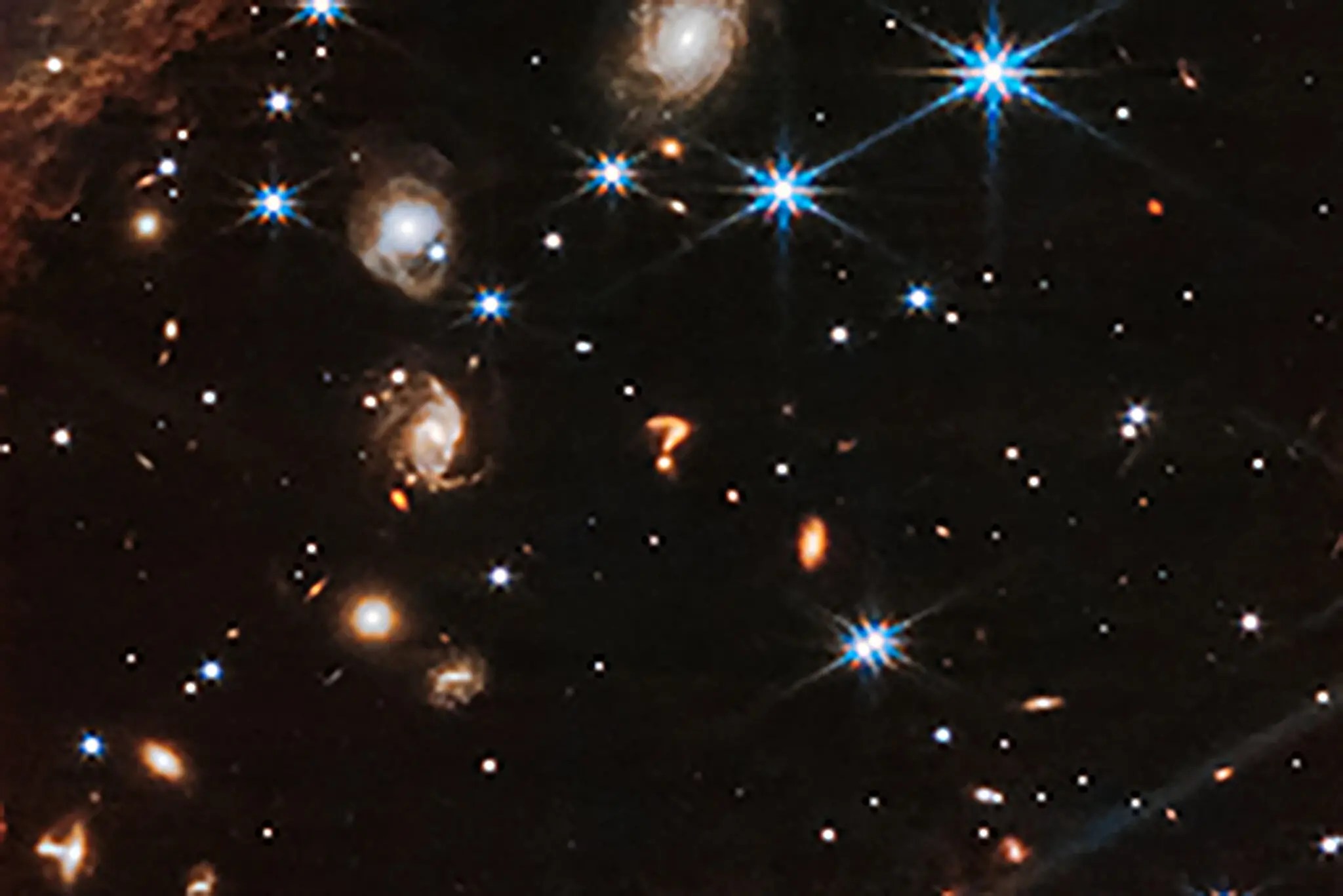
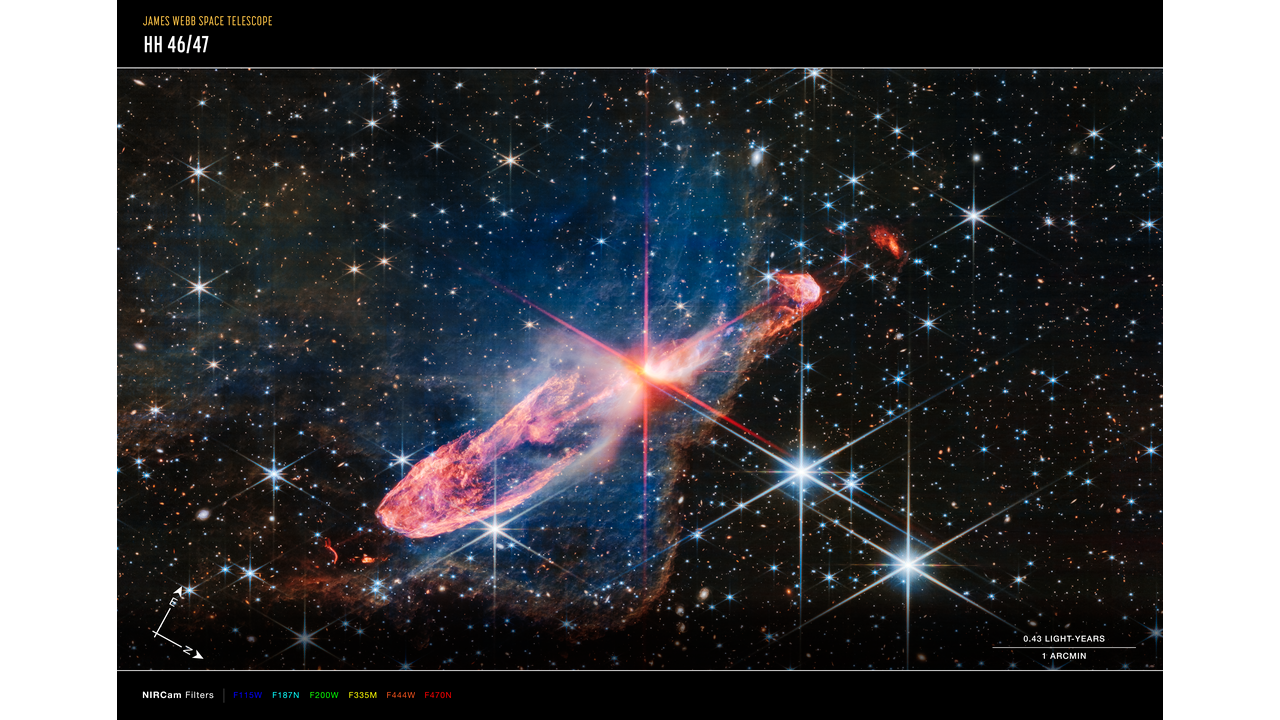
Photo credit: NASA, via Wikimedia Commons

Since it’s been rather gloomy around here this December, the thought of more sunshine cheers me.  Living in the Lehigh Valley, of course, my thoughts turn toward the Bethlehem star.  It’s such a crucial element to the Christmas story that we’d hardly know what to do without it.  Stars are our guides through the dark.  Winter nights are often clear and are opportunities to see the nighttime stars, even as we light up our artificial ones here below.  Light encourages light.  In a laboratory somewhere scientists are busy making stars.  I have to believe it’s satisfying work.  Perhaps the kind of job you’re eager to get back to the day after Christmas.  Although fusion would be used for power in general, one of the functions would surely be the giving of light.  As we move toward next week’s solstice and light our Yule logs, encouraging light to return, women and men in white smocks are designing and using complex equipment to help it on its way.


Earliest Sunset

Welcome to the day of the earliest sunset of the year.  “But how can that be?”you may ask, “since the winter solstice is many days away?” I’m no wizard when it comes to numbers or math, but I do know tomorrow’s sunset will be a minute later than today’s.  It’s the other end of the day, however, that continues to increase darkness.  Sunrise will continue to creep later and later until on January 16 it will be at its latest.  Mornings will then become longer, very, very slowly.  Combined, the shortest day will be on the 21st, almost two weeks from now.  Then sunlight will begin its slow crawl back to majority.  And so the seasons eternally negotiate on a planet that sometimes seems to spin too fast.

Those awake early, sensitive to sunrise, need to wait a bit longer than those wanting longer evenings.  There’s no taking without reciprocity here.  For those in the northern half of the northern hemisphere, winter has begun its settling in process.  Morning frost on the rooftops augurs the coming of snow.  The almost preternatural stillness of a cloudy late afternoon anticipates what’s to come.  Those of all religions, or of none at all, alike await a glimmer of lengthening days in this season of long nights.  It pays to become comfortable with the darkness in the meantime.  Dark need not equate to evil.  It invites rest and renewal.  Perhaps our culture that valorizes action and movements blurred with speed might learn from the hours of diminished light.

Walking into an early morning room with a light switch on a far wall is an act of faith.  If done before any artificial lights are engaged, it’s always surprising how much light crowds in on the dark.  The luminescent clock.  The power strip on button.  The ever-watchful router.  Darkness is seldom absolute, as much as the tenebrous circumstances might suggest such extremes.  Light and darkness need each other to find any kind of definition at all.  Starting tomorrow, there will be incrementally longer moments of day stretching out into night.  Mornings will grow more reluctant to release their light for another month or so.  In the midst of this we snuggle down into the darkness and learn from it.  Learn to slow down.  Learn to listen instead of always looking.  Learn to breathe slowly and accept that the darkness can comfort.  The solstice is coming, in good time.  Until it arrives, be in the twilight of the moment and trust it.


Dangers of Bookmarks

So you’re a busy person and you don’t always have time to act on something immediately.  Or you have to wait until the next billing cycle to afford something.  Daily life comes at you like a Russian missile, so you need to leave reminders around so that you don’t forget.  For me, those reminders often take the form of tabs.  On my browser I leave at least a dozen tabs open to remind me of things—I’ve got to get those cartons ready for mailing to recycle; thanks for reminding me.  I actually look forward to being able to click a tab closed because that means I accomplished something.  There are so many things to do and time is so rare.  Then the inevitable happened.

I was leading a Zoom meeting and I had to keep track of attendance.  Since I was leading I didn’t want to stop in the middle and write a bunch of names down, so I took a screenshot.  My poor laptop got confused and kept the screenshot on top.  Since the screen shot showed all the open windows (it’s not just the browser that’s open, but all the writing projects in the two different programs I use as well, all in various stages of completion), I couldn’t tell how to click out of the screenshot.  I couldn’t see the actual Zoom meeting or if someone was raising her or his hand.  I tried to keep the discussion going while trying to get Zoom back to the front.  I began clicking any window shut that I could.  Finally Zoom reemerged.

After the meeting I had to examine the carnage.  My browser had been closed and when I reopened it, the option to restore all closed tabs from the last session was grayed out.  I would have to rebuild my tabs from memory.  It was because of my overwrought memory that I’d kept those tabs open in the first place!  Before going corporate, when I could take my time and pay attention, I had a very good memory for things like this.  (As a professor I had time to act on things during the day instead of constantly thinking “I’ve got to get back to work.”)  Now too much is happening all the time.  I’m having Zoom meetings after work when I normally get my day to day business done.  So I’ve added a new task to all the others—trying to reconstruct my lost tabs.  Yes, it’s a classic “first world problem.”  At least that’s what I think it’s called—let me open a new tab and check.

A different kind of bookmark

Complications

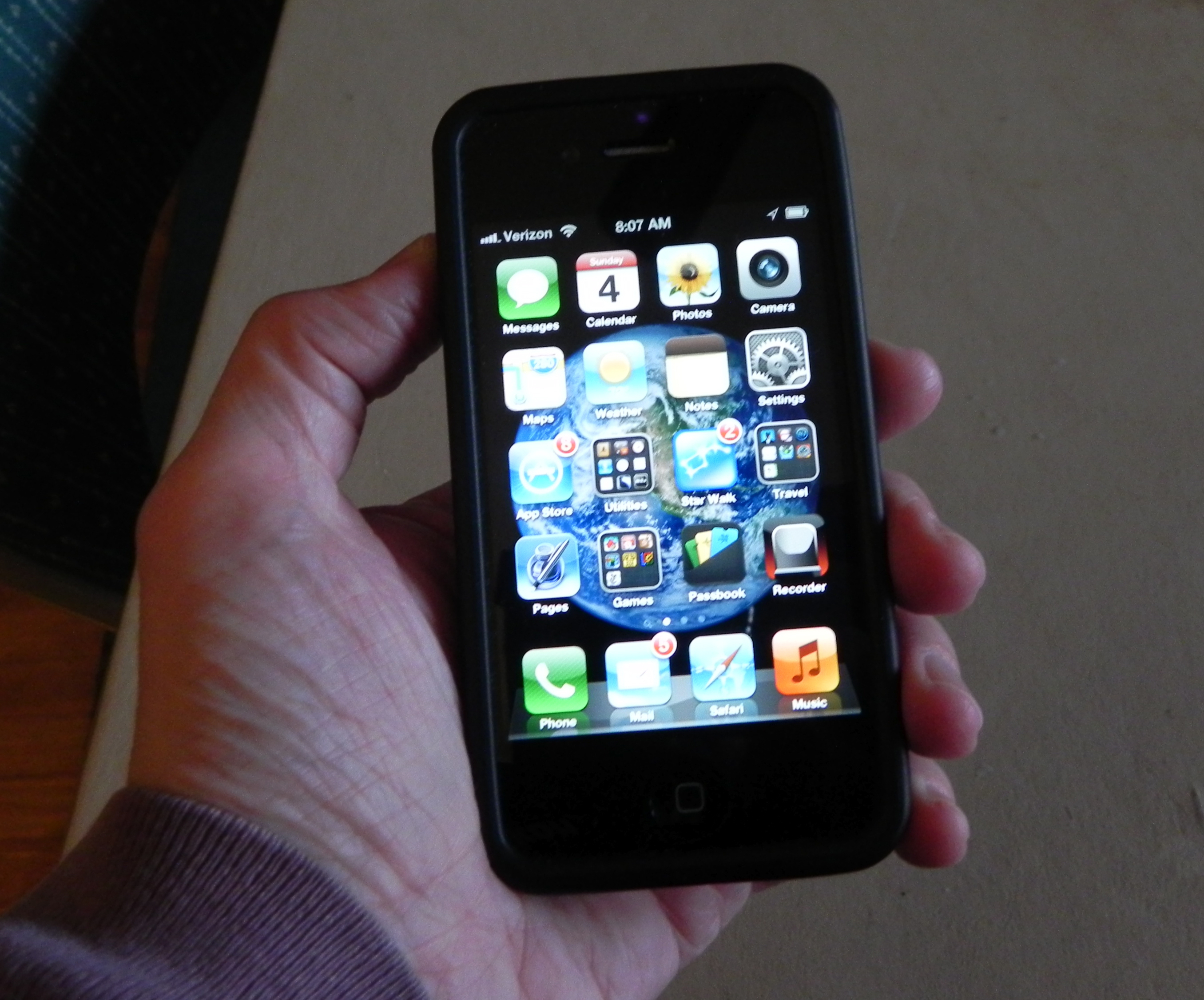
That string of ten digits becomes your personal identity.  It’s conveyed by a pocket-sized device that’s so expensive you have to pay for it in installments.  And it’s not a one-time expense.  For a monthly fee that would’ve sent our parents calling on AT&T we carry a compact computer with us at all times and call it a phone because it responds to those ten digits.  The trend is to replace them every two or three years as more and more features become available, many of which, one suspects, are never used.  So, with a notice from our carrier that the card in one of our devices would no longer work at the end of this year, having reached the end of its life, we found ourselves in one of the countless phone stores around the country.

I mused as we waited—buying a replacement phone took two hours out of a Saturday, and that didn’t count driving time—at how complicated life has become.  One of our cars, purchased in 2003, also needs replacing.  My wife and I have to coordinate a day off work to buy one.  It pretty much took a whole day the last time we bought a car.  It’s complicated.  Credit checks, titles, registration, insurance.  And oh so much money.  You can’t, however, live without a car.  Not if you don’t reside in a major city.  You need to get to the grocery store, to doctor’s appointments, the hardware store—and the telephone store.  Many of these places exist in their own carefully zoned commercial habitats and since they have the necessities of life, you need to go to them.  Meanwhile, the internet offers to send them to you.

Ads now tell me you can buy your car online and some smiling stranger will drop it off right at your house.  It’s just that easy!  What they don’t say is all the work that must, I’m assuming, be done in advance.  The insurance, the financing, title transfer, trade in, let alone nothing of the test drive.  Now you have to figure all that out in advance.  Let’s face it—nothing is easy.  If you’re reading this you’re doing it on a highly sophisticated device that may have cost you quite a bit of money.  If it’s a phone it bears your personal ten digits that can be used to reach you at all times and in all places and that, in fact, knows where you are at all times.  Even if you’re out for a virtual test drive.