Jewish Annotated

A project with which I have some small acquaintance is the second edition of the Jewish Annotated New Testament (some of you may be noticing an annotated theme lately). The idea behind it is deceptively simple: most of the writers of the New Testament were Jews. What do modern day Jewish scholars see in the text? This annotated Bible gets adopted into both Christian and Jewish courses, and many seminaries have an interest in learning what the writers might have been thinking as they were composing “the other testament.” So far, so good. I was looking at the Amazon page for the book the other day, specifically for the Kindle edition. As usual, you can’t please everyone, and some of the negative comments had to do with functionality. Then one said simply, “There is no such thing as a Jewish New Testament.”

I’m not so naive that I don’t know what trolls are, but I got to thinking about this comment. It didn’t come from a “certified buyer,” so it could be an opinion piece. The mononymed reviewer might be Jewish, Christian, or neither. From a Jewish perspective s/he might mean: Jews don’t accept the New Testament as scripture, so what else is there to talk about? From a Christian perspective the point might be: this is a Christian document so it doesn’t matter what Jews think about it. Either way there’s a call for some exegesis here. Both perspectives can be argued against. Jews have a very real interest in what Christians say about them. And, like it or not, the first Christians, and even Jesus himself, fell squarely within Judaism.

Christianity has become a religion of privilege. That happens when you’re the biggest religious body in the world. Christians get a bit testy when Islam begins encroaching on its numbers. There’s still some hard feelings about the Muslim expansion of the seventh and eighth centuries, too. Being an imperial religion will do that to you. Thoughtful Christ-followers, however, have begun to look back and wonder how this whole thing got started in the first place. Without Jews there would’ve been no Christians. Nobody’s claiming the New Testament is Jewish scripture. Neither side wants that. It’s simply a recognition that we might have something to learn from each other. And that’s not a bad idea. In fact, if we were willing to listen a bit more than talk, who knows how much true understanding might come to pass? The Jewish Annotated New Testament is one possible place to start.


Medical Missionary

So it was this routine medical screening. The scary-looking machine had an open window that said “Laser aperture: do not stare at beam.” Someone had taped a Yankees emblem on the superstructure as well, and I wondered if that caused anybody additional anxiety. Mortality doesn’t scare me, but medical tests bother me a lot. I was glad to get outside, even if it was cold and icy. There’s quite a few medical facilities in our town, so I had walked to this one. On the way home, watching out for ice on the sidewalk, I passed a bus stop. A woman said “Excuse me, but could you spare a dollar or two?” I’d just come from a medical office, I was wearing sweatpants (which I never do unless I’m jogging) and I had no pockets. “Sorry,” I said, “I just came from the doctor, I don’t have anything on me.”

“I’m a missionary,” she said. Without giving me a chance to get away in the chilly air she began to preach a sermon just for me. It was after morning rush hour and nobody else was around. I wondered when her bus would come. I nodded politely and agreed, and took two steps away. Still she continued. After a few minutes I wondered how long this would go on. I’d already told her I agreed with her. She was insistent that Jesus would give me anything I wanted if I confessed my sins every day. “Money, cars, houses…” I had to wonder why she was taking the bus, then. Besides, all I wanted was to get home, and she was preventing that from happening.

Finally I had to turn and leave her mid-homily. I try never to be rude to religious folks. They’re only doing what they’ve been told to do by others. I did wonder what it was about my appearance that didn’t make her believe me. It had been a while since I’d had a haircut. Was it the beard? The sweatpants? The fact I was wearing a black jacket? Ice was everywhere on the sidewalk. This neighborhood is middle aged—sagging a little, with drainage issues. Mortality doesn’t scare me, but sometimes being accosted by religion when you just want to get indoors on a winter’s day, you think even a begging missionary might understand that. I thought back to the scary machine with its little warning sign. Some people are tempted to stare too long into the light. It can affect the way you see. Indeed, if you let your gaze linger, you might just possibly even go blind.

Image credit: Torsten Henning, Wikimedia Commons


Down the Road

First of all, thank you to my regular readers. I’ve been making daily posts on this blog since July 2009—nearly nine years of illustrated commentary. It seems, however, that I’ve reached my limit. My storage limit, that is, on Word Press. As a result I’m going to be upgrading my account. Now, I’m enough of a Luddite to be uncertain of how this might impact any auto-updates (I flatter myself to think there are some) or links to this blog. I’m planning on continuing Sects and Violence in the Ancient World, but it will be but one page on a website that will offer the opportunity for me to go into more detail about my books. I don’t know how it will look yet, but it shouldn’t be disappearing from cyberspace.

Timing, as they say, is everything. It’s never been my strong suit, however. My current book still has no final title, so it’s a little difficult to promote it properly. Oh, it’s finished, and in the hands of the publishers, and although I can give it its own page, I can’t really title it yet. Perhaps in the height of hubris, the new layout will have pages for my previous two books, A Reassessment of Asherah and Weathering the Psalms. These were both academic titles with very limited sales, but they represent a significant portion of my life and I’d rather not have them completely forgotten. My latest book is for a more popular readership, but I don’t have the platform to interest agents (not for lack of trying), so I’m incorporating it into a website that will allow for its self-serving promotion. So embarrassing. You can imagine how red my face must be.

By the way, there’s another book about half-written. (Actually, there are several, but this one looks like it might actually appear.) A new series has been announced—I’ll write about it once I learn if my proposal has been accepted—that follows my own aesthetic closely. In conversation with the series editors, I’ve put together a proposed book based on my current work. If it happens, a new page will pop up on this future website I’m envisioning. Since I’m no Luddite, I can see possibilities for these pages. The blog will continue with its daily babbling. I’ve been doing this so long I wouldn’t know any other way to start my day. Combined with the hubris of those who spend too much time in supernatural headspace, this could be interesting. If you’re search brings you to what looks like the wrong page, please persist. Sects and Violence will be only a click away.


Who’s Hungry?

I flatter myself to think that some people enjoy my daily musings, although they’re sometimes grim. Religion often is. One curious example of this is the “Hell-Mouth.” Some time back a friend sent me a link to a British Library blog post “Highway to Hell.” The story is about illustrated medieval manuscripts depicting the Hell-Mouth—a monster with wide, gaping jaws and a gob crammed full of human souls bound for eternal torment. Not a pretty picture. The BL post reasonably suggests that the image originates in early Anglo-Saxon literature. We know the Teutonic penchant for the gothic, so all is fine and good. In fact, however, the image is far older than that.

In sorely neglected and almost forgotten Ugarit there is a fascinating mythological text. Known to ancient northwest semitic nerds as KTU 1.23, the text is strange even by Canaanite standards. El, the chief god whose name translates as, well, “god,” seduces two young goddesses (presumably). The young ladies give birth to monsters—devourers with one lip reaching to the heavens and the other to the underworld. Every living thing is swept in. What is this if not a Hell-Mouth? Indeed, if I might indulge in my past passion for Ras Shamra just a touch more, the deity Mot (whose name translates to “Death”) is portrayed with an equally voracious appetite. Everything gets gobbled up, even Baal.

These lurid images of all-consuming mouths, however, aren’t direct ancestors to the Hell-Mouth. Although some of the ideas from Ugarit survived in the culture that would eventually emerge as the Israelites, the city itself was destroyed for the last time before Moses picked up his chisel. The people of Ugarit were long gone before he licked his thumb and applied his quill-pen to Genesis. Ideas, however, may be the closest to eternity that humans can come. The Bible doesn’t describe any Hell-Mouths as such, but Revelation can come close. Ras Shamra was only rediscovered in the 1920s, so no Anglo-Saxon had access to its vivid images of the Hell-Mouth that existed even before Hell itself became a thing. Humans are endlessly inventive. Ideas go underground for centuries at a time only to reemerge when the moment’s propitious. The Middle Ages with their Black Deaths and highly stratified society and burgeoning witch hunts and inquisitions were such a time. Looking over the current landscape I have to wonder if the recent revival of the Hell-Mouth might not have something to do with the time in which it has gained renewed interest as well. Some appetites will never be satisfied.


Just As I Was

It was kind of a game. A game to teach us about important people, living or dead. The fact that we were playing it in high school history class, taught by one of my favorite teachers, made it even better. Everyone wrote a name on an index card—a person in the news or somebody from American history in the past. A student sat facing the class while the teacher selected a card and held it over the student’s head, so we could all read who it was, all except the chosen one. Then s/he would ask questions to guess whose name was written. I remember very well when the teacher picked up my card and read it. He said “that’s really a good choice!” The name led to a bit of joshing. “Is he alive or dead?” the student asked. “How can you tell?” joked our teacher. It was the one name the selected student couldn’t pin down, no matter how many questions she asked.

It’s fair to say that Billy Graham had a profound influence in my life. As a curious—and very frightened—child, whenever his crusades were on television I would watch, transfixed. I responded to his altar calls at home. Multiple times. My emotions were overwrought and I’d awake the next day feeling redeemed, for a while. I had no real mentors in my Fundamentalism. Ministers preached, but they didn’t explain things. Not to children (what was Sunday School for, after all?). All I knew was that when the rhetoric reached Hell, and the possibility I would die that very night, repentance seemed like the only logical option. The reality of the choice—a black and white one, no less—could not be denied. Either you were or you weren’t.

Source: Beinecke Rare Book & Manuscript Library, Yale University via Wikimedia Commons

As my point of view eventually shifted around to that of my high school teacher—I was in college at the time—I began to realize that Graham’s version of Christianity wasn’t as monolithic as it claimed to be. Once you experience other people’s experience of religion, if you’re willing to listen to them, it’s pretty hard to hold up the blackness and whiteness of any one perspective. Over the years Graham tainted his pristine image in my eyes by his political choices. His son now stands as one of Trump’s biggest supporters. Now that Billy Graham has gone to his reward, I do hope that the Almighty doesn’t hold his mistakes against him. He had no way of knowing that his sermons were terrorizing a little boy in western Pennsylvania into a career track that would never pan out. Largely because other followers of Graham’s so decided. It’s kind of like a game.


Ashy Valentines Day

It’s been 73 years since it’s happened. Happy Valentines Day! And depressing Ash Wednesday. This is more of a popular culture conundrum than a sacerdotal one. I noticed in my many years at Nashotah House that Saint Valentine doesn’t make the liturgical calendar. This struck me as odd, but perhaps it shouldn’t have. The church has always had a difficult time with love. At least when it starts to get physical. Even if Valentine was a saint—and nobody knows for sure which Valentine it was—he surely didn’t become beatified because of his amorous inclinations. Nothing helps to put you out of the mood like being told “You are dust, and to dust you shall return.”

As a society we’ve been living in an Ash Wednesday that has been prolonged for over a year now. A government of St. Narcissus, for the only love there is love of self. Yet when I thumb through the liturgical calendar Valentine’s still not there. Ironically evangelicals—the name now belongs to those who support Trump—dismiss love as having anything to do with Christianity. This isn’t about love. It’s about showing hatred to the poor and stranger, the kicking out of those in need. It’s about military parades and “Sieg Heils” and law makers who vote themselves even more power with our tax dollars to fund their insidious schemes. There’s no need to gerrymander around the church—it’s on your side. Is it Ash Wednesday or is it Valentine’s Day? Surely it can’t be both.

Love is valued only in so far as it can be commodified. If you can get people to spend money on cards and chocolates and condoms then you’ve got a holiday worth celebrating. Otherwise you might as well join old Job sitting on his ash heap. The last time these holidays coincided the world was at war. The President had set up safety nets to catch those who were the victims of the greed that led to the Great Depression that is now all but forgotten. Nazis were a bad thing then. Now all we have to do is blubber about “fake news” and declare the truth a lie. Christians prefer Ash Wednesday to Valentine’s Day anyway. I admit to feeling a bit conflicted about this. Patriots and lovers used to be compatible concepts. We’ve been told that America is being made great again, but they called that Depression great too. From where I sit it looks an awful lot like Ash Wednesday to me.


Hey Jude

Reading Jude the Obscure was, at times, like reading my own biography. Authors strive for that effect, to be sure, but Thomas Hardy hits close to home on this one. I don’t mean in the aspect of marrying the wrong woman and losing his true love, but rather in the sense of what Jude was meant to and couldn’t be. For any readers behind on their Hardy, Jude Fawley was an orphan who grew up with scholarly abilities but no connections to university folk. Teaching himself Greek and buying what books he can afford, he eventually moves to Christminster (Hardy’s version of Oxford) in order to begin his studies at the university there. His application is summarily rejected because he is a working-class nobody who would be happier not overreaching himself. He then decides to try to become a parson only to find that path blocked to him as well.

Okay, so that’s a bit brief for a 400-page novel, but you get the gist of it. Hardy, according to the introduction, added the university theme later since the novel’s main focus is on the hypocrisy of the church regarding marriage. Both Jude and his true love (and cousin) Sue end up marrying other people who make them miserable. They each separate and then live together and raise children until tragedy causes Sue to have a religious conversion and return to her first husband. Jude dies in obscurity, as the title warns. Hardy was famous for his anti-church sentiments and Jude the Obscure was one of his most criticized works. The university theme, however, was the part I just couldn’t let go.

Being from the working class you may not have any idea how higher education functions. Even with raw talent and ambition, there are so few places available that you can easily find yourself in the rejected pile. Jude fatefully moves back to Christminster, hoping on some deep level that he’ll be accepted. That never happens although his fellow stone-cutters know that he is just as learned as the professors who regularly parade through town. The author didn’t intend to write cheerful stories. The friend who first suggested I read Hardy’s work knew about that tendency. The world is a place of comfort for some and struggle for others. Like Jude, those on the outside just can’t see what’s wrong with their own earnest application to be counted among the educated. Like any country club, however, the real point of it all is to learn how to game the system. Like taking a sad song and making it, well, better.


Apologizing for Whatever

Maybe you’ve felt it too. The insecurity of liking something other people don’t. Having grown up an Evangelical, I had to try to explain myself at multiple points for liking scary stuff. I love Halloween. I spent my young Saturday afternoons watching monster movies on our black-and-white television. After losing a long-term job at a decidedly gothic seminary, I began consoling myself with horror films. I don’t know why. I also don’t know why other people shun those of us with this particular habit. It’s not like I’m going to make you sit down and watch them with me if you don’t want to. You don’t even need to buy my book, and if you do (thank you!) you don’t have to read it.

One of the issues I’ve often grappled with is why “Christians” dislike horror. Reading the accounts of the martyrs is way worse than almost anything I’ve seen on screen. Revelation, let’s face it, is a horror show of Schadenfreude and ultra-violence. The Calvinistic idea that God would create the vast majority of people to burn in an eternal Hell of fire for reasons best kept to himself (yup, he’s a guy) is hardly charitable. So why do Christians say you shouldn’t watch horror? One of the observations from this lowbrow viewer is that the message behind horror is often good. Moral. Ethical even. We have trouble getting around the form of the message to see its substance.

I seldom talk about horror movies. Maybe that’s why I write about them so much. But the fear of judgment remains strong, even with maturity. The lurking Evangelical fear is that watching horror will entice the young to become interested in evil. I think it’s fair to say that all Christians are somewhat fascinated by evil—where does it come from? Why doesn’t God stop it? Horror films seldom glorify the monster. The protagonists, often flawed, fight evil and sometimes succeed. Do I really need to justify this interest at all? It’s no exaggeration to say that, although no longer an Evangelical I still feel the weight of both their stares and those of others who can’t understand why a nice guy watches such unbecoming things. My book doesn’t answer those kinds of questions, but it may contain implicit answers within. Of course, you’ll only know that if you read it. Not that I’m asking you to do so—it doesn’t even have a title yet.


A Concept

Pardon me for being perplexed in public. You see, things aren’t as clear cut as they used to be. In the world in which I grew up Evangelicalism was good and Satanism was bad. Very bad. It still has the ability to scare people straight. A recent NBC story my wife sent me titled “Satanic Temple challenges Missouri’s abortion law on religious grounds,” by Corky Siemaszko, shows how the GOP has turned the tables on this equation. The Christian Right has utterly aligned itself with the pro-life camp. Most people would agree, I suspect, that abortion shouldn’t be the first choice of birth control options, but life comes with many unpredictable circumstances. There are times abortion is the most humane option and the burden falls almost entirely upon women. It’s not an issue on which men are competent to decide.

The evangelical posturing on the issue—which has, by the way, changed in recent years—has placed the weight fully on women. A rutting male, like a bull elephant in musth, can hardly be responsible, so the thinking goes. Or, to put it more politely, boys will be boys. Women suffer on the tusks of this tautology; it’s no wonder Satan has horns. Only women conceive, so men can make the laws and feel empowered by a male god who, you know, understands where they’re coming from. Missouri Satanists are striking back. The problem is the state requires women to be presented with indoctrination that says life begins at conception before electing for an abortion. Does life begin at conception? The Bible says “no.”

Biblical science was primitive. Ancients understood there was a connection between sex and pregnancy, but infant mortality rates ran very high. Life, in the biblical view, started at first breath. Spirit, breath—the very word for “soul” in the Bible—was the marker of life’s origin. The Bible may not advocate abortion, but in a world where few children made it past five, there was a shortage of surviving progeny. So it turns out that in Missouri Satanists are actually advocating the biblical view while the Evangelicals are violating the constitution by misreading it. Life begins at conception isn’t a scientific premise, it’s a theological one. A theological one on which Christians disagree. And Satanists. In their efforts to keep men on top of women, the Christian Right has no support from the Good Book on the matter of conception. Of course, why read the Bible when you can get what you want by quoting only your favorite verses? After all, God, they say, is a “he.”


Good News Shipping

“And all the ships at sea,” was the closing of Walter Winchell’s radio broadcast introduction. The phrase has a certain poignancy about it—a cross between Melville and Edmund Fitzgerald. The idea of being isolated at sea is foreign to most people, but it is truly as far from others as you can get on this planet. In ancient times the sea was considered evil. It was well-nigh unsurvivable and chaos monsters dwelt in its depths. In the book of Revelation, in God’s kingdom “the sea shall be no more.” But the economic fact is, it’s still cheaper to ship by sea than to fly things from here to there. Amazon seems to have made us forget just how complex delivery is. I was forcefully reminded of this the other day when I received an email saying that the Bibles were at sea. Literally. They’re on a boat in the middle of the Pacific, along with who knows what else.

This is only a parable

The vastness of the ocean makes humans painfully aware of our smallness. As does the Bible. I remember thinking, as a child, that those offering printed salvation did so from the goodness of their hearts. That may be part of the story, for sure, but Bibles are big business. Not as big as they used to be, but still not inconsequential. This was captured well by the character of Big Dan Teague in O Brother, Where Art Thou? “It all about the money, boys!” he shouts as he robs Everett and Delmar. Yes, that evangelist giving away Bibles may have your soul in mind, but your pocketbook too. Like those Bibles snuggled against crates of condoms and smart phones, it’s just business. You’ve got to keep the bottom line in mind.

Bibles can be a lucrative business. The Bible is, however, a large book—expensive to print and bind because it requires special paper thin enough to hold all that text. Such specialized work done domestically would drive the price of the Good Book out of comfortable profit margins. So the word of God is printed overseas and sent across the ocean by boat. There’s a parable deep within this hidden life of Scripture. The romance of the high seas—being completely isolated from land and its comforts. “Here be dragons,” the Hunt-Lenox Globe famously proclaimed, and that’s a parable too. That Bible in your hands comes with considerable cost. Even in a world where drones for personal delivery are not far off, the sea still surrounds us.


Breakfast of Champions

In my efforts to become vegan, I’m finding dairy to be the hardest element to replace. I’m reminded of this every morning since the day begins with cereal. Most people don’t realize that cereal for breakfast is largely of religious motivation. The original Kelloggs were Seventh-Day Adventists, and therefore vegetarian. To promote both health and animal-free diets, they gave a big push to the idea the day should start with cereal. It’s a touch dry, however, and water on your flakes leads directly to paste. So I’ve been experimenting with alternate milks. Often I use soy milk, but it has to be the right brand. Some of the offerings on the market have that oily aftertaste characteristic of soy beans. Not sure of the legality of hemp milk these days, I recently tried oat. Oat milk should taste like oats, i.e., it shouldn’t have much taste at all.

The moral crisis came as I poured it into my oatmeal. You see, there’s a biblical injunction to cooking a calf in its mother’s milk. This is the reason meat and dairy can’t be mixed in kosher settings. Scholars debate the basic concept behind this regulation. Like eating a bird and its eggs, some suggest, this depletes nature and should be avoided. At least one generation should have a chance to avoid exploitation. At least until it grows up. But what of the oats and their oat milk? Have I gone too far? What hidden principle am I violating, however unintentional, here? This is the problem with any religious thinking—taken to extremes it begins to break down. Some of the earliest gods, after all, were agricultural deities.

Agribusiness is huge. People gotta eat, right? And it is one of the most massive environmental hazards humans have ever concocted. Industrial farming is the largest producer of methane and the largest user of potable water, by far. Keeping animals for our food is literally destroying our planet. Religions, interestingly, quite often concern themselves with eating habits. It’s strange how most of them in this country are silent regarding what is obviously an ethical issue. After all, we adapted to the cereal for breakfast lifestyle because of religious conviction. It’s difficult to change eating habits. That’s my current struggle. I could pour the oat milk over corn flakes, I suppose. But then again, the Bible forbids mixing fabrics from different plants. What’s an aspiring vegan to do?


Christian Sister

Difficult to believe as it may be, some of the biggest superstars in America’s history have been clergy. The case has been firmly made that George Whitefield, the evangelist, was the first to hold “rock star” status in these United States. He drew stadium-sized crowds before there were stadiums and was, perhaps, the most famous man in the country. Fast forward a number of years and we find a name that may not ring so many bells today. Aimee Semple McPherson, however, was more famous than Hollywood actors and most political figures of her day. The founder of the Foursquare Gospel church was, in the roaring ‘20s, one of the most recognizable names in America. It may not count for much, but even in rural Pennsylvania we learned about her in American History class in high school four decades after her time.

I read quite a lot about American religion, and Aimee Semple McPherson frequently comes up. I knew little about her, however, until reading Daniel Mark Epstein’s Sister Aimee: The Life of Aimee Semple McPherson. While it has its faults as a biography, it does convey a fair image of who this fascinating woman was. An evangelist when few women preachers existed, she was creative, crowd pleasing, and remarkably broad-minded for a Fundamentalist. Her personal life was full of drama—three marriages and at least one kidnapping episode—wealth, and want. She trusted Jesus implicitly and often suffered alone in silence. Secretly she befriended Charlie Chaplin, a man drawn to her stage presence but not her religion. It’s difficult not to like this woman who insisted on doing things her own way, and who ended up alienating her family (apart from her son) by doing so.

There can be no doubt that Aimee Semple McPherson believed what she said she did. Although she didn’t approve of theater she brought theatrics into church via her famous “illustrated sermons.” She pioneered radio evangelism, which subsequently grew into a hackneyed soapbox for lesser thinkers. She was a faith healer, a world traveler, and a woman who genuinely cared for the poor. Epstein’s book tells the story with heart and a touch of hagiography, but it is an entryway into one of the lives that shaped Jazz Age America, even if it is now largely forgotten behind flappers and Fitzgerald. It’s hard to believe that some of the most famous people in American history were religious leaders of their time, especially when we see what’s on offer in that arena today.


Fool’s Paradise

What with all the Bible-trumping going on these days among the desiccated religions right, I thought it might be helpful to turn back to the Good Book itself. Since we have a self-proclaimed stable genius in house there should be nothing to be concerned about. What, me worry? Right, Alfred? One part of the Bible frequently cited by fundies and others who want to appear chic is the “Wisdom literature.” Although the category itself has come under scrutiny these days it’s still safe to say that Job, Proverbs, and Ecclesiastes have quite a bit in common with each other. Proverbs is a repository of pithy aphorisms. Indeed, it can sound downright modern in many respects (but hopelessly patriarchal and chauvinistic in others, unfortunately). One of the things Proverbs does is condemn fools. The sages of antiquity had no time for stupidity. Remember, we’ve got a stable genius—don’t worry.

Like Laplanders and their many words for “snow,” the book of Proverbs uses several terms for fools. There is, for instance, the innocent fool. This is the person who simply doesn’t know any better. Often it’s because of inexperience. This kind of fool can learn from failures and may go on to better things. Far more insidious is the willful fool. This is the person proud of his or her ignorance. Proverbs goes beyond calling such a thing unfortunate—this kind of foolishness is actually a sin. Not only is the arrogant fool culpable, they will be judged by God for their love of stupidity. As a nuclear super-power it’s a good thing we have a stable genius with the access codes. Otherwise those who thump the Bible for Trump might have a bona fide sin on their hands.

Image credit: Pamela Coleman Smith, Wikimedia Commons

The only kind of fool that’s tolerable in the world of Proverbs is the one that’s able and willing to learn. This means, in the first instance, being humble. Refusing to admit mistakes, forever posturing and preening, this is a certain recipe for incurring divine wrath in the biblical taxonomy of fools. According to biblical wisdom literature, such people get what they deserve. The modern evangelical often has little time for such books. Aside from a misogynistic slur or two, there’s nothing worth quoting from Proverbs that you can’t find in Benjamin Franklin or even in ancient Egyptian records. When you stop to think, however, that the Bible’s said to be inerrant, you’ve must take Proverbs and what it says about fools into account. But then again, what Fundamentalist ever really reads the Bible?


Augustine’s Secret Sin

I’m curious: what do you think of Augustine? Augustine of Hippo was an odd blend of saint and sinner. I don’t mean “saint” in the sense of being so designated by the Roman Catholic Church, but in the sense of having reputable and progressive ideas. For example, Augustine argued that science, such as it existed in his day, had to be taken into account when understanding Christianity. If the Bible’s account of creation didn’t match what we knew of the world, then literalism had to go—that kind of thing. This was quite liberal for someone in the fourth-to-fifth centuries. He believed in reason, to an extent. The sinner side of the equation goes beyond his Manichean days, however. The sins I’m referring to are his dangerous and long-lasting theological assumptions that’ve helped to hold back civilization throughout history.

It was Augustine, for example, who gave us the idea of original sin being involved in sexual reproduction. The church has always been cagey on why we should reproduce when the second coming is right around the corner, but Augustine declared that from our very conception (which he couldn’t understand scientifically) we were tainted with sin. But that’s not the particular sin to which I’m referring. Augustine also spread the persistent idea that curiosity itself was a sin. Christianity, in his view, was a “need to know” religion, and curiosity about the natural world could lead to uncomfortable answers. He held this in tension with his belief that we should accept what science teaches, but there were many questions, he decided, we simply shouldn’t ask.

Religions have often come to this crux. Science has a strong explanatory track record. Religion is frequently based on old texts, written in an age when science was but an infant. As the power of rationality grew, the role of miracles shrank. Over time the proof of theological structures began to crumble. And since life was all about correct theology, those edifices had to be shored up against the onslaughts of reason. If this sounds hopelessly outdated, I’ll have to confess that many of my students at Nashotah House believed reason was tainted by original sin. Augustine had the answers they believed; somehow rationality had stopped with him. Human curiosity, Augustine felt, was a sin. All questions should’ve ended with his arguments. It’s this kind of theological bravado that gets us into the mess we find ourselves in today. Voting blocs that never question what their religious leader tells them. Never curious enough to ask “Why?” Augustine was a brilliant man, in many respects. He was also a sinner of the highest degree.


Devil of the Time

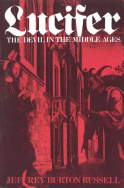
There can be little doubt that evil prospers. We’ve suffered through a year of an evil administration and we’ve seen the government increase the suffering of its own people in deference to the wealthy. And ours is only a mild case of evil. Jeffrey Burton Russell, over the course of some years, wrote three sequential books about evil. The first, The Devil, I reviewed last year. Having just finished the second, Satan: The Early Christian Tradition, it has to be said that the concept definitely evolves. The period between the New Testament and the fifth century was a rich one for diabolism. The writers of this period became increasingly theological in their efforts to make sense of what is obviously an unjust situation created by a theologically good God. These were inventive writers, if somehow less than convincing.

Russell is a careful explainer. He summarizes the views of the “church fathers,” pointing out where their logic fails. This isn’t some liberal trying to dis the Devil, however. Russell acknowledges that he believes a Devil of some kind must exist. Reason, however, must also be applied. It’s difficult to believe that people in the early Christian centuries were willing to take such leaps of logic. Of course, they didn’t have many options for opting out. God was the great explanation for so much of their world. Fitting an all-powerful deity into logic when there’s abundant suffering in the world requires a certain flair for casuistry. No matter how the equations work out, an all-powerful God can’t be all good, not in this universe. Speculation about the Devil, or Satan, ran logic through its courses. Who was this being, and how did he get to be the way he is?

The theologians argued without any glint of irony. This was serious stuff. The Bible, famously, has little to say on the matter. Early thinkers such as Tertullian, Origen, and Augustine had volumes to say on the subject. None of them came up with a workable solution. Logic and the Devil just don’t fit. Theology is always a struggle since it deals with intangibles. Laws of logic sometimes simply don’t apply. If the feeble human imagination can conjure a good world without needless suffering, one has to wonder, why can’t an almighty deity do the same? Is this a god of limited imagination or, as the classic theological chestnut puts it, one who sees more than humans do? You can ask, but you won’t receive an answer. The Devil, it seems, really is in the details.