A Mighty Fortress

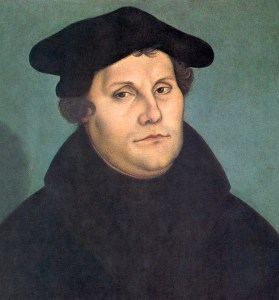
I have to admit to having not seen the Lego Movie. As a kid, I grew up without Legos. We were a family of modest means, so Lincoln Logs were more our style. When I first came to see Legos, they appeared restrictive to me with their pixel-like determination. Of course, Legos have come a long way since then. My wife sent me the story in Newsweek about the Martin Luther figure (not, I hear, featured in the movie) that surprised Playmobil, the parent company, by becoming their fastest selling figure ever. I suspect that the company put the figure out just a year before the five-century mark of the 95 theses that essentially created Protestantism, to catch a little of the interest that anniversaries always bring. Although I have no data to back me up, my guess is that the majority of sales have been to adults. Little Luther with his quill and German Bible, it seems, tickles adult minds more than pre-adolescent ones.

lossy-page1-558px-Martin_Luther_by_Cranach-restoration

This startling statistic ought to give pause to those who claim religion is irrelevant. Remember, Star Wars and Batman figures have also been available and collectable in Lego format. Even so, a German monk has outsold them all. This, it seems to me, indicates both an appreciation of irony and a very deep-seated need for finding meaning in life. After all, Star Wars is more than escapism. Lutherans are, by no measure, the largest Christian denomination. There is something, however, about Luther. Sure, those in the early modern period who had problems with the church were legion. Martin Luther did something about it. He took his life in his hands to address the wrongs he saw. Like most religious founders, he wasn’t advocating for a new religion, but a reformed one. The rest, as they say, is history.

The media tells us again and again that we are a secular people and that the church no longer moves us. Stagnating attendance figures and more vocal unbelief have become so common that many people feel a little embarrassed to admit that they believe something, anything. But do actions not speak more loudly than words? 34,000 Martin Luthers sold in 72 hours. Perhaps not Rock Star numbers, but very respectable for a bit of plastic. I wonder if this might not be a sign. Perhaps, with Luther, we ought to take the time to sit down and write out what we believe. Maybe our Wittenberg door should be that of Congress rather than a castle church. Or maybe it can be the door of our own minds. Luther, dead nearly half a millennium now, has shown us what a leader with vision can accomplish despite the centuries. And with a bit of plastic.


The Problem with Love

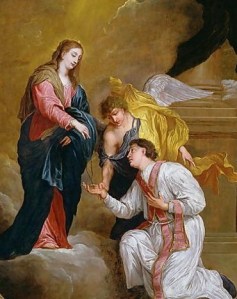
As far as we can tell, historically there is no Saint Valentine that is particularly connected to February 14. Even if there were, it is difficult to imagine a saint promoting what we know as love. Love is a slippery topic. The ancient Greeks (who did not marry for love) were so perplexed that they came up with three different words for it, and the nascent Christian community tended to prefer agape-type love. Love that expresses well-being for the community and has little to do with the physical attraction that people everywhere find so compelling. It is safe to say that Christianity has always been uncomfortable with the kind of love that Valentines Day celebrates. The holiday, because of its associations, has often been removed from the liturgical calendar a time or two. People are already prone to express their biological urges, so it is best not to give them an excuse, sanctioned by the church.

This is an odd situation, thinking love is wrong, or at best, tolerated. As far as we can tell, the earliest Christians had no particular concerns in this way. We can’t measure, of course, how people loved their spouses, but there was nothing inherent in the new religion to suggest physical attraction was bad. By the time Paul of Tarsus started writing his letters a couple of decades after Jesus’ life, at the earliest, some doubts had crept in. They seem to have been largely personal. We know little of Paul’s life, but we are aware that he saw the kind of love known as eros to be a problem. Concession had to be made to those who couldn’t control themselves, but otherwise, in good stoic fashion, love was to be ignored. By the time of Augustine of Hippo, some three centuries later, sex passed on original sin and love had become decidedly dark.

St-Valentine-Kneeling-In-Supplication

Attitudes change with time, of course. After two millennia a certain practicality sets in. We have moved through the troubadours and courtly love to psychology and deep human needs. Arranged marriages are, for the most part, considered like shackles from the past. And love, that feeling that we never completely outgrow, is believed to be a positive thing. Saint Valentine (and there were at least two of them) would likely have disagreed. While the Romans celebrated sexuality, they also believed in restraint most of the time. Valentines Day, however, still has something to teach us. Despite the commercialization of the holiday, in a world with a surplus of hatred, any kind of love is, as long as it’s mutual, is worth celebrating.


Commitment

Marriage is a human institution. As those who invented it, we should be able to define it. Biology may not help here, since animals become mating pairs in many different ways. Besides, we’re selective in our application of science to the question. Not only that, human views of marriage have changed quite a bit over time, and the practice of marriage is still not uniform today. Back in biblical times, for example, polygamy was more or less normal. Marriages were arranged for tactical and economic reasons, and bonding for love had, one can only guess, very little to do with it. It was practical, pragmatic, and of use to the state. Prior to that, if the evidence is to be believed, “marriage” was a communal practice among groups of maybe 150 individuals. The purpose was the same: social harmony and cooperation.

An article on The Wild Hunt has me thinking about this again. (And you thought I was going to be discussing gay marriage, didn’t you?) According to a recent piece by Christina Harrington, handfasting, the marriage among pagan communities, has now been legally recognized in England and Wales. As far as we can tell, again delving back to the Bible, marriage was not considered a religious matter in antiquity. Part of life, it was handled by families who were witnesses to the promises made. Over time, various religious bodies came to give their blessings to people pledged to each other. In fact, for some religions marriage is perhaps the most important sacrament. Once this happened, however, dominant religions became jealous of their right to declare a marriage binding or not. Even as a child I remember a stigma attached to a merely civil wedding. It is, however, the state the declares a marriage binding.

Photo credit: the ShahMai Network (from WikiMedia Commons)

Photo credit: the ShahMai Network (from WikiMedia Commons)

Marriage is a convenient method to sort out tax statuses among genders with earning disparities. A government has no interest in whether a couple marries for love or not. Even gender doesn’t really matter. Can you tick that “married” box on your tax form or not? So it is that recognizing handfasting is likely, on some level, politically expedient. Meanwhile, those who marry for love have the added benefit of being with someone they chose and having a friend at hand. Tax season is upon us. Valentines Day will soon be here. And in some parts of the world the government is catching up with the times and realizing that marriage is what people make it.


Not Your Father’s Demon

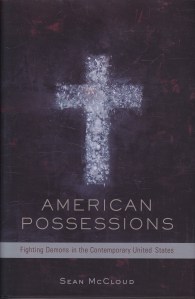
AmericanPossRegan MacNeil is a name that can still send shudders up and down stout spines. Despite advances in CGI and special effects, The Exorcist is consistently rated among the scariest movies of all time. Demon possession, clearly, is a very troubling thing. American Possessions, by Sean McCloud, is not a place to go to find Catholic priests expelling the forces of darkness. Subtitled Fighting Demons in the Contemporary United States, the book, one might suspect, is saying more than it seems to be letting on. This is a book about Third Wave evangelicalism and its demon-fighting manuals. Although the term “Third Wave” may be unfamiliar, the next time you go to a Tea Party you’ll know you’re among them. These born again uber-capitalists believe in a literal demonic world. In fact, demons are so common that Jesus would’ve had a hard time keeping up with their exponential economic growth. These demons are more frightening than those that possessed Regan. The are more akin to a different Reagan.

Especially popular among Pentecostals (the fastest growing form of Christianity) this modern day belief in demons sees them in places Jesus didn’t think to look. Family curses (at places ruled out in the Bible, but still, apparently, possible), addiction, depression, sexual urges—these are all demonic. And once these modern demons are cast out, unlike that of Regan, they can come back. And if they don’t possess you they will oppress you. And they can live in your material goods, your house, and even the land it is built upon. They are everywhere, and they have to be fought against constantly. They also, apparently, vote Republican.

This view of the world, strange as it is to many people with a basic education in science, motivates a large sector of the United States population. Expelling these demons requires a specific view of Christianity—a view that absolutely excludes Catholics. And it is a view that promotes free market economics, blaming the victims of poverty for allowing themselves to be oppressed by demons. Many aspects to this belief system will strike the reader as completely unbelievable, all the more for being so seriously believed. At the same time, we are told, we should pay no attention to religion, at least as educated people. The problem with this is that these true believers vote. And the kingdom they would have come on earth is, in a way they would certainly deny, possessed.


The Great Slumbering

Even in days of secular education—I am a product of public education throughout my childhood—Jonathan Edwards is a name that still retains recognition among many Americans. Perhaps best remembered for his sermon, “Sinners in the Hands of an Angry God,” Edwards thrived at a time when being a clergyman was a recognized path to success in this world as well as the next. Not that all ministers became famous, of course, but those with the inclination had access to books and time to study. They could write books and influence public policy. Indeed, Edwards was part of the “Great Awakening” that spread throughout the young United States, before its independence. George Whitefield had brought a showman’s sensibility to preaching, and people gathered to listen to roving reverends who brought their wisdom to new locations. In fact, revivals continue to this day—I had attended a few as a child—and they are largely responsible for the denominational map of American Protestantism even today. The “Second Great Awakening” brought Methodists and Baptists into the mainstream to stay.

The first major revivals, however, were fueled by a Calvinistic intensity. Having spent many of my educational years in schools established or supported by Presbyterians, I know their theology well. Judgment is important in the Reformed tradition. Indeed, without the element of threat, the heat is stolen from much of revivalism. Edwards’ sermon encapsulates so well the vital element of a theology that preached total depravity, unconditional election, limited atonement, irresistible grace, and perseverance of the saints. In other words, unless God has already selected you, you’re out of options. As Presbyterian teachers were eager to state, you should still try to live as if you were saved (“elect”), even if you were going to Hell because of, well, you know, an angry God. Campus rules at Grove City embodied that ethic in a real-time way.

Jonathan Edwards went on to become president of Princeton University (the College of New Jersey, at that time). He died at about my age, having been inoculated for small pox—he was a believer in science—to demonstrate the value of the practice to students. He contracted the disease and died merely weeks later. Ironically, Edwards felt he was past his prime and had to be persuaded to take an academic job—somewhat of an extreme rarity today—and largely because his son-in-law, Aaron Burr, Sr., had recently died as the incumbent. Today, starting on the path to ministry is often a fast-track to job insecurity, popular derision, and poor earnings. For all that, it is difficult to be accepted in the ordination track without jumping through many hoops. So Jonathan Edwards came to rest in Princeton, New Jersey, as a famous, published, and highly respected man. A more different world then his in such a short time in the same location, is hard to imagine.

DSCN6140


Quaker Way

QuakerWayDoctrine can be an immense stumbling block. As a person who’s been involved with many churches in my life, the virtue of virtues often seems to be sacrificed on the altar of doctrine. If you don’t believe X, you’re not one of us. It was a great delight, therefore, to read Philip Gulley’s Living the Quaker Way. Having grown up in Pennsylvania, you might think I’d know a great deal about Quakers. I never met any, however, when I lived in the state. And I really didn’t know much about their beliefs. I knew they called themselves Friends, and I knew “Quaker” was originally a derogatory title, like “Methodist,” “Jesuit,” or the near homonym, “Shaker,” later reappropriated as a name for the group. I also knew that numerically they were on the smaller end of the religious demographic. Reading Gulley’s insightful little book was an epiphany.

I learned of Calvinism at a Presbyterian College. There I was taught TULIP: Total depravity, Unconditional election, Limited atonement, Irresistible grace, and Perseverance of the saints, the first three of which struck me as dangerous and unholy. What a beaming of light to read instead of SPICE: Simplicity, Peace, Integrity, Community, and Equality. This acronym is Gulley’s shorthand for what defines the Religious Society of Friends. Doctrine is nowhere on the list. A deity who creates people just to throw them into Hell is also missing. As is Transubstantiation. And religious violence in the name of spiritual purity. There is an awful lot to be learned from the simple message of people who understand that they are people and every other person is too. Gulley is not naive; he knows Quakers aren’t perfect. What he does show, however, is that those who are willing to relinquish self-assured self-righteousness make far better neighbors who resemble what Jesus taught than do many who would rather destroy the livelihoods of those with whom they disagree.

The beauty of what this book describes is that one need not be a Quaker to live this way. Not being doctrinal, a Quaker wouldn’t insist on that and still be true to the ideals of the Friends. If we could learn to want less, to get along with those with whom we disagree, be honest, welcome others, and treat all people as if they had a bit of God inside them the world would be a better place. There can be no doubt about that. One might say, “that’s just common sense.” I would guess that most Quakers would agree. Religion, freed from platitudes, could be a viable and valuable way of being in the world.


Monk over Matter

ManWhoCouldFlyPeople can think with their emotions. At a young age we begin formal schooling to teach us the rational ways that we must develop to live in society. Emotions are trained, tamed, and sometimes repressed as we are taught that “higher brain” functions are what make us distinctly human. Even in our supremely rational world, however, we can’t figure out consciousness. It remains elusive, provocatively bordering on the supernatural, and the experience of being human gives the lie to consciousness being emergent from a physical brain. These are the kinds of issues that underlie the strange case of Joseph of Copertino. The subject of Michael Grosso’s recent book, The Man Who Could Fly: St. Joseph of Copertino and the Mystery of Levitation, Joseph may well be off the radar of most people. In fact, in the seventeenth century church in Italy, his presence was downplayed and hushed, almost as an embarrassment to Roman Catholicism of the day. Why? Joseph was known to levitate. In fact, his levitations were often in public and were witnessed by individuals whose credibility was not in doubt. With the Reformation going on, however, the last thing the church needed was a miracle.

The standard historical line of dealing with Joseph is to laugh and wave our hands in the directions of those credulous early moderns. They thought they saw him levitate, but it was all imagination. Even if we have to invoke mass hallucination. People just can’t levitate. Grosso’s book, however, takes a different approach to Joseph. Looking at first-hand accounts, carefully considering the political situation of seventeenth-century Italy, and being open to parapsychology, this book presents a very different portrait of the flying saint. There was nothing to be gained by hiding such a prodigy unless, as Grosso argues, there was actually something to the story. It may come down to a basic misunderstanding of consciousness, his book suggests.

No doubt The Man Who Could Fly will be simply dismissed by many. Those who dare to read it, however, will find a cogently argued, rational exploration of a man who was lifted by spiritual ecstasies in a way we have yet to understand. Grosso demonstrates that, depending on perspective, such events do not violate laws of physics so much as demonstrate that we have much yet to learn about them. Categorizing events as supernatural puts up an artificial barrier to exploring scientifically events that have evidence in the form of multiple witnesses. Obviously we can’t go back to the 1600’s and visit Joseph in some obscure convent where he’d been shuffled by church authorities to keep him out of the public eye. Even if we could there would be no way to prove his extraordinary gifts. When it comes to the life of emotion, the only way to accept the impossible is with belief. And at times belief may be the most rational response at hand.


Episcopal Pity

Call me naive. Really, I won’t mind. I’ll readily admit that I was raised in a conservative household that held a fundamentalist view of Christianity. But even though I grew and matured and eventually joined the Episcopal Church, I have always held consistency as one of the basic building blocks of any religious outlook. What’s fair for you ought to be fair for me. When I read that the Episcopal Church has been suspended, like the bad boy of the Anglican Communion, my mind went back to the consistency issue. The Anglican Communion, like many Christian bodies, is marked by strong membership from “conservative” constituencies. This was clearly felt while I was on the faculty of Nashotah House. As a conservative institution, we received many visits from diocesan leaders from more “traditional” cultures. They always expressed concern with America’s sinful, “liberal” culture. We should be more biblical, they opined. They didn’t, however, mind us paying the bill.

Book_of_Common_Prayer_1760

The Episcopal Church is being kept after school because of its approval of homosexual marriage. This is a social justice issue that has the backing of many major Christian denominations. Cultures in the developing world, however, see it as sinful and claim marriage is one man, one woman. Well, most of the time. I’m no anthropologist, but I do pay attention to what people say. While at Nashotah House we had a student from Kenya. He was already a priest, but he was there to get some basic training. Naturally enough, his biblical understanding was quite literal. Once I asked him about his life back home. He had a wife, it turns out, and kids. They couldn’t be with him in Wisconsin, so I asked how they lived when he wasn’t there to support them. He told me his brother took her as wife while he was away. His brother was already married, but in his culture it was traditionally for brothers to act as husbands in the absence of the latter. He gave me to believe that “husband” was used in every conceivable sense of the word. He was, of course, against same-sex marriage.

Levirate marriage (a brother “taking over” a wife) is arguably biblical. The problem is that the Bible states the first brother must be dead for levirate marriage to take effect. My point is not to condemn the “traditional” marriage arrangements of the visiting priest’s culture, but to try to get some consistency here. There are a wide variety of “marriage” practices recognized in traditional cultures. They have two things in common: women are subservient to men and their needs, and males mate with females. Beyond that, variety, as the traditional saying goes, is the spice of life. There used to be another traditional saying about the inappropriateness of peering into other people’s bedrooms. So the naughty Episcopal Church has been sent to a corner with a dunce mitre on its head. Meanwhile the other boys, typical of those in middle school, sit around and talk about the girls they’d like to have. It’s tradition we uphold, after all.


And a Blessed New Year

A new year is always a time for predictions and prognostications. Although the religious basis for New Year’s Day is often deeply sublimated, the changing of the year is one of the oldest and most widespread holidays worldwide. Since every beginning is also an ending, experts look forward to see what might be coming. A story by Nadia Whitehead on NPR presents the opinion of Pew Research Center that over the coming years the growth rate of Islam will surpass that of atheists, based partly on procreation trends. At the same time Christianity will continue to grow, but at a slower rate than Islam. This sacred number crunching suggests that by mid-century Muslims will represent the largest world religion, surpassing Christianity for the first time. As the article states, this is merely a projection based on current trends, and new developments could completely change the dynamics. I’m sure this trend will distress some people, but popular understanding of Islam is biased through media tactics to glean more readers.

Equally troubling to some will be the suggestion that atheism, considered by many to be enlightened, simply won’t keep up. Even though the trend is growing, particularly in Europe, and to some extent in the United States, those who side with no-faith tend to have fewer children than those who do. Religions have often seen procreation as a divine mandate, leading to the kind of growth figures businesses envy. Large families with children taught the family faith from the cradle ensures rising numbers, all things being equal. Again, it comes down to the numbers. Since history of religions is not a growing field of study, many may not realize that major religions have peacefully coexisted for millennia. Globalization, however, brings differing value systems into swift and intimate contact.

Coexist

In addition to organic growth rates, religions also grow through proselytization. Some groups, such as the Church of Jesus Christ of Latter-Day Saints, have been phenomenally successful in their missionary efforts. Atheists often try to convert through reason or rhetoric. Religion tends to appeal more to the emotional needs that all people share, regardless of how deeply they are repressed. Reason, in the face of personal tragedy, is cold comfort. Not many people are willing to be steely about it, to “toughening up” when fate deals a cruel blow. Better to counterstrike with a caring deity or two. Religion is so basic to humanity that it is difficult to understand how major universities and centers of learning are trying to cut back on its study. And if it might be suggested that mine is a typical humanities-lover’s response, this time I can point to the numbers. Check with Pew; you don’t have to take my word for it.


To Nature, and Beyond

VaticanProphIt might seem odd to differentiate the supernatural from an established world religion like Roman Catholicism. After all, be premise of traditional Christianity is based on a miracle or two. Church officials, however, are not naive. It has been known from the early centuries of the church that although miracles are still from time-to-time proclaimed, they are a relative rarity. Few are claimed, like Jesus of Nazareth, to have the ability to summon the supernatural at will. When my wife gave me a copy of John Thavis’s The Vatican Prophecies, I wondered if this might be a sensationalist exploration of “the hidden Vatican” and its penchant for keeping things hushed. After all, the subtitle is Investigating Supernatural Signs, Apparitions, and Miracles in the Modern Age. Thavis, however, is one of the most even-handed writers on the topic I might imagine. Clearly respectful of the Catholic faith, he doesn’t go after any pet theories or conspiracies. He lets those in the church answer with their own words. And those words paint a fascinating picture.

Beginning with the concept of holiness, Thavis shows that the point of the spiritual life is not to seek signs. Nevertheless, signs are reported. Apparitions of Mary have a long history, as does the shroud of Turin. Those who write about such things often have a clear bias, but Thavis gives the facts, interviews those who know, and offers a narrative full of possibilities. The supernatural can take a darker turn, however, as his chapter on demons and angels demonstrates. Although demons have been cast into the outer darkness by science, it doesn’t prevent people from apparently being possessed. And of course miracles come under scrutiny, particularly in the context of making saints. Prophecy, in the sense of knowing the future, is the last major topic up for discussion.

The Vatican Prophecies is a curious book that seems neither credulous or overly skeptical. It’s more like reporting than it is declaring what is or isn’t possible. Yes, the Roman Catholic Church does still profess miracles, but a vast number of them that come up for testing fail. Scientists serve as expert witnesses and personal claims are not sufficient to win the day. Although there are a few characters in this account, the majority of those mentioned in the book are understated, thoughtful individuals who happen to know they can’t decide what really happens or not. Instead, they simply deal with it. For those of use who live in a world of uncertainty, this book is a most apt introduction to topics taken seriously by some very intelligent people.


Awakening Forces

Star_Wars_The_Force_Awakens_Theatrical_Poster

Star Wars: The Force Awakens does not disappoint. Many of us who saw the original installment recognized the archetypal image right away. Good versus evil, light and darkness, the quest for the father, and a host of other tropes backed the story in ways that made us believe we were in a galaxy far, far away. As is well known, the mythographer Joseph Campbell was closely consulted on the movie, bringing his own Jungian understanding of myth to the story. We felt that we cared about the outcome of these characters’ lives. Prequels are, of course, a hard sell. Although technically proficient, the Sith episodes I-III dulled the eyes of many original fans. It wasn’t just because the action had to be all “shoot-‘em-up” western style either. There is a logic to mythology, and yes, whether we want to admit it or not, religious imagery. The Force Awakens returns to that religious, archetypal imagery and it shows not only in box office numbers, but in the reviews.

This is one of those movies that kept interrupting my subconscious the night after I saw it, even as a matinee. There was some powerful imagery going on there. Having seen the film only once, I’m sure much of it escaped me, but even based on the trailers people were wondering about the cruciform light saber wielded by Kylo Ren. Naturally, the force does awaken, carrying the mythology further. C-3PO, however, is the one who blurts out “Thank the Maker” when the resistance finally gets a break. What would a robot know of the force? Visions and prophets, the stuff of classical conflicts of good and evil, are fully present and accounted for. Even the marking of Finn’s helmet in the opening scene has elements of the Passover to it.

What stayed with me the most is a concept traditionally associated with the Quakers—the light within. Kylo Ren is struggling to defeat that light. Others are, in effect, praying for him to realize that it is still there. The force pervades every living thing, but humanoids have the light within. Movies that understand this kind of archetypal thinking quickly draw a fan base. Part of what we are seeing on the screen moves beyond entertainment to a kind of religious thinking. The original trilogy led to the growth of an actual religion called Jediism. The tenets are almost Manichean in their duality, and despite an ending that leaves you wondering, those who know the power of mythology have no doubts who, at the end, will be victorious. It is the way of the force.


Social Security

Security. If there’s one thing we can never get enough of, this is it. We look at the future with a mix of perspectives: it’s going to get better, or it’s going to get worse. We want to be prepared for any eventuality. The most recent issue of Wired landed at my door and the cover, apart from Leonardo DiCaprio, features the survival guide. Tongue-in-cheek, along with actual statistics, this feature article gives tips on surviving all kinds of potential disasters. From domestic terrorism to zombies. The zombie advice caught my eye. You can make a pretty effective club, it seems, from rolling up newspaper the right way, with a judicious application of duct tape. It may not help much in instance of domestic terrorism, but who can expect to survive everything?

DecWiredSecurity is fine and good, until it becomes an obsession. Here in the United States, we’ve lived with the belief that two oceans separate us from our most hostile enemies. For sure, we have our fair share of natural disasters: tornadoes, hurricanes, earthquakes, wildfires, floods, even a volcano or two, but these are “acts of God” and we like to think that we can handle those. Our greatest fear, it seems, is our fellow human beings. Isolationism is convenient when we want to direct our own destiny, but when other nations get in the way, we like to extend the borders of democracy a bit. And globalization has opened the doors to all kinds of scenarios where security is at risk. Just try flying as a man with a beard traveling alone. I’m not so sure that facial hair is the greatest threat to the future that it seems to be. (Unless, of course, it is trendy stubble, as the picture of Leonardo DiCaprio shows.)

Security isn’t attainable. The future is always uncertain. There’s a rabbinic saying that a person can’t be satisfied today without knowing that tomorrow’s been taken care of. We don’t know what tomorrow might bring. Or even later today. We fear those who take their faith seriously, and yet the world grows more densely interconnected all the time. Some turn to their holy books to ensure that they are ready for tomorrow. Some even claim that those books tell them in detail what will be coming down the road. Others, I suspect, are gathering newspapers and rolls of duct tape. The future is, after all, what we make it.


Feasting

In addition to music, Christmas has also been associated with seasonal foods. Unlike today, when we think of foods primarily in terms of either fast food or culinary sophistication, Christmas dishes of yesteryear often had religious symbolism. While singing an English carol, for instance, you might hear of figgy pudding. I tried my first when living in the United Kingdom and it was nothing like the images its name conjures. It is more like a dense cake made of raisins and dried fruit, set aflame to burn off the brandy. Sometimes it is topped with holly. According to an interview on NPR, the Christmas dessert, in addition to taking weeks to make, contains thirteen ingredients, to symbolize Christ and the apostles. The holly is to represent the crown of thorns, and the flames the passion. That’s a lot of theology to stomach. (In seminary I had friends who used food analogies for theological purposes, but I suspect they didn’t know it was such an ancient tradition.)

Christmas cheer, I would’ve been shocked to learn as a child, generally involved spirits. For example in A Christmas Carol, Charles Dickens reverses his entrepreneurial relationship with Bob Crachit over a bowl of smoking bishop. I had always supposed this was a kind of soup or stew, but, again NPR comes to the rescue with a piece about Christmas drinks. Smoking bishop was made of port, and, according to the NPR story by Anne Bramley, is of the class of Protestant drinks called “ecclesiastics.” These were various alcoholic drinks named after Catholic church offices that Protestants used to poke fun at the ecclesiastical hierarchy of the Catholic tradition.

Christmas

A Christmas Tree primer

It is difficult to conceive of anything more basic than food and drink. All living things require nourishment. It stands to reason that when religious sensibilities began to appear that they would certainly be associated with the necessities of life. Holidays, as necessary breaks from the mundane, offer opportunities for bringing theology to the table. The most basic of ingredients, as any observer of biblical holidays knows, can contain more than just nutrients and roughage. There is a symbolism in what we eat. In these days when it is fashionable to declare religion nothing but stuff and nonsense, it can’t hurt to stop and look at what might be on our plate or in our cup before declaring it to be mere animal nourishment.


Credit Is Due

In an article on Nomad by Brandan Robertson, the issue of Larycia Hawkins at Wheaton College is discussed. Hawkins was suspended for stating that Christians and Muslims worship the same God. Robertson’s analysis, in my experience, is right on target. He suggests that when he was a student at Moody Bible Institute he was told that the school was a “discipleship institution” rather than an academic one. This leads Robertson to conclude that the school practices indoctrination rather than education. Although I’ve been saying similar things for years, there is a particular point that stands out here. Institutions like Wheaton and Moody, and others I could easily name, receive the benefits of academic accreditation for non-academic programs. These schools do educate; however, the education is not an academic one. Any faith group that has already declared that it has the final answers has no motivation to promote free inquiry. New information is dangerous, and indeed, is often treated as heretical. Accrediting bodies shrug their shoulders and say, “whatever.”

The purpose of academic accreditation is to ensure that a degree is worth the paper it is (computer) printed on. I could establish myself as an institution of higher education but the reason no one would take me seriously is that I’m not accredited as one. At the same time, schools like Bob Jones and Oral Roberts universities are given the seal of approval while teaching that the standards of higher education as recognized by any non-biased board are wrong. Revelation, not research, has already revealed the truth. And these schools grant degrees that have accreditor’s approval. Some of it is doubtlessly political. Other aspects are more difficult to fathom.

Dwight_Lyman_Moody_c.1900

I’ve known accrediting bodies to visit a campus where faculty and students give intentional and obvious warning signs that the school is not offering what it claims because of some point of doctrine. I have yet to see even a notation to come on a record because of this. And they call it education. Open minds, willing to accept what the evidence indicates, are classified together with those closed to new ideas. Just learn by rote what our favorite spokespersons have said and you’ll get your degree. The nation’s accrediting bodies won’t interfere. If I could only get them to visit my house, I’d start handing out degrees as well. Only to those who pay four year’s tuition, of course.


Who’s God?

There shall be wars, and rumors of wars. The Bible says nothing about being able to declare what future people might have to say about God. According to a story on the Washington Post website, Larycia Hawkins, a political science professor, was suspended from Wheaton College for claiming that the God of Islam is the same as the Christian God. Administrators felt this was one of those cases where the famous statement of faith required of Wheaton faculty was violated. Seems to me the administration might want to sit in on a class in history of religions. Everyone knows that Wheaton takes great pride in its Evangelical heritage, bordering on a kind of extreme conservatism. Even so, this seems extreme.

There is much we don’t know about the early history of most religions. Probably one of the resons for this is that, apart from the founder, we’re never sure if a new religion will take off. Many religions have started and then quietly (or not so quietly) died away. At the earliest stages nobody really knows which way it might go. We do know that by about the time of the Exile, the early Jewish faith was fast becoming monotheistic. Christianity, although disputed by some, also followed in that mold, accepting the God of Jesus of Nazareth (himself a Jew) as the one God. Here many Evangelical histories grow a little weak when focus is shifted to Arabia. The cultural context that led to Islam involved a world of pantheistic worship, but Mohammad was well aware of, and appreciative of, Judaism and Christianity. Recognizing that his faith shared the same books as the other two, his understanding of Allah was clearly the same God as the one worshipped by the Jews and that Jesus had called “Father.” The three monotheistic religions of that region, historically, have always shared the same God.

IMG_2472

Disowning a deity, I suspect, comes with some anxiety. As Islam expanded and Christianity itself became an imperial religion, clashes were bound to happen. Invective included calling the enemies “pagan” or “infidel” (technically two separate things), and as so often happens, rhetoric became mistaken for fact. Since Islam and Christianity were different religions, so the thinking went, they must recognize different gods. Triumphalism is seldom subtle. Fact checking wasn’t so easy back in those days. Suspending a professor for stating the truth is, I fear, nothing new. Some schools require statements of faith so that they may ensure academic freedom is a myth. Ironically, they seldom have trouble with accreditation. The ideology of a war between religions offers a doleful prognosis for a world where religions really need to try to understand each other and where obvious historical facts should count for something.