Sects for You

Oxford University Press has a religion blog. (Well, who doesn’t these days?) Apart from being jealous about their numbers, I find some of the posts fascinating. A recent entry by Linda Woodhead on the approval of women bishops in the Church of England was particularly well done. Woodhead is known for her in-depth knowledge of religiosity in Britain, and she begins her post with a distinction between two types of churches that I find most helpful. She mentions the “church type” that embraces society and tends to have less trouble keeping up with social changes, and the “sect type” that insists on keeping a long distance from the evils of society. She points out how the Church of England went from the former to the latter and how its numbers have subsequently declined. Her article made me realize that for much of my life I’ve found myself among the “sect type” believers. Fundamentalists, among whom I grew up, are naturally suspicious of the world. Grove City College, where I cut my critical teeth, was dead-set against change. And Nashotah House—need I utter more than its very name?

Sects are indeed concerned about being right. Not only being right, but being the only ones who are right. I recall a New Testament class in seminary at Boston University where an unnamed professor said, “If anyone can join, what’s the draw? Barriers are important.” Christianity, he claimed, grew strong by excluding others. This professor would have a difficult time being retained by many seminaries today. The “church type” church realizes that without embracing society it will embrace empty collection plates. Unless, of course, you court conservative political causes, for which there seem to be bottomless pockets of money available. Sects thrive on the feeling of superiority. Knowing that we got it right and everyone else got it wrong is cause for great rejoicing. Others are encouraged to join, just as long as they jettison their point of view. We are the Borg.

It is no wonder that religions struggle in a world with the Internet. Too much information, 24/7. Religions you’ve never heard of are suddenly right there at your fingertips, and the believers are sincere and convinced. Some are sects and some are churches. Some are open to any belief system while others have just what the (church) doctors prescribed. To me this raises a fundamental question of religion: what is its purpose? Is it to seek the truth, or is it to exclude others and make members feel special? Truth is an expensive commodity. Indeed, nobody has a universally accepted version of it yet. While some religious believers will not rest while the search continues, others made up their minds centuries ago. And those believers use sects to get what they want.

Photo credit: Peretz Partensky, Wikimedia Commons

Photo credit: Peretz Partensky, Wikimedia Commons


Religion Is Fundamental

One of the books on my shelf growing up was a cheap paperback entitled How to Be a Christian without Being Religious. The idea appealed since having to do all that “religious” stuff seemed kind of like Catholicism or some other formal system of behavior rather than a kind of organic relationship with God. Ironically now, fast forward an indeterminate number of years, and the “spiritual but not religious” demographic is quickly rising. From the secular side. As a sign of this new direction society seems to be turning is the Hart and Crescent Award, designed for Girl and Boy Scouts who are members of a nature religion. Perhaps the most widely recognized religion of this category is Wicca, the modern incarnation of witchcraft, according to some, simple nature religion according to others. The award, according to the website, is open to any young person who completes the requirements to learn about the earth and earth religion.

762px-Shaman_tableau

Also worthy of note is a story in last week’s Time magazine about atheist churches. Ministers from a number of traditions, disenchanted with belief systems that just don’t match what we know of reality are starting to form congregations of unbelievers. This may distress some materialists who find no reason to be spiritual, but the fact is, people naturally are. The article cites, for example, Bill Maher who stands against the idea. There is security in numbers, and in a society where people find themselves increasingly isolated from others, joining together on a Sunday morning for time with likeminded non-believers may not be such a bad thing.

One aspect of Josh Sanburn’s article has me a little puzzled, however. He notes that Richard Dawkins has torn religion apart in his books, and yet, here it is. Dawkins and Maher and other vocal atheists seem to believe that religion has brought us nothing but evil. How quick we are to forget that civilization itself is typically defined as having a formal concept religion, as well as several other components of what it means not to be “savage” or “barbarian.” That religion may not be Christianity. It may be Wicca. It may be the Houston Oasis and its atheistic system. People need common cause. Reason is great, indeed marvelous as far as it goes. People, however, are not entirely rational. They can be spiritual without being religious. And they can be religious without being believers. If you persist in it, your Scout can even earn an award for caring for the earth. And that should be no cause for complaint.


Pagan Paean

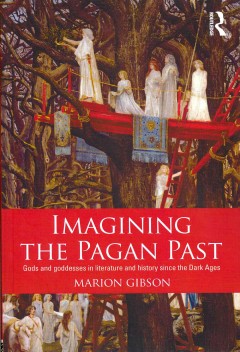
ImaginingPaganPastThe old gods still live. In literature. The modern world with its open spirituality has continued the process of rediscovering ancient deities. Marion Gibson’s Imagining the Pagan Past: Gods and goddesses in literature and history since the Dark Ages offers a glimpse into how British writers since the earliest days have wondered about the gods. Of course, many of those early writers were already Christianized, and treated the old gods as curios that might be placed on an intellectual shelf of bygone days. Some, however, came up with an idea that can still be found, on occasion, among dwellers in the British Isles—the idea that the original British religion was monotheistic. Indeed, some believed that the religion of Noah made its way to Britain, establishing a debased, but yet roughly correct worldview that was only contaminated by Roman polytheism. There are books suggesting, a la Latter-Day Saints, that the lost tribes of Israel found their way to Britain. Joseph of Arimathea planted his staff at Glastonbury, after all. Nothing satisfies like being the chosen people.

Gibson explores both the Celtic gods and the Norse gods. British literature has drawn upon both deity pools to populate a literature with colorful, if sometimes dark, deities. Beyond the literary, many of these gods survived in popular culture throughout the ages. Some of my fondest memories of the UK are driving to prehistoric sites with friends and finding the gods alive and well. As the sun, feeble at best in a British December, sank one afternoon we pulled into Wayland’s Smithy, a neolithic long barrow. I’d never heard of Wayland before. Gibson reveals the story of Wayland, as well as Woden and Thor, as the gods jumble in a Gaimanesque celebration of cultural diversity. Even on hikes to obscure sites the locals often knew the stories of the gods that had once passed this way.

There’s a virtual Sutton Hoo’s trove of information in Gibson’s brief study. At many points I found myself pausing to think, “that’s where that idea came from” as I followed the trajectory of her explorations. Even some of the deities she does not explore found their place in my three short years in the enchanted countryside where pagan Celt met pagan Saxon met pagan Roman, leading to a heady brew from the well-known Diana to Julian the obscure (there is some witchery afoot here). Even that Anglicanism that once circled the globe did not rid itself of this great cloud of witnesses. We keep our deities alive by preserving them in scripture, whether sacred or secular, and we have done so for hundreds of years. And the old gods, in this monochromatic world of science and industry, remind us where the rainbow really originates. Imagining the pagan past is sometimes the most human thing to do.


Unity in Diversity

UnitariansUniversalistsIn the Simpsons episode “Bart’s Girlfriend,” Jessica Lovejoy steals all the church’s money from the collection plate, leading Mrs. Lovejoy to call out, “Everyone turn around and look at this!” Grampa Simpson whips around saying, “What is it? A Unitarian?” And so the jokes go, back even to my seminary years. The Unitarians, however, are among the most intellectually honest of religions. I recently read David Robinson’s The Unitarians and the Universalists. Although the traditions approached their 1961 union from different angles, they had a common origin: concern over the Calvinism of colonial and early post-colonial New England. The majority religion of the northeast, various forms of Calvinism taught of utter depravity, human helplessness, and, that absolute affront to human intellect now being posited by some materialists: predestination (determinism, in secular terms). The Universalists couldn’t accept that a loving God would make anyone suffer forever. The Unitarians had trouble with several aspects of the theology, not the least of which was the Trinity (as a non-biblical concept). Early Unitarians based their beliefs on the Bible, which, as it turns out, does not support several Calvinistic concepts.

Like all religions, Unitarianism evolved over time. Eventually the unity of God became only one among many possibilities of what one might believe. In fact, doctrine was less important than ethics. It was a true Enlightenment religion. It allowed for the Transcendentalist movement that we all learned about in school, with Emerson wandering in the woods, and Thoreau never wanting to move out of them. They also had room for those who studied the Bible but expressed concerned that Jesus doesn’t really say that he’s God, although obviously some people interpreted it as if he had. Regardless of belief, meeting together was necessary, and eventually the Unitarian Universalist Association came to represent a widely liberal form of religion with Christian roots but rational sensibilities.

Among the marks of distinction of these groups is that, among Protestant denominations, they were among the first, if not the first, to ordain women. When you are less beholden to wooden tradition, all kinds of possibilities emerge. This book was kind of an epiphany for me. I’d been channeled into thinking that “orthodox” necessarily equalled “the good guys,” despite the treatment that I’ve repeatedly received at their hands. It sometimes takes a Gestalt phenomenon to see orthodoxy as not necessarily good. Perhaps the effort to preserve a tradition outdated by a couple of millennia costs far more than it saves. Perhaps we need to become more human, not less. I may not walk the forest with Emerson—he preferred to be alone anyway, from what I understand—but I’ll not be so quick to assume that tunnel vision is true vision either. Not in a world where the Simpsons can teach us as much as The Institutes.


Lobby Hobby

I can recall a time when hobbies seemed less than threatening. Indeed, the idea was to relax, not to lobby. My hobbies—collecting just about anything you could get without money—didn’t involve going to a store. Stamps (because everybody used them back then), coins (ditto), fossils from the local river bank, bottle caps that we collected while Mom was doing the wash at the laundromat, all kinds of handouts from society’s detritus made for many hours’ entertainment. I also collected Bibles. That was when I was old enough to earn some money and spend it on books. And I read those Bibles until I’d run out of versions, then I’d start over again. Now my hobby has come back to haunt me.

According to the New York Times, the Hobby Lobby family is planning to build a Bible Museum in Washington, DC, prompting fears of evangelization. Right there in the nation’s capital, not far from the Mall, a museum showing the importance of the Bible would indeed send a message. But is it really a threat? We live under the judicial decisions of a Supreme Court weighted towards the literal already. It might not hurt to have a museum dedicated to finding out what’s going through our justices’ minds. Clearly it’s not women’s rights. If we wander those proposed halls, we might see that museums are indeed dedicated to outdated stuff that has some importance. Rare are the contemporary museums that show right where we are at the moment. Rarer still, those that show the future that remains undecided. In many senses, Washington is already a museum.

The secular world seems to fear the Bible. It is, however, not going to go away. Although I left literalism decades ago, I’m still pleasantly surprised how much the Bible has to offer by way of insight into human nature and contemplation. You might even find some workable ethics if you can get away from the non-issues of birth control, stem cells, or same-sex marriage. The Bible doesn’t need to be a threatening book. In the wrong hands, it may at times seem like The Book of Eli had its eyes right on the target, but those who would use the Bible to harm others are those who read without understanding the words. No, I don’t think the Green family’s plans for such a museum are innocent. Neither can I believe that hobbies are a $3 billion industry. Reading books and picking up other people’s cast-offs may be the only hobbies you need.

Engraven images?

Engraven images?


Equal Measure

Far off in the woods of Wisconsin sits a seminary. In these woods, I’m told, wolves eat little girls. That seminary has for decades distinguished itself by its stance against women priests. I knew of, and respectfully disagreed with this policy when I was hired to teach there in 1992. I didn’t make waves, but rollers have a way of finding you nevertheless. It doesn’t take much to capsize an unstable boat. Within my first year a student challenged me, “Did your life change forever on July 29, 1974?” I was unfamiliar with the code and asked what happened on that date, vaguely thinking perhaps it had something to do with the run-up to the Bicentennial. On that date, it turns out, Barbara Harris was ordained among the first female priests (the Philadelphia Eleven) in the Episcopal Church in the United States. I suppose my life should’ve changed—for the better—but I was a Methodist at the time. Perhaps my life changed then, for I was 12, but that change had little to do with what the student intended. Or maybe everything. I wouldn’t have had a problem with a woman priest in any case. In 1989, Harris was elected bishop, the first woman to hold that title in the Anglican communion. Just three years later I found myself in the lion’s den.

When I asked male students what their problem was with women priests the answer invariably pointed to three factors: Jesus had no women disciples (wrong, according to a certain sacred book they claim to have revered), the Roman Catholic church did not ordain women, and the Church of England did not ordain women. The problem with backing and filling is that filling always overtakes backing. By 1994 the Church of England was ordaining women. Yesterday, at long last, the General Synod approved of female bishops. Welcome to the twentieth century. Now only Rome stands in the way. I am confident, despite the certitude in the eyes of my Nashotah interlocutor, that Rome will eventually come around. I may not live to see it, but justice will be served.

Photo credit: ChrisO, Wiki Commons

Photo credit: ChrisO, Wiki Commons

There is good evidence that most religions, prior to the monotheistic triad, had women priests. Something about the singularity of deity seems to have contraindicated a protective mother in the psyche of male clergy. Ironically, the same day that the C of E decided to do what was right, Oxford University Press’s blog ran a post on Mormon women bloggers. Among the newest monotheistic faiths, like the traditions before it, the Church of Jesus Christ of Latter Day Saints has not recognized the sacerdotal role of women, leading some to be excommunicated for speaking out. We are told that God is a jealous god. This is, after all, the wilderness. After yesterday’s long-awaited decision the woods seem a little less dense, and the threat of the wolves may have been exaggerated all along. If religions would only see people as people all our lives might just change forever.


High Road

“You take the high road and I’ll take the low road,” starts the chorus of that overused, unofficial national anthem of Scotland. The low road, while offering less spectacular views, is quicker and more practical. At least that’s how it seems to this erstwhile expatriate who spent three bonnie years in that land. Still, we all know the appeal of taking the high ground. In studies of morality, high moral standards are better than low. High income is sought after over low. We are encouraged ever to reach higher, shooting our probes out to the very stars. Who wants to admit to being low? There’s more than a hint of this condescension in the terminology I’ve lately been noticing when it comes to the Bible. Instead of saying that an author of a book is Conservative, it is now common code to claim that s/he has “a high view of scripture.” I guess the rest of us have a low view.

Despite the increasing secularity of culture, there are still many, many books being written about the Bible. In fact, the standard industry rag, Publisher’s Weekly, routinely carries story after story about religion publishing, much of it biblical. But readers want to feel safe when approaching the Bible. New ideas can be dangerous and challenging. So we want to know the perspective of the writer before we crack open the cover. Those who believe, within a reasonable degree, that the historical tales of the Bible are factual have a high view. When the four stories of Jesus contradict one another they can be harmonized. That’s the high view. Saying that the world was created in one day, as Genesis 2 asserts, is tending toward a low view, literal though it may be. After all, didn’t we just read in the previous chapter that it was six days? One can become six with a high enough view. Just stand on your tippy-toes.

A high view

A high view

Now the cynical side of me wants to believe that this coding of the high view of Scripture is willful misrepresentation. The stratospheric viewers may not actually say that the industry standard has a low view—not exactly—but miracles are easier to see from the mountain top. If you want to know who to trust, you rely on those with a high view. In this world the sun can stand still and giants can grow to be nine feet tall. It is a high view indeed. While no one knows the original meaning of the lyrics to “Loch Lomond,” many associate it with the Jacobite rebellions of the eighteenth century. The lyricist may be referring to the heads of the executed exhibited on pikes along the high road from London to Edinburgh while their dispossessed relatives walked on the low road. Neither group devalues its native land where some hope to return and others died trying. So feel free to take the beheaded high road while I take the low, because we’ll all end up at Loch Lomond in the end.


Order of Melchizedek

WhyPriests?A considered reflection from a long-time believer is a force never to be taken lightly. Garry Wills is a lifelong Catholic and an intellectual. His book, Why Priests? A Failed Tradition, was recommended to me by a friend and it is indeed a book that raises most profound questions. To someone born Protestant, such as the current writer, many of the arguments Wills marshals are strangely familiar. Many were lobbed in Fundamentalist harangues where clergy that believe in a literal six-day creation proved surprisingly adroit at finding the chinks in Catholic armor. The New Testament says nothing about the Christian movement having its own priests. And even the explicit command that seems to have come from Jesus—call no man father—is immediately reversed once priests become a fixture in a priestless faith. Wills explores the origins of these practices not to tear apart the religion of which he remains a loyal part, but to suggest that religious tolerance is the only proper solution. It is amazing how much of Catholic thought goes back to the disputed book of Hebrews with its mysterious Melchizedek.

While I have never been a Catholic, I have always been haunted by the idea that my religion was some kind of innovation. After all, the stakes were beyond stratospheric. If you pick the wrong one, at least according to what I was taught, Hell awaits at the end of the day. Then I discovered that my own Fundamentalism also had a history. We were called Protestants because we protested Catholicism. As I moved into the Methodist tradition, at least there seemed to be a continuity—John Wesley was an Anglican and Anglicans were really kind of English Catholics. Or so it seemed. Naturally, I became an Episcopalian since going Roman seemed like it came with exceptional amounts of accretions that were clearly not biblical. Such accretions are much of what Wills explores. Traditions that become doctrine. And exclusive. Those on the outside can hope for Purgatory at best, and the very Hell I was trying to avoid remained a distinct possibility. Who was right?

Religions suffer with time. The faith that Jesus seems to have proclaimed had already altered by the time Paul put pen to parchment. Ask any Gnostic. Already, within just three decades, the question became “now what did he say again?” And what exactly did he mean? The core of that message seemed to be love above all else, but that doesn’t make for sexy doctrine. Exclusivity achieves what love could never accomplish. Wills explores how sacraments evolved, and how Scripture became a sword dividing believer from believer. His most sensible solution? Its time to get beyond priests. He doesn’t actually suggest doing away with them, but asks Catholics why they don’t consider closely the implications of their roots. Melchizedek takes on a stature greater than anyone seems to have imagined for an imaginary figure. And a lifelong believer here asks the most basic of questions: what is Christianity truly about?


Call it Civilization

HinduismWhile brushing up on Hinduism by reading the book of that title by Cybelle Shattuck, it once again occurred to me how the concept of religion distorts itself. Prior to the Roman Period, the concept of religion really had no name. In fact, religions were sets of folk beliefs held in common by people of a single culture. These beliefs had many functions: keeping social order, establishing common practice, undergirding a kind of optimism in the face of inevitable death. Since long-distance communication was rare and unreliable, communities separated by more than a few miles soon developed details that fit their own situation and would hardly apply universally. Until they were written down, anyway. In Hinduism—which is in no sense a unified religion—even the “sacred writings” were not held to be authoritative for all people across all places and times. That concept would emerge with Christianity, a religion that would define the term and try to make it stable.

Hinduism is the oldest continually practiced “religion” in the world, as far as we can tell. The religions of the Mesopotamians and Egyptians eventually died out (although they have been revived by some in recent times) but the folk belief—or better, folk practice, of ancient India has continued relatively uninterrupted while new religions from Israel and Arabia changed the rules of the game. Monotheisms quickly demand heresies. A single God would not tell people different truths. Something upon which Shiite and Sunni, Catholic and Protestant, Pharisee and Sadducee all agree. One Lord, one faith, one baptism. By fire.

Meanwhile, even with Muslim and Christian missionaries afoot, Hinduism continued its accustomed continuity. To be a Hindu doesn’t mean worshipping the same god with the same ritual as everybody else. It is a way of living intended to keep dharma and avoid bad karma. And even as trendy westerners stretch themselves into impossible yoga postures, they are participating, at some level, in ancient practices that we call the religion of Hinduism. Shattuck’s brief introduction is a nice little primer that explains this time-honored folk tradition in a way even a believer in religion can understand. There are, it turns out, more things in this philosophy than our universe has ever dreamt of. Or perhaps the one dreaming is really Vishnu after all.


It’s My Body

Those who believe mythology is dead have to look no further than the Supreme Court. Amid pictures of women protesting religious freedom to be told what to do with their bodies, the Court decided that employers may withhold rights to birth control under the rubric of religious belief. The ones who raise the issue, however, biologically never carried a baby to term. One gender making decisions for the other. We all know that the official stance of Roman Catholicism, closely followed by radical Evangelicalism, is that God intended sex only for procreation. Those women who find themselves on the receiving end of unwanted conception are helpless in the eyes of the law, depending on who their employer is. Blind justice indeed. Obamacare is intended to help level the playing field. Too few people have any real control over what medical treatment they can afford. I know more than one fixed-income person who suffers chronic pains due to lack of adequate treatment. I also know people who have used the system for plastic surgery before a trip to the beach. It seems that your employer now has the right to decide—but only if you’re a woman, and only if it involves what might be euphemistically called your “private parts”—what care you deserve.

Legislating morality, we religion majors debated even when I was back in college, cannot be effectively executed. If you presume there is a God, then enforced obedience is no obedience at all. Even conservative undergraduates could see that. Now our “Supreme” Court, with its male majority, has followed the lead of closely held corporations (doublespeak for certain patriarchal, Evangelically based companies) and declared that half the humans in America don’t deserve the same health care as the other half. The reason? Closely held companies don’t want women to have access to birth control. Our courts strike a blow against freedom and justice for private religious interests.

Within days of one Christian denomination declaring that gay marriage will be—should be— sanctioned, our own judiciary sides with the right of upper management in private corporations to discriminate based on gender. At least the owners of Hobby Lobby and Conestoga can sleep better at night knowing that they’ve prevented women from having their basic rights upheld. And metaphorically crawling into bed with closely held corporations are a male majority of supreme court justices who believe one man’s religion (yes, man’s) has the right to overturn the freedom of his employees. With the blessings of a male God. A situation like this prevailed, it seems to me, until 1863, also with the backing of scripture. Only in those days the argument was, I believe, that God is clearly Caucasian.

Looks balanced...

Looks balanced…


Tongues of Fire

“Do you want to see?” she asked me, fraught with all the emotions of a teen far from home. I’ve often questioned the wisdom of church groups sending large numbers of high school students to retreats or conferences where shear ratios of chaperones to teens guarantees intrigue. She was an attractive girl, and despite my commitments to asexuality early in life, I found her plea compelling. We weren’t supposed to meet after hours without the adults around. I was insanely curious, however. “A few of us will be gathering behind the gym,” she said. I demurred, afraid to break the rules. “Do you want to see now?” she insistently asked. We were in a room largely empty, as the adults were headed toward the food, the way adults always seem to do. I agreed. Nervously she closed her eyes in prayer. When she opened them, they were glassy and far away. A stream of nonsense words effortlessly bubbled from her mouth. This went on for what seemed like minutes, although I knew it was only seconds stolen from a scheduled curriculum. She closed her eyes, and coming back to herself, looked exhausted. “What did you say?” I asked, breathless. “I don’t know,” she admitted.

This was my first experience of glossolalia, or speaking in tongues. I was at the United Methodist Youth Annual Conference, and I’d just met the girl who’d revealed so much. Methodists, as a rule, aren’t much into glossolalia, but the Pentecostal movement has Methodist roots, and teens are the great experimenters of the human race. I can’t recall how I met her, or even her name. I felt an incredible attraction to a girl who could let herself be so possessed, however; so vulnerable to an Almighty deity. I decided not to go to the after dark gathering. Instead I sought out a minister I trusted. He explained that such signs, if truly divine, are only done in the presence of an interpreter. She was misguided. Yet I couldn’t get those glassy eyes out of my mind. Where had she been in those fleeting seconds when her mouth spoke a language she didn’t know?

While reading David Kling’s The Bible in History’s chapter on Pentecostalism, this all came back to me with incredible force. A few years later I attended a Pentecostal service with one of my college roommates who belonged to that tradition. Being in a room full of true believers speaking in tongues at the same time unnerved me. I never went back. Psychologists and neurologists have explanations for how glossolalia occurs. The standard evangelical explanation is quite different. For one young lady whose name I can’t recall, it was a sign she wanted desperately to share. A personal assurance that John Wesley himself encouraged his followers to seek. Not that Wesley ever suggested speaking in tongues. That only began in 1901, after a hiatus of nearly two millennia. To a teenage spiritual seeker in the presence of a young lady, away from home, it was a mystical experience indeed. The assurance, however, would have to wait.

Image credit: Phiddipus

Image credit: Phiddipus


Born Identity

Richard Dawkins, most famously in The God Delusion, made the claim that children are born without religion. Faith is something we’re taught in the growing up process, and we generally learn it from our parents or guardians. A recent piece in The Guardian (the newspaper, not ersatz parent) by Andrew Brown, stakes a bold, and surely correct, counterclaim: children are not born atheists. This isn’t just wishful thinking. As Brown points out, study after study has shown that people, especially children, are prone to belief. Where Dawkins does have a claim to verisimilitude, however, is that religious branding is not a product of nature. We have to learn what flavor of religion tastes good. As Brown points out in his opinion piece, we also have to learn to be the nationality that everything from our passports to our job applications requires of us. I can’t decide to be Scottish or Canadian. I’ve tried both, and here I am, an American mutt, just as I was assigned at birth.

What should  I believe?

What should I believe?

Like nationality, religion is frequently a matter of where you are born. Take a look at a world map of religions and see. India is the most statistically likely country to be born Hindu. It can happen elsewhere, but it would be unlikely where no Indians live. Life sometimes offers the opportunity to change belief, generally through education or through proselytization, but it is fairly uncommon. Most people don’t think too deeply about their religion. You accept what your parents tell you about what’s poisonous and what’s not, and how to drive a car. Would they steer you wrong on religion? Not willfully, surely.

The tabula rasa myth has been one of the most difficult to eradicate. We’re born with all kinds of things going on inside already. Specific religious belief is not one of them, but the tendency to believe is. We believe because it is human nature to do so. We can learn not to believe, and we can even become wealthy by sharing that outlook vociferously. You can also get a good deal of money by being religious and selling alternatives to science. The Institute for Creation Research is well funded, from what I hear. The one place where there is no money, and where you’re not likely to be noticed, is in the middle. Some of us are born as middle children. We had no choice in the situation, and no matter what we decide to believe, we’re no less Episcopalian than we are atheist, or vice versa.


Trans-Human

“Rapture of the Nerds,” an article in this week’s Time magazine by Jessica Roy, has me scratching my head. Or it would if I had a head. That is, if I were an uploaded consciousness in a machine. A transhuman. The idea that consciousness is transferable to hardware has been gaining momentum over the last several years during which humans have evolved into illogical machines. Roy’s article about Terasem, which is being called a new religion, explores what the leaders of the movement teach about human consciousness. You write down your thoughts in most intimate detail, download, and viola, send them out to the cosmos. Your soul has been saved. If only we knew what a soul was. Transhumanism has been promising an attenuated kind of immortality for its adherents, but as I sit down to write out my thoughts, I’m aware that there’s always a lot more going on in my brain than the simple ideas I can scrawl down before they evaporate. There’s quick wisps of thoughts about my loved ones, my schedule (what do I have to do today?), what I ate for supper last night, how I feel—all of this while I’m putatively thinking about writing a blog post. Schizophrenia of the soul?

Faith

So much of thought is having a biological body. From early days I have been aware that this body will die. I was taught that the soul would live on, but this thing I call consciousness seems pretty closely tied with this thing I call life. And once the biological input ends, that part will be over. I think. In other words, my thoughts are tied to my biological existence. How can I even begin to write a minute fraction of them down accurately? I used to toy with an idea called meta-thinking. It was something I came up with as a plot element in a science fiction story. The idea was that those who can think two thoughts at once would eventually take over from those of us with lesser mentalities. Those who have two minds in one brain are, it seems, a step closer to the divine.

I use technology on a daily basis, but I am a disingenuous advocate. Some of the most transcendent moments I’ve experienced have been outdoors with technology left behind, under a sunny sky with an ocean breeze blowing in my face and those I love walking beside me. I think I’ve already broadcast that out into the universe by simply being a part of it. I don’t need circuits and motherboards to make me more of what I am. Technology is the follower. It is consciousness that will always remain in the lead. And we still really don’t even have an idea of what consciousness actually is. It’s certainly not this computer that’s sitting on my lap. And I do have to wonder, once my consciousness becomes a robot, what it will do with this strange, primate urge I have, when I’m puzzled, to scratch my head.


Mores the Merrier

The Presbyterian Church (USA) and I go back a long way now. Not that I’ve ever been a member, but one of their institutions gladly accepted four years of my tuition money and tolerated my presence on campus during that same time. I arrived at college a fundamentalist, but, as a religion major who thought through what was presented in class, I soon discovered that literalism was as wrong as sin. This past week the Presbyterian Church (USA) voted to allow gay marriages. Talking to someone I still know in my native, conservative western Pennsylvania, I learned that disgruntled heterosexuals I’ve known since I was a child are now denomination shopping because of the change. Ironically, this includes divorced individuals and others who can’t seem to get the hang of this heterosexual relationship thing. Marriage may not work for straights, but we sure don’t want the gays to have a chance at it.

Gay marriage, of course, is only the tip of the iceberg upon which modern Christianity is bearing down. And not just Christianity. Any ancient religion that finds itself surviving in a world that has completely changed since its founding has trouble remaining relevant. This issues of peasants in Palestine under imperial Roman rule are very different from a high-tech, service-industry, desk-job society. One could argue that people never change, but I suspect that society gives the lie to that. Some issues are perennial—we still haven’t figured out how to make sure the poor have enough. We will walk out of church, however, when we see affluent people of the same gender walking down the aisle together. With priorities arranged this way, is it any wonder that the mainline churches have difficulties retaining members? For some, the church has become a place to feel comfortable with their prejudices rather than to try to figure out what a first-century religion means in a twenty-first-century world.

I applaud the Presbyterian Church (USA) for its decision. It will certainly cost the denomination numbers. It is, however, a move to try to introduce justice back onto the agenda. One does wonder whether it was predestined. Far be it from me to speak for a first-century carpenter, but I suspect that a church founder who stressed repeatedly that love, not judgment, was the way to become one of his followers might be a bit sad at the political turn this has all taken. We know, from all that biology tells us, that sex has far more importance to humans than reproduction. It has a pair-bonding social function without which many couples would split up. This seems true regardless of the gender combination involved. Why not acknowledge this fact as truth and get on with the important business of negotiating the twenty-first century? Of course, we will have to find some other way to justify our prejudices.

IMG_1087


Medjugorje Matrix

Miracle Detective“Expect a miracle,” Oral Roberts used to sign off, “and a miracle is yours today.” Physicists tend to be a bit more hard-nosed about the issue. In a mechanistic universe miracles are disallowed. How can you predict the outcome of any experiment or scenario when the whim of the divine could change the results? Nevertheless, most churches at least hold out the possibility of the rare miracle either set in centuries far past, or even occurring today. Randall Sullivan’s The Miracle Detective is, therefore, an almost unbelievable book. A reporter for Rolling Stone, Sullivan began investigating Marian apparitions. Although in the popular mindset, even among skeptics, such things are seen as promotions by the church to shore up the faithful, as Sullivan points out, the Catholic church is extremely cagey regarding miracles. It might be easier to convince a physicist than it is the Vatican, that a miracle is occurring.

Spending part of the tragic war in Bosnia-Herzegovina, Sullivan interviewed most of the six children who claimed to have visions of Mary at Medjugorje. While he remained skeptical of what he found, it is at times a decided head-rush to read his book. We tend to dismiss non-academic reporting of events by hoi polloi as unsophisticated, or superstitious. The events at Medjugorje, however, have been thoroughly tested by physicians and communist-appointed scientists and have left them scratching their heads. In some cases, getting them to convert to Catholicism. Rome, however, did not give its seal of approval to what was happening there. Sullivan, not religious himself, but open-minded, found the investigation compelling, if not life-changing. In this lengthy account, the reader is drawn into a rational world where something mysterious is clearly happening. A world that both the church and the academy deny might exist. And yet, something incredible stands on record nevertheless.

Lourdes, Fatima, and numerous lesser-known locations boast erstwhile visions of Mary that include miracles in their wake. Although the events in Medjugorje were unfolding the year I started college, majoring in religion, I had never heard of them until I read The Miracle Detective. As Sullivan notes, at times it seems better not to know about such events because they disturb a comfortable worldview where intrusions from the outside just don’t happen. Life, however, includes many incidents which we simply take off the table because they don’t fit into our scientific paradigm. The implications are just too discomfiting. Climbing off the bus after having read several chapters of the book was like stepping back into a world somehow so effaced that I felt there must be something on the other side. Many of those experiencing these miracles were barely Catholic, or were not religious at all. And yet something happened to them, causing them to wonder. And that wonder is catching for those who read the strangely compelling account of an open-minded, if accidental, miracle detective.