Theological Cemetery

Implosion is a word frequently associated with demolition. Implosions are episodes where buildings collapse in upon themselves, in theory, harming no one on the outside. In 1992, as a starry-eyed, fresh Ph.D., I was hired by one of the then eleven Episcopal seminaries in the United States. Each had been around so long as to acquire a feel of almost biblical antiquity—something their governance models appear to reflect. Just over two decades later, the mythically wealthy Episcopal Church is watching its seminary structure implode. It’s not for want of funds, but from lack of will. With shrinking demand for clergy, some had to merge to maintain even their historic names. Others are effacing by degrees. The Nashotah House I was asked to leave was not the Nashotah House where I began my academic career.

General_Theological_Seminary_1890_crop

Within hours of hearing rumors of a mass firing of the faculty of the General Seminary—The General Seminary!—I received confirmations both personal and from the Huffington Post. Eight faculty who had concerns over the Dean committed the (in the Anglican world) unpardonable sin of requesting a meeting with the board of trustees. At Nashotah, I served two stints as a faculty representative to the board of trustees and my nightmares have taken on a different quality since. In the Episcopal system the Dean is also President. Not a whiff of democracy taints these hallowed halls. They claim the title Very Reverend, no matter how appropriate, and some, if they’ve ever read Acton, did it for instruction. There must be incredible power knowing that higher education is in crisis and that faculty with legitimate complaints are only setting themselves up for protracted purgatories of joblessness, should they question you. Trustees don’t want to be bothered with the “formation” that is happening within. O Captain! My Captain!

I am heartsick. This is how Christians treat their most highly educated and dedicated—no one takes a job at a seminary without knowing the risk it poses to a career. A more protracted dismissal of faculty, including yours truly, took place in Wisconsin almost a decade ago. I knew those who lost their jobs—fine scholars and decent human beings—as apocopated visions of a fictional future flashed before the credulous eyes of true believers. Where do discarded seminary faculty go? Back into the arms of Judas? I could not. I admire those wounded healers who returned to the cure of souls. We started, did we not?, with the best of intentions. The church, it seems, forgets that even faculty are human beings. “Enlighten,” the collect for education reads, “those who teach and those who learn, that, rejoicing in the knowledge of your truth, they may worship you and serve you from generation to generation.” Or, barring that, speak the truth, and lose their vocations.


Dirty Words

I don’t have any bumper-stickers on my car. As clever as I may think any particular one to be, driving down the highway is not the place that I want other drivers to get ticked off at me. A more judicious use of turn-signals would be my preference over mass-produced witticisms. I suspect that most readers know of my liberal leanings. Some have even bothered to inform me that they no longer read my musings precisely because of this. On the information superhighway, unlike the real highway, you can just click off and not be annoyed anymore. My bumper, therefore, will stay clean. While in a parking lot recently I saw a bumper-sticker reading “Not A Liberal.” I had to ponder this a bit.

IMG_1589

I grew up conservative, although, as working-class folk, we didn’t label ourselves with that word at home. I wouldn’t have even known what it meant. Liberal, in its basic form, has to do with generosity and being respectful of others. The media has built it up into a kind of evil juggernaut that intends to take over the safe, unchanging world of religion and politics. I wonder how liberal became a dirty word. Who, among your friends, would want to remain so if you disrespect their views and refuse to show generosity? I get the sense that even conservatives are liberal with their friends. When I walk past the homeless sleeping on a subway vent to keep warm, I wonder if conservatives ever read the parable of the good Samaritan. What bumper-stickers would the homeless wear?

A polarized society had better prepare for the big chill. In my admittedly limited experience, people come in a continuum of positions, not just one extreme or the other. It makes better news, however, when we divide into camps, the more clearly to spar with one another. What separates us is more important than what brings us together. Yes, I grew up conservative. I continued, however, to grow up. I suspect in some things I am still conservative, while in many I am liberal. I’m not sure what I’d put on my bumper-sticker. What do I want people to know about me while I’m driving? I think it might be better to suggest “I Respect You,” than an implied “I don’t like your views.” Then again, since it happens so often, I now look for a Jesus fish automatically when I’m cut off in traffic. Be careful of what you put on your bumper, because dirty words are in the eyes of the reader.


Afraid for God

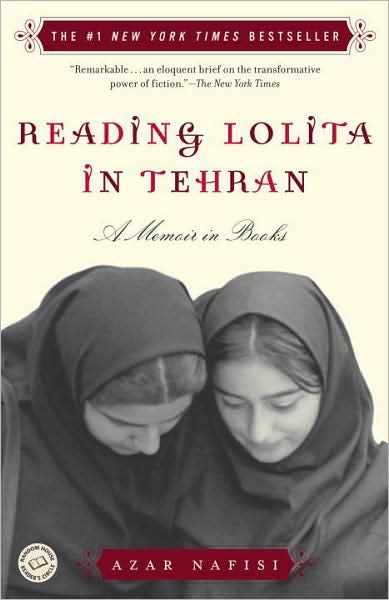
ReadingLolitaInTehranReading Reading Lolita in Tehran, by Azar Nafisi, is not easy. It is, however, rewarding. Appropriate for Banned Book Week, we might want to remind ourselves what a society that bans books actually looks like. Nafisi, an Iranian teacher of English literature, had broadened her mind and had traveled abroad. When she returned to her home country to take up a teaching post, she discovered that the world you always knew can be very unstable. It can change without you realizing it. (Mene, mene, tekel, upharsin, left even the sages scratching their heads.) The Revolution, as it was known in Iran, brought in the radical conservatism of religious outlooks that saw women as little more than temptations for men. The wearing of the veil was enforced by law. Nafisi was told it was a small price to pay for the greater good. The rhetoric is the same every time I’ve been frisked at the airport, although I’m a lifelong pacifist. In Iran, things were much worse.

Nafisi recounts gathering a group of her women students together after she was forced out of the university. They would meet at her apartment to discuss literature, including Vladimir Nabokov’s Lolita. How must it feel to be a woman reading about a man’s obsession with a girl so young? As Nafisi points out, girls of Lolita’s age are considered marriageable in some Islamic states. It isn’t Islam that’s the problem, it is extremism. When I read about how she became “irrelevant,” I literally shuddered. In my own way too, I had been made irrelevant to higher education by those who felt any means would justify religious ends. And the bookstores in Tehran were closed, for they sold dangerous ideas. The irrelevance of one woman, or even half the population, is a small price to pay for self-righteousness.

“You say you’re afraid for God,” Ellen Hopkins wrote in “Manifesto.” Afraid for the Almighty. Such a strange concept. Fundamentalists of all monotheistic stripes believe in an all-powerful God whom they arrogantly presume to protect. How can a human even conceive such hubris? We feel secure in our Bible-emboldened superiority, challenged when reminded that the Quran, the Book of Mormon, or even Science and Health came later, and by definition supersessionism inevitably takes hold. “Paranoia is in bloom,” Muse reminds us. Missiles fall on Tehran, killing women and children. We elect, however, officials who agree that healthcare for women is politically negotiable. The reason has nothing at all to do with justice. It has everything to do with using a black-bound book for power over those who are just twelve-year olds wondering how any of this is even possible.


Acts of Apostles

“Manifesto,” the poem that launched Banned Book Week 2010, was written by banned author Ellen Hopkins. As a perspicacious undergraduate I know pointed out, each stanza of this poem addresses an aspect of that strange cultural fear known as Banned Book Week. Her line, “false
patriots who live in fear of discourse,” in stanza one makes me tremble each time. You see, it is easy to believe that censorship applies only to Nazis goose-stepping around bonfires with books flying through the air like a Steven Spielberg movie, or even, more recently, The Book Thief (the book is better than the movie), or godless Communists. That fear, however, travels both forward and backward in time. The Patriot Act has been at work effacing liberty for several years now, and people too fond of fear are unwilling to withdraw it. The world of frightening ideas in which we live, however, is nothing new. Literary artists bring us to uncomfortable places. That’s why we read them.

If we turn history’s pages back to the Nazis, we find ourselves sitting in judgment over their cowardly act of book burning. Those who never read of the phoenix are swift to recreate the myth. But we do history a disservice if we stop there. I was recently reminded that burning books has a biblical precedent. According to Acts 19.19, while Paul was performing miracles in Ephesus, those who were converted brought out their books of magic and burned them, to the approval of the nascent Christian movement. A Bible that advocates the burning of books is ironic, for the Bible itself has been banned in parts of the world. What greater crime against humanity can there be than the deliberate destruction of its own cultural heritage? We don’t believe in magic any more, but we still burn books.

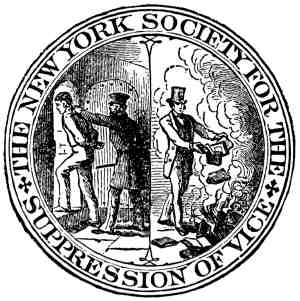
NewYorkSocietyForTheSuppressionOfVice

Owen Davies, in his book Grimoires, shows that the practice goes back even further, with Romans burning books of magic as early as 186 B.C.E. There is a perverse symbolism at work here. As someone who admires, but can’t afford, antique books, the thought of ancient documents intentionally destroyed appears as one of the most easily preventable of cultural crimes. Sometimes as I hurry through the Port Authority Bus Terminal to reach my gate, I see the military guards with machine guns and full combat fatigues and I hope that they don’t stop me to search my bag. The only thing I’m carrying is books. Books, however, convey ideas. Banned Book Week reminds us each year that ideas are essential to the life of the mind. They may be burned or banned, but they will live on. The cost, however, may never be fully recovered by the society that permits its ideas to be incinerated.


Centuries and Millennia

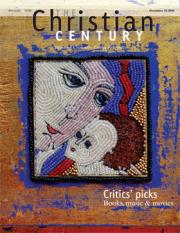
This past week I had a look at Christian Century. It has been about a century since I’ve read it, so I noticed quite a few changes in that time. Magazines in general, I’ve noticed, have been on a weight-reduction program. They are thinner and more direct than they used to be. Also, the last time I looked at Christian Century, perhaps in my college days, it was still assumed that Christianity was the dominant paradigm for American society. Church attendance wasn’t stellar, but it seemed pretty solid. In my town, in any case, pretty much everything was closed on Sundays. There was a sense of status quo ante, perhaps it was just that social changes of the sixties and seventies were taking a while to settle into the cracks. My college town was pretty far from the forefront of theological, or even social developments, and enough other places must have still been as well. There was no denying that you had great odds of finding Christians, self-professing, in places outside the halls of government.

Christian_Century_Dec_2010

It was almost sad that Christian Century felt so diminished. Inside I was surprised to see so many ads and reviews concerning themselves with secularism and/or atheism. Attempts to understand, or convert, were the foci of seminars and books. Get things back to the way they used to be. A century ago. One gets the sense that subscriptions might have slipped a bit. The consensus is breaking up. Too much information—too many choices. People aren’t sure what they will choose after all. The Christian Century seems to have been the nineteenth or twentieth. We are sadder but wiser.

It could be that I’m misreading this whole thing. After all, a couple of the articles were written by big name scholars teaching at big name institutions. One of them, however, is admittedly not a Christian. Those who are are, it seems, trying to learn about this sea change that happened around them while they perhaps supposed everything was progressing as normal. Growing up where I did, I know that I was unaware that people could not, in great masses, not go to church. That other religions were not but minor blips in an otherwise uniformly Christian country. Considering the posturing of many televangelists, I’m not the only one who thought so. It may be that another Christian century is to come. Or even a millennium. Until that happens, however, the institutions that look backward instead of toward a future approaching very fast will feel, I suspect, that a century quickly slipped by and left them wondering in its wake.


ET vs UAC

When I first heard of “unaccompanied alien children,” I hope I might be forgiven for thinking about ET. Or EBEs as they’re sometimes called, “Extraterrestrial Biological Entities.” Instead UACs are serious enough to be assigned their own acronym, and serious politicians are making themselves frantic over the proper response. Should we allow children refugees from Latin America into the “land of opportunity?” This is a matter that calls for immediate debate! But should it? I am an American, but I am also a human being. And a parent. To me few things are more depressing than politics getting in the way of care for children. We fear their Spanish-speaking ways and incipient indigence. At the same time we as taxpayers fund Fundamentalist Mormons in their polygamy, reproducing beyond their ability to pay for themselves. The IRS turns a blind eye to those who claim food stamps and eschew birth control. There are children with nothing in this world standing at the door, and we debate whether to let them in.

I saw a recent opinion survey of major Christian bodies in the United States and their opinions on whether the children should be allowed to enter. White evangelicals came in dead last for the compassionate response of sanctuary. Meanwhile, reading the humanist literature, there is a strong sense that the ethics of this situation demand a, well, humanistic response. These are children, not political chattels. We will not purposefully endanger our own children. In fact, it is a criminal offense to do so. When it comes to somebody else’s children, we fuss and fume and I don’t hear many Fundamentalists saying “What would Jesus do?” in this case. Probably because the answer is clear: let the children come unto me.

Some decisions should be easy to make. Children are not political liabilities. They are often victims of adult complications of a world where a hug would solve many more problem than a gun or a bomb. I’m not sure when compassion became so calculating. I’m old enough to know that there are no easy answers, but I do believe some difficult decisions can be made much easier. Excepting Native Americans, all of our ancestors once entered this continent, largely without permission, as outsiders. Granted, they felt compelled to come—some voluntarily, some not. When their hosts suggested the party was over, they refused to leave. Now their descendants can’t decide whether children are a threat or not. We insist on their right to be born, but we don’t necessarily want to give them a home. When ET went home we all cried. Our tears for our own kind, apparently, are a scarce resource on this planet.

Are we all really just another brick in the wall? (Photo credit: Noir, WikiCommons)

Are we all really just another brick in the wall? (Photo credit: Noir, WikiCommons)


Disarmament

Maybe it’s just where I cast my attention, but debates over belief or unbelief seem to be everywhere these days. The word “militant” is used to describe belief (or lack of belief) systems with a worrying stridency. We want to prove what we believe, with violence, if necessary. So in anticipation of 9/11 Nick Cohen wrote a piece in the Guardian entitled “The phantom menace of militant atheism“. He points out, rightly enough, that you seldom hear of militant atheists being suspected of acts of terrorism. When a bomb goes off, we look for the religion behind it. For each pyromanic a religion can boast, it has a larger number of pacifists, in most cases. As Cohen points out, atheists aren’t blameless—Stalin and Mao remind us of that—but in today’s world of free agent religious ordinance missionaries we seldom, if ever, hear that the atheists have been plotting and planting explosives. In that Cohen is surely right. Humanists (to generalize) tend to hold humanity up, not blow it up.

By Creator:Tadeusz Cyprian (cyfrowe.mnw.art.pl) [Public domain], via Wikimedia Commons

By Creator:Tadeusz Cyprian (cyfrowe.mnw.art.pl) [Public domain], via Wikimedia Commons

There is, however, a strange disconnect that Cohen, and countless others, point(s) out—atheists (and I would broaden this to humanists) are considered immoral. As if the concept of deity were somehow a mark of moral maturity. Of as if a specific belief system were the default for humanity and the rejection of it somehow a willful attempt at evil. Humanists, however, have been around for a long time. We tend to overlook that fact because they weren’t busy plotting to destroy others. Being raised in a religious environment, I didn’t even realize that long before I was born quiet, ethical, good people had come to think that religion was a delusion. Sure, some humanists have weird peccadilloes, but as the headlines remind us, so do the religious. The problem comes in when militants are the measuring rod. “With what measure ye mete, it shall be measured to you again,” a pacifist once said.

At the root of all this blustering is the unrelenting urge to convert. Those who are truly convinced they’ve found the right way—believing or un—want others to see it their way. Problem is, others want the same thing, the other way around. Apart from Cohen’s observations, I would note that we never hear of tolerant believers or unbelievers attacking anyone. Physically or verbally. The mantra of live and let live applies up to the point that a belief system mandates harm and then the old contradictions begin to resurrect themselves. Some belief systems are, by dint of their very premises, immoral. The majority, however, are just fine. If the zeal for conversion can be kept under control. I can envision a world where evangelical atheists could exist side-by-side with those who believe and don’t believe at the same time. And they might even meet together peacefully if only we would leave the militancy at home.


Exceptionalism

UnderTheBannerOfHeavenSome years ago I was invited to a famous person’s house along with some intellectuals—we’re all mature here, so names aren’t necessary. It’s no surprise that I ended up at the children’s table, being soft-spoken as I tend to be. The discussion had turned to international affairs, and since I can barely manage my own affairs I didn’t have much to say. Eventually it was suggested that if rule of law could take hold in the Middle East, strife would end. I finally spoke up, loudly injecting a “no” into the conversation. The problem with religious-based conflict is that the rule of law has been subordinated to the divine will. That is very well illustrated in Jon Krakauer’s Under the Banner of Heaven: A Story of Violent Faith. As Krakauer explains in his conclusions, he had set out to write a book that explored the history and background of his polite, abstemious, and law-abiding Mormon neighbors and friends. The story, however, takes a darker turn.

What Krakauer delivers is not a slam on Mormonism, but rather something far more difficult—an attempted even-handed history. As even Mormons at the various trials depose in the book, the faith has some strange beliefs. All religions do. For a religion less than 200 years old, the Latter-Day Saints also have an impressive violence in their history; parts of this book are like a fantasy novel, they seem so unlikely. Again, nothing unusual here. All religions have violent episodes. In general, religions aren’t violent—people are. The problems arise when the true believer (and there always will be) insists that religion trumps the rule of law every time. As Krakauer shows, those who violate society’s laws are not insane. They are, however, not judging the world by the same standards of the wider society. It’s just that, occurring as it does in the light of an historical period, the strangeness of how a religion starts is clearly illuminated in Mormonism. No number of apocalyptic horsemen will be able to stop the religious imagination once it is fired up. The problem with lines in the sand is that they easily move.

Perhaps the most disturbing tenet of Joseph Smith’s latter-day revelations is that of polygamy. Like a young Augustine, Smith had an eye for the ladies. Personal indulgence at the hand of a religious founder is not at all unusual. The problem is, the women in this book have been abused and traumatized in a religion, not unlike Judaism, Christianity, or Islam, that asserts (or has asserted) male superiority. Girls as young as thirteen or fourteen being married off to men three times their age to join what is essentially a harem doesn’t offer these young ladies a chance to become their own person. The majority of Krakauer’s study focuses on Fundamentalist Mormon sects, and not the mainstream Mormons who have great political power and occasionally run for president. Still, this is a very important book. It is not primarily about the Mormons. It is about those who can’t see beyond a blind faith in what would otherwise be a perfectly good piece of fantasy literature.


Esau and Jacob

“Jacob have I loved, but Esau have I hated,” at least according to the recollection of Paul in Romans. One of the most poignant scenes in the Hebrew Bible is the story of Esau. Born as the elder brother, in ancient times one could expect certain privileges. Yes, Esau sold his birthright to his brother over a rumbling stomach, but he still knew that the blessing—the true gift—was still his. That, however, Jacob took from him by deception. Isaac, their aged father, was blind but wanted to bless his firstborn before he died. While Esau was out hunting, Jacob slipped in, in disguise, and stole the blessing before fleeing to Iraq. In Genesis 27, Esau came in as instructed only to find the blessing gone. His weeping has never ceased through the ages as his father blessed him with a sword. Years later, Jacob returned to find his brother a wealthy and powerful man. A man who forgave and forgot. But Paul remembered.

Rubens, The Reconciliation of Jacob and Esau

Rubens, The Reconciliation of Jacob and Esau

Hate is a strong word. As a child the worst punishment I can recall came from saying that I hated someone. That word was worse than a swear. Hatred was not worthy of a loving god. Like Esau, however, we don’t stay young forever. By our sword we make our living. For some of us that sword was the written word that we were told was sacred. The image of big, hairy Esau weeping before his blind father disturbed me. He’d done nothing wrong. In fact, he was simply doing what his father asked him to do when his brother snuck in and took something that my young mind couldn’t even parse out from the birthright earlier bargained. Clearly, however, it was important.

Upon returning home six chapters later, Jacob fears Esau’s righteous wrath. He knows his brother has legitimate cause to hate him. Esau, however, aware that he has enough, welcomes the prodigal home with open arms. There is enough to go around. Even today, with the will to do so, the hatred could be removed. This is a metaphor, not literalism. Genesis is, after all, not history. Stories, however, can convey what facts cannot. Millennia have passed and myths have come and gone. In the simple, if primitive justice of my childhood, you dare not say you hate your brother. Having grown up with brothers I learned that despite conflicts that inevitably arise, hatred is never the answer. Esau forgave, according to Genesis 33. And the land was wide enough for all.


Founding Principles

That feeling is in the air. Autumn began to stretch its melancholy fingers into August this year. Even before the month was half over the mornings had that chill in them that sparked the trees to begin their slow process of shutting down for the winter. Not wanting to admit that it was time to send my daughter back to college, I resisted what is one of the most compelling senses of self-abnegation that can be known—fall, in all its glory. When I saw a blog post on the Salem Witch Trials, I knew I wasn’t alone. The nights are already longer, and that sunset over summer’s beach comes earlier each day. Salem has a way of bringing that home to me. Innocent people murdered for fictitious crimes. Much of the fear that led to this miscarriage of justice was, of course, inspired by religion. The colonials had a great fear of new religious movements. Although it is difficult to believe, Baptists were such a new religion at the time. Considering how Baptist sensibilities now drive much of the Religious Right, it is difficult to imagine that once upon a time, being a Baptist could lead to accusations of being a witch.

As much as the Religious Right likes to make claims to a primitivism that is completely fiction (Christianity has always been this way), we have lost touch with what it meant to be a Christian in early America. States (still colonies) had their religious preferences, some even established. If you were a Baptist you’d be most comfortable in Rhode Island. If you leaned Quaker, Pennsylvania was for you. When these disparate colonies banded together into a country, it was quickly realized that religious freedom was the only way for them to work together. The government, the state, could not determine matters of individual conscience. Until, that is, that we could declare that the views of particular individuals on birth control—as informed by their religious authorities—could legally deny their employees full health benefits. Oyer and Terminer, anyone?

Freedom is a beautiful idea. It is a concept that only works, however, if it is shared equally. When one faction claims liberty for itself while limiting it for others, we’ve fallen back into times when the Baptist at your door was more dangerous than the Devil in his Hell. And so we revise our history and make claims that America was founded as a Christian nation. Evidence can be ignored, or, failing that, revised. Nothing is written in stone. When you visit Salem, there is a quiet little park, off the beaten path. Under some weary old trees are a set of stone benches against a stone wall. On each of the benches are engraved the names of those executed for being imaginary monsters. The leaves on those trees are, I’m sure, beginning to turn. Soon they will silently fall, and only those who are made of stone will deny that autumn is upon us again.

DSCN0562


Secret Religion

Recently I read an article about a religion called Sabbateanism. I’d never heard of it before, so I turned to the collective wisdom of the human race—the Internet—and came away only more confused. There are so many religions in the world today that no one person can rightfully claim to be an expert on them all. The Sabbateans, it seems, are a secret sect, so not being able to learn about them should not be surprising after all. A Google search soon suggested reading about Illuminati and I realized I was once again in the realm of the conspiracy theory. A few months ago my wife and I began reading a book on the Freemasons (we both have grandparents who were Masons, so it has always been an area of interest). The book, however, was so convoluted that we had to give up. As Poe long ago realized, the best place to hide something is in plain sight. As I pulled up to a stoplight recently, I noticed the car in front of me had the masonic emblem hidden as a decal on its brake lights. Was I on the road to enlightenment?

Sabbateans, it seems, can be traced back to a seventeenth-century rabbi called Sabbatai Zevi, who lived under Muslim rule. Apparently he converted to Islam, but was also recognized as a messiah (there have been more than a few) and his followers went underground. We are told, at least by Wikipedia (where the article suffers from lack of verification) that several groups resemble, or may have derived from, the Sabbateans. It should come as no surprise that a secretive religion would be difficult to verify. That’s the whole point. Most religions claim that a certain small cross-section of believers has some esoteric knowledge that the rest of us lack. It would be difficult to claim any kind of authority if they didn’t.

Conspiracy theories are endlessly fascinating. Whether it is the Bilderberg Group or the Rosicrucians, we’re just sure somebody’s holding out on secret knowledge and power that keeps the rest of us in the dark. Mainstream religions, which tend to train their clergy in mysterious seminaries with arcane knowledge, have always been critical of secret societies. Catholics claimed Masons to be heretical, while Protestants claimed them to be too Catholic. Every religion, however, has its secrets. Umberto Eco and Dan Brown (it hurts just to use those names together in the same sentence) both recognized the appeal of the conspiracy theory in popular literature. The Illuminati, I’m told, are largely taken as a joke on the Internet. In my quieter moments I tent my fingers and consider: that’s just the way they’d want it to be, isn’t it?

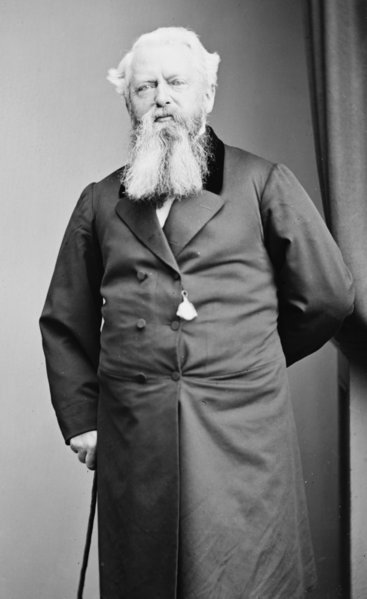
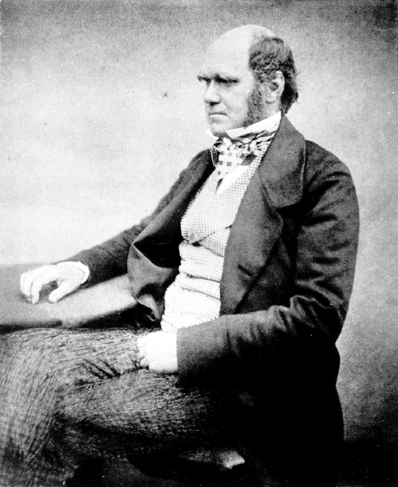
Who is this man?

Who is this man?


Beyond Redemption?

NonbelieverNation The Roman emperor Gaius, it is said, was insane. He perpetrated such antics as declaring war on the North Sea, making his horse a senator, and appearing in public dressed as various gods. Better known as Caligula, Gaius is often presented as evidence of the decadence that would eventually lead to the fall of the Roman Empire. Civilization, we’re told, has progressed enormously since then. We put people on the moon, and we carry in our pockets technology that appears, to mere mortals, as if it’s magic. We have elected an African-American to the White House and men have magnanimously granted females the right to vote. Oh how far we’ve come! And yet, in the midst of our self-congratulation, we have not one, but a plethora of high-ranking politicians in all three branches of the government who believe the world is only 6000 years old. They firmly believe Jesus will return on a white horse (presumably to be made a senator) any day now. And there will be a massive battle of good (us, or at least some of us) versus evil (those not evangelical in orientation) that will lead to the end of the world. And they are easily elected. Is that a knowing smile I see on Gaius’ face?

David Niose, president of the Secular Coalition for America, has written an important book entitled Nonbeliever Nation: The Rise of Secular Americans. Before you run for your shotguns, be assured that Niose is—like most secularists—not trying to do away with religion. Secularity is all about the founding principles of this country: freedom of conscience, the right to believe what we will. Or won’t. Up until the 1950’s the secular aspect of this country was taken more or less for granted. Tellingly, Niose opens his book by looking at the presidential elections of 1912 in which not one of the four candidates had a problem with evolution and even the most religious of them was very much a moderate. A century later and we have rampant Fundamentalists well funded and ready to push other nations toward initiating Armageddon. “Well, they started it!” And still, secular Americans are consistently portrayed as insidious snakes in the garden, trying to destroy everything.

It is difficult to read Nonbeliever Nation and not feel embarrassed as we see the promise of an advanced nation winding back its clock to the point that the educated are presented as ignorant at best—or more likely, evil. Where churches and corporations are increasingly difficult to tell apart, and where basic civil liberties for women and gays are still considered somewhat suspect, as if they hadn’t cleared the desk of the Big Man upstairs. Yes, he does have a beard and a son. And yet, despite the message of that putative son—known as a pacifist with radical ideas about social equality—the faithful bar the way for the oppressed while building the most massive arsenal in the world’s history. Rome, they say, was not built in a day. It didn’t even fall until 476, but already in the first century, large cracks had begun to appear. The difference is that America is far more religious. Does that give us any better chances, or worse? Read David Niose and decide. And, since global warming is real, the North Sea will eventually win in the end.


Men Without Hats

Do you want to start an argument? Mention hijab in a Christian environment. Some tempers will likely flair. The idea that a patriarchal religion would tell women to cover themselves suggests something sinister, doesn’t it? The other day I came across headcoveringmovement.com. There are, as I have come to know, many Christian groups that consider Paul’s directive for women’s headwear as, well, gospel. Commentators still spar about why Paul insisted that women cover their heads in worship. Adding “for the sake of angels” only evokes more convoluted imaginations. As any stroll through Manhattan will reveal, many Jewish men also observe head covering. What is it with bare heads, gods, and angels?

No doubt, in cultures where men are expected to restrain themselves less than women, hair can sometimes be seen as sexually provocative. (I’m not excusing, just observing.) Most men will eventually experience nature’s tonsure in some form or another, and perhaps this knowledge makes feminine hair more alluring. None of this, however, answers the question. What is so hubristic about uncovered heads? I’m not authorized to speak about fashion, but I feel confident in asserting that in many periods of human history, hats were the norm. Look at old portraits. What did Martin Luther or John Calvin look like without their ubiquitous hats? Did they serve to cover bad theological hair days? Or was it just the climate? Distinctive hats have been used to identify social classes and professions. We still use the expression “putting on my [chose a noun] hat.” So what’s all this with head covering for women?

“The wearing of fabric head coverings in worship was universally the practice of Christian women until the twentieth century. What happened? Did we suddenly find some biblical truth to which the saints for thousands of years were blind? Or were our biblical views of women gradually eroded by the modern feminist movement that has infiltrated the Church…? – R.C. Sproul.” So states Headcovering Movement’s homepage at the date of this writing. There can be little doubt about what’s behind this scheme. I recall a phase when my mother wore headscarves to church. Many years later, even in high church Episcopalian settings I’ve seen women walk in with what looked like lace doilies on their heads. Is there an agenda here? I can’t speak for Muslims, but it seems that Sproul believes the rightful place for a woman is beneath a man. Theology in the service of chauvinism. Just try to read 1 Corinthians 11 and come out without a headache. The saint’s logic here is so confused that I want to pull my hat over my eyes. Or I would, if I wore a hat.

Photo credit: Themightyquill, Wikimedia Commons

Photo credit: Themightyquill, Wikimedia Commons


Write the Truth

XalliopePublication is a tricky business. Just ask my friend, K. Marvin Bruce. Marvin and I have known each other for years as he’s been trying to break into fiction publishing. I don’t envy him. His novel, Passion of the Titans, was under contract with an indie publisher who eventually reneged on their agreement. What can you do? As a supporter of publishers you don’t want to sue, so the novel is floating around again, looking for a home. Meanwhile, I was flattered to receive in my mailbox a copy of Calliope magazine. Calliope is published by the Writer’s Special Interest Group of American Mensa, Ltd. Marvin’s story, “Initiating an Apocalypse,” won third place in their fiction open. Not only am I pleased for my friend, but I was glad to see his story was about gods. Zoroastrianism doesn’t get much attention these days, but Marvin’s tale is about a hapless professor who wants to start an apocalypse by using Zoroastrian deities. I won’t give any spoilers since I’m sure few people have read the story.

His tale has me thinking of gods in fiction. I suppose mainstream literary fiction avoids deities, but fantasy, science fiction, and horror all make good use of them from time to time. Neil Gaiman’s American Gods made quite a splash, and although Marvin has no hope of becoming a widely recognized name, his novel also features gods. It is a literary incarnation. We like to see gods in some ways limited to human circumstances. Omnipotence rarely makes for a good plot. In many respects the Bible attests to this. If God is omnipotent (which is not a claim the Bible actually makes) why can’t the world be a happier place? Indeed, the solution most fondly groped by theologians is either free will or a version of the Zoroastrian solution: a god who is evil. Enter the Devil.

The Devil is also undergoing a kind of literary renaissance. We find a plethora of books and movies starring the prince of darkness. Despite the panegyrics of rationalism delivered by angry atheists, nothing salves the human soul like a good supernatural entity. Fiction writers have long recognized that. Gaiman was not the first to make the gods do his bidding in literature. There is a likelihood that even Homer knew the appeal. Many people can accept that gods might exist, and they certainly don’t object to stories in which they cavort. Fiction, as literary analysts know, teaches us about reality. The characters may not be literally true, but the fact is that in our minds there is still plenty of room for gods. And, if you one of the rare ones to read Marvin’s story, you’ll see that, true to human experience, deities don’t act as we expect them to. Savvy publishers, it seems to me, would do well to recognize the appeal of the gods.


God Discount

God is great, despite what Christopher Hitchens wrote, at least, that is, if you want to save 15% without having to talk to a gecko. According to Mulder’s World—I want to believe that what I find on this site is true, but often I find myself feeling more like Scully—Mary’ Gourmet diner in Winston-Salem, North Carolina gives a grace discount. Well, perhaps this is believable. Praying in public has a long pedigree. This past Corpus Christi as I was driving back into town after a day out, I saw a procession walking down the street a few blocks from the local Catholic Church. Vested and carrying a monstrance with a humeral veil, the priest led the faithful out in public for a little recognized festival many suppose to be named after a city in Texas. Actually, I was an acolyte for Corpus Christi one year at the Church of the Advent in Boston. The well-heeled of Beacon Hill, however, knew to expect us out on the genteel streets. Private prayer in public, however, is something quite different.

As a very religious teen, I often went to United Methodist Youth events with the other faithful young. We would stop into restaurants on our long drives and make a show of praying amid the heathen. Some of us (not me, I assure you) even left Chick tracts instead of tips. If we’d ever ventured into Dixie, we might have had a discount. The problem with offering a praying in public discount is that it is impossible to tell if such shows are sincere. I have sat through many such episodes, wondering about Jesus’ statement “But thou, when thou prayest, enter into thy closet, and when thou hast shut thy door, pray to thy Father which is in secret; and thy Father which seeth in secret shall reward thee openly.” Well, that was only the Sermon on the Mount. Here we’re talking fifteen percent! “For where your treasure is, there will your heart be also.” This gecko winks.

IMG_1502Public displays of piety are not uncommon. I spent yesterday at the local County 4-H Fair on a rare day off of work. The Gideons, as always, were there handing out New Testaments. Let your light so shine—they are bright orange. Religious freedom ensures that prayer in public is kosher, as is agnosticism in public. Who is harmed by a public prayer? In that diner, who is made uncomfortable? Sometimes the innocuous act of kindness is a sign of mature morality. How many times—isn’t it nearly always?—does that car cutting you off in traffic have a Jesus fish plastered to the back? “I drive my car,” Daniel Amos sings, “it is a witness.” What you truly believe shows up when you’re behind the wheel more than when you’re behind the napkin. The truth may be out there after all. In the meanwhile, my tip’s on the table.