King Hong

When the same religio-historic event is described in three consecutive books I’ve read on diverse topics, I start to consider what strange form of coincidence is operating here. Coincidences are some of the potent spices that give life flavor—the tragic death of Suzanne Hart on Wednesday when an elevator crushed her to death occurred the very day my bus was late and I took the route directly past her building to avoid the crowds on 42nd Street. What was the series of uncanny events that led me to where someone was about to die? It hardly seems within the divine character. So coincidences have been on my mind of late.

The last three books I read have all discussed the Taiping Rebellion that took place in the mid-nineteenth century. Despite having studied religion all of my life, I had never come across this religiously motivated violence until reading Daniele Bolelli’s 50 Things You’re Not Supposed to Know: Religion. Unrest in imperial China had existed before, but Hong Xiuquan, the leader of the rebellion, was motivated by religion. Xiuquan was a Christian (no doubt the fruit of missionary activity) who came to believe that he was Jesus’ younger brother. His motivation for the rebellion was based on his aberrant version of Christianity that quickly grew into a full-fledged movement calling itself the Heavenly Kingdom. Basing itself in Taiping, the movement adopted the early Christian practice of communal property and came to rule over about 30 million people. The numbers are what is truly stunning about this tragedy. When the conflict with the Qing Dynasty ended, about 20 million people were dead. The number is so high as to shut down comprehension. So many dead because of religion. It has a corporate feel to it.

Religion evolves. When it is spread into new cultures, syncretism takes over. Many religious believers, through faith, insist that their religion is the same as the founder propounded. Such simplistic understanding is not true. Culture, just like biology, lives and grows through evolution. The American Christian dressed in expensive clothes in a phenomenonally costly mega-church with a shining preacher bearing a million-dollar smile is about as far from a property-less, vagabond carpenter from Nazareth as you can get. Yet we still pretend. If that pastor says he is Jesus’ younger brother, chances are good that many will believe him. Stranger things have passed the lips of televangelists. Emotional involvement in religion easily leads the zealous to extreme action. History has demonstrated this time and again. The Taiping Rebellion of the Heavenly Kingdom proves the point, even if we’ve never heard of it. Maybe it is no coincidence after all.


Silent Fright

Baylor University has begun to make quite a showing in the non-sectarian academic world of late. Knowing of the school’s Baptist heritage, I’d always been somewhat suspicious of any scholarship susceptible to doctrinal poisoning. I freely admit that my fear goes back to a hyper-evangelical college roommate. Even at the conservative bastion of Grove City College, John would lament the sorry religious state of the school and repeatedly thought of transferring to Baylor. (I need not fear that John will ever read this—he avoided liberal dribble like it was Planned Parenthood.) By association, Baylor became something in my mind that it apparently is not. When the administration recognized the direction the Southern Baptist Convention was going, they took steps to protect themselves from a takeover (something I’d witnessed at a much smaller school some distance north). The university press has been producing intriguing books, and the sociology department has been cranking out some fascinating studies of religion.

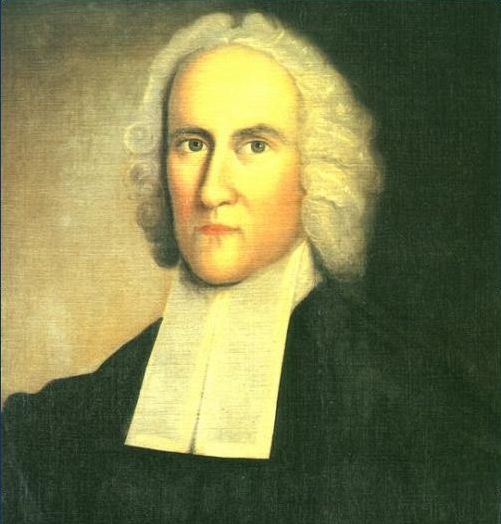
One of the more recent religion in America surveys from Baylor indicates that a correlation exists between the image of God presented by a version of Christianity and that contentedness of believers. More specifically, churches that promote a judgmental image of God (think Jonathan Edwards and his spiritual bedmates) tend to be anxiety-ridden and compulsive. Churches that teach a loving God have more balanced believers. Brimstone and hellfire, in other words, produce the expected results. What the Baylor study shows is not so much surprising as it is scientific. Well, softly scientific. As a social science, sociology relies on statistics and analysis to draw its conclusions. We now have a means of measuring religions outcomes.

Religion is, in many ways, self-fulfilling prophecy. By preparing believers for a literal Hell of a future, it cranks out automatons who’ll do anything to flee from the wrath to come. Herein lies its danger as well. Although some politicians may be naïve about the veracity of belief, many of them realize something their more liberal compatriots don’t—religion motivates. The religion of a loving God who has no Damoclesian sword hovering perilously over the heads of the faithful won’t get them to the polls. The god with believers on a skewer above the everlasting barbeque pit will. Baylor has shown us the data. If we ever hope to redress the damage constantly visited by politicians claiming God has told them to run for office, to invade Iraq, to commit war crimes in the name of the prince of peace, we must act on good information. If religion is a psychological anomaly, it pays to learn a little applied psychology. Otherwise the wrath of an angry god will consume us all.


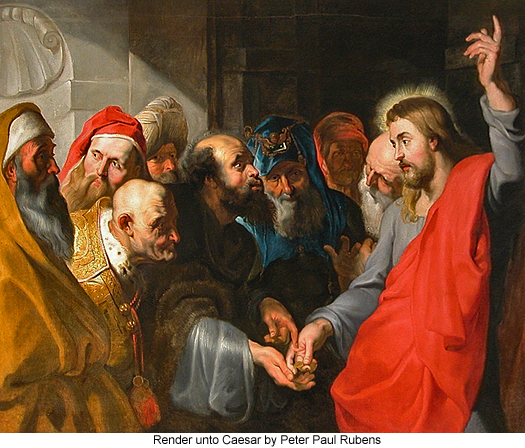
Render unto Caesar

My wife shared a very appropriate video concerning the ongoing tragedy of the GOP race for presidential nominations. Presented as an ad by Jesus, “Jesus” tells how Rick Perry has co-opted his name but not his message.

It is a fun look at a very serious issue. The serious issue is that people unable to think critically about religion are doomed to be its slaves. Where’s the proof that Jesus supports one candidate or another? When is the last time the voting, uncritical public ever demanded the proof?

Thinking back to just a few weeks ago, Herman Cain had made the spectacular claim that God told him to run for president. If the claim was sincere, how could he have withdrawn from the race? Where’s the lightning bolt (as long as we’re believing mythical images of God)? Has anyone checked his office lately to see if he’s still with us?

Religious gullibility is America’s most dangerous deficiency. We elect “the most powerful man on earth” based on his religion, and yet, very few know anything about it. But hey, it sure sounds good!

Religion is the elephant in the room. Nearly all people learn religion from their parents or guardians. Some rebel, but few study it beyond the requirements of their obviously biased religious leaders. Children trust adults to inform them of the truth. We fill their heads with images of a large, white man, bearded, sitting on a huge throne in the sky. You can’t see him, and he doesn’t answer when you talk to him, but he is very, very concerned about who you elect as president.

Many colleges and universities do not offer the opportunity to study religion with neutral experts. Those best poised to make a difference, like large state schools, often shy away from the study of religion completely. Those that do offer the chance to study often unknowingly hire a committed believer, sometimes presenting him or herself duplicitously as neutral and objective. And so the cycle continues. As the old hymn plaintively asks, “will the circle be unbroken?”

As a nation we value religious freedom, but we have set up a system to abuse that freedom. (One might say, “ritually abuse”.) Answer me honestly, Mr. Perry—is it not true? Oh, and that Frisbee is not a threat to national security.


Tolerance, Princeton Style

Princeton is an idealistic kind of town. A seat of great wealth, the town is dominated by the university and yet it manages to retain a sense of genteel quaintness that so often accompanies the aura of financial security. Even with my distrust of money, I love to wander its streets and imagine what the world could be like. My ideal world has bookstores, and so I always stop at the Labyrinth, the current incarnation of the university bookstore in town. Last time I was there I found an overstock sale copy of Ian Buruma’s Taming the Gods: Religion and Democracy on Three Continents. Well, both the price and the topic were right, so I read it this week. Buruma is actually a scholar of democracy, human rights, and journalism, not religion. One of the key identifiers of religion is that there is no central, unifying topic that ties all religions together, and therefore scholars of many disciplines have much to say about it. Buruma offers three chapters illustrating the way that religions interact with society, often violently. He then tenders suggestions for how this violence might be curbed.

Commenting on tensions of Islamic growth in a nominally Christian Europe, Buruma notes that one of the Enlightenment core values is a belief in universals. If truth is truth it is universal. This, he notes, often conflicts with religions since most religions also tend to make universal, often exclusive, claims. Here is precisely where human culture is brought to its knees by religion. Due to their revealed nature, western religions cannot be challenged on any rational grounds. This is as true of Mormonism as it is of Judaism. If God said it, and there is no empirical proof, people have no choice but to obey. Problem is, God can’t make up “his” mind about the final word on the subject. New religions sprout constantly, growing into inevitable conflict with their neighbors. Not to mention those who have reasoned their way out of religion.

What is the limit of religious tolerance? As Buruma notes, tolerance necessarily includes tolerating intolerance. Some religions are constrained to be intolerant of others, and how do we allow them to be part of our little tea party? (The metaphor is intentional. Think about it.) Buruma suggests, as many have, that the rule of law should settle the situation. People must learn to separate civil law from religion. But can it be done? I have serious doubts. I’ve heard this suggested before, by minds far greater than mine. Having grown up as a religious kid, however, I know that rule of law has its limits. It stops once God opens the door to direct revelation, whether to people today or thousands of years ago. Religion is not bound by the rule of law. It is its own highest authority. Many, many people throughout the world believe that. Moses, Jesus, Mohammad, all are noted to have had clashes with civil authorities of one sort or another during their lifetimes. The pattern is set. So even here in Princeton, with an engaging, thoughtful book in my greedy little hands, surrounded by great wealth, I realize just how idealistic all of it can be.


Ignorance Should Be Bliss

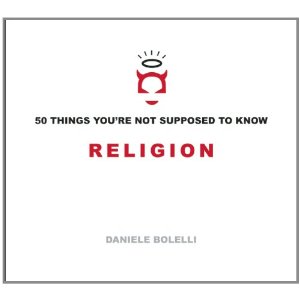
Even before we elected a president who was only a single year older than me, I had the creepy sensation that no one really knows what is going on. Call it what you will, but I am told, that for my own good, some information is kept from me. I can’t recall how old I was when I first came across the word “disinformation,” but the concept—a favorite of conspiracy theorists—has stayed with me ever since. It is that Kafka-esque sense that something is off kilter. Some time back I stumbled across a website called Disinformation, and was immediately intrigued. True to the nature of the title, the site keeps you guessing. I was pleased, therefore, when I was sent a prepublication copy of Daniele Bolelli’s forthcoming title, 50 Things You’re Not Supposed to Know: Religion. Disinformation has a plucky series of books in the 50 Things You’re Not Supposed to Know series, so I was decidedly curious about this new volume.

Not a heavy academic tome, 50 Things You’re Not Supposed to Know: Religion is written in a vein similar to this blog: reflective, unconventional, but not really earth-shattering. It is good fun. Bolelli does a great job pointing out less advertised aspects of otherwise socially respectable religions, not taking cheap shots, but simply rephrasing events as they really happened (mostly). Within all of this, however, some true wisdom lies. In thing 36 (of the 50), “Tao is the Sh*t,” Bolelli notes, “Many are those who, infatuated with all things ‘spiritual,’ forget that real spirituality is nothing but daily life lived with full awareness.” It is clear that Bolelli has an appreciation for eastern religions, but he is not so bourgeois as to let even those escape unscathed.

Often the reading of a book is the sharing of the author’s soul. The acknowledgements were so intense that I immediately felt that Bolelli has a hidden story. As the author of the highly regarded On the Warrior’s Path: Philosophy, Fighting, and Martial Arts Mythology, Bolelli is both a professor and a fourth-degree black belt. Clearly a man with whom to be reckoned (or better, reconciled). I too have been very influenced by a teacher who knows martial arts and who has one of the clearest heads around. I learned from him that there is a spiritual component to martial arts, and that spirituality seemed, rightly or wrongly, to be present even here in this book. Bolelli is willing to take on religions. In our alarmist society that stance is often confused with lack of morals or spiritual insight. From my idiosyncratic position, however, I found Bolelli’s small book engaging and irreverent and provocative (in every sense of the word). Do yourself a favor and read it. If you’re not careful, you’ll snigger a time or two and learn something along the way.


Fecit potentiam

Yesterday at Princeton’s annual seasonal choral concert, the program consisted of Bach. The first piece was a Magnificat, a piece that, in prose form, I quickly memorized at Nashotah House. With our daily double dose of chapel services, liturgical standbys such as the Magnificat quickly became reflex recitations, made with little thought beyond getting on to the next piece. It occurred to me as I listened to it at leisure, the hopes of poor Mary haven’t really materialized after these 2000 plus years. After a couple of millennia, perhaps it is time for a state of the theology assessment.

Despite the veneration of Mary in the liturgical branches of Christianity, the collective handmaids of the Lord have made slow progress in being integrated fully into church leadership. Only with the last century, and fairly late therein, did many Protestant denominations finally recognize that Mary’s gender might have something to teach the men. Paul, for one, would have had none of it. Even today the Roman Catholic Church stalwartly refuses to consider female priesthood. Perhaps Mary’s prayer should be uttered yet again within its walls?

At the section labeled “fecit potentiam,” however, I noticed further lack of fulfillment. “God has shown strength with God’s arm,” the program translates, “God has scattered the proud.” The hopes expressed in the next several verses have been silenced beneath the greed of an economic system with no responsibility. “God has deposed the mighty from their seats.” When did that happen? Those of the Occupy movement who’ve received a face of pepper spray might beg to differ. “God has filled the hungry with good things, and the rich God has sent away empty.” Sent away to their summerhouses, their mansions, and their penthouse apartments? Away from the working class who oil the gears of their massive machines. No, it seems that the Magnificat has not fared so well at predicting the new era to be brought in by a special child.

Of course, Luke’s song of Mary is based on Hannah’s song at becoming the mother of Samuel from the Hebrew Bible. Samuel was the great judge and prophet who saw to the law and order in the land. Strangely, however, the Bible manages to confuse Samuel with his erstwhile enemy Saul, conflating their birth accounts. Isn’t it just like the Bible to confuse the oppressed with the oppressor? The strength shown with the divine arm, the wealthy inform us, is the strength they wield. After all, god and gold differ by only one letter.


Name Recognition

Some two and a half years ago when my brother-in-law Neal Stephenson suggested I start a blog (primarily for the podcasts to which I intend to return), he asked me what I would call such a site. “Sects and Violence in the Ancient World,” was my attempt at a witty, non-committal riposte. Since I was unemployed at the time and still hoping some deus ex machina might put me back into a full-time university post, complete with an Ancient Near Eastern religions component, the title seemed apt. I determined that I would not exploit my relationship to a best-seller author since I wanted to earn my own readership. Sects sells, does they not? Since then I’ve had a number of curious readers wonder why I tend to address modern religious issues, unlike my title suggests. The reason goes back to what I want to be when I grow up.

How many eighteen-year olds really know what their lives will hold in store? Our society asks them to select majors and pick a career path far too young. I had visions of clergyhood in my head so I majored in religion. Like many children of alcoholics, I tend to be addictive in my devotion, so after completing a Master’s in religion, I had to have just one more degree—then I’ll stop—and a doctorate in religion finished ossifying my career track. Having been weaned on the Bible, I’d stuck with it for three degrees and found that during that time the job market had evaporated around me. As I watched society from the sidelines, I saw so many people at the place I had started out, staring wistfully at the Bible, looking for answers. Uncritically, magically expecting a miracle. Just like Oral Roberts said. Once my teaching career had been derailed by misguided Fundamentalists, I realized my interests were much more in the effect religion has on people. It was too late, however, to go back to school.

My way of dealing with any dilemma is to parse its history. That’s why I studied pre-biblical religions along the way to my doctorate in Bible. A couple of things had become clear along the way: religions are very fragile and easily splinter into sects. And most of the large-scale violence in the history of the world has a religious basis. (Probably much of the small-scale violence does as well.) Its origins are literally more ancient than history. What is religion in today’s world if not the direct descendent of sects and violence in the ancient world? And since my idiosyncratic musings have passed the 200K hit mark, it seemed all right to acknowledge the role my brother-in-law has played in all this. So, in good academic fashion, I’d like to acknowledge the suggestions and support of Neal Stephenson in starting this blog, but any errors are, of course, my own.


Imagine Thanksgiving

Although mildly jetlagged and slightly incoherent, a promise is a promise, so I took my family to Manhattan to see (the upper half of) the Macy’s Thanksgiving Day Parade. Commercial and flashy, it is difficult to conceive of a more American expression of holiday wonder. It kicks off the secular Christmas season and the parade forms the background noise to many a feast preparation in the United States. Not living in the city proper, there are limits to how early public transportation can get one into town, so by the time we reached the Upper West Side, the crowds were pretty intense. We met our friends at West 72nd Street and tried to see the floats and balloons over the heads of a sea of humanity; if you could glimpse the flashing tip of a tuba, we counted that as seeing a marching band. The weather was cool but nice and in the dense crowd I kept my hands shoved in pockets, not always sure they were my own pockets, and waited for the next tall or hovering parade feature. In-between times I stared at the building to our left until a friend informed me that it was the Dakota. The site of John Lennon’s slaying and the exterior used in Rosemary’s Baby, where, presciently, a murder victim was laid out on the sidewalk not far from where Lennon fell. Suddenly the parade took on a profundity that betrayed the levity of the gas-filled characters floating by.

Mark David Chapman, a delusional, born again Christian, had spent many hours waiting about where we were suspended in the crowd. Thinking himself Holden Caulfield of the Catcher in the Rye, he murdered Lennon creating a saint and a demon simultaneously. Perhaps John Lennon’s ashes are still floating about Central Park, and as we walked through, the exterior of the Teutonic Dakota took on a haunting quality. Lennon was a lover and a protestor and an experimenter, and scenes from Rosemary’s Baby of Satanists smoking cigars also hung in the air. The shop window displays on Fifth Avenue drew great crowds, but as we drifted toward 51st Street, we decided to stop into Saint Patrick’s Cathedral, along with the surging mass of the faithful.

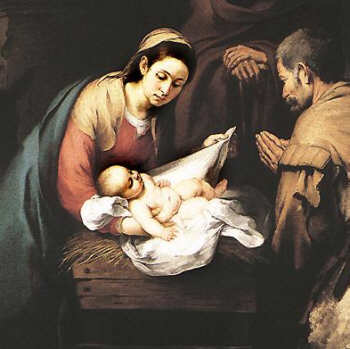
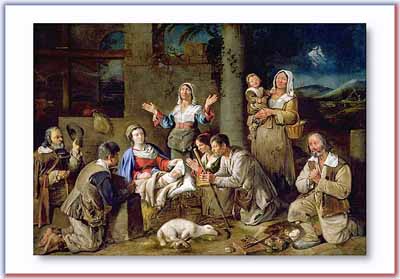
Cathedrals are best enjoyed in quiet solitude. Nevertheless, we followed the pilgrims through the long nave, stopping to glance at the numerous chapels with statues along the way, each with a collection box, securely locked, asking for donations. And people say Christmas is commercial! Want to pray through your favorite saint? Please deposit a quarter. Preferably two. Or more. Their budget in candles alone would support many a smaller church throughout the nation. Advent begins this weekend, so the crèche was set up at the front with life-sized figures of the usual players: holy family, shepherds, wise men. And collection box. There was no baby Jesus and when my daughter asked why I said, pointing to the collection box, apparently they were saving up to purchase one. Keeping Christ in Christmas? Indeed. All those bronze, life-size Pope head statues can’t be cheap. John Lennon was cremated and his ashes scattered, leaving no trace. Popes are cast in bronze. Yes, John Lennon was wealthy, and once quipped that the Beatles were more popular than Jesus. What is the truth of the matter? Looking at the façade of the Dakota, I know where I would rather light a candle.


Hair Today

In what may be the most bizarre recent example of religiously motivated violence, the Associated Press reports that a breakaway Amish group is accused of the crime of haircutting. Amish beliefs about personal appearance are well known, and taking various biblical injunctions seriously, they believe cutting a man’s beard or a woman’s hair to be a sin. (Any Amish reading this, please correct me if I’m wrong.) The aptly named Sam Mullet, the leader of a breakaway Amish group (the article doesn’t specify the contention) has been charged with forceful barbering with intent to shave. Not himself, but other Amish men in Ohio. The Amish trace their roots back to the Anabaptist movement that only accepted adult baptism and would rebaptize those who were sprinkled as infants. They acquired other beliefs along the way such as hard work and industriousness, distinctive dress styles, and the shunning of electricity. They are devoted to pacifism.

The story, which Rod Serling would have been proud to air, has Mullet forcefully cutting the beards of men and the hair of women in another Amish community. The article doesn’t explain how Mullet took on his Delilah-esque treason, but after giving his enemies the Seville treatment, he took photos of his victims. The Amish don’t like pictures either. Apparently the Amish community is terrified of this mad shearing heretic. The mind reels attempting to conjure an image of the struggle or even what might have led to it. Where did the camera come from?

Religion, no matter the denomination, prescribes unusual behavior. What one society supposes to be normative is simply a matter of socialization. When you are brought up with, say, a man wearing a colorful brocade dress while breaking a translucent wafer over a goblet of wine and claiming it to be God, that seems perfectly normal. Anyone who tries to challenge or desecrate this rite would be designated an infidel, heathen, pagan, or worse. Many think the Anabaptists, whether Mennonite, Hutterite, or Amish, to be quaint and curious like forgotten lore. In fact, their religious beliefs go back to a venerable past. Images of The Witness flood to mind when reading how the FBI has become entangled in the barbarous act. Perhaps it is time for Mulder and Scully to make a reappearance. But just in case, perhaps they should sport some sturdy helmets and Kevlar, since reports are out that some Amish are sitting on the porches with shotguns, while one lurks in the shadow with his snipping scissors.


I Left my Bible in San Francisco

Gideon prays for a Bible

I’m staying at the Hilton, Union Square in San Francisco. Surrounding me are over 10,000 (is that a proper myriad?) religion and Bible scholars gathered for the American Academy of Religion and Society of Biblical Literature annual meeting. I travel light. Having left my Bible behind I went to look up something in the Gideon general issue. It is not here. The world’s largest academic conference focusing on the Bible, four hundred years after the King James Version hit the shelves, and I am Bible-less in my hotel room. Of course, once I get to work I will be surrounded by Bibles, some of them walking, talking resources who have the whole book memorized. Yes, the Society is that kind of place. The Gideon hotel Bible is an American institution. It feels like a constitutional right. When my daughter was very young and we stayed in a hotel, she found the Gideon Bible and asked what it was. We explained that the Gideons leave a Bible in hotel rooms all across the country. “That’s just weird,” she said with all the conviction of a pre-teen.

There are current movements to remove Gideon Bibles from hotels. They do, after all, represent a privileged position to Christianity in a nation founded on religious freedom. No one is forcing you to read that Bible, but it is there, like a tell-tale heart, in your bedside table drawer. Thumping incessantly. To read or not to read? What’s on the TV?

My favorite discussions at conferences like this are with scholars who find the privileging of one religion distressing. Our culture is so grown up in so many ways; we are more enlightened about sexuality and gender and race, and yet, and yet… We still like to have that Gideon Bible nearby. We like our political candidates Christian. Preferably Protestant, although a Catholic will do if he (inevitably he) is on the right side of the right issues. We are vaguely and implicitly afraid of those who don’t share our convictions.

In a moment of levity near closing time yesterday, a customer stopped by to say Routledge should have more gimmicks. Many publishers have giveaways, and some have little games that bearded, bespectacled professors sometimes even play. The customer suggest darts, or even a little shooting range. I said, “Guns and theology are sure to lead to trouble.” Although he laughed, I was serious. Few things in this world can be justified as easily as religiously motivated slayings, at least in the minds of the perpetrators. And to borrow a phrase from a budding genius, “That’s just weird.”


Saints and Angels

From Wikipedia Commons

San Francisco. As I take a look down the coast I see Santa Barbara, Los Angeles, San Diego. So many saints and angels. And, of course, San Luis Obispo. I’m here in the city of Saint Francis (an odd choice for a rustic saint) for the American Academy of Religion and Society of Biblical Literature annual meeting. Before I began this blog, I attended this conference every year, and then the societies decided that they didn’t like each other any more and had a trial separation. Unwittingly, they were following religion, American style. If we don’t like you, even if you’re in the same tradition, we’ll take our marbles (presuming we have any) and go form our own denomination. This easy divorce of dogma is very American.

For such a religious nation, the United States is remarkably prone to hatred. Even scholars of religion can’t get along. We call each other names like “liberal,” “conservative,” “evangelical,” “secular,” “atheist.” Each a swear word. Long ago it was recognized that these two academies have more in common than not. I mean, come on! Dowdy professors studying utterly impractical, arcane beliefs bridging magic and modernity? Who do we think we’re kidding? I used to give papers here based on one single word of the Bible! So in the city of Saint Francis we are together again. American Academy of Religion, meet Society of Biblical Literature. In the same hotel, but maybe not yet ready to share the same bed.

We reflect the society we inhabit. Christianity in America has a venerable tradition of splitting and reuniting. Evangelical United Brethren, United Methodist, United Church of Christ, anybody but the Unification Church. We come together and soon learn that some molecule of doctrine is out of place—time for an atomic reaction. We are the scholars of religion, and we can’t stand each other. So we’re leading the way, America—we’re reconciling! We’re trying to get together for awhile. Next time let’s make it in a Protestant city.


Inauguration

Religion is an all-consuming beast. I suppose that goes with the territory of making universal claims. In the light of the already ponderous influence religion has had on the selection of presidential candidates this year, I recently re-read Abraham Lincoln’s second inaugural address, delivered not long before his assassination. The Civil War was not yet quite over, and Lincoln knew the horror of the situation. He famously said:

Both [sides in the conflict] read the same Bible, and pray to the same God; and each invokes His aid against the other. It may seem strange that any men should dare to ask a just God’s assistance in wringing their bread from the sweat of other men’s faces; but let us judge not that we be not judged. The prayers of both could not be answered; that of neither has been answered fully. The Almighty has his own purposes. “Woe unto the world because of offences! for it must needs be that offences come; but woe to that man by whom the offence cometh!”

Lincoln, never a regular church member, knew his Bible but also knew the soul of his country. A century later Bob Dylan would compose “With God on Our Side,” in protest to another war where divine backing was assumed. When a major undertaking is launched, the Lord is always on the guest list. The problem is, God can’t sit on both sides of the table.

The religicizing of politics is a dirty business. Religion plays so heavily on the emotions that it is, as history has shown, a truly unstoppable force. Even so great a conservative as Barry Goldwater felt this mixing of religion and politics an unholy cocktail. “I am frankly sick and tired of the political preachers across this country telling me as a citizen that if I want to be a moral person, I must believe in A, B, C, and D. Just who do they think they are?” (The Congressional Record, 16 September 1981). So here we go again.

Religion and politics are a dangerous mixture. In a culture as religious as that of the United States, the potential for (and realization of) disaster is great. Think of the lives lost based on the religious outlook of our last president! Over the past few decades we’ve witnessed a parade of preachers, Fundamentalists, believers in New Religious Movements, and quasi-certifiable candidates march across our political stage, and yet our doors are closed to those who refuse to make public statements about their intimate relationship with an ancient savior. For the Bible tells us so. If we believe the preachers. Those of us who don’t will be putting on our Bob Dylan records and reading the wise words of Abraham Lincoln.


Layers

I’m all for not offending anyone. I became P.C. in principal just as soon as my consciousness was raised that the very basics of English grammar caused distress to others (often women), based on its androcentric orientation. It does seem, however, that God is even more easily offended than humans. This raises some tricky questions when it involves the highest perceived authority within or outside of the universe, the font of all morality. Some of the things that offend God, if the sources are to be believed, are most unusual. Last night I attended one of those you-should-send-your-child-to-Europe-while-in-high-school seminars that remind you that being a good parent always involves a touch of poverty. The trip is a very expensive bargain, giving your daughter or son a lasting set of life-changing memories. So far I’m on board. And, what is a trip to Europe without visiting some of the great cathedrals that exhausted local, medieval economies but left modern companions to Stonehenge all around the continent? Okay. Having seen my fair share of European cathedrals, that’s perfectly understandable. Then the kicker: since these are religious places, there is a dress code.

Anyone familiar with mainstream culture even in America is aware of this idea. To attend a place where God is supposed to be present, you must dress for the occasion. The Simpsons can throw around the phrase “Sunday clothes” and everyone knows what they mean. Attend a religious service dressed down and you’ll immediately discover it. Some traditions raise this to a high sartorial art—some Episcopalians I know are so fastidious that the very statues of Jesus seem decidedly underdressed. Since your child will be in Europe and be in cathedrals, you mustn’t offend God in a foreign land. No jeans. As the parent of a teen that means buying a whole new wardrobe to add to the pricetag. Apparently the Levi-Strauss tribe is not the same one in the Pentateuch. I spent some time in Israel a number of years back. The dress code is very strict around sacred spots. No shorts or visible shoulders. In the hot climate of the Middle East wearing excessive layers, well, it’s no wonder some folks get a little irritable. God’s standards are high. Celestial even.

Nowhere is God’s discriminating taste more evident in the required “modesty” of women. Nobody told me, but apparently women are quite a turn-on to gods. Read Genesis 6 and see if you don’t agree. The burden of public hiding beneath cloth falls on them. A man’s calf doesn’t excite God nearly so much as a lady’s. In Jerusalem they used to hand our hooded cloaks to wear over your street clothes for visiting holy places, just in case. Lord knows we wouldn’t want any unrest in the Middle East!

Having lived in Europe for three years, I know about and despise ugly Americans. At home I find our culture and manner of dress fascinating. Most of us don’t think what it says about our religion. If you ever catch a priest in church wearing jeans you’ll have your own local, mini culture-shock. I’d like to figure out why God is so easily offended by human fashion, but there is no time. I’m off to the street corner with my tin cup to try to raise money to buy clothes so my child won’t offend God in Europe.

No shoes, no shirt, no salvation.


P. T. Mammon

Phineas Taylor Barnum is frequently treated as a figure of cynicism personified. As the founder of what would eventually become the Ringling Brothers, Barnum and Bailey Circus, P. T. was a noted hoaxer and scam artist. He capitalized on the fact that people will pay to see anything they are gullible enough to believe. Unfortunately, many human beings were exploited for their unusual characteristics, but he was also known as a philanthropist with an eye for reform. Most people don’t realize that Barnum’s early career involved being a salesman for the Sears’ Pictorial Illustrations of the Bible. From Bible salesman to huckster extraordinaire. The great American success story.

In what I see as a related article on Religion Dispatches, St. Paul’s Cathedral, London, has taken legal action to move Occupy London protestors from its property. As religions go, it is difficult to conceive of a more established, conformist church than the C of E. (Well, maybe the Roman Catholic Church could vie.) St. Paul’s Cathedral actually charges an admission fee (not a cheap one either), perhaps cashing in on Mary Poppins; Feed the Bishops, I believe it’s called. The reason that the Cathedral is seeking to remove the undesirables (the cathedral is next door to the London Stock Exchange) is that they interference in business. Hard to charge admission to people who can’t come in. It’s not so much to save souls as it is to horde pounds. Problem is, the message of ancient Christianity more closely matches that of the Occupy movement than it does the Church of England. Barnum knew the selling power of religion. So do bishops and countless priests. How long do you suppose the clergy would remain if Christianity went back to the “tent making” model of the first century? I suspect there would be quite a few more prelates at Occupy London.

Somehow money and religion have become all tangled together. Not that I would begrudge any clergy of a fair salary—I’ve been on the receiving end of not receiving adequate pay myself, and I wish it on no one. When money, however, is the sine qua non of the religious establishment, where has compassion gone? One would like to think that clergy would be among the first to stand in solidarity with those protesting unfair business practices. But ah, the church is very establishment-oriented. Not just the C of E, either. Most churches have fallen into the comfortable zone of supporting the system and teaching their adherents that this is all in the divine plan. A kind of cosmic quid pro quo. According to the Gospel writers Jesus chased the money-changers out of the temple. Phineas Taylor knew that giving people what they wanted often trumped the honest truth. “The noblest art is that of making others happy,” he once stated. Somewhere along the line, the admission price shifted from the circus to the cathedral. There is one born every minute, indeed.


Jew Want Some Jesus with That?

There’s been a trend in the last few years of journalists following a religious lifestyle not their own to learn something of another faith. This often leads to whimsical—occasionally funny—books that generally sell well. I appreciate the effort of those who try to open their minds to other belief systems, but the truly funny thing about religions is that they are very difficult to study objectively. There is a universe of difference between studying the papacy and being a Pope (I am only guessing here). This aspect of the religious explorer came through quite clearly in Benyamin Cohen’s My Jesus Year. Cohen, an Orthodox Jew, without compromising his faith, spent a year of Sundays attending various churches with two goals in mind: to learn more about Christianity and to appreciate his own Judaism more. The result is, for someone raised in the Christian tradition, a little disorienting.

We seldom tell children about other religions since such information would imply that religion is a choice, a marketplace. We prefer to tell our children that our brand is the right one—the only right one—because that is what we believe. By the time most children encounter those of other faiths, the indoctrination of their childhood has congealed. Many Christians will send their children to Christian daycare, often followed by parochial schools. Where would they expect to meet their first Muslim? Unfortunately, it is often on the battlefield. By protecting our children from the dangers of foreign faiths, we endanger everyone involved. So, reading a book written by a Jew, I felt a little strange—as if maybe Christianity wasn’t the majority faith after all. Given the wide diversity of Christianities Cohen cites, this is not so strange after all. Am I more like the evangelical Ultimate Christian Wrestling crowd or the Roman Catholic doing crossword puzzles during mass? Or none of the above?

Cohen notes that evangelical pastors (or laypersons, Christian or not) will sometimes share their secrets of success with those of other religions. Tellingly, he quotes Bernie Marcus, co-founder of Home Depot, explaining to rabbis how they might drum up more excitement: “You’re in the marketing business; you’re selling a product. You’re selling religion. It happens to be something that’s good for people. But you can’t get to them to sell them the religion because you’re in the marketing business and you don’t realize you’re in the marketing business.” Is that what it really comes down to? Religion is frequently described as a marketplace; it is the only paradigm available for the true capitalist. We’ve seen it take over higher education, and now those who give advice to religious leaders are the captains of industry. We have become victims of our own success. There was a time when religion stood outside the ordinary, but now it can be packaged and marketed and sold. An excellent exercise on your way to the store, however, is to stand back and listen to the other customers. If you are lucky, one of them will be Benyamin Cohen.