Patriot Games

Earlier this week I had the occasion to find myself in Newark’s Liberty Airport. I had mentally prepared myself for a government-sponsored groping (I find full-body scanners immoral and, no matter what the Patriot Act says, illegal) but I managed to make it through with just emptying my pockets and walking around in my stocking feet. Once I arrived at the gate area, I was once again struck by the duplicitous use of religion in America. Posted above each gate was a small banner reading “God Bless America” surrounding a stylized flag. I thought of the Hindus, Buddhists, and atheists flying out of that terminal (and in Newark I am certain there were all three species, in spades). Since 9/11 the staffs of the large New York City airports are justifiably cautious, but the blending of nationalism with divine will always makes me nervous. Especially since the weightier implications are so readily ignored.

In the biblical world the ideal was that travelers would be treated fairly. Someone away from home is already at a disadvantage. In ancient times the traveler deserved special consideration, not to be swindled or met with unfairness. Looking around at the prices merchants charge for those who’ve gone beyond the gate and have no choice, it struck me how when religion and economy collide, economy always continues on unscathed. The weary traveler, according to the Bible, especially deserves fair treatment. Charging extra to someone already at a disadvantage violates just about every biblical standard that echoes through those unread pages. God bless America? Only if it fills the coffers.

The sentiment expressed in “God bless America” is vastly at odds with the way we behave. Taking advantage of others is the bane of prophets and messiahs alike. Taking care of the poor, the disadvantaged, the traveler—this is the biblical ideal. Instead it is easier to band-aid over our sins with posters asking God’s blessing on our insincerity. Many people fear Islamic fundamentalists without taking into account the more subtle damage done by our own homegrown variety, giddily holding hands with an unfettered free market. Cheating the traveler may not be as wicked as blowing up an airplane, but both these tangled vines, in the biblical view, spring from the same root.



How Great Thy Art

Celebrating the four hundredth birthday of the King James Bible, last month’s Harper’s magazine featured seven popular writers giving their take on various passages from the Bible. Noting the Bible more or less gave the English language its shape, this little exercise in eisegesis represents, in small measure, the power of the Bible even today. While many lament that America is no longer Bible-centered, with its misuse and abuse in the political arena the Bible still seems to be the heavyweight champion of the country, albeit altered through the eyes of certain key players. I was happy to note Harper’s chose novelists and poets to respond rather than theologians, biblical scholars, or—God help us—televangelists or politicians (frequently the same thing). What emerges is a tapestry that alike puts biblical scholars’ teeth on edge and makes fundamentalists wince.

Novelist Howard Jacobson looks at the creation story and takes the angle that God is a lonely artist. Writes Jacobson on the creation of light: “It’s good because it reveals an idea. The artist isn’t obligated to explain what that idea is.” Here, in the words of a non-specialist (can one say “amateur” of an accomplished novelist?) lies the heart of the matter. Art is creation and creation must be interpreted. Anyone who has undertaken a creative enterprise knows the feeling—the casual, disinterested glance at your work hurts. Any artist wants to be appreciated. Once the metaphor of God’s authorship of the Bible is recognized, there is a group of human artists hiding somewhere outside the annals of history. One of the great mysteries of the Bible is that we know very little about who wrote it (with the exception of Paul in the Christian Scriptures.)

The Bible is a work of art on a broad canvas. Today it is frequently criticized for the abuses it endures, but if we allow it its original purpose the view should become more sympathetic. The Bible was composed by individuals struggling with ideas. For millennia it served as a useful guide to the human experience until the church became politically powerful during the reign of the emperor Constantine. From that point on, deep knowledge of the Bible became power. For centuries the church guarded that power, keeping it in the hands of the clergy. Now that the Bible has become democratized, it threatens to take over democracy itself. Out there, somewhere unseen, the original artists are snickering as they chink their glasses and toast their accomplishment—they are writers who changed the world. But I suspect Paul is there too, warning them against partying too much.


Friend of Jonah

Last year a gray whale was spotted off the coast of Herzliya in Israel. As in the days of Jonah. Actually, we need to turn the clock back a little further. According to Arthur Max of the Associated Press, the gray whale was hunted to extinction in the Atlantic already in the eighteenth century. This whale, therefore, had to travel north of Canada from the Pacific Ocean through channels that are normally frozen. Global warming has opened these passageways and plankton last seen in the north Atlantic 800,000 years ago have begun to reappear. If Jonah was smart, he’d have stayed in that whale and would’ve just kept going.

Big business stands to lose the most from cleaning up the environment. It cuts into the bottom line. Happily, if brainlessly, joining the laissez-faire coven are many of the “Religious Right” who see destruction of the environment as part of God’s plan. So much for “and behold, it was very good.” When free market economists first met the conservative evangelicals it seemed that they had little in common beyond similar haircuts and a desire to turn time back to the 1950s. Since then they’ve joined to become a very powerful force in American politics, preventing any headway to improving the globe for others, even if it isn’t a personal concern of theirs. So much for “do unto others as you would have them do unto you.”

Each year in my Prophets class I have students that are far more concerned that a literal Jonah was swallowed by a literal whale rather than hearing the message Jonah proclaimed: repent or face destruction. If we turn the thermostat up a few degrees more each year maybe Jesus will finally jump on that white stallion and split the Mount of Olives. You can’t quite see the Mediterranean from there, but if you could you might spot a lonely gray whale. You don’t need to look for the little man inside. That whale is the sign of Jonah.

Wave to Jonah for me!


Reverend Sanders?

According to the Associated Press yesterday, Yenitza Colichon was sentenced to 18 months’ probation for child neglect and cruelty. The charges stemmed from a 2007 religious ceremony in which her seven-year-old daughter was made to watch a chicken sacrifice in New Jersey, and the girl was fed the animal’s heart. The practice is part of the Palo Mayombe religion of central Africa. This whole incident highlights the vital question of when religion crosses the line into child neglect. Many of us bear scars—some psychological, some physical—from our religious upbringings. It has been concluded by psychologists that children do not possess the level of abstraction necessary to deal with religious concepts until they are about the age of twelve. Parents, often fearful of eternal consequences should their children depart the one, true faith (whatever that is), begin religious instruction early, often passing their children off to others who are in no real sense an expert in the religion itself.

The United States embraces, on paper, the concept of freedom of religion. Rightly, it seems, the strong arm of the state will step in when a child is endangered or neglected. The unanswered question is at what point does this neglect or endangerment occur? Authorities turn a blind eye if the faith is time-honored, and, especially, if it is of European/American extraction. Typically of the monotheistic variety. What is standard practice for other religions, as this case demonstrates, may be called into question. Sacrifice is also at the heart of the Judeo-Christian tradition. Sublimated into different forms for both political and theological reasons, those of us in that tradition have abstracted sacrifice to bloodless words on a page. When we see red, child neglect and cruelty are cited.

Religions frequently make extreme claims over the lives of their adherents. Most religions relax such claims for children, but others continue ancient practice that is tacitly condoned. Sometimes those permissible rites cause real physical pain and scars. If under the hand of a moyel, okay; if scarification in African tradition, not okay. Religions denigrating personal achievements of the young, setting them onto a path of failure, okay; religions ritually killing animals, as even the Bible demands, not okay. Without making any judgment on specific religious outlooks, the reality of lingering effects remains. Are the terrors of Christian nightmares inspired by tales of Hell any less cruel than watching a domesticated animal die? Is eating a chicken heart any less unusual that fish on Fridays? Is being unfamiliar with a religion grounds for dismissing its authenticity or claim for equality? Some of us find animal sacrifice distasteful, but if we proclaim a tidy sacrifice each Sunday, and share it with our children, that particular rite/right is protected by law.

What would (wiki-commons) chickens do?


Voted Off the Island

One of my readers sent me an article about the Church of Sweden. According to this article only about 15 percent of the members of this national church “believe in Jesus.” The question raised by this statistic is a vital one in a world where politics and religion become inextricably intertwined: what is Christianity and who decides? As the recent vote in New York permitting gay marriage (about time!) shows, many who identify themselves as Christians in America equate that religious outlook with conservative political views (even on issues the Bible says little about). It is what the believer says they “believe” that defines the religion. Ancient religions, as I have noted before, show that this outlook on devotional practice is not the only alternative.

Religions began as a matter of praxis—what people did rather than what they believed. What does an almighty deity gain from theological assent in the heads of believers? Is it a warm, fuzzy feeling or something more? Belief, a very strong motivating factor in humanity, is a psychological phenomenon, not a spiritual one. Many religious groups today are reluctant to accept that psychology covers the territory formerly covered by spirituality. Both phenomena (or the phenomenon) occur in the brain. If a brain does not assent to the typical belief structure, is it thereby deported from the gathering of a religious body? Many times in religious history that has been the case, but what do we say to the Church of Sweden? Kick out 85 percent of your members? I can see many unhappy, unemployed clergy in such a future.

What does it mean to be Christian? Is it to deny civil rights to anyone who differs in outlook or lifestyle from you? Is it sleepily to say “yea” when you wake up after a sermon? Or is it following the teachings of Jesus? The same one who once taught his followers to love those who differed from them, to turn the other cheek instead of proactively pulling out their handguns? It seems that in the modern furor to laid hold of claims of absolute righteousness humanity has somewhere fallen between the cracks. I’ve never been assaulted by a Swede, and I don’t recall, in recent years, Sweden invading other countries to further its economic fortunes. Could it be that, to paraphrase a religious thinker of antiquity, a Swede shall lead them?


Contriving the Rapture

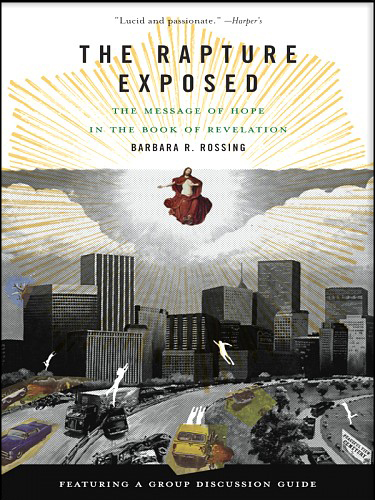
In the light of last month’s failed rapture attempt, I decided to read a book that I picked up some years ago that had been written in the wake of the millennial scare. Having grown up with nightmares of the rapture, I learned during my first college class on the book of Revelation that it was relatively modern meme, invented in the nineteenth century. Barbara Rossing’s The Rapture Exposed seemed a good way to refresh my memory without having to go through all those boxes of books in the attic to find my original textbooks. Rossing, a Lutheran minister and New Testament professor, brings to light some very important facts beyond the historical roots of this theological fabrication—facts that should concern religious and secular alike. The rapture was invented by John Nelson Darby, a founder of the Plymouth Brethren and convoluted biblical scholar. Basing his roadmap of the future singularly on Daniel 9, he concocted the rapture to make sense of his apocalyptic epiphany. Drawing diverse sections of Paul’s letters to the Thessalonians, the Gospel of Matthew, and the book of Revelation together, he mixed thoroughly, half-baked it, and pulled the rapture out of the oven.

The idea caught like wildfire. Today young people who’ve never read the Bible and who’ve seldom attended religious services know what the rapture is. What they do not realize is that nearly all of the Christian tradition rejects it, seeing it for what it is—a Johnny-come-lately of amateur theology that sees the Bible through the lenses of dilettante-sensibilities like those of Michael Drosnin (The Bible Code man). Instead of seriously reading the Bible and trying to understand it, society prefers to see it as a little bit of magic in the midst of our scientific and technical world view. It is a safe place where bits of the supernatural are preserved and that defies rational explanation. Rossing’s book does a good job of exposing the wrong-headedness of LaHaye’s Left Behind conclave, but she overlooks an important feature of this coterie: they have an unconfessed agenda.

The unspoken agenda is best summed up by Lt. Frank Drebin of Police Squad when he says, “blowing away a fleeing suspect with my 44 magnum used to mean everything to me. I enjoyed it, well who wouldn’t?” Rossing misunderstands Fundamentalism when she expresses surprise at the bloodlust present in the Left Behind novels. What she doesn’t take into account is that, as a collective, Fundamentalists thrive on self-righteousness. Feeling the same violent urges that others do—all humans experience violent emotions—they sublimate that aggression and save it for the unrighteous—God’s enemies. When the gloves come off in the apocalypse, that hatred bursts out in good, old-fashioned bloodletting—albeit with combat helicopters and high-tech weaponry. Of the Christians I know who own guns, the Fundamentalists are most avid in their rights to do so. In college I met my first Christian survivalists and I learned that the rapture was a ruse. It is a deadly mix, especially when this warped theology makes it into politics. Although Rossing’s vision of a new earth in the second half of her book may not appeal to everyone, Americans should read at least the first few chapters to learn why the rapture will never occur.


Floods and Fairytales

Never mind that the Bible gives only a cursory description of “Noah’s ark.” Never mind that the story in Genesis is clearly derivative from Mesopotamian originals such as the epics of Ziusudra, Atrahasis, and Gilgamesh (the Utnapishtim version). Never mind that all species of animals cannot survive within a single, extremely limited biosphere without evolving afterward into the diversity that the world currently hosts, even counting extinctions. Never mind that not enough water exists (with apologies to Kevin Costner) to cover all landforms without every mountain being pounded flat and stacked neatly on top of the ocean floor. In short, never mind reality—people will continue to build replicas of Noah’s ark. As a literary trope the ark has proved invaluable; many of my posts demonstrate how it appears and reappears in books and movies as a symbol of human irresponsibility. And yet, in order to demonstrate the veracity of an ancient myth, we continue to build fundamentalist arks.

Yesterday my wife pointed me to a msnbc story of an ark being built—and sailed—in the Netherlands. Certainly those in the “low countries” have global warming to deal with more immediately that those on higher (geologically, not morally, speaking) ground, and the engineer of this particular ark does not strike the viewer as a rabid literalist (he is a little too unkempt for that, and his shirt is not white and he wears no tie). John Huibers, however, worries about a more localized flood in the Netherlands. The ark may be overkill since polar bears, koala bears and panda bears are rare in Amsterdam, at least when one is not medicated. Arks, however, make great tourist attractions.

In Hong Kong the Kwok brothers built an ark replica in 2009. Greenpeace has one in Istanbul. A Christian theme-park featuring a full-size ark is under development in Kentucky, and just two years ago I drove past a roadside ark being built in Maryland. Most of these arks, interestingly, follow the design in the Sun Pictures’ production In Search of Noah’s Ark rather than the more traditional, mythic design in my children’s Bible. It is a natural human tendency to mistake form for substance. The story of Noah is a cautionary tale that has taken on daunting real-life implications in our treatment of our planet. Water is the signature of life, but for us land-dwellers too much is not a good thing. Thankfully, should a flood come, there will soon be enough arks around the world that would-be Noahs may find themselves in a buyers’ market.

Still my favorite ark


A Midsummer’s Daydream

Solstices and equinoxes are among the earliest religious festivals in the world. While there is no means of proving this, the signs are fairly indicative; ancient peoples were close watchers of the sky. Like many other species of animals, they used subtle clues to help them determine which direction to go at what time of year. Once agriculture developed, the sky contained the key of when to plant and when to harvest and when to thank the gods. It is no surprise that when the classical religions developed many of their festivals centered around, especially, the equinoxes and the winter solstice. Did they even bother with the summer?

The summer solstice tends to get lost in most modern festive calendars: it is summer, a time when we are busy relaxing—the crops are in the ground, firewood need not be gathered just yet, and life is perhaps just a tiny bit easier (except for those poor kids who still have to finish out the school year!). No cause for wonder that this particular holiday (traditionally Midsummer) is most evident in northern Europe where in just six months days will be dreadfully short and very cold. Midsummer celebrates light, fertility, and healing. Some traditions claim that witches meet on Midsummer as the sun begins, once again, its inexorable journey south (from the northern hemisphere perspective) nearly to disappear in the dark December.

The modern day Midsummer celebration held by reconstructionist Neo-Pagans is Litha. The name is borrowed from the Venerable Bede but the observance of the solstice is certainly authentic. It is often celebrated with fires to shorten the already apocopated night. It is the time when darkness is at bay. It is perhaps telling that the major religions have little to add to days of relatively carefree existence. People need their religion when things go bad, but when the struggle is minimized we might leave angry gods behind for a while and just bask in the ease of it all. But, as the Neo-Pagans and witches know, the longest day of the year also foreshadows the darkness that, until this day next year, will never again allow us as much light.

Northern European Midsummer's bonfire


Stranger Tides

Yo, ho, ho and a plate of spaghetti

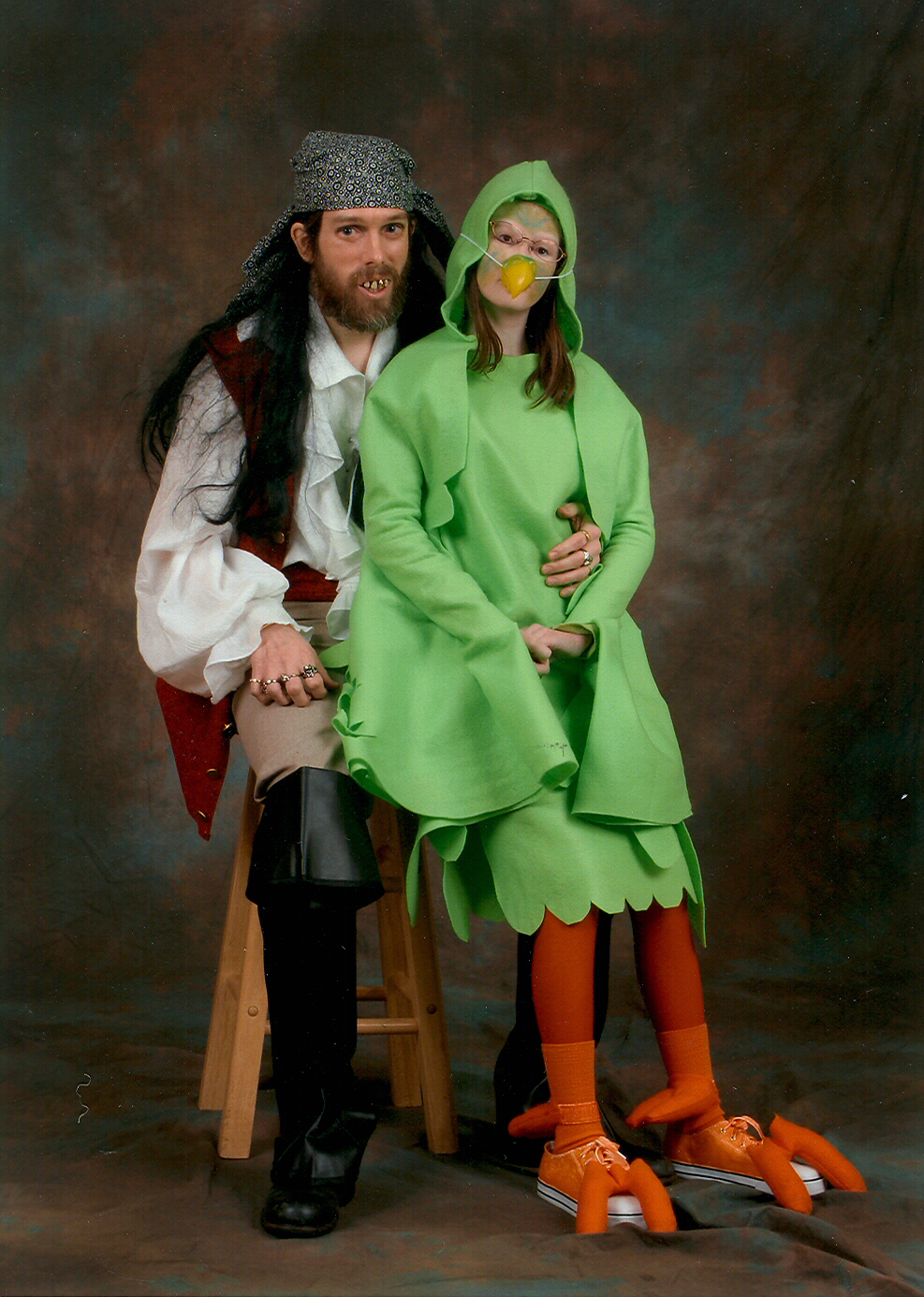
The closest I’ve come to appreciating pirates is the command of the Flying Spaghetti Monster that its devotees must wear pirate costumes. Nevertheless, being only human, I was curious about the fourth installment of Disney’s Pirates of the Caribbean series although the old storyline had mercifully died out. This weekend my family joined a handful of others still showing interest and went to watch Captain Jack Sparrow’s antics on the silver screen. Perhaps it was because this movie actually followed, loosely, an actual book instead of a theme-park phantasmagoric pastiche, but I found the movie surpassed my expectations. I’m discussing it here because of the heavy dose of religious concepts brought into the story by the inclusion of a missionary.

In typical Pirates fashion, the character introductions are unconventional, and so it is with Philip, the missionary. Tied to a mast on Blackbeard’s ship as a kind of human talisman, the poor man is cut down by Sparrow and a crewman during a mutiny. The crewman declares to Philip, “You are either for us or against us!” to which the missionary replies, “I am neither with you, nor am I against you!” The crewman asks Sparrow if that is possible, to which Captain Jack replies, “He’s religious, I believe it’s required.” This was possibly the funniest line in the movie, but it was so because of the underlying truth. The sarcasm here is directed at a representative of a church that will ultimately lead to the destruction of eternal life. Granted, the agents of that destruction are Catholic, presumably.

Once the fountain of youth is discovered and Blackbeard and Barbossa engage in their swordplay, Spanish troops arrive and promptly destroy the pagan fountain declaring that the church (presumably Catholic) is the only means to eternal life. The Protestant missionary, meanwhile, in an act of self-sacrifice returns to free a misunderstood mermaid. (This is Disney, after all.) The dialogue is difficult to remember from a single viewing, but the addition of religious elements beyond the supernatural lent a gravitas to this final Pirate film that the others lacked. Even placed among the fantastic, the religious elements grounded it in a reality where faith, sacrifice, and fortitude became intrinsic to the story. I doubt I’ll head off to the Spanish Main any time soon, but I appreciate movies that offer a bit of substance along with their entertainment on that transatlantic crossing.


Exegesis Dies

One of the time-honored adages among composition primers is that a serious writer will own a well-worn dictionary and thesaurus. In twenty-first century terms that equates, I suppose, to frequently visiting bookmarked dictionary and thesaurus websites. While writing my dissertation I once cited a dictionary—likely Merriam-Webster—only to be told that the definitive dictionary for academic purposes was the Oxford English Dictionary. Copyright laws prevent some dictionary sites from including entries from the OED, and, given the perpetual vicissitudes of streams of income, I really can’t afford to subscribe to the fee-based OED website, much less purchase the physical hardcopy. Dictionary.com remains free and even has a handy thesaurus, so it is my well-worn website. Many electronic wordsmithies offer a word of the day, and so on my morning visit to dictionary.com I found a familiar word awaiting today: eisegesis. Eisegesis, according to the this online dictionary is: “An interpretation that expresses the interpreter’s own ideas, bias, or the like, rather than the meaning of the text.”

In biblical studies eisegesis is utilized like an academic swear word. The true scholar engages in exegesis, the practice that is supposed to reveal what the original text actually meant. The problem, of course, is that what the text originally meant depends on the baggage the reader brings with him or herself. Reader-response theorists inform us that even an author loses control of words once they are scrawled on paper (or electrons, I suspect). The words convey their own interpretation, and, as in any communication system, the transmission must be interpreted through the medium of a receiver. My understanding of the original meaning will depend on what I bring to the parchment. Even the author cannot control the denotation of what s/he has written, for connotation always lurks in the shadowy corners of the room.

The implication of this simply truth for any religious writing should be transparent. We do not control the words—we interpret them. I’ve taught many fundamentalists over the years who bring this weary refrain to the text: “I don’t interpret the Bible, I just read it.” Reading is interpreting. The words on a page (or monitor) are simply a system of ciphers that must be processed. The way your brain processes them will be different from the way my brain does. For the fundamentalist, God wrote the words, but God has no physical brain so how are we to find the true meaning? Exegesis. At the heart of the matter, however, all exegesis is eisegesis. The example I like to give my classes is the word “die” —what does it mean? Most say something like “to stop living.” Those with a background in machining might say die is a noun indicating a mould or tooling device to form an object. Some even know it could be the singular of the word “dice.” Once they’ve exhausted their suggestions, I inform them any of them could be correct, only I had neglected to tell them it was intended to be the feminine singular form of the definite article in German.


Funny Faith

The entertainment industry is a window through which we might see what it is we value. After all, our mad-money and disposable income are often channeled toward the things we want, as opposed to what we really need. Living near New York City, it is clear that entertainment is also big business. Last night Spider-Man opened on Broadway to decidedly lackluster reviews. The web-slinger has had quite a journey from comic book to the musical stage—sometimes making it big, other times getting squashed. Earlier this week, however, it was The Book of Mormon that was making the news. Winning nine Tony awards, this musical is the first thing to pop up on a Google search when “Book of Mormon” is typed in (at the moment), I suppose, much to Mitt Romney’s chagrin.

A friend recently asked me why people take religion so seriously. To me it seems that it is a matter of historical development. Most religions developed before the culture of leisure took over. As I tell my students each semester, even in the early part of last century most people lived on farms rather than in cities. Time for leisure was rare and life was taken seriously: all work and no play. If we push that back a century, when the Church of Jesus Christ of Latter Day Saints was started, the effect was even more widespread. Go back to the days of Muhammad, Jesus, or Moses and the struggle to survive gets increasingly more difficult. Religion is a coping mechanism. When worries about food and shelter become less onerous, we can laugh at the path that led us here. Along the way few of us have met radioactive spiders, but most of us have been warmed, singed, or wholly consumed by religion in some form.

Well, in the entertainment industry talent also plays into it. But it has to be the right combination of talent. Matt Stone and Trey Parker have been making the social commentary A-list for several years now. (Bono and the Edge have too, but Broadway just doesn’t seem to be their genre.) Maybe trying to convert those of vastly different culture to white-shirt-and-tie, clean-cut American values is inherently funny. I suspect there is something more at work here. We are allowed to laugh at Mormonism—the other white religion—without too much recrimination. It is safe. What I doubt we’d ever see on Broadway is The Book of Common Prayer: the Musical. On the other hand, I wouldn’t be surprised to see the Incredible Hulk lurch onto stage and burst into song.

Everybody dance!


Bread Alone

The sad story of the death of an eight-year old girl from Irvington, New Jersey bears uncanny echoes to a case a year and a half ago of a mother who starved her children believing God would provide. The current case of Christiana Glenn’s death is heart-wrenching and the outlook is not improved when it appears that the girl’s mother had religious motivation to abuse her child. Christiana died from untreated physical wounds and malnutrition, prompting columnist Kathleen O’Brien to write about how food and religion often come together in unusual ways. As O’Brien points out, religions generally safeguard children from food privations, but less scrupulous leaders of what are frequently termed “cults” do not have the same strictures. The only real difference between a religion and a cult is society’s attitude toward it—religions tend to be larger and with finer pedigrees, but beliefs are beliefs. When religions seek control over believers’ lives, they often delve into the practice of deprivations, generally mild. More extreme groups take the idea to fatal limits.

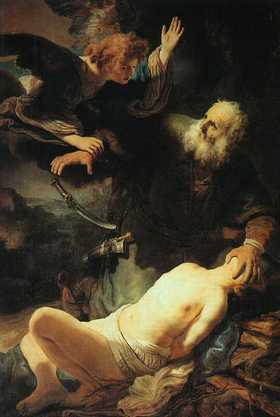
Even the Bible records from near the very beginning that deprivations are part of the religious expectation. One of the most complex and frightening stories from Genesis is that of Abraham’s near sacrifice of Isaac. No matter how theologians wash it, this story retains its stain of an adult—whether directed by God or not is a mute point—attempting to harm a child in the name of faith. The story, many centuries later, still sent Søren Kierkegaard into a tailspin that came out as Fear and Trembling. What kind of deity asks for a child to be harmed, even in jest? For Christiana Glenn, there’s no taking it back. The Bible tells us nothing of how the interior life of Isaac responded to this episode.

Food and religion are among the most common elements abused in American society. For our bifurcated (if not bipolar) outlook, one sustains body and the other sustains soul. While science still lacks evidence for the soul, the body remains the only basis upon which we have to base our ethics. Even biology dictates that care of one’s own young is an evolutionary imperative. It is tragic indeed when a religion overrides what all cultures respect as the ultimate “should” —take care of your children. In a world overpopulated by religious experts the street value of the soul will never face a recession. Believers, characterized my many religions as sheep, will go wherever their leaders tell them to go. As a culture suspicious of funding the study of religion, it may not be food that is reaped at the end of this harvest.

Thou shalt not...


Blood Lust

They emerge at night. They take your life-essence. They are very difficult to remove. In a particular political party their ruthless ways are highly praised. Yesterday I had occasion to watch the History Channel’s Vampire Secrets. Frequent readers of this blog know of my contention that horror films generally convey religious fears and certainly the vampire is prominent among such hosts of fear. Although superstition has held that actual creatures drew actual bodily fluids from their victims as far back as the Sumerians, today’s perception of the vampire has gone through several transformations. This particular documentary attempts to trace the origins of the modern vampire fascination through its major stages, beginning in ancient times. The writers and editors seem to favor a Far East origin of the concept, but linger for several minutes on the character of Lilith in Jewish folklore. Although Lilith does not really fit the profile of a classic vampire, she does contain a key to understanding the transformations: they are religious in nature.

People have believed in blood-suckers long before the GOP took on its recent transformation; there is no doubt, however, that the blood-lust of the vampire developed in the light of Christian ideas about the crucifixion. The regular imbibing of “blood” was an aspect of early Christianity that led to problems with the Roman authorities supposing this was some sort of precursor to Vampire: the Masquerade. By the time stories began to circulate about Elizabeth Bathory (ironically, at the same time the King James Version of the Bible was being translated) and her famous blood-lust, and after Bram Stoker later selected Vlad Tepes as a fictional model for his Dracula, blood-ingestion had become the singular hallmark of the vampire. In both cases, despite their historical facts, religious elements had entered in.

One of the most disturbing transformations, however, is that whereby religion itself becomes vampiristic. Originally established as a means of propitiating angry deities, religion very early assumed the aspect of blood-letting as a means of accomplishing that propitiation. With the development of religious abstractions, however, literal bloodshed has become distasteful and less common, but the deities still demand sacrifice. Even in the twenty-first century many accepting people are informed of the pecuniary sacrifice desired, commanded even, by the gods. While the occasional poverty-stricken cleric may occasionally appear, many far surpass the status quo in their crystal cathedrals while many of the faithful suffer want. The History Channel found vampire subcultures in the streets of New York City. They might also have found them in just about any town in any country of the world.

Saint or sinner?


Faith Value

An interesting op-ed piece by Doyle McManus of the Los Angeles Times appeared in today’s newspaper. McManus notes that twenty-eight of the forty-four Presidents of the United States have come from just four mainstream Protestant denominations. This year’s Republican front-runner list contains no mainstream Protestant denominational candidates at all. This McManus takes to reflect a growing tolerance among the American populace, but also shows how deeply rooted religion is in what has become, in a covert way, a theocratic state. Religious sentiment rules politics and savvy politicians know how to play the religion card to achieve the power they crave. As McManus’ column makes clear, when campaign season rolls around candidates begin attending church again. Of course, the average American accepts their sincere proclamations of religious faith at face value.

McManus also points out that the front-runner for the GOP, Mitt Romney, will face some difficulty as a member of the Church of Jesus Christ of Latter Day Saints. Most evangelical Protestants reject Mormonism from their fold, claiming that they follow a different shepherd or just see everything through rose-colored glasses. Mormonism, however, is among the fastest growing denominations in the country (the claim for fastest is staked by far too many to get an accurate count; it is a safe bet, however, that it is evangelical). Mormons tend to come down on the right side of conservative social issues, but without the seal of mainstream approval, the bid for presidency remains a difficult goal.

The other corollary that McManus points out is that mainstream denominations are losing their place of social prominence. Today it is far more likely that a person refers to a Pentecostal or non-denominational believer (or even a Catholic!) as a “Christian” than they would refer to a Methodist, Presbyterian, or a Lutheran as such. Both the political and religious rules have changed. Americans want a Christian President, but they have lost sight of what that actually means. In the mud-slinging that accompanies any campaign season, suspicions cast on a candidate’s political orthodoxy will be sure to score big points. It is an open question whether a democracy and a theocracy can truly coexist.

WWJ(S)D?


Crossing Over

The periodic reforms that have swept through the church like so many Massachusetts tornadoes have often whirled around the matter of ceremony. Certainly there have been disputes over obtuse points of esoteric doctrine for which there is no final arbiter, but frequently the rancor involves what the faithful do when they meet together. In keeping with ancient templates, religion is generally a matter of what people do more than of what they believe. I personally had my love of ceremony beaten out of me by its plangent and perpetual repetition at an institution so enamored of it that humans and their needs were viewed as mere obstacles to sacerdotal perfection. Nevertheless, as the school year winds down, ceremony is all around us: graduations, awards dinners, rites of social passage. Last night I attended a Girl Scout bridging ceremony. Bridging is the symbolic crossing of a bridge to indicate a new level of commitment and integration into the larger Girl Scout community.

It's just a bridge.

As I sat staring at the bridge, waiting for the celebration to begin, it occurred to me that this was very much like a religious service. A group of spectators had gathered to watch a ritual unfold—a ritual that involved everyday objects invested with a new significance by the context. The bridge is just a small arch bridge over artificial water; before the ceremony kids run and jump over it with no fear of divine reprisal. Once the correct words are spoken, however, crossing the bridge becomes a solemn act. The ceremony opened with a kind of invocation, a creed (the Girl Scout law), a kind of Scripture reading—complete with exegesis of what that “Scripture” means and a reference to God as creator of all—a sacramental act of transformation, and even a hymn or two. The main difference I felt between this ceremony and most religious events was that the Girl Scouts are far more accepting and affirming than most religious conglomerations. Of course, there is the matter of gender distinction, but what is a church without any exclusivity?

I have great admiration for the Girl Scouts. In the face of a community that continues to act out male supremacy as a matter of God-given right, the Girl Scouts (and other similar organizations) offer a place for young women to assert their sense of belonging. Religion has just as often been used to suppress aspirations as it has been to uplift them. Life is difficult enough without God breathing down our necks. Human institutions that encourage thoughtful regard for those who are different, or underprivileged, or simply overlooked, often fill the gaps that religions callously leave behind. Yes, some religious institutions still display a social conscience, but if we wait for the religious to solve the suffering of the world, it is good to have groups like the Girl Scouts around who actually put their beliefs behind their ceremonies into action.