A Tribute

Judith Mills Gray, 2009

The death of a friend always covers life with a hazy gauze of disbelief for some time. In my fitful career I’ve taught several hundred students, and of those several hundred a handful have become friends. When the painful debacle of Nashotah House took place and I was reduced to a weeping mound of incoherent impulses, those who were friends tried to console me. Some had fortunately moved on by that point. Judith Mills Gray was one of those who had become a friend although she had made it to safety before me. Readers of this blog will likely not recognize her name—she never earned lots of money, the measure we use assess a person’s importance these days—but she was an artist, a deeply spiritual woman, and one of the kindest people I have ever known. In a day when the seminary actively discriminated against women, she managed to hang onto a place among the boys and did so with good humor. After my short stint as Registrar, she came along to lift that burden from my shoulders. When she left the seminary, my tiny family sat in her tiny house and wished her the joy that Nashotah could never offer.

Just two years ago we went to visit her in her native West Virginia. She was proof to me at that point that recovery from institutional abuse is possible, but I could see there were still scars. Many of those who suffered through years at the seminary left very bitter—I count myself among them—but Judith rose above it all. She was not perfect—none of us are—but she was a person determined to leave this world a better place than she found it. That is a tall order when the church, the putative bastion of good, turns all its guns on you. As Judith and I shared what would become our final reminiscences together, I sensed that ultimately she had come out the winner.

We are all born into a life with far more questions than answers. Jesus seemed to have had the idea that it was good to console those in difficulty, heal wounds, and try to make your fellow sojourners happy. Judith followed that path without the benefit of having the answers. Along the way we shared many laughs and quite a few tears. We both had experienced the face that the church carefully hides from the wider public, the face that finds Jesus a little too idealistic and hate and revenge a simpler and more effective option. Judith never returned hate for hate. She continued trying to find a path where, although not ordained, she could still minister to others. For those few of us fortunate enough to know her, she was an example of how to make gold out of lead. In my case, I know that there will be lead in my life for quite some time now that she is gone. I also know that lead can, and sometimes does, turn to gold.



Witch Kitsch

Salem is a town with a conflicted identity. The true history of the death of innocent women and men for a fictional crime is sobering. In a day when few take witches seriously—certainly not many believe that supernatural, green-faced hags fly the unfriendly skies—it is difficult to sense the utter terror the idea once comprised. We are still afraid, but our fears take more current forms. So with its lugubrious history, Salem now demonstrates itself as a model of tolerance. One local source cited the fact that eight or nine hundred modern witches live in the city. Modern Wicca, while taken very seriously by its practitioners, is laughingly appreciated by those who find release in the caricature of fictional, idealized witches. The police cars in the city of Salem even have witches riding broomsticks on them.

In this day of triteness and easy entertainment, it is easier to project the fictional image of the pointy-hatted witch and laugh at our past mistakes. Salem bills itself as “Witch Town” and hosts several witch museums, varying in historical accuracy. Shops throughout the town exploit this image of the harmless witch. It is difficult for the visitor to know which witch believes his or her establishment to be authentic and which is just out for a quick buck.

Places have a feel to them, as any pilgrim knows. The National Park Service, in its visitor center for Salem has a question-board that asks, “How Many Witches were Executed in Salem?” The answer underneath is “None.” Instead, twenty regular people were murdered for a crime they didn’t commit. The witch hysteria happened so early in the history of the town that it appears foundational for all its later developments. Who would go out of their way to visit yet another thriving mercantile port of the eighteenth century, were it not for the tragedy underlying it all? Like children laughing while making guilty eyes at their parents, those who prosper over Salem’s sad history realize that whether modern witches live there or not, religious intolerance is never a heritage to wear proudly. Exploiting a tragedy to make a profit is a time-honored American practice, and the real witch to fear is the one who says, “cash or credit?”


Lesson of Salem

I married a witch. I suppose I ought to clarify that a bit. My wife is descended from Rebecca Nurse’s brother Jacob. Rebecca Nurse was one of those unfortunately hanged as a witch in Salem, Massachusetts in 1692. My family has been spending the last couple of days touring Salem, seeking to get in touch with our heritage. Yesterday we had the rare opportunity to tour the home of Rebecca Nurse which, remarkably, still stands over 300 years after the tortured events of the late seventeenth century. Our tour guide was impressively knowledgeable about the witch hysteria. She noted that in the Puritan (Reformed) mindset, with no science to speak of, evil could only be explained by the Devil. If misfortune came, the Devil was to blame. Even after the “witches” were exonerated (too late to save 20 lives), it was understood that the Devil incited the girls to make their false claims against their ultimately and penultimately righteous neighbors. Without the Devil none of this made sense.

The Rebecca Nurse homestead

Salem was founded as a utopian community free to live out its Puritan religion. It was named after Jerusalem, a city of peace (!). As our guide noted, religious freedom was not the same as tolerance; the Puritans wanted the freedom to celebrate their own religion, but were extremely suspicious of all others. One of those hanged as a witch, George Jacobs, had nearly beaten a neighbor to death simply because he was a Quaker. Rebecca Nurse, however, at 72 years old, was no threat to anybody. She was a member of a Christian community that turned on her. Condemned for charges the nearly deaf woman could not even hear properly, she was hanged for consorting with a mythical Devil.

Rev. Parris's house, where the witch hysteria began

No doubt the religion of the Puritans was a harsh religion with a God nearly as unforgiving as that of Sweeny Todd. The problems occurred, however, when the law came into the hands of religious leaders. There is an allegory and a moral to this story. Today many of the tourist attractions in Salem focus on the need for true tolerance. They no doubt come closer to the spirit of the founder of Christianity than the Puritans ever did. As I stood looking over the hole in the ground that is all that remains of Rev. Parris’ parsonage—the very location the witch hysteria began as his daughter Betty started to act odd after hearing the stories of the slave Tituba—a profound sadness afflicted me. Twenty people died and many lost all their worldly possessions because of an uncontrolled mythology of a church convinced of its own righteousness. An allegory and moral for the twenty-first century indeed. Have we yet learned the lesson of Salem?


Agnostic Gnostic

Ever have the feeling that you’re being watched? While touring the Salem Towne House in Old Sturbridge Village in Massachusetts, that fact that Mr. Towne was a Mason became abundantly clear. In the ballroom of his historic house the “eye of God” was looking down from the ceiling, and those who are astute observers could find other Masonic symbols in the house. Indeed, the ballroom walls were painted with cedars of Lebanon, the very trees Solomon was said to have utilized in the construction of the first temple in Jerusalem. Historically nothing is known of Solomon and the tradition of the Masons originating with that event can be nothing more than folklore, yet the connection is taken very seriously by some Masons.

Cedars of Lebanon

My grandfather was a Mason, but the desire to join the secret society never blossomed in me. I’d read Holy Blood, Holy Grail long before The Da Vinci Code ever drew attention to it, but being of a somewhat skeptical bent, I found most of it unbelievable. There is no doubt that the Masons had a very influential, if secretive impact on early modern history. I never seriously researched the group, but it is clear that their origin myths are very religious indeed. I looked right into God’s eye yesterday—how was I to question it? I was standing amid the cedars of Lebanon, after all.

Somebody's eye is watching you.

The desire to possess secret knowledge runs profoundly throughout history. Those who possess knowledge possess power. The Gnostic tradition is based on this very idea; God has revealed secret knowledge to some while the rest of us grope in the dark. Best to keep that knowledge clandestine. The Masons, wittingly or un, are part of this tradition. They are the putative guardians of esoteric knowledge, hidden amid the shadows of cedars and behind the clouds in the sky. In this day of abundant, free knowledge—it is given away every day on the Internet, for those who know how to discern—it may be difficult to comprehend that much can be hidden. As I stood looking God in the eye yesterday, however, I realized that there is far too much for any one scholar ever to learn.


And I Feel Fine

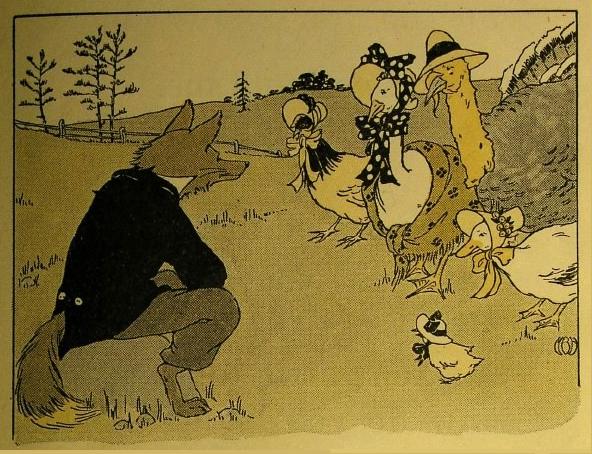
“Is something supposed to have happened?”—Jane Banks in Mary Poppins. The world was supposed to have ended yesterday, but I haven’t yet looked out my windows to make sure. I suspect that everything is pretty much the way it was on Friday. Nevertheless, I have to admit to a tiny bit of relief. I do not believe in a mythic end of the world, and yet there is always that taunting doubt that maybe somebody knows more than me. To calm my jitters, I watched Chicken Little last night. This particular Disney movie has never been one of my favorites, but yesterday it struck me as a parable for our times. Even better, the original folktale is a parable for our times. No one knows when the story originated; it is an example of a folktale that belittles paranoia and the mass hysteria that tends to accompany it. A common ending has a fox eating all the concerned animals as they make their way to the authorities.

Our culture is rife with end-days beliefs. Since this is an idea clearly traceable to non-biblical origins, one might suppose that Fundamentalists would eschew it, but as we have seen the last few days, quite the opposite is true. Those who like Chicken Licken or Cocky Lockey go around declaring the end of all things clearly believe they will be rewarded for their special efforts. Instead, history will class them along with Goosey Loosey and Turkey Lurkey—those who are easily led. Perhaps the oddest result of this recent scare is that many people will not abandon the belief, but will simply push it off. We have another scheduled apocalypse for the end of 2012. Is it because we are now so closely connected by the umbilical Internet that our natural fears have become international?

The claims seem to be arriving thick and fast. I remember the end of the world scare of 1979 when I was in high school. There seemed to be a hiatus until 1999, and since then the dates have begun to bottleneck. What we are seeing is the role-playing of a Christian mythology, and herein is the real danger. A true believer can try to initiate the end times. We only need recall 9/11 to test that. Like most religions, Christianity has developed its own unique mythology that freely borrows elements from both other religions and popular culture. The apocalypse has a history, you know. Overall the false scare of the end of all things has been good for this blog. It was not without irony that I noticed my post for May 21 was number 666. But like the clock that is still ticking, this post will clear that hurdle, and the world will be around for a long time yet to come. Now I need to go and pull back the curtains, just to make sure, and keep an eye out for Foxy Loxy.


Dog Gone Rapture

With the world about to end tomorrow, a friend pointed me to a story of a savvy entrepreneur. The idea is so obvious that I’m completely jealous I didn’t think of it myself. Among the Fundamentalist camp it is widely acknowledged that animals don’t have souls. They do, however, make wonderful companions nevertheless. When their good Christian owners are raptured to the skies, Rover is consigned to a cruel death by starvation if his soulless biological form is left inside. Poor soulless, sinless Rover! Reason (such as any theological thought can be called “reason”) and emotion clash. Bart Centre comes to the rescue. His company will break into the now abandoned private property that God had blessed you with, and rescue your pet. For a reasonable fee. As an atheist, Centre is pretty sure he won’t be going anywhere.

At notable—and even some rather forgettable—points in human history, people have guessed that it is all about to end. This is a strange belief when parsed apart from its original context. Ancient mythical thought tended to be holistic. We humans, with our own cycle of births and deaths, have trouble imagining anything that doesn’t follow the same pattern. All things must have beginnings and ends. Zoroastrianism began as a persecuted sect among the Old Persian religious realm. Persecuted sects tend to want an end to the suffering, and so it is no surprise that Zoroastrians gave us the end of the world. When Judaism was under the severe predation of Antiochus IV Epiphanes, it too looked for a radical change. Christianity under Nero and Domitian looked for a triumphant culmination of a universal purpose. And no end came. Instead, under Constantine Christianity gained a privileged position. With only periodic outbreaks, concern for the end of all things was pacified.

Today with the ease of lifestyle among most American Christians, it is surprising to see such antipathy toward the world. In the words of the Metatron, “Was Wisconsin really that bad?” Or maybe I have read it wrong. Perhaps this is the final culmination of the Prosperity Gospel: Christians have got it so good that the only way to better their lot is to end it all? Religions have always demonstrated their acquisitiveness either in terms of souls or currency. When you’re on top of that world, what direction is there to go but out? But you can’t take it with you, including your soulless friends. Perhaps that’s the real lesson in all of this: humans struggle to mix reason and emotion into one psyche, despite their diverse evolutionary paths to consciousness. We may readily accept the mythical but still wonder who will take Rover for his walk.

Cafe Press's take on the issue


Of the Zombies, By the Zombies, For the Zombies

In what is sure to be a controversial move, the Center for Disease Control has posted an official government blog post entitled “Preparedness 101: Zombie Apocalypse.” (Be warned, if you click on this link it may be considerable time before the page loads—it has been receiving a tremendous number of hits.) Written by Ali S. Khan, the Assistant Surgeon General and head of the CDC, the article is actually about hurricane preparedness, but with zombie furor being what it is, many on the Internet are taking the warning seriously. Literally even. Citing the tsunami in Japan and the concerns for leaking radiation, the article begins with a lighthearted fear-fest that then reveals the actual concern. Humor in the government? This is something we should all encourage!

The analogue with the current rapture fever was immediately obvious. I grew up in terror of the rapture, but when I began to take courses on the Bible from scholars who knew about apocalyptic literature, its context, and what it was intended to do, I realized that the rapture was invented in the nineteenth century by evangelists with no critical training, misreading the book of Revelation. As much as we like to break history into discrete units, time simply keeps flowing and the current of fear generated in the nineteenth gushed into the twentieth century culminating in the birth of the Christian fundamentalist movement. For many people in the twenty-first century, fundamentalism and Roman Catholicism are the two ancient strands of Christianity that legitimately lay claim to the title. At least half of this history is backward.

The Bible itself, when read in context, shows the errors of the rapture-hungry. The idea is a blend of obscure bits of Paul’s letters, mixed into Revelation and stirred vigorously. Then half-baked. The Bible does not give us a rapture. The CDC does not give us a zombie apocalypse. We know where the myth of zombies originates (I have posted on the topic before) and we know zombies are as fictional as griffons and centaurs. Nevertheless, faith springs eternal. Those dissatisfied with all that life has to offer turn to zombies for an equalizingly grim future for all humankind. It’s all gonna rot, baby. Except, of course, for those who’ve been raptured before it happens. When the zombies fail to show up after Saturday’s non-event, all of us will feel pretty silly just looking at each other as Ali S. Khan comes up with his next zinger.

The author, upon reading the CDC blog.


Silver Scream

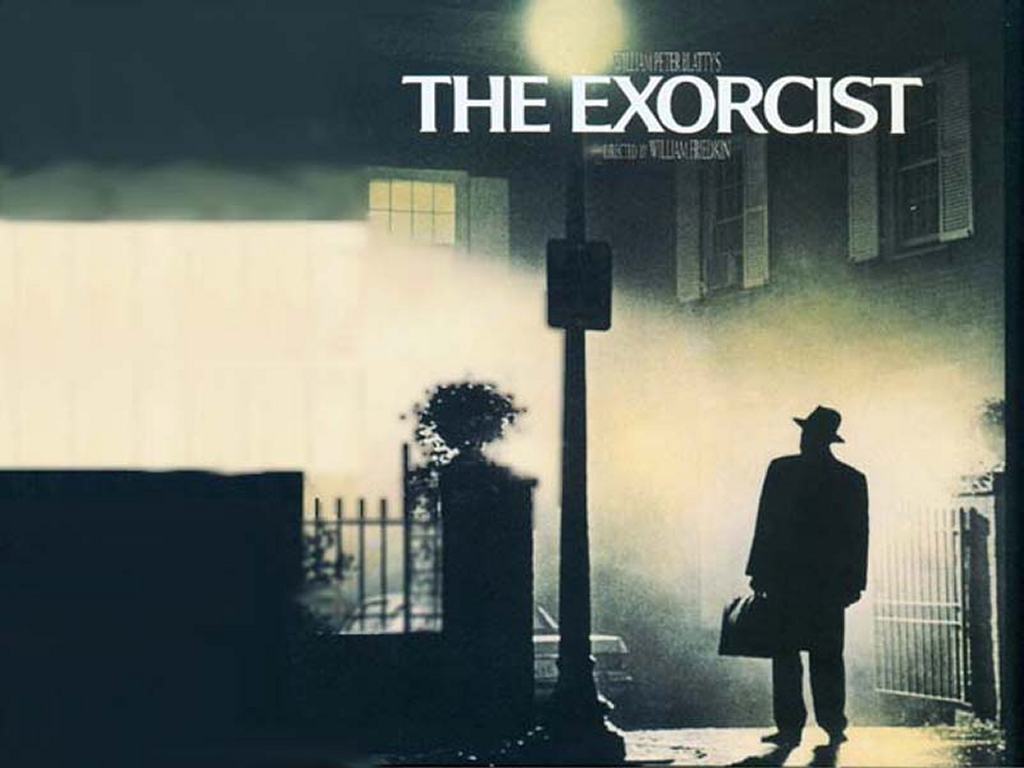
Only within the last couple of decades have movies begun to be taken seriously as expressions of the Zeitgeist. An art form not even 150 years old, commercial movies have been seen primarily as an entrepreneurial exercise—money-making ventures with little serious thought. Now students of society recognize that where our wallets are, there our hearts are also. Even in the depths of recession the entertainment industry maintained its draw. The unemployed could at least watch movies cheaply at home. Yesterday’s newspaper contained an insightful entertainment piece on horror movies by film critic Stephen Whitty. Noting that the film industry began when the Production Code largely mirrored pre-1950’s American cultural values, Whitty observes that clergy were left out of movies, or when they appeared they were strong role-model characters. Then, beginning with The Exorcist, the demonic became a huge theme in movies. As Whitty concludes, “Certainly it’s partly a reflection of a growing fundamentalism” that indicates why such movies are now so popular. Many Americans believe in angels and demons and turn to them to explain the serendipitous or contretemps.

Scary, but not necessary.

Social attitudes help to explain what we see on the big screen. Almost from the beginning religious leaders have castigated the entertainment industry as an unholy counterpart to sanctified living. Theater was earthy and evil, movies immoral, and even the desire to be entertained took away from the struggle for salvation. Ironically, however, movies tend to reflect conservative values. At least when it comes to demons. In the current glut of demonic films—which most Americans rate as the scariest kind of horror movie—the church-sanctioned hero is often the only effective tool against evil. A mythology of a Manichean dimension reigns: good struggles against evil and good will prevail. Unfortunately, this Hollywood scenario falls on the side of simplistic solutions to complex problems. Evil is our own doing—we need no demons to tell us how to be bad. Likewise, help often fails to come from on high.

Over the weekend I watched Dogma once again. Severely criticized as immoral and trashy, the overall message is, however, one of faith and hope. No fundamentalist, Kevin Smith certainly takes his pot-shots at Christianity, particularly Roman Catholicism, but in the end God and angels are real, and demons are defeated. Yes, this comedy is intended to be entertainment, but the audience that views it probably agrees with its core values. As Whitty demonstrates, the past decade has flooded the market with Hell-born foes, and there seems to be no imminent slacking of the pace. People are afraid. Our efforts at free-market Heaven have turned out to benefit too few while too many are still without work or adequate security. No, we need no demons to instruct us in the ways of evil. We are fully capable of initiating our own.


Doubts Creep In

What between Snooki at Rutgers and Mel Gibson’s Passion played at Montclair, I seem surrounded by university controversy lately. A recent article in the New Jersey Jewish News addresses once more the pre-Easter screening of The Passion of the Christ on Montclair State University’s turf. Education is bound to be embroiled in controversy since learning is seldom comfortable. I suspect that is one reason bully governors and the occasional president go after higher education. Few adults like to have their assumptions challenged, their values questioned. I am reminded how blindly many educated clergy accepted the version of the faith story by a disgruntled actor rather than by scholars who actually know what they’re talking about. It is difficult to dismiss the truths of the big screen.

The fact that the wounds opened by this screening are still bleeding weeks after the event demonstrate just how vital open dialogue is. Not only open dialogue, but frank discussion of religion. Many, if not most, religious believers carry on the tradition in which they were raised. Parents begin religious instruction early, and with the threats of a fiery Hell and an enraged divine father overhead, children are shunted toward Heaven everlasting. Not all religions use the same stick and carrot, but no matter what the bludgeon or the vegetable, religions give the faithful reasons to stay in line. Best not to discuss it too much, otherwise doubts might creep in. Educating students in religion is controversial, but necessary as long as people continue in practicing it.

As the article notes, the objection to the film revolved around the fact that no educational component was included. This was one of those “think with your guts” kind of moments, as if feeling sorry for the fictional portrayal of Jesus might somehow make one a better Christian. Educational institutions are duty-bound to teach critical thought when it comes to matters of belief. Emotion is a fantastic motivator, but as history has repeatedly demonstrated, it tends to act without thought. Universities should be open to such constructive criticism, although, it is doubtful that many minds are likely to be changed when the draw at the box office is too great to ignore.

Entertainment or education?


My Myth is Bigger

“Do some people still worship those gods?” That is the question my daughter asked on the way home from seeing Thor yesterday. I had to staunch my immediate “no,” and qualify it. Revival movements exist for most ancient religions, although it is difficult to gauge how serious they are. Then I open this morning’s paper and see that conservative Muslims have been attacking Copts (by definition conservative) in Egypt again. Religion foments hatred more effectively than just about any other aspect of culture because it concerns belief. Beliefs must be held with conviction, we are constantly reminded, and conviction means convincing others that you are correct. This is the devolution from mythology to religion.

Mythology is a meaning-seeking system of stories that are true but not factual. The modern religious (and scientific) mind has difficulty accepting something that is true and false at the same time. No one requires convincing that life harbors plenty of difficulties. Even in this softer, technologically sophisticated environment we’ve created for ourselves, disappointments and difficulties abound. Religions often promise paradises that they just can’t deliver, and so true believers often grow frustrated. The myths, however, remind us that struggle is part of existence even for gods. For every Thor there is a Loki. The simplistic nicety of one God padding a harsh world with a comfortable lining simply does not match reality. Mythology has an answer for that, an answer which is more honest than many “sophisticated” religions.

In ancient times it really did not matter what you believed. Gods don’t really care what you think of them as long as you provide what they require. Offer your sacrifices, do your duty, and get on with life. Religion today is a matter of correct mental assent. If in my head I agree that this particular deity is the only one, and I love that deity, all will be well. Funny thing is, even monotheistic religions can’t figure out that if there’s only one God than everybody is worshiping it (him, according to many) already. Better to kill off those who don’t agree, just to make sure. All gods, after all, demand sacrifice.

Even scientists honor the gods: the Thor Delta


Gothic Mother’s Day

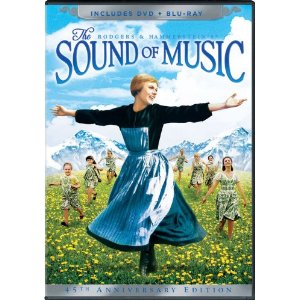
What does Mother’s Day have to do with horror films and religion? I serendipitously discovered last night. I generally run a few years behind the media, reading books after they come out in paperback and watching movies when I find a copy of the DVD. Last night as a family we watched The Sound of Music. I’d never seen this show until after I was married – musicals were not popular in my blue collar neighborhood growing up. Of course, I am now a veteran viewer. Last night, during mother’s choice evening, I noticed that if the music were removed (itself a weird concept) The Sound of Music is actually quite gothic. The interior settings, the use of shadow, the dark, Nazi threat, the stonework of the gloomy abbey – all of these things add up to a disturbing collage. In the mood for something more baldly gothic, I stayed up to watch Silent Hill.

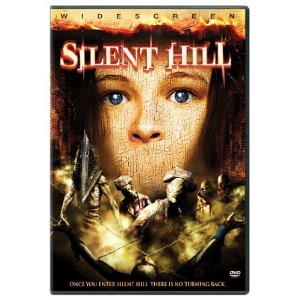
I tend not to research movies before watching them since it reduces the visual impact. For those films based on books, I generally read the book afterward to see what was “really going on.” Silent Hill, of course, is based on a video game. I do not play video or computer games; “Pong” may have been my last serious attempt at doing so. Silent Hill, therefore, was a complete unknown. The gothic element did not disappoint, and as Sharon, the adopted orphan, began her sleepwalking scenes being shown beneath a lighted cross in the night, I knew that religion and horror were once again coming together. Indeed, the driving force behind the gruesome story is a religious cult on a witch-hunt that is set in a village based on Centralia, Pennsylvania. The cult, believing those who are different are witches, seems to enjoy the medieval pastime of barbecuing them. Centralia’s ongoing mine-fire was used to great effect. Rose, Sharon’s devoted adoptive mother, of course, rescues her daughter. The line in the film is “Mother is God in the eyes of a child.” (There is the Mother’s Day tie-in.)

Having been invited to present an adult forum to a local church on Christian themes in popular cinema, I have been recharging my attempts to test my hypothesis that what truly frightens people is religion. Silent Hill would support this hypothesis. I did not miss the significance of the names: “Rose of Sharon” is a popular biblical trope. The impotent father is named Christopher. Centralia’s predicament is often vividly compared to arcane ideas of Hell. And mother’s are, in the eyes of many children, saviors. Perhaps that last point is why we celebrate Mother’s Day on a Sunday. Although films such as Silent Hill may not make the best family viewing, even here where religion destroys, the divinity of motherhood is underscored.


Able, Baker, Charlie Chaplain

Atheists? Foxholes? Do they mix? An interesting op-ed piece in yesterday’s New Jersey Star-Ledger by Daniel Akst poises some provocative issues. Akst notes that some atheists in the U. S. Army are demanding equal time when it comes to chaplains. Just because they do not believe in God does not mean they don’t have spiritual needs. One of the misperceptions about atheists that abounds in the media is that they are anti-spiritual. Rock-solid rationalists who see nothing beyond this mere physical existence. Well, trying to cast all atheists in the same mold would be like trying to get Baptists and Roman Catholics to celebrate their Christianity together on a Sunday morning. Yes, some atheists are strict materialists. Others believe in a spiritual existence, sans deity. Do they not have the same right to comfort on the battlefield as their theistic co-combatants?

Of course, the other question – perhaps the elephant in the room – is the appropriateness of military chaplains at all. In a nation that does not support any one religion above others (at least in theory) government funding for religious functions is always under scrutiny. Can the military pay the Catholic chaplain, the amorphous Protestant chaplain, the Jewish chaplain, Islamic chaplain and not the atheist chaplain? Many large universities now sport humanist chaplains: Harvard had a very prominent one, and even humble Rutgers has a humanist spiritual guide. No doubt military service is highly stressful and those responsible for destroying others need to be buoyed up in times of deep distress. Should our government not pay for equal opportunity for all soldiers?

Naturally, the unspoken corollary remains a mere whistling down the wind: could we learn not to fight at all? Most religions make the claim that they are here to better the lot of humankind. Still, many wars are sparked off by religious hatred, and distrust of the other would require that we at least keep a national guard around in the best of times. If religions of all stripes could work hard to convey the message that we are all in this together, convince the maligned, disenfranchised, those who feel unfairly oppressed, that we are equally valued, what we would have to fight over? Of course, that would require equitable treatment of all people. It is so much easier to manufacture weapons than to lay down one’s wealth to help someone one doesn’t even know.

Is this humanity?


Rhetorical Criticism

An insidious force far more devastating than it’s generally given credit for being, religious rhetoric is one of the oldest tricks in the book. With all the news about Osama bin Laden’s death, one can’t help but to think of his former rhetoric laced with religious archetypes on how his personal enemies were allied with the raw forces of evil themselves. Religion often has little to go on beyond rhetoric. The high point in many religious services is the sermon, a piece of individually crafted rhetoric sometimes claiming divine authority. The average person in the pew has no experience or knowledge of how the preacher comes by his or her secret knowledge. With eternal stakes in the scales, they are taught simply to accept what is a modern word of God. Those of us with long experience at seminaries know those who teach homiletics, we’ve learned the craft, and we keep the secret within the guild. The secret is that these words are simply rhetoric.

Rhetoric aplenty

Some denominations prefer their clergy seminary-free, inspired mavericks who hear directly from God. Their rhetoric may be even more flamboyant, not having been tempered by critical study of their scriptures. If even one of these dissenters is speaking truly, then all the others are wrong. The preacher with the mightiest rhetoric gets to take all the marbles and go home the winner.

Rhetoric is not evil. Religious rhetoric, however, often tears families apart – ripping friends away from those they once loved – because we undervalue its power. Education in the humanities (and rhetoric is about as human as one can get) is underfunded and devalued. Better to teach kids how to make a quick buck. Sadly in paper after student paper among the denizens of higher education the inability to recognize, interpret, and apply rhetoric is painfully evident. These kids run whirlwinds around their instructors in technological knowledge and ability, but can they write a sentence to move or stir a teacher, let alone a crowd of accepting followers? No matter, there are those with religious rhetoric who are only too pleased to step up onto the vacant soapbox. Without the critical ability to recognize what they hear, the masses will follow.


That’s All, Folks

As May is now upon us, in keeping with the spirit of Beltane, we are being warned to make ourselves ready for the end of the world. At Rutgers Day on Saturday, the eBible Fellowship was out in force, handing out tracts declaring in no uncertain terms that this month will see the dissolution of all things. Now is the time to buy things on credit, apparently, but make sure the payments aren’t due at least until next month! I’ve written a few posts on this particular prediction before, but the flyers I received have helped clarify a few things for me. I wondered why the god of eBible Fellowship had chosen this year to end it all. It turns out that this is the 7000th year after the flood! Things have been going swimmingly for seven millennia, so it is time to call it all to a halt.

Reading further, I was amazed at how accurate the reading of the cosmic timeclock has become. According to the pamphlet, the Church Age ended May 21, 1988. At that time I was too busy trying to get into doctoral programs in Bible to notice, I guess. According to eBible, the Bible states that the tribulation began then and would last for 23 years. That does explain my career history. Reading the passages they cite, however, I just don’t see the numbers adding up. eBible claims that God stopped using churches in 1988, so if you’ve been spending your Sundays there, I guess the joke’s on you. It kind of makes me glad that I was never ordained.

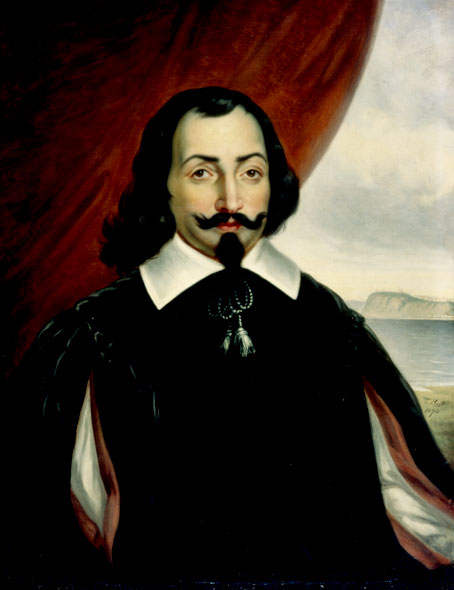
Samuel de Champlain does not endorse eBible Fellowship

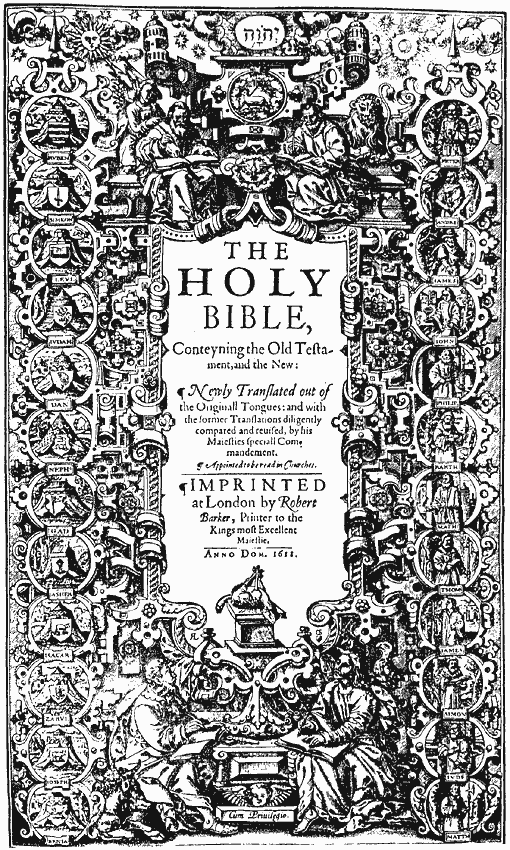
Intrigued, I decided to look at their website. For a temporary site there do seem to be a number of incomplete pages announcing that more is coming. There are podcasts about what to do in case you are not raptured on the twenty-first, as well as proof that the world is 13,000 years old, unlike the traditional Ussher date (his name is misspelled on the website). The group, which is based in Sharon Hill, Pennsylvania, states: “We are living at a time when the Bible is being highly exalted by God.” A classic statement of bibliolatry – I was not surprised to note that the King James Version is the one the Fellowship approves. I didn’t see that they calculated the fact that 19 days before the end of the world the KJV would become 400 years old. The only significant event I could find for May 21 of 1611 is that Samuel de Champlain returned to Québec from France. I sure I am missing the hidden meaning of that event, since crossing the sea is almost certainly a metaphor for the flood and Samuel is a prophet in the Hebrew Bible.


Happy Birthday King James

Four centuries ago a literary landmark was published. Today marks the birthday of the King James Version of the Bible, arguably the most influential book ever published in the English language. Those active in scholarly circles at bibliocentric institutions are popping the cork on their sparkling grape juice today, since for many the King James Bible represents the real liberation of God’s message. In some sense, the KJV also represents the origins of Protestant movement. Liberating the Bible from the clutches of scholarly Latin, Greek, and Hebrew, the King James Bible made the book accessible to the English-speaking world. As direct access to the Bible grew, the pontifical power of Rome (with apologies to besainted John Paul II) came increasingly under question. Inquiring minds wanted to know what God himself said. Of course, the Bible soon enough would evolve into a lash in the able hands of power-hungry theocrats.

Today the New International Version outsells the venerated King James. Some very conservative groups still hold to the King James Version as an “inspired translation” that no others can touch. The New International Version was hailed by evangelicals as a more up-to-date, safe translation of the Bible when it first appeared. The fact remains, however, that translations can never fully replicate the original. This is a major problem of bibliolatry. Languages are systems of thought and direct translation never fully captures the “meaning” of the original. Few who adore the Bible have the time to truly learn Hebrew and Greek, so guardianship of the truth must be passed to a reliable translation. The King James, in turn, also became the basis for some shaky theological ideas that are challenged by more accurate translations.

As the Internet rings with stories of the death of Osama bin Laden, the dangers of absolute religious adherence to any book of faith should become clear. Bibles, Qurans, Talmuds – these may be guideposts along the way, but they are often mistaken for the end of the journey. Written texts are subject to interpretation and even the KJV is read different ways by different believers. Instead of worshipping books, we would be better advised to read them. And if from that reading we learn to think then the time of the original composers of sacred writ will not have been wasted. That would be cause for celebration indeed.