Reap the Whirlwind

A pillar of cloud by day

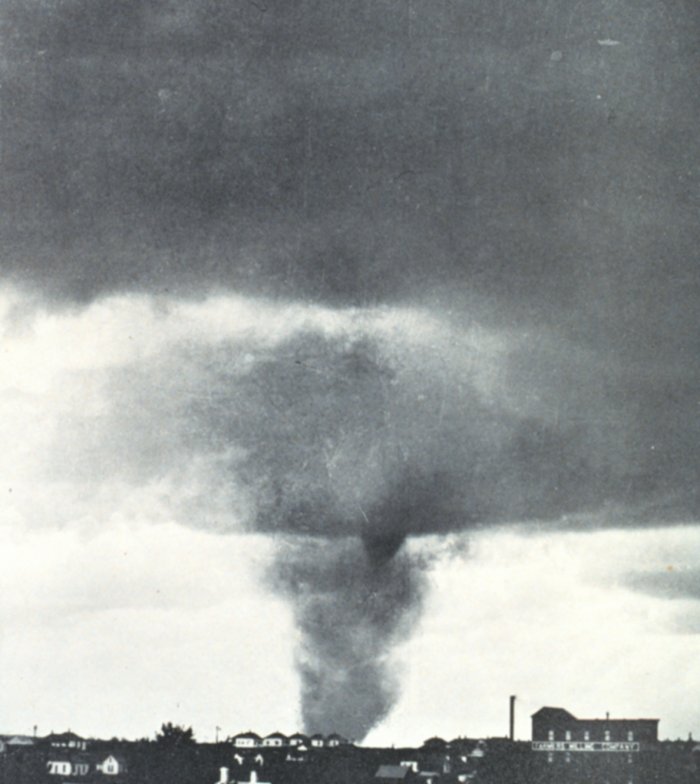
Something seems to be absent. The blazing rhetoric of televangelists and others proclaiming the wrath of God on New Orleans when Katrina blew ashore are strangely silent as a massive outbreak of tornadoes has ripped through the Bible Belt. Hundreds have unfortunately died as nature’s most severe weather-weapon has raked the south. In an apoplectic frenzy rivaling the 1974 Super Outbreak, tornadoes are well ahead of seasonal schedules this year as one wholesome Christian location after another vanishes in a whirlwind the envy of Elijah himself. I do not make light of this disaster. Having lived for many years in “Tornado Alley,” I very much feel for those victimized by these severe storms. They are a great tragedy and the loss of life, for Americans, is mind-boggling.

There is, however, a lack of continuity. Katrina, we were repeatedly informed, was the judgment of the Almighty on the sinful city of New Orleans. The tornado, surely the most divine of windstorms, remains a tragic natural phenomenon. “He makes the sun to rise on the just and unjust,” I recall someone once saying. Human tragedy is never easy to explain in any religious system. Even the self-righteous must acknowledge that – on some level – their pristine, exemplary lives deserve a thunderbolt or two. They speak loudest, however, when lifestyles of which they do not approve are decimated. How does the Bible-believing, rural farmer offend God? Were there no Christians in New Orleans?

The problem is forcing all members of one location into a category fit for reaping. It is sowing the wind. Human compassion demands that we not stand in judgment of the unfortunate, we simply help in what ways we can. One of the greatest dangers of any religion is that it validates one group above all others. Either we are all favored or none of us are. Waiting for a divine answer may take centuries, or even millennia. Lifting a hand to help a fellow human being is the only ethical response. Tornadoes are not the finger of God. Katrina was not the Almighty losing his masculine temper. We are all victims of the world into which we are born, and the sooner we refuse religion’s diabolical temptation to claim our special place, the sooner we will find our own way to a just society.


Aftermath of Easter

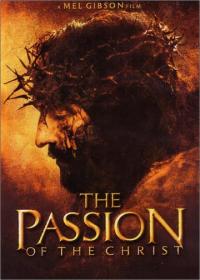
Holidays, it seems, are increasingly overloading themselves with baggage. Not only are many of them thinly veiled celebrations of materialism, but many are now being tied to “issues.” As I survey the aftermath of Easter as I saw it this year, it becomes plain that even the message of self-sacrifice and hope springing eternal can be co-opted. The Fellowship of Catholic University Students at Montclair State University hosted a screening of Mel Gibson’s The Passion of the Christ last week. An outcry of biblical proportions flooded university discussion groups over what was deemed cultural insensitivity. Gibson’s version of the gospel failed to impress me when I saw it, stressing as it did Gibson’s sadomasochistic torture scenes in an effort to raise a few welts over “Christ-killers.” Back at Nashotah House I was regularly on the preaching rota. (I’m not now nor have I ever been ordained in any denomination. I have, however had preaching experience going back to my high school years.) My final sermon asked whether we should accept theological truths from a loose cannon of an actor. These physical accidents may have had more than a little in common.

Conversely, my first sermon at the seminary – the very year I was hired, and several years since my last pulpit performance – featured Abraham Lincoln. Nashotah House was a bastion for disgruntled southerners at the time; they were often the only ones conservative enough to fit the seminary’s profile. My admiration of Lincoln was expressed in an innocent expostulation on the merits of freedom. Afterwards I was drawn aside and admonished, being informed, “not everyone here believes Lincoln was a hero.” Lincoln was assassinated on Good Friday, a point that has not escaped those who note that the Civil War began 150 years ago this month. Those at Nashotah who disliked my words felt that I was disparaging the south. With roots in South Carolina, I indeed was not. Slavery is wrong in any ethical system that will stand up to scrutiny. Those who believe in equality, however, often pay the ultimate price.

Holidays do not always bring out the best in us. We need the respite, and we have the Jewish community to thank for coming up with the Sabbath that has led to our weekend lifestyle. Each weekend rival churches fill up with those who believe others to be wrong. Religion seems to have failed in its quest to unite. A colleague at Montclair cited the quotation of uncertain attribution: “having a war about religion is like having a fight over who’s got the best imaginary friend” – this was in the context of the screening of Mel’s Passion. The fact is, when it comes to religion nobody knows the correct answer. The humble response one would like to imagine is the mutual encouragement to continue to strive for the truth. More likely than not, the response is someone will select their weapon of choice and try to prove their point of view the old fashioned way.


Budget Bombs

Budgets are measures of what we value. For a nation that likes to tag itself repeatedly as “Christian,” our priorities belie that claim as surely as the lives of our leaders. Over the past few months, those of us involved in education have watched in horror as governor after governor has attacked education as a pork-belly society simply can’t afford. Considering the salary differences between politicians, CEOs, and teachers, there is no comparison. Many teachers I know must work second jobs to make ends meet: they too have kids to send to college. The problem, however, is not endemically a Republican one. My political leanings are well known to those who read this blog, but a colleague at Montclair State University recently sent me this quote from a 1953 address of Dwight Eisenhower that makes the point clearly:

An unlikely prophet

“Every gun that is made, every warship launched, every rocket fired signifies, in the final sense, a theft from those who hunger and are not fed, those who are cold and are not clothed. This world in arms is not spending money alone. It is spending the sweat of its laborers, the genius of its scientists, the hopes of its children. The cost of one modern heavy bomber is this: a modern brick school in more than 30 cities. It is two electric power plants, each serving a town of 60,000 population. It is two fine, fully equipped hospitals. It is some fifty miles of concrete pavement. We pay for a single fighter plane with a half million bushels of wheat. We pay for a single destroyer with new homes that could have housed more than 8,000 people. This is, I repeat, the best way of life to be found on the road the world has been taking. This is not a way of life at all, in any true sense.” (President Eisenhower’s address “The Chance for Peace,” Delivered Before the American Society of Newspaper Editors, 4/16/53)

The largest slice of our national budget goes toward military spending. Christianity teaches that we need not fear death – that’s what Easter’s all about, is it not? – and yet we pay astronomical amounts to keep ourselves safe. Do we really practice what we preach?

Since Eisenhower’s day we’ve seen an increasing inflation of self-centered motivation and self-importance taking precedence in politics. Republican politics allied itself with extreme right-wing evangelicalism and soon we were being told that Jesus was a free-market economist. The values of one sect hijacked a political party, and indeed, a nation. The force of this movement is so strong that, with some obvious differences, the policies of President Obama are not so far from those of Bush. No forward progress is to be made: backward, Christian soldiers! Our nation is in full retreat from facing square-on the very real problems of social injustice, unemployment, and lack of adequate schooling for many of our children. Those who know no better sit by and say, “well, the Christians are in charge, everything will be fine.” I don’t believe in a divine apocalypse, but then again, I don’t believe we will need one. Unless people wise up, we will be perfectly capable of creating a home-grown apocalypse all on our own.


Educating Religion

The delicate dance engaged in by “church and state,” despite its apparent grace, includes many awkward stumbles and gaffs. Nowhere is this more apparent than in higher education at state-sponsored schools. I teach in two large state universities and the spring semester is winding to its accustomed close in both. The religious calendar of Judaism and Christianity, however, is just winding up. Based on a lunar calculation, the date of Passover is a moveable feast that takes Easter along with it. A late holiday season complicates the end of the semester when many students are held captive by religious leaders insisting that they cannot attend class during this most sacred of seasons. I’ve had many students missing class this week with final exams just around the corner. The students are, however, the innocent victims.

Religions are generally famous for unwillingness to compromise. I have both Jewish and Christian students who attend class despite the holidays while others find the requirements of enforced celebration more pressing. I do not pretend to have an equitable answer for this dilemma, I simply feel myself being squeezed between two colossal forces: the demands of the academy and the requirements of the faiths. Even state universities recognize the liberty of conscience and regulate excused absences for religious holidays. The information missed, however, cannot be easily acquired so close to the end of term.

This jumble of conflicting demands is particularly evident in a Religion Department. Teaching a subject that many – including not a few deans – assume is How to be Religious 101, a lowly instructor is beset with the weight of ecclesiastical and rabbinic decree while trying to educate the young about their own backgrounds. And if grades are not stellar due to missed lectures, it is the teacher who must be blamed. No great wonder, I suppose. We see shifting blame as a repeating pattern among our political and business leaders as well. It is always somebody else’s fault. Oblivious, “church and state” continue their waltz and gather their funds while a few toes get stepped on as the first full moon after the vernal equinox exerts its firm pull on all believers.

In the light of darkness


Pilgrims’ Regress

In March alone I had to build expanders for three of our bookshelves. I claim the problem began when, as a faculty member at Nashotah House, I had use of a house with a built-in, floor-to-ceiling library. My wife claims the problem began long before that. We own a lot of books. The only silver lining to Borders’ recent bankruptcy was that we hovered like buzzards at one of the closing stores and walked out with books we might not have otherwise bought, but whose prices demanded their owners find a new home. Orphaned books are a sad sight. So I purchased my first Christian satire book in many a year. I just finished reading Becky Garrison’s Jesus Died for This? A Satirist’s Search for the Risen Christ. Having spent many years among the Episcopalians, Garrison’s point of view set me at ease: had this been an evangelical attempt at humor I would have orphaned the book myself. Nevertheless, as I read through this travelogue/memoir, I rarely found myself laughing.

Nothing robs one’s sense of humor quite like being in higher education for a couple of decades. I still find plenty to laugh about, but I realize the reprieve is only temporary before more serious issues once again cloud the skies. Garrison’s attempt to find genuine “Christ-like” behavior among Christians was, predictably, peppered with the failures to find it. As she repeatedly notes, the odd marriage of religion and politics in the United States has tainted both institutions (and both had already tainted themselves without the other’s help many times previously). It doesn’t take a satirist to see that many religious figures have made a joke of their belief systems by touting them as the only way to heaven.

What became increasingly clear to me as I read this personal and revealing book was that Christianity has splintered into countless subcultures that attempt to reclaim the original Christian experience. The problem is that time doesn’t stand still. Religions are, by definition, conservative. Progress, by definition, is not. Ever since the first hominid hefted a wedge-shaped rock and used it as the first Paleolithic weapon, our course was set. We would continue to try to improve our lot. Institutionalized religions began appearing a mere six-to-seven thousand years ago, very late in the game, and they’ve been driving with feet firmly on the brakes ever since. Once we figure out what the gods want we need to – wait, don’t change that! We’ve just figured it out! So we find ourselves in a highly technological twenty-first century with pre-medieval religions trying to tell us how to survive the Black Death. Each time religions change, some get left behind. When we finally implode, some future archaeologist may find an apartment crammed full of books and she’ll declare that my wife was right: the problem began long ago.


Palm Versus Palm

“Mankind [sic] has managed to accomplish so many things: We can fly!” The words are not mine, but, depending on whether he was standing or sitting when declared, the Pope’s or God’s. In his Palm Sunday sermon yesterday the Pope addressed the issue of technology. Acknowledging flight a mere century after it began is breakneck speed for the Roman Catholic Church, but the concern behind the sentiment is real enough. Can religious systems survive the full onslaught of the technological revolution? As one small sample of the larger picture, ethics must react to increasing advanced technological scenarios. Raymond Kurzweil’s proposed Singularity where human and machine are fully integrated is perhaps an extreme example, but by no means the most extreme. Without fully understanding the context, our technical ability has soared way beyond our capacity to foresee implications. Believe it or not, many people alive today cannot use personal computers, have no palms, no cells. Sounds like they might be living free.

Palm Sunday is a day of tradition, heavily freighted as the start of Holy Week (in the Western tradition; of course, many Christians think it is a little too early some years, but that’s for a different post). Fronds from actual trees are waved as the Pope speaks. In the crowd palms are also being utilized to send the news home that one is waving a palm in the presence of the Pope. Traditional Christianity can survive with only the most rudimentary of tools. Religion, from the available evidence, began in the Paleolithic Era – earlier, I am pretty sure, than even the first integrated circuit. With its iron grip on the human psyche, religion is not about to disappear. Instead, technology is either ignored or embraced by it. As long as religions rely on human participation, however, technology will need to be reckoned with.

It's still a date (or palm)

The fact is technology has changed the perception of the world for many, especially in the western world. Even the revolution in Egypt earlier this year was conceived on the Internet. All the indications point to increased usage of technology rather than its imminent demise. Yet religious leaders still enjoin us to wave palm branches. Virtual Church websites abound where the faithful can wave electronic fronds and nary a tree will be harmed. Sermons, discussion groups, Bible readings, prayers – they can all be dispensed through wireless networks and modems. While many traditionalists turn from such ideas in disgust, it would behoove us all to pay attention. With the Vatican now onto the fact that we are flying, within mere decades we might receive a divine message on – oh, wait a minute – I’ve got mail!


Bell’s Hell

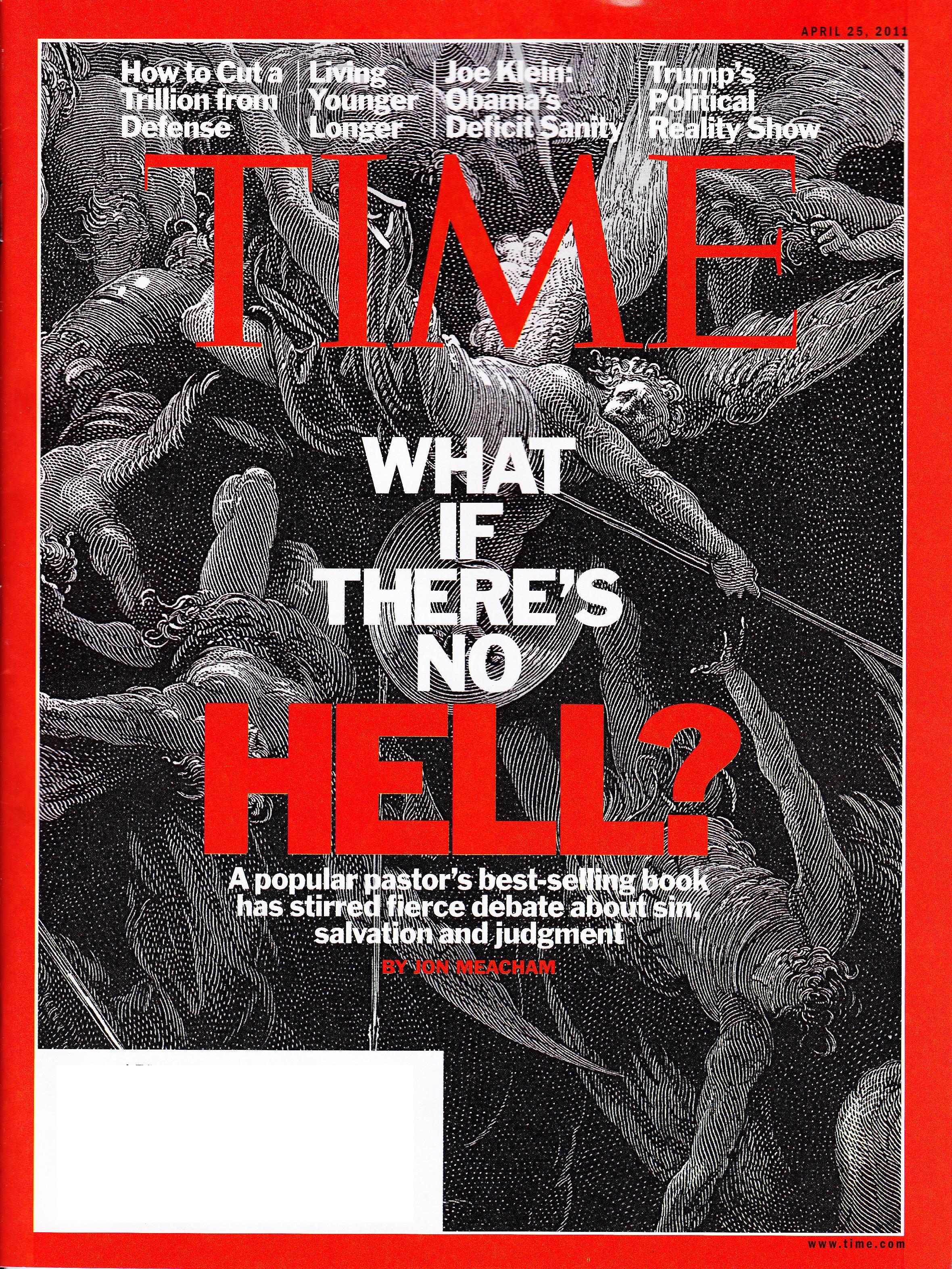
Hell makes the cover of Time. Or at least its absence does. For those of us who’ve delved deeply into the Bible for many years, it is no surprise. In fact, the uproar, as Time confesses, is among Evangelicals. So why Hell? Why now? The Evangelical pastor of Mars Hill Bible Church, Rob Bell, has just published a book questioning the existence of Hell and his fellow Evangelicals are in a conflagration about the loss of the sacred icon of God’s omnipotent stick that threatens them all into Heaven. It is a sad day when love cannot encourage enough that hatred becomes religion’s motivating factor.

The loss of Hell, however, represents so much more than just the loss of the scariest place under the earth. It represents the loss of control. Without Hell to wield and Hell to pay, many of the faithful may wonder what they might get away with. Neo-cons have been eager to court the Hell-mongers because the issue is making others lock-step in their own pattern. Diversity is not encouraged or appreciated. Lawns must be cut to the same height, trees carefully trimmed, shirts must be conservative and cookie-cutter, and one must wear that blessed smile that proclaims “Hell-dodger.” Cast any doubt into this fabled world and the results might be, well, realistic.

The Hebrew Bible knows no Hell but the one we make for ourselves. We hardly need a Devil to tutor us in the ways of evil. Human history reveals that we’ve had it in us all along. Instead of celebrating the death of Hell, several Evangelical pastors are simply adding Bell to its numbers. Time’s news is not news for many of us, but for those who haven’t considered seriously the implications of their faith as Holy Week rolls around, this may be a good time to take stock of options for eternity. What do we gain by fabricating an eternal torment devised by the most loving deity ever conceived? Hell can now claim its rightful place as a metaphor for the wickedness Homo sapiens devise for each other and for their planet.


Worshipping Religion

When does religion itself cross that invisible line into becoming the object of idolatry? In a world of an entire marketplace (“bazaar” might be a better word-choice) of religions, where each consumer selects his or her product, some take that choice with such conviction that the religion itself becomes their god. In ancient times religion was often a matter of ensuring that the gods were not angry. The average citizen had little control over this since the religious life of city-states and nations was the responsibility of the priesthood. Just pay your temple taxes and shut up. A religion anyone can live with. Last night as we discussed Jeremiah’s temple sermon in class the point became clear: even the God-chosen, fully approved temple in Jerusalem could become an idol.

Watching political candidates and parties and factions of parties posturing (apart from reminding one of peacocks and other showy birds) for possible election, they fly high the flags of their faith and hope that the market favors their brand. It is clear among many of their constituencies that the religions themselves have become objects of worship. How else can the rancor among a deeply divided Christianity (as only one example) be explained? Families and friends are torn apart by a common faith while ministers with the dubious benefit of seminary egg them on. Having been subjected to seminary as both student and instructor, I tremble when I think how clergy are trained. A holy nationalism pervades religions, transforming the faithful into armies that some, unfortunately, end up taking literally.

All the endless debates about religious violence and evolution and abortion should have taught us by now: no one has God in the witness stand. Our religions are our best guesses, no more, no less. In the face of great uncertainty many turn to the bravado of a faith that is willing to murder in order to prove its point. If God is really watching all this, perhaps a humble acceptance might be more appropriate? I think old Jeremiah might have agreed. Of course, he likely died at the hands of his own people who didn’t like his version of religion. That’s where the prophets have gone.


O Tenn Won’t You See?

Truth goes to the highest bidder. In the United States the highest bidder is the party with the numbers to get elected. Truth by democracy. Once again Tennessee is flirting with Creationism, if not having already climbed into bed with her. High school biology teachers nationwide are afraid to take on the issue directly; many of them are told by their clergy that the concept itself is anti-Christian. This is what happens when mythological needs go unanswered. No one has yet deciphered why human brains evolved the capacity to believe in outside agency beyond the realm of nature. Many Fundamentalists use the phenomenon as proof of their pre-decided answers, despite their willingness to utilize this evolved Internet to spread their ideas. If evolution is false the Internet does not exist.

The larger issue here is the fact that educators have, by-and-large, dismissed the impact of religion. Particularly in higher education. Everyone has their own religion, we don’t discuss it because someone will become offended, and we pretend that, gosh-darn-it, people are just too smart to believe all that. Meanwhile millions of tax-payer dollars are wasted on cases continually going to court where one subset of one religion insists that its mythology has a right to be taught as science. Even the Fundamentalist’s strange bed-fellows in other conservative issues, the Roman Catholic Church, has stood up and put on its slippers. This one is not a matter of opinion, ecclesiastical or otherwise.

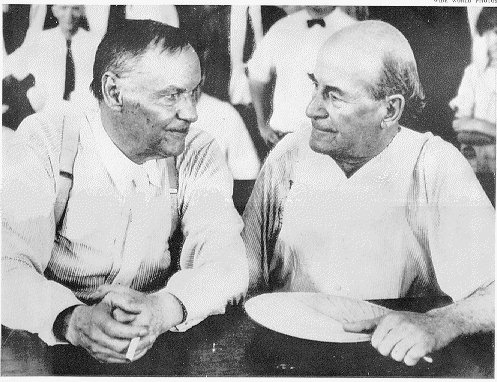
But religious folk understand that if they elect the right candidates, the issue can be forced again and again. The Creationist tactics are evolving to fit the situation. Meanwhile, not only religion, but also the study of history is largely dismissed as irrelevant. It is history that demonstrates the birth, growth, and current goals of the movement. The Scopes Monkey Trial was nearly ninety years ago, but it may as well have not taken place yet. If William Jennings Bryan had been smart, he’d have waited until his cohort had had time to carefully sow their seeds, water, weed, and fertilize them (using the oldest known material to ensure growth – plenty of manure) and then take it to legislators. The results are as predictable as the sunrise over our flat earth.

Seems just like tomorrow...


Fire and Blood

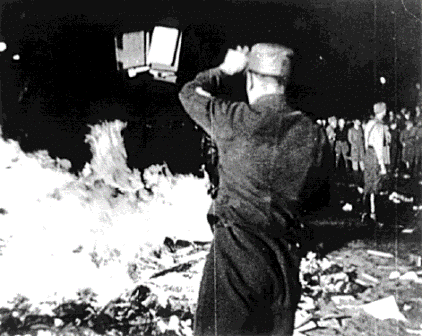
Religious intolerance again claims lives, and yet the self-righteous never flinch from their smug smiles. What insane pressure drives extremists like Terry Jones to desecrate the symbol of another religion? What did burning a Quran accomplish other than a feeling of personal satisfaction at a religious one-upmanship? Did he even stop to think that his own religion was once persecuted and that this nation that allows him the freedom to spit in the face of other faiths also welcomes his imaginary enemies? Now innocent people are dead in Afghanistan because of his intolerance. It may be that Terry Jones’ personal act of impropriety may soon blow over, but the damage has already been done. These dead will have died in vain.

Putting match to paper proves no superiority of intellect, spirituality, or especially, righteousness. The problem Terry Jones’ brand of Christianity faces is that Mohammed was born before the metaphorical return of Jones’ Christ. It is clear from the (unburned) Christian scriptures that early believers were convinced Jesus’ return was imminent, within their own lifetimes. For those who did not successfully transition to the meaning of the metaphor, it has been a weary two-millennium wait. The emergence of new religions in the meanwhile has become a threat to the superiority of their own. Apocalypticism claims many victims. Now people are dying because Terry Jones can’t cool his heels to see how this one comes out.

Religions that prove their point by trying to brutalize other religions have already shown their true character. Muslims do not burn the Christian scriptures because they accept the validity of Jesus’ teachings as well as those of Mohammed. Has Terry Jones damaged Islam by burning a book? No. Has he damaged the already languishing opinion on western supersessionism? Certainly he has. It is now incumbent on the rest of us to declare that we excoriate the acts of Terry Jones and his contemptuous version of Christianity. Islam need not try to give Christians a bad image; we are quite capable of helping ourselves.

Terry Jones' ideological companions


The Sign of Jonah

The Sign of Jonah?

Each year during the spring semester my Prophets class brings new levels of fixation on those familiar characters that so few actually know. The process began early this year. With several students of eastern Christian persuasion, Jonah became an issue based on the folkloristic nature of the tale. Jonah is particularly prone to a literal interpretation because of the “sign of Jonah” trope cited by none other than Jesus himself. Also, as I learned in my doleful days at Gorgias Press, many eastern Christians understand Jonah as a special favor to them, sent by Yahweh well before Christianity began. Even with the full weight of history against them, the students are unwilling to relinquish Jonah to his native literary genre. Then came Isaiah.

Isaiah is the most heavily co-opted prophet in the canon. Well, one might put Elijah in the running, and it would be a Chariots of Fire finish I’m sure, but as the most quoted prophet in the Christian Scriptures, Isaiah would come out on the Liddell end. So massive is this sense of ownership that Isaiah’s direct prophecy concerning the Syro-Ephramite Crisis in 7.13-17 is incapable of being understood as anything other than a prediction of a virgin birth some seven centuries down the road. Interestingly enough, it is the literal sense of this passage that is generally overlooked in favor of a later interpretation.

Even the sense of what prophecy was in the ancient world has been altered to an unrecognizable jumble by later agendas. Prophets spoke out regarding current issues (“the two kings you dread”), occasionally providing future, generally conditional, remarks. In our apocalypse-hungry society, pundits are eager for the culmination of all things and the more fireworks the better. If old Jonah and Isaiah were sitting together in a bar I can imagine the stories they’d exchange. And it wouldn’t be a whale (excuse me, “big fish”) that would be doing most of the swallowing.


Freedom or Religion

Reform seems to be in the air. Its effectiveness varies from location to location, but what remains constant is the impact on religion. Or religions’ impacts on those dissatisfied with its application. As Syria begins to follow Egypt and Libya, a sense that the authoritarianism imposed by religious ideals is somehow flawed is sublimated in the news, yet clearly present. Regimes, be they Islamic, Christian, Hindu, or any other belief system, count on unquestioned authority to maintain control. Even the Catholic Church has been toying with reform – quietly, slowly – for any admission of change calls into question the authoritarian roots of power. Once that basis begins to crack, freedom has a chance to emerge.

In American society where freedom has perhaps blossomed most fully, there should be no surprise that a religious backlash is underway. In many ways liberty and religion stand at odds with each other. Religions make universal claims, drawing authority from none other than the One who started it all. Freedom begins at the ground and works its way up. Humans are natural followers, flock animals. Remember, Jesus said he was like a shepherd. When the shepherds apply the crook a little too liberally, even the sheep begin to plot. In many nations of the Middle East, the faithful have been kept in poverty and subservience. The Berlin Wall, however, was in the minds of the intimidated.

The United States has even backed the cause of the oppressed overseas, attempting to break up dictatorships that began before I was old enough to remember. And yet in our own backyard the Religious Right continues to make America like a western version of Syria or Libya. A nation of people under the rule of legislated morality that certain distorted versions of the Christian gospel advocate. Prevent equal rights to women and minorities by keeping the seat of power within the WASP community, although you may have to bring in some Catholics and Mormons to assist with the cause. The eyes of the world are on the Middle East, for any whiff of freedom, however faint, is cause for hope.


Corny Children

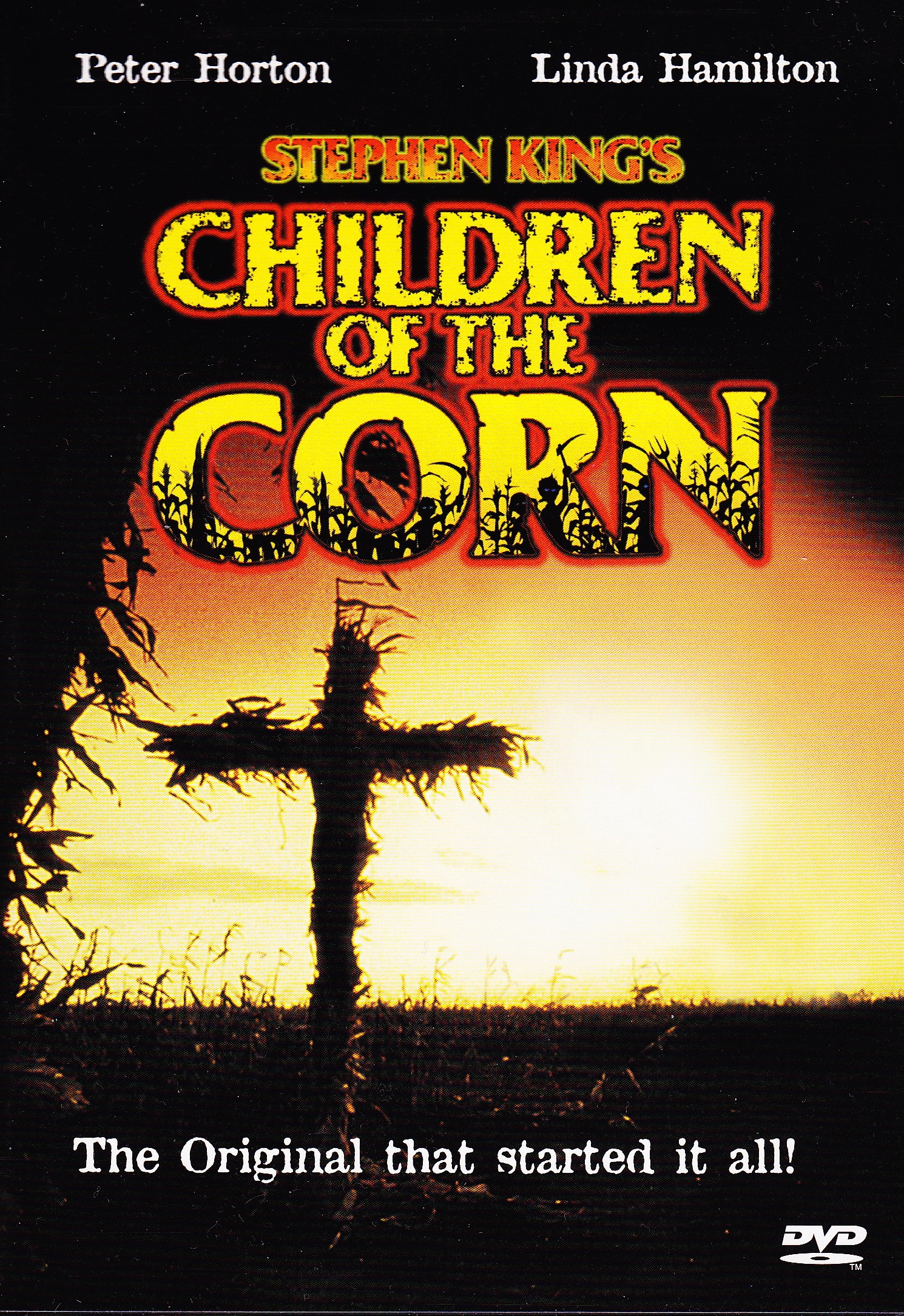
Once upon a time, if you wanted to see a movie you had to go to a theater or wait until it ran on television. This is stretching my memory back a long way, so indulge me if I only remember that four channels existed in those days, and you had to wait years for movies to appear at a time when you could actually be home to see them. Fast forward a few years and the VCR was invented. I remember being impressed that you could actually rent movies you’d always wanted to see, within reason. If you watched them too often they wore out. Then the electronic revolution came. This is all by way of excuse for why I’ve only just started to watch movies that came out in my younger years. Children of the Corn, although critically panned, was a financial success in my college days when I started watching horror movies. When I finally watched it yesterday, I realized it was a natural candidate for this blog’s running commentary on horror and religion.

What I had not fully appreciated is that the movie is a cautionary tale centering around a sacrificial cult. While the movie does have its problems, the concept of children taking the religion they hear from adults seriously runs throughout the film. Understanding gods as bloodthirsty demanders of sacrifice is a gruesome staple of all monotheistic religions. Someone’s got to die for the rest to be saved. While Fundamentalists take comfort in the substitutionary atonement of the “once for all” nature of sacrifice, in the film, the children erect crosses and sacrifice adults to “he who walks behind the rows” – a typical Stephen King kind of monster. Monster or not, the children believe he is a god.

Belief is the guy-wire for religion. The reality behind that belief is open to question, otherwise multiple religions would not exist. Children of the Corn confuses the issue by presenting “he who walks behind the rows” as a legitimate supernatural entity, one who is vanquished by a passage from Revelation. The truly disturbing aspect, however, is the complete, unquestioning devotion of the children. When children are raised in intolerant religions today, we are also planting corn that will lead to some unholy reaping in the future. Perhaps the message of the film was more trenchant than most critics were willing to admit back then. Today it is certainly more believable, given many religions’ demonstrations of their destructive powers.


Joseph Smith in the Spotlight

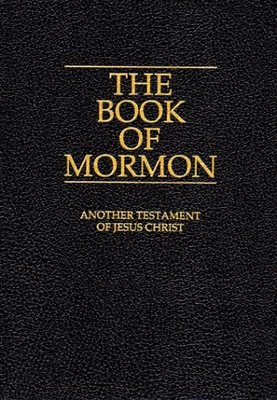
Mormons on Broadway? Well, not actual LDSers, but their famous founding document, The Book of Mormon, is now a Broadway show. While I wouldn’t hold my breath waiting for The Quran to be produced, holy books have often been utilized by the media as rich venues for timeless tales. Joseph and the Amazing Technicolor Dreamcoat and Jesus Christ Superstar come to mind as Lloyd Webber adaptations. Godspell, while not as directly scriptural, drew its inspiration from the Gospels (particularly Matthew). Those who lose are those who resist the free press of popular culture.

At the risk of sounding Niebuhrian, the religion that refuses the blessing of society is the one that will fade away. Religions are human institutions, and as such, require human adherents. Critics often claim that popular adaptations of their sacred writ are making fun of the texts, but is not cultural adaptation all about celebrating a story that has won its way into the media and outside the confines of rigid orthodoxy? Which version can be said to be truly alive? This is not theology, it’s theater.

Working with students who have very little background in the Bible, I clearly see the wisdom of taking what are admittedly dry texts and bringing them to life. Religions often founder in the process of mistaking form for substance. Literalism has done more to damage religions that it has to keep them pure. Reviews from the Book of Mormon attest to its appeal, and in a country where the Latter Day Saints are generally considered the second-fastest growing church, the musical is a boon. Trey Parker and Matt Stone can hardly be accused of attempting to convert the heathen, but their show cannot but help to bring this particular denomination into the public eye nearly as much as Mitt Romney’s attempted candidacy will. That’s what I call rose-colored glasses!

You've seen the show, now why not read the book?