Holy Matrimony

BBC Two is currently airing a series entitled The Bible’s Buried Secrets, unfortunately not yet viewable in the United States. The episode “Did God Have a Wife?” is presented by my colleague Francesca Stavrakopoulou, who did, no doubt, an admirable job. So once again Asherah finds herself in the news. The issue of monotheism is intricately tied up with how gods related to one another in the ancient conceptual world of Israel and its neighbors. Since the gods were modeled on humans, their behaviors could be embarrassingly human as well. Myths of actual divine marriages are rare, and extra-consortial affairs seem to have been pretty common. This aspect survives in the classical Greek world where Zeus’ many trysts are among his most notable deeds.

In a society like ancient Israel where marriage was a regular expectation of all young people who survived to marriageable age, an obvious mystery attends a single god. If Yahweh is male – and the Hebrew Bible seems not to dispute this point – would he not require a spouse as well? The well known Kuntillet Ajrud and Khirbet el-Qom inscriptions appear to suggest that Yahweh had a wife, and if he had the Religious Right should only rejoice since that would seal their definition of marriage forever in this literalist nation. And yet, the Bible remains decidedly mute on this point. In the end, it is interpreted that male is superior to female, again, pleasing certain religio-political factions.

Marriage in a human institution. It is a practice concerning which the Bible is strangely taciturn. In ancient times marriages (unless among the gods) were secular, not sacred ceremonies. Among a human population in danger of dying out through attrition, marriage ensured prolific reproduction. According to Christianity, even God had a kid. In a world that has changed in ways that biblical writers could never have imagined, marriage as a source for an increasing population is more problematic than it is essential. It seems that the jealously guarded definition of marriage is really just another green-eyed monster lurking in the Neo-Con closet. Maybe once Yahweh’s marriage certificate surfaces the issue of what marriage is really about will be discussed rationally.


Crossing Italy

“Poor men wanna be rich, rich men wanna be king, and a king ain’t satisfied ‘til he rules everything” – sage words of a young Bruce Springsteen. Of course, “man” may well apply to institutions as well as individuals. According to a recent story in the New Jersey Star-Ledger, the European high court has ruled that it is appropriate for public schools in Italy to decorate their classrooms with crucifixes. While this may not seem unusual for the heavily Roman Catholic nation, indeed, the homeland of the church itself; nevertheless it reveals much of the nature of religion. Religions, like Springsteen’s human characters, want to take charge of everything. Partial rule just isn’t good enough in a business that deals with absolutes.

Not every citizen in Italy is Roman Catholic. Some are not even Christian. State sponsored schools bearing the insignia of the church’s glory days send a message that can be heard from the highways to the backstreets: Christianity rules! If we wheel the world around a few degrees further we will find similar rhetoric in nations like Iran, only the specific brand of religion has changed. The message is distressingly familiar: Islam rules! There was a time when the church could likely be called the only true superpower in Europe. We remember that time now as the Dark Ages.

As campaigns for next year’s elections in the United States are pumping up, we are hearing quite a bit about candidates’ religious convictions. That which used to be a private affair has become an emblem emblazoned on a flamboyant flag declaring “Gott und Ich” to the world. Worse, the religions are being used to score votes. Once in office, that religion will return to its flaccid state and politics will be business as usual. The populace, however, has trouble seeing through this. Religion is injected with such emotional freight that leaving it out of elections – or classrooms – is like abandoning a helpless infant. As they nail their crucifixes to the walls of public schools in Italy, I’ll be over here with Bruce surveying these badlands.


Third Mile Island

Sitting in the shadow of the cooling towers of Three Mile Island along the banks of the Susquehanna River the night before a friend’s wedding is one of the college memories that remains vividly in my mind. The accident had occurred some six years earlier, but seeing those ominous blinking red lights, no doubt to warn low-flying aircraft of the massive towers, left me with an irrational sense of danger. It will be a sad day when we have nothing left to fear. The next year, the Chernobyl disaster took place. This tragedy has results that are still playing out among the millions exposed to the radiation. Perhaps these events explain why Alan Parson Project’s Ammonia Avenue remains among my favorite albums.

While having my oil changed yesterday, the waiting room television was fixated on the story of the Fukushima Daiichi meltdown, settling it comfortably between Three Mile Island and Chernobyl. With anxiety about the year 2012 running amok, many people are looking for signs. Perhaps the most unfortunate meme the Bible has introduced to the world is the Apocalypse. In origin apocalyptic concepts emerged from the Zoroastrian idea that a dualistic change in ages was coming. Believing this world to be under the baleful influence of Angra Mainyu, a day was eventually going to arrive where all this would be turned around and Ahura Mazda would set things right. Christianity borrowed the idea, shrouded it in secrecy, and began an unhealthy interest in the end of all things.

Fukushima Daiichi may feel like the end of the world, but it is not. In fact, all that we know of our planet shows its great resilience. The late Stephen Jay Gould, in his popular book Bully for Brontosaurus, opined that the earth is not as fragile as is often supposed. He notes in the prologue, “Our planet is not fragile at its own time scale, and we, pitiful latecomers in the last microsecond of our planetary year, are stewards of nothing in the long run.” Not that we should not attempt to protect our environment – we do that to preserve ourselves and other species – but if we should fail, earth will carry on. Our globe is expected to support life for another 500 million years. Instead of following false positives, we might be better off reminding ourselves that Gaia still has a few tricks up her metaphorical sleeves.

One way or another


Zounds

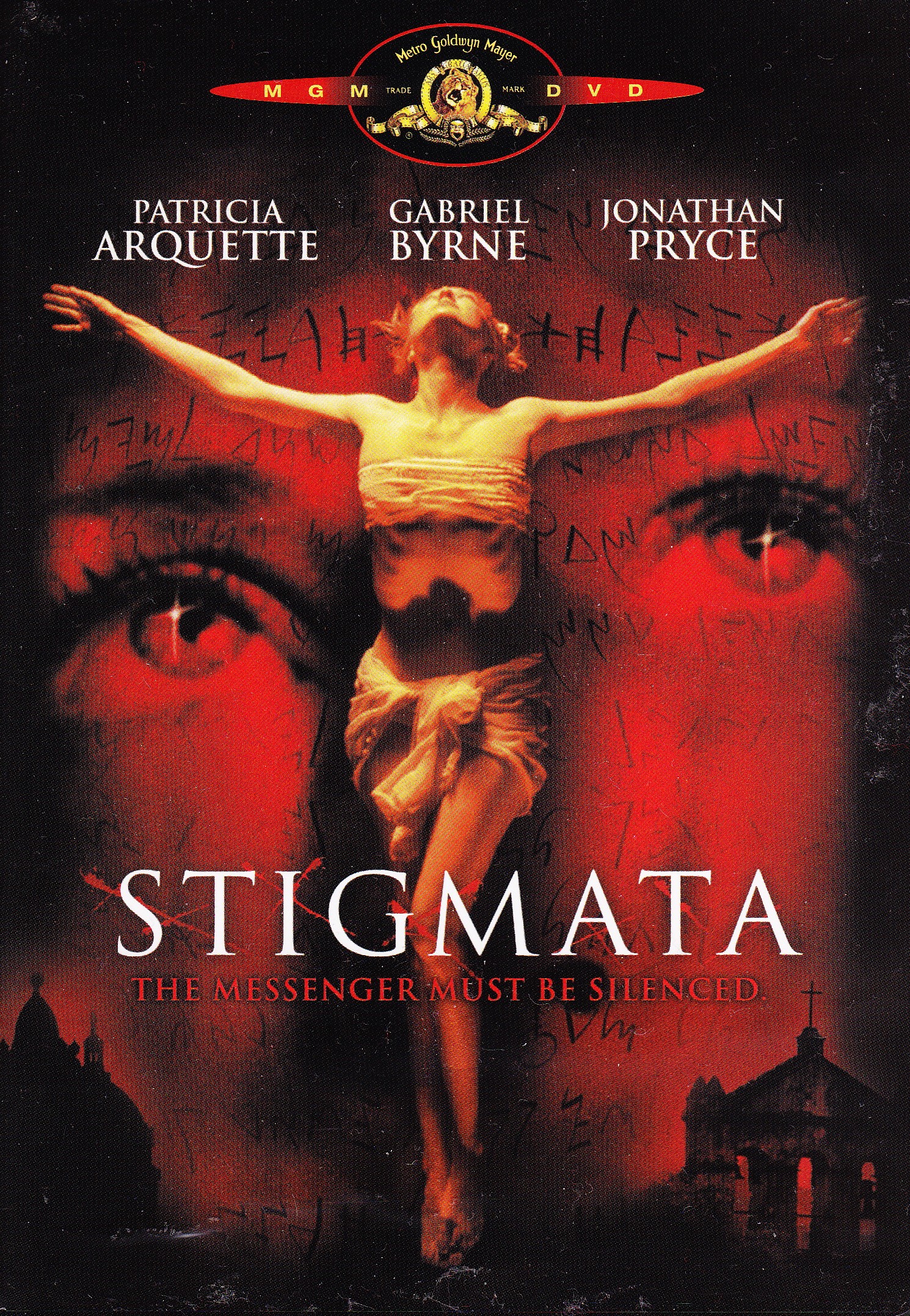
Back in my first exposure to state university life in Wisconsin, I frequently received eager guidance from students on religion in the media. After having taught in a seminary where interest in the world beyond ecclesiastical walls was rare, this exposure to wider interpretation was welcome. One of the movies suggested to me by helpful undergraduates was the then fairly contemporary Stigmata. My interest in horror films was burgeoning again after my nightmarish experience at Nashotah House, so I watched the movie with renewed appreciation for the abuses presented on the part of the established church. I rewatched Stigmata this past weekend and a number of features stood out as apposite for this blog.

As always in movies, liberties are taken with reality. Stigmata presents the Gospel of Thomas as a serious threat to Catholicism. Of course, even the Gospel of Judas made a public splash back in my Oshkosh days, but the great Titanic of the church remained steadily afloat. The contents of the Bible are secure and non-negotiable for the vast majority of Christianity. There is no more room within its black leather binding for further revelations. The movie also presents a woman – an atheist, no less – as being the vehicle for a truth she can’t understand. In the masculine citadel of the Catholic Church she must be silenced, in an overly dramatic way, of course. The message seems to be that religion is unwilling to learn from secular women, even if they bear the truth.

The critics were not kind to the movie, but I found it a strangely religious film. The premise behind it advocates the reality of Christianity, only the Jesus of history is occluded behind a great mask of human tradition. Enamored of power, the church decides what will be revealed to the masses since control is more important than truth. A woman cannot correct the false belief of men, since a masculine god has given manly instructions to a male institution. Underneath it all, however, is a virgin Mary weeping real human blood as half of humanity is simply disregarded by the half that retains its abusive strength. Perhaps the commentary was a little too close to home, even for the (mostly male) critics.


Jane Who?

“Conventionality is not morality. Self-righteousness is not religion. To attack the first is not to assail the last.” So states Charlotte Brontë in the preface to the second edition of Jane Eyre. I am inclined to believe that the lines were widely ignored by clergy and politicians, for public leaders in nineteenth century Britain were not likely to take the advice of a young lady who only had one real credit to her name. Politicians and clergy of twenty-first century America can hardly be expected to have read Jane Eyre, for how would this woman know the harsh realities of how to assert one’s own will on the masses? In the stewing tea pot of the Religious Right, conventionality is morality. Self-righteousness is religion. George Santayana might well have saved his cramped fingers from writing, “Those who cannot remember the past are condemned to repeat it.”

As politicians oil their moving parts in preparation for next year’s great race, they know that many constituents will gladly accept conventionality as morality without asking about the origins of such practices. Schoolyard bullies who seek their own aspirations praise the great darkness that has settled over New Jersey where education is simply a commodity with which to bargain. Jane Eyre? Who’s she? If she’s a constituent, I’d better spin this slashing of education funds to her liking. Without an educated public, it is much easier to bolster one’s personal authority.

For years educators have been watching in dismay as other developed nations soar past American expertise in science, math, and even geography. Our response: let’s cut education funding. Conventionality is morality. Education teaches children to think for themselves. Is it not better to show them that self-righteousness is religion? We can put other religions on trial (thank you, Mr. King), while conveniently forgetting our founders were largely religious dissenters. To know that, however, you have to read a little history. We are far too busy plotting how to shortchange our future in order to feather further already overly plush nests.


Sex and Violence in Ancient Pompeii

The earthquakes and tsunami that have devastated northern Japan have me thinking about natural disasters. Currently in New York City there is a display of artifacts from Pompeii, an exhibit I have not yet had a chance to visit. The parallelism of the two tragedies, however, has not escaped me. Pompeii’s destruction by Mount Vesuvius in 79 of the Common Era and its subsequent rediscovery and excavation are the stuff of legend. An unsuspecting city in the shadow of a sleepy volcano, at the pinnicle of its civilization, suddenly snuffed out. Forgotten for centuries, and eventually rediscovered. But rediscovery led to embarrassing revelations.

How will you be remembered?

Some of the first artifacts recovered from Pompeii were the erotic frescos that adorned many of the buried structures. Further, such images as super-sized phalli and other cultic implements of questionable morality led to reburial of some of the material because of more recent sensibilities. We judge ancient and extinct societies on the basis of modern predispositions on decency and propriety without considering that it is our view that is the innovation. Even a cursory read through the Holy Bible will reveal many stories where sexuality plays a prominent role. This suggests that biblical writers, like most people of antiquity, were less shy of sexuality than their post-Victorian heirs.

Natural disasters have a way of stopping time. Not just in the sense of speeding up the rotation of the earth by another 1.6 microseconds either. Surveying the wreckage of what we believed was a stable status quo, priorities are suddenly shifted. Compassion, rescue, and survival outweigh the petty differences of just the night before. Disasters are snapshots of the human condition. As the hot ash settled on Pompeii, lovers clasped in their final moments, never imagining that some two millennia further on that more modern, civilized tourists would be embarrassed by so human a response. Disasters are harsh teachers, but we may learn in the face of an unfeeling nature that we are all humans after all.


Thy King Dumb Come

Is it legal to be Muslim? It is against the law to be religious? What about an extremist? The Peter King Trials, under the auspices of the almighty House Homeland Security Committee, are attempting to put radical Islamists on trial. My question is: when was the last time they cleaned their own backyard? Religions make extreme claims. As long ago as Yahweh thundering from Mount Sinai, adherents to monotheistic religions have claimed that their interpretation of God demands many unsavory actions – genocide, infanticide, war-time rape – all permissible in the Holy Bible. When terrorists draw their inspiration from the Quran, however, it crosses that invisible line in the sand. During the deepest chill of the Cold War nobody thought to bring Russian Orthodox Christians to trial. After all, they are cut from the same monotheistic cloth.

The damage done by Christian extremists is less visible, or at least more forgivable, in American eyes. Innocent mistakes, people doing what they thought that God demanded. It could happen to anybody. As long as they are Christian. As we daily watch the infectious creeping of Fundamentalism and its subtle (or overt) violence against those who are different, in a great move of theatrical diversion, King and his minions try to focus blame on “pagans.” Right belief, the afterbirth of monotheism, has taken on a life of its own. It can brook no rivals. If it is Christian right belief it can support the sale of fellow human beings, the dehumanization of prisoners of war, the starvation of the young. They are, after all, not Christian. Not like us.

In the words of the King, “Too many of the leaders of the Muslim community… are not cooperative and are not willing to speak out and condemn this radicalization that’s going on.” Physician, heal thyself. Radicalization in the name of Christianity is acceptable, even laudable. It is just part of the frontier, pioneering spirit of this great nation. Other religions, however, need not apply for freedom. After all, what do they think this is – a democracy?

Just following the king of kings


If You Ash Me

It was a familiar British voice on the BBC that first introduced me to the concept of Dismal Days. As a very frugal couple newly married and living abroad for the first time, my wife and I had little entertainment other than the radio. Doctoral candidates didn’t have time for television, and besides, in Britain you had to pay for a television license in addition to the electricity it would cost to watch it. We didn’t even use our pathetic wall heater in winter. When the BBC 4 announcer mentioned that it was a medieval dismal day, my wife and I exchanged bemused glances. The concept has become part of our mental warehouses. Today is not a medieval dismal day in that sense, but Ash Wednesday brings a dreariness all its own. As a young Fundamentalist I didn’t know about this particular day, but when I attached myself to the local Methodist congregation I learned a history lesson.

Methodists descended directly from Anglicans (Church of England). And as I learned in my ill-fated Nashotah House days, some Anglicans believe they never really separated from Rome. Ash Wednesday has now become a widely recognized day of mourning and repentance (as if all days weren’t such) and for many years I submitted to the ashes. It was always with wonder, however, since Jesus purportedly said not to show any outward signs when you are lamenting. I wondered where the tradition began. The earliest references to Ash Wednesday date from the papacy of Gregory the Great, in the eighth century of the Common Era. It is just like the Middle Ages to add drear to an already dark and cheerless season. Lent was originally intended for reflection, but in the macabre mind of the Dark Ages it became an excuse for utter misery.

Dismal Days are actually far older. In origin we again have the Romans to thank, although they blamed the Egyptians. In Roman society two days each month were deemed infortuitous to begin important ventures. In fact, the word “dismal” derives from the Latin for “evil days.” The idea that certain days are especially gloomy is a hangover from superstition that many rational people have now completely disregarded. Many of those rational people, however, will be spotted today with ashes on their otherwise hygienically cleansed foreheads.

Why not buy in bulk?


Gila’s Got the Whole World

Singing pretty-boys and colossal lizards – it must be time for The Giant Gila Monster. A horror film that portrays all the innocence of the 1950s before the Beat Generation led us down the path to reality, the film has earned cult status in recent years. More accurately titled, “A Regular-Sized Gila Monster Filmed in Close-Up,” the sub-mediocrity of the movie has probably done more for preserving it in popular culture than any other aspect. The film stars the relatively unknown Don Sullivan as a great teen role model who writes and performs his own songs. The number that receives the most Internet attention, and the one that makes this movie of interest to this blog is “The Mushroom Song.” Chase Winstead (Sullivan’s character) has a young sister who is just learning to walk with leg braces. To cheer her, he picks up a ukulele and sings: “And the Lord he said I created for you/A world of joy from out of the blue/And all that is left to complete the joy–/Just the laugh of a girl and boy/And there was a garden, a beautiful garden/Held in the arms of a world without joy/Then there was laughter, wonderful laughter/For he created, a girl and a boy/And the Lord said, laugh, children, laugh/The Lord said, laugh, children, laugh” with the final line repeated numerous times.

Laugh, children, laugh

Perhaps intended to underscore the societal norms of a time when “the Lord” made frequent appearances as an unseen supporting actor in many movies, this song is oddly out of place. The disability of Missy Winstead is obviously a device to raise tension: how will a disabled girl run from a giant lizard? The song, however, provides the resolution – the Lord will take care of all good people. Their response should be to laugh. The reference to Adam and Eve, fitting for teen fantasies of all generations, also belies the evolution of this monster. The gila grows to its great size because of chemicals in the water that wash to the delta somewhere in Texas. This creature did not evolve. The Lord will take care of it. The Lord and nitroglycerin.

Respectful teenagers with predictable haircuts and a society that believes a missing teenage couple could be doing nothing but eloping fits the world of the Religious Right exceptionally well. Even though they may not be perfect, these kids know right from wrong for they live in a black-and-white world with no ambiguity or ambivalence. Children of subsequent generations have grown up with shades of gray or psychedelic colors. The older generation is frightened by new developments, claiming that the world they know is about to end. In fact, an evolution is occurring. Those who try to hold society to the norms of the 1950s would do well to move ahead a decade and at least listen to Bob Dylan. No matter how far we progress, however, it seems that Texas will always delight in producing Lord-loving, bloated threats to rational civilization.


Get Lent

Time to get Lent

Each year as spring struggles to overcome winter’s terminal chill, colorful flowers begin to burst from the earth to announce the rebirth of hope. So it is that bright purple signs have begun to spring up all over town announcing the joy that is Lent. Wait a moment – Lent and joy in the same sentence? The radiant signs read, “Lent: a good time to come home.” That’s not the Lent I remember. Having spent the longest decade of my life at a seminary that was frequently touted as “all Lent, all the time,” I suffered my share of the season. While I think I comprehend the tactic behind this attendance boosting campaign, I wonder if it isn’t leading with the chin.

Back when flowers were the first colorful signs of spring, when I was young, churches did not advertise. Stolid bastions of the truth, each and every one, they awaited sinners to come to their senses and select the correct avenue to the truth. If you missed, well, Hell never turned anyone away. Nowadays, however, we need advertising to convince us. In a consumerist heaven, we are deluged with choices. When the faithful dither, it must be time to advertise.

The first to admit personal bias, my experience of Lent has usually been dreary and unrelenting. A naturally quiet and self-critical individual, I don’t need a whole denomination on my back to force me to think about the faults I already castigate. The thought of the season makes me shudder – people who spend all the rest of the year looking out for number one are to emulate Jesus’ reflective 40 days in the wilderness to be like their savior, only to snap back to their old self-serving ways on Easter. Could be a recipe for collective schizophrenia. Temporary Christianity. Do we really need more occasions to be glum? My favorite part of Lent was always Mardi Gras; at least then we were working on something new to contemplate during the next 40 long, chilly days.


Shake Your Booty?

The Roman Catholic Church has been making headlines again. Yesterday’s newspaper afforded two headlines to the great mother church – or maybe I should say “pleasant parent church.” The first story regards the Pope’s new book, Jesus of Nazareth-Part II, due for release next week. In it the Teutonic Vater exonerates the Jewish people for the death of Jesus. The embarrassing mastodon in the room, however, is why the church ever blamed the Jews in the first place. From the beginning Christian theology declared Jesus’ death part of God’s master plan. It also provided a convenient excuse for centuries of hate crimes that continue to this day. Believers, however, are quick to justify God’s actions, even when the Bible tentatively raises its own objections. In my prophet’s course, many students had trouble accepting the fact that the story of Micaiah ben-Imlah in 1 Kings 22 indicates that God sanctions lies in the mouths of prophets for a larger divine purpose. Perhaps we should also look for Micaiah ben-Imlah-Part I on the bookstore shelves soon.

The second article, already making its rounds on the Internet, concerns a new translation of the Bible. Shaking the traditional word “booty” from its vaunted position, the Ash Wednesday Bible calls it “spoils of war.” I was pleased to see my personal friend Bishop Sklba interviewed as part of the release publicity. As he rightly notes, “English is a living language,” to which some have subtly added, “and a dying art.” The article rehearses the sophomoric tittering at funny-sounding verses that has plagued the church ever since the laity have been educated. Gelding the Bible is a small price to pay for sanctity.

Regardless of efforts on the part of the religious, the Bible remains an often bawdy text set in the context of a sexist and supersessionist world. It is the world in which the Roman Catholic Church came of age. As we start to see the first, faint blooms of a distant equality beginning to push through a vast leaf-litter of decomposing, brown tradition, the theology and foundational document of the church require some window-dressing. In this world of aggressive, bully governors and oh-so-self-righteous politicians, it is encouraging to see a massive religious organization bashfully blushing and suggesting that shoving others may not be the best method of getting your own way. Could it be that the church still has some valuable lessons to teach the world?

Oh, uh, sorry about that...


Flaming Chariots

Religion is a demanding taskmaster, often completely at odds with the lifestyles of even its most staunch practitioners. Having spent my entire lifetime trying to understand it, I marvel at its imperiousness. In a story reminiscent of the unlikely hit film of 1981, Chariots of Fire, a recent Verizon human interest story highlights how religion sometimes impedes people, particularly children, from achieving what they may believe God put them here for. The story focuses on aspiring gymnast Amalya Knapp, yet to see 10, who has been prevented from full competition potential because of observing the Sabbath. As the article points out, this is not an issue limited to Orthodox Judaism, since “She isn’t the only young athlete faced with reconciling her passion for sports with religious obligation. Experts say the issue arises in all faiths, in nearly every sport, and at all levels of competition.” In one of the great ironies of human psychological development, we have engineered religions to prevent us from reaching our full potential.

In a way that few can appreciate today, the Sabbath rest was originally an unexpected gift. Ancient people had no concept of a weekend, a harrowing thought for most frantic people today who live their lives for the brief respite from insanity that the weekend offers. The recognition that a mandatory day off might actually improve the human condition was as prescient as it was radical. Time off to improve productivity? Today we know it to be true. But the more a religion gives its adherents, the more it seeks to take away. The God who gives you that free time wants to take it back. It is not really your time after all. “I believe God made me for a purpose, but he also made me fast. And when I run I feel His pleasure.” So says Eric Liddell in Chariots of Fire. He will also refuse to feel his pleasure on the Sabbath.

Religions disagree on the fine details of why the divine put us here. They are united in the belief that such a reason exists, but the terms of the contract differ widely. For reasons that the divine alone can comprehend, many human activities are subject to heavenly hegemony. The classical Greeks called it hubris when a mere mortal excelled to a point that embarrassed the gods. In response a human who wanted the most out of life knew not to show the gods what you are truly made of. For even the kindest of gods are jealous of divinity. And as all religions repeatedly demonstrate, despite divine demands for us mortals to share, gods are in no way obligated by their own rules.


Sanity Plea

How far up the chain of command does an insanity plea go? Back in 2005 Boyce Singleton Jr. admitted stabbing his girlfriend to death because “God told him to do it.” An appellate panel has just decided that the guilty verdict must be thrown out because the jury had not been instructed in insanity plea etiquette. “But, the appellate panel said [Judge] LeBon should have told jurors that they could acquit Singleton by reason of insanity – even if they found Singleton knew killing Michelle Cazan was wrong – if they believed he felt God compelled him to act,” according to the New Jersey Star-Ledger. A former colleague at an institution plagued with insanity once told me, “humor the mental.” That may be the best advice a weary nation might hope for. While political rulers from the privileged caste whittle, hack, and bludgeon away at the meager benefits of their underlings (previously known as constituents), those who refuse to pull back hands and feet endanger a digit or two. In the name of God, why doesn’t somebody do something?

There was a time when saying God made you do something evil was considered blasphemy. In today’s America it is an open justification for just about any war crime or personal vendetta you may want to implement. You see, God is freely available for those who know that a mere human committing their heinous acts would be clapped in irons. Long generations of televangelists have given the public the divine American Express card number. Do you hate this particular group? So does God! Do you want to declare war on that country? So does God! Do you want to stab your spouse? So does God! The rhetoric is so normative that a president can declare a personal quarrel a national crusade because God told him to. No one even bothers to look up from Facebook.

It is time to remove God from the equation. When I was a child Flip Wilson ratcheted up the laugh meter with his catch phrase, “the Devil made me do it!” Classic transference was funny because everyone knew it was a bogus excuse. Not long after Flip’s demise the catch-phrase spread to the White House with only a simple title change. Are not the Devil and God interchangeable? Once a president claims divine precedent, doesn’t it trickle down to those lower in the social order? That’s the way of democracy, and God has been very democratized. Who needs an insanity plea when you’ve got the creator of the universe in your back pocket?

Where did you say this boat stops?


Sinking Ships

In anticipation of the Academy Awards, last night I revisited Titanic. Since I tend to view art from the perspective of metaphor, I was once again struck by how our society resembles that great ship. In particular, with the current turmoil between plutocratic governors and the average citizens who’ve elected them, the brazen upper-class passengers on the Titanic embody the interests of the self-interested. When Captain Smith leads the privileged first class travelers in “Eternal Father, Strong to Save,” in their own private chapel unsullied by the second and third class detritus, the line “for those in peril on the sea” resonates with the Prosperity Gospel. The well-to-do are that way through no fault of their own; God loves them more and made them better off than the rest. And when icebergs float, those unloved by their creator sink.

Over the past few weeks, in the shadow of events unfolding in Egypt and even Libya, we have seen the assertions of the aristocratic governor class assailing the workers. Attempting to make unions illegal, reducing the services offered to the poor, attempting to shorten the lives of the elderly by withdrawing medical programs (let us not ask how much profit pharmaceutical companies make for they are dearly loved by their father who art in Fort Knox), they know the rush of divine power. Indeed, populations are so complacent that as long as we have our MTV (substitute here your favorite media narcotic), that we shrug our collective shoulders and say “whatever.”

Perhaps it is not the metaphor James Cameron intended, but it is the working class Jack who sinks to an icy grave while the privileged but bankrupt Rose remains afloat. Our sympathies are with the young lady abused by privileged society, but the lifeboats should best remain half empty to preserve the upper crust rather than risk all going down together. After all, the Bible informs us that bread cast upon the waters comes back. And those who take up more than their fair share of the lifeboats wager that when that bread comes back it will be docile and subdued after its ordeals in the North Atlantic, and the Carpathia will come and restore society to its proper order. And so perhaps it is only a metaphor that more than a decade later the shoo-in for the Academy Awards is a film about the royal family. I think I see an iceberg ahead.

This is only a metaphor