Carrie That Weight

When it comes to keeping up with the classics, I have a lot of catch-up to do. This even applies to classic horror films – I’ve been a fan since college but slipped out of the groove for a decade or so and now I’m working my way back in. Recently I watched Carrie for the first time. Considering that it came out in 1976 (I still remember the original trailers), it has held up remarkably well. The story of the child struggling to become an adult against the wishes of an overweening parent never goes out of style. In keeping with a long-term theme on this blog, the religious element was fully represented as well.

The portrayal of Margaret White as a religious fanatic included incongruous elements that had clearly been selected for their ability to set a creepy mood. The statue of St. Sebastian with an abdomen full of arrows seems a strange fit for a Christianity that is apparently Protestant. Mrs. White’s veneration of the Bible settles better in a Protestant milieu than the Catholic background of director Brian De Palma. The decidedly unnerving scene where Carrie returns home from the prom to find hundreds of candles burning recalls a more Popish atmosphere, but the prayer closet resonates better with reformed traditions. This unholy mix creates a disturbing lack of specificity, as if religion itself is the danger.

Writers and movie-makers attempting to scare audiences have long drawn on the stock character of the over-zealous religious believer. One reason may be the lack of understanding such characters demonstrate towards those who do not share their views. While it would be comforting to suggest that this is a mere caricature, experience unfortunately belies this assertion. Religions around the world all have adherents who brook no rivals and claim victory only in convert manifests or body counts. Truly classic horror films draw their power from a deep honesty. And many people are honestly afraid.
Skullduggery

Perhaps it’s just what I deserve for reading Stephen King’s Pet Sematary, or maybe it is just one of the perks of living in New Jersey. On the front page of today’s New Jersey Star-Ledger is a story of grave robbery. Two recent graves, one eerily reminiscent of King’s novel, have been plundered for what officials are calling a “non-traditional religious practice.” If the locally popular magazine Weird NJ is to be believed, the state hosts many religious groups that fall into the non-traditional category. This is a predictable by-product of religious freedom; some people find religious fulfillment in idiosyncratic rituals. And all religions are concerned about death.

“Some religious sects use human remains in ceremonies,” the journalists state matter-of-factly. The concept has an ancient pedigree, even in orthodox varieties of religion. The macabre practice of keeping a bone, or occasionally a whole body, of a saint for veneration is cut from the same cloth. In King’s novel, the darker side of resurrection is explored. We miss our dead, but do we really want them back here with us? The use of human bones is disturbing because it suggests the rest and sanctity of the dead has been violated. Perhaps a Halloweenish horde of restless deceased will be unbound among us. We prefer our dead to be left in peace.

Perhaps it is that lives filled with the turmoil of our frenetic scramble to stay ahead of tragedy look forward to death’s eternal slumber. Anything that suggests the dead have been disturbed sends ripples through the psyche of the living. While visiting an ancestral plot some years ago, I discovered that vandals had tipped over the tombstone where my great-grandfather and several great uncles rested. No caretaker was on duty at the remote cemetery, so I found the address and mailed a request to have the stone set back in place. The image of that fallen stone distressed me for several days. Those who rob graves likely do not take the distress of family into account – their religion requires human remains and we attach great significance to the inert matter that used to be one of us. It is an impasse. Religions make demands and those who get in the way, either living or dead, often end up violated.

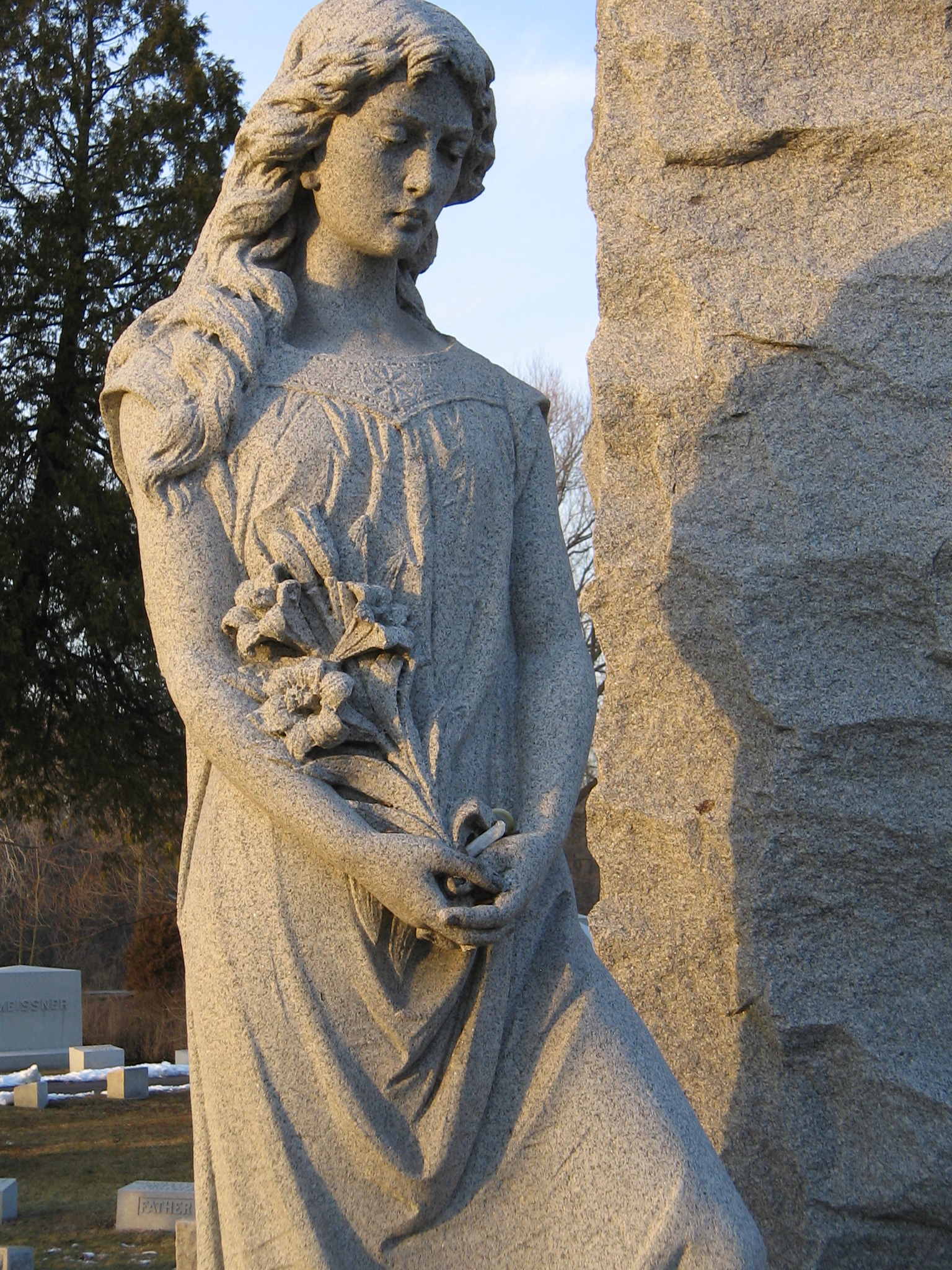
Even the dead mourn


Origins of Evil

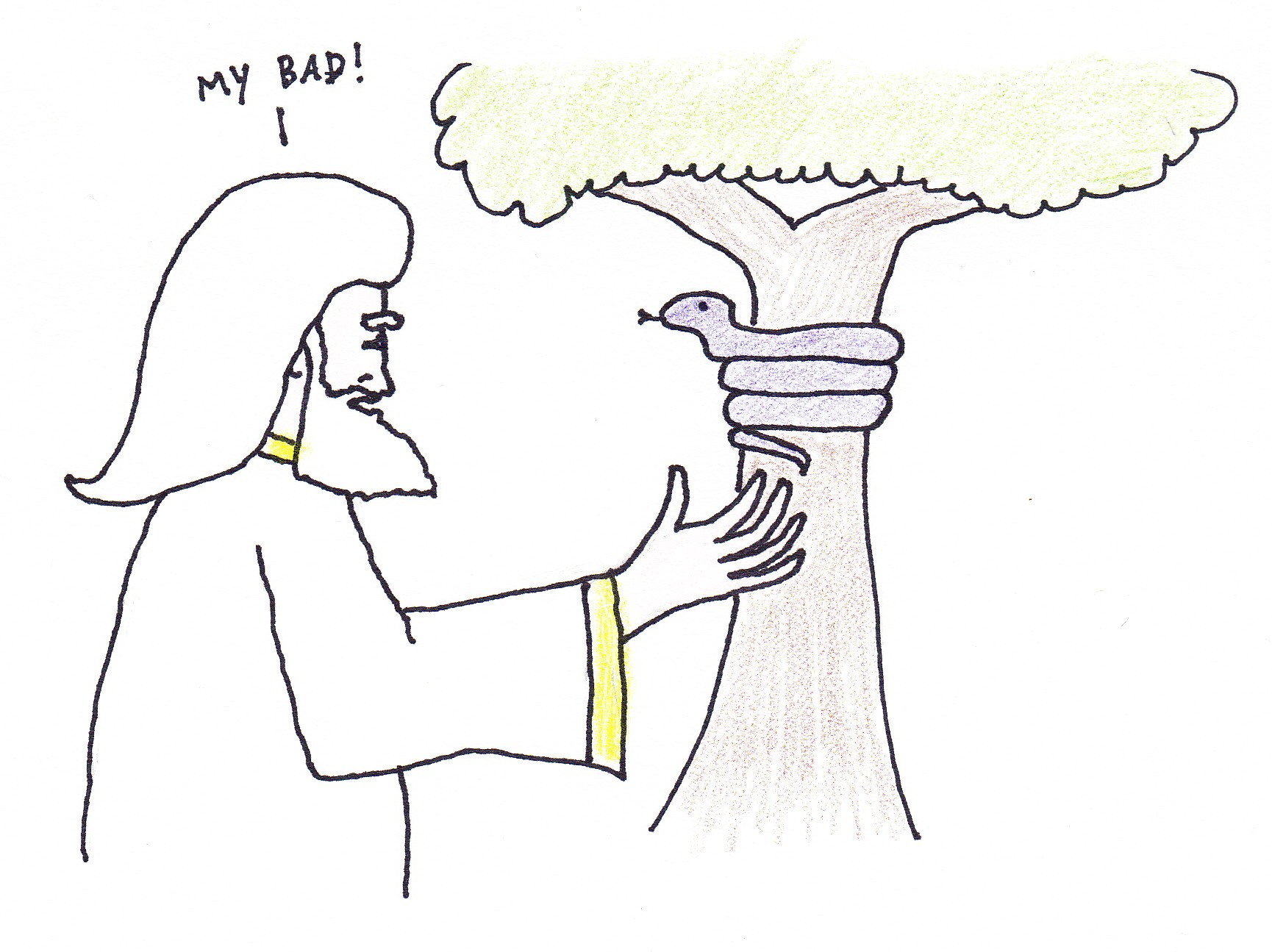
The Bible might have benefited from a good editor. The final product is a world classic, of course, but contemporary people with their busy lives prefer straight and simple answers. These, often, the Bible refuses to yield. During a discussion of prophecy in class the other night the question of the origin of evil arose. I incidentally made reference to Isaiah 45.7 where God casually drops the line, “Forming light and creating darkness, making peace and creating evil, I am Yahweh making all this.” Many English translations attempt to mask the bald use of ra‘ “evil,” in this passage with nicer words such as “woe” or “calamity.” As I explained to my students, however, in a truly monotheistic system all fingers must point the same way for the ultimate responsibility. In this passage of Isaiah, Yahweh is presented as causing evil.

Now the editing of the Bible was never undertaken with the intention of creating uniformity, despite the railing of Fundamentalists. There are plentiful internal inconsistencies and disagreements. We should expect no less of a book written over a period of about a thousand years by several different writers grappling with life’s big questions. Inevitably students ask about the Garden of Eden. Genesis 2.17 has Yahweh state that newly created people must not eat of the “tree of knowledge of good and evil (ra‘).” Here the evil grows on a tree. Who planted that tree? It’s like blatantly laying the keys before your teenager and saying, “now don’t take the car.” Who is the source of that tree? (And, less frequently noted, the eating of the fruit in Genesis 3 is never called “sin.”)

The quintessential problem with a compilation is lack of uniformity. This did not bother ancient people as much as it does modern Fundamentalists. One reason is that many people equate the Bible’s value with it being a book that has all the answers from a single viewpoint. This the Bible lacks. According to the Bible there are various sources of evil. According to a strict monotheism (late in the Hebrew Bible) there can only be one. Enter the devil. To save the goodness of God a Zoroastrian anti-God had to be introduced. But the devil must stand in line to make his patent claim on evil.


Wayward Ninevites

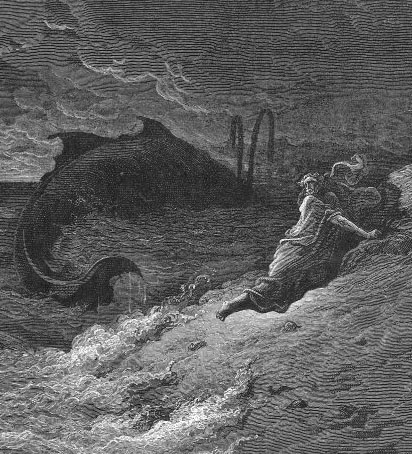
“Come listen to my tale, of Jonah and the whale, way down in the bottom of the ocean;” a children’s song with a catchy tune that has a way of becoming a lifetime companion. Among the earliest Bible stories many children learn is the remarkable story of Jonah and the whale. And since the Bible is God’s word, it must be historical, right? Many modern readers have a difficult time fathoming that Jonah is not a book of history. As if living three days underwater isn’t enough of a stretch, stalwart bibliolaters ignore the tons of archival material from Nineveh itself and claim that the entire city spent a day, or a week, worshiping Yahweh. It stretches the imagination.

Too close for comfort

While working at Gorgias Press I discovered, in an entirely unexpected way, just how seriously some otherwise rational adults take this tale. I had to postpone an important meeting with an influential client because it had fallen on “the Rogation of the Ninevites.” As a lifelong biblical scholar and student of ancient religions, this was a festival I’d never before encountered. A web search refused to yield too much information for as long as my curiosity lasted, but I did find out that the date is difficult to nail down (apparently sometime a week or two ago), and that it predominates among Orthodox Christians of Iraq and Syria. These believers claim the heritage of the fictionally converted Ninevites. Even if the book of Jonah were intended as history, the conversion would have been to Judaism, not Christianity.

As I tried to find a new date with our lucrative associate, I realized once again just how far faith is willing and able to stretch. The story of Jonah is a cautionary tale, almost a fable, reminding post-exilic Jews of the occasional righteousness of the other. While other interpretations have been ceaselessly floated by serious scholars, I have never discovered anyone outside the putative descendents of the fabricated Ninevites who take this non-historical event to be important enough to jeopardize an essential business deal. Anyone who attempts to introduce logic into such an equation may well find him-or-herself, Geppetto-like, slowly digesting in the enormous gastric cavity of a whale that has a taste for prophets.


Blessed Virgin (Not)

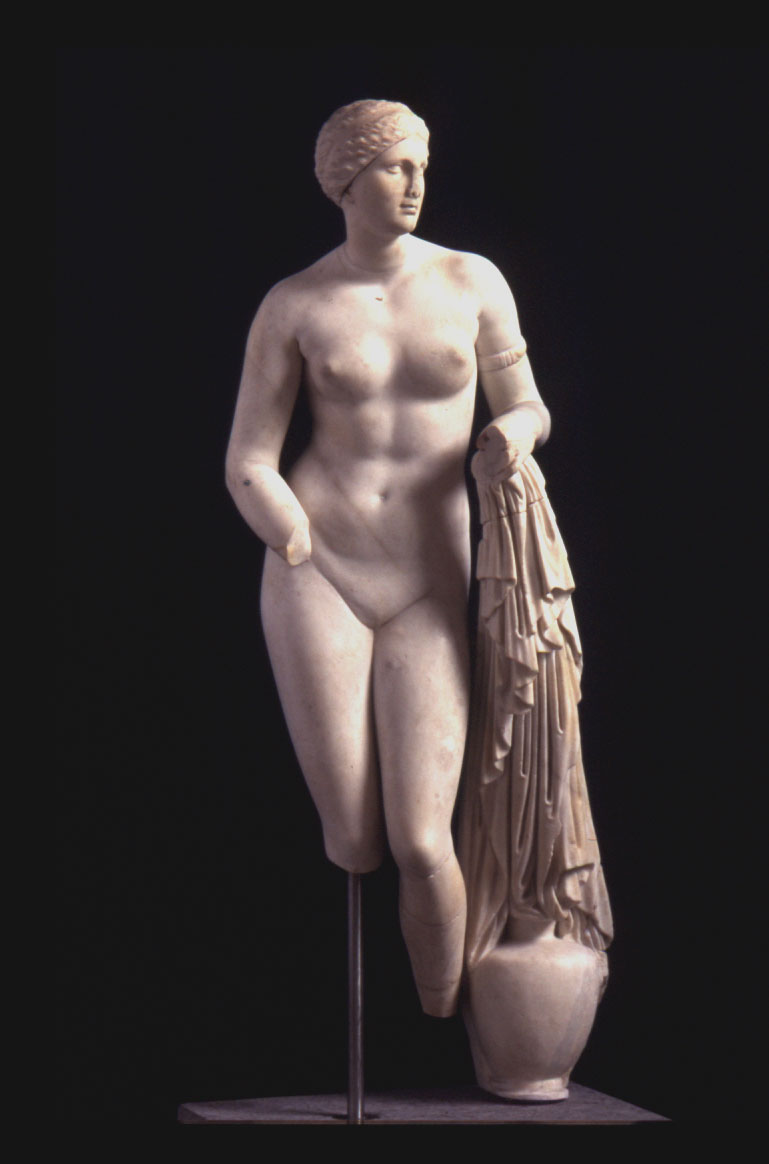
What’s not to like about Aphrodite? Hesiod’s first Olympian, she represents the exuberance of life itself in the pursuit of love. In our patriarchal world her erstwhile consort Cupid has come to represent that strange and compelling force that drives so much of what mere mortals spend their time on. A colleague has pointed me to a new documentary that is being produced on Aphrodite (trailer available on YouTube). In addition to fascinating footage illustrating modern Cypriot rituals to the goddess, the film contains what many would consider a sacrilege: on Cyprus the virgin Mary and Aphrodite are viewed by many as two forms of the same entity.

While the modern, monotheistic sensibility bristles at any notion of shared divinity, it seems perfectly natural that when the “mother of God” was introduced to the island that gave the world its Venus, “its desire,” a mental connection became inevitable. Unlike many “virgin goddesses” of the ancient world, Aphrodite had no false modesty regarding matters of love. Even the mighty Zeus, so powerful that he might be called simply “God,” was unable to resist her draw. Ancient peoples often celebrated the gift of love without the embarrassment that the Victorian Age has so generously bestowed on much of the western hemisphere.

Pressing the point even further, when monotheism emerged the equality of genders became an impossibility. The one god must, by the standards of all human imagination, possess a gender. And since men dominated the societies that embraced monotheism the divine feminine was lost. Orthodoxy replaced humanity, and thus it remained until only recent years when women finally managed to make their voices heard. Aphrodite, unlike Hera, is not under the control of a lordly king. The film by Stavros Papageorghiou offers viewers a chance to see what has been lost by the western world keeping half of the human race silent.


Evolving in America

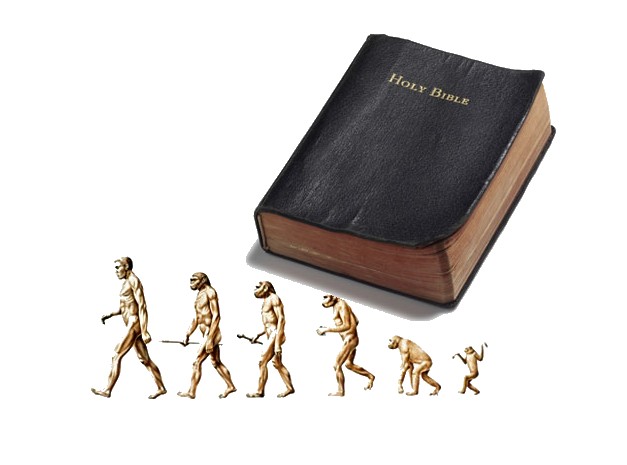
Columnist Leonard Pitts Jr. is one of the most sensible men in America right now. Witty, humble, and bright, he sees clearly and shoots straight. In an allegory entitled “A tale of a giant grown stupid” he illustrates the frustration many intelligent people feel in a country where thinking is viewed askance, and accepting empirical data is rife with suspicion. He begins his article by citing a statistic in Science that indicates some 60 percent of high school biology teachers in the United States inform their students that they don’t have to believe in evolution, they just have to know enough to get through the test. And evolution is not alone in the field of falsified information. Americans are regularly fed a high-fat, low-fiber diet of poor quality religion and told it is the only correct one.

While the remainder of the developed world has moved on to more important issues, we in America are still stuck in Fundamentalist kindergarten. The constant barrage of insipid theology from self-proclaimed doyens of the Scriptures assures the masses that the price of heaven is a healthy dose of creationism. Making matters worse, most biblical scholars choose not to engage these misguided spokespersons, choosing instead to believe they’ll eventually just go away. But why go away when you’re winning the fight?

Evolution is such an odd issue over which to argue. Neither serious biologists nor serious biblical scholars have any problem with it. Only a society increasingly under the power of a jacked-up, over-eager, offensive Christianity buys the feeble creationist rhetoric. And buys it in bulk. That is the American way. For many, society’s ills may be blamed on too much thinking. The Bible requires no thought, just the ability to see in black and white. And the Bible has proven a more powerful weapon than an H-bomb in the educational curriculum of our bright young minds. America itself is evolving. Unfortunately it is evolving into a nation satisfied with simplistic solutions to complex problems. And Bible scholars do nothing and wonder why everyone ignores them. Once upon a time there was a giant. Only it was not sleeping, it was already dead.


Witch World

Little did I realize when I posted an entry on witches two days ago that the news this week would itself become bewitched. Tuesday’s New Jersey Star Ledger contained a piece entitled “Catholics publish guide to witches and wizards.” Then the next day a former student posted a link to CBC News article headlined “Witches to face prison for false predictions.” Last week the Jehovah’s Witnesses left an issue of Awake! at my door that reveals “The Truth About the Occult.” Coincidence or black magic? Are we really in the twenty-first century? If only employment had the same staying power as superstition there would be no jobless rate to complain about!

The Roman Catholic Church in England and Wales is concerned about all the interest Harry Potter is generating. Afraid that tweens and teens might tiptoe into the dark side, the Catholic Truth Society has produced a booklet called “Wicca and Witchcraft: Understanding the Dangers.” The booklet, written by a former Wiccan, is a strange answer to J. K. Rowling given that Potter and friends are not members of the Wiccan faith. They are simply fictional witches that haven’t been grounded by the constraints of the Enlightenment. Fantasy grants them their magical powers, not the Devil. In Romania, meanwhile, witches beset by income tax laws are now facing hard time if their predictions don’t pan out. New laws in the economically depressed nation would require witching permits to be obtained and receipts to be given to customers. This is not to sweep out paganism, but to gain some lucre from it. The Jehovah’s Witnesses are just concerned that occult practices, often seen as mere entertainment, might lead the younger generation down the road to sex and violence.

I was disabused of belief in witches before I failed out of kindergarten the first time. Teaching religion and mythology classes at two major universities, I see students from many different backgrounds trying to improve their minds. But once the sun goes down a backlash against the empirical method is nightly unleashed. I’m not sure whether to pick up my Kant and Descartes or my mugwort and rosemary. Religion breeds these darker manipulators of magic, a force against which many fear God has no recourse. So in our world of high tech gadgets and space stations and cyclotrons, we still have to worry about witches. Theirs is a metaphor yet to be fully appreciated.

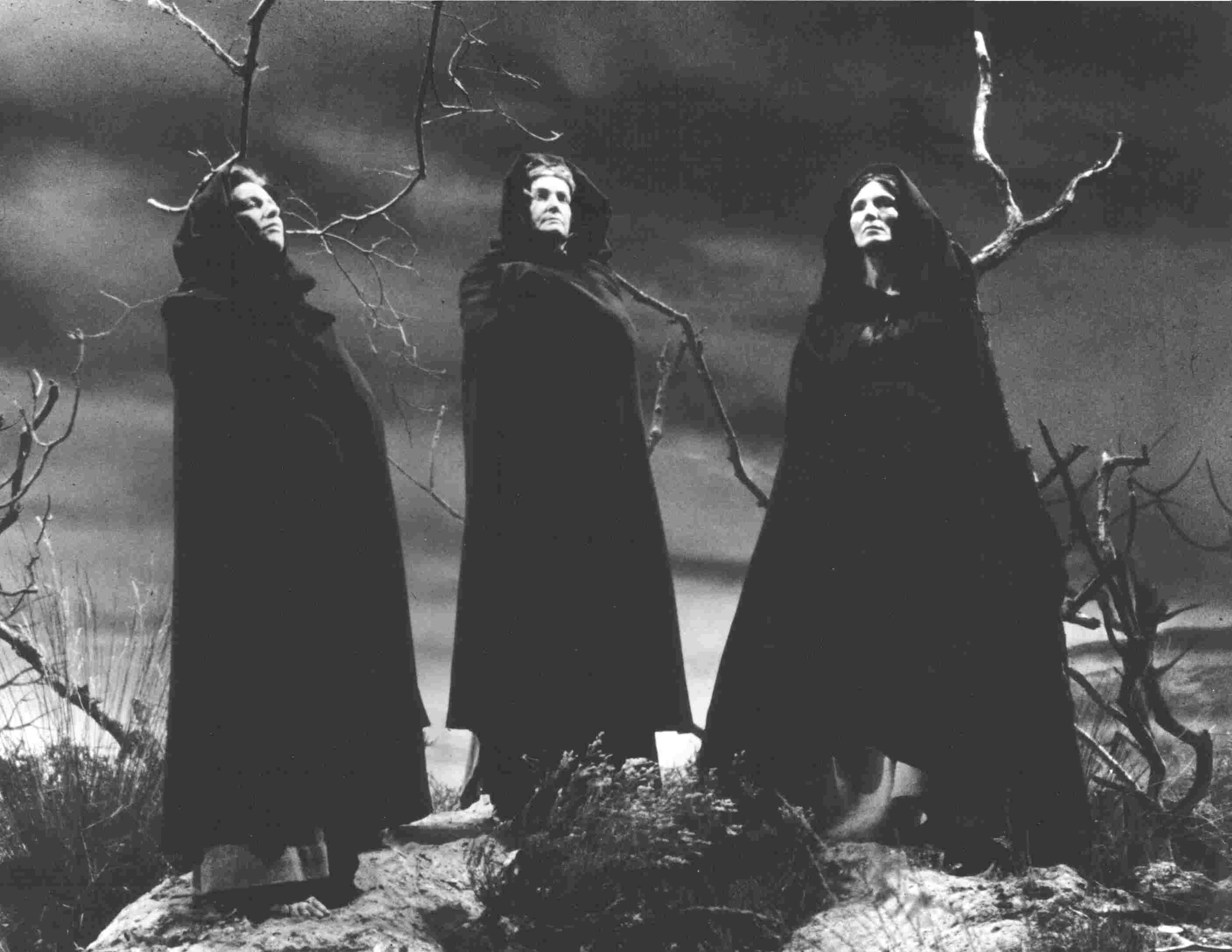
Weird sisters or strange attractors?


Anvil Chorus

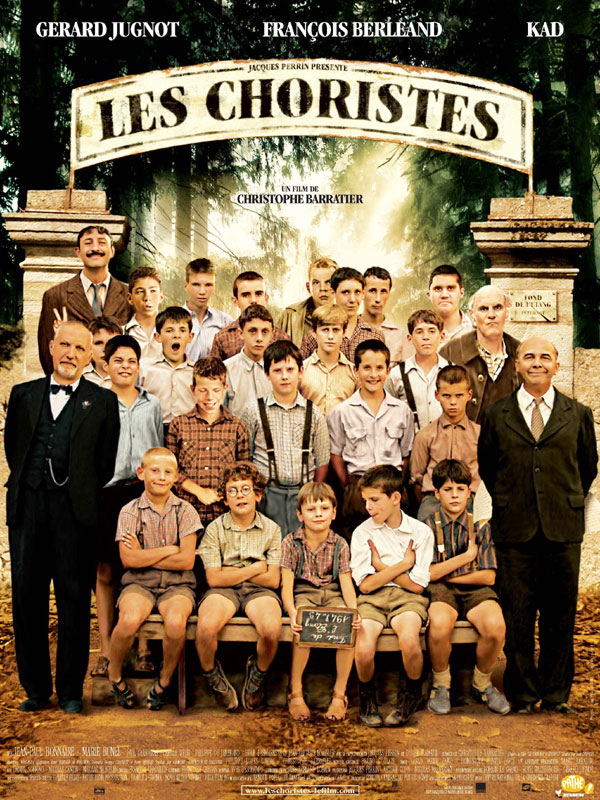
Last night I watched Les Choristes, the 2004 film that received two Academy Award nominations. The story, set in a school for troubled boys in France, felt eerily familiar. Not only did it resurrect the ghosts of Dead Poets Society, it felt like a page – or a substantial chapter – from my own life. The movie was recommended to my wife by one of my colleagues at Nashotah House, an institution that the film strangely resembles. The more I pondered the implications of a small school run by an authoritarian headmaster full of students with malevolent tendencies, the more I realized how much my Nashotah House experience has set the tone for much of my life. While I was at Nashotah, P. D. James’ murder-mystery novel, Death in Holy Orders came out. Immediately students and faculty began to speculate that James must have known of or have visited the seminary. Similarly, the Harry Potter novels led many to compare Nashotah to a decidedly less magical Hogwarts. Some of the students even honored me as the putative master of Ravenclaw.

My personal experience with religious institutions has led me to conclude that they indulge themselves in doling out the abuse that only religious sanction permits. I had attended the Presbyterian-affiliated Grove City College where chapel attendance was mandatory. My experience at Boston University School of Theology convinced me that seminaries were not a good fit for most people, particularly those like myself. I left declaring I would teach anywhere but a seminary. There is no balm in Gilead.

Forever after, any small, religious school with dark secrets would be my Nashotah House. But the problem is much wider than that. Religions seek to control. Some manage to do so benevolently, but too often the human element eclipses the divine. It is a temptation, when in positions of religious leadership, to insist that one’s personal outlook is correct. We all believe that our views are right. Those who receive the holy unction of an institution have the means to make it so. It is not Nashotah House, but human nature. When religious leaders confuse divinity and authority, that is when trouble inevitably begins.


Faith Stealing

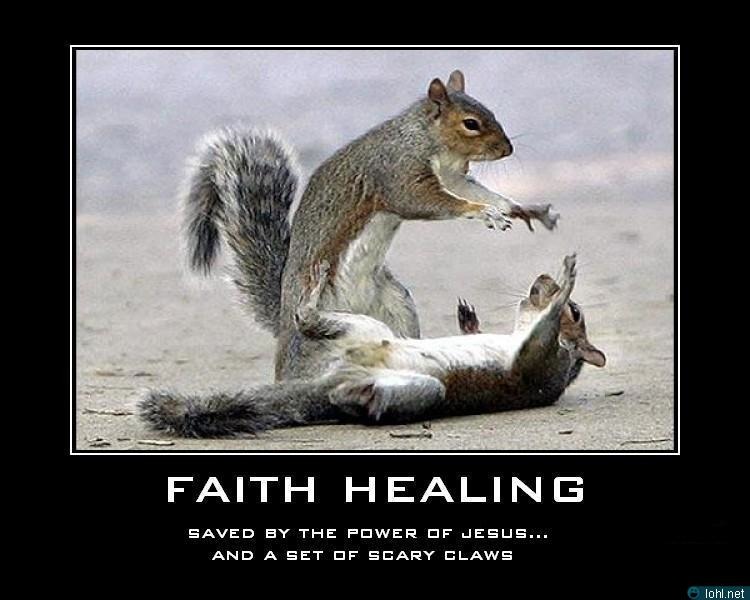
The sad story of the Schaible family of Philadelphia has reached a compromise that demonstrates just how awkwardly religion and politics sit together. Believers in faith healing, the Schaibles watched their two-year old son die for lack of medical attention. No limits exist on what people are capable of believing. Belief is at the root of most religions, so any nation that advocates freedom of religion has to open itself to the bizarre and wonderful possibilities that follow. Belief can’t be legislated. Too many revolutions throughout the world have amply demonstrated that. If a religion decides that the use of turn-signals is sinful (apparently a popular doctrinal stance here in New Jersey), it may bring conflicts with civil authorities and other citizens. When a religion declares professional medical treatment to be wrong, it is simply exercising its right to believe. When civil laws declare that parents must watch over the physical welfare of their children, clashes with such faith systems are inevitable. Believe what you will, physical death will not be cheated.

The shift of religion from praxis to belief gave believers a shove down a very slippery slope. Ancient religions tended to be matters of practice: gods demand sacrifice, so we grudgingly give them that. In actual fact, sacrifices supported the temple staff, often an arm of the government. It was, although probably not disingenuous, taxation in disguise. To be the member of a community, you have to pay the price. The system started to break down when religious individuals began to internalize this external structure. Instead of just offering the sacrifice, you have to do it with the right intentions. Those intentions evolve into beliefs. And beliefs are the ultimate free agents.

When a society defines religion as a belief system to which you may (or may not) subscribe, then myriad religious concepts emerge. Offering religious institutions tax-exempt status only encourages such behavior. If you tax them, on the other hand, the wealthier religions will have more political influence. No matter what pious lips may say, money will always trump pure belief. Meanwhile very real human suffering takes place, hostage to belief systems made up by somebody else. Religion has given us many lofty ideals; maybe one of those ideals is that we should limit its own infinite power.

Borrowed from some place on the Internet


Dog Gone!

Religion is a strange attractor. Maybe not in the exact same sense as in chaos theory, but in reality it brings together mental states so bizarre that science fiction and fantasy writers have a buyer’s choice. Yesterday the New York Daily News reported on a South Carolina woman who hanged and burned a one-year old pit-bull puppy. Why? The bitch had bitten the woman’s Bible. Citing the animal as a “Devil dog,” the southern woman became a vigilante for the Lord. Now she’s being tried on charges of animal cruelty. This story touched me in a number of ways.

With family roots in South Carolina, I can conjure up images of this happening. Having known many, many Fundamentalists, it seems even more plausible. Given the constant barrage of contrary messages descrying the presence of evil in the world, all the sudden any mutt can become Mephistopheles. Begging off the Baskervilles, the demonic hound has a long pedigree in mythical imagination. It is well known that the Bible cites dogs as unclean animals, but it is their charnel character that leads to the development of the full-blooded hellhound. Prior to the Hebrew Bible, in ancient Ugarit dogs had an infernal connection. It isn’t seen clearly, but the association is there. Snatches of the underworldly dog appear long before Cerberus, and last well nigh into the twenty-first century.

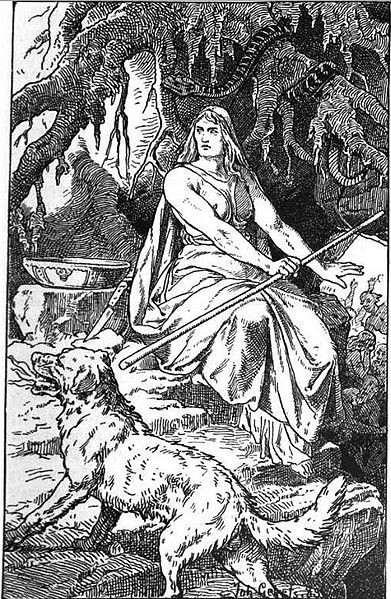
Hel and his hound

Unfortunately for the deceased canine, it is a myth. Hellhounds still abound in popular media, everywhere from The Omen to O Brother, Where Art Thou? Dogs, however, were among humanity’s earliest partners in the survival game. From about as early as I can remember, we always had dogs in the house, and nary a demonic encounter. We never put them on trial, even when house-training was in progress and an accident occurred.

The news story reminded me of an episode of Dragnet I saw as a child. A woman was arrested for murder, and Sergeant Friday, in his unflappable voice, told his partner it was because the victim had shot one of her books. In the final fade out, after Bill Gannon asked what book it had been, Friday holds up a Bible with a bullet-hole through it. I was a little confused. Was the woman guilty or was someone shooting a Bible just cause? The episode did not answer the moral dilemma. I can’t even remember the outcome. But in 2011 things haven’t much changed. If he goes to South Carolina McGruff better watch what he takes a bite out of, or it could be lynching time again.


Beside Metallic Waters


My brother recently pointed out the story of Rev. John Van Sloten, a Canadian pastor who has written a book about how he’s come to see the gospel in the songs of Metallica. Yes, Metallica. Even the members of the 1980’s hard rock band found the association a little surprising. It all came about, it seems, through an open mind. The story is narrated in basic form on the Gibson guitar website. Young parishioners at Van Sloten’s church suggested he should listen to Metallica. Perhaps aware of the principally negative conservative Christian reaction to rock in general and hard rock in particular, the pastor says he ignored the advice. Then the minister was presented with Metallica tickets. A divine mix was in the works.

At the concert the pastor had a revelation: the issues wailed against by the band resonate well with the concerns of Christianity. In fact, some of the band’s concerns sound downright prophetic. The concept of prophecy today often revolves around a prediction of future events (à la Harry Potter). Prophecy in the Hebrew Bible far more often concerns social justice, speaking out against the oppressor. Metal bands, from their inception, were vehicles for protest. Disillusionment against a system that perpetuates unfairness either at a governmental or a cosmic level. When I sat down to listen to the lyrics of Black Sabbath for the first time, I was surprised how biblical many of them were (don’t tell Ozzy).

Many religious folks prejudge heavy metal as “satanic” and evil without even listening to it. I have always been struck by how much these groups frequently draw on bleak biblical images. Today we treat biblical characters as paragons of emulation. The Bible does many of its characters no such disservice. Prophets are to be heard, not emulated. We think of Isaiahs or Jeremiahs as pleasant supper guests who happen to have a divine word inside. In the Bible their actions often lead to recriminations, but their uncomfortable message is sound. I grew up in a tradition that discouraged heavy metal, as if something in the music were inherently evil. I applaud Rev. Van Sloten for approaching one of the formative bands of the genre with an open mind. Truth may be found in some very unlikely places.


New Age Present

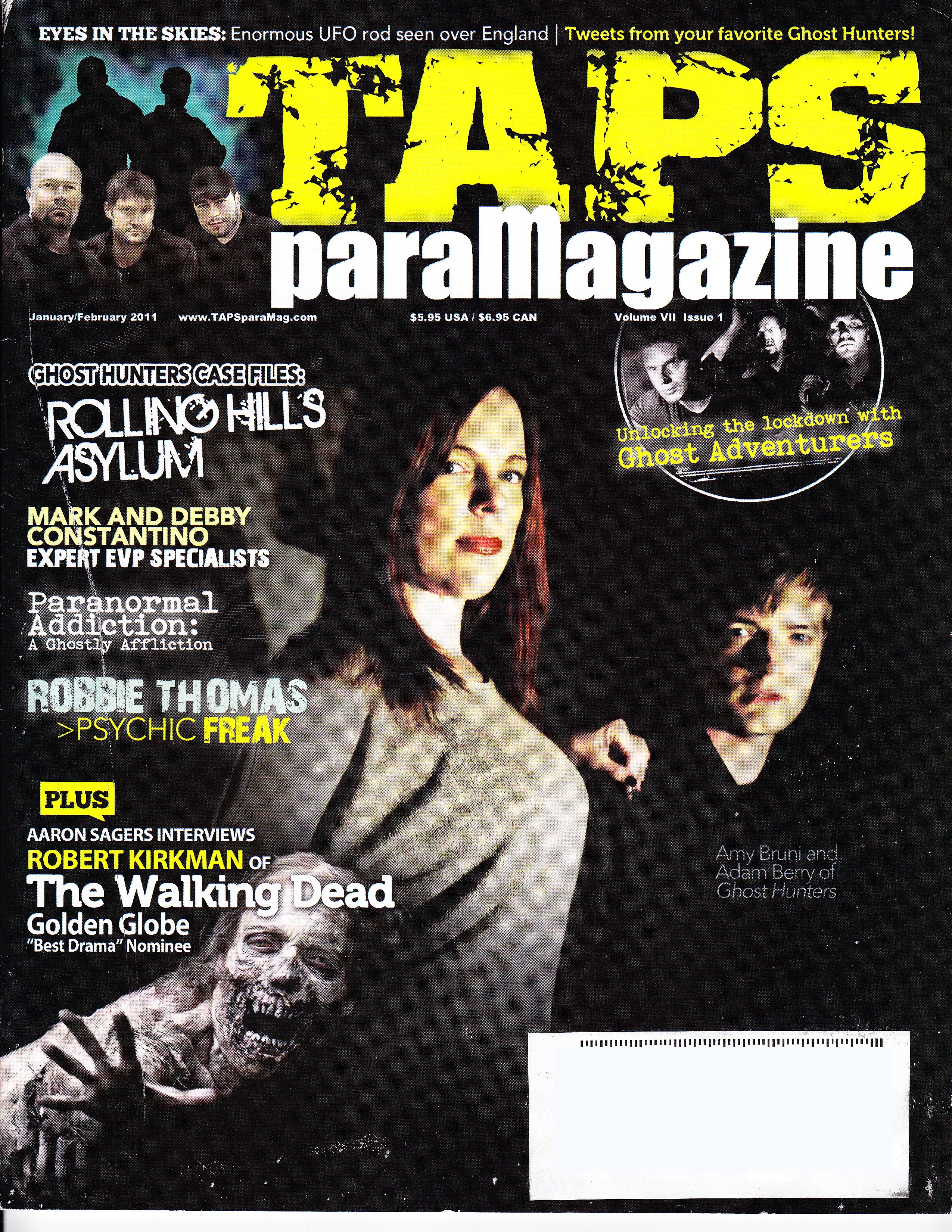
Okay, so I admit I’m curious. As my “six month” subscription to TAPS Paramagazine continues into its second year, itself somewhat paranormal, I get the feeling that I’m witnessing the birth of a new religion. I’ve been in this business long enough to know that new religions are hardly rare, but this one seems an accidental entry into the field. Now ghosts and religion are natural enough as corollaries. Both involve afterlife concerns and the unknown. Having watched TAPS Paramagazine feature fairies, tarot cards, and zombies, however, I wonder if the distinctions are becoming blurred. In this latest issue (January/February) many of the articles make explicit mention of God. God and ghost in the same breath, with the exception of a particularly holy spirit, is an odd combination, given the biblical injunction against mediums.

Spiritualism in the late nineteenth and early twentieth centuries was descried by famous debunkers such as Harry Houdini and accepted by famous intellectuals like Sir Arthur Conan Doyle. It is that liminal area that stays out of the reach of traditional Christianity and Judaism, but strays into the afterlife-prepared psyche. If the dead are out there, they should be able to communicate. Right? And with God’s full approval, so it seems. This latest issue alone suggests that UFOs may be demonic, that clergy may be legitimately interested in ghosts, God may speak through dead children, and that one may become addicted to paranormal investigation. Sounds like a recipe for a New Age mythology. Throwing in light-hearted contributions about the Walking Dead, and suddenly zombies become real as well. Oh, and skunks have a special wisdom.

Traditional Christianity cautions against all of these things (except skunks). When it comes to the supernatural, it claims, there is only one super, supernatural being. The rest are charlatans and wannabes. The Bible certainly does not encourage consorting with ghosts, and yet, in this New Age milieu it is possible to find any remotely spiritual entity touted as proof of reality beyond reality. As Bader, Mencken, and Bader observe in Paranormal America, citizens of this country are inclined to believe. Where does belief lead when there is no pole-star to guide the ship? I sense that we may be steering into uncharted waters. Anyone want to volunteer to be captain? Religions always get to make up their own rules, so feel free to devise your own compass.


Black and White Zombies

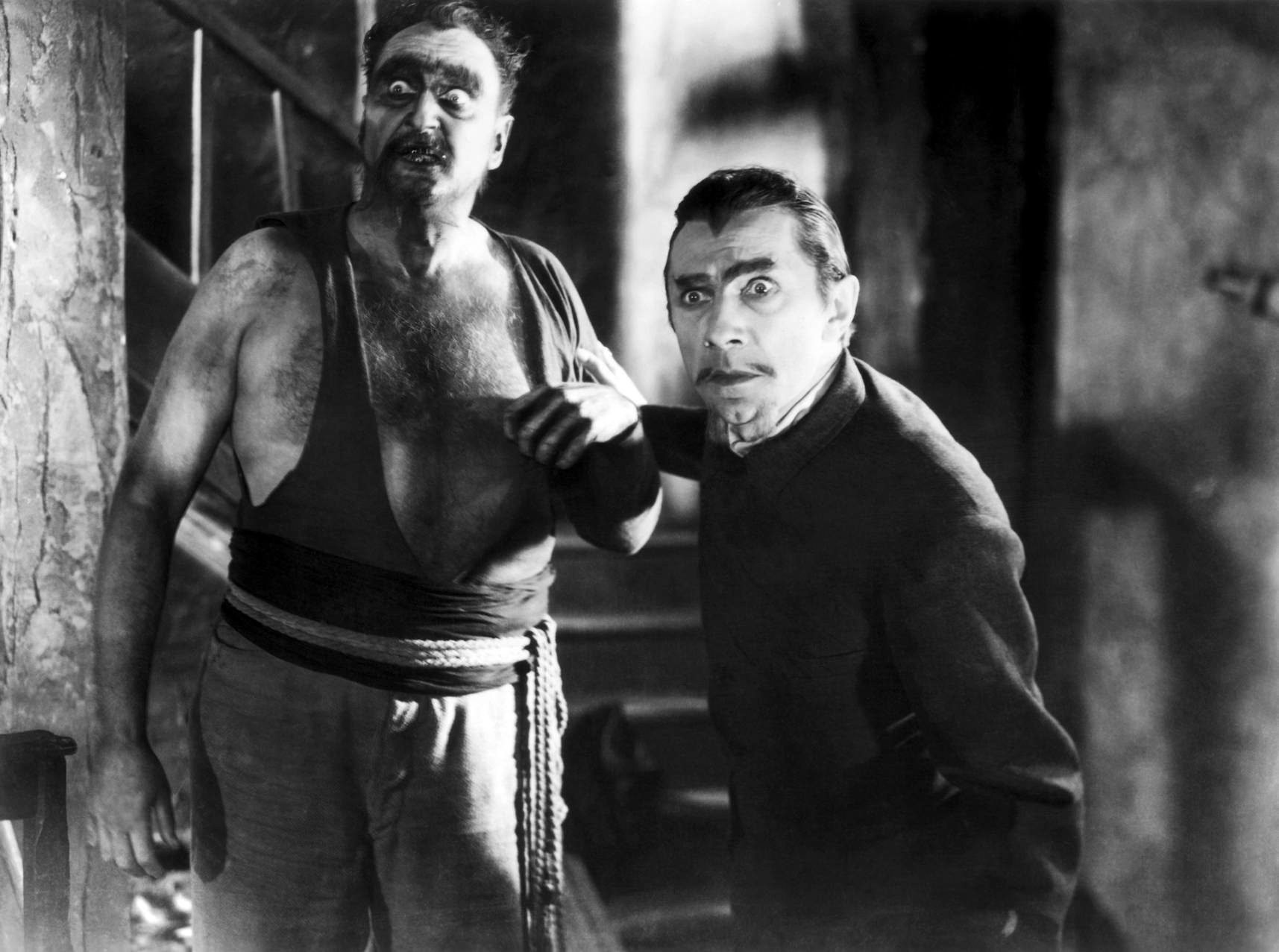
One of the sweetest privileges of a school-year weekend is the Saturday afternoon movie. The advent of relatively cheap, boxed sets of old films has opened the realm of many forgotten classics for me. My wife recently purchased one of those 50-movie boxes of classic horror films for me, and I’ve been making my way through it weekend-by-weekend, and occasionally there is a gem among the tailings. Yesterday I saw White Zombie for the first time. Back in the days when Bela Lugosi claimed a faithful following after his trend-setting interpretation of Dracula, he played a voodoo doctor with the power over zombies in this widely panned movie. In these days of the Walking Dead, it may be hard to appreciate that White Zombie was the first full-length film about our undead friends.

With the exception of the always professional Lugosi, the acting in the film received a well-deserved trouncing. Interestingly, the “van Helsing” of the drama, the doctor who overcame the monster, was a missionary. White Zombie is authentically set in Haiti, and it is never made clear whether the undead are really deceased or simply mindless. But the goofy, pipe-smoking missionary is the one who defeats evil at the end of the day. As noted elsewhere on this blog, monsters frequently emerge from the dark realms of religion, and the zombie especially so. Today, however, the zombie is all the scarier for being secular, unaffected by God or human deterrent. Originally it was a case of voodoo versus Christianity.

In what is perhaps an unintentional irony, the character who comes across the most sympathetically in the film, apart from the fetchingly pouting Madge Bellamy, is Murder Legendre (Lugosi). The missionary wins out by dim-witted happenstance, while the character responsible for the actual death of the zombie master is a partially aware zombie fighting against his fate. It may be assigning far too much credit to assert that the film had intentional social commentary, but White Zombie has had an often unrecognized impact on what has today become the symbol of corporate America: the once humble zombie.

A typical zombie


Vote With Your Faith

Starting off a new administration on the right foot is the goal of many politicians. This was likely the case for Alabama’s new governor Robert Bentley. When he was sworn in on Monday he stated that anyone who was not a Christian was not his brother or sister. Likely the statesman was attempting to garner support among the predominantly Protestant population of this southern state. Instead he received a backlash from various groups complaining that his statement implied that some would be lesser citizens under his tenure. Yesterday he apologized for his remarks. The fact is, however, that the governor was not the origin of the sentiments expressed, but those of the “Bible believing” sects of the south were. This is the kind of language, Biblicalese, that they like to hear: either you’re with us or ag’in’ us.

Religions have much to gain (and lose) by maintaining high standards of separation. Exclusivity, I was told in a class on early Christianity, was what ensured the survival of this sect of Judaism. If anybody could join, then who would want to? Make it exclusive, and there’ll be a line out the door. So it is with political religion. The Bible is not a great unifier – it tends to divide people more than unite them. The real question is: should the way forward be defined by division or unity?

We have ample evidence of how division breeds religious contempt. Since I believe the correct religion, anyone who disagrees with me must be wrong. If they are wrong, my deity does not approve of them the way (generally) he approves of me. And so the story goes. And so the body count climbs. The Bible can be a great unifier, if those who wield it so decide. Venerating a book with multiple points of view, Bible readers may choose which aspect of their Scriptures they want to emphasize. And that little black-covered icon continues to pack a wallop in western culture, so the perspective you choose is backed with immense fire-power. Problem is, sometimes it backfires. The new governor of Alabama is learning this in his first week in office. It would be a lesson well learned by any who attempt to bludgeon others with the Good Book.

'Nuff said.


Winter’s Music

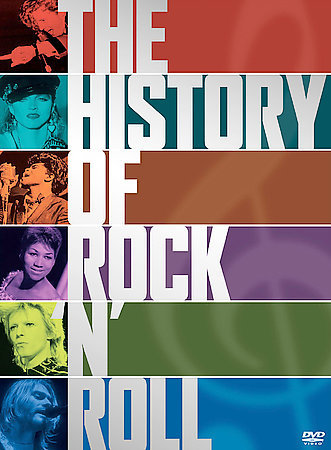
An editorial in this morning’s paper once again raised the question of whether we need a politically correct version of Huckleberry Finn or not. The story led me to recall the origins of rock-and-roll – not that Mark Twain was a rocker, but because I’d recently viewed the first installment of Time-Life’s History of Rock ‘n’ Roll. Both Huckleberry Finn and rock-and-roll owe a vast debt of gratitude to African-American culture, and both bear the scars of prejudice. An unfortunate aspect of life is that few people willingly subject themselves to hard labor when they realize an easier lifestyle is available (thus, Brave New World). This has been true since civilization began. With the advent of the Sumerians we begin to read about the slavery of war-captives. Even today, dressed up in fancy clothes, slavery of various degrees continues to persist. The reprehensible treatment especially of Africans for slavery is a heritage that will not easily be overcome. And yet American culture owes much to its African components.

While already in the back of my head, this was once again brought to the front by the “Rock ‘n’ Roll Explodes” episode of the Time-Life series. Now, being a musically deficient individual, I claim nothing particularly insightful here – my wife and daughter are the musically accomplished ones in this household – rock clearly has its roots in the blues and gospel. In the documentary Little Richard explains how rock was often simply music of the black churches transposed to secular clubs. Xenophobic “white” culture of the 1950s felt threatened by this catchy music and sought to disarm it. Calling it “race music” producers had the more popular songs covered by white singers such as Pat Boone. (His cover of “Tutti-Frutti” always makes me smirk.) The real element at work here was the prejudice against the other.

As a youth I recall literally throwing my rock albums in the trash because of a Fundamentalist tract that declared in no uncertain terms that it was the “Devil’s music.” I’d bought those albums with my own hard-earned money, but sacrificed them to save my soul. Little did I know that “Devil” was a code word for “African” in this fundie literature. Otherwise, why was it alright when Pat Boone (of The Cross and the Switchblade fame) sang the same song? Mistrust runs very deeply in monotheistic religions. Even today many branches of Christianity inveigh against the horrors of rock without acknowledging that the music has its roots in the cry for liberation on the part of slaves, as expressed in Christian worship. Civilization will always insist on retaining its slaves. At the very least modern western culture should say “thank you” for the unrequited gift of the musical voice of the twentieth century.