Souper Sensitive

Last night we had minestrone soup for supper. That’s a pretty bold claim for a non-Italian family in New Jersey, but we try our best. This particular recipe called for shaped pasta, and we have an entire cupboard dedicated to that particular starch. In the back of the cubicle my wife found a package of aleph-beth pasta shapes, a novelty for kids, I suppose. Vaguely I recall having purchased it a few years back to try to interest my daughter in learning Hebrew. (It didn’t have that particular result.) Well, pasta is pasta, and just in case it goes bad after the course of a decade, we decided to use it.

As I was spooning some of the soup out, I noticed the letters shin and a final mem in close proximity, bringing to mind ha-shem, “the name.” It then occurred to me that aleph-beth pasta might lead to theological conundrums difficult to swallow. What if one were to end up with a yod, he, waw, and he in the same spoon? Does ineffable also count as inedible? The larger extrapolation then took over; letters are but abstract symbols, only bearing the meaning we decide they bear. Yet extreme devotion is frequently ascribed to certain words in various religious traditions.

A spoonful of trouble

Soup is, by its very nature, chaotic. Spellings could be simply accidental. To eat or not to eat? That was the question. The purchase of the pasta had been with the purest of intentions. Never before had a wheat product put me in such a compromising position. As I slurped up ha-shemp (only in abstract form, along with zucchini and a bit of carrot) I reflected how much religion controls human behavior. While we may consider it a system of beliefs, its real-world applications are far reaching. Sacred texts and pasta all at the same time. It must be that another semester is about to commence.



From Palin to Phelps

People get shot every day, but that does not take the sting from the January 8 shootings in Tucson, Arizona. We live in a nation filled with angry, violent people. Most of them hold their rage in check, but others act out their frustrations aided by the obscene ease of firearm ownership. Into this volatile brew, mix in the warped rhetoric of a politics of fear and who knows what might happen. Sarah Palin and other outspoken conservative ideologues hold up their pristine hands to demonstrate they have nothing to do with the hate-mongering that haunts our streets. She calls the jabs at conservatives “blood libel.” I say if you propagate the politics of fear you’re liable to get blood on those hands. Often in the bookstore I see titles like How to Talk to Liberals: If You Have to. The liberals I hear talking are only asking for dialogue and coexistence. One side wants a chance for everyone to be heard, the other wants to throw stones at those who are different.

Students do presentations in my classes. The assignment is to choose a social issue where the Bible is brought to bear on the topic and present to the class what you learn about the subject. Two groups last night presented on the Westboro Baptist Church and its outspoken pastor and founder, Fred Phelps. Both presentation groups showed videos of members of the Westboro Baptist Church speaking out about various and sundry liberal groups/causes/nations they hate. Plucking verses from the Bible like a chicken pecking at the ground, they cite only those passages that justify hating those who are different. They seem to have overlooked the part that says, “by their fruits you shall know them.”

On today’s schedule? According to the Westboro website: “WBC to picket the funeral of Christina Greene, the 9-year-old girl cut off in her youth for the rebellion of the parents, preachers, and leaders of this nation.” They’ll have a hard time finding any place in the Bible that condemns children, shy of sly old Elisha calling out she-bears to kill 42 of them. Having read the Bible for practically my whole life, I have a very difficult time reconciling those who use the Bible for conservative causes with their own sourcebook. What will it take for them to realize that “what I want” is only part of the picture? Whether presidential hopefuls or crazed curmudgeons, we would all sleep better if we took to heart that inequality is very easily transformed into iniquity.


Ender’s God

Some time ago a colleague recommended Ender’s Game by Orson Scott Card, ostensibly because the protagonist is named Ender Wiggin, a surname suspiciously close to my own. I have generally been a reader of literary fiction rather than science fiction, but I enjoy a jaunt into the genre now and then. Set in a distant future, Ender’s Game occasionally references how religion is permitted but frowned upon, in that day. Those naïve enough to accept such old beliefs are relegated a less honorable social status. So far, so good; this is common enough in futuristic stories. Then Orson Scott Card came onto my personal radar screen again. I gave my wife a novelty quote book with feminist sayings as a stocking stuffer. One of the sound bites was from Orson Scott Card, a rare male figure in this tiny book. Then my wife pointed me to religious predictions for 2011 on CNN’s Belief Blog. Once again, Orson Scott Card was present, here classified as a Mormon.

Such convergences are somewhat unexpected in a short space of time. The revelation of Card’s religious orientation was a kind of epiphany to me as well. Considering the contempt for religion in his fictional future, I was surprised to find a faithful author. Then I began to see Mormon theology throughout Ender’s Game. While not an expert in the Latter Day Saints, their belief system was included in several courses I took as a religion major in college. As I read of Ender’s progress through the novel, to the point where he achieves a limited apotheosis, I could see elements of Card’s belief system playing out. The protagonist becomes the deity-figure of his own planet. It was suddenly all very familiar.

I suppose that an entire literary discipline exists where the religious outlooks of authors are extrapolated from their writings. Deeply held values are difficult to mask, even in fiction. When I read for relaxation, however, I don’t look for such information. I must admit that my view of Ayn Rand and L. Ron Hubbard’s fiction nevertheless forever changed when I learned of their belief systems. This is, I suppose, a danger of compartmentalized religion. As a youth I believed everyone should wear their religion on their sleeve. As an adult I know how divisive and dangerous this would be. Whether in the far distant future or in the right now, we take care to hide our religion. Not only does it keep us safe from those of other religions, but often also from those of our own flocks as well.


Jehovah’s Eden

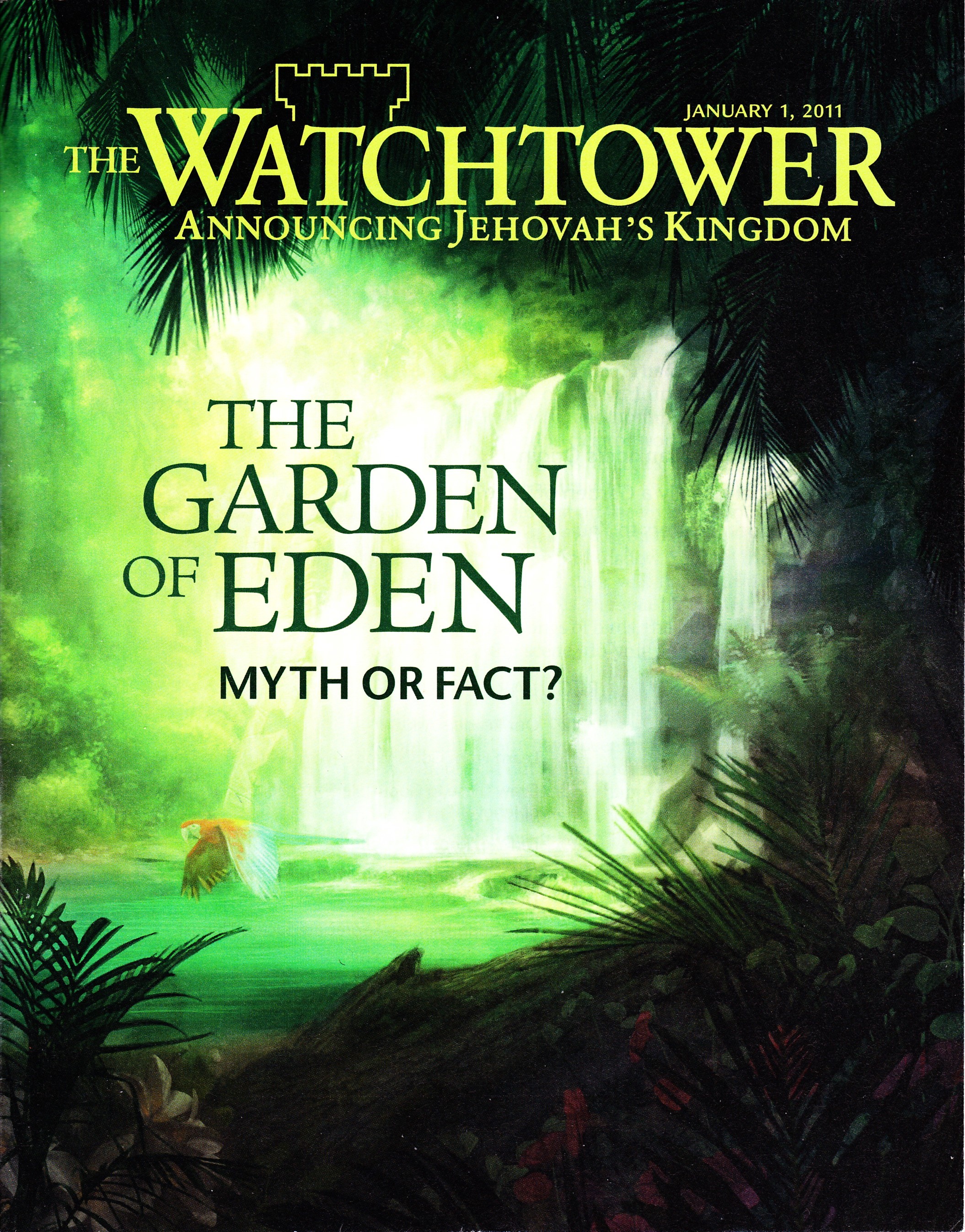
As a religious studies specialist, I inhabit a world where definitive answers are comparatively rare. It is clear that my assigned Jehovah’s Witnesses case-workers are not similarly constrained. While I was out earlier this week, they left a copy of the newest edition of the Watchtower for my edification. The cover shows an Edenic garden and bears the legend, “The Garden of Eden: Myth or Fact?” Now, I thought I knew the answer to that one. So I started to read. I learned that it was because of philosophers and their nonsense that people ceased to believe in Eden. Most people in world believe there was a paradisiacal garden, way back when, so it must be fact. I also learned that the reason we can’t find Eden today is that the Flood wiped it away. Seems a shame; with proper drainage it could be as dry as Aden and as rich as Dilmun.

The story in the magazine is set up as a series of objections raised as to why the Garden of Eden is rejected by skeptics. Literalist biblical answers to the objections are then offered. Ironically, one of the most obviously missing objections is that of geology. The article states that, prior to being destroyed by the flood, Eden would likely have suffered from the devastation of earthquakes. The area, it seems, is in the earthquake belt. Still, the garden was created “some 6,000 years ago,” despite what all those earthquake-toting geologists tell us. Somebody has forgotten to set their calendar back by a few billion years.

A more serious objection missing from the critique is that of mythology itself. Those who’ve studied the background to the story of Eden realize that most of the elements in the story are recycled myths known among the Mesopotamians. Special trees, crafty snakes, people being created from clay – all these are standard elements in Mesopotamian mythology that predates the Genesis creation accounts. If modern people understood that the point of mythology is to convey truths that are beyond the factual, perhaps we wouldn’t have such insistence that Eden is fact, despite the facts of science. The Garden of Eden: Myth or Fact? Clearly myth. And that rescues the story from the burden of bearing facts it was never intended to convey.


Determinism to Succeed

I’ve been watching some episodes of Morgan Freeman’s Through the Wormhole, the recent Science Channel sop to the masses to explain what scientists are thinking. I always appreciate when scientists (and other specialists) are willing to abandon argot and talk to the rest of us in plainspeak. Even if the implications are a little scary. The episodes I watched this weekend shared a near determinism. The physicists interviewed stopped shy of saying that all is ordained by the rules of science, but the implications still rang loudly in my ears. This concept is at home in the church.

Back as a college student attending a Presbyterian school (I have never ascribed to this particular flavor of Christian thought), I first chanced upon predestination. In fact, the subject was well nigh unavoidable. Students of all majors and backgrounds ended up discussing it around dinner tables as well as in the classroom. The instigator, instead of physics, was John Calvin. His theology suggested that mere mortals had no say in their destinies; God created some to be saved, the rest to be damned, fairness be confounded. I sat through many classes where the professors would argue with erudite words that all this had been foreordained. Some, “double predestinarians,” went as far as to argue that every firing of every synapse, every motion of every muscle, had been predetermined by God before the creation of the world. When I asked “why?” I was told that God has his (always “his”) reasons, and that I, a non-Presbyterian, should simply accept my fate.

Four years of wrangling and no one managed to convince the opposite party. One of my more intelligent professors once told me after class, “you free-willers always win on philosophical grounds, but we predestinarians always win on scriptural grounds.” He seemed to think that solved it. Perhaps he was predestined to conclude that. I disagreed. No greater monster could exist than a deity who predestined the horror we’ve created in our world. To see all this human suffering, much of it pointless, and simply shrug and say “God has his reasons,” is to implicate the creator in a cosmic Nuremberg. For me, I’d feel safer with the physicists saying it is all a matter of unfeeling cosmic laws. Perhaps I’m predestined to write this, but I still think they’re all wrong.

Was Calvin predestined to wear that hat?


The Selfish Meme

Although we may know deep down that one day is pretty much the same as another, people have always held profound reverence for the new year. Symbolic rather than empirical, hopes resonate around the concept that a good start presages better things ahead. That’s why tragedy early in the year sometimes possesses such solemnity; we had hoped that things might begin anew. The headlines today announce that a church bombing in Alexandria, Egypt, started a new year of violence in the southwest corner of the cradle of civilization. Muslim extremists are suspected as there has been some tension between the Coptic Christians of the city and their Islamic compatriots. Although details are not clear, one matter remains in focus: the violence is based on religion.

One of the more savage legacies of monotheism is the absolute truth claims that follow in its train. If truth be truth, there be only one. So the meme goes. Multiple mutually exclusive truths cannot coexist in a religious universe. Scientists might well claim that in this non-empirical universe, no testing may reveal the actual answer. Belief takes over where knowledge fails. And belief in a religion, like it or not, follows the dictates of survival of the fittest. Memes, like genes, can be quite selfish. If one is to stake eternal, unchanging consequences on a religion, the proposition is all-or-nothing. Even purgatory is not forever. The coin falls one way or the other. Religions fight for the memes of truth, and those with the highest survival rate win.

Lighthouse of Alexandria before the bushel

Alexandria has suffered its share of violence in the past. Its famed library, the center of learning in the ancient world, traditionally underwent four destructions, the final two religiously motivated. The books surviving antiquity fell under the Christian ban of paganism in 391. Arabic sources note the destruction of the institution after the Islamic conquest in 642. The end result is the same – the irreparable loss of centuries of knowledge. The lighthouse of Alexandria, one of the seven wonders of the ancient world, might well stand as a symbol for the influence of rationality. Tradition states the light could be seen 29 miles away, but earthquakes and the need for building material saw the extinguishing of the light so that by 1480 the darkness settled for good. A fort was built from its remains. Given a choice of light or fortification, it is clear which way the selfish meme will go.


Dating Daniel

Last semester one of my students had an encounter with a literalist. This is not uncommon, but the issue raised ran counter to what we were covering in class, namely, the book of Daniel. Apocalyptically minded literalists use Daniel and Revelation as a two-tiered roadmap to the future, supposing that these books are predictions of the end of time. Scholars who’ve studied apocalyptic literature, however, know that such interpretations misrepresent a fascinating genre of ancient writing that says more about its own time than some unforeseen future (our time). Nevertheless, the myth of Daniel’s foresight persists.

Long ago biblical scholars noted that although set in the period of the Babylonian Empire, the book of Daniel makes several basic errors about that time period. On the other hand, Daniel knows the period of the Seleucid Empire (when it was actually written) in relatively precise detail. We think nothing of it when an author today sets a story in the past, but somehow this is dirty pool in the composition of an evangelical Bible. Apocalyptic was intended to provide encouragement to those under persecution, not to give them a Google-mapped future. It is in the nature of apocalyptic to present the author as a seer, but the future age is a Zoroastrian contribution that gives books like Daniel and Revelation their edge.

Misunderstanding genre is a large concern among literary scholars. A document like the Bible, which contains several distinct genres, must be handled carefully if it isn’t to be misrepresented. I used to point out that if the passages intended to be read ironically were understood literally many Bible-quoters would be in trouble. After all, doesn’t Amos declare, “Go to Bethel and sin; go to Gilgal and sin yet more” (4.4)? Learning to place biblical genres within their proper context makes a world of difference. Instead of Daniel telling us to hold tight because the end is near, he is found to be encouraging those who were suffering in his own day. We have no biblical roadmaps for the end times because the end of the story has not yet been written.

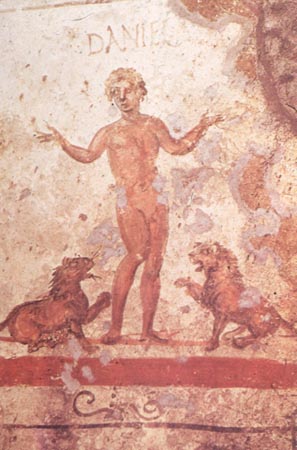
Daniel tells the lions a story about the future


Virtual Religion

Rabbi and author A. James Rudin, in an op-ed piece in Sunday’s New Jersey Star-Ledger, tolls the warning bells for traditional brick-and-mortar religion in the western world. We live in a virtual world where nearly any need may be met through the Internet. You may satisfy your hunger by ordering out online, and consult a virtual nurse online later when you don’t feel so good. Holiday shopping is a breeze without having to do anything more than tap out a wishlist on your keyboard and then click your mouse. Why should spirituality be any different? Rudin points out that many classics of western religion used to be confined in research libraries, but are now freely available online. Any number of self-appointed doyens of spirituality offer the truth in electronic form. What need have the faithful of starting the car on a cold morning, facing bitter winds and blowing snow, to march into a half-deserted house of worship when God is only a few keystrokes away?

There can be no doubt that the Internet has changed views of religion. Exposure to exotic or unfamiliar practices and beliefs is common. American religion has often been compared to a marketplace, and the best place for comparison shopping is online. This is not, however, cause for alarm. Ancient religions, including the early Judaism that will give birth to Christianity, accommodated other belief systems they encountered. There is no pristine form of religion that preserves the exact original recipe. The change took place more slowly in ancient times, but take place it did. Judaism, for example, moved from a basic, colorless Sheol to a fully populated Hell in Christianity, complete with lakes of burning sulfur and trident-wielding demons. These views were not indigenous to Judaism, but after rubbing shoulders with the Magi, such ideas eventually worked their way in.

All that the Internet has done is speed up the process. Without the web, people took longer to encounter and learn about different religions. Some of us took university degrees to figure out as much as we could. Now it requires little effort and minimal time. Like most e-commerce, if you don’t like what you’ve bought somebody else is offering something similar just a server away. What web-culture has done is to hold up a mirror to our bizarre shopping attitude towards religion. We can see in fast-forward what appeared smooth and organic in real-time. Religions change and the methods of selecting religions change as well. My observation is that clergy who take courses in web-casting will be at the front of the class until the next technological revolution comes along.


Battling Billboards

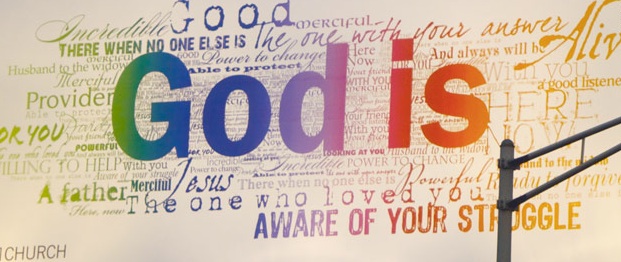
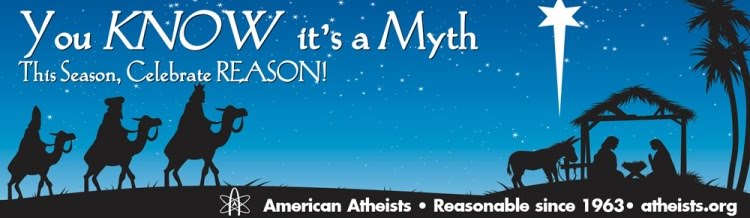
CNN’s Belief Blog carries the beleaguered story of the Lincoln Tunnel billboard battles. Last month a billboard proclaiming that the Christmas story is a myth had been sponsored by American Atheists to try to raise awareness that not all commuters are Christian. In response, the billboard has now been rented by the Times Square Church and newly proclaims “God is” with a number of devotional qualifiers. ‘Tis the season of wearing one’s passions on one’s red sleeves with white trim. Since this is America, it must be writ large.

The recriminations fly like childhood accusations: “but s/he started it!” Can’t mature adults agree to disagree? In a world constantly filled with inequality and strife, religion is used as a cudgel to enforce uniformity. The holiday season is much more than various religions marking their territories. The symbolism of the return of light after a long descent into darkness is archetypical, no matter whether it is the finding of oil to light lamps, the birth of Jesus, or the triumph of Sol Invictus or any of a plethora of other celebrations. It should be something that all people are able to share.

It is the “other” that is feared: the groups who do not share our religious outlooks. “He who is not for us is against us.” It is much safer to slap the other with a billboard barrage than to have to look into the eyes of another human being and say, “I respectfully differ.” Instead of welcoming in the light, we dig further into darkness. The Manichean sensibilities are undiminished after all these centuries. Some would argue that all must be brought into conformity for peace to prevail. To them I say, “I respectfully differ.”


Pleasant Points of Prayer

Point Pleasant Beach, New Jersey, is a fine place to meet the ocean. On the first day my wife and I were scouting out apartments in the state, my brother drove us to Point Pleasant Beach after dark that October evening. The rollers were thundering on the deserted beach as we raced down to dip our fingers in the Atlantic. We went back on sunnier days to enjoy the miles of delightful beach for which the state is justly famous. Point Pleasant has an old-fashioned boardwalk, hearkening back to more innocent days when entertainment was carnival style and the only electronics involved were the blinking, colorful lights. As a borough, however, Point Pleasant Beach has been opening its council meetings with the Lord’s Prayer for six decades. A judge has called that practice to a halt, according to Saturday’s New Jersey Star Ledger.

Perhaps the greatest challenge to all religions is globalism. Historically, the religions of antiquity developed when pockets of human habitation were relatively isolated from one another. Yes, people traveled, but not with the ease or frequency borne by steam or gasoline engines. Religions evolved slowly and took on the local character of the only people most believers were likely to ever meet. The ancient religions of trading centers already show the traces of syncretism that religious purists so abhor. When the sea-farers of antiquity met new people it was only polite, politic, and profitable to share their religions. Monotheisms, however, demand complete adherence to doctrine. They don’t mix well. In today’s world where travel is easy (if accompanied by strangers groping your privates, if you choose to fly) and lifestyles and religions become connubial, civil meetings have to take their new clientele into account.

The Lord’s Prayer is about as inoffensive piece of Christianity that may be muttered. Nevertheless, it makes assumptions about the religious make-up of the community. New Jersey is startlingly diverse in constitution. It is a fascinating experiment in people from all over the world learning to live together. In the past sixty years the ethnic make-up has shifted and no longer can boroughs assume that all members are Christian. The prayer does affirm the wish that the kingdom of the patriarchal Christian God should establish itself on earth. And as much as tradition is to be valued, so much is religious government, on any level, to be feared.

Simpler times on a New Jersey beach?


Whence Moses?

Podcast 21 follows on from podcast 19 concerning Moses. Specifically, the question addressed in this podcast is the origin of Moses. While not historically attested, Moses is nonetheless an important figure in both Judaism and Christianity. How do we explain Moses if he is not historical? This podcast attempts to suggest one plausible origin for Moses while admitting that we simply do not know where he really emerges in the religious imagination of antiquity.


Erector Set Religion

When you think of robots, the first personality type to come to mind isn’t generally the religious sort. Engineers and mechanical wizards, those who understand electronics and pneumatics, computer programmers – they are the masters of the robotic world. Yes, I’ve been to meetings of robotics parents where mention of my ill-fated career is a conversation stopper. I can nearly hear the gears inside the heads of engineers when I tell them I am a former religion professor. They are trying to formulate a logical response, I always suppose, but I know that one does not exist. What more humanistic enterprise might there be than robotics? Humans making creatures in their own image, or in the image of entities stranger than anything found on Noah’s ark, intended for functions too difficult or too unpleasant for their human masters? The triumph of rational thought!

Yesterday I attended a regional middle school FIRST Robotics competition. These events always generate an enthusiasm that belies our national attitude toward the intelligent. (Americans have always distrusted those who think too much.) I feel a little out of my league. Actually, I feel like a T-ball second-stringer up to bat in the World Series. These kids (and adults) are smart. I may be president of a club, but I can’t even find a job, so I know the score before I go in. But the cars tell the true story. In a parking lot full of competitors I always notice how present God seems to be. The license plate right across from us read “HEISLRD” – registration-speak for “He is Lord,” and we all know who He is. A couple cars down a bumper sticker shouted “God rules.” Under these strictures, even a robot that I construct might have a chance. Inside, well-wishers often conclude with “God bless.” And yet they create godless, mechanical beings.

I sometimes wonder what the god of the robots must be like. A cross between Alan Turing and Eli Whitney, I suppose, only a bit more angular. A Transformer-like super being who can run even without a rechargeable battery and can wander far from the electronic grid. One who can be born without the messy organic compounds that make up biological life. The miracles this god creates would be perpetual motion, pristine lubrication, and the ability to heal computer viruses without the assistance of a programmer. Pure artificial intelligence. As I kneel, in my mind, before this non-organic, unfeeling deity of absolute rationality, I take comfort in knowing that we have become the old gods who breathed the first life into these creations and have stepped back to let them rule.

They look innocent enough

By the way, if you are purchasing anything online from Barnes and Noble between December 12 and 17, use Bookfair ID 10378297 and my robotics team will get a teeny-tiny cut of the profits. I plan to purchase a new edition of I, Robot.


Not As We Know It

According to an article from the Associated Press yesterday, scientists are having to rethink life. Some of us do that on a regular basis anyway, but there is actually cause for this scientific reevaluation. Bacteria have been discovered in Mono Lake, California, that utilize arsenic to sustain life. The article also notes the announcement that the number of stars in the universe has recently been increased on a magnitude of three times the old estimate and that potentially life-bearing planets are regularly on the increase. Seems that we may no longer be alone. No one knows what forms life may take “out there.”

The eye of a lesser god?

I wonder what impact new life forms will have on religion. I suppose there’s not a revelation immense enough to shock a true Fundamentalist from his/her confident “God could do that” outlook, but when we find life not as we know it, does it not affect all of our worldview? Even the definition of life is up for grabs. Is the earth itself alive? Did the animists have it right all along? Does arsenic-based life have a soul once it evolves to hominid status? Would they have equal opportunity housing? When such revelations come to light, I would find it comforting to have Mr. Spock at my side, stating in his flat, unemotional voice, “It’s life, but not as we know it.”

Life was complicated enough to begin with, what with trying to hold down two part-time teaching jobs and many secretive efforts to launch new careers. Religion can’t let go of this information, however, as one of the prime definitions of the divine is as the guy who creates life. Religions such as Buddhism and Jainism – religions that believe taking any life is wrong – will certainly have more work cut out for them. When it is boiled down to its prime components, religion is ultimately concerned with life. Monotheism has no room for a Hades or Ereshkigal. One might only wonder who the gods of the arsenic eaters might be.


Solstice Now!

Who owns the solstice? Whoever it is, I wish we could just get it over with. The darkness falls before I step into my 5 p.m. class. It is dark when I drive home. The next morning, leaving for my 8:30 a.m. class, I drive to school in the dark. Back at Nashotah House a colleague once said his wife became “almost pagan” in her yearning to pass the winter solstice and head toward the time of year when light prevails over darkness. My wife pointed out a CNN story concerning a New Jersey billboard sponsored by American Atheists. The billboard, just on the Jersey side of the Lincoln Tunnel into New York, shows the star of Bethlehem, the manger and the wise men. The inscription reads: “You KNOW it’s a myth. This season celebrate REASON.” Naturally, motorists are up in arms. Who owns the solstice?

Before the Thanksgiving leftovers even hit the fridge, Christmas season has begun. Santa always ends the Macy’s Thanksgiving Day Parade, making it official. Since we are capitalists, we do what the red-suited captain of industry says: shop. As long ago as A Charlie Brown Christmas complaints of the commercialization of Christmas have reverberated through the media. Personal properties and billboards enjoin us to “keep Christ in Christmas” and remember “the reason for the season.” Economists tell us to spend more to assist the sluggish economy. Meanwhile the light continues to fade; the days grow darker. Why confuse the issue with religiosity? Why not just spend some money on others, feel the release of endorphins, and be thankful?

Nobody knows when Jesus was born. The church selected December to celebrate the event because the shortest day of the year, for those north of the equator, had long been a time of fervent wishes for the return of light. The first-century Christian rivals, the Gnostics, believed in the continual, literal struggle between light and darkness. When sidelined by Orthodox Christianity, the torch was taken up by those who celebrated Saturnalia, Lupercalia, Hogmanay, Yule, Sol Invictus or any number of other winter festivals. Christmas was a relative late-comer to the celebrations that welcome the resurrection of the sun. So drivers from New Jersey should take it easy. The solstice is everybody’s holiday. I just wish that whoever’s in charge would give us all a little more light.


Lead Us Not

The media love the story of the fallen. Sometimes even those in religious institutions secretly delight in seeing the foibles of their infallible leaders. Part of the problem is that many clergy (but by no means all) place themselves on a moral precipice impossible to reach by mere mortal standards. So the Associated Press carries the story of a Neptune, New Jersey pastor who’s taking a sabbatical. What makes this leave noteworthy is that Pastor Miller railed against his flock using Facebook, arguing that it leads to adultery. So far, so good. This is standard pastor-babble. The problem is a decade ago the good reverend was involved in a ménage à trois, thereby predating even Facebook and still finding access to adultery. The response of Living Word Christian Fellowship Church: take some time off.

The real problem, the Republican symbol in the room, is that human nature likes to place the blame elsewhere. “The Devil made me do it,” was the 1970’s version (thanks, Flip!). Many religions, uncomfortable with the implications of humanity’s evolution, have devised means of shifting the blame. Augustine gave us “original sin,” suggesting that the true blame went back to our first biblical ancestors and forever made sex dirty. Somebody else must take the fall, as the Neptune preacher has discovered. The words of another famous New Jerseyan capture the sense exactly: “Now he walks these empty rooms looking for something to blame, if you inherit the sins you inherit the flames. Adam raised a Cain.”

Coming to grips with being human may be the greatest challenge bestowed by consciousness. There are primate survival strategies inherent in shifting the blame. Where evolution is disallowed, supernatural agency – even Facebook – is placed in the dock. Facebook may encourage the wasting of time on trite sentiments endlessly repeated across this universe we call the Internet, but it can hardly be blamed for adultery. For that, the beast is within. And those who place themselves on pedestals have a great distance to fall.

Lead us not into Facebook...