Ends and Beginnings

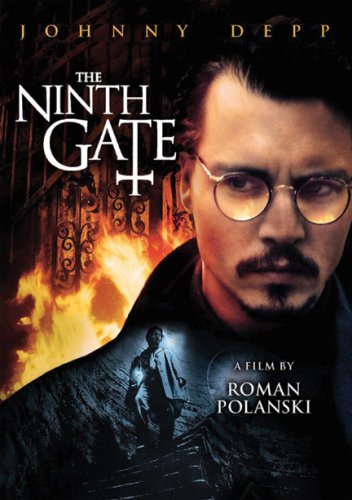
The Ninth Gate, a Roman Polanski film from a bygone decade, portrays a world the director doesn’t believe in. Typical of “devil movies,” the story involves a personified evil that not only seeks world domination, but who also writes books. I’ve been working on a book review for Relegere, the new online journal of Studies in Religion and Reception. In part the book addresses how the devil is portrayed in movies, although this particular film is not cited. Perhaps it is difficult to take seriously a film where the screenwriter is not a believer.
As a young teen I listened with horror as friends described The Omen, a movie that I never saw until just last year. The premise of the movie, that the Antichrist has already been born and is now walking the earth, ready to usher in Hal Lindsey-esque last days, is frightening to those who find a biblical basis for the idea. When finally watching the film the scariest part was viewing the extras. David Seltzer, author of both the book and screenplay, eerily tells the interviewer that he believes the Antichrist to be here now. His acceptance of mythology is admirable, but it is the problematic acquiescence to a modern reconstruction of disparate ancient views that is troubling. Like many late-twentieth century westerners, Seltzer has been influenced by attempts to construct a coherent account of the apocalypse from tattered bits of ancient traditions that never belonged together.

If education included a serious, critical look at how religious ideas developed, the world might be spared this sad predilection for seeking its own end. Apocalyptic ideas thrive in cultures of persecution, such as those very real torments of Jews under Antiochus and Christians under Nero. Their hopes for a brave new world of righteous rule, borrowing freely from Zoroastrian traditions of a new age, offered scraps of expectation of a better tomorrow to those dying today. When nineteenth-century evangelists saw the advances of industrialization and Darwin’s rational explanations of human origins, they felt the need to reconstruct the biblical demise of the world. Modern day apocalypticism, so evident in the Y2K, 9/11, and 2012 scares, is often ready to accept uncritically a supposed future already scripted by a sadly misunderstood Bible. If the world ends it will be our own doing, and maybe Roman Polanski will have to rethink whether or not a devil can actually write a book.

I’ll Take Coffee, Thank You

Yesterday’s victory of Christine O’Donnell in Delaware’s senate primaries seems to have shocked a lot of people. Have these people not been paying attention? Did they sleep through Beckpalooza? Have they failed to see that Sarah Palin’s lackluster life story has become a best-seller? Are Americans in denial that we are facing a major Religious Right comeback? The problem, yes, problem, is that Americans are not taught to think about religion for themselves. Raised with the idea that their political and religious leaders have some special channel open to the divine, they are sheep led to the, well, you know…

Society pays for its sins. One of the most fatal of the deadly sins is the refusal to take ownership of religious education. Unreflective religion in the hands of politicians is a fully armed atomic warhead. Many Americans like to think this is only a problem in nations with Islamic infrastructures, nations unduly influenced by shahs, ayatollahs and imams. Nations influenced by Tea Parties, Neo-Cons and biblical amateurs are much safer, much more friendly.

Problem is, the Bible’s a mixed bag. Some of the loftiest spiritual sentiments nestle down uncritically next to calls for genocide and harsh repression. As long as it is the magic finger from above that’s written it, that’s good enough for tea-tipplers. There are few opportunities to call Americans together for a religious town meeting. We’re all too busy off doing it our own individual way. In such a climate, isn’t it best to let those without any formal religious training tell us what the Bible says we should do? Do you want one lump with that, or two?

O'Donnell takes Castle to school


Bibles and Freedom

Visiting the Red Mill in Clinton, New Jersey is always a worthwhile experience. Yesterday, a gloomy, gray September postcard, was perfect for such a visit. In addition to the many buildings on the museum grounds that retain an atmospheric feel year-round, the Mill is supposedly haunted and is frequented by a number of ghost hunting teams. With its long (for America) history and its picturesque beauty, the museum is a popular spot with tourists as well as ghost hunters.

One of the buildings on the grounds is an old one-room schoolhouse. As a family we have visited a number of these, although none of us qualify as having been actual pupils at one. A frequent blandishment at such institutions is the rules by which school teachers had to live in the nineteenth century, usually posted on the wall. Yesterday as we read the obligatory list, one “commandment” stuck out from the 1872 code of conduct: “After ten hours in school, the teachers may spend the remaining time reading the Bible or any other good books.” While many of the rules were condescending in their moralizations, this one carried a perfect example of how a nation, naively short-sighted, was already giving preferential treatment to one religion, Protestant Christianity.

As a nation founded as a haven for religious freedom, the colonists and settlers simply had narrow exposure to religions of the world. Freedom seemed an ideal worth dying for, but usually it meant freedom to be whatever (Protestant) denomination you wished to be. Catholicism was associated with the old powers of Europe, and the religions of the east were barely known. The Protestants were the ones who promoted Bible reading in those days, and while the rules allowed for other good books, there is an unstated superiority given to the Good Book in its pride of place. Once the colonials became nationals, it was still fair to taunt Quakers, Unitarians, and others who didn’t seem to fit the mold. We didn’t see any ghosts at the Red Mill yesterday, but it did seem that a haunting memory of true religious liberty hung about the place.

Clinton's Red Mill sews freedom


Chosen Ones

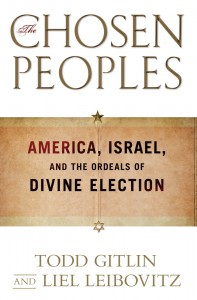
Religious dominance has been so much in the news lately that when my wife pointed out the review of Todd Gitlin and Liel Leibovitz’s The Chosen Peoples in today’s paper my mind once again fastened on the issue. I have not read the book; today’s review is the first I’ve heard of it. The salient point, however, is the continued evidence that monotheism is a tremendous burden on society. Most rationally considered analyses of western religious traditions recognize that the same “base God” is recognized in Judaism, Christianity, and Islam. These three religions are so deeply intertwined in their influences and theological commitments to the singularity of God that such a convergence is inevitable. Nevertheless, three religions sharing a God is like three children sharing a lollipop. Each wants to claim exclusive ownership.

The issue becomes more complex when ethnic identity is tied to religion. Given the nature of religions, this is, however, another inevitability. Religious thought and practice develop among populations separated, in Darwinian fashion, and those who lived in the original arenas of religious development were probably closely related. This is evident in the easy blending of Judaism as a culture and a religion, as well as ethic Orthodox Christianities that maintain a strong cultural component, and in Middle Eastern descent and Islam. People accept the religion of their own people. Monotheism then takes over with the demands of exclusive rights to chosenness or theological correctness. Religion itself contributes to its own fractionalization.

Those who are excluded protest: who wants to be left out of the chosen ones? If there is one God, who wishes to be the second or third or fourth favorite? If we (whoever “we” may be) are those legitimately chosen, are we not in some measure better than other believers? This logical crux slices through all theological niceties for those who examine the issue honestly. Many religions and one God. Chosen people abound. Perhaps it would be less dangerous if God could be divided among the many: one God, divisible, and available to all.


Mere Typography

Juxtapositions are important. The way that words are laid out on a page can say as much as the words themselves, as any poet knows. In the light of the ongoing media frenzy over Rev. Terry Jones’ misguided attempt to set everything right with the world – through fire – and a natural attempt to keep related stories together, the New Jersey Star-Ledger ran two stories on page three yesterday that display the deep ambivalence many Americans feel about Islamic culture. At the top of the page the headline reads, “In Florida pastor’s eyes, burning of Quran is an act of war against evil.” At the bottom of the same page runs an article headlined, “Iran: Stoning sentence for adultery under review.” Two or more faces of Islamophobia on the same page.

As remarks made on my previous post on the subject attest, many westerners simply do not understand Islam. This is perhaps to be blamed on the all-too-prevalent attitude that “history is boring.” Have people been asleep for the past thirteen centuries? Islam is much closer in time to the origin of Christianity than it is to us. With concerns of supersessionism and the covert desire to capitalize on one’s religion, Christianity has been content to ignore Islam as long as those in charge have been able to maintain capitalist quo. When forced to face the fact that two major monotheistic religions have designs on the same world, some members of each camp are only too ready to declare those in the other “evil.” An attempt to understand other religions would go a long way toward ending the carnage.

Perhaps the phobia should more properly be labeled religious xenophobia. We dislike those different from us. Rare is the person who, when confronted with a contrarian, will attempt to understand rather than destroy. Students may readily qualify for higher education degrees without ever having to face the question of how to handle different religious outlooks. We would rather pretend that they are not there. The ambivalence shown towards the issues of Islam in the Star-Ledger could just as easily be turned on Christianity, or even Judaism, Hinduism, Buddhism, or Sikhism. Religions are conflicted because people are conflicted. Instead of recriminating, we should all take a long, serious pause in front of a mirror before we start accusing other religions of being evil.

Who said what now?


Quran 451?

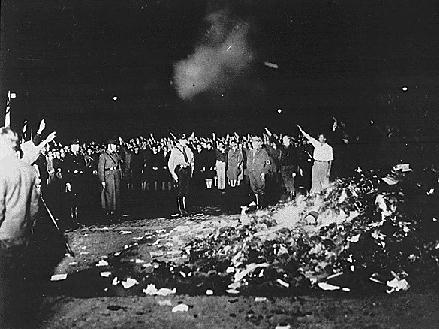
One of the saddest books I remember is Ray Bradbury’s Fahrenheit 451. Any society that burns books has whip-lashed far beyond Fascism into the enemyhood of humanity. Much of ancient culture has been lost through the natural or premeditated destruction of misunderstood “inflammatory” writings and we are much the poorer for it today.

According to an Associated Press story, the ironically named Rev. Terry Jones of the even more ironically named Dove World Outreach Center in Gainesville, Florida, is agitating for a “burn the Quran” day on September 11. Other than momentary, self-righteous catharsis, nothing is to be gained by burning books. The contradictory impulses here lie thick and deep: a Christian clergyman feels insulted by an extremist attack that killed indiscriminately (Muslims and well as Christians, Jews, and Atheists died in the September 11 attacks), bearing the symbol of peace he wishes to declare his personal war, and the follower of the willing victim of Nazareth wears a gun.

Burning books does not solve any problems. Surely Rev. Jones knows that plenty of copies of the Quran abound throughout the world. His action is calculated as a poignant symbol. Is such a symbol anything more than a base expression of outright hatred? When, apart from medieval Christendom, has Christianity insisted that violence is the way forward? All you need is hate? For although the burning of books may not physically harm anyone, the violence in this hatefully symbolic act is the very antithesis of tolerance and understanding that the religious world so desperately needs. Islam has given much to world culture, and we reap the benefits of Muslim scholars and thinkers each day, without any conscious consideration. Rev. Jones needs to read more than just Fahrenheit 451. He must learn truly to read and, like Montag, weep.

Jones' theological comrades


Delicate Matters of Faith

Friday’s New Jersey Star-Ledger ran an op-ed piece by Phyllis Zagano entitled “Teaching how, not what, to think.” The essay concerns a tale of two professors, one at the University of Illinois and one at Seton Hall. Both have come under fire for teaching on the issue of gay marriage, one from, one against, a Catholic viewpoint. Zagano’s point of view, evident from her title, is that professors should teach students how to think, but not what to think.

This is one of the most difficult aspects of teaching religious studies. I am in my eighteenth year of teaching in the field. In that time I have taught at both religious and secular schools and, in both settings, presented the material objectively. There are those in both settings who complain. Students at Nashotah House frequently wanted me to bend the Bible to fit conservative Anglo-Catholic teaching. Under immense logical pressure to accept what reason told them of the world, they wanted an authoritative book to back them up in a pre-decided outlook. A theological ace of spades to trump the uncomfortable conclusions of rationality. At the University of Wisconsin Oshkosh and at Rutgers University students frequently want to know my religious outlook so that they might know how to categorize what they are learning: is it sanctioned or is it anathematized? We need to know who you are so we can evaluate your authority in such delicate matters as faith.

I frequently ponder the issues raised by Zagano. I know of no other field of study where the stakes are so high, with the possible exception of political science. Religion is an all-encompassing phenomenon. All of life must conform to religious teaching, often with eternal consequences. It therefore makes an enormous difference what you are being taught. Like Zagano, I try to teach students to think for themselves. Both at the seminary and university I refused to reveal my personal outlook on the issues; I try to kick-start the thinking process. I have paid the price for this in the past, but it is a non-negotiable component of education. If the truth is uncomfortable, it is always possible to let someone else do the thinking for you.


Bible, Bible, Who’s Got the Bible?

Rutgers University boasts a truly diverse population. In my fourth year as an adjunct in the Religion Department at the New Brunswick campus, I am continually reminded of the religious and cultural mix of the human race. As I began my twelfth section of Introduction to the Hebrew Bible last night, it occurred to me just how tight a grip Christian-based publishers have on the Bible. I generally spend my first class session on defining the Bible since many students enter such a course (and it is always full) with notions of what the Bible is. In fact, “the Bible” is a difficult document to define.

Binding a book together indicates that what is between the covers belongs together. This is almost a subconscious fact that we pretty much take for granted. If a publisher put all of this in the same place, it must belong together. For the general consumer market, that translates into Bibles that contain the Hebrew Scriptures and the Christian Scriptures. This mix of 66 books satisfies most customers in the United States and Canada, but the Catholic reader expects some 13 additional or expanded books in her or his Bible. Jewish customers expect somewhat less, with 27 books normally in “the Bible” being specifically placed there by a later, revisionist sect. Orthodox Christian Bibles may add or leave out a book or two, depending on the tradition.

The irony of this situation strikes me as we have Bible-thumpers constantly appearing in the news. Their well worn, black leather King James Versions are “the Bible.” For them. Their message to the American public: we must get our lives back in line according to (my interpretation of) this book. What of those in this country who have fewer or more books in their Bibles, or, Yahweh forbid, completely different scriptures? Is there no room in a nation of religious liberty for them? I have a modest proposal. For the politicians who want their Bible to drive our society, stop by my class at Rutgers sometime. I am always glad to see the diversity. And it shouldn’t be too hard to find a section to fit in your schedule – I teach four sections of the class throughout the year, including summer and winter terms.


Can You Handle the Truth?

Time magazine’s Religion feature this week announces Claremont School of Theology’s decision to go interfaith. In response to declining enrollment, the United Methodist seminary has decided to offer training to Jewish, Christian, and Islamic leaders. Naturally, this will have to be done with the approval and support of training facilities for rabbis and imams, but it will be a way forward for the beleaguered Christian seminary. Seminaries have been in a state of crisis over the past few decades (otherwise it is hard to explain how I might have been hired by one, and a particularly conservative one at that!). And it is not difficult to see why.

Religion is, by nature, conservative. If truth is unchanging, there is no improving upon it. Religions claim to espouse the truth, so stability, orthodoxy – stagnancy – are required. Yet theological seminaries compete with graduate schools for students and faculty. Seminaries crave academic respectability – this is the entire reason for academic accreditation (my old-time colleague Daniel Aleshire of the Association of Theological Schools is quoted in the article). The basic operating premise of institutions of higher education, however, is that we are still learning the truth. We are not there yet. No God reveals the laws of physics in whole cloth (or vellum). Humans must theorize, discover, criticize, and theorize further. Meanwhile, seminaries wave their muted flags and shout, “Over here! We already have the truth!” To be accredited, they have to hire Ph.D.s who have been critically trained. Critical training does not accept simple truth claims. The result: seminaries hire critical faculty while religious authorities insist that the party line be toed. Something has to give.

Offering to bring different religious traditions together is a wonderful idea. Established religions need exposure to each other if the human race is going to survive. Exposure, no doubt, however, will reveal the amorphous nature of truth. The fact is that we are still looking for answers. Everything we have learned about religion points in that direction. What I find particularly telling about this situation is the motivation. Claremont is trying this route for financial reasons. The great god of all higher education, Cash, has finally gotten his talons into religious institutions as well. If there is any unchanging truth out there, it has a dollar sign in front of it.

In gold we trust...


Faker or Fakir?

An article posted on CNN on Friday, “More teens becoming ‘fake’ Christians,” suggests that many American teenagers aren’t really Christian. Whether that is a bad thing or not I’ll leave up to the reader to determine (Kenda Creasy Dean of Princeton Theological Seminary, cited in the article, has no doubt that it is bad). My concern with the premise and the presentation of Dean’s data is much larger: who has the right to determine what is “authentic” religion? In a world daily faced with the clash of religious views, particularly among passionate believers, most scholars of religion seem to agree that one’s religion is what an adherent claims it to be. There is no way to test the authenticity of a religion empirically. Whose Christianity does Dean mean? That of Jesus? Or of Paul? Or of the Pope? It seems to me that what she suggests is that “true” religion is “passionate” religion.

Religion, however, may extend well beyond belief structures. Religionists recognize many forms of religion that are primarily activity-oriented rather than belief-oriented. Does that mean the adherents of such religions are only half-hearted members of their tradition? Do only passionate believers qualify? Who is it that has the authority to decide what any religion is? If it is seminary instructors, I’d rather face the apocalypse right now. I’ve known far too many of those to trust their judgment on defining authentic religion.

Christianity is perhaps the most fragmented religion in the world, with tens of thousands of different denominations, each declaring itself correct and authentic. What person ever purposefully believes in an incorrect religion? “I know my religion’s wrong, but I think I’ll stick with it…” Who gets to determine which is the real real religion? Passion may not be an adequate measuring stick. The clashes of religious views that leave the highest body counts are between groups equally passionate about their beliefs. In such a world where people need to learn to control their religious passion, it is my hope that mere theological assent might be more than enough in most cases. And only for religions that are belief based.

The only true religion?


Gnot What It Seems

Mythology has a funny way of dying. It just keeps resurrecting itself. It is the eternal return. One of the shocking truths about religions is that their cohesiveness is exaggerated for effect. The usual desired effect is power or influence over others, as in most human enterprises. Nowhere is this clearer than at the birth of religions. Since each human brain processes information in a unique way, the two people in a room with the religious founder will hear his/her teachings in their own way and neither will be identical with each other or the founder. This phenomenon has been long recognized by religionists. It is customary to speak of “Christianities” or “Judaisms” rather than suggest a fictional singularity.

Manuscript finds and serious study of early Christian texts make a strong case for two major brands of Christianity as early as the first century of the common era: “Orthodox” and “Gnostic.” The former likely arose in opposition to the latter. Gnosticism congealed out of a heady brew of Zoroastrian dualism, Judeo-Christian nascent apocalypticism, and good old “Canaanite” mythology. The teachings of Jesus could readily fit into a worldview that rejected materialism for a pure spiritual plane untainted by physical limitations and pollution. It is only a small step from here to the belief that the physical world is an illusion. Problem is, that would mean the physical resurrection was apparent only, and what does that mean for all future prospects of bliss? Better to bring down the hammer of Orthodoxy than to live with doubt.

Yet Gnosticism lives on. One of the few direct lines of descent can be found among the Mandaeans, an endangered monotheistic sect that has maintained a Gnostic dualism for centuries. Indeed, they trace their origins all the way to Adam. Gnosticism, whether recognized or not, has left its influence on concepts from The Matrix to Philip K. Dick’s novels to Rich Terrile’s theories of God. Certainly there is a draw to believing this world is an illusion and that reality lies elsewhere. Maybe in that real world there is no need for religion since everyone already knows the truth.

sursum codex


Freiheit

This week’s Time magazine has a rhetorical question on the cover: Is America Islamophobic? Not a word need be said. The real issue at stake, the one many Muslims feel the brunt of, is religious freedom. This founding concept of America has been eroding for decades. How many Americans have tried to imagine what it would be like if they were Muslims living in “the land of the free”? For that matter, how many have tried to imagine what it would be like to be Catholic, Protestant, or Unitarian? Certainly, it would seem, Jews know the value of religious freedom. Do we ever really try to feel their experience? It is much more cozy to be part of the religious majority and tell others to step in line.

With great roaring newts and Alaskan beauty queens telling them what to think, Americans are easily stoked to injustice. No, they have no right to worship here, they tell us. The truly frightening part is how easily manipulated the masses are. America a Christian nation? Who can adequately define “Christian”? Those who make such claims tend to be Neo-Cons who assume some fundamental form of Christianity is the default version. The only version. Their goals are not religious, but rather intensely selfish – the antithesis of Christianity. By their fruits you shall know them, a wise man once said. It is easy to forget who.

We live in a nation that since the Reagan years has attempted to privatize industries that had ensured fairer treatment because of government standards, no matter how faulty. Now private companies could run with the basic necessities of civilized existence and grow wealthy on them while those who were poor could be forced to pay more. This was done with the public image of a “Christian nation.” RR, the poster-child of the Religious Right. Laissez faire has come to mean “leggo my Eggo” – let me claim the one true religion and capitalize upon it. One size does fit all as long as the wealthy are left free to grow wealthier. Let’s call it religious freedom, but let’s prevent others from pursuing their religion freely. To me it feels like 1984. And that was decades earlier than 9/11.


Two Roads Diverged

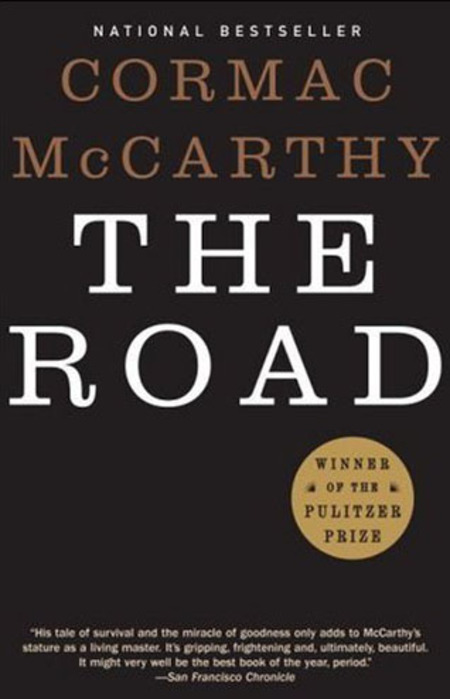
Back in my Gorgias Press days one of my co-laborers (BU) suggested that I might enjoy reading Cormac McCarthy’s The Road. Since then it has come out as a movie, and further apocalyptic events have occurred – the Deepwater Horizon disaster and the election of Chris Christie come to mind – so I finally got around to reading it. It is a harrowing book for any parent to read and I doubt I have the heart to see the movie. Already the book is spawning internet quotes and quips, but I was particularly interested in seeing how this post-apocalyptic novel handled God.

Since the Bible, via Zoroastrian influence, gave us the religious concept of the apocalypse, it is fitting to see how religion fares in its unhallowed progeny. Mostly God is absent. When the man and his son mention God, the language is spare and laced with betrayal. “There is no God and we are his prophets,” the old man declares after the man and his son leave the bunker. A few paragraphs later he states, “Where men cant live gods fare no better.” The value of the apocalyptic metaphor is that it forces us to face life as we find it: raw and uncompromising. In the fictional apocalypse it is permissible to utter aloud implications of life’s callous lessons.

My career has had its share of jagged edges. The lacerations I’ve personally received have been at the machinations of Christians eager for self-justification. Self-congratulatory individuals and collectives that suppose God has specially favored them. “There is no God and we are his prophets.” It is like reading Camus in slow motion. One of the lessons both Nashotah House and Gorgias Press taught me was that it can always get worse. Reading McCarthy’s sad yet true tale of the woe we bring upon ourselves, the lesson for those eager for the apocalypse is that they have only to open their eyes.


Jehovah Jireh

They came again this week. I was, conveniently, not home when they rang the bell. One thing with which I must credit the Jehovah’s Witnesses, however, is that they do recall the identity of their targeted converts. My neighborhood missionary always addresses me by name, and although she often has different associates with her, she knows I teach Bible courses at Rutgers and when we actually talk she tries to convince me of the Witnesses’ more exacting grasp on the truth of Holy Writ. When I returned home I found a copy of Awake! tucked in the door handle. Not the current issue, but the November 2007 edition entitled, “Can You Trust the Bible?”

The Jehovah’s Witnesses resemble many of my Fundamentalist friends in that they assume if you don’t share their view of the Bible that you somehow “distrust” or “disrespect” or “disbelieve” it. Too many disses! This mono-directional view of a complex document devalues the content and power of the biblical narrative, but most people are not trained to view subjects from multiple perspectives. This is clear from Awake! One point that the magazine makes regards science: “when it comes to scientific matters, the Bible is noteworthy not only for what it says but also for what it does not say.” The writers acknowledge that a scientific worldview conflicts with the flat-earth outlook of the biblical world, but oh, what the Bible doesn’t say! This enormous argument from silence speaks volumes. When we approach the question from the point of view of what mistakes the Bible does not make, we’ve got a universe entire in which to roam.

On the question of biblical authorship, the principle of pars pro toto is utilized to justify divine authorship. The Awake! article begins, “The Bible is frank about who penned its contents.” Among the first lessons of 101 is just how much of the Bible is anonymous. The next statement, however, is wrong on several points: “Most Bible writers acknowledged that they wrote in the name of Jehovah.” Almost never does the Bible claim direct divine guidance in its writing. The credit for this goes to Pseudo-Paul in 2 Timothy – only there does an author placing in the Bible make any claims about his fellow composers having been inspired. Jehovah as a name for Yahweh is documented for the first time in the 13th century (C.E.).

I am touched that a woman who knows so little of who I really am keeps coming to my door to save me from an unpleasant afterlife. She has taken the time to find an appropriate piece of literature for my teaching interests. But, like my Fundamentalist friends, she has missed the forest for the trees. After over forty years of reading and teaching the Bible, I have my own answer for “Can You Trust the Bible?”


Lost Apocalypse

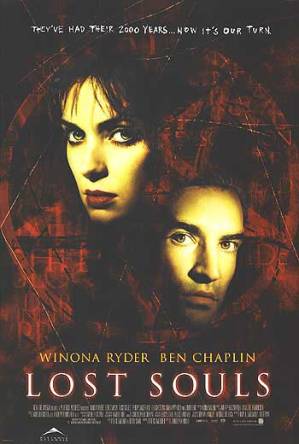
The Bible has many eminently quotable passages. I suspect that is one of the reasons it has the staying power that it does. Many critics of the theologies spun off by the Good Book have turned their vitriol toward the Bible itself, but I believe such hostility to be misplaced. Not everyone enjoys reading the Bible – that much is true for any book. The Bible, however, is foundational for not only our society, but the entire western literary tradition. Its influence on Shakespeare alone, who has, in turn, influenced just about every writer since the seventeenth century, underscores its literary importance. That’s why I’m always surprised with film-makers use concocted verses from the Bible when actual passages would produce the same effect. Granted, few Bible scholars comprise movie audiences and producers and directors seldom worry about writing the story for them. Last night I watched the “horror” film, Lost Souls, released in 2000. I’d read about the movie in Douglas Cowen’s Sacred Terror, so I wanted to see how it rated.

The movie begins with a false Bible quote: “… A man born of incest will become Satan and the world as we know it, will be no more. Deuteronomy Book 17.” Now granted, the movie failed to rock the critics, but the sheer weight of errors from pre-scene one should be the first warning to start from a better script. Beginning with an ellipsis for dramatic effect may be acceptable, but it serves no purpose – and what’s with the misplaced comma? A man born of incest in Deuteronomy is a non-starter because his potential parents could only be found dead, crushed together under a pile of hurled stones before the unfortunate could even be born. Satan as a devil is never mentioned in the Hebrew Bible, let alone Deuteronomy. Deuteronomy is almost never quoted by apocalypticists since it does not predict the end of the world, and Bible books are divided into chapters, not “books.” Well, the biblical illiteracy of Hollywood may be overlooked for a good story, but this is no such thing.

Lost Souls fails on the premise that a biblical “literalism” (and that is only if certain Evangelical interpretations are given unwarranted credence) about the coming of an Antichrist should be shored up by a fabricated quote from the Bible. I’m not trying to be a movie critic here, but a cultural one. The whole “end of the world” scenario held by many Evangelicals is a hodge-podge of biblical verses brought together by clever nineteenth-century clergy with little exegetical training. It is like trying to connect the dots while having to change pages constantly. The idea caught on amid the discarded lives left behind by advancing industrialism and the perceived threat of evolution. Apocalypticism has become its own industry as some otherwise unknown writers can attest. Movies like Lost Souls, or even The Omen, however, pale when compared to the antics of religiously motivated apocalypticists in the real world. Some of the rules in Deuteronomy itself are more frightening, if better written.