2014

IMG_0542

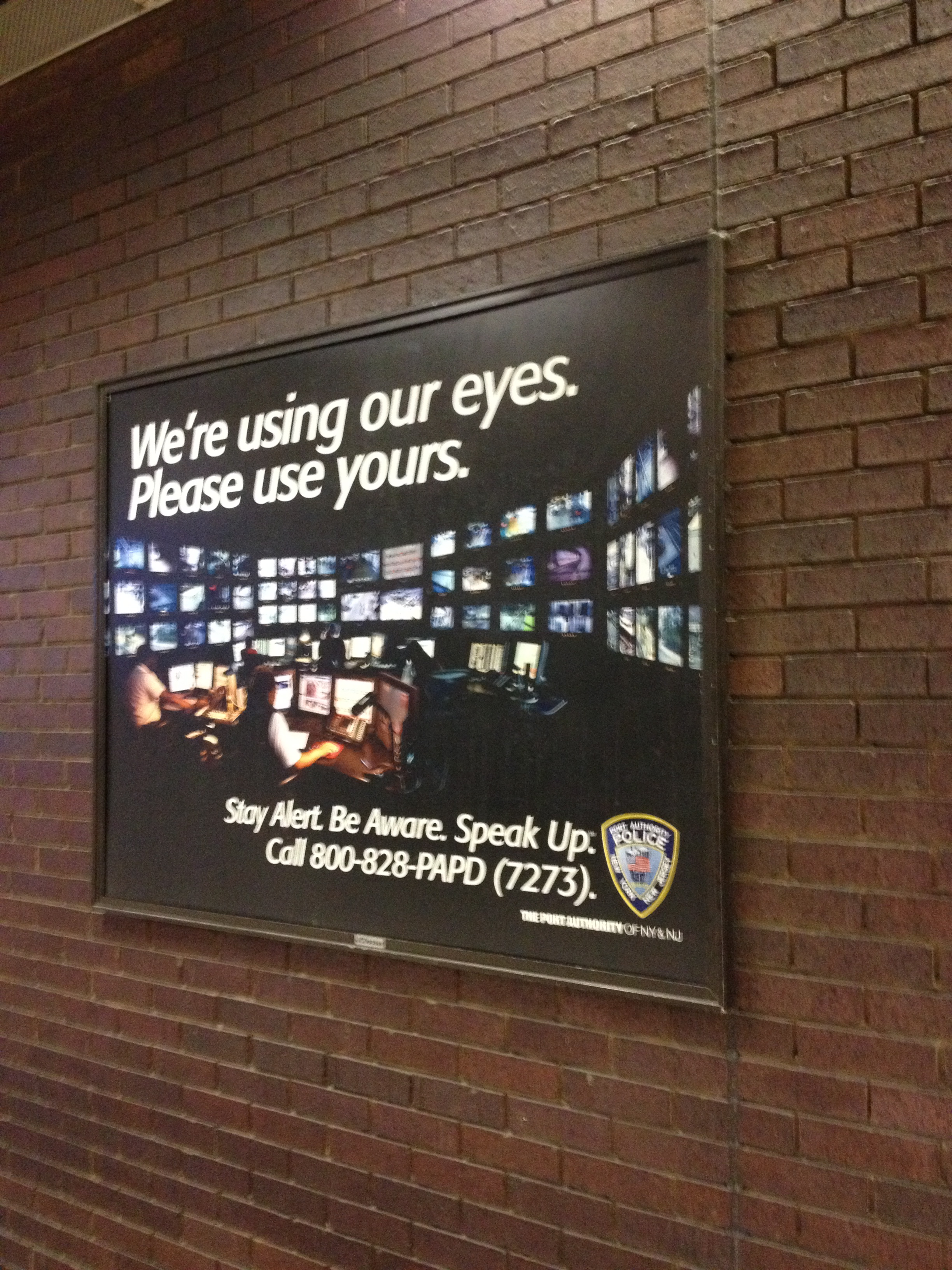
New York City, in a public place—I dare not say where—I see this sign. A certain Orwellian chill shivers my mind as I think back to 1984. Posters everywhere; you are being watched. If you see something, say something. NYPD Security Camera in Area. We have let our fear drive us into the arms of Big Brother. The problem with principle is that it requires a fair amount of spine. Who can stand in the face of possible, if remote, terrorist attack? Is it not the large, amorphous, faceless government that we, along with millions of strangers, have elected? I’ve read about their behavior; I’m not sure I want them watching me.

We have let fear define us. How far we have come from FDR’s admonition that the only thing we have to fear is freedom itself. Don’t get me wrong—I don’t approve of terrorists or any other cowards. If our response, however, is to cower in the many corners of our crowded cities while our own military patrols the parameter, well, the last place I recall like that was my visit to Jerusalem just months before the First Intifada. Even the bus drivers wore pistols. The heat from that burning car beside the road was worse than anything the Judaean Wilderness could throw at you. And still they long for peace.

Differing political and social outlooks need not come to blows. I’ll admit to being a shameless idealist if you’ll lay down your guns. Even if you won’t. It seems to me that we’ve forged ourselves a chain that reinforces outmoded associations. We can create the most intelligent weapons imaginable, but we can’t figure out how to cut a simple chain. Yes, I eye each jet flying a little too low with suspicion, and sometimes I walk a little too swiftly through the crowds at Times Square. I’d like to pretend I’m free, but ever since I read 1984—and it was close to that time—I’ve noticed that Big Brother looms taller than any tower in a world where inequality persists.


The Splice of Life

Splice Although not really scary, and although almost attainable with current technology, Dren is a curious monster. Many movies of the horror genre have explicit religious elements, but Splice may be a little too much science fiction for that. Or is it? The story is simple enough: a couple of geneticists have gene-spliced a couple of viable creatures that can be farmed for important chemicals and enzymes to solve diseases. So far, so good. But then the idea occurs to them: if the chemicals that can be used to help cure animal diseases had a human element, couldn’t they be used to cure our own diseases? And here is where the ethical quandaries begin. Adding human DNA to the mix, even when in small portions, suddenly throws open the moral dilemmas. Dren is the somewhat human result of these experiments, but the movie ends with the haunting, unanswered question—what is it to be human?

Although today the field of ethics is largely claimed by philosophers, morality is a measure of beliefs about right and wrong. In many cultures, including our own, religion has quite a lot to say about the issue. Once human DNA is mixed in the creature morphs from a bumpy slug into a creature that looks mostly human. The ethical dilemmas that surround human potential—abortion, stem cell research, cloning, and in past ages eugenics—all focus on the rights of the human person. Once a person is born, however, we almost immediately begin to curtail those rights until most of us become cogs in an unfeeling corporate machine. We are valuable, but for whose purpose? Who, sitting in their cubicle, or on their assembly line, or behind the wheel, says, “For this they defended my right to be born”?

Oddly, we privilege the potential of life without tirelessly working to improve the lot of those who’ve already been born. Perhaps, indeed, this is some form of evolutionary advantage—protect the future of the species at all costs. This idea becomes religious when it is deemed God’s will. In the movie, Dren’s creators ultimately deem her unhuman, a monster who must be destroyed. They, however, nurtured her humanness all along. While not the most profound movie ever filmed, Splice highlights the fact that ethics reflect the values of society. And society sometimes withdraws even humanity from those who’ve lost its favor.


Here’s the Church, Here’s the Steeple

Americans seldom seem to fuss much about religion unless they perceive that it is under threat. We’re real believers in religious liberty that way. The threat angle is a vector worth measuring every once in a while. What gets our collective goat? A story on CNN last week about the National Cathedral caught some attention. Those who think about freedom of religion, liberty of conscience, and all that, might find the implications of a national cathedral itself a tad troubling. Of course, it really isn’t a cathedral for all of the United States, but it is used for many displays of civil religion including several presidential funerals and inaugural prayer services. The cathedral, historically and ironically, is of the Episcopalian brand. Episcopalians boast perhaps the smallest number of mainline protestants in the country, and since they are the remains of the “established church” of England in the States, it is not just a little odd that such an edifice should be associated, however informally, with government in its former colony. The reason that CNN ran the story related to a perceived threat to American religion: same-sex marriages.

Now that same-sex marriages have been approved in three states, some couples desire the symbolism of a wedding in the National Cathedral. It is a victory of social justice that highlights one of the deepest and most persistent of religious concerns—human sexuality. Although many religious denominations have made their peace with evolution by natural selection, few have really considered the implications of reproduction and its discontents. Formally ever since the Enlightenment (and certainly informally for all of human history) sexuality has been a subject of scientific scrutiny. And not just for humans either. As naturalists observe the world of our fellow creatures, we find all kinds of sexual behaviors labelled “unnatural” in humans are quite normal in nature. The reason is the religion that is invested in reproduction. People, many religions teach, are somehow different. Besides, in the days before scientific interest in animal reproduction, few bothered to consider what other animals did, far from human eyes.

For those willing to admit that nature can teach us something about ourselves, same-sex couplings are not limited to humans. They are a part of nature. As Martha McCaughey suggested in The Caveman Mystique, reproduction is only one of a variety of reasons that humans and other animals mate. For us, however, it is a strangely sacral act. All religions have something to say about sexuality, and many express strong feelings about what marriage means. So the Cathedral Church of St. Peter and St. Paul (two men, one might note) is in the news because of what marriages symbolize for many. Marriage is about commitment, not just sex. In a nation where commitment is only fair-to-middling, shouldn’t we applaud the use of the National Cathedral to reinforce such family values? Unfortunately, for many gender differentiation trumps love in what is understood as a legitimate religious outlook.

Carol M. Highsmith's National Cathedral

Carol M. Highsmith’s National Cathedral


Soul University

ExcellenceWithoutSoul Cambridge, Massachusetts is a likable town. As students at Boston University my friends and I would occasionally take the red line to Harvard Square and shuffle through the leaves of that venerable institution that gives the square its name. One of the treats was stopping in The Coop, the Harvard bookstore that made us all feel smart. While at Harvard last year, The Coop was part of my professional, editorial remit. I spied a book entitled Excellence Without a Soul: Does Liberal Education Have a Future?, by Harry R. Lewis. I have often thought about how higher education has slipped its moorings these past few decades, and wondered what an erstwhile Harvard dean had to say about the matter. The leaves on campus weren’t so abundant last October, but I felt that same inferiority complex that being on the Harvard campus always gives me. Of course, I had received an acceptance letter from Harvard Divinity School when I considered transferring there, but it was easier to stay at BU and complain.

Lewis’s book is a somewhat nostalgic consideration of how Harvard has evolved from a seminary to a powerhouse university—the powerhouse university—in the new world. There is no doubt that Harvard is our oldest institution of higher education, and there is no doubt that it has the money to be “the best.” But by what measure? This is one of the questions Lewis asks, repeatedly. Still, the assumption is always lurking in the background that Harvard is the best, but as Lewis notes in the book, there is no one best doctor just like there is no one best book. Harvard is good, but so are many other schools. They all suffer from the same indifference in a society that takes education for granted. The real problem is that we like simple solutions. Take a look around you—you’ll see what I mean.

It is difficult to feel sorry for Harvard. The elite of the elite, it has that time-honored patina that antique specialists love so much. What it doesn’t have it can afford to buy. There is no doubt, however, that as Harvard leans, so tilt the other universities of this country. In my professional field I’ve seldom met an unemployed Harvard Ph.D. Those of us who attended even older universities (yes, the Europeans came up with the idea first) with even more recognizable alumni—has anyone heard of Charles Darwin or David Hume? Adam Smith?—are used to being passed over for positions while Harvard writes its own checks. Elitism may be at the heart of the problem. It’s not that I wish hard times on Harvard, it’s just that I wish we’d be honest about the academic enterprise. Has higher education lost its soul? To find the answer we’re going to have to look beyond Cambridge, Massachusetts. But the leaves in autumn are certainly pretty, if not so abundant as they were before.


None Too Human

Apropos of nones, CNN’s Belief Blog ran an opinion piece about the nones earlier this week. It seems that Rep. Kyrsten Sinema came out of the closet as a none at her swearing in. Nones are among the fastest growing non-religions in the world. I suspect a lot of it has to do with the internet; those who subscribe to no particular faith have discovered that it is okay to do so. Or not do so. It is so easy to see, online, that lots of others think that way. Many of these people are not atheists, and many describe themselves as spiritual, but the problem seems to be with organized religions. Religions are, of course, human inventions. Our experience of the world doesn’t ever seem to key completely to science or expectations of fairness or justice. Some of it may be due to illusion, or delusion, but we get the sense that something serious may be going on here. Many formal religions have tried to systematize something that can’t be tamed or taught to perform on cue. And since religious leaders are only human, there should be no surprise that they come fully loaded with the cadre of human weaknesses.

Despite claims of epic voyages to Hell in a small, wicker conveyance, things in human terms aren’t as bad as they used to be. Sure, the economy continues to mope, and far too few people are far too rich, but generally we’re living longer, we’re healthier (or at least bearing up better under conditions that would’ve rendered us unhealthy decades ago), and we’ve got lots and lots of toys to play with. Maybe we’ve reached a level of contentment that blocks out that quiet voice begging for attention. It is a still, small, voice. One of the things I notice is that quiet is hard to find anymore. Our gadgets beep and chirp and mutter and belt out rap or soul or rock in just about any venue where people are found. Religions have generally been nurtured in places of silence. We’ve become the nones.

The anti-atheists have done a good job equating non-belief with moral turpitude, but the ethical atheist is not hard to find. Religions have always been concerned with morals. At least since the Enlightenment, however, philosophers have weighed in on ethics, often without a theistic underpinning. The idea, according to humanists, is that we agree to certain moral expectations by our very humanity. Some don’t play by the rules, to be sure, but most of us do. Some with, some without a deity or deities telling them to do so. Once you sidle away from the angry New Atheists, you can see that atheists can be good people. Looking to blame evil on lack of belief is too easy and consequently misguided. Conservative Christians, progressive Muslims, atheists, polytheists, and nones all have their humanity in common. We are, or should be, no matter what our faith commitments or lack thereof, humanists.

Already empty, or about to be full?

Already empty, or about to be full?


Leviathan’s Sibling

TheGiantBehemoth Formulaic to the point of plagiarism at times, 1950s science fiction movies often follow the deeply worn ruts left by countless forgettable monsters. One such film that I managed not to see until recently was the biblically entitled The Giant Behemoth. In a more biblically literate society the poster’s catchphrase “The Biggest Thing Since Creation!” may not have been necessary, even though leviathan’s lesser known companion stole the title this time. Of course the movie begins with stock footage of nuclear explosions, and although I’ve seen such renditions hundreds of times, they remain troubling to the core. Those 1950s that many consider so carefree were days of insidious freewheeling with the environment, days before human infatuation with the power over nature revealed its horrifying consequences. The behemoth, a sign of Yahweh’s great creativity in Job, here becomes the human-wrought agent of destruction.

Poor Tom Trevethan is blasted by the beast’s radioactive breath in a scene more fitting to Revelation than to Job. In the funeral scene, the priest somewhat insensitively reads a description of behemoth before Tom’s sole surviving family, his daughter Jean. So like the 1950s the minister then declares that the Bible gives comfort to those left behind, when the Lord said to Job, “Gird up thy loins like a man.” Indeed. Loin girding was a masculine activity in the days before Fruit of the Loom had been grown. Comfort for the woman comes in acting like a man. Yes, the 1950s considered the man the default model of human being. It says so in sacred writ. Genesis 3, to be exact.

When the scientists can’t figure out what killed the old man, along with thousands of fish, they ask Jean if her father said anything before he died. She tells them about behemoth. Being scientists, they have no idea what a mythical, biblical creature might be. Jean informs them, “It’s some prophecy from the Bible; it means some sort of great, monstrous beast.” Well, Job is technically not prophecy. Actually it’s not even untechnically prophecy either. In the 1950s, however, if it was biblical, it could be interpreted as prophecy. The real foretelling, though, is clearly atomic. Such films can easily be forgiven their biblical infelicity for the sake of their good intentions of reigning in human self-destructive behavior. In the end science destroys the biblical beast, but I’m left wondering if it isn’t more of a parable than a prophecy. I guess it’s time to gird up my loins and go find out.


Out with the Old

It’s become a time-honored tradition, as an old, secular year ends and a new one, brimming with potential commences, for various pundits to sum up the past twelve months for us. And since there hasn’t been a year without religion since Adam and Eve were created, it stands to reason that the religious year in review is yet another perspective to take on this mid-winter’s day. The New Jersey Star-Ledger, my state’s answer to the New York Times, ran a 2012 top stories in religion feature on Sunday, the one day that anyone might be tempted to pay attention to things spiritual. The list reflects the view of A. James Rudin and it features several stories, most of which tend to show the embarrassing side of belief. Rudin begins his list with an amorphous Islam as reflected at unrest in the Middle East. One of the misfortunes I often deal with in my editorial role is this association of Islam with violence. There are deep roots to the trouble in the Middle East, many of them planted and watered by Christians. Religious extremists, however, are the more sexy side of the story and they always abscond with the headlines.

I should take care with my word choice, however, because yet another of the stories—dominated as they are by Christians—concerns the Catholic Church’s continuing troubles with hiding away child molesters (number five). The number two story, also about Christians, is also about sex as well. That story highlights the chagrin of the Religious Right at the recognition, long overdue, of same-sex marriages in three states. Gender plays a role in story four, the succession of Rowan Williams as Archbishop of Canterbury, but also the related story of how the Church of England still refuses to recognize women as bishops. A deity who can’t see past genitalia should be troubling to any believer. Yet a full quarter of one commentator’s top religious stories are concerned with sex. That’s how the world sees the issue.

The remaining stories Rudin points out have to do with Jewish-Christian relations, aging pontiffs, and the growth of Nones in the US religious marketplace. Anyone who spends time reading contemporary accounts of religion will be familiar with the Nones—that increasing number of people who declare no religious affiliation. Ironically, those involved in such scandals as we often see in the headlines are troubled by the number of people opting out of traditional religions. I almost wrote “opting out of faith” there, but that’s not really the issue. The Nones I know, and there are many, don’t necessarily not have faith. They have lost confidence (if they ever had it) in religious institutions. Interestingly, Rudin concludes his list with the tragedy in Newtown, Connecticut, along with the death of Sun Myung Moon and a few others. The Newtown tragedy remains the least and most religious event in the past year. And unless those of us who survive do something about it, these dead will have died in vain. Let’s hope 2013 has something better on offer.

Father_time


Mystique-alism

CavemanMystiqueReading in a public place gives peer pressure an entirely new meaning. Public transit is a place where I spend at least fifteen hours a week. Not having converted to Kindle, or even Nook, I still prefer the feel of paper in my hands. With the open book, however, comes exposure. On the bus you have no control over who climbs in next to you. You’ll be spending an hour, maybe two, side-by-side, and although s/he may never see you again, it could be that tomorrow they will find themselves once more at your side. I’m very conscious of the books I choose under such circumstances. I shouldn’t care what others think, but I do. Recently my choice was Martha McCaughey’s The Caveman Mystique: Pop-Darwinism and the Debates Over Sex, Violence, and Science. The issues here were multiple. McCaughey consciously chose her riff on The Feminine Mystique as a catchy, if very appropriate title. The person plopping down next to you with a bleary eyed glance over on an early morning bus will probably catch only one or two words in the title. One of them will be the only word with an x. Still, this important little book has big implications for the “s word,” and how men are socialized to think about sex.

Darwinism, and evolution, are concepts that are keyed to religion in the United States. There is no avoiding it. McCaughey, as a sociologist studying science, shows just how many assumptions scientists make about the universal applicability of their work. She suggests something that many of us have learned over the years: absolute objectivity is not possible for any human being. We are all socialized. We all bring biases to our work. We’re all human. McCaughey doesn’t question the results of scientific investigation, however. Her concern is that in a male-dominated field the results might be, well, screwed up. In a series of delightful thought experiments, she shows how very basic sexual biases get played out into larger scenarios that tend to excuse the inexcusable: violence against women. Men have to be taught to be cavemen. Science, improperly disseminated, gives men an excuse for blaming evolution for their lack of character. It seems to this man, at least, the McCaughey is certainly on target.

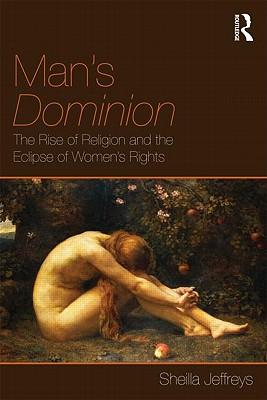
In a particularly insightful paragraph, McCaughey writes, “Invoking God’s will, or nature’s [i.e., science], hides the political context in which such a will was ‘revealed’ or ‘discovered.’” How easy it is for both scientists and religious believers to conclude that the way of their belief system is the only explanation for the world. Both camps forget they are profoundly political. As humans we can’t escape it. The world defies easy explanation—there are truths that we haven’t discovered yet. The main point of The Caveman Mystique, however, is clear. Just as men have been led to believe that the caveman is inevitable, they can be also taught that such a statement is a lie. Biologically there are gender differences, but socially—and this is the ability humans boast of—we can and must insist on equality.


Monkey See, Monkey Do

ConquestPlanetApesThe year was 1972. In the continuing saga of the Planet of the Apes, the fourth installment, Conquest of the Planet of the Apes, addressed the civil rights movement directly. Caesar, the son of Cornelius and Zira, is the last speaking ape left in the past to which his parents had escaped. Inexplicably, the other great apes have all suddenly evolved by 1991—the year in which the story is set—into large sized, almost upright creatures whose population matches than of humans (almost). Initially purchased as pets since the cats and dogs had died off in the late 80’s, apes have been imported as slaves. They are given menial tasks and beaten mercilessly if they make errors. A deep fear pervades the establishment that these apes will try to take over. Breck, the governor of California, decides to find and kill Caesar, at any cost, while his deputy MacDonald tries to save him. When Caesar reveals himself to MacDonald, an African-American, he states that he especially should know what it means for a people not to be free.

Martin Luther King Jr. had been assassinated only four years earlier and although civil rights had made progress, there was still a long way to go. Still is a long way to go. As an affluent culture, we remain reluctant to share. We still see disproportionate numbers of African-Americans and Hispanic Americans forced to live in areas that the amorphous “white” population has fled. Xenophobia is one of the less noble traits with which evolution has endowed us. Even so, the classes we devise aren’t always helpful in determining who people really are. “White” can mean anyone from the southern tip of Chile to the tundra of eastern Siberia. On job applications now “Hispanic” is classified as “white.” I get the feeling that there’s a few unresolved issues here. The sense of entitlement did not begin with this generation. Those who have naturally suppose that they deserve. Caesar observes the unfair treatment and, down to the detail of the weapons the apes stockpile, leads a plantation-style revolt that overcomes a heavily armed command post. Gorilla warfare indeed.

In classic 1960s-70s style, Caesar grandstands after his victory. He was about to order Breck’s execution, but stays his hand in the recognition that even humans deserve to live. We do have to wonder where he might have learned about God, being raised by a circus trainer and in what is an otherwise completely secular society in the film. In any case, his final words in the movie place the apes on a higher moral plane than humans. “But now… now we will put away our hatred. Now we will put down our weapons. We have passed through the Night of the Fires. And who were our masters are now our servants. And we, who are not human, can afford to be humane. Destiny is the will of God! And, if it is man’s destiny to be dominated, it is God’s will that he be dominated with compassion and understanding. So, cast out your vengeance. Tonight we have seen the birth of the Planet of the Apes!” Maybe it’s all the dead bodies around, but I’m still having a little trouble with the “Destiny is the will of God” part.


2012 + 1

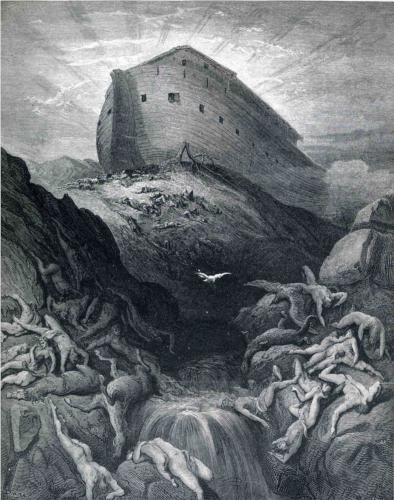
2012I just watched 2012. The conceit that the world will end last year must be getting tired by now, but I’d been curious about the movie since it came out three years back. As I suspected, there was plenty of religious banter as the putative version of us prepared for the end of the world. I noted that the little boy of the average family that managed to make it all the way to China to seek rescue bore the name of Noah. When the animals were being airlifted to the rescue station with its titanic boats meant to float out the world wide flood, it was clear that the myth of the ark was alive and well. (As I hope all of you reading this in the future are.) So this disaster movie turned out to be a bit of harmless fun, but I nevertheless shuddered at the implications. Those chosen to survive were, naturally, those who could afford to find a place onboard the secretly constructed arks. As even some of the film’s characters recognized, those who had money could buy a place on the ark, and of course they did. I do wonder what their brave new world would have been like. The whole idea of wealth has to do with the perceived value of specific commodities, and apart from our last minute stowaways, you can bet that everyone on board wanted their assets valued highest. Once the waters receded, if I recall the story at all, sacrifices would be made. Even the opening of the decks and the buzzing of helicopters like doves and ravens did Genesis proud.

The end of the world is a funny concept. Those of us who experience the world as mortals can’t really image the place without us, so I suppose it is natural enough. Nevertheless, the tone of the last four apocalypses I remember has been distinctly religious. There was a serious scare (perhaps local, because no internet existed) when I was in tenth grade. The next one I recall was Y2K, a silly episode where even priests I knew were seriously worried. With the Camping and Mayan “predictions” coming so close together, some no doubt supposed the Big Guy had it in for us all. When Christians tell the story it’s always the version with God glaring at us, belt in hand. Remember what Homer Simpson says of the song he wrote: “I’ve come to hate my own creation. Now I know how God feels.” Our cultural sense of disapprobation could be better addressed by helping those in need rather than building arks (or tax write-offs) for those who require no more to live like petty emperors. Emphasis on petty.

The world didn’t end and I wasn’t really worried that it would. The fact is we don’t need God to design an apocalypse for us because we’re very good about engineering our own. Unequal distribution of goods and services throughout a world where means exist for alleviating the suffering of countless numbers of the poor and disadvantaged has already created a purgatory on earth. We don’t need a Mayan calendar, or a New Testament whose message of compassion is overlooked in favor of its putative apocalypse, to show us the end of time. But since we made it to 2013, perhaps we should consider this a stay of execution. Let’s use our post-apocalyptic future wisely and hope humanity will live up to its name. And maybe it’s time for a new calendar.


Biblical New Brunswick

One of the true sadnesses of my life is that New Brunswick’s biggest institution, Rutgers University, couldn’t find a full-time place for a dreamer like me. Ever hopeful, I taught there for four years, counting on a miracle. Although I’ve got many good memories of my time at Rutgers, one of the side-benefits was getting to know New Brunswick a little bit. Probably not topping too many vacation must-see lists, New Brunswick, New Jersey nestles in the shadow of New York City and its train station is a place I’ve spent a bit of time. Last night I had occasion to stop in to get my bus pass so that I can start off the new year by going to work. As I climbed the stairs to the ticket window, I heard a street preacher holding forth. There he was, a young man, open Bible in hand, explaining to a mostly disinterested commuter crowd why they needed salvation. (If their experience on New Jersey Transit has been anything like mine, believe me, they already know.) Many of those in the waiting room are the homeless trying to get out of the cold for a while. New Brunswick has never struck me as a particularly religious town, although many of my students in my Rutgers days brought their religion to university with them. I didn’t have time for another conversion last night, however, as my family had another purpose for being in town.

A friend had kindly given my family tickets to Joseph and the Amazing Technicolor Dreamcoat at the State Theater. Although put on by Plays-in-the-Park of Middlesex County, being in the shadow of New York City sets a very high bar for public performances. The show was excellent and energetic and I couldn’t help connecting the dots on how the Bible had played into the evening. Andrew Lloyd Webber long ago realized that even a very secular Britain had a hunger for biblical stories. Although I am biased, given my failed choice of profession, the story of Joseph is one of the great tales of all time. Although likely half the audience couldn’t say that the story occurs in Genesis, the rags-to-riches plot of betrayal and forgiveness is so deeply embedded in human dreams that even assigning it to the wrong testament would make no difference. As Lloyd Webber knows, we all want our dreams to come true. Joseph, certainly a flawed hero, does finally see himself as the second most powerful man in the fictional world of Moses’ Egypt. It’s difficult not to root for the guy.

Outside the temperature hasn’t managed to reach 40 degrees today. A few blocks away at the train station, some of those being force-fed the Gospel were almost certainly refugees from the cold. I’ve seen this every time I have to catch a train in Newark as well. The homeless know that at least they won’t freeze in the depot, even if they are chased off the seats by security. Moving from Joseph to James a moment, we hear “And one of you say unto them, Depart in peace, be ye warmed and filled; notwithstanding ye give them not those things which are needful to the body; what doth it profit?” In other words, if you are offering the homeless words only, you’re not getting the point of the gospel at all. The homeless would benefit more from having a dream come true, I’m certain, than from having a message of salvation before being turned out to the cold for the night. The real salvation in New Brunswick is being offered at the State Theater tonight, but you do need a ticket to get inside.

Any dream will do

Any dream will do


The Best Gift

Standing outside the footprint of a circular chapel next to the ancient ruins of a drinking hall in Ophir, the Orkney Islands, with friends. We’re quoting from the memorable scene in the Orkneyinga Saga where Svein Asleifarson leapt out and killed Svein “Breast-Rope” as drunken vikings staggered back and forth from the Earl’s Bu to the chapel one Christmas season some nine centuries ago. The Orkneys used to belong to Norway and had a close connection with Iceland, which, all things considered, is not that far off. While working on my doctorate in ancient Syrian mythology, I experienced a fascination with Icelandic viking sagas and read several of them (in translation, of course). Traveling to the Orkney Islands was about as close to Iceland as we’d hope to get on a student’s budget, and the atmosphere of these historic islands does not disappoint. We were standing on the actual site of this historical incident one violent Christmas long ago.

VikingsImagining, however, is not the same as condoning. Nearing a millennium later, Iceland celebrates Christmas with “Jolabokaflod,” the Christmas book flood. Armed with books rather than broadswords, the folks of Iceland have built a considerable literary reputation. According to an NPR story my wife and traveling partner sent me, Iceland publishes more books per capita than any other country, and giving books at Christmas is a national tradition. Reykjavík is a UNESCO-designated City of Literature. Unlike the United States, a large proportion of the population of Iceland buys books, according to the story, and I can’t help but wonder if this isn’t related to two other Icelandic phenomena as well. Iceland has very little gun violence and it is one of the most ecofriendly countries on the planet. While it is only a feeling, I believe that widespread reading makes a better society.

I remember the experience of growing up and hearing other kids complaining bitterly about assigned reading. Here in this wild west corner of the world, we’re too full of dreams of action to spend quiet hours improving our minds. Guns are easy to acquire and too easy to use against the innocent. We could sure use a Jolabokaflod, it sounds like to me. Towards the end of each year I like to tally up an approximation of how many books I read in the previous twelve months. Although some are definitely better than others, each one is its own gift, a glimpse into someone else’s worldview. And such glimpsing aids in understanding. I may not agree with you, but I know where you’re coming from. And as we enter that long, cold stretch of January and February I feel ill-prepared if I don’t have a stockpile of books to get me through the darkness of this time of year. And one of my fantasies will be a world that can see from the blood-stained ground of Ophir all the way to Reykjavik.


The Santa Myth

The North American Aerospace Defense Command, or NORAD, devotes its resources on Christmas Eve to track the path of Santa Claus across not only across the northern skies, but also around the world. The idea of what must be a devoted group of very serious defense professionals programming the flight track of a fictional character is strangely bemusing. I have an app on my iPhone called Star Walk—it is an astronomy program that I wish i had as a kid standing under the winter skies trying to identify constellations. On Christmas Eve my clumsy fingers slipped, accidentally turning on the program. Although I was indoors, and it was cloudy outside, I glanced around the virtual universe to see what was happening, when what to my wondering eyes should appear? Indeed, the self-same Santa Claus was flying through the night sky on my phone. Do doubt such lighthearted antics put smiles on faces of children and adults alike. They also show how deeply embedded the myth of Santa has become.

Santa Claus is a relatively new deity in the pantheon of cultural gods. Many children earnestly believe in him and some parents use him as a source of moral guidance: you’d better be good for goodness sake. Santa’s watching. Even in a pluralistic world, Santa visits Mecca and Jerusalem and Djibouti, no matter the religion of the people—and my source on this is no less than NORAD, guys who scan the skies for nuclear missiles. If they can’t be believed, who can?

Now as we wade through the discarded wrapping paper and face the inevitability of returning to work, it seems as though something really did come on Christmas. It may not have been a man in a fuzzy red suit, tracked through the atmosphere by fictional computer programs, but we can hope that it was at least a fleeting moment of peace. After all, NORAD’s Santa crossed international borders with impunity, neglecting trade sanctions and sometimes open hostility. Unlike other major figures of the Christian pantheon, Santa does not spawn wars and hatred. He encompasses no strict, dogmatic belief. Maybe it’s because we admit he’s a work of fiction, and nobody really ever lives up to the standard of always being nice. Yet, at least according to NORAD, Santa visited every person on the globe with a sense of peace, a gift that fits no matter what your size.

SantaClaus


Southern Comfort

CajunNightOnce upon a time, long before Hurricane Katrina, the American Academy of Religion and Society of Biblical Literature held their annual meeting in New Orleans. It must’ve been an incongruous sight: the Big Easy filled with right proper professional religionists discoursing eruditely. While there, my family purchased the Cajun Night Before Christmas, by Trosclair. A cute knock-off of Clement Moore’s “A Visit from Santa Claus” (‘Twas the Night Before Christmas), the story unfolds of a fur-bedecked Santa visiting a destitute, but grateful family on the bayou. Each year I try to reach deep in my southern roots to find an accent that accommodates the poem, and read the story the week before the holiday comes. A number of factors have suggested that perhaps this year Christmas might catch many people on a more subdued level. Crushing poverty is a reality, guns are too readily available, and the one percent don’t get close enough to humanity to contract the common cold. Even the effects of Katrina have refused to dissipate completely. Her sister Sandy visited the Big Apple, and things still aren’t quite right.

Big Apples and Big Easies may seem to have little in common, apart from how much money is available to assist in hurricane recovery. They both also participate in Christmas, being havens of Catholicity. Yet after the hurricanes some in New York and New Jersey were without power several days, but parts of Louisiana were simply abandoned. The will to help the disadvantaged seems to have improved since 2005. Considering changes at the top, this isn’t necessarily a surprise. Nevertheless, tragedy throws into sharp relief what we consider human decency. Too bad it takes a disaster to make us more human.

What sticks with me about the Cajun Night Before Christmas, apart from the flying alligators, is the profound hopefulness that the poem conveys. Those with so little take so little to improve their lot. Yet those with too much insist it is their right not to be taxed at all. Those who live in a shack don’t expect much from Santa. They have learned through the disappointment of experience that double standards are endemic in life and while some are unbelievably rich, the poor are happy with just the smiles of children. Ironically, Santa is the great equalizer here. While the children of the wealthy may expect and receive more, the children of the humble are also allowed a portion of hope. As I remember New Orleans, in the palmy days before Katrina, it was a city that knew Mardi Gras was far more humane than Lent, and that even a city marked my radical inequities (let those with eyes to see read) could come to a joyous accord when sins are about to be atoned. And even if he has to commandeer alligators, Santa will visit the poorest children the night before the holy days.


Christmas Incorporated

ChristmasinAmericaA number of years ago I wrote a short book on holidays for children. Like most of my books, it was never published. I wrote it when I learned that good books explaining in simple language whence various American holidays came appeared not to exist. The literary agents I contacted quickly showed me why. In any case, I remain curious about holidays and so I read Penne L. Restad’s Christmas in America: A History. There’s a wealth of gifts in this brief book. I’d researched the subject a little bit myself, so I already knew some of the origin stories, but if you’d like to know why we have Yule logs, egg nog, or why Santa prefers red, this is the book for you. As I’ve noted in previous posts, Christmas is a fairly recent star in the constellation of American holidays. In fact, those of us who work for secular companies know just how few holidays Americans officially celebrate. Having lived three years in the Scotland, I know how seriously holidays are taken in at least one corner of Europe.

Christmas didn’t really catch on in America until the nineteenth century. Industrialization was beginning and more and more was expected of the worker who made the robber barons wealthy. It is no accident that the American Christmas had many of its origins in New York City where much of the industry ran non-stop. Restad, however, makes a very good point that Christmas has always been both pro- and anti-commercial. Owners of large retail chains saw the opportunities to sell goods to time-stressed individuals while the giving of presents often promoted a selflessness uncharacteristic of those who stand to profit from consumers. Restad notes the increase in goodwill that Christmas generates in society as a whole. Indeed, I have seen more people giving to the homeless during the past two weeks than I had seen so far this year.

One aspect of Christmas that I hadn’t expected to find in Restad’s treatment was the early emergence of the “prosperity gospel.” Of course, it wasn’t called that in the early twentieth century, but in the millennia since the Christmas story actually originated, some in the church began to take their own righteousness far too seriously. Seeing that clergy who knew how to tug the soul-strings just right could easily gain wealth, they started to suggest that God wants you to be rich. They seem to have overlooked who was born in a stable because there was no room in the inn. Search the Gospels and your search will be in vain if you attempt to find words to console the rich. The “prosperity gospel” is as much a lie today as it was when it began, back in the days when dubious clergy looked for a way to excuse their comfortable lifestyles while many of their flock suffered want. Christmas in America shows itself to have a little bit of the social gospel built in, for it is clear that even the Devil can site Scripture for his own purposes.