Austin City Limits

Maybe it’s just because Texas feels like the brass buckle of the Bible Belt, but I had moral qualms about landing in George Bush International Airport this afternoon. Texas has so many worthy heroes, but in the land of Rick Perry, recent Republican politics is king. Not queen. But king. It felt like a work of supererogation to drive to Austin after a three-and-a-half hour flight to Houston, but Texas reminded me of Illinois with palm trees. And cacti. Well, okay, and longhorns. One could get culture-lash flying here from New York. Before I embarked I had visions of my rental car being a huge Cadillac with real steer horns for a hood ornament. I just couldn’t picture myself in a ten-gallon hat.

I sometimes wonder how religion could’ve come to divide a nation such as the United States. Founded on the principles of religious liberty, lately one party has been claiming the right to legislate morality for all, deeply polarizing a populace that should be able to accept differing viewpoints. Still, there are issues on which human rights insist there can be no compromise: women have equal rights with men, and have the right to self-determination just like men. It truly amazes me that such common sense can even become a divisive issue. If we could agree on even that, we’d have to declare it progress over the objections of the Religious Right. My thoughts wander that way when I tarry in the south. It’s really a pity. The people are friendly here and the landscape has its own beauty. Are we really that different?

I’m not altogether convinced that this isn’t just a case of prejudice masking as religious sensibility. Religions can be all too gullible when they feel their honors might have been impugned. While I regularly express my opinion here, I do respect nearly every form of sincerely held religious belief. None of us has all the answers, and it seems the height of hypocrisy to insist that anyone is right all the time. Nevertheless, my sojourn beneath the Bible Belt has me wondering about the origins of various religious squabbles. Or maybe it was the just the long drive along the “presidential corridor” after touching down at an facility that most websites still refer to as simply, Houston International Airport. Travel broadens the mind—it is, in fact, an excellent form of education. Maybe if we got out more we would all get along better.

From here we all look the same.

From here we all look the same.


True Heroes

supergirls As a guy with a healthy sense of the weird,it strikes me as odd that rational people can suppose that we’ve solved all of life’s great mysteries. As a student of biology, chemistry, and physics in high school—and a reader of non-technical aspects of the same throughout my adulthood—it always seemed that there was an undefinable “something more.” Reading Jeffrey Kripal’s Mutants and Mystics led me to an interest in comic books. As a child I did not have many of them since we didn’t have much money to spend on luxuries. The few I had, however, were read and reread and reread, assaulting my imagination with endless possibilities, many of which defied everything I was to learn of biology, chemistry, and physics. My interest in feminism and new-found appreciation of the proto-graphic novel, led me to read Mike Madrid’s The Supergirls: Fashion, Feminism, Fantasy, and the History of Comic Book Heroines. As a boy surrounded with brothers, I clearly knew which comic books were for males. Madrid’s book delves into this super-hero world with the question of why females have always struggled to be taken seriously in this fantasy land.

Many of the characters explored in Supergirls were heroines I’d never encountered before. Madrid’s analysis often appears spot-on as he traces their histories through the decades as they mirror, and occasionally lead, society’s expectations of what women should be. The one that I had no trouble recognizing was Wonder Woman. And the reason for that was she used to have a TV show. Not mentioned by Madrid was the mighty Isis, also a heroine from television. She began as a character opposite Captain Marvel, and did not have her origin in a comic book. Isis was, of course, an ancient goddess, and as I learned from Supergirls, Wonder Woman was not far behind. The way that women could be as strong as men was to be divine. For human females, life was much rougher.

Wonder Woman, Madrid notes, was one of the Trinity of early, lasting comic book heroes. Superman, Batman, and Wonder Woman are cast as the Father, Son, and Holy Ghost, respectively. Like her theological counterpart, Wonder Woman is the most amorphous, least understood of the three. Her career and persona change over time, almost losing any kind of supernatural ability. Her origin story, however, began as a helper of oppressed women everywhere. Today we see Superman and Batman on the big screen, but Wonder Woman has fallen behind. Despite great strides, our society still isn’t ready to accept rescue of men at the hands of a woman. More’s the pity, because we clearly see the mess that masculine leadership has spawned. Mike Madrid has discovered a secret identity for our old foe, sexism. And it might take the world of comic books to help us see clearly that which mainstream analysis still denies.


Implausible Deniability

Sandy gave us a little taste of dampness under the gunnel. You see, people live by the water because it beckons to us. That was actually Rachel Carson’s idea, but nevertheless, we do find ourselves drawn to the sea around us. Historically our great cities grew in the littoral because communication across the big water was, prior to jet travel and trans-oceanic cables, the best way to stay in touch. Have a business meeting in London, but live in New York? No problem. We can get you there in two-to-three weeks. And the ship sets sail. Since that day we’ve become more electronic. Those of us who experienced Sandy near New York City know that one of the biggest problems was that salt water and electrified trains don’t mix. Of course, conservative lobbies have insisted that Congress and the White House keep their eyes firmly shut about the possibility that a more unstoppable flood is coming. We may not need an ark, but we’re going to have to take some steps back.

A story on the Weather Channel shows the “smoking gun” of global warming. Oh wait, that’s just a myth. Industrialists tell us so. But what a devastating myth! The Gulf Stream waters of yore have kept the climate mild in northern latitudes. While in Scotland we spent a wonderful weekend with some friends on the Island of Arran in the Hebrides. Palm trees growing in Scotland? Yes! The warm Gulf Stream means that much of the British Isles remains relatively temperate despite their latitude. The Gulf Stream, due to climate change, is slowing. In less than a century, climatologists now predict, the oceans will rise three feet. Looks like I’ll need to wear my gaiters to work. We’ve known for about half of my life that we’ve been changing our environment. And not for the better. Those who are too wealthy stand to lose a little so we do what we can to protect them, the poor dears. The rest of us had better learn to swim.

We don’t worry when the people of some Indonesian island point out that their entire world may submerge. Put a little ocean water in the subway and, well, that’s an entirely other story. How are the peons to get to work? Let them wear hip-boots. Word from the top one percent is that there is no global warming. If the Gulf Stream is slowing down it’s because it’s lazy. What a moocher! Suppose it will be wanting a health plan next. That’s the problem with the weather—it changes like, uh, the weather. Unlike the minds of some people that are already made up and never change, no matter what the facts. When the one-percenters start speaking, I’m glad I’m wearing my hip-boots after all.

Where can I get me one of those?

Where can I get me one of those?


Call it the Blues

BluesBrothers

Coming back to The Blues Brothers after a couple of decades proved to be a kind of personal enlightenment. Of course I remembered “We’re on a mission from God,” as a catch-phrase, but in the intervening years I’d forgotten what that mission was. The movie is, as it were, backstory for the Saturday Night Live sketch in that show’s halcyon days. Watching the movie as an adult I was astonished at how positively religion is portrayed. Jake and Elwood’s mission is to save their childhood Catholic orphanage. Although there are a few laughs at the expense of religion, the movie as a whole is a redemption story with a surprising lack of irony. Released from prison where he was doing time for trying to do the right thing, Jake has an authentic religious experience and from that point on, the mission is unquestioned. In a self-sacrificial move that lands the whole band in prison, the Blues Brothers pay the taxes owed and save the orphanage. They are doing time for saving poor children.

I reflected on how, since 1980, it has become difficult to find mainstream movies that are so positive toward religious values. Not coincidentally, the 1980s saw the tragic Reagan years when religion and politics blended to the permanent detriment of religion being taken seriously. Since that time the cynicism has grown considerably. We are constantly reminded of it as conservative pundits force “Christianity” into a more and more reactionary mode, condemning all that reason has finally released from the dark ages. This is religion which thrives in the darkness of ignorance and fear. And it has coopted the very definition of religion itself. It is hard to imagine a “mission from God” being taken half as seriously today as it was when Jake and Elwood, although personally irreverent, nevertheless take the ethical call so seriously.

Today the “mission from God” is to protect one’s personal investments. Shut out those who require special consideration or those whose lifestyle differs from that which is putatively biblical. Anyone who dares step out of line is, in this enlightened era, condemned to the outer darkness. The Blues Brothers always wore dark glasses. While initially a branding gimmick, even this has symbolic value in the public view of religion. After all, Roman Catholic Sister Mary Stigmata gives them a sound thrashing for their profane language. But they find the truth in a black, evangelical service. There is a tolerance here—the neo-Nazis end up buried in their own grave—that has since vanished. The dark glasses hide something vital. The only time they are removed in the movie is to deceive. I wonder, I just wonder if with the glasses removed Jake saw a future for which the only prudent response was to hide once again.


Maltese Faction

The Crusades remain one of the most celebrated episodes of religious violence in the history of the church. I am certain that many would put forward other instances of official violence to rival the piecemeal warfare of the Middle Ages, however, the Crusades still jolt many Muslims for their unflappable conviction that God gave the Holy Land to them. Ironically a bit of good emerged from the carnage in the form of sometimes secret orders of knights whose charge was originally to care for injured and sick Christians. Thanks to Dan Brown everyone knows of the Knights Templar. There were, however, several of these orders spanning the eleventh to the sixteenth centuries, and some of them survive today. In Sunday’s New Jersey Star-Ledger a story appeared of the 900th birthday of the Knights of Malta. I don’t recall having heard of them before, but then, it has been many years since my last class in Medieval Christianity. And no wonder—they don’t even appear in Wikipedia under that name.

What is so interesting about the Knights of Malta is that, like the Vatican, they have the authority to act like a country. According to the Associated Press, the knights can issue their own passports, stamps, and money, and have diplomatic relations with real countries and even have observer status in the United Nations. The blurring of the lines between religion and politics, as any student of history knows, has deep roots indeed. The Knights of Malta, however, own no territory (no, their eponymous island isn’t theirs). A nation with no territory. At least the Vatican has its own city. The Knights still exist for their charitable works and, it is to be hoped, not for the conquest of lands legitimately owned by others.

The Sovereign Military Order of Malta (“sovereign” and “military” were omitted in the press), is a sub-branch of the Knights Hospitaller, the oldest surviving chivalric order in the world. It is nice to think that the church might still have a few knights up its sleeves. The concept of chivalry has largely been absorbed into chauvinism, however, and even now the Knights of Malta are men. Along with the Vatican, that makes two entities run completely by males that assert their own sovereignty. In the twenty-first century it would be nice to think that we wouldn’t need monied men in robes in order to help out those in need. But then I’ve always been prone to believe in myths. And knights tend to follow after daze. Crusades, however, have far outlived their putative usefulness.

Good knight?

Good knight?


God’s Country Club?

Heaven is a sparsely populated place. Considering its vast celestial real estate, vis-a-vis the earth, it must be downright lonely. Maybe that’s the way the elect like it.

Official teaching, as it is often called, for many churches is downright brutal for those who dare explore. This past week the sin of Rob Morris, a Lutheran Pastor (Missouri Synod) who had the audacity to pray for the children slaughtered in Newtown, Connecticut in the same room as—gasp—Jews and Muslims, has been in the news. You see, Missouri Synod pastors aren’t allowed to worship with those outside their brand, and the president of the Synod, Matthew Harrison, insisted on an apology from Morris. Never mind the twenty-six coffins in the room. This is about doctrine!

Exclusion is part of what gives religion a bad name. Yes, there are some people who appear evil—I’m glad I’m not often put in the place of judging that. For some Christian sects, however, the gate is very narrow indeed, and the path exceptionally difficult. More than one Christian denomination, presumably those not so good with arithmetic, officially teaches that only 144,000 will be saved. A thousand gross, and not one more. These poor sinners keep hoping they’ll get in without adding up the hundreds of generations standing in line before them. I get the sense that their heaven wouldn’t exactly be paradise for any of the rest of us who happened to slip in. If the world were full of people like me, I think I’d be on the first space shuttle off to parts unknown.

Overlooking the gross insensitivity to the fact that Morris was trying to heal his community after a tragedy where children—children! To whom most religions give a free pass into heaven—were being mourned, we must wonder what the paradise of Missouri Synod Lutherans looks like. A heaven without diversity. Smiles must be rare indeed. And long, long, long naps very common.

For those of us committed to the common good, heaven on those terms is no ideal place. In fact, I doubt that God would be tempted to spend much time there. I think that God was present at the interfaith prayer vigil, and that Rev. Harrison has yet to receive an apology postmarked “Heaven.”

Rules is rules.

Rules is rules.


Rise of Religions

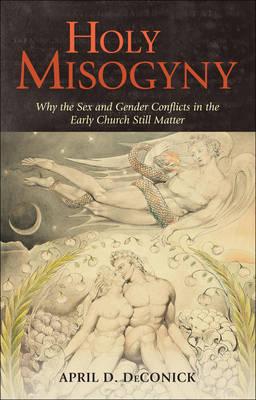
mansdominion Imagine my surprise when, as a boy raised in a fundamentalist family, I arrived at a liberal seminary to find myself accused of sexism. Like most kids I had been taught not to question religious dictates. Majoring in Religious Studies, even in as conservative a college as Grove City in the 1980s, even there I learned that to be educated meant learning to question. I’d thrown off fundamentalism by the time I reached seminary—I supposed I was making great strides. I’d always been in favor of equal rights for all, just because it seemed right. I supported gender and racial equity, but I was obviously still guilty of something. It has taken me decades to realize it, but being male is sufficient grounds to be despised. Perhaps it’s not as bad as all that. Maybe it’s worse.

Sheila Jeffreys’ Man’s Dominion: The Rise of Religion and the Eclipse of Women’s Rights was nevertheless a sobering read. I supposed that it might be a historical introduction to the problem, but instead it is a bold declaration of some uncomfortable facts. All ancient religions, at least those that survive, had subordinated (and continue to subordinate) women. That’s not path down which a liberated religionist wants to stroll. I found myself resisting these assertions at first, but as Jeffreys keeps the examples coming, they are difficult to deny. Yes, religions have been founded by men and they favor men. Not that belief necessitates that, but history seems to. Even in religions where women’s leadership is allowed, it is because some men have decided it is okay. There’s no changing the historical trajectory to the past. Religions were invented by men. Given their druthers, they will, at best, treat women as somehow less important than men. The missing element here, however, is sincerity of belief.

I doubt that Jeffreys would claim that religions were devised by males in order to subordinate females. It’s hard to say whether that first inventor of religion really believed all the stories he told, but soon people came to do exactly that. And those stories grew into something more than myths, and became the basis by which lives were lived. They became literal. And women, who played only supporting or villainous roles, soon became the victims. I know that’s too simplistic. I also know there’s some truth in it. I went to seminary to learn more about religion. What I discovered was often an unwelcome reality. Although I never personally tried to oppress women, I participated actively in a club that did—the club of masculinity. It may be that religion itself will always lead to oppression of the other, for religions don’t form in perfect worlds. If you have any doubts about that all you have to do is ask half the human race.


Scouting for Boys

I guess losing a bid for a presidential nomination sanctions a guy to speak for God. Of course, that goes for just about any Republican these days. I’m frankly amazed that Moses managed to write the Ten Commandments without them. So Rick aptly-named Santorum has gone after the Boy Scouts. To remove the duplicitous ban on gay scouts, according to Santorum, is to remove God. Obviously Mr. Santorum was paid no attention in Boy Scouts himself. I spent many hours at Scout camp and I can attest that God was already the last thing on most boys’ minds. Maybe our former presidential hopeful ought to look back a little further, for Webelos and Cub Scouts may imply the love that dare not mewl its name. I predict this: if the ban is lifted, as it should be, no one will notice the difference. Santorum will continue beating his dead horse and the rest of America may achieve just a hint of maturity.

“Scouting may not survive this transformation of American society, but for the sake of the average boy in America, I hope the board of the Scouts doesn’t have its fingerprints on the murder weapon,” Santorum declared, according to CNN. I have to wonder what he knows about the average boy in America. Or the average girl. Santorum would have a difficult time finding the word “gay” in his Bible, for it is not there. But apparently God is not God without someone to hate, without the “Right” to show him the way. And God favors straight, white men, as the last presidential election clearly shows.

Any religion that makes someone feel better by repressing others is not worthy of propagation or emulation. Look at any oppressed group. What’s the backing always cited by the oppressor? Is it not narrow religious belief? Anyone can say “God says.” There—I just wrote it. And I could distort the Bible to make God dance to my prejudices as well. The problem is that I recognize how cheap and tawdry such eisegesis is. Of course, hot air expands. The Texas governor that God told to run for president, but then changed his divine, omniscient mind, and who never thought closely about the implications of that—aka Rick Perry—also had to weigh in on the issue. CNN quotes him as stating, “Scouting is about teaching a substantial amount of life lessons… Sexuality is not one of them. It never has been; it doesn’t need to be.” Mr. Perry needs to spend a weekend at camp with his eyes and ears open and his mouth shut. In the best of all possible political worlds, his bosom buddy Rick Santorum will be right there beside him. Maybe it will take a little child to lead them after all. And that actually is biblical.

From WikiCommons, AgnosticPreachersKid--worth a thousand words

From WikiCommons, AgnosticPreachersKid–worth a thousand words


Real World Ethics

Do yourself a favor. Spend five minutes watching this video:

(note: the video has been removed and a “family friendly” version is here: Kai)

Although it has a whiff of the apocryphal about it, I choose to believe that Kai is really who he claims to be. I don’t know what actually happened here, but this is ethics divorced from armchair pundits and congressional committees. Sometimes you see something and know it’s just wrong. Most of us wring our hands and await some authority figure to sort it out. When Kai met someone claiming to be Jesus, he was willing to be “the Antichrist” to save innocent people with no regard for himself. I am very impressed.

No, vigilantism is wrong. In fact, I wouldn’t trust a who coven of Republicans to ever arrive at so parsimonious a solution as Kai. He saw evil, he confronted it. I don’t know the backstory here, but I know that I feel a lot less threatened by the street people I see nearly every day than I do by those hiding away in limousines. Ethics is all about figuring out what is right. Kai has his head on straight here. If he could go back in time to stop “Jesus” reincarnated from harming an innocent bystander, he would. No regrets, no questions.

I have watched, and personally experienced, religious leaders intricately plotting how to ruin the life of their neighbors to maximum effect. I have read about politicians who shamelessly increase their earnings while knowing that some of their constituency live in poverty and persistent hunger. I have seen a president declare a war to fulfill a personal vendetta. And I have seen Kai lifting a hatchet to save a person he didn’t know.

There will certainly be those who would condemn such quick thinking and right action as immoral. For those who object from a Christian outlook I would remind them of Dietrich Bonhoeffer, one of the darlings of the Evangelical world. Bonhoeffer was hanged by the Nazis because he did what he knew to be right. Even though his bomb plot failed to kill Hitler, Bonhoeffer knew what Kai knows—those who sit around and watch evil happen as just as guilty as those who perpetrate it. And that’s like trying to surf when the ocean’s at a dead calm.


On My Honor

Some old fashioned institutions fear new learning. Although I was a Boy Scout for only a couple of years, I grew up in Cub Scouts and Webelos and had a pretty good idea what boys talked about when they were together. It would’ve shocked me at the time to learn that some Scouts were gay, but then, I was young and most new things shocked me. I later came to learn that not only some Scouts, but also many of the guys I knew from conference-wide church groups were gay. It wasn’t so much that they were in the closet as the rest of the world was. Society wasn’t ready to admit anything that challenged male patriarchy (this was the 60s and that was beginning to shift), and homosexuality did challenge that hierarchy. The Bible could be used to back a husband’s superiority over his wife, but if two men formed a couple—as B-movie computers used to say—”that does not compute.” A society that declared sex had one purpose only—procreation—was already deep in denial about the symbolic power that sexual relations inherently possess, something even the ancient Greeks knew about. How could a culture that out of sync with nature come to embrace true equality?

In the socially conservative icebox of the fin de siècle nouveau (pardon my French), evangelical forces began to declare the Bible as the basis for defining marriage. The problem is that the Bible doesn’t do such a good job of it. Marriage is far from a sacrament, and its main purpose seems to have been to make sure men were kept accountable for the children they sired. After all, they could have as many wives as they could afford, eh, Solomon? The Boy Scouts, so loyal to God and country, preferred not to admit what was already part of their culture. You isolate a bunch of boys together in a cabin in the woods, and what happens? The old myth of Platonic hero-and-sidekick pairs with nary a thought of the pounding chorus of hormones surging through the atmosphere held up remarkably well, considering.

We like to think we live in a more enlightened age. Sexologists tell us that mating is hardly just for reproduction—the natural world belies that. The Bible says little about its purpose, not being of a scientific bent. And yet the Boy Scouts hold up three fingers and go beyond don’t ask, don’t tell. I’m glad to see that they are again considering a look at the obvious. In the Bible that cotton-poly blend you’re wearing is mentioned as evil just a few verses away from one of the few passages that says the same thing about homosexuality (and even that is an overstatement). The Bible was a product of its time, just as the Boy Scouts were a product of theirs. If they want to honor their pledge about keeping morally straight, the Boy Scouts need to consider morality in the light of what we know and open the closet doors to what society has been keeping hidden all along.

Read the green words.

Read the green words.


Avenge This

Recently rewatching The Avengers I noticed a subtext that had escaped me the first couple of times I saw it. When Loki explains to his victims why he is spreading his chaos, he uses a concept that many of us have been spoon-fed since 9/11—that freedom is not free. When he is asked from what he is setting humans free he replies, “Freedom.” He further explains that people really don’t want freedom, but they want to be led. This sounded so much like Bush administration rhetoric that I was put on alert for the remainder of the movie. Indeed, in the climatic scene much of Midtown is attacked, and who launches the nuclear device at Manhattan? The shadowy government figures who wish to remain anonymous. “Freedom is not free,” they seem to say, “support your government without question.” The scene of police and firefighters herding frightened citizens out of harm’s way looked an awful lot like footage from near ground zero.

Comic books, I have often reflected, are already story-boarded and some make excellent movies. Some are funny and some are serious. As a child I had only a handful of comics, but they were like movies for kids with modest means. Like an adult going back to the old Warner Brothers cartoons, you see many things that escaped you as a child. Comics may not be high literature, but comic book movies, at their best, are not far from it. The X-Men movies likewise introduce themes that rivet adult attention: prejudice, discrimination, the ambivalence of evil. The stories are didactic as well as entertaining. In the case of The Avengers, the characters, while overblown, all have their own agendas but government has only one: compliance.

Sometimes I read about the early days of the American experiment and wonder what went wrong. Yes, there are certainly times and issues that demand strong centralized government for survival, but when did those who castigate such strong control decide that they should take over? Who gains here? It certainly doesn’t seem to be the average citizen. Looking over the landscape after the last laissez-faire government, the only one who ended up hands-off were the very wealthy. Left with no social responsibility, they reign, resisting any taxation so that the burden of the increase trickles down to those who, in the words of Loki, really don’t want freedom. That’s perhaps the only thing we have in common here; no matter how long ago our ancestors arrived, they were searching for freedom. Or so they believed. Like a comic book, it has become mere fantasy for most, while Richie Rich happily continues on his gilded, but vapid way.

Mårten_Eskil_Winge_-_Tor's_Fight_with_the_Giants_-_Google_Art_Project


Moocher Man

Influenza seems to be going around. Since I spend at least three hours a day on a crowded bus I get to observe all kinds of uncouth behavior. Not that I’m always Mr. Manners (New York has a way of doing that to you), but I do cover my face when I cough or sneeze and sometimes I feel that I’m in the minority. My wife, concerned with supplies dwindling, made an appointment for me to get a flu shot at the local clinic. I went in and took a number. I guess I’ve been cursed with good health, and that may be a good thing. For my first five years in New Jersey I couldn’t afford health insurance—this was known as Bush Care—and hadn’t needed to see a doctor. Yesterday was my first time in the clinic. Although I had a confirmed appointment, a kind of argument broke out in the office (this is, after all, New Jersey) because non-patients weren’t supposed to be given the inoculation. Or they were, but they had to pay for it. Or their insurance would be charged and they could get the shot as long as they had insurance. Or why didn’t people just go to Walgreens instead. In the midst of the melee, a nurse called my name and a few minutes later I was being jabbed and sent on my way.

In all of this, one of the largest ethical issues of this country is highlighted. Who has a right to basic medical care? Among the conservative crowd that even includes some who can’t afford insurance, there are those who decry moochers. I grew up without health insurance. My mother relied on welfare to help raise three boys whose father had disappeared and our medical care was very, very basic indeed. Maybe people just didn’t say it in front of kids back in the 60’s, but I never heard anyone grousing that the poor should be left to fend for themselves. That took Reaganomics. In any case, working as hard as I could to break out of that lower class, I earned a Ph.D. only to be turned out of a job by a devout worshipper of George W. Bush. No medical insurance. Again. Now with a child of my own. What I’ve heard since the new millennium is that for those who can’t afford insurance—too bad! Just get a job, bum!

JesusHealing

I often think about those who make such statements and how they valorize the Bible. If I recall correctly, Jesus handed out free health care. Socialized medicine existed in his corner of the world twenty centuries ago. And we in one of the most prosperous nations on earth argue about who can get a flu shot. In the end, I paid for it; I’d even taken my checkbook along with that intent. Nobody thought to ask me. But as I sat there within full view and certainly full conversational distance, I was objectified by the medical system. I wasn’t a guy who sits on a crowded bus with people who don’t cover their mouths. I was a moocher. A liability. In the waiting room around me I noticed patients tucking away passports and green cards. This is New Jersey, after all. For many, however, despite the cold we’re experiencing, it might feel like a much, much hotter place indeed. A place where, the Bible intimates, nobody cares about anybody else and the flames never die.


Twist and Shout

TwistedFaithTrue crime is not really my thing. I find regular life disturbing on a frequent basis, and reading about how someone willfully harmed another only seems to make my prognosis worse. When I saw that Gregg Olsen’s A Twisted Faith: A Minister’s Obsession and the Murder that Destroyed a Church took place in a number of places where various family members live (Poulsbo, Port Orchard, Seattle, Washington) I was drawn in. As the dark story began to unfold, at several points I almost put the book aside—this is a difficult account to read. Christ Community Church on Bremerton Island sounded a little too much like the Community Chapel in which I was reared. The power struggles, the self-righteousness, and the hidden lusts of those who live “clean lives,” all brought back painful memories. Nevertheless, I had to see how this sordid, almost salacious tale played out. Youth minister Nick Hacheney, to cut to the chase, murdered his wife and carried on affairs with at least four women in his church, including his murdered wife’s mother. Based on many personal interviews, Olsen digs deeply into the psychological trauma this one minister inflicted on the women he stalked, and revealed some of the neuroses of conservative religion.

I say “conservative religion” not to pick a fight, but because of the things both the women and men believed. After a conflict over whether to stay with the Assemblies of God denomination, Christ Community Church went independent when a new minister began seeking senior leadership over the congregation. So far that’s normal ecclesiastical politics. What made this so unbelievable is that many of the decisions were based on “prophecies” that self-proclaimed messengers of God presented and that clergy and people took at face value. Even when they blatantly failed to show any accuracy. There was never any questioning whether one received an authentic message or not. Some of these “prophecies” involved the deaths of congregation members, including the murdered Dawn Hacheney. Women with marriages in various states of decay, feeling sorry for the murderer (whom only one of them suspected) eventually gave in to his words “from God” that they were to have sex with him to help him get over his loss. The real pain was seeing the psychological manipulation he applied to his victims, causing them divine guilt if they refused.

In a community that readily accepts claims of direct messages from God, congregants are clearly sheep led to the slaughter. Most Christian denominations have mechanisms in place, no matter how faulty, to test such individual claims. Groups that trust their clergy to be honest all the time fail to calculate human weakness into the equation. It is no surprise at all when staunch, conservative clergy are caught violating their own rules (and congregants). Give them a blank check for signing God’s name to any statement and you’ve got a truly unholy writ. Many churches manage to avoid the most serious pitfalls most of the time. When one fails to discover the wolf in sheep’s wool, as happened on Bremerton Island at the end of the last century, true crime may be the mildest way to describe the results.


King’s Highway

Sometimes I forget the beauty of the Bible. With its constant current of misuse in our society, it is sometimes easy to forget that, like an abused child, the Bible is not to be blamed for being the victim. As a civilization we owe a great deal to it, and even on its own, when we overlook the insensitive and sexist parts, it remains a literary masterpiece. Just over a year ago I visited a true friend I’ve known since high school. He is not a religious man, but in his living room, on a stand, stood open the Bible. It is more than a jingoistic symbol. Even the more we become aware of other great spiritual writings: the Rig Veda, the Tao Te Ching, the Gilgamesh Epic, we shouldn’t let the sublime messages from the Bible escape our notice. Even in this secular, workaday world, the words of the Sermon on the Mount often come to me, grand and resplendent. Parts of Isaiah still bring tears to my eyes. Writers from Shakespeare to Bradbury drew on its noble sentiments.

The Bible comes to mind when thinking of Martin Luther King, Jr. Our chronological spans overlapped by just five and a half years, but I followed him to Boston University School of Theology, walked the same corridors he did, meditated in the same chapel. Even then, some two decades after his martyrdom, his vision had not been fully realized. It still remains unfulfilled. At Brown University in May of last year, I was fortunate enough to be in the crowd when John Lewis received an honorary doctorate. His remarks to the crowd were humble, few, and profound. He said he never thought of the civil rights movement as a way to greatness. He was only trying to help. He admonished the affluent, the comfortable sitting on a hot Ivy League green, “Find a way to get in the way.” Injustice must come to end. The color, gender, sexual orientation, place of birth or financial status of no person should ever be used to judge her or him. With remarks I’ve heard about President Obama, most vulgarly on Facebook, we still have a long, long journey ahead of us.

In a day when the internet weaves millions of people into a fabric that should remind us we are all part of a whole, some still insist that their shading, location, or special pedigree make their part of the cloth the most valuable. Even as revolutions against injustice—something with which Americans especially should sympathize—take place in “backward” nations by using social media, we in the “first world” still judge one another by the origins of our ancestry and the mythical superiority of our skin tones. The greatest asset the United States offers to the world is its unique blend of people from everywhere. Our country demonstrates what can happen when people from every continent put their minds and wills together to work for the common good. This clashes with the biblical brand of separatism, I know. But even Isaiah, even if it is in his third incarnation, reminds us, “Also the sons of the stranger, that join themselves to the Lord, to serve him, and to love the name of the Lord, to be his servants, every one that keepeth the sabbath from polluting it, and taketh hold of my covenant; Even them will I bring to my holy mountain, and make them joyful in my house of prayer: their burnt offerings and their sacrifices shall be accepted upon mine altar; for mine house shall be called an house of prayer for all people.”

Martin_Luther_King_Jr_NYWTS


Witnesses All

Witness“Only the bad man. I see. And you know these bad men by sight? You are able to look into their hearts and see this badness?” The words of Eli Lapp in one of the most memorable scenes in Witness often come back to me. While the lifestyle of the Amish strikes me as somewhat extreme, I have always admired their conviction that a simple life is a better life. The finer points of Anabaptist theology don’t always agree with my Weltanschauung, but their pacifism is the closest thing to Jesus’ Christianity that I can imagine. So as the NRA pulls out its big guns, arguing that the solution to children being massacred is to provide even more guns, I say they should watch Witness.

The year is 1985. In the movie Samuel Lapp witnesses a murder and when detective John Book finds out, he is chased to the Lapp’s Amish community where he hides out. One day young Samuel finds his gun and the camera angle is so oblique as the weapon in the foreground fades out to his grandfather Eli’s face, that you sense some violence has already been done even in the smelting of the metal to cast the revolver. “This gun of the hand is for the taking of human life. We believe it is wrong to take a life. That is only for God. Many times wars have come and people have said to us: you must fight, you must kill, it is the only way to preserve the good. But Samuel, there’s never only one way. Remember that. Would you kill another man?”

At this point all the fuss is only about limiting assault rifles. There is no sane reason that private citizens (my convictions go even further, but let’s not be too idealistic here) should have assault rifles. Not even a grizzly bear attack would justify it. The only effective weapon against violence is education. But look at one of the first budget items to get slashed when times get tough. Imagine a world where people were taught to solve their differences with discussions rather than violence. Even most crime, I suspect, would vanish if people didn’t feel themselves unfairly disadvantaged. Our violent legacy may go back to our common ancestor with the chimpanzees, but we like to imagine we’re better than they are. Are we?

“I would only kill the bad man.” So Samuel says with the conviction of a child. Badness is a fraught concept. It is often one of those qualities that we are not fit to judge in others, because we all know the directions our own thoughts take from time to time. Eli’s grandfather is a voice of wisdom here. But Samuel has the last word in this poignant scene, “I can see what they do. I have seen it.” If we exegete this just a little, however, I think we may be surprised at just who the bad really are. Think about it.