Battle Bots

Our local high school robotics meetings start up again this week. Actually, they’ve been going on all summer since robots do not require the rest and mental downtime that we mere creatures of flesh do. Glancing through the headlines of the Chronicle of Higher Education I saw a leading article on a topic I’ve been reading about: the military use of robots. On a college campus visit last semester I came across a robotics display and, since I’ve picked up some of the lingo, I engaged an engineering student sitting nearby. He told me that most of the funding for robotics at the collegiate level (there, anyway) came from the Department of Defense. Earlier this year I had read Wired for War, a book as stunning as it is frightening. In fact, P. W. Singer is cited in the article. What makes this interesting, however, was the role of Ronald Arkin, a Georgia Tech professor of robotics and ethics. Dr. Arkin believes robots to be morally superior to humans at making battlefield decisions. He’s not alone in that assessment.

The more I pondered this the more troubled I became. Morality is not a scientific purview. Ethics that have been quantified always fail to satisfy because life is just a little too messy for that. Who is more morally culpable: the policeman who shot a thief dead when the man was only stealing bread because his family was starving? Hands down the most challenging undergraduate class I took was bio-medical ethics. It was thornier than falling into a greenhouse full of roses. Sick minds and reality cooperated to draw scenario after scenario of morally ambiguous situations. I left class with two more things than I’d taken in: a headache and a conviction that there are no easy answers. Having a robot vacuum your floor or assemble your car is one thing, having one decide who to kill is entirely another.

The article cites the rules of war. The main rule seems to be that no matter what, some people will always kill others. We try to sanitize it by making the inevitable death-dealing follow ethical conventions. While religion often takes a bad rap these days, one of the things that it is capable of doing pretty well is providing an ethical foundation. People may not always live up to the standards, but religions only in very rare situations give people an excuse to hurt others. Nearly all religions discourage it. The rules of a science-based morality would likely fall along a logical algorithm. Unfortunately, there’s more gray than black or white in this equation. Algorithms, in my experience, are not so forgiving. So as I get ready for my first robotics meeting of the year I need to remind myself that the robots are capable of great good as well as great evil. Like with humans, it all depends on who does the programming.


Goats and Sheep

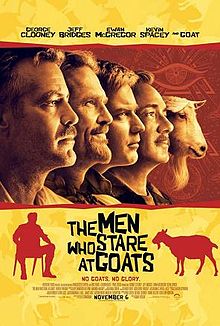
Having missed the movie, when I found a cheap copy of Jon Ronson’s The Men Who Stare at Goats, my curiosity was piqued. With such a title I had assumed it to be fiction, but, proverbially it turned into the truth stranger than. The book explores the weird world of the X-Files chestnut, the super-soldier. There is no doubt that despite science’s discomfort with the paranormal, government agencies have utilized psychics for some years now, hoping to gain some advantage over the other guy. Not everyone agrees on how effective such tactics are, but they exist nevertheless. The Men Who Stare at Goats (TMWSAG) provides a rare glimpse into that world where no one knows who is telling the truth (otherwise called “government”); we live in an era when truth has become negotiable.

One of the accidental recurring themes in my recent reading has been the horrendous abuse of power at Guantanamo Bay and Abu Ghraib. Far from placid eyes, the land of the free advocates torture to get prisoners to talk. After years of government bungling, it is no surprise that misguided efforts at torture on the part of a democracy would invariably be discovered. It would be easier to doubt that governments kept lethal secrets if they didn’t keep getting caught in flagrante delicto. Who can you trust when governments, ruled by gods of their own making—in their own image—preach the gospel of torture? TMWSAG weaves this sordid story in with 9-11, Uri Geller, Branch Davidians, Heaven’s Gate and Deuteronomy 18—what’s not to like?

I’ve been alive long enough to know that some supremely odd stuff goes down. TMWSAG provides a service in demonstrating that the government takes some of this mysterious reality seriously. It also shows the twin surfaces of resistance: religion and science. Science has a difficult time admitting what can’t be seen; with few exceptions psychic phenomena are considered not even worth the bother of a lab test. Religion, at least in its biblical, American incarnation, lumps all spooky stuff together with the devil, something Jon Ronson declares that even high-ranking generals in the military believe. So when I put this little book down I was left scratching my head. It may just be me, but where have all the sheep gone?


Anatomy of a Neurosis

I’m sitting in a building less than 10 blocks from where a shooter opened fire in New York City this morning outside the Empire State Building.  I can still hear the helicopters buzzing overhead as they’ve been doing since just after 9 a.m.  One week ago I walked with my daughter down that very block after an office outing.  This is the third public, multiple shooting since July in the United States. Twenty are dead, over sixty have physical scars, and the rest of us have psychological trauma.  Gun control?  Only a distant dream.  I have been reading quite a lot about embodiment lately.  The idea is both simple and complex at the same time: we are born with physical bodies and our minds spend our entire lives trying to make sense of them.  Guns have a way of radically interfering with the process.

Stop, children, what’s that sound?


Often I have heard the adage, “guns don’t kill people, people do.”  This may be true, but it is no more so than the fact that we are all embodied creatures and we have a right not to be shot by homicidal maniacs.  At least I think so. There are enough guns to wipe out the population of this nation, and I’m sitting at my desk in a subtle panic since nobody seems to know what happened yet. The beating of the helicopter rotors is loud, petulant, distracting.

As the morning wears on the reports begin to take some order. The shooter wasn’t acting indiscriminately. The nine of the ten (later revised to ten of the eleven) people shot were caught in the crossfire between police and the gunman. The helicopters leave. Perversely I find myself relieved. Natural disasters happen and the lives of countless thousands are taken. The difference is there no motive is involved. As much as some televangelists want to tell us that “God” is punishing mostly innocent people, the fact is tsunamis, hurricanes, wildfires, earthquakes, volcanoes, and tornados are completely natural events. Maybe firearmophilia is natural as well. I can hear the sirens as innocent bystanders are rushed to the hospital. My embodied psyche turns back to my computer. Work won’t wait, and no matter where we are, we are all potentially innocent bystanders in a world where trust in guns has eclipsed trust in gods.


Criticism Is Not Attack

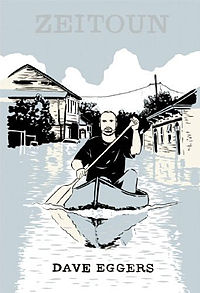
Each administration of George W. Bush was marked by a major disaster. 9-11 was followed four years later by Hurricane Katrina. The United States had received a one-two punch. I recently read Zeitoun by Dave Eggers. This is a book that should be read by every American, and it wouldn’t hurt others to read it too. This account follows the lives of a New Orleans family through the aftermath of Katrina. The main character, a tradesman named Abdulrahman Zeitoun, is a permanent resident of the United States from Syria. His wife Kathy, a convert to Islam, was American. When Katrina bore down on New Orleans, Kathy took their kids to safety with friends while Abdulrahman (known by many as Zeitoun) stayed in the city to look after the properties they owned. When the flooding had engulfed entire sections of the city, Zeitoun paddled about in a canoe, rescuing those he could, and even feeding abandoned dogs. Family and friends urged him to evacuate, but he felt he was doing good. Until he was arrested on his own property and imprisoned for being Syrian.

In a wrenching account based on interviews with Zeitoun and Kathy, Eggers describes how the US government quickly set up Guantanamo Bay-style prisons rather than attempting to rescue those stranded in their homes. Zeitoun was arrested and never informed of the charges, although he heard paramilitary guards armed with machine guns uttering “Taliban” and “al-Qaeda” at him. He watched as a mentally disabled man was pepper-sprayed by soldiers when he clearly couldn’t understand what they were commanding him to do. Despite having government issued ID and good standing as a business owner in New Orleans, Zeitoun was presumed guilty because of his profile: “Arabic” and Muslim. As Eggers reminds us, Homeland Security is now the administrative head of FEMA, and those that Homeland Security distrusts (all of us) are potential terrorists rather than citizens in need of help during times of disaster.

I grew up in a rather monochromatic part of the country, but as I traveled I met and befriended those of differing nationalities, including Syrians. Those considered “the others” by xenophobic bureaucrats are just as kind, loving, and good as those of us born under the sign of the cross with “white” skin. Zeitoun stands as an indictment of the jingoism that has come to be recognized as the only legitimate American citizenship. Zeitoun spent nearly a month in maximum security prison before being released after a makeshift trial, when no evidence existed that he’d done anything wrong. What has happened to the tired, the poor, the huddled masses yearning to breathe free? They’ve become the enemies of the state. I know, Katrina engendered extraordinary circumstances. Extraordinary circumstances, from a “Christian” view, however, demand extraordinary sympathy. Do the nation a favor. Before November, read Zeitoun.


The Naked Vicar

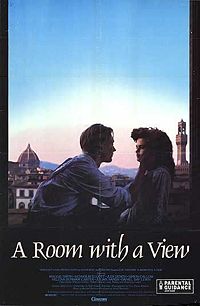
In a fit of nostalgia, for lack of a better excuse, I recently re-watched A Room With a View. I suspect I saw it with my wife near the time it first came out since I had trouble recalling having viewed any of it before. Until the skinny-dipping scene. Even then, it was unfamiliar until Mr. Beebe, the vicar, jumped into the pond. Now perhaps in the Victorian era same-sex cavorting was permitted for the young, far from repressed eyes, but it was the implications of seeing a priest in the nude that was particularly jarring. As Lucy Honeychurch comes primly along with her fiancé, she is scandalized to see the boy she truly loves unclothed, but the minister in similar state is a laughing matter, a novelty. In the light of the many church scandals that have become public knowledge since 1985, this particular scene has perhaps accrued additional, unintended freight.

Embodiment is a popular topic for theologies these days. I’m no theologian, but as a member of the human race I do participate in the embodiment question. Everyone from biologists to psychologists seems to be rethinking the implications of the soft machine. Some theorists are already preparing to leave behind their bodies to have their consciousness electronically preserved. Their new bodies may be robotic or simply virtual, but I suspect they will find the experience deeply disappointing. We are closer to the cockroach and the goldfish than we are to the disembodied divine. Our bodies are who we are, and embodiment analysis is the attempt to make sense of it all. At the same time, some neuroscientists are speculating that human brains work perhaps in closer concert than we generally suppose. We human beings are more like cells in a great organism that encompasses all of us. The Portuguese Man O’ War, which resembles a human brain in some respects, is a communal organism and not a single creature. The implications are worth considering.

Our rules for getting along with biological bodies include some pretty straightforward permissible behaviors. We don’t penetrate the body of another person without their express approval. They have to be competent enough to give valid approval. We don’t end the existence of another human being’s life unless they’ve been convicted of being exceptionally naughty and they live in the United States (the only “first world” country where the death penalty is still routinely carried out) or unless we are mentally unstable or emotionally overwrought and have easy access to firearms. Bodies are limited, and so are brains. Although, since I’ve upgraded my operating system I notice that my laptop has now claimed my name as its own identity—(if anything looks weird, please let me know!) In the Victorian era it was assumed that the brains of the clergy were attuned to higher things. The naked vicar accepts the good-natured laugh at his expense because he is no threat to either young ladies or young men. In the technological era we are more savvy and less carefree. And given the choice, the religious would prefer a room without a view, thank you.


Supernaturally Selected

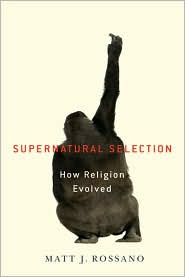
Things are seldom as simple as they seem. Religion, for example, is frequently cast as the villain or the hero of human society, when, in truth, like most human institutions, it is a little of each. I’ve read many theories on the origin of religion, and none has been completely convincing but most contain persuasive aspects while I’m reading them. After having read several books proclaiming the end of religion in the last several months, I just finished Matt J. Rossano’s Supernatural Selection: How Religion Evolved. Many books with a similar goal begin with the suggestion that religion may have had some biological utility for people at one time, but that we’ve outgrown our need for it and we should classify it with other obsolete, arcane concepts that have no further purpose. Rossano suggest that religion grew out of the need for social bonding and that we could not have become human without it.

Basing his ideas on genetics and anthropology, Rossano notes that even with our genetic similarity to chimpanzees there remain striking differences. Mostly they are social in nature. Many of the differences are reflected dimly in our primate cousins, but the human penchant for gathering in groups with ritual behavior to offset overwrought emotions applies only to us. That ritual behavior includes healing rites, something that Rossano suggests might be the earliest, shamanistic, religion. Back in my teaching days I’d been telling students that the earliest evidence for religious behavior dated to the paleolithic period. This is something I’d reasoned from the artifacts found in pre-historic communities. I was happy to find confirmation in a more competent scholar than myself.

While I’ll no doubt revisit some of the fascinating hypotheses of Supernatural Selection over the coming days, one point especially stood out on my initial reading. Religion is a communal phenomenon in what is a largely individualistic society. In other words, religion itself continues to evolve. Even the hermit in his or her cave is only considered religious in comparison with his or her less dedicated, secular compatriots living la vida de fe. Since religion is communal, Rossano suggests, it is impossible to argue someone out of their religion—based on perceived relationships as they are. Indeed, it seems that his hypothesis predicts a behavior we find only too evident when we prepare to line up at the polling booths, but which will immediately fall into the background again once the level is pulled.


Illini Wisdom

Running through the Midwest like a massive, erosive serpent, the Mississippi River has an unrivalled place in the American imagination. In many locations the relentless river has carved impressive bluffs over the millennia, providing impressive views out over the valley that has been carved in nature’s time. Down near the town of Alton, Illinois, along the eastern bluffs left by the sculpting waters, is a reproduction of the Piasa Bird. Years ago, while living in the Midwest, some relatives took me to see the replica, a local tourist attraction and not a bad place to watch for bald eagles. It was then that I first heard the myth of the Piasa Bird. “Bird” is a bit of understatement, or perhaps a misnomer. The creature was really a monster, by any description. According to the lore presented by the tourist literature, the Piasa was a flying, human-eating beast that terrorized the local Illini tribe. Unsure of what to do, the tribe was at a loss until Ouatoga, their leader, had a dream that revealed an ambush as the means of defeating the monster.

The ambush involved, as is often the case in folkloristic accounts, a victim. Someone had to be bait to draw the Piasa into the ambush of poisoned arrows that had been arranged. Ouatoga, aware of the obligations of leadership, volunteered for the role of the victim and stood in the open to lure the Piasa into the trap. As the monster swooped down on him, the warriors released their arrows, killing the beast and saving their leader. The story bears much in common with myths throughout the world: a frightful beast, a sacrifice, and ultimate deliverance. This framework also appears in many religions, outlining the human condition. It also reflects, in an abstract way, the ideal of pre-modern society; we are all in this together. Banding together against an outside evil, human society might banish the monster and everyone’s chances would be improved. It is the world of mythology.

In our enlightened society the emphasis seems to have changed completely. Our leaders are often our Piasa, snatching from the populace at will and maintaining uneasy control. Ouatoga, in the myth, understood the role of leadership as being willing to sacrifice everything for the good of those who were under his watch. The idea also occurs in the Bible where Ezekiel charges the ungodly kings of Judah with being shepherds who eat the sheep. I still believe in the power of mythology. Stories are preserved because of a truth that resonates with the hearers. Monsters are in no short supply, and a society that is subject to the whims of an oligarchy perhaps has the most to learn from our mythological past. When is the last time a public leader offered to give up anything in order to serve the populace who grants him (sometimes her) his power? Old Man River, he must know somethin’. Looking up at the Piasa, I think I might be able to guess what it is.


Strawberry Meatloaf

Strawberry ice cream. It tastes like summer in a waxed cardboard carton. While having a small dish of it recently it occurred to me that strawberry is my favorite flavor of ice cream. This was the first time I’d had any in perhaps twenty years. I am not diabetic, but I am extremely phobic. I avoid the things I like out of fear. There always seems to be plenty of bad to go around, but I’m always afraid the good will run out. Waiting two decades for something I like is a small price to pay. This same phenomenon accompanies my musical tastes. When I listen to music, generally, I listen to music. I’m not a background music personality. Life has been so busy lately, however, that I don’t have the time for music that I would like. I bought a CD (yes, they still make them) of Meat Loaf’s Hell in a Handbasket shortly after it was released. I just listened to it over the weekend. (It has been that busy.)

Since I had a lot to accomplish last weekend I listened to the CD as background music, violating my own standards. That meant that I had only impressions of what was going on rather than the full impact. Immediately, however, I was struck at how socially conscientious this album is. I realize that Meat Loaf is primarily a singer, performing songs written by others. Nevertheless, it seems that a singer must have some investment in the songs they perform to put the kind of empathy into them that Meat Loaf does. The theme that seems to be running through these selections is that violence and greed have become our paradigms, and we are heading to, well, Hell in a handbasket.

I’m old enough to miss album art. I don’t miss the hiss, skips, and pops of vinyl, but the square foot of album art was often a gift. The album art is part of the message of the music. Inside the back cover of the Hell in a Handbasket CD, behind where the disc is mounted, is a gothic photo of Meat Loaf holding a skull, Hamlet-like, before a large cross. Around his neck is a chain that holds another skull, and, with a bit of imagination, perhaps a small crucifix. (Like most people who still remember album art, my eyes aren’t what they used to be.) Something is happening here that I can’t quite define. Jim Steinman is not on this album, and my fear seems to rise. Then I listen and I hear my social consciousness being in some small way affirmed. It may not be Wagnerian rock, which I fear is rapidly running out, but it is worth another listen when I’m able to set aside the world for maybe an hour or two.


The Price of Tolerance

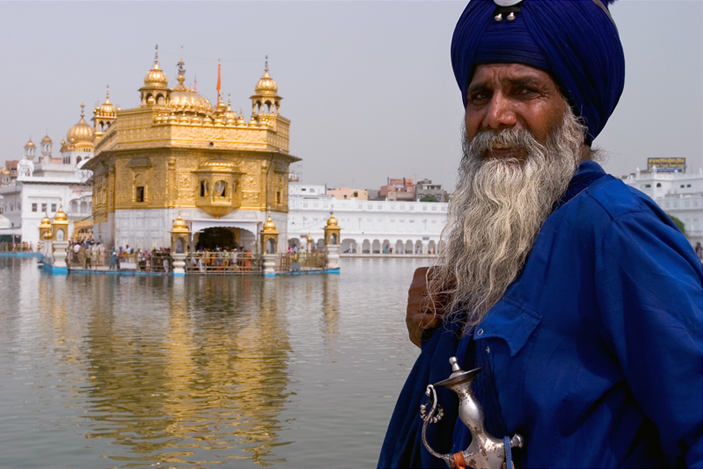
While on a trip to New England recently, my family had taken an exit to look for a bite of lunch. We followed one of those innocuous dinner-plate symbols that often grace roadside signs next to a stylized hotel bed and a gas pump that looks like a suicidal robot. This particular exit, however, seemed unwilling to deliver on the food part. As we wound down an unfamiliar road, we came across the golden cupolas of a Sikh temple. This was the first Sikh temple I’d ever seen, and my daughter asked why she’s never heard of Sikhs before. “Because they never cause problems,” was my reply. Of the major world religions, Sikhism is notable for its lack of overt violence even though a sword is one of the religion’s symbols. Unfortunately, over the weekend, violence found some innocent Sikhs.

As of the moment, no one is able to identify the motives of the man who gunned down four Sikhs preparing to worship in Wisconsin. For many Americans the religion is a mystery. We hear of Hinduism and Buddhism in the course of many historical and literary ventures. Sikhism is somewhat newer on the world religious scene, but it still predates regular European trade with India during the “age of exploration.” Although the classification of religions is always disputed, Sikhism is generally considered around the sixth largest world religion in terms of numbers, and they have avoided the limelight in the western world, showing that a religion can rest on its principles. One of the truly praiseworthy principles of Sikhism is toleration, an idea that his held in very high regard.

From WikiCommons

Toleration often clashes with gun ownership in the United States. Just weeks after twelve people were murdered for going to the movies, we have more headlines of private citizens (some mentally disturbed) with ready access to firearms. And more innocent people are dead. Even the shooter is dead, so we will never likely know whether this was simply a case of mistaken identity or hideous intolerance at work. In my time in Wisconsin I came across many Christians who were extremely intolerant of any viewpoint other than their own. Fortunately, they were the vast minority among the people that I knew. Still, the paradigm that I see emerging disturbs me to the core: we claim it is our right to own guns while identifying with a deity who let himself be tortured to death rather than harm anyone. I wonder if a culture can spell schizophrenia?


Pack on the Back

One of the joys of corporate culture is receiving office memos. Of course, memos are now electronic and our environment hopefully benefits from that. A couple weeks back a memo announced Operation Backpack, a charitable cause. Fully employed for the first time in what feels like an eternity, I signed up to contribute. When I read the memo through, however, I was shocked. In New York City 11,000 children attend public schools from homeless shelters. Eleven thousand. The number is still large enough to boggle my blue-collar brain. That is over eleven times the size of the town in which I grew up. And that’s just the children. Urban culture has become the predominant paradigm of capitalism, but it comes with a considerable price tag. I see homeless people foraging through garbage for food—a more degrading example of picking berries and nuts in the woods, I suppose. What’s worse, nobody seems to think this is unusual or distressing.

A frequent visitor to university campuses, I am familiar with urban troubles. The low land values around tax-free campuses mean that many universities abut the harder neighborhoods in our cities. The city is considered the epitome of civilized living—humanity removed from the dirtiness and wildness of unpredictable nature. When did it become okay to forsake those who came to cities to make a living? How can one of the most affluent cities in the world let 11,000 children live in homeless shelters while others in the same city have far too much to satisfy any individual’s needs? We send troops to other countries to liberate them from oppressive regimes, mistaking free trade for freedom. We need to help those who cannot help themselves.

The biblical ideal of a just society is not one without wealth, but one where wealth comes only after everyone has enough. Yes, there will be some who take advantage of the system. I wonder, however, if not working is any different from taking advantage of the system on the other end—to “succeed” in a culture driven by the market, you must take advantage of the system. One kind of taking advantage means getting by with basic needs and services met, the other kind of taking advantage means living the life of royalty in a democracy. One we excoriate, the other we emulate. I don’t have the answer, but I do hope that a backpack of school supplies will make a difference in a young idealist’s life.

Still so far away…


High Aspirations

I’m not a fan of the Olympic Games. It’s not that I have a problem with the passion and dedication of these (mostly) young people who’ve trained themselves to perfection in various physical skills, but the Games have tended toward jingoism a little too often. They may be intended to bring the world together, but often they become the focus of international tension. And, of course, television shows us only where our own nation makes a good showing. In my more somber moments I wonder if there isn’t someone even better at this or that sport/event whose circumstances make it impossible for her or him to make an international showing. Olympic Games are for those who can afford personal trainers and who can manage to make it to tryouts on schedule. Again, I don’t demean the ability of the competitors; when I find myself in front of a television I often stare in awe at what they accomplish.

A certain disconnect always attends the opening ceremonies. I have to confess to having glanced at the screen in our hotel room once or twice during the London extravaganza, but what became clear is that culture is what’s celebrated here. Athletics are the same internationally, if we take the Olympics at their word, but culture in region specific. Figures from Harry Potter and Mary Poppins, and other British contributions to the world of art and literature, filled the arena with a sense of national pride. Even the queen deigned to parachute down to the level of the commoner, in the company of James Bond of course (Sean Connery, why did you have to age?). This is what the commentators called the “rebranding of the royals.” What is it that we really value about ourselves? Can we not truly overcome xenophobia?

Xenophobia has a reach far beyond nationalities. It is rampant between social classes, political parties, and language groups. We distrust the other, for those like us are the best. The best swimmers, the best gymnasts, and the best shooters.

To look down on the world.

Just days ago I stood atop one of the peaks of Mount Mansfield, the highest mountain in Vermont, with my daughter. As we looked out over the panorama that included New Hampshire and New York, and maybe even Quebec, it seemed as if the world could be one. Maybe the things we value could lead us to share instead of selfishly claim everything for ourselves. I think of Mount Nebo and I shudder. And I think if I knew how to ski and if it was winter, maybe I could be the best.


Sweet Heaven

On a weekend trip to Waterbury, Vermont, I found the sweetest cemetery ever. Ben and Jerry’s ice cream factory features a Flavor Graveyard where tombstones to deceased flavors stand. The epitaphs are frequently witty and the experience is lighthearted for kids and adults alike. I wondered, as I stood there looking at the monument to Bovinity Divinity, at the persistence of the belief in an aftertaste—what I presume is a flavor’s version of an afterlife. We like to believe in something more, sometimes at the expense of the here and now. Nevertheless, Ben and Jerry stand for something more than quality ice cream. Theirs is a company with social consciousness, started by two young idealists who have managed to keep their integrity in spite of success. I couldn’t help but to feel impressed by the entire operation. Frozen dairy with a conscience.

The larger question, I suppose, is why success so frequently leads to a loss of concern for others. People possess differing levels of empathy, just as animals do, but it appears so starkly in the case of those who prefer their profit at the expense of others, sometimes even the entire remainder of the world. In a universe of one, no one is rich. And seeing a successful company that has managed to pull off relative equity in the world of business has proven that it is possible. Too many idealists let go too soon.

Perhaps it is the rarified air at higher elevation, or perhaps I’m being brushed with the wings of angels at this altitude closer to the celestial sphere, but this giddiness that I’m feeling is likely born of bonhomie. There is no necessary correlation between success and lack of concern for others. I am reminded of this as I walk to work in far away Manhattan. The sidewalks, even in posh business areas, host ambiguous stains and crushed cockroaches. Even the wealthy must step out of their limos sometimes. When they do, they will plant their feet on the same dirty sidewalks as the rest of us do. Their elevators may lift them to pristine heights, but the bottoms of their shoes are just as full of the remains of everyday lives as are mine. From now on, however, when I see Ben and Jerry wrappers among the detritus on the streets, I will be smiling, thinking about the aftertaste.


Holy Grand Central

Staring out over 42nd Street is the massive triumvirate of Mercury, Minerva, and Hercules. Once the largest group sculpture in the world, the famous facade of Grand Central Terminal is photographed daily, and the number of tourists thronging the concourse make it perhaps the sixth most visited tourist destination in the world. While visitors’ shutters clatter away, photographing the statuary and starred ceiling, I wonder how many stop to consider the religious nature of much of this New York City icon. Mercury, of legendary speed, seems an appropriate mascot for a transportation hub. Along with the remainder of the Greco-Roman gods, however, he has been pigeon-holed as “mythology” and is considered a quaint, if picturesque, archaism. How easily we forget that the religions of the classical world were serious attempts to make sense of their universe. Mercury was borrowed from Hermes, a god who had the task of being a psychopomp—a guide to the underworld. (Somehow very appropriate for the immense subterranean world of Grand Central.) In our monotheistic supersessionism, we recast other faiths as myths, forgetting their gravity.

Over on the east side the terminal passageway leads through the Graybar Building onto Lexington Avenue. The external friezes are of art deco vintage and show what appear to be angels flanking two of the entrances. My limited architectural knowledge prevents me from finding an actual description of what the figures represent, but it is safe to say the wings upon the back generally qualify a character as somewhat more than human. Graybar eventually became Western Electric and the original company is on the Fortune 500 list (again, I tread in unfamiliar and somewhat scary territory here). Angels watching over the common person? If so, perhaps we need to seek an upgrade. William Henry Vanderbilt, president of Central Railroad, once famously declared, “the public be damned,” in a moment of unexpected candor, showing where the common person stands in the Weltanschauung of the wealthy.

Back inside Grand Central, the famous celestial ceiling always draws considerable attention. Those who know the stars have noted that there is a backwards nature to the array—it does not match any actual outdoor sky. Explanations vary, but it is said to be a “God’s eye-view” of the stars. As we stand below, staring up, we gain a divine view on the celestial sphere. Many thousands of people pass through Grand Central every day. Few, I suspect, stop to consider its role as a monument to the influence religion has in the secular world. Certainly there was no religious motivation behind getting the working public to the city on time. We are the chattels of the wealthy, showing up to our jobs on time. As usual, we are unaware of the power of that which tends to carry on, unobserved. The mythologies of different peoples blend here, but perhaps the greatest myth of all is that the wealth from the gods will trickle down to the average human passing through this sacred edifice.


Liberating Science

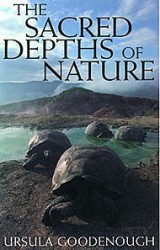
The fact that prominent scientists occasionally take time from their busy schedules to fire off a broadside against religion and religious believers freely bare their fangs at science shows that we need some efforts at reconciliation. I am reminded of schoolyard bullies when specialists in either realm make claims of exclusivity. Religion and science are both here to stay, and they’d better learn to get along. I just finished reading the remarkable little book The Sacred Depths of Nature by biologist Ursula Goodenough. While declaring herself a non-theist, Goodenough, the child of a Methodist minister, preserves a profound respect for the sacred in a concept she calls “religious naturalism.” Her brief book, which a colleague compared to a daily devotional, contains more good sense than all the enraged professionals bellowing at each other from either side of an unbreechable gulf. Uncompromising in her science, Goodenough is not suspicious of the human religious impulse, but embraces it in the expressions of nature. It is an approach I found liberating and amazingly conciliatory. It lacks the territoriality of Stephen Jay Gould’s Non-Overlapping Magisteria (NOMA) and preserves the integrity of the human person in all its complexity.

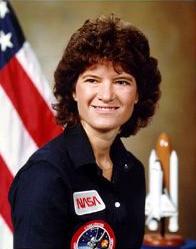
The day I finished the book the headlines of the paper announced the premature death of Sally Ride, another woman who moved science in the right direction. Ride’s sister is a Presbyterian minister, while Ride herself was a physicist as well as the first American woman in space. Aboard the space shuttle Challenger, she made history also as the youngest American in space. Typical of the imperialist national attitude that unfortunately still reigns supreme, space had been tacitly declared a man’s world. Sally Ride shattered that glass ceiling at 17,500 miles per hour. Even so, change seems to have decelerated once again to far below sub-orbital speed. Religion is partly to blame. A deep component in our culture, religions in the western world have traditionally asserted male superiority. Even those who claim God to be sexless can’t really conceive of a big person without some gender. The day after her death and the headlines had shifted from mourning to astonishment that she was gay.

The loss of Sally Ride is a loss to science, for she was in the heaven formerly occupied by God, showing women the way. I am, however, comforted by the efforts of Ursula Goodenough to keep the dialogue open. Too often, it seems, that conflict is the cost of disagreement. One of the observations of astronauts is that long periods confined with the same small coterie of people lead to inevitable disagreements. The question facing us all—for our planet is not so large after all—is how we will choose to deal with differing worldviews. It was declared that science would eventually bury religion, once reason had taken hold and superstition had run its course. Although the grave was dug, it has never been filled. Maybe we should all read the sensible approach of Goodenough and just be glad that we’ve all had a chance to be here at all. And remember Sally Ride as a fearless explorer, a hero rather than a spectacle.


Another Dark Knight

Batman was dreamed up in the late 1930s as an ambiguous character that fought crime and protected innocent civilians. The backstory emerged that he had witnessed his parents being shot down as a child, and eventually adopted the identity of a bat to frighten the perps. Batman never, in principle, used guns. Of course, the DC Comics character eventually scored a wonderfully campy television series that entertained many of us as children. It even spawned a movie. Then, fifty years after the original, Tim Burton gave us a darker, more serious Batman. The series of promising movies degenerated into the unforgivable Batman and Robin, and many assumed the flash in the pan was over. We didn’t need any super heroes. Christopher Nolan resurrected this bat in Batman Begins, and when I first saw The Dark Knight I was stunned. Good and evil danced a waltz so delicate that you were never sure who was leading. The frisson was palpable.

Thursday night the Nolan series’ final episode was released. I’ve not seen it yet, but from the moment I step out of the Port Authority Bus Terminal in Times Square until I arrive at work, I will have seen several multi-story Batmen looking down on the real life Gotham, explosions erupting and everyone wondering if Batman will survive this film. Yesterday morning the news opened with a horrifying story from real life in Aurora, Colorado. A gunman opened fire on a crowd of opening night movie viewers, killing at least twelve. Several children were shot. The gunman, like a real-life character from Arkham, was apprehended and claimed to have explosives in his house. I stared at the story and wondered what has become of humanity.

Facebook has turned into a venue for flying political banners. I’m always surprised to see how conservative people I knew in school have become—in those days no one had me beat for non-progressive thought. I’m truly amazed, at times, by the glorification of America’s gun culture that accompanies conservative causes. People want to shoot and want to glorify their right to shoot. I have, on rare occasions, shot rifles for sport—only at targets and only when others have asked me to. There is no denying the rush of power one feels, knowing that, like God, you can destroy the thing far distant from you with just a squeeze of the finger. I’m not sure I’m happy in a universe populated by such gods. I grew up a conservative, but also a pacifist. I grew up watching Batman defeat evil so clearly defined that no room remained for ambiguity. Yes, I grew up a conservative, but then I just grew up. I will watch The Dark Knight Rises and will not know what to expect.

Neither good nor bad.